ii
THE DESIGN OF AN FPGA-BASED SINUSOIDAL PULSE WIDTH MODULATION GENERATOR
MOHAMED SHAHARUDEEN BIN YUNOS
A project report submitted in partial fulfilment of the requirements for the award of the degree of Master of Science (Computer Systems Engineering)
Advanced Informatics School Universiti Teknologi Malaysia
iii
ACKNOWLEDGEMENT
In the name of Allah, The Most Gracious, The Most Merciful. I wish to express my sincere appreciation to my main supervisor, Assoc. Prof. Dr Salwani binti Mohd Daud for her involvement in my project report, especially for her views and critics in the writing and preparation of this report.
iv
ABSTRACT
v
ABSTRAK
vi
TABLE OF CONTENTS
CHAPTER TITLE PAGE
DECLARATION ii
ACKNOWLEDGEMENT iii
ABSTRACT iv
ABSTRAK v
TABLE OF CONTENTS vi
LIST OF TABLES ix
LIST OF FIGURES x
1 INTRODUCTION 1 1.1 Overview 1.2 Background of the Study 1 1.3 Problem Statement 3
1.4 Project Questions 4 1.5 Project Aim and Objectives 4
1.6 Scope and Limitation 4
vii
1.8 Summary 5
2 LITERATURE REVIEW 6
2.1 Introduction 6
2.2 Field Programmable Gate Array (FPGA) 6 2.3 Principles of SPWM Techniques 8
2.3.1 Carrier wave 9
2.3.2 Reference wave 10
2.3.3 ModIndex signal 12
2.3.4 SPWM output 12
2.4 Comparisons of Previous Related Works 13
2.5 Research Gap 15
2.6 Summary 16
3 METHODOLOGY 18
3.1 Introduction 18
3.2 Operational Framework 19
3.2.1 Analysis 20
3.2.2 Design and Development 21
3.2.3 Implementation 22
3.2.4 Evaluation 23
3.3 Summary of Deliverables 24
viii
4 DESIGN AND DEVELOPMENT 26
4.1 Introduction 26
4.2 Design of the SPWM Generator 26
4.2.1 Carrier Wave Generator 27
4.2.2 Reference Wave Generator 28
4.2.3 Wave Comparator 30
4.2.4 Overall Design 30
4.3 Developing Improvement Strategies 31
4.4 Summary 33
5 RESULTS AND DISCUSSION 34
5.1 Introduction 34
5.2 Implementation 34
5.2.1 Simulation Results of the Proposed Designs 35 5.2.2 SPWM Simulations with Different ModIndex 36
Values
5.2.3 Synthesis Results of Proposed Designs 37 5.2.4 Register Transfer Logic (RTL) View of 39
SPWM Design
5.3 Evaluation 44
5.3.1 Discussions on Synthesis Results of 44 Proposed Designs
5.3.2 Discussions on Synthesis Results of 45 Overall Designs
5.4 Summary 46
6 CONCLUSIONS 47
6.1 Introduction 47
ix
6.3 Recommendations 48
6.4 Further Research 49
6.5 Concluding Remarks 49
REFERENCES 50
Appendices A - B 55 - 65
x
LIST OF TABLES
TABLE NO. TITLE PAGE
2.1 Digital sine waveform generation algorithm 14 Comparisons
2.2 LUT size in previous designs 15
3.1 Summary of deliverables 23
4.1 Sine values to generate 50 Hz sine wave 28 4.2 Sine value table with 25 samples 32
4.3 8-bit counter with various Mod 32
4.4 Sine value table with 32 samples 33
xi
LIST OF FIGURES
FIGURE NO. TITLE PAGE
1.1 Inverter output 1
2.1 Three-input LUT-based logic cell 8
2.2 Single-phase inverter 8
2.3 Carrier wave 10
2.4 Reference wave 11
2.5 Generation of SPWM 13
3.1 Operational framework 20
xii
5.8 RTL view of SPWM design 39
5.9 RTL view of Cwave instances 40
5.10 RTL view of ReadSineTable 40
5.11 SineTable instance synthesis using sine values with 43 a) 50 samples b) 25 samples c) 32 samples
xiii
LIST OF APPENDICES
APPENDIX TITLE PAGE
A Altera Cyclone II Architecture 55
1
CHAPTER 1
INTRODUCTION
1.1 Overview
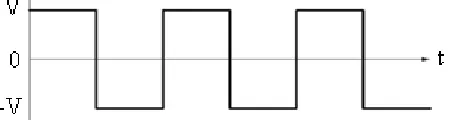
The use of DC/AC converters in applications such as renewable energy, motor drive control and uninterruptible power supply has become dominant in power electronics conversions. The output produced from the dc/ac converter has two major drawbacks. One is that the output consists of rectangular pulses. Also, the harmonic content is high. Pulse Width Modulation (PWM) is normally employed to overcome these problems (Meng et al., 2010). The problem with a DC/AC converter circuit is that since it uses a switching strategy, the output waveform understandably consists of rectangular chunks (Austin and Drury, 2013). A typical output voltage is shown in Figure 1.
2
Though the rectangular output is adequate for some applications, for most applications, a sinusoidal output is the ideal requirement. Making the output to be as close as possible to a sine wave has also the advantage of reducing the output harmonic content (Barnes, 2003).
The rectangular output can be made closer to a sinusoid by using a scheme based on pulse width modulation (PWM). In this scheme, the on-off periods of the inverter switching devices are determined at certain switching points such that the output will consist of pulses with width varying in a sinusoidal manner.
1.2 Background of the Study
Many PWM techniques have been developed in the past few years. They are designed for applications in high power converters or for particular configurations. For example, selective harmonic elimination (SHEPWM) is used for complete control of voltage over harmonics (Gourisetti and Patangia, 2013; Espinoza et al., 2001). The space vector modulation(SVPWM) may be used to reduce switching frequency for a given harmonic frequency (Maha and Faouzi, 2013; Barbi and Batista, 2010).
3
The SPWM generator may be physically realized using various technology but the most popular and preferred implementation uses a field programmable gate array (FPGA). The two most prime advantages for choosing an FPGA include the ability to reprogram and thus redesign the SPWM generator many times within a short period of time and a cheaper design cost (Sudha and Khatir, 2013)
1.3 Problem Statement
Sinusoidal pulse width modulation involves the generation of two interacting waves, namely, a reference wave and a high-frequency carrier wave. The reference wave is typically a sine wave and the carrier wave is normally a triangular wave. The primary concern here is the generation of the sine waveform. Generating sine wave digitally through the use of lookup tables (LUTs) is a well known and widely accepted method due to its simplicity and quick programming (Salazar et al., 2011). The LUT method is very fast and suitable for high speed system (Baozhong and Tiequn, 2011).
However, a key issue with using the look-up table method is power consumption, since a digital waveform with a bigger frequency will increase the Read-only-Memory (ROM) size and this may increase the power consumption (Mashayekhi et al., 2008; Gan et al.,2009; Veredas and Pfleiderer, 2006; Hao Li et al., 2009). Consequently many researches have been conducted that aimed at reducing the ROM size (Meher, 2010; Dickin and Shannon, 2010; Azizi and Najm, 2005).
4
This project will attempt to answer the following questions: i. What is the drawback of using FPGA in SPWM design? ii. How may FPGA be used to design an SPWM?
iii. How efficient is the design technique proposed in this project?
1.5 Project Aim and Objectives
The aim of the project is to improve on the design of a sinusoidal pulse width modulation (SPWM) generator. The objectives of the project are :
i. To study the inefficient use of resources in the FPGA-based SPWM design. ii. To design an FPGA-based SPWM.
iii. To evaluate the resource usage of the proposed FPGA-based SPWM design.
1.6 Scope and Limitation
5
(50 Hz), synthesis results of the SPWM design are limited to and cover only one particular frequency.
1.7 Significance of the Study
Most modern AC variable speed drives are based on power electronic switches which can be turned ON and OFF by low power control circuits connected to their control gates. Also, many microcontrollers and digital signal processors (DSPs) are already equipped with on-chip PWM controllers. These two facts make the study of SPWM more relevant. Also, because of the combination of electronic and magnetic components in a switching power supply, computer simulation plays a vital role in creating a successful design. Finally, since the design is FPGA-based, the design has the flexibility to be improved in the future by simply modifying and reprogramming the existing design codes.
1.8 Summary
50
REFERENCES
Meng, K., Gao, M., Bai,Y., and Chen, C. (2010). Analysis of Sine-wave Inverter's Harmonic Contents by Simulation. 2nd International Conference on Mechanical and Electronics Engineering (ICMEE 2010). Kyoto: IEEE, 51-58
Hughes, A. and Drury, B. (2013). Electric Motors and Drives: Fundamentals, Types and Application. 4th edition: Newnes.
Barnes, M. (2003). Practical Variable Speed Drives and Power Electronics. 1st edition: Newnes.
Gourisetti, S. N. G. and Patangia, H. A summary on modified carrier based real-time Selective Harmonic Eliminationt technique. Electronics, Circuits, and Systems (ICECS), 2013 IEEE 20th International Conference. Abu Dhabi, UAE: IEEE, 78-79
Espinoza, J. R., Joos, G., Guzman, J. I. , Moran, L. A., and Burgos, R. P. (2001).
Selective harmonic elimination and current/voltage control in current/voltage-source topologies: a unified approach. Industrial Electronics, IEEE Transactions. 48(1), 71- 81.
Maha, Z. and Faouzi, B. (2013). Implementation of Space Vector modulation using DSP Electrical Engineering and Software Applications (ICEESA), 2013 International Conference. Hammamet: IEEE, 1-7.
Barbi, I. and Batista, F. A. B. (2013). Space Vector Modulation for Two-Level
51
Song, Y. H., and Jones, Allan T. (Eds) (1999). Flexible AC Transmission Systems (FACTS). IEE Power Series. The Institution of Engineering and Technology.
Sudha, K. And Khatir, I. (2013). Implementation of FPGA Base Controller for Induction Motor Drives. International Conference on Computation of Power, Energy, Information
and Communication (ICCPEIC). Chennai: IEEE, 37-42.
Salazar, A. J., Bahubalindruno, G., Locharla, G. R., Mendonça, H. S., Alves, J.C., and Machado da Silva, J. (2011). A Study on Look-up Table Based Sine Wave
Generation. REC 2011,VII Jornadas Sobre Sistemas Reconfiguráveis, Faculdade de Engenharia De Universidade do Porto, 3-4 de Fevereiro de 2011
Baozhong, Xie and Tiequn, Chen (2011). Sine wave algorithm based on 2nd offset and its implementation in FPGA. 10th International Conference on Electronic
Measurement Instruments (ICEMI). Chengdu: IEEE, 173–176
Mashayekhi, M., Jeddi, Z., and Amini, Z. Power optimization of LUT based FPGA circuits. Proceeding of: Optimization of Electrical and Electronic Equipment, 2008. OPTIM 2008. 11th International Conference. Brasov: IEEE, 37-40.
Gan, Ming-gang, Chen, Jie. and Cheng, Lan. (2009). The Design of Direct Digital Frequency Synthesis Based on ROM Lookup Table. International Conference on Information Engineering and Computer Science, 2009. ICIECS 2009. Wuhan: IEEE, 1–3.
52
Hao Li ; Wai-Kei Mak ; Katkoori, S. (2003). Efficient LUT-based FPGA technology mapping for power minimization. Design Automation Conference, 2003.
Proceedings of the ASP-DAC 2003. Asia and South Pacific: IEEE, 353-358
Meher, P.K. (2010). LUT Optimization for Memory-Based Computation. Circuits and Systems II: Express Briefs. IEEE Transactions. 57(4), 285-289.
Dickin, D. and Shannon, L. (2011). Exploring FPGA technology mapping for fracturable LUT minimization. Field-Programmable Technology (FPT), 2011 International Conference. New Delhi: IEEE, 1-8.
Jung, J.H. (2010). Data reduction method of sine look-up tables in microprocessor's memory storage. Electronics Letters. 46(25), 1656-1658
Azizi, N. and Najm, F.N. (2005). Look-up table leakage reduction for FPGAs.
Custom Integrated Circuits Conference, 2005. Proceedings of the IEEE 2005: IEEE, 187-190
Ahmed, S.Z., Sassatelli, G., Torres, L., Rougé, L.(2010). Survey of New Trends in Industry for Programmable Hardware: FPGAs, MPPAs, MPSoCs, Structured ASICs, eFPGAs and New Wave of Innovation in FPGAs. International Conference on Field Programmable Logic and Applications (FPL). Milano: IEEE, 291–297.
Vahid, F. (2006). Digital Design. 1st edition. Wiley
Chu, Pong P. (2008). FPGA Prototyping By VHDL Examples: Xilinx Spartan-3 Version. 1st edition. New Jersey: John Wiley & Sons, Inc.
53
Ahmed, A. (1998). Power Electronics for Technology. 1st edition: Prentice Hall.
Lakka,M. and Koutrolis, E. (2014) Development of an FPGA-Based SPWM Generator for High Switching Frequency DC/AC Inverters. IEEE Transactions on Power Electronics. 29(1), 356-365.
Yuan,L., Peng, J., and Bin, Z. (2012). The principle and realization of single-phase SPWM wave based on the counter method. 3rd International Conference on System Science, Engineering Design and Manufacturing Informatization. Chengdu: IEEE, 10-13
Hussin, H., Saparon, A., Muhamad, M. and Risin, M. D. (2010). Sinusoidal Pulse Width Modulation (SPWM) Design and Implementation by Focusing on Reducing
Harmonic Content. 2010 Fourth Asia International Conference on
Mathematical/Analytical Modelling and Computer Simulation. Kota Kinabalu, Malaysia: IEEE, 620-623.
Bohrn, M., Fujcik, L., Vrba, R.(2011). Novel on-chip sine wave generator. 34th International Conference on Telecommunications and Signal Processing (TSP).Budapest: IEEE, 505–508
Sun, F., Wang, H. and Fu, F., Li, X. (2010). Survey of FPGA low power design. International Conference on Intelligent Control and Information Processing (ICICIP). 547–550.
54
Kaur, Sukhpreet and Singh, Kulbir (2012). Implementation of High Speed Fixed Point CORDIC Techniques. International Journal of Computer Applications. Volume 56, number 3.
Romli, M. S. N., Idris, Z., Saparon, A.(2008). An area-efficient Sinusoidal Pulse Width Modulation (SPWM) technique for Single Phase Matrix Converter (SPMC). 3rd IEEE Conference on Industrial Electronics and Applications, 2008. ICIEA 2008. Singapore: IEEE, 1163–1168.