Review
A Comprehensive Review on Bast Fiber Retting Process for
Optimal Performance in Fibers Reinforced Polymer
Composites
ChingHao Lee1,*, Abdan Khalina2,*, SengHua Lee1, Ming Liu3
1 Institute of Tropical Forestry and Forest Products, Universiti Putra Malaysia, 43400 UPM Serdang, Selangor, Malaysia; [email protected] (C.H.); [email protected] (S.H.)
2 Engineering Faculty, Universiti Putra Malaysia, 43400 UPM Serdang, Selangor, Malaysia; [email protected] (A.)
3Material Research and Technology Department, Luxembourg Institute of Science and Technology, 5, rue Bommel Z.A.E.
Robert Steichen, L-4940 Hautcharage, Luxembourg; [email protected] (M.)
* Correspondence: [email protected]; [email protected]; Tel.: +6016-6595851 (C.H.)
Abstract: Natural fibers are a gift from nature that we yet fully utilized until now. It can be classified into several groups and bast fibers are the group having the most promising performance when reinforced in polymer composites. However, numerous factors have been reported that influences mechanical properties of fiber reinforcements in the composite. In this review, bast fiber retting process and the effect of enzymatic retting on fiber and fibers reinforced polymer composites have been discussed and reviewed for the latest researches. Retting precedes mechanical processing (i.e. scutching) of the fiber from the stem and is essential for reduction of fiber breakage. All retting methods except chemical retting process are involving secretes of enzymes by bacteria or fungi under controlled (enzymatic retting) or random conditions (water and dew retting). Besides, enzymatic retting is claimed to have more environmentally friendly wastewater products, shorter retting period and controllable fiber biochemical components under mild incubation conditions. This review comprehensively assesses the enzymatic retting process for producing high-quality bast fiber and will become a reference for future development on bast fiber reinforced polymer composites.
Keywords: enzyme; Bast Fibers; Enzymatic retting; characterizations
1. Introduction
Due to the alarming rise of global warming issues and perish of marine living organisms caused by accidentally swollen of non-degradable plastic products, the awareness of plastic disposal issue (difficulties to recycle, environmental burdens, high recycle costing) had been heightened. As a result, bioplastics have gradually substituted conventional plastics in many applications [1, 2]. However, many users are still struggling on finding suitable replacements as bioplastic has inconsistency and low performances profile. On the other hand, reinforcement of natural fibers on plastic was reported to strengthen the product with better/or maintaining biodegradability [3, 4]. The natural fibers are renewable resources because they are produced as
part of the plant from photosynthesis, where O2 is released by absorbing CO2 gases. Therefore, it decomposes
naturally, consequently imposes lesser burdens to our environment.
Natural fibers can be extracted from three sources (plants, minerals and animals), as shown in Figure 1.
The main component in mineral and animal fibers is asbestos or basalt and protein, respectively. Plant fiber itself can be recognized as a composite material since it is composed mainly by cellulose, hemicelluloses, lignin and other components. Performance of natural fiber is often influenced by its chemical composition and physical properties [5]. However, noticeable differences in performances were found in every single natural fiber even though the fibers were taken from the same plant [6]. Climatic variations, plant variations and geographical were reported to have influenced the chemical composition (cellulose, hemicellulose and lignin) of natural fibers [7, 8]. Fortunately, its properties can be enhanced by chemical surface treatment as detailly discussed in previous work [9]. The natural fibers possess greater characteristics than conventional fibers, such as environmental friendliness, renewability, price and performances-per-unit-mass. Hence, natural fibers become an emerging filler reinforcement in composites, where glass and carbon fibers are being used traditionally [10-13].
Approximately 2,000 species of plants have been used as natural fiber reinforcements, but only a few fibers are dominating by holding 90% of natural plant fiber’s market [14]. The plant fibers have been further classified into more details, according to the location of fiber obtained on the plant, as shown in Figure 1. Bast fibers are the most widely used among other groups (bast fibers, fruit fibers, grass fibers, root fibers, seed fiber, and leaf fibers) [15-17]. Retting is the first extraction process to obtains high quality fibers. Several retting processes have been introduced in previous time and enzyme retting is found the most environmentally friendly due to mild retting parameters yet obtaining high grade bast fibers. In this review, the focus is putting on the retting process of bast plant fiber, with emphasis on enzyme retting process. Numerous studies have been done on bast fibers, but there is a lack of discussion on the overview of bast fiber retting methods. Besides, the effects of enzyme retting on bast fiber and its polymer composites are also discussed in this paper.
Figure 1: Classification of natural fibers [14].
2. Structural and chemical composition of bast fiber
Bast fibers are cellulosic fibers that extracted from phloem or outer back of bast fiber plants (Figure 2). Since bast fiber plants are annual crops, continuous supply of fibers is one of the attractive strong points for gaining interest in non-wood composite manufacturing. Table 1 shows the details of the main five bast fiber contributors.
Bast fibers are extracted from the phloem which located at the stem of the fibrous plant. Epidermis, shives, woody core and a combination of xylem must be removed in order to obtain the bast fiber (Figure 3). The epidermis (bark) is used to prevent the plant from moisture evaporation and resist moderate mechanical damage while xylem, woody core and shives help to transfer water and nutrition from the roots to the whole plant [18]. The fibers located in phloem appeared as fiber bundles and providing strength and stiffness to the plant [19]. Fiber bundle consists of numerous single fiber and each fiber is connected by middle lamella to act as glue, composed by pectin component [2] and lignin [20]. The major task of retting process is to remove the pectin components and releases the fibers from bundle attachment.
(a) (b) Figure 2: X-ray µCT image and optical micrograph of flax and hemp stem, respectively [24, 25].
Figure 3: Cross-section of hemp stem and location of bast fiber [26].
(a) (b)
Figure 4: (a) Schematic of single fiber structure [27] and (b) TEM micrography of cell wall layer showing middle lamella (darkest shaded color between fibers), S1, S2 and S3 [28].
Table 1: Details of main bast fiber contributor (Flax, Hemp, Jute, Kenaf and Ramie).
1
Bast fiber Flax Hemp Jute Kenaf Ramie
General information [30-34]
Scientific name Linum usitatissimum Cannabis sativa Corchorus Capsularis and Corchorus olitorius Hibiscus cannabinus Boehmeria nivea
Plant outlook
Can grow to a height of 80-150 cm in less than
110 days
Fiber flax plants are very tall, with few branches and low seed production
Plant stalks can grow in 1.5-2.5 m tall and 6-16
mm thick. It has smooth and hollow stems, rough
foliage at the top
Can grow to a height of 2-3.5m with high lignin content during their lifespan of 120 days. Able to absorb 15 tons of
CO2 and release 11 tons of O2 for One hectare of
jute plants
Relatively easy to grow with high yields, grow to
5 m tall in 5 months. Produces about 6–10 tons of dry matter per
acre in a year.
Plant stalks can grow in 1-2.5 m tall and 8-16 mm
thick.
Grow climate Grow in moderately moist climates
Grow in a mild, humid atmosphere, and 625-750
mm/year of rainfall is needed.
Hot and humid climate
tropical and subtropical
regions -
Country Europe and Asia
Central Asia, eastern Europe and equatorial
countries.
India, Bangladesh, China, and Uzbekistan.
Northern Africa, India, Russia and China
China, Philippines, Japan, Brazil, and
Europe
Fiber quality The fine long flax fibers are usually spun into yarns for linen textiles.
Hemp fibers are less flexible and coarser than
flax fibers
Long Jute fibers are ranging from 1-4 m with
the polygonal section of various sizes with a wide
lumen, resulting in a high deviation of fiber diameter, which in turn
causes variations in strength. The fiber has moderate moisture retention, good
resistance to microorganisms, but not
to photochemical and
A potential substitute fiber for jute fibers Preferred over other
fibers because of its homogeneity, uniform
fiber orientation, and good carbon footprint due to kenaf’s high CO2
absorption
Retting is not possible due to high gum contents (xylan and araban content up to 35%); the degumming
chemical attack. Chemical Properties [35, 36]
Cellulose, % 62-71 67-75 59-71 45-57 68-76
Hemicellulose,
% 16-18 16-18 12-13 21.5 13-14
Pectin, % 1.8-2.0 0.8 0.2-4.4 3.0-5.0 1.9-2.1
Lignin, % 3.0-4.5 3.0-5.0 11.8-12.9 12.0-13.0 0.6-2.0
Wax, % 1.5 0.7 0.5 - 0.5
Fiber properties [36-38] Moisture
content, wt% 8-12 6.2-12 12.5-13.7 - 7.5-17
Angle
microfibril 5-10 2-6.2 8.1 9-15 7.5
Average
diameter, µm 15-30 10-40 - - 34
Density, kg/m3 1530 1520 1520 1450 1500
Mechanical properties[37-39] Tensile
modulus, GPa 58 70 60 14-38 18.3
Tensile
Strength, MPa 500-1500 920 860 240-930 399
Elongation at
break, % 3.27 1.7 2 1.6 -
Moisture
2.1. Climatic, plant and geographical variations on bast fiber
In addition to the bast fiber harvesting strategies reviewed by Pari, et al. [40], some important cultivation technologies in Europe and China to obtain the best quality of hemp fiber bundles have also been discussed in previous works [41, 42]. Liu, et al. [43] has introduced a new continuous harvest technology for better quality fibers. Average fiber diameter, fiber breaking strength, and elongation rate were varied due to different harvest mode. Beyond these, plant growth parameters are affecting the chemical composition of bast fiber naturally. One study has investigated changes in cell wall thickness, lumen dimension and cell breath according to plant age for two varieties of jute plant [44]. If the plant is harvested too early, low yield with soft and immature fibers was obtained and if they are harvested too late, though the yield is higher, the fibers are less flexible.
However, Liu, et al. [45] have claimed that not much difference on biochemical properties for early and late harvest fibers. Bennett, et al. [46] have studied a few growth parameters on dew-retted hemp fibers. According to statistical analysis, hemp variety, seeding rate and harvest time are the most significant on influencing fiber yield and its properties. Generally, dioecious hemp varieties producing higher fiber yields than monoecious hemp. Under the high seedling rate (seeds/m2), thinner stem and lower stem volume of hemp plants were observed.
Besides, a huge variation of the bast fiber’s chemical compositions was reported due to the climate and soil condition. Jankauskienė, et al. [47] have studied the weather conditions of Lithuania for the year 2010 and 2011. Both years are suitable for hemp plantation except higher relative humidity with richer organic matter in the soil in year 2010. Hence, more fertilizers were applied in the latter year. As results, hemp fibers with higher cellulose contents (81.7%) but lower lignin contents (9.91%) were obtained. Haag, et al. [48] also conducted a similar study for flax fibers in the year 2012 and 2013. The results have confirmed that the plantation weather during flax plantation influences the fiber’s finesses and consequently its mechanical properties.
Kenaf plants are mostly produced in China and India, Bourguignon, et al. [49] migrated the kenaf plantation to Iowa and Kentucky, US, to supply local needs. Relatively warmer and wetter of Kentucky has higher kenaf productivity and better fiber’s performance. However, a low amount of kenaf yielded in the year 2015 at Kentucky was due to the infestation of Japanese beetle pest that harmed the kenaf plants. Besides, the plantation of “Tainung 2” kenaf variety is suggested by the author in US southern states to compete in the bio-fiber market [49]. On the other hand, another study has outlined a zoning model for agro-ecological and agro-climatic to analyses potential growing areas for kenaf plantations in Argentina [50].
On the other hand, Liu and Labuschagne [51] have studied the effects of nine kenaf variations plantation on cultivars yields. The findings show El Shlvador has high and stable dry stalk yields among other varieties due to good adaptation to the environment and irrigated condition in South Africa. Besides, warm-season species of kenaf has successfully migrated into the semi-arid Mediterranean area [52]. The dry yield has strongly affected by the amount of water applied but nitrogen concentration in the soil observed little or no changes to the dry yield. Every 2-24tonnes/hectare of kenaf yield under no water limitations but reduced irrigation system saved 42-45% of water with reduction of crop yield of 23-36%, showing more cost-effective of plantation method [52].
Angelini and Tavarini [53] have investigated the variation of ramie fiber’s chemical components on caused by plant densities, harvest time and crop stand durations. The results concluded that the harvest time has significantly affected the fiber’s chemical contents while the other factors found little interaction on basal stem diameter and stem development.
3. Retting Process
Fiber extraction from straw is the very first step in fiber processing. At this moment, the outer layer of fiber bundles must be separated from the plant by breaking off the bonds between stem cores and fiber bundles. Réquilé, et al. [54] has studied the peeling effect on hemp fibers during the retting process. A detail of peeling fracture mechanisms helps to understand the conditions of fiber bundle cohesion during retting.
Plant stalks are fed into a decorticator to break into pieces via compressive, shear and/or impact forces. Different types of decorticator have been used for fiber processing such as crushing roller, hammer mill, ball mill and drop weight. On the other hand, post-decortication cleaning separates detached fibers from the mixture of fiber/core bounded components and fine particles. However, it is hard to control the mechanical forces applied [55]. Also, a wide range of fiber lengths produced and high in cost are disadvantages of the mechanical extraction [34].
Fiber retting is a complex process and its properties are highly dependent on the type of retting methods and parameters. Under-retted and over-retted fiber makes inefficiency fiber separation and weakening of the fiber, respectively [56]. During the retting process, phloem-derived fiber bundles are loosened from hemicellulose, lignin and pectin. Left-over fibers are rich in cellulose contents and exerting high strength properties. Sisti, et al. [57] have justified the effectiveness of retting process on pectin, waves, and lignin removal, thus breaking up the bonding bounded between hemp fibers, thereby improving adhesion between fibers and matrix during composite fabrication.
Retting is a biological process, which removes non-cellulosic materials attached on the fiber bundle by enzymatic activities, consequently yielding detached cellulosic fibers. All retting processes except chemical retting use enzymatic activities to extract fibers from bundles. Water- and dew-retting applying anaerobic bacteria fermentation and fungi colonization method, respectively, on fiber bundles, to produces enzymes that hydrolyze fiber binding components. Clostridium sp. that lives in lakes, rivers and ponds is an anaerobic bacterium. It rets bast fibers by producing pectinases enzymes during water retting process. However, the anaerobic fermentation has found severe water pollution, contaminated wastewater, putrid odor and resulted in a shift to dew retting process [58]. Dew retting uses colonization of fungi presented in soil on bast stems [59]. Unfortunately, it is a time-consuming process with inconsistence outcomes, which fiber quality depending on geographical conditions even though this method found cheaper, higher fiber yields and creating fewer pollutions.
On the other hand, chemical retting produces a more controllable bast fiber quality within a short retting duration. High processing cost, unfavorable color and deteriorated tensile strength of retted bast fibers have driven scientists to discover better retting method. Enzyme retting has been so famous due to its mild process conditions, specificity and high selectivity with no chemical presents. The characterization of enzyme retted bast fiber shows comparable quality as water retted fibers. However, some studied found lower fiber strength because of the continued activity of cellulases in the enzyme mixtures. Therefore, controlling retting duration is essential to avoid over-retting. Song and Obendorf [60] have compared water-, chemical- and enzyme retting process on kenaf fibers. The authors commented that enzyme retting process has the highest lignin removal activity based on the evidence of GCMS and FT-IR results. Besides, it also allows greater process control under shorter retting duration, which highly recommended for large-scale production [61].
Pandey [62] has studied a variety of retting methods to analysis suitable end uses according to the fiber retted properties (line and tow fibers percentages, line and short fiber length, fiber tenacity, fineness and elongation at break). Figure 6 depicts the differences in fiber yield from varies of retting methods, ranging from 8.8 to 30.0%. The methods are sorted in descending sequences based on fiber yield as following: enzyme pectinase > gel > EDTA disodium > double retting > mixture of cellulases and/or α-amylase > chemical retting with hydrogen peroxide > water retting > sodium hydroxide chemical retting. Angelini, et al. [63] have compared the biochemical composition of ramie fibers obtained from chemical and microbial retting. A higher percentage of cellulose contents and effective removal of hemicellulose and lignin observed on chemical retted-ramie fiber. Liu, et al. [64] have studied the effects of EDTA chelator on hemp fibers retting process. The epidermis of hemp fiber, which rich in Ca2+ ions, has bounded to EDTA through proton displacement. Hence, the structure became unstable and resulted in pectin and low-methoxyl pectin removal from hemp bast fiber. The outcomes were show similar to another study [65]. Further details of chelators will be discussed in later, at enzymatic retting section.
On the other hand, water retted flax fibers show higher strength properties than dew-retted fibers due to the conservation of cross-linking fractions [67]. These findings agreed by van der Westhuizen [68] who reported water retting produces the highest fiber strength for all kenaf varieties (Tainung-1, T15, Cuba-108, Everglades 71 and BG52 except Cubano) among six retting processes (enzyme, dew, water retting, NaCl, urea and NaOH). On the contrary, Yu and Yu [69] have the opposite opinion, suggesting water retting process produces weak, poor quality of kenaf fiber, evidence of highest gum residual content and lowest tenacity of fiber.
Mazian, et al. [70] have study influences of retting period on hemp fiber biochemical contents. The results show the development of cellulose over the period from X-ray diffractogram, higher intensity of crystalline peak on R9 (specimen retted in nine weeks). Similar results found in the previous study, increases of crystallinity on retted flax fibers with the lower amorphous region [71]. However, different cellulose, lignin and pectin content throughout different retting period, is due to the different degradation rate. The highest rate found on Pectin removal, followed by cellulose and lignin [45].
Besides, the color changes of fibers also found varying due to the different of retting periods [70]. The colonization of fungi during retting causing the flax fiber to change its color from light green-yellow to dark grey is observed [72]. Superior tensile performance on 19 days retted flax fibers (1036 ± 270 MPa) is recorded due to a low degree of impurities.
Figure 5: Schematic diagram of bast fiber processing [14].
Figure 6: Shikha flax Fiber yield from varies retting methods [62].
Pre-treatments prior to the bast fiber retting process are commonly applied to enhances retting efficiency. Pre-treatment allows the penetration of enzymes during retting process, hence producing better fiber’s quality. Among varies of pre-treatment techniques, STEX process is the most widely use due to its high-efficiency-to-low cost. STEX is a thermo-mechanical-chemical defibration method. It widely used as pre-treatment to enhances retting efficiency. During the process, fibers are both chemically modified and mechanically defibrated. STEX process breakdowns lignocellulosic structural components by heating, formation of organic acids, and creates shear forces to the fibers. The hemicellulosic components hydrolysis processes, chemical structure of lignin and cellulose crystallinity index alteration allow the opening of lignocellulosic structures and increase the retting efficiency. At the end of the process, the instantaneous release of pressure stops the reaction and eventually separating fibers from bundles. The STEX process is suitable for woody bast core, which can be purified to provide chemical grade cellulose, or quality fibers for textiles and composites [73]. One study shows this process removes amorphous materials from the inner part of the hemp fiber via depolymerization and defibrillation [74].
Ramie provides the longest and strongest natural fiber material in the textile industry, but its traditional degumming processes are costly and requires a large amount of alkali, which causes serious environmental concerns. STEX treatment is an efficient and environment-friendly method for degumming of various of natural fibers but the treatment alone has very low retting efficiency. Subsequent chemical degumming treatment is necessary. Jiang (2018) has reduced the gum contents on ramie fiber to below 5% and 11.65% for STEX process with and without environment-friendly and economically feasible reagent, sodium percarbonate (SP) bleaching agent [75]. Besides, more than 50% of chemical was recycled with only 35% of the pollution levels as compared to traditional retting process. Lower tenacity and fineness ramie fibers were recorded from this STEX-SP retting method. However, the retted products are achieving refined dried ramie fiber requirements from Chinese National Standard (GB/T 20793-2006) [75].
The STEX process is also certified as an appropriate extracting process for bast hemp fiber. STEX has found a noticeable xylan contents reduction [76]. Table 3 shows the ratio content of xylan, lignin and pectin acid to glucan in various hemp samples. On the other hand, the best condition to separates and purifies woody fibers is steam treatment of acid-impregnated process with 180 seconds duration at 200-230oC [25]. Higher temperature will induce fiber damages.
The STEX has been widely used as a pre-treatment technology for lignocellulosic materials to improve enzyme catalyzed cellulose degradation [77]. Pakarinen [76] have studied STEX and alkalization pre-treatment prior of enzyme retting process to enhance hemp fibers properties. The most significant increase in the enzymatic hydrolysis was observed with supplemented pectinases in the conversion of anaerobically preserved hemp fibers. The pre-treatment inducing swelling of microfibrils thereby increasing substrate availability to hydrolyses enzymes. Delignification has enhanced the enzymatic efficiency since lignin provide structural rigidity to the fibers, preventing swelling. Besides, removing xylan components also allowing swelling of the fibers to increases surface area and eventually cleaves some lignin components. After the pre-treatment process, removal of pectin showed a strong correlation with the enzymatic hydrolysis, due to the high accessibility of enzymes between the substrate cell wall surface.
A study has applied STEX pre-treatment on dried hemp stem by using three different water vapor pressures for 30 minutes before enzymatic retting process [78]. A reduction of arabinan, galactan, xylan and lignin contents were recorded while a gradual decrease in pH value was responsible for the liberation of acetic acids and galacturonic acids at elevated temperature. Therefore, an observation of better accessibility of pectinases during enzymatic retting was enhanced by hydrothermal pre-treatment. The major contribution was come from higher water retention and creates large macro-pores for improved enzyme penetration. Besides, clear synergistic action between cellulases and xylanase was observed in the hydrolysis of steam-exploded hemp [79]
Microbial contamination is one of the retting processes disadvantages. Further enzymatic hydrolyzations secreted by microorganisms have caused over-retting on fiber, thereby reducing the fiber strength. The microbial quality has been investigated on enzyme retted hemp fibers with and without STEX treatments [80]. The enzyme retting process promoted 300-900-folds of microorganism growth on the hemp fibers. However, a tenfold fungal contamination reduction on hemp fibers was observed after the pre-treatment process.
activities on retted fiber have avoided unintentional retting process to happen, which may deteriorate fiber quality.
Table 2: The comparison between bast fiber retting and extraction process [34]. Retting
Methods Description Advantages Disadvantages
Duration of retting
Water Retting
Plant stems need to be submerged in water and
checked periodically
Produces retted fiber with great uniformity and high
quality
Severe pollution issue arising from anaerobic bacterial fermentation,
putrid odor, environmental problems
and high cost. Requires intense treatment
on wastewater.
7-14 days
Dew Retting
The Plant stems are spread evenly on fields
to receives sufficient sunlight, atmospheric air and dew for fungal colonization and thereby
break down cellular stem tissues and adhesive substances to
release single fiber
Pectin materials could easily be removed
product contaminated with soil, restriction to certain climatic change, inconsistent quality, and
reduced strength
2-3 weeks
Enzymatic retting
Enzymes hydrolyze gum and pectin material in the stem. Controllable
retting conditions is allowed to maximize
retting efficiency.
Specific properties can be achieved for different application by varying retting period and type of
enzymes used. The process is cleaner and
faster.
Low fiber strength 12-24 hours
Chemical retting
Hydrogen peroxide, sodium benzoate or sodium hydroxide is normally used in chemical retting.
The smooth and clean surface can be obtained inconsistency within a short
period
Deterioration of fiber strength when the concentration of NaOH
more 1% is being used High processing cost and
unfavorable color
60-75 minutes
Mechanical extraction
Force applied on the fed stem to separate fibers then post cleaning and further filter impurities.
High quantities of short fiber shall yield in a short
period.
Lower fiber quality and
high cost -
Table 3: Ratio content of xylan to glucan, lignin to glucan and pectin acid to glucan in various hemp samples [76] Hemp Fiber Pre-treatment
Processes Xylan/Glucan Lignin/Glucan Pectin Acid/Glucan
Untreated 0.21 0.39 0.13
Steam Exploded 0.08 0.23 0.02
Chemical Treated 0.10 0.09 0.00
Acid Ensiled 0.19 0.33 0.13
3.2. Water Retting
Water retting is the oldest historical retting method. This process once is the famous on producing quality retted bast fibers. However, generating huge amounts of wastewater is a major issue, which must not be ignored [81]. The discussions of water retting parameters and most importantly, wastewater management, including water recycling or non-freshwater retting process has been done in this review paper. Besides, some innovative modifications on bast fiber water retting process also included at the end of this section.
Magnusson and Svennerstedt [82] investigated the effects of temperature on water-retted hemp fibers. However, the findings showed that the temperature has little influences on final yield, yet temperature higher
than 45 oC would not suitable for enzymatic activities. A synergetic effect for temperature (37.5 oC), pH value
(4.4) and retting duration (192 hours) has observed a dramatic reduction of pectin contents [82].
Zhang, et al. [83] have compared the seawater retting process with freshwater-retted hemp fiber. And it demonstrated a slightly lower quality fiber. However, the reduction of freshwater consumption would make the method in flavor. On the contrary, Boukhoulda, et al. [84] found better mechanical properties for seawater retted alfa fibers. The morphology micrograph shows smoother fiber surface, and this is because saltwater help to remove waxes. Previous researchers observed similar findings, water retting produces finer fibers and higher mechanical properties [85, 86]. Yet water retting is a time-consuming process.
To check the time factor on the retting process, Fatma and Jahan [87] have retted Kydia bast fiber by using stagnant water at room temperature for 10-25 days. Highest fiber tenacity and elongation were observed for 20 days retting specimen. The results have comparable mechanical and physical properties with other bast fibers (flax and jute fibers) and SEM micrographic for Kydia bast fiber (figure 7), as an evidence of successful water retting process.
Freshwater retting has been used to produces high-quality bast fiber for many years. Contamination of freshwater during process always is an environmental debate topic. The high concentration of organic materials and bad unpleasant smell produced during the process. A case study on river water retted kenaf fibers in Malaysia have found most of the contamination compounds after retting process exceeding the standard that regulated by the department of environmental Malaysia, which not suitable to release into main water stream [88]. This finding has revealed the major pollution of water retting.
Abou-Elela, et al. [89] have investigated the effectiveness of Fenton oxidation process with granular activated carbon on the treatment of retted wastewater (schematic flow shown in figure 8). Effective results on removing organic and inorganic pollutants were recorded and the treated water allowed to reuse in next retting cycle. Apart of this, in India and Bangladesh, pondwater is used for retting jute fibers, but this has caused high arsenic (toxic metalloid) contents and contaminated the retted pondwater by four-to-40-folds according to the WHO safe limit (0.05 mg/L) [90]. However, bacterial growth population during retting transforming the arsenic-III to less toxic arsenic-V. Therefore, jute fiber cultivation after summer is a great option to stabilize the arsenic content.
On the other hand, solar photo-Fenton oxidation post-treatment was introduced on water-retted pond wastewater. Highly effective of COD (97.5%) and phenol compounds (98.4%) removal was being recorded under optimum parameters [91]. High phenol concentration in wastewater was due to the retting process on phenolic compounds presented in husks or coir, generating dark colored compounds to the wastewater by oxidation. Therefore, phenol is an important removing role in the treatment.
Apart from this, undeniable efforts have been made by innovation modifications on bast fiber water retting process to increase retting efficiency and reduce freshwater usage as well as shorten retting period. Konczewicz, et al. [92] has applied a new water retting method with multiple water change or continuous water flow, named osmotic retting. Water diffuses into the stem where the fiber swelled after absorbed the water, causes pectin to expand in several folds. Besides, increased hydrostatic pressure causes tensions exerted on the epidermis from longitudinal and peripheral directions. Resulted in a dramatic decrease of pectin strength and then being diluted and dissolved in the flowing water. Generally, all soluble substances containing dyes, bacteria, pectin and mineral salts are removed from the stem, where high-quality fiber is
obtained. The finest fiber was obtained after 96 hours of osmotic retting with 40 oC working temperature. This
fiber retting method claimed to be more suitable for fiber reinforcement applications [93].
molecular chain. However, maintaining treatment temperature for a longer period observes less vigorous vibration of cellulose molecules, consequences increased the crystallinity index.
Jahan, et al. [95] have introduced ribbon retting in Bangladesh for jute retting process. In the ribbon retting, the barks are removed from jute in the form of ribbon. The ribbons are coiled and then allowed for retting in water. This method claimed to use a lesser amount of water in a shorter time, more environmentally friendly and the paper product show no differences in term of properties between conventional water and retted ribbon materials.
(a) (b)
Figure 7: SEM images of (a) cross-sectional view and (b) longitudinal view of Kydia fiber [87].
Figure 8: Schematic diagram of retting flax by using wastewater [89]
3.3. Dew Retting
In the dew retting method, stems of the plant were being cut and evenly distributed in the fields, where the presence of bacteria, sunlight, atmospheric air and dew causes the breakdown of stem cellular tissues and adhesive substances that surrounded the fibers [96]. The place that has a warm day and heavy might dew are preferred for dew retting process to promote colonization of fungi.
Bleuze, et al. [97] have studied the changes in flax fiber during dew retting process. Microbial colonization has directly related to the cell wall chemical compositions. Fungal hyphae and parenchyma were observed on the epidermis and around fiber bundles, respectively after seven days of retting. It shows partially damaged and fiber bundle decohesion. Higher enzymatic activities further decrease the primary cell wall of polysaccharides on 14th days [97]. Spreading of microbial colonization towards the inner core of the stems until the end of the retting process (42 days), evidence with the degradation of parenchyma and fiber bundle decohesion.
retting results were obtained with M. verrucaria and E. nigrum which are celluloses, degrading cellulosic fiber causing over-retting and reducing fiber quality. Repečkien and Jankauskiene [99] studied the effects of fungal complexes on the flax dew-retting accelerating under the field conditions. High colonization of Cladosporium species variants (25-29%) reported as best fungal for fiber separation. The largest amount of fungi persisted on flax treated with fungal complex N-3 containing six fungal strains.
Jankauskiene, et al. [100] have optimized the dew retting process on a commercial scale. Two fungal mixtures were developed and applied on the straw once after pulling on swathe and once just after returning of swathe, and twice after pulling and after later turning over the swathe. Besides, exceptional high of fiber separation was observed after spraying of suspension of Cladosporium herbarum during fiber harvesting.
3.3.1. Bacterial and Fungi Interaction (BFI)
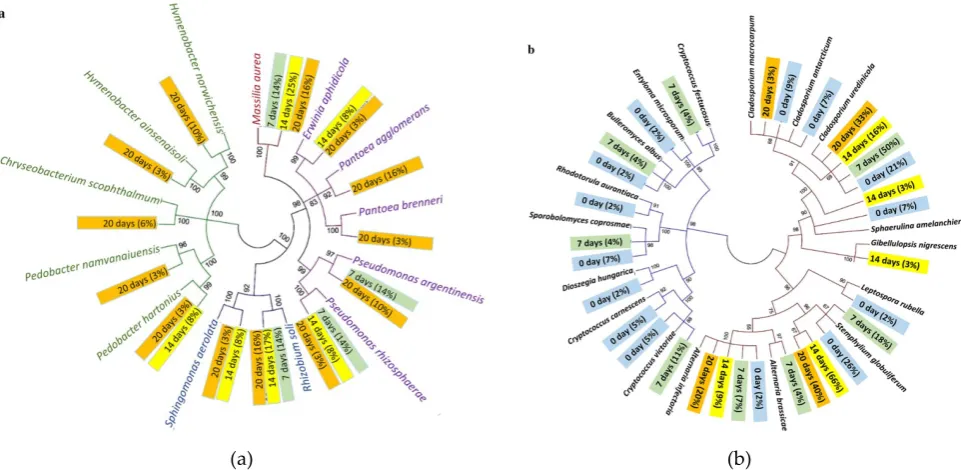
Fungi colonization were considered the major enzymatic active responsible for dew retting. However, recent studies have interested on the interaction of bacterial and fungi community during dew retting, for better knowledge on dew retting mechanisms occurred in bast fibers. Liu, et al. [101] have studied the relationship between chemical compositions of hemp fibers and microbial community variation throughout the retting process. Fungal colonization was found in the first seven days with very few bacteria were observed. Gradually increase of bacterial attachments on the fiber surface with fewer fungal hyphae were recorded after 20 days. The location for high bacterial intensity found highly degraded. Figure 9 shows the phylogenetic tree for the bacterial and fungal community presented in dew retting hemp fibers. Table 4 listed the highlights of ultrastructural changes on hemp stem and fibers with microbial activities along retting process.
(a) (b)
Table 4: Highlights of ultrastructural changes on hemp stem and fibers with microbial activities along retting process [102].
Retting Period
0 days
7 days
14-20 days
After 50 days
Changes in the
ultrastructure of
hemp stem and
fibers.
Stem with intact
layered structure
Un-collapsed, intact
cells with native cell geometry
Cytoplasm-filled
living cells
Clear surface with
undamaged cuticle and trichomes
Abundant chloroplasts
in the upper epidermis
Overall structure
intact
Fungal presence
on the surface and inside of the stems
Cellularanatomy is less stable with deformed epidermis and parenchyma
Cuticle severely decayed
Changes to the cellular
anatomy and major destruction of the living cells
Fiber bundles separated
from the epidermis and each other
Thick-walled cells seldom
colonized-Parenchyma totally degraded, but chlorenchyma has less damage
Bast fibers with infrequent
mild attack
Fiber morphology affectedthe characteristics of colonization and the decay morphology
Hemp structure severely affected and
disintegrated
Extensively colonized epidermis and cambium
with dominant bacteria
Complete destruction of the parenchyma cells and
loss of structural integrity in the bast regions
Hyphae inside of the lumina of all the cell types,
including the fibers
Intensified BFIs inside of the stem
Major loss to the anatomy and ultrastructure
Thick-walled bast fibers with decay characteristics
Effects on the fiber wall ultrastructure
Loosening /degradation of the CML, which led to
delamination and defibration
Loosening and decay of the S3 layer
Prominent effect on the S2 layer with delamination
within the s2transwall, and intrawall fractures in the S2
Direct removal of S2 materials
(e.g., S2 thinning, broken S2, and disintegration
into nano-sized cellulose fibrillar structures)
Microbial Dynamics and
Activities
Fungi
Rarely seen
Bacteria
Not observedFungi
Sparsely
growing mycelia
Less diverse
Colonization
outside of the cortical layers, primarily in living cells
Dense
Fungi
Extensive and abundant
Dense mycelia over cuticle
Diverse population
A variety of abundant
spores
Intense activities and
interactions Bacteria
Abundant
Fungi
Less abundant on the outside of the stem
Surface mycelia in non-living state, but active
hyphae inside of the stem
Mycelia an exclusive source of nutrients for the
invading bacteria, which reflected bacterial mycophagy (i.e., extracellular and endocellular biotrophic and extracellular necrotrophic activities)
colonization close to the surface trichomes
Dependence on
readily available foods
Less damage to
the cell walls Bacteria
Less abundant
Diverse population
Colonies over cuticle
Associated with hyphae
and fungal spores
More pronounced
activities after 20 days
Highly degraded cuticle Highly abundant inside and outside of the stems
Highly diverse and dominant role
Visible as dense overlay representing
biofilms
morphologically different colonies
randomly scattered cells
Showed strong BFIs
Bacterial motility occurred over and inside of the
hemp stem using fungal highways
Showed enhanced cutinolytic and cellulolytic3.4. Chemical retting
Chemical retting degrades non-cellulose components, but cellulose degradation happens when over-retting. Retting duration, chemical concentration and retting temperature have been reported that affecting the quality of retted bast fibers [14]. Besides, the uses of chemical and production of wastewater have increased the cost as well as polluting environmental. One study has reused the wastewater for continues chemical retting process. An addition of 50% of chemicals is needed to obtain comparable physic-mechanical properties of retted fiber as the first bath retted [103]. This method has essentially reduced the cost of chemical retting process as well as the wastewater generated.
Basu, et al. [104] have used a combination of sodium carbonate, sodium hydroxide and sodium sulphide for chemical fiber retting. Effective chemical retting reduces retting time to two hours. The chemical retted fiber showed positive results toward mechanical properties with reducing flexural rigidity, linear density and diameter. Softer fibers were obtained at the end of the study by removing impurities. However, contaminated water from chemical retting show exorbitant chemical oxygen demand, biological oxygen demand, total dissolved solids, sulphide content and having a blackish brown color. Therefore, a new treatment (electrocoagulation) has been introduced to reduce the contamination of wastewater and the outcome was satisfied. It provides quicker, simpler and economically to treat the water by using electrocoagulation [105]. A treatment of 90 mins give a noticeable reduction on contamination compounds. Besides, cheaper treatment cost was found as compared to the traditional method.
Yu and Yu [69] concluded that chemical retting is the most effective method to remove pectin and releases fibers from bundles. Acidic souring and alkaline boiling were used in the study. A concentration of 0.8-1.5 g/L of sulphuric acid was used for acid souring at 50 oC for an hour. A concentration of 10-15 g/L of sodium
hydroxide applied in alkali boiling with an assistant of sodium phosphate chemical at 100 oC for three hours.
Parikh, et al. [106] have studied the caustic soda retting process on kenaf fiber and the effects of additional chemical used. The additional 0.1-0.2% of anthraquinone, 1% of sodium bisulphite or higher contents of caustic soda only increase 0.77-8.00% of fiber weight loss, which does not justify any significant economic or environmental benefits. However, short retting period has been achieved and the retted fibers are recommended for automotive nonwovens applications.
3.5. Other retting methods
There are some other retting methods, have been introduced by researchers in hoping to have higher retting efficiency. However, such innovative retting methods may not reach to upstream due to multiple factors like cost issues, not user-friendly etc. One interesting retting method, microwave retting process being applied on flax fibers by Raveendran Nair, et al. [107]. The microwave energy applied to breaks strong pectin bonds between flax fiber and increases relative cellulose ratio in the fibers. On the other hand, the short pre-soaking period increases moisture and decreases the glass transition temperature of pectin. Therefore, the higher efficiency of pectin removal can be done by microwave energy. The 24 hours-soaked samples treated at 2 W/g power for 20 min showed the maximum retting efficiency of 100%. A mathematical model for compositional changes (rate of change of lignin content, hemicellulose content and cellulose content) during the microwave-assisted retting of flax stem [108] and method optimization [109, 110] were established in previous papers.
L. fibers [115]. Increased solubility of pectic was observed after the fungal treatment and subsequently improve the retting efficiency. Besides, enzyme retting considered as one of the most potential environment-friendly retting methods as an alternative to above-discussed retting methods, to produce high-quality fibers as reinforcements for composites will be discussed in detail in the following section.
4. Enzyme Retting
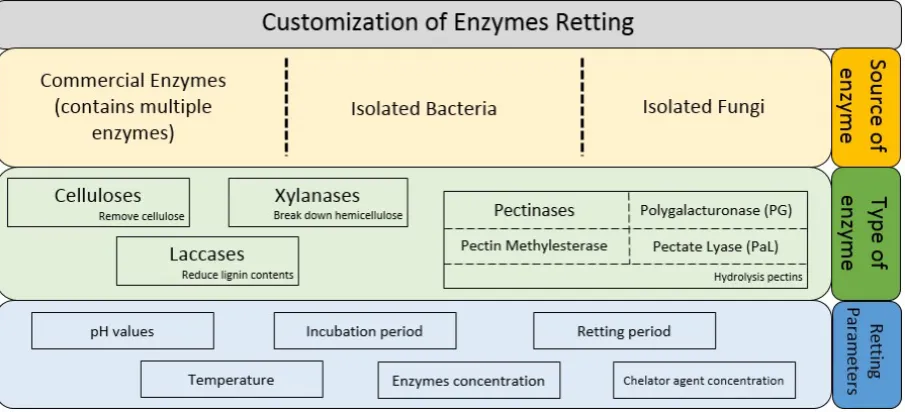
Enzyme retting process has been introduced for some years back as a potential substitution to above discussed retting methods. Dew retting process is often constrained by the poor and inconsistent fiber quality as well as geographical region, which require optimum temperature and moisture to promote microbial growth. Therefore, it is less efficient in countries with dry climate [58]. On the other hand, enzyme retting showed promising results in Europe when commercial pectinase-rich enzyme was used in retting of flax fiber. The retted flax fiber has higher yield and comparable quality to that of the water retted fiber [116]. Heller et al., 2015 concluded that substrate species, initial pH of culture medium, cultivation temperature, retting time and inoculum size are important parameters for enzyme retting. The parameters involved in microbes retting has been reviewed once previously [117]. Figure 10 shown the customization of enzyme retting process. Source of enzymes, type of enzymes and retting parameters are flexible to customize in order to obtain optimum fiber’s properties for specific applications. Yu and Yu [118] have recorded 85.54% and 91.31% removal of gum and pectin, respectively on microbe retted kenaf fiber. The author suggested the optimal retting conditions are held
on 32 oC with pH of 6.0 for 24 hours cultivation time and 21 hours of retting periods. However, gum removal
dissatisfied when compared to about 3% of gum residual, observed from chemical retting method [69]. Higher fiber tenacity from enzyme retting due to mild situations minimize the damage to cellulose.
Figure 10: Customization of enzymes retting
Many of the enzyme mixtures contain multiple enzyme activities against plant cell walls, including cellulases. Yılmaz [86] has confirmed that enzyme retting process produces the finest fiber as compared water retting or NaOH extraction. The concentration of xylanase has observed a significant reduction of linear density and breaking force. Besides, higher celluloses concentrations help to enhance breaking tenacity. High crystallinity fiber reported as more non-load bearing contents being removed by celluloses [119]. On the other hand, kenaf fiber has the highest amount of lignin content among bast fibers, lignin decomposition is relatively slow and therefore over-retting is not critical as in other bast fibers [120]. Higher laccases enzyme may apply on kenaf enzymatic retting.
enzyme retting to produce finer fiber with better fiber yields yet sacrificing a portion of fiber strength. Besides, the author found that enzyme retting was as efficient at 4 hours as 24 hours for fiber yield.
The right dosages of response enzyme are crucial to obtain an efficient enzyme retting process. The use of chelators into enzyme formulation have shown a magnificent effect on retting efficiency. Chelators are small
molecules that bind very tightly to calcium ion, Ca2+. Removal of epidermis and cuticle can be done easily since
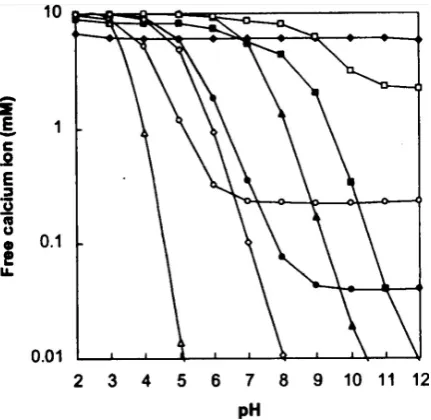
calcium is highly presented in the epidermis. Easier degradation of the plant cell wall was found with the appearance of chelators [123]. Among all types of chelators, ethylenediaminetetraacetic acid (EDTA) is considered as the best agent in facilitating enzyme retting [124]. The efficiency of chelator is highly affected by temperature and pH. Most of the chelators worked on alkaline medium but EDTA work effectively even under acid medium. Figure 11 shows the level concentration of free calcium dissolved by various chelators under
different pH conditions. The lesser the detection of the Ca2+ ions, the more effective the chelator agent is.
Besides, there was a strong dependence of depectinization selectivity on the stem section, decreased from bottom to top presumably due to higher lignin content at the bottom stem. The thinner bast fiber layer at the top section has a lower amount of wax substances and lignin in fibers, allowing easier entry of microbes and their secreted enzymes. Hence, easier depectinization resulted in over-retting and lower in cellulose content and tensile strength. Furthermore, the fiber responded differently to P. radiata Cel 26 and C. subvermispore, causing a variation in mechanical properties [20]. However, an observation of significant differences for properties of untreated hemp fiber in different locations.
Figure 11: Concentration of free calcium dissolved by various of chelators under different pH conditions Symbols: sulfate (♦), nitrilotriacetic acid (◊), EDTA (⌂), carbonate (□), citrate (○).orthophosphate (█), diphosphate (●), and tripolyphosphate (▲) [124].
4.1. Enzymatic retting mechanisms
Enzymatic hydrolyzations can be done on every lignocellulosic fiber component by different enzymes. Cellulose, hemicellulose, lignin and pectin components are hydrolyzed by cellulases, xylanases, laccases and pectinases, respectively.
Cellulases hydrolyze β-1,4-glucosidic bonds in the cellulose polymer. It degrades amorphous cellulose before crystalline stage cellulose. Therefore, appropriate cellulases enzymes enhanced fiber crystallinity and yet, deteriorated performances found under long retting period [125]. On the other hand, xylanases break down hemicellulosic components on fiber bundles by hydrolyzing β-1,4- bonds in xylan chains. The most important enzymes for degrading arabinoxylan are endo-1,4- β-xylanase and β-xylosidase [126]. Endo-1,4-β-xylanase responses to the xylan backbone arbitrarily which forms xylo-oligo- saccharides while β-xylosidase yields xylose by removing terminal monosaccharide at the non-reducing end of the oligosaccharides. Another enzyme that can affect the retting process of bast fibers is laccases enzyme, which can degrade lignin structure in the fiber.
polygalacturonase (PG) or pectate lyase (PaL). PG randomly hydrolyses α-1,4 galactosiduronic bonds in homogalacturonans, while PaL activity resulted in eliminative cleavage to give oligosaccharides with 4-deoxy-α-D-galact-4-enuronosyl groups at their non-reducing ends and α-D-glucuronic acid [127, 128]. Table 5 shows pectic enzymes production by numerous microorganisms and its substrate and fermentation methods (Solid-state fermentation, SSF and submerged fermentation, SmF).
Table 5: Pectic enzymes production by numerous microorganisms and its substrate and fermentation methods [129].
Microorganisms Enzyme Carbon sources Fermentation methods
Aspergillus spp. Pectinolytic enzymes orange-peel waste (OPW) wheat bran (WB) and SSF
A. niger Pectinase and cellulase WB and OPW SSF and SmF
A. giganteus Polygalacturonase (PG) OPW and pectin SmF
A. awamori Exo-PG and xylanase OPW and grape pomace SSF
A. japonicus Pectinase and CMCase OPW SmF
A. foetidus Pectinase OPW SmF
A. fumigatus Pectinase OPW SSF
A. sojae PG OPW SmF
A. sojae PG WB SSF
Penicillium oxalicum Pectinase and CMCase OPW SmF
P. oxalicum PaL OPW SSF
P. viridicatum Pectin lyase and PG OPW and WB SSF
Aspergillus & Penicillium PG OPW SSF
Trichoderma sp. PG OPW SSF
Eupenicillium javanicum Cellulase, pectinase, xylanase Citrus processing waste SSF
Pseudozyma sp. Pectinase OPW SSF
Bacillus licheniformis PG Pectin SmF
Thermoascus aurantiacus PG OPW and WB SmF
Rhizopus oryzae PaL OPW SSF
4.2. Commercial enzyme
There are always commercialize enzymes available in the market. However, very high in cost and fixed contents of enzymatic formulations discouraged the use of commercial enzymes. Currently, not many researchers are preferred to use commercial enzymes due to economical consideration. Therefore, the commercial enzymes discussion in this paper is limited to the studies that have been done for a long time.
Retting temperature is an essential parameter as enzymatic activities are sensitive to the
surrounding temperature. Novozymes 249 was worked optimized at 60 oC while Pectinol AC and
Ultrazym maximized their enzymatic activities at 45 oC [130]. Two commercial enzymes Lyvelin
(containing 11,000 units U/g of PG) and Peclyve (containing 375 U/g of PaL) being applied on flax fiber retting process and compared with dew retting (6 weeks of dew retting followed by mechanical scutching) [131]. PaL-enzymatic retted flax fiber shows similar strength performance and chemical compositions as dew-retted flax fiber. This was expected since PaL specifically eliminates pectin on fiber bundles.
To maximize enzyme retting efficiency, Akin, et al. [132] applied 0.05% v/v of Viscozyme L with 50mM EDTA chelator in water at pH 5.0 under three pressure conditions (pressurized, vacuum or atmospheric condition) and two enzymatic applications mode (enzyme applies before or after pressurized conditions being applied) [133]. The prior of enzyme application before pressurized conditions have improved enzymatic absorption in flax fibers while no statistical differences observed for prior pressurized and vacuum conditions before enzyme application. On the other hand, retting formulations have produced a fiber with different properties in term of fiber fineness and strength. The effect of chelator (EDTA) and Viscozyme found influencing the fiber strength and fiber yield, respectively [132].
Evans, et al. [134] have used four high PG content enzymes to study the effect of PG activity for retting process. Enzymatic activities of all enzymatic solutions used have shown in figure 12. A. niger was concluded as the best retting agent among others. It produces the strongest and finest flax fibers. This finding was agreed by Zhang, et al. [135], who studies the value of PG in enzymatic flax retting. The use of chelator reported further enhance the degree of flax retting by disrupting and weakening middle lamella. However, the importance of the use of non-cellulolytic enzyme solution to produce strong fibers shall not be ignored [134].
4.3. Bacteria isolated enzyme
To reduce the cost of enzyme retting process, bacteria or fungi isolation often being done to allow secretion of suitable enzyme(s) for retting. Wang, et al. [136] have isolated two bacterial strains (X12 and P05) that producing promising levels of xylanase and pectinase from the soil of a ramie garden. A synergic retting effect was observed on retted bast fiber under the formulation of two bacteria with equal ratio. A bioaugmentation concept is being applied by the author, showing better gum removal and breaking strength with shorter retting duration. Bioaugmentation is a practice of adding cultured microorganisms for biodegrading specific soil and groundwater contaminants originally. However, it works perfectly fine for bast fiber enzyme retting process. The author has confirmed that the composition of two bacterial strains (P05 and X12) change rapidly in the first 12 hours after bioaugmentation (Figure 13a). The amount of Clostridium, Bacillus and Paenibacillaceae increased significantly on 36th hours, which giving the highest pectinase activity in the retting process (Figure 13b). On the other hand, Bacillus pumilus strain, DKS1, was isolated from soil to study a combination of enzymatic and chemical retting process [137]. The microbial intervention followed by mild alkali treatment showed a high percentage of weight loss from retted fibers.
A thermo-alkaline PAL gene from an alkaliphilic Bacillus clausii strain S10 was cloned and overexpressed in Escherichia coli [138]. It shows the highest specific activities of 936.2 U/mg on methylated pectin at pH 10.5 and 70oC, presenting its high cleavage capability on methylated pectin. Another Bacillus strain, B. cereus was identified in the previous study, which able to produce the highest pectin hydrolysis activities in a selective culture medium among 153 single bacterial colonies [139]. Dramatically reduction of sugar contents in kenaf carbon source at 2-6 hours, indicating the growth and reproduction of bacterial strains. After that, relatively constant of sugar content giving
evidence that reproduction of B. cereus bacteria via consuming non-cellulolytic components from
bast fibers. The outcomes of retted kenaf fibers were reported close to B. tequilensis SV11-UV37 bacteria retted kenaf and Sunn hemp fibers, which reported a good efficiency-to-cost ratio under eco-friendly manner [140].
Four bacterial strains from Bacillus strains with high PG, PaL and xylanase activities with minimal cellulase activity were used in jute retting [141]. A highlighted synergetic effect of combining microorganisms resulting in better PG (35.52-46.61 IU/g), pectin lyase (39.79-72.12 U/ml) and xylanase 0.705-0.840 µmol/ml/min) activities. As expected, retting jute fibers produced remarkable enhancement on tenacity and fineness. On the contrary, contaminated post-retted water increases in hardness, acidic value, chemical oxygen demand (COD).
On the other hand, the comparison has been made between anaerobic strain Clostridium sp. L1/6
and aerobic strain Bacillus sp. ROO40B which isolated from raw flax and hemp ret liquor,
respectively [142]. The selection was based on the highest PG activity secreted by bacteria. One very distinct retting condition is the acidity of the incubation medium. Anaerobic strains found highest PG activity (100 IU/g) at pH 4.8 medium while aerobic strains displayed a pectinolytic activity (169 IU/g) at pH 8.0. Besides, absent of celluloses activity in ROO40B bacteria preserved the fiber strength but all pectinolytic anaerobic strains observed a significant amount of celluloses activity [143]. There are no significant retting differences observed between both bacteria in sugar hydrolysis process, even though aerobic bacteria were predominant in the first phase of the process while anaerobic strains became predominant at the latter process. The reason being this is because the growth of aerobic bacteria creates anaerobic condition that are suitable for anaerobic bacterial spore germination [142]. Another study has also confirmed that highest enzymatic activity for anaerobic strains and aerobic strains belongs to Clostridium sp. and Bacillus sp., respectively which showed a PG activity more than 100 IU/g [143]. High PG activity is well correlated with retting efficiency. Inoculation of water tanks with the highest PG activity strains reported reduced the time required by half (12 days to six days) [144].
ramie fiber as a carbon source, rather than treating fiber bundles with enzymes secreted by bacteria, was highlighted. This method could increase retting efficiency as well as reducing the costs. Lower gum contents on ramie fiber and higher breaking tenacity were achieved and additionally, consumption of chemicals, water and energy were significantly reduced. Another rapid ramie degumming by using Pactobacterium sp. CXJZU-120 was conducted and 90% of gum removal have been evaluated in just 6 hours of retting period [146]. Furthermore, it could reduce production cost up to 20.5%, resources optimized more than 50% as well as reducing 80% of pollution level. The study also recorded the schematic for traditional chemical and rapid enzymatic retting process, to provides a repeatable methodology for further researches.
Fungi always shares a common substrate with Bacteria, and their co-existing in many situations have gave us synergistic or antagonistic interactions. In the discussion of previous section, 3.3.1- Bacterial and Fungi Interaction, fungal colonization will come before growth of bacteria. An inversely relationship between fungal growth and tolerance towards bacteria was observed in aquatic solutions. The fungi growth is suppressed by the presences of bacteria. If fungi incubations done under controlled environmental. Established fungi medium producing higher biomass was reported [147].
(a) (b)
Figure 13: (a) The changes in bacterial composition during bioaugmentation retting throughout 60hours and (b) Enzyme activity levels (U/mL) of water retting, C and P05/X12 microbe retting, PX during bioaugmentation retting [136].
4.4. Fungi isolated enzyme
Under controlled environment, fungi isolated enzymes worked very well as compared to dew retting process. Maheshwari, et al. [148] have studied the effects of controlled colonization environment (spore concentration of 107 U/ml, 35 oC, four days of retting period and relative humidity of 45%) on Sunn hemp fiber. Traditional water- and dew-retting method have been used as controlled sets. The results showed all fungi retted fibers under a controlled environment having higher strength properties.
Musialak, et al. [149] have improved the retting process by using Aspergillus aculeatus (pectinases) to reduce pectin contents in tissue-cultured and field-grown plants. The fungus was contributing a significantly high retting efficiency without alteration of lignin or cellulose contents throughout the process. These have indicated that the over-expression of enzymes does not affect flax fiber chemical compositions. The growth rate and soluble sugar and starch contents were in the range of the control levels
Apart of this, Henriksson, et al. [150] have isolated Rhizomucor pusillus, Fusarium equiseti sw, Trichoderma 6irens sg, Alternaria alternata sog, F. oxysporum fw, Epicoccum nigrum hp, F. lateritium sr fungus from dew-retted flax, to produce enzyme filtrates that highly effective in flax retting process. However, only the R. pusillus enzyme with the use of chelator (oxalic acid) recorded a higher retting score than commercial enzyme (Flaxyzme). The fungus can be characterized as thermotolerant since it can be cultivated at higher temperature. Besides, the culture of R. pusillus did not show any significant xylanases and manages activities, suggesting hemicelluloses and cellulase may not be required to ret flax.
Zeni, et al. [151] have studied the PG activities from 107 microorganisms (92 newly isolated and 15 pre-identified), which collected from soil, leaves, fruits, teas, processed products and argo-industrial wastes. Among all, there are 20 strains able to synthesize PG activities above 3 U/ml. Furthermore, five isolated fungi (A. niger ATCC 9642, Penicillium sp. W23, Penicillium sp. W42 and Penicillium sp. D2) undergo 24 hours fermentation and led to PG activities of 30, 41, 43 and 45 U/ml, respectively. Throughout the kinetic study of PG activity, pH variation can be used to predict enzyme production, as the release of galacturonic acid strongly affects the acidity of fermentation medium [152].
The enzymatic activities of A. niger HYA4 incubation by solid-state fermentation (SSF) in the absence or near-absence of free water has been studied previously [153]. The SSF requires lower initial capital and operating cost, producing lesser wastewater and energy needed with higher productivity. The outcomes revealed that the HYA4 is a mesophilic fungus where grows best in
moderate temperature (32-36 oC). Besides, highest PG and xylanase activities found at 72 hours of
incubation period with low-cost wheat bran as carbon source. The proposed methodology has resulted in a significant reduction of flax fiber retting cost.
Wong, et al. [154] have discovered a newly isolated A. fumigatus R6 fungus using rice bran as a
substrate in SSF condition. Optimized conditions (initial moisture level of 49.6%, 33 oC and 129 hours
Figure 15: Response surface plot on the effect of (a) initial moisture level vs temperature, (b) initial moisture level vs incubation time and (c) temperature vs incubation time [154].
5. Properties of enzymatic retted fibers and its composites.
One of the useful applications of bast fibers are to serve as reinforcement in composites. Bast fibers reinforced in the petroleum-based matrix could provide a certain degree of biodegradability to the composite, in order to meet current global market needs. Besides, bast fibers reinforcement could enhance the strength properties of composites by regulating better load transfer mechanism. However, hydrophilic nature of bast fibers is not compatible with hydrophobic polymers, making the composite low in performances. The main reason behind this is the poor interfacial bonding between fiber and matrix. Therefore, enzymatic retting process allowed complete bast fiber separation from fiber bundles and removing non-cellulosic components on fiber surface to provides more active sides for stronger interface bonding, thereby improving strength performance of bast fibers reinforced polymer composites. Table 6 shows the recent study on enzyme retted fibers reinforced composites.
Kenaf bast fibers were retted under pectinase with chelators or NaOH retting process [155]. The retted fibers were then used in composite fiber reinforcements. All mechanical properties show chemical retting provides better enhancement to the fibers. However, enzyme retted fiber composites showed higher biodegradability. This is because the enzyme acts as a catalyst to boost up microorganic activities in the soil, thereby composite has higher biodegradability.
Optimum enzyme retting formulation was reported to improve the quality of fiber, thereby performance of composites. Smoother fiber surface and better separation from fiber bundles are the main reason to have better strength of enzyme retted bast fiber reinforced polymer composites. A study of the effectiveness of controlled water retting, enzyme retting with and without EDTA chelator was performed on flax fiber reinforced epoxy [156]. The untreated flax fibers were, on average, having 30-35% stronger than retted flax while no obvious difference in the strength properties among different retting methods. However, reinforcement of untreated flax fibers in epoxy matrix showed the lowest tensile value due to most of the reinforcement fibers are presented in bundle forms which have the brittle manner and significant amounts of debris. Thus, affecting the degree of adhesion and poor interfacial bonding between matrix and fiber was found. Besides, fiber bundled reinforcements would restrict effective surface area by covering the fiber surfaces and hindering active bonding between fiber and matrix [157].
On the contrary, EDTA treated flax fibers reinforced epoxy composite shows the highest tensile
value because chelator contains Ca2+ ions that allows the fibers to separate from epidermis easily,
resulted in clearer and smoother retted flax fibers. Over-retting was suspected for enzyme retting process with EDTA since relatively poorer bonding between matrix and fiber was observed. Excellent fiber separation with ethylene diamine tetramethylene phosphonic acid (EDTMPA) yet more environmentally friendly has been reported [158]. Relative environmental, economic and strength performance have been listed in table 7 for chelator, and combined chelator and enzyme-treated hemp reinforced polypropylene composite.
enzyme retted hemp fibers due to parenchyma cells elimination on the fiber surface, indicating good impregnation of the hemp fibers by epoxy matrix. There was no strong correlation being observed between pectinase retting process with composite’s impact strength and elongation at break of [161].
High effective of enzyme retting on impurities removal being confirmed in previous work [57]. Surface chemical modifications have induced by enzyme retting was evident by ATR-FTIR spectroscopy. Different density of spectrum peaks has been recorded in figure 16 when comparing
between raw and retted hemp fibers. Disappearances of 2850 cm-1 peak responsible to -CH
symmetrical stretching of polysaccharides, for waxes and oils. The absence of 1640, 1550-1400 and 1244 cm-1 peak observed in retted fibers responsible for effective removal of carboxylate ions for pectin and hemicellulose and aromatic ring in lignin by enzyme hydrolysis. Besides, a higher amount of cellulose and hemicellulose contents for retted fibers can be viewed by the sharper peak
of 3300 cm-1. Apart from this, synchronized information from XRD spectra shows a higher
crystallinity index for retted hemp fibers. When these retted fibers inserted into PBS matrix, better tensile and flexural strength values were observed, regardless of any fiber volume contents in the composites (Table 8).
Besides, enzyme retted kenaf fibers and modified starch biocomposites were fabricated with additional plasticizers (glycerol, poly(ethylene glycol) and poly(vinyl alcohol)(PVA)), for the purpose of starch fluidity [155]. The author claimed that PVA plasticizer is most compatible with enzyme retted kenaf fibers reinforced starch composites. At the same time, this composite formulation given highest biodegradability since the enzyme acts as a catalyst for microorganic activity in the soil, accelerating biodegradation rate. Two bacterial strains of Clostridium felsineum L. (MIC10690 and MIC 9539) have been selected for ramie microbe retting process in a previous study [63]. The results show chemical retting is more effective than both microbial retting process from the biochemical contents of retted ramie fibers. However, both microbe retted ramie fibers reinforced PHA composites found better mechanical properties than chemical retted fibers composite, suggesting higher suitability of microbial retting process for composite application.
Figure 16: ATR-FTIR spectroscopy for enzymatic retted and un-retted hemp fibers [57].
![Figure 1: Classification of natural fibers [14].](https://thumb-us.123doks.com/thumbv2/123dok_us/7866335.1304865/2.595.130.491.212.426/figure-classification-of-natural-fibers.webp)
![Figure 3: Cross-section of hemp stem and location of bast fiber [26].](https://thumb-us.123doks.com/thumbv2/123dok_us/7866335.1304865/3.595.81.500.286.478/figure-cross-section-hemp-stem-location-bast-fiber.webp)

![Figure 5: Schematic diagram of bast fiber processing [14].](https://thumb-us.123doks.com/thumbv2/123dok_us/7866335.1304865/9.595.140.433.538.718/figure-schematic-diagram-bast-fiber-processing.webp)
![Table 3: Ratio content of xylan to glucan, lignin to glucan and pectin acid to glucan in various hemp samples [76]](https://thumb-us.123doks.com/thumbv2/123dok_us/7866335.1304865/11.595.53.544.111.598/table-ratio-content-glucan-lignin-glucan-various-samples.webp)
![Figure 7: SEM images of (a) cross-sectional view and (b) longitudinal view of Kydia fiber [87]](https://thumb-us.123doks.com/thumbv2/123dok_us/7866335.1304865/13.595.98.488.343.554/figure-sem-images-cross-sectional-longitudinal-kydia-fiber.webp)
![Table 4: Highlights of ultrastructural changes on hemp stem and fibers with microbial activities along retting process [102]](https://thumb-us.123doks.com/thumbv2/123dok_us/7866335.1304865/15.842.46.781.84.527/table-highlights-ultrastructural-changes-microbial-activities-retting-process.webp)