O R I G I N A L R E S E A R C H
In Vitro Activity Of Ceftaroline And
Comparators Against
Staphylococcus aureus
Isolates: Results From 6 Years Of The ATLAS
Program (2012 To 2017)
This article was published in the following Dove Press journal: Infection and Drug Resistance
Zhijie Zhang1
Meng Chen2
Ying Yu3
Beini Liu3
Yong Liu1
1Department of Clinical Laboratory,
Shengjing Hospital, Shenyang, People’s
Republic of China;2Department of
Rheumatology, Affiliated Hospital of
Hebei University, Baoding, People’s
Republic of China;3Medical Affairs
Department, Pfizer Investment Co., Ltd,
Shanghai, People’s Republic of China
Background: Ceftaroline is effective against methicillin-resistant Staphylococcus aureus
(MRSA), but the resistance patterns still need to be defined. This study aimed to investigate the susceptibility ofS. aureusto ceftaroline and comparator antimicrobial agents in patients hospita-lized due to infection and to observe the patterns among different regions and over the years.
Methods: The Antimicrobial Testing Leadership And Surveillance (ATLAS) program
includes medical centers located in five geographical regions (Europe, Asia-Pacific, South America, Africa-West Asia, and the United States). The isolates were collected from different specimens from patients hospitalized between 2012 and 2017 due to documented complicated skin and soft tissue infection, complicated intra-abdominal infection, compli-cated urinary tract infection, lower respiratory tract infection, and bloodstream infection.
Results: During the study period, 61,045 isolates were tested, including 35,837 MRSA isolates
(58.7%) and 25,208 methicillin-sensitive S. aureus(MSSA) isolates (41.3%). For MRSA, the minimal inhibitory concentration (MIC)50, MIC90, and MIC range of ceftaroline were 0.5, 2, and
0.015–64μg/mL. The proportion of susceptible MRSA strains was 89.3%. The proportion of resistant MRSA strains was 0.7%. The susceptibility of allS. aureus, MRSA, and MSSA strains to ceftaroline remained relatively constant from 2012 to 2017. The susceptibility to ceftaroline ofS. aureus, MRSA, and MSSA strains from the United States, Europe, South America, and Africa/West Asia was high, while the susceptibility of the strains from Asia-Pacific was lower, especially for MRSA.
Conclusion: This study reveals the patterns of ceftaroline susceptibility of MRSA and
MSSA around the world and over 6 years.
Keywords: methicillin-resistantStaphylococcus aureus, ceftaroline, antibiotics, resistance,
sensitivity
Introduction
The increasing resistance of Staphylococcus aureus to antibiotics is a serious challenge for clinicians. Methicillin-resistant S. aureus (MRSA) is defined as S. aureus with a minimum inhibitory concentration (MIC) to oxacillin of≥4 µg/mL, as opposed to methicillin-sensitive S. aureus (MSSA), which is sensitive to peni-cillins and cephalosporins.1In addition toβ-lactam antibiotics, MRSA also shows resistance to macrolides, aminoglycosides, and fluoroquinolones.2 The multidrug resistance often encountered in MRSA strains greatly limits the treatment options.2 An environment with high antibiotic selection pressure (like hospitals) is conducive
Correspondence: Yong Liu Department of Clinical Laboratory, Shengjing Hospital, 36 Sanhao Street, Heping District, Shenyang, Liaoning,
People’s Republic of China
Tel +86 189 0401 0918 Fax +86 24 96615 72115 Email [email protected]
Infection and Drug Resistance
Dove
press
open access to scientific and medical research
Open Access Full Text Article
Infection and Drug Resistance downloaded from https://www.dovepress.com/ by 118.70.13.36 on 22-Aug-2020
to the development and propagation of MRSA,2 and the reported incidence of hospital-acquired MRSA ranges from 11.5% to 60%.3–5MRSA is associated with signifi -cant morbidity, mortality, increased length of stay, and higher costs.1 Continuous surveillance of drug resistance helps improve the management of patients with infection and provide guidance for the optimal selection of effective antimicrobial agents.6
Ceftaroline is afifth-generation broad-spectrum cepha-losporin, and it is active against MRSA and Gram-positive bacteria, and, to a lesser extent, against Gram-negative bacteria.7 It is used for community-acquired pneumonia and complicated skin infections.8–11Against MRSA, it is reported to be non-inferior to vancomycin.12–14
The patterns of ceftaroline resistance against MRSA around the globe still remain to be defined exactly. This study aimed to investigate the susceptibility ofS. aureusto ceftaroline and comparator antimicrobial agents in patients hospitalized due to infection and to observe the variation among different regions and years.
Materials And Methods
Bacterial Isolates
The Antimicrobial Testing Leadership And Surveillance (ATLAS) program includes medical centers and microbio-logical labs located infive geographical regions (Europe, Asia-Pacific, South America, Africa-West Asia, and the United States). The isolates were collected from different specimens from patients who were hospitalized between 2012 and 2017 due to: 1) complicated skin and soft tissue infection; 2) complicated intra-abdominal infection; 3) complicated urinary tract infection; 4) lower respiratory tract infection; 5) bloodstream infection such as sepsis. All isolates were identified by each participating center, stored in tryptic soy broth with glycerol at−70°C, and shipped to International Health Management Associates, Inc. (IHMA; Schaumburg, IL, USA) for susceptibility testing. Only isolates considered to be the potential pathogen of the patient’s infection were included in this study. Only the testing of the first isolate was performed per patient per infectious episode. Ethical approval was not required because the isolates were collected for routine diagnostic testing.
Antimicrobial Susceptibility Testing
Antimicrobial susceptibility testing was performed by IHMA using the broth microdilution method. MICs were interpreted
using both the Clinical and Laboratory Standards Institute (CLSI) and the European Committee on Antimicrobial Susceptibility Testing (EUCAST) breakpoints.15,16The break-point for ceftaroline is ≤1 μg/mL for CLSI and EUCAST. There is no breakpoint for oxacillin in the EUCAST file, leading to blank oxacillin results in the present study. The EUCAST file defined MIC >2μg/mL as MRSA, which is the same as MIC ≥4 μg/mL in the CLSI file, showing equivalence.
Comparator antimicrobial agents included those representing the most common classes of drugs used for the treatment ofS. aureus. Ceftaroline and the following comparator agents were tested: clindamycin, daptomycin, erythromycin, gentamicin, levofloxacin, linezolid, mino-cycline, moxifloxacin, oxacillin, teicoplanin, tigecycline, trimethoprim-sulfamethoxazole (TMP-SMX), and vanco-mycin. TheS. aureusATCC 29213 quality control strain was concurrently tested.
Results
Sample Retrieval
A total of 226 centers from five geographical regions (Europe, Asia-Pacific, South America, Africa-West Asia, and the United States) participated in the ATLAS program. The susceptibility testing of gentamicin and TMP-SMX was not performed in 2012 and 2013.
In Vitro Activity Of Ceftaroline Against
S.
aureus
During the study period, 61,045 isolates were tested, including 35,837 MRSA isolates (58.7%) and 25,208 MSSA isolates (41.3%) (Table 1). For S. aureus, the MIC50, MIC90, and MIC range of ceftaroline were 0.5, 1, and 0.015–64μg/mL, respectively. According to the CLSI and EUCAST MIC interpretations, the proportions of sus-ceptible strains were both 93.7%, and the proportions of resistant strains were both 0.4%. For MRSA, the MIC50, MIC90, and MIC range of ceftaroline were 0.5, 2, and 0.015–64 μg/mL, respectively. According to the CLSI and EUCAST MIC interpretations, the proportions of sus-ceptible strains were both 89.3%, and the proportions of resistant strains were both 0.7%. For MSSA, the MIC50, MIC90, and MIC range of ceftaroline were 0.25, 0.25, and 0.015–2μg/mL, respectively. According to the CLSI and EUCAST MIC interpretations, the proportions of suscep-tible strains were both >99.9%, and the proportions of resistant strains were both 0%.
Zhang et al Dovepress
Infection and Drug Resistance downloaded from https://www.dovepress.com/ by 118.70.13.36 on 22-Aug-2020
Susceptibilities Of
S. aureus
To
Ceftaroline And Comparators From 2012
To 2017
The susceptibility of allS. aureus, MRSA, and MSSA strains to ceftaroline were 92.5–95.1%, 86.8–91.8%, and 99.9–100% from 2012 to 2017, respectively (Table 2). InS. aureus, the susceptibility to all 14 tested antibiotics remained stable over time.
The activities of daptomycin, linezolid, teicoplanin, tigecycline, TMP-SMX, and vancomycin against MRSA remained unchanged over the years. The activities of all other antimicrobial agents against MRSA, except for oxa-cillin, showed steady improvement during the 6-year per-iod. Vancomycin (>99.9% susceptible), linezolid (>99.9% susceptible), teicoplanin (>99.9% susceptible), daptomy-cin (99.7% susceptible), tigecycline (98.7% susceptible), and TMP-SMX (95.5% susceptible) were the effective agents (>90% susceptible) against MRSA.
The activities of ceftaroline, clindamycin, daptomycin, gentamicin, linezolid, minocycline, oxacillin, teicoplanin, tige-cycline, TMP-SMX, and vancomycin against MSSA were unchanged over the years. The activities of levofloxacin and moxifloxacin against MSSA slightly decreased over the years. Although the activity of erythromycin against MSSA showed steady improvement (69.5% to 78.4% susceptible) during the 6-year period, it was a suboptimal option considering the useful activities of all other antimicrobial agents (>90% susceptible).
Susceptibilities Of
S. aureus
To
Ceftaroline And Comparators In
Different Regions
Table 3shows that the susceptibility to ceftaroline ofS. aureus, MRSA, and MSSA strains from the United States (99.7%, 99.5%, and 100%), Europe (96.6%, 94.0%, and >99.9%), South America (91.3%, 84.4%, and 100%), and Africa/West Asia (95.7%, 92.3%, and 100%) was high, while the
susceptibility of the strains from Asia-Pacific was markedly lower (85.0%, 75.9%, and 99.9%), especially for MRSA. In other words, the susceptibility of S. aureus and MRSA to ceftaroline was the highest in the United States, followed by Europe, Africa/West Asia, South America, and Asia-Pacific. Regarding MSSA, the susceptibility to ceftaroline was ≥99.9% in all regions of the world.
When examining the susceptibility of MRSA to compara-tor agents, the susceptibility among thefive geographic regions was comparable and remarkable for vancomycin (>99.9– 100%), linezolid (>99.9–100%), teicoplanin (99.9–100%), and daptomycin (99.6–99.9%). The activity of tigecycline against MRSA was favorable but relatively low in Asia-Pacific (95.8% susceptible), compared with other regions (99.2–99.9% susceptible). Minocycline and TMP-SMX were effective (>90% susceptible) against MRSA in all regions, except for Asia-Pacific with minocycline (72.4% susceptible) and Africa-West Asia with TMP-SMX (89.5% susceptible). The activities of daptomycin, linezolid, minocycline, oxacillin, teicoplanin, tigecycline, and vancomycin against MSSA showed similar trends with ceftaroline. Levofloxacin and mox-ifloxacin had relatively poor activity in the United States (86.3% and 86.5% susceptible, respectively), compared with other regions (>90% susceptible). Erythromycin was not an optimal option in any region.
Characteristics Of Ceftaroline-Resistant
S. aureus
Table 4 shows the distribution of ceftaroline MICs for
isolates of ceftaroline-resistant S. aureus. These isolates were all MRSA. The MIC50, MIC90, and MIC range of ceftaroline were 4, 4, and 4–64 μg/mL, respectively.
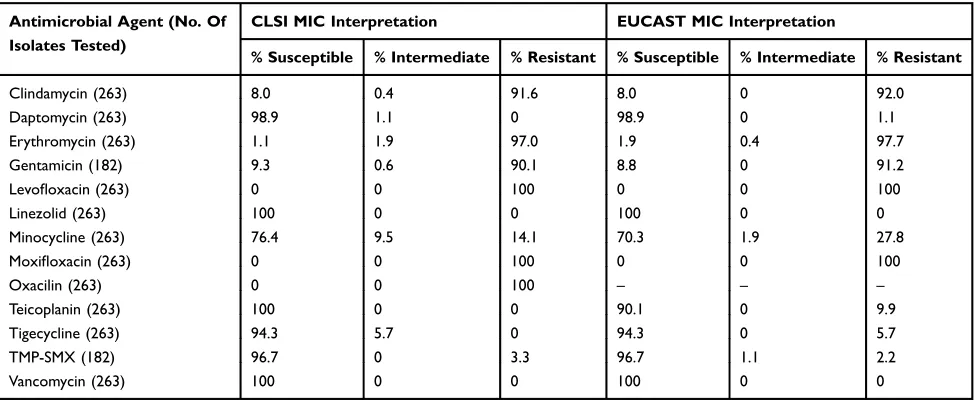
Table 5 shows the susceptibility/resistance pattern of
these strains against the comparators. The susceptibility of ceftaroline-resistant MRSA against clindamycin, ery-thromycin, gentamicin, levofloxacin, and moxifloxacin was dramatically lower than overall MRSA.
Table 1In Vitro Activity Of Ceftaroline Tested Against Isolates OfStaphylococcus aureus
Organism (No. Of Isolates Tested)
Ceftaroline MIC (mg/L) CLSI MIC Interpretation EUCAST MIC Interpretation
MIC50 MIC90 MIC Range % Susceptible % SDD % Resistant % Susceptible % SDD % Resistant
S. aureus(61,045) 0.5 1 0.015–64 93.7 5.9 0.4 93.7 5.9 0.4
MRSA (35,837) 0.5 2 0.015–64 89.3 10.0 0.7 89.3 10.0 0.7
MSSA (25,208) 0.25 0.25 0.015–2 >99.9 <0.1 0 >99.9 <0.1 0
Abbreviations:MIC, minimal inhibitory concentration; CLSI, Clinical and Laboratory Standards Institute; EUCAST, European Committee on Antimicrobial Susceptibility Testing; SDD, susceptible-dose dependent; MRSA, methicillin-resistantStaphylococcus aureus; MSSA, methicillin-sensitiveStaphylococcus aureus.
Infection and Drug Resistance downloaded from https://www.dovepress.com/ by 118.70.13.36 on 22-Aug-2020
T able 2 Susceptibilities Of Staph ylococcus aureus T o Ceftar oline And Comparators Fr om 2012 To 2017 V ariable % Susceptible T o Antimicr obial Ag ents: CLSI/EUCAST (No . Of Isolates T ested) All Y ears 2012 2013 2014 2015 2016 2017 S . aureus Ceftar oline 93.7/93.7 (61,045) 92.7/92.7 (8,827) 92.5/92.5 (11,680) 93.4/93.4 (11,191) 93.9/93.9 (10,158) 95.1/95.1 (10,682) 94.7/94.7 (8,507) Clindam ycin 75.6/75.0 (61,045) 73.8/73.0 (8,827) 74.9/74.3 (11,680) 74.4/74.1 (11,191) 76.0/75.6 (10,158) 75.8/75.0 (10,682) 78.8/78.4 (8,507) Daptom ycin 99.8/99.8 (61,045) >99.9/>99.9 (8,827) 99.4/99.4 (11,680) 99.7/99.7 (11,191) 99.8/99.8 (10,158) 99.9/99.9 (10,682) 99.9/99.9 (8,507) Er ythr om ycin 49.5/51.9 (61,045) 42.3/48.4 (8,827) 46.6/51.3 (11,680) 50.1/51.7 (11,191) 51.3/52.0 (10,158) 50.7/51.3 (10,682) 56.3/57/0 (8,507) Gentamicin 85.3/61.8 (40,538) -/-(0) -/-(0) 84.7/1.8 (11,191) 85.4/84.9 (10,158) 85.2/84.2 (10,682) 85.9/85.2 (8,507) Lev o fl ox acin 57.8/57.8 (61,045) 55.4/55.4 (8,827) 57.1/57.1 (11,680) 56.5/56.5 (11,191) 58.6/58.6 (10,158) 58.8/58.8 (10,682) 60.5/60.5 (8,507) Linezolid >99.9/>99.9 (61,045) 100/100 (8,827) >99.9/>99.9 (11,680) >99.9/>99.9 (11,191) 100/100 (10,158) 99.9/99.9 (10,682) >99.9/>99.9 (8,507) Minocycline 93.6/89.9 (61,045) 91.3/86.0 (8,827) 93.0/86.4 (11,680) 94.3/91.8 (11,191) 94.4/91.8 (10,158) 93.6/91.1 (10,682) 95.2/92.6 (8,507) Mo xi fl o xacin 58.0/57.7 (61,045) 55.9/55.1 (8,827) 57.3/57.1 (11,680) 56.8/56.5 (11,191) 58.8/58.4 (10,158) 58.9/58.6 (10,682) 60.6/60.4 (8,507) Oxacilin 41.3/-(61,045) 40.5/-(8,827) 42.9/-(11,680) 40.7/-(11,191) 39.8/-(10,158) 40.4/-(10,682) 43.6/-(8,507) T eicoplanin >99.9/98.3 (61,045) >99.9/98.8 (8,827) 99.9/97.3 (11,680) >99.9/98.6 (11,191) >99.9/97.6 (10,158) 100/98.7 (10,682) 100/98.9 (8,507) Tigecycline 99.0/99.0 (61,045) 99.5/99.5 (8,827) 97.8/97.8 (11,680) 98.1/98.1 (11,191) 99.7/99.7 (10,158) 99.8/99.8 (10,682) 99.6/99.6 (8,507) TMP-SMX 96.7/96.7 (40,538) -/-(0) -/-(0) 96.5/96.5 (11,191) 96.9/96.9 (10,158) 96.5/96.5 (10,682) 96.8/96.8 (8,507) V ancom ycin >99.9/>99.9 (61,045) 100/100 (8,827) 100/100 (11,680) >99.9/>99.9 (11,191) >99.9/>99.9 (10,158) 100/100 (10,682) 100/100 (8,507) MRSA Ceftar oline 89.3/89.3 (35,837) 87.7/87.7 (5,253) 86.8/86.8 (6,666) 89.0/89.0 (6,638) 89.9/89.9 (6,112) 91.8/91.8 (6,371) 90.6/90.6 (4,797) Clindam ycin 61.7/61.1 (35,837) 59.3/58.7 (5,253) 59.8/59.3 (6,666) 59.8/59.5 (6,638) 63.4/62.9 (6,112) 62.9/61.9 (6,371) 65.7/65.1 (4,797) Daptom ycin 99.7/99.7 (35,837) 99.9/99.9 (5,253) 99.3/99.3 (6,666) 99.7/99.7 (6,638) 99.8/99.8 (6,112) >99.9>99.9 (6,371) 99.8/99.8 (4,797) Er ythr om ycin 31.0/32.5 (35,837) 23.8/27.2 (5,253) 26.3/29.4 (6,666) 30.6/31.8 (6,638) 33.8/34.3 (6,112) 33.2/33.7 (6,371) 39.3/39.7 (4,797) Gentamicin 78.4/56.6 (23,918) -/-(0) -/-(0) 77.5/1.1 (6,638) 78.8/78.3 (6,112) 78.5/77.5 (6,371) 79.0/78.0 (4,797) Lev o fl ox acin 32.9/32.9 (35,837) 29.6/29.6 (5,253) 29.9/29.9 (6,666) 31.0/31.0 (6,638) 35.5/35.5 (6,112) 36.3/36.3 (6,371) 35.8/35.8 (4,797) Linezolid >99.9/>99.9 (35,837) 100/100 (5,253) >99.9/>99.9 (6,666) 100/100 (6,638) 100/100 (6,112) 99.9/99.9 (6,371) >99.9/>99.9 (4,797) Minocycline 89.9/85.0 (35,837) 86.2/80.2 (5,253) 88.5/79.9 (6,666) 91.4/88.1 (6,638) 91.2/87.4 (6,112) 89.9/86.3 (6,371) 92.5/88.5 (4,797) Mo xi fl o xacin 33.1/32.8 (35,837) 29.9/29.3 (5,253) 30.1/29.9 (6,666) 31.4/31.0 (6,638) 35.6/35.4 (6,112) 36.4/36.1 (6,371) 35.9/35.7 (4,797) Oxacilin 0/-(35,837) 0/-(5,253) 0/-(6,666) 0/-(6,638) 0/-(6,112) 0/-(6,371) 0/-(4,797) T eicoplanin >99.9/97.3 (35,837) 99.9/98.1 (5,253) 99.9/96.1 (6,666) >99.9/97.8 (6,638) >99.9/96.2 (6,112) 100/98.0 (6,371) 100/98.2 (4,797) Tigecycline 98.7/98.7 (35,837) 99.4/99.4 (5,253) 96.8/96.8 (6,666) 97.7/97.7 (6,638) 99.5/99.5 (6,112) 99.61/99.6 (6,371) 99.3/99.3 (4,797) TMP-SMX 95.5/95.5 (23,918) -/-(0) -/-(0) 95.3/95.3 (6,638) 95.7/95.7 (6,112) 95.2/95.2 (6,371) 95.8/95.8 (4,797) V ancom ycin >99.9/>99.9 (35,837) 100/100 (5,253) 100/100 (6,666) >99.9/>99.9 (6,638) >99.9/>99.9 (6,112) 100/100 (6,371) 100/100 (4,797) MSSA Ceftar oline >99.9/>99.9 (25,208) 99.9/99.9 (3,574) >99.9/>99.9 (5,014) 99.9/99.9 (4,553) 100/100 (4,046) 100/100 (4,311) 100/100 (3,710) Clindam ycin 95.3/94.7 (25,208) 95.1/94.0 (3,574) 95.0/94.3 (5,014) 95.7/95.3 (4,553) 95.1/94.7 (4,046) 95.0/94.3 (4,311) 95.8/95.7 (3,710) Daptom ycin 99.9/99.9 (25,208) 100/100 (3,574) 99.6/99.6 (5,014) 99.8/99.8 (4,553) >99.9/>99.9 (4,046) 99.9/99.9 (4,311) >99.9/>99.9 (3,710) ( Continued )
Zhang et al Dovepress
Infection and Drug Resistance downloaded from https://www.dovepress.com/ by 118.70.13.36 on 22-Aug-2020
T able 2 (Continued). V ariable % Susceptible T o Antimicr obial Ag ents: CLSI/EUCAST (No . Of Isolates T ested) All Y ears 2012 2013 2014 2015 2016 2017 Er ythr om ycin 75.8/79.4 (25,208) 69.5/79.5 (3,574) 73.5/80.4 (5,014) 78.5/80.8 (4,553) 77.7/78.6 (4,046) 76.5/77.2 (4,311) 78.4/79.4 (3,710) Gentamicin 95.2/69.3 (16,620) -/-(0) -/-(0) 95.3/2.6 (4,553) 95.3/94.9 (4,046) 95.2/94.2 (4,311) 94.8/94.5 (3,710) Lev o fl ox acin 93.0/93.0 (25,208) 93.3/93.3 (3,574) 93.2/93.2 (5,014) 93.7/93.7 (4,553) 93.5/93.5 (4,046) 92.1/92.1 (4,311) 92.4/92.4 (3,710) Linezolid 100/100 (25,208) 100/100 (3,574) 100/100 (5,014) >99.9/>99.9 (4,553) 100/100 (4,046) 100/100 (4,311) 100/100 (3,710) Minocycline 98.9/96.9 (25,208) 98.8/94.6 (3,574) 99.0/95.1 (5,014) 98.7/97.2 (4,553) 99.2/98.4 (4,046) 99/98.4 (4,311) 98.5/97.8 (3,710) Mo xi fl o xacin 93.3/92.9 (25,208) 94.1/93.0 (3,574) 93.4/93.2 (5,014) 93.8/93.6 (4,553) 93.7/93.3 (4,046) 92.1/91.9 (4,311) 92.5/92.4 (3,710) Oxacilin 100/-(25,208) 100/-(3,574) 100/-(5,014) 100/-(4,553) 100/-(4,046) 100/-(4,311) 100/-(3,710) T eicoplanin >99.9/99.6 (25,208) 100/99.8 (3,574) >99.9/98.8 (5,014) 100/99.8 (4,553) 100/99.8 (4,046) 100/99.8 (4,311) 100/99.8 (3,710) Tigecycline 99.5/99.5 (25,208) 99.6/99.6 (3,574) 99.2/99.2 (5,014) 98.7/98.7 (4,553) 99.9/99.9 (4,046) 100/100 (4,311) >99.9/>99.9 (3,710) TMP-SMX 98.4/98.4 (16,620) -/-(0) -/-(0) 98.3/98.3 (4,553) 98.6/98.6 (4,046) 98.5/98.5 (4,311) 98.2/98.2 (3,710) V ancom ycin 100/100 (25,208) 100/100 (3,574) 100/100 (5,014) 100/100 (4,553) 100/100 (4,046) 100/100 (4,311) 100/100 (3,710) Abbre viations: CLSI, Clinical and Laborator y Standar ds Institute; EUC AST , Eur opean Committee on Antimicr obial Susceptibility Testing; TMP-SMX, trimethoprim-sulfamethoxazole; MRSA, methicillin-r esistant Staph ylococcus aureus ; MSSA, methicillin-sensitiv e Staph ylococcus aureus . T able 3 Susceptibilities Of Staph ylococcus aureus T o Ceftar oline And Comparators In Differ ent Regions V ariable % Susceptible T o Antimicr obial Age nts: CLSI/EUCAST (No . Of Isolates T ested) All Regions The United States Eur ope Asia-P aci fi c South America Africa-W est Asia S . aureus Ceftar oline 93.7/93.7 (61,045) 99.7/99.7 (6,560) 96.6/96.6 (28,462) 85.0/85.0 (12,855) 91.3/91.3 (8,471) 95.7/95.7 (4,697) Clindam ycin 75.6/75.0 (61,045) 78.0/77.7 (6,560) 80.0/79.2 (28,462) 65.0/64.6 (12,855) 73.0/72.8 (8,471) 78.5/78.0 (4,697) Daptom ycin 99.8/99.8 (61,045) 99.9/99.9 (6,560) 99.7/99.7 (28,462) 99.8/99.8 (12,855) 99.9/99.9 (8,471) 99.9/99.9 (4,697) Er ythr om ycin 49.5/51.9 (61,045) 25.9/28.1 (6,560) 54.0/56.6 (28,462) 47.0/49.1 (12,855) 53.1/55.4 (8,471) 55.4/57.7 (4,697) Gentamicin 85.3/61.8 (40,538) 97.1/60.4 (3,800) 91.2/65.7 (19,188) 69.3/55.2 (8,289) 84.3/61.6 (6,022) 79.0/57.6 (3,239) Lev o fl ox acin 57.8/57.8 (61,045) 49.5/49.5 (6,560) 54.7/54.7 (28,462) 61.3/61.3 (12,855) 69.8/69.8 (8,471) 56.5/56.5 (4,697) Linezolid >99.9/>99.9 (61,045) >99.9/>99.9 (6,560) >99.9/>99.9 (28,462) >99.9/>99.9 (12,855) 100/100 (8,471) >99.9/>99.9 (4,697) Minocycline 93.6/89.9 (61,045) 97.6/95.1 (6,560) 95.9/92.7 (28,462) 82.3/76.0 (12,855) 99.4/98.0 (8,471) 95.2/89.4 (4,697) Mo xi fl o xacin 58.0/57.7 (61,045) 49.6/49.4 (6,560) 54.9/54.5 (28,462) 61.5/61.2 (12,855) 70.1/69.8 (8,471) 56.6/56.4 (4,697) Oxacilin 41.3/-(61,045) 32.4/-(6,560) 43.5/-(28,462) 37.9/-(12,855) 44.5/-(8,471) 44.1/-(4,697) T eicoplanin >99.9/98.3 (61,045) 100/99.6 (6,560) >99.9/98.8 (28,462) >99.9/95.8 (12,855) >99.9/99.0 (8,471) >99.9/99.1 (4,697) Tigecycline 99.0/99.0 (61,045) 99.7/99.7 (6,560) 99.4/99.4 (28,462) 96.9/96.9 (12,855) >99.9/>99.9 (8,471) 99.9/99.9 (4,697) ( Continued )
Infection and Drug Resistance downloaded from https://www.dovepress.com/ by 118.70.13.36 on 22-Aug-2020
T able 3 (Continued). V ariable % Susceptible T o Antimicr obial Age nts: CLSI/EUCAST (No . Of Isolates T ested) All Regions The United States Eur ope Asia-P aci fi c South America Africa-W est Asia TMP-SMX 96.7/96.7 (40,538) 96.8/96.8 (3,800) 98.3/98.3 (19,188) 93.0/93.0 (8,289) 99.0/99.0 (6,022) 92.2/92.2 (3,239) V ancom ycin >99.9/>99.9 (61,045) >99.9/>99.9 (6,560) >99.9/>99.9 (28,462) >99.9/>99.9 (12,855) 100/100 (8,471) 100/100 (4,697) MRSA Ceftar oline 89.3/89.3 (35,837) 99.5/99.5 (4,435) 94.0/94.0 (16,087) 75.9/75.9 (7,989) 84.4/84.4 (4,700) 92.3/92.3 (2,626) Clindam ycin 61.7/61.1 (35,837) 70.3/70.1 (4,435) 67.4/66.5 (16,087) 49.6/49.2 (7,989) 53.8/53.5 (4,700) 62.8/62.4 (2,626) Daptom ycin 99.7/99.7 (35,837) 99.9/99.9 (4,435) 99.6/99.6 (16,087) 99.8/99.8 (7,989) 99.9/99.9 (4,700) 99.9/99.9 (2,626) Er ythr om ycin 31.0/32.5 (35,837) 10.9/11.9 (4,435) 34.7/36.5 (16,087) 29.8/31.3 (7,989) 35.8/37.2 (4,700) 36.8/38.0 (2,626) Gentamicin 78.4/56.6 (23,918) 96.4/59.9 (2,574) 86.7/62.8 (11,021) 56.8/45.6 (5,195) 76.4/54.7 (3,290) 68.3/49.0 (1,838) Lev o fl ox acin 32.9/32.9 (35,837) 31.9/31.9 (4,435) 25.0/25.0 (16,087) 41.6/41.6 (7,989) 48.5/48.5 (4,700) 29.5/29.5 (2,626) Linezolid >99.9/>99.9 (35,837) >99.9/>99.9 (4,435) >99.9/>99.9 (16,087) >99.9/>99.9 (7,989) 100/100 (4,700) >99.9/>99.9 (2,626) Minocycline 89.9/85.0 (35,837) 97.2/94.2 (4,435) 93.5/89.4 (16,087) 72.4/63.8 (7,989) 99.3/98.1 (4,700) 92.5/83.6 (2,626) Mo xi fl o xacin 33.1/32.8 (35,837) 31.9/31.8 (4,435) 25.2/24.9 (16,087) 41.8/41.5 (7,989) 48.7/48.4 (4,700) 29.6/29.4 (2,626) Oxacilin 0/-(35,837) 0/-(4,435) 0/-(16,087) 0/-(7,989) 0/-(4,700) 0/-(2,626) T eicoplanin >99.9/97.3 (35,837) 100/99.4 (4,435) >99.9/98.1 (16,087) 99.9/93.4 (7,989) >99.9/98.9 (4,700) 100/98.6 (2,626) Tigecycline 98.7/98.7 (35,837) 99.5/99.5 (4,435) 99.2/99.2 (16,087) 95.8/95.8 (7,989) 99.9/99.9 (4,700) 99.9/99.9 (2,626) TMP-SMX 95.5/95.5 (23,918) 96.0/96.0 (2,574) 97.7/97.7 (11,021) 90.5/90.5 (5,195) 98.7/98.7 (3,290) 89.5/89.5 (1,838) V ancom ycin >99.9/>99.9 (35,837) >99.9/>99.9 (4,435) >99.9/>99.9 (16,087) >99.9/>99.9 (7,989) 100/100 (4,700) 100/100 (2,626) MSSA Ceftar oline >99.9/>99.9 (25,208) 100/100 (2,125) >99.9/>99.9 (12,375) 99.9/99.9 (4,866) 100/100 (3,771) 100/100 (2,071) Clindam ycin 95.3/94.7 (25,208) 94.0/93.7 (2,125) 96.4/95.7 (12,375) 90.3/89.8 (4,866) 97.0/96.7 (3,771) 98.4/97.7 (2,071) Daptom ycin 99.9/99.9 (25,208) 99.8/99.8 (2,125) 99.8/99.8 (12,375) 99.9/99.9 (4,866) >99.9/>99.9 (3,771) 100/100 (2,071) Er ythr om ycin 75.8/79.4 (25,208) 57.1/61.9 (2,125) 79.0/82.6 (12,375) 75.2/78.3 (4,866) 74.6/78.2 (3,771) 79.0/82.6 (2,071) Gentamicin 95.2/69.3 (16,620) 98.7/61.5 (1,226) 97.3/69.7 (8,167) 90.3/71.3 (3,094) 93.8/69.9 (2,732) 93.2/68.9 (1,401) Lev o fl ox acin 93.0/93.0 (25,208) 86.3/86.3 (2,125) 93.3/93.3 (12,375) 93.7/93.7 (4,866) 96.5/96.5 (3,771) 90.8/90.8 (2,071) Linezolid 100/100 (25,208) 100/100 (2,125) 100/100 (12,375) >99.9/>99.9 (4,866) 100/100 (3,771) 100/100 (2,071) Minocycline 98.9/96.9 (25,208) 98.4/97.0 (2,125) 98.9/96.9 (12,375) 98.7/96.1 (4,866) 99.5/98.0 (3,771) 98.6/96.7 (2,071) Mo xi fl o xacin 93.3/92.9 (25,208) 86.5/86.3 (2,125) 93.6/93.1 (12,375) 93.9/93.6 (4,866) 96.7/96.4 (3,771) 90.9/90.6 (2,071) Oxacilin 100/-(25,208) 100/-(2,125) 100/-(12,375) 100/-(4,866) 100/-(3,771) 100/-(2,071) T eicoplanin >99.9/99.6 (25,208) 100/>99.9 (2,125) >99.9/99.7 (12,375) 100/99.6 (4,866) 100/99.1 (3,771) >99.9/99.7 (2,071) Tigecycline 99.5/99.5 (25,208) 99.9/99.9 (2,125) 99.6/99.6 (12,375) 98.7/98.7 (4,866) >99.9/>99.9 (3,771) >99.9/>99.9 (2,071) TMP-SMX 98.4/98.4 (16,620) 98.6/98.6 (1,226) 99.0/99.0 (8,167) 97.1/97.1 (3,094) 99.3/99.3 (2,732) 95.9/95.9 (1,401) V ancom ycin 100/100 (25,208) 100/100 (2,125) 100/100 (12,375) 100/100 (4,866) 100/100 (3,771) 100/100 (2,071) Abbre viations: CLSI, Clinical and Laborator y Standar ds Institute; EUC AST , Eur opean Committee on Antimicr obial Susceptibility Testing; TMP-SMX, trimethoprim-sulfamethoxazole; MRSA, methicillin-r esistant Staph ylococcus aureus ; MSSA, methicillin-sensitiv e Staph ylococcus aureus .
Zhang et al Dovepress
Infection and Drug Resistance downloaded from https://www.dovepress.com/ by 118.70.13.36 on 22-Aug-2020
Discussion
There is a plea for worldwide, automated, and comprehen-sive surveillance of antimicrobial resistance patterns.17 The ATLAS program provides the comprehensive suscept-ibility profile of ceftaroline and other antimicrobial agents againstS. aureus. It involves data from different years and regions of the world and helps provide certain help for global surveillance of bacterial resistance. The ATLAS program also includes other Gram-positive or -negative bacteria, but this study only focused on S. aureus, which is of greater clinical attention to the important threat level of MRSA. The resistance of other pathogenic bacteria will be analyzed in future studies.
During the study period and across thefive geographi-cal regions covered by ATLAS, MRSA represented 58.7% of S. aureus isolates. This rate is higher than that of the Tigecycline Evaluation and Surveillance Trial (TEST) (40.2%)18 and TEST study specific to blood-borne infec-tions (33.0%).19 The SENTRY surveillance report for Asia-Pacific and Latin America showed MRSA rates of 37.0% and 44.7%, respectively,20,21 which are lower than
in the ATLAS study. These differences might come from the time period covered by the different studies, as well as from the source of patients/samples. In the present study, the frequencies of MRSA across the years were 59.5% in 2012, 57.1% in 2013, 59.3% in 2014, 60.2% in 2015, 59.6% in 2016, and 56.4% in 2017, suggesting a relatively stable frequency during this period.
Previous studies reported that the lowest antibiotic susceptibility of blood-borne infections from S. aureus
was to penicillin (around 15%).18,19 A surveillance study from the Antimicrobial Resistance Surveillance Network in Germany reported that the susceptibility of MRSA to linezolid, teicoplanin, tigecycline, and vancomycin was high.22 The SENTRY program indicates that the suscept-ibility of MRSA to vancomycin remains high around the globe and that newer agents also show good susceptibility profiles.23 The report from the German surveillance net-work did not examine ceftaroline,22 but the SENTRY program reported that the susceptibility of MSSA to cef-taroline was 100% and that of MRSA was 91.6%.23 For skin and soft tissue infections with suspected MRSA, the
Table 4Distribution Of Ceftaroline MICs For Isolates Of Ceftaroline-ResistantStaphylococcus aureus
Organism (No. Of Isolates Tested) No. Of Isolates Inhibited At Ceftaroline MIC (mg/L) MIC (mg/L)
4 8 16 32 64 MIC50 MIC90
MRSA* (263) 238 22 0 0 3 4 4
Note:*All ceftaroline-resistant isolates were MRSA.
Abbreviations:MIC, minimal inhibitory concentration; MRSA, methicillin-resistantStaphylococcus aureus.
Table 5Susceptibilities Of Ceftaroline-Resistant MRSA To Comparators
Antimicrobial Agent (No. Of Isolates Tested)
CLSI MIC Interpretation EUCAST MIC Interpretation
% Susceptible % Intermediate % Resistant % Susceptible % Intermediate % Resistant
Clindamycin (263) 8.0 0.4 91.6 8.0 0 92.0
Daptomycin (263) 98.9 1.1 0 98.9 0 1.1
Erythromycin (263) 1.1 1.9 97.0 1.9 0.4 97.7
Gentamicin (182) 9.3 0.6 90.1 8.8 0 91.2
Levofloxacin (263) 0 0 100 0 0 100
Linezolid (263) 100 0 0 100 0 0
Minocycline (263) 76.4 9.5 14.1 70.3 1.9 27.8
Moxifloxacin (263) 0 0 100 0 0 100
Oxacilin (263) 0 0 100 – – –
Teicoplanin (263) 100 0 0 90.1 0 9.9
Tigecycline (263) 94.3 5.7 0 94.3 0 5.7
TMP-SMX (182) 96.7 0 3.3 96.7 1.1 2.2
Vancomycin (263) 100 0 0 100 0 0
Abbreviations:MRSA, methicillin-resistantStaphylococcus aureus; CLSI, Clinical and Laboratory Standards Institute; MIC, minimal inhibitory concentration; EUCAST, European Committee on Antimicrobial Susceptibility Testing; TMP-SMX, trimethoprim sulfamethoxazole.
Infection and Drug Resistance downloaded from https://www.dovepress.com/ by 118.70.13.36 on 22-Aug-2020
guidelines usually recommend oral TMP-SMX, doxycy-cline, minocydoxycy-cline, and clindamycin, as well as newer agents like linezolid and tedizolid; intravenous vancomy-cin is thefirst choice for hospitalized patients, followed by daptomycin when vancomycin cannot be given.1,24–26For bacteremia of suspected MRSA origin, vancomycin and daptomycin are the first choices, followed by ceftaroline combination regimens and teicoplanin.1,27,28Ceftaroline is a rapid-acting agent and is a treatment option forS. aureus
infection, especially for MRSA.29 The present study showed that both MRSA and MSSA are susceptible to ceftaroline. The present study revealed that the suscept-ibility of MRSA to ceftaroline was higher than for clin-damycin and similar to that of minocycline. On the other hand, susceptibility of MRSA to daptomycin, vancomycin, TMP-SMX, and linezolid was higher than that of ceftaro-line. Therefore, daptomycin, vancomycin, TMP-SMX, and linezolid should not be used empirically in the presence of infections in general, but should be kept as empiric therapy for critical cases who cannot afford the time to fail to a first line of therapy, or kept as definitive treatment for patients who fail to other antibiotics. The other antibiotics recommended by the guidelines were not tested in the present study. Regarding MSSA, the susceptibility to the 14 agents studied here was high.
Of note, of the ceftaroline-resistant strains (263/61,045, 0.4%), most (242/263, 92.0%) were from Asia, including Thailand (168 strains), China (35 strains), and Korea (35 strains). As ceftaroline was not approved in these countries between 2012 and 2017, we consider that these ceftaro-line-resistant strains were naturally circulant strains. These isolates were all MRSA. The results also show that the susceptibility/resistance pattern of these ceftaroline-resis-tant MRSA strains was different than that of overall MRSA. The susceptibility of ceftaroline-resistant MRSA against clindamycin, erythromycin, gentamicin, levofl oxa-cin, and moxifloxacin was dramatically lower than overall MRSA.
The results showed that the resistance of MRSA to ceftaroline, clindamycin, gentamicin, and minocycline in the Asia-Pacific region was much higher than in the rest of the world. A report from the World Health Organization highlighted that antibiotic resistance has increased all over the world, but that the increase was particularly alarming in Asia because of antibiotic over-prescription, poor infec-tion control, poor waste management, overuse of antibio-tics in farming, food security, and restricted access to the newest antibiotics,30 as supported by a number of
studies.31,32 Asia-Pacific is the most populous region of the world, but many of its countries are among the poorest per capita, leading to poor health infrastructure.33 The rates of resistance ofS. aureusto oxacillin (82.1%), cipro-floxacin (78.2%), clindamycin (64.2%), erythromycin (76.5%), and tetracycline (70.9%) are high in Asian countries.34 MRSA significantly affects the outcomes of Asian patients withS. aureusinfection.35The TEST study showed that Africa and Asia were the two regions of the world with the highest occurrence ofS. aureusresistant to multiple antibiotics among blood-borne infections.19
A surveillance study from the Antimicrobial Resistance Surveillance Network in Germany reported that the resis-tance pattern for tobramycin, ciprofloxacin, moxifloxacin, clindamycin, erythromycin, tetracyclines, and gentamicin evolved from 2010 to 2015.22 In the present study, when considering all five regions together, the susceptibility to ceftaroline showed a rising tendency from 2012 to 2017, while the susceptibility to daptomycin, linezolid, teicoplanin, tigecycline, TMP-SMX, and vancomycin remained stable.
Conclusions
The present study examined the susceptibility ofS. aureus
to ceftaroline and comparator antimicrobial agents in patients hospitalized due to infection. For MRSA, the MIC50, MIC90, and MIC range of ceftaroline were higher than for MSSA. The susceptibility of S. aureus, MRSA, and MSSA strains to ceftaroline from the United States, Europe, South America, and Africa/West Asia is high, while the susceptibility of the strains from Asia-Pacific is markedly lower, especially for MRSA.
Ethics Approval And Informed
Consent
Ethical approval was not required because the isolates were collected for routine diagnostic testing.
Abbreviations
methicillin-resistant Staphylococcus aureus (MRSA), Antimicrobial Testing Leadership And Surveillance (ATLAS), methicillin-sensitiveS. aureus(MSSA), minimum inhibitory concentration (MIC), International Health Management Associates (IHMA), European Committee on Antimicrobial Susceptibility Testing (EUCAST), trimetho-prim-sulfamethoxazole (TMP-SMX), Tigecycline Evaluation and Surveillance Trial (TEST), Clinical and Laboratory Standards Institute (CLSI).
Zhang et al Dovepress
Infection and Drug Resistance downloaded from https://www.dovepress.com/ by 118.70.13.36 on 22-Aug-2020
Data Availability
The datasets used and/or analyzed during the current study are available from the corresponding author on reasonable request.
Author Contributions
All authors contributed to conception and design, acquisi-tion and analysis of data; drafting and critically revising the paper; final approval of the version to be published; and agreement to be accountable for all aspects of the work.
Funding
This study did not receive any specific grant from funding agencies in the public, commercial, or not-for-profit sectors.
Disclosure
The authors report no conflicts of interest in this work.
References
1. Siddiqui AH, Koirala J.Methicillin Resistant Staphylococcus Aureus (MRSA). Treasure Island (FL): StatPearls;2019.
2. Lee AS, de Lencastre H, Garau J, et al. Methicillin-resistant Staphylococcus aureus. Nat Rev Dis Primers. 2018;4:18033. doi:10.1038/nrdp.2018.33
3. Tracy LA, Furuno JP, Harris AD, Singer M, Langenberg P, Roghmann MC. Staphylococcus aureus infections in US veterans, Maryland, USA, 1999-2008.Emerg Infect Dis.2011;17(3):441–448. doi:10.3201/eid1703.100502
4. Lakhundi S, Zhang K. Methicillin-resistant Staphylococcus aureus: molecular characterization, evolution, and epidemiology. Clin Microbiol Rev.2018;31(4):e00020–18.
5. Miao J, Wang W, Xu W, et al. Thefingerprint mapping and genotyping systems application on methicillin-resistant Staphylococcus aureus. Microb Pathog.2018;125:246–251. doi:10.1016/j.micpath.2018.09.031 6. Chipolombwe J, Torok ME, Mbelle N, Nyasulu P. Methicillin-resis-tant Staphylococcus aureus multiple sites surveillance: a systemic review of the literature. Infect Drug Resist. 2016;9:35–42. doi:10.2147/IDR.S95372
7. Duplessis C, Crum-Cianflone NF. Ceftaroline: a new cephalosporin with activity against methicillin-resistant Staphylococcus aureus (MRSA).Clin Med Rev Ther.2011;3:a2466.
8. El Hajj MS, Turgeon RD, Wilby KJ. Ceftaroline fosamil for com-munity-acquired pneumonia and skin and skin structure infections: a systematic review.Int J Clin Pharm.2017;39(1):26–32. doi:10.1007/ s11096-016-0417-z
9. Pawluk SA, Wilby KJ. Ceftaroline fosamil for community-acquired pneumonia.Lancet Infect Dis.2015;15(9):999. doi:10.1016/S1473-3099(15)00139-5
10. Carreno JJ, Lodise TP. Ceftaroline fosamil for the treatment of com-munity-acquired pneumonia: from FOCUS to CAPTURE.Infect Dis Ther.2014;3(2):123–132. doi:10.1007/s40121-014-0036-8
11. Mpenge MA, MacGowan AP. Ceftaroline in the management of compli-cated skin and soft tissue infections and community acquired pneumonia. Ther Clin Risk Manag.2015;11:565–579. doi:10.2147/TCRM.S75412 12. Dryden M, Zhang Y, Wilson D, Iaconis JP, Gonzalez J. A Phase III,
randomized, controlled, non-inferiority trial of ceftaroline fosamil 600 mg every 8 h versus vancomycin plus aztreonam in patients with complicated skin and soft tissue infection with systemic infl am-matory response or underlying comorbidities. J Antimicrob Chemother.2016;71(12):3575–3584. doi:10.1093/jac/dkw333
13. Friedland HD, O’Neal T, Biek D, et al. CANVAS 1 and 2: analysis of clinical response at day 3 in two phase 3 trials of ceftaroline fosamil versus vancomycin plus aztreonam in treatment of acute bacterial skin and skin structure infections. Antimicrob Agents Chemother.
2012;56(5):2231–2236. doi:10.1128/AAC.05738-11
14. Corey GR, Wilcox M, Talbot GH, et al. Integrated analysis of CANVAS 1 and 2: phase 3, multicenter, randomized, double-blind studies to evaluate the safety and efficacy of ceftaroline versus vancomycin plus aztreonam in complicated skin and skin-structure infection.Clin Infect Dis.2010;51(6):641–650. doi:10.1086/655827 15.Clinical and Laboratory Standards Institute(CLSI). Performance
Standards for Antimicrobial Susceptibility Testing: 29thed. CLSI Document M100-S29. Wayne, PA.CLSI;2019.
16. The European Committee on Antimicrobial Susceptibility Testing. Breakpoint tables for interpretation of MICs and zone diameters. Version 9.0.2019. Available from:http://www.eucast.org. Accessed October 11, 2019.
17. O’Brien TF, Clark A, Peters R, Stelling J. Why surveillance of anti-microbial resistance needs to be automated and comprehensive.J Glob Antimicrob Resist.2019;17:8–15. doi:10.1016/j.jgar.2018.10.011 18. Hoban DJ, Reinert RR, Bouchillon SK, Dowzicky MJ. Global in
vitro activity of tigecycline and comparator agents: Tigecycline Evaluation and Surveillance Trial 2004-2013.Ann Clin Microbiol Antimicrob.2015;14:27. doi:10.1186/s12941-015-0113-1
19. Zhang Z, Chen M, Yu Y, Pan S, Liu Y. Antimicrobial susceptibility among gram-positive and gram-negative blood-borne pathogens col-lected between 2012-2016 as part of the Tigecycline Evaluation and Surveillance Trial. Antimicrob Resist Infect Control. 2018;7:152. doi:10.1186/s13756-018-0441-y
20. Mendes RE, Mendoza M, Banga Singh KK, et al. Regional resistance surveillance program results for 12 Asia-Pacific nations (2011). Antimicrob Agents Chemother. 2013;57(11):5721–5726. doi:10.1128/AAC.01121-13
21. Sader HS, Castanheira M, Farrell DJ, Flamm RK, Mendes RE, Jones RN. Tigecycline antimicrobial activity tested against clinical bacteria from Latin American medical centres: results from SENTRY Antimicrobial Surveillance Program (2011-2014). Int J Antimicrob Agents.2016;48(2):144–150. doi:10.1016/j.ijantimicag.2016.04.021 22. Walter J, Noll I, Feig M, et al. Decline in the proportion of methicillin
resistance among Staphylococcus aureus isolates from non-invasive samples and in outpatient settings, and changes in the co-resistance profiles: an analysis of data collected within the Antimicrobial Resistance Surveillance Network, Germany 2010 to 2015. BMC Infect Dis.2017;17(1):169. doi:10.1186/s12879-017-2757-2 23. Diekema DJ, Pfaller MA, Shortridge D, Zervos M, Jones RN.
Twenty-year trends in antimicrobial susceptibilities among staphylococcus aur-eus from the SENTRY antimicrobial surveillance program.Open Forum Infecti Dis.2019;6(Suppl 1):S47–S53. doi:10.1093/ofid/ofy270 24. Kavanagh KT, Abusalem S, Calderon LE. View point: gaps in the
current guidelines for the prevention of Methicillin-resistant Staphylococcus aureus surgical site infections. Antimicrob Resist Infect Control.2018;7:112. doi:10.1186/s13756-018-0407-0 25. Lewis PO, Heil EL, Covert KL, Cluck DB. Treatment strategies for
persistent methicillin-resistant Staphylococcus aureus bacteraemia.J Clin Pharm Ther.2018;43(5):614–625. doi:10.1111/jcpt.12743 26. Eisenschenk M. A concern with the clinical consensus guidelines on
meticillin-resistant staphylococci. Vet Dermatol. 2018;29(2):174. doi:10.1111/vde.2018.29.issue-2
27. Sirijatuphat R, Sripanidkulchai K, Boonyasiri A, et al. Implementation of global antimicrobial resistance surveillance sys-tem (GLASS) in patients with bacteremia.PLoS One.2018;13(1): e0190132. doi:10.1371/journal.pone.0190132
28. Remschmidt C, Schneider S, Meyer E, Schroeren-Boersch B, Gastmeier P, Schwab F. Surveillance of antibiotic use and resistance in intensive care units (SARI).Dtsch Arztebl Int.2017;114(50):858– 865. doi:10.3238/arztebl.2017.0858
Infection and Drug Resistance downloaded from https://www.dovepress.com/ by 118.70.13.36 on 22-Aug-2020
29. Saravolatz LD, Stein GE, Johnson LB. Ceftaroline: a novel cephalos-porin with activity against methicillin-resistant Staphylococcus aureus. Clin Infect Dis.2011;52(9):1156–1163. doi:10.1093/cid/cir147 30.World Health Organization. Antimicrobial Resistance in the Asia
Pacific Region: A Development Agenda. Geneva: World Health Organization;2017.
31. Kakkar M, Chatterjee P, Chauhan AS, et al. Antimicrobial resistance in South East Asia: time to ask the right questions. Glob Health Action.2018;11(1):1483637. doi:10.1080/16549716.2018.1483637 32. Chereau F, Opatowski L, Tourdjman M, Vong S. Risk assessment for
antibiotic resistance in South East Asia. Bmj. 2017;358:j3393. doi:10.1136/bmj.j3393
33. Jean SS, Hsueh PR. High burden of antimicrobial resistance in Asia. Int J Antimicrob Agents. 2011;37(4):291–295. doi:10.1016/j. ijantimicag.2011.01.009
34. Chung DR, Song JH, Kim SH, et al. High prevalence of multidrug-resistant nonfermenters in hospital-acquired pneumonia in Asia.Am J Respir Crit Care Med. 2011;184(12):1409–1417. doi:10.1164/ rccm.201102-0349OC
35. Kang CI, Song JH, Chung DR, et al. Clinical impact of methicillin resistance on outcome of patients with Staphylococcus aureus infec-tion: a stratified analysis according to underlying diseases and sites of infection in a large prospective cohort.J Infect.2010;61(4):299–306. doi:10.1016/j.jinf.2010.07.011
Infection and Drug Resistance
Dove
press
Publish your work in this journal
Infection and Drug Resistance is an international, peer-reviewed open-access journal that focuses on the optimal treatment of infection (bacterial, fungal and viral) and the development and institution of preventive strategies to minimize the development and spread of resis-tance. The journal is specifically concerned with the epidemiology of
antibiotic resistance and the mechanisms of resistance development and diffusion in both hospitals and the community. The manuscript manage-ment system is completely online and includes a very quick and fair peer-review system, which is all easy to use. Visit http://www.dovepress.com/ testimonials.php to read real quotes from published authors.
Submit your manuscript here:https://www.dovepress.com/infection-and-drug-resistance-journal
Zhang et al Dovepress
Infection and Drug Resistance downloaded from https://www.dovepress.com/ by 118.70.13.36 on 22-Aug-2020