Diabetes, Metabolic Syndrome and Obesity: Targets and Therapy 2016:9 355–369
Diabetes, Metabolic Syndrome and Obesity: Targets and Therapy
Dove
press
submit your manuscript | www.dovepress.com 355
R E V I E W
open access to scientific and medical research
Open Access Full Text Article
Practical combination therapy based on
pathophysiology of type 2 diabetes
Philip A Levin
MODEL Clinical Research, Endocrinology, Department of Medicine, Greater Baltimore Medical Center, Baltimore, MD, USA
Abstract: Type 2 diabetes is a complex, chronic, and progressive condition that often neces-sitates the use of multiple medications to achieve glycemic goals. Clinical guidelines generally recommend intensifying pharmacotherapy if glycemic goals are not achieved after 3 months of treatment. However, for many patients with type 2 diabetes, treatment intensification is delayed or does not occur. Initiating combination therapy early in the disease course has the potential to delay disease progression and improve patient outcomes. Guidelines generally provide a list of agents that may be used in combination regimens and emphasize individualization of treat-ment. The purpose of this review is to discuss the rationale for combination therapy, considering treatment effects on pathophysiologic aspects of type 2 diabetes and individual drug profiles. The combination of newer antidiabetes therapies with complementary mechanisms of action provides the opportunity to target multiple sites of tissue, organ, and cellular dysfunction.
Keywords: type 2 diabetes, combination therapy, oral antidiabetes drugs, insulin
Introduction
More than 415 million adults worldwide are estimated to have diabetes, with an increase
to 642 million expected by 2040.1 Type 2 diabetes (T2D) is the most common type
of diabetes in adults, and the prevalence is expected to increase largely because of a
parallel increase in the prevalence of obesity.1 There have been significant advances
in the understanding of glucose homeostasis and the pathophysiology of T2D over the
past few decades.2 It is now understood that glucose concentrations are maintained by
a complex network of finely tuned feedback mechanisms involving multiple organs and hormonal systems and that dysfunctions in this network contribute to the development
and progression of insulin resistance and β-cell failure, hallmarks of T2D.2 Although
there is still much to be learned about the disease process,2 current understanding
sug-gests that early intervention with targeted pharmacotherapy to correct multiple sites of dysfunction might slow T2D progression and improve patient outcomes.
Treatment guidelines recommend metformin as initial oral pharmacotherapy for
most adults,3,4 although study findings show that only 58% of patients are started on
metformin in clinical practice.5 Guidelines consistently advise follow-up at 3 months
and a general stepwise approach to pharmacotherapy with the addition of another
anti-diabetes agent if glycemic goals are not met3,4; however, many patients with T2D are
subject to notable delays in treatment intensification, generally referred to as clinical
inertia.6 A retrospective cohort study in patients with T2D and glycated hemoglobin
Correspondence: Philip A Levin MODEL Clinical Research, Greater Baltimore Medical Center, 6535 N Charles Street, Suite 400 N, Baltimore, MD 21204, USA
Tel +1 410 828 7417 Email [email protected]
Journal name: Diabetes, Metabolic Syndrome and Obesity: Targets and Therapy Article Designation: REVIEW
Year: 2016 Volume: 9
Running head verso: Levin
Running head recto: Combination therapy in type 2 diabetes DOI: http://dx.doi.org/10.2147/DMSO.S109216
Diabetes, Metabolic Syndrome and Obesity: Targets and Therapy downloaded from https://www.dovepress.com/ by 118.70.13.36 on 21-Aug-2020
For personal use only.
This article was published in the following Dove Press journal: Diabetes, Metabolic Syndrome and Obesity: Targets and Therapy 31 October 2016
Dovepress Levin
(A1C) ≥7% or ≥8% taking one oral antidiabetes drug (OAD)
found that the median time to treatment intensification with an additional OAD was 2.9 and 1.6 years, respectively, and more than 7.2 and 6.9 years in patients already taking two
OADs.6 A recent retrospective database study found that in
nearly 80% of patients with uncontrolled glycemia despite two OADs, a third OAD was added to the treatment regimen rather than insulin, which provided greater A1C reduction and lower health care costs, suggesting resistance to
prescrib-ing and takprescrib-ing insulin in current practice.7 These prolonged
periods of inadequate glycemic control can have a detrimental
effect on long-term outcomes.6,8
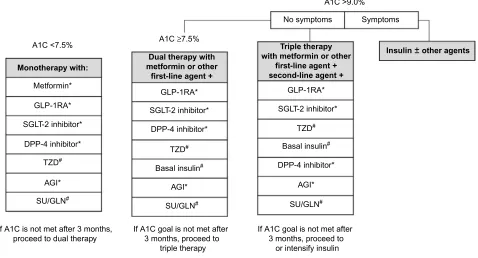
Guidelines from the American Association of Clinical Endocrinologists (AACE) suggest early use of combination pharmacotherapy for patients with high A1C at treatment
initiation(Figure 1).3 AACE recommends initial treatment
with dual therapy for patients with an A1C ≥7.5% and
advancement to triple therapy if A1C goals are not met after
3 months. For patients with an A1C >9.0% and no
hyper-glycemia symptoms (eg, polyuria, polydipsia, polyphagia), initial pharmacotherapy with three antidiabetes agents may
be appropriate.3 AACE guidelines further note that
combina-tion therapy should include medicacombina-tions with complementary
mechanisms of action to maximize effectiveness3,9 to correct
multiple sites of dysfunction. Targeting multiple sites of dysfunction using combination therapy early in the disease course may also produce more durable efficacy, particularly
when using agents that preserve β-cell function.10 The
pur-pose of this review is to discuss the rationale for combination therapy based on the pathophysiology of T2D, providing an overview of the underlying defects in T2D and the primary mechanisms of action of commonly used antidiabetes medi-cations for a greater insight into their use in combination.
Pathophysiology of T2D
Feedback regulation to maintain glucose
homeostasis and the critical role of
β
-cells
In glucose-tolerant individuals, a feedback loop between
β-cells and insulin-sensitive tissues maintains normal
glu-cose homeostasis. In this cyclic process, insulin secreted in
response to β-cell stimulation suppresses glucose production
in the liver and facilitates uptake of glucose, amino acids, and fatty acids in adipose tissue and muscle. Plasma glu-cose concentrations are maintained within a narrow range (70–90 mg/dL) and are primarily regulated by the hormones insulin, glucagon, and incretins, with input from the central
A1C <7.5%
Metformin*
GLP-1RA*
GLP-1RA* GLP-1RA*
SGLT-2 inhibitor* SGLT-2 inhibitor*
DPP-4 inhibitor*
DPP-4 inhibitor* SGLT-2 inhibitor*
DPP-4 inhibitor*
TZD#
TZD#
TZD#
Basal insulin#
Basal insulin#
SU/GLN#
If A1C is not met after 3 months, proceed to dual therapy
If A1C goal is not met after 3 months, proceed to
triple therapy
If A1C goal is not met after 3 months, proceed to
or intensify insulin
SU/GLN# SU/GLN#
AGI* AGI* AGI*
Monotherapy with:
Dual therapy with metformin or other
first-line agent +
Triple therapy with metformin or other
first-line agent + second-line agent +
Insulin ± other agents A1C ≥7.5%
A1C >9.0%
No symptoms Symptoms
Figure 1 Treatment algorithm based on A1C at entry.
Notes: Order of medications suggests hierarchy of usage by the AACE. Adapted with permission from American Association of Clinical Endocrinologists © 2016 AACE. Garber AJ, Abrahamson MJ, Barzilay JI, et al. AACE/ACE comprehensive type 2 diabetesmanagement algorithm 2016. Endocr Pract. 2016;22:84–113.3 *Indicates few adverse
events or possible benefits. #Use with caution.
Abbreviations: A1C, glycated hemoglobin; AACE, American Association of Clinical Endocrinologists; ACE, American College of Endocrinology; AGI, α-glucosidase inhibitor; DPP-4, dipeptidyl peptidase-4; GLN, glinide; GLP-1RA, glucagon-like peptide-1 receptor agonist; SGLT-2, sodium-glucose cotransporter-2; SU, sulfonylurea; TZD, thiazolidinedione.
Diabetes, Metabolic Syndrome and Obesity: Targets and Therapy downloaded from https://www.dovepress.com/ by 118.70.13.36 on 21-Aug-2020
Dovepress Combination therapy in type 2 diabetes
and peripheral nervous systems.11 Pancreatic glucagon plays
an important role in maintaining glucose homeostasis by stimulating glycogenolysis and gluconeogenesis, metabolic processes in the liver and kidney that convert glycogen and other substrates (lactate, amino acids, glycerol) to free
glu-cose for circulation in the fasted state.12,13 It is estimated that
renal glucose release accounts for 20% of overall endogenous
glucose release and ~40% of all gluconeogenesis.14
Glyco-gen is also stored in the skeletal muscle; however, muscle glycogen is not directly available to other tissues because it lacks the enzyme glucose-6-phosphatase needed to produce
glucose.14 When exogenous glucose is available, insulin
suppresses glycogenolysis and gluconeogenesis. In patients with T2D, however, hepatic insulin resistance results in the inability of normal concentrations of insulin to inhibit
gly-cogenolysis and gluconeogenesis,15 resulting in increases in
basal hepatic glucose production (HGP) and hyperglycemia
in the fasted state.16
Normally functioning adipose tissue is one of the key regulatory tissues involved in maintaining lipid and glucose
homeostasis.17 Thus, when adipose tissue is in a state of
chronic low-level inflammation as occurs with obesity, a multitude of pathologies emerge, including peripheral insulin
resistance.18,19 Preclinical studies have shown macrophage
accumulation occurring at the onset of weight gain, and inflammation and macrophage-specific gene expression are
upregulated in correlation with increased adiposity.20 In both
animals and humans, macrophage accumulation is in direct
proportion to adipocyte size and body mass index.21 This
increased infiltration of macrophages into adipose tissue perpetuates the production of proinflammatory molecules, including free fatty acids that impair insulin sensitivity, which initiate additional activation and infiltration of peripheral
monocytes and macrophages.20,21 Eventually, the continued
state of inflammation and impaired insulin signaling in adi-pose tissue leads to lipolysis, necrosis, and the development
of systemic insulin resistance.20
The β-cell is highly attuned to changes in insulin
sensi-tivity and can maintain glucose homeostasis by increasing insulin secretion during the early stages of insulin resistance.
When the β-cell can no longer produce enough insulin to
compensate for a diminished insulin response, glucose
concentrations rise.2 Exposure to chronically elevated
glu-cose concentrations leads to production of reactive oxygen species that cause oxidative stress and increased produc-tion of free fatty acids, leading to glucolipotoxicity. This
in turn interferes with β-cell compensatory mechanisms,
collectively contributing to worsened β-cell function and
apoptosis.2,22 The overall extent to which β-cell function is
impaired determines the severity of hyperglycemia, and the
progressive failure of β-cells accounts for the transition from
impaired glucose tolerance to T2D.2 The rate at which β-cell
impairment occurs varies among patients, although certain factors, most notably poor metabolic control and duration of
T2D, contribute to progression.23
Multiple genetic and environmental factors also
con-tribute to the development of insulin resistance and β-cell
dysfunction.2 Insulin resistance and reduced β-cell function
are largely heritable and present in individuals with normal glucose tolerance but at risk for hyperglycemia (eg,
first-degree relatives of patients with T2D).24,25 Obesity, nutrient
composition (particularly intake of saturated fats), and other
factors, such as age-related declines in β-cell response, also
contribute to glucose intolerance.2,26 A genetic propensity
for obesity has also been demonstrated27; obesity and
related insulin resistance are thought to arise when genes for abnormal body adiposity interact with certain environmental factors (eg, increased caloric intake, decreased energy
expen-diture).2 Although it is not yet known how genes interact with
the environment to cause progressive β-cell dysfunction, and
there is inherent variability among patients, current data
sug-gest that both a genetic propensity for β-cell dysfunction and
increased body adiposity may be necessary for the interaction
with environmental factors that results in T2D.2
Dysfunction in other body systems
Gastrointestinal tractIn healthy subjects, more insulin is secreted after nutrient ingestion compared with a similar nutrient load given
intra-venously.28 The gastrointestinal-derived incretin hormones,
glucagon-like peptide-1 (GLP-1) and glucose-dependent insulinotropic hormone (GIP), are largely responsible for this effect and primarily stimulate insulin secretion in a glucose-dependent manner by acting at their receptors on
β-cells.28 GLP-1 has also been shown to directly inhibit
glu-cagon secretion via GLP-1 receptors on pancreatic α cells or
indirectly by stimulating insulin and somatostatin secretion.29
In vivo, GLP-1 and GIP facilitate β-cell proliferation and
inhibit apoptosis, in addition to stimulating insulin secre-tion. GLP-1 also slows gastric emptying and decreases food
intake, likely through multiple mechanisms.29,30 Under basal
conditions, circulating GLP-1 and GIP concentrations are low but rise rapidly in the postprandial state and then decline as GIP and GLP-1 are rapidly degraded by enzymes, primarily
dipeptidyl peptidase-4 (DPP-4).31 In patients with T2D, the
insulinotropic response to GIP is notably reduced,32 which
Diabetes, Metabolic Syndrome and Obesity: Targets and Therapy downloaded from https://www.dovepress.com/ by 118.70.13.36 on 21-Aug-2020
Dovepress Levin
likely accounts for much of the decrease in incretin activity.33
In contrast, the insulinotropic response to GLP-1 remains
largely intact in T2D,28 although certain patient factors, such
as high body mass index or high glucagon concentrations,
may reduce GLP-1 secretion.33
Kidney
In glucose-tolerant subjects, nearly all glucose filtered by the renal glomeruli is reabsorbed by the proximal tubule
for recirculation.34 Glucose is excreted into the urine to
help maintain glucose homeostasis only if the maximum
glucose transport capacity is exceeded.34 Glucose
reabsorp-tion from the glomerular filtrate is primarily mediated by sodium- glucose cotransporter-2 (SGLT-2), a low-affinity, high-capacity transporter located in the proximal convo-luted tubule, in a process independent of insulin secretion
or action.34 Compared with subjects with normal glucose
tolerance, patients with T2D have increased renal glucose
uptake and release in the postprandial state.35 As the threshold
for glucose reabsorption increases, uptake continues despite elevated plasma glucose concentrations, minimizing
glu-cosuria and exacerbating the hyperglycemic environment.36
In addition, the kidneys also contribute to glucose release
through increased gluconeogenic activity.14
Brain
The nervous system also plays an important role in metabolic regulation. Through direct and indirect pathways, the ner-vous system controls glucose metabolism, affecting insulin
and glucagon secretion and HGP.2 The hypothalamus, in
particular, is an important mediator of β-cell function and
plasma insulin concentrations.2,37 Insulin action at the
hypo-thalamus also plays a critical role in regulating appetite and
body weight,2,35 and high-fat diets have been shown to lead to
inflammatory signaling in the hypothalamus and subsequent
insulin and leptin resistance.38 Decreased activity at this
site is associated with the development of obesity, which is consistent with imaging studies showing structural changes
(increased gliosis) in the hypothalamus of obese subjects.2,39
In preclinical studies, disruptions in circadian rhythms were associated with the development of insulin resistance and
obesity,40 as well as an increase in β-cell dysfunction and
apoptosis.41
It is apparent that continuous interactions between β-cells
and insulin-sensitive tissues and input from other essential organs, such as the brain, kidney, and gastrointestinal tract, collectively ensure an adequate supply of glucose to tissues and organs while keeping plasma glucose concentrations
within a specific range to prevent hypoglycemia or hypergly-cemia. However, disruptions in these interactions by genetic or environmental triggers, such as inherited insulin resistance,
β-cell dysfunction, or obesity, lead to a series of
intercon-nected disturbances that contribute to the development and progression of T2D.
Actions of commonly used
antidiabetes medications
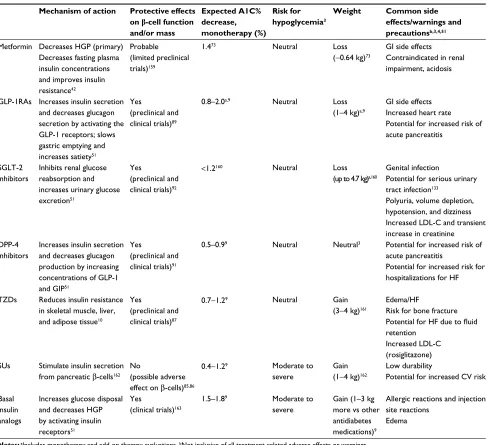
New approaches to targeted pharmacotherapy have been developed in response to a better understanding of the underlying pathophysiology of T2D. Knowledge about the mechanisms of action of the more traditional agents has also increased in recent years. Table 1 summarizes the primary actions and key clinical effects of each class of commonly used antidiabetes medications.
As recognized by the AACE, many patients will not reach glycemic goals with monotherapy and will require a
combination of antidiabetes medications.3 However,
associa-tion recommendaassocia-tions are generally not prescriptive with regard to which treatments to use in combination; rather, individualized treatment is emphasized. Current knowledge provides a sensible rationale for choosing medications that act in a synergistic manner (eg, improved insulin sensitivity and increased insulin secretion) to control glycemia, mini-mize adverse effects, including hypoglycemia, and correct underlying pathologies.
Suppression of HGP
The primary action of metformin is as an agonist of 5- adenosine monophosphate-activated protein kinase, which reduces HGP by inhibiting gluconeogenesis in the liver. Addi-tionally, metformin yields improved hepatic insulin sensitivity
and decreased fasting plasma insulin concentrations.10,42 Data
also indicate that metformin has a beneficial effect on lipid metabolism secondary to improved insulin sensitivity and
may help reverse hepatic steatosis,43,44 a condition closely
associated with insulin resistance.42 Because 5-adenosine
monophosphate-activated protein kinase actions also lead to reduced growth of human cancer cells, an antitumorigenic role
has also been suggested for metformin,45 which is supported
by a meta-analysis demonstrating a significant 50% reduction in hepatocellular carcinoma incidence in patients with
dia-betes receiving metformin versus not receiving metformin.46
Insulin sensitizers
Thiazolidinediones (TZDs), synthetic peroxisome
proliferator- activated receptor-γ agonists,47 are potent
Diabetes, Metabolic Syndrome and Obesity: Targets and Therapy downloaded from https://www.dovepress.com/ by 118.70.13.36 on 21-Aug-2020
Dovepress Combination therapy in type 2 diabetes
insulin sensitizers in the liver, muscle, and adipose tissue48–50;
evidence has shown TZDs to additionally alleviate lipotox-icity by transporting lipid deposits out of muscle, liver, and
β-cells.10 Similar to that of metformin, the insulin-sensitizing
effects of TZDs may counteract hepatic steatosis.44
Insulin secretagogues
Sulfonylureas (SUs) primarily increase insulin secretion by binding to the adenosine triphosphate-sensitive potassium
(KATP) channel on pancreatic β-cell plasma membranes.51–53
Specifically, SUs bind to the SU receptor 1, a subunit on the
KATP channel, and induce closure.53 As a result,
concentra-tions of intracellular potassium rise, the β-cell membrane is
depolarized, and insulin-containing secretory granules move
to the cell surface for release into circulation.53,54
In contrast to the actions of SUs, the actions of
incretin-based therapies are glucose-dependent.55 Incretin mimetics,
or GLP-1 receptor agonists (GLP-1RAs), primarily increase insulin secretion and decrease glucagon secretion by
activat-ing the GLP-1 receptor.30,31 Delayed gastric emptying has also
been associated with GLP-1RAs and shown to occur within
minutes of administration.29 It is likely that this effect, as well
as enhanced satiety and reduced food intake, involves
interac-tions between the central and peripheral nervous systems.29
Table 1 Overview of antidiabetes medications
Mechanism of action Protective effects on b-cell function and/or mass
Expected A1C% decrease, monotherapy (%)
Risk for hypoglycemia3
Weight Common side
effects/warnings and precautionsb,3,4,51 Metformin Decreases HGP (primary)
Decreases fasting plasma insulin concentrations and improves insulin resistance42
Probable (limited preclinical trials)159
1.473 Neutral Loss
(−0.64 kg)73
GI side effects
Contraindicated in renal impairment, acidosis
GLP-1RAs Increases insulin secretion and decreases glucagon secretion by activating the GLP-1 receptors; slows gastric emptying and increases satiety51
Yes
(preclinical and clinical trials)89
0.8–2.0a,9 Neutral Loss
(1–4 kg)a,9
GI side effects Increased heart rate Potential for increased risk of acute pancreatitis
SGLT-2 inhibitors
Inhibits renal glucose reabsorption and increases urinary glucose excretion51
Yes
(preclinical and clinical trials)92
<1.2160 Neutral Loss
(up to 4.7 kg)a,160
Genital infection
Potential for serious urinary tract infection133
Polyuria, volume depletion, hypotension, and dizziness Increased LDL-C and transient increase in creatinine DPP-4
inhibitors
Increases insulin secretion and decreases glucagon production by increasing concentrations of GLP-1 and GIP51
Yes
(preclinical and clinical trials)91
0.5–0.99 Neutral Neutral3 Potential for increased risk of acute pancreatitis
Potential for increased risk for hospitalizations for HF
TZDs Reduces insulin resistance in skeletal muscle, liver, and adipose tissue10
Yes
(preclinical and clinical trials)87
0.7−1.29 Neutral Gain
(3−4 kg)161
Edema/HF
Risk for bone fracture
Potential for HF due to fluid
retention Increased LDL-C (rosiglitazone) SUs Stimulate insulin secretion
from pancreatic β-cells162 No
(possible adverse effect on β-cells)85,86
0.4−1.29 Moderate to
severe
Gain (1−4 kg)162
Low durability
Potential for increased CV risk
Basal insulin analogs
Increases glucose disposal and decreases HGP by activating insulin receptors51
Yes
(clinical trials)163
1.5–1.89 Moderate to
severe
Gain (1–3 kg more vs other antidiabetes medications)9
Allergic reactions and injection site reactions
Edema
Notes: aIncludes monotherapy and add-on therapy evaluations. bNot inclusive of all treatment-related adverse effects or warnings.
Abbreviations: A1C, glycated hemoglobin; CV, cardiovascular; DPP-4, dipeptidyl peptidase-4; GI, gastrointestinal; GIP, glucose-dependent insulinotropic hormone; GLP-1, glucagon-like peptide-1; GLP-1RA, glucagon-like peptide-1 receptor agonist; HF, heart failure; HGP, hepatic glucose production; LDL-C, low-density lipoprotein cholesterol; SGLT-2, sodium-glucose cotransporter-2; SU, sulfonylurea; TZD, thiazolidinedione.
Diabetes, Metabolic Syndrome and Obesity: Targets and Therapy downloaded from https://www.dovepress.com/ by 118.70.13.36 on 21-Aug-2020
Dovepress Levin
It is estimated that the half-life of biologically active GLP-1 in circulation is less than 2 minutes because of rapid
degradation by DPP-4 activity.56,57 By inhibiting the DPP-4
enzyme and thereby increasing the half-life of endogenous incretin hormones in circulation, DPP-4 inhibitors
i ndirectly increase stimulation of GLP-1 receptors.58
DPP-4 inhibitors are rapidly absorbed following oral administration and competitively and reversibly bind to the active site of DPP-4, reducing DPP-4 activity by 70% to 90% and, consequently, increasing GLP-1 concentrations
approximately 1.5- to 4-fold at therapeutic doses.59
Preclinical and clinical evidence has demonstrated the benefits of DPP-4 pharmacologic inhibition, including increased concentrations of GIP and GLP-1, stimulation of insulin in circulation, improved glucose tolerance and insulin sensitivity, suppressed plasma glucagon, and
prevention of weight gain.29 The clinical efficacy of DPP-4
inhibitors has been demonstrated in randomized controlled trials showing significant reductions from baseline in
fasting plasma glucose, postprandial glucose, and A1C.59
DPP-4 inhibitors typically provide mean A1C reductions ranging from approximately 0.4% to 1.0% as monotherapy
and from 0.7% to 1.2% in combination therapy regimens.59
Insulin independent agents
SGLT-2 inhibitors reduce elevated glucose concentrations through increased glucosuria by decreasing renal glucose
reabsorption.34 The mechanism of action of SGLT-2
inhibi-tors is independent of insulin and may therefore comple-ment a variety of other antidiabetes medications that are
insulin dependent.34 It is also theorized that because SGLT-2
inhibitors target renal glucose handling, efficacy should not
be compromised as further declines in β-cell function and
increased insulin resistance occur.34
The α-glucosidase inhibitors (AGIs) primarily reduce
postprandial plasma glucose concentrations through the
com-petitive and reversible inhibition of α-glucosidase located in
the brush border of the small intestine.60 Following nutrient
ingestion, α-glucosidase hydrolyzes complex carbohydrates
to monosaccharides for absorption. Thus, AGIs obstruct the degradation of starches and sucrose and delay carbohydrate
reabsorption in a nonsystemic manner.60 However, a patient’s
diet may alter efficacy. Studies indicate that AGIs may have a more potent effect in patients who consume a typical Eastern diet (whole grains, vegetables, fruits) compared with patients whose diet is characterized as Western (processed meat,
high-fat dairy products, refined grains).60,61
Central nervous system
The development of therapies that target the central nervous
system to reduce glucose concentrations is challenging.2
Bromocriptine, a quick-release sympatholytic D2-dopamine agonist, is currently the only approved antidiabetes
medica-tion that has a centrally mediated mechanism of acmedica-tion.2
Although the mechanism by which bromocriptine lowers plasma glucose concentrations is unknown, it is believed that early-morning treatment with bromocriptine resets circadian rhythms of hypothalamic dopamine and serotonin and thereby
improves insulin sensitivity.62
Bile acid sequestrants
Bile acid sequestrants were initially developed to treat hypercholesterolemia; therefore, these agents have
sig-nificant lipid-lowering properties.63 The mechanism by
which colesevelam reduces plasma glucose concentrations is not fully understood, although study findings suggest that colesevelam reduces hyperglycemia by improving tissue glucose metabolism in both the fasting (increased plasma glucose clearance) and postprandial (increased
glycolytic disposal of oral glucose) states.64 Colesevelam
has also been associated with increased GLP-1 and GIP plasma concentrations, which likely contribute to observed
improvements in β-cell function and increased glycolytic
disposal.64
The American Diabetes Association currently does not favor the use of AGIs, colesevelam, or bromocriptine because of modest effects on glucose lowering, frequent dosing
schedules, and occurrence of side effects.51 Therefore,
dis-cussion of the use of these agents in combination is limited in this review.
Basal insulin
Many patients will eventually require insulin to maintain
glycemic control.51 The primary mechanism of action
of insulin and its analogs is the activation of insulin
receptors.51 Thus, insulin analogs lower plasma glucose
concentrations by stimulating peripheral glucose uptake
and inhibiting HGP.65,66 Although various formulations
of insulin are available, guidance from the AACE recommends initial insulin therapy with long-acting basal insulin analogs because basal formulations are associated with less glycemic variability and a lower risk for hypoglycemia compared with neutral protamine
Hagedorn, an intermediate-acting insulin.3 Several types
Diabetes, Metabolic Syndrome and Obesity: Targets and Therapy downloaded from https://www.dovepress.com/ by 118.70.13.36 on 21-Aug-2020
Dovepress Combination therapy in type 2 diabetes
of long-acting basal insulin analogs are available in the
US, including insulin glargine (Lantus® [Sanofi-Aventis,
Bridgewater, NJ, USA] and Toujeo® [Sanofi-Aventis]),
insulin detemir (Levemir® [Novo Nordisk, Bagsværd,
Denmark]), and insulin degludec (Tresiba® [Novo
Nord-isk]).51,66,67 Although both formulations of insulin glargine
provide prolonged activity and thus allow once-daily dos-ing, Toujeo is a concentrated glargine, and its duration of action exceeds that of Lantus (approximately 36 vs 24
hours).68 In addition, Toujeo has been shown to significantly
reduce nighttime low blood sugar events compared with
Lantus (P=0.0002).69 Insulin detemir or Levemir is also
associated with a constant duration of action, but similar to that of Lantus (approximately 24 hours), and may be
administered once or twice daily in divided doses.66 Of
the currently available long-acting basal insulin analogs, Tresiba provides the longest duration of effect, lasting at least 42 hours, primarily because of delayed absorption of insulin degludec from the subcutaneous tissue into systemic
circulation.67
Potential combinations to improve
pathophysiologic dysfunction
Enhancing endogenous insulin action
There are many combination regimens that have the potential to address multiple sites of pathophysiologic dysfunction of T2D, and those that may exert complementary effects are outlined in Table 2. The combination of metformin and a
TZD has been suggested10 because metformin reduces HGP
by inhibiting gluconeogenesis in the liver but is only a weak
sensitizer in the muscle,42,70,71 and TZDs are potent insulin
sensitizers in liver, muscle, and adipose tissue.48 Metformin
and TZDs individually have a robust effect on A1C, and each exerts its actions through different pathways, providing an
additive effect on glucose lowering.10 Metformin and TZDs
are also associated with a low risk for hypoglycemia,3
mak-ing these agents appealmak-ing for use in combination. However, because metformin primarily relies on renal function for
elimination,72 it is contraindicated in patients with renal
disease or dysfunction.73 Metformin is also associated with
gastrointestinal adverse effects that may lead to discontinu-ation for some patients but may dissipate with continued
use or with dosing adjustments.74 TZDs have been shown
to have beneficial effects on cognitive disorders related to insulin resistance in the central nervous system in studies
in mice75 and to exert favorable effects on cardiovascular
(CV) risk markers in patients with T2D.76 However, TZDs
are associated with an increased risk for weight gain and
Table 2
Potential regimens for targeted combination therapy to address major pathophysiologic defects
a Dual therapy Triple therapy Basal insulin MET + TZD + SGLT-2i + MET + DPP-4i + MET + SGLT-2i Insulin +
Pathophysiologic improvement GLP- 1RA SGLT- 2i DPP- 4i TZD SU GLP- IRA SGLT- 2i DPP- 4i GLP- 1RA DPP- 4i TZD SU GLP- 1RA DPP- 4i TZD SU MET GLP- 1RA SGLT- 2i DPP- 4i TZD
Enhance endogenous insulin/sensitivity
Yes Yes Yes Yes Yes Yes Yes Yes Yes Yes Yes Yes Yes Yes Yes Yes Yes Yes Yes Yes Yes Preserve β -cell function b Yes Likely Likely Yes – Yes Yes Yes Yes Likely Yes – Yes Likely Yes – Yes c Yes c Yes c Yes c Yes c
Decrease body weight
Yes Yes – No No Yes Yes No Yes Yes No No Yes Yes Likely Likely No Yes Yes No No Notes: aPotential improvements based on individual therapeutic profiles. Not inclusive of all potential combination regimens (– indicates improvement not likely). bAvailable data indicate beneficial effects on β -cell function with DPP-4
inhibitors and SGLT-2 inhibitors, although effects are not as well established as those associated with GLP-1RAs or TZDs.
cEarly insulin therapy may exert protective effects on the
β
-cells.
Abbreviations:
DPP-4i, dipeptidyl peptidase-4 inhibitor; GLP-1RA, glucagon-like peptide-1 receptor agonist; MET, metformin; SGLT-2i, sodium-glucose cotransporter-2 inhibitor; SU, sulfonylurea; TZD, thiazolidinedione.
Diabetes, Metabolic Syndrome and Obesity: Targets and Therapy downloaded from https://www.dovepress.com/ by 118.70.13.36 on 21-Aug-2020
Dovepress Levin
fluid retention, which may worsen or lead to congestive
heart failure (HF).77,78
Insulin secretagogues, such as SUs or incretin-based therapies, may also act in a complementary manner to met-formin by facilitating insulin secretion. SUs are associated with moderate glycemic efficacy, although these agents are recommended for patients with a disease duration of less
than 5 years55 because the mechanism of action is
depen-dent on functioning β-cells.53 In addition, because SUs act
independently of plasma glucose concentrations, the main risk is hypoglycemia, which may be exacerbated by coad-ministration with other drugs, especially those that inhibit
SU metabolism via the cytochrome P450 2C9 isozyme.79
To avoid hypoglycemia, the addition of a DPP-4 inhibitor or a GLP-1RA to metformin may be considered instead. Although GLP-1RAs are associated with a more robust
effect on A1C lowering compared with DPP-4 inhibitors,80
each has been shown to improve glycemic control without
increasing the risk for hypoglycemia.51 GLP-1RAs are also
associated with gastrointestinal side effects, particularly transient nausea, which may be attributed to delayed
gastric emptying.80 Preclinical and clinical studies also
demonstrate additional complementary actions between metformin and a DPP-4 inhibitor or a GLP-1RA. In vivo, metformin increased circulating concentrations of active
GLP-1 but did not affect the activity of the DPP-4 enzyme.81
Thus, as demonstrated in healthy subjects, metformin and a DPP-4 inhibitor increased GLP-1 concentrations through two separate pathways, providing an additive increase in
GLP-1 concentrations.82 Similar benefits were observed
with metformin in combination with exogenous GLP-1 administration in patients with T2D, although findings in this study suggested that metformin enhanced injected
active GLP-1 concentrations by inhibiting DPP-4 activity.83
Preserving
β
-cell function
Maintaining β-cell function is a key aspect in delaying disease
progression,84 and as noted above, the efficacy of drugs that
depend on β-cell function for their actions, such as the SUs,
declines as β-cell function declines.10 Furthermore, results
of in vitro studies have suggested that prolonged exposure
to SUs may in fact cause disturbances in islet cell function85
and may induce β-cell apoptosis as a secondary effect to the
closure of the KATP channel.86
In contrast, substantial evidence has demonstrated that
TZDs positively affect β-cells by improving insulin
secre-tory capacity and function, preserving structure and mass,
and exerting protective effects from oxidative stress.87
Preclinical studies have also shown that GLP-1RAs and
DPP-4 inhibitors improve or preserve β-cell mass by
pro-moting β-cell proliferation and inhibiting apoptosis.30,88
Clinical trials in patients with T2D further demonstrate
that GLP-1RAs preserve β-cell function and sensitivity
to glucose with a durable effect,89,90 and DPP-4 inhibitors
sustain β-cell function during 2 years of treatment.91 More
recently, SGLT-2 inhibitors have been shown to improve
β-cell function in patients with T2D, despite having no direct
effect on pancreatic β-cells, through the reversal of
gluco-toxicity and improved insulin sensitivity.92 Therefore, the
combination of a TZD with a DPP-4 inhibitor, GLP-1RA, or SGLT-2 inhibitor may provide both insulin-sensitizing and insulin secretory effects, in addition to helping preserve
β-cell function.
Promoting weight loss
Treatment-related effects on weight are also important to consider because weight gain can worsen insulin resistance
and thereby diminish efficacy.89 TZDs are associated with
weight gain, in part due to fluid retention and fat cell
pro-liferation,93 as are SUs, as a secondary effect on adipocyte
KATP channels.94 Metformin is associated with weight loss or
is weight neutral and has been shown to maintain efficacy across all body weight categories, including patients who are
overweight or obese,55 providing a rationale for use in
combi-nation. Because AGIs slow intestinal carbohydrate digestion
and absorption,51 weight gain is not expected, and treatment
has been shown to minimize weight gain when used in
com-bination with SUs.95 However, because AGIs have limited
potency in lowering A1C and are also commonly associated with gastrointestinal side effects, their use in combination
regimens may not always be suitable.3
For patients in whom weight loss is difficult, the use of a GLP-1RA with an SGLT-2 inhibitor may be particu-larly beneficial because GLP-1RAs slow gastric emptying,
increase satiety, and reduce food intake,29 and SGLT-2
inhibitors decrease weight through increased caloric loss via
glucosuria.3 Additionally, GLP-1RA s and SGLT-2 inhibitors
reduce blood pressure in patients with T2D, possibly as a secondary effect of weight loss and other factors, such as
the mild osmotic diuretic effect of the SGLT-2 inhibitors.34,96
In a recent retrospective analysis, patients had a two-fold greater weight loss with GLP-1RA and SGLT-2 inhibitor
combination therapy (−7.2 kg) compared with patients taking
an SGLT-2 inhibitor alone (−3.0 kg).97 Because the actions
of GLP-1RAs are distinct from those of SGLT-2 inhibitors, the reduction in weight is likely additive when used in com-bination. DPP-4 inhibitors may also complement SGLT-2 inhibitors in this regard. Inhibition of the DPP-4 enzyme is
Diabetes, Metabolic Syndrome and Obesity: Targets and Therapy downloaded from https://www.dovepress.com/ by 118.70.13.36 on 21-Aug-2020
Dovepress Combination therapy in type 2 diabetes
associated with prevention of weight gain,29 and clinical study
findings have shown an initial combination therapy with a DPP-4 inhibitor and an SGLT-2 inhibitor in treatment-naïve patients to significantly reduce weight compared with a
DPP-4 inhibitor administered alone.98
Triple oral combination therapy
Much of the previous discussion has focused on potential dual therapy combinations; however, some patients with high A1C may require initial triple oral pharmacotherapy or intensified treatment with a third agent if dual therapy regimens do not provide adequate glycemic control. In patients with more recent disease, triple oral therapy with metformin, an SU, and a DPP-4 inhibitor may help address key disease aspects, including decreased insulin secretion and increased HGP. SUs in this population may also provide
greater efficacy because β-cell function may still be intact. In
patients with inadequate glycemic control despite metformin and SU dual therapy, the addition of a DPP-4 inhibitor, an SGLT-2 inhibitor, or a TZD has been shown to improve
gly-cemic control.99,100 However, as previously mentioned, SUs
increase the risk for hypoglycemia,3 making a TZD in
com-bination with metformin and a DPP-4 inhibitor or an SGLT-2 inhibitor an alternative choice if avoiding hypoglycemia is
a primary treatment goal.101,102 TZDs in these combinations
should also provide additive benefits on β-cell function and
mass, although adverse effects on body weight may limit use. Triple therapy with metformin, a DPP-4 inhibitor, and an SGLT-2 inhibitor has also been shown to be efficacious in reducing A1C without increasing the risk for hypoglycemia
or weight gain.103–107 Based on the respective mechanisms of
action, this particular combination allows improved insulin sensitivity and enhanced insulin production, with additional clinical benefits on weight and blood pressure. In addition, SGLT-2 inhibitors are associated with a rise in fasting plasma glucagon concentrations and endogenous glucose production,
which could limit efficacy.108,109 However, preclinical studies
have shown the suppressive effects of metformin on HGP to counteract the rise in endogenous glucose production and thereby enhance the glucose-lowering properties of SGLT-2
inhibitors.110 DPP-4 inhibitors, which suppress glucagon
secretion and therefore inhibit endogenous glucose
produc-tion,111 have been shown to reduce SGLT-2 inhibitor-induced
increases in glucagon when used concomitantly.112
Combination with basal insulin
In general, the initiation of insulin should be
consid-ered for patients with initial A1C >9% and symptomatic
hyperglycemia or for patients with A1C >8.0% despite
dual therapy and/or long-standing T2D, because adding a third antidiabetes drug in this scenario will be less likely
to achieve glycemic targets (Figure 1).3 Although previous
guidance has suggested delaying the initiation of insulin therapy until after several rounds of treatment failure, more recent recommendations suggest initiating insulin earlier, often in combination with DPP-4 inhibitors, SGLT-2
inhibi-tors, or GLP-1RAs.3 Research also supports the early use of
insulin to protect β-cell function through the rapid reversal
of glucolipotoxicity.113
Weight gain is common with insulin therapy and has been attributed to the correction of severe hyperglycemia leading to rebuilding of muscle and fat mass, as well as increased
caloric retention resulting from decreased glucosuria.93 In
addition, patients experiencing hypoglycemia may increase
their food intake.93 For patients requiring increasing insulin
doses, TZDs have been suggested as adjunct therapy to help
reduce insulin daily doses and establish glycemic control.51
Although TZDs may additionally help to preserve β-cell
function,87 weight gain and fluid retention associated with
TZD therapy may be exacerbated with concomitant insulin
use,114 limiting use in some patients. In patients taking SU
therapy, it is generally recommended that the dose be reduced
or treatment stopped after starting basal insulin.3
In patients with T2D receiving basal insulin, controlled clinical trials support the use of incretin-based therapies or SGLT-2 inhibitors. For example, in patients on background insulin glargine with or without OADs, add-on exenatide for 30 weeks was associated with significantly greater reductions
from baseline in A1C (−1.74% vs −1.04%, P<0.001) and
weight (−1.8 vs +1.0 kg) versus add-on placebo, with no
increased risk for hypoglycemia.115 Additional clinical studies
of other GLP-1RAs added to existing basal insulin regimens
have demonstrated similar results.116,117 Clinical trials of
add-on DPP-4 inhibitor therapy to basal insulin (or other insulin formulations) have also demonstrated significant improve-ments in A1C without an increased risk for weight gain or
hypoglycemia versus controls.118–121 Importantly, findings
observed from clinical trials of basal insulin in combination with incretin-based therapies are consistent with those from
real-world observational studies.122,123 Available clinical trial
data have also shown that the addition of an SGLT-2 inhibitor to basal insulin or other formulations (with or without other OADs) effectively reduces A1C and weight and maintains a
low risk for hypoglycemia.124–126 Of interest, insulin detemir
may have a more favorable effect on weight compared with other basal insulin formulations, and patients treated with
Diabetes, Metabolic Syndrome and Obesity: Targets and Therapy downloaded from https://www.dovepress.com/ by 118.70.13.36 on 21-Aug-2020
Dovepress Levin
detemir plus other OADs have been shown to consistently
experience weight loss.127,128
Based on clinical trial findings, the AACE suggests a DPP-4 inhibitor, GLP-1RA, or SGLT-2 inhibitor in combi-nation with basal insulin to decrease basal and postprandial glucose and weight gain, without increasing the risk for
hypoglycemia and weight gain.3 With more complex insulin
regimens, SGLT-2 inhibitors are also suggested to reduce
the amount of insulin needed.51 Consistently, clinical trials
have shown that patients treated with GLP-1RAs, DPP-4 inhibitors, and SGLT-2 inhibitors in combination with insu-lin (basal and other formulations) require fewer increases in
daily insulin doses compared with controls.115,116,118,119,124–126
DPP-4 inhibitors and SGLT-2 inhibitors have the advantage of oral administration; however, because patients are already receiving insulin injections, the route of administration may
not be a primary factor in the treatment selection.129 In
addi-tion, injection pens with single administration of combination basal insulin and GLP-1RA (insulin degludec and liraglutide and insulin glargine and lixisenatide fixed ratio) are currently
in development.130,131
More recently, there has been concern about whether SGLT-2 inhibitors are associated with an increased risk of diabetic ketoacidosis (DKA), particularly in patients with
a recent reduction in concomitant insulin dose.132 Based
on postmarketing reports of 73 cases in patients treated with SGLT-2 inhibitors (March 2013–June 2015), the US Food and Drug Administration required labeling of SGLT-2 inhibitors to include warnings of an increased risk of
DKA.133 More expansive reviews of data have shown that
most patients had only slightly elevated plasma glucose concentrations (euglycemic DKA), and some cases occurred
in patients with type 1 diabetes.132 In addition, data from the
clinical development programs for the three US-approved SGLT-2 inhibitors have shown no clear association between
DKA and SGLT-2 inhibitor treatment.132 For example, in
the EMPA-REG OUTCOME trial in 7,020 patients, the
incidence of DKA was ≤0.1% and did not differ between
empagliflozin and placebo groups.134 A similar incidence
rate of <0.1% for DKA was also reported from the clinical
development programs for canagliflozin (N=17,596) and
dapagliflozin (N>18,000).132,135 The AACE has also
under-taken a rigorous examination of this potential risk and concluded that the occurrence of DKA in treated patients is infrequent, and the risk–benefit ratio remains in favor of continued SGLT-2 inhibitor use, with no changes in
cur-rent recommendations required.136 Regulatory agencies and
pharmaceutical companies will continue to monitor this
potential risk, and attention to risk factors for euglycemic DKA, such as reductions in concomitant insulin doses, has been advised when treating patients with SGLT-2
inhibitors.132
CV safety
The effect of antidiabetes therapies on CV outcomes remains a major concern. Research has reported mixed findings as to whether SUs or insulin are associated with an increased
risk for CV events.137–140 Prescribing information for
glipi-zide, glyburide, and glimepiride includes a warning of an increased risk of CV mortality with the first-generation SU, tolbutamide, versus insulin as add-on to diet or diet
alone.141–143 Although the use of SUs in patients with CV risk
appears to be declining in clinical practice,144 recent findings
of an increased risk for mortality and CV events with
treat-ment warrant continued caution.145,146 For example, initial
SU monotherapy in a German cohort of patients with T2D significantly increased the risk of major CV events, overall mortality, and T2D-related hospitalization compared with
initial metformin monotherapy (all P<0.001).146 Findings
from a systematic review additionally found an increased risk of all-cause mortality and CV-related mortality with SUs compared with other antidiabetes drugs and a significantly higher risk of myocardial infarction (vs DPP-4 inhibitors) in randomized clinical trials, which was also confirmed
in observational studies.145 Further, the risk of stroke was
significantly higher in patients treated with SUs in clinical trials versus those treated with DPP-4 inhibitors, GLP-1RAs,
TZDs, or insulin.145
TZDs have been associated with HF, attributed to
treatment- induced fluid retention.3,51 These agents are
there-fore contraindicated in patients with preexisting HF, and the prescribing information for pioglitazone and rosiglitazone
contains warnings for congestive HF.77,78 Although there is
not yet conclusive evidence to establish CV benefit with this
treatment,147 fewer patients with T2D had a CV disease event
with bromocriptine quick-release as add-on to standard of
care compared with placebo in a 1-year trial.148
CV outcome trials
Findings have been published from three CV outcome trials for DPP-4 inhibitors showing no increased risk for major CV events with alogliptin, saxagliptin, or sitagliptin,
respec-tively, versus placebo as add-on to standard of care.149–151
However, a potential for an increased risk of hospitaliza-tion for HF versus placebo was observed in patients treated
with saxagliptin149 and in a subgroup of patients with no
Diabetes, Metabolic Syndrome and Obesity: Targets and Therapy downloaded from https://www.dovepress.com/ by 118.70.13.36 on 21-Aug-2020
Dovepress Combination therapy in type 2 diabetes
history of HF at baseline treated with alogliptin.152 A recent
observational cohort study using data from a US insurance claims database evaluated the risk of hospitalization for HF between patients with T2D treated with DPP-4 inhibitors or an SU and between patients treated with saxagliptin or
sitagliptin.153 In patients with no baseline CV disease, DPP-4
inhibitors were associated with a significantly lower risk of hospitalization for HF compared with those treated with an
SU (P=0.013). The risk of hospitalization for HF between
saxagliptin and sitagliptin in patients with or without base-line CV disease and between DPP-4 inhibitors and SUs in patients with baseline CV disease was not significantly
different.153 Additional CV outcome studies for linagliptin
are ongoing.154,155 Until additional findings are known, it is
recommended that DPP-4 inhibitors be used with caution,
or not at all, in patients with preexisting HF.4
In the EMPA-REG OUTCOME CV outcomes trial in patients with T2D and established CV disease, empagliflozin as add-on to standard of care was associated with significantly lower rates of major CV events (ie, death from CV causes, nonfatal myocardial infarction, nonfatal stroke), primarily driven by a significant reduction in death from CV causes, as well as death from any cause and hospitalization for
HF compared with add-on placebo.134 CV outcome trials
for dapagliflozin and canagliflozin are underway and are expected to be completed in 2017 (canagliflozin) and 2019 (dapagliflozin). Each trial includes patients with T2D at high
risk for CV events.156,157 Most of the GLP-1RA CV trials are
ongoing, although one study for lixisenatide recently reported
preliminary findings.158 In this study, no increased risk for
major CV events was observed in patients with a recent acute coronary syndrome event treated with lixisenatide
versus placebo.158
Conclusion
The multitude of therapeutic options for T2D adds to the complexity of managing patients with this disease but also allows clinicians to readjust and rebalance treatment over time as physiologic changes occur throughout the course of the disease. As understanding of the pathophysiology of T2D grows, it is becoming apparent that early use of tar-geted combination therapy has the potential to slow disease progression, potentially through the correction of known
pathologies and the preservation of β-cell function. Obesity
plays a central role in the development and worsening of T2D, and thus it can be argued that treatments that facilitate weight loss may be most beneficial. Whereas the underlying pathophysiology of T2D should be a key factor in choosing
which medications to combine, the treatment choice must also be individualized to patients’ needs and tolerability. Based on individual therapeutic profiles, the newer incretin-based therapies and SGLT-2 inhibitors are appropriate for use in combination with one another or in combination with more traditional agents (eg, metformin, TZDs, insulin) to reduce A1C without increasing the risk of hypoglycemia. In addition, because these newer agents act on different pathways, the beneficial actions on glycemia and weight are likely additive when used in combination. Although clinical inertia remains an issue, emerging research helps to support and advocate for the use of early combination therapy as a practical approach to preempt the development of long-term complications and disease progression.
Acknowledgments
Medical writing support for the preparation of this manuscript was provided by Meg Shurak, MS, and Janet E Matsuura, PhD, from Complete Healthcare Communications, LLC (Chadds Ford, PA, USA), with funding from AstraZeneca.
Disclosure
PL has received a research grant and is a speaker and consul-tant for AstraZeneca, Sanofi-Aventis, LLC, and Novo Nord-isk, Inc. He has also received a research grant and is a speaker for Eli Lilly and Company and Boehringer Ingelheim, GmbH; is a speaker and consultant for Janssen Pharmaceuticals, Inc.; and is a speaker for GlaxoSmithKline, plc. The author reports no other conflicts of interest in this work.
References
1. International Diabetes Federation, Global burden. Sixth edition; 2014. Available from: http://www.idf.org/diabetesatlas/5e/the-global-burden. Accessed February 9, 2015.
2. Kahn SE, Cooper ME, Del Prato S. Pathophysiology and treatment of type 2 diabetes: perspectives on the past, present, and future. Lancet.
2014;383(9922):1068–1083.
3. Garber AJ, Abrahamson MJ, Barzilay JI, et al. Consensus statement by the American Association of Clinical Endocrinologists and Ameri-can College of Endocrinology on the comprehensive type 2 diabetes management algorithm - 2016 executive summary. Endocr Pract.
2016;22(1):84–113.
4. American Diabetes Association. 7. Approaches to glycemic treatment.
Diabetes Care. 2016;39(Suppl 1):S52–S59.
5. Berkowitz SA, Krumme AA, Avorn J, et al. Initial choice of oral glucose-lowering medication for diabetes mellitus: a patient-centered comparative effectiveness study. JAMA Intern Med. 2014;174(12): 1955–1962.
6. Khunti K, Wolden ML, Thorsted BL, Andersen M, Davies MJ. Clinical inertia in people with type 2 diabetes: a retrospective cohort study of more than 80,000 people. Diabetes Care. 2013;36(11):3411–3417. 7. Levin PA, Wei W, Zhou S, Xie L, Baser O. Outcomes and treatment
patterns of adding a third agent to 2 OADs in patients with type 2 diabetes. J Manag Care Spec Pharm. 2014;20(5):501–512.
Diabetes, Metabolic Syndrome and Obesity: Targets and Therapy downloaded from https://www.dovepress.com/ by 118.70.13.36 on 21-Aug-2020
Dovepress Levin
8. Brown JB, Nichols GA, Perry A. The burden of treatment failure in type 2 diabetes. Diabetes Care. 2004;27(7):1535–1540.
9. Garber AJ, Abrahamson MJ, Barzilay JI, et al. American Association of Clinical Endocrinologists’ comprehensive diabetes management algorithm 2013 consensus statement--executive summary. Endocr
Pract. 2013;19(3):536–557.
10. DeFronzo RA. Banting Lecture. From the triumvirate to the ominous octet: a new paradigm for the treatment of type 2 diabetes mellitus.
Diabetes. 2009;58(4):773–795.
11. Triplitt CL. Examining the mechanisms of glucose regulation. Am J
Manag Care. 2012;18(1 suppl):S4–S10.
12. Ravnskjaer K, Hogan MF, Lackey D, et al. Glucagon regulates gluco-neogenesis through KAT2B- and WDR5-mediated epigenetic effects.
J Clin Invest. 2013;123(10):4318–4328.
13. Triplitt C. Understanding the kidney’s role in blood glucose regulation.
Am J Manag Care. 2012;18:S11–S16.
14. Gerich JE, Meyer C, Woerle HJ, Stumvoll M. Renal gluconeogen-esis: its importance in human glucose homeostasis. Diabetes Care.
2001;24(2):382–391.
15. Basu R, Chandramouli V, Dicke B, Landau B, Rizza R. Obesity and type 2 diabetes impair insulin-induced suppression of glycogenolysis as well as gluconeogenesis. Diabetes. 2005;54(7):1942–1948. 16. Barthel A, Schmoll D. Novel concepts in insulin regulation of hepatic
glu-coneogenesis. Am J Physiol Endocrinol Metab. 2003;285(4):E685–E692. 17. Guilherme A, Virbasius JV, Puri V, Czech MP. Adipocyte dysfunctions
linking obesity to insulin resistance and type 2 diabetes. Nat Rev Mol
Cell Biol. 2008;9(5):367–377.
18. Wellen KE, Hotamisligil GS. Inflammation, stress, and diabetes. J
Clin Invest. 2005;115(5):1111–1119.
19. Wensveen FM, Valentic S, Sestan M, Turk Wensveen T, Polic B. The “Big Bang” in obese fat: Events initiating obesity-induced adipose tissue inflammation. Eur J Immunol. 2015;45(9):2446–2456. 20. Xu H, Barnes GT, Yang Q, et al. Chronic inflammation in fat plays a
crucial role in the development of obesity-related insulin resistance.
J Clin Invest. 2003;112(12):1821–1830.
21. Weisberg SP, McCann D, Desai M, Rosenbaum M, Leibel RL, Fer-rante AW, Jr. Obesity is associated with macrophage accumulation in adipose tissue. J Clin Invest. 2003;112(12):1796–1808.
22. Poitout V, Robertson RP. Glucolipotoxicity: fuel excess and beta-cell dysfunction. Endocr Rev. 2008;29(3):351–366.
23. Russo GT, Giorda CB, Cercone S, Nicolucci A, Cucinotta D; BetaDecline Study Group. Factors associated with beta-cell dys-function in type 2 diabetes: the BETADECLINE study. PLoS One.
2014;9(10):e109702.
24. DeFronzo RA, Tripathy D. Skeletal muscle insulin resistance is the primary defect in type 2 diabetes. Diabetes Care. 2009;32(suppl 2):S157–S163.
25. Cnop M, Vidal J, Hull RL, et al. Progressive loss of beta-cell function leads to worsening glucose tolerance in first-degree relatives of subjects with type 2 diabetes. Diabetes Care. 2007;30(3):677–682.
26. Hu FB, van Dam RM, Liu S. Diet and risk of Type II diabetes: the role of types of fat and carbohydrate. Diabetologia. 2001;44(7):805–817. 27. Guenard F, Deshaies Y, Cianflone K, Kral JG, Marceau P, Vohl MC.
Differential methylation in glucoregulatory genes of offspring born before vs. after maternal gastrointestinal bypass surgery. Proc Natl
Acad Sci U S A. 2013;110(28):11439–11444.
28. Nauck MA, Baller B, Meier JJ. Gastric inhibitory polypeptide and glucagon-like peptide-1 in the pathogenesis of type 2 diabetes.
Dia-betes. 2004;53(suppl 3):S190–S196.
29. Drucker DJ. The biology of incretin hormones. Cell Metab. 2006; 3(3):153–165.
30. Drucker DJ, Nauck MA. The incretin system: glucagon-like peptide-1 receptor agonists and dipeptidyl peptidase-4 inhibitors in type 2 dia-betes. Lancet. 2006;368(9548):1696–1705.
31. Drucker DJ, Sherman SI, Gorelick FS, Bergenstal RM, Sherwin RS, Buse JB. Incretin-based therapies for the treatment of type 2 diabe-tes: evaluation of the risks and benefits. Diabetes Care. 2010;33(2): 428–433.
32. Nauck MA, Heimesaat MM, Orskov C, Holst JJ, Ebert R, Creutzfeldt W. Preserved incretin activity of glucagon-like peptide 1 [7-36 amide] but not of synthetic human gastric inhibitory polypeptide in patients with type-2 diabetes mellitus. J Clin Invest.1993;91(1):301–307. 33. Nauck MA, Vardarli I, Deacon CF, Holst JJ, Meier JJ. Secretion of
glucagon-like peptide-1 (GLP-1) in type 2 diabetes: what is up, what is down? Diabetologia. 2011;54(1):10–18.
34. Nauck MA. Update on developments with SGLT2 inhibitors in the management of type 2 diabetes. Drug Des Devel Ther.
2014;8:1335–1380.
35. Meyer C, Woerle HJ, Dostou JM, Welle SL, Gerich JE. Abnormal renal, hepatic, and muscle glucose metabolism following glucose ingestion in type 2 diabetes. Am J Physiol Endocrinol Metab.
2004;287(6):E1049–E1056.
36. Abdul-Ghani MA, Norton L, Defronzo RA. Role of sodium-glucose cotransporter 2 (SGLT 2) inhibitors in the treatment of type 2 diabetes.
Endocr Rev. 2011;32(4):515–531.
37. Murphy KG, Bloom SR. Gut hormones in the control of appetite. Exp
Physiol. 2004;89(5):507–516.
38. Thaler JP, Schwartz MW. Minireview: Inflammation and obe-sity pathogenesis: the hypothalamus heats up. Endocrinology.
2010;151(9):4109–4115.
39. Thaler JP, Yi CX, Schur EA, et al. Obesity is associated with hypothalamic injury in rodents and humans. J Clin Invest. 2012; 122(1):153–162.
40. Shi SQ, Ansari TS, McGuinness OP, Wasserman DH, Johnson CH. Circadian disruption leads to insulin resistance and obesity. Curr Biol.
2013;23(5):372–381.
41. Gale JE, Cox HI, Qian J, Block GD, Colwell CS, Matveyenko AV. Disruption of circadian rhythms accelerates development of diabetes through pancreatic beta-cell loss and dysfunction. J Biol Rhythms.
2011;26(5):423–433.
42. Viollet B, Guigas B, Sanz Garcia N, Leclerc J, Foretz M, Andreelli F. Cellular and molecular mechanisms of metformin: an overview. Clin
Sci (Lond). 2012;122(6):253–270.
43. Wang CC, Lin SK, Tseng YF, et al. Elevation of serum aminotrans-ferase activity increases risk of carotid atherosclerosis in patients with non-alcoholic fatty liver disease. J Gastroenterol Hepatol.
2009;24(8):1411–1416.
44. Idilman R, Mizrak D, Corapcioglu D, et al. Clinical trial: insulin-sensitizing agents may reduce consequences of insulin resistance in individuals with non-alcoholic steatohepatitis. Aliment Pharmacol
Ther. 2008;28(2):200–208.
45. Facciorusso A. The influence of diabetes in the pathogenesis and the clinical course of hepatocellular carcinoma: recent findings and new perspectives. Curr Diabetes Rev. 2013;9(5):382–386.
46. Singh S, Singh PP, Singh AG, Murad MH, Sanchez W. Anti-diabetic medications and the risk of hepatocellular cancer: a systematic review and meta-analysis. Am. J. Gastroenterol. 2013;108(6):881–891; quiz 892. 47. Zhao D, Shi Z, Warriner AH, et al. Molecular mechanism of thiazoli-dinedione-mediated inhibitory effects on osteoclastogenesis. PLoS
One. 2014;9(7):e102706.
48. Miyazaki Y, Mahankali A, Matsuda M, et al. Improved glycemic control and enhanced insulin sensitivity in type 2 diabetic subjects treated with pioglitazone. Diabetes Care. 2001;24(4):710–719. 49. Miyazaki Y, Matsuda M, DeFronzo RA. Dose-response effect of
pio-glitazone on insulin sensitivity and insulin secretion in type 2 diabetes.
Diabetes Care. 2002;25(3):517–523.
50. Miyazaki Y, Glass L, Triplitt C, et al. Effect of rosiglitazone on glucose and non-esterified fatty acid metabolism in Type II diabetic patients.
Diabetologia. 2001;44(12):2210–2219.
51. American Diabetes Association. Standards of Medical Care in Dia-betes-2016. Diabetes Care. 2016;39 Suppl 1:S1–S119.
52. Proks P, Reimann F, Green N, Gribble F, Ashcroft F. Sulfonylurea stimu-lation of insulin secretion. Diabetes. 2002;51(suppl 3):S368–S376. 53. Aquilante CL. Sulfonylurea pharmacogenomics in type 2 diabetes:
the influence of drug target and diabetes risk polymorphisms. Expert
Rev Cardiovasc Ther. 2010;8(3):359–372.
Diabetes, Metabolic Syndrome and Obesity: Targets and Therapy downloaded from https://www.dovepress.com/ by 118.70.13.36 on 21-Aug-2020