International Journal of Nanomedicine
Dove
press
O r I g I N a l r e s e a r c h
open access to scientific and medical research
Open access Full Text article
self-microemulsifying drug delivery system
for improved oral bioavailability of oleanolic
acid: design and evaluation
rui Yang1
Xin huang1
Jinfeng Dou2
guangxi Zhai2
lequn su1
1Pharmacy Department, shandong
Provincial Qianfoshan hospital, shandong University, Jinan, People’s republic of china; 2Department of
Pharmaceutics, college of Pharmacy, shandong University, Jinan, People’s republic of china
correspondence: lequn su Pharmacy Department, shandong Provincial Qianfoshan hospital, 66 Jingshi road, Jinan 250014, People’s republic of china email [email protected]
Abstract: Oleanolic acid is a poorly water-soluble drug with low oral bioavailability. A self-microemulsifying drug delivery system (SMEDDS) has been developed to enhance the solubility and oral bioavailability of oleanolic acid. The formulation design was optimized by solubility assay, compatibility tests, and pseudoternary phase diagrams. The morphology, droplet size distribution, zeta potential, viscosity, electrical conductivity, and refractive index of a SMEDDS loaded with oleanolic acid were studied in detail. Compared with oleanolic acid solution, the in vitro release of oleanolic acid from SMEDDS showed that the drug could be released in a sustained manner. A highly selective and sensitive high-performance liquid chromatography-mass spectrometry method was developed for determination of oleanolic acid in rat plasma. This method was used for a pharmacokinetic study of an oleanolic acid-loaded SMEDDS compared with the conventional tablet in rats. Promisingly, a 5.07-fold increase in oral bioavailability of oleanolic acid was achieved for the SMEDDS compared with the marketed product in tablet form. Our studies illustrate the potential use of a SMEDDS for delivery of oleanolic acid via the oral route.
Keywords: oleanolic acid, self-microemulsifying drug delivery system, formulation design, in vitro release, bioavailability
Introduction
Oleanolic acid [(3β)-3-hydroxyolean-12-en-28-oic acid], is a triterpenoid compound
found widely in food, medicinal herbs, and other plants in the form of free acid or
aglycones of triterpenoid saponins.1–3 In 1975, the hepatoprotective effects of oleanolic
acid were first identified during the study of Swertia mileensis, a traditional herbal
medicine used for hepatitis. Of the three compounds isolated from this herb, oleanolic
acid was the most effective in protecting against CCl4-induced liver injury in rats.4
The hepatoprotective effects of oleanolic acid allow its use in the People’s Republic of China as an over-the-counter oral drug for the treatment of human liver disorders such
as acute and chronic hepatitis.4–6 A variety of other pharmacologic actions of oleanolic
acid have been reported, including antihypertensive, antiatherosclerotic and antioxidant
activity,7,8 cardiotonic and antidysrhythmic effects,9 immunomodulatory activity,10 and
inhibitory effect on α-glucosidase, cytochrome
P450,12-o-tetradecanoylphorbol-13-acetate-induced gene expression.11–13
However, the application of oleanolic acid has been limited by its poor water
solu-bility and low bioavailasolu-bility (0.7% in rats) after oral administration.14–17 To improve
its solubility and bioavailability and increase its clinical efficacy, several approaches
International Journal of Nanomedicine downloaded from https://www.dovepress.com/ by 118.70.13.36 on 23-Aug-2020
For personal use only.
Number of times this article has been viewed
This article was published in the following Dove Press journal: International Journal of Nanomedicine
Dovepress Yang et al
have been reported, including development of
nanosuspen-sions18 and solid dispersions19 containing oleanolic acid.
Recently, with successful clinical use of the cyclosporine
formulations Sandimmune® and Neoral® (Novartis
Phar-maceuticals Corporation, East Hanover, NJ, USA), the self-microemulsifying drug delivery system (SMEDDS), an isotropic mixture of oil, surfactant, cosurfactant (or solubilizer), and drug, has attracted great interest in the pharmaceutical industry. When diluted in aqueous phases under gentle agitation or by digestive motility in the gastro-intestinal tract, a SMEDDS can rapidly form an oil/water (o/w) microemulsion with a droplet size of less than 100 nm
and have a large surface area.20,21 SMEDDS increases the oral
bioavailability of a lipophilic drug by enhancing its solubility, having a small droplet size which provides a large interfacial surface area, and promoting intestinal lymphatic drug
trans-port.22,23 In recent decades, SMEDDSs have been reported
to improve the oral absorption and bioavailability of several
drugs, including oridonin, simvastatin, and silymarin.24–26 The
relative bioavailability of silymarin in a SMEDDS increased dramatically by 1.88-fold and 48.82-fold compared with silymarin in polyethylene glycol 400 solution and suspen-sion, respectively.26
In this study, an oleanolic acid-loaded SMEDDS was prepared, and its characteristics and release in vitro were investigated. The oral bioavailability of oleanolic acid in this SMEDDS was evaluated in rats and compared with that of commercial tablets. A sensitive high-performance liquid chro-matography (HPLC)-mass spectrometry method was estab-lished for determination of oleanolic acid in rat plasma.
Materials and methods
Materials
Oleanolic acid was sourced from Xieli Co, Ltd (Sichuan, People’s Republic of China) with a purity of 99%. Poly-oxyethyleneglycerol triricinoleate 35 castor oil
(Cremo-phor EL®) was purchased from Sigma Chemical Co (St
Louis, MO, USA). Polyoxyethylene octylphenyl ether and oleic acid were obtained from Kemiou Chemical Reagent
Co, Ltd (Tianjin, People’s Republic of China). Labrasol®
(caprylocaproyl macrogol-8 glyceride) was provided by Gattefosse (Saint-Priest, France). Octyl and decyl glycer-ate was purchased from Heshibi Chemical Reagent Co, Ltd (Shanghai, People’s Republic of China). Isopropyl myristate was obtained from Fluka Chemie AG (Buchs, Switzerland).
Ethanol, Tween® 80, and ethyl oleate were obtained from
Guangcheng Chemical Reagent Co, Ltd (Tianjin, People’s Republic of China). The reference substance of oleanolic
acid and benorilate were provided by the National Institute for the Control of Pharmaceutical and Biological Products (Beijing, People’s Republic of China). HPLC-grade ace-tonitrile and methanol were supplied by Merck (Darmstadt, Germany). Deionized water was prepared using a Milli-Q purification system from Millipore (Molsheim, France). All other chemicals were of analytical grade. Commercially available tablets (Lot 0706301) each containing 20 mg of oleanolic acid were supplied by Jiangsu Pengyao Pharma-ceutical Co (Jiangsu, People’s Republic of China).
animals
Male Sprague Dawley rats (weighing 220 ± 10 g, about
8 weeks of age) were supplied by the Laboratory Animal Center of Shandong University. The animals were housed individually under normal conditions with food and water ad libitum. All experimental procedures were approved by the institutional animal ethics committee and were in compliance with the National Institutes of Health Guide for Care and Use of Laboratory Animals.
solubility studies
The solubility of oleanolic acid in different oils, surfactants, and cosurfactants was determined. An excess amount of oleanolic acid was added to 2 g of the selected vehicles.
The resulting mixture was shaken at 60°C to facilitate
solubilization, and then kept at 25°C for 48 hours, followed
by centrifugation at 10,000 rpm for 10 minutes. The
super-natant was filtered through a membrane filter (0.45 µm) to
remove the remaining insoluble oleanolic acid. The saturated solubility of oleanolic acid was then determined using an HPLC analysis system consisting of a 515 series HPLC pump (Waters, Milford, MA, USA) and a model 500 series detector (Shimadzu Scientific Instruments Inc, Columbia, MD, USA). Oleanolic acid was separated at 210 nm using
an ODS analytical column (250 mm × 4.6 mm ID, 5.0 µm,
Phenomenex Inc, Torrance, CA, USA). Mobile phase was 4% acetic acid and acetonitrile, the volume ratio was 95:5, the flow rate was 1.0 mL per minute, the sample size was
20 µL, and the retention time was about 9.8 minutes.
compatibility tests
To assess the compatibility of the system, different surfactants and oils were mixed using a magnetic stirrer at three ratios of surfactant to oil (90:10, 80:20, 70:30). Next, 0.1 mL of each
formulation was pipetted into 10 mL of purified water at 37°C,
and agitated gently. Each formulation was assessed visually according to the rate of emulsification and the final appearance
International Journal of Nanomedicine downloaded from https://www.dovepress.com/ by 118.70.13.36 on 23-Aug-2020
Dovepress sMeDDs improve oral bioavailability of oleanolic acid
of the emulsion.27 The performance of the formulations in vitro
was visually assessed following the grading system.
selection of cosurfactants
In order to choose the optimal cosurfactant, pseudoternary phase diagrams of surfactant/cosurfactant, oil, and water were constructed using the titration method. The mixed surfactant was prepared at a fixed weight ratio (2:1) of
sur-factant to cosursur-factant (Km). The weight ratio of oil to mixed
surfactant was varied as 9:1, 8:2, 7:3, 6:4, 5:5, 4:6, 3:7, 2:8, and 1:9, respectively. Each mixture was titrated with water and observed visually for phase clarity and flowability. The concentration of water at which turbidity-to-transparency and transparency-to-turbidity transitions occurred was derived from the weight measurements. These values were then used to
determine the boundaries of the microemulsion domain.28,29
Formulation optimization
A ternary phase diagram of surfactant, cosurfactant, and oil was constructed to determine the concentration of compo-nents for the existing range of SMEDDS. First, the mixed
surfactants were prepared at different Km, which varied as
10:0, 9:1, 8:2, 7:3, 6:4, 5:5, 4:6, 3:7, 2:8, and 1:9. The mixture containing oil and mixed surfactant was then prepared with weight ratios of oil to mixed surfactant of 9:1, 8:2, 7:3, 6:4, 5:5, 4:6, 3:7, 2:8, and 1:9, respectively. Next, 0.1 mL of each
mixture was pipetted into 10 mL of purified water at 37°C
under gentle stirring. The diluted solution which appeared clear or slightly bluish was the formed microemulsion.
Preparation of oleanolic
acid-loaded sMeDDs
The SMEDDS consisted of Cremophor EL, ethanol, and ethyl oleate at a weight ratio of 50:35:15. The SMEDDS was prepared by mixing the formulation components together
with gentle stirring at 40°C for 20 minutes. Oleanolic acid
was then added, and the product was stirred until clear and a transparent solution was obtained. The final concentration of oleanolic acid in the SMEDDS was 1% (w/w). The mixture was stored at room temperature until used.
Physicochemical characterization
of sMeDDs
Morphologic characterization
The oleanolic acid-loaded SMEDDS (1 mL) was diluted with distilled water (100 mL) to form a microemulsion. The morphology of the resulting microemulsion was observed using a transmission electron microscope (JEM-100CXII,
JEOL, Tokyo, Japan). One drop of diluted sample was depos-ited on a film-coated copper grid, stained with a 2% aqueous solution of phosphotungstic acid, and allowed to dry before being observed under the electron microscope.
Droplet size and zeta potential determination The droplet size distribution was determined using a photo-correlation spectroscopy instrument (BI-200SM, Brookhaven
Instruments, Holtsville, NY, USA) at 25°C. The effect of
different types of dilution medium and volume on the droplet size of the microemulsion was determined.
Viscosity, electrical conductivity, and refractive index determination
Viscosity was measured at 25°C using a NDJ-8S digital
viscometer (Shanghai Precision and Scientific Instrument, Shanghai, People’s Republic of China) with a No 1 rotor set at 60 rpm. Electrical conductivity was determined using a conductivity meter (DDS-11C, Shanghai San-Xin Instru-mentation Inc, Shanghai, People’s Republic of China), and the refractive index was measured with a Abbe refractometer (Shijiazhuang Optical Instrument Factory, Xiamen, People’s Republic of China).
In vitro release studies
A dialysis method was used to study the release of oleanolic
acid from the SMEDDS in vitro.25,26 The oleanolic
acid-loaded SMEDDS (diluted with release medium) was put into the dialysis bag (molecular weight cutoff 10,000, Spectrum Medium Industries Inc, Peabody MA, USA), which was firmly sealed and placed in 100 mL of 0.5% sodium dodecyl sulfate solution (the solubility of oleanolic acid in which was
318.42 µg/mL and conformed to sink condition) at 37°C with
a rotating speed of 100 rpm. At predetermined intervals, 0.5 mL of release sample was withdrawn and the same volume of fresh release medium was replenished. The release charac-teristics of oleanolic acid from the SMEDDS was compared with oleanolic acid solution containing the same amount of drug dissolved in 0.5% sodium dodecyl sulfate solution. The samples were analyzed by HPLC. Release percentages were calculated as the ratio of the amount of drug released to the total initial amount of drug in the dialysis bag.
Determination of oleanolic acid in rat
plasma by hPlc-mass spectrometry
In this study, HPLC-mass spectrometry was used to determine the concentration of oleanolic acid in rat plasma. The HPLC-mass spectrometry system comprised an Agilent
International Journal of Nanomedicine downloaded from https://www.dovepress.com/ by 118.70.13.36 on 23-Aug-2020
Dovepress Yang et al
1100 series instrument (Agilent Technologies, Santa Clara, CA, USA) coupled with an API 4000 mass spectrometer (Applied Biosystems, Foster City, California, USA). Olea-nolic acid was separated using an ODS analytical column
(150 mm × 2.1 mm ID, 5.0 µm, Phenomenex) guarded with a
refillable precolumn (C18, 20 mm × 2.0 mm, Alltech
Corpo-ration, Staten Island, NY, USA). The mobile phase was com-posed of acetonitrile and 20 mM ammonium acetate solution at a volume ratio of 85:15. The mobile phase was pumped at a flow rate of 0.5 mL per minute. The mass spectrometer was operated in negative ion detection mode with the spray volt-age at 40 V. The pressure of atomization gas, curtain gas, and auxiliary gas was set at 30 V, 15 V, and 25 V, respectively. The
heated capillary temperature was set at 500°C. The energy
of collision was 24 V. Quantification was performed using
selective ion monitoring of m/z 455.2→455.4 for oleanolic
acid and m/z 312.0→270.2 for benorilate, which separated
well from oleanolic acid.
Calibration standards were constructed using a series of plasma concentrations of 0.5, 1, 5, 25, 125, 250, and 500 ng/mL of oleanolic acid, respectively. The absolute recovery, intraday precision, and interday precision were evaluated at three concentration levels. The stability of
plasma samples at −40°C and during three freeze-thawing
cycles was also evaluated.
Bioavailability studies
The bioavailability of the oleanolic acid-loaded SMEDDS was compared with that of the commercial tablets. Male Sprague Dawley rats were fasted overnight before this experi-ment with free access to water, and divided randomly into two groups, each containing five rats. The rats were given 5 mL of water after oral administration of oleanolic acid-loaded SMEDDS and tablets at a dose of 50 mg/kg. Next, 0.5 mL blood samples were collected from the retro-orbital plexus into heparinized tubes at predetermined time points of 0, 0.5, 1, 1.5, 2, 3, 4, 6, 8, 12, 16, 24, and 36 hours. The blood samples were then centrifuged at 3000 rpm for 10 minutes.
Plasma samples were then withdrawn and stored at −40°C
until analysis.
Results and discussion
solubility assay
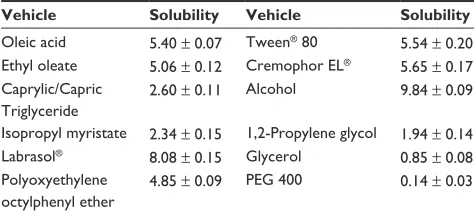
When preparing a SMEDDS formulation, it is important that steps be taken to avoid precipitation of the drug on dilution in gastrointestinal tract. Therefore, vehicles used in a SMEDDS should have high solubilization capacity to ensure complete dissolution of the drug. Table 1 shows that
oleanolic acid dissolved efficiently in oleic acid and ethyl oleate (oil), Labrasol and Cremophor EL (surfactant), and alcohol (cosurfactant).
compatibility tests
Oils and surfactants with good solubility do not always show good emulsifying capability, so it is critical to evaluate the com-patibility of different oils and surfactants in an optimal design formulation. According to the results of compatibility tests (Table 2), the emulsifying capability of ethyl oleate was bet-ter than of other oils with different surfactants, so ethyl oleate was chosen as a suitable oil. Cremophor EL was the optimal surfactant, and showed the best emulsifying capability.
selection of cosurfactants
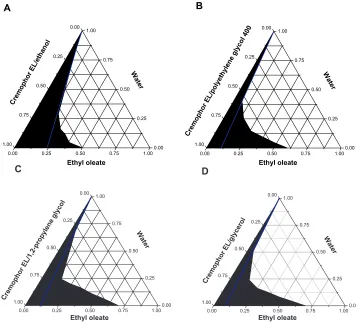
Pseudoternary phase diagrams for the different formulations are shown in Figure 1. The shadow microemulsion region is presented in these phase diagrams. By comparing the area of microemulsion domains with different cosurfactants, alcohol was chosen as the optimal cosurfactant.
Formulation optimization
In the ternary phase diagram, the shadow area represents the self-microemulsion region, as shown in Figure 2. Based on our results, an optimal SMEDDS formulation was estab-lished as shown in Table 3, ie, 50% ethyl oleate as the oil, 35% Cremophor EL as the surfactant, and 15% alcohol as the cosurfactant. Solubility of oleanolic acid in the optimal
formulation was determined as 13.196 ± 0.328 mg/g, which
was a significant increase compared with the solubility of
crude oleanolic acid (4.61 µg/mL).
Physicochemical characterization
of sMeDDs
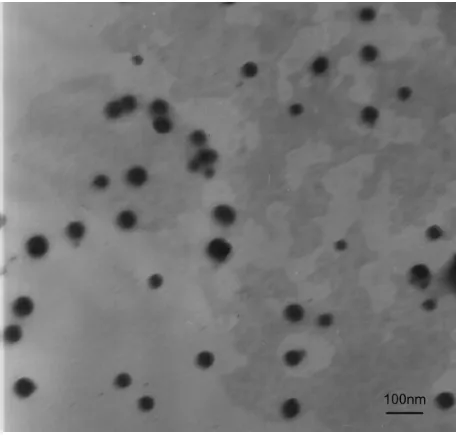
The results of transmission electron microscopic imaging are shown in Figure 3. The microemulsion droplets appeared as a perfect round shape without aggregation.
Table 1 solubility of oleanolic acid in different vehicles (mg/g)
Vehicle Solubility Vehicle Solubility
Oleic acid 5.40 ± 0.07 Tween® 80 5.54 ± 0.20
ethyl oleate 5.06 ± 0.12 cremophor el® 5.65 ± 0.17
caprylic/capric Triglyceride
2.60 ± 0.11 alcohol 9.84 ± 0.09
Isopropyl myristate 2.34 ± 0.15 1,2-Propylene glycol 1.94 ± 0.14
labrasol® 8.08 ± 0.15 glycerol 0.85 ± 0.08
Polyoxyethylene octylphenyl ether
4.85 ± 0.09 Peg 400 0.14 ± 0.03
Abbreviation: Peg, polyethylene glycol.
International Journal of Nanomedicine downloaded from https://www.dovepress.com/ by 118.70.13.36 on 23-Aug-2020
Dovepress sMeDDs improve oral bioavailability of oleanolic acid
Table 2 results of compatibility tests Ratios Visual gradinga
Oleic acid
Ethyl oleate
Caprylic/Capric Triglyceride
Isopropyl myristate labrasol®
9:1 D c e e
8:2 e D e e
7:3 e D e e
Polyoxyethylene octylphenyl ether
9:1 c D D D
8:2 D e e e
7:3 D e e e
Tween® 80
9:1 c a D B
8:2 D a D B
7:3 D B e c
cremophor el®
9:1 c a D a
8:2 D a D B
7:3 D a D B
Notes:aa, denotes a rapidly forming (within one minute) microemulsion which was clear or slightly bluish in appearance; B, denotes a rapidly forming, slightly less clear emulsion with a bluish white appearance; c, denotes a bright white emulsion (similar in appearance to milk) that formed within 2 minutes; D, denotes a dull, grayish white emulsion with a slightly oily appearance that was slow to emulsify (longer than 2 minutes); E, denotes a formulation with either poor or minimal emulsification and large oil droplets present on the surface.
0.00 0.25 0.50 0.75 1.00 0.00
0.25
0.50
0.75
1.00 0.00
0.25 0.50 0.75 1.00
Wa ter
Cremophor EL/ethanol
Ethyl oleate
0.00 0.25 0.50 0.75 1.00 0.00
0.25
0.50
0.75
1.00 0.00
0.25 0.50 0.75 1.00
W at
er
Crem
ophor EL/polyethylene glycol 400
Ethyl oleate
B A
Figure 1 Pseudoternaryphase diagrams for different cosurfactants. (A) alcohol, (B) Peg 400, (C) 1,2-propylene glycol, and (D) glycerol, with the shadow area representing the microemulsion region.
Abbreviation: Peg, polyethylene glycol.
0.00
0.25
0.50
0.75
1.00 0.00
0.25 0.50 0.75 1.00
Wate
r
Cremophor EL/1,2-propylene glycol
0.00
0.25
0.50
0.75
1.00 0.00
0.25 0.50 0.75 1.00
Water
Cremophor EL/glycerol
0.00 0.25 0.50 0.75 1.00
Ethyl oleate 0.00 0.25 Ethyl oleate0.50 0.75 1.00
C D
The size distribution of the oleanolic acid-loaded SMEDDS formulation is shown in Figure 4. Droplet size distribution is a critical factor when evaluating a SMEDDS, and it is known that droplet size has a significant effect on drug absorption in the gastrointestinal tract. The smaller the droplet size, the larger the interfacial surface area provided for drug absorption, and this has a strong relationship with oral bioavailability.24,28,29 The average droplet size in the
microemulsion dispersed from the oleanolic acid-loaded SMEDDS was less than 100 nm and showed a Gaussian distribution. The effects of dilution on droplet size in distilled water were measured. When the SMEDDS was diluted 25, 100, 400 times, the droplet size seemed to be unchanged, indicating that the microemulsion structure remained stable when dilution was as large as 400-fold. The effect of differ-ent types of dilution medium (dilution 100-fold) on droplet size was also investigated when the SMEDDS formulation was dispersed in distilled water, normal solution, 0.1 mol/L hydrochloride solution, and phosphate-buffered saline
(pH 6.8); the resulting droplet sizes were 53.1 ± 4.2 nm,
47.5 ± 4.5 nm, 52.2 ± 5.5 nm, and 52.8 ± 4.9 nm, respectively.
International Journal of Nanomedicine downloaded from https://www.dovepress.com/ by 118.70.13.36 on 23-Aug-2020
Dovepress Yang et al
There was no significant difference between the four types of dilution medium, indicating that the formulation was not affected by pH and ionic strength.
The physicochemical characteristics of the oleanolic acid-loaded SMEDDS formulation on 100-fold dilution
with distilled water were as follows: 1.78 ± 0.05 mm2/
sec for viscosity, 92.7 ± 1.6 µsec/cm for electrical
conductivity, and 1.396 ± 0.004 for refractive index,
respectively.
0.00 0.25 0.50 0.75 1.00
0.00
0.25
0.50
0.75
1.00 0.00
0.25 0.50 0.75 1.00
Ethyl oleate
Cremophor EL
Ethanol
Figure 2 Ternaryphase diagram for the self-microemulsifying drug delivery system, with the shadowed area representing the self-microemulsion regions.
Figure 3 Transmission electron micrograph of the self-microemulsifying drug delivery system containing oleanolic acid (×29,000; dilution 100-fold with water) with the black dots representing droplets of microemulsion.
Size distribution(s)
5 10 50 100 500 1000
Diameter (nm) 20
40 60
% in class
Figure 4 sizedistribution of the oleanolic acid self-microemulsifying drug delivery system.
0 20 40 60 80 100
0 20 40 60 80
Time (hours)
Cumulative percent rele
ased (%)
Figure 5 Invitro release profile for oleanolic acid from the self-microemulsifying drug delivery system () and solution ().
In vitro release studies
An in vitro release study was carried out to investigate the characteristics of release of oleanolic acid from the SMEDDS formulation. However, a conventional release protocol cannot be used for a SMEDDS, because free drug and microemulsion-associated drug are not able to be separated before analysis. At present, a dialysis method is used for in vitro study of drug release from a SMEDDS.26,30 Drug release profiles for the
SMEDDS and control formulations are shown in Figure 5. Our results indicate that release of oleanolic acid from both the SMEDDS formulation and the control solu-tion followed Weibull kinetics, and the equasolu-tions were
International Journal of Nanomedicine downloaded from https://www.dovepress.com/ by 118.70.13.36 on 23-Aug-2020
Dovepress sMeDDs improve oral bioavailability of oleanolic acid
ln[-ln(1-Q%)] = 1.0034lnt-3.3897 (r = 0.9992) and
ln[-ln(1-Q%)] = 0.89632lnt-1.6963 (r= 0.9994), respectively.
Compared with the control solution, oleanolic acid could be released in a sustained manner from the SMEDDS. It is suggested that oleanolic acid may exist in internal oil phase and the interfacial film of a microemulsion droplet, and that drug release may proceed via the route of internal oil phase to interfacial film to external water phase, which delays the release of oleanolic acid.
Determination of oleanolic acid in rat
plasma by hPlc-mass spectrometry
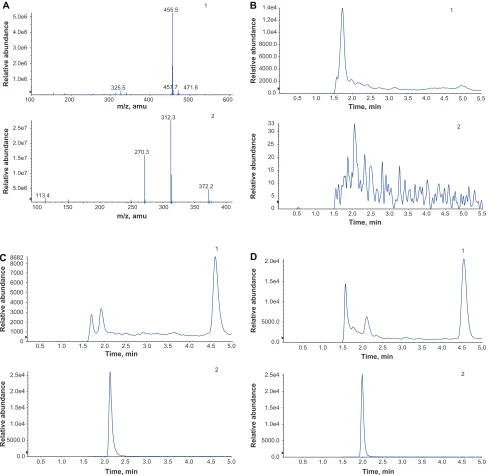
Oleanolic acid and the internal standard were separated well from impurities in the plasma extracts, and the mass spec-tra and typical chromatograms (Figure 6) show a retention time of about 4.65 minutes and 2.13 minutes for oleanolic acid and the internal standard, respectively. In the concen-tration range of 0.5–500 ng/mL, the peak area ratio (R) of oleanolic acid to the internal standard correlated well with
Time, min 0.0
5000.0 1.0e4 1.5e4 2.0e4
0.5 1.0 1.5 2.0 2.5 3.0 3.5 4.0 4.5 5.0
0.5 1.0 1.5 2.0 2.5 3.0 3.5 4.0 4.5 5.0
Time, min 0.0
5000.0 1.0e4 1.5e4 2.0e4 2.5e4
1
2
D
Relative abundance
Relative abundance
Time, min 0.0
2000.0 4000.0 6000.0 8000.0 1.0e4 1.2e4 1.4e4
0.5 1.0 1.5 2.0 2.5 3.0 3.5 4.0 4.5 5.0 5.5
0.5 1.0 1.5 2.0 2.5 3.0 3.5 4.0 4.5 5.0
Time, min 0
5 10 15 20 25 30 33
5.5
B 1
2
Relative abundance
Relative abundance
100 200 300 400 500 600
m/z, amu 1.0e6
2.0e6 3.0e6 4.0e6
5.0e6 455.5
457.7 471.6 325.5
100 150 200 250 300 350 400
m/z, amu 5.0e6
1.0e7 1.5e7 2.0e7 2.5e7
312.3
270.3
372.2 113.4
1
2
A
Relative abundance
Relative abundance
Time, min
0 1000 2000 3000 4000 5000 6000 7000 8000 8682
0.5 1.0 1.5 2.0 2.5 3.0 3.5 4.0 4.5 5.0
0.5 1.0 1.5 2.0 2.5 3.0 3.5 4.0 4.5 5.0
Time, min
0.0 5000.0 1.0e4 1.5e4 2.0e4 2.5e4
1
2
C
Relative abundance
Relative abundance
Figure 6 Massspectra and chromatograms for plasma. (A) Mass spectra of oleanolic acid (A) and benorilate (B, internal standard); (B) is blank plasma; (C) is plasma added with 0.5 ng/ml oleanolic acid and 50 ng/ml benorilate; (D) is plasma sample after administration of the oleanolic acid-loaded self-microemulsifying drug delivery system. (1 represents oleanolic acid with m/z 455.2→455.4, and 2 represents benorilate as internal standard with m/z 312.0→270.2).
International Journal of Nanomedicine downloaded from https://www.dovepress.com/ by 118.70.13.36 on 23-Aug-2020
Dovepress Yang et al
Table 4 absolute recovery, precision (n = 5) of the assay
method Concentration (ng/mL)
Absolute recovery Precision, RSD (%) Mean (%) RSD (%) Intraday Interday
1.0 35.28 4.62 2.66 3.07
25.0 34.68 2.20 2.51 3.32
400.0 36.60 3.03 2.08 2.62
Abbreviation: rsD, relative standard deviation.
0
0 10 20 30 40
50 100 150 200 250 300
Time (h)
Concentration (ng/mL
)
Figure 7 Meanplasma concentration-time profile following oral administration of oleanolic acid-loaded self-microemulsifying drug delivery system () and commercial tablet () in rats.
plasma concentration, ie, R = 14.259C-2.7683 (r= 0.9993).
The absolute recovery, and intraday and interday precision for determination of oleanolic acid in rat plasma at 1.0, 25.0, and 400 ng/mL levels are shown in Table 4. The stability of oleanolic acid in plasma was tested by analysis of the control samples at 1.0, 25.0, and 400 ng/mL levels. It was found that oleanolic acid was stable in plasma at −40°C for at least 30 days and during three freeze-thawing cycles.
Bioavailability results
The pharmacokinetic parameters for oleanolic acid-loaded SMEDDS and tablets were compared in rats. The mean plasma concentration-time curves for the oleanolic acid-loaded SMEDDS formulation and the control tablets are shown in Figure 7. The major pharmacokinetic parameters for oleanolic acid in the SMEDDS and tablet formulations are shown in Table 5. As indicated, the maximum plasma concentration and area under the plasma concentration-time curve for oleanolic acid in SMEDDS was 209.80 ng/mL and 1740.06 ng h/mL, which is 2.71-fold and 5.07-fold that of the commercial tablet, respectively.
The relative bioavailability of oleanolic acid in SMEDDS was dramatically increased compared with the commercial oleanolic acid tablet. There may be several reasons for the high bioavailability of SMEDDS. First, SMEDDS can markedly increase the solubility of a lipid-soluble drug. For a poorly water-soluble drug, absorption is often inadequate due to insufficient dissolution in the gastrointestinal tract. Therefore, the dissolution process may be an important factor influencing absorption. The SMEDDS transforms into micro-emulsion in the gastrointestinal tract, which keeps the drug in a dissolved form, which is beneficial for enhanced absorption. Second, the SMEDDS forms a fine o/w microemulsion with
Table 3 Design and results of formulation optimization
Formula composition % Drug
content (mg/g)
Droplet size (nm) Number Cremophor
EL®
Alcohol Ethyl oleate
1 80 5 15 6.955 ± 0.187 69
2 75 10 15 8.130 ± 0.198 65.4
3 70 15 15 9.392 ± 0.154 62.8
4 65 20 15 10.427 ± 0.197 60.3
5 60 25 15 11.610 ± 0.266 57.7
6 55 30 15 12.330 ± 0.262 53.2
7 50 35 15 13.196 ± 0.328 49.7
8 45 40 15 13.333 ± 0.351 53.2
9 40 45 15 13.570 ± 0.311 55.7
10 35 50 15 14.087 ± 0.463 59.2
11 30 55 15 14.022 ± 0.402 64.8
a droplet size of less than 100 nm when it emerges in the gastrointestinal tract. The small droplet size provides a large interfacial surface area for the drug to come into contact with the cell membrane, which might increase drug release and absorption. Third, the high surfactant content in a SMEDDS
may increase permeability by disturbing the cell membrane.30
Drug absorption mechanisms may include the transcellular and paracellular routes, and hydrophobic drugs with a low molecular weight, such as oleanolic acid, are absorbed trans-cellularly in most cases. The main barrier to their absorption is considered to be the tight junctions of cells. The surfactant in SMEDDS can reduce the interfacial surface tension and
enhance penetration of the drug into epithelial cells.24 The
structural characteristics of surfactant allow it to partition
between lipid and protein domains.30 Surfactant can interact
with the polar head groups in the lipid bilayers, and modify hydrogen bonding and ionic forces. It may also insert between the lipophilic tails of the lipid bilayers, which could disrupt the lipid-packing arrangement. Eventually, the inclusion of a lipid in a SMEDDS formulation may stimulate formation of lipoproteins and chylomicrons, subsequently promoting the lymphatic pathway for drug absorption, which may reduce the opportunity for hepatic first-pass metabolism and thereby enhance oral drug bioavailability, which has been confirmed by Hauss et al.31
International Journal of Nanomedicine downloaded from https://www.dovepress.com/ by 118.70.13.36 on 23-Aug-2020
Dovepress sMeDDs improve oral bioavailability of oleanolic acid
Conclusion
A SMEDDS formulation was developed, in which the opti-mal ratio of ethyl oleate to Cremophor EL to alcohol in the formulation was 50:35:15 (w/w). When diluted with water, the oleanolic acid-loaded SMEDDS could spontaneously form small particles. Neither dilution volume nor type of dilution medium had a significant effect on particle size or self-microemulsifying behavior. In vitro release of oleanolic acid from SMEDDS determined using a dialysis method showed typical sustained-release characteristics. The plasma concentration of oleanolic acid in the rat was determined by HPLC-mass spectrometry. The results of a pharmacokinetic study showed that the relative bioavailability of oleanolic acid was markedly improved, being approximately 507% that of the oleanolic acid tablet. This study provides evidence that a SMEDDS is valuable for oral delivery of oleanolic acid, and could potentially be used to enhance the oral absorption of poorly water-soluble drugs.
Acknowledgment
This work was supported partly by a research grant (2006GG2202053) from Department of Shandong Science and Technology, People’s Republic of China.
Disclosure
The authors report no conflicts of interest in this work.
References
1. Mahato SB, Garai S. Triterpenoid saponins. Fortschr Chem Org Naturst. 1998;74:1–196.
2. Wang B, Jiang ZH. Studies on oleanolic acid. Chin Pharm J. 1992;27: 393–397.
3. Price KR, Johnson IT, Fenwick GR. The chemistry and biological significance of saponins in foods and feedingstuffs. Crit Rev Food Sci Nutr. 1987;26:27–135.
4. Liu J. Pharmacology of oleanolic acid and ursolic acid. J Ethnopharmacol. 1995;49:57–68.
5. Xi J, Chang Q, Chan CK, et al. Formulation development and bioavail-ability evaluation of a self-nanoemulsified drug delivery system of oleanolic acid. AAPS PharmSciTech. 2009;10:172–182.
6. Pollier J, Goossens A. Oleanolic acid. Phytochemistry. 2012;77:10–15. 7. Somova LI, Shode FO, Ramnanan P, Nadar A. Antihypertensive,
antiatherosclerotic and antioxidant activity of triterpenoids isolated from Olea europaea, subspecies africana leaves. J Ethnopharmacol. 2003;84:299–305.
8. Assimopoulou AN, Zlatanos SN, Papageorgiou VP. Antioxidant activity of natural resins and bioactive triterpenes in oil substrates. Food Chem. 2005;92:721–727.
9. Somova LI, Shode FO, Mipando M. Cardiotonic and antidysrhythmic effects of oleanolic and ursolic acids, methyl maslinate and uvaol.
Phytomedicine. 2004;11:121–129.
10. Raphael TJ, Kuttan G. Effect of naturally occurring triterpenoids gly-cyrrhizic acid, ursolic acid, oleanolic acid and nomilin on the immune system. Phytomedicine. 2003;10:483–489.
11. Ali MS, Jahangir M, Hussan SS, Choudhary MI. Inhibition of alpha-glu-cosidase by oleanolic acid and its synthetic derivatives. Phytochemistry. 2002;60:295–299.
12. Kim KA, Lee JS, Park HJ, et al. Inhibition of cytochrome P450 activities by oleanolic acid and ursolic acid in human liver microsomes. Life Sci. 2004;74:2769–2779.
13. Oguro T, Liu J, Klaassen CD, Yoshida T. Inhibitory effect of oleanolic acid on 12-O-tetradecanoylphorbol-13-acetate-induced gene expression in mouse skin. Toxicol Sci. 1998;45:88–93.
14. Jager S, Winkler K, Pfuller U, Scheffler A. Solubility studies of olea-nolic acid and betulinic acid in aqueous solutions and plant extracts of Viscum album L. Planta Med. 2007;73:157–162.
15. Jager S, Laszczyk MN, Scheffler A. A preliminary pharmacoki-netic study of betulin, the main pentacyclic triterpene from extract of outer bark of birch (Betulae alba cortex). Molecules. 2008;13: 3224–3235.
16. Jin IJ, Ko YI, Kim YM, Han SK. Solubilization of oleanolic acid and ursolic acid by cosolvency. Arch Pharm Res. 1997;20:269–274. 17. Jeong DW, Kim YH, Kim HH, et al. Dose-linear pharmacokinetics
of oleanolic acid after intravenous and oral administration in rats.
Biopharm Drug Dispos. 2007;28:51–57.
18. Chen Y, Liu J, Yang X, Zhao X, Xu H. Oleanolic acid nanosuspensions: preparation, in-vitro characterization and enhanced hepatoprotective effect. J Pharm Pharmacol. 2005;57:259–264.
19. Liu L, Wang X. Improved dissolution of oleanolic acid with ternary solid dispersions. AAPS PharmSciTech. 2007;8:E113.
20. Constantinides PP. Lipid microemulsions for improving drug dissolu-tion and oral absorpdissolu-tion: physical and biopharmaceutical aspects. Pharm Res. 1995;12:1561–1572.
21. Shah NH, Carvajal MT, Patel CI, Infeld NH, Malick AW. Self- emulsifying drug delivery systems (SEDDS) with polyglycolized glycerides for improving in vitro dissolution and oral absorption of lipophilic drugs. Int J Pharm. 1994;106:15–23.
22. Iwanaga K, Kushibiki T, Miyazaki M, Kakemi M. Disposition of lipid-based formulation in the intestinal tract affects the absorption of poorly water-soluble drugs. Biol Pharm Bull. 2006;29:508–512.
23. Porter CJ, Trevaskis NL, Charman WN. Lipids and lipid-based formula-tions: optimizing the oral delivery of lipophilic drugs. Nat Rev Drug Discov. 2007;6:231–248.
24. Zhang P, Liu Y, Feng N, Xu J. Preparation and evaluation of self-microemulsifying drug delivery system of oridonin. Int J Pharm. 2008;355:269–276.
25. Kang BK, Lee JS, Chon SK, et al. Development of microemulsifying drug delivery systems (SMEDDS) for oral bio-availability enhancement of simvastatin in beagle dogs. Int J Pharm. 2004;274:65–73.
26. Wu W, Wang Y, Que L. Enhanced bioavailability of silymarin by self-microemulsifying drug delivery system. EurJ Pharm Biopharm. 2006;63:288–294.
27. Khoo SM, Humberstone AJ, Porter JHC, Edwards GA, Charman WN. Formulation design and bioavailability assessment of lipidic self-emulsifying formulations of halofantrine. Int J Pharm. 1998;167: 155–164.
Table 5 Major pharmacokinetic parameters of oleanolic acid after oral administration of oleanolic acid-loaded sMeDDs and a commercial tablet in rats
SMEDDS Tablet
aUc0→t (ng h/ml) 1740.06 ± 163.25 308.19 ± 55.04
aUc0→∞ (ng h/ml) 1775.26 ± 157.91 350.13 ± 73.67 cmax (ng/ml) 209.80 ± 47.19 77.60 ± 16.79
Tmax (hours) 2.00 ± 1.00 2.75 ± 0.50 relative bioavailability (%) 507.03%
Abbreviations: aUc, area under the curve; cmax, peak plasma concentration; Tmax, time to peak plasma concentration; sMeDDs, self-microemulsifying drug delivery system.
International Journal of Nanomedicine downloaded from https://www.dovepress.com/ by 118.70.13.36 on 23-Aug-2020
International Journal of Nanomedicine
Publish your work in this journal
Submit your manuscript here: http://www.dovepress.com/international-journal-of-nanomedicine-journal
The International Journal of Nanomedicine is an international, peer-reviewed journal focusing on the application of nanotechnology in diagnostics, therapeutics, and drug delivery systems throughout the biomedical field. This journal is indexed on PubMed Central, MedLine, CAS, SciSearch®, Current Contents®/Clinical Medicine,
Journal Citation Reports/Science Edition, EMBase, Scopus and the Elsevier Bibliographic databases. The manuscript management system is completely online and includes a very quick and fair peer-review system, which is all easy to use. Visit http://www.dovepress.com/ testimonials.php to read real quotes from published authors.
Dovepress
Dove
press
Yang et al
28. Surjyanarayan M, Snigdha MS, Naazneen S, Vandana PB, Mandal PAS. Design and development of saquinavir microemulsion for the oral bio-availability enhancement. Int J Pharm Tech Res. 2009;1:1442–1448. 29. Patel AR, Vavia PR. Preparation and in vivo evaluation of SMEDDS
(self-microemulsifying drug delivery system) containing fenofibrate.
AAPS J. 2007;9:E344–E352.
30. Swenson ES, Curatolo WJ. Means to enhance penetration. Adv Drug Deliv Rev. 1992;8:39–42.
31. Hauss DJ, Mehta SC, Radebaugh GW. Targeted lymphatic transport and modified systemic distribution of CI-976, a lipophilic lipid-regulator drug, via a formulation approach. Int J Pharm. 1994;108:85–93.
International Journal of Nanomedicine downloaded from https://www.dovepress.com/ by 118.70.13.36 on 23-Aug-2020