University of South Carolina
Scholar Commons
Theses and Dissertations
2018
The Impact Of A Peer-Teaching Instructional
Approach On A Student’s Self-Confidence
John CorralUniversity of South Carolina - Columbia
Follow this and additional works at:https://scholarcommons.sc.edu/etd Part of theCurriculum and Instruction Commons
This Open Access Dissertation is brought to you by Scholar Commons. It has been accepted for inclusion in Theses and Dissertations by an authorized administrator of Scholar Commons. For more information, please [email protected].
Recommended Citation
THE IMPACT OF A PEER-TEACHING INSTRUCTIONAL APPROACH ON A STUDENT’S SELF-CONFIDENCE
by
John Corral
Bachelor of Science
Santa Clara University, 1976
Master of Education
Georgia State University, 1978
Master of Education
University of South Carolina, 2009
_______________________________________________
Submitted in Partial Fulfillment of the Requirements
For the Degree of Doctor of Education in
Curriculum and Instruction
College of Education
University of South Carolina
2018
Accepted by:
Leigh D’Amico, Major Professor
Angela Bain, Committee Member
Russ Conrath, Committee Member
Suha Tamim, Committee Member
DEDICATION
I dedicate this work to my loving wife, who allowed me to complete a life-long
goal of earning a Doctorate degree in Education. There were many days and nights
without you, and I could not have done this without your love and support. I also dedicate
this to my parents who encouraged me with love and support. Dad, thank you for pushing
me to realize my dreams by and sticking with me when times were tough. Your
encouragement was a continuous flow of positive love. I also want to thank Dr. Diane
ACKNOWLEDGEMENTS
This was a four-year journey and I honestly enjoyed the ride. My passion for
peer-teaching as an instructional approach to teaching was the motivation to gain a
doctorate in Education. I would like to acknowledge colleagues that helped me edit my
dissertation. Thank you, Dora Fletcher, for your editing and expert knowledge of APA
formatting. Thank you, Ms. O’Neill and Ms. Bergman, ELA teachers at Great Falls
Middle/High schools, for your diligent editing. Lastly, I want to thank Dr. D’Amico for
taking me through this arduous process of completing my dissertation. Your positive
ABSTRACT
This study examines a problem of practice stemming from students not given the
same opportunities to use and develop self-confidence and take on higher levels of
responsibility in the classroom as they prepare for the 21st century workforce in our
society. Recognizing a problem of practice evident in our high school with
low-self-esteem in students, this paper studies the effects of implementing a peer-teaching
instructional approach to help develop students’ self-confidence and emerging leadership
skills (Lockie & Van Lanen, 2008). The central research question addressed in this study
is: what is the impact of implementing a peer-teaching instructional approach on a
student’s self-confidence? This is a mixed method case study. The action research
methodology used in this study was Mertler’s (2017) four stages of action research cycle.
The planningphase resulted in the problem of practice, a review of literature, a targeted
research question, and a research plan. The acting phase included collecting and
analyzing data through a student survey, interviews, student questionnaire, observations,
and student artifacts by a teacher-researcher. The developing phaseinvolved the creation
of an action plan based on the analysis of data. Finally, the reflecting phase involved the
results and reflection of the study.
TABLE OF CONTENTS
DEDICATION ... iii
ACKNOWLEDGEMENTS ... iv
ABSTRACT ...v
LIST OF TABLES ... ix
CHAPTER 1: INTRODUCTION...1
STATEMENT OF THE PROBLEM ...3
STUDY RATIONALE ...6
A SOCIAL JUSTICE PERSPECTIVE TO PEER-TEACHING ...9
PURPOSE STATEMENT ...11
RESEARCH QUESTION ...13
THEORETICAL FRAMEWORK ...13
PEER-TEACHING IN THE JROTC CLASSROOM ...15
ACTION RESEARCH METHODOLOGY ...18
CONCLUSION ...21
KEY WORDS ...22
THEORETICAL FRAMEWORK ...27
THEORIES OF CURRICULUM AND PEER-LEARNING ...30
COGNITIVE AND SOCIAL PEER SUPPORT ...33
A SOCIAL JUSTICE PERSPECTIVE TO PEER-LEARNING ...38
PEER-LEARNING PROGRAMS ...41
PEER-TEACHING IN MIDDLE AND HIGH SCHOOLS ...49
A COUNTER-ARGUMENT TO PEER-TEACHING ...53
CONCLUSION ...56
CHAPTER 3: METHODOLOGY ...59
SCHOLARLY LITERATURE ...60
ACTION RESEARCH DESIGN ...61
ACTION RESEARCH METHODOLOGY ...62
PARTICIPANTS AND SETTING ...62
PLAN FOR DATA COLLECTION ...64
PLAN FOR DATA ANALYSIS ...67
TEACHER-RESEARCHER ROLE ...71
POTENTIAL WEAKNESSES ...72
ETHICAL CONSIDERATIONS IN ACTION RESEARCH ...73
CONCLUSION ...75
CHAPTER 4: FINDINGS ...76
INTERVENTION ...76
ANALYSIS OF DATA...94
CONCLUSION ...96
CHAPTER 5: DISCUSSION, CONCLUSIONS, AND RECOMMENDATIONS ...98
RESULTS RELATED TO EXISTING LITERATURE...101
PRACTICE RECOMMENDATION ...105
ACTION PLAN FOR FUTURE CYCLES OF ACTION RESEARCH ...107
LIMITATIONS OF THE STUDY...108
CONCLUSION ...110
REFERENCES ...113
APPENDIX A─INTERVIEW QUESTIONS ...127
APPENDIX B─PEER-TEACHING QUESTIONNAIRE ...128
LIST OF TABLES
Table 4.1 Coding scheme: Peer-teaching data ... 78
Table 4.2 Student survey responses ...80
Table 4.3 Student survey description ...82
Table 4.4 Student responses to questionnaire ...84
Table 4.5 Responses to interview questions ...86
Table 4.6 Emerging trends and patterns ...96
CHAPTER 1
INTRODUCTION
Over the last several years, high stakes testing has influenced schools throughout
the United States. Data driven learning strategies have been implemented to raise test
scores primarily in the core subjects of Math, Science, English and Social Studies.
Teachers are under pressure to teach what is covered by standards-based curriculum.
Additionally, the impact of a school’s effort on student learning is continually changing
based on increaseddiversity in schools and the explosion of technology. As we continue
to foster Professional Learning Communities (PLC) with teachers, school leaders, parents
and all other stakeholders, “data driven” instruction is putting pressure on students with
increased testing and the need to improve scores (The Center for Public Education,
2018). Test-based curriculumplans and strategies to address the “normal curve” of
student achievement is dehumanizing. It diminishes learning in the classroom and fails to
address social and emotional needs of the students who are failing to learn in the
classroom (Reyes & Villarreal, 2016). Children must experience the excitement and
success in quality teaching and learning. Curriculum cannot be designed, nor can student
learning be evaluated, that guarantee that some students must fail (Dudling-Marling, &
Gurn, 2010,). Test driven curriculum diminishes students the fair and equal opportunity
As professionals in education, teachers have the knowledge and expertise to
utilize the best practices available to improve student’s academic deficiencies and at the
same time establish an equitable and fair learning environment for all learners. An
effective peer-teaching instructional approach, under the umbrella of a Project Based
Learning (PBL) environment, allows diverse students of different race, color, gender, and
social class opportunities to not only learn content, but also develop 21st Century work
skills in our democratic society (“K12 Thoughtful learning,” 2017). Peer-learning is a
natural part of what we do daily. We seek information and advice from many resources;
friends, classmates, colleagues, information technology, tips from newspapers, social
media, and television programs. In this setting, peer-learning may not be a formal
learning [strategy], but it meets the needs of most people in a timely manner (Boud,
2001). In this study, peer-teaching as an instructional strategy in a classroom can be
defined as students, who are not school teachers, helping other students to learn content.
Topping (2005) views peer-teaching as an instructional approach that builds
self-confidence and provides a pathway to reconnecting with our students by bringing rigor,
expectations and relationships into the classroom resulting in student growth. A benefit of
peer-teaching is reciprocal peer-learning; students simultaneously learning and sharing
other students’ learning and making equal contributions (Boud, 2001). There is mutual
and cooperative collaboration and a “higher” sense of responsibility in this setting
(Lockie & Van Lanen, 2008). Having implemented a peer-teaching in the Junior Reserve
Officer Training Corps (JROTC) program for several years, I observed growth and
Peers working together can bring their social skills into the classroom and connect their
experiences or knowledge to new subject content (Nieto, 2013). Boud (2001) explained:
The advantage of learning from people you know is that they are or have
been in a similar position to oneself. They have faced the same challenges as
ourselves in the same context, they talk to us in our own language and we can ask
them what may appear in other situations to be silly questions (p. 1).
Using a peer-teaching instructional approach in a Junior Officer Training Corps
(JROTC) classroom, students are given the necessary resources, and emotional support to
help them understand subject content, and to prepare and teach their peers. When
students use these same resources to teach others, they come to understand that they are
unique individuals with special talents. As you will read in Chapter 2 of this study, there
is ample research to support the positive impact, peer-teaching has on a student
‘self-confidence, and other leadership attributes (Morrison, 2004; Johnson, 2015; Lockie, &
Van Lanen, 2008); and improvement in their academic subjects (Korner & Hopf, 2015;
Bruno, et al., 2016). As a retired Army officer teaching JROTC in public schools for 20
years, I have witnessed the benefits of peer-teaching by students and the effect it has on
developing self-confidence and improving student growth in the classroom. Utilizing an
action research framework as a teacher-researcher at Great Falls Middle-High School
(GFMHS), I will examine a peer-teaching instructional approach on student’s
self-confidence and the effects it has on student growth.
Statement of the Problem
The problem of practice for this study stems from students attending a Title 1
higher levels of responsibility in the classroom as they prepare for the 21st century
workforce in our society (“K12 Thoughtful Learning,” 2017). In traditional educational
settings, students are not afforded a chance to develop self-confidence and other personal
attributes such as metacognition/self-reflection, self-regulation, autonomy, and oral
fluency. Many students are unable to learn in traditional settings but gain self-confidence
and develop creativity in a peer-teaching environment (Zhbanova, Rule, & Stichter,
2013). Traditional practices in the classroom usually include lecture teaching method,
giving instructions, asking questions, handing out worksheets, and monitoring seatwork
(Nieto, 2013). Traditional teaching is concerned with the teacher being the controller of
the learning environment. The teacher has power and responsibility and they play the role
of the instructor (in the form of lectures) and decision maker (as it applies to curriculum
content and specific outcomes). They view students as having ‘knowledge holes’ that
need to be filled with information. In short, it is the teacher that causes the learning to
occur (Novak, 1998). A classroom that is teacher-directed and based on obedience and
constraint is not going to benefit from peer-teaching. A student working in groups will
more than likely please the teacher and less likely to share ideas in an opened-ended
fashion (De Lisi, 2002). Peer-teaching as an instructional approach is much like Problem
Based Learning (PBL) that empowers the students to take charge of their learning and
focuses on the student not the curriculum. Peer-teaching as an instructional approach in
the classroom empowers the students to take charge of their learning. The teacher creates
the learning environment for the students to learn subject content. However, it is the
Developing self-confidence through a leadership experience is one of our core
competencies in the JROTC program. Cadets/students are taught leadership content along
with “hands on” experience and given a chance to use and develop their leadership skills
with their peers. They develop these skills by constructing and presenting Power Point
presentations, leading other cadets in marching drill and physical fitness training or
participating in after school activities such as parades and community projects. Under
these leadership experiences,some students assume leadership positions above and
beyond their classroom requirements and develop “higher” levels of responsibility. These
additional responsibilities become especially evident in students who are extroverts and
less evident with studentswho are introverts or shy (Wielkiewicz, Fisher, Stelzner,
Overland, & Sinner, 2012).
Another problem in our school is that some students fail to develop
self-confidence even when given opportunities to lead their peers. They allow the stronger
and more confident students to take the lead in daily activities in the classroom. Working
in public schools for many years, I have observed struggling students demonstrating a
lack of confidence in their ability to communicate with their peers and take on projects
that require planning, preparation and delivering a finished assignment or project.
Peer-teaching as an instructional approach can benefit students because they are socially
interacting with their peers and working as a team (Johnson et al., 2015). This approach
allows the teacher-researcher to use differentiated instruction by taking on the role of a
mentor, coach and facilitator in a peer-learning classroom. The teacher creates an
environment, in which a students’ uniqueness are important as the traits they share,
experience, held together by common goals (Doubet, & Hockett, 2015). This involves all
students who are working together on a “level playing field” in a cooperative spirit to
accomplish a common goal of planning, preparing, and teaching content to their peers.
Study Rationale
Today, teachers are under pressure to raise test scores. A “data driven” mindset
has become far too common in this school. With the pressures of teaching the “test”, and
intensely monitoring test scores of students, school practitioners are neglecting to teach
critical 21st century work skills required to prepare students for their future success (“K12
Thoughtful Learning,” 2017). Unlike other research conducted on peer-teaching, this
study specifically targets a diverse classroom of JROTC cadets and examines the impact
it has on each student’s self-confidence. This study is unique in that the teacher is also the
researcher. Peer-teaching as an instructional approach moves away from a traditional
lecture type teaching method to Project Based Learning (PBL) which allows students to
learn by doing and applying ideas to a given task or project. PBL involves students
applying what they are learning in the classroom to solve real problems and produce
results that matter. PBL gives teachers an opportunity to teach, observe and evaluate
real-world skills, and focuses on the education of students, not on the curriculum (Markham,
2012). “Students engage in real, meaningful problems that are important to them and that
are similar to the activities that adult professionals engage in” (Krajcik, & Blumenfeld,
2006, pp 317-318). It has been my experience that students become motivated to learn
when they are engaged in what they perceive is meaningful and beneficial to their lives.
Divergent thinking also plays a major role in how the students plan and deliver
nonconformists, willing to take risks and learn from a “hands on” approach to learning
and benefit from the use of non-traditional teaching methods such as: discussions,
demonstration, practical exercises (creating Venn diagrams, Mapping, Bubble maps,
Fishbone diagrams), brainstorming, case study, and gaming (U. S. Army JROTC, 2005).
Many students in my class are divergent learners and like to engage and interact with
their peers during this peer-teaching experience. They have a strong desire to socialize
and develop interpersonal relationships. Peer-teaching is a collaborative environment
where dialogue, friendly debate, deliberation, and reflection are applied by students
(Hawks, 2007). Students feel less intimidated by the teacher because they are working
with their peers. Thus, the teacher becomes a facilitator, working with small groups of
students, interacting with them and helping them plan and prepare their lessons. A
peer-learning environment is a holistic approach that “fits” a classroom of diverse students.
One of my students with a troubled life, excelled in my classroom and enjoyed her
peer-teaching experience.
Janet is one of several non-traditional JROTC students that excelled in a
peer-teaching instructional approach in the classroom. She was an African-American raised by
a single mother and a step-father. Her relationship with her mother was good, but not
with her step-father. She claimed that he was manipulative and a “jerk.” She met her
biological father a few times over the years but does not have a close relationship with
him. He is in prison for drug possession. Janet is an angry student that has no structure in
her family. She does what she wants to do in and out of her home. Smoking marijuana is
common in her life. Her parents also smoke and drink. Life in school as she puts it, “is a
gets along with most teachers when she wants to. Janet is a smart student according to her
teachers, popular and friendly with her peers, but has been suspended numerous times
over this past three years for drug use, skipping class, arguing with teachers, coming to
class excessively late and leaving classrooms for no reason.
Aware of Janet’s past, I needed to find a way to keep her focused and motivated
with her studies, keep her in class, and help complete her student work on time. Working
in a PBL environment and using a peer-teaching instructional approach was a “right” fit
for Janet. She quickly realized that my classroom was not a traditional classroom like
other classroom that consisted of lecture, individual work, question and answer activity at
the end of class, and monitoring seatwork. Using her well-developed social skills, she
quickly embraced peer-teaching and conformed to my classroom procedures. This was
her chance to show her peers that she was a leader and could motivate her peers. Her
teaching style was “high energy” filled with fun activities which motivated her peers. She
seemed to enjoy teaching and leading others. Although she was considered a “problem
child” by other teachers and school administrators, Janet came to my class on time and
completed her work on time. She was a good student and excelled in JROTC.
Over the course of a semester, I had several conversations with Janet about her
behavior and troubles at home. Using a peer-teaching instructional approach in the
classroom was a challenge for her. She liked the structure of the class and enjoyed
working with her classmates learning content and turning around and sharing what she
learned with her peers. She felt this experience was relevant in her chaotic life. She
“bought into” the idea that she needed to work on her leadership and presentation skills
methods are not allowing some students to learn content and value what they are
learning.
Having implemented a peer-teaching instructional strategy in the last several
years, I have seen an amazing transformation take place with my students. They work
together, solving problems, reflecting on their lessons and at the same time developing
self-confidence and leadership skills (Zaritsky, & Toce, 2006). Peer-teaching encourages
students to work with each other, develops critical self-reflection, and communication
skills, allowing students to articulate their gained knowledge. Peer-teaching manages
learning, and how to learn (Boud, 2001). A peer-teaching instructional approach can be
an effective strategy and can bring about major change in the school setting in an
economically depressed community. School-wide peer-teaching can about improvements
in student discipline, self-confidence, and motivation. In this study, conducting an action
research study allows teachers to study their own classrooms, gather information, study
how their students learn, and help improve the quality of learning in their classrooms
(Mertler, 2017).
A Social Justice Perspective to Peer-Teaching
When you examine a social justice perspective in this study, a peer-teaching
approach provides opportunities for diverse students to have equal access to learning and
develop 21st Century leadership transferable skillsthey will use in the workforce outside
of a school setting (Thoughtful Learning, 2017). A social justice approach to
peer-teaching focuses primarily on the student along with subject content and their
contributions to classmates, school, and community. Peer-teaching allows teachers to
It’s about knowing how to create an environment to foster humanity, to foster
human relationships; when you do that, the content will be so much easier to
transmit because you’re in a conversation with people and with that conversation
you are telling a story (p. 35).
Working in Title 1 schools for 18 years mentoring, coaching, and teaching poor
and disadvantaged students from broken homes and dysfunctional families, I have
observed students with lower self-esteem, lacking self-confidence in their ability to learn
in the classroom. A peer-teaching instructional approach allows students to develop
relationships with their peers and collaborate with students of different racial
backgroundson a level “playing field.” Students can share their knowledge without fear
of intimidation or ridicule from their peers. Students feel a sense of accomplishment
knowing that they are sharing their gained knowledge with their peers which can raise
their self-confidence and motivation to improve learning content (Bruno, et al., 2016).
This collaboration through group socialization is a path in which students, over time, can
develop their identities and self-concepts and shape their future interactions (Nieto,
2013). According to Harris and Meltzer (2015), peer-teaching and tutoring affects a
student’s motivation, self-confidence, behavior, and attitude about learning and academic
achievement. “Students often develop a stronger understanding of their own strengths and
weaknesses as a result of the feelings of competence and autonomy prompted by their
mentoring and coaching roles” (p. 4). This is important because it develops their
self-confidence and strengthens their ability to problem-solve (meta-cognition).
John Franklin Bobbitt, a progressivist in 1918, believed “scientific experts should
adult members of society” (Bobbittt, 2017; Schramm-Pate, 2016). Bobbitt reasoned that
curriculum must conform to the needs of an individual and to the workforce of our
society. Students should not be taught what they would never use. Education to Bobbitt
was preparing young people for adulthood. A peer-teaching instructional approach used
in the classroom promotes the skills and personal attributes necessary to become a
productive and competitive citizen in the United States. John Dewey (1938), also
involved in the progressive movement, believed that American education at the turn of
the twentieth century was too focused on discipline, order, hierarchal control and the
“three R’s” (reading, writing and arithmetic). Schramm-Pate believed that Dewey
promoted individual growth and development as well as group interaction, cooperative
learning, and team building.
Peer-teaching is much like Project Based Learning, applying integrated
curriculum along with subject content (Markham, 2012). Curriculum can be virtually any
combination of subjects (Math, Science, Language Arts, Social Studies) incorporated in a
common idea or themes. (Drake, 2012). Peer-teaching cuts across disciplines. Students
are critical thinkers, problem solvers, active learners, independent learners, and
researchers (Schramm-Pate, 2016). They study, prepare and plan to teach content that is
relevant to real world experiences outside the school setting.
Purpose Statement
The purpose of this action research is to examine a student’s self-confidence
based on the implementation of a peer-teaching instructional approach in the classroom
by the teacher-researcher. Students not only teach the JROTC curriculum but teach
management in a partnership with Junior Achievement. Based on my experience and
observation using a peer-teaching instructional approach in the classroom, students
displayed an emerging confidence along with other attributes such as:
self-regulation, oral fluency, metacognition/self-reflection, autonomy, and a higher sense of
responsibility (Lockie, & Van Lanen, 2008).
The impetus for this study came from watching my students over the last several
years, develop self-confidence teaching others JROTC curriculum. I found that teaching
leadership subject content in my classroom was helpful in building a successful portfolio
for students who were shy, at-risk, had low academic expectations, lived in poverty, and
lacked confidence intheir own social and academic capabilities. These diverse students
wanted success and sought ways to break out of generational poverty. I have found that
giving them a chance to feel successful in the classroom helped them find a path to
success after high school. Peer-teaching was a good approach to make high school a more
positive experience for them. Price (2008) explained the relationship between student and
teacher in a peer-teaching environment:
Students are given the opportunity to belong to a positive peer group; a strong
focus on motivation and self-discipline; an emphasis on academic preparedness
and improvement; conscientious mentoring; close monitoring of how and what
students are doing; accountability and consequences; teamwork; valuing the
students and believing they can succeed; structure and routine; periodic
recognition and rewards and a safe and secure environment (p. 30).
The relationship that the teacher has with students is important to the success of a
were more likely to be motivated when interacting with their peers and coaching them on
an individual basis.
Peer-teaching has been used for many years in education. It is prevalent in diverse
schools where students from different academic levels work together to share their prior
knowledge and help each other through difficult assignments, class work, and projects. It
has also proven beneficial for students who struggle to learn content such as concepts,
ideas, terms, and problem-solving in the classroom (Topping, 2005). The results of this
study will assist teachers and school leaders develop school-wide learning strategies
unique to this school and prepare students for the 21st century workforce (K12
Thoughtful Learning, 2017). Implementing a school wide initiative to incorporate
peer-teaching in all classrooms can improve academic performance in the classroom and have
a positive effect on the current “data driven” initiative in our school that struggles to
“close the achievement gap.”
Research Question
The teacher-researcher poses the following question to guide a mixed method
case study to examine self-confidence of students enrolled in Junior Officer Training
Corps at Great Falls Middle-High School: What is the impact of implementing a
peer-teaching instructional approach on student’s self-confidence?
Theoretical Framework
The theoretical framework for this study is based on the works of Piaget’s Theory
of Cognitive Development and Vygotsky’s Sociocultural Theory; the process of peer
influence and how we think and learn in our environment. Also, pertinent to this study
peer-teaching instructional approach which will be discussed in depth in Chapter 2. Piaget
developed a model or theory of how humans go about making sense of their world by
collecting and organizing information from infancy to adulthood. He identified four
factors that interact to influence changes in thinking: biological maturation, activity,
social experiences, and equilibration. According to Piaget, cognitive development in the
learning cycle is influenced by social transmission, or learning from others (Woolfolk,
2008). In the absence of social transmission, we would need to relearn all the knowledge
already offered by our culture. Activity is another influence. Piaget believed that learning
was an interaction between peers because peers are on an equal basis and can challenge
each other’s thinking. “We act on our surroundings around us by exploring, testing,
observing, organizing information and changing our thinking processes at the same time”
(Woolfolk, 2008 p. 36). When peers get together as a group, ideas, and thoughts are
expressed with mutual respect.
Vygotsky’s Sociocultural Theory emphasized the role in the development of
cooperative dialogues between children and more knowledgeable members of society.
Children learn ways of thinking and behaving through these interactions. He believed that
human activities take place in cultural settings and cannot be understood apart from these
settings. He believed that higher cognitive development is co-constructed, defined as“a
social process in which people interact and negotiate (usually verbally) to create an
understanding or to solve a problem. The final product is shaped by all participants”
(Woolfolk, 2008 pp. 50-51). These theories are the foundation of this study. Peer
content provides a positive opportunity to examine the emerging development of
self-confidence.
Peer-Teaching in the JROTC Classroom
A common practice in JROTC to give students the best opportunities to learn
leadership skills is teaching JROTC content to their peers and teaching elementary aged
student content on the economy and money management through a partnership agreement
with the Junior Achievement (JA) Program. To prepare students to teach their peers
JROTC content, students are taught by the teacher-researcher lessons on “teaching skills”
outlined in the JROTC curriculum that are similar to the essential elements of instruction.
The resources available for the student participants to prepare their JROTC and Junior
Achievement lessons include an interactive curriculum software, which provides lesson
plans, interactive presentation slides, and resources to deliver a successful lesson to their
peers. Using these resources, the students work in pairs. They prepare to teach a lesson,
prepare learning activities stated in the lesson plan, prepare an item-response quiz, gather
the resources needed to deliver the lesson and rehearse their lessons before presenting a
class to their peers. This process requires a good deal of responsibility and organizational
skills, including cooperation, collaboration with each other and in some instance’s
discussion with other student groups as they prepare their presentations.
Cooperative learning is a major benefit in the peer-teaching instructional approach
that can have a positive effect on a student’s self-confidence. Students work with and
depend on each other to accomplish a common goal and help each other achieve
individual and group goals. Students work as a cohesive element (U. S. Army JROTC,
feasibility and quality of instruction and has allowed teachers to determine the needs of
diverse learners. Small group strategies have proven to benefit students in the areas of
academic achievement, motivation, self-efficiency, social development, and social
acceptance. Peer-teaching in small group ensures individual accountability because the
students do not want to disappoint their peers (Wilkerson, & Lequia, 2015).
In a cooperative spirit of peer-teaching, students begin to develop self-confidence,
and personal attributes such as: leadership skills, metacognition/self-reflection, oral
fluency, autonomy, and a strong desire or motivation to learn. During this process of
planning, preparing, and teaching a lesson, the teacher-researcher acts as a facilitator,
who coaches and guides students through the peer-teaching regimen. Student-participants
also prepare mini-lessons and teach elementary aged students (K-4) five consecutive
sessions at the elementary school in a partnership with Junior Achievement (JA). Like the
JROTC lesson plans, (JA) provides a lesson plan booklet, and resources needed to
prepare and teach about the economy and money management.
Whether they are peer-teaching JROTC students or younger students, they work
in pairs, and depend on each other as they prepare their lessons taking responsibility for
their actions and watching the fruits of labor pay off. The classroom is student-oriented,
predictable and flexible. They have a voice in the classroom. They claim possession for
their labors and work closely with their peers. Their voice counts. They confer with each
other as they plan their classes. Motivation in the classroom is usually positive. Students
demonstrate an openness with their classmates and exchange ideas that result in an
increased level of understanding content and respect the other students’ opinions and
do not want to disappoint their peers and especially their young students at the
elementary school. Velez, Cano, Whittington & Wolf, (2011) studied peer-teaching
activities and adds to the dynamics of this experience.
When learners engage in an activity with a person with whom they were
obligated to obey, the learner feels a sense of constraint which can alter or
discourage the learning process. On the other hand, when learners communicate
with a truly equal peer, a feeling of cooperation emerges, forming a foundation
for significant retained learning. (p. 41)
The power of peer interaction and what students can accomplish without being told what
to do by the teacher was evident in the success of peer-teaching that I witnessed in the
classroom. Students enjoyed the ownership of putting together their lessons and
delivering the knowledge they gained with their fellow students.
In summation, the literature review of peer-teaching discussed in Chapter 2
provides evidence for peer-teaching as an effective instructional approach that promotes a
student’s self-confidence. This approach can be an effective learning strategy for teachers
to use in the classroom, to promote student growth in academics and develop leadership
skills. Peer-teaching in a PBL environment could be implemented in a variety of
classroom settings and subject content. Peer-teaching as an instructional strategy builds
student success in academics and growth in self-confidence (Topping, 2005; Morrison,
2004; Johnson, et al., 2015; Sporer & Brunstein, 2009). What also emerges from research
studies are common personal behavioral or leadership characteristics that are observable
and exhibited in the classroom: self-regulation, autonomy, and higher sense of
metacognition/self-reflection. While most peer-teaching research focuses on academic achievement, learning
retention, learning approaches, improved test scores, and academic achievement, there is
limited research on how a peer-teaching instructional approach impacts a student’s
self-confidence.
Action Research Methodology
Conducting action research on peer-teaching allows teachers to study their own
classrooms and study how their students learn and improve the quality of learning in the
classroom.Action research identifies an area of focus, collects data, analyses the data
gathered and develops a plan of action (Mertler, 2017). It also can effect positive change
in a school setting and improve the lives of students (Mills, 2014).
Research Site
Great Falls Middle-High School (GFMHS) is a Title 1 school located in a rural
area of Chester County in South Carolina. Great Falls is located in a blue collar,
lower-middle class mill town. GFMHS is a combined complex composed of grades 6-12. The
Middle-High school employs 47 teachers. The student-teacher ratio is about 12:1.
Enrollment for the high school is 200 students, grades 9-12th (McKibben Demographic
Research, 2018). There are 76 African-Americans, 120 Caucasians, two Asian- and two
in the “other” category. Currently, 49 percent are males and 51 percent are female
students. Approximately 67 percent are economically disadvantaged (U. S. News and
World Report, 2018). Over 62 percent of all students are on free or reduced breakfast and
lunch plans. Historically, in State Assessments, Great Falls High School has struggled to
composite scores. In 2016 the average ACT scores were 16 to 17 in the core subjects of
Math, Science Reading, and English. The graduation rate was 78 percent in 2017, above
the State average ("South Carolina Department of Education", 2017).
Within the community of Great Falls, age groups are primarily composed of
children and teenagers (under 20) and retirees (over 65). About 27.4 percent of
households are managed by single parents (McKibben Demographic Research, 2018).
Once a thriving mill town, Great Falls now suffers from high unemployment because of
the closing of the mills over the past 20 years. Poverty is widespread in this community,
especially with African-American families. With the loss of employment in this
community, families have moved away and enrollment in the high school dropped
significantly over the last 10 years.
Teacher-Researcher
I am the primary teacher for the JROTC student-participants in this study. I have
taught in public secondary schools for 20 years as a JROTC teacher. I have been at Great
Falls Middle High School since 2001. My passion for teaching students grew out of the
academic difficulties I encountered as a child moving around with my family as an
“Army Brat.” I attended numerous schools throughout the U. S. and Germany,
developing new friends several times over the course of my childhood and teenage years.
I became insecure over the changes occurring in my life. I also experienced low
self-esteem, unmotivated in school academics and wasafraid to take risks early in my life.
However, watching my dad's progress as an Army Officer ultimately attain the rank
Colonel and a mother who pushed academics in school, I found personal success over the
with high expectations and preached to me that, “to make it in this world you have to
work hard and be responsible for your actions.” What I felt and experienced early in my
life and to see the success I accomplished over the years motivated me to reach out and
help my students experience success in the classroom. Today, I see myself in my
students, who are unmotivated, afraid to take chances, uncertain about the future, lack
self-confidence in the ability to excel in school academics, and struggle with oral and
written communication skills. My experiences during my childhood and teenage years
motivated me to mentor and coach them and help them get a jump start in life after high
school.
Student-Participants
The student-participants are JROTC high school students in nine through 12th
graders. The research was conducted in the JROTC classroom located at the high school
and at the elementary school classrooms located within a few miles of the high school.
Action Research Method
This study is a naturalistic mixed method case study of JROTC students
conducted over a semester. It utilizes a mixed method design of qualitative and
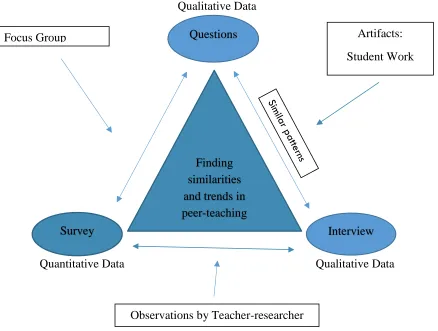
quantitative data to answer the research question. Triangulation, a process of using
multiple methods, data collection strategies, and data sources to ensure trustworthiness of
data, were utilized in this study. Using multiple methods of both qualitative and
quantitative measures can improve the validity and trustworthiness of those findings
which can lead to accuracy and believability of the data (Mertler, 2017). I used a
question. This study employed a convenient sample of JROTC students rather than a
random sampling method.
Sources of Data Collection
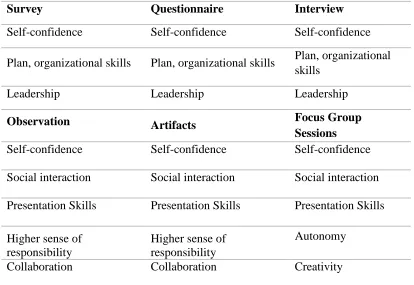
The primary measures used to analyze data include student survey, student
questionnaire, and interviews with student-participants. Student artifacts such as essays
(reflection on peer-teaching), observations and focus group sessions were collected.
Conclusion
The focus of this study is to investigate the impact of a peer-teaching instructional
approach on a student’s self-confidence. The scholarly literature referenced in this study
provides credence to the positive impact of using peer-teaching as a learning strategy to
enhance self-confidence, student growth and prepare students for the skills required as
adults in our society. This research is a mixed method case study conducted by the
teacher-researcher. Using a convenience sampling approach, student-participants are
JROTC high school students, composed of a diverse classroom of African-Americans and
White students. The primary measures in this study include: student interview, student
questionnaire and student survey. Student essay, observation, focus group session, and
student work are additional measures that will add to the trustworthiness of this study.
Qualitative and quantitative data will be collected and analyzed to capture a deeper
understanding of peer-teaching as it pertains to the research question. Consideration of
both types of data provides a better understanding of the research problem than putting
weight on one type of data over another (Mertler, 2017). A small sample and a targeted
group of JROTC student-participants are the delimitations of this study. The outcome of
that is implemented in a classroom composed of diverse students in an attempt to bring
about change in the classroom and school setting.
Key Words
JROTC: The Army Junior Reserve Officer Training Corps (JROTC) is a program
offered to high schools that teaches students character education, student achievement,
wellness, leadership, and diversity (U.S. Army JROTC, 2016).
Peer-teaching: “An acquisition of knowledge and skill through active helping and
supporting among status equals or matched companions; Students teaching other students
of the same grade or younger students” (Topping, 2005, p. 631).
Leadership Attributes: “Leaders must have a thorough understanding of how to
apply the BE, KNOW, DO, attributes to real life situations. Leaders must concentrate on
what they are (their beliefs and character), what they know (human nature and their job),
and what they do (provide purpose, direction, and motivation)” (U. S. Army JROTC,
2002, p. 231-234).
Metacognition/self-reflection: Refers to each student’s understanding and beliefs
about how he or she thinks and learns as well as the strategies that can be used to
accomplish specific tasks. Metacognition awareness also increases student’s motivation
to make the effort to complete daily classwork and homework, which results in improved
academic performance (Harris, & Meltzer, 2015).
Self-regulation: Is the ability to monitor and control our own behavior, emotions,
or thoughts, and making adjustments based on the situation. It includes the abilities to
inhibit first responses, to resist interference from irrelevant stimulation, and to persist on
Fluency- Motivate students and help them build oral fluency, accuracy, and
expression with engaging passages and scripts to read aloud (Reading A-Z, 2017).
Action Research: is an organized inquiry conducted by teachers, administrators,
counselors or others with an interest in the teaching and learning process for the purpose
of collecting information about how their schools operate, how they teach, and how their
students learn (Mills, 2014).
Divergent Learners: Divergent learners are individuals who have been grossly
misunderstood and mislabeled, sometimes labeled as special needs, and because of this,
many fail to thrive in traditional education settings. Divergent learners are quite capable
of academic success but have such strong innate personalities that they find it difficult to
bend their cognitive perceptions, value structure, and social adeptness far enough to
succeed in the traditional classroom (Layton & Lee, 2014).
Self-confidence: is a feeling of trust in one’s own abilities. To be self-confident is
to have confidence in yourself. Self-confident people don't doubt themselves (Dictionary.
Com, 2017).
Social Justice (SJ): “A theoretical perspective that recognizes that society is
divided and unequal in significant and far reaching ways along social group lines that
include race, class, gender, sexuality, and ability. SJ recognized inequality as deeply
embedded in the fabric of society, and actively seeks to change this societal illness”
(Sensoy & Diangelo, 2012, p. xviii).
21st Century skills: Critical thinking development. Problem-solving, and
collaboration, communication, organization, planning with other learners by digital
Semi Structured Interview: The researcher asks several questions, but also has the
option of following up a given response with other questions that may or may not be used
by the researcher, depending on the situation (Mertler, 2017).
Semi Structured observation: This type of observation gives the
practitioner-researcher the flexibility to attend to other activities occurring simultaneously in the
classroom or to engage in brief but intense periods of observation and note taking
(Mertler, 2017).
Triangulation mixed method design: A research design that uses both quantitative
and qualitative data collected at the same time and are given equal emphasis. They are
compared and analyzed together to understand the research problem (Mertler, 2017).
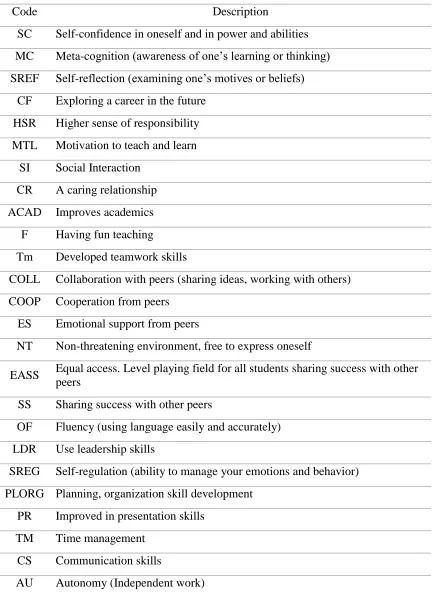
Coding: Coding is a procedure that separates the data, breaks it down into
manageable parts and identifies or names those segments. Coding requires continuous
comparing and contrasting different successive segments of the data and subsequently
categorizing them (Dana, & Yendol-Hoppey, 2014).
Differentiation: A philosophy that allows teachers to plan to reach the needs of
diverse learners in the classroom to achieve specific standards (Gregory, & Chapman,
CHAPTER 2
REVIEW OF RELATED LITERATURE
Teachers throughout the United States have a plethora of scholarly research on
instructional strategies to enhance learning in their classrooms, schools, and community.
The end game is to satisfy stakeholders and most importantly, give our students the best
learning experience as they face the 21st century workforce (“K12 Thoughtful Learning,”
2017). The challenge for our schools is to find effective and efficient classroom
instructional strategies that will bring about academic success and student growth to all
students in the classroom regardless of their social class, race, ethnicity, gender, and
academic ability (Nieto, 2013). Peer-teaching has been with us in and outside of
classrooms for centuries. Peer-teaching is a daily way of life in our society. In fact, we
engage in a peer-learning environment, with our friends, and in casual conversation in the
local grocery store with people we do not even know (Boud, 2001). Topping, (2005)
noted that, “Peer-learning is the acquisition of knowledge and skill through active helping
and supporting among status equals or matched companions” (p. 631). The concept of
peer-teaching appeared in educational research in the early 1960s and reappeared in a
Psychological Association document entitled, “The Learner-Centered Psychological
Principles: A Framework for School Reform and Redesign” in 1993, and again in 1998
from the Boyer Commission’s “Reinventing Undergraduate Education: A Blueprint for
American Research Universities,” with a powerful argument for the utilization of
The purpose of this literature review is to examine the relevant literature on
peer-teaching as an instructional approach in the classroom and determine if this approach
affects a student’s self-confidence through this study. Sources of the evidence-based
review includes peer-reviewed journals, books, dissertations, websites, and referenced
works from the University of South Carolina. The search engines used to collect literature
included EBSCO. ERIC, and EDUCATION SOURCE (Machi, & McEvoy, 2016). The
strategy of the review was to find relevant data on peer-teaching in elementary, middle,
high schools, and higher education using the common themes listed below. This review
of literature presents a theoretical framework behind a peer-teaching instructional
approach, research related to the strategy’s implementation, and reinforcement for the
claim that peer-teaching improves a student’s self-confidence. The themes that
encapsulate the implementation of the peer-learning experience for this study include:
theoretical framework, curriculum ideologies, cognitive and social peer support, social
justice perspective, peer-learning programs, the counterargument to peer-learning, and an
argument that peer-teaching as an effective classroom practice positively impacts a
student’s self-confidence. The themes provide a holistic view of the peer-teaching
experience and the emerging belief that this strategy leads to improved student
self-confidence as a result of: higher test scores, passing college courses, the development of
communication skills, problems solving skills, collaborative skills and reflective
self-assessment. The benefit for students learning in a peer-teaching environment is the
development of these personal attributes that promotes self-confidence and
Theoretical Framework
The work of Jean Piaget and Lev Vygotsky provides the foundation of
peer-learning for this study. Piaget (1926) felt that cognitive development depends on activity
with individuals as they form their perceptions, concepts, or ideas and process
contradictions. This occurs between the student and his or her peers. When peers
contradict their thoughts and ideas, a move to a more balanced, knowing relationship can
happen. From that experience and activity, cognitive gains can result from peer
interactions. Cooperation gives the child a different view of his or her perception causing
a cognitive agreement and increased understanding. This cooperation between a student
and his or her peers provides a common language, a system of designs, ideas, and use of
reciprocity and adjustment of opinions. Peer interactions encourage children to
coordinate or restructure their own views. This activity becomes necessary to complete
cognitive thought (Hartup, 2009).
Cognitive development is enhanced by social interactions. The way we think will
change over the years as we mature because we are attempting to make sense of the
world. Piaget (1970) identified four factors that interact to influence changes in thinking:
biological maturation, activity, social experiences, and equilibration (as cited in
Woolfolk, 2008). Peer-teaching is a social experience, an activity affecting cognitive
development by the way we interact and learn from each other. In a relationship, there are
constraints that work in a social interaction. One person has the right to dominate by
telling the subordinate what to do and the individual is obligated to obey without
question, much like a child-adult relationship. In a relationship that is based on
on equal footing, they are free to agree or disagree. In a cooperative environment,
children can move beyond constraint by working with their partners and gaining mutual
respect with each other. Peer members will feel relaxed and open to exchange new ideas
that could lead to a higher level of cognition (Piaget, 1932). The cognitive system of a
student is more likely to function at an optimal level when students’ efforts gain respect
and appreciation by teachers and classmates, have positive feelings about the learning
situation, and curriculum tasks are developmentally appropriate (De Lisi, 2002).
Schwarz, Neiman, and Biezuner (2000) found that two students in a peer-learning
situation with low levels of competence can make learning gains. When peers interact
and engage in dialogues and discussions that are relevant to their tasks, cognitive gains
will result from those interactions.
Unlike Piaget, who believed that cognitive development is influenced by learning
from others, Vygotsky (1978) believed that cognitive advances stem from social
interactions. Internally, a child develops the thinking and social rules that lead to
cognitive development through conversation and modeling others. This social interaction
that leads to cognitive development is called a “zone of proximal development.” This is
defined as what a person can accomplish on their own or what they can achieve with
assistance from others and must involve problem-solving challenges to a level just
beyond one’s ability (Woolfolk, 2008). Social interaction is the main vehicle that drives
cognitive development. Knowledge is socially constructed, and learning is developed
from a conversation between teachers and students. Learning shifts from a more
traditional teaching methodology to student-centered learning where students are
An underlying theme in Vygotsky’s theory is the collaboration that occurs
through social interaction. This is a natural social act during which students talk to one
another. In the context of social interaction, learning is an active, constructive process in
which students acquire new information with prior knowledge to create understanding
and meaning. Peer-learning is dependent on students collaborating with each other to
solve problems and engage in higher order thinking skills. The peer-learning experience
follows the theory of constructivism: people construct their own understanding and
knowledge of the world through experiencing things and reflecting on those experiences.
Dwyer (2010) studied how students learn from concrete to abstract by examining Edgar
Dale’s ‘Cone of Experience,’ similar to Piaget’s and Vygotsky’s constructivist theory of
learning. According to Dale (1946), we retain information by reading, listening,
observing a demonstration, participating in a discussion, and engaging in conversation.
Piaget, Vygotsky, and Dwyer believe cognitive development and learning occurs
through peer and social interaction and experiences surrounding the learning
environment. There are many moving parts in cognitive development. The peer-teaching
instructional approach provides a contrast between traditional learning groups and
collaborative groups. Vorster (1999) (as cited in Jacobs, et al., 2008) explains:
In collaborative learning groups there is positive interdependence, individual
accountability, heterogeneous membership, shared responsibility, responsibility
for each other, tasks and maintenance, social skills directly taught, the teacher
observes and intervenes. In traditional learning groups there is no
interdependence, no individual accountability, homogeneous membership, one
group processing. Collaborative learning increases student motivation and shares
ownership with others (p. 9).
What emerges in a review of the theoretical framework of peer-learning is the power of
social interaction with peers and the significant gains students can achieve by working
together and taking charge of their learning. Peer-learning is positive and rewarding for
all students when given the opportunity to bring their experiences and knowledge to their
classroom and share their ideas with their peers. Social interaction in a peer-learning
environment provides equal access to all students.
Theories of Curriculum and Peer-Learning
Classroom instructional strategies and practices today were born out of major
theories of education in the 19th and 20th centuries: reconstructionism, progressivism,
essentialism and perennialism. Oliva (2009) believed that essentialism and progressivism
have been widely accepted and practiced by educators and have widespread approval in
the schools, holding a commanding allegiance of our American society. Essentialism has
been prevalent throughout the history of our country. Essentialism is primarily cognitive
and intellectual. Reading, writing, math, science and social studies are the core subjects
of an essentialist curriculum. As a more traditional approach to teaching, the techniques
of “assign-study-recite-test” are the driving force in our classrooms as stated by Oliva, (p.
160). Subject matter dominates school curriculum. What is learned is valued and assumed
will prepare students for some future endeavor. Rewards and promotions are based on
mastery of subject matter.
Oliva (2009) believes Progressivism “subordinates’ subject matter to the learner”
learned (such as facts and technical skills) but a process that continues as long as one
lives” (pp. 162-163). Students learn when they actively experience their environment as
opposed to sitting quietly in class and absorbing content. Learning is all encompassing in
and out of school. Progressivists care about students, their community, subject matter,
and put the student center of the learning process. In the classroom, teachers who think
like progressivists view themselves as counselors, facilitators, and mentors. Essentialists
see students as empty vessels (Halves, & Mitya, 2014) that need authoritative direction in
the classroom- a teacher-student orientation. The teacher is the expert, and the students
expect the teacher to fill the empty vessel.
John Dewey (1902) a leading advocate of progressivism stated, “One school fixes
its attention upon the importance of the subject matter of curriculum as compared with
the contents of the child’s own experience…. Hence the moral: ignore and minimize the
child’s individual peculiarities, whims, and experiences” (Dewey, 1902, pp. 7-14).
Education is a social process. School is a form of community where the child uses his
resources to learn through social ends. The center of a child’s education is not school
subjects, but the child’s own social interactions (Dewey, 2017). Progressivism has had a
significant effect on educational programs, classroom strategies, and practices.
Peer-teaching as an instructional strategy aligns with the progressivists’ view of “why” and
“how” students are taught subject content. Students are not perceived as empty vessels
(Halves, & Mitya, 2014), but bring their prior knowledge and experience to the
classroom. They take responsibility for learning content by sharing their ideas with their
Schiro (2017) presented a different perspective of curriculum ideologies that fit a
peer-teaching strategy in the classroom: social efficiency and learner centered
curriculums. In a social efficiency (SE) “curriculum objectives must be stated in
behavioral terms: an observable skill, has capabilities for action, as activities people can
perform, as demonstrable things people can do. The essence of man is expressed in the
specific behaviors he can perform” (p. 58). Social interaction or learning experience
happens between the learner and the external reaction or responses made in his or her
environment. The SE curriculum looks at specifically the behavior that is learned, not
content that is gained by the student. Learning can grow out of students participating in
the living experiences from the environment. Learning is not mere memorization of
written and verbal statements of facts; it is a connection between others and actual life
situations (Bobbitt, 2017). Peer-teaching as an instructional strategy is a social event that
involves activity between the teacher, as the facilitator, and students working with each
other to complete a task that requires behavioral activity along with learning content.
“The only true education comes through the stimulation of the child’s powers by the
demands of the social situations in which he finds himself” (Dewey, 2017 p. 34).
The learner centered (LC) curriculum focuses on the student’s interest not around
academic subjects. The learner centered ideology is an activity and developmental school
that is a dramatic departure from the traditional school where adults and school leaders
dictate student curriculum and what will be taught in the classroom. Routines in a
classroom are different. Lesson assignment, planning of field trips, and activity in and
outside the classroom is managed by the students (Schiro, 2017). LC centers on the
students, the LC classroom experience and social interactions are aligned in many ways
to a peer-learning classroom. Schiro added that students are engaged in social activity
sharing their own ideas and gaining knowledge by collaborating with their peers, with
their surrounding experiences and demonstrating behavior that is required to complete a
learning outcome.
In this study, students learn how to present a JROTC lesson initially by their
teacher-researcher. The teacher is a facilitator and provides the resources for the students.
Students prepare their lesson with their peer partner, share their ideas with other members
of the class, and present a lesson to their peers. Students also provide feedback to their
peers. Additionally, they cross-age peer-teach elementary aged children outside the
JROTC classroom. Like the experiences of an LC school, peer-learning has an affective
component as an instructional strategy on a student’s self-confidence: feelings. This
behavior provides the positive motivation and the desire to learn in a non-traditional
classroom (De Lisi, 2002).
Cognitive and Social Peer Support
Peer-teaching in a JROTC classroom provides many benefits in the learning
experience when they are interacting and engaging in major concepts and event details.
Meltzer, Greschler, Kurkul, and Stacy (2015) suggested there are specific cognitive
processes involved with students working collectively that are goal-directed responses
used in problem-solving situations. “These functions include goal setting, cognitive
flexibility/shifting, organizing, prioritizing, accessing working memory, and
self-monitoring” (p. 1). When these functions are supplemented with peer mentoring and peer
their classroom. The success of peer-learning is largely dependent on how the
instructional strategy promotes metacognitive awareness (a student’s understanding of
how they think and a path to accomplish tasks).
Equally important in strengthening peer-teaching as an effective instructional
strategy in a student-oriented classroom is cognitive flexibility; “shifting approaches
when synthesizing information such as reading text, writing, math problem solving, note
taking, studying, and test taking” (Meltzer, et al., 2015, p. 13). Students shift between
concrete and abstract and between major themes and relevant details. Peer-teaching and
social interaction open opportunities for students to examine different perspectives in
different content areas. Students can coach each other as they finish their academic tasks.
This interaction with others encourages them to look at different approaches to learning
content ultimately helping them reflect upon their own learning strategies, commonly
referred to as meta-cognition. Hyun (2005) studied 5-to-6-year-old children’s peer
dynamics and dialectical learning in a computer based, technology rich classroom
environment. They were pretested before the intervention and paired for several weeks.
The posttest showed an average gain of 38.5 percent in their computer proficiency.
Students displayed cognitive learning, imitative behavior, and self-confidence in learning
technical skills. Students also demonstrated positive, collaborative skills, and reflective
self-assessment.
Wang, Hou, and Wu, (2017) studied a four-week collaborative learning activity
using four widely used instructional strategies: problem-solving, peer assessment, role
playing, and peer tutoring. They were examining what strategy exhibits the highest levels
differences in student interactions, in a single research setting. The findings revealed
students exhibited the cognitive process of ‘understand’ under peer assessment and peer
tutoring strategies and showed the cognitive process of ‘create’ under problem solving
and role play strategies. This study reveals how instructional strategies can influence,
peer tutoring. The teacher can positively influence the effects on peer-teaching. The
instructional strategies will vary depending on what the teacher wants to accomplish and
the expectations from students.
Kamerade (2011) studied role-playing as a possible teaching method, as well as
how it affects peer to peer interactions, with groups of students. Fifty college students
participated in a study aimed at determining how learning is advanced through peer to
peer interaction. The results showed sessions were intense and students were engaged
with a high level of motivation. Role-playing helped their learning. The benefits gave
students a better understanding of content, encouraged communication with each other,
and assisted in their understanding in relating theory into practice. Topping and Bryce
(2004) studied cross-age peer tutoring in reading and thinking. The researchers wanted to
see the effects of peer-tutored thinking by controlling for time on task and amount of peer
interactivity. There was an experimental and comparison group. The participants were
seven-year-old and 11-year-old students. The pair-thinking tutees showed a significant
difference on the posttest compared to tutees who followed a teacher directed Peer
Reading Program. Tutees seem more positive about pair thinking and enjoy the social
aspect of the project.
Cooperative learning is a major benefit in the peer-teaching instructional strategy.