The UJIpenchars Database:
A Pen-Based Database of Isolated Handwritten Characters
D. Llorens
∗, F. Prat
∗, A. Marzal
∗, J. M. Vilar
∗, M. J. Castro
†,
J. C. Amengual
∗, S. Barrachina
∗, A. Castellanos
∗, S. Espa ˜na
†, J. A. G´omez
†,
J. Gorbe
†, A. Gordo
∗, V. Palaz´on
∗, G. Peris
∗, R. Ramos-Garijo
∗, F. Zamora
†∗Universitat Jaume I, Castell´on, Spain
{dllorens, fprat, amarzal, jvilar, jcamen, barrachi, castella, agordo, palazon, peris, ramosgar}@uji.es
†Universidad Polit´ecnica de Valencia, Spain
{mcastro, sespana, jon, jgorbe, fzamora}@dsic.upv.es
Abstract
The availability of large amounts of data is a fundamental prerequisite for building handwriting recognition systems. Any system needs a test set of labelled samples for measuring its performance along its development and guiding it. Moreover, there are systems that need additional samples for learning the recognition task they have to cope with later, i.e. a training set. Thus, the acquisition and distribution of standard databases has become an important issue in the handwriting recognition research community. Examples of widely used databases in the online domain are UNIPEN, IRONOFF, and Pendigits. This paper describes the current state of our own database, UJIpenchars, whose first version contains online representations of 1 364 isolated handwritten characters produced by 11 writers and is freely available at the UCI Machine Learning Repository. Moreover, we have recently concluded a second acquisition phase, totalling more than 11 000 samples from 60 writers to be made available in short as UJIpenchars2.
1.
Introduction
Pen-based input is experiencing great demand since the advent of pen-based computers and devices, such as Tablet PCs, Personal Digital Assistants, digitising tablets, and pressure sensitive screens. For users, a very natural way of pen-based interaction is, simply, handwriting; on the other side, the corresponding device needs an online recogniser accepting such kind of input, i.e. a time-ordered sequence of information about the pen position and, maybe, other data such as its velocity or acceleration (Plamondon and Srihari, 2000). Obviously, the availability of large amounts of data is a fundamental prerequisite for build-ing online handwritbuild-ing recognition systems. Any system needs a test set of labelled samples for measuring its per-formance along its development and guiding it. Moreover, there are systems that need additional samples for learning the recognition task they have to cope with later, i.e. a train-ing set. Thus, the acquisition and distribution of standard databases has become an important issue in the handwrit-ing recognition research community. Examples of widely used databases in the online domain are UNIPEN (Guyon et al., 1994), Pendigits (Alpaydın and Alimo˘glu, 1998), and IRONOFF (Viard-Gaudin et al., 1999), but not all databases are freely available. The IRONOFF database can be bought from the University of Nantes. Regarding UNIPEN, dif-ferent data subsets are available in difdif-ferent ways. For in-stance, at the Products page of the International UNIPEN Foundation (iUF) website1, references to two such subsets can be found: the UNIPEN collection release #1, which can be bought from the iUF, and the UNIPEN-ICROW-03 benchmark set, freely downloadable. Finally, Pendigits is freely available at the UCI Machine Learning
Reposi-1
The iUF website can be found athttp://unipen.org.
tory (Asuncion and Newman, 2007).
When our research group began working on handwriting recognition, our first target was to develop a text input panel based on our own template-based recognition engine for isolated characters (Ramos-Garijo et al., 2007; Prat et al., 2007). Thus, we needed an appropriate database for train-ing and testtrain-ing our engine along its development. Among the free databases we found in the web, the UNIPEN-ICROW-03 benchmark set is not labelled at the charac-ter level and Pendigits, though very useful for empirically comparing our engine with others in the literature, does not provide letter samples (only digits), so we decided to col-lect our own database of isolated handwritten characters. This paper describes the current state of our database, UJIpenchars, whose first version (Llorens et al., 2007) con-tains online representations of 1 364 isolated handwritten characters produced by 11 writers and is freely available, as Pendigits is, at the UCI Machine Learning Repository. Moreover, we have recently concluded a second acquisition phase, totalling more than 11 000 samples from 60 writers to be made available in short as UJIpenchars2.
2.
UJIpenchars
We created our first character database, UJIpenchars, by collecting samples from 11 writers (see some samples in Figure 1). Each writer contributed with ASCII letters (lower and uppercase), digits, and other characters (let-ters with Spanish diacritics and punctuation marks) that we have not employed in our experiments and are not included in this database version. Two samples have been collected for each pair writer/character, so the total number of sam-ples in this database version is 1 364:
Figure 1: Some samples from UJIpenchars, one for each writer
Moreover, we have defined a standard writer-independent classification task for all database users to evaluate their recognisers in the same conditions.
2.1. The Acquisition
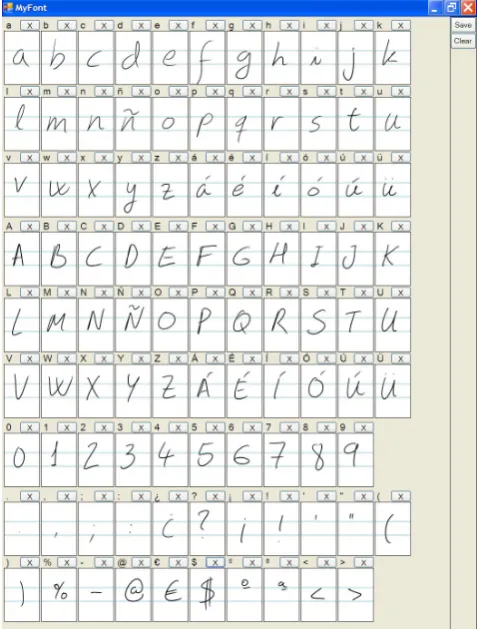
The handwriting samples were collected on a Toshiba Port´eg´e M400 Tablet PC using its cordless stylus. Each of the 11 writers completed 2 non-consecutive sessions. In each session, the corresponding writer was asked to write one exemplar for each character in a fixed set including ASCII letters (lower and uppercase) and digits, along with other characters omitted from this database version (but to be included in UJIpenchars2). The acquisition program shows a set of boxes on the screen, one for each required character, and writers were told to write only inside those boxes (see Figure 2). They were instructed to clear the con-tent of the corresponding box by using an on-screen button (marked asX) and try again whenever they made a mistake or were unhappy with the writing of any character. Subjects were monitored only when writing their first exemplars and every sample considered OK by its writer was accepted. OnlyX andY coordinate information was recorded along the strokes by the acquisition program, without, for in-stance, velocity, acceleration, pressure level values or tim-ing information. Thus, in multi-stroke samples, no infor-mation at all was recorded between strokes; however, in this database version we have included a.DT 100line in sam-ple files after each stroke, following the Pendigits database criterion (Alpaydın and Alimo˘glu, 1998).
We have observed that runs of consecutive points with iden-tical coordinates were frequently acquired inside strokes; such runs were preserved in this database, so it is up to its users to decide whether to avoid them by an appropriate preprocessing step or not.
We have also observed that UJIpenchars includes a few ex-emplars with some points lying out of its corresponding ac-quisition box. As said before, we have not discarded any sample considered OK by its writer.
2.2. The Database Format
The distribution of the UJIpenchars database consists of 12 files: an explanation file (uji.names) and one file
UJIpenchars-wNN per writer, whereNN= 01,02...
11. Each writer file comprises 124 samples and, for each sample, the following attributes can be found:
• The character it represents.
• The class it belongs to, according to our standard task.
• The sequence of strokes it consists of.
Figure 2: The acquisition program running on the PC
Obviously, when using a sample for testing, only its se-quence of strokes should be read to predict its class. This database is available in a UNIPEN-like format2,
try-ing to mimic the original Pendigits codtry-ing (Alpaydın and Alimo˘glu, 1998).
The attributes of each sample appear in its writer file as follows:
• Character name: Each sample begins with a
.SEGMENT line. The last component of that line
shows the character name, one out of 62 possibilities. The complete set of possibilities is shown in the first line of each file, a.LEXICONline. The set comprises the ASCII letters from a to z in lower and uppercase, along with the 10 digits.
• Class name: The class name of a sample appears in
the.COMMENTline that follows its.SEGMENTline.
This name is one out of 35 possibilities, as explained
2
pos-Pendigits UJIpenchars UJIpenchars2 (44 writers) (11 writers) (60 writers)
Characters Samples Characters Samples Characters Samples
Digits 10 11 992 10 220 10 1 200
Letters – – 52 1 144 66 7 920
ASCII – – 52 1 144 52 6 240
Non-ASCII – – – – 14 1 680
Others – – – – 21 2 520
ASCII – – – – 16 1 920
Non-ASCII – – – – 5 600
Total 10 11 992 62 1 364 97 11 640
Table 1: Size of some free databases of isolated handwritten characters
w
d1
d2
h
Screen units Ink units
Pixels Millimetres UJI UPV
Box width,w 78 ∼13.6 ∼1 360 ∼2 060 Distanced1 43 ∼ 7.5 ∼ 750 ∼1 140
Distanced2 73 ∼12.7 ∼1 270 ∼1 930
Box height,h 117 ∼20.4 ∼2 040 ∼3 100
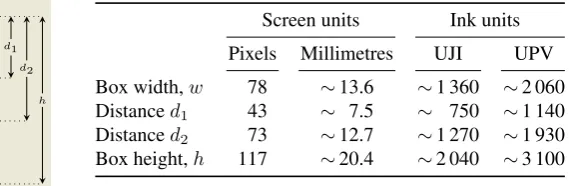
Figure 3: An acquisition box and its dimensions
tential usefulness, but not the only one. Accessibility has its own relevance, so when we began working on isolated char-acter recognition and did not find an appropriate database in the web to immediately begin experimenting with, we de-cided to collect a small one and make it freely available at the same web repository where we had found Pendigits (Al-paydın and Alimo˘glu, 1998), a very estimable database but restricted to digit samples. Our small database, including digits and letters, is UJIpenchars (Llorens et al., 2007), currently available at the UCI Machine Learning Reposi-tory (Asuncion and Newman, 2007). In this paper, UJIpen-chars has been presented in detail, along with the steps we have taken for building a new, larger database to be called UJIpenchars2. All data for this new database have already been collected, totalling more than 11 000 samples (includ-ing some non-ASCII Spanish letters and symbols) from 60 writers. In short, UJIpenchars2 will also be freely down-loadable from the UCI Machine Learning Repository.
5.
Acknowledgements
This work has been partially supported by the Spanish Mi-nisterio de Educaci´on y Ciencia(TIN2006-12767 and Con-solider Ingenio 2010 CSD2007-00018), theGeneralitat Va-lenciana (GV06/302), and theFundaci´o Caixa Castell´o -Bancaixa(P1·1B2006-31).
6.
References
E. Alpaydın and F. Alimo˘glu. 1998. Pen-Based Recogni-tion of Handwritten Digits (original, unnormalized ver-sion). Data set available at (Asuncion and Newman, 2007), September.
Arthur Asuncion and David Newman. 2007. UCI Machine Learning Repository.http://www.ics.uci.edu/
˜mlearn/MLRepository.html.
Isabelle Guyon, Lambert Schomaker, R´ejean Plamondon, Mark Liberman, and Stan Janet. 1994. UNIPEN project of on-line data exchange and recognizer benchmarks. In
Proc. of the 12th IAPR International Conference on Pat-tern Recognition, pages 29–33, Jerusalem, Israel, Octo-ber.
Isabelle Guyon. 1994. UNIPEN 1.0 Format Definition.
http://unipen.nici.ru.nl/unipen.def.
D. Llorens, F. Prat, A. Marzal, and J. M. Vilar. 2007. UJIpenchars: A Pen-Based Classification Task for Iso-lated Handwritten Characters. Data set available as UJI Pen Characters at (Asuncion and Newman, 2007), June. R´ejean Plamondon and Sargur N. Srihari. 2000. On-line
and off-line handwriting recognition: A comprehensive survey. IEEE Trans. on Pattern Analysis and Machine Intelligence, 22(1):63–84, January.
Proc. of the Asia-Pacific Workshop 2007 on Visual Infor-mation Processing, pages 77–82, Tainan, Taiwan, De-cember.
Rafael Ramos-Garijo, Sergio Mart´ın, Andr´es Marzal, Fe-derico Prat, Juan Miguel Vilar, and David Llorens. 2007. An input panel and recognition engine for on-line hand-written text recognition. In Cecilio Angulo and Llu´ıs Godo, editors, Artificial Intelligence Research and De-velopment, volume 163 ofFrontiers in Artificial Intelli-gence and Applications, pages 223–232. IOS Press. Christian Viard-Gaudin, Pierre Michel Lallican, Stefan
Knerr, and Philippe Binter. 1999. The IRESTE On/Off (IRONOFF) dual handwriting database. In Proc. of the Fifth International Conference on Document Anal-ysis and Recognition, pages 455–458, Bangalore, India, September.
Appendix: A Listing
In order to illustrate how handwritten characters are repre-sented in UJIpenchars files, using UNIPEN format, a frag-ment of UJIpenchars-w11 (from line 5287 to 5343) follows:
.SEGMENT CHARACTER 85-86 ? "i" .COMMENT Class [I]
5290 .PEN_DOWN 502 839 502 830 506 813 508 800
5295 512 789 512 789 515 776 515 776 515 776
5300 518 765 518 765 510 780 502 794 496 807
5305 485 828 477 851 465 875 455 903 443 929
5310 432 956 421 987 410 1016 399 1048 389 1078
5315 381 1114 377 1145 376 1176 379 1204 386 1227
5320 399 1245 417 1258 437 1268 463 1267 486 1265
5325 512 1250 543 1226 570 1200
0 200 400 600 800 1000 1200
200
400
600
800
1000
1200
1400
1600
1800
2000
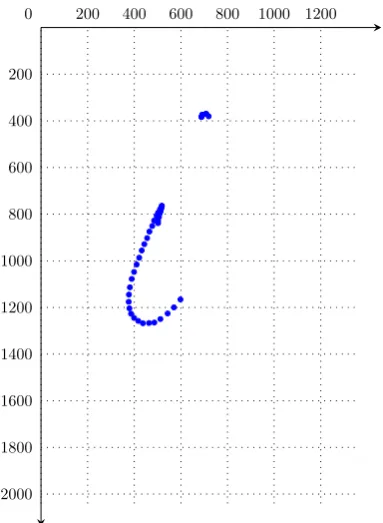
Figure 4: The second lowercase i from writerw11
598 1166 .PEN_UP
5330 .DT 100
.PEN_DOWN 688 383 688 383
5335 688 383 692 374 692 374 692 374 708 370
5340 708 370 719 381 .PEN_UP .DT 100
This fragment corresponds to the second lowercase i from writer w11, shown in Figure 4, which consists of two strokes numbered as 87 and 88 in the file4. Comment in line 5288 tells that the sample belongs to class[I], which has been defined in a previous comment line as including both lower and uppercase i:
10 .COMMENT Class #09: [I] = { "i" , "I" }
4