Research Article
Available online www.ijsrr.org ISSN: 2279–0543
International Journal of Scientific Research and Reviews
Formulation and Evaluation of Sustained Release Matrix Tablet of
Lornoxicam
Phad Mahesh S*, Anantwar Priti S, Sangle Bhausaheb C, Govind Shaila U, Khatale
Sandeep B and Shirwarkar Pallavi D.
Department of Pharmaceutics, MVP’s College of Pharmacy, Gangapur road, Nashik 422002, Affiliated to Savitribai Phule Pune University, Pune.
ABSTRACT
The present study relates to formulation and evaluation of sustained release matrix tablet of Lornoxicam. Lornoxicam, a potent non- steroidal anti-inflammatory drug of oxicam class. Lornoxicam as a non- steroidal anti-inflammatory drug, its use in relieving the symptoms of osteoarthritis, rheumatoid arthritis, ankylosing spondylitis and low back pain. However due to its weak acidic nature, its release from SR delivery system is limited to lower gastrointestinal tract which consequently leads to delayed onset of its analgesic action. Lornoxicam sustained release tablet was prepared by using polymers Hydroxyl Propyl Methyl Cellulose K100 as sustained release polymer and Polyvinylpyrrolidone, Hydroxyl Propyl Methyl Cellulose K30 as binder by direct compression method. A 32full factorial design was used to formulate different batches containing different concentration of Hydroxyl Propyl Methyl Cellulose K 100 and Polyvinylpyrrolidone K30. The prepared tablets were evaluated for different parameters like Hardness, Friability, and Dissolution. Response surface plots and counter plots were generated using Design Expert software version 10, the optimized formulation was achieved by numerical and graphical optimization. Out of all factorial design batches F7 batch shows sustained release drug release for 24hr as compared to other all batches.
KEY WORDS:
Lornoxicam, Sustained release matrix tablet, Hydroxyl Propyl Methyl Cellulose K100, Polyvinylpyrollidone K30.*Corresponding Author:-
Mr. Phad Mahesh S
Research Scholar, Department of Pharmaceutics,
MVPSamaj’s college of pharmacy, Gangapur Road, Nashik, Maharashtra-422002
1.
INTRODUCTION:
For many decades treatment of an acute disease or a chronic illness has been mostly
accomplished by delivery of drugs to capsules, pills, suppositories, creams, ointments, liquids, aerosols,
and injectables, as drug carriers. Oral route is the most commonly employed route of drug
administration. For many decades treatment of an acute disease or a chronic illness has been mostly
accomplished. Oral route remain the preferred route. Even for sustained release systems the oral route of
administration has been investigated the most because of flexibility in dosage forms design that the oral
route offers.
These agents are formulated to produce maximum stability, activity and bioavailability. This type of
drug delivery system is known to provide a prompt release of drug or immediate release product. Such
immediate release products result in relatively rapid drug absorption and onset of accompanying
pharmacodynamic effects.
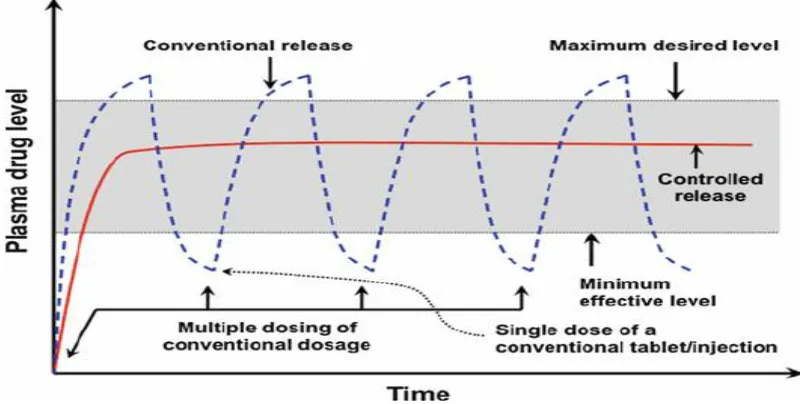
Fig. I. Plasma drug concentration-profiles for conventional tablet and a sustained release formulation.
To overcome these problems sustained release systems were introduced three decades ago.
Sustained release, sustained action, prolonged release, controlled release, extended action, timed release,
depot and repository dosage forms are the terms used to identify drug delivery systems that are designed
to achieve a prolonged therapeutic effect by continuously releasing medication over an extended period
of time after administration of a single dose. The term “controlled release” has become associated with
those systems from which therapeutic agents may be automatically delivered at predefined rate over
Mechanism of drug release from matrix tablet: Tablet surface wets and hydrophilic polymer
begins to hydrate, forming a gel layer. Drug near the surface of the tablet is released. Water permeates
into the tablet increasing thickness of the gel layer, soluble drug diffuse through the gel layer. Polymer
relaxation in the dry core also contributes to dosage swelling. Outer polymer layer becomes fully
hydrated eventually dissolving in the gastric fluid. Water continues to penetrate towards the tablet core.
Soluble drug is released primarily by diffusion tablet erosion and insoluble drug is released primarily
through the gel layer.
2. METHODS:
2.1 Materials
:
All materials used in this study include lornoxicam, matrix system include hydrophilicand hydrophobic polymers. Commonly used hydrophilic polymers are Hydroxypropylmethylcellulose
(HPMC), povidone, Hydroxypropylcellulose (HPC), Hydroxyethylcellulose (HEC), Xanthan gum (XG),
Sodium alginate, Polyethylene oxide and Cross linked homopolymers and Copolymers of acrylic acid.
They are usually supplied in micronized forms, as small particle size is critical for rapid gelatinous layer
formation on tablet surface.
HPMC is nonionic water-soluble cellulose ether. It is available in four different categories based on
varying degrees of hydroxypropyl and methyl substitution namely E, F, J and K series. Carbopol also
been used as sustaining agent. Xanthan gum is water soluble polysaccharide gum. It is composed of D -
glucosyl, D- mannosyl and D-glucosyluronic acid residues and differing proportions of o-acetyl and
pyruvic acid acetal. Hydrophobic and monolithic polymer matrix systems usually of waxes and water
insoluble polymers. i.e. of waxes are carnauba wax, bees wax, paraffin wax, microcrystalline wax etc.
Insoluble polymers: e.g. Eudragit RL 100, RS 100, PO, Ethyl cellulose, Cellulose acetate, Cellulose
acetate butyrate etc.
Table.I. Examples of different types of matrices:
Types of matrices Examples
Hydrophilic matrices
Methylcellulose, Hydroxyethylcellulose, Hydroxypropyl-methylcellulose, Carbopol, Sodium carboxymethylcellulose
Fat-wax matrices
2
.
2 Manufacturing method:
2.2.1. Preliminary trial batches
:
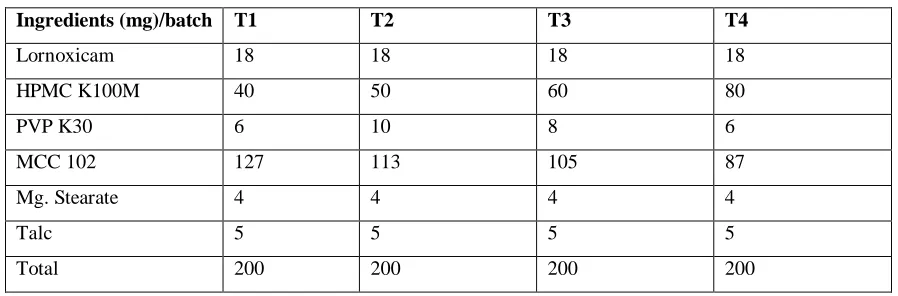
Composition of preliminary trials batches for sustained releaseformulation is shown in Table II. In all the formulations dose of Lornoxicam 18 mg was taken.
Lornoxicam matrix tablets were prepared by direct compression method. The excipients used were PVP
K30 and HPMC K100 M (matrix forming material), Micro crystalline cellulose (MCC) PH102 (filler),
Talc (glidant) and Magnesium stearate (lubricating agent).
Table. II. Composition of trial batches
Ingredients (mg)/batch T1 T2 T3 T4
Lornoxicam 18 18 18 18
HPMC K100M 40 50 60 80
PVP K30 6 10 8 6
MCC 102 127 113 105 87
Mg. Stearate 4 4 4 4
Talc 5 5 5 5
Total 200 200 200 200
2.2.2 Direct compression technique:
Lornoxicam, PVP K 30, HPMC K100M and MCC were mixed properly. The powder blends
were lubricated using Magnesium stearate and Talc was added finally. Tablets were prepared using
10-station rotary compression machine. The prepared tablets were evaluated for hardness and in vitro drug
release.
2.2.3 Factorial design:
Based on the results obtained with T4 trial batch preliminary formulations, 32 randomized full
factorial design was applied in the present study. In this design 2 factors were evaluated, each at 3
levels, and experimental trials were performed at all 9 possible combination. The independent variables
selected for the present study was HPMC K100 (X1) and PVP K30 (X2). The translation of coded
values for 32 factorial experimental designs is shown in Table.III. The levels of independent variables
had been selected from the preliminary batches and the literature envisaged. Dependent (response)
variables evaluated include:
Y1 = % of drug release
Table. III. Translation of coded values for 32 factorial experimental design
Sr. No Coded value Level Experimental actual value
X1 X2 1. -1 Low 70 5 2. 0 Intermediate 80 6 3. +1 High 90 7
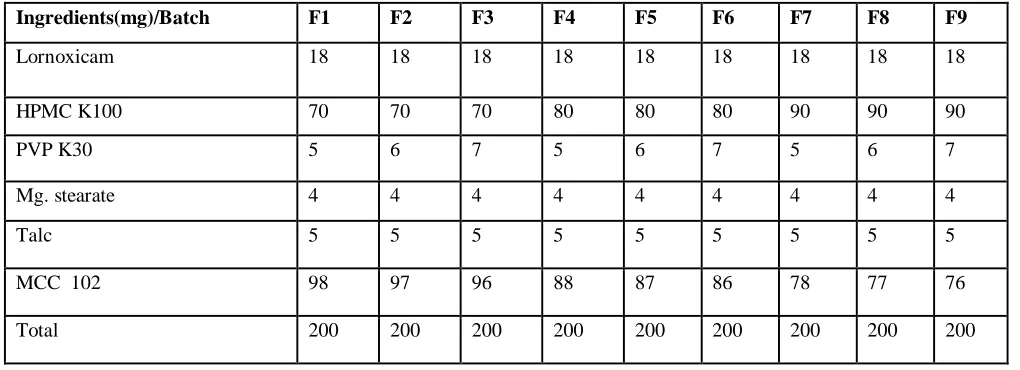
Table IV: Formulation of Factorial design
Ingredients(mg)/Batch F1 F2 F3 F4 F5 F6 F7 F8 F9
Lornoxicam 18 18 18 18 18 18 18 18 18
HPMC K100 70 70 70 80 80 80 90 90 90
PVP K30 5 6 7 5 6 7 5 6 7
Mg. stearate 4 4 4 4 4 4 4 4 4
Talc 5 5 5 5 5 5 5 5 5
MCC 102 98 97 96 88 87 86 78 77 76 Total 200 200 200 200 200 200 200 200 200
2.2.4Drug content
Ten tablets were weighed and average weight is calculated. All tablets were crushed and
powder equivalent to 18 mg was dissolved in 8 ml of 0.1 N NaOH and the volume was made upto 100
ml with pH 6.8 Phosphate buffer. The solution was shaken for 1 hr and kept for 24 hr. From the stock
solution, 1ml solution was taken in 10ml volumetric flask and the volume was made with pH 6.8
phosphate buffer. Solution was filtered and absorbance was measured spectrophotometrically at 376 nm
against pH 6.8 phoshate buffer as a blank. Amount of drug present in one tablet was calculated.
2.2.5 In vitro drug release study
The drug release rate from Lornoxicam SR matrix tablets was determined using USP apparatus
type II (lab India, India) at 37 ± 0.5 0C. The agitation speed was 50 rpm. The dissolution study was
carried out in 900 ml 0.1 N HCl at 37 ± 0.5 0C for first 2 hrs and then in 900ml of Phosphate buffer (pH
6.8) upto 24 hrs. 10ml of sample was withdrawn at regular intervals and the same volume of fresh
dissolution medium was replace to maintain the volume constant. The samples withdrawn were filtered
spectrophotometer (UV-2450 SHIMADZU). The amount of drug content present in the sample was
calculated with the help of calibration curve constructed from reference standard.
2.2.6 Swelling characteristics of matrix tablet:
The extent of swelling was measured in terms of % weight gain by the tablets. The swelling
behavior of formulations was studied. One tablet from each formulation was kept in a petri dish
containing phosphate buffer pH 6.8. At the end of 2 hr, the tablet was withdrawn, kept on tissue paper
and weighed, repeated for every 2 hr till the end of 24 hrs.
3. RESULT AND DISCUSSION:
3.1 Formulation studies
Table.V. Preliminary trial batches:
Time
( hrs)
% Drug Release of trial formulations
T1 T2 T3 T4
0.5 2.18 1.52 4.13 5.21
1 4.05 2.16 6.89 7.12
1.5 7.19 4.19 8.11 9.32
2 8.12 6.53 10.26 13.24
Fig. II. Drug Release of Preliminary trial batches
The release profile of trial formulations (T1 to T4) given in Table.V. Formulation T1 to T4 drug
release studied for 24 Hrs. T3 and T4 batch shows better drug release profile than others. Concentration
of HPMC K100 shows impact on release of active ingredient in formulations. T3 shows 84.67 and T4
shows 89.92.
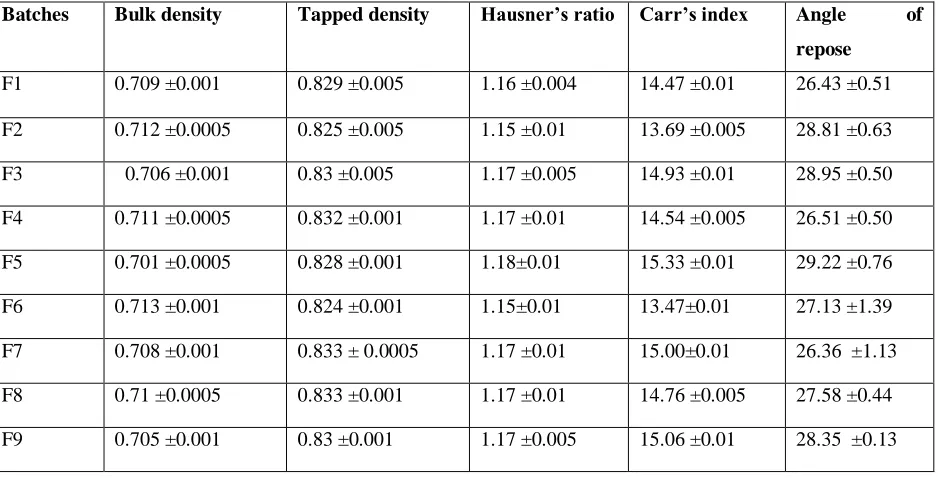
Table no VI : Evaluation of flow properties of powder blends of factorial batches:
Batches Bulk density Tapped density Hausner’s ratio Carr’s index Angle of
repose
F1 0.709 ±0.001 0.829 ±0.005 1.16 ±0.004 14.47 ±0.01 26.43 ±0.51 F2 0.712 ±0.0005 0.825 ±0.005 1.15 ±0.01 13.69 ±0.005 28.81 ±0.63 F3 0.706 ±0.001 0.83 ±0.005 1.17 ±0.005 14.93 ±0.01 28.95 ±0.50 F4 0.711 ±0.0005 0.832 ±0.001 1.17 ±0.01 14.54 ±0.005 26.51 ±0.50 F5 0.701 ±0.0005 0.828 ±0.001 1.18±0.01 15.33 ±0.01 29.22 ±0.76 F6 0.713 ±0.001 0.824 ±0.001 1.15±0.01 13.47±0.01 27.13 ±1.39 F7 0.708 ±0.001 0.833 ± 0.0005 1.17 ±0.01 15.00±0.01 26.36 ±1.13 F8 0.71 ±0.0005 0.833 ±0.001 1.17 ±0.01 14.76 ±0.005 27.58 ±0.44 F9 0.705 ±0.001 0.83 ±0.001 1.17 ±0.005 15.06 ±0.01 28.35 ±0.13
0 10 20 30 40 50 60 70 80 90 100
0 5 10 15 20 25 30
T1
T2
T3
T4
Time ( hr)
%
3.2 Evaluation of Lornoxicam Sustained release matrix tablets
The tablets from the factorial batches were evaluated for different evaluation parameters of tablets.
3.2.1 Drug content
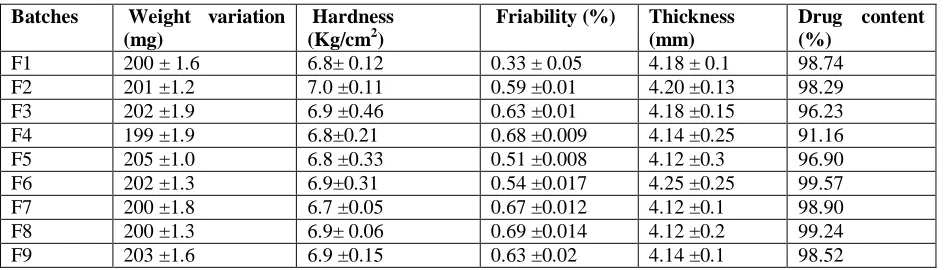
The drug content of the nine formulations was found to be between 91.16 to 98.90 % (i.e.
variation of ±2.5%). The value ensures good uniformity of the drug content in the tablet. Thus all the
physical parameters of the compressed matrices were found to be practically within control.
Table.VII. Evaluation of Lornoxicam Sustained release matrix tablets:
Batches Weight variation (mg)
Hardness (Kg/cm2)
Friability (%) Thickness (mm)
Drug content (%)
F1 200 ± 1.6 6.8± 0.12 0.33 ± 0.05 4.18 ± 0.1 98.74 F2 201 ±1.2 7.0 ±0.11 0.59 ±0.01 4.20 ±0.13 98.29 F3 202 ±1.9 6.9 ±0.46 0.63 ±0.01 4.18 ±0.15 96.23 F4 199 ±1.9 6.8±0.21 0.68 ±0.009 4.14 ±0.25 91.16 F5 205 ±1.0 6.8 ±0.33 0.51 ±0.008 4.12 ±0.3 96.90 F6 202 ±1.3 6.9±0.31 0.54 ±0.017 4.25 ±0.25 99.57 F7 200 ±1.8 6.7 ±0.05 0.67 ±0.012 4.12 ±0.1 98.90 F8 200 ±1.3 6.9± 0.06 0.69 ±0.014 4.12 ±0.2 99.24 F9 203 ±1.6 6.9 ±0.15 0.63 ±0.02 4.14 ±0.1 98.52
3.2.2 In vitro drug release studies:
Formulation containing combination of HPMC K100M and PVP K30 retarded the drug release up to 24
Hrs.
3.2.3 Comparative drug release profile of Lornoxicam matrix tablet:
-Fig III: Dissolution studies of formulation F1, F2 and F3
0 10 20 30 40 50 60 70 80 90 100
0 2 4 6 8 10 12 14 16 18 20 22 24
F1
F2
F3
Time ( hrs)
%
C
D
Table no. VIII. Invitro release studies of factorial batches:
Time in
hrs
Cumulative Drug Release Of Formulation (%)
F1 F2 F3 F4 F5 F6 F7 F8 F9
0.5 2.05 2.03 1.81 2.21 2.05 2.03 3.41 2.03 1.78 1 3.91 5.43 4.90 4.01 4.36 3.34 8.26 6.16 3.23 1.5 8.03 8.79 9.13 9.26 9.32 6.08 11.50 10.93 6.68 2 11.16 11.48 12.16 13.72 14.38 7.19 15.13 14.31 14.31 4 20.93 26.71 28.19 23.21 25.78 19.55 29.14 28.16 27.13 6 31.12 33.21 36.23 32.92 38.13 28.16 43.99 41.13 39.26 8 43.33 41.21 41.16 43.33 49.13 36.23 55.10 46.23 43.31 10 51.42 53.29 56.13 50.41 67.72 48.41 71.34 65.14 56.29 12 62.32 56.53 63.92 68.56 73.21 67.18 81.21 71.99 68.19 15 67.16 61.37 70.54 78.21 81.33 78.26 86.56 81.25 78.28 18 76.24 72.20 74.16 88.03 86.29 82.34 90.02 87.54 84.32 21 86.23 78.45 78.21 90.34 88.21 85.12 94.31 91.25 87.11 24 88.12 82.04 80.12 93.45 91.88 86.28 96.92 95.01 91.23
Fig IV: Dissolution studies of formulation F4, F5 and F6.
0 10 20 30 40 50 60 70 80 90 100
0 2 4 6 8 10 12 14 16 18 20 22 24
F4
F5
F6
%
C
D
R
Fig V: Dissolution studies of formulation F7, F8 and F9.
3.2.4 Swelling characteristics of matrix tablet
Table.IX: Swelling index of batch F1 to F9
Time in
hrs
Swelling Index (%)
F1 F2 F3 F4 F5 F6 F7 F8 F9
2 38.05 28.34 22.04 38.78 42.98 34.03 48.89 42.45 38.89 4 45.52 36.67 28.85 45.54 46.78 38.02 59.45 52.21 48.78 6 47.61 52.31 42.12 48.67 59.07 44.25 62.34 65.14 60.05 8 59.12 68.18 52.08 52.18 68.03 51.03 66.73 79.76 73.78 10 72.63 73.13 66.26 66.45 72.45 64.25 78.23 81.02 81.45 12 81.34 76.54 72.45 76.34 78.08 72.16 81.34 87.08 85.52 15 85.56 82.03 76.58 85.78 88.06 82.34 98.45 94.14 89.56 18 81.08 73.29 66.13 81.23 86.34 76.41 90.22 88.58 76.14 21 73.56 69.53 59.12 76.55 75.45 68.15 87.75 72.34 68.78 24 68.69 61.37 52.92 66.56 71.12 62.83 83.32 68.66 62.12
0 20 40 60 80 100 120
0 2 4 6 8 10 12 14 16 18 20 22 24
F7
F8
F9
Time( hrs)
%
C
D
Fig.V: Swelling index of factorial batches F1 to F9.
3.2.5Statistical treatment
In case of trial batches, the concentration was decided as suggested in the book of excipients.
Depending on results obtained from those trials the final formulation concentration was decided. The T4
batch showed best results for the drug release and hence that point was considered to be center point for
optimization. Thus, DOE suggested following batches having concentration in given range keeping trial
optimized concentration as middle one.
Table. X : Experimental batches as per DOE
Factor 1 Factor 2 Response 1 Response 2
Std. Run A: HPMC K 100 B: PVP K30 Drug release Hardness
Mg Mg % Kg/cm2
1 1 70 5 88.21 6.8
3 2 90 5 96.92 6.7
5 3 80 6 91.88 6.8
7 4 70 7 80.12 6.9
4 5 70 6 82.04 7.0
12 6 80 6 91.88 6.8
6 7 90 6 95.01 6.9
2 8 80 5 93.45 6.8
9 9 90 7 91.23 6.9
10 10 80 6 91.88 6.8
11 11 80 6 91.88 6.8
13 12 80 6 91.88 6.8
8 13 80 7 86.28 6.9
0 20 40 60 80 100 120
2 4 6 8 10 12 15 18 21 24
F1 F2 F3 F4 F5 F6 F7 F8 F9
Time (Hrs)
3.2.6. Optimized batch:
The optimized batch was suggested by the DOE software depending on the onses entered in software.
Table XI: Optimized batch as per DOE
Constraints
Lower Upper Lower Upper
Name Goal Limit Limit Weight Weight Importance
HPMC K100M is in range 70 90 1 1 3 PVP K30 is in range 5 7 1 1 3 CDR is target= 96.92 80.12 96.92 1 1 3 Hardness is in range 6.7 7 1 1 3
Sol
NO HPMC K100M PVP K30 CDR Hardness Desirability
1 89.41 5.04 96.9198 6.74317 1.000
2 88.93 5.01 96.92 6.74251 1.000 Selected
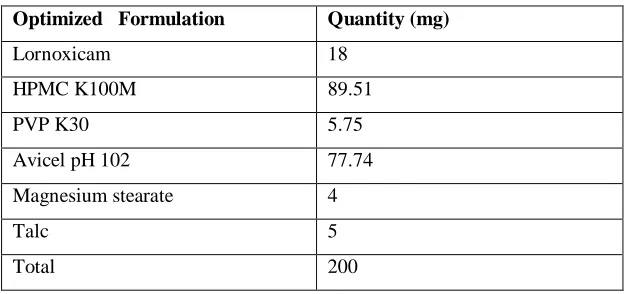
Table.XII :Composition of Optimized Formulation
Optimized Formulation Quantity (mg)
Lornoxicam 18 HPMC K100M 89.51
PVP K30 5.75
Avicel pH 102 77.74 Magnesium stearate 4
Talc 5
Fig. VI: Predicted V/s Actual Plot of Drug release
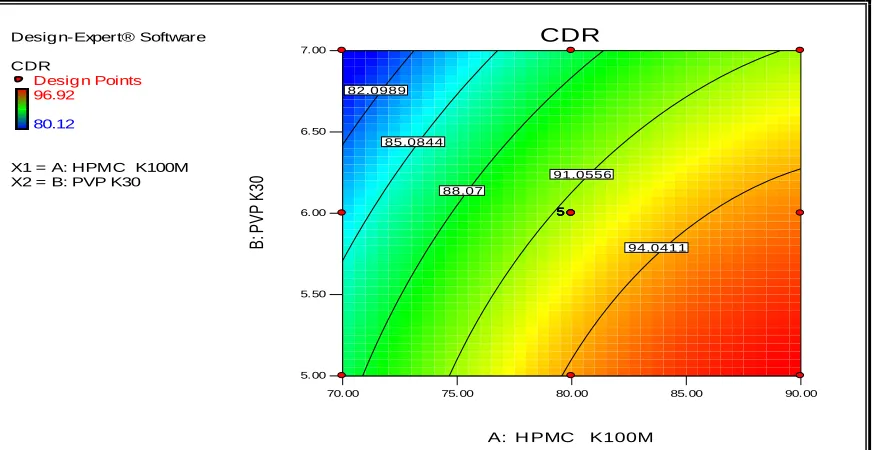
Fig. VII: Contour plot of Drug release
Desig n-Expert® Software CDR
Color points by value of CDR: 96.92 80.12 5 5 5 5 5
Ac t ual
Pr
ed
ict
ed
Predicted vs . Actual
79.00 83.75 88.50 93.25 98.00
79.11 83.59 88.07 92.55 97.03
Desig n-Expert® Software
CDR
Desig n Points 96.92
80.12
X1 = A: HPMC K100M X2 = B: PVP K30
70.00 75.00 80.00 85.00 90.00
5.00 5.50 6.00 6.50 7.00 CDR
A: H PMC K100M
Fig.VIII : 3D plot of drug release
4. CONCLUSIONS:
The study was undertaken with an aim to formulation, development and evaluation of
Lornoxicam sustained release matrix tablets using combination of two different polymers as release
retarding agent. The conclusions drawn from the investigations were summarized below:
The polymer was selected for the sustaining the release i.e. HPMC K100M and PVP K30 are compatible
with the Lornoxicam. Sustained release matrix tablets of Lornoxicam were successfully prepared using
HPMC K100M (45%), PVP K30 ( 2.5%) and other excipients. The tablets were evaluated for
pharmacopoeial and non-pharmacopoeial tests. The 32 factorial design can be successfully applied for
the optimization of the batches. The selected independent variable exhibits significant effect on
dependent variables. The oral sustained release drug delivery system of Lornoxicam provides the drug
release for 24 Hrs. in a sustained manner to achieve the desired therapeutic profile with maximum drug
utilization, improve patient compliance. In the trial batches the HPMC K100 (80mg) and PVP
K30(6mg) show the better results, according to that the levels for factorial batches were decided. The
formulation F7 containing 90mg HPMC K100M and 6mg PVP K30 shows the maximum drug release in
24hrs in sustained release manner and follows Higuchi model. Thus, an attempt to design an effective
formulation technology was feasible. Design-Expert® Software
CDR
96.92
80.12
X1 = A: HPMC K100M X2 = B: PVP K30
70.00 75.00
80.00 85.00
90.00
5.00 5.50 6.00 6.50 7.00
79 83.75 88.5 93.25 98
C
D
R
REFERENCES:
1. Bhargava A, Rathore R, Oral Sustained Release Dosage Forms: An opportunity to prolong the
release of drug.IJARPB.2013; 3:7-14.
2. Parashar T. et.al. Novel Oral Sustained Release Technology: A Concise Review. IJRDPL. 2013;
2:262-69
3. Singh A, Sharma R. Sustained release drug delivery system. IRJP. 2012; 3:21-4.
4. Tapaswi R, Verma P. Matrix tablets: An Approach towards Oral Extended Release Drug Delivery.
International Journal of Pharmaceutical Research & Review.2013; 2:12-24.
5. Nisargi Shaha et.al Review on Sustained Release Matrix Tablets: An Approach to Prolong the
Release of Drug JPSBR: 2015; 5(3): 315-21.
6. Yihong Q., Howard C., Briskin J., Engh K.Sustained Release Hydrophilic Matrix Tablet of
Zileuton: Formulation and In vitro/In vivo Studies. Journal of Controlled Release .1997; 249-256.
7. Ratnaparkhi MP, Gupta JP. Sustained Release Drug Delivery System- An overview. Int J Pharma
Res Rev. 2013; 2(3):11-21.
8. Krajacic A, Tucker I.G., Matrix Formation in Sustained Release Tablets: Possible Mechanism of
Dose Dumping. International Journal of Pharmaceutics.2003; 25:67-78.
9. Bose A., Wong T.W., Singh N. Formulation Development and Optimization of Sustained Release
Matrix Tablet of Itopride HCl by Response Surface Methodology and its Evaluation of Release
Kinetics. Saudi Pharmaceutical Journal.2013; 21: 201-13.
10.Gouthami T. J., Jhannsipriya M.V., Naidu N.Effect of Different Polymers on Release of the
Sustained Release Tablets of the Glipizide. JCPR. 2013; 5:111-18.
11.Zalte HD, Saudagar RB. Review on sustained release matrix tablet. Int J Pharm Biol Sci.
2013;3(4):17-29.
12.Costa F.O., Souce J.S. Comparison of Dissolution profile of Ibuprofen Pellets. Controlled release.
2003; 89: 199-212.
13.Harsh Mohan. Eds. In ;Textbook of Pathology. 5th Edn. Jaypee Brothers Medical Publishers (P) Ltd:
New Delhi; 2005; 133.
14.Barar K.S. Eds. In; Essentials of Pharmacotherapeutics. 3rd Edn.S. Chand & Company Ltd: New
Delhi; 2003; 355.
15.Satoskar R.S., Bhandarkar S.D., Ainapure S.S.Pharmacology and Pharmacotherapeutics. 16th ed.
16.Tripathi K.D. Essentials of Medical Pharmacology. 5th Edn. Jaypee Brothers Medical Publisher (P)
Ltd: New Delhi;2003; 170.
17.Chien YW. Oral drug delivery systems in Novel Drug Delivery Pharmaceutical Technology. Marcel
Dekker Inc: New York; Basel. 1992;152-96.
18.Aulton M.E. Pharmaceutics, The Science of Dosage form Design, 2nd ed: Churchil Livingstone;
401-21
19.Lachman L, Lieberman H. The theory and practice of industrial pharmacy.3rd ed. Varghese
Publishing House: Bombay; 300-30.
20.Ansel H, Nicholas G, Ansel’s Pharmaceutical dosage forms and drug delivery system.9thedn.
Lippincott Williams and Wilkins. 225-256.
21.Swarbrick J, Encyclopedia of pharmaceutical technology. Marcel Dekker, Inc. 20(3) : 385-401.
22.Lee T.W. and Robinson J. R. Controlled release drug delivery system. Remington- The science and
practice of pharmacy.21st ed.Vol.1. Mack publishing house: Easton, Pennsylvania; 2005; 889-905.
23.Vyas SP, Khar RK, Controlled drug delivery: Concepts and advances. In: Controlled oral
Administration. Vallabh Prakashan: Delhi, India; 2002: 155-95.
24.The Indian Pharmacopoeia, Government of India, Ministry of health and Family Welfare: Delhi;
Controller of Publication.1996; 2: 182.
25.The United States Pharmacopeia (USP) Revised Bulletin Official August 1, 2014.
26.Handbook of pharmaceutical excipient.6th Edition, Pharmaceutical press. 404-20, 611
27.Schwartz JB, Connor RE. Optimization techniques in Pharmaceutical formulation and processing.
In. Banker Rhodes CT, editor Modern Pharmaceutics 4th edition: New York; 607- 10.
28.Bolton, S. Pharmaceutical statistics: Practical and clinical application. 2nd edn. Marcel Dekker, Inc:
New York; 1990; 199
29.Factorial Design: In Bolton, editor. Pharmaceuticl Statistics practical and clinical application, 4th
edition. New York: Marcel Dekker, Inc.265.