University of South Carolina
Scholar Commons
Theses and Dissertations
6-30-2016
Understanding The Call of Social Justice Advocacy:
A Phenomenological Study of High School
Counselors
Leonis S. Wright University of South Carolina
Follow this and additional works at:https://scholarcommons.sc.edu/etd Part of theEducation Commons
This Open Access Dissertation is brought to you by Scholar Commons. It has been accepted for inclusion in Theses and Dissertations by an authorized administrator of Scholar Commons. For more information, please [email protected].
Recommended Citation
U
NDERSTANDING THE CALL OF SOCIAL JUSTICE ADVOCACY:
A PHENOMENOLOGICAL STUDY OF HIGH SCHOOL COUNSELORSby
Leonis S. Wright Bachelor of Arts
University of South Carolina, 1988 Educational Specialist University of South Carolina, 2000
Submitted in Partial Fulfillment of the Requirements For the Degree of Doctor of Philosophy in
Counselor Education College of Education University of South Carolina
2016
Accepted by:
Joshua Gold, Major Professor Kathy Evans, Committee Member Jonathan Ohrt, Committee Member Kenneth Wilson, Committee Member
ii
iii
DEDICATION
First and foremost, this work is dedicated to my Lord, and savior, Jesus Christ -- When I reflect back on my journey, I realize that you were with me every step of the way. For the countless moments I questioned why I was attempting to take on this momentous task, and told myself that I shouldn’t or couldn’t do it, you showed me that I could.
Secondly, in memory of my loving parents, the late Leon and Catherine Spigner -- Although you were limited in your abilities to provide your girls with a wealth of
iv
ACKNOWLEDGEMENTS
To my husband and son, John and John Christopher - Thank you so much for supporting me and being patient with me during this course of my life. I know living with me for the past three years has not been easy, but your sacrifices allowed me to fulfill my dreams, so I definitely acknowledge that I could not have done it without you.
To my sisters, Angela and Karen, my brother-in-law, Bobby, and my nephews, Robert and Christian - thank you for your on-going support; listening to me complain, trying to assist me with some of my projects, telling me not to stress, and encouraging me not to give up. I am genuinely blessed to have family members like you.
To my dear friend Gale and the entire Singletary family - I honestly do not know what I would have done had God not placed you in my life. Thank you for being a second family to John Christopher; picking him up from school when I was away in class and John was at work, allowing him to hang out with you while I did my studies, and taking him in and treating him as your own. You are truly God sent and I am forever in your debt.
v
To my principal, Bert Postell - When I found out how much this program would require me to be away from work, I was certain I would have to quit, however when I told you about it, you not only told me that it was fine, but also provided a beneficial suggestion regarding my time off. Thank you so much for your support.
To Dr. Tonya Jasinski – you, too, are God sent. The first time I heard your name, I was in Dr. Gold’s office stressing out about how I was going to do the 855-T course along with work, my other classes, and other responsibilities. Dr. Gold mentioned you were teaching a course that semester and that you could probably help me. What a wonderful suggestion because, not only did you provide me with the opportunity to complete my 855-T, you helped me through every phase of this program providing your own experiences, feedback, and encouragement. You willingness to give of your time and talents has encouraged me to want to pay it forward. So to that I say, thanks so much Dr. J.
To my cohort members - thank you for your knowledge, support, and sense of humor. Having the opportunity to hang out with all of you made my long commutes worthwhile.
To all the faculty members of USC’s Counselor Education program - thank you for your knowledge and wisdom. Each of you are great at what you do and played a huge part in my learning and becoming a better person.
vi
vii
ABSTRACT
Advocacy has always been an integral component of effective school counseling (Field & Baker, 2004), however now more than ever, due to a growing diversified society and the specific needs of students who are considered marginalized, school counselors have been identified as key persons to serve as social justice advocates for all students. The identification of school counselors in this phenomenon is an effort to level the educational playing field by ensuring that each student receives
just and equitable access to a quality education. Subsequently, to validate the importance of the advocacy role for school counselors and to ensure school counselors’ advocacy efficiency, Ratts, DeKruyf, & Chen-Hayes (2007) outlined a social justice advocacy framework for school counselors based on the American Counseling Association (ACA) advocacy competencies. The framework discusses the important of school counselors being social justice change agents, the need of advocacy in schools, and how school counselors should employ the competencies.
However, despite the social justice advocacy calling, not much research has been done on school counselors’ perceived knowledge of the ACA advocacy competencies or on their perceptions concerning this advocacy role. Thus, this dissertation focuses on the areas of perceived knowledge and perceptions of roles within a high school setting. A qualitative study using the phenomenology methodology was employed. Through this methodology, in-depth interviews were conducted to allow practicing high school counselors the opportunity share their views.
viii
provide implications to support, guide and encourage all high school counselors in becoming true social justice advocates.
ix
TABLE OF CONTENTS
Dedication ... iii
Acknowledgements ... iv
Abstract ... vii
List of Tables ... xi
Chapter One: Introduction ...1
Introduction ...1
Problem Statement ...7
Nature of the Study ...11
Purpose of the Study ...12
Conceptual Framework ...13
Operational Definitions ...14
Assumptions and Limitations ...16
Significance of the Study ...17
Transition Statement ...20
Chapter Two: Literature Review ...22
Literature Review Overview. ...22
Definition of Social Justice and Advocacy ...23
Perceived Knowledge of Various Counseling Areas ...24
Perceptions of Various Roles and Tasks ...27
Summary ...33
Transition Statement ...33
Chapter Three: Methodology ...35
Introduction ...35
x
Role of the Researcher ...40
Interview Questions ...41
Procedures ...45
Ethical Protection of Participants ...45
Participants’ Selection ...47
Data Collection ...53
Data Analysis ...55
Transition Statement ...58
Chapter Four: Results ...60
Analysis Summary ...60
Presentation of Results ...61
Trustworthiness of Results ...85
Summary ...86
Chapter Five: Reflection on the Findings ...88
Discussion ...88
Overview ...88
Linkage to the Literature Review ...91
Assumptions ...104
Scope ...106
Limitations ...106
Significance of the Study ...107
Future Research ...114
Personal Reflection ...116
Summary ...119
References ...122
Appendix A – Consent Letter ...129
xi
LIST OF TABLES
Table 3.1 School Districts’ Profile...50
Table 3.2 Schools’ Profile...51
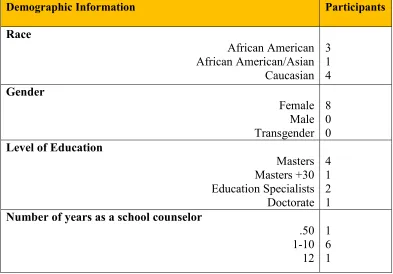
Table 3.3 Participant Demographic Information…...52
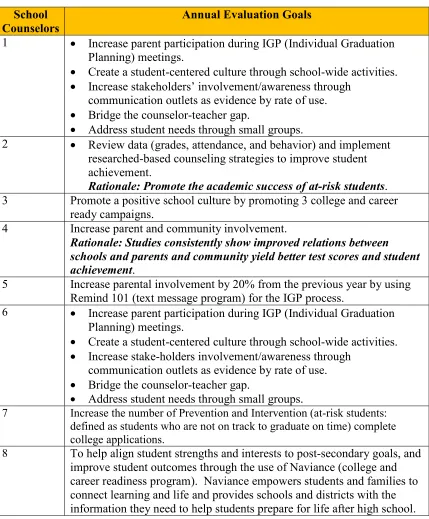
Table 4.1 School Counselors’ Annual Goals…...81
1
CHAPTER ONE
INTRODUCTION
Introduction
2
disadvantaged groups (Education Trust, n.d.). The following sections provide a brief synopsis of the mandates and initiatives as well as the ACA advocacy competencies.
Mandates and Initiatives
Over the past 20 years, organizations such as the Education Trust’s National Center for Transforming School Counseling (NCTSC), the American School Counselor Association (ASCA), and the Council for Accreditation of Counseling Related
Educational Programs (CACREP) have worked extensively to define and articulate the evolving role of the school counselor (Sears, 1999; Martin, 2002; Paisley & Hayes, 2003; Wilkerson & Eschbach, 2009; Evans, Zambrano, Cook, Moyer & Duffey, 2011). During these years, various initiatives surfaced with the common theme of acknowledging the need for transformation in the preparation and practice of school counselors. The
initiatives’ concepts also focused on the principles of social justice in an effort to connect school counseling program development to those of the main purpose of schools’
missions in education reform (Sears, 1999; Martin, 2002; Paisley & Hayes, 2003; Wilkerson & Eschbach, 2009; Evans, Zambrano, Cook, Moyer & Duffey, 2011).
In 1996, the DeWitt Wallace-Reader’s Digest, an organization whose concentration is on the achievement gap, in connection with the Education Trust,
3
counselors are in the best position to assess the school for barriers to academic success for all students” (Sears, 1999, p. 48), but also discovered that despite school counselors’ unique positions, they were not prepared to serve in an advocate or leadership position. Thus, their initiative was designed to encourage counselor educators to change their training and create programs to prepare counselors-in-training to serve as advocates and academic advisors once securing employment as a school counselor. From receiving the appropriate training, it was the initiative’s hope that these counselors would not only demonstrate the belief that all students can succeed, but that they would also have the skills to provide students with the tools necessary to reach high levels of achievement in rigorous and challenging courses (Hayes & Paisley 2002; Martin, 2002).
4
Martin, the findings of this assessment were distressful, but it also provided direction for the Education Trust. Based on the information obtained, they were able to gather the best practices from both the higher education institutions and the K-12 school districts. Thus, the final goal was to put:
school counselors squarely in the middle of K-12 education reform as integral players whose express goal is to remove barriers that impede academic success for all students, and to do so in ways that would not exclude poor and minority students (p. 151).
The article concluded with a description of what the changes to pre-service training would mean for educators, school counselors, and the students they serve. Also Martin introduced a new vision for current school counselors and provided a list of suggestions of what school counselors would have to know and be able to do in order to serve as advocates in the 21st century.
Paisley and Hayes (2003) also referenced the need for educational programs, policies, and procedures to develop an increased level of sensitivity to ensure that all students receive a high quality education and graduate from high school. They also discussed the Education Trust’s TSCI, CACREP and the ASCA standards. They
5
consultation. The language of these amended standards coincided with the skills that were specified in the TSCI (Paisley & Hayes 2003). Likewise, ASCA revisited their previous standards to develop a national model for school counseling programs with a concentration on a comprehensive approach to the foundation, delivery, management, and accountability of school counseling programs to ensure the needs of all students are met (ASCA, 2005). The goal of this model was to create a paradigm shift providing an answer to the question, “How are students different as a result of what school counselors do?” rather than, “What do school counselors do?” (Paisley & Hayes, 2003, p. 201).
ACA Advocacy Competencies
The ACA advocacy competencies were developed by Lewis, Arnold, House, and Toporek (2002) as another means of ensuring that all counselors were effective in social justice advocacy. According to Ratts et al (2007), the competencies were established in the hope that they “would help counselors recognize how societal oppression negatively impacts human development and would encourage counselors to use both micro level and macro level counseling interventions when working with clients/students” (p. 91).
However, the focus of their article was on school counselors and provided a conceptual framework specifically for this population. The framework was created to demonstrate how school counselors could use the ACA advocacy competencies in their day-to-day practice. They also pointed out the importance of advocacy in education and stressed the value of school counselors serving in the role of social change agents. Additionally, examples of how school counselors as well as school counselor educators should
6
(Ratts et al 2007, p. 90) were emphasized. These competencies include three levels:
client/student, school/community and public arena (see Figure 1.1).
Figure 1.1 Advocacy Competency Domains. Lewis, Arnold, House, & Toporek (2002). (Source: http://www.counseling.org/Publications)
Each level includes two domains which focus on specific content advocacy areas. Under the client/student level, the focus is not only on empowering students to speak up for themselves, but also on advocating on their behalf, if necessary. Examples of this competency area include; a) school counselors conducting classroom lessons on communication skills or facilitating groups on bullying or peer mediation to promote empowerment, and b) school counselors serving as allies or referees in situations in which students are being misjudged by school faculty members. At the
7
collaboration with other stakeholders. Examples include changing the status quo by utilizing data to determine a need, creating programs to address the need, observing students with similar issues such as cutting or eating disorders and bringing about an awareness of these conditions to provide support, and reaching out and providing more appropriate services to disadvantaged groups such as English as second language or special education students who may feel left out of the normal school counseling programs. Lastly, the public arena level encompasses the public information and
social/political domains. The purpose of this level is to inform individuals outside of the school about the issues of educational access and inequities. Typical, working at the public arena level stems from school counselors’ work at the other levels. For instance, upon hearing a teacher refer to a student living in poverty as a trouble maker, at this level, not only would the school counselor attempt to assist the student advocate for him or herself (client/student level) or conduct an in-service for teachers on generational poverty (school/community level), the school counselor would also invite board members to the in-service or create a mentoring program recruiting board members and other community
members to serve as mentors to disadvantaged students. (Ratts et al, 2007).
Problem Statement
Constant Role Changing
“Over the past 40 years, a major shift has been taking place in how school counseling is conceptualized and practiced” (Gybers & Stanley, 2014, p. 27), and since its conception, it has been in a state of constant change. This variation is because “the profession has sought to respond to—and keep up with—shifting educational
8
driven the needs for and expectations of school counselors” (Borders, 2002, p. 181). The various titles of this position have been, but are not limited to: a) vocational guidance -responsible for helping students make the connection from school to work (Lambie & Williamson, 2004), b) guidance counselors - mainly responsible for handling
administrative type duties and discussing with students their goals and plans; then offering advice and options (Johnson, Rochkind, & Ott, 2010), and now c) school counselors - with the expectation of serving as social justice advocates and leaders (Erford, 2007). In the latter role, school counselors are expected to help all students in the areas of academic, career, and personal/social development (ASCA, 2010). The description associated with this most recent title stems from educational reform for accountability and increased academic achievement for all students, and the call to align the work of school counselors with that mission (Martin, 2002).
Conflicting messages from the literature
9
as Sears also identified barriers. For instance, Wilkerson and Eschbach (2009) pointed out that school counselors are deficit in a number of skills needed to close the
achievement gap. These skills include using data to create programs, instituting program assessments and evaluation, effectively monitoring student progress, as well as promoting school-wide change. While, Evans, Zambrano, Cook, Moyer, and Duffey (2011)
discovered several barriers to adhering to the call to social justice and advocacy. These barriers include: a) entry-level competencies, b) the school counselor’s role, c) school climate, and d) community support and resources.
However, despite the concerns and obstacles noted, other sources indicate great confidence in social justice advocacy as being the ideal role for school counselors. Proponents’ statements include: a) school counselors are the ideal personnel to serve as social justice advocates and eliminate barriers to academic success because of their school-wide perspective (Paisley & Hayes, 2003), b) school counselors should be considered a necessary asset to the new inclusive team of closing the achievement gap because of their influence on all members of the school community (Walker, 2006), c) “social justice advocacy is a key task of the 21st century professional school counselor” (Ratts, Dekruyf, & Chen-Hayes, 2007, p. 90), and d) the transformation of school counselors’ role to that of advocates is a key element in reducing the achievement gap since academic achievement disparities are linked to racial/cultural and economic issues (Bemak & Chung, 2008).
Rationale for additional research
10
Brown (2005) indicated the need for both qualitative and quantitative studies to enhance our knowledge of how school counselors develop advocacy competencies in different environments, to determine levels of competency, and to improve advocacy practice and models. Ratts, DeKruyf, and Chen-Hayes (2007) asserted that more research needs to be conducted on the ACA advocacy competencies to determine how its importance is viewed by counselor educators. Singh, Urbano, Haston, & Mchahon (2010) also stressed the importance of further investigation of advocacy competence in school counselor training, practice, and scholarship. Lastly, Parikh, Post, and Flowers (2011) cited various research needs: a) social advocacy behaviors of school counselors and the factors that influence this behavior, b) actual advocacy behaviors in which school counselors engage, c) values and belief systems of school counselors, and d) effects of such variables like parent involvement or the race, gender, socioeconomic status of students on school counselors’ decisions to advocate.
Current research and implications for further research are examples of the importance of this topic of social justice advocacy in schools and the need for school counselors’ involvement. If school counselors are the ideal personnel to serve as
advocates, it is vital that they have an understanding about their perceived knowledge of the ACA advocacy competencies and their perceptions regarding their role in social justice advocacy to determine if advocacy training efforts need improvement.
11
role in working within the complex school system to challenge the oppositions to social justice (Singh, Urbano, Haston, & McMahon, 2010). How do practicing school
counselors perceive their knowledge of ACA’s advocacy competencies? What are school counselors’ perceptions regarding the role of social justice advocacy? As we do not have the answers to such questions, the gaps which exist in the literature concerning these issues need to be filled. Thus, in this study, the research will seek the opinions of high school counselors. By obtaining high school counselors’ views of their knowledge of the ACA competencies and their perceived roles in social justice advocacy, dialogue will be stimulated to allow their input into this phenomenon.
Nature of the Study
A qualitative method will be used to examine school counselors’ perceptions of their knowledge of the ACA advocacy competencies and their roles as social justice advocates. The specific research questions are:
1. What are school counselors’ perceptions regarding their knowledge of the ACA advocacy competencies?
2. How do high school counselors perceive their roles relating to social justice advocacy?
This study is relevant because it has been indicated that “school counselors are ideally positioned to create opportunities for all students to define and reach high academic goals” (Education Trust, 2005, para. 2). Despite this expectation of school counselors’ ability to effectively serve in this advocacy role, research also recognized that although some of school counselors’ responsibilities are relevant, there is a great
12
(Sears, 1999). Consequently, several factors which may impede school counselors from being effective advocates have been identified throughout the literature. Some of these factors include: a) lack of counselor pre-service training and professional development, b) additional non-counseling related duties, and c) counselor role ambiguity (Bemak & Chung; 2008, Lambie & Williamson, 2004; Pérusse, Goodnough, Donegan, & Jones, 2004; Sears, 1999; Trusty & Brown, 2005). Thus, to obtain in-depth feedback regarding practicing high school counselors’ perceptions of their knowledge of the ACA advocacy competencies and their role as social advocates, the primary data gathered will be via interviews with school counselors. Chapter Three will discuss more in detail, the methodology of this study, the study design, information about this population and samples, and data collection and analysis.
Purpose of the Study
There is a plethora of literature expressing the importance of school counselors serving as social justice advocates to address diversity and societal inequities in schools (Martin, 2002; Paisley & Hayes, 2003; Ratts, DeKruyf, & Chen-Hayes, 2007; Parikh, Post, & Flowers, 2011). Research indicates that because school counselor have a school-wide perspective, they are the ideal school personnel to determine barriers that interfere with academic success for all students. Additionally, school counselors have the ability to implement strategies and interventions that will assist in closing this achievement gap (Martin, 2002). However, in spite of the emphasis being place on school counselors in this area, research also presents some challenges such as lack of pre-service training and professional development, additional non-counseling related duties, and poor
13
Zambrano, Cook, Moyer, & Duffey, 2011). Limited research has been done on obtaining school counselors’ perceptions regarding their knowledge of the ACA advocacy
competencies and their views of their social justice advocacy role. Thus the voices of actual school counselors in practice are almost nonexistent (Singh, Urbano, Haston, & McMahon, 2010). The purpose of this study is to contribute to the writings through the employment of a qualitative methodology to bring to light school counselors’ stance on their perceptions of their knowledge of the ACA advocacy competencies and their role of social justice advocacy.
Conceptual Framework
Social constructivism provided the theoretical framework for the study. This paradigm claims “that truth is relative and that it is dependent on one’s perspective” (Creswell, 2006, p. 545). Likewise, it is identified with the assumptions that people try to understand the world in which they live and work and that they create subjective
14
make sense of (or interpret) the meanings others have about the world” (Creswell, 2003, p. 8).
Operational Definitions
American Counseling Association (ACA): a not-for-profit, professional and educational organization that is dedicated to the growth and enhancement of the counseling profession.
Academic Equity: also referred to as equity in education, is a measure of achievement, fairness, and opportunity in education. The study of education equity is often linked with the study of excellence and equity.
Achievement: a term defined as something that has been done or accomplished through effort; a result of hard work.
Achievement Gap: refers to the observed, persistent disparity of educational measures between the performance of groups of students, especially groups defined by
socioeconomic status (SES), race/ethnicity and gender.
Advocacy: refers to actively standing up for individuals or causes. Additionally, as advocacy relates to the profession of counseling, the ACA advocacy competencies address three levels and six domains in which individuals employ in their line of service. These include: Client/Student Level (client/student employment and client/student advocacy domains), School/Community Level (community collaboration and systems advocacy domains), and Public Arena Level (public information and social/political advocacy domains) (Lewis, Arnold, House, & Toporek, 2002).
15
achieve success in school and are prepared to lead fulfilling lives as responsible members of society.
Council for Accreditation of Counseling Related Educational Programs (CACREP):
an accreditation board that accredits masters and doctoral degree programs in counseling and its specialties that are offered by colleges and universities in the United States and throughout the world.
Diversity: The concept of diversity encompasses acceptance and respect. It means understanding that each individual is unique, and recognizing our individual differences. These can be along the dimensions of race, ethnicity, gender, sexual orientation, socio-economic status, age, physical abilities, religious beliefs, political beliefs, or other ideologies. It is the exploration of these differences in a safe, positive, and nurturing environment. It is about understanding each other and moving beyond simple tolerance to embracing and celebrating the rich dimensions of diversity contained within each individual (http://gladstone.uoregon.edu.).
Educational Reform: the name given to the goal of changing public education.
Education Trust: a national non-profit advocacy organization that promotes high academic achievement for all students at all levels, particularly for students of color and low-income students.
Knowledge: information or awareness gained from study or experience.
16
a critical time as states, districts, and schools are raising standards and implementing accountability systems.
Perception: discernment or judgement.
Role Ambiguity: denotes uncertainty about the expectations, behaviors, and consequences associated with a particular role.
School Counselor: a counselor and an educator who works in an elementary, middle, and/or high school to provide academic, career, college readiness, and personal/social competencies to all K-12 students through a school counseling program.
Social Justice: full and equal participation of all groups in society. Meaning that all people, regardless of race, gender, age, socioeconomic status, abilities and more, should be treated fairly and provided the same opportunities.
Assumptions and Limitations
There are several assumptions as well as limitations associated with qualitative research. As for assumptions, according to Heppner and Heppner (2004), “Qualitative researchers believe that objective reality can never be fully understood or discovered and that there exist many possible ways of looking at realities” (p. 138). Moreover, Rubin & Babbie (2014) postulate that “qualitative research is especially appropriate to the study of those topics for which attitudes and behaviors can be best understood within their natural setting” (p. 471).
17
justice advocacy role directly relates to their self-efficacy in fulfilling this role and b) there is a correlation between students’ academic, social/personal, and career
development and school counselors’ social justice advocacy competence.
Limitations of both phenomenological research and qualitative research which may pose concerns for this researcher includes: a) subjectivity of information which may cause difficulty in determining reliability and validity; b) possible researcher-induced bias; c) lack of research skills; d) issues of anonymity and confidentiality; and e) this researcher’s presence during interviews which may affect participants’ responses (Gay, 1996; Rubin & Babbie, 2014).
Significance of the Study
In determining the significance of this study, the areas below must be addressed:
Knowledge Generation
Within the past two decades, there has been a great undertaking of educational and counseling organizations to include school counselors in the movement of addressing the ever existing educational inequities in U.S. school systems. These organizations have imposed various mandates, competencies, and training initiatives for school counselors in an effort to transform the school counseling role from its traditional reactive stance to wider social justice advocacy focus designed to meet the academic, career,
18
school counselors regarding the ACA advocacy competencies as well as their understood roles as advocates for social justice.
Professional Application
Currently, despite the vast attempts made to include school counselors in the movement of ensuring equity and a high standard of education for all students, school counselors are still faced with challenges that prevent efficiency in this role of advocacy. Likewise, there appears to be little or no discussion as to which areas of school
counseling (training, school leadership, self-efficacy, and more.) pose the greatest obstacles. By engaging in this type of research to obtain and understand the knowledge and views of high school counselors, it is this researcher’s desire that this study will initiate dialogue among all stakeholders and will ultimately lead to social justice advocacy becoming a common practice for all school counselors.
The researcher hopes that the findings of this study will be beneficial to school counselors, counselor educators, and school leaders/districts a like for various reasons. First, the understandings gained from this study could be used to help counselor educators develop new programs and revise current ones. Second, the findings could increase the understanding of the importance of social justice and how its teachings align with the academic success of all students. Third, it may impel school administrators to understand the importance of school counselors serving in that role. Finally, the finding could provide information to all stakeholders which would encourage them to support and promote the social justice works of national organizations.
19
will need to join efforts to combat these issues. Such endeavors could include the following: a) counselor educators could create more self-awareness, multicultural and advocacy competency courses as well as infuse these concepts into all courses within their program; b) school counselors could advocate for more professional development focusing on self-awareness, and multicultural and advocacy competence (once school counselors increase their efficacy in these areas, more than likely they would feel more comfortable with communicating the importance of the advocacy role and their needs with their school administrators/district), and c) from the increased awareness of the need for a social justice agenda within school counseling programs, school/administrators and districts could reassign the non-counseling related tasks school counselors are currently expected to perform.
Social Change
20
ensuring that students do indeed receive a just and quality education regardless of race, gender, abilities, and income, and are equipped with the tools necessary to be college and/or career ready upon graduation.
Transition Statement
Chapter one provided an overview of this study which examined the social justice advocacy mandates and initiatives for school counselors, the ACA advocacy
competencies, the evolution of school counselors’ roles, conflicting messages from the literature, and the rationale for more research in this area. The chapter showcased various literature indicating the dire need for social justice advocacy in education and the
importance of school counselors’ participation in this movement. Despite national counseling and educational organizations’ appeal for school counselors to implement social justice practices in their work and to serve as advocates for all students, limited research has been conducted on their perceptions and knowledge of the ACA advocacy competencies or their social justice advocacy role. Chapter one explained that this research will entail qualitative-phenomenological research methodology to allow practicing school counselors’ voices to be heard.
In Chapter two, a review of the literature will focus on providing evidence of the review of relevant previous professional literature that defines social justice advocacy and speaks to school counselors’ knowledge and perceived roles in other counseling areas. Chapter three delivers the “how” of this study, examining the description of methodology, the study design, the sample and instrumentation, as well as, data
21
22
CHAPTER TWO
LITERATURE REVIEW
Literature Review Overview
23
Definition of Social Justice and Advocacy
As national educational and counseling organizations call for school counselors to serve as social justice advocates, understanding the concepts of social justice and
advocacy is crucial if school counselors are to carry out this role efficiently. The
literature provides a vast array of definitions for social justice as well as advocacy. This section highlights a few broad definitions of both terms, as well as, indicate how these terms relate to school counseling. According to Adams, Bell, and Griffin (2007), social justice is considered both a process and a goal. Bell (2007) further explained:
The goal of social justice is full and equal participation of all groups in a society that is mutually shaped to meet their needs. Social justice includes a vision of society in which the distribution of resources is equitable and all members are physically and psychologically safe and secure (p.1).
Moreover, Jun (2010) asserted that “social justice evolves around providing equality and justice for all people regardless of their race, gender, sexual orientation, class, disability, age, language, religion, and region” (p. 324). As social justice relates to education, Walker (2006) pointed out that school systems should include in their agenda the implementation of ethical decision making at all levels and that there should be an infusion of multicultural trainings as a means of transforming schools’ culture, policies, and practices to produce equitable and caring learning environments.
Kiselica and Robinson (2001) described advocacy as counselors going beyond the traditional method of providing only direct services to clients to also offer indirect
24
advocacy “as an approach to school counseling in which the counselor goes beyond the traditional verbal “give and take,” based on theoretical premises and techniques (p. 57)”. They also deemed that school counselors should go beyond the four walls of their office to obtain resources and interventions that will allow them to advocate for not only individual students, but also student groups and student issues. Moreover, advocacy is considered the manner in which social justice is attained. It involves taking the principles of social justice and putting them into action (Ratts, Toporek, & Lewis, 2010). These definitions of advocacy provide a common theme in that “advocacy involves identifying unmet needs and taking actions to change the circumstances that contribute to the problem or inequity” (Trusty & Brown, 2005, p. 259).
Perceived Knowledge of Various Counseling Areas
As previously mentioned, the role of a school counselor is very diverse. In addition to various non-counseling related activities assigned by administration in any given school, according to ASCA (2005), a major role for school counselors is to assist with the academic, career, and social/personal development of all students. As this can be a very overwhelming and daunting task, one could wonder if school counselors have the necessary knowledge base to perform their task efficiently. This section highlights several articles surveying the knowledge base of school counselors in various other counselor related areas.
In regards to the social/personal development of students, Price, Desmond, & Price (1990) conducted a quantitative study which explored school counselors’
25
students have eating disorders? What action do the counselors then take? How competent do school counselors feel in assisting students with eating disorders? What do school counselors know about anorexia and bulimia nervosa? Does school counselors’
knowledge of eating disorders vary by age, sex, number of years as a counselor, or level or formal education? Where have school counselors received most of their information on eating disorder?
Participants for this study were randomly drawn from the membership of the American Association of School Counselors and consisted of counselors from all grade levels and both male and female from varying levels of education, years of experience, and ages. The number of participants selected were 500, however a total of 337
participants returned their completed questionnaires. The questionnaire was developed by the authors and focused on five demographic variables: age, gender, level of education, number of years as a counselor, and grade level of the students with who the counselor worked. The instrument also consisted of five attitude questions, 16 questions concerning the signs and symptoms of eating disorders, 16 general knowledge questions, and one question about sources of information.
Interestingly, the overall results of this study indicated that although the majority (little over 70%) of school counselors surveyed were knowledgeable regarding the signs and symptoms of eating disorders and had encountered students experiencing this
26
Another article addressing the social/personal arena was conducted by Roberts-Dobie and Donatelle (2007). This study was also quantitative and focused on school counselors’ knowledge as it relates to student self-injuries. The participants were randomly selected from ASCA’s membership roster and out of the 1000 questionnaires sent out, 518 were returned, but 443 were deemed usable. The participant’s pool consisted of both male and female (majority) from all grade levels with varying
educational levels, years of experience, educational setting, and the number of students in which they served.
The instrument employed was a 42-item questionnaire developed based on the authors’ review of the literature. The items consisted of questions regarding personal demographics, school setting, knowledge of injury, confidence in working with self-injurers, and experiences working with students who self-injure. The overall results revealed that the majority (81%) of the school counselors surveyed reported working with students who self-injure. Additionally school counselors agreed that they are the
appropriate school individuals to work with self-injurers, but believed more training is needed in the areas of identification and referral.
27
planning, fortunately the surveys’ results revealed that 97% of the participants indicated that they had such a meeting with their counselor. Unfortunately, of that percentage, over half indicated that their school counselors were not very helpful in their college and career planning. The surveys posed the question: How would you rate your high school counselors in the following areas?
1. helping to decide what school is right for you
2. helping you find ways to pay for college, like financial aid or scholarship programs
3. helping you think about different kinds of careers you might want to pursue 4. explaining and helping with the application process
The results indicated that 67% of the participants believed that their counselor did a poor or fair job in helping them determine the right school for them, 59% gave their counselors a poor or fair rating on providing assistance in ways to pay for college, 62% of the
participants rated their counselor as poor or fair in helping them figure out different types of careers to choose, and 54% believed that their counselor did a poor or fair job in explaining and helping them with the application process.
All of the articles reviewed in this section are of relevance to this study as they identify the importance of knowledge as a focus in various other areas of school counseling professional services.
Perceptions of Various Roles and Tasks
28
assessments, and determining academic placements. By the midpoint of the century, individuals such as Clifford Beers, Sigmund Freud, and John Dewey brought about an awareness of mental health. Thus, providing personal and social counseling and attending to individuals’ holistic development was incorporated. In the latter part of the 1900s, areas such as special education, consultation, coordination, and accountability were added to the already long list of school counselors’ responsibilities (Lambie &
Williamson, 2004; Studer, 2005). Now in the 21st century, due to “the changes occurring in the United States’ demographics and the growing awareness of the need to make substantial changes in the public school system to address the injustices and inequities that underlie the academic achievement gap”, (Bemak & Chung, 2008), the role of the school counselor is once again being revisited. According to Gysbers and Stanley (2014), “a major shift has been taking place in how school counseling is conceptualized and practiced” (p. 23). This shift entails moving from a school counseling position to a school counseling program. Within this shift, it is the expectation that counselors will be able to serve as leaders while creating comprehensive school counseling programs and social justice advocacy agendas. As a result of the vast and ongoing changes, many school counselors may have conflicting views about their purpose and struggle with role
ambiguity (Lambie & Williamson, 2004). This section provides a review of the literature that offers empirical research as well as philosophical information regarding school counselors’ perceptions on several of these various roles in which they are assigned.
29
setting (Ford & Nelson, 2007). The researchers’ goal was to obtain knowledge of the effects that school counselors’ expected leadership skills may have had on other staff members in the school setting. The study was established on the notion that there is a correlation between effective leadership and counseling and “the relationship between the leaders and those they are leading” (Ford & Nelson, 2007, p. 5). It was based on the New Focus Counselor training initiated by The Education Trust and DeWitt Wallace Reader’s Digest Fund designed to prepare school counselors to serve as leaders and advocates. The theoretical framework of this study was grounded from the leadership theory and its methodology was the phenomenological approach. The researchers used a stratified sample of secondary school counselors whose names were retrieved from a previous online survey focusing on the perceptions of counselor leadership. From the online surveys completed, four females and one male were identified. Data was then derived from open-ended telephone interviews with these participants. The participants were asked a series of questions about their years of experience, their job description, and their leadership skills. The responses of the study were broken down into three categories; a) counselors’ job descriptions and the role of educational leadership, b) counselors’ perceptions of their role as educational leader, and c) counselors’ knowledge of the transforming role of the school counselor.
30
done so, they would have obtained deeper meanings from the participants’ responses. Despite these limitations, the authors believe that based on their findings, “there may be a gap in counselor educators’ knowledge and expertise between the traditional school counselor role and the transformed role that is called for in the current standards of the Education Trust Initiative for the transformation of school counseling” (Ford & Nelson, 2007, p. 19). The overall results of this study revealed that four out of the five school counselors perceived themselves as leaders, however, their definitions of leadership fitted within the traditional mode of school counseling and not with that of the new vision for school counselors. Although this research focused on leadership perceptions, the findings appear to be very applicable to this study in that leadership is a component of creating a social justice agenda.
31
were originally selected from two southern states with three hundred (100 per school level) being randomly selected. A total of 361 surveys were returned and scored.
Participants were asked to complete three different instruments; a) the School Counselor Activity Rating Scale (SCARS), b) the Counselor Self-Efficacy Scale (CSS), and c) the School Climate Scale (SCS).
The researchers of this study listed several limitations which include: a) the sample, which is only comprised of two states; b) possible effects of including all the participants in the statistical analysis; c) all information being obtained based on self-report; d) only one instrument, the SCARS, was used to measure time spent on school counseling activities; and e) causation was not attributed to the specific variables since descriptive and correlational research designs were used. Findings from the study indicated that school counselors consistently reported that they would prefer to be engaged in interventions which were associated “with positive student outcomes and wanted to spend less time in non-guidance-related activities” (Scarborough & Culbreth, 2008, p. 455). The researchers also believed that these results back up the claim for the need of comprehensive and developmental school counseling programs (Scarborough & Culbreth, 2008). Although this was a quantitative study, the results are applicable to this research in that the components which make up a comprehensive counseling program align with the advocacy competencies necessary to create a social justice agenda.
32
practitioners, social justice advocates, and organizational/social change agents, but view NCS as a major barrier to the implementation of a social justice advocacy agenda. The article examines the negative effects of NCS and provides recommendations to help school counselors recover from this condition. The NCS is defined as school counselors who are “comfortable assuming the roles of mediator and problem solver when working with students, parents, and other school personnel” (Bemak & Chung, 2008, p. 374). They are viewed as being “nice” and they are comfortable with that image because they prefer to be known as individuals who are advocates for harmony, acceptance, and peace who avoid and deflect conflict within the school. Because of their strong convictions of the need to be nice, they “shy away from initiating multicultural/social justice advocacy services that may be viewed as controversial, conflictual, or challenging by other persons in the school community” (Bemak & Chung, 2008, p. 374).
33
are designed to assist school counselors in either avoiding or moving beyond NCS. The review of this article is relevant because it addresses possible barriers to counselors creating a social justice advocacy agenda and challenges them to take “risks to ensure that all students have equitable opportunities to access high-quality education and are treated fairly in the educational system” (Bemak & Chung, 2008, p. 380).
Summary
This review provides a definition of social justice advocacy and a synopsis of various aspects of the world of school counseling. The information gathered from this review was used to provide direction for the proposed study. Despite all the literature that encompasses school counseling advocacy mandates and school counselors’ roles along with the many barriers they have faced since the beginning of this profession, there is a noticeable void. This void is “the actual voices of school counselors” in relation to their perceptions regarding their knowledge of the ACA advocacy competencies and their role as social justice advocate. Thus, this proposed study will entail face-to-face interviews with high school counselors to obtain their thoughts of this phenomenon.
Transition Statement
34
students, limited research has been conducted on practicing school counselors’ perceptions of their knowledge of the ACA advocacy competencies and their social justice advocacy role. Chapter one explained that this research will entail qualitative-phenomenological research methodology to allow practicing school counselors’ voices to be heard.
35
CHAPTER THREE
METHODOLOGY
Introduction
The purpose of this chapter is to explain how the researcher obtained and showcased the commentary of practicing high school counselors as it relates to
perceptions of their knowledge of the ACA advocacy competencies as well as their role as social justice advocates. In doing so, the researcher discusses the methodology, the research design, the role of the researcher, the context of the study, measures for ethical protection of the participants, criteria for the selection of participants, and the data collection and analysis process. The research questions guiding this study are:
1. What are school counselors’ perceptions regarding their knowledge of the ACA advocacy competencies?
2. How do high school counselors perceive their roles relating to social justice advocacy?
Despite the mandates and initiatives concerning the great need for school counselors to take on the role of social justice advocacy, there is limited research on school counselors’ perceptions of their knowledge regarding the ACA advocacy
36
Gay (1996), qualitative research deals with investigating variables in their natural setting. The author also indicated that:
Qualitative researchers are not just concerned with describing the ways things are, but also with gaining insights into the “big picture.” They seek answers to
questions related to how things got to be the way they are, how people involved
feel about the way things are, what they believe, what meanings they attach to various activities, and so forth (p. 209).
As this study attempted to gain insight into school counselors’ perceptions of their knowledge of the ACA advocacy competencies and their role in social justice advocacy, qualitative research seemed most fitting in understanding this phenomenon. Furthermore, since the researcher is a current school counselor, the opportunity to interview, converse with and make sense of the participants’ views in their natural setting was available (Heppner & Heppner, 2004). The researcher also believes that qualitative research is best suited to answer the questions posed in this study because qualitative research approaches are designed to “tap the deeper meanings of particular human experiences and are
37
Research Design
Qualitative vs. Quantitative
Qualitative research design is defined as “the collection of extensive narrative data on many variables over an extended period of time, in a naturalistic setting, in order to gain insights not possible using other types of research” (Gay, 1996, p. 623). There are several characteristics that distinguish qualitative research from quantitative. These include but are not limited to: a) its general framework which seeks to explore phenomena versus confirming hypotheses about the phenomena, b) its analytical
objectives which describe variations rather than quantify variations, c) its question format which is open-ended instead of closed-ended, d) its data format which is textual rather than numeral, e) and its flexibility rather than rigidity in study design (Mack et al., 2005). The major differences that are most important to this researcher are flexibility derived from qualitative research and the possible relationships formed between the researcher and the participants. Flexibility surfaces as a result of the types of questioning. Unlike the closed-ended questions that are typically generated from quantitative surveys and
38
elaborate and in-depth responses, and permits a more natural interaction between the researcher and his or her participants. (Mack et al., 2005).
Qualitative Approaches
Creswell (2006) described five types of qualitative paradigms: a) narrative research-an approach which studies “one or two individuals, gathering data through the collection of their stories, reporting individual experiences, and chronologically ordering the meaning of those experiences” (p. 54), b) phenomenology-a focus on explaining the meaning of lived experiences for several individuals rather than a single individual to obtain an understanding of those individuals experiencing the same or common
experiences of a phenomenon, c) grounded theory-looks at the meaning of an experience for several individuals; however, it not only provides a description, but its purpose is to also generate a theory, d) ethnography-similar to grounded theory in that this research also “develops a theory from examining many individuals who share in the same process, action or interaction” (p. 68), however the difference lies in the location and size of the participants, and lastly e) case study design-“an idiographic examination of a single individual, family, group, organization, community or society. Its chief purpose is description, although attempts of explanation are also acceptable” (Rubin & Babbie, 2014, p. 478). Although all of these approaches have commonalities in terms of the research process (i.e., the research problem, the data collection and analysis, and the research report), for the most part, their differences lie in what they hope to accomplish. Creswell (2006) explains:
39
theory, often portrayed in a visual model, emerges in grounded theory and a holistic view of how a culture-sharing group works results in an ethnography. An in-depth study of a bounded system or a case (or several cases) becomes a case study (p. 77).
Consequently, since it was this researcher’s intent to gain an understanding of high school counselors’ experiences of the social justice advocacy phenomenon,
phenomenological research seemed most appropriate for this study. Although, other methods such as grounded theory and narrative research also seek to gain understanding of the human experience of a phenomenon (Hays & Woods, 2011), this researcher is not interested in saturating data to develop a theory (a characteristic of grounded theory), nor using a chronological order of events (a characteristic of narrative research).
Phenomenological Research
40
There is no separate (or objective) reality for people. There is only what they know their experience is and means. The subjective experience incorporates the objective thing and becomes a person’s reality, thus the focus on meaning making as the essence of human experience (p. 116).
Hence, “the sole purpose of phenomenology is to describe the depth and meaning of participants’ lived experiences” and it is the phenomenological researcher’s task to “understand the phenomenon through the eyes of those who have direct, immediate experience with it” (Hays & Wood, 2011, p. 291). In an effort to obtain this in-depth construction of knowledge, this research will follow Moustakas’ transcendental
phenomenology which encourages the researcher to set aside his or her own experiences to focus on the experiences of the participants (Hays & Woods, 2011; Moustakas, 1994).
Role of the Researcher
The researcher is an African-American female who is currently a school
counselor with 16 years of experience in this field. It is the expectation of this researcher that due to her work related commonalities with the participants, obtaining the data will not be a challenging task; plus the participants will possess a level of comfort and ease in answering the interview questions. By the same token, however, there is some concern that this acquaintance may be a drawback in that the high school counselors may not want to share their true feelings for fear of how it will be interpreted.
. As a seasoned school counselor, this researcher came into this study with
41
advocates, and for those who do, there is reluctance on their part due to their lack of understanding of this role (i.e., the responsibilities and activities it involves), a lack of competency to carry out the role efficiently, and/or their own rigid beliefs about groups of individuals. Thus, while obtaining information concerning this role clarification, the researcher took various measures to repel her bias in the data collection and analysis process. Such procedures included; a) keeping a journal to write down possible subjective thoughts and feelings, b) conducting member checks which allowed the participants to review their words and provide feedback, c) participating in debriefings with my
committee members, and d) utilizing two coders who are familiar with phenomenological methodology. Each member of the coding team was responsible for conducting their own analysis first before joining forces to develop emergent themes.
Interview Questions
The interview procedure concentrated on obtaining information regarding high school counselors’ perceptions of their knowledge of the ACA advocacy competencies as well as their role of being a social justice advocate. The interview questions were semi-structured and framed to be open-ended. In following the principles of Moustakas (1994), participants were asked general questions regarding their experiences of the phenomenon as well as about the contexts or situations which influenced their experiences in order to obtain data leading to a textual as well as structural description of the participants’ experiences (Creswell, 2006; Moustakas, 1994). Additionally, as his teachings also indicated that other open-ended questions can be asked, the below inquiries were probed: 1. Describe your current school counseling program.
42 3. What is social justice to you?
4. What is advocacy to you?
5. Where do your definitions of social justice and advocacy stem from? 6. What types of social justice-related issues do you see in your school? 7. What types of students do you identify as marginalized in your school? 8. What are you doing to help your marginalized students?
9. How do you explain your current stance as a social justice advocate?
10. How prepared do you feel to serve as a social justice advocate in your school? 11. What helps or would help you to be a successful social justice advocate in your
school?
12. What recommendations would you suggest to help training programs adequately prepare school counselors-in-training to serve as social justice advocates in their prospective schools? What suggestions do you have for professional development for practicing school counselors?
43
used as advocates” (Singh et all, 2010, p. 137). Although their study concentrated on school counselors who already believed they engage in social justice advocacy, this researcher trusts that their interview protocol is relevant and appropriate in answering the questions for this study.
Furthermore, prior to the interview questions being asked, each participant was asked to complete a brief paper form demographic questionnaire. This questionnaire consists of the following questions:
1. What is your gender? a) Female b) Male c) Transgender 2. Which of the following best identifies your race?
a) Caucasian b) African American c) Asian/Pacific Islander d) Hispanic/Latin d) Native American e) Other
3. What is your level of education?
a) Masters b) Education Specialist c) Doctorate 4. How many years have you been a school counselor?
5. What is the total number of students in your school? 6. What is the ethnic make-up of your school?
a) Caucasian _____ b) African American ______ c) Asian/Pacific Islander _______ d) Hispanic/Latino ______ d) Native American ______ e) Other______
7. What is the socioeconomic make-up of your school?
a) Free/Reduced Lunch _______ b) Full pay _________ 8. What type of school setting do you work in?
44
These questions were determined based on the demographic descriptions utilized in the literature reviewed for this study and were adapted from Parikh et al., (2011) and Ford and Nelson (2007).
Consequently in considering the appropriateness of these questions for the current study, this researcher examined the six types of questions outlined by Patton (2015). These included experience and behavior questions, opinion and values questions, feeling questions, knowledge questions, sensory questions, and background/demographic questions. For the purpose of this study, all six were used:
1. experience and behavior questions - used to address the current as well as past activities of participants in relation to their responsibilities as school counselors 2. opinion and value questions - sought to draw conclusions regarding participants
perceptions about their experiences and roles
3. feeling questions - allowed an opportunity for the researcher to tap into the participants’ affective side regarding their advocacy competencies
4. knowledge questions - employed to determine participants’ perceptions of their level of knowledge about the advocacy competencies. This type of question is very important in determining possible training needs
5. sensory questions - provided the participants an opportunity to share what they see or hear regarding social justice issues in their school
45
Procedures
This study’s purpose is to provide an explanation regarding the views of high school counselors on social justice advocacy. Although it is highly noted in the literature that social justice advocacy should be a key role for all school counselors in the 21st century, there is limited research on how school counselors interpret this role and if they feel that they are capable in serving in this capacity. This researcher selected high school counselors from the tri-county area of a southeastern state in which she is employed as participants for this study. As the researcher is a current high school counselor, she and the participants will have similar experiences, feelings, and understandings. Thus, this researcher’s method for establishing a positive working relationship was honest and forthcoming from the start of this journey of inquiry.
Prior to gaining access to these high school counselors, the researcher obtained approval from the University of South Carolina Institutional Review Board (IRB) and received permission from each of the school districts in which the researcher conducted this study. The results of this study will expand on the literature by incorporating an important component of school counselors’ voices and may provide the researched school districts (and others within the southeastern region and beyond), tools needed to prepare school counselors for this role of advocacy.
Ethical Protection of Participants
46
1. Respect for persons requires a commitment to ensuring the autonomy of research
participants and where autonomy may be diminished, to protect people from
exploitation of their vulnerability. The dignity of all research participants must be
respected. Adherence to this principle ensures that people will not be used simply
as a means to achieve research objectives.
2. Beneficence requires a commitment to minimizing the risks associated with
research, including psychological and social risks, and maximizing the benefits
that are accrued by research participants. Researchers must articulate specific
ways this will be achieved.
3. Justice requires a commitment to ensuring a fair distribution of the risks and benefits resulting from research. Those who take on the burdens of research
participation should share in the benefits of the knowledge gained. Or, to put it
another way, the people who are expected to benefit from the knowledge should
be the ones who are asked to participate (p.9).
In choosing to apply the qualitative methodology to this study, the researcher realizes it is her responsibility to adhere to these principles and address any ethical issues that may arise from the direct contact she will have with her participants (Rubin & Babbie, 2014). Measures that were taken included obtaining approval for this research from the IRB at the University of South Carolina and from the districts in which the study was conducted. Additionally, a consent letter was attached to the initial email sent to potential volunteers and an informed consent was given to the participants at the beginning of the interview. Both documents included the following information:
47
2. what is expected of a research participant, including the amount of time likely to
be required for participation
3. expected risks and benefits, including psychological and social
4. the fact that participation is voluntary and that one can withdraw at any time with
no negative repercussions
5. how confidentiality will be protected
6. the name and contact information of the local lead investigator to be contacted for
questions or problems related to the research
7. the name and contact information of an appropriate person to contact with
questions about one’s rights as a research participant (Mack et al., 2005, p. 10)
Moreover, several precautions were put in place to respect the rights of each participant as well as ensure confidentiality. These safeguards included: a) protecting the anonymity of participants by removing or masking identifying information from every form of the data collection such as audiotapes and paper notes; b) destroying all instruments used to collect the data by means of shredding paper documents, erasing tapes, and deleting electronic files; and c) avoiding plagiarism by properly citing resources as well as accurately reporting her findings, both significant and insignificant results (Creswell, 2006).
Participants’ Selection
48
(purposefully) selected based on the potential contribution to the development of this research (Heppner & Heppner, 2004). Additionally, this form of sampling was used to establish the selection conditions for the target participants. Thus the criteria for this study’s population consisted of high school counselors currently employed in a diverse school setting -- a) representing all educational levels (i.e. special education and general education), b) comprising of at least three different ethnicities, and c) having at least ¼ of their students on free and reduced lunch. The criteria of diversity was used in determining participants because according to the National Education Association (n.d.), “full
acceptance of diversity is a major principle of social justice” (para. 1). Moreover, the specified items within this criteria were identified as they are factors in the challenges educators face with regards to diversity and in ensuring social justice for all students. These challenges include, but are not limited to; a) the academic achievement gaps between students of diverse backgrounds; b) educating students with disabilities; c) staggering disparities in educational resources based on class or income; and d) access to education for immigrants (National Education Association, n.d.)