Article
Special Health Care Utilization Pattern with Elevated
Costs and High Risk of Premature Death Among
Adults Living in Segregated Roma Settlements
János Sándor 1,*, Anita Pálinkás 1, Ferenc Vincze 1, Nóra Kovács 1, Valéria Sipos 1, László Kőrösi 2,Zsófia Falusi 2, László Pál 2, Gergely Fürjes 3,Magor Papp 3, Róza Ádány 1,4,5
1 Department of Preventive Medicine, Faculty of Public Health, University of Debrecen, H-4028 Debrecen, Kassai St 26/B, Hungary; [email protected] (A.P.); [email protected] (F.V.); [email protected] (N.K); [email protected] (V.S.); [email protected] (R.Á) 2 Department of Financing, National Health Insurance Fund, H–1139 Budapest, Váci Rd 73/A, Hungary;
[email protected] (L.K.); [email protected] (Zs.F.); [email protected] (L.P.);
3 National Institute for Health Development, H-1113 Budapest, Diószegi St 64, Budapest, Hungary; [email protected] (G.F); [email protected] (M.P.)
4 MTA-DE-Public Health Research Group, Department of Preventive Medicine, Faculty of Public Health,University of Debrecen, H-4028 Debrecen, Kassai St 26/B, Hungary; [email protected] (R.Á.)
5 WHO Collaborating Centre on Vulnerability and Health, Department of Preventive Medicine, Faculty of Public Health, University of Debrecen, H-4028 Debrecen, Kassai St 26/B, Hungary;
[email protected] (R.Á.)
* Correspondence: [email protected]; Tel.: +3620-932-3140
Abstract: Roma is the largest ethnic minority of Europe with poor health status, which is poorly explored due to legal constrains of ethnicity assessment. We aimed to elaborate health-indicators for adults living in segregated Roma settlements (SRS) representing the most vulnerable Roma subpopulation.
SRSs were mapped in a study area populated by 54682 adults. Records of all adults living in the study area were processed in the National Institute of Health Insurance Fund Management. Aggregated, age-sex standardized SRS-specific and non-SRS-specific indicators on healthcare utilization and premature death along with the ratio of them (RR) were computed with 95% confidence intervals.
The rate of GP appointments was significantly higher among SRS inhabitants (RR=1.152, 95%CI: 1.136–1.167). The proportion of subjects hospitalized (RR=1.286, 1.177–1.405), and the reimbursement for inpatient care (RR=1.060, 1.057–1.064) were elevated for SRS. Premature mortality was significantly higher in SRSs (RR=1.711, 1.085-2.696).
Our study demonstrated that it is possible to compute the SRS-specific version of the routine healthcare indicators without violating the protection of personal data by converting a sensitive ethical issue to a non-sensitive small area geographical analysis; there is an SRS-specific healthcare utilization pattern, which is associated with elevated costs and increased risk of premature death.
Keywords: Roma minority, legal constrains, health care utilization, health status, geographical inequality
1. Introduction
Partly, because their health status is considered poor, Roma people are among the most vulnerable groups of Europe [1]. The Roma vs non-Roma gap in health is assumed to be attributable to their poor living condition, high exposure to health risks, and problems with access to high quality health care [2].
2 of 15 Although the anecdotal conclusions from the common experience of health care and public health professionals are supported by an increasing amount of research results, the lack of knowledge in this field remains significant [2-6]. In these circumstances, the necessary changes can be initiated neither in organization of health services nor in enhancing ability of Roma to use properly the health services [7]. Moreover, this problem hindering the elaboration of targeted interventions is reflected in the restricted effectiveness of programmes that aim at improvement of the health status of Roma people in European countries with significant Roma minorities. Since Roma is the largest ethnic minority of Europe [8], the poor health status of the Roma people is among the most important equity issues in Europe.
The most important limitation of Roma studies may be the lack of robust methodology to identify Roma people in health and demographical statistics and in epidemiological investigations [9]. A methodological development is therefore important to improve the quality of health status assessment and monitoring changes induced by different interventions.
The National Institute of Health Insurance Fund Management (NIHIFM) in Hungary maintains a nationwide primary health care monitoring system. A set of performance indicators that focuses on critical processes of long-term care is produced every month for all Hungarian general medical practices (GMPs). The reported results influence the financing of GMPs. This is the only official quality evaluating system in the Hungarian health care. Although, in addition to the long-term care indicators, the NIHIFM regularly evaluates pathway indicators in relation to the use of secondary care services (provided by outpatient, inpatient and imaging centres) and primary health care provisions by adults who belong to a GMP, as well as the all-cause mortality rates by GMPs, these indicators are not utilized in practice financing.
In the NIHIFM data handling system, it is technically feasible to create health care indicators for any group of subjects if the identification of persons of the target group can be carried out without violating the right to personal data protection, if the necessity of the indicators is established by epidemiological data based on health needs, and if the health policy formulation requires the information. The geographical inequalities and the institutional performance indicators’ variability is routinely investigated in this system since persons living in a geographical area or cared for by an institution can be identified. Within the internal and safe IT system of NIHIFM, the data processing of person-level health records can be carried out to produce aggregated indicators. Aggregated indicators from this approach have been routinely applied for decades in Hungary. Convincing experiences exist regarding the safety and usefulness of this approach [10-14]. The NIHIFM facilities can, therefore, be used to produce Roma-specific health care indicators for regular monitoring, with identification of Roma persons under legal circumstances.
In Hungary, approximately one-quarter of the Roma people live in segregated Roma settlements (SRSs), where most of inhabitants have Roma identity [15]. Because the SRS is a geographical concept, aggregated statistics can be generated for the population living there. By this approach, the most vulnerable part of the Roma community can be described by routine health indicators [16]. The critical point of this approach is the linkage between a database that describes the settlements geographically and the database of persons having health insurance through the addresses of residential places. If this link can be carried out in a safe way, then this approach can transform the task of Roma-specific indicator production into geographical inequality analysis.
2. Materials and Methods
2.1. Setting
This study investigated adult persons who were at least 18 years old, living in the intervention area of the Public Health Focused Model Programme for Primary Care Development (PH-PC). The PH-PC was to elaborate and test new structures of primary health care by which the preventive services can be delivered by GPs and their co-workers in a way effective both in the general population and among Roma people. Details on the programme have been published elsewhere [17-20].
2.2. Design
Our presented cross-sectional investigation was a secondary data analysis without primary data collection. The intervention area of the PH-PC was populated by 54682 adults (7298 of them were Roma according to the baseline survey based on self-declaration of ethnicity) provided by 25 GPs [20]. Because the only health insurance institution in Hungary is the NIHIFM, data for all adults living in the intervention area were available and used for analysis, without any selection. The study used the database of NIHIFM from 2013, and produced the baseline reference data for PH-PC evaluation.
2.3. Mapping segregated Roma settlements
The primary data collection for mapping SRSs in the intervention area was carried out by the PH-PC. All the SRSs have been mapped in the towns and villages of the study area using a method described in detail elsewhere [15] and applied in different Roma surveys [16, 21, 22]. Briefly, the SRS was defined as part of a settlement with at least four residential units having lower housing and environmental quality than other parts of the same settlement. According to previous studies, 94% of the population determined by this approach is Roma [15]. Finally, all the residential units (addresses by town/village, street and number) of the studied settlements were classified as SRS or non-SRS households.
2.4. Roma settlement specific version of NIHIFM’ routine primary adult care indicators
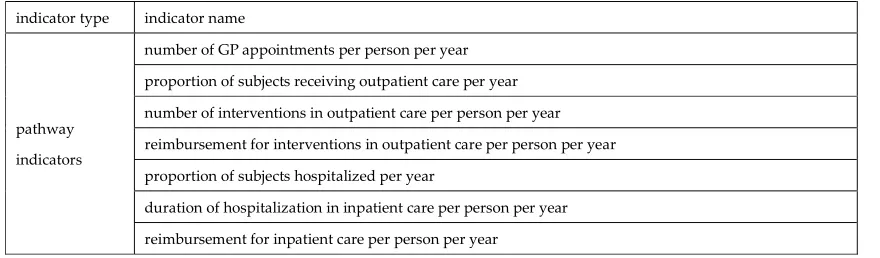
The data for indicator computations were derived from the NIHIFM. There are separate indicator sets for children (aged less than 18 years) and for adults in the NIHIFM. Our study was confined to the adult care. Pathway, performance and premature mortality indicators are computed for GMPs. (Table 1)
Table 1 Pathway, performance and premature mortality indicators for adults living in segregated Roma
settlements (SRSs) and living in the same municipalities’ complementary areas (non-SRSs) with the age- and sex-standardized relative rates (RRs) in care for inhabitants of SRSs
indicator type indicator name
pathway indicators
number of GP appointments per person per year proportion of subjects receiving outpatient care per year number of interventions in outpatient care per person per year reimbursement for interventions in outpatient care per person per year proportion of subjects hospitalized per year
2 of 15
proportion of subjects having an imaging examination per year total number of imaging examinations per person per year
reimbursement for imaging examination in outpatient care per person per year
performance indicators
proportion of patients above 65 years of age vaccinated against influenza within the last 12 months proportion of patients aged 40-54 years with hypertension (taking antihypertensive medication at least four times within 12 months)
proportion of patients aged 55-69 years with hypertension (taking antihypertensive medication at least four times within 12 months)
proportion of patients having a serum creatinine test within the last 12 months among hypertensive patients (taking antihypertensive drugs at least for times within the last 12 months)
proportion of patients having a lipid status assessment within the last 12 months among hypertensive and/or diabetes patients (taking antihypertensive medication at least four times within 12 months and/or taking ATC code A10 drugs at least for times within the last 12 months)
proportion of patients taking beta-blocker medication at least four times within 12 months relative to the total number of acute myocardial infarction (MI) and/or coronary artery bypass surgery (CABG) and/or percutaneous coronary intervention (PTCA) patients
proportion of patients among diabetes patients having a haemoglobin A1c test within the last 12 months (taking ATC code A10 drugs at least for times within the last 12 months)
proportion of patients among diabetes patients examined by ophthalmologist within the last 12 months (taking ATC code A10 drugs at least for times within the last 12 months)
proportion of patients aged 40-54 years with diabetes mellitus (taking ATC code A10 drugs at least four times within 12 months)
proportion of patients aged 55-69 years with diabetes mellitus (taking ATC code A10 drugs at least four times within 12 months)
per capita amount of purchased antibiotics prescribed by the GP, in the previous 12 months participation rate of mammography in the previous 24 months among 45- to 65–year-old women participation rate of cervical cytology in the previous 36 months among 25- to 65-year-old women premature
mortality
mortality rate for adults 18-64 years old who had not changed GMPs in the 5 years prior to the investigated year
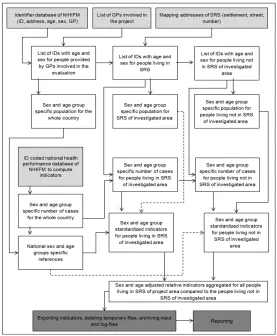
The SRS-specific version of these indicators was computed within the NIHIFM. First, the adults cared for by the GPs of the study area were selected based on their health insurance identifier and address. Using the addresses from the SRS mapping sub-project, the SRS and the non-SRS adults were separated from each other. The age- (applied age groups: 18-24, 25-29, 30-34, 35-39, 40-44, 45-49, 50-54, 55-59, 60-64, 65-69, 70-74, 75-79, 80-X) and sex–specific nominators and denominators of the above–listed indicators were computed for the SRS and the non-SRS subsamples. Next, for descriptive purpose, the crude indicators were calculated for SRS and for non-SRS subsamples.
2.5. Statistical analysis
3 of 15 between indirectly standardized SRS-specific and non-SRS-specific indicators was evaluated by 95%CIs.
At the end of the data processing, the log files had been archived and the temporary files had been deleted, according to the internal rules of the NIHIFM. The standardized indicators aggregated for all studied SRSs and for all studied non-SRS areas and the relative risk measures were utilized for further analyses (Figure 1).
Figure 1 Data processing to produce routine Roma-specific primary care indicators for adults
(by utilizing available administrative databases of the National Institute of Health Insurance Fund Management with avoiding person-level identification of Roma people; light grey-shaded input data; dark grey-shaded output data)
All statistical computations were performed using SPSS 18 (SPSS package for Windows, Release 18; SPSS, Chicago, IL, USA).
2.6. Ethics
3. Results
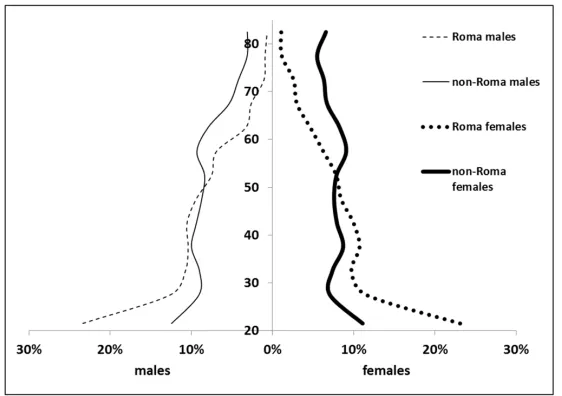
The investigated area consisted of 16 villages and towns populated by 54682 adults (26117 males; 28565 females). There were 16 identified SRSs, where 3022 adults (1519 males; 1503 females) resided. The demographic composition of SRS and complementary non-SRS areas deviated from each other profoundly (Figure 2). The mean age was much less in SRSs (total: 39.2 years, males: 38.6 years, females 39.8 years) than in non-SRSs (total: 48.4 years, males: 46.3 years, females: 50.2 years). Similarly, the old-age dependency ratio was considerably lower in SRS (total: 7.0%, males: 5.6%, females: 8.4%) than in non-SRS (total: 26.0% years, males: 18.75%, females: 33.5%).
Figure 2 Distribution of age groups in the studied Roma and non-Roma populations
3.1. Pathway indicators
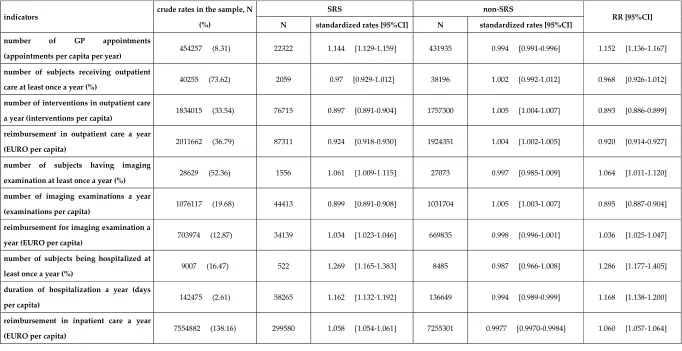
Table 2 Service delivery rates as pathway indicators for adults living in segregated Roma settlements (SRSs) and living in the same municipalities’ complementary areas (non-SRSs) with the age- and sex-standardized relative service delivery rates (RRs) for inhabitants of SRSs
indicators crude rates in the sample, N
(%)
SRS non-SRS
RR [95%CI]
N standardized rates [95%CI] N standardized rates [95%CI]
number of GP appointments
(appointments per capita per year) 454257 (8.31) 22322 1.144 [1.129-1.159] 431935 0.994 [0.991-0.996] 1.152 [1.136-1.167]
number of subjects receiving outpatient
care at least once a year (%) 40255 (73.62) 2059 0.97 [0.929-1.012] 38196 1.002 [0.992-1.012] 0.968 [0.926-1.012]
number of interventions in outpatient care
a year (interventions per capita) 1834015 (33.54) 76715 0.897 [0.891-0.904] 1757300 1.005 [1.004-1.007] 0.893 [0.886-0.899]
reimbursement in outpatient care a year
(EURO per capita) 2011662 (36.79) 87311 0.924 [0.918-0.930] 1924351 1.004 [1.002-1.005] 0.920 [0.914-0.927]
number of subjects having imaging
examination at least once a year (%) 28629 (52.36) 1556 1.061 [1.009-1.115] 27073 0.997 [0.985-1.009] 1.064 [1.011-1.120]
number of imaging examinations a year
(examinations per capita) 1076117 (19.68) 44413 0.899 [0.891-0.908] 1031704 1.005 [1.003-1.007] 0.895 [0.887-0.904]
reimbursement for imaging examination a
year (EURO per capita) 703974 (12.87) 34139 1.034 [1.023-1.046] 669835 0.998 [0.996-1.001] 1.036 [1.025-1.047]
number of subjects being hospitalized at
least once a year (%) 9007 (16.47) 522 1.269 [1.165-1.383] 8485 0.987 [0.966-1.008] 1.286 [1.177-1.405]
duration of hospitalization a year (days
per capita) 142475 (2.61) 58265 1.162 [1.132-1.192] 136649 0.994 [0.989-0.999] 1.168 [1.138-1.200]
reimbursement in inpatient care a year
The health care use pattern of SRS inhabitants differed significantly from that of non-SRS inhabitants according to the age- and sex-standardized relative indicators. The number of GP appointments per person per year was significantly higher among SRS inhabitants (RR=1.152, 95%CI: 1.136 – 1.167). There was no observed difference between SRS and non-SRS with respect to the proportion of subjects receiving outpatient care per year. However, the number of interventions (RR=0.893, 95%CI: 0.886 – 0.899) and the reimbursement for interventions (RR=0.920, 95%CI: 0.914 – 0.927) in outpatient care per person per year was significantly reduced for SRS inhabitants. Although the use of imaging examinations was higher in SRSs (RR=1.064, 95%CI: 1.011 – 1.120), the number of and reimbursement for imaging examinations were significantly reduced (RR=0.895, 95%CI: 0.887 – 0.904, RR=1.036, 95%CI: 1.025 – 1.047, respectively). The proportion of subjects hospitalized (RR=1.286, 95%CI: 1.177 – 1.405), the duration of hospitalization (RR=1.168, 95%CI: 1.138 – 1.200), and the reimbursement for inpatient care (RR=1.060, 95%CI: 1.057 – 1.064) were elevated in SRSs.
3.2. Performance indicators
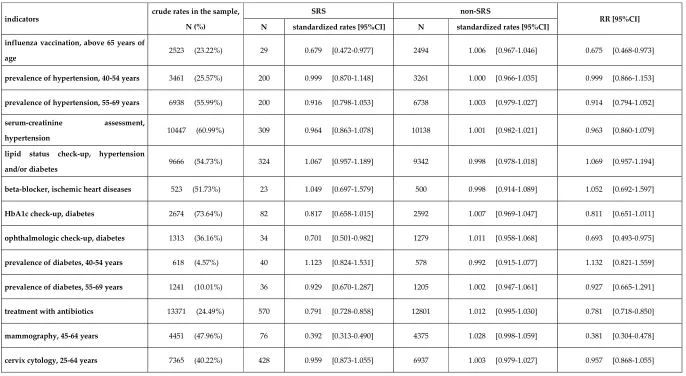
Table 3 Service delivery rates as performance indicators for adults living in segregated Roma settlements (SRSs) and living in the same municipalities’ complementary areas (non-SRSs) with the age- and sex-standardized relative service delivery rates (RRs) for inhabitants of SRSs
indicators crude rates in the sample,
N (%)
SRS non-SRS
RR [95%CI]
N standardized rates [95%CI] N standardized rates [95%CI]
influenza vaccination, above 65 years of
age 2523 (23.22%) 29 0.679 [0.472-0.977] 2494 1.006 [0.967-1.046] 0.675 [0.468-0.973]
prevalence of hypertension, 40-54 years 3461 (25.57%) 200 0.999 [0.870-1.148] 3261 1.000 [0.966-1.035] 0.999 [0.866-1.153]
prevalence of hypertension, 55-69 years 6938 (55.99%) 200 0.916 [0.798-1.053] 6738 1.003 [0.979-1.027] 0.914 [0.794-1.052]
serum-creatinine assessment,
hypertension 10447 (60.99%) 309 0.964 [0.863-1.078] 10138 1.001 [0.982-1.021] 0.963 [0.860-1.079]
lipid status check-up, hypertension
and/or diabetes 9666 (54.73%) 324 1.067 [0.957-1.189] 9342 0.998 [0.978-1.018] 1.069 [0.957-1.194]
beta-blocker, ischemic heart diseases 523 (51.73%) 23 1.049 [0.697-1.579] 500 0.998 [0.914-1.089] 1.052 [0.692-1.597]
HbA1c check-up, diabetes 2674 (73.64%) 82 0.817 [0.658-1.015] 2592 1.007 [0.969-1.047] 0.811 [0.651-1.011]
ophthalmologic check-up, diabetes 1313 (36.16%) 34 0.701 [0.501-0.982] 1279 1.011 [0.958-1.068] 0.693 [0.493-0.975]
prevalence of diabetes, 40-54 years 618 (4.57%) 40 1.123 [0.824-1.531] 578 0.992 [0.915-1.077] 1.132 [0.821-1.559]
prevalence of diabetes, 55-69 years 1241 (10.01%) 36 0.929 [0.670-1.287] 1205 1.002 [0.947-1.061] 0.927 [0.665-1.291]
treatment with antibiotics 13371 (24.49%) 570 0.791 [0.728-0.858] 12801 1.012 [0.995-1.030] 0.781 [0.718-0.850]
mammography, 45-64 years 4451 (47.96%) 76 0.392 [0.313-0.490] 4375 1.028 [0.998-1.059] 0.381 [0.304-0.478]
According to the age- and sex-standardized relative risk measures, most of the performance indicators show no difference between SRS and non-SRS areas. However, the Roma people above 65 years of age are less intensively vaccinated against influenza (RR=0.675, 95%CI: 0.468 – 0.973), less frequently examined by ophthalmologists in case of diabetes (RR=0.693, 95%CI: 0.493 – 0.975), less frequently treated with antibiotics (RR=0.781, 95%CI: 0.718 – 0.850), and less frequently screened for breast cancer (RR=0.381, 95%CI: 0.304 – 0.478).
3.3. Premature mortality
The crude premature mortality rate was 0.71% in SRS and 0.62% in non-SRS subsamples (number of registered death was 20 in SRS and 258 in non-SRS). The age- and sex-standardized premature mortality proved to be significantly higher in SRSs (RR= 1.711, 95%CI: 1.085-2.696).
4. Discussion
4.1. New indicator set for segregated Roma settlements
Our study demonstrates that it is possible to produce an SRS-specific version of the routine primary health care indicators of NIHIFM by utilizing the existing IT and solving legal problems by elaborating data processing technology, which is able to ensure the complete protection of personal data throughout the whole process. This system utilizes health care use data from routine health statistics, which prevents the generation of significant expenses related to monitoring. The SRS geographical description was determined as a method that respected the right for personal data protection and was approved by a responsible ethics committee. The linkage between geographical data on SRS localization and the internal health care use databases of the NIHIFM was established according to the internal, safe, and controlled protocols of the NIHIFM. The final products of the data processing, the aggregated indicators of SRS versus non-SRS health care use, cannot be linked to any person.
On the other hand, the observed indicators may be used to explore the specific problems of a vulnerable population with significant size and consequently with a significant impact on the health gap between Roma and non-Roma people. These indicators seem to have high reliability and high feasibility for application in routine monitoring that supports the elaboration and implementation of Roma-specific interventions. Using these indicators, improvement in the effectiveness of the Roma projects is expected. The necessity of this kind of monitoring technology has been emphasized by the EU, the WHO, and national authorities, as well [5-7, 10, 23].
4.2. Main findings
The quality of care for adults living in SRSs seems to not deviate from the reference of non-SRS areas in many respects. Cervical cancer screening, prevalence of diabetes and hypertension, serum creatinine, lipid and HbA1c laboratory investigations and the application of beta-blockers among patients with ischaemic heart diseases are utilized with similar frequency in SRSs and non-SRSs. However, there are some services underutilized in SRSs, such as breast cancer screening, ophthalmologic check-up among diabetes patients, influenza vaccination, and use of antibiotics. There is no performance indicator that suggests that the utilization of services is better in SRS areas than in non-SRS areas.
Adults living in SRSs use primary health care more intensively. The same proportion of adults living in SRSs use the services of outpatient institutions as non-SRS adults, but the number of interventions and the amount of reimbursement is significantly less for them. Taking into consideration their worse health status and higher needs, services of outpatient institutions seems to be underutilized by SRS inhabitants.
2 of 15 under-provided secondary outpatient care, which omits the prevention of the underlying chronic disease progression. Per capita reimbursements are significantly higher for SRS inhabitants both in the respect of hospital and imaging care use.
Since most of the secondary care (out- and inpatient services, imaging) costs are generated by hospitals, which are used more intensively by SRS adults, and the primary health care is used more frequently by SRS inhabitants too, the resource needs of adults living in the SRS are higher than that of adults in the non-SRS.
The poor health status in SRSs is demonstrated by the profoundly higher premature mortality in SRSs. This may reflect either the lower quality of health care or the worse health status caused by unhealthier life styles or disadvantageous socio-economic status [16, 21]. The exploration of the association between poor quality of care and premature death needs further investigation. The value of the methodology used in this paper can be emphasized by the fact that due to the prohibition of registration of ethnicity in death certification, there are no Roma-specific mortality data in Hungary at all. Our observation is the first Roma-specific mortality figure in the country.
Our observations of Roma-specific health care utilization pattern are in concordance of published results of Roma studies from European countries, which were based on self-declared Roma ethnicity assessment [24-29]. The elevated risk of premature death among Roma adults living in SRS is also consistent with the Hungarian observations of the poor health status and poor self-rated health of adults living in SRS [16, 21, 22].
4.3. Strengths and limitations
The approach presented in this paper may not have directly investigated the Roma health status. Instead, it evaluates the health status of adults living in SRSs in comparison to the non-SRS population. Consequently, this methodology is not a universal approach; it is not a final solution to monitor the Roma health status in general. However, this methodology can investigate the most disadvantageous stratum of the Roma population, which probably has the worst health status, thus requiring the most urgent interventions.
Since there are Roma adults not living in SRSs who have inferior health status, there is a misclassification introduced into the study that results in dilution of the relative risk measures. The observed risk elevations are underestimations of the real SRS effect. It is also probable that there were some outcomes that showed no significant association with the SRS in spite of the existence of the SRS influence, due to this bias that seemed to counterbalance the relatively small SRS impact. The higher the proportion of Roma individuals living in non-SRSs is, the more important are the above-mentioned effects (and the more underestimated are the problems among Roma that could be identified).
Because not all but 94% of inhabitants of SRS belong to the Roma ethnic minority [15], the presented observations are approximations of Roma health care utilization and premature mortality. However, it is highly probable that the life style and health behaviour of non-Roma inhabitants of SRS are very similar to those of Roma living in SRS. Consequently, the presented indicators are good approximations of Roma health status.
4.4. Implications
3 of 15 the exploration and management of ethnicity-related problems, according to previous studies [30-35].
This proposed monitoring cannot evaluate the interrelationship between pathway, performance and premature mortality indicators, and the determinants of these indicators. Therefore, analytic investigations on determinants of health care utilization (applying the operationalized concept of utilization as realized access to health care [36]) among adults from SRS can be complementing in addition to the regular application of standardized SRS-specific indicators. Co-ordinated application of the SRS-specific indicators and the analytic investigations can support both the health policy agenda setting (identification of problems, prioritization) and the policy evaluation.
5. Conclusions
Our investigation demonstrates that it is possible to produce Roma-specific primary health care indicators in a way that fits the routine health statistical processes without violating the personal data protection laws and without generating significant expenses by converting a sensitive ethical issue to a non-sensitive small area geographical inequality analysis. Consequently, this indicator set can be applied in routine monitoring in Eastern and Central European countries where the legal system is similar to that of Hungary and where a significant proportion of Roma people are living in segregated settlements. According to results from our indicator development project, although there are some primary care services provided for the Roma as is done for non-Roma adults, many services are underutilized and some services are over-utilized by SRS inhabitant adults. Overall, there is a specific health service utilization pattern of adults living in SRS – although the cost relatively more than those for non-Roma people -, which can contribute to the very high premature mortality of adults living in SRSs.
Author Contributions: JS: conception and design, analysis and interpretation of data, writing the article, final
approval of the version to be submitted AP: design, analysis and interpretation of data FV: analysis and interpretation of data NK: analysis and interpretation of data VS: analysis and interpretation of data
LK: design, acquisition of data, preparation of dataset ZsF: acquisition of data, preparation of dataset LP: acquisition of data, preparation of dataset GF: professional instruction on the subject MP: professional instruction on the subject
RÁ: conception and design, final approval of the version to be submitted
Funding: The reported study was carried out in the framework of the “Public Health Focused Model
Programme for Organising Primary Care Services Backed by a Virtual Care Service Centre” (SH/8/1). The Model Programme is funded by the Swiss Government via the Swiss Contribution Programme (SH/8/1) in agreement with the Government of Hungary. Additional source of funding was from the grant of Hungarian
Academy of Sciences (MTA 11003, 2006TKI227), from IGEN-HUNGARIAN
(TÁMOP-4.2.2.AA-11/1/KONV-2012-0031) project which was co-financed by the European Union and the European Social Fund, and from GINOP-2.3.2-15-2016-00005 project which was co-financed by the European Union and the European Regional Development Fund.
Acknowledgments: The authors thank the support of Alexandra Balázs in managing legal issues related to data
4 of 15
Conflicts of Interest:
Ethics approval and consent to participate
No person-level data collection was deployed in the study. Therefore, written informed consent was not required from members of the population investigated. The data collection to describe the geographical location of SRS was approved by the Research Ethics Committee of the Medical Research Council of Hungary (8907-0/2011-EKU, 285/PI/11 and 2213-5/2013/EKU, 233/2013). The protocol of the study was investigated and approved by the Office of the Commissioner for Fundamental Rights (AJB-3147/2013), the general director National Institute of Health Insurance Fund Management (E0101/215-3/2014), and the Hungarian National Authority for Data Protection and Freedom of Information (NAIH/2015/826/7N).
Availability of data and material: The database of aggregated statistics prepared for analysis is stored in
secure, confidential, password protected storage in the server of the Debrecen University Faculty of Public Health. Completely de-identified records could be made available to interested persons/organisations on request to the corresponding author at [email protected].
Competing interests: The authors declare that they have no competing interests.
References
1. Adany, R., Roma health is global ill health. European journal of public health 2014, 24, (5), 702-3.
2. European Commission: Communication from the Commission to the European Parliament, the Council, the European Economic and Social Committee and the Committee of the Regions. An EU Framework for National Roma Integration Strategies up to 2020. ; 2011.
3. Hajioff, S.; McKee, M., The health of the Roma people: a review of the published literature. Journal of epidemiology and community health 2000, 54, (11), 864-9.
4. Marmot, M. Health inequalities in the EU — Final report of a consortium. European Union: European Commission Directorate-General for Health and Consumers; 2013.
5. European Commission: The Commission's assessment of Hungary’s National Strategy. ; 2012.
6. European Commission: Roma Health Report. Health status of the Roma population Data collection in the Member States of the European Union. ; 2014.
7. Richard, L.; Furler, J.; Densley, K.; Haggerty, J.; Russell, G.; Levesque, J. F.; Gunn, J., Equity of access to primary healthcare for vulnerable populations: the IMPACT international online survey of innovations. International journal for equity in health 2016, 15, 64.
8. Ringold, D.; Orenstein, M.; Wilkens, E. Roma in an expanding Europe: breaking the poverty cycle. Washington DC: The International Bank for Reconstruction and Development/The World Bank; 2005. 9. Kosa, K.; Adany, R., Studying vulnerable populations: lessons from the Roma minority. Epidemiology
(Cambridge, Mass.) 2007, 18, (3), 290-9.
10. Jakab, Z.; Juhasz, A.; Nagy, C.; Schuler, D.; Garami, M., Trends and territorial inequalities of incidence and survival of childhood leukaemia and their relations to socioeconomic status in Hungary, 1971-2015. European journal of cancer prevention : the official journal of the European Cancer Prevention Organisation (ECP) 2017, 26 Joining forces for better cancer registration in Europe, S183-s190.
11. Boruzs, K.; Juhasz, A.; Nagy, C.; Adany, R.; Biro, K., Relationship between Statin Utilization and Socioeconomic Deprivation in Hungary. Frontiers in pharmacology 2016, 7, 66.
12. Nagy, C.; Juhasz, A.; Beale, L.; Paldy, A., Mortality amenable to health care and its relation to socio-economic status in Hungary, 2004-08. European journal of public health 2012, 22, (5), 620-4. 13. Sebestyen, A.; Toth, F.; Sandor, J.; Nyarady, J.; Boncz, I., Correlation between risk factors and
5 of 15
14. Kosa, I.; Nemes, A.; Belicza, E.; Kiraly, F.; Vassanyi, I., Regional differences in the utilisation of coronary angiography as initial investigation for the evaluation of patients with suspected coronary artery disease. International journal of cardiology 2013, 168, (5), 5012-5.
15. Kosa, K.; Darago, L.; Adany, R., Environmental survey of segregated habitats of Roma in Hungary: a way to be empowering and reliable in minority research. European journal of public health 2011, 21, (4), 463-8.
16. Sandor, J.; Kosa, Z.; Boruzs, K.; Boros, J.; Tokaji, I.; McKee, M.; Adany, R., The decade of Roma Inclusion: did it make a difference to health and use of health care services? International journal of public health 2017, 62, (7), 803-815.
17. Adany, R.; Kosa, K.; Sandor, J.; Papp, M.; Furjes, G., General practitioners' cluster: a model to reorient primary health care to public health services. European journal of public health 2013, 23, (4), 529-30. 18. Jakab, Z., Public health, primary care and the 'cluster' model. European journal of public health 2013, 23,
(4), 528.
19. Sandor, J.; Kosa, K.; Papp, M.; Furjes, G.; Korosi, L.; Jakovljevic, M.; Adany, R., Capitation-Based Financing Hampers the Provision of Preventive Services in Primary Health Care. Frontiers in public health 2016, 4, 200.
20. Sandor, J.; Nagy, A.; Foldvari, A.; Szabo, E.; Csenteri, O.; Vincze, F.; Sipos, V.; Kovacs, N.; Palinkas, A.; Papp, M.; Furjes, G.; Adany, R., Delivery of cardio-metabolic preventive services to Hungarian Roma of different socio-economic strata. Family practice 2017, 34, (1), 83-89.
21. Kosa, Z.; Szeles, G.; Kardos, L.; Kosa, K.; Nemeth, R.; Orszagh, S.; Fesus, G.; McKee, M.; Adany, R.; Voko, Z., A comparative health survey of the inhabitants of Roma settlements in Hungary. American journal of public health 2007, 97, (5), 853-9.
22. Kosa, Z.; Moravcsik-Kornyicki, A.; Dioszegi, J.; Roberts, B.; Szabo, Z.; Sandor, J.; Adany, R., Prevalence of metabolic syndrome among Roma: a comparative health examination survey in Hungary. European journal of public health 2015, 25, (2), 299-304.
23. Government of Hungary: National Social Inclusion Strategy and the government action plan on its implementation between 2015 and 2017; 2015.
24. Jackson, C.; Bedford, H.; Cheater, F. M.; Condon, L.; Emslie, C.; Ireland, L.; Kemsley, P.; Kerr, S.; Lewis, H. J.; Mytton, J.; Overend, K.; Redsell, S.; Richardson, Z.; Shepherd, C.; Smith, L.; Dyson, L., Needles, Jabs and Jags: a qualitative exploration of barriers and facilitators to child and adult immunisation uptake among Gypsies, Travellers and Roma. BMC public health 2017, 17, (1), 254.
25. Sudzinova, A.; Nagyova, I.; Studencan, M.; Rosenberger, J.; Skodova, Z.; Vargova, H.; Middel, B.; Reijneveld, S. A.; van Dijk, J. P., Roma coronary heart disease patients have more medical risk factors and greater severity of coronary heart disease than non-Roma. International journal of public health 2013, 58, (3), 409-15.
26. Sudzinova, A.; Nagyova, I.; Rosenberger, J.; Studencan, M.; Vargova, H.; Middel, B.; van Dijk, J. P.; Reijneveld, S. A., Seven years' mortality in Roma and non-Roma patients after coronary angiography. European journal of public health 2015, 25, (5), 765-9.
27. Ekuklu, G.; Berberoglu, U.; Eskiocak, M.; Saltik, A., Utilization of primary health care services by Turkish gypsies and members of the general population at Muradiye Health Unit District in Edirne, Turkey. Yonsei medical journal 2003, 44, (3), 414-23.
6 of 15
29. Carrasco-Garrido, P.; Lopez de Andres, A.; Hernandez Barrera, V.; Jimenez-Trujillo, I.; Jimenez-Garcia, R., Health status of Roma women in Spain. European journal of public health 2011, 21, (6), 793-8.
30. Hull, S.; Mathur, R.; Boomla, K.; Chowdhury, T. A.; Dreyer, G.; Alazawi, W.; Robson, J., Research into practice: understanding ethnic differences in healthcare usage and outcomes in general practice. The British journal of general practice : the journal of the Royal College of General Practitioners 2014, 64, (629), 653-5.
31. Badrick, E.; Hull, S.; Mathur, R.; Shajahan, S.; Boomla, K.; Bremner, S.; Robson, J., Health equity audits in general practice: a strategy to reduce health inequalities. Primary health care research & development 2014, 15, (1), 80-95.
32. Lin, S. S.; Kelsey, J. L., Use of race and ethnicity in epidemiologic research: concepts, methodological issues, and suggestions for research. Epidemiologic reviews 2000, 22, (2), 187-202.
33. Hull, S. A.; Mathur, R.; Badrick, E.; Robson, J.; Boomla, K., Recording ethnicity in primary care: assessing the methods and impact. The British journal of general practice : the journal of the Royal College of General Practitioners 2011, 61, (586), e290-4.
34. Tran, D. T.; Jorm, L. R.; Havard, A.; Harris, M. F.; Comino, E. J., Variation in the use of primary care services for diabetes management according to country of birth and geography among older Australians. Primary care diabetes 2016, 10, (1), 66-74.
35. Smylie, J.; Firestone, M., Back to the basics: Identifying and addressing underlying challenges in achieving high quality and relevant health statistics for indigenous populations in Canada. Statistical journal of the IAOS 2015, 31, (1), 67-87.