A systematic study of the hybrid experiment at Mt.Chacaltaya
M.Tamada1 a, H.Aoki2, K.Honda3, N.Inoue4, N.Kawasumi5, N.Martinic6, N.Ochi7, N.Ohmori8, A.Ohsawa9, H.Semba10, and R.Ticona6
1Faculty of Science and Engineering, Kinki University, Higashi-Osaka, Japan 2Faculty of Science, Soka University, Hachioji, Tokyo, Japan
3Faculty of Engineering, University of Yamanashi, Kofu, Japan 4Faculty of Science, Saitama University, Saitama, Japan 5Faculty of Education, University of Yamanashi, Kofu, Japan
6Insitute de Investigaciones Fisicas, Universidad Mayor de San Andres, La Paz, Bolivia 7General Education, Yonago National College of Technology, Yonago, Japan
8Faculty of Science, Kochi University, Kochi, Japan
9Institute for Cosmic Ray Research, University of Tokyo, Kashiwa, Japan 10Faculty of Comprehensive Welfare, Urawa University, Urawa, Japan
Abstract. In the hybrid experiment on Mt.Chacaltaya, we can observe three di erent components of air-showers, that is, air-shower size, burst-density and high energy families (a bundle of high energy particles). Burst-density in each block of hadron calorimeters are newly recalculated in simulations in oder to compare directly to the experimental data. Energy deposits in the scintillators of the hadron calorimeters are calculated using GEANT4 for every particle, incident upon the hadron calorimeter, in the air-showers simulated using CORSIKA, and are converted into burst-density, taking into consideration the exact structure of experimental hadron calorimeter. We study correlations among three observable components in the air-showers. Correlations between air-shower size and burst-density and those between air-shower size and accompanied family energy can be explained by model calculations by adjusting primary particle composition, the former correlation is in favor of proton-primaries but the latter iron-primaries. No model can describe well observed correlations between burst-density and family energy. That is, the observed family energy accompanied by the air-showers with larger burst-density is systematically smaller than that expected in the simulated events. E ects of a fluc-tuation in the cross-section of hadronic interactions are studied to settle the disagreement between experimental data and simulations.
1 Introduction
The "knee" in the cosmic-ray spectrum in the energy re-gion 1015 1017eV is still not well understood. Many of the experimental groups claim that the fraction of heavy primaries increases rapidly beyond the "knee" and the change of the chemical composition of primary cosmic-rays is an origin of the "knee"[1–3]. However, the hy-brid experiments, operating simultaneously an air-shower array, a hadron calorimeter and an emulsion chamber at Mt. Chacaltaya (5200m, Bolivia)[4, 5], have been shown that the characteristics of the observed events in this en-ergy region can not be fully explained simply by chang-ing chemical composition of primary particles. In the hy-brid experiments, we can obtain air-shower size,Ne, from
the air-shower array data, particle-density, nb, which are
closely connected to the hadron component in the air-shower, from hadron calorimeter (burst detector) and the energy and geometrical position of individual high energy electromagnetic particles of atmospheric families by the
ae-mail: [email protected]
emulsion chamber. Correlations between air-showers and accompanying families were studied by comparing exper-imental and simulated data using Chacaltaya data [6, 7] to-gether with the data of the other two hybrid experiments, Tibet AS (Yang-bajing , 4300m, China)[1, 2] and Tien-Shan (3340m, Kazakhstan)[8] . Although details of the experimental procedure are di erent in these hybrid exper-iments the results are found to be almost the same[7]. In the papers[9, 10] we have also shown some results on the correlation between burst-density and accompanied family energy observed by the Chacaltaya hybrid experiment. It is found that the experimental data are not well explained by the current model calculations. In the present paper, we use more accurate calculations based on the GEANT4 simulation[11] for the burst-density and compare the Cha-caltaya data with improved simulated data.
2 Hybrid experiment at Mt.Chacaltaya
The air-shower array covers a circular area within a radius about 50 m by 35 plastic scintillation detectors to mea-DOI: 10.1051/
C
Owned by the authors, published by EDP Sciences, 2013 epjconf 201/ 35207006
This is an Open Access article distributed under the terms of the Creative Commons Attribution License 2 0 , which . permits unrestricted use, distributi and reproduction in any medium, provided the original work is properly cited.
sure the lateral distribution of electron density of the air-showers. In the center of the air-shower array, 32 blocks of emulsion chambers (0.25 m2 each) are installed. Each block of the emulsion chamber consists of 30 lead plates each of 0.5 cm thick and 14 sensitive layers of X-ray film which are inserted after every 1 cm lead. The total area of the emulsion chambers is 8 m2. Hadron calorimeters with plastic scintillator of 5cm thick are installed underneath the respective blocks of the emulsion chamber. A 2 cm thick iron support is inserted between the emulsion cham-ber and the hadron calorimeter. Details of the Chacaltaya hybrid experiment are described in Refs.[4, 5]
3 Simulations
3.1 Air-showers
For generating extensive air-showers and families we use the CORSIKA simulation code (version 6.980) [12] em-ploying the QGSJET model (QGSJET01c)[13] and the EPOS model (EPOS 1.99) [14] for the cosmic-ray nuclear interaction. Primary particles of E0 1015eV are sam-pled respectively from the power low energy spectrum of integral power index 1 8, for pure protons and pure irons, and also from the energy spectrum of primary cosmic rays with proton dominant and heavy dominant chemical com-position1. The thinning energy in the calculations in the air-showers is fixed to be 10 GeV. Shower size,Ne, at the
observation level is calculated by using NKG option in the simulation. Here we use default values in the COR-SIKA code for the low energy cut-o of the particles, i.e., Ecut 0 3 GeV for hadrons and muons andEcut 0 003
GeV for electromagnetic particles. Air-shower center is randomly sampled within a area of 2 5 m in X and Y direction from the center of 32 hadron calorimeters.
3.2 High energy showers in the atmospheric families
For high energy (e, )-particles and hadrons of E 1 TeV in the atmospheric families arriving at each emulsion chamber, we calculate further nuclear and electromagnetic cascade development inside the chamber taking into ac-count the exact structure of the emulsion chamber. We use the QGSJET model for hadron-Pb interactions and a code formulated by Okamoto and Shibata for electromagnetic cascade[15]. The electron number density under every 1 cmPb is converted into spot darkness of the X-ray film. Then the energy of each shower is re-estimated from the shower transition on spot darkness by applying the proce-dure used in the experiments.
1Five species of nucleus (proton, He, N, Mg, Fe) are assumed in both
chemical compositions. The fraction of those nucleus are assumed to be 0.42, 0.16, 0.16, 0.14, 0.12 respectively in proton dominant model and 0.17, 0.10, 0.18, 0.15, 0.40 in heavy-dominant model atE0 1015 1016
eV and the fraction of heavy primaries increases a little at higher energies in both chemical compositions.
Figure 1.Distribution of energy deposit,Edep, in the plastic 5cm thick scintillator of the hadron calorimeter for pions with vertical incidence. Histograms are results obtained by the GEANT4 sim-ulation code and dashed-curves are those obtained by sampling from approximated numerical functions.
3.3 Calculation of the burst-density
Hadron calorimeters detect a bundle of charged particles, which are produced in the emulsion chamber material mainly by the hadron component in the air-shower through the local nuclear interactions. We use GEANT4 code[11] with QGSP model for hadronic interactions for calculat-ing the burst-density. We calculate nuclear and electro-magnetic cascades in the emulsion chamber and the en-ergy deposit in the 5 cm thick plastic scintillator is esti-mated for all the charged particles (mainly electrons and positrons) and -rays in the cascade2 . Actually, the en-ergy deposit is calculated for the hadrons (pions, protons, neutrons and kaons) and also muons ande with 5 dif-ferent energies of 10 GeV, 100 GeV, 1 TeV, 10TeV and 100 TeV, and 5 di erent zenith tangent of arrival direc-tion, tan 0.0, 0.2, 0.4, 0.6, 0.8. In Figure 1 we show examples of distributions of the energy deposit in the scin-tillator obtained by using GEANT4 code in case of pions with vertical incidence. The distribution of the energy de-posit obtained by the GEANT4 simulations are approx-imated by numerical functions. In the figure, also shown are the distributions of the energy deposit obtained by sam-pling from these numerical functions which approximate GEANT4 results. The distributions agree well with those obtained by full simulations using GEANT4. In order to save computing time, the energy deposit is sampled from the numerical functions for every particle incident upon the emulsion chamber and is converted into a particle num-ber using average energy loss ( 10MeV) of a single muon in the 5 cm thick plastic scintillator. Finally we get the burst-density,nb, the number of particles per 0.25 m2, in
each block of 32 hadron calorimeters. Details of the pro-cedure for the calculations are given in the paper[16].
2Gamma-rays also gives some energy deposit in the scintillator by
Figure 2. Correlation diagram on shower size, Ne, and asso-ciated family energy, E for the events with maximum burst-densitynmax
b 104. Large solid circles are for the Chacaltaya data. Small dots and open squares are for proton primaries and for iron primaries, respectively, of the simulated events using CORSIKA with QGSJET01 model.
4 Selection of the events
We define nmaxb as the largest burst-density among 32 blocks of hadron calorimeters. In the following we pick up the events which satisfy the following criteria;
Ne 106,
nmax b 104, RAS Bs 1m,
whereRAS Bs is the distance between the burst center
and the air-shower center,
more than 10 among 32 blocks have burst-densitynb
100.
The burst center is determined by the algorithm described in Ref.[5]. In the Chacaltaya data, 1,037 events satisfy the above criteria in 40 m2year exposure of hadron calorimeters. Among them 62 events are accompanied by high energy atmospheric families of E 10 TeV (n 5 withEmin 2 TeV).
5 Characteristics of air-showers and
families
Figure 2 shows a correlation diagram on the air-shower size, Ne, and the energy sum, E of the associated at-mospheric families. The average family energy of the events from iron-primaries is systematically smaller than that from proton-primaries. The experimental data are well described by a mixture of proton- and iron-primaries, and become close to those expected by iron-primaries with increasing shower-size, Ne. The results agree well to the data of Tibet AS [17] and of Tien-Shan experiment[7].
Figure 3. Correlation diagram on shower size, Ne, and maxi-mum burst density, nmax
b for the events associated by an atmo-spheric families of E 10 TeV. Symbols are same as those in Figure 2.
6 Characteristics of air-showers and
bursts
Figure 3 shows a correlation diagram on air-shower size, Ne, and the maximum burst-density among 32 blocks of
the event,nmax
b , for the events which accompany an
atmo-spheric family of E 10 TeV. The experimental data are well described by proton-primaries even in the larger shower-size region, contrary to the argument of the previ-ous section3.
7 Characteristics of bursts and families
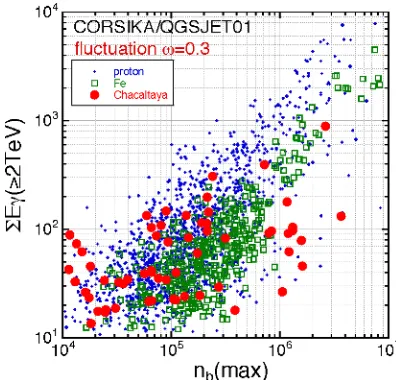
Figure 4 shows a correlation diagram betweennmax
b and
accompanying family energy E . The experimental data are compared with those of simulated data of proton-and of iron-primaries by CORSIKA using QGSJET01 proton-and EPOS1.99 models. As naturally expected, the family en-ergy is roughly proportional tonmax
b in the simulated data
irrespective of the primary particles though the family en-ergy of the events coming from iron-primaries are smaller than that from proton-primaries. We can see a lot of the ex-perimental data are located far from the simulated events in the diagram. The family energy in the experimental data is systematically smaller than that of simulated data in the events with larger burst-density,nmax
b 106.
The integral spectra of family energy observed by the present hybrid experiment is smoothly connected to that by the emulsion chamber experiment of Brazil-Japan collaboration[18]. Then we can conclude the smaller fam-ily energy in the experimental data is not due to the
sys-3The Tibet AS group analyzed correlations between air-shower size, Neand burst size, nbfor all the events including those unaccompanied
by a family. They conclude that the experimental distribution on nbNe
Figure 4. Correlation diagram between nmax
b and family en-ergy E in the burst-triggered-families in the air-showers of 106 Ne 108. Comparison with simulated results of COR-SIKA QGSJET01 (upper) and of CORCOR-SIKA EPOS1.99 (lower). Symbols are same as in Figure 2.
tematic underestimation of the shower energy in the emul-sion chamber. An overestimation of the burst-density, es-pecially beyond the region ofnmax
b 105, is also ruled out,
because the distribution onnmax
b Ne is well described by
the simulations.
No analysis on bursts and families is not yet provided by Tibet AS and Tien-Shan experiments.
8 Effect of fluctuations in hadron-Air
interaction
It looks as if the fluctuation of event by event is much more in the experimental data than in simulations as seen in Figure 4. One of the possible origin of the observed large fluctuation could be due to a fluctuation in cross-section of hadronic interaction. In the paper of Wilk
Figure 5. Correlation diagram between nmax
b and family en-ergy E in the burst-triggered-families in the air-showers of 106 Ne 108in case of introducing fluctuation in the hadron-Air interaction in the simulations, with a parameter of relative fluctuation 0.3.
and Wlodarczyk[19], non-exponential decrease of shower-starting points of the hadronic showers observed by Pamir thick lead emulsion chamber, one of the unusual phenom-ena in cosmic-ray interactions, was explained by intro-ducing intrinsic fluctuations in cross-section of hadronic interaction[20]. Here we introduce the same fluctuation of the cross-section in high-energy hadron-air interactions and study the e ect to the correlation between bursts and families observed by the hybrid experiment. We apply the same procedure used in their paper [19] , that is, the cross-section, (E), of hadron-air is sampled from the uniform distribution in the interval [1 3 0(E) 1 3 0(E)]. Here 0(E) is the mean cross-section at the energyEand is the relative fluctuation of the cross-section. We apply these modification in the CORSIKA simulation code and calculate air-showers, bursts and high energy atmospheric families. The results are shown in Figure 5 for the case of 0 3. The simulated data scattered out more widely when the fluctuation of the cross-section is included in the calculations, though the frequency to observe the events with largernmax
b and smaller E at the same time is still
smaller in simulations than that in the experiment.
Figure 6 shows energy fraction of hadron component and those of electromagnetic component at the observa-tion level in the air-showers induced by primary protons of energy E0 for two di erent threshold energy of parti-cles. The fraction of hadron component, Eh E0, becomes larger when the fluctuation of the hadron-Air cross-section exists, around two (four) times larger for Eh 10 GeV
Figure 6.Energy fraction of hadron component (upper) and e, -component (lower) in the air shower induced by a primary proton of energyE0. Solid lines are forEh e 10 GeV and dashed lines are forEh e 1 TeV. Thick lines are for QGSJET01 model and thin lines are for EPOS1.99 model. Bold lines are for the case in-cluding fluctuation in the hadron-Air interactions in QGSJET01 model.
fluctuation of cross-section make more events with larger burst density.
9 Summary
The correlation between air-shower size and associated family energy shows that the average family energy of the experimental data is considerably smaller than that of sim-ulations of proton- primaries in the shower size region of Ne 107 and the experimental data are close to those expected in case of Fe-primaries (see Figure 2). On the contrary, the correlation between air-shower size and asso-ciated burst-density shows that a considerable number of air-showers induced by proton-primaries accompany large burst-density which are not seen in the iron-induced air-showers, and the experimental data are close to those
ex-pected in case of proton-primaries (see Figure 3). The con-tradiction of the above two arguments is well seen in the correlation digram between burst-density and family en-ergy and no model can describe the observed correlation (see Figure 4).
Some changes of the characteristics of particle produc-tion may cause the discrepancy between experimental and simulational data, but recent results of the LHCf experi-ment show the production spectra of secondary particles in p-p collisions at s 7 TeV are not much di erent from those assumed in current simulation models though no model can describe well the LHCf data[21]. As an another possibility, we considered the e ect of the fluc-tuation in the cross-section of hadron-air interactions. It is found that the disagreement between experimental and simulational data becomes smaller when the cross-section fluctuation is taken into accounts.
References
[1] Tibet AS Collaboration (M.Amenomori et al.), Phys. Rev. D62(2000) 112002-1, 072007-3
[2] Tibet AS Collaboration (M.Amenomori et al.), Phys. Lett. B632(2006) 58
[3] J.Blumer, R.Engel and J R.Horandel, Prog. in Part. Nucl. Phys.63(2009) 58
[4] N.Kawasumi et al., Phys. Rev. D53(1996) 3534 [5] C.Aguirre et al., Phys. Rev. D62(2000) 032003
[6] H.Aoki et al., Proceedings of 30th ICRC, Merida (2007), Vol.4, p.23
[7] S.P.Besshapov et al., Nucl. Phys. B (Proc. Suppl.)196(2009) 118; Proceedings of 31th ICRC, Lodz (2009) #0214 [8] S.B.Shaulov, AIP Conf. Proc.276(1992) 94
[9] M.Tamada, Proc. 16th Int. Symp. on Very High En-ergy Cosmic Ray Interactions, Fermilab eConf C1006284 (http: www.slac.stanford.edu econf C1006284) C27 [10] H.Aoki et.al., Proceedings of 32th ICRC, Beijing (2011)
Vol.1, p205
[11] S.Agostinlli et al. Geant4 collaboration, Nucl. Inst. and Meth. A506(2003) 250
[12] D.Heck, J.Knapp, J.N.Capdevielle, G.Schatz and T.Thouw, Fortshungzentrum Karlsruhe, FZKA 6019 (1998)
[13] N.N.Kalmykov and S.S.Ostapchenko, Yad. Fiz.56(1993) 105
[14] K.Werner, F.M.Liu and T.Pierog, Phys. Rev. C74(2006) 044902
[15] M.Okamoto and T.Shibata, Nucl. Instr. and Meth. A 257 (1987) 155
[16] T.Yamasaki and M.Tamada, Proceedings of 32th ICRC, Beijing (2011) Vol.1, p216
[17] M.Shibata, http: www.icrr.u-tokyo.ac.jp emtibet−exp 2006-08-ICRR 05−Shibata.pdf
[18] C.M.G.Lattes, Y.Fujimoto and S.Hasegawa, Phys. Rep. Vol.65(1980) 151
[19] G.Wilk and Z.Wlodarczyk, Phys. Rev. D50(1994) 2318 [20] B.Blättel et al., Phys. Rev. D47(1993) 2761