1
Influence of Different Meltable Binders on the
Solid-State Behaviour and Dissolution Profiles of Solid
Lipid Extrudates Processed Via Continuous Hot Melt
Granulation
Santosh Gejage
1, Jaywant Pawar
1, Purnima Amin
1*, and Mohammed
Maniruzzaman
2*
1. Department of Pharmaceutical Sciences and Technology, Institute of Chemical Technology, Elite Status, Nathalal Parekh Marg, Matunga, Mumbai 400019, India. 2. Department of Pharmacy (Chemistry), School of Life Sciences, University of Sussex,
Falmer, Brighton BN1 9QT, United Kingdom
*Corresponding author:
Dr Mohammed Maniruzzaman ([email protected], or
[email protected]) and Prof. Purnima, D. Amin (email – [email protected])
2
ABSTRACT:
Mere similar grades of same excipients manufactured by two different manufacturers often differ
significantly that they even have an impact on the variations in final product or dosage form. Solid
lipids are one of the most available options as matrix former in sustained drug delivery. Due to
their chemical and physical complexity, lipids may exhibit a complex behaviour (i.e. melting
crystallization and polymorphism). The aim of this study was to evaluate the physical and chemical
properties of two Glyceryl Monostearate (GMS) lipids (Geleol from Gattefosse and Capmul GMS
50K from Abitec Corp. USA) and how these properties may affect during melt granulation process
for sustained release applications. Thermal processing was applied on GMS samples to understand
the polymorphic nature and suitability as meltable binders. Niacin was used as model drug. A
thorough evaluation of GMS samples and sustained release tablets was undertaken using analytical
techniques such as differential scanning calorimetry (DSC), X-ray diffraction (XRD). Moreover,
melt viscosity study assisted to apprehend the behaviour of GMS samples in hot melt extrusion
processing. Surface morphology of the drug and extruded granules examined via SEM and AFM
revealed high level of surface interaction and dense structure of drug inside lipid matrix. The DSC
and XRD study confirmed that Geleol could not withstand the heat treatment applied during
thecontinuous melt granulation processing. The shifting of stable β form to an unstable α form in
Geleol was detected. In the contrary case, Capmul GMS 50K was able to withstand the heat
treatment supported by the applied analytical techniques. Nonetheless,both GMS samples perform
differently in final dosage form. This change in stable β form to an unstable α form affected
dissolution profiles at 3 months storage in accelerated condition. This study helped to interpret
the complex solid-state behaviour of solid lipid extrudates with different compositions, in order to
the simply and outline a suitable formulation strategy for the development of lipid-based oral
3
Graphical Abstract
Keywords:
Niacin, Glyceryl Monostearate, Polymorphism, Melt viscosity, hot melt extrusion, Melt
granulations, Sustained release.
1.Introduction:
Quality control tests must be performed on excipients or powders to ensure certain
attributes of the excipients or powder to fall within a predefined range. These attributes include
but are not limited to chemical composition, particle size, color, moisture and flow properties. In
this context, this study examines a thorough investigation of two similar lipids manufactured by
different manufcatures which would help the formulation scientist to screen the excipients before
or at the outset of the actual development of target finished products (e.g. tablets). Formulation
scientist should not be biased when thethe selection of the most appropriate excipients is
concerened. Mere similar grades of same excipients manufactured by two different companies will
not be always same and they do have an impact on the variations in finished products or dosage
forms. Different excipients are generally used to manufacture tablets. In order to develop sustained
4 (HPC), Hydroxy propyl methyl cellulose (HPMC), Ethyl cellulose (EC)], Carbomers, acrylates
(Evonik polymers) and lipids (waxy and having HLB <5) are generally used to as a carrier matrix
which often retard the drug release. Pharmaceutical grade polymers are widely used in twin screw
hot melt extrusion (HME) processing. They enable continuous manufacturing of solid solutions
and thus extended release dosage forms. However, high processing temperatures and the need for
plasticizers sometime force the formulators to explore alternative extrudable materials, including
solid lipid excipients [1,2]. The underlying reason is being that the solid-lipid matrices can be
processed via HME at significantly lower temperatures without the need for plasticizers.
Moreover, lipid excipients have a wide range of applications in pharmaceutical industry. Solid
glyceryl stearates are commonly used as matrix formers in sustained release tablets and capsules
[3]. The melt granulation, most broadly defined as a powder agglomeration with the help of a
meltable binder, is applied in numerous pharmaceutical products for a variety of reasons, e.g., to
facilitate compression, improve flow, uniformity and to enhance or control dissolution profiles of
the drugs used [4].
Commonly, reported binders such as polyethylene glycol, HPC, HPMC, PEO and HPMC
in combination with lipid binders is used in melt granulation [5-7]. It has been reported in the
literature that polymeric binders are not preferable when granulation process is developed for
modified or controlled release applications due to solubility in ethanol and susceptibility to dose
dumping in hydroalcoholic media [5-7]. To overcome the problem of polymeric meltable binders
solid lipids are one ofmost viableoptions.A numerous pharmaceutical grade lipid excipients have
been commercialized by different companies over the past several decades for the development of
drug delivery systems [8,9]. The continuous processing of granules, suitable for continuous
blending/compression and for sustained release from a lipid matrix (10)such as glyceryl
monostearate (GMS), glyceryl dibehenate, glyceryl tripalmitate, glyceryl tristearate etc has been
demonstrated [10-12]. The physicochemical properties of complex naturally occurring lipid
compounds were optimized by modifying their chemical composition (e.g. establishing defined
mixtures of esterified fatty acids) and by processing fatty acids with various functional groups such
as glycerol, polyethylene glycol, polyglycerol or propylene glycol. By doing so, the melting point
(range) and hydrophilic lipophilic balance (HLB) value were adjusted in relation to a given
application. Solid lipid excipients with high melting point (long acid chain length) and low HLB
5 form [13]. Due to their chemical and physical complexity, meltable lipid binders may exhibit a
complex behaviour (i.e. melting and crystallization, physical modifications on storage) [14, 15]
which has not been thoroughly investigated before.
Niacin is used as a model drug which is an anti-hyperlipidemic agent currently marketed
as an oral sustained release dosage form. Niacin is a white, crystalline powder, very soluble in
water. Glyceryl Monostearate is a lipid excipient suitable for the controlled release of water soluble
drugs. GMS is a mixture of monoacylglycerols mainly monostearoylglycerol together with
variable quantities of di and triacylglycerols that has a melting range between 540 C and 650 C.
GMS is manufactured by different manufacturers worldwide, each has a different process and has
a different composition of Monoglycerides, diesters and triesters contents and also different
polymorphic forms. And this composition may have different effects on the final formulation or
during stability studies.
Therefore, the aim of this study is to evaluate the physical and chemical proerties of two
GMS samples manufactured by two different companies. This evaluation is particularly useful for
the development of controlled-release formulations as the melting and rheological characteristics
of fatty acid binders are most critical parameters to consider, especially when a high amount of
lipidic binder mixtures are used. Another objective of this study is to examine a comparative
evaluation of GMS as a meltable binder from two different sourcesduring a melt granulation
process for sustained release applications.
2. Materials and Methods:
2.1 Materials:
Glyceryl Monostearate(GMS) with brand name Geleol® was received from Gattefossé India Pvt.
Ltd and Capmul GMS-50K® from Abitec Corp. Mumbai. GMS occurs as fine, white free flowing
powders. Niacin IP was purchased from Ishita Drugs & Industries Ahmedabad, India.
Microcrystalline cellulose (Avicel® PH-102) and Hydroxy Propyl cellulose (Aqualon® LF grade)
were received as free gift from Signet Chemical Corporation Mumbai, India. Magnesium stearate,
Aerosil 200®, and Talc were used for the tableting study and procured from Sigma Aldrich. All
6 2.2 Samples Preparation:
As described in previous work (J. Hamdani et. al) [16] three samples were prepared for the physical
evaluation of GMS.
• Freshly solidified (F) samples: Samples were previously melted by heating at a temperature
at least 100 C higher than their melting point, solidified at ambient temperature, and stored
for 10 hr at room temperature in order to see effect melt processing on lipids.
• Aged (A) samples: Samples were stored for 48 hours at 500 C, in order to detect any
physical ageing effect (structural or polymorphic changes) associated with lipids bases.
• Untreated (U) samples: Samples without any special treatment (as received).
2.3 Differential Scanning Calorimetry:
The melting behavior of the lipophilic binders was evaluated by a Perkin Elmer pyris-6 (USA)
which has an inbuilt computerized data station for thermal analysis. (Perkin-Elmer Corp., CT,
USA). Samples of about 5mg were sealed in aluminum pans and scanned between 0 and 150 0 C,
at a heating rate of 10 0 C/min under nitrogen flow (20 ml/min) using empty sealed pan as
reference.
2.4 X-ray Diffraction
Crystallinity of the raw materials, hot-melt extrudates and tablets samples was determined
using Lab XRD 6100 Shimadzu x-ray Diffractometer in Theta-Theta mode, Cu anode at 40 kV
and 30 mA current. The samples were pulverized in a ball mill chamber with a frequency of 25
s−1 for 30 s. The powdered sample was placed on a glass top loading holder with a depression of
0.2 mm and then gently consolidated. All samples were scanned in a continuous mode within the
angular range 5-60° 2θ scale with a scan speed of 2.0° per min and sample width of 0.03°.
2.5 Scanning Electron Mircoscopy
The shape and surface morphology of the niacin powder and niacin loaded extrudates were
examined using XL 30 Model JEOL 6800 scanning electron microscope made in Japan during
7 niacin was sprinkled and prepared extrudates was attached carefully. The radiation of platinum
plasma beam using JFC-1600 auto fine coater was targeted on aluminium stubs for its coating to
make layer of 2 nm thick- ness above the sprinkled powder for 25 min. Then, those samples were
observed for morphological characterization using a gaseous secondary electron detector (working
pres- sure: 0.8 Torr, acceleration voltage: 10e30.00 kV)
2.6 Atomic Force Microscopy (AFM) Characterization
JXA-8530F Hyper Probe Electron Probe Microanalyzer instrument by JEOL was
employed for AFM analyses. Freshly fractured extrudates on microscopic glass slides were
mounted on the micrometre positioning stage of a Dimension Icon AFM with accelerating voltage
of 1–30 kV. Probecurrent rangewas kept between10 pAand 200 pAand back scattered electron
images were obtained [17].
2.7 Melt Viscosity measurements
The rheological properties of two GMS samples were determined on the solid material, at
different temperatures close to their melting point, using a Viscolead One model viscometer
(FungiLab Spain,) spindle L3 at 50 rpm speed. 8-10 gms sample was filled in small sample adaptor
which was then attached to the main viscometer. Small sample adaptor was immersed in a digital
water bath to maintain the temperature.
2.8 Continuous melt granulation processing of Niacin using GMS as matrix former
2.8.1 Continuous melt Granulation
Niacin as received contained a substantial fraction of particles greater than 250 μm. prior
to granulation, niacin was passed through sieve no 140 (106 μm threshhold) . The fraction less
than 100 μm was collected for further processing and analysis. Melt granulation of niacin with
Gelol and Capmul GMS 50K were performed by twin screw extruder instrument (ACG Hot Melt
Extruder). Niacin was mixed with GMS and HPC LFat drug/lipid mass ratios of using a V-blender
(Wintech Pharmachem Equipment Pvt. Ltd Mumbai) for 5 min. The prepared physical mixtures
(PMs) were extruded using a co-rotating single-screw extruder at a screw speed of 50 rpm in order
to optimize the formulation and processing parameters prior to scaling up to a twin-screw extruder.
8 were then processed using twin screw extruder instrument (ACG Hot Melt Extruder). The melt
extrudate was then milled using a grinder, passed through a 200 μm sieve and packed in HDPE
airlock containers for furtheranalyses. HME processing speed, extrusion temperature (Tg mix) and
feeding rate were found to be controllable parameters in the process that could affect chemical
stability of formulation. All extrusions were performed in triplicate to measure the processing
torque and mean residence time (MRT). Melt granulation was processed through the extruder with
all temperature control points set at 75 0C, which is above the melting temperature range of GMS.
2.8.2. Blending and compression
Niacin granules from above step (2.6.1) and other excipients intended to act as a pore
former were blended for 15 min in a V-Shell blender (Wintech Pharmachem Equipment Pvt. Ltd
Mumbai) operating at 25 rpm followed by an additional 5 min of blending with the tableting
lubricant Aerosil® 200, Talc and magnesium stearate. The batch size for the tablet blends was 100
g. Individual portions of the blends were weighed and compressed into 19.1 X 8.1 mm plain caplet
shape tablets at 20 kN compression force using a tablet press, (Manual Tablet Compaction
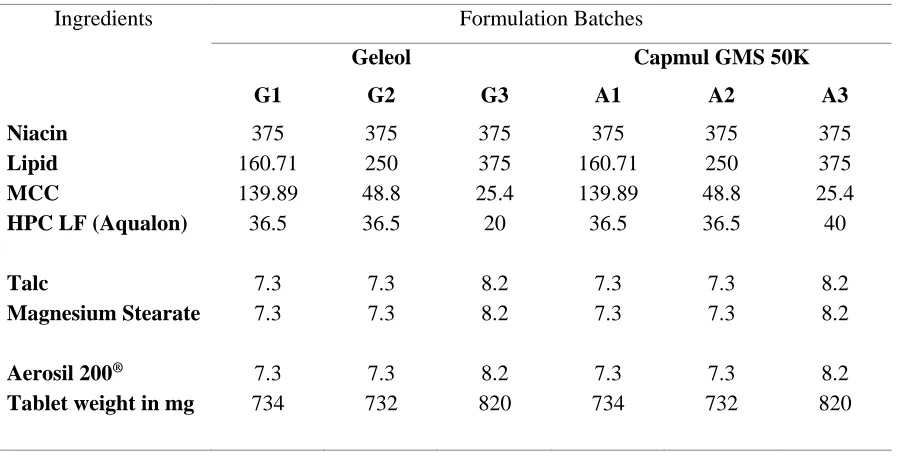
Machine, model CMD-4, Cadmach Machinery Co. Pvt. Ltd India). The composition of tablets is
shown in Table 1.
Table 1: Selected formulations of Niacin sustained-release tablets
Ingredients Formulation Batches
Geleol Capmul GMS 50K
G1 G2 G3 A1 A2 A3
Niacin 375 375 375 375 375 375
Lipid 160.71 250 375 160.71 250 375
MCC 139.89 48.8 25.4 139.89 48.8 25.4
HPC LF (Aqualon) 36.5 36.5 20 36.5 36.5 40
Talc 7.3 7.3 8.2 7.3 7.3 8.2
Magnesium Stearate 7.3 7.3 8.2 7.3 7.3 8.2
Aerosil 200® 7.3 7.3 8.2 7.3 7.3 8.2
9 2.9 In vitro dissolution study
An in-vitro drug release of niacinamide tablets was studied byusing dissolution apparatus
I-Basket (Electrolab Model TDT 08, India) as per OGD media USFDA datasheet. 900 mL of
purified water as the dissolution medium was placed in the dissolution vessels, and the
temperature was maintained at 37 ± 0.5 °C. The rotation speed of paddle was 100 rpm. At
predetermined time intervals (1, 3, 6, 9, 12 and 20 hour), 10 mL of dissolution medium was
removed for determining a drug concentration and was replced by equal amount of fresh medium.
The amount of niacin released in the dissolution medium was measured using a UV
spectrophotometer at wavelength of 262 nm. The dissolution study was performed using 6 tablets
in triplicate (n=3).
2.10 Stability Studies:
Stability studies were conducted on manufcatured tablets at 400 C and 75% relative
humidity conditions. Thirty tablets were distributed, under ambient conditions, into 50 cc HDPE
bottles and induction sealed for 4 s using an induction sealing machine (Eltech, H500 Induction
sealer). Packaged tablets were placed in a laboratory stability chamber set for and controlled to
400 C and 75% RH. A sealed unopened bottle was collected and evaluated initially, at 1 month
and 3 months.
3.0 Results and discussion
3.1 Pharmaceutical status of GMS and Profile of GMS
Pharmaceutical industry knows various applications of glyceryl monostearate as nonionic
emulsifiers, stabilizers, emollients, and plasticizers in a variety of food, pharmaceutical, and
cosmetic applications. GMS can be utilized via a novel fluidized hot-melt granulation technique
for the production of granules and tablets. Due to its low HLB and hydrophobic nature, it is used
to form sustained-release matrices for solid dosage forms such as pellets or tablets. While the
names glyceryl monostearate and mono- and diglycerides are used for a variety of esters of
long-chain fatty acids, the esters fall into two distinct grades which are available in market [18].
40–55 percent monoglycerides: The PhEur 6.0 defines glyceryl monostearate 40–55 as a mixture
10 triacylglycerols. It holds 40–55% of monoacylglycerols, 30–45% of diacylglycerols, and 5–15%
of triacylglycerols. This PhEur grade corresponds to mono- and di-glycerides USP– NF, which
has analogous specifications (not less than 40% monoglycerides).
90 percent monoglycerides: The USP32–NF27 defines glyceryl monostearate as comprising of not
less than 90% of monoglycerides of saturated fatty acids, primarily glyceryl monostearate
(C21H42O4) and glyceryl monopalmitate (C19H38O4). The commercial products are blends of
variable amounts of glyceryl monostearate and glyceryl monopalmitate. Glyceryl monostearate is
a white to cream-colored, wax-like solid in the form of beads, flakes, or powder. For our research
study, we have selected GMS of 40–55 percent monoglycerides composition. For the in-depth
study of two GMS samples viz, Geleol® were received from Gattefossé India Pvt. Ltd and Capmul
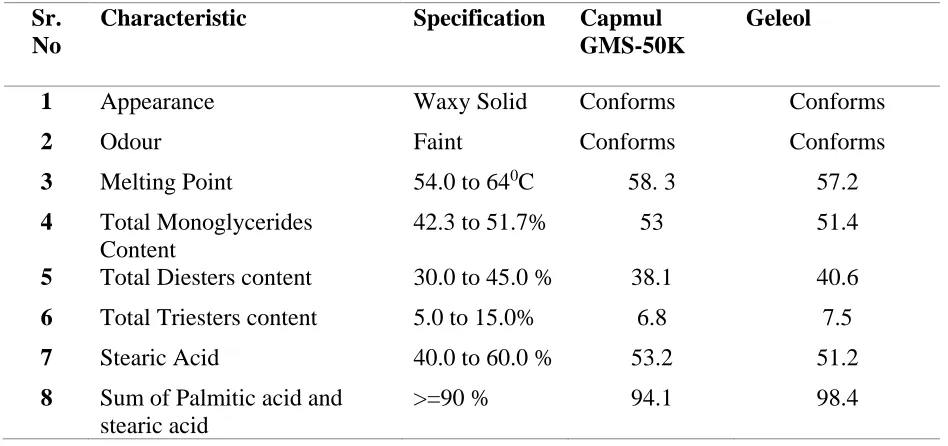
GMS-50K® received from Abitec Corp. Mumbai. Comparison of major COA parameters are
reported in Table 2.
Table 2: Major COA parameters of two GMS samples
Sr. No
Characteristic Specification Capmul
GMS-50K
Geleol
1 Appearance Waxy Solid Conforms Conforms
2 Odour Faint Conforms Conforms
3 Melting Point 54.0 to 640C 58. 3 57.2
4 Total Monoglycerides Content
42.3 to 51.7% 53 51.4
5 Total Diesters content 30.0 to 45.0 % 38.1 40.6
6 Total Triesters content 5.0 to 15.0% 6.8 7.5
7 Stearic Acid 40.0 to 60.0 % 53.2 51.2
8 Sum of Palmitic acid and stearic acid
>=90 % 94.1 98.4
From the Table 2, it is clear that both the selected products comply the pharmacopeial tests. The ranges given for compositions of fatty acids and melting points are also comparable.
3.2 Polymorphism in Glyceryl Monostearate via solid state analysis
Laine et. al 1988 reported the crystallization rate depends on the size of molecules i.e on the
11 crystallization time [19]. Laine et. al 1988 have evaluated the layered structure of tricaprin,
trimyristin, and tristearin. Opposite to this Hamdani et. al 2002 have reported that the compritol
888 ATO which is a behenate having the C22 structure reported the substantially higher stability
of this lipid [16]. In our case the stearate which is having C21 structure which takes less time as
the layered structure disappears fastly. Finally, in order to identify the difference between two
GMS samples during processing and at long-term storage conditions the freshly solidified samples
(melting 100 C above their melting point and cooling at ambient temperature) and aged samples
were evaluated with the help of DSC and XRD.
The objective of the solid state analysis was to evaluate the effect of physical and chemical
characterization of GMS samples on the performance of materials. Due to their chemical and
physical complexity, the meltable lipid binders may exhibit a complex behavior (i.e. melting and
crystallization, physical modifications on storage). Proper selection of the polymorphic form of
GMS in a formulation is very important. Two basic polymorphs of GMS are reported in literature
-an unstable alpha plus a stable beta form. The variability in the composition of GMS was studied
in detailed, firstly by Raymond. et. al., [20] They have reported the diffraction data and suggested
that GMS was undergoing a slow, but continuous, change in its crystalline state. T. Yajima also
characterized the polymorphic forms and effect of heat on the polymorphic content of GMS by
using DSC and X-ray diffractions [21].
It is observed that the endotherms of three different samples are not in accordance with the
specifications values. This was unexpected because the specifications termed a melt in between
54.0 to 640C by a sealed-tube method. In the investigation of DSC endotherms, the values are in
the range of 64 to 700 C. The fact that the reported melting point for pure GMS is 81.50C which is
of high-melting component i.e purer material. Raymond et. al. 1968 concluded that changes in the
polymorphic form in GMS results in a specific problem, i.e. the stability of a particular formulation
that leads to product breakdown (19).The groupdemonstrated how emulsions made by GMS were
unstable due to polymorphic changes during the stability studies. The polymorphic transitions of
lipid excipients is critical for drug incorporation and stability, particularly for the nanoparticulate
drug delivery systems based on GMS. Polymorphic stability of GMS and its polymorphic
transition are very important factors to be considered when designing lipid based formulations [22,
12 It was our concern that whether the GMS could behave in the same manner in melt
granulation process? To find the answer to this question we have conducted several analytical
experiments such as DSC and XRD with different heat treatments to find out the polymorphic
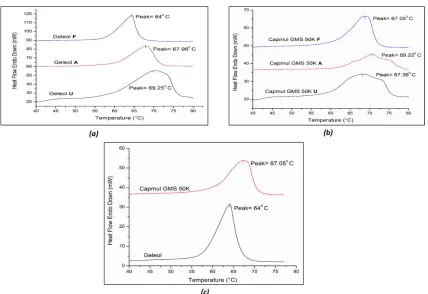
nature of two different GMS samples. The presence broad melting endotherm was detected in
untreated Geleol sample which is having a peak at 69.250C that suggests all the material is in a
melted state. However, the small shift in melting endotherm was observed during storage at 500C
for 48 hours with an increase in the height and sharpness of melting endotherm. This was in
agreement with previous observations by Jingying et al. In the similar case Hamdani et al., 2003
has reported, the findings about precirol and compritol 888 ATO when processed with heat
treatment. With the help of DSC and HSM methods, they have shown the presence of
polymorphism for Precirol. Moreover, both untreated and fresh solidified Precirol and Compritol
samples present to a degree amorphous layered structure which gradually crystallize in time. They
reported that the rate of crystallization was more rapid for Precirol and highly reliant on the ageing
conditions (storage temperature). Similar observations were reported elsewhere that enthalpy
change (E) of GMS was dependent on the temperature profile [16, 21, 23]. When the temperature
is below 50°C, enthalpy increases, and when the temperature is aove 50° C enthalpy decreases.
With supporting transformation rate equations they have recommended 50° C will be the optimum
processing temperature for the transformation of GMS from α form to β form. The more stable β-forms of GMS is a crystalized lattice with high packing density, which have left limited space for
drug molecules between the lipid lattice structure. In the melt granulation process drug is
granulated with the melted lipid binder under pressure. High pressure treatment can affect the
crystal morphology, crystal size distribution, polymorphic properties [24]. Since the drug is
covered with lipid binder, the physical and chemical stability of meltable binder plays an important
role in final stability of the dosage form.
To understand the polymorphic structure after heat treatment that resembles the melt
extrusion step. We have melted both lipids above 100 C to the melting points and cooled to room
temperature and kept for 24 hours prior to the analytical study. When DSC endotherms were
recorded on these samples Geleol has shown shift in melting endotherm also the sharpness of
endotherm was also notable. While the untreated Capmul GMS 50K samples show similar broad
endotherm (Fig 1(b)) but after heat treatment the sharpness of endotherm is distinguished.
13 contrast, the Capmul GMS 50 K samples on storing to 500 C started shifting the endotherms on
higher side. The probable reason that the unstable α form started shifting towards stable β form.
The DSC endotherms showed in Fig. 1(c) permit to confirm the complexity of ageing modifications observed with two GMS samples. And these DSC endotherms are well linked with
X-ray diffraction patterns of GMS samples. The x-ray diffraction patterns obtained from two
untreated GMS samples permit to observe and that there is no superimposition between Geleol
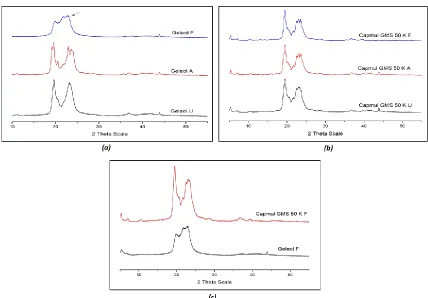
and Capmul GMS 50 K sample and are depicted in Fig. 2 (a-c). The X-ray diffraction pattern of fresh Geleol shows three major peaks at a 2θ angle of 19.700, 22. 940 and 23. 260. Similar nature
of diffraction patterns was also observed for Capmul GMS 50K (Fig. 2(b)). The diffraction patterns of Capmul GMS 50K show three peaks at 2θ angles of about 19.530, 22.580 and 23.180 .
Aged sample (48 hours at 50 ◦C) of two GMS sources identified and showed similar X-ray
diffraction pattern. Moreover, quite different diffraction patterns of two GMS samples were
observed in case of freshly solidified samples. Geleol, with individual peaks, were merged in a
single broad peak having one intense peak at a 2θ angle of 22.780 . This single broad peak
confirmed the shifting towards an unstable α form. Contrary to this the in capmul GMS 50K freshly
solidified samples crystal structure was well stable as compared to untreated samples. This
confirms the capmul GMS can withstand the heat treatment. There is no change in its β form after
14
Figure 1: (a) DSC heating curves of Geleol obtained from untreated (U), Freshly solidified (F)
and aged (A) (stored at 48 hours at 50 0 C) samples; (b) DSC heating curves of Capmul GMS 50K
obtained from untreated (U), Freshly solidified (F) and aged (A) (stored at 48 hours at 50 0 C)
samples; (c) DSC heating curves of Capmul GMS 50K and Geleol of Freshly solidified (F)
samples.
These observations informs not only the importance of cooling and heating rate during
processing on the samples physical state but also the instability of some polymorphic forms of
glyceride bases after crystallization. Indeed, during these investigations, the appearance of low
melting range endotherms of GMS was only detected when the heating-cooling programs were
applied on the samples in DSC instrument, i.e. when DSC thermograms were performed on the
freshly solidified samples immediately after crystallization. This is probably the reason why
appearance of polymorphs of geleol was detected by the X-ray diffraction. In contrast, this
phenomenon was not observed for Capmul GMS 50K, for which DSC curves obtained are
characterized by a more limited and sharp melting range, showing only one important melting
endotherm at approximately 67.050 C. Moreover, a careful evaluation of the X-ray diffraction
15 diffractograms in comparison with the freshly solidified samples. This confirms they may affect
performance. This will be evaluated by making tablets and evaluating under stress conditions.
Figure 2: (a) X-ray Diffractograms of Geleol obtained from untreated (U), Freshly solidified (F)
and aged (A) (Stored at 48 hours at 50 0 C) samples; (b) X-ray Diffractograms of Capmul GMS
50K obtained from untreated (U), Freshly solidified (F) and aged (A) (stored at 48 hours at 50 0
C) samples; (c) X-Ray Diffractograms of Capmul GMS 50K and Geleol of Freshly solidified (F)
samples.
The use of lipidic excipients like GMS supposes to consider the evalution of crystalline
properties of the material on time, during processing and depending on the temperature conditions
adopted during storage. Glycerides with higher melting points and stable polymorphic content are
less sensitive to physical modifications and thus to the drug release rate alterations generally
associated with lipidic dosage forms [16].
3.3 Particle morphology via SEM and AFM analyses
Surface micrographs of pure niacin and prepared niacin GMS extrudate were captured
using SEM technique. The SEM micrograph of pure niacin shows large crystalline forms of drug
16 extrudates showed that niacin drug particles are dispered inside the GMS lipid matrices owing to
the homogenous blend duirng the high shear melt granulation processing Fig 3 (B and C). The surface characteristics of niacin GMS extrudates showed rough disordered and crystaline
structures Fig 7 (D and E), which subsequently help to dissolve drug initially when comes in contact with aqueous fluid. The extrudate systems exibit relatively rough and dense structure
suggesting that the drug and hydrophobic lipid were mixed uniformly which may be the underlying
reason of the sutained release drug formulations.
Figure 3: SEM images of A) Pure Niacin B) Cross sectional View of Niacin GMS extrudate C)
Molecular View of Niacin GMS extrudate D) Logitudinal View of Niacin GMS extrudate E) 650x
17 Fractured fresh extrudate with smooth surfaces were used for microscopic investigations
using AFM. Fracture surfaces were generated at determined fracture points on the outer surfaces
of the extrudates. From all extrudates having the form of transparent cylindrical rods,
approximately 2.5 and 3.5 cm in length and of 0.5 cm width were selected, and placed on a sheet
of paper for AFM investigation. The freshly fractured extrudates were mounted on an optical glass
slide by use of a 2 component epoxy resin, which hardened within 5 min. Before the hardening
reaction had been completed the extrudate orientation was corrected to get the fracture surface as
horizontal as possible. This step is mandatory to enable non- destructive imaging and automated
sample changing within Atomic Force Microscope operations [26]. Freshly fractured extrudates
on microscopic glass slides were mounted on the micrometre positioning stage of a Dimension
Icon AFM. Between 10 and 25 regions per sample were programmed to be automatically
characterized using the software routine “programmed move” in Tapping Mode. Height, phase,
and amplitude images were collected simultaneously, using etched silicon cantilevers with a
nominal spring constant of k= 40-100 N/m (JEOL AFM Probes). The typical free vibration
amplitude was in the range of A=80 nm, the images were recorded with set-point amplitudes
corresponding to 60-70% of the free amplitude. Image areas of 10x10mm were recorded at a
resolution of 1024 x 1024 pixels. All data were batch processed using Scanning Probe Image
Processor (SPIP 5.1.1) Height data were plane-corrected by applying a 3rd order polynomial fit
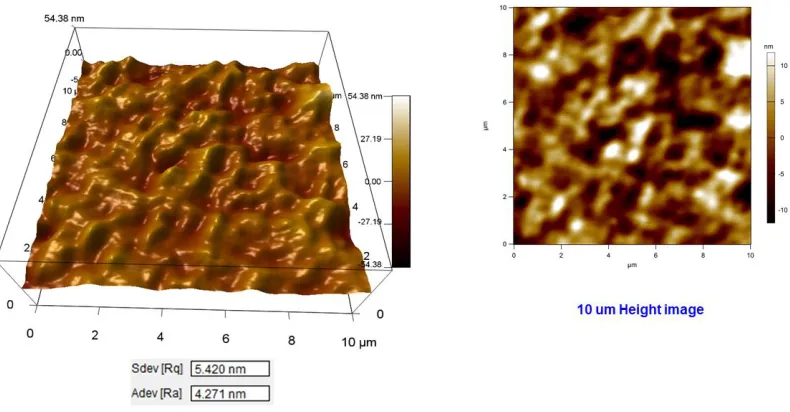
[27]. Molecular fracture roughness data as presented in Fig. 4, consist of cross sectional surface
roughness calculated from at least 10 images on each sample. The 3D surface image of niacin
GMS extrudate depicted in Fig 4, which gives morphological surface interactions in detail. The roughness parameters reflect the % variation with respect to the topography mean height. It was
concluded from the AFM analysis that there is high level of surface interaction and dense structure
of drug inside lipid matrix observed in extrudates. Also the peaks and vallies observed in 3D graph
18
Figure 4: AFM microscopic image Niacin GMS extrudate (cross sectional).
3.4 Melt Viscosity study of GMS
Another object of this study is the physical evaluation of two GMS samples that have to be
used as meltable binders for preparation of sustained-release tablets of niacin in high shear process,
i.e melt granulation. The deformation properties of Gelol and Capmul GMS 50K (untreated) were
also studied by using a temperature controlled viscometer.
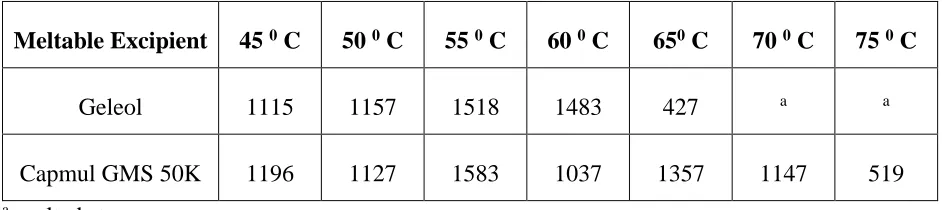
The rheological evaluations of Geleol and Capmul GMS 50K determined on the solid material at
different temperatures close to their melting point, have shown a pseudoplastic flow. The apparent
viscosity [ηapp] results, calculated at a shear rate of 50 rpm, for both samples. Below their melting
point is summarised in Table 3. As seen from the table, apparent viscosity values of both GMS samples at a temperature value of 500 C the lipids are just started melting. The melt viscosity values
are similar in range. Moreover, above this temperature (between 55 and 65 ◦C), two GMS samples
start behaving separately in viscosity parameters. The Geleol which tend to shift to its unstable α
form entirely melted and thus too low viscosity values were recorded at a temperature 700 C.
Indeed it’s the Capmul GMS 50K which provides good melt viscosity at higher temperature which
is due to the presence of its stable β form. In the temperature range 65-700 C it holds the structure
and may provide good binding properties The comparison of melt viscosity values are represented
in the graph. (Fig. 5). This ability is also depicted in DSC endotherms of Capmul GMS samples. These results show that use of stable GMS as a meltable binder presenting well distinct melting
19 granulation, especially when relatively high amounts of lipidic binder have to be used to obtain
appropriate drug release properties. As it was essentially discussed in a research paper [16], the
careful control of the product temperature (between 45 and 50 ◦C) during the pelletisation process permits to control the amount of binder melted, and thus to avoid any “overwetting” phenomenon.
DSC and XRD and Melt viscosity results have shown that how two GMS samples vary in melting
and performance during processing since they have different melting profiles over a wide range of
temperatures, from temperature values as low as 50 to 750 C. Moreover, results obtained by the
melt viscosity studies from GMS materials show that viscosity values obtained at 650C for the
different lipidic mixtures are sufficient to promote the binder deformation under the action of high
shearing forces developed during melt granulation process. The melt granulation technique with
lipids will be an advantageous method to produce effective controlled-release tablets for high dose
drugs. Therefore, the understanding of thermal and rheological characteristics of starting materials
is obligatory before developing such lipidic dosage forms. As the lipidic excipients act as binders,
their melting range have to be closely interconnected with the product temperature during melt
granulation process in order to obtain an effective drug release while avoiding any “overwetting”
phenomenon. Moreover, the rheological study of fatty binders gives a fascinating illustration of
the viscosity and deformation of melting binders under high shear forces in high shear granulation
20
Figure 5: Melt viscosity profile of Geleol and Capmul GMS 50 K untreated samples.
Table 3: The apparent viscosity ηapp (cps) results calculated at spindle speed 50 rpm for Geleol and Capmul GMS at different temperatures.
Meltable Excipient 45 0 C 50 0 C 55 0 C 60 0 C 650 C 70 0 C 75 0 C
Geleol 1115 1157 1518 1483 427 a a
Capmul GMS 50K 1196 1127 1583 1037 1357 1147 519
a melted stage.
3.5 Melt Granulation of Niacin using GMS as Matrix former
The main disadvantage professed for lipids is their physical variability upon storage and
potential influence on drug release. So far, only a few literature references endorsed the instability
of drug release to polymorphic changes of lipid excipient and so considering above limitations of
the lipids, we hypothesized that the GMS of two sources may impact release and stability profiles
of the drug formulations. Hence we attempted to evaluate impact of ageing conditions i.e storage
at 400 C/ 75 % RH for 90 days on phase transitions of two GMS samples and to correlate these
potential changes with in-vitro drug release. Niacin which is a high dose and highly water-soluble
drug molecule selected as model API for developing sustained release tablets using GMS. The
dose selected is 375 mg. In initial studies, the niacin along with lipid binder, GMS was evaluated
in water-insoluble anti-sticking cum bulking agent i.e with microcrystalline cellulose (MCC). This
blend was prepared at 70%, 60%, and 50% drug loading and it processed through the extruder with
all temperature control points set at 750 C, which is above the melting temperature range of GMS.
21
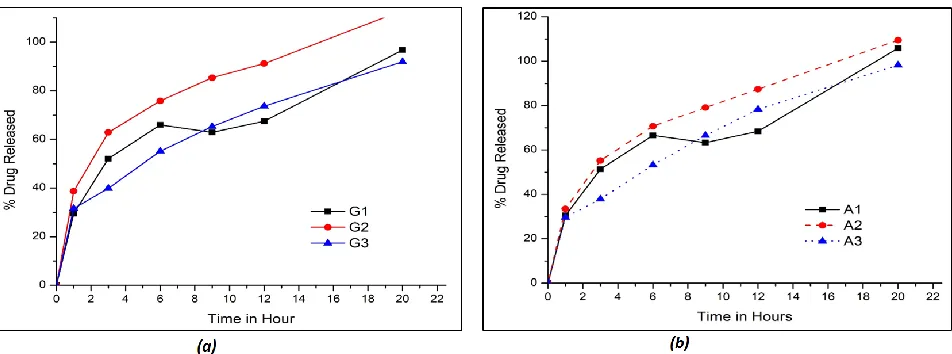
Figure 6: (a) Dissolution Profile of Niacin sustained release tablets using Geleol- Initial point; (b)
Dissolution Profile of Niacin sustained release tablets using Capmul GMS- Initial point.
The melting point and stability of the meltable lipid binder are not only critical for process
control of melt granulation process, but likely plays a critical role in controlling the drug release
rate, which is discussed in later part of article. Relatively little work has been commenced so far
to reveal structural properties of GMS as a function of its thermal behavior. Like the other lipid
excipients, GMS is manufactured using vegetable source materials which present a complex
chemical composition. The ability of each glyceridic compound to present different polymorphic
form adds another source of complexity. Also, the exact composition of mono, di, triacylglycerols
in GMS is maintained differently by each company. But these GMS samples would pass the
pharmacopeial requirements of monographs. When it comes to the performance even small
variation in fatty acid composition and more importantly the polymorphic form of lipid plays a
huge role in drug delivery system.
Tablet dissolution study provides evidence that the GMS was completely melted and it has
coated the niacin. Melt granulation process appear to have initial around, 30%, burst effect. The
milling process resulted in particles having a rough surface morphology, which exposes niacin to
dissolution media. Though there is an initial burst effect which is also within the acceptance
criteria, the twin screw granules are better encapsulated by portion of GMS that melted during the
process. Following the burst release from tablets, an additional 70% of the drug was released over
22 profile of drug in dissolution medium. (10,25)
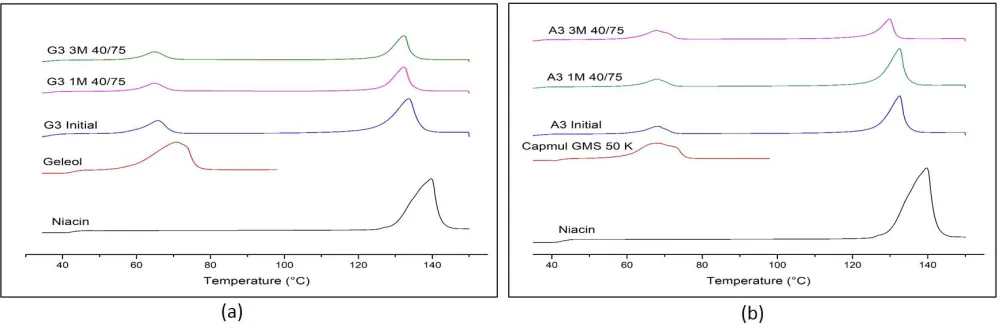
Figure 7: (a) DSC thermograms -Influence of storage conditions on stability of Tablets- Lipid
“Geleol”; (b) DSC thermograms- Influence of storage conditions on stability of Tablets- Lipid “Capmul GMS 50K”.
It was reported that polymorphic changes in lipid-based dosage forms are known to modify
drug release and such occurrences were critical to understanding early pharmaceutical dosage
forms, such as suppositories and solid lipid matrices [29, 30]. Initial analytical experiments were
completed to ensure that the DSC and XRD methodologies were capable of detecting the various
polymorphs of GMS samples. Two GMS samples were evaluated by fusion experiments, which
confirmed the ability of the DSC methodology to detect the polymorph. Geleol has a peak
endotherm at 69.250 C which started melting from 56.830 C to 75.070 C. Also the niacin has major
melting endotherm at 137.820 C. In the initial niacin with Geleol tablet samples the peak endotherm
of niacin and geleol was slightly shifted on lower end i.e at 65.840 C and 133.60 C (Fig. 7a). In the accelerated stability conditions i.e 400 C/75% RH for 90 days the endotherms of both niacin and
geleol was slightly shifted. This observation was correlated with DSC endotherms of heat treated
and aged samples (keeping at 500 C for 48 hours). There also the shift of endotherms of geleol was
identified. Similarly, the Capmul GMS 50 K has endotherm at 67.360. The tablets prepared by
using capmul GMS 50 K showed similar endotherms at same positions. During the stability
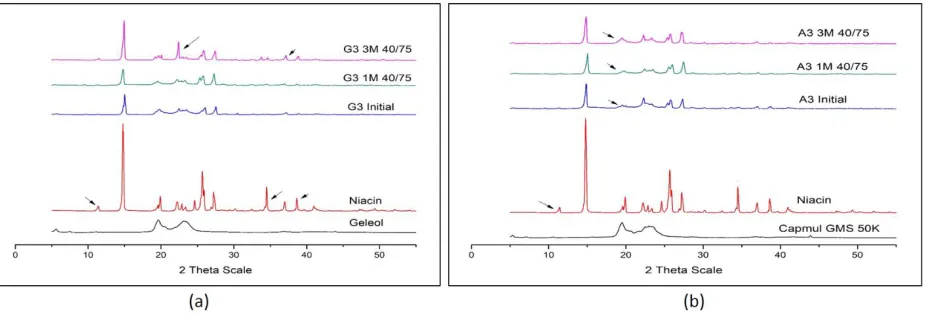
studies, the endotherms were found at same positions (Fig. 7b).This observation is also correlated with the heat treated and aged samples. The melting endotherm for capmul GMS 50K was found
23 this observation X-ray diffraction helped to identify the structural stability of Capmul GMS 50 K
samples. The two major diffraction peaks of 19.530 & 23.180 were observed in lower intensities at
similar positions in stability samples. (Fig. 8a). Both DSC and X-ray Diffraction techniques confirmed the crystalline form of niacin which is stable during the stability study. The stable β
form in Capmul GMS also confirmed through XRD. This finding is correlated with findigs of
Haupt et al. where he has reported the transformation from an unstable α-form into the
energetically stable β-form was important is maintaining the stability of lipid based dosage form.
A benefit of this tempering step is the nonexistence of polymorphic transformations during storage
and therefore, missing changes in drug release [31, 32].
Figure 8: (a) X-ray Diffractograms-Influence of storage conditions on stability of Tablets- Lipid
“Geleol”; (b) X-ray Diffractograms -Influence of storage conditions on stability of Tablets- Lipid “Capmul GMS 50K”.
Opposite to this observations while reviewing X-ray Diffraction patterns of Geleol samples
during the stability study after 3 months there was a single peak observed at 23.240. which is of α
form of GMS. This α form was also observed and identified by T. Yajima et.al (2002). The least stable polymorphic form, α is formed while at very slow cooling rates and this present as amorphous form outside the matrix. While the the stable β form is a crystalline form and is
scattered in dense structure [11, 23, 33]. This change in stable β form to an unstable α form affected
the dissolution profile at 3 months stability time points (Fig 8b). It is important to note here that crystalline highly water-soluble niacin was started releasing early from the unstable Geleol coat
[34, 35]. When we compared the dissolution profiles of niacin tablets prepared by using Capmul
24 the thermodynamically instable and less dense α-form to the most stable and densely packed
β-form had resulted in the reduction of wettability [36-38]. This is the reason of usage of stable β
form, in sustained release dosage forms.
Figure 9: (a) Influence of stability condition on Dissolution of tablets-Lipid “Geleol”; (b)
Influence of stability condition on Dissolution of tablets-Lipid “Capmul GMS 50K”.
4. Conclusions:
The chemical composition of glycerides used for the manufacturing of solid lipid
extrudates was found to have a large influence on solid-state behavior and dissolution profiles.
This study has underlined the significance of considering the physical, thermal and rheological
characteristics of GMS in order to superior control the properties of sustained-release formulations.
The chemical and physical complexity of lipophilic binders exhibits quite a complex behaviour,
i.e. melting and crystallisation, polymorphism. Two untreated and freshly solidified Geleol and
Capmul GMS 50 K samples present different crystal state which was investigated by different
analytical techniques. The rate of crystallisation was found to be more rapid for geleol and is highly
dependent on ageing and heat treatment process. As a polymorphic form change was detected
during melt granulations process it is very important to select the right starting material for drug
delivery system. Due to there difference in fatty acid composition the properties the GMS influence
release of the drug. In a detailed study of both GMS lipids, the Geleol led to increased incidence
of the unstable α-form of the GMS leading to recrystallization of stable β form over time which
causes fractal structures on the extrudate surface deteriorating dissolution properties. While the
25 under accelerated and ambient conditions shown a strong influence of temperature on the
recrystallization kinetics. The outcomes of this study help to interpret the complex solid-state
behaviour of solid lipid extrudates with different compositions which simplify the development of
suitable lipid-based oral dosage forms.
Conflicts of Interest: The authors declare no conflict of interest.
References
1. Maniruzzaman M, Islam MT, Halsey S, Amin D, Douroumis D. Novel Controlled Release Polymer-Lipid Formulations Processed by Hot Melt Extrusion. AAPS PharmSciTech. 2016, 17(1), 191–199. doi: 10.1208/s12249-015-0470-2
2. Patil H, Tiwari R V., Repka MA. Hot-Melt Extrusion: from Theory to Application in Pharmaceutical Formulation. AAPS PharmSciTech. 2015, 17(1), 20–42. doi: 10.1208/s12249-015-0360-7
3. Jannin V, Rodier JD, Musakhanian J. Polyoxylglycerides and glycerides: Effects of manufacturing parameters on API stability, excipient functionality and processing. Int J Pharm. 2014, 466(1–2), 109–121. doi: 10.1016/j.ijpharm.2014.03.007
4. Aburahma MH, Badr-Eldin SM. Compritol 888 ATO: a multifunctional lipid excipient in drug delivery systems and nanopharmaceuticals. Expert Opin Drug Deliv. 2014, 11(12), 1865–1883. doi: 10.1517/17425247.2014.935335
5. Keen JM, Foley CJ, Hughey JR, Bennett RC, Jannin V, Rosiaux Y, et al. Continuous twin screw melt granulation of glyceryl behenate: Development of controlled release tramadol hydrochloride tablets for improved safety. Int J Pharm. 2015, 487(1–2), 72–80. doi: 10.1016/j.ijpharm.2015.03.058
6. Knezevic Z, Gosak D, Hraste M, Rausl D, Khan MZI. Application of hot-melt coating process for designing a lipid based controlled release drug delivery system for highly aqueous soluble drugs. Chem Pharm Bull. 2009, 57(5), 464–471.
7. Keen JM, Hughey JR, Bennett RC, Jannin V, Rosiaux Y, Marchaud D, et al. Effect of tablet structure on controlled release from supersaturating solid dispersions containing glyceryl behenate. Mol Pharm. 2015, 12(1), 120–126. doi: 10.1021/mp500480y
8. Rosiaux, Y., Jannin, V., Hughes, S., Marchaud, D., Solid lipid excipients as matrix agents for sustained drug delivery. J. Control. Release. 2014, 188, 18–30. doi:10.1007/978-3-319-20206-8_9
9. Barakat NS, Elbagory IM, Almurshedi AS. Formulation, release characteristics and bioavailability study of oral monolithic matrix tablets containing carbamazepine. AAPS PharmSciTech. 2008, 9(3), 931–938. doi: 10.1208/s12249-008-9108-y
10.Aoki H, Iwao Y, Mizoguchi M, Noguchi S, Itai S. Clarithromycin highly-loaded gastro-floating fine granules prepared by high-shear melt granulation can enhance the efficacy of Helicobacter pylori eradication. Eur J Pharm Biopharm. 2015, 92, 22–27. doi: 10.1016/j.ejpb.2015.02.012
26 12.Vithani K, Maniruzzaman M, Slipper IJ, Mostafa S, Miolane C, Cuppok Y, et al. Sustained release solid lipid matrices processed by hot-melt extrusion (HME). Colloids Surfaces B Biointerfaces. 2013, 110, 403–410. doi: 10.1016/j.colsurfb.2013.03.060
13.Priyanka K, Abdul Hasan SA. Preparation and Evaluation of Montelukast Sodium Loaded Solid Lipid Nanoparticles. J Young Pharm. 2012, 4(3), 129–137. doi: 10.4103/0975-1483.100016.
14.Pivette P, Faivre V, Brubach JB, Daste G, Ollivon M, Lesieur S. Polymorphism of glyceryl behenates: From the individual compounds to the pharmaceutical excipient. Chem Phys Lipids. 2014, 183, 191–203. doi: 10.1016/j.chemphyslip.2014.07.005
15.Sato K. Crystallization behaviour of fats and lipids — a review. Chem Eng Sci. 2001, 56(7), 2255–2265. doi.org/10.1016/S0009-2509(00)00458-9
16.Hamdani J, Moës AJ, Amighi K. Physical and thermal characterisation of Precirol® and Compritol® as lipophilic glycerides used for the preparation of controlled-release matrix pellets. Int J Pharm. 2003, 260(1), 47–57. doi.org/10.1016/S0378-5173(03)00229-1
17.Lauer M, Siam M, Tardio J, et al. Rapid assessment of homogeneity and stability of amorphous solid dispersions by atomic force microscopy-from bench to batch. Pharm Res 2013, 30, 2010-2022. doi: 10.1007/s11095-013-1045-0
18.Taylor AK Glyceryl Monosterate. In Handbook of Pharmaceutical Excipients Edition-6; Rowe RC, Sheskey PJ, Quinn ME Pharmaceutical Press London UK. 2009; 290-293. 19.Ensio L, Pirjo APK. On the structural behaviour of triglycerides with time. Int J Pharm.
1988, 43, 241–247. doi.org/10.1016/0378-5173(88)90280-3
20.Cornish R. Studies of Glyceryl Monostearate. J Soc Cosmet Chem. 1968, 117(19), 109– 117.
21.Yajima T, Itai S, Takeuchi H, Kawashima Y. Determination of Optimum Processing Temperature for Transformation of Glyceryl Monostearate. Chem Pharm Bull. 2002, 50(11), 1430–1433. doi.org/10.1248/cpb.50.1430
22.Xia D, Cui F, Gan Y, Mu H, Yang M. Design of Lipid Matrix Particles for Fenofibrate : Effect of Polymorphism of Glycerol Monostearate on Drug Incorporation. J Pharm Sci. 2014, 103, 697–705. doi: 10.1002/jps.23830.
23.Jingying L, C CP, Mingshi Y, M NH, Huiling M. The impact of particle preparation methods and polymorphic stability of lipid excipients on protein distribution in microparticles. Drug Dev Ind Pharm. 2017, doi.org/10.1080/03639045.2017.1361967
24.Lamm, M.S., DiNunzio, J., Khawaja, N.N., Crocker, L.S., Pecora, A. Assessing Mixing Quality of a Copovidone-TPGS Hot Melt Extrusion Process with Atomic Force Microscopy and Differential Scanning Calorimetry. AAPS PharmSciTech. 2016, 17, 89– 98. doi:10.1208/s12249-015-0387-9.
25.Almeida A, Saerens L, De Beer T, et al. Upscaling and in-line process monitoring via spectroscopic techniques of ethylene vinyl acetate hot-melt extruded formulations. Int J Pharm 2012, 439, 223-229. doi.org/10.1016/j.ijpharm.2012.09.037
26.Balasubramaniam VM, Maleky Farnaz MZ. Thermal E ff ects on Lipids Crystallization Kinetics under High Pressure. Cryst Growth Des. 2017, 17, 4835–4843. doi 10.1021/acs.cgd.7b00768
27.Jannin V, Cuppok Y. Hot-melt coating with lipid excipients. Int J Pharm.2013, 457(2), 480–487. doi: 10.1016/j.ijpharm.2012.10.026
27 full behenate and milled microcrystalline cellulose. Int J Pharm. 2015, 478(2), 530–539. doi: 10.1016/j.ijpharm.2014.11.058
29.Pattarino F, Bettini R, Foglio A, Della A. Polymorphism and kinetic behavior of binary mixtures of triglycerides. Int J Pharm. 2014, 473(1–2), 87–94. doi: 10.1016/j.ijpharm.2014.06.042
30.Windbergs M, Strachan CJ, Kleinebudde P. Influence of the composition of glycerides on the solid-state behaviour and the dissolution profiles of solid lipid extrudates. Int J Pharm. 2009, 381(2), 184–191. doi: 10.1016/j.ijpharm.2009.03.002
31.Haupt M, Thommes M, Heidenreich A, Breitkreutz J. Lipid-based intravesical drug delivery systems with controlled release of trospium chloride for the urinary bladder. J Control Release. 2013, 170(2), 161–166. doi: 10.1016/j.jconrel.2013.05.018.
32.Rosiaux Y. New insights into the stability of SR lipid matrix tablets. In: AAPS Annual Meeting and Exposition, Orange County Convention Center, Orlando, Florida USA Oct 25-29 2015. p. 70070.
33.Sato K, García LB, Calvet T, Àngel M, Diarte C. External factors affecting polymorphic crystallization of lipids. Eur J Lipid Sci Technol. 2013, 115, 1224–1238. doi.org/10.1002/ejlt.201300049
34.Cullis. P.R KB DE. Lipid Polymorphism and the Functional Roles of Lipids In. Biochim Biophys Acta. 1979, 559, 399–420. doi.org/10.1016/0304-4157(79)90012-1
35.Alfutimie A, Al-janabi N, Curtis R, Tiddy GJT. Physicochemical and Engineering Aspects The Effect of monoglycerides on the crystallisation of triglyceride. Colloids Surfaces A Physicochem Eng Asp. 2016, 494, 170–179. DOI: 10.1016/j.colsurfa.2016.01.029
36.Becker K, Salar-behzadi S, Zimmer A. Solvent-Free Melting Techniques for the Preparation of Lipid-Based Solid Oral Formulations. Pharm Res. 2015, 32, 1519–1545. doi: 10.1007/s11095-015-1661-y
37.Wang FC, Marangoni AG. Effect of Intrinsic and Extrinsic Factors on the Stability of the α -gel Phase of a Glyceryl Monostearate-Water System. RSC Adv. 2015, 5, 43121–43129. DOI 10.1039/C5RA05045F