C A S E R E P O R T
Open Access
An integrated approach in a case of
facioscapulohumeral dystrophy
Stefano Pasotti
1, Bruno Magnani
2, Emanuela Longa
1, Giuseppe Giovanetti
1, Albino Rossi
1, Angela Berardinelli
3,
Rossella Tupler
4and Giuseppe D
’
Antona
1,5*Abstract
Background:Muscle fatigue, weakness and atrophy are basilar clinical features that accompany facioscapulohumeral dystrophy (FSHD) the third most common muscular dystrophy.
No therapy is available for FSHD.
Case presentation:We describe the effects of 6mo exercise therapy and nutritional supplementation in a 43-year-old woman severely affected by FSHD.
Conclusion:A mixed exercise program combined with nutritional supplementation can be safely used with beneficial effects in selected patients with FSHD.
Keywords:Muscular dystrophies, Exercise therapy, Dietary supplements, Creatine, Amino acids
Background
Selective muscle atrophy with weakness and early fatigue [1] are main features of facioscapulohumeral dystrophy (FSHD), the third most common muscular dystrophy (MD).
No therapy is available for FSHD. Nevertheless, pa-tients usually report some improvement related to phys-ical exercise and the use of nutritional supplements (NS). These effects are not currently substantiated by appropriate investigations. In particular the effect of ex-ercise training has not been fully examined mainly due to concerns that it may trigger disease progression. However recent observations suggest that in FSHD post-exercise creatine kinase (CK) elevation (indicator of muscle damage) normalizes within one day compared with the pre-exercise values [2].
Again, the role of NS in MD remains to be elucidated. Recent observations suggest that among supplements creatine and Branched Chain Amino Acids (BCAA) may exert positive effects as they may act by limiting
exercise-induced injury [3]. The positive changes due to creatine appear to be safely enhanced by coadmin-istration of conjugated linoleic acid (CLA) [4].
The aim of this case report is to show the effects of a controlled exercise training and NS in a FSHD patient.
Case presentation
A 43-year-old wheelchair-bound woman from 2006, af-fected by FSHD, underwent 6-month exercise therapy associated with NS to study metabolic and possible changes in motor function related to the program.
The patient was born from uneventful pregnancy and delivery to non-consanguineous parents, with family his-tory negative for MD.
The patient carries a “de novo” D4Z4 reduced allele with 2 repeats (14 kb).
When she was 2 yrs her parents noted difficulty of walking and waddling gait. At 4 she was diagnosed hav-ing a muscle disease. At 11 she was clinically diagnosed with a progressive MD. At 30 neurological examination revealed left steppage gait, facial weakness, atrophy of shoulder girdle muscles with bilateral scapular winging, atrophy of bilateral pectoralis, infraspinatus and supras-pinatus muscles, moderate biceps brachii and severe del-toid weakness, foot extensor weakness and proximal hip weakness, lumbar hyperlordosis; lower extremities tendon reflexes were absent, sensory examination was normal. In * Correspondence:[email protected]
1LUSAMMR Laboratory for Motor Activities in Rare Diseases, Voghera, University of Pavia, Via Forlanini 6, Pavia 27100, Italy
5Department of Molecular Medicine, and LUSAMMR Laboratory for Motor Activities in Rare Diseases, Voghera, University of Pavia, Via Forlanini 6, Pavia 27100, Italy
Full list of author information is available at the end of the article
1982 a muscle biopsy revealed myopathic changes compat-ible with FSHD.
Presently she presents severe muscle hypotrophy and proximal-distal weakness leading to loss of ambulation in 2006 and severe lumbar hyperlordosis (FSHD score 12 according to Lamperti et al. [5]).
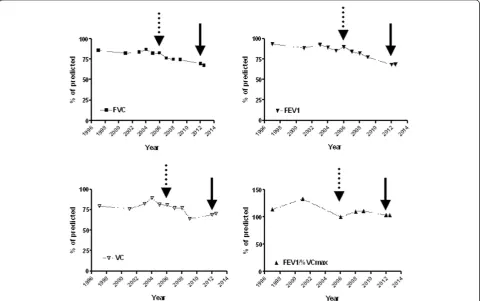
In 2001 respiratory function assessment first re-vealed mild respiratory restrictive insufficiency (%pred: VC 75.9; FVC 82.3; FEV1 88.50; FEV1%/VCmax 133, see Figure 1).
Methods
The patient (180 cm, 71.4 Kg) participated in the study after providing written informed consent. Procedures were conducted according to the Declaration of Helsinki. The protocol had a duration of 6 mo, 4 days/week. Before and after exercise and nutrition intervention the following eval-uations were performed:
Oxygen consumption
Considering that skeletal muscle metabolism is the major determinant of resting energy expenditure (REE), we ex-plored the impact of disease and training/supplementation
on REE by indirect calorimetry (Quarkb2, Cosmed) in su-pine position (12 h fasting at 9.00 a.m.).
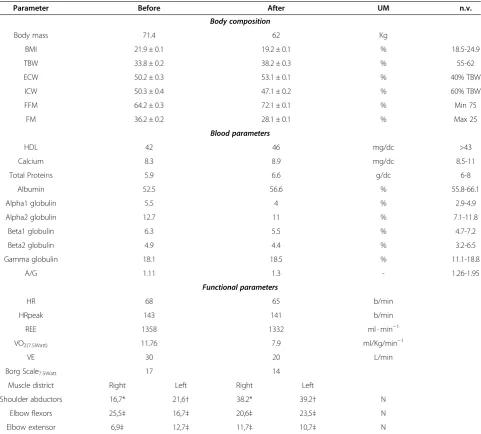
Endurance performance was evaluated with incremen-tal stepwise ramp test (ISRT) on a handbike (Monark Trainer 881E). After three minutes at rest the subject exercised at 0 Watt as warm-up. Then the workload was increased by 2.5 Watt/step with a step duration of 2.5-min until exhaustion (cadence 60 rpm). Gas flows were continuously recorded breath-by-breath using the Quark b2. Beat-by-beat heart rate (Polar RS400) and ECG were monitored. Breath-by-breath data were aver-aged per 10s at the end of each workload. Peak cardio-respiratory responses were defined as the maximal averaged values registered over 10s during the last test stage [6]. Peak oxygen uptake (VO2peak), minute ventilation (VE), and Borg score at 7.5 Watt are reported in Table 1.
Body composition
[image:2.595.58.539.383.684.2]Whole body bioelectrical impedance analysis (BIA) was made with a single frequency (50 kHz) analyzer (BIA-101, RJL/Akern). Test-retest reliability was assessed in two sep-arate measurements 2 h apart. Means and standard devia-tions for all variables are reported in Table 1.
Isometric strength
Isometric strength (maximal voluntary contraction, MVC) was quantified by means of a dynamometer (Muscle Lab 4000E). The patient carried MVC of the following groups: elbow flexors, elbow extensors, shoulder abductors. Each trial lasted 3 s and the rest time was of 30s and the mean peak force (Nm) was calculated.
Spirometry
Pulmonary function tests (PFTs) were recorded by using Cosmed Pony spirometer. The PFTs recorded before and after training are reported in Table 1. Temporal change
(from 1997 to 2012) of selected PFTs (FVC, VC, FEV1, FEV1/VCmax) is described in Figure 1.
Blood analysis
Routine blood and urine analysis were performed before and after treatment. Blood parameters changed after intervention are reported in Table 1. No change in CK levels was observed after training (initial value 87 U/L; final value 86 U/L (n.v. 15–150).
Training
[image:3.595.57.539.99.533.2]The patient underwent a mixed endurance/strength train-ing. Heart rate was monitored during endurance sessions. Table 1 Body composition, blood and functional parameters before and intervention
Parameter Before After UM n.v.
Body composition
Body mass 71.4 62 Kg
BMI 21.9 ± 0.1 19.2 ± 0.1 % 18.5-24.9
TBW 33.8 ± 0.2 38.2 ± 0.3 % 55-62
ECW 50.2 ± 0.3 53.1 ± 0.1 % 40% TBW
ICW 50.3 ± 0.4 47.1 ± 0.2 % 60% TBW
FFM 64.2 ± 0.3 72.1 ± 0.1 % Min 75
FM 36.2 ± 0.2 28.1 ± 0.1 % Max 25
Blood parameters
HDL 42 46 mg/dc >43
Calcium 8.3 8.9 mg/dc 8.5-11
Total Proteins 5.9 6.6 g/dc 6-8
Albumin 52.5 56.6 % 55.8-66.1
Alpha1 globulin 5.5 4 % 2.9-4.9
Alpha2 globulin 12.7 11 % 7.1-11.8
Beta1 globulin 6.3 5.5 % 4.7-7.2
Beta2 globulin 4.9 4.4 % 3.2-6.5
Gamma globulin 18.1 18.5 % 11.1-18.8
A/G 1.11 1.3 - 1.26-1.95
Functional parameters
HR 68 65 b/min
HRpeak 143 141 b/min
REE 1358 1332 ml · min−1
VO2(7.5Watt) 11.76 7.9 ml/Kg/min−1
VE 30 20 L/min
Borg Scale7.5Watt 17 14
Muscle district Right Left Right Left
Shoulder abductors 16,7* 21,6† 38.2* 39.2† N
Elbow flexors 25,5‡ 16,7‡ 20,6‡ 23,5‡ N
Elbow extensor 6,9‡ 12,7‡ 11,7‡ 10,7‡ N
The following protocol was adopted (2 time/wk endurance, 2 time/wk strength). Endurance training on assisted arm cycle ergometer (warm up, HR 90 min; work, 4 kCal/min or HR 130 min−1): wk 1, 5 min warm up, 10 min work; wk 2–12, 5 min warm up, 15 min work; wk 13–24, 5 min warm up, 20 min work. Strength training with green Thera-band®: 8 repetition 2 series, 5 min rest between series, for each muscular district. To obtain a load of 50-60% of MVC the green Thera-band® was stretched of a defined% of the initial length: for lateral abduction the patient was instructed to stretch the Thera-band® of about 50% of the band initial length, for biceps flexion and triceps extension of about 25%. The sessions were per-formed at patient’s home without supervision. Periodical Skype® meetings were organized to verify the correct exe-cution of training.
Respiratory muscle training consisted in 4 time/wk-2 min sessions (50% vital capacity at time/wk-20 min−1) of isocap-nic hyperpnea. Training was carried out with a device (Spirotiger®) that operates on rebreathing principle [7]. Before training subject was instructed to keep the tidal volume at 50% of the vital capacity and to follow the de-vice metronome for frequency pacing.
Nutritional supplementation
Nutritional supplementation included BCAA enriched mixture, creatine plus CLA.
The amino acid supplement consisted in a BCAA-enriched formula with 2:1:1 leucine:isoleucine:valine ratio (BigOne, Professional Dietetics), and already known to exert beneficial effects on skeletal muscle [8-10] (0.1 gr/kg/day in two doses at breakfast and dinner). Cre-atine monohydrate (CreaATP, Syform, 0.1gr/day) was ad-ministered in combination with CLA (Syform, 2.4 gr/day corresponding to 3 pearls/day at breakfast or 2 h before strength exercise) [11].
Results
At the end of the protocol we observed an improvement of the patient’s nutritional status as demonstrated by sig-nificant improvement of anthropometric (BMI, FFM) and biochemical (serum proteins) parameters. In par-ticular a reduction of body mass (−13.17%) associated with reduced fat mass (FM,−8%) and improved fat free mass (FFM +8%) was found (Table 1). Indeed beneficial changes in biochemical blood parameters included in-creased total protein concentration, albumin percentage, and albumin/globulin ratio which were reported to nor-mal values (Table 1). Functionally a modest increase of peak force was observed only in shoulder abductors bilaterally whereas no change was observed in elbow flexors and extensors (Table 1). An amelioration of peak oxygen consumption (VO2peak), ventilation exchange, and an improvement of Borg score during submaximal
exercise suggested the appearance of a certain degree of muscular adaptation to training and possibly an amelior-ation of the oxidative metabolism (Table 1). This was demonstrated by increased time/power to exhaustion during incremental test. Finally after intervention sub-stantial steadiness of several PFTs in comparison with initial evaluation (FVC before: 69.6, after 67.4; VC: 68.7 before, 70.4 after; FEV1 before 68.2; after 68.5; FEV1/ FVC% before 104.9, after 108.8) was observed (Figure 1).
Conclusions
Results from our report suggest that a specific exercise therapy and supplementation program can be safely used in selected FSHD patients but the relative contribution of the adopted interventions, exercise and dietary sup-plementation, and whether their synergy may contribute to the observed improvements remains unknown and deserves future controlled studies.
Physical exercise may represent one possible way to counteract atrophy and fatigue in FSHD but its effects have not been fully investigated due to concerns that it may ultimately trigger disease progression. Recent meta analysis suggests that moderate-intensity strength train-ing does not appear to harm individuals with FSHD, but there is insufficient evidence that it provides benefits [12]. However initial observations have shown that at least aerobic training is beneficial [13].
The concept that NS might have effects in prevention or treatment of MD is experiencing a new revival [11]. However the lack of unequivocal results and flaws in the choice of supplements and protocols to be adopted leads to an assumption mostly based on empirical attitude. Among supplements creatine and BCAA may exert posi-tive effects as they act by limiting load-induced muscle injury. In particular creatine improves muscle mass and performance in combination with strength training [14] and attenuates exercise-induced alteration of markers of cell death/lysis [15] whereas BCAA may act by maximiz-ing protein synthesis [4]. Actually, the only creatine trial in MD, including FSHD, showed a small but significant improvement of 3% in muscle strength and 10% in daily life activities [16]. No clinical BCAA trials are currently available.
These very preliminary indications suggest positive ef-fects of training and selected supplements in muscle dis-ease [4], therefore we applied an integrated approach based on endurance/strength and respiratory training combined with NS with BCAA and creatine + CLA for six months.
In particular, our study revealed an improvement of blood protein profile, body mass and composition, and an amelioration of peak oxygen consumption whereas no change in resting energy expenditure was observed. Furthermore after initiation of the exercise nutrition intervention, several PFTs demonstrated stable values. Importantly, the program was well tolerated by the pa-tient as no muscle soreness, change in CK serum levels or intolerance to supplements were observed.
Limitations of the study
Our study has limitations. The design of the study was not scientifically sound to answer the questions of which is the relative contribution of the adopted interventions to the observed improvements and whether the obtained results can be reproducible in all FSHD patients or in se-lected subgroups. Indeed we cannot rule out whether a possible contribution to the observed changes in body mass and composition derives by concomitant self-determined changes in diet lifestyle. Moreover, specific outcome measures relevant to daily life should be intro-duced in the study. Notwithstanding these limitations, the results shown in this paper are novel and may be helpful to encourage scientists and clinicians to plan more re-search in this field.
Consent
The participant signed a consent approved by which in-formed the participant that the data would be published in medical journals without personally identifiable infor-mation. A copy of the signed informed consent is avail-able for review upon request.
Abbreviations
FSHD:Facioscapulohumeral dystrophy; MD: Muscular dystrophy; NS: Nutritional supplements; VO2peak: Peak oxygen consumption; VE: Ventilation exchange; REE: Resting energy expenditure; MVC: Maximal voluntary contraction; BIA: Bioelectrical impedance analysis; CK: Creatine kinase; BCAA: Branched chain amino acids; CLA: Conjugated linoleic acid; PFTs: Pulmonary function tests; VC: Vital capacity; FVC: Forced vital capacity; FEV1: Forced expiratory volume at the first second; ISRT: Incremental stepwise ramp test; FM: Fat mass; FFM: Fat free mass; BMI: Body mass index; TBW: Total body water; ECW: Extracellular water; ICW: Intracellular water; HDL: High density lipoprotein; A/G: Albumin globulin ratio; HR: Heart rate.
Competing interests
Publication of this study was funded by the manufacturer of BigOne (Professional Dietetics, Milano). The authors of this paper have no financial relationship with Professional Dietetics or with Syform nutritional supplements.
Authors’contributions
SP, BM, EL, GG, AR participated in data collection. AB, RT participated to the data interpretation and manuscript preparation. GD served as the principal investigator and contributed to study design, data collection and interpretation, and manuscript preparation. All authors read and approved the final manuscript.
Acknowledgement
The authors wish to thank the FSHD patients and their families for being supportive with LUSAMMR.
Author details 1
LUSAMMR Laboratory for Motor Activities in Rare Diseases, Voghera, University of Pavia, Via Forlanini 6, Pavia 27100, Italy.2Department of Public Health, Human Anatomy, University of Pavia, Via Forlanini 6, Pavia 27100, Italy.3Department of Child Neuropsychiatry, C. Mondino Institute, Pavia, Italy. 4
Department of Biomedical Sciences, University of Modena and Reggio Emilia, Modena, Italy.5Department of Molecular Medicine, and LUSAMMR Laboratory for Motor Activities in Rare Diseases, Voghera, University of Pavia, Via Forlanini 6, Pavia 27100, Italy.
Received: 19 January 2014 Accepted: 8 May 2014 Published: 15 May 2014
References
1. Kalkman JS, Schillings ML, Zwarts MJ, Van Engelen BG, Bleijenberg G:
Influence of relatives on fatigue experienced by patients with facioscapulohumeral dystrophy, myotonic dystrophy and HMSN-I.
Eur Neurol2006,56:24–30.
2. Andersen SP, Sveen ML, Hansen RS, Madsen KL, Hansen JB, Madsen M, Vissing J:Creatine kinase response to high-intensity aerobic exercise in adult-onset muscular dystrophy.Muscle Nerve2013,48(6):897–901. 3. D’Antona G:Nutritional interventions as potential strategy to minimize
exercise-induced muscle injuries in sports. InMuscle Injuries in Sport Medicine.Edited by Bisciotti GN: InTech; 2013:63–93.
4. Tarnopolsky M, Zimmer A, Paikin J, Safdar A, Aboud A, Pearce E, Roy B, Doherty T:Creatine monohydrate and conjugated linoleic acid improve strength and body composition following resistance exercise in older adults.PLoS One2007,2:e991.
5. Lamperti C, Fabbri G, Vercelli L, D'Amico R, Frusciante R, Bonifazi E, Fiorillo C, Borsato C, Cao M, Servida M, Greco F, Di Leo R, Volpi L, Manzoli C, Cudia P, Pastorello E, Ricciardi L, Siciliano G, Galluzzi G, Rodolico C, Santoro L, Tomelleri G, Angelini C, Ricci E, Palmucci L, Moggio M, Tupler R:A standardized clinical evaluation of patients affected by facioscapulohumeral muscular dystrophy: The FSHD clinical score.Muscle Nerve2010,
42(2):213–217.
6. Adami A, Sivieri A, Moia C, Perini R, Ferretti G:Effects of step duration in incremental ramp protocols on peak power and maximal oxygen consumption.Eur J Appl Physiol2013,113:2647–2653.
7. Markov G, Orler R, Boutellier U:Respiratory training, hypoxic ventilatory response and acute mountain sickness.Resp Physiol
1996,105:179–186.
8. D'Antona G, Ragni M, Cardile A, Tedesco L, Dossena M, Bruttini F, Caliaro F, Corsetti G, Bottinelli R, Carruba MO, Valerio A, Nisoli E:Branched-chain amino acid supplementation promotes survival and supports cardiac and skeletal muscle mitochondrial biogenesis in middle-aged mice.
Cell Met2010,12:362–372.
9. Solerte SB, Gazzaruso C, Bonacasa R, Rondanelli M, Zamboni M, Basso C, Locatelli E, Schifino N, Giustina A, Fioravanti M:Nutritional supplements with oral amino acid mixtures increases whole-body lean mass and insulin sensitivity in elderly subjects with sarcopenia.Am J Cardiol
2008,101:69E–77E.
10. Valerio A, D'Antona G, Nisoli E:Branched-chain amino acids, mitochondrial biogenesis, and healthspan: an evolutionary perspective.Aging2010,3:464–478.
11. Tarnopolsky MA:Creatine as a therapeutic strategy for myopathies.
Amino Acids2011,40:1397–1407.
12. Voet NB, van der Kooi EL, Riphagen II, Lindeman E, Van Engelen BG, Geurts A:Strength training and aerobic exercise training for muscle disease.Cochrane Database Syst Rev2013,7:CD003907.
13. Olsen DB, Orngreen MC, Vissing J:Aerobic training improves exercise performance in facioscapulohumeral muscular dystrophy.Neurology
2005,64:1064–1066.
14. Hespel P, Op’t Eijnde B, Van Leemputte M, Urso B, Greenhaff PL, Labarque V, Dymarkowski S, Van Hecke P, Richter EA:Oral creatine supplementation facilitates the rehabilitation of disuse atrophy and alters the expression of muscle myogenic factors in humans.
15. Bassit RA, Pinheiro CH, Vitzel KF, Sproesser AJ, Silveira LR, Curi R:Effect of short-term creatine supplementation on markers of skeletal muscle damage after strenuous contractile activity.Eur J Appl Physiol2010,
108:945–955.
16. Walter MC, Lochmuller H, Reilich P, Klopstock T, Huber R, Hartard M, Hennig M, Pongratz D, Muller-Felber W:Creatine monohydrate in muscular dystrophies: a double-blind, placebo-controlled clinical study.Neurology2000,54:1848–1850.
doi:10.1186/1471-2474-15-155
Cite this article as:Pasottiet al.:An integrated approach in a case of facioscapulohumeral dystrophy.BMC Musculoskeletal Disorders
201415:155.
Submit your next manuscript to BioMed Central and take full advantage of:
• Convenient online submission
• Thorough peer review
• No space constraints or color figure charges
• Immediate publication on acceptance
• Inclusion in PubMed, CAS, Scopus and Google Scholar
• Research which is freely available for redistribution