Availability, Accessibility and the Road Map for Clean,
Affordable, Effective and Efficient Energy for Sierra
Leone; A six years Analysis from 2006 to 2011
Morie Sam*, Amos Simwela**, Shilongo Sem Mekondjo** *
UNEP- Environment, Tongji Institute of Environment for Sustainable Development
**
College of Environment Science and Engineering, Tongji University, Shanghai 200092, P.R. China
DOI: 10.29322/IJSRP.8.5.2018.p7769
http://dx.doi.org/10.29322/IJSRP.8.5.2018.p7769
Abstract- Sierra Leone has long being struggling to achieve zero energy poverty, but the main obstacle in this struggle is the technical and technological availability. However, the energy situation currently is far better than in the early 2000s. The economy of the country was estimated to have grown by approximately 7 percent in 2011 from 5 percent in 2010. Domestic revenue was believed to increase during the past years, mainly as a result of tax collection efforts and one-off payments of signature bonuses from the energy products (petroleum) exploration activities in the country. Our focus on this paper is to evaluate the range of accessibility of electricity in the country. A period of six years from 2006 to 2011 of energy revolution was carefully studied, which revealed that there is a significant improvement in the energy sector. In compliance with united nation sustainable development goals, the previous government instituted and implemented energy sector as a priority in the agenda for prosperity in 2012, which inculcated private sector companies in the provision and implementation of solar lantern and solar small home systems. This initiative led to the formation of renewable energy association in Sierra Leone.
Index Terms- Accessibility, Energy, Electricity, Implementation, initiative, policy, solar lantern
I. INTRODUCTION
Access to clean and affordable energy is a major challenge in
Sierra Leone, where a majority of the population lives below the
poverty line and does not have access to affordable modern
energy (electricity). According to the Ministry of energy,
electricity in Sierra Leone was 3%, 4%, 7.4% and 9% in 1999,
2005, 2008 and 2011 respectively. Ancient uses of biomass, in
the form of charcoal and firewood still take over the energy
accessibility blended with serious impacts on economic
activities, livelihood, human health and environment as a
whole[1]. Energy policy in Sierra Leone, is always been
impacted by insecurity in hope of resource accessibility and cost,
the unpredictability of gas prices and oil prices in the world
market only emphasize the critical link[2].
Understanding and determining the cost of energy roadmap as a
full may change the policy formulation format over time and
allow policy to be directed to adress persistent aspects of the
energy market in Sierra Leone. Aims of the term sustainable
development and the developmental ideas of frameworks for its
effective application in confined and global contexts has always
being struggling to survival in Sierra Leone[3], most specially in
the energy sector. Debates have been going on in expectation of
the post-2015 targets for sustainable development, Millennium
Development Goals (MDGs), as set out in the Sustainable
Development Goals (SDGs) target for 2030, to provide clean and
affordable energy for all.
A comprehensive investigation of the interconnections among
energy options, and protection of the natural environment and
ecosystem services for Sierra Leone as well as potential social
welfares highlights an unquestionable vision for the development
and implementations of renewable energy technological capacity
to promote the so called green economy[4]. Sierra Leone as a
small country, with less than 7.5 million population depends
about 90% on fossil fuel and bio energy for its primary energy
consumption.
There is consciousness in the world that the challenges linked to
the assertion of renewable energy technologies for the diffusion
of green energy require appropriate evaluation and dimension of
installations, operation and maintenance. But yet still the country
has a long way to achieve in a stable energy provision even in the
capital city, Freetown.
Presently, like other countries, such as Saudi Arabia which
produces oil and have enough energy, have introduced a new
concept of water desalination to solve the fresh water problem in
Saudi[5] which requires a very high energy input. The balance
between the growing demand of water and energy in Sierra
Leone is progressively becoming a serious challenge nationwide.
The main focus of this is to assess energy situation, accessibility
and the road map for clean, affordable and efficient energy for
Sierra Leone; A six years Analysis from 2006 to 2011
1. BACKGROUND
Sierra Leone is located in Western Africa with a total land region
of 72,325 sq. km. Statistics Sierra Leone (2012), the population
is projected at 6.0 million in 2011 with a growth rate of
approximately 3.4%. The capital city of Freetown is placed in the
western area of the country and is home to approximately 1.25
million people (~21% of the total population in Sierra Leone).
Sierra Leone has a temperate climate with hot and humid weather
in the wet season, which habitually start from June to November
and a waterless (dry) season, which typically start from
December to May. Sierra Leone has an ambient temperature
range of 20°C - 35°C and relative humidity varying from an
average of 75% in the wet season to about 45% in the waterless
(dry) season.
Sierra Leone is measured by the UN classification as a Least
Developed Country (LDC) with considerable inequality in
income distribution among its people. While Sierra Leone has
substantial minerals, agricultural, and fishery resources, its
economic and social roadmap are not well developed, which
hampers the country’s economic progress.
The economy was estimated to have grown by approximately 6
percent in 2011 from 5 percent in 2010. Home revenue increased
during the past year, mainly as a result of tax collection efforts
and one-off payments of mark bonuses from the energy products
(petroleum) exploration activities. Inflationary pressures were
however high during the first half of the year on account of the
continued raise in the international prices of food and energy
(fuel) and consequently pass through into domestic prices.
However, the pressures eased in the second half of the year as
international prices of commodities (goods) stabilized as
financial and economic policies were tightened.
2. SIERRA LEONE ENERGY SCENARIO
The input priority of government in 2009 was to build up the
energy sector with the endeavor of motivating both the small,
medium and large economic activities in Sierra Leone. To
effectively accomplish this dream, the Government switched the
funds of the Ministry of Energy and Water Resources in 2009
from recurrent to domestic development expenditures in 2009.
The total revised funds for non-salary/non-interest recurrent
expenditures allocated to the Ministry of Energy and Water
Resources amounted approximately to Le72.6 billion in 2009.
Despite the fact that looking at the linkages among energy, water
and land resources comprehensively[6], with the aim of improve
the living standard in the country.
The government flexes the funds of the Ministry specifically for
the Emergency Power Project, when it was well-known that the
completion of the national hydro (Bumbuna Hydro) Electric
Project would be delayed for a period of months in 2009. As a
result, the funds implementation rate of the Ministry was close to
the revised target with a difference of only 5.6% below the
revised budget in 2009. The multipurpose utilization of water and
energy from multiple sources in the country is a reality in rural
settings of developing countries[7].
The total non-interest persistent expenditures in the Ministry
amounted roughly to Le68.9 billion in 2009 compared to the
revised funds of Le72.6 billion. The emergency power project
was to be discontinued around half in 2009 after the completion
of the national hydro (Bumbuna Hydro) electric project in 2009.
But government resolute to broaden the emergency energy
project programme to the end of 2009 as appraise when it
became obvious that the full commissioning of the national
hydro (Bumbuna Hydro) Electric Project would be delayed.
Governance theory can help to fill the basic needs of a country,
taking into account the wider governance setting, the processes
acquaintances between technical information and
implementation[8].
The electricity grid production increased nearly 3.2 percent to
175.9 GWh in 2011 compared to 170.4 GWh in 2010 as a result
of government commitment. Industrial utilization of electricity
increased toward 32.1 GWh from around 25.6 GWh in the
preceding years, an increase of 22.9 percent. Line losses
remained highly projected at about 42 percent of unit generated
from the generation source.
The European Investment Bank disclosed plans to team up with
other donor associates namely: the World Bank, African
Development Bank and Kreditanstalt fur Wiederaufbau in the
region of Sierra Leone’s energy sector, in the course of the West
Africa Power Pool Project which upon completion will elevate
the energy situation in Sierra Leone.
The global human requirement for energy is expected to increase
significantly with the raise in world population that is estimated
to arrive at 9.4 billion by the middle of this century, according to
the intermediate modification of the 2012 Revision of World
Population Prospects, the official United Nations (UN)
population projections arranged by the Population dissection of
the Department of Economic and Social Affairs (UNDESA,
2013)[9].
2.1. RENEWABLE ENERGY IN SIERRA LEONE
Renewable energy has become popular and intensively utilized in
Sierra Leone by both government, and private individual
companies with the aim of achieving clean and sustainable
energy. Despite the energy poverty in the country, the demand
for solar energy for the pass years has grown on a very high
scale. The uptake of solar PV has been growing rapidly which
led to the formation of renewable energy association (REASL)
over the past few years, driven largely by the need to reduce
greenhouse gas emissions from energy generation[10].
Photovoltaic (PV) systems convert the radiation coming from the
Sun to the Earth’s surface into electricity which is use by the
consumer.
The human life needs energy (electricity) to accept the desired in
instruction to brand sure energy safety and environmental
superiority[11]. At the end of 2013, the global installed capacity
of solar PV reached 138 GW, with 37 GW added in 2013 alone,
a 35% increase on the previous year. Achieving clean energy
globally is one of the aims of many countries including the
organs of United Nation (UN) such as UN-Environment (UNEP),
food and agriculture organization (FAO), United Nation
Development Program (UNDP) and UN-Energy.
It is unclear how the impacts connected with the fabrication and
application of solar pv components (batteries, pv panels, and
charge controllers) would affect the environment in comparison
with the conventional supply of electricity from the grid. Solar
energy has involved almost all the countries for the advantages
such as clean, carbon free and inexhaustible cultivation[12].
It is suggested that renewable energy production has a very large
outlook of growth, stand-alone photovoltaic (PV) system is one
of the most significant applications in renewable power
production, and has high realistic value in the regions which are
un-electrified by national power grid, such as remote areas,
desert and border outpost. However, the power of PV cell is
significantly influenced by the climate of the region such as light
intensity and temperature.
The optimum solar way out resolve contain a strong cyclic
component which reflects the daily request profiles of electricity
power consumers and the variation in the solar production. A
feature of community power bank (battery storage) systems is
relatively minute figure of customers which often falls into the
array of 20 to 200 households[13]. Among all sustainable and
renewable energy resources, solar energy has potential to fulfil
these needs in Sierra Leone, because it is free and clean.
Therefore, photovoltaic cells are extremely important for the
conversion of solar energy into electricity in Sierra Leone.
According to the latest surveys, 90% of the solar photovoltaic
products in the world market are based on first-generation
crystalline (monocrystalline and polycrystalline) silicon (Si)
wafers with power conversion efficiency (PCE) between 15 and
20% on the module level of 1.6 m2[14]. Sierra Leone has
struggled to installed solar street light in the capital city Freetown
and the entire district headquarters towns.
Energy (electricity) utilization in Sierra Leone is conquered by
fire wood and charcoal (biomass), which accounts for over 82%
of energy used most specially in the poor communities. The
largest supply of biomass energy is from wood fuel followed by
charcoal. Imported energy Products (Petroleum) such diesel,
petrol, kerosene and gasoline are the next leading sources of
power at approximately 14%. National grid-generated electricity
the books for the rest of the power supplied to the country’s
general public. Any major political change at a national level can
have serious implications on the broad range of energy sector in
Sierra Leone[15].
Wood fuel is known as the traditional form of energy in Sierra
Leone and is used more or less exclusively by households for
cooking, lighting at night in the poor rural communities and craft
activities. Petroleum products are the most significant source of
energy for the modern industrious energy sector including
transportation and personal electricity production. Recently,
foreign exchange difficulties had restrained Petroleum products
importation, which were subsidized by Government. Just like in
other countries, the environmental tribulations by fossil fuels and
scarcity of these energies cause many governmental
organizations to put motivation, encouragement conditions to
create a center of attention for private companies to invest in
renewable energies[16].
Presently, the Electricity sub-sector in Sierra Leone faces
challenges with less than 15% access in the city and the major
towns across the country. good organization and access are
constrained by high technical losses on the transmission and
distribution network, which are additional compounded by low
voltage quality due to overburdening of infrastructure by
criminal users in the city and the three regional headquarters[17].
The stockpile of energy efficient appliances and equipments also
remains low in the country. Additionally, the growth and use of
Renewable Energies from Hydro, Solar, Biomass, wind and other
facilities has been a slow process in Sierra Leone.
The level of energy utilization in the Sierra Leone has grown
significantly between 2005 and 2011 from 1,249 ktoe to 1,865
ktoe respectively[18]. On the other hand, there remains a huge
gap of suppressed demand for energy especially in the electricity
sub-sector across the country. Economic expansion in mining,
agriculture, trade and industry is also accelerating demand for
electricity.
2.3.SIERRA LEONE ELECTRICITY SITUATION
The electricity division in Sierra Leone is rigorously challenged
across production, transmission and distribution due to the poor
energy infrastructure development[19]. It is estimated that less
than 12% (Ministry of Energy report, 2012) of the population
have access to electricity in Sierra Leone. production capacity is
inadequate and transmission and distribution networks are
largely not enough and aging since the colonial time which
leads to massive lose of power[20]. The largest part of the
energy (electricity) network suffered harm during the eleven
years civil war in Sierra Leone. Actions in recent years have
determined on bringing the accessible network back to action to
serve the massive demand for energy (electricity). The present
energy (electricity) system covers mainly the western region
(capital city) of the country and some major districts head
quarter towns namely Makeni, Kono, Bo and Kenema. The bulk
of energy (electricity) utilization takes place in Freetown, the
capital city due to the high population concentration.
The Western area, is supplied by the Electricity Distribution
and Supply Authority (EDSA) through the Electricity
Generation Transmission Company (EGTC) using the national
hydro (Bumbuna Hydro) Power. Bo and Kenema, two major
cities in the southeast of Sierra Leone, are served by a
hybridized system, the Bo-Kenema Power Services – BKPS
from the generation to distribution of electricity with the
rationale to alleviate energy poverty[21].
The generation capacity of BKPS consists of a thermal power
plants with an installed capacity of 5 MW (Ministry of Energy
report, 2012) located in the city of Bo town and a hydro power
station with approximately 6 MW (Ministry of Energy report,
2012) situated in the region of Dodo village in Kenema distict.
Originally, there were provincial systems consisted of nearly
12 independent isolated systems located in district headquarter
towns across the country. But, most of these systems were
of the Bo-Kenema Power Station - BKPS; some of the isolated
systems have been restored such as Kono town.
Transmission and distribution lines are more than 52 years old
and are poorly maintained, as a result, these networks are
presently not capable of transmitting more than 37 MW of
power. This poses a serious restricted access for additional
generation capacity being added to the grid or in planning[22],
with Particular attention paid on the rising strategies to
improve the abilities of electricity.
1. RESULT
Sierra Leone is extensively enriched with renewable energy
potential such as (biomass, solar, hydro and wind) which is
estimated at approximately 1,362,000 toe (UNDP Sierra Leone
Energy profile, 2012) for the year 2011 and has a capacity of
producing closely 15,674 GWh based on population baseline of
3.55 million, growth rate of 3.5% in 2011, per capita expenditure
of 0.32m3 /cap/ annum and 0.13m3 / cap/ annum for fire wood
and charcoal respectively. Most of the energy (electricity)
generation and use in Sierra Leone is concentrated in the
household sub-sector, where biomass, in the form of fuel wood
and charcoal is used for cooking and kerosene is used for lighting
by the poor rural local villages. Only around 10% of the
population has access to electricity from the national power grid
in Sierra Leone (2012 report on survey of charcoal businesses in
urban centres of Sierra Leone).
The fact that the key energy (electricity) supply of Sierra Leone
at the end of 2011 consisted of over 80% renewable including
biomass and hydro and about 16% oil further adds pressure on
the forest resources. The Sierra Leone possesses vast potential in
renewable energy which remains virtually un-invested. The new
exploration activities of oil are being proposed by the
[image:5.612.314.576.456.566.2]government in the country.
Table 1; development of energy utilization in Sierra Leone from
2006 to 2011
Year
Biomass
Consum
ption‘00
0’toe
Petroleum
Products
Consumpti
on‘000’toe
Electricity
(Grid
Connected)
Consumpti
on‘000’toe
Final
Energy
Consum
ption‘00
0’toe
2006 1,254 196.7 4.4 1,455.1
2007 1,275 176 4.21 1,455.21
2008 1,297 199.4 16.79 1,513.19
2009 1,218 165.5 17.26 3,109.5
2010 1,241 189.3 19.22 1,449.52
2011 1,262 189.8 20.15 1,471.95
Source; Ministry of Agriculture and Food Security (MAFFS),
2012
1.1.THE ENERGY UTILIZATION PATTERN IN
SIERRA LEONE
The structure of the energy utilization in Sierra Leone by
sectors and energy carriers as reported by the national energy
strategic plan of the Ministry of Energy and Water Resources
(2009), it is noticed that numbers for the year 2008 and 2011
have been extrapolated from original records given in a reading
by the World Bank for the year 1986 energy structure in Sierra
Leone. Fire wood still represents the main power source in
Sierra Leone[23]. The mass of fire wood utilization takes place
in the household sector, mainly for cooking and lighting in poor
rural communities. Charcoal is also devoted in the residential
sector and little percentage in the commercial sector such as
bakery and fish smoking. There is some minute utilization of
fuel wood and charcoal in the manufacturing sector which is
normally difficult to account for.
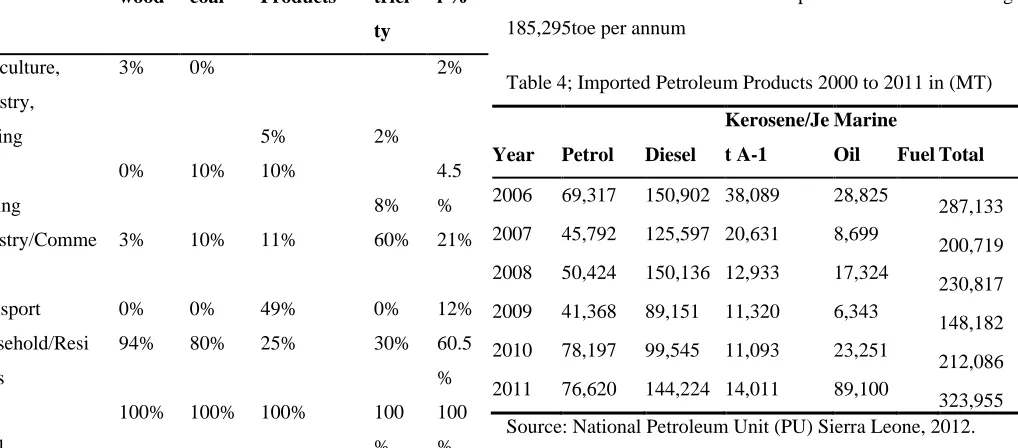
Table 2; Energy utilization pattern in 2011
Sector Fuel Char Petroleum Elec Tota BIOMASS 2006 2007 2008 2009 2010 2011
FUEL
WOOD 1,212 1,128 1,146 1,154 1,166 1,171
CHARCOAL 44 55 66 78 86 121
TOTAL
wood coal Products trici
ty
l %
Agriculture,
Forestry,
Fishing
3% 0%
5% 2%
2%
Mining
0% 10% 10%
8% 4.5
%
Industry/Comme
rcial
3% 10% 11% 60% 21%
Transport 0% 0% 49% 0% 12%
Household/Resi
dents
94% 80% 25% 30% 60.5
%
Total
100% 100% 100% 100
%
100
%
Source: Ministry of Agriculture and Food Security (MAFFS),
2012 annual report
1.2.RATE OF BIOMASS CONSUMPTION IN SIERRA
LEONE
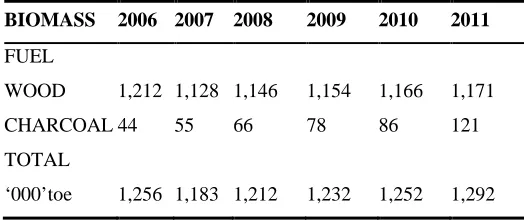
Biomass is the major source of energy used in Sierra Leone for
cooking and lighting in many households and a minute percent in
the commercial sector[24]. This energy source carries the highest
volume of consumption in the whole energy system, representing
[image:6.612.41.325.61.302.2]over 80% of total energy consumed in Sierra Leone.
Table 3; Trend of biomass consumption in Sierra Leone from
2006 to 2011 (‘000’toe)
Source: Ministry of Agriculture, Forestry and Food Security
2012
1.3.UTILIZATION AND SUPPLY PETROLEUM
PRODUCTS IN SIERRA LEONE
Petroleum products (diesel, Petrol, gasoline and kerosene)
importation has been done through refined products like Gasoline
or Petrol, Diesel, Marine Fuel Oil, Kerosene and Jet A-1 due to
the nonattendance of a refinery plant in Sierra Leone. The
Petroleum Products are utilized mainly in the transport, industrial
and residential sector. Sierra Leone at present importing all of its
petroleum products, the only refinery plant in the country is no
longer in operation. As shown in the table 4, Petroleum Products
importation volume per annum decreased by more than 100%
between 2006 and 2011. Petroleum products utilization averaged
[image:6.612.60.569.67.291.2]185,295toe per annum
Table 4; Imported Petroleum Products 2000 to 2011 in (MT)
Year Petrol Diesel
Kerosene/Je
t A-1
Marine
Oil FuelTotal
2006 69,317 150,902 38,089 28,825
287,133 2007 45,792 125,597 20,631 8,699
200,719 2008 50,424 150,136 12,933 17,324
230,817 2009 41,368 89,151 11,320 6,343
148,182 2010 78,197 99,545 11,093 23,251
212,086 2011 76,620 144,224 14,011 89,100
[image:6.612.302.575.115.275.2]323,955 Source: National Petroleum Unit (PU) Sierra Leone, 2012.
Table 5; Consumption development of petroleum products from
2006 to 2011 (‘0000’toe)
PRODUCTS2006 2007 2008 2009 2010 2011
GASOLINE 78 50.6 70.3 71.6 90.7 93.2
LPG 0 2 2 3 3 4
DIESEL 98.4 94.2 101.7 78.2 95.2 78.1
FUEL OIL 10.3 22.4 20.4 16.1 9.6 8
KEROSENE/
JET 35.5 25.8 18 10.6 6.8 4.5
Total
222.2 195 212.4 179.5 205.3 187.8 Source: National Petroleum Unit (PU) Sierra Leone, 2012.
Table 6; Grid generated electricity utilization from 2006 to 2011
(‘000’toe)
Source: Ministry of Energy, 2012 annual report
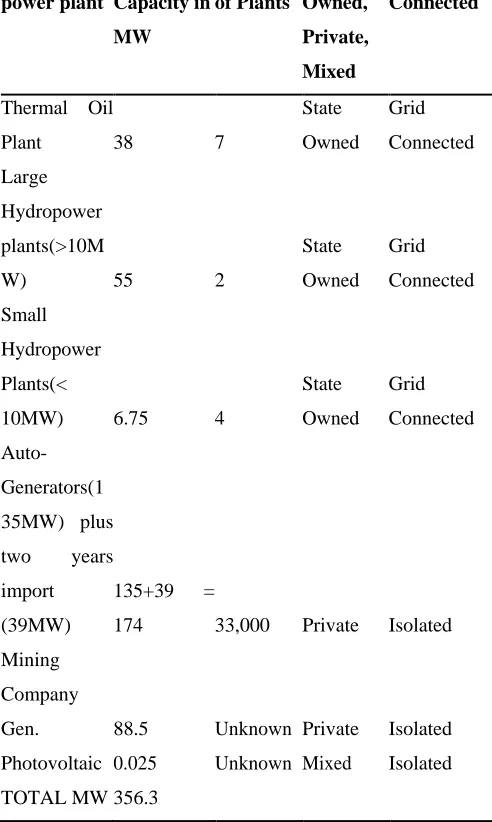
Table 7; Power capacity installed as of may, 2012
Type of Installed Number State Grid POWER
STATION 2006 2007 2008 2009 2010 2011
KINGTOM 2.72 2.4 11.2 6.5 3.55 1.18
BLACKHAL
L ROAD n/a n/a 1.8 1.5 n/a 0.91
BUMBUNA n/a n/a n/a 3.52 12.8 14.5
BKPS 0.67 0.69 0.89 0.98 0.95 0.99
[image:6.612.313.599.326.474.2] [image:6.612.313.599.531.672.2]power plant Capacity in
MW
of Plants Owned,
Private,
Mixed
Connected
Thermal Oil
Plant 38 7
State
Owned Grid
Connected
Large
Hydropower
plants(>10M
W) 55 2
State
Owned Grid
Connected
Small
Hydropower
Plants(<
10MW) 6.75 4
State
Owned Grid
Connected
Auto-Generators(1
35MW) plus
two years
import
(39MW)
135+39 =
174 33,000 Private Isolated
Mining
Company
Gen. 88.5 Unknown Private Isolated
Photovoltaic 0.025 Unknown Mixed Isolated
TOTAL MW 356.3
Source: Ministry of Energy and National Revenue Authority,
[image:7.612.36.282.64.475.2]2012
Table 8; right to use to grid connected electricity from 2006 to
2011
POPULATI
ON 2006 2007 2008 2009 2010 2011
Freetown 38,262 47,291 54,126 64,406 67,522 83,551
BO-Kenema 8,752 9,078 9,555 10,280 11,309 12,693
Makeni 315 530 621 696 602 1,050
Total
Customer 47,469 56,889 63,202 75,092 79,426 87,284
Population
connected
Grid
284,57
4 340,734 378,612 450,492 475,956 523,104
Population 4,937,4 5,009,265,116,385,173,505,294,64 5,478,89
without Grid
connection
26 6 8 8 4 6
% ACCESS 5.52 6.52 7.48 8.79 8.28 8.7~9.8
Source: Sierra Leone Statistic, 2012.
CONCLUSION
Generation capacity of reliable electricity is still too little as
compared to potential require in Sierra Leon. Insufficient
production capacity in combination with the poor capacities of
the transmission lines led lots of industries as well as commercial
and residential consumers to purchase imported diesel generators
for self energy support in the country. Small generators cost on
average US$350. These small generators are costly to run,
because fuel costs are at present is too high in Sierra Leone.
Several private investors are forced to self-generate power in
order to meet their own power requirements. for example,
cement manufacturing, mining companies and mobile phone
operators are currently generating their own power requirement
to meet the power demand of their factories, which make the
living standard too high for the poor and average Sierra Leonean.
The power capacities installed by these private investors are
substantial ranging from 180 to 300MW when compared to the
total national installed production capacity. The necessity to
self-generate makes it more costly for these companies to run
company in the Sierra Leone.
In 2009, additional generation capacity was added, the Bumbuna
I hydro plant about 55 MW installed capacity, about 20 MW firm
production capacity in the dry season entered into operation late
2009. The Government of Sierra Leone 2009 signed a Heads of
Terms with Joule Africa to further develop Bumbuna II and the
additional room of Bumbuna I and a pre-feasibility study was
done which reveals that the project could generate power up to
390MW with a firm capacity of 115MW in the dry season to the
main national distribution system.
The government was pursuing more options to add more
production capacity to enhance adequate energy for the country.
Major power plants projects for power production were being
developed; these power plants will run on an amalgamation of
natural gas and heavy fuel oil. These projects were expected to
power outage that would put a stop to the electricity from
reaching potential households.
Improving the country’s energy (electricity) sector was one of
the Government’s principal objectives from 2007 to 2012, this
critical priority was expressed in the Government’s Agenda for
Change, which was unveiled in 2008. Further than political
support, the Government anticipated to devote financial
resources to improve the energy (electricity) sector because of
the clear positive impacts on social, environment and economic
growth in the country. The Government was committed to work
with the private companies, International Energy improvement
Programmes and the donor society to accomplish these essential
[image:8.612.337.585.318.519.2]dream in the energy sector.
Figure 1; DEVELOPMENT OF ACCESS TO GRID
CONNECTED ELECTRICITY FROM 2006 TO 2011
Freetown BO-Kenema Makeni
0 500 1000 1500 20000 40000 60000
P
opul
at
ion
City & major towns 2006 2007 2008 2009 2010 2011
However, from the graph there is an enlargement in the access to
electricity in the city and the three regional administrative
headquarter towns. The increase of the population in Makeni in
2011 was as a result of the mining companies that were located
in the district. As a result, the access for electricity in Makeni
town was increased. The populations in Freetown keep rising as
it is capital city of Sierra Leone.
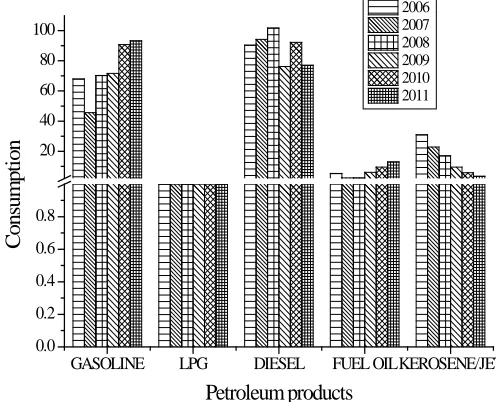
Figure 2; PETROLEUM PRODUCTS UTILIZATION
FROM 2006 TO 2011
GASOLINE LPG DIESEL FUEL OILKEROSENE/JET
0.0 0.2 0.4 0.6 0.8 20 40 60 80 100
C
ons
um
pt
ion
Petroleum products
2006 2007 2008 2009 2010 2011
As the country depends solely on petroleum products and
biomass for primary energy consumption, gasoline and diesel
keep raising in demand. However, the liquefied petroleum gas
(LPG) consumption is still low in the country. The decrease in
the consumption of kerosene from 2006 to 2011 could be as the
result of the introduction of solar lantern lamps in the country in
2010 under the implementation of the renewal energy policy,
which inculcated private sector companies in the provision and
implementation of solar later and solar small home systems. This
initiative led to the formation of renewable energy association in
[image:8.612.53.298.358.539.2]1. RECOMMENDATION
As the world is moving toward a green economy, renewable
energy is one of the pillars that is used to achieve this big dream.
Therefore Sierra Leone should endeavor to follow the rout that
most countries in the world are using. As one of the poorest
countries in the world, Sierra Leone has renewable energy
potentials across the country throughout the year.
Hence government should implement the renewable energy
policy and set indicators in achieving the set energy priorities.
Efficient and affordable energy accessibility in the country will
aid the living standard and economic growth. Government should
empower the energy sector by investing in the technology and
providing adequate skills to carry out the administrative and
technical affairs of the energy sector.
ACKNOWLEDGMENT
Special thanks to Professor Zhiqiang Zhang of
College of Environmental Science and Engineering Tongji
University, Shanghai, Yanpu District 200092, P.R China
For his mentorship throughout my master’s program
REFERENCES
1. Engström, R.E., Howells, Mark, Destouni, Georgia,
Bhatt, Vatsal, Bazilian, Morgan and Rogner,
Hans-Holger, Connecting the resource nexus to basic urban
service provision – with a focus on water-energy
interactions in New York City. Sustainable Cities and
Society, 2017. 31: p. 83-94.
2. Staffell*, D.H.a.I., The impact of climate change on the
levelised cost of wind energy. Centre for Environmental
Policy, 2017. 575e592.
3. Biggs, E.M.B., Eleanor, Boruff, Bryan, Duncan, John
M. A. Horsley, Julia, Pauli, Natasha, McNeill, Kellie,
Neef, Andreas, Van Ogtrop, Floris, Curnow, Jayne,
Haworth, Billy, Duce, Stephanie and Imanari, Yukihiro,
Sustainable development and the water–energy–food
nexus: A perspective on livelihoods. Environmental
Science & Policy, 2015. 54: p. 389-397.
4. Malandrino, O.S., D. Testa, M. and Supino, S., Policies
and Measures for Sustainable Management of Solar
Panel End-of-Life in Italy. Sustainability, 2017. 9(4).
5. Rambo, K.A.W., David M. Shanbhogue, Santosh J. V,
John H. Lienhard and Ghoniem, Ahmed F.,
Water-Energy Nexus in Saudi Arabia. Water-Energy Procedia, 2017.
105: p. 3837-3843.
6. Reddy, V.R.C., D. G. F. and Kurian, M., A
Water-Energy-Food Nexus Perspective on the Challenge of
Eutrophication. Water, 2018. 10(2).
7. Spiegelberg, M., Baltazar, Dalton Erick, Sarigumba,
Maria Paula E. Orencio, Pedcris M. Hoshino, Satoshi,
Hashimoto, Shizuka, Taniguchi, Makoto and Endo,
Aiko, Unfolding livelihood aspects of the Water–
Energy–Food Nexus in the Dampalit Watershed,
Philippines. Journal of Hydrology: Regional Studies,
2017. 11: p. 53-68.
8. Weitz, N., Strambo, Claudia, Kemp-Benedict, Eric and
Nilsson, Måns, Closing the governance gaps in the
water-energy-food nexus: Insights from integrative
governance. Global Environmental Change, 2017. 45: p.
165-173.
9. Yumkella, K.K.a.Y., P. T., Framing the Water-energy
Nexus for the Post-2015 Development Agenda. Aquatic
Procedia, 2015. 5: p. 8-12.
10. Balcombe, P., D. Rigby, and A. Azapagic,
Environmental impacts of microgeneration: Integrating
solar PV, Stirling engine CHP and battery storage.
Applied Energy, 2015. 139: p. 245-259.
11. Shanmugan, S.P., S. and Janarthanan, B., Productivity
enhancement of solar still by PCM and Nanoparticles
miscellaneous basin absorbing materials. Desalination,
2018. 433: p. 186-198.
12. Wang, C., Chen, Wei, Shao, Shao, Chen, Zhenjie, Zhu,
Bin and Li, Hongyan, Energy Management of
Stand-Alone Hybrid PV System. Energy Procedia, 2011. 12: p.
471-479.
13. Wolfs, P., Emami, K, Lin, Y. F. and Palmer, E., Load
battery systems. Journal of Modern Power Systems and
Clean Energy, 2018. 6(2): p. 215-222.
14. Lim, E.L.Y., C. C. Jumali, M. H. H. Teridi, M. A. M.
and Teh, C. H., A Mini Review: Can Graphene Be a
Novel Material for Perovskite Solar Cell Applications?
Nano-Micro Letters, 2018. 10(2).
15. Ziv, G., Watson, Elizabeth, Young, Dylan, Howard,
David C. Larcom, Shaun T. and Tanentzap, Andrew J.,
The potential impact of Brexit on the energy, water and
food nexus in the UK: A fuzzy cognitive mapping
approach. Applied Energy, 2017.
16. Effatnejad, R.R., K. and Vazinram, F., Technical,
economic and environmental analysis of a hybrid
system containing CHP, solar panel, wind turbine with
electrolyser and battery as energy storage: case study.
International Journal of Global Warming, 2018. 14(2):
p. 170-187.
17. Alphaeus, K., The challenges of energy supply for
Sierra Leone’s economic development. Journal of
Economics and International Finance, December, 2009.
Vol. 1(7),: p. pp. 158-171,.
18. Baul, T.K., Alam, A. Ikonen, A. Strandman, H.
Asikainen, A. Peltola, H. and Kilpelainen, A., Climate
Change Mitigation Potential in Boreal Forests: Impacts
of Management, Harvest Intensity and Use of Forest
Biomass to Substitute Fossil Resources. Forests, 2017.
8(11).
19. Soussan, M.D.E.a.J., Fuelwood Problems and Solutions.
Journal of Ecology, 1991. 105, 111–121: p. 8.
20. Feron, S.H., H. and Cordero, R. R., Sustainability of
rural electrification programs based on off-grid
photovoltaic (PV) systems in Chile. Energy
Sustainability and Society, 2016. 6.
21. Chahuruva, R.a.D., T., Study on Isolated Solar Home
Systems for Application in Zimbabwe, in 2017
International Conference on Alternative Energy in
Developing Countries and Emerging Economies, J.
Waewsak, et al., Editors. 2017. p. 931-936.
22. Haque, F.D., T. and Kalantar-zadeh, K. and J.Z. Ou,
Two-Dimensional Transition Metal Oxide and
Chalcogenide-Based Photocatalysts. Nano-Micro
Letters, 2018. 10(2).
23. Borrelli, P.P., P. Marker, M. Modugno, S. and Schutt,
B., Assessment of the impacts of clear-cutting on soil
loss by water erosion in Italian forests: First
comprehensive monitoring and modelling approach.
Catena, 2017. 149: p. 770-781.
24. Henry, R.C.P., S. C. F. Watts, K. Mitchell, R. J.
Atkinson, N. and Travis, J. M. J., Tree loss impacts on
ecological connectivity: Developing models for
assessment. Ecological Informatics, 2017. 42: p. 90-99.
AUTHORS
First Author – Morie Sam, Master’s Degree Student,
UNEP-Environment-Tongji Institute of Environment for
Sustainable Development
College of Environmental Science and Engineering
Tongji University, Shanghai, Yanpu District 200092, P.R China.
Email 1793418@tongji,edu.cn/ [email protected]
Phone Number +8613120812375 /+23276426255
Second Author – Shilongo Sem Mekondjo, Master’s Degree
Student,
UNEP-Environment-Tongji Institute of Environment for
Sustainable Development
College of Environmental Science and Engineering Tongji
University, Shanghai, Yanpu District 200092, P.R China
Email; [email protected]
Phone Number; +8613127580065
Third Author – Amos SimwelaMaster’s Degree Student,
UNEP-Environment-Tongji Institute of Environment for
Sustainable Development
College of Environmental Science and Engineering
Tongji University, Shanghai, Yanpu District 200092, P.R China
Email; [email protected]
Correspondence Author – Morie Sam, Master’s Degree
Student,
UN-Environment-Tongji Institute of Environment for
Sustainable Development
College of Environmental Science and Engineering Tongji
University, Shanghai, Yanpu District 200092, P.R China