ISSN Print: 2152-7180
DOI: 10.4236/psych.2018.99133 Sep. 13, 2018 2337 Psychology
Effect of Total Sleep Deprivation on Visual
Sequential Memory
Mohammad Habibur Rahman Khan
1, Salim Hossain
2, Azmi Hassan
31Institute for Community Health Development (iCODE), Universiti Sultan Zainal Abidin, Terengganu, Malaysia 2Department of Psychology, University of Dhaka, Dhaka, Bangladesh
3Faculty of Medicine, Universiti Sultan Zainal Abidin, Terengganu, Malaysia
Abstract
A substantial number of studies support the role of sleep deprivation (SD) on sleep-dependent memory processing. Our present study investigated the ef-fect of Total Sleep Deprivation (TSD) on Visual Sequential Memory (VSM). Two-randomized group design was followed to collect the data where expe-rimental group (33 adults) was kept totally sleep deprived for 24 hours a day and the control group (36 adults) was not. A subtest of Test of Memory and Learning (Reynolds & Bigler, 1994) was used to measure VSM. Results re-vealed a significant decline in VSM for TSD (t = 3.914, p < 0.001). Findings are discussed in the light of previous findings and theories in that VSM is the capability of an individual to perceive the visual properties of an object by eyes, a skill vitally necessary for many areas of work, like visual tracking, air traffic controlling, military task, marksmanship, screening, surgery, health-care service, policing and so on.
Keywords
Sleep Deprivation, Total Sleep Deprivation, Visual Sequential Memory, Cultural Issue
1. Introduction
Visual sequential memory (VSM) is the ability of an individual to remember visual details related to sight of anything in correct sequence. Visual sequential memory or visual performance is the visual efficiency under ideal illumination. It is the ability of the eye to perceive or the visual properties of the object to be perceived. VSM describes a person’s ability to remember a number of items, let-ters, numbers, or shapes in series. This skill is essential for many areas of life; How to cite this paper: Khan, M. H. R.,
Hossain, S., & Hassan, A. (2018). Effect of Total Sleep Deprivation on Visual Sequen-tial Memory. Psychology, 9, 2337-2352. https://doi.org/10.4236/psych.2018.99133
Received: July 18, 2018 Accepted: September 10, 2018 Published: September 13, 2018
Copyright © 2018 by authors and Scientific Research Publishing Inc. This work is licensed under the Creative Commons Attribution International License (CC BY 4.0).
http://creativecommons.org/licenses/by/4.0/
DOI: 10.4236/psych.2018.99133 2338 Psychology such as hand-writing, cooking, remembering phone numbers, visual tracking, monitoring on-going display, sound sequencing and so on. It is, thus, the visual analysis skill within the larger framework of visual information processing (Borsting, 2006).
Sleep essentially contributes to memory. Sleep is essential to maintain brain’s operative efficiency as shown by consequences of its deprivation, which may lead to accidents, cognitive errors, antisocial behaviours (Kamphuis, Meerlo, Kool-haas, & Lancel, 2012; Cirelli & Tononi, 2008; Alhola & Polo-Kantola, 2007). However, researchers often differ regarding how to conceptualize the effects of sleep on memory. Evidences from a substantial number of studies support the role of sleep on sleep-dependent memory processing. Sleep affects procedural memory (Walker & Stickgold, 2004). Patrick and Gilbert (1896) were the pio-neers in reporting the performance impairing effects of total sleep deprivation (TSD). Since then, many researchers have extended these findings which indi-cate that TSD impairs many different cognitive functions including vigilance, working memory, short term memory, executive function, math processing, cognitive speed, spatial orientation, and motor control (Drummond, Anderson, Straus, Vogel, & Perez, 2012; Rogers, Dorrian, & Dinges, 2003; Smith, McEvoy, & Gevins, 2002; Wright & Badia, 1999).
Sleep deprivation has adverse effect to a variety of cognitive functions. Within working memory, some component processes are more vulnerable to SD than others. In a well-controlled study, Drummond et al. (2012) found that both one night of total sleep deprivation (TSD) and four nights of partial sleep deprivation (PSD) where subjects were allowed four hours of bed time at night, did not have any significant effect on visual working memory capacity. They observed TSD’s negative impact only on performance in the filtering task where subjects had to ignore distracter stimuli in a visual scene (filtering efficiency) only. They suggest that components of visual working memory are differentially vulnerable to the effects of SD, and different types of SD influence visual working memory to the different degrees. Such findings have implications in operational settings where discriminating the relevant from irrelevant things is essential in taking decision such as look-out and watch-keeping duties. In visual memory, SD of one night did not have any effect on recognition (Alhola, Tallus, Kylmälä, Portin, &
Po-lo-Kantola, 2005). No effect was observed for visuospatial working memory after
one night of sleep restriction (Nilsson et al., 2005).
Visual sequential memory (VSM) often termed as visuospatial sketchpad is one of the four components of working memory. The ability to selectively retain information in an accessible state called working memory. Baddeley (2000) sug-gested a model of working memory consists of four components; phonological loop, visuospatial sketchpad, episodic buffer and central executive. Sustained at-tention or vigilance is the executive processes of working memory (Baddeley,
Cocchini, & Della Sala, 1999). Attention and working memory are found to
DOI: 10.4236/psych.2018.99133 2339 Psychology divided attention, performance was impaired after 24 hours of SD (Wright &
Badia, 1999). Detrimental effects on both speed and accuracy in measuring
at-tention and working memory (WM) during SD were observed (Choo, Lee, Ven-katraman, Sheu, & Chee, 2005; Habeck et al., 2004;Jennings, Monk, & Van der
Molen, 2003). Impaired performance was observed in probed forced memory
recall (Wright & Badia, 1999), and memory search (McCarthy & Waters, 1997). Sleep deprivation (SD) impairs VSM. VSM is the quantitative assessment of the performance of a visual task, taking speed and accuracy into consideration. SD impairs visuomotor performance (Raidy & Scharff, 2005), and the engage-ment of spatial attention (Bocca & Denise, 2006). Decreased oculomotor func-tioning is also associated with impaired visual performance (De Gennaro, Ferra-ra, Curcio, & Bertini, 2001), and sleepiness (Zils, Sprenger, Heide, Born, & Gais,
2005). In well-controlled studies, it has been observed that the less sleep
ob-tained due to sleep restriction, the more cognitive performance is impaired (Belenky et al., 2003; Van Dongen, Maislin, Mullington, & Dinges, 2003). Re-search indicating that poor sleep impairs cognitive functions is particularly rele-vant to those with occupations with high visual task demands. These findings have significant implications for different operational settings where individuals may need to perform without adequate sleep. Jobs that involve receiving a range of visual information and discrimination of relevant cues from irrelevant things before taking action, such as visual tracking, baggage screening, air traffic con-trolling, military training, marksmanship, policing, surgery or healthcare service may also experience difficulties.
DOI: 10.4236/psych.2018.99133 2340 Psychology the order of the elements is of higher importance. In reality, many students with reading difficulties have trouble with sequencing and poor sequential memory, which naturally affects their ability to read and spell in an accurate manner. When reading, individual with poor VSM may put letters in the wrong order, reading “reserve” as “reverse” or “felt” as “left”, put words in wrong order, may omit letters like “cat” for “cart”, may be unable to repeat longer words both orally or written.
1.1. Rationale
The importance of studying cognitive processes and cultural diversities is in-evitable in order to understand human behaviour and cognition in a different cultural perspective. Sleep-cognition link is better understood where culture plays at large in understanding human psyche. Human psyche is better unders-tood when laboratory studies on cognitive processes are supplemented with evi-dence from the particular culture in which a person lives (Wundt, 1916). People, in general, are quite unaware of cultural effect on perception. People often do not consider cultural effect on cognition in a great deal at all (Bonn, 2015).
There is a strong relationship between sleep and cognitive performances. The premise that sleep deprivation causes problems with behaviour, cognition, or other aspects of daytime functioning has long been discussed in western culture, US in particular. The perception towards sleep deprivation (SD) and its effects on visual sequential memory (VSM) in respect of cultural and communal diver-sities across the globe is assumed to vary considerably. Hence, study on this issue in other cultural context is inevitable in order to know more about SD-VSM link. Therefore, it is felt deemed necessary to investigate sleep deprivation and its effect on visual sequential memory in South Asian cultural context, particularly in Bangladeshi culture, from the point of developmental perspective.
environ-DOI: 10.4236/psych.2018.99133 2341 Psychology ment. Second is, Bangladesh must improve its export competitiveness and diver-sify both markets and products for export. In order to access this, Bangladesh has to comply with strict conditions such as improved work conditions, health, women’s empowerment, psycho-physical condition and sleep hygiene of work-ers.
Studies revealed that SD negatively affects cognitive performances, an ultimate attributes to human performance at work. Sleep is considered as a much contri-buting factor in figuring work effectiveness. Yet again, cross-cultural evidence on this issue is very scarce. Regrettably, no empirical data whatsoever have ever been found in Asian and African context, especially in the third world context, which justifies the need for further studies to see how SD influences cognitive functions and work performances amongst these peoples. Study on the sleep-cognition link in other developing context like Bangladesh would surely draw more concluding remarks in understanding the sleep dependent memory processing. Bangladesh’s leading export goods are garments where workers’ performances are based on visual sequential memory, visuomotor, and psycho-motor skills. Thus, test of VSM would definitely be a milestone in this regard to determine work efficiencies related to sleep hygiene.
1.2. Variables
The variables taken in this study are as follows.
1) Independent variable: Total sleep deprivation of 24-hour a day including night-time sleep.
2) Dependent variable: Visual sequential memory.
1.3. Objective of the Study
The objective of the present study was to investigate whether there is any effect of total sleep deprivation (TSD) on visual sequential memory (VSM).
1.4. Hypothesis
It was hypothesized that there will be significant effect of total sleep deprivation on visual sequential memory. Statistically, it can be expressed as follows:
H0: µ1 = µ2 H1: µ1 > µ2
2. Methods
2.1. Participants
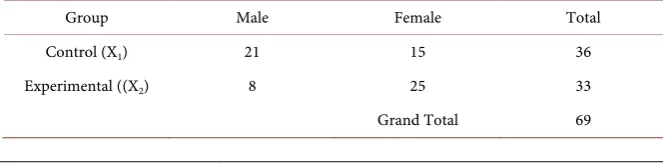
DOI: 10.4236/psych.2018.99133 2342 Psychology cycle of a day from the time individuals reach their 20s through their mid-dle age years (Miller, Matsangas, & Kenney, 2011), and is assumed to be com-mon across the cultures. Therefore, the subjects chosen for this study are very much important since dynamic working force in civil and military in Bangladesh belong to this age group. Data required from respondents was 74. A total of 146 individuals were called out of which 100 volunteers were recruited based on some inclusion and exclusion criteria. Subjects were randomly assigned to expe-rimental and control group, where expeexpe-rimental group was exposed to total sleep deprivation (TSD) for a day of 24 hours, and the control group was not, prior the test commencement. Subjects were given full one-night adaptation in the lab prior testing. After the adaptation night, test of VSM was administered on the subjects. After completion of the data collection procedure, data from 69 respondents were obtained in total on ground where 36 from control group and 33 from experimental group who completed full research procedure (Details given in “Procedure”). Distribution of samples is shown in Table 1.
2.2. Psychometric Tools
To collect the data following psychometrics tools were used:
1) Sleep tracker:A wrist-worn sleep tracker cum actimeter has been used to track sleep and activity of the subjects taken for experimental group. The recent popular brand of actimeter plus sleep tracker named Xiaomi Mi Band (mod-el-MI3 M4) has been chosen for this purpose. This wrist-worn sleep/activity tracker was used to have record of subjects’ sleeping time in 24 hours a day. Each subject of experimental group had to wear this wrist-worn device for several days before taking them into sleep lab. This kind of device has been extensively used in US military, particularly in US Navy in conducting sleep research where sleeping and snoozing time of the participants are recorded (Miller, Shattuck, & Matsangas,
2010; Matsangas & Miller, 2006; Archibald, 2005). This device works on
[image:6.595.205.537.657.741.2]mo-tion-sensing technology. The device has two components namely accelerometer and passive sleep tracker. Accelerometer is a sensor which measures the rate of change of movements in X, Y, Z axis. These information are then translated into data like walking or sleeping, and gets synced with the mobile application. For the sleep tracking part, it uses the passive sleep tracking which means software is used to calculate the pattern of sleep based on the information provided by the user in mobile application. This method of detecting the sleep pattern is not 100% accurate. However, if the purpose is to know whether the subject has slept or not, the device is fairly valid and reliable (Miller et al., 2010) (picture given in
Table 1. Distribution of samples in experimental and control group.
Group Male Female Total
Control (X1) 21 15 36
Experimental ((X2) 8 25 33
DOI: 10.4236/psych.2018.99133 2343 Psychology Appendix 1).
2) Sleep log: This is a self-reported record of an individual’s sleeping and waking times with related information, usually over a period of several days. The information contains, for example, time of going to bed and waking up, total bed time, total nap time, total sleep time including nap a day, quality of sleep (very poor, poor, moderate, good and very good), frequency of going toilet at night, and use of caffeine, alcohol, cigarette & sleeping pill before sleep. Subjects were provided with sleep log one week before the test to know their sleeping hygiene and culture. This kind of sleep log is extensively used by US Army, Navy and Airforce to keep log of the troops’ sleeping time and pattern.
3) Visual sequential memory (VSM): VSM, a subtest of Test of Memory and Learning (TOMAL), a comprehensive memory battery developed by Reynolds and Bigler (1994) standardized in 2007(Reynolds & Voress, 2007), was chosen as a psychometric tool for this particular study. TOMAL is an individually ad-ministered, 14-subtest instrument designed to assess broad-band verbal and nonverbal memory functions across the age-span, narrow-band memory skills like paired-associate learning and spatial memory, and learning via changes in recognition and recall across multiple trials. VSM requires recall of the sequence of a series of meaningless geometric designs. The ordered designs are presented, followed by presentation of a standard order of the stimuli, and the examinee shows the order in which they originally appeared. Materials needed are Record Form, Picture Book, and a stopwatch. Subjects are shown abstract designs pre-sented horizontally and are then required to indicate the order in which they were presented on a separate easel page when given the same designs in a ran-dom order. Examinee is briefed well before taking the test, if required first two items in the booklet can be shown and discussed. Thereafter, examiner has to proceed with the remaining items. Designs presented on each page are displayed for 5 seconds for the examinee to see. Scoring of this subtest based on the num-ber of designs recalled in the correct position. For each correct answer, “1” point is awarded across all items, “0” for incorrect answer. The test terminates if the subject scores “0” for two items consecutively. Reliability: Internal reliabilities for the TOMAL are generally high, ranging from a low of 0.56 to a high of 0.98. Nine of the fourteen core subtests have an average reliability in the 0.90s, while the remaining five are in the 80’s. Test-retest reliability coefficients for the Core and Supplementary Indexes ranged from 0.81 to 0.92. The fourteen subtest re-liabilities averaged 0.81. Validity: Content validity was assessed by reference to initial development and tryouts, task analysis, and representativeness. The ex-ploratory factor analysis found that all TOMAL subtests had positive correla-tions with every other TOMAL subtest. The results of factor analysis show strong evidence for a measure of general memory and thus for TOMAL’s Com-posite Memory Index (CMI). When compared to the WISC-R and the K-ABC, the TOMAL correlated in the mid 0.50’s.
DOI: 10.4236/psych.2018.99133 2344 Psychology by each subject was collected. This form contains data about subject’s basic in-formation including the history of past and present physical and mental health, record of previous work experience including night-shift, tobacco or alcohol ha-bit, and use of any medication (specimen given in Appendix 2).
2.3. Procedure
An advertisement was circulated nationwide through daily newspapers both in native and English language for recruiting the participants. A total of 146 indi-viduals responded to the call and showed their interest to be volunteer. Among them we recruited 100 respondents based on inclusion and exclusion criteria. However, we excluded those respondents who were reported physically or men-tally sick, having reported past history of serious physical or mental illness, being on any long-term medications, alcoholic or any substance user, having any kind of sleep disorder, experience of regular night-shift work, have habitual irregular sleeping habits (sleep less than 6.5 hours/night), extreme morning or evening chronotype, having symptoms associated with sleep disorders. The respondents whose sleep tracker along with record in sleep log indicated habitual good sleep (sleep > 6.5 hours/night, sleeping no later than 1:00 AM and waking no later than 9:00 AM) entered the study after giving informed consent. It was assured that the participants did not smoke, consume any medications, stimulants, caffeine or alcohol for at least 24 hours prior testing.
Subjects were randomly assigned to experimental group where they were ex-posed to total sleep deprivation (TSD) for a day of 24 hours, and the control group who enjoyed regular sleep (6.5 hour > sleep at night). Once the partici-pants were selected they were given a sleep log and a sleep tracker. In sleep log the participants manually recorded their sleep patterns (waking time, sleeping time etc.). Whereas, the sleep tracker automatically recorded the sleep time and activity time by using modern GIS technology. The experimental group was kept 24-hour a day sleep deprived prior data collection time. On the other hand, the control group was allowed to regular sleep. Participants were taken to the labor-atory 12 hours before the test of VSM was administered. Subjects were allowed to follow their normal everyday activities in day time, which in turn ensured the ecological validity of the study (Dickinson, Drummond, & McElroy, 2017;
Sán-chez-Ortuño, Edinger, Means, & Almirall, 2010). Subjects were given full
one-night adaptation in the lab prior testing. Once entered into the laboratory subjects’ informed consents were taken for the study to carry out. Subjects were informed regarding all the aspects of the study and were assured of confidential-ity of their personal information except for the research purpose only. Both the groups were looked after and accompanied by the research staffs during adapta-tion night and testing time.
DOI: 10.4236/psych.2018.99133 2345 Psychology procedure. Other participants failed to complete the study due to their unwil-lingness, feeling ill, failure to comply with the study protocol, and some other immediate emergencies. After they entered into the laboratory prior to 12 hours of data collection, the experimental group was not allowed sleeping. They were kept awaken while they read books, paper, or magazines. Some browsed on the smartphone, did social networking, listened music, and shared views with re-search staffs. On the other hand, the control participants were allowed to have their regular sleep.
After the adaptation night in lab, we administered VSM test on the subjects which took around 25 - 30 minutes to complete. The VSM is an individually administered and culture-free test. We hired eight postgraduate students as test administrators and trained them to administer the test. After completion of the test participants were thanked and given a token of memento. Thus, they were allowed to leave the laboratory.
3. Results
Data were analyzed using SPSS v.20. Descriptive and inferential analyses were carried out. The findings of the present study are presented in Table 2.
The findings indicate that there is a significant decline of visual sequential memory (VSM) of experimental group who were sleep deprived for 24-hour a day. This decrease in VSM is significant (p < 0.001).
4. Discussion
[image:9.595.204.540.677.723.2]It was hypothesized that sleep deprivation (SD) would greatly affect the test scores of experimental subjects. It was believed that the research subjects who were totally sleep deprived for a 24-hour day would score significantly less on the visual sequential memory (VSM) than those who obtained normal sleep the night prior. The result demonstrates that total sleep deprivation (TSD) can lead to significant decline in performance of VSM task. Though the task is procedu-rally simple and relies on prior-learning, yet extended time of awakening leads to significant decline in VSM. The pattern of results with worsening perfor-mance across the test, is a frequently-observed pattern in the studies of sleep and human performance in VSM (Naghavi & Nyberg, 2005; Baddeley, 2000). Atten-tion and working memory are interrelated, which combines phonological loop, visuospatial sketchpad (visual sequential memory), episodic buffer and central executive—a human working memory model suggested by Baddeley (2000). In VSM, sustained attention or vigilance is required which is otherwise the execu-tive processes of working memory (Baddeley, Cocchini, & Della Sala, 1999).
Table 2. Mean, standard deviation, and t-statistics of experimental and control group.
Group N M Sd df t Sig.
Control (X1) 36 22.50 12.05
67 3.914 0.000
DOI: 10.4236/psych.2018.99133 2346 Psychology Attention and working memory interact closely during encoding and manipula-tion (Fougnie, 2008).
This empirical demonstration is merely a beginning of our investigation in a particular cultural context, Bangladesh, which would lead us to a computational cognitive process model in order to find a mechanistic explanation of the beha-viour dynamics in future. The findings are strongly supported by ecological va-lidity (Dickinson et al., 2017; Sánchez-Ortuño et al., 2010). Things are always assumed to be happened normally and can better be explained in natural settings rather than strict lab control where human subjects are observed. There are stu-dies that have failed to find any effect under strict controlled condition (Drummond et al., 2012; Alhola et al., 2005; Nilsson et al., 2005).
5. Conclusion
The study claims that an important cognitive process in performing the VSM is the recalling of appropriate order of the designs or phenomena, and is more or less sleep-depended. Efficient visual perception is essential to recognize and re-member letters, words, cues and their meaning. A deficiency related to this will lead an individual struggling with minor differences and a confusing state of brain function. Thus, recognizing, remembering and applying information quickly and easily become critical for performance. This hypothesis echoes the conclusions drawn from the studies that has explored that SD impedes visual performances (Bocca & Denise, 2006; Raidy & Scharff, 2005; Zils et al., 2005; Choo et al., 2005; Habeck et al., 2004; Walker & Stickgold, 2004; Rinkenauer, Osman, Ulrich, Müller-Gethmann, & Mattes, 2004).
The negative effect of sleep deprivation on attention and visual memory is supported by existing literatures. These results can be generalized to other people of same age group irrespective of cultural and geographical setting as VSM is largely reliant on a sleep-dependent memory consolidation process. Sleep-dependent mechanisms of neural plasticity lead to the consolidation of learning and mem-ory. Stage-3 and stage-4 of NREM (non-rapid eye movement) sleep which is called slow-wave or deep sleep stage are primarily responsible for learning and memory consolidation. In TSD, a more thorough evaluation of higher cognitive functions is needed. Additionally, the effects of TSD have not been thoroughly compared among some essential subpopulations, for example, minor ethnical groups and females.
Conflicts of Interest
The authors declare no conflicts of interest regarding the publication of this pa-per.
References
DOI: 10.4236/psych.2018.99133 2347 Psychology
Alhola, P., Tallus, M., Kylmälä, M., Portin, R., & Polo-Kantola, P. (2005). Sleep Depriva-tion, Cognitive Performance, and Hormone Therapy in Postmenopausal Women. Me-nopause, 12, 149-155.https://doi.org/10.1097/00042192-200512020-00008
Archibald, K. (2005). Effects of Noise, Temperature, Humidity, Motion and Light on the Sleep Patterns of the Crew of the HSV-2 SWIFT. Monterey, CA: Naval Postgraduate School.
Baddeley, A. (2000). The Episodic Buffer: A New Component of Working Memory?
Trends in Cognitive Sciences, 4, 417-423.
https://doi.org/10.1016/S1364-6613(00)01538-2
Baddeley, A., Cocchini, G., & Della Sala, S. (1999). Working Memory and Vigilance: Evi-dence from Normal Aging and Alzheimer’s Disease. Brain and Cognition, 41, 87-108.
https://doi.org/10.1006/brcg.1999.1097
Belenky, G., Wesensten, N. J., Thorne, D. R., Thomas, M. L., Sing, H. C., Redmond, D. P., Russo, M. B., & Balkin, T. J. (2003). Patterns of Performance Degradation and Restora-tion during Sleep RestricRestora-tion and Subsequent Recovery: A Sleep Dose-Response Study.
Journal of Sleep Research, 12, 1-12.https://doi.org/10.1046/j.1365-2869.2003.00337.x
Bocca, M. L., & Denise, P. (2006). Total Sleep Deprivation Effect on Disengagement of Spatial Attention as Assessed by Saccadic Eye Movements. Clinical Neurophysiology, 117, 894-899.https://doi.org/10.1016/j.clinph.2006.01.003
Bonn, B. G. (2015). Why Culture Matters: Social Context and How We Make Sense of Our Lives. In S. Haque, & E. Sheppard (Eds.), Culture and Cognition: A Collection of Critical Essays (pp. 67-73). Switzerland: Peter Lang.
Borsting, E. (2006). Overview of Vision Development. In M. Scheiman, & M. Rouse (Eds.), Optometric Management of Learning-Related Vision Problems (p. 43). St. Louis: Mosby.
Choo, W. C., Lee, W. W., Venkatraman, V., Sheu, F. S., & Chee, M. W. (2005). Dissocia-tion of Cortical Regions Modulated by Both Working Memory Load and Sleep Depri-vation and by Sleep DepriDepri-vation Alone. Neuroimage, 25, 579-587.
https://doi.org/10.1016/j.neuroimage.2004.11.029
Cirelli, C., & Tononi, G. (2008). Is Sleep Essential? PLoS Biology, 6, e216.
https://doi.org/10.1371/journal.pbio.0060216
De Gennaro, L., Ferrara, M., Curcio, G., & Bertini, M. (2001). Visual Search Performance across 40 h of Continuous Wakefulness: Measures of Speed and Accuracy and Relation with Oculomotor Performance. Physiology & Behaviour, 74, 197-204.
https://doi.org/10.1016/S0031-9384(01)00551-0
Dickinson, D. L., Drummond, S. P. A., & McElroy, T. (2017). The Viability of an Ecolog-ically Valid Chronic Sleep Restriction and Circadian Timing Protocol: An Examination of Sample Attrition, Compliance, and Effectiveness at Impacting Sleepiness and Mood.
PLoS One, 12, 1-17.https://doi.org/10.1371/journal.pone.0174367
Drummond S. P., Anderson, D. E., Straus, L. D., Vogel, E. K., & Perez, V. B. (2012). The Effects of Two Types of Sleep Deprivation on Visual Working Memory Capacity and Filtering Efficiency. PLoS One, 7, e35653. https://doi.org/10.1371/journal.pone.0035653
Fougnie, D. (2008). The Relationship between Attention and Working Memory. In N. B. Johansen (Ed.), New Research on Short-Term Memory (pp. 1-45). Hauppage, NY: Nova Science Publishers.
DOI: 10.4236/psych.2018.99133 2348 Psychology Brain Research, 18, 306-321.https://doi.org/10.1016/j.cogbrainres.2003.10.019
Jennings, J. R., Monk, T. H., & Van der Molen, M. W. (2003). Sleep Deprivation Influ-ences Some But Not All Processes of Supervisory Attention. Psychological Science, 14,
473-479.https://doi.org/10.1111/1467-9280.02456
Kamphuis, J., Meerlo, P., Koolhaas, J. M., & Lancel, M. (2012). Poor Sleep as a Potential Causal Factor in Aggression and Violence. Sleep Medicine, 13, 327-334.
https://doi.org/10.1016/j.sleep.2011.12.006
Khatun, F. (2018). LDC Graduation: What It Means for Bangladesh (p. 8). The Daily Star (Bangladesh).
Matsangas, P., & Miller, N. L. (2006). The Effects of Ship Motion on the Sleeping Patterns of Crewmembers Aboard a High Speed Naval Vessel. Sleep, 29, A126.
McCarthy, M. E., & Waters, W. F. (1997). Decreased Attentional Responsivity during Sleep Deprivation: Orienting Response Latency, Amplitude, and Habituation. Sleep, 20,
115-123.https://doi.org/10.1093/sleep/20.2.115
Miller, N. L., & Shattuck, L. G. (2005). Sleep Patterns of Young Men and Women Enrolled at the United States Military Academy: Results from Year One of a Four Year Longitudinal Study. Sleep, 28, 837-841.https://doi.org/10.1093/sleep/28.7.837
Miller, N. L., Matsangas, P., & Kenney, A. (2011). The Role of Sleep in the Military: Im-plications for Training and Operational Effectiveness. Department of Operations Re-search, Naval Postgraduate School, 4-14. Monterey: USA.
Miller, N. L., Shattuck, L. G., & Matsangas, P. (2010). Longitudinal Study of Sleep Pat-terns of United States Military Academy Cadets. Sleep, 33, 1623-1631.
https://doi.org/10.1093/sleep/33.12.1623
Naghavi, H. R., & Nyberg, L. (2005). Common Fronto-Parietal Activity in Attention, Memory, and Consciousness: Shared Demands on Integration? Consciousness and Cognition, 14, 390-425. https://doi.org/10.1016/j.concog.2004.10.003
Nilsson, J. P., Söderström, M., Karlsson, A. U., Lekander, M., Akerstedt, T., Lindroth, N. E., & Axelsson, J. (2005). Less Effective Executive Functioning after One Night’s Sleep Deprivation. Journal of Sleep Research, 14, 1-6.
https://doi.org/10.1111/j.1365-2869.2005.00442.x
Patrick, G. T. W., & Gilbert, J. A. (1896). Studies from the Psychological Laboratory of the University of Iowa. On the Effects of Sleep Loss. Psychological Review, 3, 468-483.
https://doi.org/10.1037/h0075739
Raidy, D. J., & Scharff, L. F. (2005). Effects of Sleep Deprivation on Auditory and Visual Memory Tasks. Perceptual and Motor Skills, 101, 451-467.
https://doi.org/10.2466/pms.101.2.451-467
Reynolds, C. R., & Bigler, E. D. (1994). Test of Memory and Learning. Austin, TX: PRO-ED.
Reynolds, C. R., & Voress, J. K. (2007). Test of Memory and Learning: Second Edition.
Austin, TX: PRO-ED.
Rinkenauer, G., Osman, A., Ulrich, R., Müller-Gethmann, H., & Mattes, S. (2004). On the Locus of Speed-Accuracy Trade-Off in Reaction Time: Inferences from the Lateralized Readiness Potential. Journal of Experimental Psychology: General, 133, 261-282.
https://doi.org/10.1037/0096-3445.133.2.261
Rogers, N. L., Dorrian, J., & Dinges, D. F. (2003). Sleep, Waking and Neurobehavioural Performance. Frontiers in Bioscience, 8, s1056-s1067.https://doi.org/10.2741/1174
As-DOI: 10.4236/psych.2018.99133 2349 Psychology
sessment of Insomnia. Journal of Clinical Sleep Medicine, 6, 21-29.
Smith, M. E., McEvoy, L. K., & Gevins, A. (2002). The Impact of Moderate Sleep Loss on Neurophysiologic Signals during Working-Memory Task Performance. Sleep, 25,
784-794.https://doi.org/10.1093/sleep/25.7.56
Van Dongen, H. P., Maislin, G., Mullington, J. M., & Dinges, D. F. (2003). The Cumula-tive Cost of Additional Wakefulness: Dose-Response Effects on Neurobehavioural Functions and Sleep Physiology from Chronic Sleep Restriction and Total Sleep De-privation. Sleep, 26, 117-126.https://doi.org/10.1093/sleep/26.2.117
Walker, M. P., & Stickgold, R. (2004). Sleep-Dependent Learning and Memory Consoli-dation. Neuron, 44, 121-133.https://doi.org/10.1016/j.neuron.2004.08.031
Wright Jr., K. P., & Badia, P. (1999). Effects of Menstrual Cycle Phase and Oral Contra-ceptives on Alertness, Cognitive Performance, and Circadian Rhythms during Sleep Deprivation. Behavioural Brain Research, 103, 185-194.
https://doi.org/10.1016/S0166-4328(99)00042-X
Wundt, W. (1916). Elements of Folk Psychology: Outlines of Psychological History of the Development of Mankind.London: Allen & Unwin (German Original 1912).
Zils, E., Sprenger, A., Heide, W., Born, J., & Gais, S. (2005). Differential Effects of Sleep Deprivation on Saccadic Eye Movements. Sleep, 28, 1109-1115.
DOI: 10.4236/psych.2018.99133 2351 Psychology
Appendix 2. Personal Information Form
COGNITIVE ABILITY TESTS FOR ADULTS (English Version)
Code Administrative Record Form for Adult
Name of the Person: ...
Height: ... Weight: ...kg Education: ... Occupation: ...
Religion: ... Marital Status: ... Phone: ... Sex: Male Female
Living: Village Small town Town District [tick (√)] Name of the Test Administrator: ...
Sub-test Measure Score Raw Scaled Scores
Standard Progressive
Matrices Nonverbal Intelligence
Digit Span Working Memory
Coding Processing Speed
Letter Span Working Memory
Symbol Search Processing Speed
Crawford Small Parts Dexterity Test (CSPDT)
Psycho-motor Skills
Visual Sequential
DOI: 10.4236/psych.2018.99133 2352 Psychology (Put a tick (√) and right in the applicable location)
No. Ground Yes No
1. Are you physically and mentally ready to participate in this research?
2. Have you slept last 24 hours?
If your answer is “yes”, then mention the duration: ... hours/minute
3. Is it your habit to sleep less?
If your answer is “yes”, then how many hours do you sleep daily? ... hours 4. Do you suffer from insomnia?
5. Are you suffering from any types of brain injury? If yes, when ...?
6. Are you suffering from Alzheimers, Dementia or any other mental disease? If so, then mention ...
7. Are you suffering from any disease or physical illness right now? If so, then mention those: ...
8. Are you taking any medicine for any reason? If so, then mention those: ...
9. Did you ever get a hit at your brain in the past? If so, then when?... Did you get admitted to a hospital? ...
10. Did you suffer from any deadly disease in the past? If so, then when?... Did you get admitted to a hospital? ...
11. Have you taken coffee, energy drink, alcohol or smoked in last 24 hours? 12. Have you taken any chocolates/lozenge/toffee in last 24 hours?
13. Have you recorded your daily activities in the Sleep Log that you were given?
... ...