Multisensory Decisions: the Test of a Race Model,
Its Logic, and Power
Thomas U. Otto1,∗
and Pascal Mamassian2 1
School of Psychology and Neuroscience, University of St Andrews, St Andrews, UK
2
Laboratoire des Systèmes Perceptifs (CNRS UMR 8248), Ecole Normale Supérieure — PSL Research University, Paris, France
Received 17 June 2016; accepted 15 September 2016
Abstract
The use of separate multisensory signals is often beneficial. A prominent example is the speed-up of responses to two redundant signals relative to the components, which is known as the redundant sig-nals effect (RSE). A convenient explanation for the effect is statistical facilitation, which is inherent in the basic architecture of race models (Raab, 1962, Trans. N. Y. Acad. Sci. 24, 574–590). However, this class of models has been largely rejected in multisensory research, which we think results from an ambiguity in definitions and misinterpretations of the influential race model test (Miller, 1982,
Cogn. Psychol. 14, 247–279). To resolve these issues, we here discuss four main items. First, we
clarify definitions and ask how successful models of perceptual decision making can be extended from uni- to multisensory decisions. Second, we review the race model test and emphasize elements leading to confusion with its interpretation. Third, we introduce a new approach to study the RSE. As a major change of direction, our working hypothesis is that the basic race model architecture is correct even if the race model test seems to suggest otherwise. Based on this approach, we argue that understanding the variability of responses is the key to understand the RSE. Finally, we highlight the critical role of model testability to advance research on multisensory decisions. Despite being largely rejected, it should be recognized that race models, as part of a broader class of parallel decision mod-els, demonstrate, in fact, a convincing explanatory power in a range of experimental paradigms. To improve research consistency in the future, we conclude with a short checklist for RSE studies.
Keywords
Redundant signals effect, multisensory processing, perceptual decision making, probability summa-tion, race model, logic gates, modality switching, reaction time
*To whom correspondence should be addressed. E-mail: [email protected]
1. Introduction
Different senses are highly beneficial to act in the environment. Each sense in-creases the number of signals that can be perceived, which makes it less likely to crash into something unnoticed. Moreover, as different sensory signals com-plement one another, the environment can be better understood by considering signals in combination. To realize the combinatorial benefit in the control of actions, flexible cognitive functions are needed that analyze and interpret the countless potential combinations of signals according to task demands and/or subjective goals. What are these cognitive functions and how can they be stud-ied?
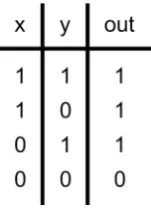
Multisensory research has a long-standing tradition in investigating the mapping of sensory signals to motor outputs. A classic paradigm is the re-dundant signals paradigm, which asks participants to respond with the same motor act in three conditions, each presenting a different combination of sig-nals (Hershenson, 1962; Kinchla, 1974; Miller, 1982; Todd, 1912). In two single signal conditions, for example, either an auditory or a visual signal is presented. In the third condition, which is called redundant signals condition, both signals are presented. The two signals are ‘redundant’ in the sense that detection of either signal is sufficient to initiate a correct response. In fact, a systematic analysis of the task demands shows that the two signals are, by design of the paradigm, coupled by a logical disjunction (Fig. 1). This elementary response mapping makes the redundant signals paradigm a very interesting tool to investigate the cognitive functions that deal with the combi-natorial aspects of multisensory signals.
[image:2.439.181.257.419.526.2]Multisensory research has extensively used the redundant signals paradigm also for the reason that it shows one of the most prominent behavioral benefits
that can occur with signals from different senses. The typical finding is that reaction times (RTs) in the redundant signals condition are on average faster compared to RTs in the two single signal conditions, which is known as the re-dundant signals effect (RSE; Hershenson, 1962; Kinchla, 1974; Miller, 1982; Todd, 1912). Interestingly, the RSE has been studied not only with a wide range of multisensory signals (e.g., Giard and Peronnet, 1999; Hecht et al., 2008; Martuzzi et al., 2007; Molholm et al., 2002; Murray et al., 2005; Otto and Mamassian, 2012; Otto et al., 2013; Perez-Bellido et al., 2013; Wuerger et al., 2012) but also with two signals within one sensory modality (e.g., Feintuch and Cohen, 2002; Katzner et al., 2006; Koene and Zhaoping, 2007; Krumme-nacher et al., 2014; Mordkoff and Yantis, 1993; Poom, 2009; Schröter et al., 2009), with different subject and patient populations (e.g., Brandwein et al., 2013; Brang et al., 2012; Collignon et al., 2010; Corballis, 1998; Harrar et al., 2014), and with different response modalities or task instructions (e.g., Blur-ton et al., 2014; Hughes et al., 1994 — see Note 1). Given this fascinating diversity of studies, it is evident that there can be processing differences with redundantly defined signals (e.g., it makes a difference whether one or two sen-sory modalities are stimulated; Girard et al., 2013). Still, as the basic paradigm is always the same, a main objective for multisensory research should be to un-derstand whether or not a common cognitive function contributes to the RSE as suggested by the analysis of the task demands.
To address the objective, it is critical to appreciate that there is not only a fascinating diversity in studies on the RSE but also confusion regarding how to test and interpret the effect. This confusion starts with a broad range of important methodological details (e.g., handling of fast outliers, random stimulus presentation procedures, etc.; Gondan and Minakata, 2016) and ex-tends towards major conceptual issues (e.g., the definition of race models; Miller, 2016; Otto and Mamassian, 2010). To unravel the conceptual issues, we address four main aspects in the following. First, we ask how models of perceptual decision making, which account for responses to a single sensory signal, can be extended to conditions that include signals in combination. Sec-ond, we review the so-called race model test (Miller, 1982), which is highly used to test a specific model of the RSE, and emphasize elements leading to confusion with the interpretation of test. Third, we introduce a new approach to study the RSE and argue that understanding the variability of RTs is the key to understand the RSE. Finally, we highlight the critical role of model testability to advance research on multisensory decision making.
2. Multisensory Decision Making
et al., 2008). Perceptual decisions are tested by asking participants to perform a motor act in response to a sensory signal. The task may appear abstract but applies to many real-life situations, in which a sensory signal is linked to an action (consider a car driver, who starts driving when a traffic light turns green). To account for the speed and the accuracy of such responses, research on perceptual decision making has converged on a fundamental computational framework that assumes three main processing steps (Bogacz, 2007). First, neurons tuned to relevant features of the signal provide with their activity sensory evidence for the signal. Critically, due to the variability in neuronal ac-tivity, this evidence is subject to noise. To enable accurate decisions, a second step reduces the impact of noise by accumulating evidence over time. Finally, a third step checks whether the accumulated evidence has reached a criterion. If so, a categorical decision is made (the traffic light is green) and a motor re-sponse is triggered (start driving). The framework has several strong features. It is optimal in that it has been demonstrated to be the fastest decision maker for a given level of accuracy (e.g., Bogacz et al., 2006; Wald and Wolfowitz, 1948). It provides direct explanation for many behavioral findings including the shape of RT distributions (e.g., Reddi et al., 2003) and speed–accuracy trade-offs (e.g., Bogacz et al., 2010). It is biologically plausible since neu-rons have been found that increase activity over time similar to the proposed accumulation of evidence (e.g., Hanes and Schall, 1996; Hanks et al., 2015; Shadlen and Newsome, 2001). And it has been realized many times ranging from psychological models of behavior (e.g., Carpenter and Williams, 1995; Ratcliff, 1978) to biophysically realistic attractor models (e.g., Deco and Rolls, 2006; Wang, 2002). In summary, the accumulation framework has proven to be very powerful in unisensory decision making.
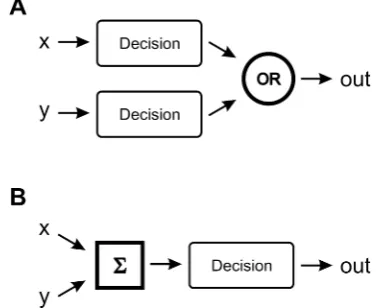
Figure 2. The key question: How can the perceptual decision making framework be extended to account for the redundant signals effect? (A) Logical coupling of parallel decisions. Signals
xandyare first processed by two parallel decision units. Categorical decisions made by these units are then coupled by a logic gate (OR) that triggers a motor response as output. (B) Pooling of sensory evidence in one decision. Sensory evidence for signalsxandyis first pooled (). The pooled evidence is then accumulated by a single decision unit that triggers the output.
single signal conditions (Miller, 1982). We refer to this class of models with only one decision unit as pooling models. In summary, there are two com-peting cognitive architectures that can, in principle, account for the RSE (see Note 2).
here very well by suggesting that multisensory signals are merged into a sin-gle perceptual decision, it may be difficult to see how race models ‘form a new product’. On the other hand, Stein et al. (2010, p. 1719) further define multisensory integration operationally “as a multisensory response (neural or behavioral) that is significantly different from the responses evoked by the modality-specific component stimuli”. Remarkably, race models are integra-tion models according to this definiintegra-tion as they predict faster mean RTs to redundant signals relative to the components. Still, due to the semantic con-fusion around the term multisensory integration, we have the impression that RSE studies are often guided by the belief that race models need to be rejected in order to demonstrate ‘true multisensory integration’. These issues should be kept in mind when we review next how the discrimination between the two model classes has been approached in the past.
3. Testing Race Models
As discussed in the previous paragraph, a strong feature of race models is that these allow directly for RSE predictions on the level of RT distributions. In a milestone contribution, Miller (1982) used this feature to develop a very in-fluential hypothesis test, which since then is routinely used in multisensory research to check whether or not race models can explain the RSE. Unfortu-nately, however, for reasons that are difficult to trace back, the test has not always been used consistently. To avoid confusion in the future, it is there-fore very important to be clear about how the test works bethere-fore discussing the conclusions that can be drawn from it.
3.1. How Does Miller’s Test Work?
The test builds on the basic idea by Raab (1962), who hypothesized that the RSE can be explained by statistical facilitation, which is inherent in the basic architecture of race models (Fig. 2A). To formalize statistical facilitation, it is convenient to describe the time by which a decision unit reaches its criterion to trigger a response by a random variable. LetTx be such a random variable to
describe the decision time at which signalxis detected by one unit. Likewise, letTy be a random variable to describe the time at which signaly is detected
by the other unit. Assuming a race model, a response to redundant signals can be triggered by the faster unit to reach its criterion. The corresponding random variableTx∪y is given by
Tx∪y=min(Tx, Ty) (1)
where the equal sign denotes equal in distribution. If the probability density functions of Tx andTy overlap, the framework predicts that responses to
Figure 3. Probability summation illustrated by Venn diagrams. Two sets of events (denotedX
andY) are represented by circles. The area covered by both sets together is called the union of
XandY (denotedX∪Y). It is given by the sum of the areas covered by each individual set minus the area in which the sets overlap, which is called the intersection ofXandY (denoted byX∩Y). The illustration corresponds to equation (2).
To check if statistical facilitation can explain the RSE, Miller (1982) de-rived a testable prediction using probability summation (for an illustration, see Fig. 3). LetPxy(Tx t)be the cumulative probability that a response to
sig-nalx has been triggered at time t on presentation of both signals (the latter is indicated by the subscript xy). Likewise, letPxy(Tyt)be the cumulative
probability that a response to signalyhas been triggered. Then, the cumulative probabilityPxy(Tx∪yt)that one or the other response has been triggered can
be computed by the sum of the probabilities of the individual responses to have been triggered minus the joint probabilityPxy(Tx∩yt)that both responses
have been triggered
Pxy(Tx∪yt)=Pxy(Txt)+Pxy(Tyt)−Pxy(Tx∩yt). (2)
The probability summation rule allows for an exact prediction of decision times in the redundant signals condition if the RSE is explained by a race model. Unfortunately, the right-hand side of this equation contains two un-knowns, which need to be considered to derive a testable prediction.
The first unknown concerns the joint probabilityPxy(Tx∩y t)that both
channels have been triggered, which is contingent on a potential dependence betweenTx andTy. If the two random variables are statistically independent
(i.e., if a response to one signal makes it neither more nor less likely to observe a response to the other signal), the joint probability is given by the product of the individual probabilities. Hence, under the assumption of statistical inde-pendence, equation (2) can be changed to
Pxy(Tx∪yt)=Pxy(Txt)+Pxy(Tyt)
−Pxy(Tx t)×Pxy(Tyt). (3)
unknown joint probability, Miller (1982) used a simple but elegant trick. He noted that the joint probability, as all probabilities, has to be positive. If the joint probability is removed from equation (2), the only thing that can happen is that the right-hand side of the equation becomes larger. Consequently, the unchanged left-hand side has to be equal to or smaller than the right-hand side, which is expressed by
Pxy(Tx∪yt)Pxy(Txt)+Pxy(Tyt). (4)
It is interesting to note that this inequality is an instance of Boole’s inequality, which states that the probability to observe at least one event of a countable set cannot be greater than the sum of the probabilities of the individual events. It is also interesting to note that the right-hand side corresponds to the prediction in case of a maximal negative correlation, for which the expected statistical fa-cilitation is largest (Colonius, 1990). In summary, inequality (4) puts an upper limit on statistical facilitation which is independent of a potential correlation.
The second unknown concerns the cumulative probabilities to observe a response to one signal when both signals are presented in the redundant signals condition, which are given by Pxy(Tx t) andPxy(Ty t).
Unfor-tunately, these probabilities are not directly measured in the redundant sig-nals paradigm. What is measured are the probabilities to observe responses in the single signal conditions, which can be expressed by Px(Tx t) and
Py(Ty t). Although it is unknown whether or not these probabilities are the
same, Miller (1982) implicitly assumed that these are identical
Px(Txt)=Pxy(Txt),
Py(Tyt)=Pxy(Tyt). (5)
This auxiliary context invariance assumption has been made explicit only after the advent of the test (Ashby and Townsend, 1986; Luce, 1986). The assump-tion is also known as context independence (Colonius, 1990) but to avoid confusion with statistical independence, we here use the same terminology as Townsend and Wenger (2004). Assuming context invariance, inequality (4) can be changed to
Pxy(Tx∪yt)Px(Txt)+Py(Ty t). (6)
determined in the single signal conditions. Then, the two sides just need to be compared. To use Miller’s (1982, p. 253) words, “the important feature of [inequality (6)] is that it puts an upper limit on the facilitation produced by redundant signals, and no race model is consistent with a reversal of the in-equality for any valuet”. Hence, if the race model inequality is violated, the test seems to suggest that all race models can be rejected.
3.2. Interpreting Miller’s Test
Miller (1982) race model test is a beautiful example of hypothesis testing in scientific enquiry. Consequently, it is no surprise that the race model test is fre-quently used in multisensory research and has become a ‘standard testing tool’ (Colonius and Diederich, 2006, p. 148). Unfortunately, the redundant signals paradigm and the race model test have not always been applied consistently (Gondan and Minakata, 2016). One exemplary issue is that the independent race model prediction (equation (3)) is frequently mistaken as the race model inequality (inequality (6)). A far more critical issue is that the race model test is easily misunderstood in that it could provide an answer to the key question regarding the basic cognitive architecture (Fig. 2; Otto and Mamassian, 2010). In fact, it cannot. The race model test is mute about how the perceptual de-cision making framework is extended to multisensory dede-cisions and provides no evidence whether the cognitive architecture involves one or two decision units.
To understand this critical issue, it is important to consider the role of aux-iliary assumptions in hypothesis testing (Hempel, 1966). How can the race model test be used to build a valid argument? As a first scenario, the argument starts with the hypothesis (H) that the RSE can be explained by a basic cogni-tive architecture assuming two parallel decision units as part of a race model that produces statistical facilitation (equation (1)). As an implication (I) of this hypothesis, Miller (1982) derived the race model inequality (inequality (6)). The two are linked by a conditional statement: If the hypothesis is true, then so is the implication. Interestingly, empirical evidence denies the implication: There is strong evidence that the race model inequality is violated in the re-dundant signals paradigm. Consequently, the hypothesis cannot be true, which results in the statement that the basic cognitive architecture of race models can be ruled out. The scenario looks like a valid deductive argument, known as the modus Tollens (denying the consequent — see Note 3), in which two premises lead to a conclusion
If H is true, then so is I.
But, as evidence shows, I is not true.
To be clear, this scenario’s argument is a fallacy. The reason is that the first premise, the conditional statement, is wrong: The argument does not acknowl-edge the role of the context invariance assumption, which states that process-ing of one signal is not changed whether or not the other signal is presented (equation (5)). As shown in the previous section, context invariance is an auxil-iary assumption (A) that is critically needed to reach the implication. A second scenario can account for the role of the auxiliary assumption by changing the conditional statement: If the hypothesis and the auxiliary assumption are true, then so is the implication. Although the empirical evidence stays of course the same, the new conditional statement changes the argument profoundly. It is no longer valid to conclude that the hypothesis is not true. It can only be concluded that the hypothesis and the auxiliary assumption are not both true
If H and A are true, then so is I. But, as evidence shows, I is not true.
H and A are not both true. (8)
It follows that a violation of the race model inequality does not rule out all race models. A valid alternative is that the basic architecture of race models (Fig. 2A) is still correct but the auxiliary assumption of context invariance is wrong. Unfortunately, context invariance is not mentioned by most studies that have used the test, which has led to confusion about how to interpret the test (Otto and Mamassian, 2010).
However, it is critical to understand that the definition is much broader. In fact, as the issue of context invariance was not considered in the original definition (Ashby and Townsend, 1986; Luce, 1986), it is very helpful that Miller (2016) clarified that the term coactivation should include any violation of the context invariance assumption (which could be anything including for example atten-tional effects). The clarification in turn implies that a model, which uses a logic OR coupling of parallel decision units but that also allows for some sort of in-teraction other than a potential correlation, is not a race model according to Miller (2016). The clarified definition saves the claim that all race models can be rejected if the race model inequality is violated, but it is unfortunately not fitting with what we think is the key question (i.e., does the cognitive architec-ture involve a single or two parallel decision units? See Fig. 2). Moreover, the clarified definition seems arbitrary to us as it allows for one sort of interaction (a potential correlation; see the first unknown in equation (2)) but not for an-other (a violation of context invariance; see the second unknown in equation (2)). We therefore keep our definition of race models. If the aim is however to resolve disagreement, it is probably best to say that Raab’s (1962) simple race model alone cannot explain the RSE as some sort of interaction must have taken place. Critically, this interaction is not necessarily a pooling of sensory evidence within a single decision unit (Fig. 2B) as an explanation of the RSE may still involve parallel decision units that are coupled by a logic OR gate (Fig. 2A).
4. Variability Is the Key
will become clear that studying sources of variability is the key to understand the RSE.
Before starting, it is helpful to consider the stochastic nature of RTs (Luce, 1986). As introduced with the race model test, it is convenient to summa-rize RTs by random variables, and hence in form of probability distributions. Such distributions are determined experimentally by sampling RTs in long trial sequences. One aspect of this standard procedure is that RTs are sub-ject to different sources of variability, including but not limited to attentional fluctuations (an example of inter-trial variability) and noise in neuronal pro-cessing (an example of intra-trial variability). In the end, several sources have contributed to the overall RT variability, which is important to keep in mind regarding the new approach to the RSE.
[image:12.439.62.384.453.548.2]To understand the RSE using the new approach, first, we need to know if it is realistic to assume that RTs are statistically independent. As a quick and easy answer, it is not. The issue was stressed already by Miller (1982, p. 252), who noted that “there is a consistent negative correlation [emphasis added] between detections of signals on different channels”. To make the issue more tangible, how can such a negative correlation be understood and how does it arise? At least one issue is that RTs are subject to history effects, which refer to the many findings showing that RTs can depend on what was tested on previ-ous trials, for example, due to task/modality switches or priming effects (e.g., Monsell, 2003; Spence et al., 2001; Waszak et al., 2003). To test the RSE, it is good practice to present the paradigm’s three conditions randomly interleaved (Gondan and Minakata, 2016). This procedure implies that the recent trial his-tory is constantly changing (Fig. 4). For example, on one trial, signalxmay be presented following a signal y trial, which defines a switch. On another trial, signalx may be presented after a signalxtrial, which defines a repetition. In accordance with research on history effects, it is typically found that repetition RTs are faster than switch RTs (e.g., Gondan et al., 2004; Miller, 1982; Otto
and Mamassian, 2012). Notably, the effect varies depending on procedures and seems larger in bi- compared to unimodal RSE experiments (e.g., Miller, 1982, his Table 4). What implication do history effects have for the analysis of the RSE? If switch and repetition trials are jointly used to determine RT distributions, it is critical to understand that history effects, as an instance of inter-trial variability, contribute to the overall RT variability. Moreover, as his-tory effects to signals x and y are opposite in sign (i.e., expecting x is the same thing as not expectingy), a negative correlation can arise between the random variables that describe the experimentally determined RTs in the sin-gle signal conditions (Otto and Mamassian, 2012). As potential correlations have a major impact on race model predictions (Colonius, 1990; Otto and Ma-massian, 2012, their Fig. S1A), it is clear that history effects, which lead to a negative correlation, can strongly influence the size of the RSE. For example, the size of the RSE is reduced if this type of history effects are avoided by us-ing a block design instead a random trial order (Otto and Mamassian, 2012). However, as we only start to investigate these issues, a more detailed knowl-edge of history effects as a source of variability is needed to advance research on the RSE. For future RSE studies, it should therefore become a standard to study potential correlations and to report at least the size of history effects for each data set. Likewise, any analysis or modelling approach that does not con-sider history effects and potential correlations should be concon-sidered at least incomplete.
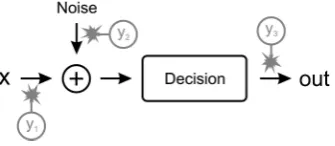
Figure 5. The second unknown: Is context invariance true? Context invariance assumes that processing of signalxis not changed whether or not signalyis presented as well. Violations of the assumption may occur at different stages. Within the decision making process, for example, signal ymay change the processing of signal xby inhibition/excitation (situation y1) or in terms of noise (situationy2). Interactions may occur at any other stage including stages after a decision is made (situationy3).
process but in principle at any other level (Fig. 5, y3). In addition, the illus-trated interactions are reciprocal in that signalx may also change processing of signal y. What this list shows is that there are many hypothetical scenar-ios how context invariance may be violated and pooling of sensory evidence within one decision unit is only one extreme of these. To advance research on the RSE, the question is how and on what level is context invariance vio-lated?
Our new approach helps to answer this question. The basic idea is that equa-tion (2) can be fitted to the CDF in the redundant signals condiequa-tion and that differences between data and model can reveal potential interactions (Otto and Mamassian, 2012). To highlight the advantage of this approach, it is interest-ing to note that the typical readinterest-ing of the race model test is that processinterest-ing in the redundant signals condition is ‘faster’ (Miller, 2016, p. 518) or ‘more efficient’ (Townsend and Nozawa, 1997, p. 597) than predicted by pure sta-tistical facilitation. However, the test is basically limited to the fast tail of the RT distribution (Diederich and Colonius, 2004). The test does not consider the slow tail, which is typically not violating the race model inequality. Given the limitation of the test to only a subset of the responses, it is in fact very diffi-cult to make inferences about how or in what direction context invariance is violated. In stark contrast, a major advantage of our approach is that it consid-ers the entire RT distribution. Hence, a much more detailed view on potential violations of the context invariance assumption is possible.
task demands (Fig. 1). Consequently, a response to redundant signals is trig-gered by the faster of the two units (which is the basic idea of race models; see Fig. 2A). We extended Raab’s (1962) basic model by including a potential correlation as a free model parameter (the correlation parameter corresponds to the first unknown in equation (2) and is needed to compute the joint prob-ability). In summary, the model is constrained by the single signal conditions and has only one additional free parameter. We found that the model fitted the RT distribution in the redundant signals condition best by assuming a strong negative correlation, which is in agreement with the finding of a strong his-tory effect in the data. Notably, the most prominent difference between the model fit and the empirical data was that RTs in the redundant signals condi-tion were more variable compared to the best model fit (Otto and Mamassian, 2012, their Fig. 3F). Hence, to understand potential violations of the context invariance assumption (the second unknown in equation (2)), the question is not what could lead to faster or more efficient processing but what could lead to more variable processing. To account for this difference, we added a sec-ond free model parameter that controls not the mean but the variability of decision times in the parallel decision units in the redundant compared to the single signal conditions. It is critical to understand that the additional parame-ter does not change the basic race model architecture but manifests a specific violation of the context invariance assumption (equation (5)). Interestingly, this context variant race model (see Note 4) readily predicts violation of the race model inequality very similar to empirical data (Otto and Mamassian, 2012, their Fig. S1B). Moreover, the model with only two free parameters fit-ted the entire RT distribution in the redundant signals condition reasonably well.
features of the signals, this change could point to a noise interaction. However, based on our behavioral data, we can only speculate about potential sources of increased variability and additional research is needed to reveal more details. Still, as a main message, each of the two model parameters points to a source of variability that needs to be understood, which we argue is the key to finally understand the RSE.
5. Testability and Explanatory Power
Our new approach has demonstrated that the RSE can be explained by a race model even if the race model inequality is violated (Otto and Mamassian, 2010, 2012). The important new feature is that our race model allows for increased variability, which is a specific violation of the context invariance assumption (equation (5)). Miller (2016, p. 519) criticized context variant race models, including the approach discussed above, because the “class of context [variant] race models is sufficiently open-ended that it can never be falsified, just like the wider class of coactivation models”. What does this mean? This fundamental and important criticism should be alarming for any researcher ar-guing for coactivation (pooling). The issue is that if a model is not testable, at least in principle, it cannot be significantly proposed as a scientific hypothesis or theory as it lacks empirical import (Hempel, 1966, p. 30). Without going as far as Miller (2016) who argues that coactivation (pooling) models are not testable in principle, we agree that up to now there has been no significant attempt to derive testable predictions based on coactivation (pooling). For ex-ample, does coactivation (pooling) allow for predictions on the level of RT distributions? Consequently, we agree that coactivation (pooling) is at present only a very weak hypothesis to account for the RSE (not to mention the con-ceptual confusion around the terms in the past).
and with that race models that explain the RSE by statistical facilitation. For example, a very typical manipulation in RSE experiments is to change the relative onset of signals (e.g., Hershenson, 1962; Miller, 1986; Otto et al., 2013). This manipulation puts race models to test because the principle of congruent effectiveness predicts that the RSE is largest when the two signals trigger responses at the same time. Whatever signals are tested, it follows that the RSE should be largest when the onset of the signal with faster RTs is delayed by the RT difference between the single signal conditions. As this prediction is confirmed in experiments, studies that changed the relative onset of signals have in fact provided evidential support for statistical facilitation and, hence, for race models (Otto et al., 2013). Another typical manipulation is to change the intensity of signals (e.g., Chandrasekaran et al., 2011; Otto et al., 2013; Senkowski et al., 2011). As changing the intensity of signals affects both the average and the spread of RTs, both principles are put to test. The principle of equal effectiveness is tested, as it predicts that the RSE is largest if signal intensities are calibrated to trigger responses at the same time. The variability rule is tested as it predicts that the RSE is increasing as the RT variability increases, which is the case for weaker signal intensities. As the predictions are confirmed in experiments, studies that changed the intensity of signals have in fact also provided evidential support for statistical facilitation and, hence, for race models (Otto et al., 2013). Consequently, Miller’s (2016) fundamental criticism does not apply to race models as these can be and have been tested. The only unfortunate issue is that the standing of race models has suffered in the past from the repeated misinterpretation of the race model test. To advance research on the RSE, we hope it will be finally recognized that there is in fact strong evidential support for race models across a broad range of signals, conditions, and participants.
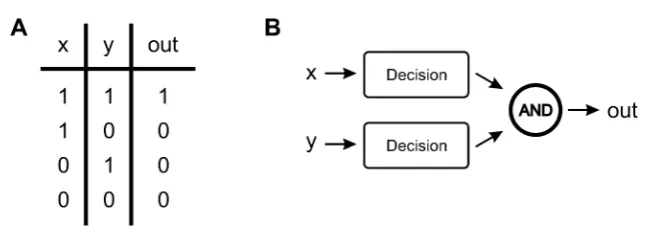
The PRP and the redundant signals paradigm could therefore be analyzed jointly with a focus on the cognitive structures that route perceptual deci-sions to motor outputs. This approach can be further refined by not only presenting identical signals but by also keeping the motor response identi-cal. In this case, only the cognitive structures that route perceptual decisions to motor outputs would be put to test. This approach can be implemented for example in a new experiment, which changes the task demands of the redundant signals paradigm in that the single signal conditions no longer re-quire responses. A systematic analysis of the task demands shows that the two signals are, by design of the paradigm, coupled by a logical conjunc-tion (Fig. 6A). Given the new task demands, a pooling of sensory evidence seems to make no sense here either. In contrast, the basic cognitive architec-ture of race models can be effortlessly adapted to meet the new task demands. In the model, only the logic OR needs to be replaced by a logic AND gate (Fig. 6B). We tested the adapted model and found that it predicted the slow-down of RTs in the new conjunction task surprisingly well (Otto and Ma-massian, 2012, their Fig. 4). Consequently, the basic ideas championed by Raab (1962) can actually be understood as part of a much larger framework, which assumes that parallel decision units are flexibly coupled by cognitive functions according to the task demands. This larger framework demonstrates a convincing explanatory power within and beyond the redundant signals paradigm, which makes it potentially extremely useful for multisensory re-search.
6. Conclusion
The redundant signals paradigm is a classic paradigm in multisensory research and the RSE is one of the most prominent behavioral benefits with multisen-sory signals. Given the huge number and fascinating diversity of experimental studies, it should be a main objective for multisensory research to under-stand whether or not a common cognitive function contributes to the RSE. We here discussed our new approach to the RSE, which is in stark contrast to the mainstream of the last decades (see the many follow-up studies of Miller, 1982). As a major change of direction, our working hypothesis is that the ba-sic race model architecture championed by Raab (1962) is correct even if the race model test has been interpreted to suggest otherwise. We argue that our new approach allows to precisely predict the RSE and to reveal and quantify specific interactions in the processing of multisensory signals (Otto and Ma-massian, 2012; Otto et al., 2013). What is more, the approach points directly to a set of basic cognitive functions, which we summarize as a flexible logic coupling of parallel decisions according to the task demands. In the end, we think that this set of functions is fundamental to the combinatorial benefit of multisensory signals.
Finally, we like to reiterate that Miller’s (1982) race model test is a beau-tiful example of hypothesis testing in scientific enquiry. The test shows that Raab’s (1962) basic race model alone, even when a correlation parameter is added, cannot explain the RSE. Hence, we would say that ‘something inter-esting’ happens. To our opinion, RSE research should not stop at this point but try to find an explanation (which, as we have shown, can still involve the basic race model architecture). This endeavor calls of course for the contin-ued use of the race model test. However, what became evident throughout is that RSE research has suffered in the past from methodological inconsis-tencies and conceptual confusion (Gondan and Minakata, 2016; Miller, 2016; Otto and Mamassian, 2010). We hope that the four main items, which we have discussed here, help to resolve at least some of the confusion. Based on the discussed material, we provide a checklist for RSE studies (Table 1). This min-imum set of questions hopefully helps to further improve research consistency, which we think is critically needed to finally understand the RSE.
Acknowledgements
Table 1.
Checklist for RSE studies
◦Are terms and concepts clearly defined?
◦Is the race model test correctly used (inequality (6))?
◦Is context invariance discussed (equation (5))?
◦Are history effects quantified and reported (Fig. 4)?
◦Are history effects considered by a proposed model?
◦Is a proposed model well-specified and testable?
Notes
1. The cited studies present only a small subset of research on the RSE as an extensive review is beyond the scope of this opinion paper (for a methods review on 181 recent studies, see Gondan and Minakata, 2016).
2. We focus on two solutions that were considered most frequently in re-search on the RSE. Townsend and Nozawa (1997) discuss also an alterna-tive serial processing architecture.
3. If the race model inequality is not violated (confirming the consequent), nothing can be concluded. The hypothesis may be true or false.
4. Gondan and Minakata (2016, p. 731) classify our model as a ‘coactivation model’, which we think can be misleading given the frequent confusion of coactivation and pooling (Fig. 2B). The term context variant race model is much more consistent as the basic model architecture fits our definition of race models (Fig. 2A). The add-on context variant indicates that the context invariance assumption is violated. The class of context variant race models includes for example also the ‘interactive race model’ proposed by Mordkoff and Yantis (1991).
References
Ashby, F. G. and Townsend, J. T. (1986). Varieties of perceptual independence, Psychol. Rev. 93, 154–179.
Blurton, S. P., Greenlee, M. W. and Gondan, M. (2014). Multisensory processing of redundant information in go/no-go and choice responses, Atten. Percept. Psychophys. 76, 1212–1233. Bogacz, R. (2007). Optimal decision-making theories: linking neurobiology with behaviour,
Trends Cogn. Sci. 11, 118–125.
Bogacz, R., Brown, E., Moehlis, J., Holmes, P. and Cohen, J. D. (2006). The physics of optimal decision making: a formal analysis of models of performance in two-alternative forced-choice tasks, Psychol. Rev. 113, 700–765.
Brandwein, A. B., Foxe, J. J., Butler, J. S., Russo, N. N., Altschuler, T. S., Gomes, H. and Mol-holm, S. (2013). The development of multisensory integration in high-functioning autism: high-density electrical mapping and psychophysical measures reveal impairments in the pro-cessing of audiovisual inputs, Cereb. Cortex 23, 1329–1341.
Brang, D., Williams, L. E. and Ramachandran, V. S. (2012). Grapheme-color synesthetes show enhanced crossmodal processing between auditory and visual modalities, Cortex 48, 630– 637.
Carpenter, R. H. S. and Williams, M. L. (1995). Neural computation of log likelihood in control of saccadic eye movements, Nature 377(6544), 59–62.
Chandrasekaran, C., Lemus, L., Trubanova, A., Gondan, M. and Ghazanfar, A. A. (2011). Mon-keys and humans share a common computation for face/voice integration, PLoS Comput. Biol. 7, e1002165. DOI:10.1371/journal.pcbi.1002165.
Collignon, O., Girard, S., Gosselin, F., Saint-Amour, D., Lepore, F. and Lassonde, M. (2010). Women process multisensory emotion expressions more efficiently than men, Neuropsy-chologia 48, 220–225.
Colonius, H. (1990). Possibly dependent probability summation of reaction-time, J. Math. Psy-chol. 34, 253–275.
Colonius, H. and Diederich, A. (2006). The race model inequality: interpreting a geometric measure of the amount of violation, Psychol. Rev. 113, 148–154.
Corballis, M. C. (1998). Interhemispheric neural summation in the absence of the corpus callo-sum, Brain 121, 1795–1807.
Deco, G. and Rolls, E. T. (2006). Decision-making and Weber’s law: a neurophysiological model, Eur. J. Neurosci. 24, 901–916.
Diederich, A. and Colonius, H. (2004). Modeling the time course of multisensory interaction in manual and saccadic responses, in: Handbook of Multisensory Processes, G. Calvert, C. Spence and B. E. Stein (Eds), pp. 395–408. MIT Press, Cambridge, MA, USA.
Driver, J. and Noesselt, T. (2008). Multisensory interplay reveals crossmodal influences on ‘sensory-specific’ brain regions, neural responses, and judgments, Neuron 57, 11–23. Feintuch, U. and Cohen, A. (2002). Visual attention and coactivation of response decisions for
features from different dimensions, Psychol. Sci. 13, 361–369.
Ghazanfar, A. A. and Schroeder, C. E. (2006). Is neocortex essentially multisensory? Trends Cogn. Sci. 10, 278–285.
Giard, M. H. and Peronnet, F. (1999). Auditory-visual integration during multimodal object recognition in humans: a behavioral and electrophysiological study, J. Cogn. Neurosci. 11, 473–490.
Girard, S., Pelland, M., Lepore, F. and Collignon, O. (2013). Impact of the spatial congruence of redundant targets on within-modal and cross-modal integration, Exp. Brain Res. 224, 275–285.
Gold, J. I. and Shadlen, M. N. (2007). The neural basis of decision making, Annu. Rev. Neurosci. 30, 535–574.
Gondan, M. and Minakata, K. (2016). A tutorial on testing the race model inequality, Atten. Percept. Psychophys. 78, 723–735.
Gondan, M., Lange, K., Rosler, F. and Roder, B. (2004). The redundant target effect is affected by modality switch costs, Psychonom. Bull. Rev. 11, 307–313.
Hanks, T. D., Kopec, C. D., Brunton, B. W., Duan, C. A., Erlich, J. C. and Brody, C. D. (2015). Distinct relationships of parietal and prefrontal cortices to evidence accumulation, Nature 520(7546), 220–223.
Harrar, V., Tammam, J., Perez-Bellido, A., Pitt, A., Stein, J. and Spence, C. (2014). Multisensory integration and attention in developmental dyslexia, Curr. Biol. 24, 531–535.
Hecht, D., Reiner, M. and Karni, A. (2008). Enhancement of response times to bi- and tri-modal sensory stimuli during active movements, Exp. Brain Res. 185, 655–665.
Heekeren, H. R., Marrett, S. and Ungerleider, L. G. (2008). The neural systems that mediate human perceptual decision making, Nat. Rev. Neurosci. 9, 467–479.
Hempel, C. (1966). Philosophy of Natural Science. Prentice Hall, Upper Saddle River, NJ, USA.
Hershenson, M. (1962). Reaction time as a measure of intersensory facilitation, J. Exp. Psychol. 63, 289–293.
Hughes, H. C., Reuter-Lorenz, P. A., Nozawa, G. and Fendrich, R. (1994). Visual-auditory interactions in sensorimotor processing: saccades versus manual responses, J. Exp. Psychol. Hum. Percept. Perform. 20, 131–153.
Katzner, S., Busse, L. and Treue, S. (2006). Feature-based attentional integration of color and visual motion, J. Vis. 6, 269–284.
Kinchla, R. A. (1974). Detecting target elements in multielement arrays: a confusability model, Percept. Psychophys. 15, 149–158.
Koene, A. R. and Zhaoping, L. (2007). Feature-specific interactions in salience from combined feature contrasts: evidence for a bottom-up saliency map in V1, J. Vis. 7(6), 1–14.
Krummenacher, J., Grubert, A., Töllner, T. and Müller, H. J. (2014). Salience-based integration of redundant signals in visual pop-out search: evidence from behavioral and electrophysio-logical measures, J. Vis. 14, 26. DOI:10.1167/14.3.26.
Lemus, L., Hernández, A., Luna, R., Zainos, A. and Romo, R. (2010). Do sensory cortices process more than one sensory modality during perceptual judgments? Neuron 67, 335– 348.
Luce, R. D. (1986). Response Times: Their Role in Inferring Elementary Mental Organization. Oxford University Press, New York, NY, USA.
Marr, D. (1982). Vision: a Computational Investigation Into the Human Representation and Processing of Visual Information. Henry Holt and Co, New York, NY, USA.
Martuzzi, R., Murray, M. M., Michel, C. M., Thiran, J. P., Maeder, P. P., Clarke, S. and Meuli, R. A. (2007). Multisensory interactions within human primary cortices revealed by BOLD dynamics, Cereb. Cortex 17, 1672–1679.
Miller, J. (1982). Divided attention: evidence for coactivation with redundant signals, Cogn. Psychol. 14, 247–279.
Miller, J. (1986). Timecourse of coactivation in bimodal divided attention, Percept. Psychophys. 40, 331–343.
Miller, J. (2016). Statistical facilitation and the redundant signals effect: what are race and coactivation models?, Atten. Percept. Psychophys. 78, 516–519.
Molholm, S., Ritter, W., Murray, M. M., Javitt, D. C., Schroeder, C. E. and Foxe, J. J. (2002). Multisensory auditory-visual interactions during early sensory processing in humans: a high-density electrical mapping study, Brain Res. Cogn. Brain Res. 14, 115–128.
Mordkoff, J. T. and Yantis, S. (1991). An interactive race model of divided attention, J. Exp. Psychol. Hum. Percept. Perform. 17, 520–538.
Mordkoff, J. T. and Yantis, S. (1993). Dividing attention between color and shape — evidence of coactivation, Percept. Psychophys. 53, 357–366.
Murray, M. M., Molholm, S., Michel, C. M., Heslenfeld, D. J., Ritter, W., Javitt, D. C., Schroeder, C. E. and Foxe, J. J. (2005). Grabbing your ear: rapid auditory-somatosensory multisensory interactions in low-level sensory cortices are not constrained by stimulus align-ment, Cereb. Cortex 15, 963–974.
Noorani, I. and Carpenter, R. H. (2016). The LATER model of reaction time and decision, Neurosci. Biobehav. Rev. 64, 229–251.
Otto, T. U. and Mamassian, P. (2010). Noise vs. Multisensory Integration: the Return of the Race Model, paper presented at the 11th International Multisensory Research Forum (IMRF), Liverpool, UK.
Otto, T. U. and Mamassian, P. (2012). Noise and correlations in parallel perceptual decision making, Curr. Biol. 22, 1391–1396.
Otto, T. U., Dassy, B. and Mamassian, P. (2013). Principles of multisensory behavior, J. Neu-rosci. 33, 7463–7474.
Pashler, H. (1994). Dual-task interference in simple tasks: data and theory, Psychol. Bull. 116, 220–244.
Perez-Bellido, A., Soto-Faraco, S. and Lopez-Moliner, J. (2013). Sound-driven enhancement of vision: disentangling detection-level from decision-level contributions, J. Neurophysiol. 109, 1065–1077.
Poom, L. (2009). Integration of colour, motion, orientation, and spatial frequency in visual search, Perception 38, 708–718.
Raab, D. H. (1962). Statistical facilitation of simple reaction times, Trans. N. Y. Acad. Sci. 24, 574–590.
Ratcliff, R. (1978). Theory of memory retrieval, Psychol. Rev. 85, 59–108.
Reddi, B. A. J., Asrress, K. N. and Carpenter, R. H. S. (2003). Accuracy, information, and response time in a saccadic decision task, J. Neurophysiol. 90, 3538–3546.
Schröter, H., Frei, L. S., Ulrich, R. and Miller, J. (2009). The auditory redundant signals effect: an influence of number of stimuli or number of percepts?, Atten. Percept. Psychophys. 71, 1375–1384.
Senkowski, D., Saint-Amour, D., Hofle, M. and Foxe, J. J. (2011). Multisensory interactions in early evoked brain activity follow the principle of inverse effectiveness, Neuroimage 56, 2200–2208.
Shadlen, M. N. and Newsome, W. T. (2001). Neural basis of a perceptual decision in the parietal cortex (area LIP) of the rhesus monkey, J. Neurophysiol. 86, 1916–1936.
Sigman, M. and Dehaene, S. (2005). Parsing a cognitive task: a characterization of the mind’s bottleneck, PLoS Biol. 3, 334–349.
Spence, C., Nicholls, M. E. R. and Driver, J. (2001). The cost of expecting events in the wrong sensory modality, Percept. Psychophys. 63, 330–336.
Stein, B. E. and Stanford, T. R. (2008). Multisensory integration: current issues from the per-spective of the single neuron, Nat. Rev. Neurosci. 9, 255–266.
Stanford, T. R., Wallace, M. T., Yu, L. P. and Lewkowicz, D. J. (2010). Semantic confusion regarding the development of multisensory integration: a practical solution, Eur. J. Neurosci. 31, 1713–1720.
Todd, J. (1912). Reaction to multiple stimuli, Arch. Psychol. 3, 1–65.
Townsend, J. T. and Nozawa, G. (1997). Serial exhaustive models can violate the race model inequality: implications for architecture and capacity, Psychol. Rev. 104, 595–602. Townsend, J. T. and Wenger, M. J. (2004). A theory of interactive parallel processing: new
capacity measures and predictions for a response time inequality series, Psychol. Rev. 111, 1003–1035.
Ulrich, R., Miller, J. and Schröter, H. (2007). Testing the race model inequality: an algorithm and computer programs, Behav. Res. Meth. 39, 291–302.
Wald, A. and Wolfowitz, J. (1948). Optimum character of the sequential probability ratio test, Ann. Math. Stat. 19, 326–339.
Wang, X. J. (2002). Probabilistic decision making by slow reverberation in cortical circuits, Neuron 36, 955–968.
Waszak, F., Hommel, B. and Allport, A. (2003). Task-switching and long-term priming: role of episodic stimulus — task bindings in task-shift costs, Cogn. Psychol. 46, 361–413. Welford, A. T. (1952). The ‘Psychological Refractory Period’ and the timing of high-speed
performance — a review and a theory, Br. J. Psychol. Gen. Sect. 43, 2–19.
Wuerger, S. M., Crocker-Buque, A. and Meyer, G. F. (2012). Evidence for auditory-visual pro-cessing specific to biological motion, Seeing Perceiving 25, 15–28.