Alcohol and Alcoholism, 2018, 53(3) 302–316 doi: 10.1093/alcalc/agx094 Advance Access Publication Date: 10 January 2018 Review
Review
Effectiveness of Mass Media Campaigns
to Reduce Alcohol Consumption and Harm:
A Systematic Review
Ben Young
1,2,*, Sarah Lewis
1,2, Srinivasa Vittal Katikireddi
3,
Linda Bauld
2,4, Martine Stead
2,4, Kathryn Angus
2,4, Mhairi Campbell
3,
Shona Hilton
3, James Thomas
5, Kate Hinds
5, Adela Ashie
1,2,
and Tessa Langley
1,21
Division of Epidemiology and Public Health, University of Nottingham, Nottingham, UK,
2UK Centre for Tobacco &
Alcohol Studies, Nottingham, UK,
3MRC/CSO Social and Public Health Sciences Unit, University of Glasgow,
Glasgow, UK,
4Institute for Social Marketing, University of Stirling, Stirling, UK, and
5Institute of Education,
University College London, London, UK
*Corresponding author: Division of Epidemiology and Public Health, University of Nottingham, Nottingham, UK. Tel:+44-0-115-823-1684; Fax:+44-0-115-823-1337; E-mail: [email protected]
Received 28 June 2017; Revised 11 October 2017; Editorial Decision 23 October 2017; Accepted 24 October 2017
Abstract
Aims:
To assess the effectiveness of mass media messages to reduce alcohol consumption and
related harms using a systematic literature review.
Methods:
Eight databases were searched along with reference lists of eligible studies. Studies of
any design in any country were included, provided that they evaluated a mass media intervention
targeting alcohol consumption or related behavioural, social cognitive or clinical outcomes. Drink
driving interventions and college campus campaigns were ineligible. Studies quality were
assessed, data were extracted and a narrative synthesis conducted.
Results:
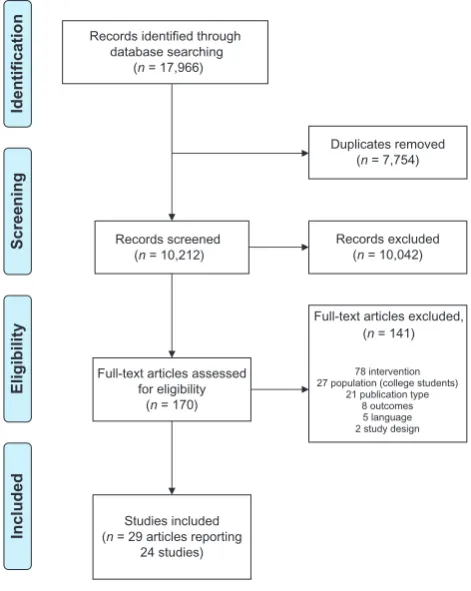
Searches produced 10,212 results and 24 studies were included in the review. Most
campaigns used TV or radio in combination with other media channels were conducted in
devel-oped countries and were of weak quality. There was little evidence of reductions in alcohol
con-sumption associated with exposure to campaigns based on 13 studies which measured
consumption, although most did not state this as a speci
fi
c aim of the campaign. There were
some increases in treatment seeking and information seeking and mixed evidence of changes in
intentions, motivation, beliefs and attitudes about alcohol. Campaigns were associated with
increases in knowledge about alcohol consumption, especially where levels had initially been
low. Recall of campaigns was high.
Conclusion:
Mass media health campaigns about alcohol are often recalled by individuals, have
achieved changes in knowledge, attitudes and beliefs about alcohol but there is little evidence of
reductions in alcohol consumption.
Short summary:
There is little evidence that mass media campaigns have reduced alcohol
con-sumption although most did not state that they aimed to do so. Studies show recall of
cam-paigns is high and that they can have an impact on knowledge, attitudes and beliefs about
alcohol consumption.
INTRODUCTION
Alcohol consumption is a major risk factor for adverse health, accounting for 2.3 million global deaths annually and representing the ninth greatest risk factor for disability-adjusted life-years (GBD 2015 Risk Factors Collaborators, 2016). In most countries, the trend in alcohol consumption is either increasing or stable (WHO, 2014), indicating a need for effective population-level strategies to reduce consumption and prevent related harms. Price increases and restric-tions on the availability of alcohol can reduce alcohol-related harm (Andersonet al., 2009;Martineauet al., 2013;Allamaniet al., 2017). Other population-level strategies include education and informa-tion, often using mass media with an aim to communicate messages cost-effectively to large numbers of people.
Mass media campaigns can directly or indirectly lead to health behaviour change in populations, but existing evidence varies depending on the type of behaviour being targeted (Wakefieldet al., 2010). For example, there is a substantial body of evidence assessing their role in reducing tobacco use (Balaet al., 2013) and promoting physical activity (Abioye et al., 2013). However, it is unclear whether mass media is an effective strategy to reduce alcohol con-sumption and related harm.
There is some evidence that mass media campaigns can, under cer-tain conditions, reduce drink driving (Elderet al., 2004;Jepsonet al., 2010) but little evidence that they have reduced alcohol-related road accidents or related injuries and deaths (Yadav and Kobayashi, 2015). A meta-analysis of media interventions to reduce youth substance use reported that messages addressing alcohol were associated with desired changes (single group pre-post) in consumption, attitudes and knowl-edge (Derzon and Lipsey, 2002). A meta-analysis of US mass media interventions reported a small effect on alcohol consumption based on four studies (Snyder et al., 2004). Other systematic review evidence suggests social norm campaigns targeting college students are ineffect-ive at preventing alcohol misuse (Foxcroftet al., 2015) and provides mixed evidence of the effectiveness of school-based campaigns (Foxcroft and Tsertsvadze, 2011). Responsible drinking campaigns conducted by the alcohol industry are perceived as ambiguous by audi-ences and are ineffective at changing behaviour (Smithet al., 2006).
Other than the topics already highlighted, evaluations of alcohol-related campaigns have not been synthesized in a way that can inform current policy. The aim of this study was to systematically review evi-dence for the effectiveness of mass media public health campaigns to reduce alcohol consumption and related harms.
METHOD
The review protocol was submitted to the International Prospective Register of Systematic Reviews (PROSPERO) ref. CRD42017054999. The Preferred Reporting Items for Systematic reviews and Meta-Analyses (PRISMA) were followed.
Inclusion criteria
Studies evaluating a mass media campaign aimed at reducing alco-hol consumption (and its determinants) were eligible for inclusion. Mass media campaigns were defined as purposeful use of mass med-ia channels to influence health behaviours and the individual level determinants of health behaviours. Mass media channels included television, radio, cinema, online broadcasting, newspapers and magazines, leaflets/booklets, direct mail, outdoor advertising, email and digital media. Studies had to have reported at least one of the following outcomes: alcohol consumption; alcohol-related social
cognitive variables (e.g. knowledge, intentions, social norms); expos-ure outcomes (e.g. campaign awareness, exposexpos-ure, understanding); alcohol-related harm; health service usage. Studies of multi-component interventions were eligible if they assessed the specific effects of a mass media component. Reports of primary research stud-ies of any study design and conducted in any country, reported in English, were eligible for inclusion in the review. Exclusion criteria are listed in the Supplementary material (Supplementary Table S1).
Search strategy
The following databases were searched from date of inception to July 2016: Medline, EMBASE, PubMed, Cochrane Library, Web of Science, SCOPUS, ASSIA and ERIC. The search terms used for Medline are shown in the Supplementary material (Supplementary Table S2) and were adapted for each database. Titles and abstracts were imported to an online database (Thomas et al., 2010) and screened for relevance by one of a team of four reviewers. Full-text reports of all potentially eligible studies were retrieved and assessed for eligibility by one reviewer. A second reviewer assessed random samples of included (n=10) and excluded (n=10) studies at an early stage of the screening process to check agreement with the decisions and checked a further random sample (n = 20) once screening was complete. Conference abstracts of eligible studies were included only if a full-text paper of the same study could be located via searches of PubMed, Web of Science and Google Scholar. References of included studies were searched for any fur-ther potentially relevant studies.
Data extraction
Study and campaign characteristics and relevant outcome data were extracted. Study design classifications were guided by the Cochrane Handbook tables of study design features (Reeveset al., 2011). A second reviewer double-extracted data from a sample of studies and the two versions were checked for agreement. A further sample of studies was checked for accuracy by a second reviewer.
Quality assessment
Included studies were assessed for methodological quality using the Effective Public Health Practice Project (EPHPP) Quality Assessment Tool for Quantitative Studies. Assessments were checked for accur-acy by a second reviewer. The tool has six scored domains: selection bias, study design, confounders, blinding, data collection methods and withdrawal and dropouts. The overall quality of a study can be rated as strong, moderate or weak. Studies rated as weak on at least two domains are assigned an overall rating of weak.
Synthesis
A narrative synthesis was conductedfirst to synthesize evidence of behaviour change and then by its determinants, including social cog-nitive and exposure outcomes. We privilege studies with high quality within the narrative synthesis (Katikireddi et al., 2015). Due to study heterogeneity, a meta-analysis was not possible.
RESULTS
Study selection
Characteristics of included studies are shown in Table1. Eight stud-ies were conducted in the USA, five in Australia, two each in Finland, New Zealand and the UK, and one each in Canada, Denmark, Italy, the Netherlands and Sri Lanka. No campaigns were described as alcohol industry-funded.
Study quality
Two studies were rated strong quality (Flynnet al., 2006;Scheier and Grenard, 2010), four were rated moderate quality (Wallack and Barrows, 1982; Barber and Grichting, 1990; Kypri et al., 2005; Lowe et al., 2010;) and 18 were rated weak quality (Plantet al., 1979;Barberet al., 1989;Casswellet al., 1990;Casiroet al., 1994; Allamani et al., 2000; Kelleyet al., 2000; Grønbæket al., 2001; Surkan et al., 2003; Karlssonet al., 2005; Awopetuet al., 2008; Kaariainen et al., 2008;Atkinsonet al., 2011;van Gemertet al., 2011;Hansonet al., 2012;Siriwardhanaet al., 2013;van Leeuwen et al., 2013;Dixonet al., 2015;Trees, 2015). EPHPP tool domain ratings indicated 20 studies did not report reliability and validity of data collection tools, ten studies had high risk of selection bias and nine were rated weak on study design (Table2).
Synthesis of results
Table3summarizes thefindings of included studies, structured by different types of outcomes: health, social and behavioural outcomes (e.g. mortality, societal change, health behaviour), health promotion outcomes (e.g. knowledge, attitudes, behavioural intentions) and exposure outcomes (e.g. recall, understanding, onward transmis-sion). More detailed results of included studies are shown in the Supplementary Table S3.
Alcohol consumption
Thirteen studies reported the effects of mass media campaigns on alcohol consumption. Six of the campaigns aimed to reduce con-sumption (Wallack and Barrows, 1982; Barber et al., 1989; Grønbæk et al., 2001; Karlsson et al., 2005; Flynn et al., 2006; Scheier and Grenard, 2010) while the other seven aimed only to impact knowledge (Plantet al., 1979;Barber and Grichting, 1990; Kypriet al., 2005;Hansonet al., 2012;Dixonet al., 2015;Trees, 2015), beliefs (van Leeuwen et al., 2013), attitudes (Kypri et al., 2005), treatment seeking (Plant et al., 1979) or supply of alcohol (Kypriet al., 2005). There was little evidence of reductions in alco-hol consumption associated with exposure to campaigns. Six of the studies compared exposed and non-exposed groups, or exposed groups over time,five reporting no statistically significant differences in alcohol consumption (1 strong quality, 3 moderate, 1 weak) (Wallack and Barrows, 1982;Barber and Grichting, 1990;Karlsson et al., 2005;Kypriet al., 2005;Flynnet al., 2006). One study (weak quality) found a significant effect of a TV and mailed letter cam-paign (Barberet al., 1989). Consumption on a typical day decreased 47%, contrasting with increases in groups receiving either the TV or letter components or no intervention. Of four studies that examined associations between campaign viewing or awareness (rather than group allocation) and alcohol consumption, one study (strong qual-ity) reported that increases in campaign awareness in older adoles-cence, but not younger adolesadoles-cence, was associated with decreases in binge drinking (Scheier and Grenard, 2010), one study (weak quality) reported campaign viewing status was a significant pre-dictor of number of drinks consumed per occasion (van Leeuwen et al., 2013) and two studies of weak quality found no significant difference in consumption (Plantet al., 1979;Dixonet al., 2015).
Treatment/information seeking
There was some evidence that mass media campaigns generated increases in treatment seeking or information seeking, from a total of four studies reporting this outcome (all weak quality). One of the campaigns had an aim to promote interest in and understanding of alcohol treatment (Grønbæket al., 2001) while three campaigns had other aims (Plantet al., 1979;Allamaniet al., 2000;Awopetuet al., 2008;). New referrals for alcoholism increased by 65% following a TV and radio campaign (Plantet al., 1979). Forty-nine Foetal Alcohol Syndrome-related telephone calls were received by a Family Health Line following a campaign, compared to 5–6 calls received in a histor-ical period (Awopetuet al., 2008). Evaluation of a long-term national annual campaign found 6–7% had obtained an alcohol unit counter and 2% (~80,000 people) had used or considered using it (Grønbæk et al., 2001). The other study reported mixed qualitative evidence which was difficult to interpret (Allamaniet al., 2000).
Intentions and motivation
Three studies reported intentions to reduce alcohol consumption. One of the campaigns aimed to reduce consumption (Wallack and Barrows, 1982), one aimed to influence beliefs (van Leeuwenet al., 2013) and one aimed to promote knowledge (Dixonet al., 2015). Thefirst study (moderate quality) reported that some respondents indicated they might change their behaviour but no further data were provided (Wallack and Barrows, 1982). The second study (weak quality) com-pared those who reported they had seen the campaign to those who did not. Viewing status significantly predicted changes in intentions to decrease alcohol use; viewers increased their intentions whereas
Records identified through database searching
(n = 17,966)
Screening
Included
Eligibility
Identification
Duplicates removed (n = 7,754)
Records screened (n = 10,212)
Records excluded (n = 10,042)
Full-text articles assessed for eligibility
(n = 170)
Full-text articles excluded, (n = 141)
78 intervention 27 population (college students)
21 publication type 8 outcomes 5 language 2 study design
Studies included (n = 29 articles reporting
24 studies)
Fig. 1.PRISMAflow diagram.
[image:3.612.62.298.414.710.2]Table 1.Characteristics of included studies
References and study design Population Campaign
Campaigns targeting general adult populations Allamaniet al.(2000)
Cross-sectional
Campaign location and reach
Rifredi Health District (population 16,900), Florence, Italy. 5,000 carousels were disseminated
Campaign context
A component of a 6-year community alcohol project, which included a school program unit and training for healthcare workers and volunteers. The project had an aim to change local alcohol policy. Local TV and newspapers publicized the‘carousel’initiative prior to its implementation
Target population
Whole community
Comparison group
None
Campaign objective
Increase awareness about responsible consumption of wine and other alcoholic drinks
Media channel(s)
Posters displayed in buses.
‘Carousel’information tool (rotatable disk presented in a yellow envelope with ‘Take home a carousel’printed on the outside) distributed via racks at GPs, pharmacies, schools, shops and bars, sent by mail to homes and distributed at local events
Barberet al.(1989)
Cluster non-randomized controlled trial (exposure to pre-campaign letter in both groups was randomized at the individual level, forming a 2×2 design)
Campaign location and reach
Townsville, North Queensland, Australia. Local reach
Target population
Adult alcohol drinkers
Comparison group
Community (Cairns) not exposed to TV advertisement but sent pre-campaign letters
Campaign objective
Reduce alcohol consumption
Media channel(s)
TV advertisement, pre-campaign postal letter
Barber (1990)
Uncontrolled before and after study with a separate exposed group measured post-campaign only
Campaign location and reach
Australia, national reach
Campaign context
The beginning of a government 3-year National Campaign Against Drug Abuse
Target population
The general population
Comparison group
None.
Campaign objective
Educate the public in the responsible use of drugs, with an emphasis on attitudes. Sought to raise public concern about the prevention of drug abuse generally
Media channel(s)
Radio, television and newspaper advertisements. Printed glossy booklet delivered to homes
Casswellet al.(1990)
Cluster non-randomized controlled trial with separate repeated cross-sectional component
Campaign location and reach
Four cities in New Zealand (each of 40,000–60,000 population). Local media channels used
Target population
Initially males 18–30 years, subsequently males 16–20 years.
Comparison group
Group exposed to mass media campaign plus community action. Control group not exposed to mass media or community action.
Campaign objective
Increase awareness and support for relevant public policy on alcohol use. Change attitudes about alcohol use (more moderated drinking patterns and shift to non-alcoholic drinks). Wider community-level objectives included an increasing the amount of alcohol-related material (excluding industry promotion) in the local print media and radio programmes
Media channel(s)
Television, radio, newspaper, posters, cinema advertisements Dixonet al.(2015)Interrupted time series Campaign location and reach
Western Australia, state-wide
Target population
Women aged 25–54
Comparison group
None
Campaign objective
Increase awareness of the link between alcohol and cancer among women. Specifically, the campaign aimed to increase awareness of long-term risky drinking, particularly in relation to alcohol-caused cancer
Media channel(s)
TV advertisements supported by print advertisements, community posters, web-based information and unpaid media strategies
Campaign location and reach Campaign objective
Continued 305
Alcohol
and
Alcoholism
,
2018,
Vol.
53,
No.
Table 1. Continued
References and study design Population Campaign
Grønbæket al.(2001) Interrupted time series
Denmark, national reach
Target population
Different target groups in different years e.g. people in their forties, heavy drinkers, whole population
Comparison group
None
Highlight alcohol consumption in order to promote interest in and understanding of alcohol prevention and treatment. Raise awareness and knowledge among adults of sensible levels of alcohol consumption. Reduce the consumption of alcohol in the whole of society in order to prevent alcohol-related injuries. The long-term objective of the annual campaigns was to bring about a reduction in the consumption of alcohol in Denmark
Media channel(s)
Television spots, information trailers and advertisements, booklet, newspaper advertisements, direct mail, outdoor media, alcohol unit counter tools Kaariainenet al.(2008)
Cross-sectional
Campaign location and reach
Tampere, Finland. All households (200,000 population and 90,000 households)
Target population
General population
Comparison group
None
Campaign objective
Promote a change in the culture of alcohol consumption and increase open discussion about alcohol
Media channel(s)
A pamphlet, designed for the campaign, delivered to homes
Karlssonet al.(2005)
Cluster quasi-randomized controlled trial
Campaign location and reach
Helsinki, Finland. Eight postal areas (86,400 households)
Target population
Males 30–49 years
Comparison group
Eight postal areas not receiving the pamphlet (40,900 households)
Campaign objective
Support self-control of drinking
Media channel(s)
Information pamphlet, specially designed and delivered to homes, the size of a CD cover
Plantet al.(1979)
Cohort study with independent samples pre- and post-test
Campaign location and reach Scotland, UK. Regional reach
Target population
Alcoholics and the general public Comparison group
None
Campaign objective
Persuade alcoholics to seek treatment and educate the public about alcoholism and agencies available to help problem drinkers. The possibility was also envisaged that the campaign might lead to a reduction in alcohol consumption by the general public, at least in the short term, although this was not a primary objective
Media channel(s)
TVfilms and newspaper advertisements Siriwardhanaet al.(2013)
Cross-sectional for mass media outcomes but study included a cluster-randomized controlled design
Campaign location and reach
Sri Lanka, rural village, local reach
Target population
Adult males
Comparison group
None for mass media outcomes
Campaign objective
Educate the community about low-risk drinking (less than the equivalent of three standard drinks a day). Highlight the benefits of restricting amounts of drinking
Media channel(s)
Posters, recordings of street dramas distributed on DVD and leaflets delivered to homes
Wallack (1982)
Repeated cross-sectional with control group
Campaign location and reach
About half of Oakland and the city of San Leandro in Alameda County and the cities of El Cerrito, Richmond and San Pablo in Contra Costa County, California, USA
Target population
Initially males 18–35 years. Expanded to include females 25–40 years, Spanish heritage people and youth 14–17 years
Comparison group
City of Stockton in San Joaquin County, California, USA
Campaign objective
Reduce the consumption of alcoholic beverages and lower the incidence of alcohol-related problems in the general population. Encourage more responsible drinking practices among current drinkers and thus obviate the need for treatment. Increase awareness and level of information about alcohol. Change attitudes regarding alcohol use
Media channel(s)
Television, radio, billboard displays, bus cards
Continued
306
Alcohol
and
Alcoholism
,
2018,
Vol.
53,
No.
Table 1. Continued
References and study design Population Campaign
Campaigns targeting young people and/or their parents Atkinsonet al.(2011)
Qualitative
Campaign location and reach
UK. 943,644 views (unclear if all from UK)
Target population
Young people
Comparison group
None
Campaign objective
Create peer to peer conversations regarding the negative effects of binge drinking. The long-term aim of the campaign was to create behaviour change by delivering sensible drinking messages in a non-patronizing way through the Hollyoaks brand
Media channel(s)
Online video reinforced and promoted through online discussion boards, character social media pages and blogs/video blogs, interviews with actors and interactive features such as a quiz, which assessed viewers’recall of storylines, alcohol units and binge drinking knowledge and statistics relating to the negative effects of alcohol consumption
Flynnet al.(2006)
Repeated cross-sectional with control group
Campaign location and reach
Vermont, USA. Local reach
Target population
Adolescents in 8 school districts in grades 4–5 at start of intervention and grades 7–8 at end, parents of youth ages 9–13 and retail clerks
Comparison group
Adolescents in grades 7–8 in the 8 school districts which received no intervention
Campaign objective
Reduce demand for alcohol among early adolescents by changing specific mediators of alcohol use and control alcohol supply. Parent objectives were to increase communication and limit alcohol supply. Retailer component focused on reducing access to alcohol by underage customers
Media channel(s)
Television (youth and parents), radio (parents) and video (retail clerks)
Kelleyet al.(2000) Repeated cross-sectional
Campaign location and reach
Colorado, New Jersey and Washington, USA. Four rural communities each with populations of<30,000
Target population
Adolescent females
Comparison group
None
Campaign objective
Combat alcohol and tobacco use
Media channel(s)
Broadcast media (radio and TV), print media (newspaper, billboard), posters and tray liners in the school cafeteria and local fast food restaurants
Kypriet al.(2005)
Cluster non-randomized controlled trial
Campaign location and reach
Two communities in the south island of New Zealand. Districts of Ashburton (population 25,446) and Waitaki (20,088)
Target population
Parents of adolescents
Comparison group
Clutha district (population 17,172). All year 11, 12 and 13 students and from all households in the district with a teenager in years 9–13 at either of Clutha district’s secondary schools
Campaign objective
(i) Increase the knowledge of adults in the Ashburton and Waitaki districts of the risks of supplying alcohol to teenagers; (ii) encourage a change of attitude such that a teenager’s parent is considered the only appropriate supplier of alcohol, and that teenage drinking should occur only under adult supervision; and (iii) effect a reduction in the percentage of adults who supply alcohol to teenagers for unsupervised consumption
Media channel(s)
Local newspaper, print media, local radio, media events, billboard advertisements, the distribution of printed material and the presentation of campaign information at point of sale. In two communities, a range of awareness-raising events for youth and adults were held
Scheier (2010) Age-cohort study
Campaign location and reach
USA, national campaign
Target population
Youth 9–18 years and their parents. Other influential adults (e.g. staff at alcohol selling outlets)
Campaign objective
Educate and enable America’s youths to reject illegal drugs. Reduce adolescent initiation of drug use. Curtail use among those already engaged
Media channel(s)
Continued 307
Alcohol
and
Alcoholism
,
2018,
Vol.
53,
No.
Table 1. Continued
References and study design Population Campaign
Comparison group
None
Radio, television, newsprint, magazines, movies, billboards, advertisements on buses, at malls, at sports events
Surkanet al.(2003) Cross-sectional
Campaign location and reach
Massachusetts, USA. Radio stations reaching Boston, Worcester, Cape Cod, Franklin County, New Bedford area and Springfield area
Target population
Parents
Comparison group
None
Campaign objective
Promote parent–child communication about alcohol use
Media channel(s)
Radio advertisement (paid)
Trees (2015)
Cross-sectional and qualitative
Campaign location and reach
Broome and surrounding areas, Western Australia. Local reach
Target population
Indigenous youth in Broome and the wider Kimberley region (the broadcast area of Goolarri TV and Radio)
Comparison group
None
Campaign objective
Alcohol awareness
Media channel(s)
Television and radio (both local)
van Gemertet al.(2011) Cross-sectional
Campaign location and reach
Australia, national reach
Target population
Young people 15–25 years and their parents
Comparison group
None
Campaign objective
Raise awareness of the harms and costs associated with risky drinking among young Australians, and to deliver personally relevant messages to encourage, motivate and support the primary target groups to modify their behaviour
Media channel(s)
A range of mass media strategies and outlets including television, cinema, radio, online advertising, brochures and out-of-home print advertisements such as free postcard advertising, washroom mirrors in nightclubs, street posters, stencil chalking and on street furniture
van Leeuwen (2013) Cohort study
Campaign location and reach
Netherlands, national reach
Target population
Less educated adolescents (high school students receiving preparatory middle-level applied education)
Comparison group
Participants who reported that they had seen one episode or less and did not complete any of thefive surveys between pre- and post-test
Campaign objective
Favourably influence beliefs about the consequences of substance use, e.g. as being damaging to health, intentions, and behaviour concerning the use of substances
Media channel(s)
National TV and online viewing via an emailed link
Campaigns targeting pregnant women or women of childbearing age Awopetuet al.(2008)
Historically controlled study
Campaign location and reach
Essex and Atlantic Counties, New Jersey, USA. Unknown reach as messages were communicated along major transit routes
Target population
Women of childbearing age
Comparison group
None but the authors narratively compared the outcome to that achieved in a historic period
Campaign objective
Urge women to not drink alcohol if they are pregnant and to avoid alcohol if they could become pregnant in order to reduce risks
Media channel(s)
Billboard posters along transit routes, interiors of subway trains and city buses, local newspapers, radio public service announcements, printed materials (countertop inserts and brochures)
Continued
308
Alcohol
and
Alcoholism
,
2018,
Vol.
53,
No.
non-viewers decreased their intentions to reduce alcohol use (van Leeuwenet al., 2013). In the third study (weak quality), the proportion who responded that they were likely to reduce their alcohol consump-tion increased significantly from 17 pre-test to 30% post-test. However, there was no difference in intentions to reduce consumption when com-paring drinkers who were aware and not aware of the campaign (Dixonet al., 2015). In the single study that measured motivation to reduce alcohol consumption, approximately half those who drank alco-hol and recognized the campaign reported that it made them feel moti-vated (either very or somewhat) to reduce their alcohol consumption (Dixonet al., 2015).
Beliefs and attitudes
Five studies measured alcohol-related beliefs or attitudes, some observing changes in the desired direction. Two of the campaigns aimed to change beliefs or attitudes (Barber and Grichting, 1990; Casswellet al., 1990), two aimed to reduce consumption (Wallack and Barrows, 1982;Barberet al., 1989) and one aimed to promote treatment seeking and improve knowledge (Plant et al., 1979). A national campaign targeting a range of drugs reported a statistically significant increase in support for higher tax on alcohol and for ban-ning alcohol in public places (moderate quality) (Barber and Grichting, 1990). However, there was no significant change pre-and post-campaign in the proportions who consider alcohol to be a drug, the perceived danger associated with alcohol or in support for a range of other policies aimed at limiting consumption. A study (moderate quality) of a campaign involving television, radio, bill-board displays and bus cards reported that respondents remained consistent over time in their concern about how much alcohol they consume and the possible negative effects (Wallack and Barrows, 1982). Otherfindings were from studies of weak quality and pro-duced mixed findings on a number of beliefs and attitudes (Plant et al., 1979;Barberet al., 1989;Casswellet al., 1990).
Knowledge
Eight studies reported the impact of mass media campaigns on alcohol-related knowledge, with evidence that knowledge can be increased. Seven of the campaigns aimed to promote knowledge (Plantet al., 1979;Wallack and Barrows, 1982;Casiroet al., 1994; Grønbæket al., 2001;Loweet al., 2010;Hansonet al., 2012;Dixon et al., 2015;) while one aimed to reduce consumption (Kelleyet al., 2000). Of two studies of moderate quality, one found a significant improvement in knowledge of the risks of alcohol use during preg-nancy in an exposed group compared to a control group (Loweet al., 2010). The other study described no changes in knowledge in youth and adult samples during a campaign, but participants were already well informed at baseline; nevertheless slightly more than 20% of youth indicated they had received new information as a result of the campaign (Wallack and Barrows, 1982). The remaining six studies were of weak quality. One found a significant improvement in knowl-edge that drinking alcohol on a regular basis increases cancer risk and of the recommended number of standard drinks for low-risk in the long-term (Dixonet al., 2015). A repeated annual campaign reported an immediate increase in knowledge of unit guidelines after each cam-paign with a steady increase over time (Grønbæket al., 2001). One study reported a significantly higher proportion of respondents after the campaign knew that alcohol will reach the baby in a pregnant woman, and that drinking alcohol during pregnancy could cause men-tal, physical and behavioural abnormalities in the baby. There was also a significant increase in knowledge of risk to the baby of drinking
Table 2.EPHPP quality assessment ratings
Study Global rating
Strong=no weak ratings Weak= >1 weak rating
Selection bias
Strong=participants very likely to be representative of the target population AND>80%
participation
Weak=participants not likely to be representative of the target population AND<60% participation
Study design
Strong=randomized controlled trial or controlled clinical trial Weak=any design other than randomized controlled trial, controlled clinical trial, cohort analytic, case control, cohort, interrupted time series
Confounders Strong=controlled for at least 80% of relevant confounders Weak=controlled for<60% relevant confounders
Blinding
Strong=outcome assessor not aware ofi ntervention status of participants AND participants not aware of research question Weak=both aware of the above
Data collection methods Strong=data collection tools shown to be valid AND reliable Weak=data collection tools not shown to be valid
Withdrawals and dropouts Strong= follow-up rate 80% or greater
Weak=follow-up rate<60%
Allamaniet al.(2000) Weak Weak Weak N/A Weak Weak N/A
Atkinsonet al.(2011) Weak Weak Weak N/A Moderate Weak N/A
Awopetuet al.(2008) Weak Weak Weak Weak Moderate Moderate N/A
Barberet al.(1989) Weak Weak Moderate Strong Moderate Weak Moderate
Barber (1990) Moderate Moderate Moderate Moderate Moderate Weak Moderate
Casiroet al.(1994) Weak Moderate Weak Moderate Weak Moderate
Casswellet al.(1990) Weak Moderate Moderate Strong Weak Weak Moderate
Dixonet al.(2015) Weak Weak Moderate Moderate Weak Moderate
Flynnet al.(2006) Strong Strong Moderate Moderate Moderate Strong Moderate
Grønbæket al.(2001) Weak Weak Moderate Weak Weak Moderate
Hansonet al.(2012) Weak Weak Weak Moderate Weak Moderate
Kaariainenet al.(2008) Weak Moderate Weak Weak Weak N/A
Karlssonet al.(2005) Weak Weak Moderate Moderate Strong N/A
Kelleyet al.(2000) Weak Moderate Moderate Moderate Weak Weak
Kypriet al.(2005) Moderate Moderate Moderate Moderate Weak Moderate
Loweet al.(2010) Moderate Moderate Moderate Weak Moderate
Plantet al.(1979) Weak Moderate Moderate Weak Weak N/A
Scheier (2010) Strong Strong Moderate Moderate Strong Moderate
Siriwardhanaet al.(2013) Weak Strong Strong Weak Weak N/A
Surkanet al.(2003) Weak Weak Weak Moderate Weak N/A
Trees (2015) Weak Weak Weak Weak Weak N/A
van Gemertet al.(2011) Weak Moderate Weak Moderate Weak N/A
van Leeuwen (2013) Weak Moderate Moderate Moderate Weak Weak
Wallack (1982) Moderate Moderate Moderate Moderate Weak N/A
A / N
A / N
A / N
A / N
A / N
k a e W
A / N
e t a r e d o M
g n o r t S
k a e W
g n o r t S
A / N
A / N
A / N
A / N
g n o r t S
g n o r t S g
n o r t S
310
Alcohol
and
Alcoholism
,
2018,
Vol.
53,
No.
Table 3.Results of included studies
l a b o l g P P H P E y
d u t S
rating
Exposure outcomes Health promotion outcomes
Health and social outcomes
Campaigns targeting general adult populations
Allamaniet al.(2000) Weak quality ▬ ⊲⊳ Information seeking ⊲⊳ Onward transmission/discussion
⊲⊳ Understanding ⊲⊳ Acceptability
⊲⊳ Awareness
Barberet al.(1989) Weak quality ▲Alcohol consumption ●Attitudes
▼Beliefs
△Recall of campaign and messages
Barber (1990) ●Alcohol consumption ▲●Attitudes
●Beliefs
▬
Casswellet al.(1990) Weak quality ▬ ▲△●Attitudes ⊲⊳ Exposure
Dixonet al.(2015) Weak quality ●Alcohol consumption ▲●Intentions
△Motivation ⊲⊳ Attitudes
▲△Knowledge
▲ Knowledge
△Unprompted recall of campaign ▲Prompted recall of campaign ▲△Prompted recall of messages
Grønbæket al.(2001) Weak quality ⊲⊳ Alcohol consumption ⊲⊳ Information seeking ⊲⊳ Awareness
⊲⊳ Attitudinal responses
Kaariainenet al.(2008) Weak quality ▬ ▬ ⊲⊳ Onward transmission/discussion
⊲⊳ Interaction
⊲⊳ Awareness
Karlssonet al.(2005) Weak quality ●Alcohol consumption ▬ ⊲⊳ Recall
Plantet al.(1979) Weak quality ▼⊲⊳ Alcohol consumption △Treatment seeking
⊲⊳ Beliefs
⊲⊳ Knowledge
△Recall of campaign ⊲⊳ Recall of messages
⊲⊳ Exposure
Siriwardhanaet al.(2013) Weak quality ▬ ▬ ⊲⊳ Recall
⊲⊳ Attitudinal responses ⊲⊳ Interaction
Wallack (1982) ●Alcohol consumption ●Intention
●Knowledge
●Attitudes
△Understanding
△Prompted recall of messages
△Awareness
●▽Discussion of topic with others
Atkinsonet al.(2011) Weak quality ▬ ▬ ⊲⊳ Interaction
▽Understanding ▽Identification ⊲⊳ Attitudinal responses
Flynnet al.(2006) ●Alcohol consumption ●Norms
●Self-efficacy
⊲⊳ Attitudinal responses ⊲⊳ Prompted recall of messages
▲Exposure to alcohol prevention messages via media channels used in the campaign
Moderate quality
Moderate quality
Strong quality
Campaigns targeting young people and/or their parents
Continued 311
Alcohol
and
Alcoholism
,
2018,
Vol.
53,
No.
Table 3. Continued
l a b o l g P P H P E y
d u t S
rating
Exposure outcomes Health promotion outcomes
Health and social outcomes
Kelleyet al.(2000) Weak quality ▬ ▲△Self-efficacy
▲Awareness of changes in community environment for alcohol
▼‘What teachers do to stop alcohol use’
▲Knowledge
▬
Kypriet al.(2005) △Alcohol consumption
(unsupervised drinking) ▽Alcohol consumption (binge drinking)
△
▬ Onward transmission/discussion
▲Recall
Scheier (2010) ⊲⊳ Alcohol consumption ▬ ⊲⊳ Awareness
Surkanet al.(2003) Weak quality ▬ ⊲⊳ Attitudes ⊲⊳ Onward transmission/discussion
⊲⊳ Recall
Trees (2015) Weak quality ⊲⊳ Alcohol consumption ▬ ⊲⊳ Onward transmission/discussion
⊲⊳ Attitudinal/emotional responses ⊲⊳ Credibility
⊲⊳ Awareness
⊲⊳ Recall of messages
⊲⊳ Exposure
van Gemertet al.(2011) Weak quality ▬ ▬ ⊲⊳ Recall of message
van Leeuwen (2013) Weak quality ▲●Alcohol consumption ▲Intentions
▲Perceived norms ●Beliefs
▬
Awopetuet al.(2008) Weak quality ▬ △Information seeking ▬
Casiroet al.(1994) Weak quality ▬ ▲●Knowledge ▲Awareness of information via media channel used in campaign
Hansonet al.(2012) Weak quality ⊲⊳ Alcohol consumption ⊲⊳ Knowledge ⊲⊳ Identification
Loweet al.(2010) ▬ ▲Knowledge ▲Onward transmission/discussion⊲⊳ Interaction⊲⊳ Recall
▲, Positive results, statistically significant (positive/negative in public health terms e.g. positive=decrease in alcohol consumption or increase in campaign awareness). △, Positive results, not statistically significant or significance unclear.
▼, Negative results, statistically significant.
▽, Negative results, not statistically significant or significance unclear. ⊲⊳, Results open to interpretation (e.g. single group cross-sectional). ●, Evidence of no effect.
▬, No evidence.
Campaigns targeting pregnant women or women of childbearing age
Moderate quality Strong quality Moderate quality
312
Alcohol
and
Alcoholism
,
2018,
Vol.
53,
No.
small amounts of alcohol (drinking once a week or once a month) but not of more regular drinking (once a day). Knowledge levels did not significantly change on other statements (Casiro et al., 1994). One study found high proportions of participants agreed the campaign increased their knowledge on foetal alcohol syndrome and on the effect of alcohol consumption during pregnancy (Hanson et al., 2012). One study reported a significant increase in how much had been learned from the media about the dangers of alcohol use (Kelley et al., 2000). Finally, those who reported being exposed to a cam-paign demonstrated slightly improved ability to name people or agen-cies offering help to problem drinkers and to name symptoms of alcoholism (Plantet al., 1979).
Other social cognitive outcomes
Two studies reported self-efficacy to reduce or stop the consumption of alcohol; one found no effect on self-efficacy (strong quality) (Flynn et al., 2006) and the other found that increases in self-efficacy year-on-year were either statistically significant or of border-line significance (weak quality) (Kelleyet al., 2000). A single study reporting perceived social norms found that viewing the campaign was associated with an increase in perceived social pressure to limit consumption (weak quality) (van Leeuwenet al., 2013).
Exposure outcomes
Interaction, discussion or onward transmission
Evidence that campaigns promoted interaction or discussion about alcohol was mixed and mostly weak. More individuals exposed to a campaign had talked to friends about alcohol use during pregnancy compared to controls. The difference was of borderline significance and the campaign aimed to promote interpersonal discussion about the topic (moderate quality) (Loweet al., 2010). A campaign which had an objective of reducing parental supply of alcohol to adolescents reported that 28% of parents in the media areas said they discussed issues surrounding unsupervised drinking more with their teenager dur-ing the campaign than before it commenced, of whom 76% attributed this to the campaign, while 20% said they discussed unsupervised drinking more frequently with other adults (moderate quality) (Kypri et al., 2005). Three other studies were of weak quality and their designs did not allow assessment of causal associations (Surkanet al., 2003;Atkinsonet al., 2011;Siriwardhanaet al., 2013;).
Recall
Seventeen studies reported participant recall, recognition or aware-ness of mass media campaigns (2 strong quality, 3 moderate and 12 weak) (Plantet al., 1979; Wallack and Barrows, 1982;Barber et al., 1989; Casiroet al., 1994;Allamaniet al., 2000; Grønbæk et al., 2001;Surkanet al., 2003;Karlssonet al., 2005;Kypriet al., 2005; Flynn et al., 2006;Kaariainenet al., 2008;Loweet al., 2010; Scheier and Grenard, 2010; van Gemert et al., 2011;Siriwardhana et al., 2013;Dixonet al., 2015;Trees, 2015). One study compared unprompted recall in an exposed and a non-exposed group,finding levels of recall in the groups were 65 and 9%, respectively (Barber et al., 1989). Based on 12 of the 17 studies, unprompted recall in exposed groups ranged from 5.7% in a local bus poster campaign (Allamani et al., 2000) to 80% in a repeated national campaign (Grønbæket al., 2001). Four studies measured prompted recall of campaigns or campaign messages. Thefirst study found 76% of the exposed group and 39% of the non-exposed group said they had seen at least one of the campaign advertisements (Wallack and
Barrows, 1982). The proportion that had seen or heard at least one of the campaign messages was 81.3% in the second study (Flynn et al., 2006). The third study found significantly more campaign items were reported as seen by an exposed group than a control group (Kypri et al., 2005) and the fourth study found 81.2% recalled the campaign advertisement after being shown it (Dixonet al., 2015). Unprompted recall of campaign messages ranged from 12 to 96% based on six studies (Plantet al., 1979;Barber et al., 1989;Surkan et al., 2003;van Gemertet al., 2011;Dixonet al., 2015;Trees, 2015).
Attitudinal/emotional responses
Six studies recorded attitudinal or emotional responses to mass med-ia campaigns with generally positive results. For example, in a study of strong quality the proportions who liked the messages, of those who had seen or heard them, were 70 and 75%, respectively, for TV and radio (Flynnet al., 2006). The proportion who thought a national campaign was a good or very good initiative was ~90% (weak quality) (Grønbæket al., 2001).
Campaigns targeting speci
fi
c population groups
Eleven campaigns targeted general adult populations, three of which targeted men (Casswellet al., 1990;Karlssonet al., 2005;Siriwardhana et al., 2013) and one targeted women (Dixonet al., 2015) (Table1). Studies (mostly weak quality) suggest such adult-targeted campaigns can be recalled by the target audience and can achieve changes in knowledge, attitudes and beliefs about alcohol, but there is a lack of evidence that they can impact alcohol consumption. Nine campaigns targeted alcohol consumption in young people (Kelley et al., 2000; Surkanet al., 2003;Kypriet al., 2005;Flynnet al., 2006;Scheier and Grenard, 2010; Atkinsonet al., 2011;van Gemertet al., 2011;van Leeuwenet al., 2013;Trees, 2015) (Table1). They utilized different strategies and provided mixedfindings, some of which indicated they were effective in reaching their target audience and achieving their objectives but several of the studies were of very weak design. Four campaigns aimed to reduce alcohol consumption in pregnancy (Casiro et al., 1994;Awopetuet al., 2008;Loweet al., 2010;Hansonet al., 2012). As with those targeting general adult populations, they provide evidence that they can be effective at improving knowledge and aware-ness in the target audience but the quality of the evidence is low.DISCUSSION
The evidence suggests mass media health campaigns about alcohol can be recalled by individuals and can achieve changes in knowl-edge, attitudes and beliefs about alcohol, based mainly on weak quality studies. Findings of studies that measured alcohol consump-tion suggest campaigns have not reduced consumpconsump-tion, although most did not state that they directly aim to do so.
Thefinding that campaigns can be recalled suggests appropriate media channels, targeting strategies, durations and intensities have been utilized to reach target audiences. These campaign characteris-tics were not always reported by studies so it is not possible to draw a link between types of campaign strategies and levels of recall or exposure. Recall of tobacco mass media campaigns has been shown to be positively associated with smoking cessation (Jepson et al., 2007) so the outcome may be an importantfirst step towards subse-quent behaviour change in populations.
guidelines and of the link between alcohol and cancer. Mass media can yield sustained knowledge, which may lay the groundwork for reductions in consumption that are achieved using other public health measures.
There was evidence of increases in information seeking and treat-ment seeking. However, alcohol campaigns have not presented the simple call to action of tobacco messages (‘quit’) or provided offers of tangible help such as‘quitlines’. Furthermore, as alcohol support services have historically been aimed at very heavy drinkers there may be a perception that current services do not cater for those who drink less. Mass media might therefore have limited utility in pro-moting service uptake.
Most studies found no impact on alcohol consumption, consist-ent with the conclusion of a previous review that there should be modest expectations of behaviour change from such campaigns (Snyderet al., 2004). Longer term evaluations conducted following sustained and repeated exposure to campaigns might be expected to be better able to detect effects on behaviour. However, the relation-ship between tobacco mass media campaign duration and effective-ness has been difficult to gauge due to confounding influences and trends over time (Durkinet al., 2012). The context in which alcohol health promotion campaigns operate is particularly challenging because of the ubiquity and power of alcohol marketing (de Bruijn et al., 2016) and pro-alcohol cultural norms (Gordonet al., 2012). This is another key difference to tobacco, where health campaigns in recent years have run in a context where most tobacco marketing has been banned or strictly regulated and social norms have become increasingly anti-smoking. The current review found evidence of impact on short term intermediate outcomes, suggesting mass media can play a supportive role for other actions which are more likely to have an impact on behaviour. These might include price-based mea-sures (Babor et al., 2010), advertising restrictions (Siegfriedet al., 2014), limiting availability and access to alcohol (Anderson et al., 2009) with the targeting of high risk groups (Foxcroftet al., 2015).
This review has the following strengths and limitations. It is the
first comprehensive systematic review of evidence of the effectiveness of mass media to reduce alcohol consumption, allowing those who make decisions about whether and how to develop and implement such cam-paigns to do so informed by a synthesis of the evidence base. A strength of the review lies in the common features shared by all the included mass media campaigns as a result of focused inclusion cri-teria, such as incidental exposure and the absence of person-to-person contact. In addition to exploring effects of campaigns by outcome, the presentation offindings by common target population (general adults/ young people/pregnant women) further strengthens the ability of the review to guide policy and practice. The review has also identified gaps in knowledge for further research. The quality of studies included in the review was generally weak, most outcomes were self-reported and evidence in high risk sub-groups was not reported consistently enough to be synthesized in the review. There is a need for evaluations of high-er quality that demonstrate valid and reliable measurement of out-comes, adopt a cluster-randomized or robust natural experiment design where feasible and identify effects in high risk sub-groups. Aims of campaigns were extracted from included reports and were often lim-ited in detail. For a better assessment of whether mass media cam-paigns achieve their aims, pre-campaign documents should be sought that set outa prioriaims, against which studyfindings can be assessed, although such documents are unlikely to be available to researchers. Thefindings have limited generalizability beyond developed countries. The inclusion only of studies published in English and indexed in elec-tronic databases may have introduced language and publication bias.
Some older campaigns were conducted in a different media landscape to the current digital and online environment. However, the evidence was predominantly from campaigns involving TV and radio which are media channels that still have important influence today.
There are barriers to the conduct of evaluations of population-level interventions to the standards required to achieve a ‘strong’
quality rating. For example, it is usually not appropriate or feasible to conduct randomized controlled evaluations of such interventions. Similarly, high study response rates can be difficult to achieve in large-scale studies. When assessing participant attrition the tool does not take into account the length of follow-up, which could bias against longer term follow-ups. However, the EPHPP quality assess-ment tool allowed important core domains to be assessed and the quality of the evidence to be compared with other public health interventions. The use of the EPHPP tool within this review allowed studies of all designs and appropriate study domains to be assessed.
The review identified only 24 mass media alcohol campaigns, using searches without a time restriction, compared to 72 English-language alcohol harm reduction campaigns produced between 2006 and 2014 identified by a content analysis study (Dunstone et al., 2017). Our synthesis of the evidence includes only the minor-ity of campaigns that have been both evaluated and published.
To address the challenges in evaluating mass media alcohol cam-paigns, more studies are required of larger campaigns exploiting indirect as well as direct pathways to behaviour change. Campaign cost-effectiveness should also be assessed to establish whether any health benefits observed are sufficient to justify the substantial expenditure involved in campaign development and broadcast.
CONCLUSION
Mass media health campaigns about alcohol are often recalled by individuals, have achieved changes in knowledge, attitudes and beliefs about alcohol but there is little evidence of impact on alcohol consumption. Such interventions may have a longer term role as part of a comprehensive harm reduction strategy, by improving knowledge in areas where it is low, potentially contributing to chan-ging harmful drinking norms and helping to set the agenda for alco-hol policy change.
SUPPLEMENTARY MATERIAL
Supplementary data are available atAlcohol and Alcoholismonline.
FUNDING
This project was funded by the UK National Institute for Health Research Public Health Research (NIHR PHR) Programme (project number 13/163/17). The views and opinions expressed therein are those of the authors and do not necessarily reflect those of the NIHR PHR Programme or the Department of Health. The Institute for Social Marketing (L.B., M.S. and K.A.) and the Division of Epidemiology and Public Health, University of Nottingham (S.L., T.L., B.Y. and A.A.) are members of the UK Centre for Tobacco and Alcohol Studies (http://ukctas.net/). Funding for UKCTAS from the British Heart Foundation, Cancer Research UK, the Economic and Social Research Council, the Medical Research Council and the National Institute of Health Research, under the auspices of the UK Clinical Research Collaboration, is gratefully acknowledged. The funders had no role in study design, data collection and analysis, decision to publish or prep-aration of the manuscript. S.H. and S.V.K. receive funding from the
Medical Research Council (MC_UU_12017/13 and MC_UU_12017/15) and Scottish Government Chief Scientist Office (SPHSU13 and SPHSU15). S.V.K. is funded by a NHS Research Scotland (NRS) Senior Clinical Research fellowship (SCAF/15/02).
AUTHORS
’
CONTRIBUTION
B.Y.: study protocol, searches, data screening, collection, synthesis and interpretation, quality assessment, writing and revising the art-icle, S.L.: study protocol, screening, data collection, data quality checking, study quality assessment, data synthesis and interpret-ation, overseeing and managing the review process, preparation of the article and revising thefinal article, S.V.K.: study protocol, data interpretation, revising thefinal article, L.B.: obtaining funding, for-mulating the project plan, reviewing progress of the study, M.S.: contributing to study design, reviewing progress of the study, K.A., contributing to the study design, revising thefinal article, M.C. and S.H.: contributing to study design, J.T. and K.H.: study protocol, preparing the data extraction database, providing methodological advice, A.A.: data screening, collection and quality assessment, T.L.: study protocol, screening, data collection, data quality checking, study quality assessment, data synthesis and interpretation, oversee-ing and managoversee-ing the review process, preparation of the article and revising the final article. All authors approved thefinal version of the article.
CONFLICT OF INTEREST STATEMENT
None declared.
REFERENCES
Abioye AI, Hajifathalian K, Danaei G. (2013) Do mass media campaigns improve physical activity? a systematic review and meta-analysis.Arch Public Health71:20–0.
Allamani A, Forni E, Ammannati P,et al. (2000) Alcohol carousel and chil-dren’s school drawings as part of a community educational strategy.
Subst Use Misuse35:125–39.
Allamani A, Beccaria F, Einstein S. (2017) A commentary on the limits of alcoholic beverage policies.Alcohol Alcohol52:706–14.
Anderson P, Chisholm D, Fuhr DC. (2009) Effectiveness and cost-effectiveness of policies and programmes to reduce the harm caused by alcohol.Lancet373:2234–46.
Atkinson AM, Sumnall H, Measham F. (2011) Depictions of alcohol use in a UK Government partnered online social marketing campaign: Hollyoaks ‘The Morning after the night before’.Drugs18:454–67.
Awopetu O, Brimacombe M, Cohen D. (2008) Fetal alcohol syndrome dis-order pilot media intervention in New Jersey.Can J Clin Pharmacol15: e124–31.
Babor T, Caetano R, Casswell S, et al. (2010) Alcohol: No Ordinary Commodity—Research and Public Policy. Oxford UK: Oxford University Press.
Bala MM, Strzeszynski L, Topor-Madry R,et al. (2013) Mass media inter-ventions for smoking cessation in adults.Cochrane Database Syst Rev
CD004704. doi:10.1002/14651858.CD004704.pub3.
Barber JG, Bradshaw R, Walsh C. (1989) Reducing alcohol consumption through television advertising.J Consult Clin Psychol57:613–8. Barber JJ, Grichting WL. (1990) Australia’s media campaign against drug
abuse.Int J Addict25:693–708.
Casiro OG, Stanwick RS, Pelech A,et al. (1994) Public awareness of the risks of drinking alcohol during pregnancy: the effects of a television campaign. Child Health Committee, Manitoba Medical Association.Can J Public Health85:23–7.
Casswell S, Ransom R, Gilmore L. (1990) Evaluation of a mass-media cam-paign for the primary prevention of alcohol-related problems.Health Promot Int5:9–17.
de Bruijn A, Tanghe J, de Leeuw R,et al. (2016) European longitudinal study on the relationship between adolescents’alcohol marketing exposure and alcohol use.Addiction111:1774–83.
Derzon JH, Lipsey MW. (2002) A meta-analysis of the effectiveness of mass-communication for changing substance-use knowledge, attitudes, and behavior. In Crano W, Burgoon MS (eds). Mass Media and Drug Prevention: Classic and Contemporary Theories and Research. Mahwah, NJ: Erlbaum, 231–58.
Dixon HG, Pratt IS, Scully ML,et al. (2015) Using a mass media campaign to raise women’s awareness of the link between alcohol and cancer: cross-sectional pre-intervention and post-intervention evaluation surveys.BMJ Open5:e006511.
Dunstone K, Brennan E, Slater MD,et al. (2017) Alcohol harm reduction advertisements: a content analysis of topic, objective, emotional tone, exe-cution and target audience.BMC Public Health17:312.
Durkin S, Brennan E, Wakefield M. (2012) Mass media campaigns to pro-mote smoking cessation among adults: an integrative review. Tob Control21:127–38.
Elder RW, Shults RA, Sleet DA,et al. (2004) Effectiveness of mass media campaigns for reducing drinking and driving and alcohol-involved crashes: a systematic review.Am J Prev Med27:57–65.
Flynn BS, Worden JK, Bunn JY,et al. (2006) Mass media and community inter-ventions to reduce alcohol use by early adolescents.J Stud Alcohol67:66–74. Foxcroft DR, Moreira MT, Almeida Santimano NM, et al. (2015) Social norms information for alcohol misuse in university and college students.
Cochrane Database Syst Rev CD006748. doi:10.1002/14651858. CD006748.pub3.
Foxcroft DR, Tsertsvadze A. (2011) Universal school-based prevention pro-grams for alcohol misuse in young people.Cochrane Database Syst Rev
CD009113. doi:10.1002/14651858.CD009113.
GBD 2015 Risk Factors Collaborators. (2016) Global, regional, and national comparative risk assessment of 79 behavioural, environmental and occupational, and metabolic risks or clusters of risks, 1990-2015: a systematic analysis for the Global Burden of Disease Study 2015.Lancet
388:1659–724.
Gordon R, Heim D, MacAskill S. (2012) Rethinking drinking cultures: a review of drinking cultures and a reconstructed dimensional approach.
Public Health126:3–11.
Grønbæk M, Strøger U, Strunge H,et al. (2001) Impact of a 10-year nation-wide alcohol campaign on knowledge of sensible drinking limits in Denmark.Eur J Epidemiol17:423–27.
Hanson JD, Winberg A, Elliott A. (2012) Development of a media campaign on fetal alcohol spectrum disorders for Northern Plains American Indian communities.Health Promot Pract13:842–7.
Jepson R, Harris F, Rowa-Dewar N,et al. (2007) A review of the effective-ness of mass media interventions which both encourage quit attempts and reinforce current and recent attempts to quit smoking: NICE.
Jepson RG, Harris FM, Platt S,et al. (2010) The effectiveness of interventions to change six health behaviours: a review of reviews.BMC Public Health
10:538.
Kaariainen J, Aalto M, Kaariainen M,et al. (2008) Audit questionnaire as part of community action against heavy drinking.Alcohol Alcohol43:442–5. Karlsson T, Raitasalo K, Holmila M,et al. (2005) The impact of a self-help
pamphlet on reducing risk drinking among 30- to 49-year-old men in Helsinki, Finland.Subst Use Misuse40:1831–47.
Katikireddi SV, Egan M, Petticrew M. (2015) How do systematic reviews incorporate risk of bias assessments into the synthesis of evidence? A methodological study.J Epidemiol Community Health
69:189–95.
Kelley K, Stanley L, Edwards R. (2000) The impact of a localized anti-alcohol and tobacco media campaign on adolescent females.Soc Mar Q6:39–43. Kypri K, Dean J, Harris J,et al. (2005)‘Think before you buy under-18s
drink’: evaluation of a community alcohol intervention.Drug Alcohol Rev24:13–20.
Lowe JB, Baxter L, Hirokawa R,et al. (2010) Description of a media cam-paign about alcohol use during pregnancy.J Stud Alcohol Drugs71: 739–41.
Martineau F, Tyner E, Lorenc T,et al. (2013) Population-level interventions to reduce alcohol-related harm: an overview of systematic reviews.Prev Med57:278–96.
Plant MA, Pirie F, Kreitman N. (1979) Evaluation of the Scottish Health Education Unit’s 1976 campaign on alcoholism.Soc Psychiatry14:11–24. Reeves B, Deeks J, Higgins J, et al. Cochrane Handbook for Systematic
Reviews of Interventions Version 5 1 0: The Cochrane Collaboration. Scheier LM, Grenard JL. (2010) Influence of a nationwide social marketing
campaign on adolescent drug use.J Health Commun15:240–71. Scholes-Balog KE, Heerde JA, Hemphill SA. (2012) Alcohol warning labels:
unlikely to affect alcohol-related beliefs and behaviours in adolescents.
Aust N Z J Public Health36:524–9.
Siegfried N, Pienaar DC, Ataguba JE,et al. (2014) Restricting or banning alcohol advertising to reduce alcohol consumption in adults and adoles-cents.Cochrane Database Syst RevCD010704. doi:10.1002/14651858. CD010704.pub2.
Siriwardhana P, Dawson AH, Abeyasinge R. (2013) Acceptability and effect of a community-based alcohol education program in rural Sri Lanka.
Alcohol Alcohol48:250–6.
Smith SW, Atkin CK, Roznowski J. (2006) Are‘drink responsibly’alcohol campaigns strategically ambiguous?Health Commun20:1–11.
Snyder LB, Hamilton MA, Mitchell EW,et al. (2004) A meta-analysis of the effect of mediated health communication campaigns on behavior change in the United States.J Health Commun9:71–96.
Stautz K, Brown KG, King SE,et al. (2016) Immediate effects of alcohol mar-keting communications and media portrayals on consumption and cogni-tion: a systematic review and meta-analysis of experimental studies.BMC Public Health16:465.
Surkan PJ, Dejong W, Herr-Zaya KM,et al. (2003) A paid radio advertising campaign to promote parent-child communication about alcohol.J Health Commun8:489–95.
Thomas J, Brunton J, Graziosi S. (2010) EPPI-Reviewer 4: Software for Research Synthesis. EPPI-Centre Software. London: Social Science Research Unit, Institute of Education.
Trees K. (2015) Mobile media: communicating with and by Indigenous youth about alcohol.Aust Aborig Stud2015:97–106.
van Gemert C, Dietze P, Gold J,et al. (2011) The Australian national binge drinking campaign: campaign recognition among young people at a music festival who report risky drinking.BMC Public Health11:482. van Leeuwen L, Renes RJ, Leeuwis C. (2013) Televised
entertainment-education to prevent adolescent alcohol use: perceived realism, enjoy-ment, and impact.Health Educ Behav40:193–205.
Wakefield MA, Loken B, Hornik RC. (2010) Use of mass media campaigns to change health behaviour.Lancet376:1261–71.
Wallack L, Barrows DC. (1982) Evaluating primary prevention: the california ‘winners’alcohol program.Int Q Community Health Educ3:307–36. WHO. (2014)Global Status Report on Alcohol and Health 2014. Geneva,
Switzerland: WHO.
Yadav RP, Kobayashi M. (2015) A systematic review: effectiveness of mass media campaigns for reducing impaired driving and alcohol-related crashes.BMC Public Health15:857.