Author’s Accepted Manuscript
Characteristics of Ba(Zr
0.1Ce
0.7Y
0.2)O
3-δNano-powders Synthesized by Different Wet-chemical
Methods for Solid Oxide Fuel Cells
Sung Hwan Min, Jin Goo Lee, Ok Sung Jeon,
Myeong Geun Park, Kwang Hyun Ryu, Jae-ha
Myung, Yong-Gun Shul
PII:
S0272-8842(17)32124-7
DOI:
http://dx.doi.org/10.1016/j.ceramint.2017.09.195
Reference:
CERI16366
To appear in:
Ceramics International
Received date: 6 September 2017
Revised date:
20 September 2017
Accepted date: 24 September 2017
Cite this article as: Sung Hwan Min, Jin Goo Lee, Ok Sung Jeon, Myeong Geun
Park, Kwang Hyun Ryu, Jae-ha Myung and Yong-Gun Shul, Characteristics of
Ba(Zr
0.1Ce
0.7Y
0.2)O
3-δNano-powders Synthesized by Different Wet-chemical
Methods
for
Solid
Oxide
Fuel
Cells,
Ceramics
International,
http://dx.doi.org/10.1016/j.ceramint.2017.09.195
This is a PDF file of an unedited manuscript that has been accepted for
publication. As a service to our customers we are providing this early version of
the manuscript. The manuscript will undergo copyediting, typesetting, and
review of the resulting galley proof before it is published in its final citable form.
Please note that during the production process errors may be discovered which
could affect the content, and all legal disclaimers that apply to the journal pertain.
Characteristics of Ba(Zr
0.1Ce
0.7Y
0.2)O
3-δNano-powders Synthesized by
Different Wet-chemical Methods for Solid Oxide Fuel Cells
Sung Hwan Min,a† Jin Goo Lee,b† Ok Sung Jeon,a Myeong Geun Park,a Kwang Hyun Ryuc,
Jae-ha Myung,d and Yong-Gun Shula,b*
a
Department of Chemical and Biomolecular Engineering, Yonsei University, Seoul 120-749,
Republic of Korea
b
School of Chemistry, University of St Andrews, St Andrews, Fife, KY16 9ST, UK
c
LTC Co., Ltd., Seoul 120-749, Anyang, Gyeonggi, Republic of Korea
d
Conversion Materials Laboratory, Korea Institute of Energy Research, 152 Gajeong-ro,
Yuseong-gu, Daejeon, 34129, Republic of Korea
Abstract
Ba(Zr0.1Ce0.7Y0.2)O3-δ nano-particles were prepared by different wet-chemical synthesis,
Pechini (BZCY(P)) and co-precipitation (BZCY(C)), respectively. The BZCY(C) powders
have a particle size in range of about 50~150 nm, which is smaller than the BZCY(P)
powders with about 500~900 nm. Both the BZCY materials show perovskite structures, but
there are impurities in the BZCY (P). Moreover, the electrolyte density was higher in the
BZCY (C) than the BZCY (P). The single cells with BZCY (C) electrolytes exhibited about
0.23 W cm-2 at 600 °C and about 0.31 W cm-2 at the same temperature were obtained when
the anode-functional layer was introduced between the anode and electrolyte. Thus, the
BZCY prepared by carbonate-derived co-precipitation method can be more favorable for
high-purity and dense electrolytes in the solid oxide fuel cells than the BZCY prepared by
Pechini method.
Keywords: solid oxide fuel cell, BZCY, functional layer, nickel penetration, proton
___________
Corresponding author. Tel: +82 2 2123 2758; fax: +82 2 312 6507; e-mail : [email protected] (Y.G. Shul).
1. Introduction
Solid oxide fuel cells (SOFCs) have attracted much attention worldwide as a stationary
power generation system due to their high-energy efficiency and low environmental impact
[1-4]. However, the high operating temperature (800~1000 oC) leads to increase in
maintenance cost and system degradation [5]. One approach to lowering the SOFCs operation
temperature is to use proton conductors instead of the conventional oxygen-ion conductors as
an electrolyte material because of their high ionic conductivities and low activation energy
for proton conduction [6-10].
Iwahara et al. reported that several perovskite-type oxides such as BaCeO3, SrCeO3, SrZrO3
and BaZrO3 show a good proton conductivity of 10-2~ 10-3 Scm-1 at a temperature range of
600~ 1000 oC [11-13]. However, the BaCeO3 and SrCeO3 have poor chemical stability in
acidic gases such as CO2 and SO2 or moisture [7, 14]. The SrZrO3 and BaZrO3 have excellent
chemical stability, but their poor sintering properties require high energy consumption for the
dense electrolytes [15]. Recently, Zuo et al. reported that Ba(Zr0.1Ce0.7Y0.2)O3-δ (BZCY)
shows a fast-protonic conductivity and enhanced chemical and thermal stability over a wide
range of operating conditions [16].
There have been many preparation methods for BZCY nano-powders such as modified
citrate method and modified co-pressing method.[17,18] Zhiwen et al reported the uniform
fine NiO–BZCY composite powders were prepared by co-synthesis method, and the
membrane thickness was about 30 µm. However, after two-step sintering in air and 5%H2/Ar,
a dense and crack-free Ni–BZCY asymmetric membrane was obtained with a thickness of ∼
30 μm. Moreover, Lei et al reported a modified co-pressing process to fabricate
However, the technique is very important to control thermal expansion coefficients between
anodes and electrolytes.
In this study, nano-sized BZCY powders were prepared by different synthesis methods,
Pechini and co-precipitation. The physical and electrochemical characteristics were compared,
and then used for the electrolytes of the solid oxide fuel cells. Moreover, the anode functional
layer was introduced to enhance the interfacial properties between electrodes and electrolytes.
We expected that the functional layer with nanocomposite powders of NiO/BZCY and fine
BZCY(C) would minimize the mismatch between the electrolyte and the anode supports. The
objective of the present work was to examine the total resistance and cell performance of the
single cell fabricated by using the two-types BZCY nano-powders and nano-composite anode
functional layers.
2. Experimental
2.1. Synthesis
The Ba(Zr0.1Ce0.7Y0.2)O3-δ powder was prepared by using Pechini method (BZCY(P)).
Starting materials of Ba(NO3)2 (Yakuri Pure Chemical Co. 99%), ZrO(NO3)2•xH2O (Aldrich,
99%), Ce(NO3)3•6H2O (Aldrich, 99%) and Y(NO3)3•6H2O (Aldrich, 99.8%) were dissolved
in distilled water to form an aqueous solution. An appropriate amount of citric acid (Duksan
Chemical Co. 99.5%) was added to the solution as a complexing agent, and then the solution
was heated and stirred at 60 °C for 2 h. This solution was continuously heated and stirred at
240 °C until it was converted into a pale-yellow ash. The resulting intermediate was calcined
at 1000 °C for 3 h to form the perovskite phase.
The BZCY powders (BZCY(C)) were synthesized by the co-precipitation method using a
basic solution [19]. Ammonium carbonate ((NH4)2CO3, Aldrich, 99%) was used as the
co-precipitation medium. Stoichiometric amounts of nitrate salt were dissolved in distilled water,
precipitation. After that, the suspension was stirred for 2 h and aged for 6 h. Then precipitate
was washed several times with distilled water and ethanol. Finally, the precipitate was dried
at 100 °C for 24 h and calcined at 1000 °C for 3 h.
The NiO/BZCY-BZCY(C) nanocomposite powder for anode-functional layers was
synthesized by a modified Pechini method.[20] The precursors of Ni(NO3)2•6H2O (Junsei
Chemical Co. 97%) and metal nitrates of Ba, Zr, Ce, and Y were added to distilled water with
citric acid, and the precursor solution was heated and stirred at 60 °C for 2 h. The
compositions were expected as the same to the Ba(Zr0.1Ce0.7Y0.2)O3-δ. Ethylene glycol
(Aldrich, 99%) was added to the solution as a polymerization agent. After that, the BZCY(C)
powders were added to the polymeric solution as the weight ratio of the NiO to the BZCY is
about 5:5. The polymeric solution was burned at 240 °C for 4 h, and a dark grey-colored
intermediate was obtained. Lastly, the resulting intermediate was subsequently calcined at
1000 °C for 3h to yield a NiO/BZCY-BZCY(C) nanocomposite powder.
2. 2. Fabrication of the single cell
The anode substrates with a 36-mm diameter were prepared by pressing the NiO-BZCY (6:4
for weight ratio) powder with 10 wt.% carbon blacks (Columbian Chemical, USA) as a pore
former at 500 MPa. The substrates were pre-sintered at 1200°C for 3h in air to produce the
anode supports. The BZCY electrolytes were coated by dip-coating method. The BZCY
slurries were prepared using BZCY(P) and BZCY(C) powders, respectively. The
NiO/BZCY-BZCY(C) anode functional layer (AFL) was deposited between the anode support and the
electrolyte layer. The anode support coated with the nanocomposite slurry was sintered at
1200 °C for 3 h. Then, the BZCY(C) electrolyte layer was coated on the
NiO/BZCY/NiO-BZCY-BZCY(C) AFL. The specific cell configurations are shown in Table 1. All cells coated
with each electrolyte were sintered at 1450 °C for 3 h to achieve a dense BZCY electrolyte
Ba(Zr0.1Ce0.7Y0.2)O3-δ. The cathode paste was screen-printed on the anode-supported
electrolyte to be a thickness of 20~ 30 μm and an active area of 1.0 cm2. The final cells were
sintered at 1100 °C for 3 h.[21]
2.3. Characterizations and Single cell tests
The crystalline phases of the prepared BZCY and NiO/BZCY-BZCY(C) powders were
detected by X-ray diffraction (XRD) spectroscopy (Rigaku, Miniflex). A field emission
scanning electron microscope (FE-SEM, LEO SUPRA 55) was used to observe the
microstructure, and energy-disperse X-ray spectroscopy (EDX, GENESIS 2000) was used to
observe the diffusion of Ni ions from the anode supports to the BZCY electrolyte.
The cell performances were evaluated at various temperatures (600~800 °C) by feeding
humidified hydrogen (200 cm3 min-1) with 3% H2O to the anode side and air (300 cm3 min-1)
to the cathode side, respectively. The I-V curves were obtained by using a digital multi-meter
(Kikusui, KFM2000). The resistances were measured using AC impedance spectroscopy
(Autolab, PGSTAT-30) at a frequency range from 0.1 MHz to 0.1 Hz with a signal amplitude
of 10 mV.
3. Results and discussion
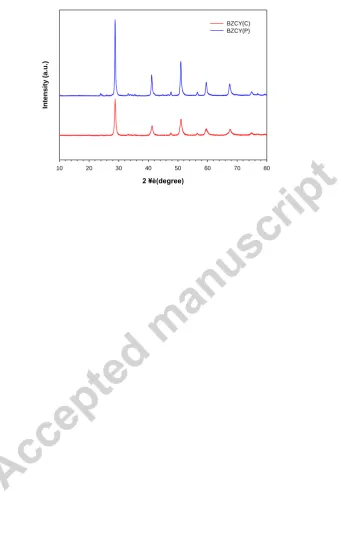
Figure 1 shows the X-ray diffraction (XRD) patterns of the Ba(Zr0.1Ce0.7Y0.2)O3-δ powders
synthesized by Pechini and co-precipitation methods. The XRD patterns of the BZCY
powders were assigned to a simple cubic perovskite structure. There were no secondary
phases in the BZCY(C) powders (Fig. 1), while the BZCY(P) showed the XRD patterns of
some impurities associated with the BaCO3 and CeO2.[22] This may be due to NO3
interaction: the rapid heating rate can provide the synthesis condition, 2NH4NO3 → 2N2 + O2
+ 4H2O, instead of NH4NO3 → N2O + 2H2O. In this study, we set the heating temperature to
about 5 °C per min, and therefore the second reactions may be predominant, which can lead
Figure 2 shows the SEM images of the BZCY(C) and BZCY(P) powders calcined at
1000 °C for 3 h in air. The BZCY(C) powders were relatively smaller and more uniform than
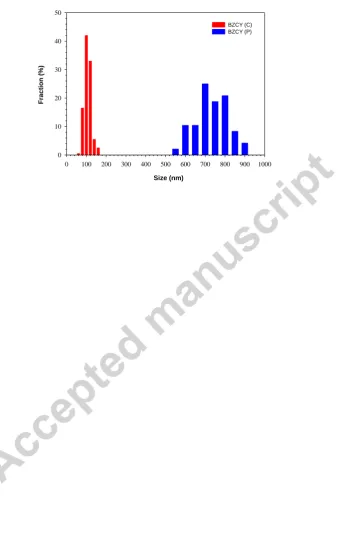
the BZCY(P) powders in a particle size. As shown in Figure 3, the average particle size of the
BZCY(C) powders was about 50~ 150 nm, while the BZCY(P) powders had a particle size of
about 500~ 900 nm.
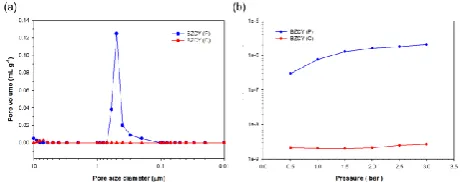
Figure 4 shows the pore size distributions and hydrogen permeability of both the BZCY (C)
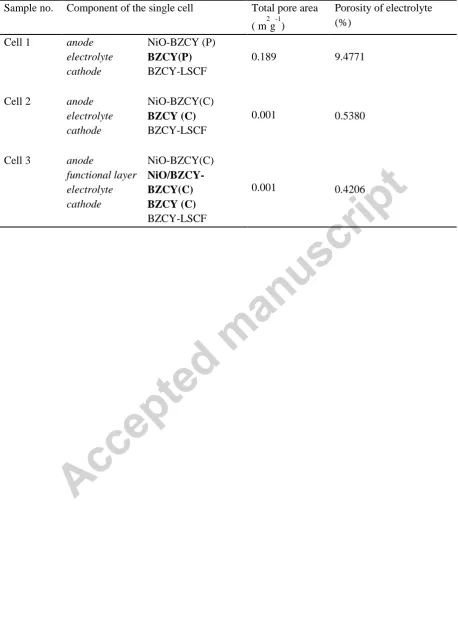
and BZCY (P) electrolytes. The BZCY(P) electrolytes were still porous with 0.189 m2 g-1 of
pore area and 9.4771 % of porosity even after sintered at 1450 °C for 3 h. However, the pore
sizes were close to zero with negligible total pore area and porosity in the BZCY (C)
electrolytes. This indicates that the BZCY(P) electrolytes have a poorer sinterability than the
BZCY(C) electrolytes at 1450 °C. The reason for this may be larger particle size of the
BZCY (P) than the BZCY (C). To provide further comparison of the sinterability between
BZCY(C) and BZCY(P) electrolytes, the hydrogen permeability of the electrolytes was
measured at room temperature. The corresponding results are shown in Figure 4. The
BZCY(P) electrolyte showed 10-6~10-7 mol m-2 s-1 Pa-1 of hydrogen permeability, while the
BZCY(C) electrolyte had ~10-9 mol m-2 s-1 Pa-1 of hydrogen permeability. It suggests that the
co-precipitation method is more suitable to obtain dense impermeable BZCY films.
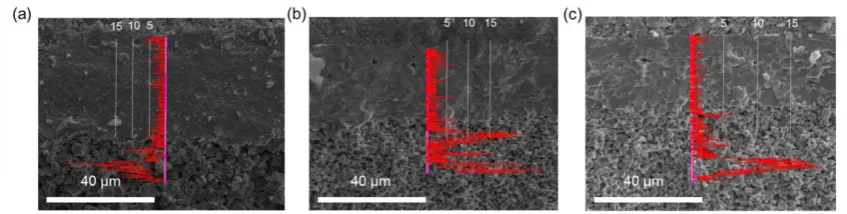
Figure 5 shows the cross-section of the cells with nickel line scanning by EDX. Figure 5 (a)
implies that the nickel ions in the anodes may diffuse into the interface between the cathode
and electrolytes. The nickel seems to have penetrated through the grain boundary and the
pores of the electrolyte to the cathode layer during the sintering in high temperature [23-26].
The nickel ions in the interfaces between the electrolytes and cathodes may be transformed
into NiO with oxygen ions, and interfere the transfer of protons through grain boundaries. On
the other hand, there were no traces of Ni ions in the interfaces between the BZCY (C)
NiO/BZCY-BZCY(C) nano-composite AFL was introduced to further enhance the cell performances as
shown in Figure 5 (C). It is also expected that the AFL could contribute to minimizing the
interfacial resistance and mismatch between the porous anode support and the dense
electrolyte in the single cells.[19] All electrolytes were about 25-30 µm, and the AFL was
about 10 m in a thickness.
Figure 6 shows the I-V curves and power densities on the cells with different configurations.
As shown in Figure 6 (a), the open circuit voltages (OCVs) of the cell with BZCY (P)
electrolytes were 0.99, 1.06, and 0.97 V at 800, 700 and 600 °C, respectively. In addition, the
cell performances were also dropped from about 0.22 Wcm-2 at 800 °C to 0.07 Wcm-2 at
600 °C. These values are quite lower than other literatures.[26-28] The low OCVs and power
densities may be caused by gas crossover through the BZCY (P) electrolytes and the Ni ion
penetrations into the cathodes as mentioned earlier. The maximum power densities of the cell
with the BZCY(C) electrolytes were about 0.4, 0.3, and 0.23 Wcm-2 at 800, 700 and 600 °C,
respectively, as shown in Figure 6 (b). The improved performance can result from high OCV
values with dense electrolytes which may block the Ni penetrations. The cell consisting of the
nano-composite AFL and BZCY (C) electrolytes had OCVs of 0.95, 1.02, and 1.08 V, and
maximum power densities of 0.8, 0.47, and 0.31 Wcm-2 at 800, 700 and 600 °C, respectively
(Figure 6 (C)). The BZCY-based cell performance was further increased by introducing the
nano-composite anode functional layers. The results confirmed that the AFL improves the
electrochemical reaction on the interfaces between the anode and electrolyte by reducing the
structural mismatches and the interfacial resistances.
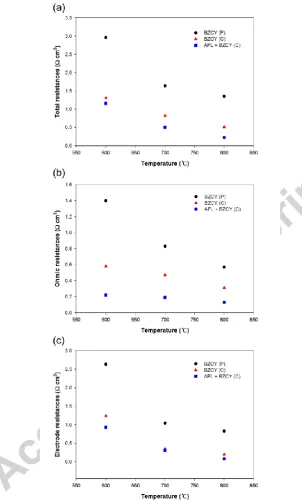
The variation of the area specific resistances (ASRs) of anode-supported cells as
determined from the impedance spectra is shown in Figure 7. The ohmic resistances mainly
arising from the electrolyte and all contact resistances were obtained from high-frequency
increase in the operating temperature. In the cell with the BZCY(P) electrolytes, the ohmic
resistance was about 0.57 Ω cm2 at 800 °C. The high resistance is a result of the electrolyte
containing high porosity and wide pore areas, which interrupts the conduction of proton along
the grain boundary. On the other hand, the cells with BZCY (C) electrolytes and AFL/BZCY
(C) electrolytes showed low ohmic resistances of 0.31 and 0.13 Ω cm2, respectively because
of their pore-free electrolytes. The electrode resistances of the cells include the
cathode-electrolyte interface resistances and the anode-cathode-electrolyte interface resistances. As expected,
the increase in the operating temperature resulted in a significant reduction of interfacial
resistance. The electrode resistances of the cell with BZCY (P) were larger than that of the
cell with BZCY (C) electrolytes at all temperatures. It corresponds well to the results of the
cell performances. Particularly, the cell with anode functional layer/BZCY (C) electrolytes
showed a much smaller resistance of 0.93 Ω cm2 at 600 oC compared with other two samples.
The results suggest that the BZCY electrolytes prepared by co-precipitation were more
suitable for low-temperature solid oxide fuel cells, and the introduction of the AFL can
improve the cell performances.
4. Conclusions
The dense electrolyte with a porosity of 0.001% was obtained from the BZCY (C)
nano-powders, which prevented gas crossover for the BZCY-based single cell. However, the BZCY
(P) showed porous electrolytes and secondary phases in the XRD patterns. These had
negative impact on the cell performances. The cell performances were higher in the following
order of the cells: BZCY (P), BZCY (C), and nano-composite anode functional layer/BZCY
(C). The AFL decreased the electrode resistances, which is due to formation of
well-connected interfaces. We expect that nano-sized BZCY (C) powders would contribute to
enhancements in the SOFC performances, and the nano-composite AFL can be effective in
Acknowledgement
This research was supported by Basic Science Research Program through the National
Research Foundation of Korea (NRF) funded by the Ministry of Education
(NRF-2017R1A6A3A03004416) and (NRF-2015M1A2A2056833).
† These authors contributed equally to this work.
References
[1] N. Q. Minh, Ceramic fuel cells, J. Am. Ceram. Soc. 76 (1993) 563.
[2] Z. P. shao, S.M. Haile, A high-performance cathode for the next generation of
solid-oxide fuel cells, Nature 431 (2004) 170.
[3] P. Murray, T. Tsai, S.A. Barnett, A direct-methane fuel cell with a ceria-based anode ,
Nature 400 (1999), 649.
[4] B.C. H. Steele, Material science and engineering: the enabling technology for the
commercialisation of fuel cell systems, J. Mater. Sci. 36 (2001), 1053
[5] B.C. H. Steele, A. Heinzel, Materials for fuel-cell technologies, Nature 2001, 414,
345.
[6] Y. Yamazaki, P. Babilo, S.M. Haile, Defect chemistry of yttrium-doped barium
zirconate: A thermodynamic analysis of water uptake, Chem. Mater. 20 (2008), 6352–
6357
[7] K. Katahira, Y. Kohchi, T. Shimura, H. Iwahara, Protonic conduction in
Zr-substituted BaCeO 3, Solid State Ionics 138 (2000), 91.
[8] L. Yang, C. Zuo, S. Wang, Z. Cheng, M. Liu, A Novel Composite Cathode for
Low‐Temperature SOFCs Based on Oxide Proton Conductors, Adv. Mater. 20 (2008)
3280
[9] L. Yang, S. Wang, K. Blinn, M. Liu, Z. Liu, Z. Cheng, M. Liu, Enhanced sulfur and
xYbxO3–δ, Science, 326 (2009) 126
[10] W. Sun, L. Yan, B. Lin, S. Zhang, W. Liu, High performance proton-conducting solid
oxide fuel cells with a stable Sm 0.5 Sr 0.5 Co 3− δ–Ce 0.8 Sm 0.2 O 2− δ composite
cathode, J. Power Sources, 195 (2010) 3155
[11] H. Iwahara, Proton conducting ceramics and their applications, Solid State Ionics 86–
88 (1996), 9.
[12] T. Norby, Solid-state protonic conductors: principles, properties, progress and
prospects, Solid State Ionics 125 (1999), 1.
[13] D.H. Seo, S.S. Park, B.M. Lim, Y.G. Shul, Multicomponent Proton Conducting
Ceramics of SiO2–TiO2–ZrO2–P2O5–Bi2O3 for an Intermediate Temperature Fuel
Cell, J. Fuel Cell Sci. Technol. 8 (2011), p.011012
[14] K.H. Ryu, S.M. Haile, Chemical stability and proton conductivity of doped BaCeO
3–BaZrO 3 solid solutions, Solid State Ionics 125 (1999), p. 355.
[15] H. Iwahara , Technological challenges in the application of proton conducting
ceramic, Solid State Ionics 77 (1995) 289-298
[16] C.D. Zuo, S. Zha, M. Liu, M. Hatano, M. Uchiyama, Ba (Zr0. 1Ce0. 7Y0. 2) O3–δ as
an electrolyte for low‐temperature solid‐oxide fuel cells, Adv. Mater. 18 (2006), pp.
3318–3320.
[17] Z. Zhu, W. Sun, L. Yan, W. Liu, W. Liu, Synthesis and hydrogen permeation of Ni–
Ba (Zr 0.1 Ce 0.7 Y 0.2) O 3− δ metal–ceramic asymmetric membranes, Int. J.
Hydrogen Energ. 36 (2011) 6337
[18] L. Yang, C. Zuo, M. Liu, High-performance anode-supported Solid Oxide Fuel Cells
based on Ba (Zr 0.1 Ce 0.7 Y 0.2) O 3− δ (BZCY) fabricated by a modified
co-pressing process, J. Power Sources, 195 (2010) 1845
CeO 2 solid solution nano-particles, Materials Science and Engineering A 383 (2004)
229-234.
[20] S.D. Kim, H. Moon, S.H. Hyun, J. Moon, J. Kim, H.W. Lee, Nano-composite
materials for high-performance and durability of solid oxide fuel cells, J. Power
Sources 163 (2006) 392-397.
[21] L. Yang, Z. Liu, S. Wang, Y.M. Choi, C. Zuo, M. Liu, A mixed proton, oxygen ion,
and electron conducting cathode for SOFCs based on oxide proton conductors, J.
Power Sources 195 (2010) 471-474.
[22] E. Fabbri, A. D’Epifanio, E.D. Bartolomeo, S. Licoccia, E. Traversa, Tailoring the
chemical stability of Ba(Ce0.8−xZrx)Y0.2O3−δ protonic conductors for intermediate
temperature solid oxide fuel cells (IT-SOFCs), Solid State Ionics 179 (2008) 558-564.
[23] H.-W. Wang, Inhibition of the formation of barium carbonate by fast heating in the
synthesis of BaTiO3 powders via an EDTA gel method, Mater. Chem. Phys., 74
(2002) 1-4
[24] A. M. Myasnikov, M. C. Poon, P. C. Chan, K. L. Ng, M. S. Chan, W. Y. Chan, S.
Singla, C. Y. Yuen, On mechanism of nickel diffusion during metal induced lateral
crystallization of amorphous silicon , Mater. Res. Soc. 715 (2002) A22.11.1-4.
[25] A.C.S. SABIONI, A.M. HUNTZ, J.N.V. SOUZA, M.D. MARTINS, F. JOMARD,
Diffusion of nickel in single-and polycrystalline Cr2O3, Philosophical Magazine
88(2008) 391-405
[26] Y. Guo, R. Ran, Z. Shao, A novel way to improve performance of proton-conducting
solid-oxide fuel cells through enhanced chemical interaction of anode components,
Int. J. Hydrogen. Energ. 36 (2011) 1683-1691.
[27] Y. Guo, Y. Lin, R. Ran, Z. Shao, Zirconium doping effect on the performance of
applications, J. Power Sources, 193 (2009) 400
[28] C. Zuo, S. Zha, M. Liu, M. Hatano, M. Ba(Zr0.1Ce0.7Y0.2)O3–δ as an Electrolyte
for Low-Temperature Solid-Oxide Fuel Cells, Adv. Mater., 18 (2006) 3318
[29] Y. Lin, W. Zhou, J. Sunarso, R. Ran, Z. Shao, Characterization and evaluation of
BaCo0.7Fe0.2Nb0.1O3−δ as a cathode for proton-conducting solid oxide fuel cells,
International Journal of Hydrogen Energy, 37 (2012 ) 484
[30]
Figure captions
Fig. 1. X-ray diffraction pattern of the BZCY powders synthesized by Pechini and
co-precipitation method.
Fig. 2. SEM images of BZCY powders prepared by (a) Pechini and (b) co-precipitation
method
Fig. 3. Particle size distributions of the BZCY powders synthesized by Pechini and
co-precipitation method
Fig. 4. Pore size distribution and hydrogen permeability of the BZCY electrolytes synthesized
by Pechini and co-precipitation method
Fig. 5. Cross-sectional SEM images and EDX signals for Ni of the single cells after cell test
of (a) Cell 1, (b) Cell 2 and (c) Cell 3
Fig. 6. Cell performances of the (a) Cell 1, (b) Cell 2 and (c) Cell 3 under humidified
hydrogen atmosphere at 600~800 oC
Fig. 7. The resistances of the cells determined from the impedance spectra under open-circuit
Table 1. Cell configurations and porosities of the different single cells
Sample no. Component of the single cell Total pore area
( m2g-1)
Porosity of electrolyte (%) Cell 1 anode electrolyte cathode NiO-BZCY (P) BZCY(P) BZCY-LSCF 0.189 0.001 0.001 9.4771 Cell 2 anode
electrolyte cathode NiO-BZCY(C) BZCY (C) BZCY-LSCF 0.5380 Cell 3 anode
Figure 1.
2 ¥è(degree)
10 20 30 40 50 60 70 80
Int
ensi
ty
(
a.
u.
)
[image:15.595.138.479.127.678.2]Figure 3.
0 100 200 300 400 500 600 700 800 900 1000 0
10 20 30 40 50
BZCY (C) BZCY (P)
Size (nm)
Frac
ti
on
(%