Balancing The Future Between A Healthy And
Hungry Society With The Corn Industry
Alana O’Mara
1,2
1Michigan State University, Lyman Briggs College, 919 E. Shaw Lane, Holmes Hall E-‐186, East Lansing, MI 48825
2Corresponding author: [email protected]
Abstract: The corn industry plays an increasingly important role in society. As a primary food
source, the corn industry influences our health and our ability to provide the growing nation with an adequate amount of food. To meet this demand, the corn industry must be geared for a sustainable future. Currently, over 90% of feed grain production in the Unites States comes from corn, comprising the largest resource of global grain trade (United States Department of Agriculture, 2014). Its prominence as a resource makes corn a viable food to address national hunger and health. The United States faces a struggle to provide sufficient food for a growing domestic and global population and is additionally challenged to limit overconsumption of nutritionally deficient foods in the same population. Overall health is being compromised through overconsumption of processed foods, many containing corn. Modifying the corn industry process with technology, changes in consumer behavior though taxation, and streamlined information to educate consumers on healthy choices would allow the corn industry to be sustainable.
Executive Summary: A primary challenge facing
society is the increasing demands on the food supply. The global population is expected to grow to 9 billion by 2050, requiring corn production to double its current yield to 9 billion tons (Foley, J. 2014). Conversely, obesity rates are increasing dramatically with the consumption of highly processed foods (Wang, Y. 2008). Food policy must change to avoid compromising our health and limited food supply.
Corn is a leading crop highly regulated by legislation and policy. Corn subsidies, tax rates, and nutritional guidelines are large drivers in corn’s mass production, cost, and consumer behavior. As a result, corn as a food source is highly vulnerable to government action, and is currently not managed sustainably. The corn subsidies are leading to overproduction, and have led to the integration of corn into many cheap processed foods replacing the more expensive ingredients, like sugar. These cheap processed foods have proliferated the market, and without adequate or accessible nutritional information, obesity rates have increased in consumers.
Solutions must focus on keeping production high, but change the way the corn is used by consumers by influencing purchasing trends and
corn’s accessibility. The government can redirect the corn industry by:
• Focusing on advancing technology that aids local and global corn production relations and creation of healthy corn derivatives.
• Implementing a tax on the unhealthy products containing processed corn.
• Developing a streamlined nutritional labeling system for all foods.
These changes would shift current purchasing trends while maintaining the necessary corn production and will orientate the corn industry in such a way that it provides enough fuel as a food for the nation in an effective, healthy manner.
I. Introduction
hypertension and many more (Mokdad et al., 2003).
Not only is obesity costing us lives, but also dollars in health care and lost productivity (Colditz, G., 1998). The question becomes: how do we feed an expanding population without contributing to the obesity epidemic? This paper will evaluate the food industry as one important factor in the challenge to provide adequate nutrition to feed a growing population by providing a framework for how the food industry can be improved for a sustainable future while keeping people fed and healthy.
The paradox of obesity and hunger existing simultaneously in the United States makes this issue an extremely complex situation. In the past, it was typical for members of society who did not have sufficient money to go hungry (Fitchen, J.M., 1987). Now, lower income members of society purchase inexpensive but unhealthy meals, leading to the obesity epidemic. However, with modifications in the food industry, society can combat this problem while still maintaining enough food for the future.
The United State’s corn industry is one of the most suitable agricultural divisions in our food industry to battle hunger and obesity. In the United States, corn is the number one grain crop produced. The corn industry includes a wide array of constituent groups: farmers, large agri-‐businesses, food manufacturers, the government, food scientists, the bioengineering industry, and consumers. Corn is an essential commodity that links all of the aforementioned groups together and it plays a vital role in society due to its quick and robust growth as a stable grain, ability to store and transport easily, its versatility in food products and other products such as animal feed and ethanol, and its high caloric value. On the other hand, corn contributes to the abundance of cheap processed foods. The low cost of corn drives food manufacturers to use it in their products in order to decrease production costs. As a result, corn is used in a multitude of foods such as fast food, sweeteners, cereals, chips and cookies (Kenner et al., 2008). The rise in consumption of cheap processed foods that lack nutritional value is a major hindrance to a healthy society (Popkin, B., 2012).
The technology and knowledge within the corn industry is remarkable. With the combination of advanced farm machinery, agricultural research, and food production, food scientists have molded the corn industry. However, the corn industry’s progress lacked an emphasis on sustainability. This
is exacerbated by technological somnambulism; a phenomenon where citizens do not pay attention to the changes technology is making in society and essentially are sleepwalking through technology’s effects (Winner, L., 1986). The progressive ignorance has led to a corn dichotomy: corn is helping us put food in billions of stomachs but on the other hand it is driving down the cost of processed foods. A major challenge moving forward will be how to steer corn production, accessibility, and public knowledge and awareness of food in a positive direction for a sustainable future.
Food production must be a focus to meet the country and the world’s ever-‐growing needs. Moreover, it is important to ensure that this food is the most effective form of nutrition in order to ensure that hunger can be met by foods that are energy-‐dense and high in micronutrient content calories in a manner that contributes to health (Popkin, B., 2012). We can more effectively fuel a nation by making natural, beneficial food supply more available. Once these factors are met, society needs the competency to make healthy choices. To be effective, that change should start with the government through significantly restructuring the food industry by continuing with selective corn subsidies and also by leading consumer behavior with changes to food taxes and food labeling. Those actions could lead to an ideal solution where we meet the high demands to feed a growing population and provide beneficial food sources for a healthy lifestyle.
II. Background
Figure 1: Bushels of corn per acre grew immensely after the discovery of ammonia and nitrates as powerful fertilizers during WWII era (University of Missouri, Average USA Corn Yield, December 12, 2013).
and capability to grow in close proximity (Crow, J.F., 1998).
During WWII, scientists experimenting with ammonia and nitrates for explosives discovered that ammonia and nitrate containing compounds were powerful fertilizers (Crow, J.F., 1998). After the discovery of fertilizers, the rapid rise in bushels of corn produced per acre is seen in Figure 1. Previously, the soil would become infertile as it was depleted from nutrients (Ganzel, B., 2014) but the fertilizers replenished the soil with essential nutrients. As a result, farms could yield more year to year because the crops were not undernourished from arid soil. Since the inception of fertilizer, the corn industry erupted to an even greater scale and is continually expanding (US Dept. of Agriculture, 2014).
Now, the United States grows vast quantities of corn. Consequently, we have found many uses for it. Corn found in the food market naturally, in the form of corn off of the cob, canned, or frozen, is a minority (Iowa State University, 2011). The majority of corn
in the food market is used extensively as a derivative in countless processed foods. Processed foods do not contain the same nutritional benefits as eating fresh food (Schroeder, H.A., 1971). In fact, most of the processed food can be classified as high in fat or sugar, the leading agents for obesity (Schoonover et al., 2006). These processed foods are also very inexpensive because they contain subsidized mass-‐ produced corn, transport easily, and can be stored over long periods of time. The result is a nation that relies on quick, inexpensive, and nutritionally poor food options (Schoonover et al., 2006). This is seen to affect mostly lower income marginalized groups and other members of society that do not have the time or energy to prepare a meal based off of non-‐ processed foods, opting for the quick processed foods (Popkin, B., 2012).
2003). These food sources typically are high in
calories, but have little nutritional value. The increase in obesity has not occurred alone: it has occurred with the increasing portion of junk food in American diets, bringing on a multitude of health complications including diabetes, high blood pressure, high cholesterol levels, asthma, and arthritis, possibly leading to increases in death rates (Mokdad et al., 2003; Popkin, B., 2012). In order to alleviate processed foods’ presence, the government will have to play a stronger and mission-‐oriented role in the food industry. As government modifies the corn industry, changes will trickle down to processed foods and hopefully decrease obesity rates. This paper will discuss different strategies will be discussed on how to change the corn industry to combat the nutritional crisis.
III. Methodology
Acquiring information on the corn industry and its influence on nutrition required quantitative data and professional opinions. Data was taken primarily from government reports on corn production and use. Professional opinions were taken from journal articles, periodicals, documentaries, and interviews. The professionals specialize in various parts of the corn industry and its relation to nutrition. The three interviewees all came from Michigan State University. They were Dr. Bob Hollingworth, Dr. Kurt
Thelen, and Ms. Diane Fischer. Dr. Hollingworth is a Professor of Entomology. His studies focus on pesticide resistance and toxicology, and the safety of genetically modified foods in the human diet. Dr. Kurt Thelen is a professor in the Department of Plant, Soil, and Microbial Sciences. He is an agronomist, specializes in biofuels, and oversees corn hybrid testing (Thelen, K., 2014). Ms. Diane Fischer is a specialist in the Department of Food Science and Human Nutrition with an emphasis in medical nutrition for patients. Their diverse research experiences and knowledge aided to connect the concepts and their insights lead to fruitful discoveries and revelations throughout this research.
IV. Data Narrative
The many constituents of the corn industry have a complex relationship. Farmers, agri-‐business, food manufacturers, government agencies, scientist, and consumers are all connected to this important crop as seen in Figure 2. Corn is a staple grain, helpfully providing a source of fuel for society. However, used in the wrong way, corn may be unable to meet the needs of the hungry and further contribute to the obesity epidemic. The reader will explore how government can support the corn industry with the mission to feed a growing nation and improve society’s health.
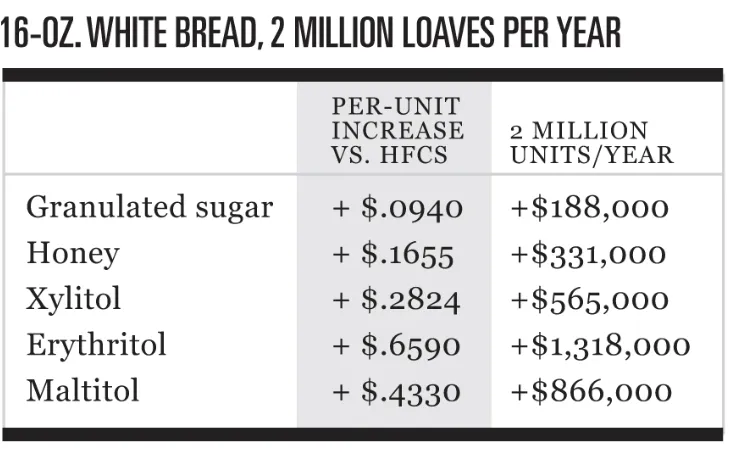
Figure 3: A comparison in price between bread using high-‐fructose corn syrup or other sweeteners demonstrating why high-‐fructose corn syrup is used often for food companies to save money (Formulary cost comparisons, David Guilfoyle, December 2010).
A. Current State of Technology in Corn Production and Distribution
The combination of hybrid seeds, fertilizers, and genetic modifications have greatly increased the national production of corn. According to the National Corn Growers Association, U.S. farmers plant about 90 million acres of corn each year. One hundred years ago a farmer grew 100 bushels in an acre on average, today a normal acreage produces 200 bushels due to the technological advancements in hybrids, genetic modification, fertilizers, and pesticides.
This productivism is defined by Magdoff et al., (2000) as “Productivist’s Agricultural Paradigm”, or the current mindset in agricultural production. According to Magdoff et al., productivism has compromised local farmers, environment, and health. Productivists farmers focus on one crop to decrease labor, limiting the diversity of their farmland. Currently, greater than 60 % of farms in the US produce only one or two crops (Hanson et al., 2008). This in turn increases the risk for pests and insects to rapidly transfer across the entire farm unabated (Horrigan, L., 2002). One-‐crop farming is also tiring for the soil, because nutrients are not being replenished. Corn causes nitrogen depletion for the soil. Without other crops such as legumes
ways. These are known as corn derivatives, created
by hydrolyzing a cornstarch mixture with either enzymes or acid (Berry, D., 2005). Complete hydrolysis of a starch results in glucose. The more the substance is hydrolyzed the greater the percent mass is made up of reduced sugars (Berry, D. 2005). In the 1960s and 1970s, scientists discovered how to develop the low-‐cost sweetener, high-‐fructose corn syrup. Corn syrup is “one of the cheapest forms of sucrose you can make in the US” (Thelen, K. personal communications, May 1, 2014). It is present in copious amounts in processed food. High-‐fructose corn syrup is much less expensive than honey or granulated sugar, as shown in Figure 3. As a result, companies substitute high-‐fructose corn syrup for sugar to reduce production costs. It should not be surprising then that corn syrup is in a vast array of products including peanuts, yogurt, tomato ketchup, fast-‐food hamburger patties, chicken nuggets, and french fries (Kenner et al., 2008).
Other technology enriches corn derivatives, making them healthier. A process called nanoencapsulation is used in high amylose corn syrup to protect a healthy form of fat, omega-‐3 fatty acids, from oxidation and thermal degradation (Kokini et al., 2013). Also scientists modify corn to contain more high-‐oleic acid, which also contains more of the good fats (Hollingworth, B. personal communications, April 14, 2014). As a result, food scientists have been able to enrich corn and corn containing products such as bread with omega-‐3 fatty acids and high-‐oleic acid.
Future technology holds many possibilities as well. Current research is investigating the use of other crops instead of corn for biofuel in order to keep the corn we have for food (Thelen, K. personal communications, May 1, 2014). This research is a continual process aimed to help society and prepare our nation for the future.
B. Accessibility of Corn
Government subsidies uphold the immense yield of corn. In 2002, Congress made corn subsidies permanent. As a result, farmers are paid to overproduce corn and keep prices extremely low. The national government establishes a minimum acreage of corn to be cultivated yearly. In 1983, this was 60 million acres; today farmers are harvesting more than 80 million acres of corn annually. The Farm Bill passed by President Barack Obama on February 7, 2014, allocated money to farmers that
grow crops. The majority of this money is directed to main row crops (soybeans, wheat, etc.), corn being the number one in the United States. The money goes to crop insurance, conservation, and farm commodity programs (Congressional Research Service, 2014). The Farm Bill also addresses nutrition. Farm Bill Title IV claims that the Nutrition title enacted “would result in the total estimated reduction of $8.0 billion,” by decreasing benefit amounts and the number of eligible houses to the Supplemental Nutrition Assistance Program (SNAP) (Congressional Research Service, 2014). SNAP is a program set up to support nutrition in low-‐income households by giving participants a card on which they can purchase groceries, plants, and seeds at grocery stores or farmers’ markets. Clothes, alcohol, cigarettes, and other unrelated food items are not purchasable on the SNAP program (Rural Dynamics, 2009). The Farm Bill also “limits the amount of sugar for food that processors can sell each year,” (Congressional Research Service, 2014). This then drives down the use of sugarcane and beet sugar because the prices are artificially raised by the decreased supply. It is therefore more profitable to use high-‐fructose corn syrup as a sweetener. The 2014 Farm Bill exemplifies how government along with science can determine the amount of corn available to society.
precursor of diabetes. Similarly, the lower levels of
leptin brought on by high-‐fructose meals do not trigger a sustainable feeling of fullness (Klok et al., 2007). In the absence of these hunger regulators, high-‐fructose meals lead to over consumption. Consequently, as society shifted to a low-‐fat diet, it settled into a carbohydrate and sugar overload catalyzing obesity.
C. Public Knowledge and Conception of Corn Media’s diet messages easily become skewed. As corn sweeteners replaced fats and contributed to obesity, the mantra never became replace fat with healthful options like fruits and vegetables. People instead chose quick, simple low-‐fat foods and fail to eat a variety of foods in moderation (Fischer, D. personal communications, May 7, 2014).Food companies catered to this fad with low-‐fat labeling, demonstrating the ability of the market to skew scientific findings to their advantage. In addition to skewing scientific studies, large corporations with heavy advertising power make up an extensive portion of the food industry. They are able to hold a controlling advantage over many consumers (Magdoff et al., 2000). Many corporations have demonstrated the influence of consumer purchasing trends (Watson, 1997). When McDonald’s was introduced in East Asia the local food culture quickly shifted. Taiwanese began to choose McDonald’s cuisine over a traditional Taiwanese meal. French fries are now a staple food, especially for young girls in Taiwan (Watson, 1997). Introduction and exposure to advertising alone will make a society more susceptible to a food preference.
The ability for large corporations to influence consumers relies, in large part, on food labeling. In “The Practice and Politics of Food System Localization”, Hinrichs (2003) investigates the ambiguous nature of food labeling. In Iowa, ‘local’ labeled food constitutes anything grown in the state’s 56,000 square miles of land (Hinrichs, C.C., 2003). The average consumer however perceives ‘local’ with more confined restraints, thinking that local food comes from nearby farms. Therein lies the ability of large corporations to obscure their food products, and lead consumers on with deceptive labeling.
Corn has also been obscured by a gamut of ingredients labels. The average layperson does not know that ascorbic acid, calcium citrate, cellulose, dextrin, dextrose, malic acid, MSGs, saccharin, and
others that appear in the ingredients list all are derivatives of corn. This poses a problem for marginalized groups, particularly the lower-‐income population. It has been found that there are typically four times more supermarkets in wealthy neighborhoods compared to lower-‐income neighborhoods (Morland et al., 2002). Due to the lack of supermarkets location, lower-‐income populations are more prone to shop at corner-‐stores instead of grocery stores with greater fresh-‐produce availability; similarly, their tight budgets encourages purchasing inexpensive processed foods. Many are unaware or cannot take the time and effort to care about the ingredients and nutrition in their food selection. Unfortunately, processed foods contain little sustenance, decreasing their effectiveness of feeding large populations in a healthy manner. The combination of deceptive food labeling and consumer adoption to fast and processed foods has exacerbated a widespread health issue.
V. Discussion
Sustainability is a process and a mindset. Defined by the Brundtland Commission, sustainability is a practice to better the future by focusing on long term environmental, societal, and economical well being in which “…the direction of investments, the orientation of technological development… are made consistent with future as well as present needs.” (UNWCED, 1987). It can be achieved with an eye to the future. However, the future is complex and unknown. It is impossible to anticipate exactly what will be needed. In the case of the corn industry, changes affect hunger, food prices, and overall nutrition. In order to better the future, we have to find an equilibrium in which the corn industry will support the nation’s needs and overall nutritional health. The United States Department of Agriculture has set a goal for sustainability in Sustainable Agriculture: Access Tools (2012). They define it as one to “enhance the quality of life for farmers and society as a whole”. How exactly can this be achieved with the corn industry? It can be achieved with a focus on production and wholesome nutrition.
unsustainable corn industry between consumer and
producer with technology, subsidies, taxes and knowledge. Supporting the technology that aids corn production for consumers serves as a tool to distribute corn from the local market to global a market, and creates healthier versions of corn that would benefit both global and local producers and their consumers. Keeping corn subsidies would help producers and taxing the processed form of corn would encourage healthier choices for consumers. Knowledge from a comprehendible labeling system will provide a means to an end for consumers to make nutritional choices.
A. Technology for Global & Local Corn Production and Better Consumption
One element of a sustainable future is thinking about the consumers as individuals. The industry must be capable of feeding a growing nation. Efficient productivity is key to cultivate the most calories per acre. Without the ability of corn to provide this nutrient density, people would go hungry. Therefore, corn should be made easily available with technology, knowledge, and governmental support. While the attention on productivism has received some negative feedback, it cannot be abandoned. Dr. Kurt Thelen states that high-‐production is essential: “We know that without corn, globally people would go hungry, it’s that important of a crop…it is a crop that performs very well and as far as yielding the amount of calories per acre that it will yield exceeds other crops, and that is why it has such a high value. And that is why the market kind of favors the production of it.”
Hinrichs (2003) suggests that a sustainable food industry does not have to banish the current large-‐ corporation system, but rather have the current system consider the processes they use. Large systems are able to function as a unit, helping out small, local farmers by globalizing their products in order to reach a wide consumer base. Therefore, this is not a polarized two-‐sided debate with ‘the bad globalization’ versus ‘sustainable localization’. The two processes are not on the opposite end of the spectrum. In fact, they need each other to survive. Finding a balanced industry process that aids producer and consumer both, as well as at the global and local levels is essential for the future sustainability. This problem can be combated with technology that can help spread local farms’ corn production. Advanced machines and better
transportation methods and logistics would allow for a wider dissemination of local corn production, enabling local farms to be economically functional.
In addition to food production, consumers can benefit from the work done by food scientists. Instead of focusing their efforts and money to create high-‐fructose corn syrup and other ways to use corn as filler, food scientists should focus on creating the healthy fat containing corn. Corn with more omega-‐ 3 fatty acids and high oleic acid would serve as a better use of the technology. Funding the recent science and technology that benefits consumers nutrition is an example of the corn industry process being geared in a sustainable manner.
B. Accessibility to Healthier Corn
Once corn becomes healthier for consumption, accessibility will then become important. This shift from corn products that are caloric fillers to nutrient rich corn products should not change the vast scope of the corn industry. In order to support the corn industry’s size, both local and global markets are necessary. One of the main components of a large industry’s economy of scale is how an increase in production decreases the cost per unit of the corn. As farmers focus on productivism they can better maximize their profit (Magdoff et al., 2000). As the cost for farmers to produce corn decreases the cost of corn-‐containing products for consumers will go down. As a result, corn and its derivatives are available at a relatively low price.
Figure 4: The disproportionate allocation of subsidies explains why fruits and vegetables are much more costly than other products (Why Does a Salad Cost More Than a Big Mac, Physicians Committee for Responsible Medicine, November 5, 2010).
the less sustainable it becomes to maintain a healthy society.
C. Taxation
A way to counteract the accessibility of inexpensive processed foods would be to create financial disincentives that apply taxes to purchase and these foods. If the government subsidizes corn in the beginning of its life cycle, then select corn derivatives and products should be taxed in the market. Subsidies have driven down the cost for food manufacturers to use corn in their products, enabling them to use copious amounts of high-‐ fructose corn syrup. Raising the price of corn derivatives to a reasonably high level via taxes would discourage food companies’ excessive use of corn. As a result, there may be less high-‐fructose in our food products. Likewise, taxing corn derivatives would raise the overall price of the processed food. The idea of an ‘unhealthy tax’ is not foreign. State and local governments use ‘unhealthy taxes’ or Pigovian taxes to deter people from purchasing alcohol and tobacco. It may lead to a similar effect in the food market.
At the same time, the government should leave the price of un-‐processed fresh corn low to encourage getting our calories from nutritious sources. Consumers are likely to respond to
increases and decreases in price. When a 50% reduction in price was made for pieces of fruit in a lunch line, there was a four-‐fold increase in purchasing (Schoonover et al. 2006).
The proposed complement of taxing corn derivatives and maintaining the low-‐cost fresh corn would realign the corn industry to fit our nutritional guidelines seen in Figure 2. Prices can change behavior to select the less-‐expensive fresh corn, leading to a more healthy society.
D. Knowledge for Everyone
comprise the majority of food products found in
your local grocery store (Kenner et al., 2008). According to a report by Food and Water Watch, “These top companies controlled an average of 63.3 percent of the sales of 100 types of groceries”. In the end, the consumers are left with a distorted view of scientific information. This is a phase commonly referred to as the diffusion model (Sismondo, 2009). It is difficult to prevent the diffusion model because not everyone can be an expert, and food manufacturer’s labeling makes it even more difficult to make knowledgeable and healthy choices.
Marginalized members of society who have limited time, energy, or resources should not be expected to know everything that is hidden in the food industry’s labeling. Therefore, food labeling should be redesigned to be direct and overt, similar to labels used on cigarettes or alcoholic beverages. A proposed idea for labeling is an easy rating scale from zero to ten that takes in the overall healthiness of a food product. This scale would assess the nutrients, vitamins, calories, fats, sugars, amount of processing and other health indicators. With significant background knowledge in nutrition, consumers would be able to make knowledgeable choices. The scale would streamline the facts and ingredients on the back of the food products and downplay food companies’ outlandish advertisements for ‘low-‐fat’ or ‘lite’ products. Leading consumers in this direction may urge the corn industry and food companies to become more focused on the effective way of providing calories, doing so efficiently and nutritionally with fresh corn instead of processing the corn and zapping its nutritional value.
Analyzing the corn industry as a whole enables us to see its interactions on a large scale. It is important to recognize where the control lies in the corn industry; this way we know where to effectively elicit change. As Figure 2 demonstrates, the government can cause a lot of movement in the corn industry. The government is able to fund food science, influence corn prices, and regulate food companies. The highlighted words in the Figure 2 point out the proposed aspects of the corn industry where change would spur sustainability. It is these modifications that could bring about a healthier array of corn products and availability, to adequately fuel the growing nation.
VI. Conclusion
There are significant problems related to feeding a rapidly growing population and the concurrent increase in obesity. These issues need to be addressed in a comprehensive and timely manner. The potential solutions involve direct commitment from government, farmers, food manufacturers, and food scientists. From the data collected in this paper, the corn industry must play a significant and valuable role in the solution.
Corn is responsible for providing our nation with sufficient amounts of food to ward off malnutrition and hunger. Clearly, we need to hone in on effective production of corn. Technologies such as hybrid seeds and fertilizer have been key to ensure that the corn yield is capable of feeding the nation. Additionally, we can implement advanced methods to transport local corn to add to the production and support farmers.
The deciding factor on how sustainable the corn industry will be directly relates to how corn is used in food. Eating fresh food is the ideal way to absorb all of its nutritional benefits. Using less corn in processed foods and farming more corn for fresh consumption could increase the nutritional investment we are obtaining from corn. Applying a tax to processed corn derivatives would likely result in less processed foods and hopefully encourage and expand low-‐cost availability of fresh corn.
In addition to a greater repertoire of healthy corn products, a renovated labeling system that clearly highlights the nutritional content would guide consumers to healthier choices. The current labeling system has many misconceptions caused by food company ads and requires an adequate amount of knowledge in nutrition to decipher the language and values. Consumers could base their purchases off of a streamlined rating scale, being able to make healthy choices quickly and with ease.
References
Berry, D. (2005, July 1). From Starch to Maltodextrin. Food Product Design. Retrieved from http://www.foodproductdesign.com/articles/2005/ 07/from-‐starch-‐to-‐maltodextrin.aspx
Bray, G.A.; Nielsen, S.J.; Popkin, B.M. (2004). Consumption of high-‐fructose corn syrup in beverages may play a role in the epidemic of obesity. American Journal of Clinical Nutrition, 79(4), 537-‐ 543
Brundtland, Harlem, ed. Our Common Future, Report of the World Commission on Environment and Development, March 1987.
Colditz, G. (1998). Current Estimates of the Economic Cost of Obesity in the United States. Obesity Research,6(2), 97-‐106
Congressional Research Service (2014). The 2014 Farm Bill (P.L. 113-‐79): Summary and Side-‐by-‐Side. Retrieved June 8, 2014 from http://www.farmland.org/programs/federal/docu ments/2014_0213_CRS_FarmBillSummary.pdf Crow, J.F. (1998) 90 Years Ago: The Beginning of Hybrid Maize. Genetics Society of America. Retrieved from
http://www.design4x.com/misc/bus183/handouts/ Hocking.SpringerVerlag.Energy%20Use%20of%205 %20Different%20Cups.pdf
Figure 1: Average USA Corn Yield, University of Missouri, December 12, 2013
Figure 2: Corn Constituents Relationship, Alana O’Mara
Figure 3: Formulary cost comparisons, David Guilfoyle, December 2010
Figure 4: Why Does a Salad Cost More Than a Big Mac, Physicians Committee for Responsible Medicine, November 5, 2010
Fitchen, J. M. (1987) Hunger, Malnutrition, and Poverty in the Contemporary United States: Some observations on their social and cultural context, Food and Foodways: Explorations in the History and Culture of Human Nourishment, 2(1), 384-‐401 Foley, J. (2014, May 14). Feeding Nine Billion. National Geographic.
Food and Water Watch (2013). Grocery Goliaths: How Food Monopolies Impact Consumers.
Ganzel, B. (2014). WWII Causes a Revolution in Farming. Farming in the 1940’s.
Hanson, J.D., Hendrickson, J., & Archer, D. (2008). Challenges for maintaining sustainable agricultural systems in the United States. Renewable Agriculture and Food Systems, 23, 325–334.
Hinrichs, C.C. (2003). The practice and politics of food system localization. Journal of Rural Studies, 19(1), 33-‐45
Horrigan, L., Lawrence, R. S., & Walker, P. (2002). How sustainable agriculture can address the environmental and human health harms of industrial agriculture. Environmental Health Perspectives, 110(5)
Iowa State University. (2011) Corn Production: Common Corn Questions and Answers.
Kenner, R; Pearlstein, E (Producers), & Kenner, R (Director). (September 7, 2008). Food, INC. [Motion picture]. United States: Magnolia Pictures.
Klok, M.D.; Jakobsdottir, S.; Drent, M.L. (2007) The role of leptin and ghrelin in the regulation of food intake and body weight in humans: a review. Obestiy Reviews. 8(1), 21-‐34.
Kokini, J.; Luecha, J.; Sozer, N. (2013) Advances in Food Process Engineering Research and Application, 70
Magdoff F., Foster J.B., Buttel F.H.(Eds.), (2000) Hungry for Profit: the agribusiness threat to farmers, food and the environment, Monthly Review Press, New York
Mokdad AH, Ford ES, Bowman BA, et al. (2003). Prevalence of Obesity, Diabetes, and Obesity-‐Related Health Risk Factors, 2001. JAMA, 289(1), 76-‐79. Morland, K; Wing, S; Roux, A; Poole, C. (2002). Neighborhood characteristics associated with the location of food stores and food service places. American Journal of Preventative Medicine, 22(1), 23-‐29.
PBS, (2002). Genetically Modified Foods. Retrieved from
http://www.pbs.org/pov/hybrid/getinvolved_articl e.php
Pollan, Michael. "The Feedlot: Making Meat." The
Omnivore's Dilemma: A Natural History of Four Meals. New York: Penguin, 2006. 82. Print.
Popkin, B. (2012). Global nutrition transition and the pandemic of obesity in developing countries, Nutrition Reviews, 70(1), 3-‐21.
Rippe, J; Angelopoulous, T. (2013) Sucrose, High-‐ Fructose Corn Syrup, and Fructose, Their Metabolism and Potential Health Effects: What Do We Really Know? Advances in Nutrition, 4, 236-‐245. Rural Dynamics Incorporated (2009). Montana Bridge to Benefits -‐ Supplemental Nutrition Assistance Program (SNAP). Montana Bridge to Benefits -‐ Supplemental Nutrition Assistance Program (SNAP).
Sandler, I; Sandler L. (1986) On the Origin of Mendelian Genetics. Oxford Journals, 26(3),753-‐768 Schoonover, H; Muller, M. (2006). Food Without Thought. The Institute for Agriculture and Trade Policy
Schroeder, H. A. (1971). Losses of vitamins and trace minerals resulting from processing and preservation of foods. The American Journal of Clinical Nutrition, 24, 562-‐573
Thelen, K.(2014). Vitae. Retrieved from http://www.kurtthelen.com/vitae/
United States Department of Agriculture (1998) A Time to Act: A Report of the USDA National Commission on Small Farms. Washington DC: USDA Miscellaneous Publication 1545.
United States Department of Agriculture (2010). Local Food Systems: Concepts, Impacts, and Issues. Economic Research Report Number 97.
United States Department of Agriculture (2012), Sustainable Agriculture: Access Tools.
United States Department of Agriculture, Economic Research Service (March, 2014). U.S. corn acreage, production, yield, and price. Retrieved February, 2014 from http://www.ers.usda.gov/data-‐ products/feed-‐grains-‐
University of Missouri, (2013). Corn Extension -‐ University of Missouri. DPS Communications. Retrieved August 15, 2014 from http://plantsci.missouri.edu/grains/corn/facts.htm UNWCED: United Nations World Commission on Environment and Development (1987). Our Common Future (Brundtland Report).
U.S. Department for Health and Human Services. Food and Drug Administration. (2013). A Food Labeling Guide: Guidance for Industry. Retrieved from www.fda.gov/FoodLabelingGuide
Wallinga, D. (2010) Agricultural Policy And Childhood Obesity: A Food Systems And Public Health Commentary. Health Affairs, 29, 405-‐410. Wang, Y. (2008). Will All Americans Become Overweight or Obese? Estimating the Progression and Cost of the US Obesity Epidemic, Obesity Research, 16(10), 2323-‐2330.
Watson, J. L. (1997) Golden Arches East: McDonald's in East Asia. Stanford, CA: Stanford UP
Webster, D.L. (2011) Backward Bottlenecks. Current Anthropology, 51(1), 77-‐104
Winner, L. (1986) “Technologies as Forms of Life”, The Whale and The Reactor: A Search for Limits in the Age of High Technology. University of Chicago Press., 03-‐ 18
Alana O’Mara