I N N O V A T I O N
Open Access
Community-based in situ simulation:
bringing simulation to the masses
Barbara M. Walsh
1*, Marc A. Auerbach
2, Marcie N. Gawel
3, Linda L. Brown
4, Bobbi J. Byrne
5, Aaron Calhoun
6and
on behalf of the INSPIRE ImPACTS investigators
Abstract
Simulation-based methods are regularly used to train inter-professional groups of healthcare providers at academic medical centers (AMC). These techniques are used less frequently in community hospitals. Bringing in-situ
simulation (ISS) from AMCs to community sites is an approach that holds promise for addressing this disparity. This type of programming allows academic center faculty to freely share their expertise with community site providers. By creating meaningful partnerships community-based ISS facilitates the communication of best practices,
distribution of up to date policies, and education/training. It also provides an opportunity for system testing at the community sites. In this article, we illustrate the process of implementing an outreach ISS program at community sites by presenting four exemplar programs. Using these exemplars as a springboard for discussion, we outline key lessons learned discuss barriers we encountered, and provide a framework that can be used to create similar simulation programs and partnerships. It is our hope that this discussion will serve as a foundation for those wishing to implement community-based, outreach ISS.
Keywords:In situ simulation, Mobile simulation, Emergency department, Quality improvement, Simulation-based medical education, Medical education
Introduction
Gaps in care exist between academic medical centers (AMCs) and community hospitals, especially regarding the quality of care provided to critically ill neonates and children [1, 2] Only 20% of the 5700 hospitals in the USA are AMC’s and the majority of care is provided in community-based hospital settings [3]. There is an ur-gent need for creative solutions that enable AMCs to share knowledge and resources with regional and com-munity hospital partners. Such sharing has great poten-tial to assist community hospitals attain increased readiness in neonatal and pediatric acute care medicine, with the ultimate goal of improving pediatric outcomes.
Simulation-based educational methodologies have great potential for enhancing the care provided in
community hospitals, but disparities in access to pediatric simulation exist. Many AMC’s have developed robust evidence-based simulation programs to ensure that providers are well-trained and up-to-date on best practices. Community-based hospitals, however, often do not have such programs, and it can be difficult for outside entities to access the resources available at nearby AMC’s [4–11]. To have maximal impact across the entirety of the population, educational modalities such as simulation must be disseminated from academia to community-based hospitals. Fortunately, simulation has developed to the point where AMCs are able to share their resources, curricula, and expertise more read-ily than in the past [12–18]. In this article, we (1) de-scribe the developments in simulation-based educational methodologies (including mobile simulation, in-situ simulation (ISS), and distributed simulation) that make the dissemination of educational resources outside of AMC’s possible, (2) discuss four examples of community-based ISS programs that have been devel-oped and implemented as collaborations between AMC
© The Author(s). 2019Open AccessThis article is distributed under the terms of the Creative Commons Attribution 4.0 International License (http://creativecommons.org/licenses/by/4.0/), which permits unrestricted use, distribution, and reproduction in any medium, provided you give appropriate credit to the original author(s) and the source, provide a link to the Creative Commons license, and indicate if changes were made. The Creative Commons Public Domain Dedication waiver (http://creativecommons.org/publicdomain/zero/1.0/) applies to the data made available in this article, unless otherwise stated. * Correspondence:[email protected]
1Department of Pediatrics, Division of Emergency Medicine, Boston Medical Center, Boston University School of Medicine, 818 Harrison Ave, Vose 5, Boston, MA 02118, USA
simulation programs and community hospitals as a way of demonstrating feasibility and value, and (3) provide guidance for those interested in developing similar pro-grams across all healthcare disciplines.
In situ, mobile, and distributed simulation
In situ simulation (ISS) is defined as simulation that takes place “in the actual patient care setting/environ-ment in an effort to achieve a high level of fidelity and realism.” [19]. Over the past decade, ISS was made possible by the advent of newer, more portable simulation systems, and has allowed simulation-based medical education to more readily be conducted out-side of the walls of simulation centers [19, 20]. ISS has also enabled the use of simulation for real-time assessment of care environments [21, 22]. Researchers have explored its utility and versatility, revealing sev-eral themes. Kobayashi et al described “portable” simulation, referring to ISS, as a new approach to acute care education and research that added fidelity and realism using the learners’ usual work setting [23]. Several more studies in high risk fields of trauma, pediatric cardiac intensive care, and OB/GYN assessed the use of ISS for interdisciplinary team training, improving team readiness, and enhancing provider comfort during critical events [8, 9, 24–26]. These studies were able to show improvement in sim-ulated patient care that translated into real patient settings after implementation of ISS programs at AMCs [6, 7, 9, 10].
In terms of educational efficacy, ISS stands up well to traditional center-based simulation, as a number of studies have demonstrated equivalent educational out-comes and, in some instances, learner preference for the in situ environment [27, 28]. The use of ISS for detecting latent safety threats and evaluating systems issues (including “readiness” for low frequency events) in the clinical environment has also been assessed via a number of critical studies [14, 26, 29, 30]. It has not only been used to identify knowledge gaps but to reinforce teamwork behaviors as part of regular safety programs [4, 22, 31–34].
ISS programs have been developed and imple-mented in rural hospitals in the USA and in lower in-come countries with limited access to simulation centers. Bayouth et al. implemented an ISS curricu-lum at three rural general emergency departments (ED) and noted that ISS improved provider comfort and performance with pediatric trauma patients [18]. Katznelson et al. similarly implemented a pediatric ISS program at 5 critical access hospitals in North Carolina over a 12-month period, finding that the program was well-accepted and team performance during simulations improved over time [17]. Various
types of low fidelity mobile simulation (such as the Helping Babies Breathe program) have also been brought to lower income countries and have been shown to be efficacious [35–38].
In addition to the development of ISS, the techno-logical advances detailed above also allow for easier transport of simulators to external sites, which leads to the concepts of “mobile” and “distributed” simulation. Mobile simulation, “the ability to move the simulator from one teaching location to another or to teach a sce-nario on the move”involves taking simulation program-ming “on the road” in a mobile simulation center such as in a recreational vehicle [19]. This new mobility, in turn, results in further possibilities: distributed simula-tion. Defined as “simulation on-demand, made widely available wherever and whenever it is required,” distrib-uted simulation takes the concept of mobility one step further by focusing on the wide manner in which tech-nology can be made available to learners [19]. Distrib-uted simulation was initially introduced through Kneebone’s description of a transportable mobile operat-ing room environment. This approach has been elabo-rated on by additional reports describing simulation-adapted recreational vehicles and lower cost mobile simulation centers [10,13–16,39–43].
While the definitions above (based on the Society for Simulation in Healthcare dictionary) differ somewhat, the transport of a full simulated environment to external learners is a common thread. This, however, means that the clinical environment of these learners is not used, preventing meaningful assessment of their systems of care. These approaches would thus benefit from the in-tegration of ISS’s focus on systems testing. By combining mobile/distributed simulation with ISS methods, small simulators can be brought from AMC’s to any commu-nity hospital’s patient care units. This, in concert with AMC simulation and content expertise, offers the possi-bility for enhanced community hospital learning as well as on-site environmental safety analysis [22, 25, 44–46]. For simplicity’s sake, we refer to this adapted approach as community-based ISS.
Exemplar pediatric academic medical center-community hospital programs
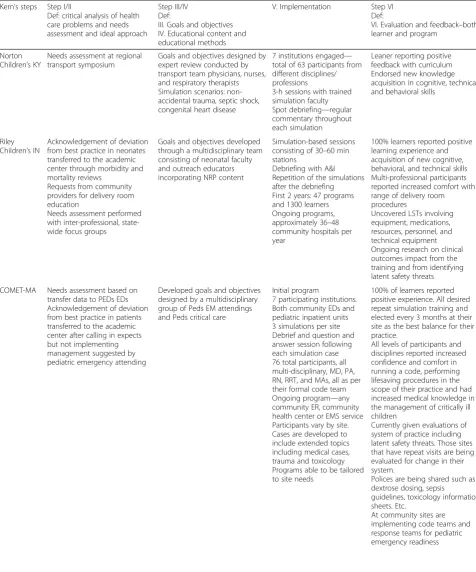
and (6) evaluation and feedback. All programs used the Kern’s framework of curriculum development and Table1 demonstrates how each program adapted and applied the model.
In each exemplar, portable simulators were used in concert with simulated medications and disposable equipment, developed and refined curricula, and experi-enced simulation facilitators. Facilities used their own equipment and cognitive aids, except in cases where dis-posable equipment from the AMC was utilized to allow community hospital exposure to the latest equipment being used at AMCs, or where cognitive aids were spe-cifically developed for use and distribution at the com-munity hospitals.
Pediatric acute care transport simulation program, Norton Children’s Hospital/University of Louisville
This program was developed and initiated in 2011 based on information from a need’s assessment con-ducted at a regional transport symposium. Individual cases and overall course flow were designed by com-bining this information with an expert review con-ducted by transport team physicians, nurses, and respiratory therapists. After IRB submission and ap-proval (exemption), the program was piloted at 7 community institutions and reached a total of 63 learners. Participants represented a variety of clinical disciplines. Sessions took approximately 3 h to complete and included three cases per program (abu-sive head trauma with cerebral edema, meningitis with septic shock, and a new diagnosis of cyanotic congenital heart disease). Case content and complex-ity was chosen based on the needs assessment and expert review discussed above. Simulations were per-formed using a concurrent debriefing format, where commentary and debriefing was given at regular in-tervals throughout the simulation based on the re-sponses of the involved providers [48]. This method was chosen due to the complexity of the cases and the concomitant concern that providers may not be able to navigate them in their entirety without prompting and discussion. All of the participants re-ported positive experiences with the curriculum and acquisition of new cognitive, technical, and behavioral skills. While the program was initially conceived as an educational pilot, it did evaluate program effective-ness by assessing change in medical knowledge as well as feedback on comfort level in caring for sick pediatric patients. Pre- and post-tests were adminis-tered at each session and results indicated improve-ment in medical knowledge. Testing was based on a score of 100%. Pre-test scores for nurses and physi-cians were 42% and 60%, respectively, and rose to 64% and 90% post-test following the simulation
sessions. Furthermore, other healthcare providers (RRTs, EMTs) also had a clear increase in percentage scored after the simulation sessions. Providers from all disciplines also reported increased comfort with resuscitation of pediatric critical patients following the simulation training. These included overall pediatric critical illness as broken down into respira-tory disease, cardiac disease, pediatric advanced life support and procedures during crises. For the major-ity of participants, the pre-comfort score in most do-mains on a scale of 1–5 (5 being highest) was 2–2.5 and rose to 4 following the simulation sessions.
Neonatal intensive care simulation program, Riley Hospital for Children
Table 1Program development using Kern’s model of curriculum development Kern’s steps Step I/II
Def: critical analysis of health care problems and needs assessment and ideal approach
Step III/IV Def:
III. Goals and objectives IV. Educational content and educational methods
V. Implementation Step VI Def:
VI. Evaluation and feedback–both learner and program
Norton Children’s KY
Needs assessment at regional transport symposium
Goals and objectives designed by expert review conducted by transport team physicians, nurses, and respiratory therapists Simulation scenarios: non-accidental trauma, septic shock, congenital heart disease
7 institutions engaged— total of 63 participants from different disciplines/ professions
3-h sessions with trained simulation faculty Spot debriefing—regular commentary throughout each simulation
Leaner reporting positive feedback with curriculum Endorsed new knowledge acquisition in cognitive, technical, and behavioral skills
Riley Children’s IN
Acknowledgement of deviation from best practice in neonates transferred to the academic center through morbidity and mortality reviews
Requests from community providers for delivery room education
Needs assessment performed with inter-professional, state-wide focus groups
Goals and objectives developed through a multidisciplinary team consisting of neonatal faculty and outreach educators incorporating NRP content
Simulation-based sessions consisting of 30–60 min stations
Debriefing with A&I Repetition of the simulations after the debriefing First 2 years: 47 programs and 1300 learners Ongoing programs, approximately 36–48 community hospitals per year
100% learners reported positive learning experience and acquisition of new cognitive, behavioral, and technical skills Multi-professional participants reported increased comfort with range of delivery room procedures
Uncovered LSTs involving equipment, medications, resources, personnel, and technical equipment Ongoing research on clinical outcomes impact from the training and from identifying latent safety threats
COMET-MA Needs assessment based on transfer data to PEDs EDs Acknowledgement of deviation from best practice in patients transferred to the academic center after calling in expects but not implementing management suggested by pediatric emergency attending
Developed goals and objectives designed by a multidisciplinary group of Peds EM attendings and Peds critical care
Initial program
7 participating institutions. Both community EDs and pediatric inpatient units 3 simulations per site Debrief and question and answer session following each simulation case 76 total participants, all multi-disciplinary, MD, PA, RN, RRT, and MAs, all as per their formal code team Ongoing program—any community ER, community health center or EMS service Participants vary by site. Cases are developed to include extended topics including medical cases, trauma and toxicology Programs able to be tailored to site needs
100% of learners reported positive experience. All desired repeat simulation training and elected every 3 months at their site as the best balance for their practice.
All levels of participants and disciplines reported increased confidence and comfort in running a code, performing lifesaving procedures in the scope of their practice and had increased medical knowledge in the management of critically ill children
Currently given evaluations of system of practice including latent safety threats. Those sites that have repeat visits are being evaluated for change in their system.
Polices are being shared such as dextrose dosing, sepsis
guidelines, toxicology information sheets. Etc.
scores and performing bag-mask ventilation, and (c) high level interventions for the resuscitation of critically ill neo-nates (such as performing endotracheal intubation, placing umbilical catheters, performing chest compressions, and administering medications). Overall comfort improved (p values < 0.0001) in 15 of 16 interventions, including the high-level interventions essential for neonatal resuscita-tion as noted above.
Pediatric emergency medicine and emergency medical services simulation
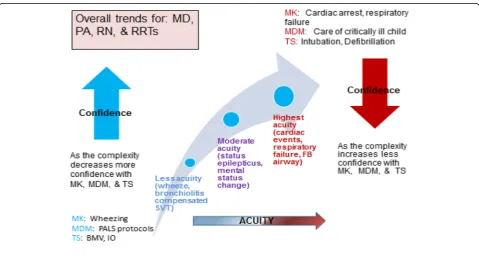
Community Outreach Mobile Education Training (COMET) conducted community-based ISS in the New England region after an initial pilot demon-strated practitioners’ lack of comfort and confidence in caring for acutely ill pediatric patients (Fig. 1). The program was created in response to community
Fig. 1COMET Provider Comfort in Pediatric Emergencies—slide of comfort level in caring for complex critically ill children in community providers
Table 1Program development using Kern’s model of curriculum development(Continued)
Kern’s steps Step I/II
Def: critical analysis of health care problems and needs assessment and ideal approach
Step III/IV Def:
III. Goals and objectives IV. Educational content and educational methods
V. Implementation Step VI Def:
VI. Evaluation and feedback–both learner and program
ImPACTS Northeast Regional Collaborative
Needs assessment based on transfer data to PEDs EDs Feedback from community hospitals on cases of most concern and stress
Larger collaborative developed goals and objectives designed by a multidisciplinary group of ED nurses, Peds EM attendings, Peds critical care, and anesthesia attendings
Simulation cases: sepsis, hypoglycemic seizure, FB airway, cardiac arrest
> 200 simulations in the northeast regional collaborative sessions involving over 100 physicians, 300 nurses, and 75 technicians
2.5 h sessions per group, all four cases each followed by standard A&I debrief Standard code team formation per group Recruitment of educational pediatric champion from the community site to partner with AMC
Evaluation of pediatric acute care Systems analysis: med errors, equipment issues, safety assessments
Differences in care between high volume and low volume pediatric EDs
Site changes–improved relationships between AMCs and community partners
hospitals’ desire to continue ISS team training quar-terly. COMET uses the community-based ISS model, running multiple pediatric simulation cases in resus-citation bays. COMET has now expanded its focus to include cases on pediatric medicine, toxicology, and trauma, with cases tailored to site-specific needs. A formal assessment of the environment is com-pleted with identification of LSTs, and a feedback document is provided to assist each site in address-ing identified areas needaddress-ing improvement after the ISS. Code cart set-ups have been shared, as have policies and resources addressing specific content from cases, such as evidence-based guidelines and dosing policies. Furthermore, COMET is able to go to community health centers and emergency medical services systems to provide ISS training specific to their units of practice.
Pediatric emergency medicine simulation, ImPACTS
Perhaps the most developed and extensive exemplar program is Improving Pediatric Care Through Simula-tion (ImPACTS). Based on the pilot experience of 2 AMCs, 8 AMCs formed a northeast regional collabora-tive focusing on community-based ISS. The program’s development pathway included the engagement of com-munity sites through the designation of a partnering “pediatric champion” in each participating general EDs. The ImPACTS curriculum involved four iteratively cre-ated scenarios (sepsis, foreign body airway obstruction, cardiac arrest, and seizure) and was implemented in 26 general EDs throughout the northeast USA. The initial needs assessment data revealed that providers of all
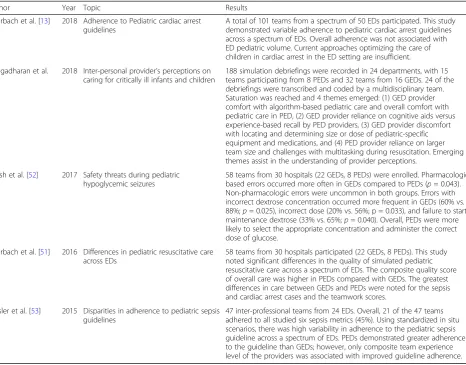
experience levels were distinctly less confident managing critically ill children, and post-survey data documented community providers’ overwhelming desire to continue simulation activities at regular intervals. In addition to the educational component, this program also offered an assessment of the systems of care at the target institu-tions, demonstrating that medication errors at these sites were apparent and often multifactorial. To date the pro-gram has conducted over 200 simulation sessions involv-ing over 100 physicians, 300 nurses, and 75 technicians. In follow-up discussions with site leaders, there have been changes in processes, equipment set-up, equipment purchasing, and protocol development that are attribut-able to the program. Stakeholders have reported that this program has improved the relationship between the AMC and community partners during clinical care due to the establishment of ongoing communication with the involved simulation programs. Through this pro-gram, disparities in pediatric acute care across a spectrum of EDs have been revealed (Table3) [51–53].
Table 3 is a summary of five manuscripts that have been published based on the initial ImPACTS research project, in which the quality of care was evaluated across a spectrum of EDs. There were gaps in care regarding implementation of sepsis guidelines, treatment of hypoglycemic seizures, and adherence to cardiac arrest guidelines. An assessment document was shared with each general ED addressing site-specific gaps and site performance as compared to other general EDs and pediatric EDs. The ImPACTS collaborative has grown and continues to recruit new sites in many more states across the USA.
Table 2Riley Children’s Latent Safety Threats—chart of the LSTs in 5 domains at the Riley Children’s NICU outreach program Community Outreach Latent Safety Threats 2015-2016
Category Number of LSTs
Example Intervention
Equipment 292 Blended oxygen not available in the delivery room.
Umbilical catheter kit did not contain catheter, flush or scalpel
Unit created portable blended oxygen set up that is now wheeled to all deliveries.
Emergency umbilical catheter kit revised to include necessary items
Medication 18 Teams routinely utilized naloxone for depressed babies during acute resuscitation in the delivery room
Naloxone was removed from newborn delivery room resuscitation medication carts
Personnel 55 A team member is not always present that is designated and able to intubate at deliveries
Additional personnel being trained in intubation
Resource 34 An outdated NRP reference chart is being used for resuscitations Medication chart included outdated dose for epinephrine
New, current NRP algorithms were posted in LDR and nursery
Mediation chart revised to include correct dosing of epinephrine
Technical 296 Team members did not trouble shoot ventilation difficulties using MR SOPA prior to initiating chest compressions
Teams were unaware of the recommendations to use plastic warp/bag to aid thermoregulation of the extremely premature infant
MR SOPA cognitive tool posted on each warmer to remind staff during newborn resuscitations Premature infant delivery kits were assembled containing plastic bags
Discussion
The above exemplars share the common goal of using community-based ISS methodology to enhance the level of pediatric acute care at community hospital sites. Des-pite their origination from a number of geographically separated AMC’s and disparate pediatric subspecialty fields, their experiences have been similar in several im-portant ways. In the following discussion, we describe lessons learned, barriers that we have overcome, and a common program development process using Kern’s model that could be used by other AMCs in implement-ing similar offerimplement-ings [47].
Lessons learned
First, each program resulted in the development of new and/or improved relationships between AMCs and the partnering regional community hospital(s). These rela-tionships were instrumental in achieving the educational missions of the community-based ISS programs and have resulted in parallel improvements in clinical
interactions between AMCs and community hospitals. Each AMC noted that community providers were more likely to reach out with clinical questions regarding ac-tual patient care after participation in simulation. The relationships have also resulted in clinical collaborations that enable sharing of best practices (evidence-based guidelines for push pull fluids, rule of 50s dextrose dos-ing sheet, thermoregulation in preterm newborns), pol-icies (family presence during resuscitation), guidelines (sepsis, sickle cell), and reference books/recommended pediatric smart phone apps as well as cognitive aids.
Another aspect of these partnerships is their potential effect on local educational programs. Many of the rural and community hospitals encountered during imple-mentation of these acknowledged having simulation equipment but admitted a complete lack of use due to insufficient expertise. Bringing community-based ISS curricula to these sites thus enabled the creation of on-going educational partnerships. In fact, the creation of sustainable community simulation-based training Table 3Publications from ImPACTS studies and synopsis of data
Author Year Topic Results
Auerbach et al. [13] 2018 Adherence to Pediatric cardiac arrest guidelines
A total of 101 teams from a spectrum of 50 EDs participated. This study demonstrated variable adherence to pediatric cardiac arrest guidelines across a spectrum of EDs. Overall adherence was not associated with ED pediatric volume. Current approaches optimizing the care of children in cardiac arrest in the ED setting are insufficient.
Gangadharan et al. [54]
2018 Inter-personal provider’s perceptions on caring for critically ill infants and children
188 simulation debriefings were recorded in 24 departments, with 15 teams participating from 8 PEDs and 32 teams from 16 GEDs. 24 of the debriefings were transcribed and coded by a multidisciplinary team. Saturation was reached and 4 themes emerged: (1) GED provider comfort with algorithm-based pediatric care and overall comfort with pediatric care in PED, (2) GED provider reliance on cognitive aids versus experience-based recall by PED providers, (3) GED provider discomfort with locating and determining size or dose of pediatric-specific equipment and medications, and (4) PED provider reliance on larger team size and challenges with multitasking during resuscitation. Emerging themes assist in the understanding of provider perceptions.
Walsh et al. [52] 2017 Safety threats during pediatric hypoglycemic seizures
58 teams from 30 hospitals (22 GEDs, 8 PEDs) were enrolled. Pharmacologic based errors occurred more often in GEDs compared to PEDs (p= 0.043). Non-pharmacologic errors were uncommon in both groups. Errors with incorrect dextrose concentration occurred more frequent in GEDs (60% vs. 88%;p= 0.025), incorrect dose (20% vs. 56%; p = 0.033), and failure to start maintenance dextrose (33% vs. 65%;p= 0.040). Overall, PEDs were more likely to select the appropriate concentration and administer the correct dose of glucose.
Auerbach et al. [51] 2016 Differences in pediatric resuscitative care across EDs
58 teams from 30 hospitals participated (22 GEDs, 8 PEDs). This study noted significant differences in the quality of simulated pediatric resuscitative care across a spectrum of EDs. The composite quality score of overall care was higher in PEDs compared with GEDs. The greatest differences in care between GEDs and PEDs were noted for the sepsis and cardiac arrest cases and the teamwork scores.
Kessler et al. [53] 2015 Disparities in adherence to pediatric sepsis guidelines
programs is being enhanced through the use of simula-tion instructor courses (SIC) offered at the AMC for community hospital educator partners. This decreases the need for AMC-based facilitators by creating a local core of community educators capable of running the program. The Riley NICU SIC has trained over 50 com-munity partners in the last 3 years. The AMC team con-tinues to partner with these newly trained simulationists to ensure ongoing sustainability.
Another important component of this work is that several of the programs used ISS to assess the environ-ment of care. This feature of ISS is instruenviron-mental to qual-ity and safety work, and allowed AMC teams to provide useful feedback to community sites on their systems of care and pediatric preparedness [42]. We recommend that future ISS programs explicitly engage in this type of systems testing as it (1) assists centers in troubleshooting problems of care under the guidance of content experts, (2) generates a collaborative approach toward potential solutions, and (3) allows AMCs to more clearly appreci-ate the environment of care at community sites.
A further lesson learned is the need for flexibility. Each community hospital’s needs, local context, expectations, and experiences are different, and this must be con-stantly taken into account when developing and imple-menting community-based ISS programs. Ultimately, the success of these ISS programs was tied to the ability of each to adapt dynamically to the community institutions they visited. An example of this is the frequent need to deviate from the planned simulation content when ne-cessary based on learner need.
Finally, an organized approach regarding equipment and personnel is needed. Though it may seem intuitive, the equipment must be prepared in a manner that allows easy travel with minimal breakage. It is important to consider set up and breakdown times, consciously de-signing the program in the most efficient manner pos-sible in order to maximize educational time. One helpful suggestion is to visit the site in advance of the simula-tion session to assess whether the appropriate equip-ment is present, as it may be infeasible to use local supplies if present only in limited quantities. We recom-mend bringing an array of appropriate basic backup equipment.
A guide for program development
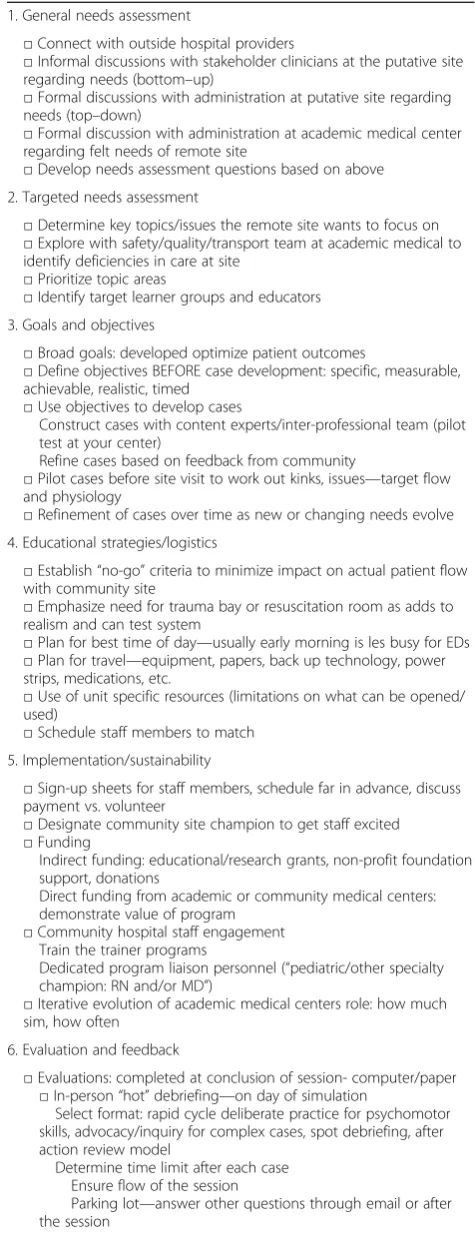
Developing a community-based ISS program is challen-ging and requires a clear curriculum development framework. To this end, we designed an ignition check-list (Table4) to organize our main recommendations in a way that we hope will more readily assist those wishing to develop similar programs. Each step in the ignition checklist parallels Kern’s model and has detailed points
that should be reflected on as a new program is concep-tualized, designed, and implemented [47].
The first step in this process involves connecting with a community hospital. While this may seem daunting, the initial connection was well received by most commu-nity hospitals in the four described programs. An initial email or phone call followed by an in-person meeting helped to assess interest and potential engagement. Buy-in must be established at the admBuy-inistrative level and the provider level at both the community and AMC site. There are many ways to navigate initial contact and we suggest using existing contacts and partnering with re-gional entities such as through Emergency Medical Ser-vices for Children, American College of Emergency Physician (ACEP) state chapters, and regional perinatal networks of care. Marketing of the program is another area deserving focused attention. For the exemplar pro-grams, such materials were disseminated using mail, re-gional conference presentations, and the internet (www.bmccomet.com, www.rileychildrens.org/depart-ments/community-outreach-simulation-program, www.impactcollaborative.com). Oftentimes, there is skepticism from participants prior to the session. One way to overcome this barrier is by offering Continuing Medical Education (CME) and Continuing Education Unit (CEU) credits as an incentive. This makes the pro-gram more appealing by fulfilling medical certification maintenance requirements.
features that could potentially reveal deficiencies in pa-tient care and latent safety threats. An interdisciplinary team should trial the cases, refining them using an itera-tive process to assure that the final product addresses the desired patient physiology, case flow, and learning objectives.
Each program needs to consider a structure and process for debriefing that correspond to the learning objectives. While latitude should be given for unantici-pated questions and issues, it is essential for the facilita-tor to make sure that the key learning points are still communicated. Individual curricula described within this article have used diverse debriefing formats. The de-cision about debriefing format depends on the experi-ence level of the participants and the relative complexity of the case material, and may need to be made in the moment. Due to this need, we recommend that at least one experienced facilitator/debriefer be present during the initial programmatic offerings, at least until other simulation personnel become fluent with the skills needed to manage this particular educational environment and the variation present in this learner population.
It is critical to have an understanding of each site’s pa-tient flow and to develop preplanned “no go” criteria. Identifying all the equipment and information that will be needed during each visit (monitors, plans for trouble-shooting malfunctions, simulated medications, evalua-tions/surveys, etc.) can be a hurdle, however good communication between faculty can help to ensure smooth programmatic flow. It can also be helpful to visit sites before the educational program if feasible. This al-lows more accurate planning of space and numbers of participants per session. Unit-specific resources, such as code books, NRP flow diagrams, or department drug ref-erence manual, should also be considered and utilized as much as possible as this significantly contributes to en-vironmental fidelity. All sessions should be concluded with a written evaluation of the program. This enables the educational team to use Kern’s framework to revise and improve the program and, for those programs also focused on systems testing, creates a record of the antic-ipated changes to be made in the practice or system of care at the local site. Finally, we suggest taking pictures of the room set up and code cart organization as this can enable better feedback to be given on the environ-ment of care as the program proceeds.
Table 4Ignition checklist for mobile community-based in situ simulation
1. General needs assessment
□Connect with outside hospital providers
□Informal discussions with stakeholder clinicians at the putative site regarding needs (bottom–up)
□Formal discussions with administration at putative site regarding needs (top–down)
□Formal discussion with administration at academic medical center regarding felt needs of remote site
□Develop needs assessment questions based on above 2. Targeted needs assessment
□Determine key topics/issues the remote site wants to focus on □Explore with safety/quality/transport team at academic medical to identify deficiencies in care at site
□Prioritize topic areas
□Identify target learner groups and educators 3. Goals and objectives
□Broad goals: developed optimize patient outcomes
□Define objectives BEFORE case development: specific, measurable, achievable, realistic, timed
□Use objectives to develop cases
Construct cases with content experts/inter-professional team (pilot test at your center)
Refine cases based on feedback from community
□Pilot cases before site visit to work out kinks, issues—target flow and physiology
□Refinement of cases over time as new or changing needs evolve 4. Educational strategies/logistics
□Establish“no-go”criteria to minimize impact on actual patient flow with community site
□Emphasize need for trauma bay or resuscitation room as adds to realism and can test system
□Plan for best time of day—usually early morning is les busy for EDs □Plan for travel—equipment, papers, back up technology, power strips, medications, etc.
□Use of unit specific resources (limitations on what can be opened/ used)
□Schedule staff members to match 5. Implementation/sustainability
□Sign-up sheets for staff members, schedule far in advance, discuss payment vs. volunteer
□Designate community site champion to get staff excited □Funding
Indirect funding: educational/research grants, non-profit foundation support, donations
Direct funding from academic or community medical centers: demonstrate value of program
□Community hospital staff engagement Train the trainer programs
Dedicated program liaison personnel (“pediatric/other specialty champion: RN and/or MD”)
□Iterative evolution of academic medical centers role: how much sim, how often
6. Evaluation and feedback
□Evaluations: completed at conclusion of session- computer/paper □In-person“hot”debriefing—on day of simulation
Select format: rapid cycle deliberate practice for psychomotor skills, advocacy/inquiry for complex cases, spot debriefing, after action review model
Determine time limit after each case Ensure flow of the session
Parking lot—answer other questions through email or after the session
Table 4Ignition checklist for mobile community-based in situ simulation(Continued)
Adapt debriefings over time: tele-debriefing, use of video □Structured systems level debriefing/feedback—within 1 month
Academic medical center: on number of transfers, engagement of community/customer
Program success depends on having a knowledgeable and dedicated staff. In larger mobile simulation programs, however, carving out protected time for educators to teach and run the simulations can be a barrier to success. Thus, finding means of encouraging this participation, such as training other simulation facilitators to spread the work-load at multiple sites, is suggested. Given such a limita-tion, we further suggest encouraging community site staff involvement with the potential implementation of a“train the trainer”model. Transitioning to this approach will ad-dress some of the issues regarding limited protected time for AMC faculty and will ultimately allow AMC faculty to evolve into a consultant role over time.
This naturally leads to a discussion of sustainability strategies. As stated above, offering some form of SICs has proven valuable in our experience. Another critical strategy is to clearly illustrate the program’s value to both the AMC and the community stakeholders as it proceeds. Framing the program as a patient quality and safety initiative is typically more helpful than merely stating it is an educational program.
With regard to ongoing funding, many options exist, including educational grants, research grants, and non-profit foundation support. Local community foundations and donor families can also be an excellent source of funds, especially if the curricula proposed align with their overall mission and interests. Ultimately, partnerships between the AMC and the community sites, with fiscal commitment on both ends, are needed for long-term programmatic viability. For example, the Riley Children’s Hospital NICU program had multiple funding resources that enabled their community-based ISS program to reach sustainability including the Indiana University (IU) Health Values Grant for Education, the Indiana University School of Medicine Neonatal-Perinatal Medicine, and Health/ Care Hospital Systems (IU).
Ultimately, sustainability requires the demonstration of value (value = quality/cost) to both the community hospitals and AMC. These programs can enhance value through cost savings for the community site (less risk in patient care), improved quality, and/or increased rev-enue at AMC’s secondary to additional transfers (patient generated revenue). To continue with the above ex-ample, the Riley Children’s Hospital NICU program was able to demonstrate increased referral patterns following outreach simulation programs for two sample commu-nity hospitals, and significant spikes in patient referrals were seen after each simulation session for a 1-year period after implementation.
Future directions
When considering the future of this approach, it is im-portant to acknowledge the current lack of empirical re-search on the impact of community-based ISS on
patient and provider level outcomes. Several recent stud-ies indicate improved outcomes in specific areas of ob-stetrics and neonatal resuscitation associated with the implementation of center-based and ISS approaches, but these do not address the distributed element of simula-tion [55,56]. Most studies consist primarily of curricular descriptions [57]. Hunt’s group, however, was able show improved trauma team performance (provider out-comes) using an ISS intervention in community hospi-tals [58]. The majority of studies do not report on patient or population level outcomes and more work is needed. The ImPACTS project is currently con-ducting a project in community sites to describe the impact of the intervention on the outcomes of pa-tients transferred from participating community hos-pitals. Similarly, the Riley Children’s Hospital NICU program is collecting post session data on improvements in LSTs identified and premature infant admission temperatures.
Finally, the extent to which variants of community-based ISS will impact more traditional modes of simulation-based education must be discussed. At present, AMCs often use simulation centers to cycle large numbers of staff through a standardized educational environment. Outside clinicians participating in such sessions often incur a significant financial cost. Growth of community-based ISS programs, however, have significant potential to alter this balance by providing more accessible, lower-cost, venues at which to obtain training, lessening the need for formal simulation centers in the future. This, in turn, could significantly impact simulation center reve-nues. Nevertheless, the potential educational, practice, and systems benefits appear to far outweigh this concern. Fur-thermore, the long-term value of the relationships forged between academic and community sites under this model for both the centers themselves and the patients they serve is immense. Despite the difficulties inherent in embracing new techniques and approaches, we believe this approach represents an optimal means for addressing critical, widespread healthcare issues.
Conclusion
Abbreviations
AMC:Academic medical centers; ISS: In situ simulation; ED: Emergency departments; PED: Pediatric emergency department; LST: Latent safety threats
Acknowledgements
The authors also wish to acknowledge the WHAS Crusade for Children, the Kentucky Hospital Research and Education Fund (KHREF), Indiana University School of Medicine and IU Health, the R Baby Foundation, AHRQ, INSPIRE network, and IMSH without which the projects described here could not have been implemented.
*INSPIRE ImPACTS investigators (By-line authors):
Jessica Katznelson, MD8; Khoon-Yen Tay, MD9; Travis Whitfill, MPH10; David Kessler, MD11; Robert Dudas, MD12; Akira Nishisaki, MD13; Vinay Nadkarni, MD13; Melinda Hamilton, MD14
Author (By-line) Information:
8Assistant Professor, Department of Pediatrics and Emergency Medicine, Johns Hopkins University School of Medicine;9Assistant Professor, Department of Pediatrics and Emergency Medicine, University of Pennsylvania Perelman School of Medicine, The Children’s Hospital of Philadelphia;10Biostatistician, Department of Pediatrics, Yale University School of Medicine;11Assistant Professor, Department of Pediatrics, Columbia University Medical Center;12Assistant Professor, Department of Pediatrics and Adolescent Medicine, Johns Hopkins University School of Medicine; 13Professor, Department of Anesthesiology and Critical Care Medicine, University of Pennsylvania Perelman School of Medicine, The Children’s Hospital of Philadelphia;14Associate Professor, Department of Critical Care Medicine and Pediatrics, Children’s Hospital of Pittsburgh, University of Pittsburgh Medical Center
Data sharing
No additional data available.
Authors’contributions
BW, MA, MG, LB, BB, and AC were responsible for the study concept and design, acquisition of the data, analysis and interpretation of the data, drafting of the manuscript, and critical revision of the manuscript for important intellectual content. All authors read and approved the final manuscript.
Authors’information
Jessica Katznelson is an Assistant Professor, Department of Pediatrics and Emergency Medicine, Johns Hopkins University School of Medicine. Khoon-Yen Tay is an Assistant Professor, Department of Pediatrics and Emergency Medicine, University of Pennsylvania Perelman School of Medicine, The Chil-dren’s Hospital of Philadelphia. Travis Whitfill is a Biostatistician, Department of Pediatrics, Yale University School of Medicine. David Kessler is an Assistant Professor, Department of Pediatrics, Columbia University Medical Center; Robert Dudas is an Assistant Professor, Department of Pediatrics and Adoles-cent Medicine, Johns Hopkins University School of Medicine. Akira Nishisaki and Vinay Nadkarni are Professors at the Department of Anesthesiology and Critical Care Medicine, University of Pennsylvania Perelman School of Medi-cine, The Children’s Hospital of Philadelphia. Melinda Hamilton is an Associ-ate Professor, Department of Critical Care Medicine and Pediatrics, Children’s Hospital of Pittsburgh, University of Pittsburgh Medical Center.
Funding None
Availability of data and materials
Each site has the data stored on secure servers. It is available upon request.
Ethics approval and consent to participate
Ethics approval was obtained at each site. Consent to participate was obtained at each site.
Consent for publication
All authors consent to the publication of the manuscript.
Competing interests
The authors declare that they have no competing interests.
Author details
1Department of Pediatrics, Division of Emergency Medicine, Boston Medical Center, Boston University School of Medicine, 818 Harrison Ave, Vose 5, Boston, MA 02118, USA.2Department of Pediatrics, Yale University School of Medicine, New Haven, USA.3Yale New Haven Hospital, New Haven, USA. 4Department of Pediatrics and Emergency Medicine, Alpert Medical School of Brown University, Providence, USA.5Department of Pediatrics, Indiana University School of Medicine, Indianapolis, USA.6Department of Pediatrics, University of Louisville School of Medicine, Louisville, USA.7Department of Pediatrics and Emergency Medicine, Johns Hopkins University School of Medicine, Baltimore, USA.8Department of Pediatrics and Emergency Medicine, University of Pennsylvania Perelman School of Medicine, The Children’s Hospital of Philadelphia, Philadelphia, USA.9Department of Pediatrics, Yale University School of Medicine, Yale, USA.10Department of Pediatrics, Columbia University Medical Center, Columbia, USA.11Department of Pediatrics and Adolescent Medicine, Johns Hopkins University School of Medicine, Baltimore, USA.12Department of Anesthesiology and Critical Care Medicine, University of Pennsylvania Perelman School of Medicine, The Children’s Hospital of Philadelphia, Philadelphia, USA.13Department of Critical Care Medicine and Pediatrics, Children’s Hospital of Pittsburgh, University of Pittsburgh Medical Center, Pittsburgh, USA.
Received: 4 March 2019 Accepted: 20 September 2019
References
1. Hansen M, Fleischman R, Meckler G, Newgard CD. The association between hospital type and mortality among critically ill children in US EDs. Resuscitation. 2013;84(4):488–91.
2. Lisonkova S, Sheps SB, Janssen PA, Lee SK, Dahlgren L, Macnab YC. Birth outcomes among older mothers in rural versus urban areas: a residence-based approach. J Rural Health. 2011;27(2):211–9.
3. Fast Facts on US Hospitals. [Internet]. 2014. [cited 21 October, 2014.]. 4. Zimmermann K, Holzinger IB, Ganassi L, Esslinger P, Pilgrim S, Allen M, et al.
Inter-professional in-situ simulated team and resuscitation training for patient safety: Description and impact of a programmatic approach. BMC Med Educ. 2015;15:189.
5. Josey K, Smith ML, Kayani AS, Young G, Kasperski MD, Farrer P, et al. Hospitals with more-active participation in conducting standardized in-situ mock codes have improved survival after in-hospital cardiopulmonary arrest. Resuscitation. 2018;133:47–52.
6. Theilen U, Fraser L, Jones P, Leonard P, Simpson D. Regular in-situ simulation training of paediatric Medical Emergency Team leads to sustained improvements in hospital response to deteriorating patients, improved outcomes in intensive care and financial savings. Resuscitation. 2017;115:61–7. 7. Theilen U, Leonard P, Jones P, Ardill R, Weitz J, Agrawal D, et al. Regular in
situ simulation training of paediatric medical emergency team improves hospital response to deteriorating patients. Resuscitation. 2013;84(2):218–22. 8. van Schaik SM, Plant J, Diane S, Tsang L, O'Sullivan P. Interprofessional team
training in pediatric resuscitation: a low-cost, in situ simulation program that enhances self-efficacy among participants. Clin Pediatr (Phila). 2011;50(9):807–15. 9. de Melo BCP, Van der Vleuten CPM, Muijtjens AMM, Rodrigues Falbo A,
Katz L, Van Merrienboer JJG. Effects of an in situ instructional design based postpartum hemorrhage simulation training on patient outcomes: an uncontrolled before-and-after study. J Matern Fetal Neonatal Med. 2019:1–8.
10. Brewin J, Tang J, Dasgupta P, Khan MS, Ahmed K, Bello F, et al. Full immersion simulation: validation of a distributed simulation environment for technical and non-technical skills training in Urology. BJU Int. 2015;116(1):156–62. 11. McGaghie WC. Medical education research as translational science. Sci
Transl Med. 2010;2(19):19cm8.
12. Weinstock PH, Kappus LJ, Garden A, Burns JP. Simulation at the point of care: reduced-cost, in situ training via a mobile cart. Pediatr Crit Care Med. 2009;10(2):176–81.
13. Auerbach M, Brown L, Whitfill T, Baird J, Abulebda K, Bhatnagar A, et al. Adherence to pediatric cardiac arrest guidelines across a spectrum of fifty emergency departments: a prospective, in situ, simulation-based study. Acad Emerg Med. 2018;25(12):1396–408.
15. Program CCMS. Coastal Carolinas Mobile Simulation Program [Available from: http://coastalalliance.org/our-work/mobile-simulation-lab/. 16. Auerbach M, Gausche-Hill M, Newgard CD. National pediatric readiness
project: making a difference through collaboration, simulation, and measurement of the quality of pediatric emergency care. Clinical Pediatric Emergency Medicine. 2018;19(3):233–42.
17. Katznelson JH, Wang J, Stevens MW, Mills WA. Improving pediatric preparedness in critical access hospital emergency departments: impact of a longitudinal in situ simulation program. Pediatric emergency care. 2018;34(1):17–20.
18. Bayouth L, Ashley S, Brady J, Lake B, Keeter M, Schiller D, et al. An in-situ simulation-based educational outreach project for pediatric trauma care in a rural trauma system. Journal of pediatric surgery. 2018;53(2):367–71. 19. Healthcare Simulation Dictionary, Society for Simulation in Healthcare
[Available from: https://www.ssih.org/Dictionary.
20. Calhoun AW, Boone MC, Peterson EB, Boland KA, Montgomery VL. Integrated in-situ simulation using redirected faculty educational time to minimize costs: a feasibility study. Simulation in healthcare : journal of the Society for Simulation in Healthcare. 2011;6(6):337–44.
21. Ullman E, Kennedy M, Di Delupis FD, Pisanelli P, Burbui AG, Cussen M, et al. The Tuscan Mobile Simulation Program: a description of a program for the delivery of in situ simulation training. Intern Emerg Med. 2016;11(6):837–41. 22. Patterson MD, Geis GL, Falcone RA, LeMaster T, Wears RL. In situ simulation: detection of safety threats and teamwork training in a high risk emergency department. BMJ Qual Saf. 2013;22(6):468–77.
23. Kobayashi L, Patterson MD, Overly FL, Shapiro MJ, Williams KA, Jay GD. Educational and research implications of portable human patient simulation in acute care medicine. Acad Emerg Med. 2008;15(11):1166–74.
24. Walker ST, Sevdalis N, McKay A, Lambden S, Gautama S, Aggarwal R, et al. Unannounced in situ simulations: integrating training and clinical practice. BMJ Qual Saf. 2013;22(6):453–8.
25. Allan CK, Thiagarajan RR, Beke D, Imprescia A, Kappus LJ, Garden A, et al. Simulation-based training delivered directly to the pediatric cardiac intensive care unit engenders preparedness, comfort, and decreased anxiety among multidisciplinary resuscitation teams. J Thorac Cardiovasc Surg. 2010;140(3):646–52. 26. Chan S, Babcock L, Geis G, Frey M, Robinson V, Kerrey B. In Situ Simulation
to Mitigate Threats to Participation in a Multicenter Clinical Trial in High-Acuity, Low-Frequency Setting. Simulation in healthcare : journal of the Society for Simulation in Healthcare. 2019;14(1):1–9.
27. Couto TB, Kerrey BT, Taylor RG, FitzGerald M, Geis GL. Teamwork skills in actual, in situ, and in-center pediatric emergencies: performance levels across settings and perceptions of comparative educational impact. Simul Healthc. 2015;10(2):76–84.
28. Sorensen JL, Ostergaard D, LeBlanc V, Ottesen B, Konge L, Dieckmann P, et al. Design of simulation-based medical education and advantages and disadvantages of in situ simulation versus off-site simulation. BMC medical education. 2017;17(1):20.
29. Wetzel EA, Lang TR, Pendergrass TL, Taylor RG, Geis GL. Identification of latent safety threats using high-fidelity simulation-based training with multidisciplinary neonatology teams. Jt Comm J Qual Patient Saf. 2013;39(6):268–73.
30. Abulebda K, Lutfi R, Whitfill T, Abu-Sultaneh S, Leeper KJ, Weinstein E, et al. A collaborative in situ simulation-based pediatric readiness improvement program for community emergency departments. Academic emergency medicine : official journal of the Society for Academic Emergency Medicine. 2018;25(2):177–85.
31. Kurup V, Matei V, Ray J. Role of in-situ simulation for training in healthcare: opportunities and challenges. Curr Opin Anaesthesiol. 2017;30(6):755–60. 32. Wheeler DS, Geis G, Mack EH, LeMaster T, Patterson MD. High-reliability
emergency response teams in the hospital: improving quality and safety using in situ simulation training. BMJ Quality &. Safety. 2013;22(6):507–14. 33. Cristallo T, Walters M, Scanlan J, Doten I, Demeter T. Colvin D. In situ simulation improves experienced caregiver confidence with high-risk pediatric emergencies. Pediatric emergency care: Multidisciplinary; 2018. 34. Saqe-Rockoff A, Ciardiello AV, Schubert FD. Low-Fidelity, In-situ pediatric
resuscitation simulation improves RN competence and self-efficacy. J Emerg Nurs. 2019.
35. Amiel I, Arad J, Gutman M, Ziv A. Mobile Trauma Simulation in an Emergency Department of a Rural Hospital in a Conflict Area in Israel. Harefuah. 2015;154(5):303–7 39.
36. Pringle K, Mackey JM, Modi P, Janeway H, Romero T, Meynard F, et al. A short trauma course for physicians in a resource-limited setting: Is low-cost simulation effective? Injury. 2015;46(9):1796–800.
37. Taira BR, Orue A, Stapleton E, Lovato L, Vangala S, Tinoco LS, et al. Impact of a novel, resource appropriate resuscitation curriculum on Nicaraguan resident physician’s management of cardiac arrest. J Educ Eval Health Prof. 2016;13(0):25-0. 38. Budhathoki SS, Gurung R, Ewald U, Thapa J, Kc A. Does the helping babies
breathe programme impact on neonatal resuscitation care practices? Results from systematic review and meta-analysis. Acta paediatrica (Oslo, Norway : 1992). 2019;108(5):806-13.
39. Harris A, Kassab E, Tun JK, Kneebone R. Distributed simulation in surgical training: an off-site feasibility study. Med Teach. 2013;35(4):e1078–81. 40. Kassab E, Kyaw Tun J, Kneebone RL. A novel approach to contextualized
surgical simulation training. Simul Healthc. 2012;7(3):155–61.
41. Kassab E, Tun JK, Arora S, King D, Ahmed K, Miskovic D, et al. "Blowing up the barriers" in surgical training: exploring and validating the concept of distributed simulation. Ann Surg. 2011;254(6):1059–65.
42. Kneebone R, Arora S, King D, Bello F, Sevdalis N, Kassab E, et al. Distributed simulation—accessible immersive training. Med Teach. 2010;32(1):65–70. 43. Luckstead-Gosdin A, Vinson L, Greenwell C, Tweed J. Caring for kids: bridging
gaps in pediatric emergency care through community education and outreach. Critical care nursing clinics of North America. 2017;29(2):143–55. 44. Katznelson JH, Mills WA, Forsythe CS, Shaikh S, Tolleson-Rinehart S. Project
CAPE: a high-fidelity, in situ simulation program to increase Critical Access Hospital Emergency Department provider comfort with seriously ill pediatric patients. Pediatr Emerg Care. 2014;30(6):397–402.
45. Marshall NE, Vanderhoeven J, Eden KB, Segel SY, Guise JM. Impact of simulation and team training on postpartum hemorrhage management in non-academic centers. J Matern Fetal Neonatal Med. 2015;28(5):495–9. 46. Patterson MD, Blike GT, Nadkarni VM. In situ simulation: challenges and
results. In: Henriksen K, Battles JB, Keyes MA, Grady ML, editors. Advances in Patient Safety: New Directions and Alternative Approaches (Vol 3: Performance and Tools). Advances in Patient Safety. Rockville (MD)2008. 47. Kern D TP, Hughes M. Curriculum Development for Medical Education: A
Six-Step Approach. 2nd edition ed ed. Johns Hopkins University Press: Johns Hopkins University Press; 2009.
48. Eppich WJ, Hunt EA, Duval-Arnould JM, Siddall VJ, Cheng A. Structuring feedback and debriefing to achieve mastery learning goals. Academic medicine : journal of the Association of American Medical Colleges. 2015;90(11):1501–8.
49. Association AH. Textbook of neonatal resuscitation. [Elk Grove Village, IL]: American Heart Association 2011.
50. Byrne BJ, Manhas D. Neonatal outreach simulation. Seminars in perinatology. 2016;40(7):480–8.
51. Auerbach M, Whitfill T, Gawel M, Kessler D, Walsh B, Gangadharan S, et al. Differences in the Quality of Pediatric Resuscitative Care Across a Spectrum of Emergency Departments. JAMA Pediatr. 2016;170(10):987–94. 52. Walsh BM, Gangadharan S, Whitfill T, Gawel M, Kessler D, Dudas RA, et al.
Safety threats during the care of infants with hypoglycemic seizures in the emergency department: a multicenter, simulation-based prospective cohort study. J Emerg Med. 2017;53(4):467–74 e7.
53. Kessler DO, Walsh B, Whitfill T, Dudas RA, Gangadharan S, Gawel M, et al. Disparities in adherence to pediatric sepsis guidelines across a spectrum of emergency departments: a multicenter, cross-sectional observational in situ simulation study. J Emerg Med. 2016;50(3):403-15 e1-3.
54. Gangadharan S, Tiyyagura G, Gawel M, Walsh BM, Brown LL, Lavoie M, Tay KY. Auerbach MA; INSPIRE ImPACTS investigators. A Grounded Theory Qualitative Analysis of Interprofessional Providers' Perceptions on Caring for Critically Ill Infants and Children in Pediatric and General Emergency Departments. Pediatr Emerg Care. 2018;34(8):578–83.
55. Draycott TJ, Crofts JF, Ash JP, Wilson LV, Yard E, Sibanda T, et al. Improving neonatal outcome through practical shoulder dystocia training. Obstet Gynecol. 2008;112(1):14–20.
56. James M. Does training in obstetric emergencies improve neonatal outcome? BJOG. 2006;113(8):980–1.
57. Rosen MA, Hunt EA, Pronovost PJ, Federowicz MA, Weaver SJ. In situ simulation in continuing education for the health care professions: a systematic review. J Contin Educ Health Prof. 2012;32(4):243–54. 58. Hunt EA, Heine M, Hohenhaus SM, Luo X, Frush KS. Simulated pediatric
trauma team management: assessment of an educational intervention. Pediatric emergency care. 2007;23(11):796–804.
Publisher’s Note