S Y S T E M A T I C R E V I E W
Open Access
Beyond enrolments: a systematic review
exploring the factors affecting the
retention of Aboriginal and Torres Strait
Islander health students in the tertiary
education system
Emma V. Taylor
*, Alex Lalovic
and Sandra C. Thompson
Abstract
Background:Indigenous Australians are under-represented in the health workforce, with large disparities between rates of Indigenous and non-Indigenous people in every health profession, including nurses, medical practitioners and all allied health professionals. Yet Indigenous people have long requested to have Indigenous practitioners involved in their health care, with this increasing the likelihood of culturally safe care. To address the shortage of Indigenous health professionals, it is important to not only recruit more Indigenous people into health courses, but also to support them throughout their studies so that they graduate as qualified health professionals.
The aim of this systematic literature review was two-fold: to identify the factors affecting the retention of Indigenous students across all tertiary health disciplines, and to identify strategies that support Indigenous students to remain with, and successfully complete, their studies.
Methods:Eight electronic databases were systematically searched between July and September 2018. Articles were screened for inclusion using pre-defined criteria and assessed for quality using the Mixed Methods Assessment Tool and the Joanna Briggs Institute Checklist for Text and Opinion.
Results:Twenty-six articles met the criteria for inclusion. Key factors reported by students as affecting retention were: family and peer support; competing obligations; academic preparation and prior educational experiences; access to the Indigenous Student Support Centre; financial hardship; and racism and discrimination. The most successful strategies implemented by nursing, health and medical science faculties to improve retention were multi-layered and included: culturally appropriate recruitment and selection processes; comprehensive orientation and pre-entry programs; building a supportive and enabling school culture; appointing Indigenous academics; embedding Indigenous content throughout the curriculum; developing mentoring and tutoring programs; flexible delivery of content; partnerships with the Indigenous Student Support Centre; providing social and financial support; and‘leaving the university door open’for students who leave before graduation to return.
Conclusions:Universities have an important role to play in addressing inequities in the Indigenous health workforce. A suite of measures implemented concurrently to provide support, starting with recruitment and pre-entry preparation programs, then continuing throughout the student’s time at university, can enable talented Indigenous people to overcome adversities and graduate as health professionals.
Keywords:Indigenous students, Aboriginal and Torres Strait islander, Recruitment, Retention, Attrition, Academic success, Support, Health education, Higher education, Health workforce development
© The Author(s). 2019Open AccessThis article is distributed under the terms of the Creative Commons Attribution 4.0 International License (http://creativecommons.org/licenses/by/4.0/), which permits unrestricted use, distribution, and reproduction in any medium, provided you give appropriate credit to the original author(s) and the source, provide a link to the Creative Commons license, and indicate if changes were made. The Creative Commons Public Domain Dedication waiver (http://creativecommons.org/publicdomain/zero/1.0/) applies to the data made available in this article, unless otherwise stated. * Correspondence:[email protected]
Background
The First Peoples of Australia have richly diverse and com-plex cultures which have existed for more than 50,000 years. However, colonisation disrupted traditional lifestyles, and discrimination and systemic disadvantage perpetrated upon this group of people means they have continued to experience poor outcomes in education and employment, and disproportionate levels of poor health [1–3]. The health disparity between Aboriginal and Torres Strait Islander peoples and non-Indigenous Australians across a wide range of indicators, including life expectancy, has been well documented for decades [1, 4, 5]. (The term ‘Indigenous Australians’is hereafter used respectfully to refer to Austra-lia’s Aboriginal and Torres Strait Islander peoples, and with full recognition of the tremendous diversity of the cultures and experiences of Australia’s First Peoples.)
There is a growing recognition of the multitude of fac-tors that contribute to the poorer health status of Indigen-ous Australians [6]. Across the world, there is a strong connection between education and health outcomes, with mounting evidence in Australia and internationally, that successful participation by Indigenous people in higher education provides multiple benefits to the individual and the community [7–10]. Participation in a health sciences degree not only increases the educational attainment and earning potential of the individual with flow on effects to their family and community, it also increases the number of Indigenous people in the health workforce and conse-quently improves health outcomes for Indigenous people in the community [3,11–16].
Australia urgently needs more Indigenous people within the health workforce. In 2015 they comprised only 1% of the registered health workforce, despite ac-counting for 3% of the Australian population and 4% of all hospital admissions [2]. Large disparities exist for every health profession, including nurses (in 2015, 1.1% of all employed nurses and midwives identified as Indi-genous) and medical practitioners (0.5% of all employed medical practitioners identified as Indigenous) [17, 18]. Increased enrolment in and successful completion of health science degrees is therefore essential for develop-ing an effective health workforce capable of meetdevelop-ing the needs of Australia’s First Peoples [19–21].
Many factors have contributed to the disproportionately small number of Indigenous people attending or complet-ing tertiary education in Australia [10]. These factors range from long-standing historical policies that denied, restricted or segregated access to education [22,23], to fi-nancial barriers [24] and current day perceptions that ter-tiary education, with its European traditions, is alienating, culturally unsafe or simply “not an option” [10, 25, 26]. Federal Government initiatives such as Closing the Gap and national curriculum reform, as well as intensive, sus-tained efforts by individual universities and faculties have
led to a steady increase in the number of student enrol-ments [10]. Although there has been a 135% increase over the past decade in the number of Indigenous students en-rolling in tertiary health degrees, population parity has not yet been reached, with Indigenous people currently com-prising 2.1% of all commencing domestic health students [27]. Furthermore, improvements in recruitment have not been matched by improvements in retention, with course completions not increasing at the same rate as com-mencements. In fact, there is a widening gap between In-digenous and non-InIn-digenous students for health course completions, increasing from 11% in 2008 to 23% in 2017 [27]; in some courses, such as nursing, the gap can be much higher [28].
Graduation is only one measure of a good outcome from education and “success” is different for every stu-dent. Those who do not graduate may still use the learn-ings from their time at university in their careers and lives. However, to increase the number of qualified Indi-genous health professionals necessitates graduation as a critical measure of success; this requires a focus on re-tention strategies to support students achieving this.
Despite numerous studies and reviews over the past three decades into the factors affecting success and retention for Indigenous Australians at university [23,29–33], the major-ity of research “considers the university as a whole, with analysis of faculty attrition often neglected” ([33], p. 7). Consequently there is minimal evidence around educa-tional strategies that achieve successful outcomes in sup-porting and retaining Indigenous health science students [26,34,35]. The purpose of this systematic literature review is two-fold: to identify factors affecting the retention of In-digenous students across all tertiary health disciplines from astudent perspective, and to identifystrategies reported by health faculties as effective in supporting those students and assisting retention. Wider promotion of these strategies may lead to them being more broadly adopted, increasing the number of Indigenous students graduating health sci-ence courses and becoming health professionals.
Methodology
The review was conducted in accordance with the prin-ciples of the Preferred Reporting Items for Systematic Review and Meta-Analysis (PRISMA) statement [36], to meet standards for accurate and consistent reporting and with the aim of minimising methodological bias.
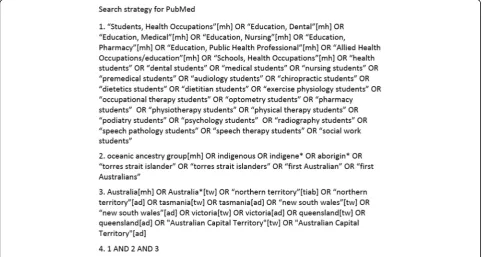
Search strategy
combination of subject headings and free text keywords (see Fig. 1). Back issues of the Australian Journal of Indi-genous Education were hand searched, and reference lists of all retrieved articles (including other systematic reviews) were scanned manually.
Screening process: inclusion and exclusion criteria
We included reviewed empirical studies, peer-reviewed descriptive articles and grey literature reports that investigated the enablers or barriers to the retention of Aboriginal and/or Torres Strait Islander students within tertiary health courses, or which described or evaluated strategies to improve the retention of these students. Stud-ies on all health courses were included. Two reviewers (EVT and AL) independently screened titles and abstracts of publications identified using the following predeter-mined exclusion criteria to determine eligibility for full text review: (i) language other than English; (ii) non-Indi-genous students only; (iii) Indinon-Indi-genous population was pa-tients rather than students; (iv) a tertiary course other than health; (v) focused on primary or secondary school students; or (vi) not based on findings from Australia.
The full texts were then independently reviewed with information extracted using a pre-determined data ex-traction form. Any disagreements regarding article eligi-bility were discussed and resolved by the two reviewers. A publication was excluded following full text examin-ation if it: (i) included no findings or connection to re-tention or attrition related to Indigenous students (such as articles that just reported on positive or negative
aspects of the course of study, without any connection to retention or attrition); (ii) reported on a tertiary course other than health or a qualification below Bach-elor degree level; (iii) did not include a clearly defined Indigenous health student body; or (iv) was a literature review. Multiple papers from the same authors reporting on the same study population were included only if there were differences in the findings.
Quality appraisal
The quality of the empirical studies (n= 14) and grey lit-erature reports (n= 3) was assessed using the Mixed Methods Appraisal Tool (MMAT), Version 2018 [37]. The MMAT was selected as it is designed for systematic reviews that include qualitative, quantitative and mixed-methods studies, enabling the use of one tool for apprais-ing the most common types of empirical studies [38] and it has been found to be efficient, reliable and has demon-strated content validity [39, 40]. After responding to two screening questions, each included study was rated in the appropriate category of criteria as either‘yes’, ‘no’or‘ un-clear’. Of note, the tool does not address the quality of the reporting, but only the quality of the reported methods of the study. Two reviewers (EVT and AL) independently evaluated the articles.
Descriptive articles (n= 9) were assessed for quality by the same two authors using the Joanna Briggs Institute Checklist for Text and Opinion [41]. This tool consists of six criteria and allows for the appraisal of narrative text and expert opinion articles. Included articles were evaluated
with respect to these criteria which include the established expertise of the author(s), the clarity and logic of the articu-lated argument, whether there was reference to existing lit-erature and whether any incongruence with the litlit-erature was considered and defended [41]. Any score discrepancy was resolved through discussion.
After both quality appraisal tools had been completed and consensus reached, an assessment of‘high’,‘medium’ or‘low’quality was given to each article. It was decided at the outset that no study would be excluded on the basis of its quality assessment.
Analysis
There were two components to the analysis of this review, which was conducted by two authors (EVT and AL) and then reviewed and refined by ST. Enablers, barriers, and recommendations relating to retention, as reported by current or former Indigenous students, were identified for each article. Factors affecting retention were then grouped into a matrix, which provided a logical framework to syn-thesise information. The matrix layout was based on one devised by Slatyer et al. [42] in their article looking at bar-riers and enablers to retention of Aboriginal Diploma of Nursing students and used with their permission. Finally,
a count of identified factors provided a quantitative assess-ment of how frequently each factor was reported in the in-cluded literature.
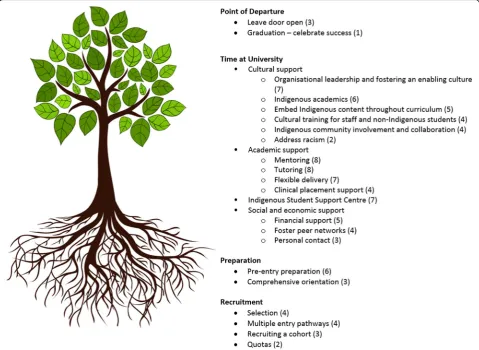
Identified strategies or interventions to improve reten-tion, as described or evaluated from the school or faculty perspective, were separated into individual components. Components were grouped chronologically to where they occurred during the students’time at university and then mapped to a diagram. The frequency with which each strategy was reported was also assessed.
Results
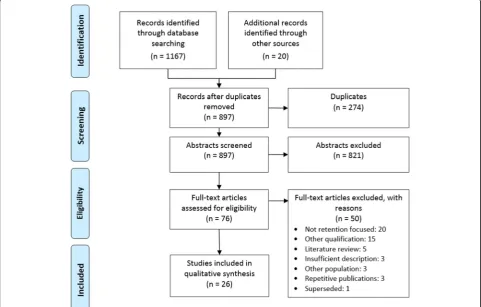
We identified 26 articles that met our inclusion criteria. The results for each stage of our search and screening processes are shown in the PRISMA flow diagram (Fig.2).
Description of studies
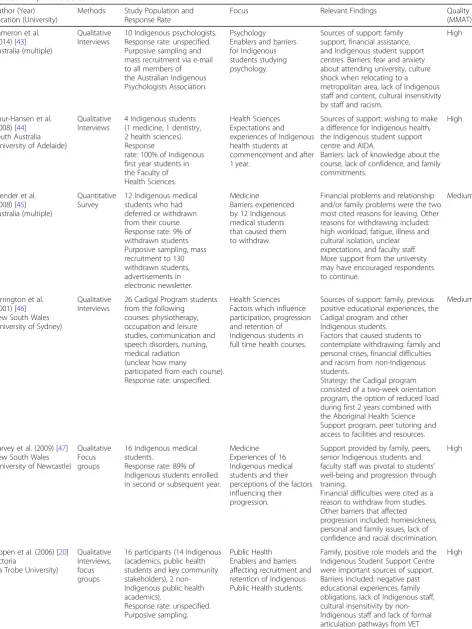
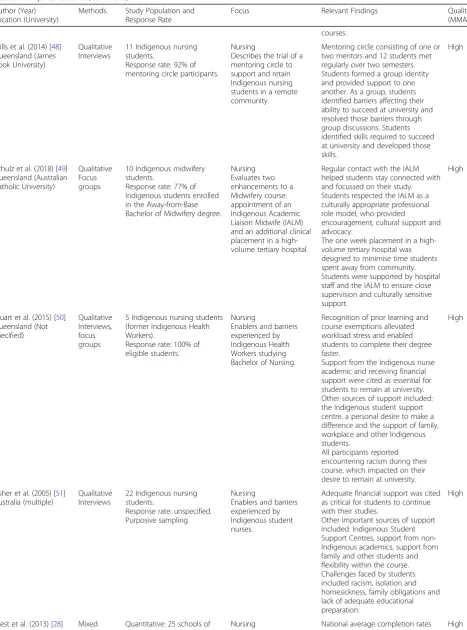
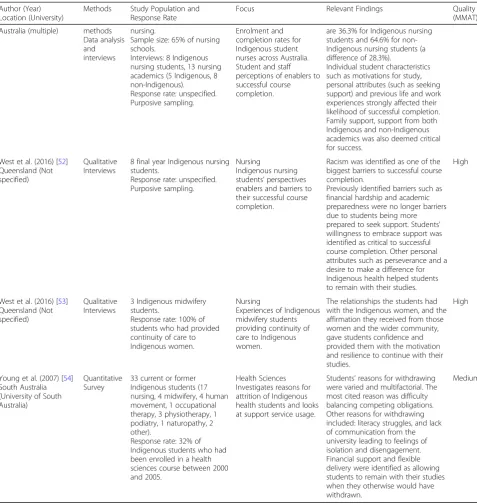
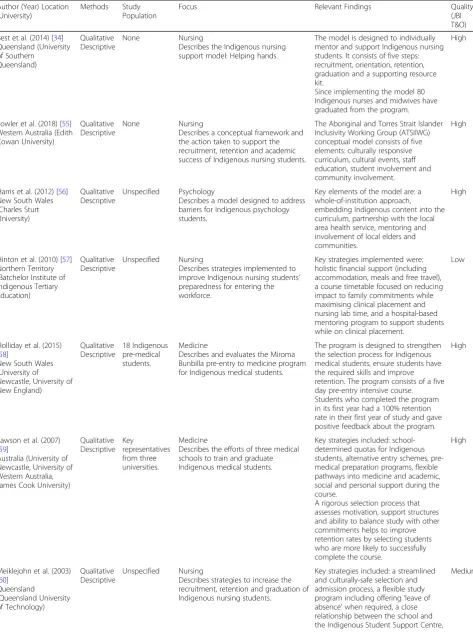
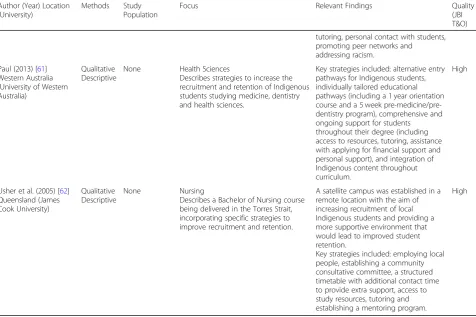
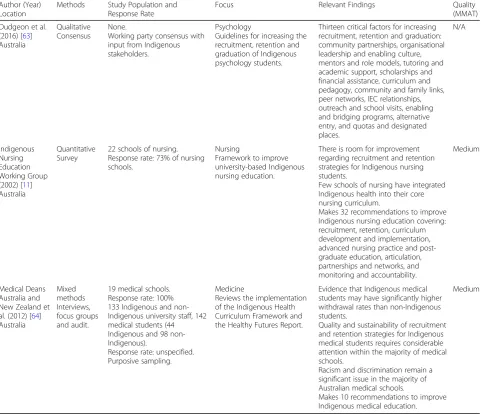
Over half the articles included in this review were em-pirical (n= 14; 54%) (Table 1). The descriptive articles (n= 9; 35%) (Table 2) described strategies implemented to improve retention from the school or faculty perspec-tive, but did not evaluate those strategies. Grey literature reports on the three main professions represented in the included articles (n= 3; 11%) are outlined in Table3.
Studies took place in all states and territories except Tasmania and the Australian Capital Territory. The lar-gest number of studies took place in Queensland (n= 8) or were national in scope (n= 8). Two Queensland au-thors, West and Usher, were lead author on five of the in-cluded articles, all of which focused on issues affecting nursing students.
Half (n= 13) of the studies focused on issues affecting nurs-ing and midwifery students [11,28,34,48–53,55,57,60,62], five studies focused on medical students [45,47,58,59,64], three focused on psychology students [43,56,63], one study focused on public health students [20], and four studies re-ported on issues affecting Indigenous students across several health disciplines (courses included: dentistry, health science, human movement, medicine, nursing and midwifery, occupa-tional therapy, physiotherapy and podiatry) [44, 46, 54, 61]. No articles reported specifically on the retention of dental students or any of the other allied health courses (such as so-cial work or physiotherapy) apart from psychology.
Eighteen articles were assessed as good quality, six as medium quality, one was assessed as low quality [57] and one grey literature report was not suitable for qual-ity appraisal using the MMAT because it was not an empirical study [63].
Factors affecting retention
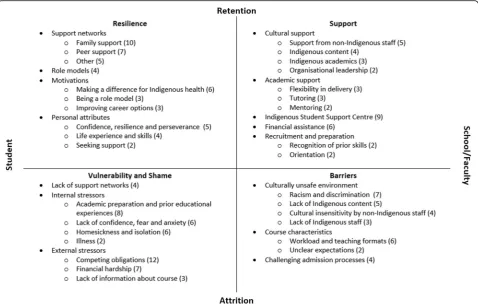
Factors reported by current or former Indigenous stu-dents as affecting retention were primarily identified from the empirical research articles. These factors have been represented via a matrix in Fig. 3. Rarely was one of these factors identified in isolation; generally it was the combination across several quadrants that resulted in students remaining or departing.
Student characteristics
A range of personal support networks were pivotal to stu-dents’well-being and to their remaining at university. Fam-ily support was the most frequently mentioned enabler for retention [20,28,43,46,47,50–53,60] with family provid-ing support, even when they hadn’t had educational oppor-tunities themselves. Family support included emotional, financial and physical support, including when students were far away geographically, and it gave participants the confidence to go to university and encouraged them to re-main there. Peer support from fellow Indigenous students, particularly those studying a health course, was also very important [28, 46, 48, 50–52, 60]. The value of support from workplaces and professional networks such as the Congress of Aboriginal and Torres Strait Islander Nurses and Midwives (CATSINaM) and the Australian Indigenous Doctors’ Association (AIDA) was also identified [44, 47,
50–52]. While not necessarily part of students’support net-works, senior Indigenous students and graduates of the course were inspiring and highly motivating role models
for students, helping to engender confidence in their stud-ies and encouraging them to stay at university [20,46,47,
52]. Conversely, where there was a lack of support or un-derstanding from family or workplace, this contributed to students’feelings of stress, isolation and loneliness [43,45,
47,50].
Internal motivations were a powerful driver for many students, withwanting to make a difference for Indigen-ous health the most frequently mentioned [28, 44, 45,
50, 52,53]. Students also reported a desire to be a role model and inspire others within their family and com-munity [50,52,53], and to improve their career options and “have a more influential role in [health] policy making” [45, 50, 53] as motivators for continuing with their studies.
A number of personal attributes were identified in the literature as having a protective effect; confidence, resili-ence and perseverance were all influential on course completion [46, 48, 51–53]. Some mature aged students reported feeling confidence as a result of their life expe-riences (previous employment, parenthood, positive edu-cational experiences) and the skills they had acquired (such as study skills, communication, teamwork) [28,46,
48, 51]. West et al. [28, 52] found that student nurses’ ability and willingness to seek out and then accept sup-port was pivotal to successful course completion.
Having competing obligations was the most frequently mentioned barrier to remaining at university, reported by almost half of the included articles [20,44–48,50–52,54,
57,60]. Competing obligations included difficulties meet-ing family and community commitments, stress caused by family crises or illness, and difficulties balancing study, work and family. Financial hardship was mentioned by a quarter of articles as a reason for not continuing with study [20, 43, 45–47, 51, 60], and in some instances was exacerbated by feelings of shame for seeking financial as-sistance from others. Usher et al. [51] suggested that stu-dents’ financial burden had a cultural component as participants reported that they were expected to share money with extended family members, an expectation not usually experienced by non-Indigenous students.
School/faculty characteristics
Table 1Empirical studies
Author (Year) Location (University)
Methods Study Population and Response Rate
Focus Relevant Findings Quality
(MMAT)
Cameron et al. (2014) [43] Australia (multiple)
Qualitative Interviews
10 Indigenous psychologists. Response rate: unspecified. Purposive sampling and mass recruitment via e-mail to all members of the Australian Indigenous Psychologists Association.
Psychology Enablers and barriers for Indigenous students studying psychology.
Sources of support: family support, financial assistance, and Indigenous student support centres. Barriers: fear and anxiety about attending university, culture shock when relocating to a metropolitan area, lack of Indigenous staff and content, cultural insensitivity by staff and racism.
High
Chur-Hansen et al. (2008) [44] South Australia (University of Adelaide)
Qualitative Interviews
4 Indigenous students (1 medicine, 1 dentistry, 2 health sciences). Response
rate: 100% of Indigenous first year students in the Faculty of Health Sciences.
Health Sciences Expectations and experiences of Indigenous health students at commencement and after 1 year.
Sources of support: wishing to make a difference for Indigenous health, the Indigenous student support centre and AIDA.
Barriers: lack of knowledge about the course, lack of confidence, and family commitments.
High
Ellender et al. (2008) [45] Australia (multiple)
Quantitative Survey
12 Indigenous medical students who had deferred or withdrawn from their course. Response rate: 9% of withdrawn students. Purposive sampling, mass recruitment to 130 withdrawn students, advertisements in electronic newsletter.
Medicine
Barriers experienced by 12 Indigenous medical students that caused them to withdraw.
Financial problems and relationship and/or family problems were the two most cited reasons for leaving. Other reasons for withdrawing included: high workload, fatigue, illness and cultural isolation, unclear expectations, and faculty staff. More support from the university may have encouraged respondents to continue.
Medium
Farrington et al. (2001) [46] New South Wales (University of Sydney)
Qualitative Interviews
26 Cadigal Program students from the following courses: physiotherapy, occupation and leisure studies, communication and speech disorders, nursing, medical radiation (unclear how many
participated from each course). Response rate: unspecified.
Health Sciences Factors which influence participation, progression and retention of Indigenous students in full time health courses.
Sources of support: family, previous positive educational experiences, the Cadigal program and other Indigenous students.
Factors that caused students to contemplate withdrawing: family and personal crises, financial difficulties and racism from non-Indigenous students.
Strategy: the Cadigal program consisted of a two-week orientation program, the option of reduced load during first 2 years combined with the Aboriginal Health Science Support program, peer tutoring and access to facilities and resources.
Medium
Garvey et al. (2009) [47] New South Wales (University of Newcastle)
Qualitative Focus groups
16 Indigenous medical students.
Response rate: 89% of Indigenous students enrolled in second or subsequent year.
Medicine Experiences of 16 Indigenous medical students and their perceptions of the factors influencing their progression.
Support provided by family, peers, senior Indigenous students and faculty staff was pivotal to students’ well-being and progression through training.
Financial difficulties were cited as a reason to withdraw from studies. Other barriers that affected progression included: homesickness, personal and family issues, lack of confidence and racial discrimination.
High
Kippen et al. (2006) [20] Victoria
(La Trobe University)
Qualitative Interviews, focus groups
16 participants (14 Indigenous (academics, public health students and key community stakeholders), 2 non-Indigenous public health academics).
Response rate: unspecified. Purposive sampling.
Public Health Enablers and barriers affecting recruitment and retention of Indigenous Public Health students.
Family, positive role models and the Indigenous Student Support Centre were important sources of support. Barriers included: negative past educational experiences, family obligations, lack of Indigenous staff, cultural insensitivity by non-Indigenous staff and lack of formal articulation pathways from VET
Table 1Empirical studies(Continued) Author (Year)
Location (University)
Methods Study Population and Response Rate
Focus Relevant Findings Quality
(MMAT)
courses.
Mills et al. (2014) [48] Queensland (James Cook University)
Qualitative Interviews
11 Indigenous nursing students.
Response rate: 92% of mentoring circle participants.
Nursing
Describes the trial of a mentoring circle to support and retain Indigenous nursing students in a remote community.
Mentoring circle consisting of one or two mentors and 12 students met regularly over two semesters. Students formed a group identity and provided support to one another. As a group, students identified barriers affecting their ability to succeed at university and resolved those barriers through group discussions. Students identified skills required to succeed at university and developed those skills.
High
Schulz et al. (2018) [49] Queensland (Australian Catholic University)
Qualitative Focus groups
10 Indigenous midwifery students.
Response rate: 77% of Indigenous students enrolled in the Away-from-Base Bachelor of Midwifery degree.
Nursing Evaluates two enhancements to a Midwifery course: appointment of an Indigenous Academic Liaison Midwife (IALM) and an additional clinical placement in a high-volume tertiary hospital.
Regular contact with the IALM helped students stay connected with and focussed on their study. Students respected the IALM as a culturally appropriate professional role model, who provided
encouragement, cultural support and advocacy.
The one week placement in a high-volume tertiary hospital was designed to minimise time students spent away from community. Students were supported by hospital staff and the IALM to ensure close supervision and culturally sensitive support.
High
Stuart et al. (2015) [50] Queensland (Not specified)
Qualitative Interviews, focus groups
5 Indigenous nursing students (former Indigenous Health Workers).
Response rate: 100% of eligible students.
Nursing
Enablers and barriers experienced by Indigenous Health Workers studying Bachelor of Nursing.
Recognition of prior learning and course exemptions alleviated workload stress and enabled students to complete their degree faster.
Support from the Indigenous nurse academic and receiving financial support were cited as essential for students to remain at university. Other sources of support included: the Indigenous student support centre, a personal desire to make a difference and the support of family, workplace and other Indigenous students.
All participants reported encountering racism during their course, which impacted on their desire to remain at university.
High
Usher et al. (2005) [51] Australia (multiple)
Qualitative Interviews
22 Indigenous nursing students.
Response rate: unspecified. Purposive sampling.
Nursing
Enablers and barriers experienced by Indigenous student nurses.
Adequate financial support was cited as critical for students to continue with their studies.
Other important sources of support included: Indigenous Student Support Centres, support from non-Indigenous academics, support from family and other students and flexibility within the course. Challenges faced by students included racism, isolation and homesickness, family obligations and lack of adequate educational preparation.
High
into the curriculum, was reported as assisting retention by students in four studies [28,51,52,63].
Racism and discrimination were barriers reported in over a quarter of included studies [43, 46, 47, 50–52,
64], with West et al. [52] describing racism and discrim-ination as “one of the most pervasive and debilitating barriers to successful course completion”(p. 353). Exam-ples ranged from questioning the student’s Indigeneity, to discrimination and a lack of acceptance by students
and staff because the student was viewed as receiving
‘special treatment’.
Schools or faculties could support students academically by being flexible in their delivery of course content and allowing students to move between study modes (internal/ external, full-time/part-time) [28, 51, 54]. This was re-ported as enabling individuals to modify their mode of study according to personal needs, allowing them to
“hang-in there” ([54], p. 40). Access to tutors [52,54, 63]
Table 1Empirical studies(Continued) Author (Year)
Location (University)
Methods Study Population and Response Rate
Focus Relevant Findings Quality
(MMAT)
Australia (multiple) methods Data analysis and interviews
nursing.
Sample size: 65% of nursing schools.
Interviews: 8 Indigenous nursing students, 13 nursing academics (5 Indigenous, 8 non-Indigenous). Response rate: unspecified. Purposive sampling.
Enrolment and completion rates for Indigenous student nurses across Australia. Student and staff perceptions of enablers to successful course completion.
are 36.3% for Indigenous nursing students and 64.6% for non-Indigenous nursing students (a difference of 28.3%).
Individual student characteristics such as motivations for study, personal attributes (such as seeking support) and previous life and work experiences strongly affected their likelihood of successful completion. Family support, support from both Indigenous and non-Indigenous academics was also deemed critical for success.
West et al. (2016) [52] Queensland (Not specified)
Qualitative Interviews
8 final year Indigenous nursing students.
Response rate: unspecified. Purposive sampling.
Nursing
Indigenous nursing students’perspectives enablers and barriers to their successful course completion.
Racism was identified as one of the biggest barriers to successful course completion.
Previously identified barriers such as financial hardship and academic preparedness were no longer barriers due to students being more prepared to seek support. Students’ willingness to embrace support was identified as critical to successful course completion. Other personal attributes such as perseverance and a desire to make a difference for Indigenous health helped students to remain with their studies.
High
West et al. (2016) [53] Queensland (Not specified)
Qualitative Interviews
3 Indigenous midwifery students.
Response rate: 100% of students who had provided continuity of care to Indigenous women.
Nursing
Experiences of Indigenous midwifery students providing continuity of care to Indigenous women.
The relationships the students had with the Indigenous women, and the affirmation they received from those women and the wider community, gave students confidence and provided them with the motivation and resilience to continue with their studies.
High
Young et al. (2007) [54] South Australia (University of South Australia)
Quantitative Survey
33 current or former Indigenous students (17 nursing, 4 midwifery, 4 human movement, 1 occupational therapy, 3 physiotherapy, 1 podiatry, 1 naturopathy, 2 other).
Response rate: 32% of Indigenous students who had been enrolled in a health sciences course between 2000 and 2005.
Health Sciences Investigates reasons for attrition of Indigenous health students and looks at support service usage.
Students’reasons for withdrawing were varied and multifactorial. The most cited reason was difficulty balancing competing obligations. Other reasons for withdrawing included: literacy struggles, and lack of communication from the university leading to feelings of isolation and disengagement. Financial support and flexible delivery were identified as allowing students to remain with their studies when they otherwise would have withdrawn.
Medium
Table 2Descriptive studies
Author (Year) Location (University)
Methods Study Population
Focus Relevant Findings Quality
(JBI T&O)
Best et al. (2014) [34] Queensland (University of Southern Queensland) Qualitative Descriptive None Nursing
Describes the Indigenous nursing support model: Helping hands.
The model is designed to individually mentor and support Indigenous nursing students. It consists of five steps: recruitment, orientation, retention, graduation and a supporting resource kit.
Since implementing the model 80 Indigenous nurses and midwives have graduated from the program.
High
Fowler et al. (2018) [55] Western Australia (Edith Cowan University)
Qualitative Descriptive
None Nursing
Describes a conceptual framework and the action taken to support the recruitment, retention and academic success of Indigenous nursing students.
The Aboriginal and Torres Strait Islander Inclusivity Working Group (ATSIIWG) conceptual model consists of five elements: culturally responsive curriculum, cultural events, staff education, student involvement and community involvement.
High
Harris et al. (2012) [56] New South Wales (Charles Sturt University)
Qualitative Descriptive
Unspecified Psychology
Describes a model designed to address barriers for Indigenous psychology students.
Key elements of the model are: a whole-of-institution approach,
embedding Indigenous content into the curriculum, partnership with the local area health service, mentoring and involvement of local elders and communities.
High
Hinton et al. (2010) [57] Northern Territory (Batchelor Institute of Indigenous Tertiary Education)
Qualitative Descriptive
Unspecified Nursing
Describes strategies implemented to improve Indigenous nursing students’ preparedness for entering the workforce.
Key strategies implemented were: holistic financial support (including accommodation, meals and free travel), a course timetable focused on reducing impact to family commitments while maximising clinical placement and nursing lab time, and a hospital-based mentoring program to support students while on clinical placement.
Low
Holliday et al. (2015) [58]
New South Wales (University of
Newcastle, University of New England) Qualitative Descriptive 18 Indigenous pre-medical students. Medicine
Describes and evaluates the Miroma Bunbilla pre-entry to medicine program for Indigenous medical students.
The program is designed to strengthen the selection process for Indigenous medical students, ensure students have the required skills and improve retention. The program consists of a five day pre-entry intensive course. Students who completed the program in its first year had a 100% retention rate in their first year of study and gave positive feedback about the program.
High
Lawson et al. (2007) [59]
Australia (University of Newcastle, University of Western Australia, James Cook University)
Qualitative Descriptive Key representatives from three universities. Medicine
Describes the efforts of three medical schools to train and graduate Indigenous medical students.
Key strategies included: school-determined quotas for Indigenous students, alternative entry schemes, pre-medical preparation programs, flexible pathways into medicine and academic, social and personal support during the course.
A rigorous selection process that assesses motivation, support structures and ability to balance study with other commitments helps to improve retention rates by selecting students who are more likely to successfully complete the course.
High
Meiklejohn et al. (2003) [60]
Queensland (Queensland University of Technology) Qualitative Descriptive Unspecified Nursing
Describes strategies to increase the recruitment, retention and graduation of Indigenous nursing students.
Key strategies included: a streamlined and culturally-safe selection and admission process, a flexible study program including offering‘leave of absence’when required, a close relationship between the school and the Indigenous Student Support Centre,
and mentoring [63, 64] helped create a safe, supportive space for students.
The Indigenous Student Support Centre was reported by participants in a third of articles [20, 28, 43, 44, 46,
47,50–52] as providing academic, social, emotional and cultural support, including tutoring, and advice on nances, scholarships and accommodation. Receiving fi-nancial assistance such as a scholarship, cadetship, or ABSTUDY (special government benefits for Indigenous students in an approved course of study), helped stu-dents to remain with their studies, especially during clinical placements when they generally had to take leave from their paid employment [43,50–52,54,63].
During the recruitment and preparation stages, students reported that recognition of their existing skills and prior learning helped them feel“empowered”and valued; when course exemptions were granted, this contributed to im-proved retention by helping students complete their de-gree faster and reducing financial pressures [50, 63]. Comprehensive orientation programs helped students to understand school or faculty expectations, meet other stu-dents and feel accepted and welcomed by staff [46, 51]. Conversely, a challenging admission process, such as a lack of formal pathways from vocational education and training (VET) courses that articulated with university
studies, or difficulties applying for recognition of prior learning (particularly for Indigenous Health Workers), contributed to students feeling stressed, disempowered and undervalued [20,50,60,64].
Strategies to improve retention
Descriptions of strategies or programs implemented by health schools or faculties to improve retention were pri-marily identified from the descriptive articles, and are rep-resented chronologically in Fig.4.
Recruitment
Multiple articles, predominantly those looking at strategies implemented in medical schools, claimed that retention starts with appropriate selection [58–60, 64]. Medical schools aimed to select students who would successfully complete the course by looking at applicants’motivations, support structures and ability to balance study with other commitments. Lawson et al. [59], in their discussion of the strategies adopted by the three leading universities regard-ing Indigenous student enrolment in medicine, reported a strong link between selection and retention, although they acknowledged the need to achieve a balance between achieving a high completion rate and giving “higher-risk” students a chance. Two articles emphasised the importance
Table 2Descriptive studies(Continued) Author (Year) Location
(University)
Methods Study Population
Focus Relevant Findings Quality
(JBI T&O)
tutoring, personal contact with students, promoting peer networks and addressing racism.
Paul (2013) [61] Western Australia (University of Western Australia)
Qualitative Descriptive
None Health Sciences
Describes strategies to increase the recruitment and retention of Indigenous students studying medicine, dentistry and health sciences.
Key strategies included: alternative entry pathways for Indigenous students, individually tailored educational pathways (including a 1 year orientation course and a 5 week pre-medicine/pre-dentistry program), comprehensive and ongoing support for students throughout their degree (including access to resources, tutoring, assistance with applying for financial support and personal support), and integration of Indigenous content throughout curriculum.
High
Usher et al. (2005) [62] Queensland (James Cook University)
Qualitative Descriptive
None Nursing
Describes a Bachelor of Nursing course being delivered in the Torres Strait, incorporating specific strategies to improve recruitment and retention.
A satellite campus was established in a remote location with the aim of increasing recruitment of local Indigenous students and providing a more supportive environment that would lead to improved student retention.
Key strategies included: employing local people, establishing a community consultative committee, a structured timetable with additional contact time to provide extra support, access to study resources, tutoring and establishing a mentoring program.
High
of selecting students through a culturally appropriate inter-view process [60,64]. The importance of offering multiple pathways into medicine was also stressed [58,59,61,64].
Three studies identified the importance of a cohort ef-fect with Indigenous students enabling peer learning and support [46, 58, 60], while others identified the import-ance of course quotas with specific places available for In-digenous students [11, 59]. Being with other Indigenous students directly benefitted students’ academic success and likelihood of retention, reflecting the moral and aca-demic support students can provide to one another. For example, Meiklejohn et al. [60] concluded (p. 7):
"A critical mass of eight students has been identified as the minimum number of enrolees at any one time likely to result in successful completion of studies.
Numbers of less than eight may leave students feeling isolated, and without study partners, encouragement and peer support."
Preparation
Articles described pre-entry preparation programs and comprehensive orientation programs as an effective way to inform students about the support available to them at university, as well as communicating university expecta-tions and managing student expectaexpecta-tions. Descripexpecta-tions of pre-entry preparation programs were relatively common [54,56,58,59,61,64], although predominately employed by medical schools. Courses described as“pre-entry” var-ied substantially in terms of the aims, content covered and duration, with examples ranging from 5 days to 1 year.
Table 3Grey literature
Author (Year) Location
Methods Study Population and Response Rate
Focus Relevant Findings Quality
(MMAT)
Dudgeon et al. (2016) [63] Australia
Qualitative Consensus
None.
Working party consensus with input from Indigenous stakeholders.
Psychology
Guidelines for increasing the recruitment, retention and graduation of Indigenous psychology students.
Thirteen critical factors for increasing recruitment, retention and graduation: community partnerships, organisational leadership and enabling culture, mentors and role models, tutoring and academic support, scholarships and financial assistance, curriculum and pedagogy, community and family links, peer networks, IEC relationships, outreach and school visits, enabling and bridging programs, alternative entry, and quotas and designated places.
N/A
Indigenous Nursing Education Working Group (2002) [11] Australia
Quantitative Survey
22 schools of nursing. Response rate: 73% of nursing schools.
Nursing
Framework to improve university-based Indigenous nursing education.
There is room for improvement regarding recruitment and retention strategies for Indigenous nursing students.
Few schools of nursing have integrated Indigenous health into their core nursing curriculum.
Makes 32 recommendations to improve Indigenous nursing education covering: recruitment, retention, curriculum development and implementation, advanced nursing practice and post-graduate education, articulation, partnerships and networks, and monitoring and accountability.
Medium
Medical Deans Australia and New Zealand et al. (2012) [64] Australia
Mixed methods Interviews, focus groups and audit.
19 medical schools. Response rate: 100% 133 Indigenous and non-Indigenous university staff, 142 medical students (44 Indigenous and 98 non-Indigenous).
Response rate: unspecified. Purposive sampling.
Medicine
Reviews the implementation of the Indigenous Health Curriculum Framework and the Healthy Futures Report.
Evidence that Indigenous medical students may have significantly higher withdrawal rates than non-Indigenous students.
Quality and sustainability of recruitment and retention strategies for Indigenous medical students requires considerable attention within the majority of medical schools.
Racism and discrimination remain a significant issue in the majority of Australian medical schools.
Makes 10 recommendations to improve Indigenous medical education.
Medium
Holliday et al. [58] described a comprehensive 5 day pre-entry to medicine intensive course which demonstrated positive outcomes, including 100% retention rate during first year for participants of the program, and“ overwhelm-ingly” positive feedback from students. Comprehensive orientation programs were less commonly described [34,
46,58] and ranged from 1 day to 2 weeks in duration. As one component of the Indigenous Nursing Support (INS) model: Helping Hands, Best et al. [34] described an orien-tation tool developed for Indigenous student nurses, which included the‘Dandiiri’orientation breakfast, a spe-cial enrolments area and formally allocated staff support.
Time at university
Providing cultural support for Indigenous students was recognised as needing to come“from the top”, with over a quarter of the articles reporting strong organisational lead-ership and a deliberate attempt to foster an enabling cul-ture within their schools or faculties [28,34,55–57,59,64]. Leadership at the institutional and faculty or school level had flow-on effects within the organisational hierarchy, cre-ating an enabling culture which incorporated Indigenous knowledge and sought to support and respect the Indigen-ous identity of students. Fostering cultural safety required
commitment from every academic rather than relying on one or two motivated staff or only Indigenous staff.
Schools and faculties also demonstrated a commitment to cultural safety by implementing cultural awareness training for non-Indigenous academics and students [11,
55,56,64]. However, a review co-authored by the Medical Deans Australia and New Zealand (Medical Deans) and AIDA [64] found that these programs were generally tar-geted towards students rather than staff, that attendance was voluntary and they were often viewed as being“ token-istic and counterproductive” (p. 35). Specific strategies to address racism were only reported in two articles [59,60]. Meiklejohn et al. [60] briefly described a number of imple-mented strategies to address racism including offering counselling and ongoing support to the victims, an ad-dress by the Head of School to the student body and dis-ciplinary action taken against the perpetrators, however, there was no indication of how successful these strategies were. Stuart et al. [50] recommended implementing a for-mal complaint process (including an anonymous hotline number) and employing Indigenous counsellors to give advice to staff and students as a response to the racism commonly experienced by the participants in their study.
Indigenous academics supported students culturally and academically [28, 34, 44, 49, 50, 62] with regular contact
helping students stay connected and focused on their stud-ies. Schulz et al. [49] describes how the new Indigenous Academic Liaison Midwife (IALM) was respected by stu-dents“as a culturally appropriate professional role model” who advocated for students with the other academics, with one student stating“if it wasn’t for [the IALM] I wouldn’t have made it this far”(p. 62). Also supporting students cul-turally and academically was the inclusion of Indigenous content in the core health curriculum [34,55, 56,61,64], which made the curriculum more relevant for Indigenous students (increasing the likelihood of retention) and rein-forced the belief that Indigenous health issues were worthy of discussion [34,56]. Two articles described how Indigen-ous content was developed in consultation with local Indi-genous people to ensure that materials were respectful and safe [55,64]. None of the articles described the exact nature of the Indigenous content, only that it “foregrounds Indi-genous world views, cultures and experiences”([56] p. 131), although an audit of the curriculum of all Australian med-ical schools by Medmed-ical Deans et al. [64] found that Indi-genous health content covered a wide range of topics including“rural Indigenous health, cultural awareness and
cultural implications for health, Indigenous history, com-munication, clinical presentations of disease, population health and social determinants of health” (p. 12). The amount of Indigenous content incorporated into the cur-riculum varied amongst the five articles and ranged from one core undergraduate unit [34, 55] to a combination of core units and electives throughout the course [56,61], to Indigenous health not being taught discretely but as“ inte-grated components of broader subject areas” ([64] p. 12). Schools and faculties reported involving the local commu-nity through service programs, clinical placements at the local Aboriginal Medical Service, and talks from Elders and local community members [34,55,56,62].
The two most commonly described strategies to provide academic support were targeted mentoring programs [11,
34,48,57–59,62,64] and tutoring [11,34,46,58–62]. Mills et al. [48] described the implementation of mentoring cir-cles (a form of group mentoring) as a successful way to support Indigenous nursing students during their studies by empowering them to develop the skills they identified as needing to complete their studies. The review by Medical Deans et al. [64] described a mentoring program where
social and academic support and professional guidance was provided by experienced (non-Indigenous) clinicians, with some students regarding the mentors as“akin to Elders”(p. 33). Four articles briefly described strategies to support nursing students during clinical placement [34,49,53,57]. Best et al. [34] mentions the“Coolamon clinical school”as a service that provides“support with clinical nursing place-ments for all Indigenous nursing students” although the exact nature of that support was not specified (p. 64).
Flexibility in the delivery of course content was an-other way to support students academically [11, 46, 49,
56, 57, 60, 62]. Some schools or faculties aimed to re-duce the travel burden to students by delivering the course in block mode, and Hinton et al. [57] described a Bachelor of Nursing timetable that specifically focused on reducing any impact to family commitments while maximising clinical placement and lab time. Both Meik-lejohn et al. [60] and Farrington et al. [46] described how students could choose to reduce their study load, while concurrently completing tutoring or an Aboriginal health science support program, with participants in Far-rington’s study reflecting that they would not have coped with a full load.
The two most commonly described strategies to provide social and economic support were financial support [11,
57, 59–61] and fostering peer networks [34, 48, 55, 60]. Descriptions of financial support included: assistance ap-plying for scholarships and cadetships; access to class sets of text books, laptops, diagnostic kits; and funding to at-tend conferences or a travel allowance during clinical placements. Schools supported and encouraged Indigen-ous students to network by organising social events such as breakfasts and morning teas as an informal way for stu-dents to meet. No articles reported on strategies to en-courage networking between Indigenous and non-Indigenous students, although Harris et al. [56] described a planned buddy system that would encourage Indigenous and non-Indigenous students to work together to“provide first-hand experience of reconciliation in action, and im-portant exposure to perspective taking”(p. 133). A small number of articles described‘personal contact’as a strat-egy for retaining students [34,60,64], with feedback from students in one study indicating that this was“critical to success”([64], p. 33).
Point of departure
Only Best et al. [34] mentioned the importance of cele-brating graduation, with the inclusion of a graduation tool within the INS model: Helping Hands to help nursing stu-dents celebrate their success. However, Harris et al. [56] described how progress was recognised throughout a Graduate Diploma in Psychology program, by providing a certificate after the first year was completed and a diploma at the end of second year. This had the added advantage
of providing “exit points” throughout the qualification. Harris et al. [56] explains (p. 133):
“The reality is that not all students will make it through a 3- or 4-year degree. For many students who are the first generation of their family to attend university, a certificate or diploma recognising what they have done is an accomplishment. It provides a way to exit without losing face, and hopefully encourages them to come back, or, to pursue some other tertiary qualification. It also signals to an employer that the student has attempted tertiary training in psychology.”
The importance of“leaving the university door open”for students who left before graduation, was also mentioned in two other articles [59, 60]. Strategies to prevent stu-dents withdrawing unnecessarily included offering a leave of absence when a student’s progress stalled due to outside factors, and the option of transferring to a less onerous course of study for a year if the student is strug-gling academically.
Discussion
This paper has explored issues associated with retaining Indigenous Australian students in tertiary health courses and identified 26 articles reporting factors affecting re-tention or that described strategies implemented by schools or faculties to improve retention. Despite the pressing need for Indigenous health professionals, there were relatively few published strategies to improve the retention of health students, minimal documented evalu-ation of these strategies and no intervention trials, with limited evidence about which retention strategies are most effective. Far more has been written about the fac-tors affecting retention, possibly reflecting the ease with which challenges can be described and the difficulties with achieving robust evidence into what makes a differ-ence in improving outcomes.
Key factors reported by students as affecting retention were: family and peer support; competing obligations; aca-demic preparation and prior educational experiences; ac-cess to the Indigenous Student Support Centre; financial hardship; and racism and discrimination. This accords with the findings of previous national and international re-views on Indigenous nurses [19,26,65], as well as findings about the retention of Indigenous health students in voca-tional education [42, 66, 67] and Indigenous Australians in other fields of study [68–70].
selection and preparation for university is critical to a stu-dent’s retention [58,59,64]. Using the metaphor of a tree, if a tree doesn’t have strong roots, it may still grow, but the trunk won’t be as strong to withstand winds, and the tree won’t produce as many leaves, flowers or fruits. In the same way, if the groundwork isn’t done with the students – if they aren’t informed about the support available to them at university or the expectations of the course prior to start-ing, if they don’t acquire the skills they might need, then they are likely to struggle at university, especially if other challenges occur in their life. We chose to represent the strategies implemented within universities for retaining stu-dents using the tree analogy, with the strategies grouped chronologically based on where they supported a student during their study timeline (see Fig.4).
Despite racism and discrimination being reported as major barriers to retention by students and academics across multiple studies [43,46,47,50–52,64], few schools or faculties mentioned racism as an issue within their insti-tution and only two articles gave specific examples of strat-egies to address racism [59,60]. While broader strategies such as organisational leadership and fostering an enabling culture, and cultural training for staff and students, are clearly aimed at creating a safe place for Indigenous stu-dents, there seemed to be a lack of willingness to acknow-ledge either institutional or interpersonal racism as a problem. This may be because schools and faculties lacked insight, because they feared repercussions for admitting that racism existed in their faculty, or because they felt ra-cism was adequately addressed by university-wide policies. Anecdotally there seems to be a lot of uncertainty about appropriate strategies to address racism within schools and faculties. A report by Rodgers-Falk et al. [70] exploring initiatives in the higher education sector to increase the number of Indigenous Australian law graduates, states that
“we cannot develop [Aboriginal and Torres Strait Islander] inclusiveness effectively without being able to identify ra-cism, understand its gravity, and being prepared to deal with it. Schools need to have a racism strategy that in-cludes - responding, reprimanding, and policy implemen-tation” (p. 3). The Universities Australia ‘National best practice framework for Indigenous cultural competency in Australian universities’may be a useful guide, as it is de-signed to provide universities with the tools required to create culturally supportive environments for Aboriginal and Torres Strait Islander students and staff [71].
One notable gap in the literature was any investigation of Indigenous students’ experiences while on clinical placement and whether their experiences had any effect on their decision to remain with or depart from their studies. In addition, there was a lack of reported strat-egies to support Indigenous students while on clinical placement, with only four nursing or midwifery articles mentioning clinical placement support [34, 49, 53, 57].
While this accords with the findings of a previous review on Indigenous nurses [26], it is troubling because clinical placements are a core component of many health sci-ence degrees as well as preparing students for the work-force. As Milne et al. [26] states,“awareness of students’ experience in this context is essential to their academic success”(p. 392).
Effective, long-term strategies to grow the Indigenous health workforce cannot start at university. Skills and knowledge learned at school are critical elements of the health workforce development pipeline (and therefore workforce development policies and university recruit-ment strategies) [72, 73]. Although out of scope of the current review, there needs to be a greater focus on in-creasing the number of Indigenous students completing high school, encouragement of Indigenous students to study science in high school, and support for students during their transition from high school to university [64,72]. In addition, there needs to be a focus on articu-lation and increasing the pathways and support available for students wishing to progress from VET health pro-grams into graduate entry propro-grams.
Limitations
Implications
Universities have an important role to play in addressing in-equities in the Indigenous health workforce. It is hoped that findings from this review will be used by schools and facul-ties to inform the development of support strategies and programs that incorporate:
The whole of student life; starting with recruitment and selection, continuing through pre-entry preparation and orientation, and including cultural, academic, social and economic support while at university, as well as considering point of departure.
Opportunities for students to meet and connect with fellow Indigenous students during orientation and throughout their studies, whether through formal mentoring programs, student networks or informal social gatherings.
Flexibility in delivery.
Engagement with and input from local Indigenous
communities and health services.
Evaluation and assessment of efficacy, with the publication of results where possible, so that a body of‘best practice’evidence can be established.
In addition, schools and faculties need to adopt and communicate policies, guidelines and actions that ad-dress racism. The Universities Australia ‘National best practice framework for Indigenous cultural competency in Australian universities’outlines guiding principles and specific recommendations with the aim of making Aus-tralian universities places where Indigenous students can
“thrive and feel at home”([71], p.7).
Government also has a role in delivering and supporting effective schemes that provides incentives and financial support for Indigenous students, and proactive policies that encourage universities to provide the additional sup-ports needed by Indigenous students.
Clinical placements are a core component of many health science degrees. Despite this, we found no investi-gation of Indigenous students’experiences while on clin-ical placement and few reported strategies to support Indigenous students while on clinical placement. This highlights the need for further research in this area, with collaborations between academics and clinicians and be-tween universities and health services, to establish the factors affecting success for Indigenous students while on placement and how best to support students, while at the same time preparing them for the workforce.
Conclusions
The enablers and barriers to Aboriginal and Torres Strait Islander student retention have been researched for 30 years. This systematic review, focussed on health science courses, reiterates the findings from a multitude of previous
studies that the key factors affecting retention (as reported by students) are: family and peer support; competing obli-gations; academic preparation and prior educational experi-ences; access to the Indigenous Student Support Centre; financial hardship; and racism and discrimination. Historic-ally, there has been little written about practical strategies to support Indigenous students. This review found that the most successful strategies implemented by nursing, health and medical science faculties to improve retention were multi-layered and started before the student commenced at university. Specific strategies included: culturally appropri-ate recruitment and selection processes; comprehensive orientation and pre-entry programs; building a supportive and enabling school culture; appointing Indigenous aca-demics; developing mentoring and tutoring programs; flex-ible delivery of content; partnerships with the Indigenous Student Support Centre; providing social and financial sup-port; and ‘leaving the university door open’ for students who leave before graduation to return.
The gap in the literature that became apparent is empir-ical research that measures the efficacy of strategies to im-prove retention. While commendable to see schools and faculties describing their many efforts, programs and strat-egies to improve retention, the evidence that supports the efficacy of these approaches is limited. Although trial de-signs are unrealistic, programs and strategies need to be evaluated with pre- and post-implementation measures, and assessed using both qualitative and quantitative data/ research. As stated by Best et al. [34] in 2014,“The under-lying problem is not one of policy direction, but one of policy implementation. Little current literature provides discussion about best practice in achieving successful out-comes in graduating Indigenous nurses”(p. 61). And while it is tempting to look for a “magic bullet” in terms of implementing what seems most effective, it seems certain that a suite of measures implemented concurrently to pro-vide support across multiple domains will most enable tal-ented Indigenous people to overcome adversities and graduate as health professionals. The skills learnt while achieving this milestone will also be valuable as they enter the workforce, where retention of Indigenous health pro-fessionals remains an important concern [76].
Abbreviations
AIDA:Australian Indigenous Doctors’Association; CATSINaM: Congress of Aboriginal and Torres Strait Islander Nurses and Midwives; IALM: Indigenous Academic Liaison Midwife; INS: Indigenous Nursing Support; JBI T&O: Joanna Briggs Institute Checklist for Text and Opinion; Medical Deans: Medical Deans Australia and New Zealand; MMAT: Mixed Methods Appraisal Tool; PRISMA: Preferred Reporting Items for Systematic Review and Meta-Analysis; VET: Vocational education and training
Acknowledgements
Authors’contributions
EVT contributed to conception and design, carried out acquisition and analysis of data, and drafted the manuscript. AL contributed to acquisition and analysis of data and manuscript revision. SCT contributed to study conception, design, and manuscript revision. All authors read and approved the manuscript.
Funding
The Western Australian Centre for Rural Health receives funding from a rural health workforce initiative of the Australian Government through the Commonwealth Department of Health. The views expressed in this publication are those of the authors and do not necessarily reflect the views of the funding agency.
Availability of data and materials
Not applicable.
Ethics approval and consent to participate
Not applicable.
Consent for publication
Not applicable.
Competing interests
The authors declare that they have no competing interests.
Received: 20 June 2019 Accepted: 19 August 2019
References
1. Department of the Prime Minister and Cabinet. Closing the Gap Prime Minister's report 2018. 2018.https://www.pmc.gov.au/sites/default/files/ publications/ctg-report-2018.pdf. Accessed 5 Mar 2019.
2. Australian Institute of Health and Welfare. The health and welfare of Australia’s Aboriginal and Torres Strait Islander peoples: 2015. 2015.https://www.aihw. gov.au/reports/indigenous-health-welfare/indigenous-health-welfare-2015/ contents/indigenous-population-key-pointsAccessed 7 Mar 2019. 3. Matthews JD. Historical, social and biological understanding is needed to
improve aboriginal health. Recent Adv Microbiol. 1997;5:257–334. 4. Vos T, Barker B, Begg S, Stanley L, Lopez AD. Burden of disease and injury in
aboriginal and Torres Strait islander peoples: the indigenous health gap. Int J Epidemiol. 2009;38(2):470–7.https://doi.org/10.1093/ije/dyn240. 5. McLennan W, Madden R. The health and welfare of Australia's Aboriginal and
Torres Strait Islander Peoples. Canberra; 1997.http://www.abs.gov.au/AUSSTATS/ [email protected]/DetailsPage/4704.01997?OpenDocument. Accessed 5 Mar 2019 6. Australian Department of Health and Ageing. National Aboriginal and
Torres Strait Islander health plan 2013-2023. Canberra (AUST): Australian department of health and ageing; 2013.http://www.health.gov.au/internet/ main/publishing.nsf/content/B92E980680486C3BCA257BF0001BAF01/$File/ health-plan.pdf. Accessed 5 Mar 2019
7. Wilkins R, Tjepkema M, Mustard C, Choinière R. The Canadian census mortality follow-up study, 1991 through 2001. Health Rep. 2008;19(3):25. 8. Preston J. The urgency of postsecondary education for aboriginal peoples.
Canadian J Educ Adm Policy. 2008;(86).
9. Boughton B. What is the connection between aboriginal education and aboriginal health? Casuarina: Cooperative Research Centre for Aboriginal and Tropical Health; 2000.
10. Review of higher education access and outcomes for Aboriginal and Torres Strait Islander people: final report. Department of Industry, Innovation, Science, Research and Tertiary Education (Australia). 2012.https://apo.org. au/node/31135. Accessed 14 Mar 2019.
11. Indigenous Nursing Education Working Group. Gettin em n keepin em : report of the Indigenous Nursing Education Working Group to the Commonwealth Department of Health and Ageing Office for Aboriginal and Torres Strait Islander Health. In: Report to the Commonwealth Department of Health and Ageing. Canberra: Canberra, ACT: Office for Aboriginal and Torres Strait Islander Health; 2002.https://www.catsinam.org. au/static/uploads/files/gettinem-wfiwjthfuvhk.pdf. Accessed 8 Nov 2018. 12. Stuart L, Nielsen A-M. Two aboriginal registered nurses show us why black
nurses caring for black patients is good medicine. Contemp Nurse. 2011; 37(1):96–101.https://doi.org/10.5172/conu.2011.37.1.096.
13. Curtis E, Reid P. Indigenous health workforce development: challenges and successes of the vision 20:20 programme. ANZ J Surg. 2013;83(1–2):49–54.
https://doi.org/10.1111/ans.12030.
14. Sullivan LW. Missing persons: minorities in the health professions, A Report of the Sullivan Commission on Diversity in the Healthcare Workforce: Sullivan Commission; 2004.http://health-equity.lib.umd.edu/40/1/Sullivan_ Final_Report_000.pdf. Accessed 14 Mar 2019
15. Anderson M, Lavallee B. The development of the first nations, Inuit and Métis medical workforce. Med J Aust. 2007;186(10):539–40.https://doi.org/1 0.5694/j.1326-5377.2007.tb01033.x.
16. DiGregorio KD, Farrington S, Page S. Listening to our students: understanding the factors that affect aboriginal and Torres Strait islander students' academic success. High Educ Res Dev. 2000;19(3):297–309.https:// doi.org/10.1080/758484344.
17. Australian Institute of Health and Welfare. Medical practitioners workforce 2015. 2016. https://www.aihw.gov.au/reports/workforce/medical-practitioners-workforce-2015/contents/who-are-medical-practitioners. Accessed 14 Mar 2019.
18. Australian Institute of Health and Welfare. Nursing and midwifery workforce 2015. 2016. https://www.aihw.gov.au/reports/workforce/nursing-and-midwifery-workforce-2015/contents/who-are-nurses-and-midwives. Accessed 14 Mar 2019.
19. West R, Usher K, Foster K. Increased numbers of Australian indigenous nurses would make a significant contribution to 'closing the gap' in indigenous health: what is getting in the way? Contemp Nurse. 2010;36(1– 2):121–30.https://doi.org/10.5172/conu.2010.36.1-2.121.
20. Kippen S, Ward B, Warren L. Enhancing indigenous participation in higher education health courses in rural Victoria. Australian J Indigenous Educ. 2006;35:1–10.
21. Minniecon D, Kong K. Healthy Futures: Defining best practice in the recruitment and retention of Indigenous medical students. Manuka: Australian Indigenous Doctors' Association; 2005.https://www.aida.org. au/wp-content/uploads/2017/08/AIDA-Healthy-Futures-Report.pdf. Accessed 13 Nov 2018
22. Gray J, Beresford Q. A‘formidable challenge’: Australia's quest for equity in indigenous education. Aust J Educ. 2008;52(2):197–223.https://doi.org/10.11 77/000494410805200207.
23. Bin-Sallik M. Aboriginal tertiary education in Australia: how well is it serving the needs of aborigines: Harvard University; 1989.
24. James R, Devlin M. Improving indigenous outcomes and enhancing indigenous culture and knowledge in Australian higher education. Canberra: DEST; 2006.http://hdl.voced.edu.au/10707/56575. Accessed 14 Mar 2019
25. Bunda T, Zipin L, Brennan M. Negotiating university‘equity’from indigenous standpoints: a shaky bridge. Int J Incl Educ. 2012;16(9):941–57.
https://doi.org/10.1080/13603116.2010.523907.
26. Milne T, Creedy DK, West R. Integrated systematic review on educational strategies that promote academic success and resilience in undergraduate indigenous students. Nurse Educ Today. 2016;36:387–94.https://doi.org/10.1 016/j.nedt.2015.10.008.
27. Department of Education and Training. Selected Higher Education Statistics - Student Data. 2018. https://www.education.gov.au/student-data. Accessed 8 Nov 2018.
28. West R, Usher K, Buettner PG, Foster K, Stewart L. Indigenous Australians' participation in pre-registration tertiary nursing courses: a mixed methods study. Contemp Nurse. 2013;46(1):123–34.https://doi. org/10.5172/conu.2013.46.1.123.
29. Asmar C, Page S, Radloff A. Exploring anomalies in indigenous student engagement: findings from a National Australian Survey of
undergraduates. High Educ Res Dev. 2015;34(1):15–29.https://doi.org/1 0.1080/07294360.2014.934334.
30. Gore J, Patfield S, Fray L, Holmes K, Gruppetta M, Lloyd A, et al. The participation of Australian indigenous students in higher education: a scoping review of empirical research, 2000–2016. Aust Educ Res. 2017;44(3): 323–55.https://doi.org/10.1007/s13384-017-0236-9.
31. Bourke C, Burden J, Moore S. Factors affecting performance of aboriginal and Torres Strait islander students at Australian universities: a case study. Canberra: Australian Government Publishing Service; 1996.