Posttraumatic Growth in a Cognitive Behavioral Couple Intervention for Women with Early Stage Breast Cancer
Naomi L. Wiesenthal
A dissertation submitted to the faculty of the University of North Carolina at Chapel Hill in partial fulfillment of requirements for the degree of Doctor of Philosophy in the Department of Psychology (Clinical Psychology).
Chapel Hill 2006
Approved by:
ABSTRACT
NAOMI L. WIESENTHAL: Posttraumatic Growth in a Cognitive Behavioral Couple Intervention for Women with Early Stage Breast Cancer
(Under the direction of Professor Donald H. Baucom)
Breast cancer patients and their partners often report positive functioning they attribute to cancer – termed posttraumatic growth. This study attempts to understand the nature of that growth in the couple context. Specifically, is growth a more individual or relational phenomenon? Do happier marriages promote growth? Does individual growth promote marital adjustment? Individual-based interventions with breast cancer populations have enhanced posttraumatic growth, but because partners also suffer and may be involved in the growth process, this study evaluates a couple-based cognitive behavioral intervention incorporating efforts to promote growth. Prior couple-based interventions with cancer
populations have improved psychological, relationship, and sexual functioning, but this is the first intervention aimed at enhancing posttraumatic growth. In addition, this study seeks to understand the role of gender in growth and the trajectory of growth over time.
Data were analyzed using multilevel modeling, with time nested within individual, and individuals within couples. Intraclass correlation coefficients revealed that although somewhat relational in nature, posttraumatic growth remains a predominantly individual phenomenon. Further, relationship quality does not enhance growth, nor does growth facilitate happier relationships. Despite strong gains in other domains, treatment did not enhance posttraumatic growth, nor did couples in the treatment condition develop a more similar perspective on growth in the cancer experience. In addition, posttraumatic growth was not more relational in nature for treatment than for control couples. Consistent with hypotheses, women initially reported greater growth than men. Over time, in the control condition, men experienced an increase in growth, approaching women’s level. In the
ACKNOWLEDGEMENTS
Numerous people have assisted in the planning, research, and writing of this project. First, I would like to thank my advisor, Professor Donald H. Baucom, for his invaluable insight and guidance and his constant kindness and support throughout the process. I also would like to thank the members of my dissertation committee: Professors Patrick J. Curran, Deborah J. Jones, Joseph C. Lowman, and Laura S. Porter, who have been of great assistance in the conceptualization, analysis, and writing of this dissertation. In addition, I have
benefited greatly from the insights of the Baucom lab group and from the aid of Dr. Kristopher Preacher, Dr. Christopher Wiesen, Michael Peterman, and Daniel Serrano. Dr. Michael O’Malley and the Lineberger Comprehensive Cancer Center’s CCEP Predoctoral Fellowship in Cancer Prevention and Control have greatly facilitated the completion of this project. I must express my gratitude to the CanThrive team and to the many couples who volunteered their time, as well – without them, this research would have been impossible.
TABLE OF CONTENTS
Page
LIST OF TABLES... xii
LIST OF FIGURES ... xiii
Chapter I. INTRODUCTION ... 1
Breast Cancer and its Impact ... 1
Physical Symptoms ... 1
Psychological Sequelae ... 2
Impact on Partners... 2
Sexual Disruption ... 3
Relationship Factors Can Be of Importance in Women’s Response to Breast Cancer ... 4
Positive Responses to Negative Events ... 5
Posttraumatic Growth... 6
The Concept... 6
The Role of Rumination ... 9
Nature of the Trauma... 10
Distinguishing Posttraumatic Growth from Related Concepts ... 11
Domains of Growth ... 13
Self-Perception ... 14
Life Philosophy ... 14
Interpersonal Relationships ... 15
Distinct Processes? ... 15
Relationship with Adjustment ... 16
Role of the Partner Relationship in Posttraumatic Growth ... 18
Breast Cancer as Trauma ... 19
Evidence of Posttraumatic Growth in Women with Breast Cancer ... 19
Relationship Between Posttraumatic Growth and Adjustment ... 21
Psychosocial Interventions for Individuals with Cancer ... 24
Evidence of Posttraumatic Growth in Couples Facing Cancer ... 26
Psychosocial Interventions for Couples with Cancer ... 29
Efficacy of Couple-Based Interventions with Cancer ... 29
Efficacy of Couple-Based Interventions Across Populations ... 31
Summary... 32
The Current Study... 32
Posttraumatic Growth in the Couple Context... 33
Gender and Time Effects... 35
II. METHOD... 39
Participants ... 39
Procedure ... 44
Measures ... 45
Dyadic Adjustment Scale – Short Form (DAS – 7) ... 45
Biographical, Medical, and Health Behavioral Information Sheet ... 46
Benefit Finding... 47
Posttraumatic Growth... 47
III. RESULTS ... 50
Posttraumatic Growth in the Couple Context... 53
Posttraumatic Growth as a Relational Phenomenon ... 53
Impact of Relationship Functioning on Posttraumatic Growth... 56
Role of Posttraumatic Growth in Relationship Adjustment ... 56
Gender and Time Effects ... 58
Gender Differences in Posttraumatic Growth ... 58
Trajectory of Posttraumatic Growth Over Time ... 60
Convergence in Posttraumatic Growth Scores Over Time... 61
Effectiveness of the Relationship Enhancement Intervention ... 61
Effectiveness of Treatment in Increasing Posttraumatic Growth... 61
Effectiveness of Treatment in Enhancing Convergence in Partners’ Scores ... 62
IV. DISCUSSION... 64
Posttraumatic Growth in the Couple Context... 64
Gender and Time Effects ... 67
Effectiveness of the Relationship Enhancement Intervention ... 69
Summary... 73
Limitations and Future Directions ... 74
Implications ... 76
APPENDIX... 98
Outline of Relationship Enhancement Intervention Sessions... 98
LIST OF TABLES
Table Page
1. Missing Items by Measure... 78 2. Summary of Hierarchical Linear Modeling Analysis for Variables
Predicting Benefit Finding Scores (N = 36 Couples) ... 79 3. Summary of Hierarchical Linear Modeling Analysis for Variables
Predicting PTGI Summary Scores (N = 36 Couples) ... 81 4. Summary of Hierarchical Linear Modeling Analysis for Variables
Predicting PTGI-I (Relating to Others Subscale) Scores (N = 36 Couples)... 83 5. Summary of Hierarchical Linear Modeling Analysis for Variables
Predicting DAS-7 Scores, Including Benefit Finding (N = 36 Couples)... 85 6. Summary of Hierarchical Linear Modeling Analysis for Variables
Predicting DAS-7 Scores, Including PTGI Summary Scores (N = 36 Couples)... 87 7. Summary of Hierarchical Linear Modeling Analysis for Variables
Predicting DAS-7 Scores, Including PTGI Relating to Others Subscale
Scores (N = 36 Couples)... 89 8. Correlations Between Partners in Posttraumatic Growth Scores
LIST OF FIGURES
Figure Page
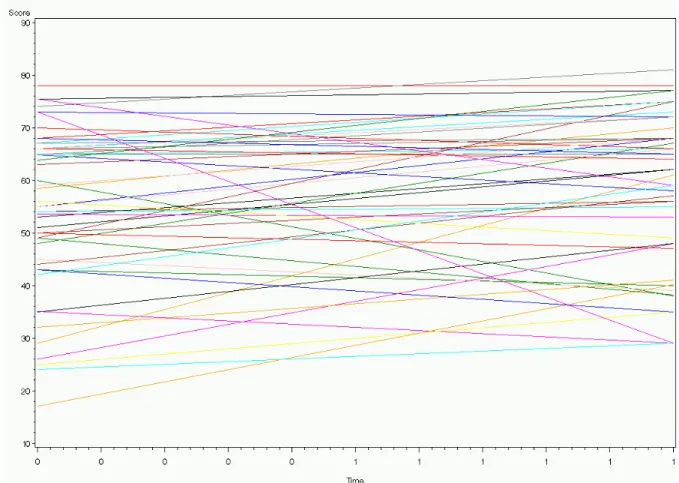
1. Trajectories of Benefit Finding scores over time... 92
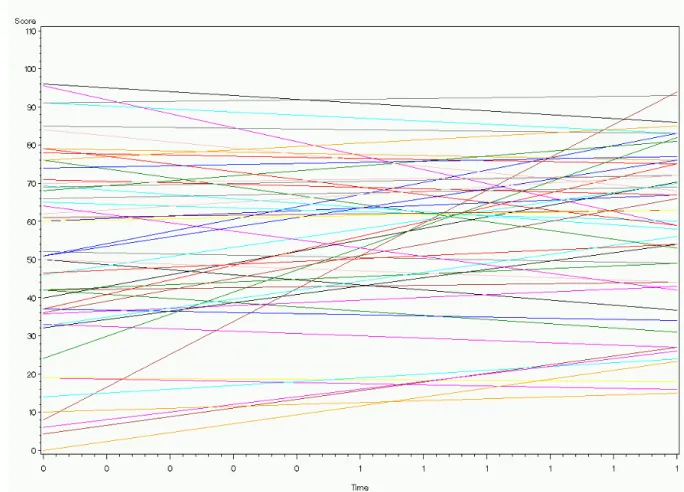
2. Trajectories of PTGI Summary scores over time. ... 93
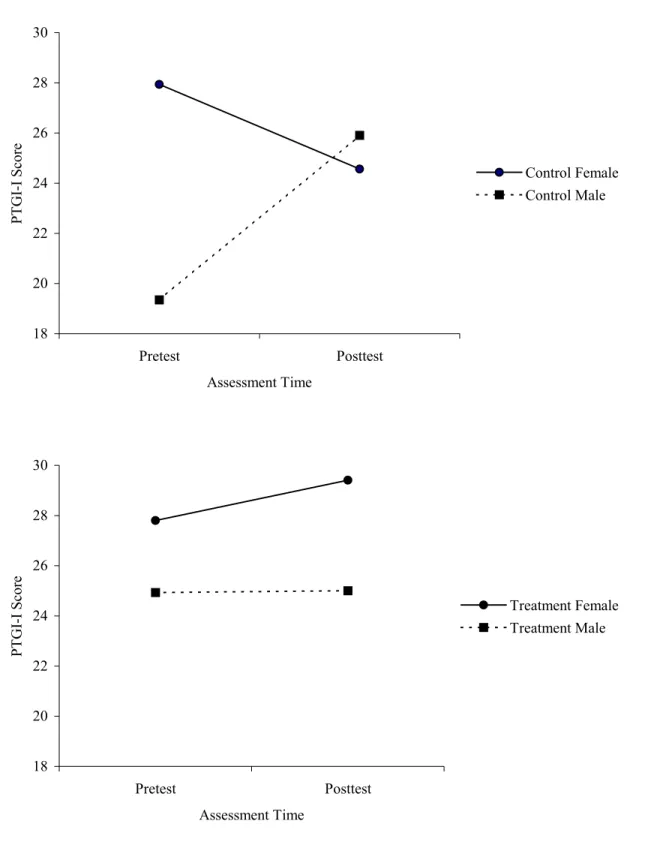
3. Trajectories of PTGI Relating to Others (PTGI-I) subscale scores over time... 94
4. Trajectories of DAS-7 scores over time... 95
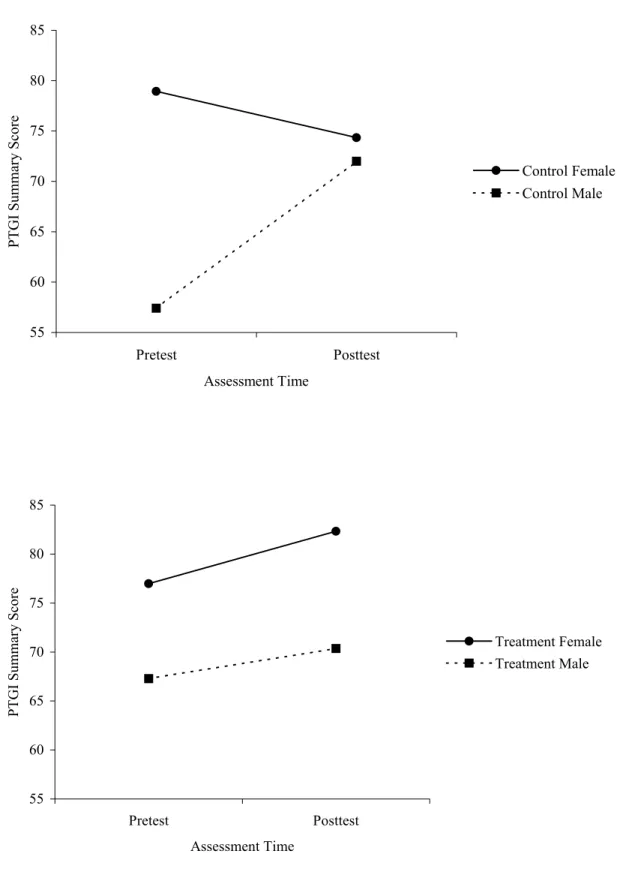
5. Gender by time by treatment interaction predicting PTGI Summary Scale scores. ... 96
I. INTRODUCTION Breast Cancer and its Impact
Cancer is a leading public health problem in developed countries (Jemal et al., 2003). Breast cancer is the cancer that most frequently affects women, and following prostate cancer, is the second most common cancer, overall (National Cancer Institute, 2006).
Estimates for the USA in the year 2006 included incidences of 212, 920 new cases of female invasive breast cancer; 6l, 980 new cases of female ductal or lobular carcinoma in situ (noninvasive cancer isolated inside a milk duct or lobule, respectively); and 40, 970 female deaths from breast cancer (American Cancer Society, 2006). Breast cancer was estimated to account for 31% of new cancer diagnoses in women in 2006 (American Cancer Society, 2006), and its incidence is on the rise (National Cancer Institute, 2006). It is a disease with far-reaching sequelae. Its symptoms span physical, psychological, and interpersonal domains, and the disease affects not only women, but also their families, friends, and particularly their partners.
Physical Symptoms
treatment type, with surgery causing pain, numbness, swelling, and stiffness; radiation
causing swelling and itching, as well as skin changes; and chemotherapy causing nausea, hair loss, infection, and possibly sterility (Moyer & Salovey, 1996). Sadly, the symptoms of breast cancer are not only limited to the physical domain.
Psychological Sequelae
Research suggests that, in addition to physical symptoms, breast cancer patients may experience psychological reactions, such as depression, anxiety, and confusion (Andersen, Anderson, & deProsse, 1989; Gotay & Muraoka, 1998). These psychological symptoms are not entirely surprising, given the level of life disruption that breast cancer and its treatment can bring about. Physical sequelae can result in difficulty with work, as well as reduced insurability, while at the same time, costly medical treatments may tax financial resources (Bloom, 2002). In addition, the disease and its treatment may disrupt parenting and other family roles (Bloom, 2002) and, thereby, affect those closest to patients.
Impact on Partners
(Northouse et al., 2000). Partners also experience a disruption in lifestyle, along with concern about their wives and families (Samms, 1999). In addition, studies also show significant patient-partner correlations for outcomes (Baider & Kaplan De-Nour, 1988; Northouse et al., 2000). In fact, some studies have found that both patients’ and partners’ distress and coping were predicted by partners’ distress and coping in multiple regression and path model analyses (Baider, Koch, Esacson, & Kaplan De-Nour, 1998; Ben-Zur, Gilbar, & S., 2001; Gilbar, 1999). In addition to affecting each partner individually, breast cancer also can impact the couple as a unit and their relationship.
Sexual Disruption
Sexuality is one arena of couple functioning that frequently becomes disrupted with cancer. Estimates of sexual dysfunction (including less frequent intercourse and orgasmic difficulties) in women with breast cancer range from 21% to 40% (Andersen, 1985; Gotay & Muraoka, 1998). Not surprisingly, partners also experience dysfunction; in one study, 30% of women reported that their partners had trouble achieving orgasm (Andersen et al., 1989). Treatment modality may play a role, with more invasive procedures associated with greater sexual disruption (Andersen, 1985). In particular, cancer and its treatment can cause
disproportionate focus on physical symptoms or sensations after diagnosis, and data from healthy individuals suggests that such “spectator” responses can impair sexual functioning (Andersen, 1985). In addition to changes in physical health, changes in life priorities may contribute to sexual disruption (Andersen, 1985). A host of other life stressors that may accompany cancer (e.g., financial or occupational stress) can also contribute to sexual disturbance in cancer patients (Andersen, 1985). Finally, changes in mood, particularly anxiety and depression, may result in sexual disturbances (Andersen, 1985; Moyer & Salovey, 1996). Clearly, the effects of cancer are large and far-reaching, but a positive partner relationship may help mitigate its effects.
Relationship Factors Can Be of Importance in Women’s Response to Breast Cancer
Relative to patients who are unmarried, married cancer patients seem to experience less distress and better adjustment. Indeed, in a study of cancer and lupus patients, married (or employed) patients showed less demoralization than divorced or separated patients (Katz, Flasher, Cacciapaglia, & Nelson, 2001). Perceptions of emotional support and of one’s ability to discuss matters with one’s partner have shown positive, moderate correlations with measures of social and emotional adjustment and self-esteem in women with breast cancer (Zemore & Shepel, 1989). It has been argued that social support helps protect cancer patients from the negative effects of cancer and cancer treatment (Lewis et al., 2001; Moyer &
(Pistrang & Barker, 1995). Furthermore, this same study showed that the relationship between a woman and her partner is special; other helping relationships cannot replace a partner (Pistrang & Barker, 1995). That is, a satisfying and helpful partner relationship was negatively correlated with anxiety, depression, and hostility (Pistrang & Barker, 1995). In addition, negative correlations of the same magnitude between partner relationship factors and psychological symptoms still were found among those women in the sample who had good helping relationships with people other than their partners (Pistrang & Barker, 1995). Clearly, then, a positive partner relationship can help mitigate the negative impact of breast cancer on a patient. Such a relationship may also facilitate positive outcomes in the cancer experience.
Positive Responses to Negative Events
Traditional views in psychology focus on negative events following crises and minimize the possibility of positive outcomes after such events. However, recent theory and research suggest that along with negative sequelae, trauma can provide the opportunity for growth and positive functioning that might not have occurred without the stressor. This research area is still in its infancy, and there remains great variability in theoretical
Posttraumatic Growth
The Concept
Tedeschi, Calhoun, and colleagues define posttraumatic growth as both a process used to cope with negative eventssuch as breast cancer and the positive outcome(s) of this process (Tedeschi, Park, & Calhoun, 1998).
Posttraumatic Growth: The Process
The process of posttraumatic growth, by definition, must begin with a trauma. In their view, traumatic events involve losses of people one loves, of roles or abilities one values, and/or of the ways one understands life (Tedeschi et al., 1998), a definition of trauma that is somewhat broader than that used by the American Psychiatric Association (Tedeschi & Calhoun, 2004). In the wake of trauma, people question their basic assumptions (called schemas) about life and the world, often resulting in pain and anxiety (Tedeschi et al., 1998). People realize that their existing beliefs, goals, and/or behaviors are not working well since the trauma’s occurrence (Calhoun & Tedeschi, 1998b). Because the schemas that give understanding, meaning, and manageability to the world are challenged, that
& Tedeschi, 1998b). They develop an understanding of themselves before, during, and after their struggle (Calhoun & Tedeschi, 1998b). When the struggle is central in the person’s life story and the posttrauma reconstrual includes positive evaluation of the self or the world, growth can occur (Tedeschi & Calhoun, 1995). In other words, out of this struggle, some people rebuild their lives in ways that they see as better, valuing both the process and the outcome (Calhoun & Tedeschi, 1999; Tedeschi et al., 1998). Several factors are thought to play a role in promoting posttraumatic growth, among them distress, positive affect, rumination, and the nature of the trauma.
are more vulnerable than usual to others’ influence (Caplan, 1964). They encourage the social network to “help the person confront the crisis – in manageable doses” (Caplan, 1964, p. 293), assist in information-gathering, provide support, and encourage help-seeking, but also to avoid providing “false reassurance” and discourage blaming others (Caplan, 1964, pp. 294-295).
The Role of Distress and Positive Affect
There is little research that has studied the development of posttraumatic growth longitudinally and prospectively. At present, notions about the development of posttraumatic growth and important factors in that process are largely restricted to clinical observation and theory. Calhoun and Tedeschi (1998b) propose that distress may be essential for
posttraumatic growth, as it can be a catalyst for change. It pushes people to understand and deal with trauma (Calhoun & Tedeschi, 1998b). However, it is also possible that before distress has been at least somewhat resolved, growth cannot occur (Schaefer & Moos, 1998). In other words, there must be some relief from distress to allow the development of
believed that optimism, dispositional hope, self-efficacy, extraversion, and openness to experience may set the stage for growth (Affleck & Tennen, 1996; Luszczynska, 2005; Schulz & Mohamed, 2004; Urcuyo, Boyers, Carver, & Antoni, 2005). It is likely, then, that posttraumatic growth is an outgrowth of not just negative affect, but of positive affect, as well (Calhoun & Tedeschi, 1998b; Stanton & Low, 2004).
The Role of Rumination
Nature of the Trauma
Calhoun and Tedeschi argue that to allow for the possibility of posttraumatic growth, an event must be sufficiently catastrophic to challenge or destroy a person’s understanding of the world and of life (Calhoun & Tedeschi, 1998b). In fact, the more an event is perceived as threatening and harmful, the greater the potential for growth (Linley & Joseph, 2004). It is essential to note that it is not the event itself, but rather a person’s struggle to cope with it, that brings about growth (Calhoun & Tedeschi, 1998b). Tedeschi and Calhoun (1995) delineate several characteristics of traumas that may increase the probability of negative psychological responses: when a trauma occurs suddenly or unexpectedly, when the person has little control over the situation, and when the trauma is unusual, chronic, or attributed to other people. They go on to argue that, despite the pain associated with trauma, it is the struggle with trauma’s negative consequences that lays the groundwork for future growth (Tedeschi & Calhoun, 1995). Collins and colleagues (Collins, Taylor, & Skokan, 1990) predict that chronic traumas or crises may make growth less likely, because they drain a person’s resources, leaving less energy for the growth process. They also posit that interpersonal traumas, such as rape, may make growth less likely, because they tend to shatter assumptions about human nature and thereby impede relationship enhancement, one facet of posttraumatic growth (Collins et al., 1990). On the other hand, an illness may facilitate interpersonal growth by urging people to “pull together”, and if chronic,
Distinguishing Posttraumatic Growth from Related Concepts
The concept that positive outcomes can emerge from negative experiences is not new, but as noted earlier, psychology has only recently begun empirical exploration of it. As such, there is no overarching, coherent theory of the process by which this occurs, nor does there exist a unified lexicon. Although several theorists have contemplated and investigated factors contributing to growth, as well as the ramifications thereof, the most comprehensive model of the process of growth appears to be Tedeschi and Calhoun’s. As stated earlier, they
conceptualize posttraumatic growth as both a process and an outcome (Tedeschi et al., 1998). Given that various investigators and writers use different terms to describe similar
phenomena, it may be helpful to distinguish posttraumatic growth from related concepts. One related term is positive reappraisal. Tennen and Affleck (1998) define positive
reappraisal as a process by which people attempt to view crises as growth opportunities. This is an intentional or active process (Tennen & Affleck, 1998), but one that does not
The same authors (Affleck & Tennen, 1996; Tennen & Affleck, 1998) describe
benefit-finding (sometimes called growth conclusions) as beliefs about the positive
consequences of – including growth experiences from – struggles with adversity. This is a concept analogous to Tedeschi and Calhoun’s posttraumatic growth outcome. Benefit-finding is an outcome and does not necessarily imply the presence of an active or ruminative process; rather, it could be the product of either automatic or effortful thought processes, or both. For instance, someone might come to realize growth or benefit almost spontaneously or through modeling by or suggestion from someone else. However, benefit finding may also occur as an outcome of positive reappraisal, or through benefit seeking, a similar process where one searches for benefits or growth outcomes (G. Affleck, personal communication, December 2, 2003). Again, benefit finding need not occur exclusively during or after trauma, but could also occur during or after other challenging events. Once benefit has been found, some individuals remind themselves of positive changes as a coping strategy, a process these authors have termed benefit reminding or growth reminding and which has been found related to pleasurable mood (Affleck & Tennen, 1996; Tennen & Affleck, 1998). For
instance, someone feeling ill with chemotherapy might attempt to cope by reminding herself that she and her husband have become closer while struggling with her cancer and its
treatment.
heart disease may develop causal explanations for the event, including poor diet and
inactivity. They may also develop an understanding of the impact of the disease in their lives, perhaps viewing a diagnosis as a “wake-up call” to realize how special their loved ones are to them or to slow down at work. In the case of negative events, individuals may seek meaning (an effortful and possibly ruminative process) and/or find meaning (an outcome). The search for meaning does not necessarily imply the presence of ongoing or past trauma, and the found meaning is not always positive. Both components of meaning could be seen as part of the process and outcome of posttraumatic growth.
In sum, posttraumatic growth is conceptualized as both a process and an outcome arising from the struggle with trauma. The term can be differentiated from several related concepts. For instance, positive reappraisal is an attempt to view a difficult experience as an opportunity for growth, but does not imply the presence of either active rumination or trauma. Similarly, benefit finding refers to the identification of positive outcomes in a
difficult experience, but, like positive reappraisal, necessitates neither rumination nor trauma.
Benefit reminding, also called growth reminding,consists of active attempts to use such perceptions of benefit or growth to cope. Finally, these terms are distinguished from the concept of meaning in difficult life experiences. Individuals can seek and/or find meaning, although that meaning may not be positive, and again, the presence of trauma is not necessary.
Domains of Growth
According to Calhoun and Tedeschi’s theory, the outcomes of posttraumatic growth fall into three main categories: self-perception, life philosophy, and interpersonal
experience growth in one domain and not another, in all three domains, or not at all (Calhoun & Tedeschi, 1998b). (Those who do not grow may experience either no change, or
deterioration in functioning in the wake of a crisis, with a more severe reaction being posttraumatic stress disorder.)
Self-Perception
First, people may note positive change in their personalities and skills (Affleck & Tennen, 1996; Schaefer & Moos, 1998). They may become aware of their strength and come to label themselves as “survivors” rather than “victims” of the trauma (Tedeschi & Calhoun, 1995; Tedeschi et al., 1998). Survivors may feel greater self-reliance and self-efficacy (Tedeschi & Calhoun, 1995; Tedeschi et al., 1998). Interestingly, they may become
simultaneously aware of their own vulnerability, thereby instigating changes in relationships, priorities, and appreciation of life (Calhoun & Tedeschi, 1999; Tedeschi et al., 1998).
Life Philosophy
In addition to – and perhaps related to – changes in self-perception, people may grow in their appreciation of life, including the “little things” (Calhoun & Tedeschi, 1999;
Interpersonal Relationships
Along with changes in self-perception and life philosophy, people often report stronger relationships with friends and family after a trauma has occurred (Affleck & Tennen, 1996). They may grow in their ability and/or willingness for self-disclosure or emotional expression, which may then contribute to intimacy and enhanced relationships (Calhoun & Tedeschi, 1999; Tedeschi & Calhoun, 1995; Tedeschi et al., 1998). People may see characteristics they were not aware that another person possessed, leading to new possibilities in that relationship (Calhoun & Tedeschi, 1999). In addition, existing
relationships may be enhanced through greater empathy and altruism (Affleck & Tennen, 1996; Calhoun & Tedeschi, 1999; Tedeschi & Calhoun, 1995; Tedeschi et al., 1998), and people may form new social networks that also can offer them support (Schaefer & Moos, 1998).
Distinct Processes?
Janoff-Bulman (2004) hypothesizes that the role of schema change in growth may depend on the particular domain of growth under consideration. In the domain of self-perception, for instance, through the process of coping with trauma, people may realize strengths of which they were previously unaware or develop new strengths and skills to help cope (Janoff-Bulman, 2004). Changes in skills, combined with changes in assumptions (or schemas, e.g., about vulnerability), can provide the survivor with preparedness and protection from future traumas (Janoff-Bulman, 2004). In the interpersonal and life philosophy
greater appreciation for life itself, making new choices, and setting new priorities (Janoff-Bulman, 2004). As she states, “in essence they have moved from concerns about the meaning of life to the creation of meaning in life” (Janoff-Bulman, 2004, p. 33). With growth in so many domains of functioning, one also might expect better adjustment to the negative event and enhanced psychological well-being, overall.
Relationship with Adjustment
Based on her work in women facing breast cancer, S. E. Taylor (1983) has proposed a theory of cognitive adaptation, in which people faced with a threatening event successfully adjust by engaging in (a) attempts to find meaning, (b) efforts for mastery over the event and over one’s life (i.e., managing the event and preventing its recurrence), and/or (c)
control that was lost in another domain because of the event (S. E. Taylor, 1983). Thus, changing one’s perception of an event can facilitate growth (S. E. Taylor & Brown, 1988). Taylor argues that the elements of cognitive adaptation, which she describes as “positive illusions”, are important in protection from current and future threats (S. E. Taylor, 1983). Through these self-enhancing efforts, people may “return to or exceed their previous level of psychological functioning” (S. E. Taylor, 1983, p. 1170). Other authors (e.g., Calhoun & Tedeschi, 2004; Stanton & Low, 2004) disagree with her conceptualization, arguing that posttraumatic growth is not entirely an illusion and citing as evidence the fact that individuals report both positive and negative outcomes from their trauma.
In fact, research to date provides some evidence for a relationship between posttraumatic growth and positive emotional adjustment (although results are somewhat mixed), between growth and physical health, and between growth and health behavior
facilitates future adjustment, that adjustment facilitates growth by helping people find meaning, or that another, third construct (e.g., optimism) underlies both growth and adjustment (Park, 1998). In other words, it is possible that better adjusted people are more likely to grow and find benefit, but also that the ability to find benefit and grow contributes to adjustment (S. E. Taylor, Lichtman, & Wood, 1984), or that optimists are more apt to grow and to be better adjusted. Longitudinal research is uniquely equipped to examine this issue (Park, 1998).
Role of the Partner Relationship in Posttraumatic Growth
One important element of posttraumatic growth outcomes is enhancement of interpersonal relationships, including marital and family relationships (Affleck & Tennen, 1996; Calhoun & Tedeschi, 1999; Tedeschi & Calhoun, 1995; Tedeschi et al., 1998). However, it is likely that the partner relationship plays a key role in the process of growth, and is not merely part of the outcome. For instance, partners may process events together in ways that promote growth, or one partner may model growth and thereby facilitate the
partner relationship in the posttraumatic growth process. Breast cancer, which has wide-reaching impact on both partners in a couple, may provide an ideal opportunity for studying just this process.
Breast Cancer as Trauma
Breast cancer can be conceptualized as a trauma, according to definitions of trauma that incorporate a loss (of people, roles, abilities, or ways one views life) that shakes a person’s assumptions about life and the world, causing distress (e.g., Tedeschi et al., 1998). At the very least, a cancer diagnosis can shatter a woman’s (or couple’s) assumptions about her (or their) relative invulnerability to illness or death; at worst, the world may seem to crumble. Thornton describes cancer as “a prototypical stressful event” (Thornton, 2002, p. 156), noting that it “strikes without warning and poses a serious threat to current and future well-being”, with little known about its etiology and treatments that can be extremely aversive. Cordova and colleagues (Cordova, Cunningham, Carlson, & Andrykowski, 2001a) found that for 61% of women in their sample, reactions to breast cancer met DSM-IV criteria for trauma. Likewise, in Weiss’ research (2004a; 2004b), responses to breast cancer met DSM-IV criteria for a traumatic event in 63% of women and 47% of husbands.
Evidence of Posttraumatic Growth in Women with Breast Cancer
79% in priorities or activities; 67% in future plans; and 66% in world views (Collins et al., 1990). These patients reported more positive than negative changes in each of these domains (Collins et al., 1990). Another study, which examined cancer and lupus patients, found that reports of benefit in the experience were twice as common as reports of demoralization or of relationship deterioration (Katz et al., 2001); furthermore, patients reported growth in the domains of both interpersonal relationships and life philosophy (Katz et al., 2001). Similarly, cancer patients under evaluation for bone marrow transplant reported greater satisfaction with religion than did non-cancer control group participants (Andrykowski, Brady, & Hunt, 1993). Cancer patients also reported a shift in goals after diagnosis, toward appreciation of life and enjoyment of every day (Thompson & Pitts, 1993). Several studies have used the Posttraumatic Growth Inventory (PTGI), an instrument created by Tedeschi and Calhoun (Tedeschi & Calhoun, 1996) to assess growth outcomes in the domains specified in their model of growth. Using this instrument, Lechner and colleagues discovered reports of growth among cancer survivors, demonstrated by both their global PTGI scores and their scores on each of the PTGI’s five specific subscales (Lechner et al., 2003). Similarly, another study using the PTGI in a sample of ovarian cancer survivors also found reports of growth (Wenzel et al., 2002). A third study used a translation of the PTGI and found reports of growth among Chinese cancer patients (Ho, Chan, & Ho, 2004).
In yet another sample, over half reported reappraising their lives (S. E. Taylor, 1983). Seventeen percent reported negative changes as a result of their illness, but 53% reported positive changes only (S. E. Taylor, 1983); this sample tended to view themselves as better-adjusted than they had been before their diagnoses (S. E. Taylor, 1983). Yet another study found that on the Cancer Patient Behavior Scale, women with breast cancer reported more improvement in their outlook on life and religious satisfaction than did women with benign breast problems (Andrykowski et al., 1996); these women also viewed spirituality as more important than did women with benign breast disease (Andrykowski et al., 1996). In addition, using the PTGI, Bellizzi and Blank (2006), Weiss (2002), and Manne and
colleagues (2004) found reports of growth among women with breast cancer, and in another study using the PTGI, women with breast cancer, compared to healthy controls, reported greater spiritual change and appreciation of life (Cordova et al., 2001a). These themes of change are echoed in phenomenological, or qualitative, studies of women with breast cancer, and not just in quantitative studies (Coward, 1990; Fife, 1994; Nelson, 1996; O'Connor, Wicker, & Germino, 1990; Thibodeau & MacRae, 1997; Wyatt, Kurtz, & Liken, 1993). Given that posttraumatic growth does appear to occur among women with breast cancer, it would seem important to know the impact of that growth on women’s well-being.
Relationship Between Posttraumatic Growth and Adjustment
levels of positive and negative functioning and that posttraumatic growth was unrelated to depression or well-being (Cordova et al., 2001a). Further, Tomich and Helgeson (2004) found no relationship between benefit finding and physical or mental functioning.
Despite some studies’ finding of no relationship between posttraumatic growth and affect, other studies have found a stronger connection between the two. For instance, Germino and colleagues’ research suggests that both patients and their partners try to understand the role of cancer in shaping their world and their relationship (termed the “meaning” of cancer), and this meaning tends to be positive, or in the direction of growth (Germino et al., 1995). In their work, they found that greater meaning was associated with better adjustment, both individually and within the couple (Germino et al., 1995). This finding has been corroborated by other research with breast cancer survivors (Bower et al., 2005; Carver & Antoni, 2004). Likewise, in their review article, Linley and Joseph (2004) comment on a consistent relationship between positive affect and growth.
cancer (Lechner et al., 2003). Furthermore, when statistically controlling for disease stage, the perception of threat remained related to benefit finding (Lechner et al., 2003). This result is consistent with conceptualizations (e.g., Calhoun & Tedeschi, 1998b) stressing the
importance of traumas of a certain magnitude in setting the stage for posttraumatic growth. However, this conclusion is tempered by the findings of yet another study, in which patients with poorer prognoses perceived fewer positive and more negative changes, compared with those who had better prognoses (Collins et al., 1990). Clearly, the relationship between posttraumatic growth and adjustment remains somewhat unclear.
statistically controlling for initial mood (Sears et al., 2003). Thus, it appears that the manner in which benefit from adversity is assessed affects its relationship to adjustment. Given the growth and positive functioning that are possible in – and even facilitated by – the struggle with cancer, interventions must be considered to help promote or enhance the well-being of those coping with such difficult and potentially devastating life events.
Psychosocial Interventions for Individuals with Cancer
Psychosocial interventions in cancer populations are of paramount importance, because of the obvious distress brought about by cancer diagnoses and treatments, but also because of the potential for growth in the struggle with cancer. A handful of studies have examined the effect of individual-based interventions on posttraumatic growth. In the first randomized, controlled, clinical trial of a psychosocial intervention that examined benefit-finding, Antoni and colleagues (2001) provided women with breast cancer with ten two-hour sessions of cognitive-behavioral stress management training and didactic material in a group format. They found that their intervention served to decrease depressive symptoms and increase benefit finding and optimism at post-test and at 3-month follow-up, but not by 9-month follow-up (Antoni et al., 2001). Participants undergoing this same intervention also evidenced modulation (i.e., normalization) of serum testosterone levels (Cruess et al., 2001). Interestingly, there was a negative correlation between benefit-finding and testosterone levels, suggesting a relationship between greater benefit-finding and lower levels of
on reducing distress may neglect opportunities to enhance growth; rather, they suggested that psychosocial interventions should intentionally include components designed to enhance potential for growth (Antoni et al., 2001).
A second study examined the role of “written emotional expression” on positive adjustment among women with breast cancer (Stanton et al., 2002). Participants wrote on either (a) their “deepest thoughts and feelings” about their breast cancer experiences, (b) “positive thoughts and feelings” (i.e., benefit finding) about their breast cancer experiences, or (c) facts about their breast cancer and treatment (Stanton et al., 2002, p. 4162). Participants in groups (a) and (b) fared better on physical health outcomes at three-month follow-up than did participants in the third group (c). Interestingly, there was an avoidance by condition interaction effect on psychological outcome measures (i.e., Profile of Mood States and Functional Assessment of Cancer Therapy), where avoidance referred to intentional avoidance of cancer-related thoughts and feelings. Essentially, writing about one’s deepest thoughts and feelings was most useful for women showing little avoidance, whereas writing about positive thoughts and feelings was most useful for women displaying more avoidance (Stanton et al., 2002).
interventions that have studied posttraumatic growth, (c) the effect of cancer on the partner and relationship, and (d) the role of the partner relationship in coping with cancer, it seems important to investigate the presence of posttraumatic growth in the couple context, along with interventions to promote such growth.
Evidence of Posttraumatic Growth in Couples Facing Cancer
Perhaps most relevant to the marital context is that posttraumatic growth occurs in interpersonal domains. Cancer patients endorse wanting to spend more time with family after diagnosis (Thompson & Pitts, 1993), and compared to their next-of-kin, report emotional relationships that are closer or more satisfying (Cassileth et al., 1985). In addition, women with breast cancer report greater emotional support than do those with benign breast lumps (Zemore & Shepel, 1989). A study comparing women with breast cancer to healthy controls found higher scores among the breast cancer group on the PTGI Relating to Others subscale (Cordova et al., 2001a).
with benign breast problems (Andrykowski et al., 1996). Likewise, these women also
reported a trend toward improved partner relationships on the Cancer Patient Behavior Scale, although these results did not attain statistical significance (Andrykowski et al., 1996). Thus, there is clear support for the notion of posttraumatic growth, and particularly in the
interpersonal domain, among women with breast cancer.
Because partners often suffer along with patients, they, too, may experience
posttraumatic growth. One study examined posttraumatic growth in breast cancer survivors and their husbands (Weiss, 2002). When asked to describe the most significant positive changes that the struggle with cancer had brought about, 98% of the wives and 88% of the husbands reported that the experience had prompted some positive changes in their lives, despite the fact that at the same time, 88% of wives and 83% of husbands also reported negative changes. On the PTGI, both men and women reported growth. Women, however, reported greater growth than their husbands on all but one subscale (i.e., Relating to Others, in which women reported nearly significantly more growth). Partners were able to
corroborate each other’s growth; in other words, when husbands and wives rated their partner’s growth on the PTGI, those ratings were similar to their partner’s self-reported growth on the PTGI, showing low to moderate, significant correlations with self-reported PTGI scores (r = .28 to .65).
correlates of posttraumatic growth in married women with breast cancer. She found that marital emotional support (as well as contact with somebody else who had experienced a similar event and grown from through that experience) was correlated with PTGI total score (Weiss, 2004b).
Manne and her colleagues (2004) completed another study examining posttraumatic growth in women with early stage breast cancer (i.e., Stage 1, Stage 2, Stage 3a, and ductal carcinoma in situ) and their partners over a year and a half post diagnosis. They found evidence of posttraumatic growth in both patients and partners, and that growth increased over time in all domains assessed by the PTGI. Patients reported greater growth than partners, but their scores were positively correlated (r = 0.21). Among patients, those who were more emotionally expressive showed an increase in growth over time. Manne and colleagues suggest that this may be due to a reduction in negative feelings through
expression, thereby allowing greater experiencing of positive feelings and benefit finding. In addition, they note that when feelings are expressed, their expression may prompt feedback about one’s strength and recognition of one’s growth. Further, such disclosure can enhance intimacy. Those partners who engaged in more emotional processing showed a lesser decline in growth over time. Interestingly, in this study, growth scores were unrelated to relationship satisfaction scores (assessed through the Dyadic Adjustment Scale). The authors explain this finding by postulating that marital quality may fluctuate less than one might anticipate, or alternatively, that marital quality may be a consequence of, rather than a contributor toward, growth.
to be part of the posttraumatic growth process (2004a; 2004b). In support of this contention, one study found that women who engaged in more emotional processing perceived more benefits from the cancer experience (Antoni et al., 2001). Further, partners can model contentment and growth in the aftermath of trauma (Manne et al., 2004; Weiss, 2004a, 2004b). Indeed, husbands’ and wives’ PTGI scores were modestly correlated (r = .20), and presence of posttraumatic growth in wives predicted husbands’ posttraumatic growth (Weiss, 2004a). Given the evidence for posttraumatic growth in the couple context, optimism that interventions might promote that growth is warranted.
Psychosocial Interventions for Couples with Cancer
Although individual-based interventions targeting growth in cancer patients have been successful, they remain limited in their scope. Because both patients and partners can suffer and grow through the cancer experience, and because partners can help ease each other’s distress and promote each other’s well-being, couple-based interventions are a particularly promising avenue for delivery of such interventions. In fact, it has been argued that couple-based interventions might be more effective than individual treatments (Baider & Kaplan De-Nour, 1988; Baider et al., 1989). It would seem important that, in addition to addressing distress, these interventions should address the potential for growth. There are no published studies of couple-based interventions targeting posttraumatic growth. As such, the existing couple-based interventions in cancer populations are reviewed below.
Efficacy of Couple-Based Interventions with Cancer
couple (Christensen, 1983). Results revealed that, compared to control group couples, treatment couples showed a greater decrease in emotional discomfort and increase in sexual satisfaction for both partners, as well as a decrease in depression among women
(Christensen, 1983).
Another, brief, couple therapy program for couples with difficulty relating to cancer targeted social support and assistance between partners, with the goal of restoring feelings of equity (Kuijer, Buunk, De Jong, Ybema, & Sanderman, 2004). Participants in treatment were compared to a wait-list control condition. Among treatment couples, both partners reported greater perceptions of equity and relationship quality at the end of treatment, and patients reported less distress. Among wait-list control couples, these changes either did not occur or occurred later on. The findings for treatment couples held at 3-month follow-up, although relationship quality did decline slightly from posttest (Kuijer et al., 2004).
A third, larger study (Scott, Halford, & Ward, 2004) for women with early stage breast and gynecological cancers and their partners investigated the efficacy of couple-based psychoeducation and coping training surrounding cancer-related issues. Unlike other couple-based intervention studies, which have compared treatment to no-treatment control groups, these researchers included medical information and individual intervention control
and providing support for each other in the experience, as well as counseling on sexual issues. Both individual and couple treatments included an exploration of the meaning of the cancer experience. Participants in the couple coping training condition showed improvement in observational measures of couple coping that was maintained at 6-month follow-up, as well as in sexual functioning (i.e., fewer sexual problems, better sexual self-schema, greater perceived partner-acceptance, lesser decline in sexual intimacy), and a reduction in
psychological distress for women (also at 6- and 12-month follow-up times) and a trend toward reduction in distress for men at posttest (Scott et al., 2004). The efficacy of these three interventions (Christensen, 1983; Kuijer et al., 2004; Scott et al., 2004) in cancer populations is heartening, and suggests that couple-based programs to enhance growth might also be promising.
Efficacy of Couple-Based Interventions Across Populations
behavioral and cognitive elements are promising avenues for exploration among cancer survivors and their partners.
Summary
The research reviewed above highlights the importance of couple-based psychosocial interventions targeting women with breast cancer and their partners. Not only is this a
population that experiences great distress, but it is also a group with a high potential for growth. Interventions designed to reduce distress and to promote positive functioning are clearly warranted. Couple-based treatments are uniquely equipped for this purpose, inasmuch as they can use the partner and the relationship to promote positive functioning and reduce distress in each person (not just the patient), as well as in the couple’s relationship. Research to date supports the effectiveness of behavioral and cognitive-behavioral couple-based interventions in cancer and non-cancer populations, as well as for individual-based
treatments to promote growth. As such, the current study set out to investigate the efficacy of a couple-based intervention to reduce distress and promote positive functioning in breast cancer survivors and their partners.
The Current Study
The current study had three chief aims. The first was to investigate the nature of posttraumatic growth in the couple context. That is, we attempted to determine whether partners’ growth scores were related, as well as whether marital quality facilitated
served to increase posttraumatic growth in general, bring couples to a more shared perspective of growth in the cancer experience, and increase the relational nature of
posttraumatic growth. Each of these goals and their corresponding hypotheses are presented below and were tested using a controlled, longitudinal design.
Posttraumatic Growth in the Couple Context
This study is among the first to investigate the nature of couples’ growth in the wake of a trauma such as breast cancer. As such, we are unsure whether growth is a relational or strictly individual phenomenon. The current study examined reports of posttraumatic growth at two time points. Greater similarity and association in partners’ reported growth (termed the “relational” nature of posttraumatic growth) would suggest that the construct was more relational in nature. However, greater similarity and association between an individual’s pretest and posttest scores, relative to between partners’ scores, would suggest that posttraumatic growth was a more individual phenomenon, although the construct of
posttraumatic growth could be both individual and relational in nature. Posttraumatic growth is predicted to be fairly relational in nature. If growth is a relational phenomenon, one partner may show growth (operationalized as Benefit Finding or PTGI score) to a greater extent or sooner than the other and then help the other partner to grow, through support, modeling, and/or provision of positive schemas. Alternatively, the couple might engage in constructive rumination together, and thus grow simultaneously.
(which includes items such as “tried to rediscover what is important in life”, an element of posttraumatic growth) were correlated (r = .45, p < .01; Affleck, Tennen, & Rowe, 1990). However, mothers’ and fathers’ scores on benefit appraisal were uncorrelated (r = 0.02, ns) with each other (Affleck et al., 1990).
mothers (Lepore et al., 1996). Among breast cancer survivors, talking about cancer was related to lower levels of depression and greater well-being, and social constraint, to greater depression and lower well-being (Cordova, Cunningham, Carlson, & Andrykowski, 2001b). The authors have argued that positive social support may facilitate constructive rumination and help people understand the trauma, learn coping strategies, and better control emotions, whereas negative support or social constraint could interfere with constructive rumination by increasing stress and inhibiting productive and constructive conversation (Cordova et al., 2001b; Lepore et al., 1996; Zakowski et al., 2004). It follows, then, that higher-functioning couples, who are more likely to provide each other with comfort, positive support, and a positive emotional environment, and less likely to provide negative support or impose social constraint, should also show greater individual posttraumatic growth at pretest and posttest. Further, it was hypothesized that greater PTGI scores would predict better relationship adjustment, in that growth should facilitate individual and couple functioning. Consistent with this expectation, Germino and colleagues (1995) found that the experience of meaning in the cancer experience predicted greater relationship adjustment. These effects were hypothesized to hold over and above the effects of the intervention in enhancing relationship functioning, support, and posttraumatic growth.
In sum, posttraumatic growth was predicted to be fairly relational in nature. Further, it was hypothesized that marital quality would serve as a resource to facilitate posttraumatic growth, and that, in turn, that growth would enhance relationship adjustment.
Gender and Time Effects
A second set of goals was to explore the relationship between gender and
gender. The research on gender effects is somewhat exploratory in nature, because prior research is inconsistent in the areas of gender differences. It was considered likely that women, who experienced the trauma of breast cancer more directly than do their husbands, would show higher PTGI scores. There is some evidence in the literature that women
generally may tend to experience more posttraumatic growth than do men (Linley & Joseph, 2004; Park, Cohen, & Murch, 1996; Polatinsky & Esprey, 2000; Tedeschi & Calhoun, 1996; Weiss, 2002; Yaskowich, 2003), although this result is not always found (e.g., a studies of cancer survivors by Collins et al., 1990; Widows, 2005). In addition, when participants married to each other were examined in a study of parents whose infants were leaving a newborn intensive care unit, mothers and fathers did not differ in benefit or harm appraisal (Affleck et al., 1990).
(Andrykowski et al., 1993; Dirksen, 1995; Lechner et al., 2003; Thompson & Pitts, 1993). Weiss (2004b) suggests that a possible confound in comparing results from these different studies is that her investigation excluded women who had been diagnosed less than one year earlier, whereas Cordova’s (and Lechner’s) did not. Further, it was hypothesized that
husbands’ and wives’ scores would become more similar over time, as they might engage in constructive rumination together.
In sum, we predicted that women would experience greater posttraumatic growth than men, and that growth scores would increase over time for all participants. We also expected that male and female partners’ scores would become more similar over time.
Effectiveness of a Couple-Based Intervention to Enhance Posttraumatic Growth
The final aim of this study was to test the effectiveness of a couple-based, cognitive-behavioral intervention that incorporated efforts to increase posttraumatic growth and general relationship functioning in the wake of breast cancer diagnosis and treatment. It was
couples were expected to experience more similar amounts of growth than would treatment-as-usual couples, because intervention couples would be encouraged to face cancer and its treatment as a team and taught skills to facilitate the process1. For this same reason, posttraumatic growth was expected to be a more relational phenomenon for treatment couples than for control couples. That is, partners’ posttest posttraumatic growth scores and changes in growth scores over time were predicted to be more closely related among treatment couples than among control couples.
In sum, it was hypothesized that couples in the relationship enhancement intervention would experience a greater increase in posttraumatic growth and come to a more similar experience of growth in the cancer experience, compared to treatment-as-usual couples. Further, posttraumatic growth was predicted to be more relational in nature among intervention couples.
II. METHOD Participants
Participants consisted of 36 heterosexual couples in which the female partner was recently diagnosed with early stage (i.e., Stage I, Stage II, or Stage IIIa) breast cancer. Women ranged in age from 30 to 75 years, with a mean age of 51.48 years (SD = 11.79). On average, women had 15.15 years of education (SD = 2.46). Women reported their ethnicity as follows: White (N = 31; 86.1%), Black (N = 2; 5.6%), Hispanic (N = 1; 2.8%), Asian or Pacific Islander (N = 1; 2.8%), and Other (N = 1; 2.8%). Men ranged in age from 35 to 85 years, with a mean age of 52.76 years (SD = 12.83). On average, men had 15.4 years of education (SD = 3.39). Men reported their ethnicity as follows: White (N = 33; 91.7%), Black (N = 1; 2.8%), Hispanic (N = 1; 2.8%), and Other (N = 1; 2.8%). For couples in the study, the median joint yearly income was $75, 000 to $99, 999.
either partner did not speak English or had a current or past diagnosis of severe and persistent mental illness (e.g., a diagnosis of schizophrenia).
Time from diagnosis to study entry ranged from zero to 15 months, with a mean of 3.83 months (SD = 3.66). Of those women whose medical status had been confirmed, nine were diagnosed with Stage I breast cancer, 12 with Stage IIa or IIb breast cancer, and one with Stage IIIa breast cancer. Women with later stage breast cancer were excluded from participation, because their prognosis is less optimistic, and consequently, it was believed that they might be grappling with different issues than women with earlier-stage cancer (e.g., more severe fear of mortality, end-of-life planning, etc. in the later-stage patients). For this same reason, women with prior cancer diagnoses were also excluded. In addition to the interventions provided by the study, 14 men and 13 women reported using other community or psychosocial interventions.
women for recruitment purposes. Once recruited, women signed a HIPAA form providing the team with access to their medical records to determine eligibility.
Either a member of the research team or a patient counselor at UNC Hospital who worked with cancer patients attended the Multidisciplinary Breast Clinic/Conference. Afterwards, when appropriate, one of these researchers/counselors made initial contact with patients who were married or in a committed relationship. They approached the woman after the consultation in which she was informed of her diagnosis, but only with the permission of that patient’s oncologist.
Because receiving a diagnosis of breast cancer can overwhelm patients, the researchers did not seek consent for participation at that time. Rather, the researchers or counselors provided the women with a brochure and explanation of the study and asked the women to provide their telephone number and sign a brief form permitting project staff to telephone them with additional information. If the couple then wished to receive more information or agreed to take part in the study, the researcher made an appointment for the couple with a member of the research team to provide additional information, answer questions, and obtain consent.
in the larger study, which is ongoing and is being conducted at both UNC Hospital and at Duke University Medical Center.
In both the pilot and larger studies, once participants had consented to participation in the study, they completed an initial assessment that involved several questionnaires and interaction tasks. A research assistant who was blind to the treatment condition to which the couple was assigned completed this assessment. The couple also completed similar post-test, 6-month follow-up, and 12-month follow-up assessments. After assessment, participants were assigned to treatment conditions using a block randomized procedure, such that in the pilot study, of every six couples, three were randomly assigned to the couple-based
relationship enhancement intervention condition and three, to treatment-as-usual. In the larger study of 292 couples, a block randomization procedure was again used, such that for every 12 couples at a given site (i.e., UNC or Duke University Medical Center), five were randomly assigned to the couple-based relationship enhancement intervention; five to a new, couple-based cancer education condition; and the remaining two, to treatment-as-usual. To maintain consistency in the current study’s sample across pilot and larger-scale participants, only data from couples in the relationship enhancement intervention and treatment-as-usual conditions were used, because the cancer education condition did not exist in the pilot study.
$20 for completing daily diary measures at pretest and prior to six-month follow-up, again for a total of $200.
Couples were randomly assigned to one of the couple-based interventions (i.e., couple-based relationship enhancement or couple-based cancer education) or to treatment-as-usual. Relationship Enhancement consisted of six bi-weekly 75-minute sessions with a psychology graduate student, doctoral-level psychologist, or social worker. Sessions were provided individually to each couple (rather than in a group format). The sessions addressed issues such as: the importance of approaching cancer as a couple, medical information about breast cancer, effective decision-making and problem-solving skills, skills for
communicating thoughts and feelings, providing each other with practical help, maintaining positives during the cancer experience, reflecting on growth in the cancer experience, and promoting healthy sexual functioning during and after cancer treatment. A brief outline of the six sessions is provided in the Appendix. The therapist taught skills to help the couple work together as a team facing cancer and its associated challenges. Couples were taught to apply these skills in-session to their particular life circumstances, and they were encouraged to practice and use them in daily life, outside of sessions. Sessions were audiotaped and videotaped for the purposes of supervision and treatment protocol adherence.
Procedure
At each assessment period (pretest, posttest, 6-month and 12-month follow-up), both partners completed self-report measures of individual and relationship functioning. Because of Relationship Enhancement’s emphasis on communication skills, at each assessment point, couples also engaged in three videotaped conversations on cancer-related issues. In one such conversation, the female partner shared thoughts, feelings, and/or concerns about cancer, and the male partner tried to listen supportively. In another conversation, their roles were
reversed. In the remaining interaction, the couple decided upon a cancer-related issued requiring a decision and attempted to problem-solve around that issue. The current study used both pretest and posttest data. Although participants completed several self-report measures, only those pertinent to the current research questions are described below.
assessments were similar on all demographic variables. In all statistical analyses, the presence of complete (i.e., pretest and posttest) data and dropout status were tested to
determine whether they improved model fit. The presence of complete data improved model fit in models predicting growth, but dropout status did not improve fit in any models.
Measures
Dyadic Adjustment Scale – Short Form (DAS – 7)
In the current study, men’s pretest DAS-7 scores ranged from 17 to 32 points, with a mean of 25.54 points (SD = 4.34), whereas women’s scores ranged from 15 to 36, with a mean of 25.88 (SD) = 4.78). At posttest, men’s scores ranged from 14 to 35 (M = 25.94, SD = 4.57) and women’s scores, from 14 to 34 (M = 26.65, SD = 4.61). These values are similar to those reported in normative samples (Hunsley et al., 2001; Hunsley et al., 1995). In the current study, inter-item reliability was high. Cronbach’s alpha for both men’s and women’s pretest DAS-7 was .79. At posttest, alpha was .77 for women and .82 for men.
When data were missing, the missing items were inspected to assess whether there was any systematic pattern in omitted items. After concluding that there was not, the proportion of missing items was examined. When greater than half of the items comprising any given scale were omitted, that person’s scale score was considered “missing” for the purposes of analyses. When half or fewer items were missing, the average of that person’s items for each scale/subscale were used to impute the missing item(s) in the calculation of scale scores. Data on missing items for each measure are provided in Table 1.
Biographical, Medical, and Health Behavioral Information Sheet
Benefit Finding
Benefit Finding is a 17-item measure developed by Antoni and colleagues to assess an individual’s finding meaning and benefit from the experience of breast cancer (Antoni et al., 2001). Participants responded to each statement regarding benefit from the breast cancer experience (e.g., “having breast cancer has helped me take things as they come”) by selecting one of five Likert-style responses ranging from one (“not at all”) to five (“extremely”). This is a unitary-scale inventory. The scale has demonstrated strong psychometric properties (e.g., Cronbach’s alpha = 0.95, reasonable reliability and validity) and has been found to be
responsive to psychosocial interventions with breast cancer patients (Antoni et al., 2001). So that male partners might also complete this measure, in their questionnaires, the stem “having had breast cancer…” instead read “my partner’s having had breast cancer…”
In the current sample, men’s mean pretest scores averaged 57.25 points (range = 17 to 80, SD = 16.39) and women’s mean pretest scores, 60.73 points (range = 25 to 83, SD = 14.29). At posttest, men’s mean score was 54.81 (range = 29 to 77, SD = 14.00) and
women’s mean score was 62.16 (range = 29 to 81, SD = 14.43). These values are similar to those reported by Antoni and colleagues in their study of benefit finding among women with early stage breast cancer (Antoni et al., 2001). Inter-item reliability for this measure was extremely high. At pretest, Cronbach’s alpha for Benefit Finding for women was .93 and for men was .96. At posttest, alpha was .95 for women and .91 for men.
Posttraumatic Growth
Likert-style responses per item, ranging from zero (“I did not experience this change as a result of my crisis”) to five (“I experienced this change to a very great degree as a result of my crisis”). In addition to a scale summary score, the inventory contains five subscales to measure growth in multiple domains: Relating to Others, New Possibilities, Personal
Strength, Spiritual Change, and Appreciation of Life. Each of these subscales and the overall scale show substantial internal consistency (Cronbach’s alpha for the entire scale is .90; alphas for subscales range from .67 to .85) (Tedeschi & Calhoun, 1996). Studies using the PTGI with breast cancer survivors and their husbands have found even higher Cronbach’s alphas: from .91 to .97 for the overall scale and alphas from .78 to .93 for subscales (Cordova et al., 2001a; Manne et al., 2004; Weiss, 2004a). The PTGI Summary scale scores and scores on the Relating to Others subscale were considered most appropriate in addressing the relationship between marital adjustment and posttraumatic growth in the wake of breast cancer; as such, analyses will consider both Summary and Relating to Others scales.
Both Benefit Finding and PTGI measures were selected for use in the current study. Benefit Finding has been used to demonstrate change in a treatment outcome study for individuals with breast cancer (Antoni et al., 2001), and the PTGI has been widely used, both within and outside of the cancer literature, including in the context of couples facing breast cancer (e.g., Manne et al., 2004; Weiss, 2002, 2004a). Thus, to enable comparison with other studies, and because the PTGI Relating to Others subscale was of theoretical interest, both measures were selected.
(range = 16 to 94, SD = 21.72). These scores are similar to (or slightly higher than) those from other studies of couples facing breast cancer (Cordova et al., 2001a; Manne et al., 2004; Weiss, 2004a). On the Relating to Others subscale, men’s mean pretest score was 19.06 (range = 0 to 35, SD = 9.56) and women’s mean pretest score was 24.19 (range = 8 to 35, SD
III. RESULTS
Before conducting the major statistical analyses, data were carefully examined. Data were visually inspected for the presence of outliers. No obvious outliers were visible, and the decision was made to retain somewhat more extreme data points, given that in relatively small samples, one cannot definitively conclude that an observation is not part of the population of interest, and removing data decreases statistical power. Diagnostics were performed, and data were examined to ensure they met the assumptions of each statistical test. Violations of assumptions were rare, and minor at most. Alpha was set at .05 for all statistical analyses, in an effort to balance the risks of Type I and Type II errors with a small sample and multiple statistical tests. Scores on continuous variables were grand-mean-centered, according to the suggestions of Aiken and West (1991) and Raudenbush and Bryk (2002).
nested within couples. Between-subject (or between-couple) factors include gender and treatment condition (i.e., intervention vs. treatment-as-usual). Thus, this technique permits analysis of the relative contributions of time, gender, membership in a particular couple, and treatment condition in predicting PTGI scores, as well as interactions among these different variables at different levels of nesting (e.g., a gender by treatment group by time interaction). Further advantages of HLM include its allowance of missing data and adjustments for
heteroscedasticity in data. Assumptions of hierarchical linear modeling include that the dependent variable’s data be distributed in a linear and continuous manner, as well as homoscedasticity in data, and that the error variance at each level be normally distributed around a mean of zero, with errors at each level independent of errors at another level.
All models were first tested to determine whether allowing a heterogeneous variance structure (i.e., different variance structures at different time points) would significantly improve model fit. This test was conducted by using the Likelihood Ratio Test using Full Information Maximum Likelihood (FIML) models with and without heterogeneous variance structures and comparing those models for an improvement in model fit (comparing
deviances using the χ2 statistic). In all cases, this addition did not improve fit, and as such,
the results presented do not incorporate heterogeneous variance into the models. In addition, the models subsequently were tested using Restricted Maximum Likelihood (REML), because REML provides more accurate estimates of random effects than does FIML. In all models, multiple predictor and interaction terms were used. To improve power and model stability, and to permit unambiguous testing of lower-order interaction terms, all