EXPLANATORY VARIABLES OF TOBACCO AND ALCOHOL CESSATION IN PATIENTS UNDERGOING ORAL BIOPSY
Tiffany Marie Peters
A thesis submitted to the faculty at the University of North Carolina at Chapel Hill in partial fulfillment of the requirements for the degree of Master of Science in the School of Dentistry
(Oral and Maxillofacial Pathology).
Chapel Hill 2015
Approved by:
Valerie A. Murrah
Ceib Phillips
ii ©2015
iii ABSTRACT
Tiffany Marie Peters: Explanatory Variables of Tobacco and Alcohol Cessation in Patients Undergoing Oral Biopsy
(Under the direction of Valerie A. Murrah)
Tobacco and alcohol are the predominant etiologic factors for oral cancer. Studies show
an association between disease severity and tobacco cessation. Relationship between oral biopsy
diagnosis and risk factor cessation is unknown.
Patients diagnosed with hyperkeratosis, dysplasia or carcinoma were sent questionnaires
addressing demographics and risk factor use. Statistical analyses assessed whether behavior
change was associated with the biopsy procedure and whether that change was related to
diagnostic or demographic categories.
Response rate was 37.4% (605/1619). Higher percentages of subjects with more severe
diagnoses quit cigarettes and alcohol following biopsy. Younger respondents were less likely to
quit smoking prior to biopsy and more likely to be still smoking (p<0.01).
For patients with suspicious oral lesions, clinicians should be aware that oral biopsy
diagnosis is an important tool against risk factor addiction. Younger patients are more likely to
iv
TABLE OF CONTENTS
LIST OF TABLES………..……….v
LIST OF FIGURES………vi
LIST OF ABBREVIATIONS………...vii
CHAPTER 1: TOBACCO, ALCOHOL AND THE DENTAL PATIENT……….………1
Introduction………..1
Review of the Literature………..3
CHAPTER 2: CANCER RISK FACTOR CESSATION AND ORAL BIOPSY…...13
Introduction………13
Materials and Methods………...………18
Results………20
Discussion………..32
APPENDIX 1: ADDITIONAL MATIERALS AND METHODS …………...….…...…………39
APPENDIX 2: QUESTIONNAIRE.……….41
v
LIST OF TABLES
Table 1 Tobacco Cessation Pharmacotherapy Agents………11
Table 2 Demographic characteristics and diagnostic categories of respondents………23
Table 3 Changes in Carcinogenic Product Usage………...24
Table 4 Bivariate analysis for cigarette usage………26
Table 5 Bivariate analysis for alcohol usage………..27
Table 6 Multivariate cigarette analysis………...28
Table 7 Multivariate alcohol analysis……….29
Table 8 Behavioral change in subjects who were smokers at time of biopsy…….30
vi
LIST OF FIGURES
vii
LIST OF ABBREVATIONS
CAD Coronary artery disease
CDC Centers for Disease Control and Prevention
COPD Chronic Obstructive Pulmonary Disease
CPK Creatine phosphokinase
HPV Human papillomavirus
FDA United States Food and Drug Administration
MI Myocardial infarction
NHIS National Health Interview Surveys
1
CHAPTER 1: TOBACCO, ALCOHOL AND THE DENTAL PATIENT Introduction
Approximately fifty percent of current smokers will die from a tobacco related disease.1
Nearly one third of these current smokers will visit a dentist each year.1, 2 This places oral
healthcare providers in a unique position to advance public health in the crusade against tobacco
use. This is especially relevant as tobacco, along with alcohol, are recognized as the
predominant etiologic factors for squamous cell carcinoma of the oral cavity.3-9 It is recognized
that oral cancer has an especially poor prognosis; regardless of scientific progress in treatment,
there have been only minor improvements in survival rates of human papillomavirus
(HPV)-negative oral carcinomas over the past several decades.4, 8, 10-14 In addition, the risk of
developing a second primary tumor is increased in tobacco and alcohol consumers according to
the theory of “field cancerization.”15 Thus, strategies to decrease etiologic factors are critically
needed.
There are many elements that may play a role in risk factor cessation. For instance,
gender is implicated as a factor; one literature review found that men are more likely to stop
smoking compared to women.16 In addition, it is noted that the severity of smoking-related
disease, including head and neck cancer, has a positive association with cessation.16, 17 The
experience of receiving a diagnosis for a serious illness is recognized as a “teachable moment”
during which the patient is compelled to adhere to clinician advice.18, 19
This knowledge can lead to more effectively targeted cessation strategies for health care
2
cessation include behavioral therapy, such as counseling, and pharmacotherapy, including
nicotine replacement products as well as bupropion hydrochloride (Wellbutrin®, Zyban®) and
varenicline (Chantix®). However, according to the American Cancer Society, cessation attempts
with pharmacotherapy yield only about a 25% quit rate.20
In this study, we hypothesized that a malignant or premalignant oral biopsy diagnosis, in
addition to providing objective data on which to base patient management, may also serve as a
behavioral change agent to aid in risk factor cessation. While cigarette use following malignant
diagnosis has been assessed in previous studies, to our knowledge, the impact of a premalignant
diagnosis on behavioral change has not been evaluated. Also, our study addressed whether
gender differences are present following specific oral biopsy results. Knowledge of any
relationship between oral biopsy diagnosis and risk factor cessation would be relevant for
clinicians who deliver diagnoses and arrange for disease treatment. These providers are in a
unique position to influence at risk patients and reduce the overall use of the chief etiologic
3
Review of the Literature
Tobacco and alcohol are recognized as the predominant etiologic factors for squamous
cell carcinoma of the oral cavity, responsible for nearly three-quarters of all cases.3-9 Regardless
of scientific progress in treatment, there have been only minor improvements in survival rates of
human papillomavirus (HPV)-negative carcinomas over the past several decades; the two-year
survival rate for patients treated with radiotherapy is still only about 50% when diagnosed at the
regional stage.4, 8, 10-14 Moreover, the risk for developing a second primary tumor is increased in
tobacco and alcohol consumers according to the theory of “field cancerization.”15 According to
this theory, carcinogenic exposure occurs across a “field” of epithelium, leading to multiple
discrete sites of dysplasia that progress toward cancer at differing rates depending on several
factors, such carcinogen concentration. Thus, a patient with a history of oral cancer likely
harbors multiple other sites of precancerous changes throughout his oral cavity, even in areas
where mucosa still appears clinically normal.15
Overall, about 45-75% of all cancer patients are smokers at diagnosis,19, 21 and a study
specific for head and neck cancer found that over 50% of patients used tobacco in the year
preceding diagnosis.17 For patients who already have a malignant diagnosis, continued smoking
is associated with a worse prognosis. For example, persistent cigarette smoking has been linked
with greater risk for initial tumor recurrence and lower overall survival.22 In addition, there is a
higher risk for the development of a second primary tumor;10 continued use of tobacco as well as
alcohol have been shown to significantly increase this risk.23 In terms of cancer therapy,
smokers have reduced rates of radiation treatment response and survival as compared to those
who quit prior to treatment.24 In addition, there are other negative side effects associated with
4
Correspondingly, quitting smoking prior to accelerated radiation therapy results in decreased side
effects.25 Furthermore, a decrease or discontinuation in cigarette use is associated with an
overall decrease in mortality in head and neck cancer patients; the same is true for reducing or
discontinuing alcohol consumption.27
Study findings are inconsistent regarding the percentage of cancer patients who continue
to use tobacco products following diagnosis. For example, a literature review of smoking
behavior in all cancer patients noted that 14-58% of those smoking at diagnosis failed to stop
using cigarettes following treatment for cancer.19 Two studies specific for head and neck cancer
found that about 65% of smokers stopped following diagnosis and treatment.17, 18 However,
other studies indicate that only about 30% of current smokers with head and neck cancer quit
after diagnosis and treatment.25, 27 Additional sources report that about 15% of those who
survive cancer indicate current use of cigarettes.21, 28 Reported cessation rates may vary among
studies due to differences in study design, such as length of follow-up, self-reported versus
biochemically validated tobacco abstinence, cancer location, stage of cancer and type of
treatment. In addition, the Centers for Disease Control and Prevention (CDC) also found
variation between different regions of the United States, with the greatest prevalence of cigarette
use in cancer survivors in the South.28
There are many factors that may influence a patient to stop smoking. One variable that
has been elucidated through research is the severity of clinical disease; indeed, a review of the
literature found that patients with more serious tobacco-related illnesses were more likely to
comply with the recommendation for tobacco cessation.16 An association between severity of
illness and tobacco cessation has been elucidated in both cardiovascular disease and head and
5
levels and briefer stays in an intensive care unit following myocardial infarction (MI) were more
likely to resume smoking as compared to patients who suffered a more serious MI.29 Likewise, a
smoking intervention study involving patients with coronary artery disease (CAD) found that
those with more serious disease were more likely to be nonsmokers following intervention.30 In
addition, a study investigating the impact of various psychosocial, demographic and smoking
history variables on cigarette cessation in chronic obstructive pulmonary disease (COPD)
patients found that COPD itself was the variable that most strongly affected cessation rates.31
Similarly, a study found that patients with cases of head and neck cancer associated with a
poorer prognosis were more likely to quit smoking as compared to those with a less severe
prognosis; patients with a more advanced stage (II-IV) of cancer were significantly more likely
to quit. Interestingly, cancer site was also significantly associated with cessation as those with
pharyngeal or laryngeal cancers were more likely to have quit (80%) compared to those with oral
cancer (20%); however, it was also noted that those with oral cancer were less likely to have
advanced disease.17
In addition to differences in tobacco cessation related to clinical disease severity,
available literature also indicates a difference in tobacco cessation rates between males and
females. One literature review noted gender as the most commonly reported variable associated
with cessation; multiple studies found that men are more likely to stop smoking compared to
women.16 An analysis of the National Health Interview Surveys data found that smoking
cessation prevalence was lower in Caucasian women as compared to Caucasian men in adults 65
years or older.32 Similarly, a smoking intervention study in patients with CAD found that males
in the intervention group were more likely to be non-smokers at the six month follow-up time.30
6
males and females is becoming smaller over time; this is partially attributed to both a rise in use
as well as longer duration of use in females.10
Current research findings regarding elements associated with risk factor cessation can
lead to more effectively targeted cessation strategies for health care providers seeking to aid in
the cessation process. Historically, strategies that have been used for cessation include
behavioral therapy, such as counseling, and pharmacotherapy, including nicotine replacement
products as well as bupropion hydrochloride (Wellbutrin®, Zyban®) and varenicline
(Chantix®). However, according to the American Cancer Society, cessation attempts with
pharmacotherapy yield only about a 25% quit rate.20 Furthermore, while it is clear that risk
factor cessation is critical for both preventing oral cancer, as well as lowering the morbidity and
mortality associated with treatment, the healthcare provider’s role in how to best aid cessation
efforts is much less clear. For instance, considerable emphasis is placed on promoting health
knowledge and enhancing clinical outcome measures; however, studies have verified that
improved knowledge in and of itself does not necessarily translate to a change in behavior or
health.33-35 It has been postulated that patients are not likely to adopt new behaviors unless there
is a perceptible benefit associated with this behavior; thus, reduced pain, better function or
increased quality of life may serve as motivational factors, whereas a clinical measurement of
disease may not be meaningful from a patient perspective.36 For this reason, it is critical to
address risk factor cessation from a patient’s viewpoint of how the associated benefits may
particularly impact his or her daily life.
For some patients, one element that can render the discussion of risk factor cessation
more personalized, and thus subsequent behavior change more likely, is the timing of the
7
perception of the risks associated with cigarettes and a reduced motivation to quit.37-39 However,
the time period surrounding receipt of a malignant diagnosis and subsequent treatment may serve
as a “teachable moment” during which the patient is compelled to adhere to clinician advice.18, 19
Several studies note that health crises intensify awareness and may enhance the prospect of
cessation.16, 30, 40 For example, one study found greater motivation to quit smoking as well as
higher six-month abstinence rates in lung cancer patients as compared to controls, and thus
suggested that clinicians “capitalize” on the time near initial diagnosis by providing valuable
cessation support.41
While it is important to convey the seriousness of an oral lesion and the etiologic role of
tobacco or alcohol, it is equally important to remember that discussion of biopsy results should
not be approached as a “scare tactic.” It is thought that some patients with persistent tobacco use
after a diagnosis of cancer may paradoxically reach for a pack of cigarettes because of the
psychosocial stress that accompanies such a situation. Fear, hopelessness or resignation may
diminish the prospects of cessation. Some studies have noted that cancer patients, while
expressing interest in quitting, also convey low confidence in being able to do so and are only
about half as likely to have attempted to quit in the past year as compared to all smokers.21
While these findings are somewhat negative, healthcare providers should be inspired to
approach cessation in a constructive manner as studies have also shown that patients with cancer
have both the desire and the ability to overcome addictions.19 Patients who quit smoking after a
cancer diagnosis attested to the value of support from family and friends. For those surrounded
by other tobacco users, having close contacts also engaged in quitting helped to reduce the
appeal of cigarettes.21 Indeed, several studies report that tobacco abstinence in families helps
8
survivors who have not stopped smoking, the majority express interest in both behavioral and
pharmacotherapy cessation aids. A wide variation was reported in the preferred type of desired
behavioral intervention or pharmacotherapy; thus, it is recommended that cessation aids be
personalized on a case by case basis.21
Smoking cessation aids include both pharmacotherapy and behavioral approaches such as
counseling. Table 1 outlines the first line pharmacotherapy agents that have been approved by
the United States Food and Drug Administration (FDA). The U.S. Public Health Service has
outlined evidence-based recommendations for cessation therapy. The sequence of treatment
starts with evaluating all patients for tobacco use, followed by recommending cessation for all
current users. The advice to quit should be unambiguous, urgent and individualized. In terms of
treatment, meta-analyses reveal that cessation therapy is most effective when counseling and
pharmacotherapy are used in combination. Nonetheless, combined therapy may not be
appropriate for all patients, and it is important to note that counseling and pharmacotherapy are
also beneficial when used individually. Situations that may necessitate a single therapy include
those in which a patient is unwilling to use both forms of therapy or in patient populations for
which medications may be contraindicated or have not been proven to be effective. These
include adolescents, pregnant smokers, users of smokeless tobacco and light smokers. Finally, it
is important to be cognizant of the chronic nature of tobacco dependence; patients should receive
follow up assessment and additional intervention as needed.1
While there is clearly a need for involvement of healthcare providers in the fight against
tobacco addiction, evidence suggests that actual engagement by clinicians is lacking. For
instance, a CDC study of current smokers found that approximately 50% of those who visited a
9
visited a dental professional received cessation advice.44 Potential barriers to risk factor
cessation discussion in a dental or oral surgery office may include the perception that the
discussion must be extensive, or that such a discussion is not in the purview of oral healthcare
providers. However, for busy clinicians, it is noted that interventions of merely three minutes
can significantly affect tobacco abstinence.19, 45 Also, presenting information prior to surgery
regarding the adverse effect of smoking on surgical outcomes may provide further incentive for
tobacco cessation.19 Further evidence for the role of oral healthcare providers in the fight against
tobacco related diseases comes from studies that highlight the importance of early intervention
for tobacco cessation in patients at risk for cancer. For instance, a study focusing on patients
with lung carcinoma found that those treated for nicotine dependence within three months of
initial diagnosis had a greater likelihood of being tobacco free at the 6 month follow-up
appointment as compared to those who received nicotine dependence treatment greater than three
months after diagnosis.19, 41 For some oral cancer patients, dental providers are best situated to
provide early intervention as they are the initial clinicians in a long journey of treatment that later
proceeds to otolaryngology and oncology. Finally, the role of oral healthcare personnel as related
to tobacco cessation is highlighted in studies that found higher tobacco abstinence rates
associated with cessation interventions performed in conjunction with diagnostic work-ups or
cancer screenings.19, 46, 47 This data suggests that risk factor cessation intervention may be
particularly helpful at diagnosis and treatment planning appointments and recall examinations
during which patients already undergo oral cancer screening exams.
In summary, squamous cell carcinoma of the oral cavity is a largely preventable disease,
predominantly due to tobacco and alcohol abuse. Existing literature points to a positive
10
differences in cessation rates according to gender. In addition, while many patients diagnosed
with cancer continue to smoke or consume alcohol, it is also known that a number of these
patients will overcome addictions, whereas many others have an interest and desire to do so. For
this latter group, there are many things that clinicians can do to help patients in this arduous
journey, and several of these factors are relevant to oral healthcare providers. Firstly, the risk
factor cessation discussion should be personalized for each patient and discussed in such a way
as to elucidate the tangible benefits of quitting. Furthermore, while patients should be accurately
informed of current health findings and the realistic dangers of continued risk factor use, this
discussion should not be approached as a “scare tactic.” Instead, encouragement for cessation
should be emphasized. Cessation aids should be personalized for each patient, and may include
various approaches to counseling as well as pharmacotherapy. Despite perceived barriers, oral
healthcare providers have the opportunity and the means to serve as valuable team members in
11
Table 1. Summary of pharmacotherapy options for smoking cessation, as adapted from “A Clinical Practice Guideline for Treating Tobacco Use and Dependence: 2008 Update.” Package inserts should be consulted for further safety and dosing information. OTC, over the counter; cig, cigarette.
Drug Contraindications
& Precautions Possible Side Effects
Dosage Length of Treatment
Accessibility
Nicotine Replacement Therapy
Nicotine gum Oral irritation,
nausea
≤ 24 cig/ day: 2 mg gum ≥ 25 cig/ day: 4 mg gum (up to 24 pieces/day)
≤ 12 wks OTC
Nicotine
lozenge Nausea, acid reflux Time to 1
st
cig >30 min: 2mg lozenge Time to 1st cig ≤ 30 min: 4mg lozenge Use 4-20 lozenges/ day
≤ 12 wks OTC
Nicotine
patch Local irritation,
insomnia
Available in 21 mg, 14 mg and 7 mg patches to be tapered over time
Varies OTC,
prescription
Nicotine nasal
spray Nasal irritation 8-40 doses/day 3-6 months prescription
Nicotine
inhaler Local oropharyngeal
irritation
6-16
cartridges/day ≤ 6 months prescription
Other
Bupropion History of seizures
or eating disorder Xerostomia, insomnia, seizures
Start 1-2 wks prior to quit date: 150 mg q morning for 3 days, then 150 mg bid
7-12 wks, maintenance up to 6 months
12 Varenicline Kidney disease Nausea,
insomnia, depression & other psychiatric symptoms
Start 1 wk prior to quit date: 0.5 mg/ day for 3 days, 0.5 mg bid for 4 days, then 1 mg bid
13
CHAPTER 2: CANCER RISK FACTOR CESSATION AND ORAL BIOPSY Introduction
Tobacco and alcohol are recognized as the predominant etiologic factors for squamous
cell carcinoma of the oral cavity, responsible for nearly three-quarters of all cases.3-9 Regardless
of scientific progress in treatment, there have been only minor improvements in survival rates of
human papillomavirus (HPV)-negative carcinomas over the past several decades; the two-year
survival rate for patients treated with radiotherapy is still only about 50% when diagnosed at the
regional stage.4, 8, 10-14 Moreover, the risk for developing a second primary tumor is increased in
tobacco and alcohol consumers according to the theory of “field cancerization.”15 Thus,
strategies to decrease etiologic factors are critically needed. It was hypothesized that oral biopsy
diagnosis, in addition to providing objective data on which to base patient management, may
serve as a behavioral change agent to aid in risk factor cessation.
Overall, about 45-75% of all cancer patients are smokers at diagnosis,19, 21 and a study specific
for head and neck cancer found that over 50% of patients used tobacco in the year preceding
diagnosis.17 For patients who already have a malignant diagnosis, continued smoking is
associated with a worse prognosis. For example, persistent cigarette smoking has been linked
with greater risk for initial tumor recurrence and lower overall survival.22 In addition, there is a
higher risk for the development of a second primary tumor;10 continued use of tobacco as well as
alcohol have been shown to significantly increase this risk.23 In terms of therapy, smokers have
reduced rates of radiation treatment response and survival, as compared to those who quit prior
14
treatment and concurrent cigarette smoking, such as longer periods of mucositis.25, 26
Correspondingly, quitting smoking prior to accelerated radiation therapy results in decreased side
effects.25 Furthermore, a decrease or discontinuation in cigarette use is associated with an
overall decrease in mortality in head and neck cancer patients; the same is true for reducing or
discontinuing alcohol consumption.27
Study findings are inconsistent regarding the percentage of cancer patients who continue
to use tobacco products following diagnosis. For example, a literature review of smoking
behavior in all cancer patients noted that 14-58% of those smoking at diagnosis failed to stop
using cigarettes following treatment for cancer.19 Two studies specific for head and neck cancer
found that about 65% of smokers stopped following diagnosis and treatment.17, 18 However,
other studies indicate that only about 30% of current smokers with head and neck cancer quit
after diagnosis and treatment.25, 27 Reported cessation rates may vary among studies due to
differences in study design, such as length of follow-up, self-reported versus biochemically
validated tobacco abstinence, cancer location, stage of cancer and type of treatment.
There are many factors that may influence a patient to stop smoking. One variable that
has been elucidated through research is the severity of clinical disease; indeed, a review of the
literature found that patients with more serious tobacco-related illnesses were more likely to
comply with the recommendation for tobacco cessation.16 An association between severity of
illness and tobacco cessation has been elucidated in both cardiovascular disease and head and
neck cancer patients. For example, smokers with lower serum creatine phosphokinase (CPK)
levels and briefer stays in an intensive care unit following myocardial infarction (MI) were more
likely to resume smoking as compared to patients who suffered a more serious MI.29 Likewise, a
15
those with more serious disease were more likely to be nonsmokers following intervention.30 In
addition, a study investigating the impact of various psychosocial, demographic and smoking
history variables on cigarette cessation in chronic obstructive pulmonary disease (COPD)
patients found that COPD itself was the variable that most strongly affected cessation rates.31
Similarly, a study found that patients with cases of head and neck cancer associated with a
poorer prognosis were more likely to quit smoking as compared to those with a less severe
prognosis; patients with a more advanced stage (II-IV) of cancer were significantly more likely
to quit. Interestingly, cancer site was also significantly associated with cessation as those with
pharyngeal or laryngeal cancers were more likely to have quit (80%) compared to those with oral
cancer (20%); however, it was also noted that those with oral cancer were less likely to have
advanced disease.17
Given the high morbidity and mortality of head and neck cancer, clinicians should
maximize opportune occasions in which to address risk factor cessation with patients. The time
period surrounding receipt of a malignant diagnosis and subsequent treatment may serve as a
“teachable moment” during which the patient is compelled to adhere to clinician advice.18, 19
Several studies note that health crises intensify awareness and may enhance the prospect of
cessation.16, 30, 40 For example, one study found greater motivation to quit smoking as well as
higher six-month abstinence rates in lung cancer patients as compared to controls, and thus
suggested that clinicians “capitalize” on the time near initial diagnosis by providing valuable
cessation support.41
In addition to differences in tobacco cessation related to clinical disease severity,
available literature also indicates a potential difference in tobacco cessation rates between males
16
associated with cessation; multiple studies found that men are more likely to stop smoking
compared to women.16 An analysis of the National Health Interview Surveys data found that
smoking cessation prevalence was lower in Caucasian women as compared to Caucasian men in
adults 65 years or older.32 Similarly, a smoking intervention study in patients with CAD found
that males in the intervention group were more likely to be non-smokers at the six month
follow-up time.30 Finally, while the incidence of oral cancer is higher in males, the difference in rates
between males and females is becoming smaller over time; this is partially attributed to both a
rise in use as well as longer duration of use in females. 10
In summary, existing literature points to an association between severity of clinical
disease and rates of tobacco cessation and also indicates differences in cessation rates according
to gender. This knowledge can lead to more effectively targeted cessation strategies for health
care providers seeking to aid in the cessation process. Historically, strategies that have been
used for cessation include behavioral therapy, such as counseling, and pharmacotherapy,
including nicotine replacement therapy as well as bupropion hydrochloride (Wellbutrin®,
Zyban®) and varenicline (Chantix®). However, according to the American Cancer Society,
cessation attempts with pharmacotherapy yield only about a 25% quit rate.20 In this study, we
hypothesized that a malignant or premalignant oral biopsy diagnosis may also serve as a
behavioral change agent to aid in risk factor cessation. To our knowledge, the impact of a
premalignant diagnosis on behavioral change has not been evaluated. Also, our study addressed
whether the gender differences observed previously in association with risk factor cessation
would also be present following specific oral biopsy results. Knowledge of the relationship
between oral biopsy diagnosis and risk factor cessation can be highly significant for clinicians
17
position to influence at risk patients and reduce the overall use of the chief etiologic agents
18
Materials and Methods
This was an observational study that utilized a survey design. A consecutive sample of
potential subjects was identified through the University of North Carolina (UNC) oral pathology
laboratory database after obtaining UNC Institutional Review Board and School of Dentistry
approval (see Appendix 1 for additional information). Potential subjects included any patients
within a designated two-year period (August 1, 2007-July 31, 2009) who had an oral tissue
specimen sent to the UNC oral pathology laboratory and received a diagnosis of hyperkeratosis,
dysplasia (mild, moderate or severe) or carcinoma (in situ, verrucous or squamous cell).
Subjects with a diagnosis of hyperkeratosis were considered as a control group. Subjects with lip
carcinoma of the vermillion border or those with actinic damage, as well as subjects under
eighteen years of age, were excluded.
A questionnaire created using Teleform was sent in the mail to potential subjects (see
Appendix 2). A second questionnaire was sent to non-responders. Returned questionnaires were scanned and verified, and data was stored in an ACCESS database. Subjects were asked to
record demographic information as well as information about previous or current tobacco use
and alcohol use. Cigarettes and smokeless tobacco were considered separately with a combined
section for pipes and cigars. For each product, subjects were asked, “Have you ever used this
product?” For those who responded “yes,” additional questions followed pertaining to product
usage. Subjects were asked if they had changed their usage. Possible answers included no
change in usage, reduced usage, quit after biopsy and quit prior to biopsy.
Demographic characteristics and percentages of subjects in product use categories were
summarized using descriptive statistics. For race, respondents were categorized as Caucasian or
19
distribution led to categorization based on quartiles of the entire sample. Age quartiles were
defined as age 21-52 years, 53-61 years, 62-68 years and 69-98 years. Statistical analysis was
focused on results associated with use of cigarettes and alcohol as relatively few subjects
reported use of smokeless tobacco or pipes or cigars. The data from five subjects was eliminated
from analysis due to inconsistency between responses (i.e. reporting never use of a product, then
subsequently reporting amount of use). Behavior change categories were collapsed and defined
as “quit prior to biopsy,” “quit after biopsy” and “still using” for those subjects with no change in
usage and those with reduced usage. Behavior change responses were considered ordinal data
with “still using” as worst, “quit after biopsy” as satisfactory and “quit before biopsy” as the best
outcome.
Bivariate analysis was performed using a chi-square test of independence, or Fisher’s
exact test when appropriate, to compare diagnostic categories for differences in gender, race and
age, and also to compare those who never used cigarettes or alcohol versus those who did to
identify differences in diagnostic category, gender, race or age among these groups. Bivariate
analysis with a Cochran-Mantel-Haenzel row mean score test with modified ridits for ordinal
data was used to determine if behavior change was related to diagnostic category, gender, race or
age. In addition, multivariate analysis using the proportional odds model was also used to assess
if behavior change was related to diagnostic category, gender, race or age. The level of
20
Results
605 out of 1619 potential subjects returned a questionnaire for a response rate of 37.4%.
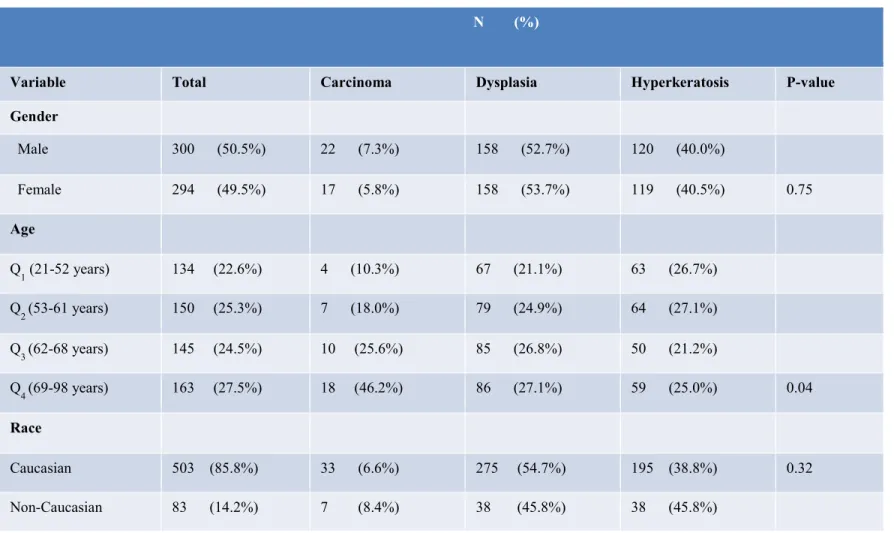
Demographic characteristics of respondents are summarized in Table 2. Some categories
combine to less than the total number of respondents as not all respondents answered all
questions. Caucasians comprised 85% of those who responded, and females comprised 49.5%.
There was no statistically significant difference among diagnostic categories with respect to the
proportion of Caucasians or the proportion of females who responded.
The carcinoma group had the highest response rate with 42.6% of potential subjects
returning a survey. Overall, subjects with dysplasia comprised 53.7% of the total respondents.
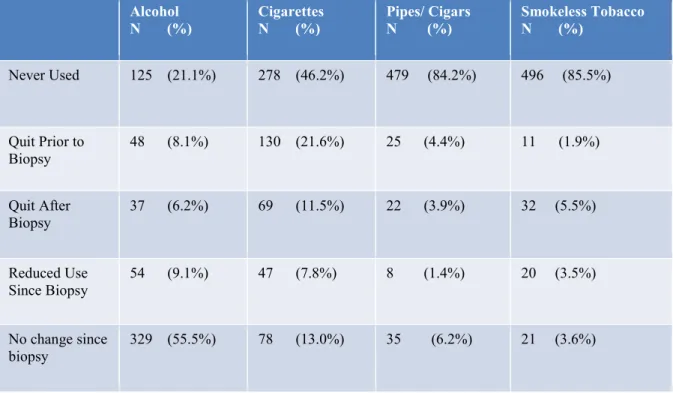
Table 3 summarizes reported changes in carcinogenic product usage. The product with the
highest reported frequency of ever use was alcohol, followed in decreasing frequency by
cigarettes, pipes and cigars, and smokeless tobacco (Figure 1).
Bivariate analysis indicated a statistically significant difference among diagnostic
categories with respect to distribution of age (p= 0.04); respondents with a diagnosis of
carcinoma were older than those in the other diagnostic categories. There were also differences
with respect to ever use of carcinogenic products. Across diagnostic categories, there was a
significant difference in the proportion of those who reported never using cigarettes, with fewer
carcinoma subjects indicating this response (p<0.01). There was no significant difference among
diagnostic categories in the proportion of those who never used alcohol. Comparison by race
indicated no significant difference in the proportion of Caucasians versus non-Caucasians who
never used cigarettes, but a higher proportion of Caucasians reported using alcohol (p<0.01).
For age, there was no significant difference in the proportion of those who never used cigarettes
21
alcohol (p<0.01). Comparison of males and females indicated no significant difference in the
proportion of males versus females who never used cigarettes, but females were more likely to
report never using alcohol (p<0.01).
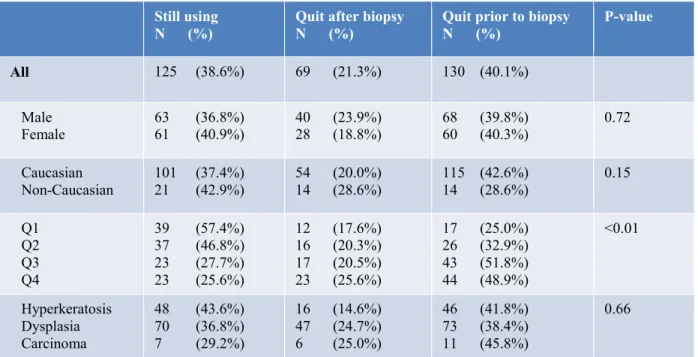
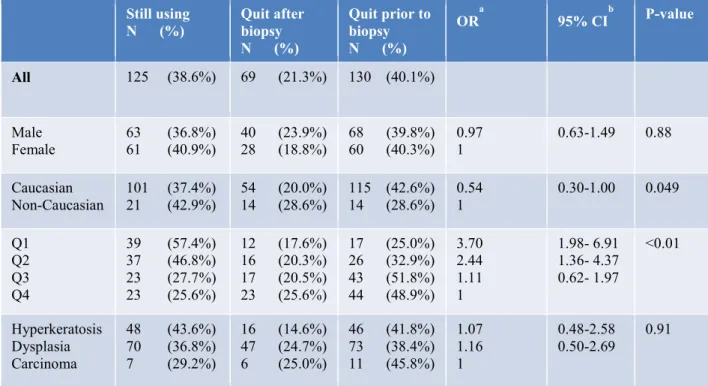
With respect to the effect of explanatory variables on change in cigarette use (Table 3),
bivariate analysis indicated no significant difference among diagnostic categories. Race and
gender were also not significantly associated with change in cigarette usage. There was a
significant difference among age groups in behavior change, with respondents in the first and
second quartiles being less likely to quit using cigarettes prior to biopsy (p<0.01).
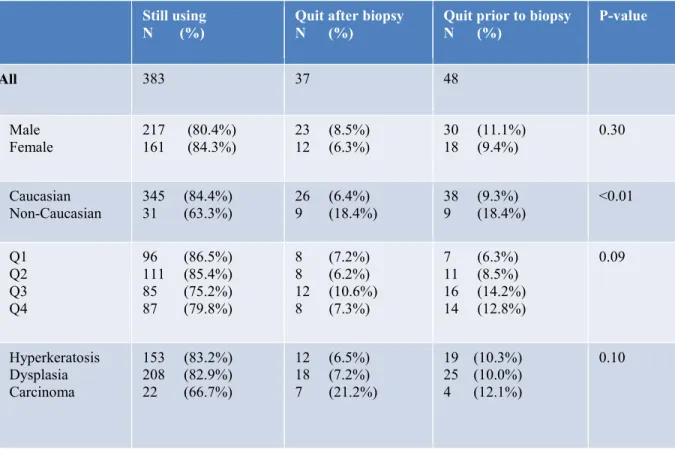
With respect to the effect of explanatory variables on change in alcohol use (Table 4),
bivariate analysis indicatedno significant difference among diagnostic categories. Gender and
age were also not significantly associated with change in alcohol use. Race was significantly
associated with change in alcohol use, with Caucasians being less likely to quit using alcohol
prior to biopsy than non-Caucasians (p<0.01).
Analysis using the proportional odds model for change in cigarette use showed similar
findings as the bivariate analysis (Table 5). The score test for the proportional odds assumption
was not statistically significant (p=0.28), indicating the odds ratios were consistent for all logits.
The global test for behavioral change in cigarette usage was statistically significant (p<0.01),
with age (p<0.01) contributing significantly to the variability in the respondents’ change in
cigarette use after controlling for all other explanatory variables. Respondents in the first and
second quartiles were less likely to quit prior to biopsy and more likely to be still using
cigarettes. Compared to those in the fourth quartile of age, respondents in the first quartile are
approximately 3.7 times more likely to not quit using cigarettes prior to biopsy or to still be
22
times less likely to quit before a biopsy and are more likely to still be smoking than those in the
4th quartile (95% CI: 1.4-4.4). Race was a marginally statistically significant contributor to the
respondent’s change in cigarette use after controlling for all other explanatory variables.
Caucasians were more likely to quit smoking prior to biopsy than non-Caucasians (OR=0.54;
95% CI= 0.3-0.99).
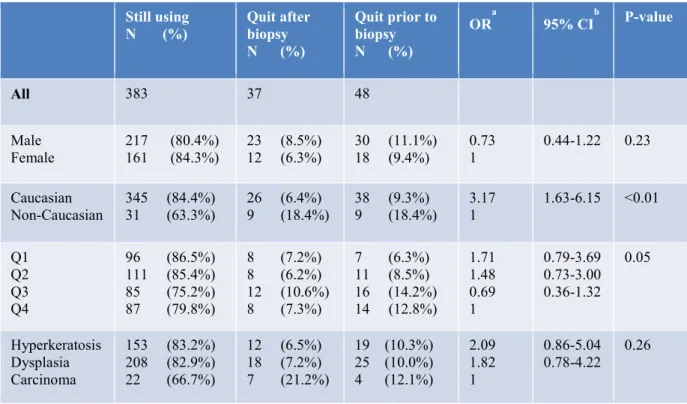
Analysis using the proportional odds model for change in alcohol use indicated similar
findings as the bivariate analysis (Table 6). The score test for the proportional odds assumption
was not statistically significant (p=0.74), indicating the odds ratios were consistent for all logits.
The global test for behavioral change in alcohol usage was statistically significant (p<0.05), with
race (p<0.01) contributing significantly to the variability in the respondents’ change in alcohol
usage after controlling for the other explanatory variables.
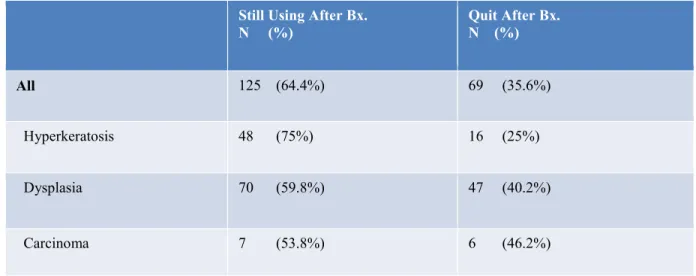
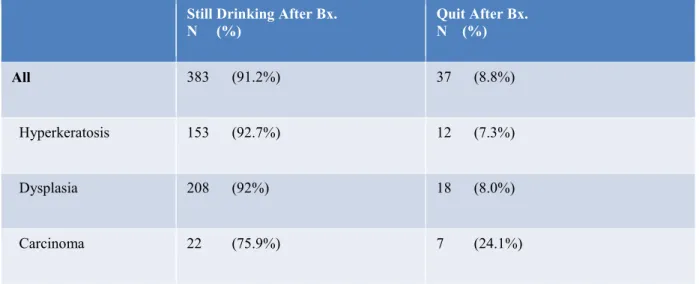
Tables 7 and 8 summarize the behavioral response for subjects who were users of
carcinogenic products at the time of biopsy. Higher percentages of subjects with clinically more
severe diagnoses quit following biopsy. This was true for both cigarettes and alcohol, with
Table 2. Demographic characteristics and diagnostic categories of respondents (N=605). Percentages in “Total” column are representative of number of respondents within each demographic category. Percentages in other columns are representative of number or respondents in each diagnostic category.
N (%)
Variable Total Carcinoma Dysplasia Hyperkeratosis P-value
Gender
Male 300 (50.5%) 22 (7.3%) 158 (52.7%) 120 (40.0%)
Female 294 (49.5%) 17 (5.8%) 158 (53.7%) 119 (40.5%) 0.75
Age
Q1 (21-52 years) 134 (22.6%) 4 (10.3%) 67 (21.1%) 63 (26.7%)
Q2 (53-61 years) 150 (25.3%) 7 (18.0%) 79 (24.9%) 64 (27.1%)
Q3 (62-68 years) 145 (24.5%) 10 (25.6%) 85 (26.8%) 50 (21.2%)
Q4 (69-98 years) 163 (27.5%) 18 (46.2%) 86 (27.1%) 59 (25.0%) 0.04
Race
Caucasian 503 (85.8%) 33 (6.6%) 275 (54.7%) 195 (38.8%) 0.32
Non-Caucasian 83 (14.2%) 7 (8.4%) 38 (45.8%) 38 (45.8%)
24
Table 3. Changes in Carcinogenic Product Usage. N= 605.
Alcohol
N (%) Cigarettes N (%) Pipes/ Cigars N (%) Smokeless Tobacco N (%)
Never Used 125 (21.1%) 278 (46.2%) 479 (84.2%) 496 (85.5%)
Quit Prior to
Biopsy 48 (8.1%) 130 (21.6%) 25 (4.4%) 11 (1.9%)
Quit After
Biopsy 37 (6.2%) 69 (11.5%) 22 (3.9%) 32 (5.5%)
Reduced Use
Since Biopsy 54 (9.1%) 47 (7.8%) 8 (1.4%) 20 (3.5%)
No change since biopsy
25
Figure1. Carcinogenic product usage prior to and after oral biopsy.
0
10
20
30
40
50
60
70
80
90
Alcohol Cigarettes Pipes/ Cigars Smokeless tobacco
P
er
ce
nta
ge
Percentage of respondents who ever used product
Percentage of respondents using product at time of biopsy
26
Table 4. Bivariate analysis for cigarette usage, according to gender, race, age quartiles and diagnosis. N=324 ever cigarette users.
Still using N (%)
Quit after biopsy N (%)
Quit prior to biopsy N (%)
P-value
All 125 (38.6%) 69 (21.3%) 130 (40.1%)
Male
Female 63 (36.8%) 61 (40.9%) 40 (23.9%) 28 (18.8%) 68 (39.8%) 60 (40.3%) 0.72
Caucasian
Non-Caucasian 101 (37.4%) 21 (42.9%) 54 (20.0%) 14 (28.6%) 115 (42.6%) 14 (28.6%) 0.15
Q1 Q2 Q3 Q4
39 (57.4%) 37 (46.8%) 23 (27.7%) 23 (25.6%)
12 (17.6%) 16 (20.3%) 17 (20.5%) 23 (25.6%)
17 (25.0%) 26 (32.9%) 43 (51.8%) 44 (48.9%)
<0.01
Hyperkeratosis Dysplasia Carcinoma
48 (43.6%) 70 (36.8%) 7 (29.2%)
16 (14.6%) 47 (24.7%) 6 (25.0%)
46 (41.8%) 73 (38.4%) 11 (45.8%)
27
Table 5. Bivariate analysis for alcohol usage, according to gender, race, age quartiles and diagnosis. N= 468 ever alcohol users.
Still using N (%)
Quit after biopsy N (%)
Quit prior to biopsy N (%)
P-value
All 383 37 48
Male Female
217 (80.4%) 161 (84.3%)
23 (8.5%) 12 (6.3%)
30 (11.1%) 18 (9.4%)
0.30
Caucasian Non-Caucasian
345 (84.4%) 31 (63.3%)
26 (6.4%) 9 (18.4%)
38 (9.3%) 9 (18.4%)
<0.01
Q1 Q2 Q3 Q4
96 (86.5%) 111 (85.4%) 85 (75.2%) 87 (79.8%)
8 (7.2%) 8 (6.2%) 12 (10.6%) 8 (7.3%)
7 (6.3%) 11 (8.5%) 16 (14.2%) 14 (12.8%)
0.09
Hyperkeratosis Dysplasia Carcinoma
153 (83.2%) 208 (82.9%) 22 (66.7%)
12 (6.5%) 18 (7.2%) 7 (21.2%)
19 (10.3%) 25 (10.0%) 4 (12.1%)
28
Table 6. Multivariate analysis for cigarette usage, according to gender, race, age quartiles and diagnosis. Probabilities modeled are those for the worst category. N=324 ever cigarette users. a
OR: odds ratio. bCI: confidence interval of odds ratio.
Still using
N (%) Quit after biopsy N (%)
Quit prior to biopsy N (%)
ORa 95% CIb P-value
All 125 (38.6%) 69 (21.3%) 130 (40.1%)
Male
Female 63 (36.8%) 61 (40.9%) 40 (23.9%) 28 (18.8%) 68 (39.8%) 60 (40.3%) 0.97 1 0.63-1.49 0.88
Caucasian
Non-Caucasian 101 (37.4%) 21 (42.9%) 54 (20.0%) 14 (28.6%) 115 (42.6%) 14 (28.6%) 0.54 1 0.30-1.00 0.049
Q1 Q2 Q3 Q4
39 (57.4%) 37 (46.8%) 23 (27.7%) 23 (25.6%)
12 (17.6%) 16 (20.3%) 17 (20.5%) 23 (25.6%)
17 (25.0%) 26 (32.9%) 43 (51.8%) 44 (48.9%)
3.70 2.44 1.11 1 1.98- 6.91 1.36- 4.37 0.62- 1.97 <0.01 Hyperkeratosis Dysplasia Carcinoma
48 (43.6%) 70 (36.8%) 7 (29.2%)
16 (14.6%) 47 (24.7%) 6 (25.0%)
46 (41.8%) 73 (38.4%) 11 (45.8%)
1.07 1.16 1
0.48-2.58
29
Table 7. Multivariate analysis for alcohol usage, according to gender, race, age quartiles and diagnosis. Probabilities modeled are those for the worst category. N= 468 ever alcohol users. a
OR: odds ratio. bCI: confidence interval of odds ratio.
Still using
N (%) Quit after biopsy N (%)
Quit prior to biopsy N (%)
ORa 95% CIb P-value
All 383 37 48
Male
Female 217 (80.4%) 161 (84.3%) 23 (8.5%) 12 (6.3%) 30 (11.1%) 18 (9.4%) 0.73 1 0.44-1.22 0.23
Caucasian
Non-Caucasian 345 (84.4%) 31 (63.3%) 26 (6.4%) 9 (18.4%) 38 (9.3%) 9 (18.4%) 3.17 1 1.63-6.15 <0.01
Q1 Q2 Q3 Q4
96 (86.5%) 111 (85.4%) 85 (75.2%) 87 (79.8%)
8 (7.2%) 8 (6.2%) 12 (10.6%) 8 (7.3%)
7 (6.3%) 11 (8.5%) 16 (14.2%) 14 (12.8%)
1.71 1.48 0.69 1 0.79-3.69 0.73-3.00 0.36-1.32 0.05 Hyperkeratosis Dysplasia Carcinoma
153 (83.2%) 208 (82.9%) 22 (66.7%)
12 (6.5%) 18 (7.2%) 7 (21.2%)
19 (10.3%) 25 (10.0%) 4 (12.1%)
2.09 1.82 1
30
Table 8. Behavioral change in subjects who were smokers at time of biopsy.
Percentage of subjects per diagnostic category who quit smoking following biopsy. N= 194 smokers at time of biopsy
Still Using After Bx.
N (%) Quit After Bx. N (%)
All 125 (64.4%) 69 (35.6%)
Hyperkeratosis 48 (75%) 16 (25%)
Dysplasia 70 (59.8%) 47 (40.2%)
31
Table 9. Behavioral change in subjects who were alcohol consumers at time of biopsy.
Percentage of subjects per diagnostic category who quit drinking alcoholic beverages following biopsy. N= 420 alcohol consumers at time of biopsy.
Still Drinking After Bx.
N (%) Quit After Bx. N (%)
All 383 (91.2%) 37 (8.8%)
Hyperkeratosis 153 (92.7%) 12 (7.3%)
Dysplasia 208 (92%) 18 (8.0%)
32
Discussion
To our knowledge, this is the first study to address the effect of a premalignant diagnosis
on oral cancer risk factor cessation. For those subjects using cigarettes or alcohol at the time of
biopsy, higher percentages of subjects with clinically more severe diagnoses quit following
biopsy, including higher percentages of subjects with dysplasia quitting as compared to those
with hyperkeratosis (Tables 8 and 9). This is an encouraging finding given that dysplasia has
been shown to be a potentially reversible process. 48, 49
When all subjects who reported ever using cigarettes were combined, age was the
explanatory variable found to be significantly associated with cessation (Table 4). The finding
of younger subjects being both less likely to quit prior to biopsy as well as more likely to be still
smoking appears to conflict with data from the most recent National Health Interview Surveys
(NHIS), which found that adults ≥ 65 years had a lower interest in smoking cessation and made
fewer attempts at quitting.50 It is postulated that differences may be attributable to sampling, as
this study focused on patients with a history of a suspicious oral lesion as opposed to smokers in
the general population. It is possible that suspicious oral lesions may be less alarming to
younger patients, who may consider cancer to be a phenomenon associated with older age.
When combining all subjects who reported ever using alcohol, race was significantly
associated with cessation after controlling for other variables, with Caucasians being less likely
to quit consuming alcohol prior to biopsy (Table 5). In addition, a higher proportion of
Caucasians reported ever use of alcohol. This is consistent with findings from other studies that
noted Caucasians to have the highest rates of current alcohol consumption51 and high rates of
binge drinking, although the highest prevalence of alcohol dependence was observed in
33
should be interpreted cautiously as non-Caucasians comprised less than 15% of respondents.
The small number of non-Caucasian respondents may be attributable to several possible factors,
including a potentially smaller pool of non-Caucasian subjects undergoing oral biopsy, or
possibly because non-Caucasians were less likely to return a questionnaire. A previous
epidemiological study noted that African Americans were more reluctant to take part in medical
studies as compared to Caucasians, which was chiefly attributable to reduced trust in medical
research.53
Carcinoma subjects were significantly more likely to be older than subjects with
hyperkeratosis or dysplasia (Table 2). This may be related to the fact that older patients
theoretically have longer periods of exposure to risk factors; however, it may also be due to the
fact that the likelihood of developing cancer increases with age.54 Significantly fewer carcinoma
subjects reported never using cigarettes as compared to those in other diagnostic categories,
which is compatible with current models of tobacco use as a risk factor for oral cancer.
Data from this and other studies highlights the fact that a large percentage of patients at
risk for oral cancer continue to use carcinogenic products. Smoking cessation advice from
healthcare personnel results in more attempts at quitting and improved utilization of
pharmacotherapy agents shown to improve the rates of smoking cessation by two to three times.1,
50 However, while there is clearly a need for involvement of healthcare providers in the fight
against tobacco addiction, evidence suggests that actual engagement by clinicians is lacking. For
instance, a CDC study of current smokers found that approximately 50% of those who visited a
physician within a twelve month period received cessation advice, whereas only about 10% who
visited a dental professional received cessation advice.44
34
cessation. Nevertheless, the role of the healthcare provider in cessation efforts is not always
readily evident. For instance, considerable emphasis is placed on promoting health knowledge
and enhancing clinical outcome measures; however, studies have verified that improved
knowledge in and of itself does not necessarily translate to a change in behavior or health.33-35 It
has been postulated that patients are not likely to adopt new behaviors unless there is a
perceptible benefit associated with this behavior; thus, reduced pain, better function or increased
quality of life may serve as motivational factors, whereas a clinical measurement of disease may
not be meaningful from a patient perspective.36 For this reason, it is critical to address risk factor
cessation from a patient’s viewpoint of how the associated benefits may particularly impact his
or her daily life. For instance, it has been noted that patients who continue to smoke have a
lower perception of the risks associated with cigarettes and a reduced motivation to quit.37-39
According to this study, oral biopsy is an important initial step in risk factor cessation for those
patients with oral lesions. Informing a patient that surgical removal of a suspicious lesion is
recommended enlightens the patient to the fact that his health may be in jeopardy and that a
painful procedure is recommended in order to determine this. Also, delivery of the biopsy
diagnosis also serves as an opportunity to highlight unequivocally how the patient’s tissues are
being affected by risk factor use as well as how cessation will be directly beneficial. For those
diagnosed with hyperkeratosis, patients should be informed that although these lesions are not
considered precancerous, hyperkeratosis is a change that tissues undergo as a means of
protection to an irritant. Chronic exposure to products that cause tissue injury leads to increased
cell division as a means of replacing damaged cells, and this subsequently leads to increased risk
for neoplasia due to the additional opportunity for errors in genetic replication.55 This concept
35
benign hyperkeratosis later progress to squamous cell carcinoma.56, 57 In this study, lower
percentages of risk factor cessation were found in subjects with hyperkeratosis, perhaps
indicating that these patients have a misguided sense of wellness.
As previously mentioned, relatively few oral care providers currently address smoking
cessation with patients.44 Clinicians may have several perceived barriers to discussing risk factor
cessation with patients, including the potential time-consuming nature of such a conversation,
especially if the discussion is to be personalized for each patient. However, for busy clinicians,
it is noted that interventions of merely three minutes can significantly affect tobacco
abstinence.19, 45 Another possible concern is that a patient will be encumbered with too much
information at once or unable to process additional information after an alarming diagnosis.
However, the vast majority of patients who undergo an oral biopsy have several possible
appointments in relation to the biopsy, including an exam at a referring provider’s office, a
consult with a specialist, a surgery appointment and post-operative appointment(s) for follow-up
and delivery of the diagnosis. Each of these can serve as a “touch point” for communication.
Discussion of risk factor cessation can be incremental with introduction prior to surgery and
follow-up dialogue at subsequent appointments. Also, presenting information prior to surgery
regarding the adverse effect of smoking on surgical outcomes may provide further incentive for
tobacco cessation.19 Thus, both referring providers and specialists have the opportunity to assist
patients in the challenging endeavor of overcoming an addiction.
Further evidence for the role of oral healthcare providers in the fight against tobacco
related diseases comes from studies that highlight the importance of early intervention for
tobacco cessation in patients at risk for cancer. For instance, a study focusing on lung carcinoma
36
had a greater likelihood of being tobacco free at the 6 month follow-up appointment as compared
to those who received nicotine dependence treatment greater than three months after diagnosis.19,
41 As oral biopsies often occur in a dental office, these providers may see oral cancer patients
prior to the patient being referred to otolaryngology or oncology, and the initial tobacco
cessation intervention should not be postponed for these other doctors. Finally, the role of oral
healthcare personnel as related to tobacco cessation is highlighted in studies that found higher
tobacco abstinence rates associated with cessation interventions performed in conjunction with
diagnostic work-ups or cancer screenings.19, 46, 47 Thus, research suggests that risk factor
cessation intervention may be particularly helpful when performed at diagnosis and treatment
planning appointments, in addition to recall examination appointments, as the patient is already
undergoing an oral cancer screening exam. Furthermore, implementing a protocol for the
discussion of risk factor cessation at these appointments ensures that this important aspect of
patient care will not be overlooked, even for patients that do not yet have a clinically visible
lesion.
This study utilized self-reporting of risk factor use, which replicates a real-world clinic
setting in terms of determining a patient’s history of tobacco and alcohol use. Nevertheless, this
introduces a potential limitation of the study as this method may be prone to recall bias or
misreporting. Some studies using biochemical analysis have documented inaccuracies in the
self-reporting of tobacco use.58-60 The likelihood of inaccuracy appears to be increased in
patients who claim to be recent quitters.58, 61 In addition, pregnant patients or patients with
tobacco-related diseases may also be more likely to underreport tobacco use, perhaps because
these patients feel more social obligation to quit smoking.58-60 Conversely, other studies
37
nicotine metabolite levels; this was found in both studies of selected populations, such as
pregnant patients and head and neck cancer patients, as well as in a meta-analysis of studies
involving the general population.61-63 In addition, it is noted that self-reported data obtained in a
research setting is frequently more accurate than that obtained in a clinical setting, as the
research setting is deemed to be more neutral.60
Due to the controversy associated with self-reporting of tobacco use, a future study of
this nature that utilizes biochemical validation of nicotine exposure may prove useful. In
addition, this study was limited by a cross-sectional design; a longitudinal study would be useful
as risk factor usage may vary over time following diagnosis and treatment. For patients that quit
prior to biopsy, it would be beneficial to know if the patient quit several years prior to the biopsy
procedure, or if cessation occurred closer to the time of surgery as the latter cases could be
potentially attributable to the seriousness of the need for biopsy. Furthermore, carcinogenic
product usage at the time of biopsy should be used as an inclusion criterion in order to focus on
oral biopsy diagnosis as associated with risk factor cessation. Finally, future studies may want to
address intervention measures designed to improve patients’ sense of coherence in order to
enrich quality of life as associated with oral health, specifically the prevention of oral cancer.
Sense of coherence is broadly defined as the extent to which a person perceives life rationally
and is able to manage stressors with available resources and considers challenges as worthwhile
endeavors.33, 64 It is important for the oral health care provider to be aware that a patient must be
personally empowered and motivated to overcome an addiction, and that sheer awareness of
objective statistics or even personal clinical parameters may not be helpful in the cessation
journey. The risk factor cessation discussion should be personalized for each patient and
38
In conclusion, the current study demonstrates that undergoing an oral biopsy procedure,
as well as receiving the subsequent diagnosis, is important in the arsenal against risk factor
addiction. Indeed, an oral biopsy is not simply a means to determine the diagnosis of a lesion—
it is a substantial opportunity to engage patients in risk factor cessation; acquiring a diagnosis is
more definitive in delineating risk to the patient as it provides objective, personal and tangible
evidence of physical harm resulting from risk factor use. The appointments proximate to oral
biopsy are an ideal time to emphasize the implications of premalignant or malignant diagnoses.
Moreover, and perhaps even more importantly, it follows that clinicians who are aware of this
important relationship should be inspired to change their own behavior in a proactive way, both
by performing more biopsies of suspicious lesions and by enhancing their patient education
efforts to provide convincing biologic reasons why patients should quit based on the objective
evidence of the biopsies. In addition, differences in risk factor cessation associated with age and
race underscore the need for clinicians to address cessation with all patients. Armed with the
evidence from this study, clinicians should be even more compelled not to “watch” suspicious
lesions over time or to neglect cessation counseling for current risk factor users. Biopsy is
indicated for non-pathognomonic lesions that do not resolve after a reasonable period of time
during which all sources of physical and chemical irritation are removed. Enhanced clinical
39
APPENDIX 1: ADDITIONAL MATERIALS AND METHODS
In the UNC oral pathology data base, all biopsy specimens are coded according to
diagnosis and can be found by searching for the respective code(s). As some diagnoses are more
common than others, it was expected that the diagnosis categories would not contain equal
numbers of potential subjects. Once potential subjects were identified, a list was generated with
the diagnosis, name and address of each potential subject, and each potential subject was
assigned a study number. Gender, ethnicity and race were not part of the defining criteria for
identifying a study population.
The questionnaire was partially modeled off the Alaskan Native Medical Center Tobacco
Use Questionnaire.65 A cover letter gave a brief description of the study and its purpose, and the
subject was asked to complete and return the questionnaire if they consented to participate in the
study. A postage-paid envelope was included with the questionnaire. The questionnaire was
created using Teleform so that returned questionnaires could be electronically scanned to record
answers. When a completed questionnaire was returned, it was matched with its corresponding
study number to keep track of which potential subjects had responded. Questionnaires were
scanned and answers electronically recorded within a secure database in the School of Dentistry.
Data recorded included: study number, diagnosis, subject gender, subject age, subject race,
tobacco use (type, duration, frequency), alcohol use (duration, frequency), use change since
biopsy (quit before biopsy, no, reduced use or quit) and any knowledge of previous diagnosis of
oral human papillomavirus. Subject name and address were not recorded. The original list with
subject names and addresses was destroyed at the completion of the study. A biostatistician (Dr.
Ceib Phillips) was consulted in study design and data analysis.
40
used to categorize the subject. For statistical analysis, all subjects diagnosed with carcinoma
were grouped together. Similarly, all subjects diagnosed with dysplasia (mild, moderate or
41
APPENDIX 2: QUESTIONNAIRE
UNC SCHOOL OF DENTISTRY
DEPARTMENT OF DIAGNOSTIC SCIENCES AND GENERAL DENTISTRY
Latency of Oral Carcinogenesis in Tobacco Users ID:
*This questionnaire was partially modeled off the Alaskan Native Medical Center Tobacco Use Questionnaire. www.anthc.org/cs/chs/tobacco/upload/FINAL-ANMC-Tobacco-use-questionnaire-May-08.PDF
Age:
Have you ever been diagnosed with human papillomavirus (HPV)? Yes No Don't know
Gender: Male Female
If you consent to participate in this study, please use pen to complete forms. Fill in circles completely for the most appropriate option or fill in the blanks as needed. Please fill in only ONE option for each question.
INSTRUCTIONS:
Please shade circles like this:
Race: African-American Asian Native American Caucasian Other
Cigarettes
Have you ever used this product? Yes No (SKIP TO NEXT SECTION - Smokeless Tobacco)
How many years have you used (did you use) it?
What is the most that you have ever used in one day?
1/2 pack or less 1 pack 1-2 packs More than 2 packs
None 1/2 pack or less 1 pack 1-2 packs More than 2 packs
How much do you currently use each day?
Have you changed your use since your biopsy?
I quit before my biopsy No Yes - I've reduced how much I use Yes - I've quit
Smokeless tobacco (chew or snuff)
Have you ever used this product? Yes No (SKIP TO NEXT SECTION - Pipes or cigars)
How many years have you used (did you use) it?
What is the most that you have ever used in one day?
less than 1 hour 1-5 hours 6-12 hours More than 12 hours
How much do you currently use each day?
Have you changed your use since your biopsy?
I quit before my biopsy No Yes - I've reduced how much I use Yes - I've quit
42
Questionnaire - Page 2 ID:
Pipes or Cigars
Have you ever used this product? Yes No (SKIP TO NEXT SECTION - Alcoholic Drinks)
How many years have you used (did you use) it?
What is the most that you have ever used in one day?
1 cigar or pipe load 1-3 cigars or pipe loads 4 or more cigars or pipe loads
How much do you currently use each day?
Have you changed your use since your biopsy?
I quit before my biopsy No Yes - I've reduced how much I use Yes - I've quit
Alcoholic Drinks
Have you ever used this product? Yes No
How many years have you used (did you use) it?
What is the most that you have ever used in one day? less than one drink 1-5 drinks more than 5 drinks
How much do you currently use each day?
Have you changed your use since your biopsy?
I quit before my biopsy No Yes - I've reduced how much I use Yes - I've quit None 1 cigar or pipe load 1-3 cigars or pipe loads 4 or more cigars or pipe loads
None less than one drink 1-5 drinks more than 5 drinks
Please return this questionnaire in the provided stamped envelope.