University of New England
DUNE: DigitalUNE
All Theses And Dissertations Theses and Dissertations
8-1-2018
Effects Of A Faculty Training Program On
Knowledge And Awareness Of Student
Concussion And Academic Performance
Christina M. Finn
University of New England
Follow this and additional works at:https://dune.une.edu/theses
Part of theEducational Assessment, Evaluation, and Research Commons,Educational Leadership Commons, and theHigher Education Commons
© 2018 Christina M. Finn
This Dissertation is brought to you for free and open access by the Theses and Dissertations at DUNE: DigitalUNE. It has been accepted for inclusion in All Theses And Dissertations by an authorized administrator of DUNE: DigitalUNE. For more information, please [email protected].
Preferred Citation
Finn, Christina M., "Effects Of A Faculty Training Program On Knowledge And Awareness Of Student Concussion And Academic Performance" (2018).All Theses And Dissertations. 174.
EFFECTS OF A FACULTY TRAINING PROGRAM ON KNOWLEDGE AND AWARENESS OF STUDENT CONCUSSION AND ACADEMIC PERFORMANCE
By
Christina M. Finn BS University of Scranton 2003 MS University of Scranton 2004
A DISSERTATION
Presented to the Affiliated Faculty of
The College of Graduate and Professional Studies at the University of New England
Submitted in Partial Fulfillment of Requirements
For the degree of Doctor of Education
Portland & Biddeford, Maine
Copyright by Christina Finn
Christina Finn August 2018 Educational Leadership
EFFECTS OF A FACULTY TRAINING PROGRAM ON KNOWLEDGE AND AWARENESS OF STUDENT CONCUSSION AND ACADEMIC PERFORMANCE
Abstract
Concussion and the cumulative effects of repetitive head injury are a growing health concern (Ahmed & Hall, 2017). Although a major emphasis throughout the literature related to concussion is on ‘return to play’, there is a growing body of literature focused on safe return to school following concussion. However, many educators and school personnel are unaware of the potential impact of concussion on academic performance or how to implement return to learn procedures following concussion (Dreer, Crowley, Cash, O’Neill, & Cox, 2016; Wing, Amanullah, Jacobs, Clark, & Merritt, 2015). Although college students may face unique
challenges when returning to school following concussion, (Hall, 2015) there is limited literature focused on return to learn for the college student or information on how college faculty should be trained. The purpose of this study was to determine the effects of a return to learn after
concussion educational program on faculty knowledge and attitudes regarding concussion and the effect on learning and return to school. The study utilized a mixed method design, with a pre-test and post-pre-test to measure concussion knowledge before and after a didactic presentation on concussion and academic performance. Semi-structured interviews gathered information on faculty’s perception of concussion and academic performance as well as potential impact on future teaching practices.
Overall, faculty reported having limited knowledge prior to the training, and felt that the training improved explicit knowledge of concussion. Following the training, they felt more inclined to be attentive to the needs of students, including looking out for signs of concussion, and that they would be willing to implement or adhere to recommendations for academic accommodations. Lastly, they did not receive specific information from the school about the school’s policies and procedures for concussion and return to learn. Results indicate that a didactic presentation on concussion and academics may be an effective method for training college faculty. Faculty report the importance of carefully observing all student behaviors and being flexible and open to academic accommodations. Training in concussion and other issues related to emotional and mental health may be of benefit for faculty teaching in institutions of higher education.
University of New England Doctor of Education Educational Leadership
This dissertation was presented by
Christina Finn
It was presented on August 31, 2018 and approved by:
Ella Benson, Ed.D., Lead Advisor University of New England
Heather Wilmot, Ed.D., Secondary Advisor University of New England
Peter Douris, Ed.D., Affiliated Committee Member University of New England
ACKNOWLEDGEMENTS
I would like to acknowledge and thank Dr. Ella Benson, lead advisor of my dissertation committee, for her support, patience, and guidance throughout this process. Dr. Benson has always been a calm and steady presence throughout this process, consistently cheering me on and guiding me through the process. I would also like to thank Dr. Heather Wilmot for her careful attention to detail and enthusiasm for this project. I would like to also acknowledge Dr. Peter Douris, my Affiliate Committee Member and support system here at my current place of work. Thank you for listening carefully to my ideas and guiding me through the research process. I feel very appreciative to have a resource like you, and to call you my colleague.
To the participants of my study, thank you for taking the time out of your very busy schedules to participate in this study. Thank you for your diligence during the presentation and your honest efforts during the pre-test and post-test. Special thanks to those participants who took extra time to be a part of the interview process.
Thank you to my friends and colleagues, who have offered endless hours of support, and were always there to listen and encourage me through this process. I would be utterly lost without you.
To my parents-Thank you for your seemingly endless help, support, and guidance. Sometimes I wondered how it was possible to raise two toddlers, get a doctorate, and work full time. Never once did you question if I was capable, but rather gave me all the help and tools to make me successful. For this, I am forever grateful.
To my husband-thank you for never doubting me and for always being my cheerleader and shoulder to lean on. You keep me going and I could have never done this without you. To
my beautiful boys-Oliver and Ethan-your smiles, laughter and unconditional love have made this a more pleasant experience and have given me the drive to be successful.
TABLE OF CONTENTS
PAGE
CHAPTER 1: INTRODUCTION………....1
Statement of the Problem………...2
Purpose of the Study………...4
Research Questions…………...………...5 Conceptual Framework………5 Significance of Study………...6 Definition of Terms……….……….8 Assumptions…..………...9 Limitations..……….…...10 Conclusion………...……..10
CHAPTER 2: LITERATURE REVIEW..……….12
Conceptual Framework………..13
Return to School Following a Concussion……….13
The Unique Experiences of the College Student………...…..……..14
Theoretical Framework………...…..….15
Defining Concussion and Post-Concussion Syndrome………..…………15
Cognitive Rest and Academic Performance………...…………...17
Concussion and Cognitive Rest……….…17
Effects of Cognitive Rest on Symptoms………18
Impact of Concussion on Academic Performance ………..………..20
Compliance with Concussion Guidelines and Recommendations………..………...25
Concussion Education………...………...…………..26
Concussion Education for Athletes………..………..26
Concussion Education for Athletic Coaches………..26
Concussion Education for Teachers……….…………..30
Return to Learn Protocols………..………32
Prevalence of Existing Return to Learn Protocols………...32
Types of Existing Return to Learn Protocols….…………...………...33
Step/Graduated Approach………..33
Individualized Approach………....34
Individualized/Gradual Approach………..35
Return to Learn/Return to Play Combined Approach………....38
Return to Learn Protocols Specific to Student Populations………...…40
High School Students……….41
College Students………41 Conclusion……….43 CHAPTER 3: METHODOLOGY ………...45 Setting………...46 Participants…………...………..47 Data Collection………..48 Procedures………...……...48 Research Design……….49 Tools………..50
Data Analysis ……….………...51 Participant Rights………...……52 Limitations ………...……….52 Conclusion………...53 CHAPTER 4: RESULTS.………. 55 Demographics………56 Quantitative Findings………...……….…….57 Qualitative Findings……….………..58 Conclusion………...…..70 CHAPTER 5: DISCUSSION ………...…71 Quantitative Findings………...72 Quantitative Findings………...73 Implications………81
Recommendations for Future Research……...………..82
Conclusion……….…82
REFERENCES………..85
APPENDIX A: EMAIL TO PARTICIPANTS……….97
APPENDIX B: MODIFIED RoCKAS CONCUSSION KNOWLEDGE ASSESSMENT……..98
APPENDIX C: SEMI-STRUCTURED INTERVIEW PROTOCOL………..101
APPENDIX D: CONSENT FOR PARTICIPATION IN RESEARCH ………...102
LIST OF TABLES
Table 4.1: Demographics of Participants……….. 57 Table 4.2: Pre-Test and Post-Test Scores of RoCKAS………..58
LIST OF FIGURES
Figure 1.1: Conceptual Framework……….6
CHAPTER ONE INTRODUCTION
In 2013,there were approximately 2.8 million traumatic brain injury related emergency department (ED) visits in the United States, including mild traumatic brain injury (mTBI) or concussion (Taylor, Bell, Breiding, & Xu, 2017). In addition, sport related traumatic brain injuries have increased between 2001 and 2012 (Coronado et al., 2015). This number may be an underestimate, as this number only encompasses emergency department visits (Coronado et al., 2015). As a result, the implications for traumatic brain injury have become a matter of public health concern with growing attention to concussion and the long-term effects of repetitive head trauma becoming more apparent within both the medical community and mainstream culture (Ahmed & Hall, 2016; Kerr et al., 2015).
Although the majority of attention is devoted to athletes, particularly professional football players, there is growing attention to injuries sustained in college, high school and even grade school athletes. To address the growing number of identified concussions, health care
professionals, coaches, and athletic trainers have developed protocols for safely transitioning the individual back to full participation in athletic activities. Consequently, there is significant literature and attention devoted to ‘return to play’ protocols that provide specific guidelines for return to play (Leddy, Baker, Kozlowski, Bissson, & Willer, 2011; Lang, Michael, Chitale, Judy, & Kevin, 2013; McCrory et al. 2017). Despite the importance of managing concussion
symptoms for safe return to school, there is much less attention devoted to ‘return to learn’ protocols that provide guidelines for returning to school (Master, Gioia, Leddy, & Grady, 2012). There is varying information about the benefits of cognitive rest and the negative effects of cognitive exertion, but the literature suggests that a gradual return to activity that is
individualized to the student and his or her clinical presentation and academic needs may be most optimal (Halstead et al., 2013; Rose, McNally, & Heyer, 2015). The importance of a team oriented approach to return to learn has been emphasized (Sady, Vaughan, & Gioia, 2012). However, many teachers and school personnel report feeling inadequately prepared to contribute to the return to learn process due to perceived lack of knowledge (Dreer, Crowley, Cash,
O’Neill, & Cox, 2016; Wing, Amanullah, Jacobs, Clark, & Merritt, 2015). A concussion training program for educators and school personnel has the potential to improve knowledge in order for teachers to facilitate the process of return to school. To date, there is limited literature that examines the concussion knowledge levels of college faculty; nor is there literature that provides data on available training programs for college faculty.
Statement of the Problem
Although there is literature that provides guidelines for return to learn following concussive injuries, there is significantly less focus on return to learn protocols for college students, although collegiate athletes are found to sustain concussions at higher rates than high school athletes, specifically during games and competitions (Dompier, 2015; Gessel, Fields, Collins, Dick, & Comstock, 2007). In addition to the increased incidence of concussion in college athletes, college students who have sustained concussions may face unique challenges when transitioning back to classes. Since the typical college student may experience changes in sleep patterns, study habits, and eating habits during their college career (Buboltz, Jenkins, Soper, Woller, Johnson, & Faes, 2009; Pilcher, Ginter, & Sadowsky, 1997), the student who has sustained a concussion may experience even more significant sleep disturbances, since sleep changes are also common following a concussive injury (Kerr et al., 2017). Disturbed sleep can in turn impact ability to concentrate and manage academic tasks. Since typical college students
are challenged by a more autonomous approach to education, which allows for greater freedom and less structure (Hall et al., 2015), the college student who has sustained concussion may have more difficulty transitioning back to school in a less structured environment. Concussion
protocols should be individualized to the college student population.
To address the growing issue of concussion in collegiate athletes, the National Collegiate Athletic Association (NCAA) has recently mandated that all Division I schools develop and implement a comprehensive concussion protocol for college students including a return to learn protocol (NCAA, 2016). The NCAA provides recommended best practice guidelines for
management of concussion, including return to learn guidelines (NCAA, 2016). There is limited information that provides guidelines for how the protocol should be disseminated to educational staff, including college faculty. In other literature, studies have examined the knowledge and attitudes regarding concussion and return to learn amongst school nurses and elementary school teachers (Dreer et al., 2016 ; Wing et al. 2016). Results indicate that teachers expressed feeling less confident and were interested in seeking out additional knowledge to learn more about concussion, while school nurses felt they did not receive adequate training to manage students who have sustained concussion (Dreer et al, 2016; Wing et al., 2016). As a result, it is apparent that despite the presence of concussion protocols and regulations within schools, many personnel do not feel adequately trained to properly implement and adhere to concussion return to learn protocols.
Since no formal training or guidelines for concussion and return to learn protocols are recommended for college faculty throughout the literature, there is little known about the knowledge base and attitudes toward concussion amongst college instructors. College faculty have the unique opportunity to observe individuals who are have recently sustained a concussion
participating in academic tasks that require cognitive exertion, which may potentially increase post concussive symptoms (Brown et al., 2014). In addition, college faculty may provide formal or informal accommodations based on the recommendations of the physician due to persistent post concussive symptoms (NCAA, 2016). Despite the potential role of college faculty in facilitating return to learn following concussion, there is limited literature that provides
guidelines for how faculty should be informed of the impact of concussion and post-concussive symptoms on academic performance. The elementary school literature suggests that it may be helpful to examine existing teacher knowledge regarding concussion before formalizing
recommendations into a policy (Dreer et al., 2016). Furthermore, it is suggested by Providennza and Johnston (2009) that knowledge regarding concussion is best translated when the
information is delivered in a manner that is best suited to the target audience. However, there is limited information available that suggests how information should be delivered, particularly in the college setting. Thus, the focus of this study was to study the problem of limited concussion education amongst college faculty by examining the effects of a concussion return to learn professional development program that delivers targeted information to college faculty.
Purpose of the Study
The purpose of this study was to determine the effects of a faculty concussion return to learn educational program on faculty knowledge and attitudes regarding concussion and the effect on learning and return to school. Gathering information on the effects of a faculty training module has the potential to provide valuable data on the impact of formal training and the implications for college return to learn protocols. Although there is literature that provides guidelines for return to learn following a concussion (e.g., 2016 Consensus Statement on Sport
Related Concussion), there is limited information available on how these protocols should be disseminated and how educators should be trained, particularly in the college setting.
Research Questions
The focus of this study was to explore the effects of an educational training module on college faculty members’ knowledge of concussion and implications for returning to school. A mixed method design was utilized to gather both quantitative and qualitative data on faculty knowledge levels and perceptions of concussion and return to school following a formal educational training. The specific aims of the study were to determine the following:
• What is the effect of an educational training module on college faculty’s knowledge and attitudes toward concussion and return to learn?
• How does an educational training module impact faculty’s perception of the effect of concussion on learning and the implications for teaching practice?
Conceptual Framework
According to Ravitch and Riggan (2017), the purpose of the conceptual framework is to conceptualize and articulate an argument for the significance of the research topic and
methodology. Marshall and Rossman (2011) further propose three necessary elements to the development of a conceptual framework including an argument for the significance of the study that has implications for the development of protocol and policy, common themes or traditions found in the literature and, lastly a gap in the literature. The conceptual framework for this study emphasizes the challenges of returning to school following a concussion, including the unique experiences of the college student. Furthermore, the proposed study is rooted in the argument that education, training, and dissemination are integral components of effective implementation of formal protocols. The guiding framework for the study is based on principles of the theory of
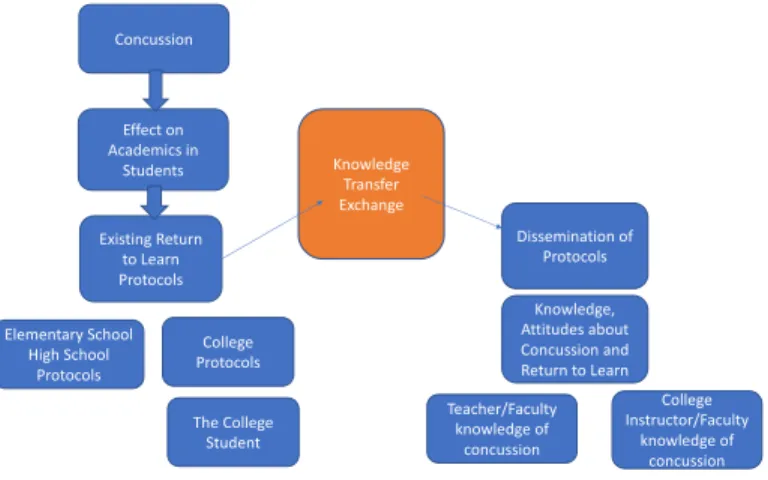
knowledge transfer and exchange, which examines the application of research findings to the development of different polices (Mitton, Adair, McKenzie, Patten, & Perry, 2007). The concepts of knowledge transfer and exchange provided the foundation for which the training program will be developed and ultimately disseminated to faculty. Thus, the conceptual framework for the study is comprised of the following constructs: return to school following concussion, the unique experience of the college student, and application of the theory of knowledge transfer and exchange to the development of a faculty return to learn concussion training module. The conceptual framework is further illustrated in Figure 1, which highlights the theory of knowledge transfer and exchange as a critical component of development and dissemination of concussion return to learn protocols. The theory of knowledge transfer and exchange provided the foundation for the development of a concussion training program that was utilized for this study.
Figure 1.1 Conceptual Framework. This figure illustrates the conceptual framework with the theory of Knowledge Transfer Exchange as the main foundation of the study
Significance of the Study
Due to growing concerns over the long-term effects of concussion, there has been
Popoli, Burns, Meehan, & Reisner, 2014). Medical professionals, coaches, athletic trainers, and families have become more aware of the potential dangers of concussion and more measures are being taken to ensure safe participation in sports at all levels. Children and adolescents who have sustained concussion may not only have difficulty with return to sports, but they may have difficulty returning to school as cognitive exertion may also exacerbate symptoms (Brown et al., 2014). Therefore, the student returning to school will require guidance and recommendations to safely transition back to classes without worsening of symptoms (Halstead et al., 2013). The college student in particular, has the potential to experience unique challenges such as sleep disturbances and larger work volumes (Pilcher et al., 1997). However, there is limited research focused on return to learn protocols that are specific to the college student. Of the existing protocols and guidelines, there are few that focus on how these protocols should be disseminated to college instructors. However, it has been suggested that before return to learn protocols are formalized, it is helpful to examine existing teacher knowledge (Dreer et al., 2016). In addition, it is suggested that education for a specific protocol should be customized to the target audience, which is in this case, college faculty members. In order for colleges to effectively implement concussion return to learn protocols, faculty should be informed of the protocols and information should be delivered in a manner that is specific to the existing knowledge and values of faculty members.
This study provided information regarding the effects of a concussion training program on faculty members’ awareness and knowledge of concussion as well as the effects on academic performance. Information on the efficacy of a faculty training module can contribute to further development of training programs for educators at all levels. Furthermore, focused concussion
return to learn education programs that are specific to educators may help students who have sustained concussion transition back to school with less difficulty (Dreer et al, 2016).
Definition of Terms
Athletic Trainer: “highly qualified, multi-skilled health care professionals who collaborate with physicians to provide preventative services, emergency care, clinical diagnosis, therapeutic intervention and rehabilitation of injuries and medical conditions” (National Athletic Trainers Association, n.d.).
Cognitive rest: freedom from physical or mental discomfort, an abstinence from mental exertion, and a sense of mental and emotional balance (Schneider, 2016); decrease in cognitive activity, which may include removal from school or academic tasks, (DeMatteo et al., 2015), avoidance of mental challenge; eliminating activities such as computer use, watching television, cell phone use, reading, playing video games, text messaging, or listening to loud music (Sady et al., 2011).
Concussion: a traumatic brain injury induced by biomechanical forces. Several common features that may be utilized in clinically defining the nature of a concussive head injury include:
• may be caused either by a direct blow to the head, face, neck or elsewhere on the
• typically results in the rapid onset of short-lived impairment of neurological function that resolves spontaneously. However, in some cases, signs and symptoms evolve over a number of minutes to hours.
• may result in neuropathological changes, but the acute clinical signs and symptoms largely reflect a functional disturbance rather than a structural injury and, as such, no abnormality is seen on standard structural neuroimaging studies.
• results in a range of clinical signs and symptoms that may or may not involve loss of consciousness. Resolution of the clinical and cognitive features typically follows a sequential course. However, in some cases symptoms may be prolonged. The clinical signs and symptoms cannot be explained by drug, alcohol, or medication use, other injuries (such as cervical injuries, peripheral vestibular dysfunction, etc.) or other
comorbidities (e.g. psychological factors or coexisting medical conditions). (McCrory et al., 2017, p. 2)
National Collegiate Athletic Association (NCAA): general legislative and governing body for intercollegiate athletics that is responsible for developing and enforcing regulations for play and eligibility for student athletes (The Editors of Encyclopedia Britannica, 2016).
NCAA Division II: a division of the NCAA that typically enrolls both local or in-state student-athletes. Division II athletics programs are financed in the institution's budget like other
academic departments on campus. (NCAA, n.d.)
Post-Concussion Syndrome: “A syndrome that occurs following head trauma (usually sufficiently severe to result in loss of consciousness) and includes a number of disparate symptoms such as: headache, dizziness, fatigue, irritability, difficulty in concentration and performing mental tasks, impairment of memory, insomnia, and reduced tolerance to stress, emotional excitement, or alcohol” (World Health Organization, 2007).
Return to Learn: Refers to the process of returning to school following a concussive injury. Assumptions
The study utilized a mixed method design that utilized a pre-test and post-test as well as semi-structured interviews to measure the effects of a faculty concussion return to learn training module on faculty knowledge, and attitudes regarding concussion and return to learn. The
concussion training module was developed collaboratively with the Sports Medicine Center within one Division II college. An assumption based on the design of the study was that participants would answer questionnaire and interview questions honestly and thoughtfully. It was assumed that participants would be college instructors with varying types of graduate level education in different academic areas. The pool of participants included faculty teaching at the graduate level within the Schools of Health Professions and Computer Science and Engineering. Furthermore, it was assumed that faculty had experience teaching college students and may have had experience teaching collegiate athletes, but did not have formal training in concussion and the effects on returning to school.
Limitations
Since this training module was administered to the faculty within one Division II school in a specified geographic region, it may have not been representative of all college faculty, including those within Division I and III schools and schools located in other regions. Since the program was voluntary, there was potential for bias, as participants may have volunteered to attend the program due to a prior interest or familiarity with the topic of concussion and
academic performance. Lastly, since the qualitative portion of the study was a sub-group of the original sample, the sub-group may not have been representative of the entire sample.
Conclusion
Concussion is becoming more widely recognized as a growing health concern (Ahmed & Hall, 2017; Kerr et al., 2015). Parents, teachers, and coaches are all becoming more aware of the importance of recognizing the signs of concussion and preventing re-injury by carefully
monitoring when athletes return to play. Children and adolescents who participate in sports are not only athletes, they are students. Since both physical and cognitive exertion can potentially
exacerbate concussion symptoms, consideration should be given for how students should be best transitioned back to the classroom following a concussive injury (Brown et al., 2014). Although there are existing return to learn protocols in place, there are limited protocols that are specific to college students. Furthermore, there is limited information on how return to learn protocols should be disseminated, particularly to college instructors.
This study began with an introduction to the topic and problem of practice. The need and purpose of the study are identified and research questions are listed. Chapter 2 will provide an in depth review of the literature, examining information available on concussion and the
implications for academic performance, cognitive rest, return to learn procedures, and knowledge regarding concussion. Chapter 3 will discuss the research design, data collection procedures, and methods for recruiting participants in detail. Chapter 4 will provide an overview of the results of the data and Chapter 5 will provide an interpretative discussion of the results. Bibliographic references and appendices will follow.
CHAPTER TWO
REVIEW OF THE LITERATURE
Within both the medical community and mainstream culture, there is a significant
increase in attention to concussion and the long-term effects of repetitive head trauma (Ahmed & Hall, 2016; Kerr, 2015; Popoli et al., 2014). As a result, health care professionals, coaches, and athletic trainers have worked to develop protocols for safely transitioning the individual back to full participation in athletic activities. Consequently, significant literature has called attention to ‘return to play’ protocols that provide specific guidelines for return to play (Leddy, et a., 2011; Lang et al., 2013; McCrory et al., 2013). Despite the importance of managing concussion symptoms for a safe return to school, much less attention is devoted to ‘return to learn’ protocols that provide guidelines for returning to school (Master et al., 2012).
There are varying approaches to return to learn following concussion, but recent literature suggests that a gradual return to activity that is individualized to the student and his or her
clinical presentation and academic needs may be most optimal (Halstead et al., 2015).
Furthermore, the utilization of a team approach to return to learn has also been emphasized as an effective strategy for facilitating return to learn (Sady et al., 2012). Despite the importance of a team approach to return to learn, the literature suggests that many school personnel feel that they do not have adequate knowledge to facilitate the return to learn process (Dreer et al., 2016, Wing et al., 2016). As a result, many school faculty and personnel may not be adequately prepared to apply principles of return to learn as outlined by consensus statements. Thus, the need for more formal mechanisms of increasing knowledge levels regarding concussion may be warranted amongst educators and school personnel.
Conceptual Framework
According to Ravitch and Riggan (2017), the purpose of the conceptual framework is to conceptualize and articulate an argument for the significance of the research topic and
methodology. In addition, Ravitch and Riggan (2017) emphasize the importance of the conceptual framework as a means for selectively examining the literature and establishing specific connections and relationships. Maxwell (2013) further proposes the argument that the development of the conceptual framework is a constructive process that synthesizes information from multiple different sources. He states the conceptual framework is something that is
constructed, not found, and emphasizes that the researcher essentially develops the structure of the conceptual framework. In order to construct the conceptual framework, Marshall and Rossman (2011) propose three necessary elements. The first element is the argument for the study’s significance that provides evidence that the study has potential significance for practice and policy and is likely to contribute to the ongoing discourse about the topic (p. 31). The second element proposed by Marshall and Rossman (2011) emphasizes “the important intellectual traditions that guide the study” (p. 58). Marshall and Rossman (2011) further propose that these intellectual traditions are identified through a comprehensive and thorough literature review. The third element to a conceptual framework as proposed by Marshall and Rossman (2011) is the identification of a gap in the literature by reviewing and critiquing existing literature. In summary, the role of the conceptual framework is to provide an overarching lens that argues for the significance of the research topic and methodology. Return to School Following a Concussion
Throughout the literature there is increased attention devoted to the importance of concussion detection and management (Ahmed & Hall, 2016; Kerr et al., 2015). A significant
portion of the literature is focused on safely returning athletes to sport (Lang et al., 2013; Leddy, et al., 2011; McCrory et al., 2017) with less emphasis on returning students to school. However, there is evidence that cognitive exertion has the potential to exacerbate concussive symptoms, and there is evidence that some type of cognitive rest is needed as the individual transitions back to the classroom (Valentine & Logan, 2012). In addition, recent studies have reported academic challenges following a concussion including increased time spent on homework, headaches interfering with learning, failure to keep pace, failure to complete schoolwork, problems keeping pace with and expanding workload, and perception of poorly controlled symptoms (Ransom et al., 2015). Thus, it is apparent that a student who has sustained a concussion has the potential to face unique academic challenges following a concussive injury.
The Unique Experience of the College Student
Although there are emerging protocols for return to learn following concussion noted throughout the literature, there is significantly less focus on return to learn procedures for college students, although collegiate athletes appear to sustain concussions at higher rates than high school athletes, particularly when actively competing in games (Dompier, 2015; Gessel, 2007). In addition to the increased incidence of concussion in college athletes, college students who have sustained concussions have the potential to face unique challenges when transitioning back to school due to the more autonomous nature of college coursework (Hall et al., 2015). For example, the college experience is different from the elementary and secondary school settings in that the college student spends less time in a traditional classroom, has more frequent and
prolonged breaks, and often requires more work outside the classroom (Hall et al., 2015). Furthermore, the typical college student’s experience is often influenced by multiple other variables including sleep disturbance, alcohol use, and numerous other psychosocial factors
related to changes in family and friend relationships (Hall et al., 2015). As a result, many typical college students face a number of unique challenges and stresses. Concussion and resultant symptoms can potentially complicate already existing stress levels and challenges, thus making the college student’s return to learn process unique to the challenges of other students.
Theoretical Framework: Knowledge Transfer and Exchange
The theory of knowledge transfer and exchange (KTE) is an element of organizational theory that examines the process of applying scientific research findings to facilitate decision -making and the development of protocols. The main purposes of KTE are to increase the use of research findings in the development of different polices and when making key policy related decisions, and to facilitate the development of policy related research questions (Mitton et al., 2007). Ultimately, “the transfer and exchange of knowledge involves collaboration to engage in problem solving, where learning occurs through planning, disseminating and applying new or existing research in the decision making” (Canadian Health Services Research Foundation, 2009, as cited by Provvidenza, 2009, p. i69). Specifically, the theory of knowledge transfer and
exchange suggests that the target audience should be defined and shaped so that information is delivered in a manner that is consistent with the audience’s existing values. Furthermore,
according to KTE, the methods of teaching or disseminating should consider the optimal method of delivery, based on the learner’s needs (Reardon, Lavis, & Gibson, 2006, as cited by
Provvidenza, 2009). KTE was used to develop the training program and provided a rationale for the need for education programs to facilitate the dissemination of protocols.
Defining Concussion and Post-Concussion Syndrome According to the most recent consensus statement on sport-related concussion,
caused by a direct blow to the head, face, neck or other part of the body that transmits a force to the head (McCrory et al., 2017). Symptoms are thought to be short lived and resolve
spontaneously, and appear to be the result of a functional disturbance rather than a structural disturbance, as there are typically no positive radiological findings following injury (McCrory et al., 2017). Symptoms often affect several different domains and may include cognitive changes, such as difficulty concentrating, emotional symptoms such as irritability, physical symptoms such as headache or dizziness, and sleep disturbances (Center for Disease Control, 2017).
Diagnosis and assessment of concussion requires comprehensive testing of multiple different areas including clinical symptoms, physical impairments, cognitive impairments and sleep disturbances, as well as a detailed evaluation of concussion history (McCrory et al., 2017). Due to the complexity of this diagnosis, it can be difficult to determine the trajectory for
recovery but it is suggested that most individuals should recover spontaneously from concussion within ten to fourteen days for adults, and within four weeks for children (McCrory et al., 2017).
Individuals who experience symptoms beyond this timeframe are thought to be
experiencing persistent symptoms (McCrory et al., 2017) that present longer than the expected recovery time. The World Health Organization (WHO) characterizes persistent post-concussive symptoms as a
syndrome that occurs following head trauma (usually sufficiently severe to result in loss of consciousness) and includes a number of disparate symptoms such as headache, dizziness, fatigue, irritability, difficulty in concentration and performing mental tasks, impairment of memory, insomnia, and reduced tolerance to stress, emotional excitement, or alcohol (World Health Organization, 2007).
There are several factors that are thought to be associated with prolonged symptoms
including a history of Attention Deficit Hyperactivity Disorder (Bonfield, 2013), as well loss of consciousness at the time of injury, post-traumatic amnesia, and more severe acute symptoms at the time of injury (McCrea et al., 2013). For the patient with post-concussion syndrome,
persistent symptoms are found to be correlated with decreased quality of life and inability to participate in activities of daily living (Heitger et al., 2009). Furthermore, persistent post- concussive symptoms can also interfere with academic performance and overall educational outcomes (e.g. graduation rates) (Mayers, 2013).
Cognitive Rest and Academic Performance
The literature examining the impact of concussion on academic performance is varied, with some studies reporting subjective worsening of perceived academic performance following a concussion, while others report no objective change in academic performance. It has been argued that post-injury symptoms and academic performance appear to be affected by the extent of cognitive exertion and relative cognitive rest. It appears that while a high level of cognitive exertion may be associated with increased symptoms (Brown et al., 2014) excessive cognitive rest may also be associated with increased symptoms (Thomas, Apps, Hoffman, McCrea, & Hammeke, 2015), suggesting that a balanced return to cognitive activity is be most optimal. Concussion and Cognitive Rest
Although there are varying definitions and conceptualizations of cognitive rest
throughout the literature, Schneider (2016) proposes defining attributes of cognitive rest, which have been extracted from the literature. Key attributes include a freedom from physical or mental discomfort, an abstinence from mental exertion, and a sense of mental and emotional balance (Schneider, 2016). Other literature does not explicitly define cognitive rest, but suggests that
cognitive rest refers to a decrease in cognitive activity, which may include removal from school or academic tasks, (DeMatteo et al., 2015), avoidance of mental challenge (Sady et al., 2011), or elimination of activities such as computer use, watching television, cell phone use, reading, playing video games, text messaging, or listening to loud music (Sady et al., 2011).
Effects of Cognitive Rest on Symptoms
Literature focused on cognitive rest is varying with some studies suggests that cognitive rest may improve symptom duration (Brown et al., 2014), while other studies suggest that excessive cognitive rest may prolong symptoms (Thomas et al., 2015). In a study conducted by Thomas, et al. (2015), a randomized control trial was utilized to examine the effects of strict rest versus moderate rest on perceived post-concussive symptoms in children and adolescents. Participants ages 11-22 who presented to the emergency room within 24 hours of a concussion were recruited for the study and underwent comprehensive concussion assessment, including cognitive and balance testing. Participants were then randomized to either strict rest for five days or usual care, which was described as 1-2 days rest, followed by a graduated return to full
activity. The participants were then instructed to complete a diary in order to record activity level, exertion, and reported post-concussive symptoms. Neurocognitive and balance
assessments were then repeated at three and ten days post-injury. Results indicate that there was no clinically significant difference in balance and cognitive outcome measures. However, the intervention group reported more daily post-concussive symptoms, indicating that excessive rest offers no greater benefit, and may actually contribute to a worsening of symptoms. Based on the results of this study, Thomas et al. (2015) suggest that, “Endorsing modest physical and
Another study conducted by Varner et al. (2016) sought to determine if patients who received instructions to gradually return to activity had a decrease in their Post-Concussion Symptom Score (PCSS) two weeks after MTBI as compared to patients who received general MTBI guidelines. Results of the study indicate that there was no significant difference in scores between the control and experimental groups. The authors argue that there may not be adequate evidence to support the recommendation of cognitive rest, but suggest that a limitation of the study was that there was no way of verifying compliance with the recommendations.
Gibson, Nigrovic, O’Brien, and Meehan (2013) also conducted a study to determine if cognitive rest was associated with duration of post-concussion symptoms. The study examined 135 medical records of individuals who have sustained concussions. In 63% of the cases, cognitive rest was recommended, and 59% of cases had prolonged concussion symptoms. The authors found that only initial PCSS score was associated with duration of concussive symptoms, and suggest that cognitive rest may not necessarily be beneficial.
Alternatively, a study conducted by Brown et al. (2014) suggests that excessive cognitive activity may be associated with prolonged concussive symptoms. Patients who presented to a Sports Concussion Clinic within 3 weeks of injury were asked to record average level of
cognitive activity at scheduled follow up visits. Results of the study indicate that individuals who reported the greatest amount cognitive of activity were found to have the highest level of post-concussive symptoms.
Overall, there is varying information available in the literature regarding concussion and cognitive rest. It appears that strict rest may be associated with increased post-concussive
symptoms, (Thomas et al, 2015) while higher levels of cognitive exertion may also be associated with increased post-concussive symptoms. Lewis, McCleod, Whelihan, and Bacon (2017)
conducted a systematic review of the literature regarding concussion and rest. One of the key themes extracted from the review is the need to determine what the optimal type and amount of rest is following concussion. They further state that “there is a significant need to translate knowledge of best practices in concussion management to primary care providers” (Lewis et al, 2017). As a result, there is a need to not only determine what constitutes best practice regarding concussion and rest, but also how this information should be disseminated.
Impact of Concussion on Academic Performance
A study conducted by Ransom et al. (2015) examined the academic effects of concussion on 349 students ages 5 to 18 who sustained a concussion and had returned to school. The
participants were stratified into two groups, with one sub-set of the participants labeled actively symptomatic and/or presented with impairments on neuropsychological testing, while the other group was labeled recovered, as defined by no increase in symptoms and no neurocognitive impairments found on neuropsychological testing. Students and parents each completed the Concussion Learning Assessment and School Survey (CLASS) to measure post-injury academic experiences, including concern for the injury’s effect on school learning and performance, new or exacerbated post-concussion academic problems, and perceived impact on academic
performance. Results indicated that the actively symptomatic students and parents reported higher levels of concern for the impact of concussion on school performance and more school-related problems than students from the recovered group. In addition, more severe
post-concussion symptoms were associated with greater school-related problems and worse academic effects.
Another study conducted by Wasserman, Bazarian, Mapstone, Block, and van Wijngaarden (2016) also examined self-reported academic difficulties. The study utilized
telephone interviews to obtain data on self-reported academic dysfunction on 70 students who had sustained concussion. The group was also compared with 108 students who had sustained extremity injuries within the same time frame. The purpose of the study was to determine whether concussed students experience greater academic dysfunction. An academic self -report measure was developed for the study, and was based off anecdotal reports from a concussion clinic, case reports, and qualitative literature. The survey was administered at 1 week and 1 month post-injury for both groups. Findings indicated that individuals who sustained concussion reported greater levels of academic dysfunction than students who had sustained upper extremity injuries at the 1 week survey. However, at 1 month post-injury, there was no differences in self report between the two groups, suggesting that in some cases perceived academic difficulties may affect the student more in the acute stage of the injury.
Other studies have focused on objective measures of academic performance following concussion. A study conducted by Russell et al. (2016) examined the relationship between concussion and academic performance among high school students in Canada utilizing a retrospective population based study. The purpose of the study was to determine if academic performance was lower in the academic calendar year where a concussion was sustained as compared to the previous year when there was no history of concussion. Results indicated a drop in grade point average from one year to the next regardless of concussion status, suggesting that a concussion may not necessarily result in changes in grade point average, or academic outcome measures.
Knowledge of Concussion
Facilitating a student’s return to learn following a concussion is considered a multidisciplinary process that requires communication and a shared effort in order to
successfully transition the student back to school (McGrath et al., 2010; Sady et al., 2012). However, many school personnel often feel challenged in their ability to contribute to the return to learn process due to lack of knowledge and confidence (Dreer et al; Heyer, Weber, Rose, Perkins, & Schimttauer, 2015; Wing et al., 2015). According to Dreer et al. (2016), teachers are key contributors to the return to learn process, as they are the primary educator and oversee academic tasks that require cognitive exertion. The perspectives of the role of the teacher was studied by Dreer et al. (2016). A cross-sectional survey was administered to a total of 130 participants with the purpose of examining teacher knowledge and classroom management of concussions. Results indicated that teachers across all grade levels were fairly knowledgeable about concussion symptoms as indicated by their response to survey questions directly focused on measuring teacher knowledge. However, teachers reported feeling less confident about their abilities to recognize concussion symptoms with less than 5% of respondents reporting that they feel extremely confident, and only 17.7 % reporting that they feel very confident. In addition, less than half of the surveyed teachers reported that they received concussion information or training as part of their job, and that most of this education was obtained from fact sheets or handouts. In a study conducted by Williams, Jody, Langdon, McMillan, & Buckley (2015), the perceived knowledge of secondary school athletic trainers (SSATs) was examined. Results indicated that most SSATs believed they should be part of the academic-support team, following concussion but had limited knowledge of academic accommodations. Additionally, results indicated that years of experience and employment, specifically being employed a secondary school influenced an SSAT’s familiarity with academic accommodations.
A study conducted by Wing et al. (2016) examined school nurses’ perception of barriers to implementing return to learn protocols, specifically examined barriers related to perceptions of
inadequate training or knowledge. Respondents reported barriers which included inadequate communication with the referring provider (73%), inadequate concussion training (38%), and insufficient time to care for a student who has sustained a concussion (30%). Wing et al. (2016) noted that a lack of consistency of recommendations among physicians makes it difficult to implement academic accommodations and to communicate them clearly to the rest of the school community.
At the administrative level, Heyer et al. (2015) examined high school principals’ self- reported resources, knowledge, and practices regarding the management of students with concussion and looked specifically at perceived knowledge of concussion. A cross-sectional survey was administered to 695 public high school principals in the state of Ohio, and results indicate that perceived knowledge levels may be higher at the administrative level, as high school principals rated concussion perceived knowledge levels on average 7.4, on a scale of 1-10. Findings also indicated that respondents to the survey who experienced concussion
education were more likely to recommend educational tools for faculty not directly involved in sports.
Pediatricians are main contributors to the return to learn process following a concussion as they are often first to see a student following an injury and will frequently provide initial care instructions. However, despite the integral role of the pediatrician in concussion care, some pediatricians report decreased application of consensus guidelines in practice (Carl & Kinsella., 2010). One study conducted by Carl and Kinsella (2010) determined that although pediatricians were found to be knowledgeable regarding concussion, only 14.6% of general pediatrician respondents reported that they applied concussion consensus guidelines in their practice, which include guidelines for rest, graduated return to play, and return to learn (Carl & Kinsella, 2010).
In addition to pediatricians, emergency department physicians often see individuals who have sustained concussions for initial care and management (Mitchell, Hildenbrand, & Pietz, 2016). However, despite clinical experience seeing concussion patients, a recent study suggests that similar to pediatricians, emergency department physicians may also have areas for continued knowledge growth with regards to concussion management (Mitchell et al., 2016). In a study conducted by Mitchell et al. (2016), a 32-question cross sectional electronic survey was utilized to evaluate emergency department physician knowledge of sport related concussion as well as physician practice patterns including return to play. According to survey results, 64% of participants were aware of return to play guidelines while only 38% provided instructions on these guidelines for return to play at discharge. The only factor predictive of concussion
knowledge was concussion training since residency, suggesting that focused education, with an emphasis on expected symptom duration, could improve emergency department knowledge and practice patterns regarding concussion and return to play guidelines (Mitchell et al., 2016).
Concussion knowledge levels of allied health professionals were examined in a study conducted by Salisbury, Kolessar, Callendar, and Bennett (2017), which also found variability in knowledge regarding concussion management practices within rehabilitation professionals. In this study, a two-part concussion knowledge survey was administered to rehabilitation
professionals from different disciplines to determine knowledge levels regarding concussion and concussion management. Although many participants responded correctly to diagnosis of concussion, there was less consistency in responses related to best care practices, typical recovery from concussion, and long-term effects from concussion including chronic traumatic encephalopathy. Profession, years of experience, or experience working with concussion were not associated with better scores. The only factor associated with better knowledge scores was
participation in specific concussion training. In summary, there is variability in knowledge levels of concussion management and the process of return to learn following concussion, which has implications for the need for formal concussion training programs, continuing education, and possibly the need for concussion to be embedded in professional curriculums.
Compliance with Concussion Guidelines and Recommendations According to recent literature, there is variability in knowledge levels regarding
concussion diagnosis and management in both health care and educational settings, suggesting a need for further education and training in concussion best practices (Carl & Kinsella, 2014; Dreer et al., 2016; Graff & Caperell, 2016; Mitchell et al., 2016; Wing et al., 2016). In addition, some studies have suggested that along with variability in concussion knowledge, there is variability in application of recommendations consistent with current concussion consensus guidelines (Carl et al., 2014; Mitchell et al., 2016). A recent study conducted by Baugh et al., (2015) utilized an electronic survey to coaches, sports medicine clinicians, and compliance administrators of 1066 NCAA institutions. The purpose of the study was to determine participants’ report of whether institutions had concussion management plans in place and if these concussion management plans were compliant with current NCAA recommendations. Results of the study indicate that 82.1% of participating institutions had all respondents indicate a concussion management plan was in place, while 15.2% of schools had some respondents indicate a concussion management plan was in place. 70.8 % of participating institutions reported adherence to the NCAA’s athlete concussion education mandate. However, institution-level adherence to specific components of that plan was reported at a lower rate than only having a concussion management plan present. One component of the concussion management plan that respondents reported decreased compliance with was annual concussion education for athletes
(Baugh et al., 2015). Findings of this study suggest that although institutions may have
concussion management plans in place, there is variability in compliance with all elements of the concussion management plan as recommended by the NCAA. These results have similarities with other studies that have found variability in practitioner’s applications of recommended concussion consensus statement guidelines (Carl & Kinsella, 2014; Mitchell et al., 2016). Thus, further investigation may be warranted to determine what factors may contribute to decreased compliance with recommended concussion best practice guidelines.
Concussion Education
Since there is variability in existing knowledge levels of concussion amongst educational professionals, health care professionals, athletes, and coaches, concussion education programs are gradually being developed throughout the literature (Carl & Kinsella, 2014; Dreer et al., 2016; Heyer et al., 2015; Wing et al., 2016). Providennza et al. (2009) further underscore the importance of concussion education, suggesting that the enhancement of concussion education is essential for all populations. The importance of concussion education is also emphasized in the most recent international consensus statement on management of sport related concussion (McCrory et al., 2017), which recommends that athletes, referees, administrators, parents, coaches and healthcare providers receive education in detection of concussion and principles of safe return to play. Many studies are focused on concussion education programs for athletes and coaches with recent studies focusing on educational programs for teachers and education
professionals.
Concussion Education for Athletes
There has been a significant focus of literature on concussion education for athletes in order to educate athletes on the potential dangers of collision sports, the symptoms of
concussion, and the importance of disclosing symptoms. Research on concussion education has been conducted at the primary school, high school, and collegiate level, with varying results depending on the format of the education.
A study conducted by Bagley et al., (2012) examined the effectiveness of an interactive concussion curriculum for student- athletes aged 9-18 which focused on recognition and appropriate responses to concussions. The program, entitled the Sports Legacy Institute Community Educators (SLICE) program provided interactive demonstrations, discussion, and case studies of athletes focused on recognition of concussion and appropriate responses. The program was delivered by medical students and/or volunteers to a total of 636 students.
Participants completed a pre-education and post-education quiz with results indicating significant improvements in concussion knowledge for all ages and genders. Results of the study suggest that this particular method of education may be effective for improving knowledge levels in the youth athlete population.
A study conducted by Caron, Bloom, Falcao, and Sweet (2017) examined the effects of a concussion education program delivered specifically to high school students. The program was comprised of four interactive oral presentations and was developed in line with principles of knowledge transfer, with an emphasis on meeting the learning needs of all participants. The study utilized a mixed method design to analyze the effects of the concussion program on participants’ knowledge and attitudes regarding concussion. The Rosenbaum Concussion Knowledge and Attitudes Survey- Student Version (RoCKAS-ST; Rosenbaum & Arnett, 2010) was utilized to measure student knowledge and attitudes regarding concussion at three points in time. The qualitative portion of the study utilized focus groups to allow students to express narratives perspectives on their experiences with the concussion education program. Results of
the study indicate participants’ post-education knowledge scores were higher than their pre-education scores. Analysis of data collected from the focus groups indicates that student-athletes said they acquired concussion knowledge about the role of protective equipment, concussions symptoms, and with regards to concussion attitudes that they plan to avoid potentially dangerous collisions during games. The results of this study suggest the efficacy of a concussion education program for high school athletes and further emphasizes the potential benefits of application of the theory of knowledge transfer to development of educational materials.
Within the college population, the NCAA mandates concussion education, but does not specify the particular content or how the information should be delivered (Kroshus, Daneshvar, Baugh, Nowinski, & Cantu, 2013). In order to better understand the efficacy of existing college concussion education programs, a study conducted by Kroshus et al., (2013) utilized a
prospective cohort design, to evaluate scores on a concussion knowledge assessment following institution specific concussion education. Participants included one hundred forty-six athletes from 6 male collegiate ice hockey teams in one Division 1 conference. The purpose of the study was to assess concussion education programs, specifically examining content, delivery and the effectiveness in changing concussion reporting behaviors. The study utilized the RoCKAS-ST to assess concussion knowledge and attitude levels before and after completion of concussion education programs. The study also assessed the format of the concussion education. Results of the study indicated that concussion education did not significantly improve concussion
knowledge or attitude levels in student athletes. The format of the concussion education programs varied with delivery methods including lecture, handout provided via email or hardcopy, or video presentation. Participants reported remembering information most easily following content delivered via video. Results of this study suggest that further consideration
may be required to develop effective educational materials and that one area of focus may be to consider the format of the education.
Concussion Education for Athletic Coaches
Since athletic coaches have the potential to play an integral role in symptom
identification and concussion safety, effective concussion education for coaches is of particular importance (Kroshus, et al., 2016; Rivara, et al., 2014). A study conducted by Kroshus et al., (2016) examined the number of United States college coaches who receive annual concussion education, specifically examining the format of their education. The study also aimed to determine whether coaches who received institutional concussion education had greater knowledge about concussions. Respondents were 1818 coaches from 755 institutions. The participants were asked whether they receive educational information about concussions from their school on an annual basis and to report on the content in which the information was delivered. Approximately two thirds of respondents indicated that they receive concussion education from their institution, but there was variability in how the information was delivered. Coaches who received education were able to more accurately answer questions related to concussion safety scenarios such as when it is safe to return to play following a concussive injury. Results of the study suggest the importance of concussion education for coaches and highlight existing issues with the variability and consistency in which this information is delivered.
Another study conducted by Rivara et al. (2015) examined concussion education in high school coaches, specifically looking at the incidence of sports-related concussions in high school athletes in the state of Washington. The study also examined the proportion of athletes with concussive symptoms who did not report their injury and continued to play while symptomatic,
and well as the effect of concussion education for coaches and whether coaches who received education were more likely to be aware of an athlete’s concussive symptoms. Coaches were asked to complete a questionnaire, including demographics, attendance of athletic trainers during games, and requirement for concussion education at their respective institutions. Results
indicated that age, sex, level of education, coaching experience and certification, and the
presence of an athletic trainer at the school did not significantly differ for players whose coaches were aware/not aware of their concussions. Of the identified concussed athletes, 40 percent reported that their coach was not aware of their concussion, and the proportion did not vary by sport. Both coaches that were aware of the athlete’s concussion and coaches who were not aware of the athlete’s concussion reported institutionally mandated concussion education training. However, there was variability in the format of the training, with suggestion that a video with quiz may be less effective formats. Overall, the study highlights the importance of concussion education, but suggests that the format may affect the coach’s ability to apply information effectively to identify students with concussion.
Concussion Education for Teachers
Although educators have the potential to facilitate return to learn following concussive injuries, there appears to be less focus in the literature on concussion education for teachers. A study conducted by Carzoo, Young, Pommering, and Cuff (2015) examined the effect of a didactic educational presentation on the knowledge, attitudes, and beliefs of secondary school educators regarding concussion. 80 school districts were contacted to participate in the study, with a total of 400 subjects participating in the study. Participants attended a 60 minute didactic presentation on concussion and completed a pre- and post-knowledge assessment. The
to administration. The material for the presentation was developed based on recent consensus guidelines and the Centers for Disease Control and Prevention “Heads Up to Schools” fact sheets (Carzoo et al., 2015). Results of the study indicated that improvement in knowledge levels immediately following the presentation, thus suggesting that a didactic presentation may improve immediate knowledge levels of educators. In addition, the study found that there were no
differences in baseline knowledge of coaches versus non-coaches, those with prior concussion education/training versus those who did not have training, and those with experience managing students with concussion in the classroom versus those without experience. These results suggest that despite prior training or experience with concussion, many educators may still benefit from concussion education.
A study conducted by Kasamatsu, Valovich, McLeod, Register-Mihalik, and Welch-Bacon (2017) further supports the importance of concussion education for teachers. The purpose of this study was to examine teachers’ perceptions of and experiences with implementing
academic accommodations post-concussion. Participants were emailed to request their completion of the Beliefs, Attitudes, and Knowledge of Pediatric Athletes with Concussion (BAKPAC) survey, which assesses knowledge levels of concussion and perceptions of concussion and academic accommodations. Results of the study indicated that most teachers recognize that concussions affect academic performance, and many have provided academic accommodations within their classrooms. The study also found that participation in formalized concussion education was associated with greater familiarity with academic accommodations and an increased rate of recommendations for academic accommodations (Kasamatsu et al., 2017).
Return to Learn Protocols
Although there is varying information regarding the impact of concussion on academic performance, a significant body of literature supports an individualized return to learn program that meets the unique needs of the individual. However, many schools still do not have
concussion protocols in place, particularly return to learn. Prevalence of Existing Return to Learn Protocols
To date, there are a small number of studies that have examined the prevalence of concussion protocols (Sady et al., 2012; Kerr et al., 2015; Heyer et al., 2012). In a study conducted by Sady et al. (2011) 49 parents of children who had sustained concussions were surveyed. Of those surveyed, 24 % reported that they were aware of a written plan for
concussion management at their child’s school, while the remaining participants reported that they were unaware of any existing concussion management protocol. In addition, most parents indicated that their child needed some type of accommodations when returning to school. The study was limited to a small group of participants and did not necessarily indicate the distribution of schools that the participants’ children attended. Another study conducted by Kerr et al. (2015) examined the prevalence of general concussion-related protocols at the collegiate level. A survey was constructed and administered to 1113 NCAA institutions. Participants were given a survey that gathered data about each institution, and whether each institution had a university
concussion protocol in place. The study found that only 63.3 % of the 327 responding NCAA institutions had a return to learn policy in place following a concussion. In addition, only 3.1 % of responding institutions involved academic support in the management of concussed athletes. The study did not provide further detail on a specific protocol for return to school following a concussive injury.