Key Characteristics of Collaborative Leadership in Elementary Schools: Understanding the Perceptions of Principals and Teachers
Margaret Elizabeth Vitale Drexel University
Copyright by Margaret E. Vitale All Rights Reserved
Abstract
Key Characteristics of Collaborative Leadership in Elementary Schools: Understanding the Perceptions of Principals and Teachers
Margaret Elizabeth Vitale, Ed.D. Drexel University, March 21, 2017 Chairperson(s): Dr. Kenneth Mawritz,
Collaborative leadership is a process of leadership that allows all stakeholders to be actively involved in the decision-making process. This leadership process incorporates the perspectives and insight of the stakeholders in order to sustain effective change. The review of the literature expresses that leadership within the organization must have a strong understanding of need to create a culture built on respect, communication, and openness in order to implement this with fidelity.
Research suggests that collaborative leadership is an effective process to allow for open communication and empowerment within the organization. This qualitative research study investigated the perceptions that elementary school principals and teachers hold regarding the necessary characteristics of social interactions in a collaborative environment.
Through one-on-one interviews with two building principals and focus-group interviews with teachers in those same schools, the researcher found five common themes in what beliefs each respective group holds regarding the relational characteristics crucial for effective
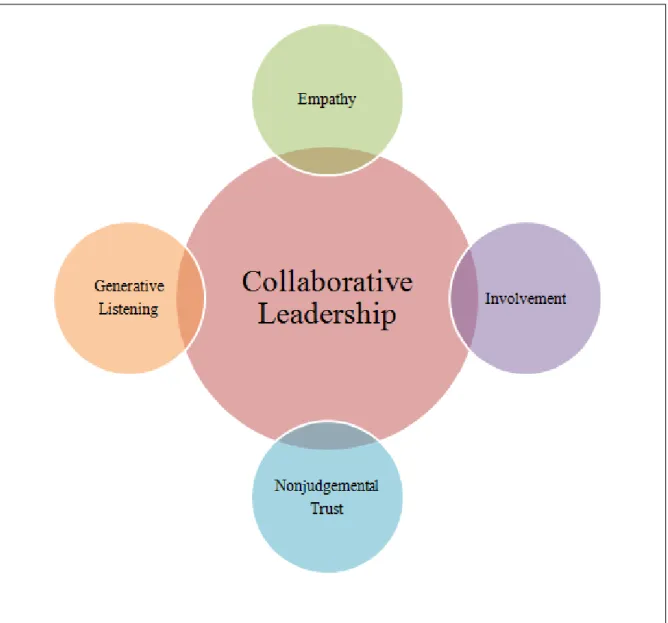
collaboration. These five themes of (a) caring, (b) generative listening, (c) nonjudgmental trust, (d) involvement, and (e) respect were consistent throughout all interviews. This research now provides elementary educators with a stronger understanding of what relationship characteristics are important to a collaborative environment. Educational leaders now have a deeper
understanding of how they can foster collaborative leadership environments within their elementary schools.
The Dissertation Committee of Drexel University Certifies that this is the approved version of the following dissertation:
Key Characteristics of Collaborative Leadership in Elementary Schools: Understanding the Perceptions of Principals and Teachers
Committee: Dr. Kenneth Mawritz Dr. Cosmas Curry Dr. Constance Lyttle
Dedication Page
This dissertation is first dedicated to my husband, Orion J. Vitale. From one of our first conversations, I expressed interest in obtaining my doctoral degree. Through the entire roller-coaster ride of a process, you offered me support, love, and guidance. I could never have accomplished this amazing task with you by my side. I am forever grateful for your support.
Secondly, I would like to dedicate this to my parents. My late father, Al Conforti, was a driving inspiration of working towards my doctoral degree. He taught me from a young age to always strive for the best and accept nothing less. My mother, Helen Conforti, taught me while striving for perfection, always ensure that I am in touch with the emotions and feelings of those around me. Together, this perfect pairing of parents created a collaborative leader without even recognizing it!
Thirdly, I dedicate this to my brother, Frank Confori, his wife Kimberly Conforti, and his two beautiful children, Matthew and Kathyrn. During this entire process, they provided me with a necessary balance to ensure that I was not solely focused on this process, but also living and enjoying family.
Lastly, I would like to dedicate this to all of my current and former colleagues and students. Together, as a team, we have been able to ensure that we always make decisions based on what is best for our students’ academic and emotional success. My students and colleagues have enlightened me over my career of the importance of collaboration and understanding perspectives. My career thus far has been flooded with amazing faculty, staff, administrators, and mostly importantly students.
Acknowledgements
I would like to thank Dr. Ken Mawritz for agreeing to be my supervising professor through this process. However, I am unsure if words can quantify exactly how grateful I am. I had the great fortune of starting and ending my doctoral program at Drexel University. Dr. Mawritz was my rainbow in the clouds throughout the past three years. Dr. Mawritz was and continues to be a phenomenal resource of knowledge, experience, and emotional awareness. His dedication and support were instrumental in my completion of this dissertation. Dr. Mawritz offered respectful and compassionate guidance that allowed for me to process information freely and work through this complex thought-process. When I would become overwhelmed or
question the importance of my topic, I would refer back to how Dr. Mawritz embodies a true collaborative leader. I feel truly honored and blessed that Dr. Mawritz was such an active part of my professional life in the completion of my doctorate.
I would like to thank Mercy Shemansky for making my vision come alive in an amazing graphic. Your artwork has significantly added to others being able to understand my study. I would also like to thank my committee members, Dr. Cosmas Curry and Dr. Constance Lyttle for their guidance and expertise in educational research.
Thank you to the participants of this study. Without their candor and experience, this study would not have been possible. I was overwhelmed by the amount of support that I was offered for this study.
Table of Contents Chapter 1: Introduction to Research
1. Introduction of the Problem 11
2. Statement of the Problem 14
3. Purpose and Significance 15
a. Purpose 15
b. Significance 15
4. Research Questions 15
5. Conceptual Framework 18
a. Researcher Stances and Experiential Biases 18
b. Conceptual Framework 18
6. Definition of Terms 20
7. Assumptions, Limitations, and Delimitations 21
8. Summary 23
Chapter 2: Literature Review
1. Introduction 25
2. Review of Literature 25
a. Collaborative Educational Leadership 26 b. Collaborative Leadership in Practice 30 c. Impacts of Collaborative Leadership 36
3. Summary 43
Chapter 3: Research Methodology
1. Introduction 45
2. Research Design and Rationale 45
a. Introduction to the Design 45
b. Rationale 46
a. Population Description 47
b. Site Description 48
c. Site Access 48
4. Research Methods 49
a. Qualitative Data Collection 49
b. Qualitative Data Analysis Procedures 50
c. Stages of Data Collection 51
5. Ethical Considerations 53
6. Summary 55
Chapter 4: Findings, Results, and Interpretations
1. Introduction 56
2. Findings 57
a. Principal One-on-One Interviews 57
b. Teacher Focus-Group Interview 63
c. Final Comments on Findings 78
3. Results and Interpretations 79
a. Results 79
b. Final Comments on Results 91
c. Interpretations 92
4. Summary 97
Chapter 5: Conclusions and Recommendations
1. Introduction 99
2. Overview o the Study 100
3. Conclusions 102
4. Recommendations 104
a. Education Leaders 105
5. Summary 109
References 111
Appendices
A. Concept Map 123
B. Principal Interview Protocol 124
C. Teacher Focus-Group Interview Protocol 125 List of Figures
1.1: Building Blocks of Collaborative Leadership 12
1.2: The Iceberg Model 14
1.3: Conceptual Framework Circle 20
2.1.: Visual of Literature Streams 25
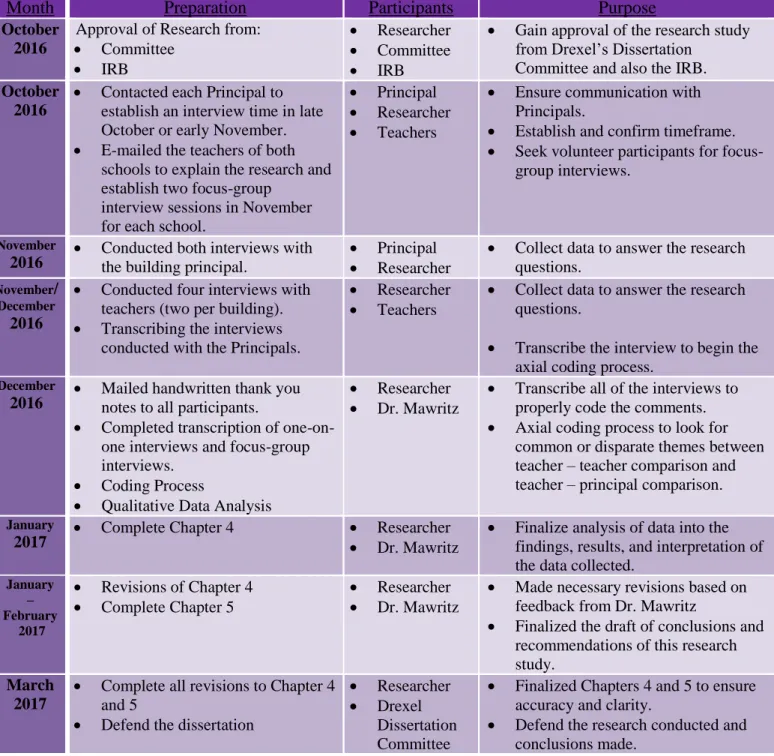
3.1: Timeline of Research Process 52
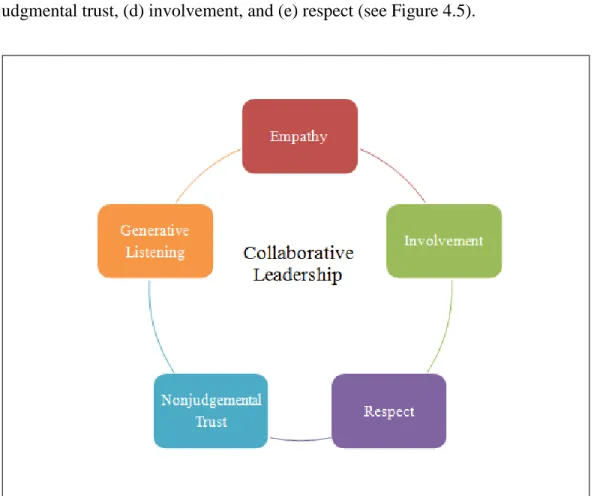
4:1: Principal One-on-One Question Design 58 4.2: Teacher Focus-Group Question Design 65 4.3: Teacher’s Experience in Collaborative Leadership 79 4.4: Principals’ Collaborative Leadership Perspectives 80 4.5: Teachers’ Collaborative Leadership Perspectives 84 4.5: Teacher’s Perspectives of Relationship Characteristics 85 4.7: Building Blocks of Collaborative Leadership 93 4.8: The Chain of Relationships within Collaborative Leadership 94 4.9: Principals’ Perspectives of Relationship Characteristics Including Respect 97
5.1: The Iceberg Model 100
5.2: Universal Collaborative Leadership Characteristics 101 5.3: Principals’ Perspectives of Relationship Characteristics Including Respect 102 5.4: The Chain of Relationships within Collaborative Leadership 104
Chapter 1 Introduction
Education is an ever-changing entity where the requirements and accountability of educators is significant. Educational leaders need to utilize the most effective leadership strategies to keep their school moving in a positive direction, while having an encouraging, comfortable learning atmosphere for all. Leadership is crucial to student achievement.
According to an extensive review of research conducted, “leadership is second only to classroom instruction among school-related factors that influence student outcomes” (Council, 2008, p. 9). With the many responsibilities of evaluation, management, organizational and instructional leadership, coupled with the additional accountability measures placed on school leaders, they must ensure that they are incorporating effective and efficient leadership strategies (Heiftz, Linsky, & Graslow, 2009).
Collaborative leadership is a leadership process that can create a democratic environment where all stakeholders have ownership and accountability over the programs and initiatives within a school or district. The leader actively listens to all viewpoints and thoughts from each division of labor within the organization. According to the Leadership Development National Excellence Collaborative (2015), collaborative leadership is defined as, “a process in which people with different views and perspectives come together, set aside narrow self-interests, and discuss issues openly and supportively in an attempt to find ways of helping each other solve larger problems or achieve broader goals” (p. 1). The definition of collaboration can be broad. Interpretation of it generally contains personal / professional experiences. However, overall, collaboration is working together to obtain an achievable goal that will benefit the organization as a whole. Collaborative leadership can create an environment where the leaders are tapping
into creative thinking, pairing colleagues with complementary skill sets, and allowing stakeholders to work on projects they are passionate about (Crowe, 2003, p. 59).
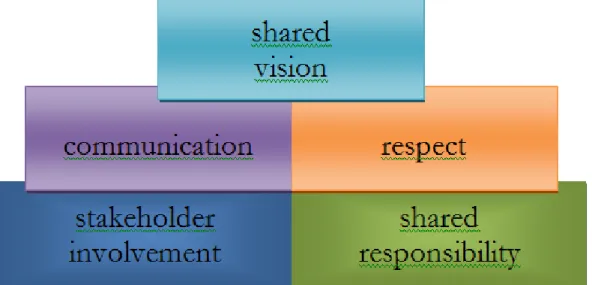
Collaborative leadership needs to have five important components in order for it to be effective in making change (Fullan, 2001, Kotter, 2012, Puccio, Mance, & Murdock, 2011, Scharmer, 2009, Senge, 1990). Figure 1.1 is a visual representation created by the researcher to show how the five components work together to build a collaborative environment.
Figure 1.1: Building Blocks of Collaborative Leadership: These five blocks together build a collaborative leadership environment. They are built on one another and interdependent to create a shared vision for the organization. Source: Vitale, 2016
To begin the collaboration must be widespread across all employment levels. Each member of the organization has an important perspective and understanding of the needs within the organization. Thus, every viewpoint should be included in discussions. Secondly, the organization must have a common vision of where the organization needs to go in the future (Fullan, 2001). The vision should address the goals of that organization. Shared responsibility of the success of the organization is another integral component (Kotter, 2012). Without the team approach to making change, collaborative leadership cannot be effective. Within that team,
another component is a supportive culture built upon honesty and a mutual respect. The final and perhaps most important component is communication (Scharmer, 2009). The members of the organization must be able to clearly communicate their ideas in an open and trusting forum (Poff, 2010, & Gano-Phillips, Barnett, Kelsch, Mitchell, & Jonson, 2011).
When creating a collaborative leadership environment, the leaders must clearly define roles in the process or it can quickly become ineffective (Chreim, 2015). Leaders should be aware of the need to create a structured environment with roles and responsibilities for
collaborative leadership where stakeholders can emerge as leaders in a safe, interactive setting (Chreim, 2015). A study conducted in the Emerging Leaders Program in Boston, Massachusetts, echoed the concept of creating a safe environment for idea sharing. The researchers reported that leaders should facilitate an environment that is safe and productive for the stakeholders to openly share their ideas, perceptions, and knowledge (Leigh, Shapiro, & Penny, 2010).
Senge (2012) describes schools as a system where all parts are interdependent on one another. He speaks of the importance of having a collaborative environment because, “teachers, administrators, and parents all bring some knowledge that the others lack” (Senge, 2012, p. 125). In systems thinking, it is crucial to understand the importance of each part of the system and how those parts impact the system as a whole. In doing so, collaboration is imperative to have insight into the perspectives f those working within the system (Senge, 2012).
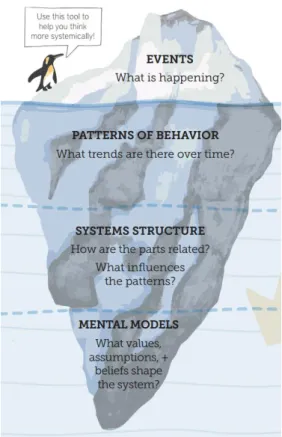
Recognizing what perceptions and beliefs exist is a crucial element in best understanding how the system functions (Senge, 2012). The Iceberg Model, (see Figure 1.2) represents this need for understanding the mental models of a system (Senge, 2012). On the top of the water, the happenings and events of a system are easily observed. However, what is occurring under the water, allows for a better insight why behaviors exist, what influences those behaviors, and
the beliefs those within the organization hold. The Iceberg Model (Senge, 2012) offers a visual representation to highlight the need to investigate collaborative environments to understand how they function and the perceptions those within the system hold. At the surface level, there are the observable acts from individuals of how they collaborate. However, under the surface of the water, lies the perceptions, beliefs, and thoughts pertaining to collaboration. Going below the surface will allow the researcher to better understand the thought processes, feelings, and beliefs systems within the schools regarding how to foster a collaborative environment.
Figure 1.2: The Iceberg Model. (Donella, 2016).
Statement of the Problem
As outlined throughout the introduction, the process of collaborative leadership in education involves a system of leadership characteristics “about creating and cultivating the larger context - - the fertile common ground in which things can happen” (Scharmer, 2009, p. 73). The problem is that there needs to be an understanding of what both principals and teachers
perceive as the key characteristics of social interactions needed to facilitate a collaborative leadership system. Both principals and teachers must have the insight into how they view the social interactions in relationship to building a successful collaboration or “the web of
collectively evolving relations” (Scharmer, 2009, p. 467).
With collaboration as a significant style of leadership, educators must understand what characteristics mold together to cultivate an effective leadership environment (Scharmer, 2009). The problem is that there needs to be an understanding of what both leaders and teachers
perceive as the key characteristics needed for collaborative leadership. Both principals and teachers must have the insight into how the other views the characteristics of leadership for successful collaboration.
Purpose and Significance of the Problem Purpose
The purpose of this study was to investigate the perceptions of social interactions dealing with collaboration in an elementary school setting and the perceptions that principals and
teachers hold about the collaborative leadership process. The research investigated the practical implementation of collaborative leadership. With that information, the research delved into what characteristics both principals and teachers feel are crucial for an effective collaborative
leadership process.
Significance of the Problem
With an understanding of the importance of educating each child, coupled with the high-stakes leadership standards, educational leaders must master effective leadership styles and apply them to their school settings (Senge, 2000). The significance of this study is that it highlights the promise and challenges of collaborative leadership process in practice. This is important because
leaders must meet the expectations of their state-level department of education entities, central office, and community members. Leaders can learn from the perceptions their colleagues hold regarding the triumphs and challenges that exist with implementation of a collaborative
leadership style.
Understanding the thinking and perceptions of those within the school is crucial to ensure a shared, common vision (Kotter, 2012). Scharmer (2009) in Theory U explores the importance
of the four levels of listening. The first level deals with downloading the information shared through one’s own judgments and opinions. The second level encompasses factual listening where the person is adding more information and perhaps breaking previous judgments. The third level concerns empathetic listening, where those involved in the dialogue are able to look at situations through one another’s lens and perspective. The fourth and final level embodies generative listening where the listener leaves the conversation or discussion as a different person from the information shared. Through this research, the goal was to help principals and teachers reach the third and fourth levels of listening, the generative field, to ensure a strong
understanding of their perspectives regarding the necessary traits of collaboration. This research will now assist elementary educators understand one another in regard to collaboration thus providing the best possible learning environment for students.
There has been much research conducted on the components of collaborative leadership and how it impacts schools through the lens of school improvement and achievement. This research study now contributes by changing the focus to how leadership incorporates and sustains relationships that foster a collaborative environment. The research focused on the perceptions teachers and principals hold regarding the social context needed for effective collaboration.
Perceptions of the leadership style were investigated to understand how the teachers view collaboration. This research contributes to a better understanding of how leaders can implement collaboration into their leadership for effective change and forward movement within the public school setting. As Covey (2004) would suggest, highly effective people first seek to understand and then to be understood. This research will now help those in elementary school settings understanding the contextual social interaction characteristics that both teachers and principals feel are necessary to foster a collaborative environment. The researcher took a deeper look at the perceptions that principals and teachers hold regarding the social interactions that are crucial for effective collaboration. Thus, this research enables each stakeholder group to better understand the perceptions of the whole.
Research Questions
While reviewing the literature and organizing the study, the following research questions were considered and answered through interviews:
1. Central Question: How does the principal establish relationships with the teachers to foster a collaborative environment within an elementary school setting in a school district located in Northeastern Pennsylvania?
a. Sub-question 1: What characteristics of social interactions do principals feel are
important for an effective collaborative environment?
b. Sub-question 2: What characteristics of social interactions do teachers feel are
important for an effective collaborative environment?
These questions address the gaps in the current research by offering a deeper understanding of how educational leaders incorporate collaboration into their leadership and the perceived
necessary characteristics of effective collaboration. This research gives better insight for educational leaders on how to employ collaboration most effectively.
The Conceptual Framework Researcher Stances and Experiential Biases
As the researcher, I have a specific bias because of my experience as a building-level administrator. I have been a building-level principal for three years. Prior to that, I was an assistant principal for almost seven. During my tenure as an assistant principal, I worked with several different principals and superintendents who were each on the spectrum of collaboration. I vowed that when I was fortunate enough to lead my own school, I would create an atmosphere of respectful and productive collaboration.
As a Social Constructivist, I agree with Vygotsky’s theory that social interactions and cognitive development are two married concepts that are interdependent (Berkley University, 2016 & Creswell, 2015). Working together, understanding one another, and thus learning from one another have all attributed to my personal and professional success. I believe that
collaboration creates an environment where all feel ownership, thus we are all accountable for the education of our students. Through my research, I worked with school principals and teachers to better understand their social interactions and the impact those interactions have on collaboration. It is my belief, supported by the review of literature, that effective collaboration cannot occur without a positive school culture where teachers feel safe and comfortable to express their ideas.
Conceptual Framework
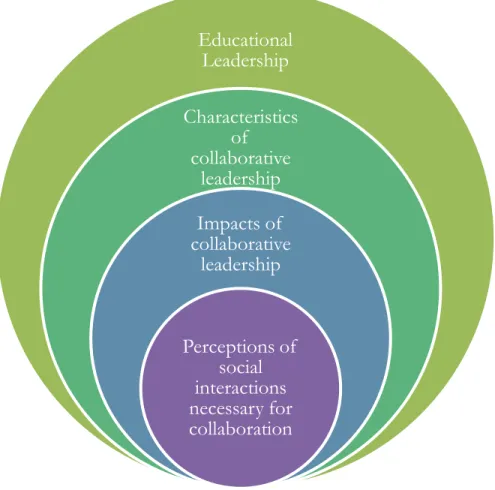
Through this research, collaborative research has been devised into three literature streams: (a) collaborative educational leadership, (b) collaborative leadership in practice, and (c)
the impacts of collaborative leadership in schools (see Figure 1.3). These three streams join together to offer a full picture of what embodies effective collaborative leadership. The researcher begins with the broad concept of educational leadership, digs deeper into the
characteristics of collaborative leadership, and concludes with the impacts the collaboration has on a school setting (see Figure 1.3). The inner circle is this current research to better understand the perceptions held about the necessary social constructs for effective collaboration.
As 21st Century schools work to ensure they provide the most effective learning environments in an ever-emerging global society, the leadership works to set a vision (Kotter, 2012). This vision sets the tone and goals for how the school will move forward in the future. Collaborators (Kelley, 2005) work together, across job responsibilities, to ensure that those within a school are setting the vision, and the devising the plan for making change.
Collaborative leadership must be supported by effective communication (Fullan, 2001 & Scharmer, 2009) with all stakeholders. In a case study conducted on a collaborative theater production, those involved with the production expressed that they experienced more ownership over the show since they were involved in the planning and development (Kramer & Crespy, 2011). This perceptual feeling of value and ownership is supported by other empirical research studies that will be outlined in Chapter 2 (Butler, 2007 & Tesfaw, 2014).
In looking at schools that implement collaborative leadership, one school conducted a six-year longitudinal study on how their shared leadership assisted to improve assessment scores (Hauge & Vedoy, 2014). Research investigating the impact of collaboration has been conducted on a large scale looking at achievement data from almost 200 elementary schools (Hallinger & Heck, 2010) to reviewing Title I data from just nine elementary schools (Abbott & McKnight, 2010). The research all reinforces that these collaborative environments focused on teamwork
and communication to help make their academic gains. Research explored in the following chapter focusing on collaborative leadership highlights that it can have a positive impact on both achievement and school culture.
Figure 1.3: Conceptual Framework Circles
Definition of Terms
The following terms will assist the reader in understanding the terms used in this research study: Collaborative leadership: a process in which people with different views and perspectives come together, set aside narrow self-interests, and discuss issues openly and supportively in an attempt to find ways of helping each other solve larger problems or achieve broader goals. (Leadership Development National Excellence Collaborative, 2015, pg. 1).
Educational
Leadership
Characteristics
of
collaborative
leadership
Impacts of
collaborative
leadership
Perceptions of
social
interactions
necessary for
collaboration
Distributive leadership: a system of practice comprised of a collection of interacting components: leaders, followers, and situation. These interacting components must be understood together because the system is more than the sum of the component parts or practices. (Spillane, 2014, pg. 150).
Perceptions: the manner in which people understand another person or a situation ( Merriam-Webster, 2016).
School community: various individuals, groups, businesses, and institutions that are invested in the welfare and vitality of a public school and its community—i.e., the neighborhoods and municipalities served by the school (Hidden Curriculum, 2014). School culture: the perceptions and beliefs that stakeholders embody due to the written
and unwritten procedures and policies of a school organization (Hidden Curriculum, 2014).
Shared leadership: of governing a school by expanding the number of people involved in making important decisions related to the school’s organization, operation, and
academics (Hidden Curriculum, 2014).
Stakeholders: anyone who is invested in the welfare and success of a school and its students, including administrators, teachers, staff members, students, parents, families, community members, local business leaders, and elected officials such as school board members, city councilors, and state representatives (Hidden Curriculum, 2014).
Assumptions, Limitations, and Delimitations
The basic assumption made in this research is that currently school leaders are following the expectations set forth by the Pennsylvania Department of Education by creating a
2015 school year in the state of Pennsylvania, there is now a standard measure for evaluation of building administrators. There is an expectation of incorporating collaborative leadership within the principal effectiveness evaluation tool. This research is built on the assumption that these building-level administrators are working to meet these expectations by employing collaborative leadership. Both of these principals confirmed this assumption that they have integrated
collaboration into their leadership style.
A limitation of this study could potentially be the sample size. The research focused on one school district within Northeastern Pennsylvania. Perhaps there are schools districts within other areas of the United States that have more collaboration because the explicit expectation from their state-level department of education has been in place longer. Collaborative leadership is built on the inclusion of all stakeholder groups. This research study focused only one of the stakeholder groups. Other stakeholder groups may have different perspectives of collaborative leadership.
There are several delimitations to this study. A delimitation is a choice that the
researcher makes in a research study that could affect how the study is generalized or assessed (Simon, 2011). In this stud y, there are two delimitations. The first delimitation is that the focus of the study was on elementary schools only. This choice was made by the researcher because of the personal experience with the elementary setting. Elementary and secondary schools have different cultures within their schools so this study may not be able to be generalized in all school settings. The second delimitation is the choice in location. Two schools within one district were chosen which could potential limit the study. Although these schools have different building principals, the principals have the same set of expectations set forth by their
superintendent. Despite these delimitations, the researcher believes that this study offers a deeper insight in collaborative environments.
Summary
With the current culture and politics of education, many feel that educators are expected to do more with less funding. Collaboration can assist with this feeling of being overwhelmed with the expectations put upon the educational system. As Maddock (2011) from the
Manchester School of Business explained, “Collaborative leadership can generate the
relationships necessary to resolve tensions between rising expectations, smaller budgets, and more innovative solutions” (p. 40). Collaboration creates an atmosphere where all members of the organization should feel a part of a team working towards a common goal. Collaborative leadership can prevent the silo-effect, where stakeholders are isolated from planning,
implementation, and review of initiatives (Goman, 2014).
The research investigated how elementary school leaders establish a collaborative
leadership environment to continue to grow their schools. Sustainability is a large concern when making change. A school needs to plan for how to keep the school moving forward. When members of the school work together for a common goal, they are speaking the same language. This directly relates to system thinking. All aspects of the organization are represented and regarded as equal, integral parts of the system. Each has a voice because collectively the system functions because of each person. The school is all focused on the same target. As other
problems or obstacles arise, the organization is well prepared because of the collaborative nature. They have already created those bonds and that relationship of working together as a team for the common good. Understanding how to create and sustain those bonds that foster a collaborative environment is the goal of this research study. Prior to investigating the perceptions of the
social context necessary for collaboration, it is imperative to understand the background of collaborative leadership. The following chapter will provide background information on why collaboration is an important part of leadership, how it is employed, and the effects that it has on school environments. This background information will provide a foundation for the need to investigate collaboration further.
Chapter 2 Introduction
The demands and expectations of school leaders continue to grow. The 21st Century educator is tasked with motivating students to learn and meet their greatest potential so that they can enter a competitive global economy. School leaders must work to create an environment focused on student achievement coupled with a positive school culture. Educational leaders must be able to focus their attention on implementing an effective leadership style that will be the most beneficial. As addressed in a review of empirical research regarding educational
leadership, “Leaders who possess a single set of tools will find themselves bouncing around from success to failure without understanding why” (Hallinger, 2011, p. 137). Educational leaders must be adaptive and reflexive to the changing needs of students and the changing expectations from the state-level department of education.
Review of the Literature
This literature review will focus on three literature streams: (a) collaborative educational leadership, (b) collaborative leadership in practice, and (c) impacts of collaborative leadership within schools.
Figure 2.1: A visual depiction of the current literature streams concerning collaborative leadership. The researcher created this to allow for a representation of the research themes.
Collaborative Educational Leadership
Background and theory. Collaborative leadership is not a new topic to the 21st Century. This model of leadership has been researched and discussed for decades. In a study conducted by Bolden (2011), he found that in the 1980’s, collaborative leadership became a more serious topic of discussion. Every decade following that, research around collaborative leadership increased at rapid rates. Collaborative leadership became a major component in various other leadership theories.
In Ten Faces of Innovation, Kelley (2005) theorizes ten various personality
characteristics that effective leaders of change hold. One of those characteristics is collaboration. A collaborator is able to identify the need to explore the expertise of those within the organization to make change in an effective manner. A collaborator motivates those within the organization to move away from working in segregated teams. This leader brings together those teams, or representatives, to share ideas and move the organization forward. A collaborator is able to instill confidence within the stakeholders by showing that their opinions and voices are important for improvement. A collaborator also sees the need to involve other organizations in this collaboration with that understanding that organizations are
inter-dependent of one another. Thus, the planning and implementation of change should involve all stakeholders, both inside and outside of the organization.
Once the collaborator has brought together the stakeholders within the organization, this leader needs to identify and clearly communicate a shared vision (Senge, 1990). Kotter (2012) discusses the importance setting a vision so that the organization can move forward. In order to effective set a vision, the leaders of a district must rely on lower-level leaders (i.e. teacher leaders, building administrations, department chairs) to create the sense of urgency and reduce
the feeling of complacency. Those lower-level leaders “need to create a change coalition, develop a guiding vision, sell that vision to others” (Kotter, 2012, p. 47). Kotter is suggesting that leadership must create a team that focuses on the necessary change within an organization, sets the vision, and then works to promote that vision so it is accomplished. Collaborative leadership allows for those within the organization to take on leadership roles in order to make change. They are not formal or supervisory positions; however, they are stakeholder leadership roles that are crucial to move an organization forward.
Throughout the process of collaboration, the leader and all stakeholders must demonstrate respectful communication. Theory U, a leadership book by Scharmer (2009) explores the need
for collaboration and openness. Having open lines of communication allows stakeholders to listen to all perspectives. Strong collaborators are active listeners. Scharmer (2009) explains that there are four levels of listening. The first level, downloading, is when one listens and just re-confirms what they already know. There are preconceived notions that cause the listener to form judgments. The second level of listening is factual where the listener learns something from the discussion. These first two levels are the basic levels of listening that many engage in. The next two levels are crucial for collaboration. The third level is about empathetic listening where the listener forgets his / her own perception and understands the person through his / her eyes. This is more about understanding where the person is coming from and how that person is feeling. The last level is a more complex level of listening called generative. This is where the listener walks away from the conversation feeling different. The communication has changed the person. The person has let go of their notions and added a deeper, inner wisdom. For people to truly and sincerely dialogue with the goal of understanding one another, they must function on the higher two levels of Scharmer’s levels of listening. They must have an open heart, open will,
and open mind in order to gain a deeper understanding of the other person. This is the keystone of collaborative leadership. All members of the organization must have the ability to
communicate openly, which leads to trust.
In conjunction with Scharmer’s Theory U exploring the need of openness within
communication, Puccio, Mance, and Murdock (2011) take this one step further in their Creative
Leadership. This leadership theory focuses on the planning and implementation of change
within an organization. One crucial aspect of planning is the ability to explore ideas. The authors suggest that brainstorming sessions should have a specific goal, but should be all inclusive of ideas. They suggest that leaders need to encourage all stakeholders to “play with ideas, explore possibilities, consider alternatives, and to remember that it’s just an idea” (p. 173). Stakeholders are able to share their thoughts and suggestions in a non-threatening environment that welcomes all ideas. This level of collaboration allows for all members to have a voice in the planning stages of change.
There is much research to support the need for a collaborative environment. These leadership theorists explore the importance of collaboration and the rationale behind this leadership style. However, they do not discuss the practical application of collaborative leadership within a school setting. They discussed the importance of relationship building needed for collaborative leadership without delving into how those relationships are established. This research study will look further into effective ways that collaborative leadership is implemented in a school setting.
Literature on collaborative educational leaders. Public education leaders have to focus on many tasks during each school day. Leaders who collaborate “recognize that in today’s schools, one person cannot adequately address the needs of all members of the school
community” (Angelle, 2007, p. 56). Leaders are challenged with constant societal changes in the 21st Century that cause them to alter their organization to best meet the needs of the students they educate. Research suggests that in order for any leadership style to be effective, the leader must create a sense of urgency (Kotter, 2012 & Gano-Phillips, Barnett, Kelsch, Mitchell, & Jonson, 2011). Stakeholders must have an understanding that the problems they are faced with must be addressed. Even high-achieving schools have the need for growth and. Leaders cannot allow for complacency.
In order to create this sense of urgency, the team must define their shared vision (Kotter, 2012). Once that is created, then the collaborative team must “engage others in the shared vision” (Angelle, 2007, p. 55). All stakeholders must clearly understand the shared vision and the need to create change to move the educational institution forward. Fullan (2001) suggests that this should be tackled through the instilling a moral purpose within the stakeholders. He defines that leadership is comprised of five traits:
Moral purpose
Understanding change Relationship building
Knowledge creation and sharing Coherence making
A collaborative leadership style incorporates all five of these traits naturally in the involvement and interaction of all stakeholders.
Although there is concrete theory in the need for effective educational leadership and a wealth of research surrounding this topic (Hallinger, 2013), some still a question how
this correlation is difficult to prove because of the many various organizational factors within a school setting (Nir & Hameiri, 2013 & Gkolia, Switzer, & Brundrett, 2006).
Collaborative Leadership in Practice
Collaborative leadership characteristics. Collaborative leadership has various components. To begin, it is about open and honest communication. Prior to the stage of effective communication, there needs to be a relationship between the colleagues. Colleagues need to understand one another, even on a personal level. Starting this collaborative
environment can be simply with conversations between colleagues that involves mutual dialogue. All parties should have a voice during these informal discussions. As Margaret Wheatley (2010) once commented, “Human conversation is the most ancient and easiest way to cultivate change – personal change, community and organizational change, planetary change” (McAdamis, 2010, pg. 24).
A crucial aspect of open communication is an environment built upon trust and respect. All stakeholders must know and respect the other person’s perspectives. Mutually respectful relationships must be created for this level of interaction (Jäppinen, 2014). These relationships then begin to build trust between the professional colleagues. Trust is a critical element of any leadership style, specifically collaborative leadership (Fullan, 2001 & Padilla, 2009). In an educational setting, this can be between the Superintendent and the administrator team and between the principal and the faculty / staff. Stakeholders need to develop these bonds so that all players respect one another and their differing viewpoints (West, 2011). In order to have an effective leadership team, they start by “building trust among team members and fostering a shared sense of program stewardship” (Gano-Phillips, Barnett, Kelsch, Mitchell, & Jonson, 2011, p. 67). The leader within the school has the responsibility to create and foster this
environment. The characteristics of collaborative leadership are well defined of what collaborative leadership should embody within an organization. There is a gap within the research reviewing the application of these theories. This research study will help leaders better understand how to build relationships with stakeholder groups in order to create an effective collaborative leadership environment.
In a study conducted by Kramer and Crespy (2011) at the University of Missouri, they reviewed the communication of a collaborative leadership style. This study was conducted through the theatrical performance. The data gathered was through ethnographic participant interviews. Although this is not a formalized education setting, much learning occurs in creating a theatrical performance. The director intentionally and explicitly communicated the need for collaboration and explained what his vision of that environment would look like. The members of the production then were interviewed two weeks following their final curtain call. The participants expressed the feeling of being invested in the production as well as the freedom to develop themselves. They commented that they were empowered over the ownership that they felt they had in this collaborative environment (Kramer & Crespy, 2011). This research explores how the stakeholders felt during this collaboration, but they do not discuss the culture of the environment.
Leading by convening. Leading by Convening (Cashman, et. all, 2014) is a process where educational leaders look to have authentic engagement. This authentic engagement has three prongs of (a) ensuring relevant participation from all stakeholder groups, (b) coalescing around issues, and (c) collaborating to solve problems (Cashman, et. all, 2014). The focus on this process is to have a partnership in the leadership roles. The Leading by Convening process allows stakeholders to share their perspectives of what the issues are within the school and then
they work collectively to devise solutions for those issues. This collaborative leadership process had three focus areas. The first focus is is to ensure that the voices of various stakeholder groups (teachers, support personnel, administrators, parents, students, and community members) are valued. Secondly, there needs to be awareness of the human and logistical aspects of change. Thirdly, there needs to be a sustainable process where teachers become the experts in literacy and then in turn lead or mentor others within the school community.
There are many examples of how Leading by Convening has been effective to involve various stakeholder groups at looking collectively at issues. The Madison-Grant United School Corporation in Indiana devised a professional development goal to focus on literacy K-12 (Cashman, et. all, 2014). District leaders, faculty, and staff reviewed school data to better
understand what additional profession development was needed. This small, rural school district decided that they needed more professional development in best practices and educational research in the appropriate scaffolding of skill instruction. Together, as a school community, they created a scope and sequence for student learning. This is just one example of how school stakeholders can collaborate best using the Leading by Convening process.
Professional learning communities. A common manner in which schools incorporate collaborative leadership is through professional learning communities (PLCs). PLCs are
committees within a school where teachers are able to choose their committee and then even lead that committee. DuFour (2004) describes PLCs as having three main big ideas: (a) ensuring student learning, (b) creating a culture of collaboration, and (c) focusing on results. These three big ideas demonstrate that the collective team of teachers, staff, and administrators in a school are working towards a common goal of student learning by examining current process and achievement.
PLCs incorporate five key attributes: (a) shared vision, (b) supportive and collective leadership, (c) shared learning and the opportunity for application of that learning, (d) collaborative practice of peer observations, coaching, or mentoring, and (e) conditions that support the relationships and the structure of collaboration (Anfara, 2012).
PLCs are a way for “teachers to move beyond their classrooms and represent their work to colleagues, discuss, engage, and collectively grow” (DeMatthews, 2014a, p. 1). Teachers are able to collaborate with their colleagues in sharing best practices and spearheading initiatives throughout the school. There are seven recommendations that DeMatthews (2014a) makes for school administrators when creating PLCs. Administrators should do the following:
Have a high level of interaction and visibility
Identify the problems and then be responsible in a equitable manner Use school resources to support PLCs
Reflect on any previous school change
Ensure that the locations of PLCs are conducive to sharing of ideas Create a plan of what the committee chair should do with questions for
administration if they are not present
Understand that effective committees do not always equate to professional development
The planning of PLCs is crucial to ensure that they are effective avenues for collaboration, learning, and change.
PLCs can offer many benefits to a school setting, including the allowance for “educators to join forces to promote ongoing growth and improvement for themselves and their students” (Barton & Stepanek, 2012, p. 1). According to DeMatthews (2014c), PLCs offer four main
benefits to a school environment. Firstly, decisions are at a higher quality because all aspects of the situation are considered. The aspect of strong decision-making noted in DeMatthews (2014c) is echoed in other research. Research conducted through higher-education professional
development sessions with K -12 educators; it was shown that PLCs, members develop a “sense of autonomy as a result of their decision-making capabilities within the groups” (Linder, Post, & Calabrese, 2012, p. 14).
Secondly, there is an increase of support for initiatives since stakeholders are the ones implementing the change (DeMatthews, 2014c). Ning, Lee, and Lee (2015) support
DeMatthews (2014c) through their research showing that team collectivism is strengthened through PLCs. They allow for stronger collaboration and enhance the aspect of working towards a collective solution to the programs the organization faces (Ning, Lee, & Lee, 2015).
Thirdly, stakeholders report being more satisfied with their leadership since they are an active participant in the planning process. PLCs have the possibility of creating a culture of shared and supportive leadership (Thornton & Cherrington, 2014). Together, the collective unit works together in the decision-making process.
Lastly, stakeholders are able to take on leadership roles, tapping into the varied expertise of faculty and staff. In an article exploring school counselor PLCs, Antoinette-Young, Millard, and Miller-Kneale (2013) express that in this committee atmosphere, colleagues are able to “self-reflect, understand the concerns and interests of stakeholders, problem-solve issues, and diminish existing obstacles” (p. 265). In a school environment with PLCs, colleagues collectively work to improve services for students, with the ability to look from one another’s perspective.
In a research study conducted by DeMatthews (2014b), he explored how collaborative leadership occurs within PLCs. He conducted 35 – 60 minute interviews of various members of
school communities in six western Texas Elementary Schools. His research found that the characteristics incorporated in PLCs are collaboration, shared values, common responsibility for education of all students, focus on the school as a whole, and professional reflection. Through PLCs, the faculty is able to share their viewpoints and knowledge to improve instruction, programming, or the environment for students. This collective approach shifts the focus from the admiration of problems to solving them. His research found that PLCs could be cumbersome in a larger school community because of size as well as diversity in values and vision for the school.
Perceptions of collaboration. Understanding the perceptions of the stakeholders is an integral part of creating a positive climate within any organization. Collaboration only works if the stakeholders are positive, focused, and invested in their school. It is the responsibility of the school leader to “create a positive organizational climate through effective leadership” (Black, 2010, p. 437). Effective leaders recognize the perceptions of their stakeholders and then use those perceptions to create a collaborative environment focused on change.
Butler (2007) conducted research for his dissertation focusing on the perceptions of the employees associated with collaborative leadership in a higher education setting.
Butler’s dissertation was to specifically review how employees perceive the interactions of a collaborative leadership style. He used a mixed method of qualitative through a survey and quantitative through interview questions research. He was able to work with 35 participants at various levels within the higher education institutions. First, he had to identify if the
organizations were in fact collaborative in nature. Once he was able to identify an institution as a collaborative, he found that the major factor in a positive perception of collaboration was open communication. Lack of communication led to confusion and tension within the institution. On
the contrary, open communication that shared information both formally and informally was welcomed. Overall, this dissertation found that employees have a positive perception of
effective collaborative leadership, with communication being the key factor to this perception. In another related research study conducted in Ethiopia, the researcher Tesfaw (2014) surveyed educators in relation to transformational leadership. Through the twenty question study, using a five-point Likert-style survey, the researcher found that leadership could influence job satisfaction. There are other extraneous factors, such as salary, that can influence job
satisfaction. However, the research did show that teachers responded to an environment where they felt valued. Tesfaw makes several recommendations based upon his study. The first
recommendation was to create an environment developed around “efficient team work” (Tesfaw, 2014, p. 914). Although transformational leadership differs from collaborative leadership, this study does still highlight that teachers are positively responsive to a collaborative environment.
A collaborative leadership style allows for the administration to have a better relationship with their collective bargaining groups. Teachers feel that this democratic environment creates a more satisfying professional atmosphere (Padilla, 2009). Teachers have a voice in the decision-making process. The perceptions of collaborative leadership have been explored through research, but never correlated between this chosen leadership style and the school culture. Impact of Collaborative Leadership within Schools
Teacher efficacy. Education has a high rate of professionals leaving their career choice after the first few years. In research conducted by Dauksas and White (2010), the researchers reported that on a daily basis nearly 1,000 teachers choose to leave their career of teaching. This has a staggering annual cost of about $7 billion in professional development, hiring, replacement, and even recruitment costs. They focused their study on what factors would have influenced
teachers to stay. The top factor was collaboration. Teachers reported that lack of teamwork and opportunity to collaborate created an unsupportive environment. Another factor was the lack of input teachers had on student-learning outcomes. Teachers need to collaborate in the planning processes of student achievement. “When teachers realize their responsibility to ask questions and work as problem solvers, they gain confidence and extend their own learning” (p. 29).
In a similar study conducted by Johnson (2006), it showed that 75% of first-year teachers remain in the teaching profession, however much less in urban areas. Among many of the contributing factors, Johnson found that unsupportive working environments and the lack of collaboration were two main areas causing teachers to leave the profession. “There is some evidence that teachers today place more value on the opportunity to work together with their colleagues” (p. 7). Both of these research studies highlight that teachers are expressing the need for a supportive and collaborative working environment that values them as professionals. Creating an environment where schools can retain teachers at a higher rate will save in
professional development and replacement costs. These two studies were further supported in the responses from a widespread survey interviewing over 8,500 participants (Sveiby & Simons 2002). The responses to the survey indicate that when looking for employment, collaborative environments are enticing for recruitment of employees in both the private and public industries.
Margolin (2012) conducted a four-year qualitative ethnographic study where she created a collaborative environment between four different subgroups: administrators, teachers, pre-service teachers, and college faculty in education. Margolin led this experimental program and then used the transcripts as her data point. This study found that when school administrators demonstrate a “respect for teachers, encouraging transparency, and trust in the team” (p. 82) Teachers then have a “sense of belonging and security, enabling them to take risks and fail” (p.
82). The outcome of this study highlights that a collaborative environment allows for faculty and administrators to learn from one another and grow professionally from these experiences.
Teachers who feel supported and effective are more likely to sustain a career in
education. A collaborative environment creates a culture where teachers feel connected to one another and the leadership team. They do not feel isolated, but a part of the team. They have a team to help them solve problems and address student need. Collaboration fosters a positive culture within a school setting (Russell, 2008).
Allowing for faculty and staff to be an active part of the decision-making process supports an environment wherein they become leaders. As the stakeholders become leaders, they evolve into better problem solvers (Fullan, 2001). A collaborative leader embraces an environment that “encourages teamwork, joint problem solving and planning” (Russell, 2008, p. 79). Collaboration empowers those stakeholders to take ownership of issues and solve them. Teachers feel they are and valued and respected. With this, they are willing to share new ideas and take risks in a supported and trusted environment (Ohlson, 2009).
Impact on stakeholder groups. In an article discussing distributed leadership (a synonym for collaborative leadership), Fusarelli, Kowalski and Petersen (2011) explore how schools are including this leadership practice. In distributed leadership, a leader creates an environment where all members of the organization are engaged in decision-making. This environment creates a “shared initiative and responsibility” (pg. 47). Distributive leadership takes the collaborative environment to a higher level. The participants are not only sharing their opinions and thoughts, they are the change agents as well. This creates an environment of ownership amongst the members of the organization. Schools have set policies that must be followed which do not lend themselves well to a distributive leadership environment. However,
there is evidence of school districts changing to a more distributive style. School districts can do so through committee work and allowing teachers to lead various initiatives. They can also create an environment where they have the community involved in their board committees so that all voices and perspectives are shared. Distributive leadership creates a culture where all feel ownership over the decisions and initiatives.
Leadership should be modeled from the top-down. If the goal is collaboration, the Superintendent of Schools should implement this model. Research reviewing three case studies demonstrates how three different superintendents utilized community collaboration within their school (Brazer, Rich, & Ross, 2010). The three had differing approaches to the use of
collaboration. One superintendent chose to create a committee where he was more actively listening than engaging in the conversation. Another superintendent chose to create an
environment where removed his authority and delegated the decision-making process to those within the committee. The third superintendent employed an environment was a bit more structured. He educated the committee on the topic at hand and then allowed for respectful debate amongst the committee. Researchers noted that in each case, the superintendent worked effectively at creating a collaborative environment focused on school improvement for the students. There was a mutual understanding for the “need to build a broad-based commitment” (p. 215) amongst the stakeholders within the community.
As highlighted in the previous study, collaboration should not just occur between those employed with school districts. Parents and community should be involved because they are directly impacted by the output of school systems. The University of Hartford, lead the Parent Information Action Research (PIAR) Project where ten parents from five surrounding
Pedro, Kenney, & Gannotti, 2014). These parents, along with researchers from the university, held meetings within their community where they listened to the concerns and ideas from community members regarding early education of students. Following this, they reviewed the data they had collected to look for common patterns. This process allowed parents to become leaders within their community and for community members to share their perceptions and concerns. The surrounding schools were then able to make responsive choices to the patterns of concerns discovered through this research. The premise of this research was based on the “understanding that sustained change occurs from the individual and his / her interactions with the layers of community and institution” (p. 10). To extend this further, Med (2010) suggests that local universities should be involved in the collaborative process because they are training the future educators. The community at large should be involved in collaboration for the
betterment of the school system. Once the community is involved in collaborative leadership, it is uncertain through existing research if there is a correlation between this leadership style and the school climate.
School improvement. There are many research studies surrounding the impact that collaboration can have on school achievement. Researchers worked with a school that transformed from low achieving to high achieving over the course of a six-year process. The administration of this school set out to create shared leadership (the same concept as
collaborative leadership). The researchers tracked how they were able to do this and what effect it had on the school. Through their research, they found the shared leadership communicates a shared vision for student achievement. The administrators set clear
expectations for the shared leadership roles within the school. Teachers embraced those roles and began working toward the shared vision. The outcome was the conversion of a poor
academic school to be a high performing school. Shared leadership was the vehicle in which change was able to occur (Hauge & Vedoy, 2014).
A different set of researchers conducted a four-year longitudinal study, using the reading achievement data of 192 elementary schools (Hallinger & Heck, 2010). These researchers focused on the impact that collaborative leadership has on short-term and long-term school improvement. Through their data, they were able to conclude that collaborative leadership can be “indirectly and significantly associated with initial student learning levels” (p. 667). They were able to correlate both direct and indirect impacts on long-term school improvement.
According to this study, collaboration is an important aspect of improving student achievement. In a more specific study, Abbott and McKnight (2010) conducted five-year longitudinal research of nine Title I elementary schools. Title I schools have at least 40% of the population as economically disadvantaged and receive federal funding to provide supplemental supports for students. These nine elementary schools were chosen because they have higher
achievement rates than other Title I schools with similar demographics. Through this study, they found that collaborative leadership has two main positive impacts on school achievement. First, there is a higher degree of the identification of students in need of extra supports. Those supports are more targets because the faculty is discussing effective instructional strategies for particular students. Secondly, grade level teachers are having more dialogue. As students transition from one grade to the next, information is being freely shared. Overall, this study has one major theme: collaborative leadership improves instruction. Communication about
students thus has a positive impact on students receiving the services or instruction that best meets their needs.
research study reviewing the two variables of collaboration and principal leadership (Duyer, Gumus, & Bellibas, 2012). Their findings discuss that the United States has implemented standards of teaching that incorporate collaboration because “teacher collaboration is viewed as a powerful strategy to create learning communities and improve schools” (p. 712).
A different take on the impact of collaboration was a research study focused on the culture of schools (Ohlson, 2009). This research reviewed a collaborative environment and its impact on out-of-school suspensions. When students are suspended from school, they are missing direct instruction which has a negative impact on their achievement. This research found that in a collaboration environment, the faculty and staff focused more on students because of increased communication. The faculty was more willing to intervene with student discipline before it rose to the level of an office referral.
Special education. Collaborative leadership lends itself naturally to special education. A student with a disability has an individualized education plan (IEP) that clearly states the goals and accommodations that the student needs to access the curriculum in the most effective manner. The process of writing and devising the IEP, which is reviewed at a minimum of once a year, should be collaborative in nature. The entire team of educators, parents, student,
paraprofessionals, and administrator should be working together to ensure that the IEP meets the student’s needs and appropriately addresses all concerns. In a qualitative research study by DeMatthews (2015), he explores how one school clearly set a goal to be more collaborative in the leadership of students with disabilities. This school wanted a more inclusive environment where students with disabilities were included with their non-disabled peers as often as possible. The leader in the building worked to create a collaborative leadership environment for inclusion. In fostering this collaboration for inclusion, the school had high-achieving
students. In neighboring schools, there was an achievement gap between regular education and special education students of about 12%. In this collaborative elementary school, only a three percent gap exists (DeMatthews, 2015). Collaborative leadership fosters a supportive culture of learning for all stakeholders, specifically students, “collaboration and leadership of teachers have become indispensible educational links for creating effective learning environments for students” (Foster, 2006, p. 75).
Summary
Collaborative leadership is one leadership style that can have a strong impact on a school setting. As indicated by Hallinger (2011), who reviewed over forty years worth of empirical research on educational leadership, the sharing of leadership is a “powerful tool for expanding the school’s capacity to achieve its vision” (p. 13). Effective school leadership is an essential component to student achievement. In recent years, collaborative leadership has become a
popular trend either for a stand-alone leadership style or embedded into other leadership theories. Collaborative leadership has gained traction because it allows all stakeholders to communicate openly while being active participants in the decision-making process in a democratic
environment. Collaborative leaders rely on “the intelligent and resourcefulness of their staff” (Goman, 2014, p. 35). There are various levels of implementation that school leaders currently employ. Through Professional Learning Communities, there is a set structure the collaborative setting, allowing all to stakeholders to share their expertise and knowledge.
With the heightened expectations of educators in the ever-changing 21st Century world, school leaders must incorporate the most effective leadership practices. Through the literature discussed, school achievement and climate can be positively impacted through the
Policy Analysis (2004) expands, developing a collaborative process is one of the four manners in which a school can be more effective (Leithwood, 2003, p. 5). Shared goals and open
communication foster strong public school environments for students, faculty, and administration.
The research supports that collaborative leadership can be an effective leadership style to create change in various organizations. However, there is a gap in the research that does not specifically identify the practical application of collaborative leadership in a school setting. To further that gap, there is no research to show any correlation between school climate and
collaborative leadership. This research study investigated both of those areas to fulfill those gaps within the collaborative leadership research.
Chapter 3 Introduction
As discussed in previous chapters, collaborative leadership is one process of leadership that allows for stakeholders to be an active part in the decision-making process. This
phenomenological research examined the perceptions that both principal and teachers hold about how social interactions relate to collaboration. Theorists suggest that collaboration is an
effective leadership tool (Maddock, 2011, Padilla, 2009, Tesfaw, 2014), as outlined in Chapter Two. This research looked further into the phenomenon of collaboration and the perceptions of relationship building in two elementary schools located in one district in Northeastern
Pennsylvania. The following questions guided the research:
1. Central Question: How does the principal establish relationships with the teachers to foster a collaborative environment within an elementary school setting in a school district located in Northeastern Pennsylvania?
a. Sub-question 1: What characteristics of social interactions do principals feel are
important for an effective collaborative environment?
b. Sub-question 2: What characteristics of social interactions do teachers feel are
important for an effective collaborative environment? Research Design and Rationale Introduction to the Design
The researcher employed two sets of qualitative data collection with one-on-one interviews and focus-group interviews. The phenomenological qualitative study allowed the researcher to use the words of participants to understand different perspectives as well as gain insights into the application of collaborative leadership (Creswell, 2015). Using two elementary