Journal of Chemical and Pharmaceutical Research, 2017, 9(11):61-66
Research Article
CODEN(USA) : JCPRC5
ISSN : 0975-7384
Estimation of Ribociclib in Human Plasma Samples by LC-ESI-MS/MS
Vamseekrishna Gorijavolu
1*, Ajay Kumar Gupta
1, YA Chowdary
2and B Raviteja
31
Institute of Pharmacy, CSJM University, Kanpur, Lucknow, India 2
NRI College of Pharmacy, Vijayawada, Andhra Pradesh, India 3MAM College of Pharmacy, Narasaraopet, Andhra Pradesh, India
_____________________________________________________________________________
ABSTRACT
A validated Ribociclib bioanalytical method was developed by HPLC-ESI-MS/MS using stationary phase Zorbax SB-C18, 4.6 × 75 mm, 3.5 μm, 80 Å column and mobile phase was used 5mM ammonium formate: acetonitirle (10:90 v/v). The Ribociclib and D6 were identified using ESI mode at m/z 435.5 /112.1 and Ribociclib-D6 (IS) at 441.7/112.1. The correlation coefficient is ≥ 0.998 with linearity range 50.00-10000.00 pg/mL.
Keywords: HPLC-ESI-MS/MS; Ribociclib; Human plasma
_____________________________________________________________________________
INTRODUCTION
Ribociclib is cyclin-dependent kinase (CDK) 4 and 6 inhibitor. The molecular formula is C23H30N8O·C4H6O4 and with molecular weight 552.64 g/mol. The IUPAC name is Butanedioic acid—7-cyclopentyl-N,N-dimethyl-2-{(5-(piperazin-1-yl) pyridin-2-yl)amino}-7H-pyrrolo(2,3-d)pyrimidine-6-carboxamide [1-18]. Based on the literature survey as per best of our knowledge very few methods were reported on pharmacokinetics of Ribociclib [1-5] and none of the method was reported on estimation of Ribociclib in biological samples by HPLC-MS/MS. The main objective of this work is to develop and validate Ribociclib in biological samples (plasma) by HPLC-ESI-MS/MS using deuterated internal standard.
MATERIALS AND METHODS
Chemicals and Reagents
[image:1.612.123.493.590.681.2]Reference standard of Ribociclib (RC) (purity, 99.5%) and Ribociclib-D6 is gift sample of Symed labs (Figure 1). All solvents were HPLC grade (Purchased from JT baker) like extraction solvent (Tertiary butyl methyl ether-TBME) and methanol and acetonitirle. Buffer salts were used AR-grade (purchased from Merck, Mumbai) like KH2PO4 andNH4HCO2.
Instrumentation
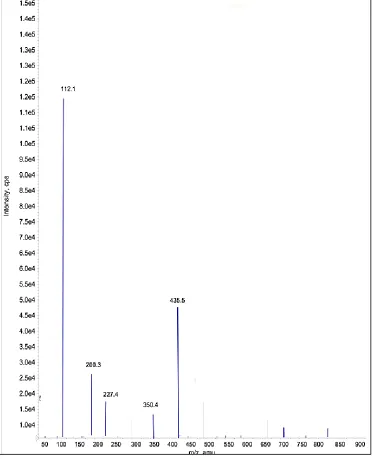
[image:2.612.121.493.105.564.2]The ABI-SCIEX, Toronto, Canada, HPLC-MS/MS and Analyst 1.4.1 software was used to detect and estimate mass ions m/z 435.5/112.1 and m/z 441.7/112.10 Ribociclib and Ribociclib-D6 in biological matrix samples (Figures 2 and 3).
Figure 3: Mass spectrum of RibociclibD6 (RCD6) Q1 and Q3 ions
Chromatographic Conditions
For chromatographic resolution 5 mM ammonium formate: acetonitirle (10:90 v/v) was used as mobile phase and analytical column Zorbax SB-C18, 4.6 × 75 mm, 3.5 m 80 Å. The total analysis time was 13 min and flow rate was set to 0.6 mL/min. The temperature was set to 40°C for the column oven. The retention times for Ribociclib and Ribociclib-D6 was found to be 9.2 and 8.2.
Preparation of Calibration Curve Standards and Quality Control Samples
Calibration curve (50.0, 100.0, 500.0, 1000.0, 2000.0, 4000.0, 6000.0, 8000.0 and 10000.0 pg/mL) and quality control standards (50.0, 150.0, 3000.0 and 8000.0 pg/mL-LLOQ, LQC, MQC and HQC) were prepared in biological matrix.
Sample Preparation
centrifuged and supernatant was evaporated at 40°C. Finally, dried residues were dissolved in mobile phase and injected to HPLC-MS/MS.
Bioanalytical Method Validation
The method was validated according to US food and drug administration bioanalytical method validation guidelines includes system suitability, selectivity and specificity, LOQ (limit of quantification or sensitivity), injector carryover, linearity, precision and accuracy (P&A; Intraday and Inter day), recovery, matrix effect, dilution integrity, re-injection reproducibility, ruggedness (analyst and column), sample stability studies include auto sampler, freeze-thaw, bench top, long term in plasma and short term stock solution stabilities were carried out during method validation [19] .
Selectivity and Specificity
Six different lots of blank biological matrices (plasma) were extracted and analysed by HPLC-MS/MS to qualify the level of matrix interference for each lot of sample.
Precision and Accuracy
Six replicates of quality control samples like LQC (low quality control), MQC (medium quality control) and HQC (high quality control) were in biological matrix (plasma) and quantified the level precision.
Matrix Effect
Three equal concentrations of MQC samples were prepared in different lots of biological matrices (plasma) to measure matrix interferences.
Recovery
The recovery was performed by using drug spiked quality control plasma samples like LQC and HQC and the percent recovery was calculated.
Stability Studies
Spiked quality control plasma samples (LQC and HQC) were prepared in six replicates and different stability parameters were evaluated, like, bench top stability (48 h) and autosampler stability (20°C for 55.5 h), reinjection reproducibility (20°C for 27 h) The stability of spiked human plasma samples stored at room temperature (bench top stability) and freeze-thaw stability (at -30°C) and long term stability (71 days) was evaluated for 48 h.
RESULTS AND DISCUSSION
Table 1: Calibration curve details of Ribociclib
Spiked plasma concentration (pg/mL) Concentration measured(mean) (pg/mL) (n = 5) Precision RSD. (n = 5) Accuracy%
50 51.0 ± 1.3 2.5 102
100 96.6 ± 4.7 4.9 96.6
500 498.4 ± 24.7 5 99.68
1000 1000.0 ± 17.1 1.7 100
2000 2013.0 ± 74.6 3.7 100.65
4000 4008.4 ± 206.6 5.2 100.21
6000 5956.5 ± 190.7 3.2 99.28
8000 7952.2 ± 165.6 2.1 99.4
[image:5.612.69.547.81.657.2]10000 10317.1 ± 487.6 4.7 103.17
Table 2: Precision and accuracy (analysis with spiked plasma samples at three different concentrations)
Spiked plasma concentration (pg/mL)
Within-run (n=6) Between-run (n=6) Concentration measured
(pg/mL) (mean ± S.D.)
Precisio n RSD
Accura cy%
Concentration measured (pg/mL) (mean ± S.D.)
Precisio n RSD
Accura cy%
50 51.4 ± 2.3 4.5 102.7 55.5 ± 4.1 7.4 110.6
150 154.9 ± 3.4 2.2 105.5 157.9 ± 5.7 3.6 105.2
3000 3103.8 ± 102.0 3.3 103.2 3133.0 ± 108.2 3.5 104.3 8000 7297.1 ± 89.9 1.2 91.7 7278.7 ± 275.5 3.8 103.9
Table 3: Stability of Ribociclib in human plasma samples
Stability experiments Storage condition
Spiked plasma concentration (pg/ml)
Concentration measured (n=6) Mean ± SD
RSD (n=6) (%)
Accuracy (%)
Bench top in plasma RT 48 hr 150 148.3 ± 8.1 5.5 98.9
8000 6728.3 ± 206.3 3.1 81.5
Processed (extracted sample)
Autosampler 55.5 hr
150 162.3 ± 2.4 1.5 108.2
8000 7536.7 ± 294.5 3.9 90.4
Freeze/Thaw stability -30°C Cycle-3 150 156.5 ± 4.0 2.5 104.3
8000 7381.7 ± 173.4 2.3 90.4
Long-term stability in
human plasma - 30°C 71 days
50 160.3 ± 13.2 8.2 106.9
8000 7450.0 ± 229.1 3.1 90.5
CONCLUSION
From the results it was concluded that developed method was Selective, linear, precise and accurate, sensitive, reproducible and stable in biological matrices. Hence, the optimized can suitable for routine quality control analysis for estimation of Ribociclib in biological samples by HPLC-MS/MS.
ACKNOWLEDGEMENTS
Authors wish to thank the support received from IICT (Indian institute of chemical technology) Hyderabad India for providing Literature survey, APL Research Pvt. Ltd. Hyderabad India to carry out this Research work.
REFERENCES
[1] GN Hortobagyi; SM Stemmer; HA Burris; YS Yap; GS Sonke; S Paluch; M Campone; KL Blackwell; F André; EP Winer; W Janni. New England J Med. 2016, 375(18), 1738-1748.
[2] WF Anderson; N Chatterjee; WB Ershler; OW Brawley. Breast Cancer Res Treat. 2002, 76, 27-36.
[3] F Cardoso; A Costa; L Norton; E Senkus; M Aapro; F Andre; CH Barrios; J Bergh; L Biganzoli; KL Blackwell; MJ Cardoso. Annals Oncol. 2014, 23, 489-502.
[4] National Comprehensive Cancer Network. NCCN clinical practice guidelines in oncology: breast cancer, version 1, 2016.
[5] DA Leo; G Jerusalem; L Petruzelka. J Clin Oncol. 2010, 28, 4594-4600.
[6] S Chia; W Gradishar; L Mauriac; J Bines; F Amant; M Federico; L Fein; G Romieu; A Buzdar; JF Robertson; A Brufsky; K Possinger; P Rennie; F Sapunar; E Lowe; M Piccart. J Clin Oncol. 2008, 26, 1664-1670.
[7] CK Osborne; R Schiff. Ann Rev Med. 2011, 62, 233-247.
[8] MJ Higgins; J Baselga. J Clin Invest. 2011, 121, 3797-3803.
[9] E Hamilton; JR Infante. Cancer Treat Rev. 2016, 45, 129-138.
[10] Cancer Genome Atlas Network. Comprehensive molecular portraits of human breast tumours. Nature.
2012, 490, 61-70.
[11] D Zardavas; J Baselga; M Piccart. Nat Rev Clin Oncol. 2013, 10, 191-210.
[12] NC Turner; J Ro; F André; S Loi; S Verma; H Iwata; N Harbeck; S Loibl; BC Huang; K Zhang; C Giorgetti; S Randolph; M Koehler; M Cristofanilli. N Engl J Med. 2015, 373, 209-219.
[13] M Cristofanilli; NC Turner; I Bondarenko; J Ro; SA Im; N Masuda; M Colleoni; A DeMichele; S Loi; S Verma; H Iwata. Lancet Oncol. 2016, 17, 425-439.
[14] EA Eisenhauer; P Therasse; J Bogaerts; D Sargent; R Ford; J Dancey; S Arbuck; S Gwyther; M Mooney; L Rubinstein. Eur J Cancer. 2009, 45, 228-247.
[15] MM Oken; RH Creech; DC Tormey; J Horton; TE Davis; ET McFadden; PP Carbone. Am J Clin Oncol.
1982, 5, 649-655.
[16] National Cancer Institute Cancer Therapy Evaluation Program. Common Terminology Criteria for Adverse Events (CTCAE) version, 2006.
[17] JL Haybittle. Br J Radiol. 1971, 44, 793-797.
[18] R Peto; MC Pike; P Armitage; NE Breslow; DR Cox; SV Howard; N Mantel; K McPherson; J Peto; PG Smith. Br J Cancer. 1976, 34, 585-612.