
S T U D Y P R O T O C O L
Open Access
Study protocol for a cluster randomised
controlled trial to assess the effectiveness
of user-driven intervention to prevent
aggressive events in psychiatric services
Maritta Välimäki
1,2,3*, Min Yang
4,5, Sharon-Lise Normand
5,6, Kate R. Lorig
7, Minna Anttila
1, Tella Lantta
1,
Virve Pekurinen
1and Clive E. Adams
8Abstract
Background:People admitted to psychiatric hospitals with a diagnosis of schizophrenia may display behavioural problems. These may require management approaches such as use of coercive practices, which impact the well-being of staff members, visiting families and friends, peers, as well as patients themselves. Studies have proposed that not only patients’conditions, but also treatment environment and ward culture may affect patients’behaviour. Seclusion and restraint could possibly be prevented with staff education about user-centred, more humane approaches. Staff education could also increase collaboration between patients, family members and staff, which may further positively affect treatment culture and lower the need for using coercive treatment methods.
Methods: This is a single-blind, two-arm cluster randomised controlled trial involving 28 psychiatric hospital wards across Finland. Units will be randomised to receive either a staff educational programme delivered by the team of researchers, or standard care. The primary outcome is the incidence of use of patient seclusion rooms, assessed from the local/national health registers. Secondary outcomes include use of other coercive methods (limb restraint, forced injection, and physical restraint), service use, treatment satisfaction, general functioning among patients, and team climate and employee turn-over (nursing staff).
Discussion: The study, designed in close collaboration with staff members, patients and their relatives, will provide evidence for a co-operative and user-centred educational intervention aiming to decrease the prevalence of coercive methods and service use in the units, increase the functional status of patients and improve team climate in the units. We have identified no similar trials.
Trial registration:ClinicalTrials.gov NCT02724748. Registered on 25thof April 2016.
Keywords:User-driven intervention, Patient-centred, Psychiatry, Aggression, Treatment culture, Cluster randomised, Controlled trial, Effectiveness
* Correspondence:[email protected]
1Department of Nursing Science, Faculty of Medicine, University of Turku ,
Turku, Finland
2School of Nursing, Hong Kong Polytechnic University, Hong Kong, China
Full list of author information is available at the end of the article
Background
Mental disorders are among the most frequent and most disabling non-communicable disorders. Every year over 38% of the total European Union (EU) population suffer from mental disorders [1], and the lifetime prevalence rate is 25% [2]. Mental health conditions are the one of the most dominant contributors to the global economic burden of non-communicable diseases, and schizophre-nia constitutes the second greatest global burden in terms of disability [3]. Schizophrenia is a severe mental disorder characterised by profound disruptions in think-ing, affecting language, perception, the sense of self and impairing functioning through the loss of an acquired capability to earn a livelihood [4]. However, schizophre-nia is a treatable disorder: there is strong evidence that antipsychotic medication and family psychoeducation can improve outcomes for people with a diagnosis of schizophrenia [5]. At the same time, challenging behav-iour in people with serious mental disorders is an inter-national concern. Although contradictory opinions exist in the literature, the association between an increased risk of violent behaviour and mental disorders has been documented [6]. In regards to lifetime violence, a signifi-cant association has been found with diagnosis of schizophrenia and other psychotic conditions [7]. It is also known that patients’ violent behaviour decreases physical [8] and psychological health among staff mem-bers in psychiatric inpatient care [9].
Discussion about the treatment of patients with aggres-sive or self-harming behaviour is frequently accompanied by an ethical conflict between patients’autonomy on one hand and the requirement to prevent harm on the other [10]. The proportion of people who experience different coercive measures is relatively small and numbers are de-creasing [11–13]. However, frequencies of compulsory ad-mission [14] and other types of coercion vary across the EU [12]. Still seclusion, physical restraint and forced medi-cation are used in many psychiatric hospitals [15, 16]. Ac-cording to the recent health statistics in Finland, out of all people treated in in-patient psychiatric care in 2014 (N= 25,552), 14% (3,329 patients) were exposed to coercive methods [17]. Of those, 46% (1,520 patients) were isolated in seclusion rooms, 21% (696 patients) were tied to a bed with special belts in seclusion rooms (limb restrains), 24% (787 patients) received forced injections, and 10% (326 persons) were physically restrained [17]. With regards to the burden on families, relatives have experienced that in-voluntariness in patient care has been associated with the feeling of being excluded from treatment participation [18]. From the perspective of patients, their experiences of coercion are mainly negative [19–22]. As an outcome of coercive measures, it was found in Finland that the use of coercive measures was associated with increased mortality of acute psychiatric hospital patients [23].
Less coercive measures and restrictive techniques are being recommended for managing patient aggressive be-haviour [24]. Some actions have already been taken to decrease seclusion and restraint [25–29]. Putkonen et al. [27] found that, in state hospital wards for men with schizophrenia and violent behaviour, seclusion and re-straint could be prevented with staff education and with-out an increase of violence. Some evidence has also shown that less restrictive interventions, such as cogni-tive skills programmes [30] or short-term risk assess-ment [31], have some effects in decreasing the number of aggressive incidents on psychiatric wards.
Still, use of less restrictive interventions to manage ag-gressive patients is controversial [32]. Institutional or-ganisation and clinical responsibility has traditionally aimed to provide a structured and safe environment for patients, to facilitate and monitor their treatment pro-cesses [33]. However, a clinical trial in Brazil by Huf et al. [34] found some limited evidence that using less re-strictive measures did not harm patients, such as in-crease overall time of being restricted. Bergk and colleagues [35] in their clinical trial in Germany showed that patients did not show a clear difference between coercion experiences after seclusion or mechanical restraint use although contrary experiences have also displayed with low quality study methodology [36].
Positive experiences of making a difference in a wider context can also be found. The recent large-scale trials covering wide geographical areas in the United Kingdom [46–49], South Africa [50] and Switzerland [51] have en-couraged us to design and conduct a nation-wide cluster randomised clinical trial to test the effects of user-centred and collaborative intervention to prevent and decrease coercive events in psychiatric hospitals. Contrary experiences of the impact of large-scale inter-vention trials also exist. Thornicroft et al. [52] found in their study (64 generic and specialist community mental health teams) that the Joint Crisis Plan (JCP) was not significantly more effective than usual treatment. One reason was that the JCP was not fully implemented in all study sites, and it was combined with routine clinical review meetings, which did not actively incorporate pa-tients’ preferences. Other studies have also found prob-lems in new working methods, which may hinder their use in clinical practice. These problems include, for ex-ample, that interventions have been difficult to adhere to, use and to adopt into routine care [53]. Other hin-drances related to the assessment of the new methods have been slow patient recruitment [54] and sudden changes in local mental health policies [35]. In Norway, Aakhus et al. [55] examined in a cluster randomised trial with 80 municipalities, whether adherence to treatment guideline recommendations for elderly patients with de-pression could be approved by targeting healthcare pro-fessionals, patients and administrators. They found that the effectiveness of tailored intervention in implement-ing recommendations for elderly patients with depres-sion in primary care was uncertain. Further, a one-year team-level intervention (14 teams in the REFOCUS group, 13 in the control group) did fail to coach staff be-haviour toward a positive partnership between staff and patients with psychosis [56].
Although treatment systems in psychiatric hospitals have already developed toward having more positive ap-proaches [57], the importance of developing interven-tions and making ward atmospheres more active and caring should not be forgotten [37, 58–60]. Recently Boumans et al. [37] described a reduction in the use of seclusion in a psychiatric setting. Patients and families worked together, in close collaboration, which included cyclic evaluation and readjustment of the treatment and a nurse care plan. Implicit, positive changes were found in the team process, such as increased interdisciplinary collaboration, team cohesion, and professionalization. Our previous small-scale project (funded by the Finnish Work Environment Fund, 111298) also identified the need and promises in improving ward atmospheres in psychiatric hospitals by educating staff members toward close collaboration between patients, relatives and staff members [20, 61–64]. In the randomised controlled trial
(RCT), we will also use user-driven approach [65] that includes, close collaboration with patients, staff, and family members in implementing the intervention in clinical practice and listening and accounting for their preferences and needs in daily practice [66]. The focus of the approach will therefore be bottom-up rather than top-down [67]. However, this requires stronger effort in our intervention in organising meetings, discussions and workshops with end-users to ensure everyone is aware of end-user needs and preferences.
In this study, we will implement an educational intervention for nursing staff to improve treatment culture on psychiatric wards and support team cli-mate in staff members in psychiatric hospitals with a nation-wide cluster trial to test the effects of the edu-cational intervention to decrease coercive incidents in psychiatric hospitals.
Methods Aim of the study
To compare the effects of an educational intervention to usual practice (standard care, no specified staff educa-tion) on improving treatment culture and supporting team climate in staff members, which further could re-duce the need for the use of coercive methods in psychi-atric care. Although the intervention is designed to impact the daily practice and treatment culture of each hospital organisations, our attempt is also to improve outcomes at the level of the individual patient and nurs-ing staff. Therefore, the outcomes of the study will be assessed from the organisational, patients’, and staff members’points of view.
The primary objective is to investigate whether the educational intervention for staff will decrease the inci-dence of patient restrictions - specifically use of seclu-sion rooms on psychiatric wards of hospitals. The secondary objectives are to investigate whether the edu-cational intervention changes the incidence of limb re-straint, forced injection, physical restraint and service use in psychiatric hospitals. The study will also investi-gate whether the educational intervention for staff mem-bers changes patients’ functional capacity, level of treatment satisfaction and quality of life. From the point of view of the nursing staff, the study will investigate whether the educational intervention effects team climate and staff turn-over.
Trial design
Our study is a single-blind, two-arm, stratified cluster randomised trial.
Setting and sample
mental health services are arranged by municipalities (N= 317 [68]), each individual municipality forms joint munici-pal authorities with other municimunici-palities, or hospital dis-tricts, and are supplemented by private and third sector services (e.g. associations and foundations). People in need of inpatient psychiatric care are treated in general health services (e.g. health centres) or specialised medical care ser-vices organised by hospital districts [69]. This study will be conducted in hospitals with psychiatric beds in the non-private sector. Hospitals as cluster will be recruited and randomised.
Inclusion criteria of required participating hospital or-ganisations are: Finnish-speaking, to have at least 1 psy-chiatric ward, open 24 h a day, seven days a week, and, when necessary, are able to use coercive measures de-fined in the Finnish Mental Health Act (1116/1990, [70]) (seclusion room, limb restraint, forced medication, phys-ical restraint). Wards will be excluded if they are specia-lised in forensic, psychogeriatric, or child and adolescent mental health care alone or if a similar type of project is underway or is planned to start there. In total there are 28 eligible hospitals. Once a hospital is allocated to any comparison arm, all health care professionals working in wards of the hospital and patients admitted to those wards are eligible to participate to the study. Based on the Finnish health statistics of the National Institute for Health and Welfare [17], patients with a primary diagno-sis of schizophrenia represents the second most com-mon diagnostic group in psychiatric hospitals, after people with depression or recurrent depressive disorder [17]. People with schizophrenia are treated in psychiatric hospitals if they are in an acute phase and need for spe-cialized care: 60% of all hospitalised patients in 2014 were hospitalised through an emergency admission [17].
Study procedure
Recruitment and randomisation
Written information letter describing the study are to be sent to the administrators of each hospital organisation. They are given up to four week-time to show their pre-liminary interest and willingness to participate. This allows an adequate time for them to think through their decision and ask any questions related to the study.
Hospital organisations, within which there will be eli-gible wards, agreeing to participate will be randomly allocated to either receive staff education intervention (intervention group) or not receive staff education (passive control group). This allocation is organised by the research group as soon as baseline information of the wards is collected. The unit of randomisation is the hospital organisation within which there will be psychi-atric wards. The cluster design will be used to avoid con-tamination in intervention effects between individual staff members. We will use centralised randomisation at
the University of Turku (Department of Mathematics and Statistics) stratified by number of patient beds and nursing staff to assure as similar number of participants as possible in the intervention group as in the passive control group. Randomisation will be fully concealed and computer-generated by an independent statistician, who is not involved in the study. Investigators enrolling wards will not be able to foresee the assignment.
Data analysts will be kept blinded to allocation. Due to the type of intervention, allocation will be unmasked after randomisation to patients and their relatives, con-tact persons on each ward, health care staff delivering patient care on the wards, and the researchers participat-ing in the intervention design and implementation; this will reflect real-world care. The Data Management Committee (DMC) will undertake ongoing safety sur-veillance. Investigators running the preliminary analysis for the DMC will be masked to data until investigators release the database. In addition, the statisticians and the National Register holder [71] responsible for Finnish routine data used in this study will be masked to ward allocation and patient data in each arm.
Local medical registers in each study hospital will form the data base of the study. For patient survey, staff in sampled hospitals will recruit every Finnish speaking pa-tients and over 18 years admitted and treated on the wards during the patient data collection period before their discharge to achieve a sufficient sample of patients in anonymous survey. Inclusion criteria are patients aged over 18 years, of either sex, on discharge from a psychi-atric hospital, are able to use the Finnish language, and are able to participate in the study based on their free will. Returned completed questionnaire will be inter-preted as a voluntary participation in this study. We will include no formal test of capacity but will rely on the judgment of experienced health care professionals in their routine assessment, when nearing the point of discharge. Further formalized assessment is not part of routine care.
Patients who are under 18 years, incapable to use the Finnish language or judged to be not capable to partici-pate in the study based on their mental status will be excluded.
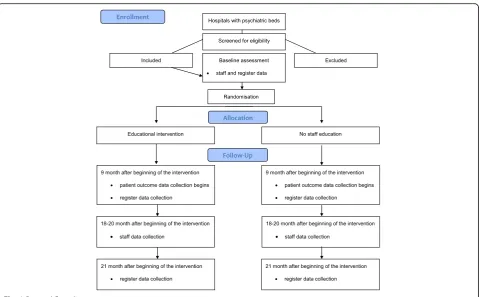
The flow of the study is described in Fig. 1. Flow diagram.
Study interventions Intervention units
outcomes at the level of the organisation, patients, and staff members. To achieve the study goals we will sup-port skill developments, intellectual resources, motiv-ation and encouragement of staff members to make practical changes on the ward practices.
A pilot study has been undertaken with staff members, patients and relatives in one hospital ward not included in the study. This ensured acceptability of the interven-tion, readability and usefulness of all steps and of the educational content and materials, acceptability for the target population, understanding of the messages, coher-ence of the programme and feasibility of the time schedule. Based on the pilot, the intervention includes components based on Glasziou’s and Haynes’[72] pathway to improve health outcomes:
1. Staff education: identification of problems in current treatment practices, and analysis of the local house rules and quality of the service facilities (involves interviews with patients, families and staff ) [73]. The quality gaps and areas to be developed will be described and future steps for the development will be decided. Knowledge about evidence-based studies how to fill possible quality gaps will be shared with staff members, and strengths, weaknesses, opportunities, and threats (SWOT) related to the future changes will be captured. (Acceptance)
2. Local meetings: involvement of staff members, patients, relatives, and the trial team to specify detailed areas to be developed and the specific steps to be taken. Possible barriers and facilitating factors for change will be identified. (Applicability) 3. Shared information packages: intervention materials
to support staff’s competence will be made available. (Available)
4. Support available from the project team: monthly monitoring and support calls or emails as to prompt and encourage change in staff members. (Able) 5. Implementation: hands-on-support provided by the
trial team. The contact persons will work with the staff to help them gain confidence in the new ideas of the intervention. The understanding of the intervention will be reviewed (Interim Evaluation). (Acted on)
6. Identification of the possible change: the use of coercive methods and house rules will be analysed, and possible differences in situation in baseline and after intervention, such as practices, and treatment methods and associated with patient care will be analysed and shared with staff members. (Agreed on)
[image:5.595.59.539.85.382.2]the contact persons on the wards, will, in collaboration with staff members, assess how specific intervention fidelity criteria have been fulfilled [74]. (Adhered to)
A summary of the intervention is described in Table 1.
Comparison unit
Wards allocated to the control arm (standard care, pas-sive control group) will continue with their usual care, and staff will not receive additional education offered by the trial team. There are no restrictions on how nursing staff work in these wards, although participation in cor-responding projects is not supported. Any workshop seminars, local meetings, outreach visits or structured monitoring or support will not be organised in the com-parison wards. As in the intervention hospital organisa-tions, any analysis of the current treatment problems or possible quality gaps to be shared with the staff mem-bers will not be collected or shared by interviews or ob-servations. Any information packages aiming to support their positive treatment culture will not be shared with the staff members working in these hospital organisa-tions. The trial team will contact the control wards only to collect baseline data of the wards and the outcome data. After the 18 months intervention and follow-up period, comparison wards will be given a possibility to participate in workshops and seminar related to the intervention.
Measures
Background information
Patients: The demographic information of the patients (age, gender, marital status, educational level, housing, employment status, number of psychiatric hospital treatment periods, the time of first contact with psy-chiatric services) will be collected as part of a patient follow-up survey.
Demographics of unit of randomisation: The following information about the units will be described: a number of hospital beds, a number of patients, bed/patient ratio, a number of treatment periods, an average length of stay, gender ratio, patient average age, three most com-mon diagnose (ICD-10) [75], and a number of staff/pro-fessional group. In addition, a short description of the ward type and treatment methods will be asked.
Primary outcome Organisational outcomes
[image:6.595.54.541.447.734.2]The primary outcome of the study is the incidence of se-clusion room use by patients in each unit. This will be assessed based on local (and national, if possible) health registers (Finnish Mental Health Act 1116/1990, [70]). The outcome will be measured at three time points: baseline (in 2015) based on local register (at the end of 2016), year 2016 (at the beginning of 2017), and year 2017 (at the beginning of year 2018). Information collected from each organisation is comparable across
Table 1Description of the intervention according to the TiDieR (modified based on Hoffman [99])
Categories Description of the intervention
Name Educational intervention to support positive treatment culture and team climate in staff members in psychiatric hospitals
Rationale/Theory Patients’conditions, treatment environment and ward culture may affect patients’behaviour. Use of coercive methods could be prevented with staff education about user-centred if more humane approaches as well as collaboration between patients, family members and staff members could be increased. Staff education may further positively affect treatment culture and lower the need for using coercive methods in psychiatric hospital care. [46–51]
Materials Information about evidence-based research, written information package of intervention materials, and monitoring tools.
Procedures Identification and analysis of current treatment practices, local house rules and quality of the service facilities. Identification of quality gaps, SWOT, barriers and facilitators for change. Dissemination of research evidence. One-day workshop seminars, local meetings and outreach visits. Ongoing monitoring and support by calls/emails.
Providers Trial team: with a background of psychiatric care as nurses/researchers, an academic qualification (master and/or doctoral level) with an experience in continuing education of staff members (professor, senior researcher, project researcher, doctoral student, master students).
Staff members: different health care professionals.
How Face-to-face seminars with lectures, workshops, group meetings, outreach visits, telephone and email contacts with staff members. If needed, video meetings will be organized with staff members.
Where At the psychiatric wards and at the University facilities (workshops, seminars).
When and how much Intervention will take 18 months:
- Identification, analysis and sharing current treatment practices, use of coercive methods, local house rules, and quality of the service facilities (months 1–4)
- Identification of quality gaps, SWOT analysis in workshop and local meeting, barriers and facilitators for change in each ward, and dissemination of research evidence in workshop; one-day workshop seminars, local meetings and outreach visits (months 5-8),
- Ongoing support by calls/emails provided, workshop, local meetings (months 9–18).
Tailoring and modifications
hospital organisations. The national register holder, Care Register for Health Care [71] gives instructions on how the information regarding treatment notifications shall be collected, recorded and sent annually to the National Institute of Health and Welfare. To ensure that the in-formation about incidence of seclusions can be obtained in full detail, data will be collected either manually based on nurses’ notes and/or medical registers at the local organisations.
Secondary outcomes Organisational outcomes
Other types of coercive measures: incidence of other types of coercive measures used on patients (limb re-straint, forced injection, physical restraint) according to the Finnish Mental Health Act (1116/1990, [70]) (yes/ no), including the frequency and/or length (in minutes, if possible) of these measures. The outcome will be mea-sured at three time points: baseline based on local regis-ter from year 2015 (at the end of 2016), year 2016 (at the beginning of 2017), and year 2017 (at the beginning of year 2018). Information to be collected in each organ-isation will be comparable based on the instructions of data recording by the National Institute of Health and Welfare. The data will be collected either manually based on nurses’ notes and/or medical registers at the local organisations.
Service use (collected from local and/or national regis-ters): type of admission, length of stay (days), death [yes]). The data will be collected either manually based on nurses’notes and/or medical registers at the local organi-sations. Information to be collected in each organisation is comparable based on the instructions of data recording by the National Institute of Health and Welfare [71]. The outcome will be measured at three time points: baseline based on local register from year 2015 (at the end of 2016), year 2016 (at the beginning of 2017), and year 2017 (at the beginning of year 2018).
Staff outcomes
Team climate among nursing teams (Team Climate
Inventory, TCI, 38 items [76, 77]) will be surveyed at baseline and 18-20 months after beginning of the inter-vention. The inventory consists of four subscales; partici-pative safety, support for innovation, vision and task orientation. Items in subscales of participative safety and support for innovation are measured with 5-point Likert-type scale, while subscales of vision and task orientation are measured with 7-point Likert-type scale. Higher scores indicate better team climate [77]. In the Finnish population, subscales of the inventory have dem-onstrated high internal consistency (Participative safety
α= 0.88; Support for innovation α= 0.87; Vision α= 0.95, Task orientation α= 0.91 [78]) and moderate
correlations (r = 0.36-0.48) with other methods assessing team innovativeness [79].
Turnover will be measured at baseline (based on local register data from 2015), year 2016 (at the beginning of 2017), and year 2017 (at the beginning of year 2018).
Patient outcomes
The functional capacity of patients (Global Assessment Scale, GAS [80]), rated by staff members at the time of the discharge process, will be assessed. The value of the measure can vary between 0 and 100. Higher scores in-dicate better functional capacity of patients [80]. The scale has demonstrated high inter-rater reliability (r = 0.72) and significant correlation (r = - 0.64) with other scales used to assess the symptom complexity of pa-tients [81]. The measuring of this outcome will begin 9 months after beginning of the intervention (at the beginning of 2017).
Patient treatment satisfaction (Client Satisfaction Questionnaire, CSQ-8, 8 items [82]) will be assessed with a structured paper survey for every patient at the time of their discharge process. Patients respond to the questions using a 4-point Likert scale. Responses are scored from 1 to 4, and thus the possible total scores range from 8 to 32. Higher scores indicate greater satis-faction with treatment [82]. The survey has demon-strated a high level of internal consistency (Cronbachs’α
0.92) and significant correlation (r = 0.67) to other methods used to measure treatment satisfaction [83]. The measuring of this outcome will begin 9 months after beginning of the intervention (at the beginning of 2017).
Quality of Life(Quality of Life Enjoyment and Satisfac-tion QuesSatisfac-tionnaire-Short Form, Q-LES-Q-SF, 16 items [84]) will be assessed with a structured paper survey for every patient at the time of their discharge process. Each of the 16 items is rated on a 5-point scale that indicates the degree of enjoyment or satisfaction experienced dur-ing the past week. Higher scores on indicate greater con-tentment or satisfaction [84]. In the Finnish psychiatric patient population, this instrument has demonstrated high internal consistency (Cronbachs’ α= 0.89) and moderate correlation with other methods used to assess quality of life (r = 0.445) [85]. The measuring of this out-come will begin 9 months after beginning of the inter-vention (at the beginning of 2017).
Feasibility of the intervention
(easy to use, yes/no) [86], in daily practice will be assessed at the end of the study.
Fidelity and quality components of the intervention The fidelity of the intervention and staff adherence to the intervention will be supported and assessed (Table 2). Each item completed achieves a score of 0-1.00, giving a total percentage of 0%-100%. Lastly, the final seminar will be organised by the team in conjunction with the intervention units.
The strengths, weaknesses, opportunities, and threats related to the new practices will also be discussed and categorised based on a SWOT analysis. Possible barriers and facilitating factors for change in each unit will be identified during workshops and outreach visits. Further, to gain a deeper understanding of staff members’ will-ingness to engage themselves in the new approach in practice, interviews will be conducted at the last phase of the study for staff members, patients and relatives. Their perceptions of human treatment environment with
the following topics will also be assessed: a) Uniqueness of the individual; b) Real choices; c) Attitudes and rights; d) Dignity and respect; e) Partnership and communica-tion; and f ) Evaluating recovery-oriented mental health practice [73]. Convenience sample method will be used to recruit participants into the interviews (N= 50% staff members and patients from a unit and 25% patients’ relatives will be interviewed [73]). In addition, their opinions about the possible changes at the units will be discussed.
Data management
[image:8.595.59.536.351.738.2]All original paper and electronic data will be managed and held in accordance with the University of Turku and the national standards of the Finnish Personal Data Act (523/1999, [87]), partner organisations’ special re-quirements, and the health care organisations’ policies and national acts. The Council for International Organi-zations of Medical Sciences (CIOMS [88]) and the Declaration of Helsinki [89] will be followed, to ensure
Table 2Implementation stages and fidelity criteria of the process based on Glasziou and Haynes et al. [72])a
Implementation stage Fidelity criteria
Acceptance
A one-day workshop (X2) for ward managers and contact persons will be organised by the trial team; the results of the information collected at baseline will be shared; preliminary action plans for units will be designed; queries from the staff will be answered.
A local ward meeting will be organised by the senior ward manager and a contact person on each intervention ward. House rules for patients will be collected and analysed from each ward.
At least one ward manager/contact person in each intervention unit will attend the one-day workshops (1stand 2ndworkshop) (80%). The first local meetings will be organised and documented on each ward (100%).
House rules will be analysed (100%).
Applicable
A series of local meetings with staff members, patients, and relatives will be organised by the trial team; areas to be developed and specific steps to be taken will be identified; barriers and facilitating factors for change will be described; strengths, weaknesses, opportunities, and threats related to the educational intervention will be identified through a SWOT analysis.
The first outreach visit on each ward will be organised (100%). At least 50% of staff on each ward will attend the first outreach visit.
Available
An information package of an intervention to support staff’s competence will be available.
An Action Plan for each ward will be developed (100%); the content of the information package will be shared with the staff (100%).
Able
Monthly monitoring/support calls/emails by the trial team will prompt and encourage changes on the wards.
Ward managers/contact persons or senior ward managers will report the progress of the changes (including harms) by email/telephone (12 calls or email/12 months; 100%).
Acted on
The trial team will visit each ward to give hands-on support to staff members, ward managers and contact persons so that they will gain confidence in implementing the new ideas on the wards. The Action Plan will be revised if needed.
A one-day workshop for an Interim Evaluation Seminar will be organised.
The second outreach visit on each ward will be organised. At least 50% of the staff on the ward will attend the visits.
The third workshop will be organised to review the implementation process; at least one person from each unit will attend (Interim Evaluation) (95%).
Agreed on
Outcome assessment and house rules will be analysed by staff members and the trial team; possible differences in previous and current actions will be identified.
Patient coercive methods and house rules will be analysed (100%).
Adhered to
Daily practices will be monitored by the trial team. The final workshop will be organised.
Daily practices will be monitored and outcomes of the intervention will be evaluated in a meeting on each ward.
The third outreach visit on each ward will be organised. At least 50% of the staff on the ward will attend the visits.
At least one senior ward manager/contact person in each intervention unit will attend (95%) the fourth workshop.
a
confidentiality of data. The material for the study will be mainly obtained from local registers, case notes and na-tional health registers, and through patient and staff sur-veys. Data will be in paper and electronic format and saved electronically for statistical analysis. The qualita-tive data will be digitally recorded and transcribed to be analysed in written format. Members of the DMC are representatives from the ethical board, mental health as-sociations, hospitals and hospital districts, national health and welfare institute, and statistics. Their role is to support, advice and evaluate the trial as well as inter-vention and outcomes. They also provide guidance related to financing, modifications, timing, risk manage-ment and quality assurance. The DMC have meetings twice a year.
Power and sample size
We have systematically searched for, but found no dir-ectly relevant past work [31, 90]. We assume that if the data will be obtained from local hospital registers by sampling 7 clusters (hospitals) with 265 subjects each in intervention group and 7 clusters with 265 subjects each in control group, we will have 80% power to detect a dif-ference between the group proportions of−0.0400. The control group proportion is 0.1100. The intervention group proportion is assumed to be 0.1100 under the null hypothesis and 0.0700 under the alternative hypothesis. The test statistic used is the two-sided Z test (unpooled) with an overall significance level at 0.05. We may as-sume based on the hospital registers that sample size for the total population admitted in the study wards in one year will be 3710. However, if we consider a loss of 20% patients in the local care registers, [91] the total number of patients on the randomised wards should be about 4454 patients. (PASS 11 software [92]). Further, if we as-sume 50% response rate for patient survey [93] out of possible 3710 participants, we will assume that we will obtain 928 filled questionnaires during 6 month survey data collection period. The sample size calculation was adjusted for intra-cluster correlation at 0.005.
Data analysis Statistical analysis
The Data Management Committee including a statisti-cian outside of the research team will verify the statis-tical analysis and the Quality Assurance Process.
The baseline characteristics of the units, and respon-dents (patients, staff members) will be summarised using descriptive analysis (mean [standard deviation], median [interquartile ranges] or proportions) and compared be-tween each intervention group, respectively.
The analysis will be carried out on an intent-to-treat (ITT) basis. Assumptions of normality of the residuals will be investigated. For the primary outcome, incidence
of coercion methods used at the baseline (year 2015), year 2016 (at the beginning of 2017), and year 2017 (at the beginning of year 2018) will be calculated. Possible differences in patient characteristics between the inter-vention and the control group at baseline will be tested by Chi-Square or t-tests based on type of variables. This analysis will help to decide whether baseline characteris-tics of patients should be adjusted for in the model for the primary outcome comparison after intervention. The hierarchical (participant nested within ward) Poisson model will be used to estimate and test the relative risk of being coerced in the intervention and the control group, which takes into account the length of staying of patient’s in hospitals. With the same principle, for sec-ondary outcomes, a hierarchical linear model will be used for normally distributed variables such as patient satisfaction and team climate, a hierarchical logistic model for dichotomous outcomes such as any admission or any adverse event, and the Poisson model for hospi-talisation stay lengths or time spent in a seclusion room. A sensitivity analysis will be conducted by comparing the primary data at the follow-up and the fidelity infor-mation [47]. If poor fidelity was found for the primary data, we may consider evaluating change rate of coercive methods use between the two groups using all three measures over time by applying repeatedly measured models with random effects of hospital clusters. The re-sults from the secondary analyses will be treated as ex-ploratory. Estimates and confidence intervals will be reported only. The CONSORT guidelines for rando-mised trials [94] will be followed throughout our data analysis and the reporting of our study results. This study protocol follows the recommendations of the SPIRIT Statement [95].
Qualitative analysis
Dissemination
The Department of Nursing Science at the University of Turku in Finland is nationally and internationally known for its research related to aggression in mental health care. It is also one of the leading research centres focus-ing on preferences of patients and nursfocus-ing staff within the field in Finland. The Academy of Finland, as a main funder, together with Turku University Hospital, the University of Turku, in close collaboration with Hong Kong Polytechnic University of China (SAR), is provid-ing the research infrastructure for the study as well as opportunities to spread knowledge from this project lo-cally and internationally in collaboration with the WHO Western Pacific Region. The results of the study will be published in international referee-based, high-impact scientific journals, national vocational journals, newspa-pers, seminars, conferences and on the project’s website and via social media campaign.
Discussion
This is a large-scale randomised controlled trial investi-gating whether staff educational intervention is associ-ated with a decrease, no change or even increase in use of coercive methods and patient services, a changed glo-bal state, treatment satisfaction and quality of life, and team climate among staff members. This is a single-blind, two-arm stratified cluster trial, involving hospitals with psychiatric hospital beds across Finland. Based on good examples abroad and extending educational inter-ventions supporting relatives’ engagement in patients care, we believe that the study results may be beneficial in national and international contexts. Based on previous literature and our own experiences, we are prepared to face challenges in implementing and measuring the effects of the new intervention in mental health services and patient well-being [47, 53].
Study status
To date, we have recruited 15 hospitals, in which a total of 28 psychiatric wards are willing to participate. Wards were randomised in May 2016 (13 intervention wards, 15 in comparison wards).
Abbreviations
CSQ-8:Client Satisfaction Questionnaire; DMC: Data Management Committee; EU: European Union; GAS: Global Assessment Scale; ITT: Intent-to-treat; PASS: Power Analysis and Sample Size; Q-LES: Q-SF - Quality of Life Enjoyment and Satisfaction Questionnaire-Short Form; SWOT: Strengths, Weaknesses, Opportunities, Threats; TCI: Team Climate Inventory; WHO: World Health Organization
Acknowledgements
We would like to thank our funders, the Academy of Finland and the Hospital District of Southwest Finland, for their financial support for the study.
Funding
This study has been funded by the Academy of Finland (grant numbers 294298, 307367) and the Hospital District of Southwest Finland (13893). The publication costs of this manuscript will be covered from these grants. The
funding bodies will not gain or lose financially from the publication of this manuscript, not now or in the future. The views described in this manuscript are based on authors’opinions. The funding bodies have not participated in the design of the study or writing the current manuscript and will not participate in collection, analysis, or interpretation of data.
Availability of data and materials
The data is usable for this study only.
Authors’contributions
MV initiated the study and received a grant for the study. MV developed the study design. MY and MV and S-LN made the power calculations. MV drafted the manuscript. MA, MY, TL and VP contributed in drafting the manuscript. All co-authors have read it and provided critical comments. All authors approved the final manuscript.
Competing interest
The authors declare that they have no competing interests.
Consent for publication
Not applicable. Details, images, or videos relating to individual participants will not be published.
Ethics approval and consent to participate
The preparation phase of the trial (focus group interviews with staff members, and patients and relatives in associations) has been approved by the Ethics Committee of the University of Turku (33/2015). The proposal related to national register data has been assessed by the Ethics Committee of the University of Turku (41/2015). The trial has been approved by the Ethics Committee of the Hospital District of Southwest Finland (ETMK:9/1801/2016) and permissions to conduct the pilot study and realise the study in psychiatric hospitals have been granted by the study organisations in 2016. The study has been registered with ClinicalTrials.gov (NCT02724748 [98]).
Interviews with staff members, patient groups and relatives will be done on a voluntary basis and written informed consent will be obtained. The unit staff/research team members will approach patients and their relatives to explain the purpose of the study and its arrangements both directly and in written format. Patients and their relatives will be given the opportunity to ask questions about the study. Those assessed as lacking the capacity to give informed consent, and those who decline to participate, will not be interviewed. Staff and patient surveys are voluntary and will not include names, social security numbers, or any other identifiable information.
Participants will be informed that they have the possibility to withdraw their consent, and they will be made aware that data collected before withdrawal may be used for research purposes. Participants will also be informed that refusal or withdrawal from the study will not affect their position as staff members, health care clients or have effect on their relative’s care.
Publisher’s Note
Springer Nature remains neutral with regard to jurisdictional claims in published maps and institutional affiliations.
Author details
1Department of Nursing Science, Faculty of Medicine, University of Turku ,
Received: 20 February 2017 Accepted: 11 March 2017
References
1. Wittchen HU, Jacobi F, Rehm J, Gustavsson A, Svensson M, Jönsson B, Olesen J, Allgulander C, Alonso J, Faravelli C, Fratiglioni L, Jennum P, Lieb R, Maercker A, van Os J, Preisig M, Salvador-Carulla L, Simon R, Steinhausen HC. The size and burden of mental disorders and other disorders of the brain in Europe 2010. Eur Neuropsychopharmacol. 2011;21:655–79. 2. Alonso J, Angermeyer MC, Lépine JP, European Study of the Epidemiology
of Mental Disorders (ESEMeD) Project. he European Study of the Epidemiology of Mental Disorders (ESEMeD) project: an epidemiological basis for informing mental health policies in Europe. Acta Psychiatr Scand. 2004;109 Suppl 420:5–7. 3. Bloom DE, Cafiero ET, Jan’e-Llopis E, Abrahams-Gessel S, Bloom LR, Fathima
S, Feigl AB, Gaziano T, Mowafi M, Pandya A, Prettner K, Rosenberg L, Seligman B, Stein AZ, Weinstein C. The global economic burden of non-communicable diseases. A report of the World Economic Forum and the Harvard School of Public Health. Geneva: World Economic Forum; 2011. 4. World Health Organization. Schizophrenia. Mental Health. World Health
Organisation. 2016. http://www.who.int/mental_health/management/ schizophrenia/en/. Accessed 16 Dec 2016.
5. National Institute for Health and Care Excellence. Psychosis and schizophrenia in adults: prevention and management. NICE clinical guideline 178. 2014. http:// www.nice.org.uk/guidance/cg178/resources/psychosis-and-schizophrenia-in-adults-prevention-and-management-35109758952133. Accessed 29 Nov 2016. 6. Elbogen EB, Johnson SC. The intricate link between violence and mental
disorder: results from the National Epidemiologic Survey on alcohol and Related Conditions. Arch Gen Psychiatry. 2009;66:152–61.
7. Pinna F, Tusconi M, Dessi C, Pittaluga G, Fiorillo A, Carpiniello B. Violence and mental disorders. A retrospective study of people in charge of a community mental health center. Int J Law Psychiatry. 2016;47:122–8. 8. Miranda H, Punnett L, Gore R, Boyer J. Violence at workplace increases the
risk of musculoskeletal pain among nursing home workers. Int J Occup Environ Med. 2011;68:52–7.
9. Flannery Jr RB, LeVitre V, Rego S, Walker AP. Characteristics of staff victims of psychiatric patient assaults: 20-year analysis of the Assaulted Staff Action Program. Psychiatr Q. 2011;82:11–21.
10. Luciano M, Sampogna G, Del Vecchio V, Pingani L, Palumbo C, De Rosa C, Catapano F, Fiorillo A. Use of coercive measures in mental health practice and its impact on outcome: a critical review. Expert Rev Neurother. 2014;14:131–41. 11. Australian Government. Australian Institute of Health and Welfare. Continued
decline in use of seclusion in mental health facilities. 2014. http://www.aihw. gov.au/media-release-detail/?id=60129550060. Accessed 29 Nov 2016. 12. Steinert T, Lepping P, Bernhardsgrütter R, Conca A, Hatling T, Janssen W,
Keski-Valkama A, Mayoral F, Whittington R. Incidence of seclusion and restraint in psychiatric hospitals: a literature review and survey of international trends. Soc Psychiatry Psychiatr Epidemiol. 2010;45:889–97.
13. Wale JB, Belkin GS, Moon R. Reducing the use of seclusion and restraint in psychiatric emergency and adult inpatient services- improving patient-centered care. Perm J. 2011;15:57–62.
14. Salize HJ, Dressing H. Epidemiology of involuntary placement of mentally ill people across the European Union. Br J Psychiatry. 2004;184:163-8. 15. Bak J, Aggernæs H. Coercion within Danish psychiatry compared with 10
other European countries. Nord J Psychiatry. 2012;66:297–302. 16. Foster C, Bowers L, Nijman H. Aggressive behavior on acute psychiatric
wards: prevalence, severity and management. J Adv Nurs. 2007;58:140–9. 17. National Institute for Health and Welfare. Psychiatric specialist health care
2014. Statistical Report Health 2015. Finnish Official Statistics of Finland. 2016. http://www.aihw.gov.au/media-release-detail/?id=60129550060. Accessed 29 Nov 2016.
18. Kallert TW. Coercion in psychiatry. Curr Opin Psychiatry. 2008;21:485–9. 19. Kontio R, Välimäki M, Putkonen H, Kuosmanen L, Scott A, Joffe G. Patient
restrictions: are there ethical alternatives to seclusion and restraint? Nurs Ethics. 2010;17:65–76.
20. Kontio R, Anttila M, Lantta T, Kauppi K, Joffe G, Välimäki M. Toward a safer working environment on psychiatric wards: service users’delayed perspectives of aggression and violence-related situations and development ideas. Perspect Psychiatr Care. 2014;50:271–9.
21. Ling S, Cleverley K, Perivolaris A. Understanding Mental Health Service User Experiences of Restraint Through Debriefing: A Qualitative Analysis. Can J Psychiatry. 2015;60:386–92.
22. Van Der Merwe M, Muir-Cochrane E, Jones J, Tziggili M, Bowers L. Improving seclusion practice: implications of a review of staff and patient views. J Psychiatr Ment Health Nurs. 2013;20:203–15.
23. Honkonen H, Mattila AK, Lehtinen K, Elo T, Haataja R, Joukamaa M. Mortality of Finnish acute psychiatric hospital patients. Soc Psychiatry Psychiatr Epidemiol. 2008;43:660–6.
24. National Institute for Health and Care Excellence. Violence and aggression: short-term management in mental health, health and community settings. NICE guideline [NG10]. 2015. https://www.nice.org.uk/guidance/ng10/ resources/violence-and-aggression-shortterm-management-in-mental-health-health-and-community-settings-1837264712389. Accessed 29 Nov 2016. 25. Jungfer HA, Schneeberger AR, Borgwardt S, Walter M, Vogel M, Gairing SK,
Lang UE, Huber CG. Reduction of seclusion on a hospital-wide level: successful implementation of a less restrictive policy. J Psychiatr Res. 2014;54:94–9. 26. Maguire T, Young R, Martin T. Seclusion reduction in a forensic mental
health setting. J Psychiatr Ment Health Nurs. 2012;19:97–106.
27. Putkonen A, Kuivalainen S, Louheranta O, Repo-Tiihonen E, Ryynänen OP, Kautiainen H, Tiihonen J. Cluster-randomized controlled trial of reducing seclusion and restraint in secured care of men with schizophrenia. Psychiatr Serv. 2013;64:850–5.
28. Steinert T, Eisele F, Goeser U, Tschoeke S, Uhlmann C, Schmid P. Successful interventions on an organisational level to reduce violence and coercive interventions in in-patients with adjustment disorders and personality disorders. Clin Pract Epidemiol Ment Health. 2008;4:27.
29. Vruwink FJ, Mulder CL, Noorthoorn EO, Uitenbroek D, Nijman HL. The effects of a nationwide program to reduce seclusion in the Netherlands. BMC Psychiatry. 2012;12:231.
30. Cullen A, Clarke A, Kuipers E, Hodgins S, Dean K, Fahy T. A multi-site randomized controlled trial of a cognitive skills programme for male mentally disorder offenders: social-cognitive outcomes. Psychol Med. 2012;42:557–69. 31. Van de Sande R, Nijman H, Noorthoorn E, Wierdsma A, Hellendoorn E, van
der Staak C, Mulder C. Aggression and seclusion on acute psychiatric wards: effect of short-term risk assessment. BMJ. 2011;199:472–8.
32. Fisher WA. Restraint and seclusion: a review of the literature. Am J Psychiatry. 1994;151:1584–91.
33. Chow WS, Priebe S. Understanding psychiatric institutionalization: a conceptual review. BMC Psychiatry. 2013;13:169.
34. Huf G, Coutinho E, Adams CE. Physical restraints versus seclusion room for management of people with acute aggression or agitation due to psychotic illness (TREC-SAVE): a randomized trial. Psychol Med. 2012;42:2265–73. 35. Bergk J, Einsiedler B, Flammer E, Steinert T. A Randomized Controlled
Comparison of Seclusion and Mechanical Restraint in Inpatient Settings. Psychiatr Serv. 2011;62:1310–7.
36. Soininen P, Putkonen H, Joffe G, Korkeila J, Puukka P, Pitkänen A, Välimäki M. Does experienced seclusion or restraint affect psychiatric patients’ subjective quality of life at discharge? Int J Ment Health Syst. 2013;7:28. 37. Boumans CE, Walvoort SJW, Egger JIM, Hutschemaekers GJM. The
Methodical Work Approach and the Reduction in the Use of Seclusion: How did it Work? Psychiatr Q. 2015;86:1–17.
38. World Health Organization. The European Mental Health Action Plan 2013– 2020. WHO Regional Office for Europe. 2015. http://www.euro.who.int/__ data/assets/pdf_file/0020/280604/WHO-Europe-Mental-Health-Acion-Plan-2013-2020.pdf?ua=1. Accessed 29 Nov 2016.
39. Hoffman T, Erueti C, Galsziou P. Poor description of non-pharmacological interventions: analysis of consecutive sample of randomized trials. BMJ. 2013;347:f3755.
40. Muralidharan S, Fenton M. Containment strategies for people with serious mental illness. Cochrane Database Syst Rev. 2006;3:CD002084.
41. Perera R, Yudkin P. A graphical method for depicting randomized trials of complex interventions. BMJ. 2007;334:127–9.
42. Bar-Yam Y. Making Things Work: Solving Complex Problems in a Complex World. Cambridge, MA: Necsi Knowledge Press; 2005.
43. Sterman JD. Learning from evidence in a complex world. Am J Public Health. 2006;96:505–14.
44. Sailas E, Fenton M. Seclusion and restraint for people with serious mental illnesses. Cochrane Database Syst Rev. 2000;1:CD001163.
45. Coid JW, Kallis C, Doyle M, Shaw J, Ullrich S. Identifying Causal Risk Factors for Violence among Discharged Patients. PLoS One. 2015;10:e0142493. 46. Bowers L, James K, Quirk A, Simpson A, SUGAR, Stewart D, Hodsoll J. Reducing
47. Killaspy H, Marston L, Green N, Harrison I, Lean M, Cook S, Mundy T, Craig T, Holloway F, Leavey G, Koeser L, McCrone P, Arbuthnott M, Omar RZ, King M. Clinical effectiveness of a staff training intervention in mental health inpatient rehabilitation units designed to increase patients’engagement in activities (the Rehabilitation Effectiveness for Activities for Life [REAL] study): single-blind, cluster-randomised controlled trial. Lancet Psychiatry. 2015;2: 38–48.
48. Barrett B, Waheed W, Farrelly S, Birchwood M, Dunn G, Flach C, Henderson C, Leese M, Lester H, Marshall M, Rose D, Sutherby K, Szmukler G, Thornicroft G, Byford S. Randomised controlled trial of joint crisis plans to reduce compulsory treatment for people with psychosis: economic outcomes. PLoS One. 2013;8: e74210.
49. Bower P. A cluster randomised controlled trial of the clinical and cost-effectiveness of a‘whole systems’model of self-management support for the management of long- term conditions in primary care: trial protocol. Implement Sci. 2012;7:7.
50. Mathews C, Eggers SM, Townsend L, Aarø LE, de Vries PJ, Mason-Jones AJ, De Koker P, McClinton Appollis T, Mtshizana Y, Koech J, Wubs A, De Vries H. Effects of PREPARE, a Multi-component, School-Based HIV and Intimate Partner Violence (IPV) Prevention Programme on Adolescent Sexual Risk Behaviour and IPV: Cluster Randomised Controlled Trial. AIDS Behav. 2016; 20:1821–40.
51. Abderhalden C, Needham I, Dassen T, Halfens R, Haug HJ, Fischer JE. Structured risk assessment and violence in acute psychiatric wards: randomised controlled trial. BMJ. 2008;193:44–50.
52. Thornicroft G, Farrelly S, Szmukler G, Birchwood M, Waheed W, Flach C, Barrett B, Byford S, Henderson C, Sutherby K, Lester H, Rose D, Dunn G, Leese M, Marshall M. Clinical outcomes of Joint Crisis Plans to reduce compulsory treatment for people with psychosis: a randomised controlled trial. Lancet. 2013;381:1634–41.
53. Henderson C, Farrelly S, Moran P, Borschmann R, Thornicroft G, Birchwood M, Crimson T, Joshua, Study Groups. Joint crisis planning in mental health care: the challenge of implementation in randomized trials and in routine care. World Psychiatry. 2015;14:281–3.
54. Nawaz H, Abbas A, Sarfraz A, Slade MD, Calvocoressi L, Wild DM, Tessier-Sherman B. A randomized clinical trial to compare the use of safety net enclosures with standard restraints in agitated hospitalized patients. J Hosp Med. 2007;2:385–93.
55. Aakhus E, Granlund I, Odgaard-Jensen J, Oxman AD, Flottorp SA. A tailored intervention to implement guideline recommendations for elderly patients with depression in primary care: a pragmatic cluster randomised trial. Implement Sci. 2016;11:32.
56. Slade M, Bird V, Clarke E, Le Boutillier C, McCrone P, Macpherson R, Pesola F, Wallace G, Williams J, Leamy M. Supporting recovery in patients with psychosis through care by community-based adult mental health teams (REFOCUS): a multisite, cluster, randomised, controlled trial. Lancet Psychiatry. 2015;2:503–14. 57. World Health Organization. Improving health systems and services for
mental health. 2009. http://apps.who.int/iris/bitstream/10665/44219/1/ 9789241598774_eng.pdf. Accessed 29 Nov 2016.
58. Krupa T, McLean H, Eastabrook S, Bonham A, Baksh L. Daily time use as a measure of community adjustment for persons served by assertive community treatment teams. Am J Occup Ther. 2003;57:558–65.
59. Bejerholm U, Eklund M. Time use and occupational performance among persons with schizophrenia. Occup Ther Ment Health. 2004;20:27–46. 60. Cook S, Birrell M. Defining and occupational therapy intervention for people
with psychosis. Br J Occup Ther. 2007;70:96–106.
61. Kontio R, Lantta T, Anttila M, Kauppi K, Välimäki M. Family involvement in managing violence of mental health patients. Perspect Psychiatr Care. 2017; 53:55–66.
62. Lantta T, Daffern M, Kontio R, Välimäki M. Implementing the Dynamic Appraisal of Situational Aggression in mental health units. Clin Nurse Spec. 2015;29:230–43.
63. Lantta T, Anttila M, Kontio R, Adams CE, Välimäki M. Violent events, ward climate and ideas for violence prevention among nurses in psychiatric wards: a focus group study. Int J Ment Health Syst. 2016;10:27.
64. Lantta T, Kontio R, Daffern M, Adams CE, Välimäki M. Using the Dynamic Appraisal of Situational Aggression (DASA) with mental health inpatients: a feasibility study. Patient Prefer Adherence. 2016;10:691–701.
65. Norman DA, Draper SW, editors. User-Centered System Design: New Perspectives on Human-Computer Interaction. Hillsdale, NJ: Lawrence Earlbaum Associates; 1986.
66. Abras C, Maloney-Krichmar D, Preece J. User-Centered Design. In: Bainbridge W, editor. Encyclopedia of Human-Computer Interaction. Thousand Oaks: Sage Publications; 2004. p. 445–56.
67. Vansteenkiste M, Williams GC, Resnicow K. Toward systematic integration between self-determination theory and motivational interviewing as examples of top-down and bottom-up intervention development: autonomy or volition as a fundamental theoretical principle. Int J Behav Nutr Phys Act. 2012;9:23. doi:10.1186/1479-5868-9-23.
68. The Association of Finnish Local and Regional Authorities. 2016. www.localfinland. fi/. Accessed 30 Nov 2016.
69. Ministry of Social Affairs and Health. Social welfare and health care system in Finland, responsibilities. 2015. http://stm.fi/en/social-and-health-services/ responsible-agencies. Accessed 30 Nov 2016.
70. FINLEX 1116/1990. The Mental Health Act. Ministry of Social Affairs and Health, Finland. http://www.finlex.fi/fi/laki/kaannokset/1990/en19901116.pdf. Accessed 30 Nov 2016.
71. National Institute of Health and Welfare. Care Register for Health Care. 2016. https://www.thl.fi/en/web/thlfi-en/statistics/information-on-statistics/register-descriptions/care-register-for-health-care. Accessed 30 Nov 2016.
72. Glasziou P, Haynes B. The paths from research to improved health outcomes. Evid Based Med. 2005;10:4–7.
73. World Health Organization. Mental health. WHO QualityRights Tool Kit. 2012. http://www.who.int/mental_health/publications/QualityRights_toolkit/en/. Accessed 30 Nov 2016.
74. Killaspy H, Cook S, Mundy T, Craig T, Holloway F, Leavey G, Marston L, McCrone P, Koeser L, Arbuthnott M, Omar RZ, King M. Study protocol: cluster randomised controlled trial to assess the clinical and cost effectiveness of a staff training intervention in inpatient mental health rehabilitation units in increasing service users’engagement in activities. BMC Psychiatry. 2013;13:216. 75. World Health Organization. International Statistical Classification of Diseases and Related Health Problems 10th Revision (ICD-10)-WHO Version for 2016. 2016. http://apps.who.int/classifications/icd10/browse/2016/en#!/IX. Accessed 30 Nov 2016.
76. Anderson NR, West MA. Measuring climate for work group innovation: development and validation of the team climate inventory. J Organ Behav. 1998;19:235–58.
77. Kivimäki M, Kuk G, Elovainio M, Thomson L, Kalliomäki-Levanto T, Heikkilä A. The Team Climate Inventory (TCI)—four or five factors? Testing the structure of TCI in samples of low and high complexity jobs. J Occup Organ Psychol. 1997; 70:375–89.
78. Koivunen M, Anttila M, Kuosmanen L, Katajisto J, Välimäki M. Team climate and attitudes toward information and communication technology among nurses on acute psychiatric wards. Inform Health Soc Care. 2015;40:79–90. 79. Kivimäki M, Elovainio M. A short version of the Team Climate Inventory:
Development and psychometric properties. J Occup Organ Psychol. 1999; 72:241–6.
80. Endicott J, Spitzer RL, Fleiss JL, Cohen J. The Global Assessment Scale. A Procedure for Measuring Overall Severity of Psychiatric Disturbance. Arch Gen Psychiatry. 1976;33:766–71.
81. Kuhlman T, Bernstein M, Kloss J, Sincaban V, Harris L. A Team Format for the Global Assessment Scale: Reliability and Validity on an Inpatient Unit. J Pers Assess. 1991;56:335–47.
82. Attkisson CC, The CSQ. Mill Valley, CA. Tamalpais Matrix Systems LLC: Scales Reprint Portfolio; 2012.
83. De Wilde EF, Hendriks VM. The Client Satisfaction Questionnaire: psychometric properties in a Dutch addict population. Eur Addict Res. 2005;11:157–62. 84. Endicott J, Nee J, Harrison W, Blumenthal R. Quality of Life Enjoyment and
Satisfaction Questionnaire: A new measure. Psychopharmacol Bull. 1993;29:321–6. 85. Pitkänen A, Välimäki M, Endicott J, Katajisto J, Luukkaala T, Koivunen M,
Kuosmanen L, Hätönen H. Assessing quality of life in patients with schizophrenia in an acute psychiatric setting: reliability, validity and feasibility of the EQ-5D and the Q-LES-Q. Nord J Psychiatry. 2012;66:19–25. 86. Bowen DJ, Kreuter M, Spring B, Cofta-Woerpel L, Linnan L, Weiner D, Bakken
S, Kaplan CP, Squiers L, Fabrizio C, Fernandez M. How we design feasibility studies. Am J Prev Med. 2009;36:452–7.
87. FINLEX 523/1999. Finnish Personal Data Act. Ministry of Social Affairs and Health, Finland. 2001. http://www.finlex.fi/en/laki/kaannokset/1999/19990523. Accessed 30 Nov 2016.
89. World Medical Association. WMA Declaration of Helsinki - Ethical Principles for Medical Research Involving Human Subjects. 2013. http://www.wma.net/ en/30publications/10policies/b3/. Accessed 30 Nov 2016.
90. Nijman HL, Merckelbach HL, Allertz WF, Campo JM a. Prevention of aggressive incidents on a closed psychiatric ward. Psychiatr Serv. 1997;48:694–8. 91. Kjellin L, Westrin CG. Involuntary admissions and coercive measures in psychiatric
care. Registered and reported. Int J Law Psychiatry. 1998;21:31–42. 92. Hintze J. PASS 11. NCSS, LLC. Kaysville, Utah, USA. 2011. www.ncss.com.
Accessed 30 Nov 2016.
93. Trivedi RB, Szarka JG, Beaver K, Brousseau K, Nevins E, Yancy Jr WS, Slade A, Voils CI. Recruitment and retention rates in behavioral trials involving patients and a support person: a systematic review. Contemp Clin Trials. 2013;36:307–18.
94. CONSORT - Consolidated Standards of Reporting Trials. 2010. http://www. consort-statement.org/consort-2010. Accessed 30 Nov 2016.
95. Chan A-W, Tetzlaff JM, Gøtzsche PC, Altman DG, Mann H, Berlin J, Dickersin K, Hróbjartsson A, Schulz KF, Parulekar WR, Krleža-JerićK, Laupacis A, Moher D. SPIRIT 2013 Explanation and Elaboration: Guidance for protocols of clinical trials. BMJ. 2013;346:e7586.
96. Braun V, Clarke V. Using thematic analysis in psychology. Qual Res Psychol. 2006;3:77–101.
97. Tong A, Sainsbury P, Craig J. Consolidated criteria for reporting qualitative research (COREQ): A 32-item checklist for interviews and focus groups. Int J Qual Health Care. 2007;19:349–57.
98. ClinicalTrials.gov. Managing Patient Aggression in Mental Health Services (Violin). NCT02724748. 2016. https://clinicaltrials.gov/ct2/show/NCT02724748. Accessed 30 Nov 2016.
99. Hoffmann TC, Glasziou PP, Boutron I, Milne R, Perera R, Moher D, Altman DG, Barbour V, Macdonald H, Johnston M, Lamb SE, Dixon-Woods M, McCulloch P, Wyatt JC, Chan AW, Michie S. Better reporting of interventions: template for intervention description and replication (TIDieR) checklist and guide. BMJ. 2014;348:g1687.
• We accept pre-submission inquiries
• Our selector tool helps you to find the most relevant journal • We provide round the clock customer support
• Convenient online submission • Thorough peer review
• Inclusion in PubMed and all major indexing services • Maximum visibility for your research
Submit your manuscript at www.biomedcentral.com/submit
![Table 1 Description of the intervention according to the TiDieR (modified based on Hoffman [99])](https://thumb-us.123doks.com/thumbv2/123dok_us/338279.1034835/6.595.54.541.447.734/table-description-intervention-according-tidier-modified-based-hoffman.webp)

