An Evolutionary Cognitive Radio Adaptation Engine
Architecture Inspired from Cognitive Sciences
Ramy A. Fathy
Digital Services Planning
Telecom Regulatory Authority
(NTRA), Egypt
Abdelhalim Zekry
Electronics and Comm. Dept.
Ain Shams University
(ASU), Egypt
Ahmed A. AbdelHafez
Electronics and Comm. Dept. Military
Technical College
(MTC), Egypt
ABSTRACT
Cognitive Radio (CR) is the future of radio systems giving authorities and end users unprecedented capabilities, and completely new services expectations. This paper aims at introducing an evolutionary novel Cognitive Radio adaptation engine architecture inspired from theories developed in cognitive sciences. Adaptation is a fundamental feature of CR necessary for many applications and use cases such as dynamic spectrum access, and emergency and disaster relief communication systems. The proposed architecture employs meta-heuristic techniques to dynamically and autonomously self-adapt to external varying stimuli, in order to reach some objectives. The implemented architecture is shown to be suitable for applications of emergency and disaster relief communication systems.
General Terms
Cognitive Radio, Meta-heuristics, Wireless Communication.
Keywords
Adaptation Cycle, Adaptation Engine Architecture, Cognition Cycle, Cognitive Sciences.
1.
INTRODUCTION
Cognitive Radio (CR) is a breaking through technology introduced by Mitola in 1999 [1]. However, the origin of the terminology of 'cognition' is not new. It has been introduced in a totally different context since the 1950's. The term has evolved towards what is now called 'cognitive sciences'. Today, cognitive science is considered to be standalone area of research with roots from many interconnected disciplines like philosophy, psychology, artificial intelligence, neuroscience, linguistics, and anthropology [2].
This paper aims at introducing a novel Adaptation Engine (AE) architecture inspired from theories developed in cognitive sciences. Adaptation is a fundamental feature of CR necessary for many applications and use cases such as dynamic spectrum access, and emergency and disaster relief communication systems. The proposed architecture, called hereafter, the Ideal Generic AE Architecture (IGAEA) employs a wide range of meta-heuristics with the ability of selecting appropriate algorithms based on context and prior history.
Applying cognition to radio systems is not an easy task. The problem is that there is currently no universal widely-accepted definition for this terminology. Accordingly, this poses some difficulties as to specify the necessary CR adaptation architecture components that enable the radio from attaining adaptive behavior.
Hence, this paper attempted an approach to overcome that obstacle. By specifying the operational cycle of the radio, i.e. its cognition cycle; a full characterization of necessary cognitive functionalities of a CR could be attained. That furthermore is used to define the CR ideal adaptation architecture.
However, this approach needs the development of a CR reference framework in order to base the cognition cycle specification on a solid theoretical background. Accordingly, a coherent framework that is to be used for the development of the cognition cycle is a one based on some Reference Theoretical Framework (RTF). In this work, the RTF is based on theories inspired from cognitive sciences, cognitive neurosciences, and artificial intelligence realms. This approach is considered optimum, since defining cognition functionalities away from the disciplines from which it was originally rooted, would only lead to false conclusions.
Cognition functionalities, by means of a cognition cycle can be constructed by a machine or an algorithm. Either can ultimately be modeled by a state model. Thus, for fully specifying the CR behavior, state modeling is used to specify the cognition states and transitions inside the radio. State model is beneficial in two folds: first, it can be used to characterize the AE architecture. Second, it can be used as a foundation to develop a theoretical computational model of CR, which could eventually be used to develop a formal mathematical definition of CR. Mathematical modeling furthermore enables the mathematical treatment of the cycle, which gives rather powerful tools for CR behavior analysis and deduction.
The rest of this paper is organized as follows: section two covers fundamental prior work on cognition cycle necessary for the development of CR AE architectures. Section three presents the Reference Theoretical Framework (RTF) used as the foundation to develop the cognition cycle. Section four presents the novel cognition cycle while section five presents the proposed Ideal Generic AE Architecture (IGAEA). Section six presents the implementation and validation of a simplified version of IGAEA. Section seven ends with the conclusions and future work followed by list of references.
2.
Prior Work
sequence of steps, and the states employed by any CR during its operation [4].
The idea of a cognition cycle for cognitive radio was first described by Mitola in [4]. Mitola introduced Radio Knowledge Representation Language (RKRL) to express knowledge inside the radio. However, RKRL supports a certain cognition cycle. In Mitola's cycle, the outside world provides stimuli. In the observe stage, the CR parses these stimuli to extract the available contextual cues necessary for the performance of its assigned tasks.
Incoming and outgoing messages are parsed for content, including the content supplied to/by the user. The cycle identifies three types of urgency; namely, immediate, urgent, and normal. In normal settings, the radio enters in a Plan-Decide-Act loop. The Orient stage is responsible for establishing priorities and urgencies after the parsing of the messages, and inferring the contextual cues. Thus time-sensitive responses are handled by the Orient Stage, which depending on the state of the urgency, directs the radio to next state.
The Act Stage consists of allocating computational and radio resources to subordinate software and initiating tasks for specified amounts of time. RKRL also includes some forms of supervised and unsupervised learning. Figure 1 illustrates the cognition cycle as viewed by Mitola.
Some other forms of cognition cycles have been presented by other scientists like Haykin. In [5], Haykin demonstrated that a CR system is necessarily a feedback system employing some modified form of a cognition cycle for his CR interpretation. He mainly focused on three fundamental cognitive tasks:
1) Radio-scene analysis, which encompasses the following:
• Estimation of interference temperature of the radio environment;
• Detection of spectrum holes.
2) Channel identification, which encompasses the following:
• Estimation of channel-state information (CSI);
• Prediction of channel capacity for use by the transmitter
3) Transmit-power control and dynamic spectrum management.
Haykin's demonstrated that the radio-scene analysis, the channel identification, and the transmit power control constitute a cognition cycle as shown in Figure 2 [5]. The cycle pertains to a one-way communication path, with the transmitter and receiver located in two different places. The cycle is equally expandable to a two-way communication scenario, where a transceiver at each end of the communication path replaces the transmitter and the receiver blocks in the cycle.
3.
Reference Theoretical Framework
In order to harmonize and group all the different properties and functionalities that ought to be possessed by a CR, a Reference Theoretical Framework (RTF) is developed according to a fundamental hypothesis, the Computational Representational Understanding of Mind (CRUM); and as inspired from cognitive neurosciences.
In the realm of Cognitive Psychology [7], it is a generally accepted view that cognitive psychology should be equated with an information processing model of human functioning.
Information processing is defined as the processing of symbols which represent information.
3.1
Computational Representation
Understanding of Mind (CRUM)
[image:2.612.323.534.191.418.2]The central hypothesis of cognitive science, the Computational Representational Understanding of Mind (CRUM), states that thinking can best be understood in terms of representational structures in the mind and computational procedures that operate on those structures [6].
Fig. 1. Mitola's Cognition Cycle in CR [4]
Fig. 2. Haykin's Basic Cognition Cycle in CR [5]
Ulric Neisser coined the term "cognitive psychology" in his book Cognitive Psychology, published in 1965 wherein Neisser provides a definition of cognitive psychology characterizing people as dynamic information-processing systems whose mental operations might be described in computational terms. The term "cognition" refers to all processes by which the sensory input is transformed, reduced, elaborated, stored, recovered, and used. This will bring us back to knowledge representation.
computer, an analogy which has had a profound effect on the development of cognitive psychology. The brain is thought of as a computer with input and output facilities and a program of instructions for carrying out operations on the data stored in its memory database.
Cognitive activities can be reflected in the three major themes:
1) The central role of knowledge in interpreting the environment
2) The processes by which knowledge gets translated into action.
3) The principles underlying the learning of facts and acts, strategies and procedures for action.
i.e. Knowledge, Action and Learning.
Cognition could also be defined as the mental process of knowing, including aspects such as awareness, perception, reasoning, and judgment. Most functional cognitive scientists agree that knowledge in the mind consists of mental representations. To account for many forms of knowledge, cognitive scientists have proposed various kinds of mental representation including propositional logic, rules, concepts, images, connections, and analogies. Adopting the CRUM model as a basis of a theory for the mental representation presents a framework for evaluating major theories of mental representation [6, 8, 9]. Accordingly, the following list of properties is inferred from CRUM as necessary properties for cognition:
Cognitive Property 1: Constituency of an entity capable of performing the joint process of knowledge storage and retrieval through a set of different representation including logic, rules, concepts, images, connections and analogies.
Cognitive Property 2: Constituency of an entity capable of learning autonomously, building up knowledge from experience.
Cognitive Property 3: Constituency of an entity capable of interacting with the environment autonomously to achieve preset goals.
3.2
Cognitive Neuroscience
Perhaps one of the most striking ideas acting as the source of inspiration for formulating cognitive properties; is the fact – as investigated in cognitive neurosciences – that the brain is actually composed of many functional blocks separated from each other; yet connected via strands analogous to fiber optic strands. This ‘internal highway system’ of the cortex–fiber tracts running through the inner brain, is analyzed using a method called Diffusion Tractography.
The cortex–fiber tracts enable the functional units of the brain to operate completely in parallel, thus enabling parallel processing and very high speed manipulation of sensory data and inter-functional block communications [10].
Advances in DNA computing could hold the promising technology for the future to mimic brain like activities. DNA computing is a form of computing which uses DNA, biochemistry and molecular biology, instead of the traditional silicon-based computer technologies [11, 12]. However, what can be inferred from such an observation is that the human brain architecture should be adopted as the reference architecture of CR, if we are to achieve true cognition capabilities. Brain inspired CR architecture could be the necessary step towards achieving real cognitive behavior. Accordingly, inferring fundamental properties for cognition,
as inspired from cognitive neurosciences, the following necessary cognitive properties are proposed:
Cognitive Property 4: CR architecture is similar in structure and function to that of the human brain.
Cognitive Property 5: Dedication of certain functional blocks independent from central processing blocks for special fast treatment of sensitive and high priority inputs.
3.3
Framework
There appears to be a lot more than intelligence, or adaptation needed to make a cognitive engine. There must be an evolutionary nature of the radio goals and targets. The ability also to make social intelligence and reach global stability might also be some additional treats, a cognitive radio might have. The radio should be able to set its own goals intelligently. Combining the cognitive properties inferred from the previous sub-sections, the following framework for cognitive radios is proposed:
"Cognitive Radio is an intelligent evolutionary system that mimics in its architecture the internal human brain structure, with the abilities to autonomously set its goals and targets, sense from several stimuli, perceive its sensory inputs, and process such information. It engages in a continuous task of logically and rationally planning, searching, and deciding for itself the best means to achieve its targets in an evolving constraint satisfaction problem. It has the capabilities of explaining, and reasoning about its actions. The system memorizes its experience, learns from its failures and socializes with the external environmental entities, communalizes to achieve global community targets. It uses ontology and knowledge representation to model its ecosystem. The system components functionalities evolve with evolutionary algorithms, cycles autonomously and continuously to achieve its goals."
3.4
Analysis
Analyzing the RTF inspired from cognitive neurosciences, the cognition cycles presented in section 2 can be enhanced to match cognitive behavior by adding some states as follows:
• Goals: A state representing the setting of the CR goals and targets. The goals might either be set autonomously by the CR itself, or set by an external entity. The external entity could be the user using the radio, or another radio.
• Constraints: CR could be set to satisfy multiple objectives like maximizing throughput while avoiding harmful interference on other nearby communicating systems. In addition, the capability of the CR technology to operate in multiple frequency bands poses strict regulatory and policy obligations which might prohibit the operation of the radio in some bands or limit its emissions beyond certain EIRP levels. These conditions entail the capability of the radio to deal with constraints.
• Mutual Co-operation: The cognition cycles presented lack any component signifying the mutual cooperation with other external entities in the CR environment. Building trust relationships and sharing information with other entities are some additional features that signify cognitive behavior. Mutual cooperation also helps in solving some of the current fundamental limitation facing CR deployments like the hidden terminal problem and some other security risks.
However, this is a price one is willing to pay for attaining a true cognitive behavior.
3.5
Needed Additional Blocks
From the above analysis, it is apparent that there are some blocks that can be accommodated in order to lay down an accurate and consistent cognition cycle. The goal here is to identify all the true cognition functions present in a CR, and to map down its inter-relationships.
If these functions represent a certain cyclic nature, then we would have come up with a consistent fundamental cognition cycle which enables us to put accurate specification of the behavior that should be expected from a CR. Cognition as we understand it includes – among others – some fundamental tasks like learning, adaptation, and intelligence. A novel cognition cycle based on this universal framework is developed in the following section to enhance the formerly developed cycles – demonstrated earlier in section 2 – and account for the additionally needed states needed for a attaining a true cognitive behavior.
4.
Novel Cognition Cycle
One fundamental aspect that is closely tied to the cognitive behavior is the means to process knowledge. Knowledge acquisition, processing, storing, and retrieval, present a cornerstone for cognitive behavior. Accordingly, implementing a device with a capability to acquire, process, store, and retrieve knowledge with the ability to learn, and act autonomously is the straightforward answer to the question inquiring about the fundamental states of a cognitive process.
Furthermore, this cognitive process can be demonstrated by means of a state machine incorporating the mechanism to acquire knowledge, map this knowledge into action, and update that knowledge by learning. These three fundamentals form the basis of any cognitive behavior. Accordingly, a machine which incorporates such functionalities in its operation is considered a candidate for the adjective 'cognitive'. A possibility to formally represent a machine is by means of a state diagram that represents the states of operation of the machine under varying conditions. This state representation is equivalent to the cognition cycle concept.
A well represented cognition cycle will help in developing CR adaptation architectures. Accordingly, guided by the RTF, Figure 3 illustrates a state diagram representing the different states of the cognition cycle of a CR. It's worth mentioning that every state in the cycle can be composed of multiple modules and that each state is subject to evolution. A state is an internal combination of the values of some internal variables and registers inside one or modules of the machine.
A brief description of each state is as follows:
1) Goals: This state is responsible of setting and updating the goals of the CR. Some examples of the goals include achieving error free communications, minimizing power consumption, jamming on or evading jamming from hostile communication systems, and maximizing throughput.
2) Sensing: This stage includes all the sensing functions either from the environment or from the inner self of the radio terminal itself. Using a wide range of internal and external distributed parallel sensors, the radio is capable of sensing its internal state and its surrounding environmental conditions including battery life, consumed power, and ambient noise plus interference levels.
3) Perception & Attention: The perception stage holds all the functions related to the processing of the sensory data gathered in the sensing stage. It is responsible of extracting useful information out of the raw sensed data. Time and position awareness are a few examples for possible outputs of the Perception Stage. Perception includes functions like perceptual organization and recognition [13]. Attention acts like active filtering for the massive amount of information availed from the prior states.
4) Gap and Context: In this stage, the CR analyzes the gap between its targets and its current status as perceived from the Perception Stage. It also identifies the context of its operation for further high order reasoning and decision. Context is defined as any information that can be used to characterize the situation of an entity. The entity could be a person, a place, a physical or a computational object.
[image:4.612.324.536.314.483.2]5) Constraints: Handling constraints imposed by the radio itself through the goals setting state or through policy and regulatory rules is conducted in this state. This stage adapts the CR operating parameters in a multi-objective optimization process (if any) to find the optimum set of operating parameters capable of achieving its goals.
Fig. 3 Novel Cognition Cycle for CR
6) Action: Action is the process of allocating the computational and radio resources to subordinate hardware and software routines.
7) Performance: After the Action Stage, the extent to which the radio has crossed the gap and reached its goals and targets; is quantified and rated. The output of this stage is fed back to the Constraints Stage to tune the adaptation process.
8) Learning: This stage is responsible on implementing learning algorithms to add a learning capability to the CR. Learning algorithms could be supervised, reinforcing, and unsupervised. Learning sends feedback messages to tune Goals, Sensing and Constraints Stages.
process information from other external entities and classify its authenticity and validity for later processing.
According to the proposed cycle, a state which has more than one exit path to other states implies the presence of a decision process to choose which path to follow. Decision is correlated with the existence of reasoning capabilities in order for the proper choices to be conducted. Accordingly, this necessitates the incorporation of an intelligent agent [14] inside the CR. Hence, CR implicitly includes intelligence for proper cognitive behavior. This is a fundamental result from this work.
5.
Ideal Generic AE Architecture (IGAEA)
Instead of modeling the channel or trying to analyze its effects on the transmitted signal, a CR relies on its ability to adapt its internal Operating Parameter Set (OPS) to meet certain objectives as instructed by Goals State. As a process, adaptation is involved in many states of the cognition cycle. Specifically it is involved in the Goals, Gap, Constraints, Action, Performance, and Learning States.
In this section, an evolutionary Ideal Generic AE Architecture (IGAEA) is presented; which follows directly from our proposed cognition cycle. Prior art has defined AE architectures based on meta-heuristic decision making, such as GA or PSO [15], as well as experiential CBR [16]. Hybrid architectures have been also proposed [17]. However these architectures were usually targeting specific applications. In this work, the proposed architecture employs meta-heuristic techniques as core optimizers that would enable the radio from attaining unsupervised learning, to reach the goals and targets set by the radio itself while meeting specific constraints. The range of applications perceived to be served from this architecture goes beyond traditional communication use cases. Meta-heuristics will optimize the group of radio operating parameters (Act State) to reach the radio goals and objectives (Goal State). The process is repeated if the goals and objectives aren't reached (Performance and Gap States). The solutions evolve autonomously towards global optima (Learning State) through mechanisms of exploration and exploitation which are inherent features of meta-heuristic algorithms.
The CR is equipped with SW implementations of all the building blocks of a modern transceiver; including different source coding algorithms, channel coding, modulation techniques, and encryption/decryption blocks. The AE provides the glue logic that connects these different building blocks together to form a certain transceiver configuration. In this work, the AE is considered to be a subset, yet a fundamental component of the Cognitive Radio Engine (CRE), which includes addition blocks pertaining to Perception, Learning, Co-operation States in addition to in addition to some underlying technologies that aids in the internal decision making process through reasoning, like deduction, induction, explanation, abstraction, learning, creation, and planning.Instead of basing the engine architecture design on a particular meta-heuristic algorithm, and optimize its parameters for a particular utility function for a particular application or goal; the architecture design choice envisioned is set as generic as possible, to allow for the future engine development, scalability, and usage in multiple applications and scenarios. Generic design is achieved by introducing an architecture that employs a library containing multiple meta-heuristic algorithms, in addition to a mechanism for their selection and initialization according to
the operational context of the radio, and the intended application.
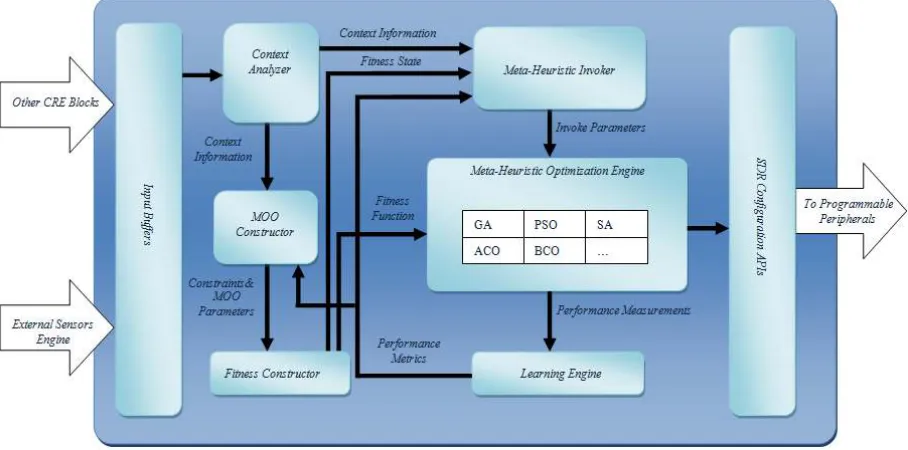
Hence the key problem facing this design choice is the mechanism of choice of a particular meta-heuristic algorithm, together with its optimization parameters; that would maximize/minimize a particular utility reflecting a particular context and/or goal. Figure 4 illustrates our proposed Adaptation Engine (AE) architecture based on meta-heuristic algorithms and techniques. The proposed design in Figure 4 demonstrates the key building block of the AE; namely, the Meta-Heuristic Optimization Engine which contains a dynamic implementation of all the major meta-heuristic algorithms. Dynamic implementation indicates that the optimization parameters of the meta-heuristic algorithms are configurable. Moreover, the utility (fitness) function itself is an argument for the algorithm.
To enable the radio from changing the transmitted waveform according to the resulting optimized OPS found by the AE during the optimization process, an underlying SDR architecture is assumed. The Meta-Heuristic Optimization Engine drives the SDR Configuration APIs block which controls the different building blocks and peripherals of the CR. The Meta-Heuristic Invoker (Invoker) is responsible of the invocation of a specific meta-heuristic algorithm residing in the Meta-Heuristic Optimization Engine, together with its optimization parameters. The Invoker uses the Context Analyzer, for analyzing the context surrounding the environment of the CR. The context information includes information related to the context surrounding the radio. Context is defined as any information that can be used to characterize the situation of an entity [18, 19]. The entity could be a person, a place, a physical or a computational object. Context information includes location, identity, activity, and time. The Context Analyzer receives raw data from the Input Buffer block which acts as the external interface between the AE and other parts of the radio (sensors) and the CRE.
The Invoker also makes use of the fitness state information which characterizes important information about the fitness like its type (single vs. multiple objectives), number of arguments, and the nature of the mathematical function of the goal, the fitness function composition (e.g. a monotonic function, a non-monotonic function like concave or convex functions, or a logistic function like sigmoid or error function [20]). The type of the fitness and its constituents' types affect the choice of the meta-heuristic algorithm to be invoked since according to our analysis some meta-heuristic algorithms perform better for some fitness forms than others. Another important building block in the engine is the Multi-Objective Optimization Constructor (MOO Constructor) block. The MOO Constructor block is responsible of constructing the constraints to be fed into the Fitness Constructor; which constructs the fitness (utility) function used for the optimization problem. The performance of the selection of a specific meta-heuristic algorithm for a specific context or problem to meet a specific objective is monitored continuously by the AE. The AE undergoes continuous performance measurements on the resulting solution and fitness value after the invocation of a certain algorithm by the Learning Engine.
suitable for solving the optimization problem at hand. It should be noted that the Learning Engine feeds back the Invoker, and the MOO Constructor to tune their future decisions regarding the meta-heuristic algorithm invocation and the constraints construction. The combination of the MOO and Fitness Constructors together with the Learning Engine forms the evolutionary nature of the proposed architecture. The ideal architecture presented in Figure 4 can
be used as a reference design for future implementations and is considered as a target architecture that enables the radio to be used in many different contexts and applications. The ability to infer the suitable optimization problem from the surrounding context and construct the utility function accordingly is considered as the top notch target to achieve autonomous and cognitive behavior.
Fig. 4 Ideal Generic Adaptation Engine Architecture (IGAEA) Based on Meta-Heuristic Techniques
5.1
Invoker Algorithm
The Invoker algorithm is the algorithm used by the Invoker to select the appropriate meta-heuristic algorithm suitable for the current context, constraints, and optimization problem. Below is a pseudo code of the proposed Invoker algorithm:
Invoker Algorithm
Input: Context Information, Fitness State
1. Recall from memory if a particular meta-heuristic algorithm was recorded to be the optimum algorithm for the current optimization problem for the current context
2. If recall was a success
2.1. Use the stored meta-heuristic and adopt the stored optimization parameters
2.2. Randomly choose any other unused meta-heuristic algorithm
2.3. Randomly choose optimization parameters and run the optimization procedure in the background
2.4. Record the resulting performance and store in memory
2.5. If measured performance of the newly selected background heuristic outperformed the results generated from the recalled algorithm
2.5.1. Record the background algorithm as the optimum meta-heuristic algorithm to be used for the current problem and context
3. Else
3.1. Randomly choose any other unused meta-heuristic algorithm
3.2. Randomly choose optimization parameters
3.3. Record the resulting performance and store in memory
4. End
6.
Implemented Architecture
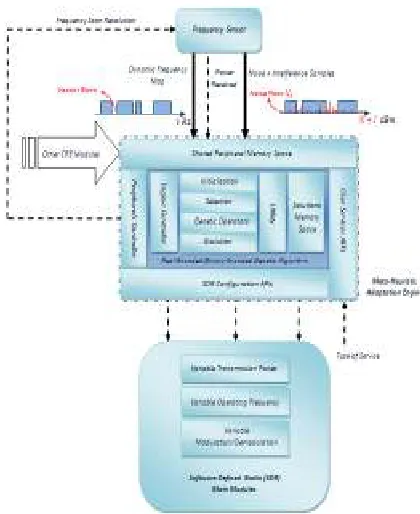
[image:6.612.81.535.152.377.2]Fig. 5 AE Architecture Based on GA – First Generation Architecture [21]
The First Generation AE architecture uses Real-coded Genetic Algorithms to optimize the OPS; namely, Modulation technique, transmitted EIRP levels, and operating frequency; in order to minimize the link BER with least possible device power consumption.
6.1
Engine Method of Work
A typical engine method of work in a typical communication situation: Given is a situation where, a noisy fading channel impairs signals passing through. No equalization techniques are used to compensate for the channel impairments. For a minimization of the BER goal, it is required to transmit the signals through the channel such that the BER is minimized for a particular transmitted EIRP, at a specific data rate (corresponding to a particular service), and at a certain operating frequency. Based on the channel characteristics, operating frequency, transmitted EIRP, modulation type, and distance of the transmitting node; mathematical formulas for BER and link budget calculations are used to calculate the expected BER for the established link between the two transceivers. Genetic Algorithms (GA) are then used to determine the best combination of the aforementioned variable controlled parameters that could be changed to minimize the BER. However, after successfully finding the solution, there are no guarantees that the selected parameters set will actually achieve the required objective; that's to minimize the BER.
This could be due to several reasons:
1) The communication channel by nature is highly variable. Although we employed statistical models for calculating the expected received power levels, and hence the BER, however, at another time instant, the appearance of a new clutter in the signal path; could also impair the channel for an important instant during the communication; a situation which might not be tolerated by the user in some sensitive communication contexts.
2) Modeling the communication channel by using BER and link budget mathematical formulas, even by employing statistical models; is by far considered as an inaccurate model for sensitive applications. Eminent channel models are usually tested in specific settings, locations and operating conditions. It is not generalizable in the sense that we could confidently say that a CR employing these models could operate in any environment and achieve the optimum operating parameters set to achieve certain objectives.
Hence, it is essential to use a feedback mechanism to account for any needed adjustments in the link budget after comparing the measured BER and the AE-calculated BER. These adjustments are then added in the engine calculations for increasing the accuracy of the results in the following engine runs whenever the engine encounters similar situations in the future. The process is repeated for several iterations until a certain configuration that achieves a required BER target is reached, and channel modeling differences are accounted for inside the engine. No need to analyze the channel response a priori in this case, and no need to devise and use sophisticated channel models in the engine. After initializing the two transceivers and reaching a common configuration that bests suits the channel for a certain objective, the AE enters into Idle mode, where normal communication procedures can proceed. GAs are used as the basis of the proposed AE design; due to their inherent parallelism, and their ability to solve complex multi-dimensional problems in the shortest time possible.
GAs are optimization methods that mimic natural evolution. Optimization is based on the development of the population comprising a certain number of chromosomes. The chromosomes represent a possible solution set for the optimization problem; which could be the maximization or the minimization of a specific objective function. The population size indicates the number of parallel solutions that would be tried in parallel to converge towards the optimum/sub-optimum solution. The development of the population is regulated by means of two genetic operators; namely, crossover and mutation [21].
6.2
Engine Implementation and Validation
The AE is implemented and tested using MATLAB version 7.0.0.19920 (R14). The engine is designed to generate a number of equiprobable random frequency values (equal to the preset number of individuals inside the population) between the minimum and maximum sensor frequency operating ranges in accordance to the hardware capabilities of the frequency sensor. Same applies for the transmitter power and modulation types used. Targeting applications related to disaster communication systems and emergency communications establishments, experiments were conducted to simulate such events; and to assess the success of the AE response in terms of its accuracy and dynamic response time. For that purpose, the experimentation and validation procedures target four main objectives as follows:
1) Accuracy Assessment: to develop a metric that represents, and measures the degree of correctness of the solutions produced by the engine under different circumstances;
3) Performance Assessment: to develop a metric that represents, and measures the performance of dynamic operation of the engine under different circumstances;
4) Performance Validation: to measure the extent in which the performance assessment of the engine does not violate the operational performance constraints specified in disaster incidents and emergency situations;
The implemented architecture proved to provide validated accuracy and performance results as shown in Table 1 for a sample experimentation procedure demonstrated in [21].
Table 1: Reliability and Performance Assessment of the AE
KPI
Dynamic Response Time
Maximum Allowable EIRP
Transmitted
EIRP Reliability
Mean 0.94 sec 10.03 dB 8.13 dB
97% Median 0.92 sec 10.00 dB 8.36 dB
Std. Dev.
0.10 sec 0.30 dB 1.38 dB
Min. 0.86 sec 10.00 dB 4.51 dB
Max. 1.87 sec 13.00 dB 11.48 dB
Effective emergency notification systems entail alerts to be provided in a time of the order of three minutes on the average. This period is the time between the moment when the message is submitted to the notification system and the moment the message is provided to the citizen [22]. However, for rapid emergencies, there might be a need to have a quicker response in the order of seconds (10 seconds for an earthquake [22]). In all cases the implemented architecture is shown to have response times less that that required for emergency systems.
7.
Conclusions and Future Work
In this paper, a novel AE architecture employing meta-heuristic techniques to dynamically and autonomously self-adapt to external varying stimuli, in order to reach some objectives, is presented. The adaptation process sets a group of parameters on the physical layer of the Cognitive Radio (CR) terminal, assuming an underlying Software Defined Radio (SDR) architecture in order to provide the radio ability to change its waveform according to the optimized parameter set achieved during the optimization process. The implemented architecture is shown to be suitable for applications of emergency and disaster relief communication systems. More future work is still needed to improve the decision-making capability of the radio under varying levels of stimuli and user requirements. Extending the applicability of the engine in time sensitive applications like military combat situations remains still to be one of the most challenging aspects of the engine implementation and design.
8.
REFERENCES
[1] J. Mitola, III, “Cognitive Radio for Flexible Multimedia Communications”, Mobile Multimedia Communications, 1999. (MoMuC '99) 1999 IEEE International Workshop on, pp. 3 –10, 1999.
[2] P. Thagard, "Cognitive Science", The Stanford Encyclopedia of Philosophy (Summer 2010 Edition),
Edward N. Zalta (ed.), URL =
http://plato.stanford.edu/archives/sum2010/entries/cognit ive-science.
[3] J. Mitola, “Cognitive radio: An integrated agent architecture for software defined radio,” Doctor of Technology, Royal Inst. Technol. (KTH), Stockholm, Sweden, 2000.
[4] J. Mitola et al., “Cognitive radio: Making software radios more personal,” IEEE Pers. Commun., vol. 6, no. 4, pp. 13–18, Aug. 1999.
[5] S. Haykin, “Cognitive Radio: Brain-Empowered Wireless Communications,” IEEE Journal on Selected Areas in Communications, vol. 23, no. 2, Feb. 2005.
[6] P. Thagard, Mind: Introduction to Cognitive Science, 2nd ed. Cambridge, Massachusetts, London, England: A Bradford Book, The MIT Press, 2005.
[7] J. Greene. Memory, Thinking and Language - Topics in Cognitive Psychology. Methuen & Co. Ltd., 1987.
[8] R. A. Brooks, "A Robust Layered Control System For a Mobile Robot," IEEE Journal of Robotics and Automation, Vol. 2, No. 1. (1986).
[9] R. Pfeifer and C. Scheier, Understanding Intelligence, Cambridge, MA: MIT Press, 1999, pp. 6-25.
[10] B. J. Baars and N. M. Gage. Cognition, Brain, and Consciousness: Introduction to Cognitive Neuroscience. 2nd Edition, Academic Press of Elsevier, 2010.
[11] L. M. Adleman, "Molecular computation of solutions to combinatorial problems," Science 266 (5187): 1021– 1024, (1994).
[12] M. Amos, “Theoretical And Experimental DNA Computation,” Berlin : Springer, 2005.
[13] D. Reisberg. Cognition: Exploring the Science of the Mind. Fourth Edition, New York, USA: W. W. Norton & Company, 2010.
[14] S. Legg, and M. Hutter, "Universal Intelligence: A Definition of Machine Intelligence," in Journal of Minds and Machines, vol. 17, no. 4, Dec. 2007.
[15] T. R. Newman, B. A. Barker, A. M. Wyglinski, A. Agah, J. B. Evans, and G. J. Minden, “Cognitive engine implementation for wireless multicarrier transceivers,” Wiley Journal on Wireless Communications and Mobile Computing, vol. 7, no. 9, pp. 1129–1142, 2007.
[16] A. He, J. Gaeddert, K. Bae, T. R. Newman, J. H. Reed, L. Morales, and C. Park, “Development of a case-based reasoning cognitive engine for IEEE 802.22 WRAN applications,” ACM Mobile Computing and Communications Review, vol. 13, no. 2, pp. 37–48, 2009.
[17] Ashwin Amanna, Daniel Ali, David G. Fitch, and Jeffrey H. Reed, “Hybrid Experiential-Heuristic Cognitive Radio Engine Architecture and Implementation,” Journal of Computer Networks and Communications, vol. 2012, Article ID 549106, 2012. doi:10.1155/2012/549106.
[19] I. Sygkouna et al., "Context-Aware Services Provisioning on Top of Active Technologies," IFIP 5th International Conference on Mobile Agents for Telecommunication Applications (MATA 2003), Marrakech, Morocco 8-10.10, 2003.
[20] Y. Zhao, S. Mao, J. O. Neel, and J. H. Reed, “Performance Evaluation of Cognitive Radios: Metrics, Utility Functions, and Methodology,” in Proceedings of IEEE, vol. 97, no 4, April. 2009.
[21] R. A. Fathy, A. A. Abdelhafez and A. Zekry, "Meta-Heuristic based Adaptation Engine for Cognitive Radio Systems,"International Journal of Computer Applications Vol. 64, No. 18 pp:53-60, February 2013. Published by Foundation of Computer Science, New York, USA.
[22] TS 102 182: "Emergency Communications (EMTEL); Requirements for communications from authorities/organizations to individuals, groups or the general public during emergencies", 2006.
9.
AUTHER’S PROFILES
Ramy A. Fathy; received the M.Sc. Degree in Electrical Engineering from Ain Shams University, Cairo, Egypt in 2007. Currently he is director of digital services policies at the Egyptian National Telecommunication Regulatory Authority (NTRA) where he is leading several digital services policies and regulation activities in the Egyptian market.
Mr. Fathy published several papers in specialized conferences and periodicals in addition to one book in Electronics.
Abdelhalim Zekry; graduated from Cairo University in Egypt in 1969. He was offered the M.Sc. degree in 1973 from the same university. He worked as a scientific coworker at TU Berlin, where he got his PhD at 1981. Currently, he is a professor of Electronics at the faculty of Engineering, ASU, Egypt where he is driving research on electronics for communication especially the implementation of advanced communication standards using DSP platforms. Prof. Zekry published 133 papers in specialized conferences and periodicals in addition to three books in Electronics.
![Fig. 1. Mitola's Cognition Cycle in CR [4]](https://thumb-us.123doks.com/thumbv2/123dok_us/8076516.781069/2.612.323.534.191.418/fig-mitola-s-cognition-cycle-cr.webp)