The Senses Framework: improving care for older people
through a relationship-centred approach. Getting Research
into Practice (GRiP) Report No 2.
NOLAN, M. R., BROWN, J., DAVIES, S., NOLAN, J. and KEADY, J.
Available from Sheffield Hallam University Research Archive (SHURA) at:
http://shura.shu.ac.uk/280/
This document is the author deposited version. You are advised to consult the
publisher's version if you wish to cite from it.
Published version
NOLAN, M. R., BROWN, J., DAVIES, S., NOLAN, J. and KEADY, J. (2006). The
Senses Framework: improving care for older people through a relationship-centred
approach. Getting Research into Practice (GRiP) Report No 2. Project Report.
University of Sheffield.
Copyright and re-use policy
The Senses Framework:
Improving Care For Older People
Through a Relationship-Centred Approach
Mike Nolan
1Jayne Brown
1Sue Davies
1Janet Nolan
1John Keady
21
School of Nursing and Midwifery, University of Sheffield
2School of Health, Community and Education Studies,
Northumbria University
ISBN 1-902411-44-7
Copyright © 2006 M Nolan, J Brown, S Davies, J Nolan, J Keady Design and Print: NORTHEND CREATIVE PRINT SOLUTIONS
Acknowledgements
We would like to thank the numerous older people, family carers and practitioners who have contributed over the years to the work upon which this report is based. Recognition is also due to the former English National Board for Nursing, Midwifery and Health Visiting who funded the
major project underpinning much of this report. The important contributions of Professor Gordon Grant, Professor Jane Seymour, Dr Elizabeth Hanson and Claire Ferguson to the initial phase of the AGEIN Project are also acknowledged. As usual, Helen Mason has provided invaluable support and expertise, not only in producing this document, but
also throughout work in the field of gerontology over the last 11 years.
About the Authors
M
Miikkee NNoollaannis Professor of Gerontological Nursing at the University of Sheffield. He has long-standing interests in the needs of family carers and of vulnerable older people in a range of care environments, and has published extensively in these areas. He has worked in
the field of gerontology for over 20 years.
JJaayynnee BBrroowwnnis a Lecturer in Nursing at the University of Sheffield. She worked as a staff nurse in Accident and Emergency and in the community before moving into nurse education. Jayne has particular interests in practice development in gerontological nursing and the care
of older people and family carers in acute care settings.
S
Suuee DDaavviieessis Senior Lecturer in Gerontological Nursing at the University of Sheffield. Before moving into higher education, she worked as a health visitor and as a senior nurse within a unit providing services for older people. Current research interests focus on the needs of older people and family caregivers in continuing care settings and preparation for
working with older people. In 2002, Sue was awarded a three-year Department of Health post-doctoral fellowship to explore issues relating to quality of life and quality of care for
older people living in care homes and their families.
JJaanneett NNoollaannis a Lecturer in Nursing at the University of Sheffield. She worked as a health visitor before moving into nurse education. Janet has particular interests in health care in the community, especially the care older people receive from district nurses, practice nurses
and health visitors.
JJoohhnn KKeeaaddyyis Professor of Admiral Nursing at Northumbria University. He has long-standing interests in the needs of people with dementia and their family carers. He is founding
Welcome back to the GRIP
-‘Getting Research
into Practice’ Reports
This is the second of the occasional Getting Research into Practice (GRIP) reports that showcase studies of particular interest and relevance to current multidisciplinary debates in health and social care. The subject of this report, improving the care of older people and promoting work in this field as an attractive career option, could hardly be more topical or important.
Older people are major users of services but, despite several recent initiatives such as the National Service Framework for Older People, there remain widespread concerns about the quality of care they receive. Indeed, the last few weeks have seen the launch of a new Government campaign to ensure that older people receive dignified and sensitive care. The fact that such a campaign is needed speaks volumes about the work that is still required if quality is to be improved across the board.
Older people often have complex needs arising from long term conditions that challenge a health care system that still focuses predominantly on cure. Consequently, working with older people has never had a particularly high status and does not have the quodos
associated with more ‘hi tech’ areas. Difficulties in recruiting and retaining high quality staff have not been helped by the lack of an appropriate framework to give direction to practice and education. To make matters worse, the emphasis on individual autonomy and
independence beloved of policy makers does not reflect the interdependencies that mark society today. This report describes the evolution of a framework for practice, the Senses Framework, that has emerged over several years and has been developed in close
collaboration with older people, family carers, practitioners and students. The use of this framework within a relationship-centred approach to care is described, and it is suggested that this can provide a better way of ‘enriching’ the care older people receive, whilst also paying close attention to the needs of family and paid carers. We hope that its publication will mark an important step forward in improving the status of this vital area of practice.
C
Co
on
ntte
en
nttss
Executive Summary...
7
Introduction: What is this report about? ...
11
Working with older people: do we need a framework for practice?...
15
What do student nurses think about working with older people? ...
37
Lessons from the case studies: what makes for an ‘enriched
environment’ of care? ...
51
Making the seemingly insignificant significant: establishing the
relevance of the Senses to other groups ...
93
Where to from here? The Senses Framework, relationship-centred
care and future developments ...
113
References ...
133
Appendices
1 – Conceptual Phase: Search and Synthesis Strategy ...
145
2 – Survey Method and Copy of Perceptions Questionnaire ...
147
3 – Focus Groups and Observational Visits ...
151
Figures
1 – Factors promoting and sustaining a ‘positive culture’ in the acute
1 – care of older people ...
25
2 – Influence of the Senses on student focus...
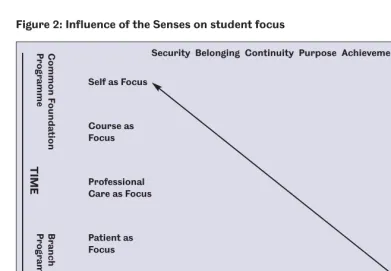
90
Tables
1 – The Six Senses ...
22
2 – Key themes from the literature review on dignity ...
24
3 – Factors shaping the experience of ‘care’ for older people, their
3 –
families and staff ...
26
4 – A Comparison of the Senses with existing theoretical
4 –
frameworks and recent empirical studies ...
34
5 – The Six Senses in the context of caring relationships ...
35-36
6 – Student nurses’ sample characteristics...
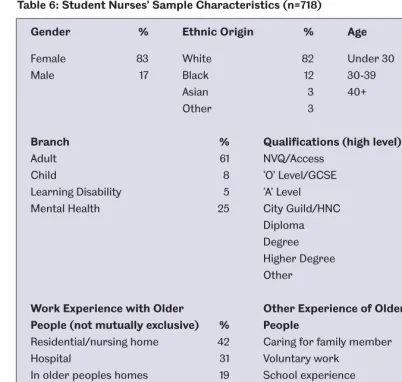
39
7 – Students’ perceptions of working with older people...
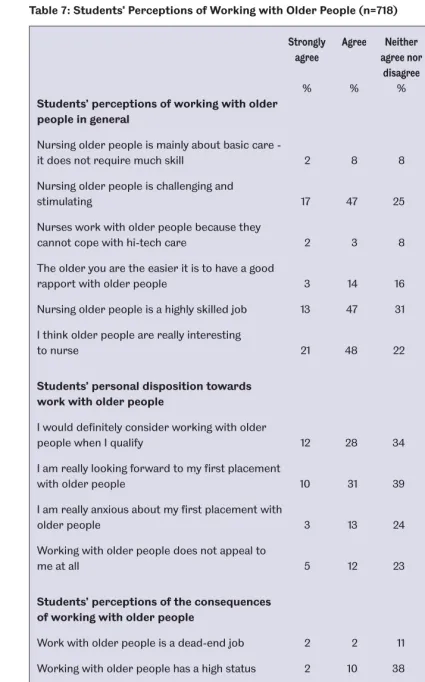
40
8 – Students’ change of focus over time ...
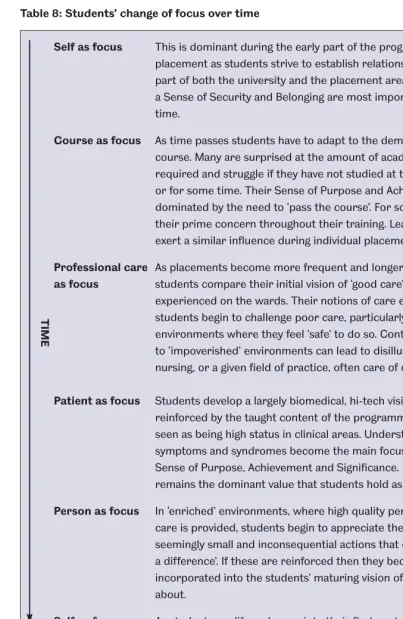
91
9 – The characteristics and facilitators of the Senses in
EXECUTIVE SUMMARY
Responding appropriately to the health care needs of older people and those with long standing conditions represents the greatest future challenge to health and social care systems globally.
Work with older people is generally not an attractive career option, and recruiting and retaining sufficient staff to provide the quality and amount of care required is a concern worldwide.
Modern day health care is dominated by a curative or restorative model, with ‘success’ being defined largely in these terms.
A wide range of disciplines across the field of health and social care lack an appropriate framework for practice with older people when cure or restoration of function are not achievable.
Within nursing, caring is often seen as the defining attribute of the profession but successive studies over the last 40 years have indicated that gerontological nursing has failed to find its ‘proper focus’.
The former English National Board for Nursing, Midwifery and Health Visiting (ENB) was concerned that:
– existing education at both pre and post-registration levels did not provide practitioners with the knowledge, skills and attitudes they needed to care effectively for older people;
– students did not find gerontological nursing an attractive future career option. The ENB commissioned a 31⁄
2year project entitled ‘Longitudinal study of the effectiveness of educational preparation to meet the needs of older people and their carers’ to see if it would be possible to identify an ‘epistemology’ of practice to guide the education of nurses working with older people, and to provide a sense of therapeutic direction for nurses in their day-to-day work.
The study, summarised in this report, was termed AGEIN (Advancing Gerontological Education in Nursing) by the project team and is the largest project of its kind ever completed.
AGEIN was a multi-method, multi-phase project with both conceptual and empirical elements:
– The conceptual phase comprised a systematic, explicit and reproducible synthesis of the existing theoretical and empirical literature involving an initial consideration of some 22,000 references and a more detailed reading of approximately 2,500. – The empirical phase included:
b) Longitudinal focus groups (n = 67) with students in 4 case study sites over a 3 year period.
c) Visits to 33 clinical placement areas identified by students as providing a ‘good’ learning experience.
d) Studies of post-registration education in gerontological nursing (not reported here). e) A series of detailed workshops with practitioners, older people and family carers to
refine the emerging results.
The conceptual phase, together with empirical work from a related project ‘Dignity on the Ward’ (Davies et al 1999), identified the Senses Framework as a potential framework for practice. These studies suggest that in the best care environments all participants experience a Sense of:
Security – to feel safe
Belonging – to feel part of things
Continuity – to experience links and connection Purpose – to have a goal(s) to aspire to
Achievement – to make progress towards these goals Significance – to feel that you matter as a person
The potential value of the Senses to understanding students’ experience of work with older people was explored over the course of their training.
The detailed surveys revealed that students generally had positive feelings towards older people but were put off work with this group largely on the basis of negative practice experiences.
Analysis of the extensive data revealed the existence of what we term ‘impoverished’ environments of care in which students where exposed to ageist attitudes and poor standards of care which discouraged them from working with older people.
Conversely, if students experienced ‘enriched’ environments of care, this could ‘transform’ their view of gerontological nursing. Indeed students who rated their practice placements as positive were far more likely to: perceive work with older people as interesting, challenging and stimulating; actively state that they would want to work with older people when they qualified; be far less likely to see work with older people as having a negative effect on their future careers.
Enriched environments of care could be understood in terms of the Senses Framework. In such environments students experience:
– A Sense of Security and feel safe to explore the nursing role in an enabling and supportive learning environment.
– A Sense of Belonging as part of the ‘ward team’, who are valued on the placement and encouraged to be part of things.
– A Sense of Purpose in that their own goals and learning needs were recognised by the placement and accorded some priority.
– A Sense of Achievement so that they could meet their learning objectives and then go on to explore other aspects of working with older people.
– A Sense of Significance in that they ‘mattered’ and their contribution to the placement was also seen to matter.
The AGEIN project identified numerous practical ways in which the Senses could be created for students (see Table 9 on pages 116-122).
While the Senses are not intended to be hierarchical, the study suggested that they tend to occur in a sequence. Early in their training, and on each placement, students need to feel secure and that they belong, this was initially the most important attribute of an enriched environment. If students were not made to feel safe and were not welcomed on the placement then they learned little, and their Sense of Purpose and Achievement was simply to ‘survive’ the placement and move on. In such placements students did not feel significant.
On placements where students were made to feel safe quickly, and felt part of the team, then they addressed their own learning needs rapidly and soon went on to explore a much more diverse set of opportunities which provided them with a far broader and more positive view of work with older people.
The data also suggested that the ‘focus’ of students attention and effort varied. The initial focus was on ‘self’, and students found it difficult to move beyond this unless they experienced a Sense of Security and Belonging.
Once students felt safe and that they belonged, their focus shifted to the ‘course’
requirements, which largely revolved around their learning objectives for their placements. These initially defined a student’s Sense of Purpose and Achievement. If students had confidence that their learning objectives could be achieved, then they widen their Sense of Purpose and Achievement to focus on:
– Professional care – where they explored the values and practices that refined their developing ‘vision’ of nursing
– Patient as focus – where attention was turned to the medical need of the patient – Person as focus – where students saw beyond an individual’s medical needs and
learned to value the ‘person behind the condition’
If placements actively encouraged students to explore ‘person as focus’, then they were more likely to develop an holistic view of nursing and see gerontological nursing as a positive career choice.
The relevance of the Senses were also explored with a range of other stakeholders (practitioners, older people, family carers) in interactive workshops and the Framework was refined and developed further as a result. It received strong support from all of these groups.
The Senses are more likely to be achieved when they are applied in the context of a relationship-centred approach to care, rather than a person-centred model. The term relationship-centred care was originally coined in the US by a task force
established to review the suitability of the American health care system to meet the health challenges of the future (Tresolini and the Pew Fetzer Task Force 1994). They concluded that the current individual, disease and cure based system was inadequate and instead proposed an alternative model based on a relationship-centred approach that addresses the social, economic, environmental, cultural and political contexts of health and also captured‘the interaction among people as the foundation of any therapeutic or healing activity’.
These interactions are reflected in multiple sets of relationships between: practitioners and patients/families; practitioners and communities; and multidisciplinary groups of practitioners. The aim of the task force was to create a ‘transformed approach to health care, an approach that has at its centre the relationships within and among persons within which truly comprehensive and contemporary care can occur’.
The task force argued that the three dimensions of relationship-centred care outlined above creates a more integrated and comprehensive view which ensures a balance between the needs of patients and families, communities and practitioners. They also concluded that there was a need for further research to ‘explicate the
dimensions of relationship-centred care’. We believe that the Senses Framework captures these dimensions, and in asserting that enriched care environments can only exist when all parties experience the Senses it achieves the ‘balance’ that relationship-centred care requires.
The factors needed to create the Senses, and therefore enriched care environments, have been explored in a range of contexts, including: acute hospitals; community settings; care homes; and to a lesser extent, when working with people with dementia.
Although most of the empirical work with the Senses Framework has been completed with nurses it is potentially of relevance across disciplines and care settings.
INTRODUCTION: WHAT IS THIS REPORT ABOUT?
Clearly, nurses working on geriatric wards are not to blame for their lack of knowledge and skill. These nurses are the product of a training system that taught them a series of tasks and neglected to provide adequate information about care of the elderly. The central problem in geriatric nursing is the central problem in all nursing, ‘nurses do not know why they do what they do.’
(Wells 1980, p129)
‘Nurses working with older people have always experienced difficulties in articulating the knowledge, skills and expertise underpinning their practice and their impact on patient care.’
(McCormack 2001, p290)
The above two quotations were written over 20 years apart, and during that period numerous studies have explored ‘why nurses do what they do’, many of them focussing on nursing older people. However, apart from a change in language, with ‘gerontological nursing’ replacing ‘geriatric nursing’, and ‘older people’ now being preferred to ‘the elderly’, the quotations would suggest that little has changed. The question therefore remains, are we really any closer to ‘articulating the knowledge, skills and expertise’that nurses use, or should use, when working with older people? We would like to suggest that considerable progress has indeed been made, and in this report we will describe both an approach to work with older people and their families: Relationship-Centred Care (Tresolini and the Pew Fetzer Task Force 1994) and a framework: the Senses Framework (Nolan 1997, Davies et al 1999, Nolan et al 2001, 2002, 2004) that we believe can inform the education and training of practitioners, and also provide a means of working more closely with older people and their families in a way that values the contribution that everybody makes.
As was noted in the Foreword, this publication is the second of the GRIP (Getting Research into Practice) reports, the aim of which is to make the results of research available to as wide an audience as possible. Therefore, the intention is that GRIP reports are produced in a format and style that is accessible and easy to read, and which highlights the ways in which research and practice can help to inform each other. Although most of the work upon which this report is based focussed on the nursing role, the content is relevant to a far wider audience. Indeed we believe that it will be of interest to practitioners across the field of health and social care. This report is therefore partly about how practitioners can work in partnership with older people and their family carers to ensure that they receive the best possible care, based on a ‘whole systems’ approach in which all agencies work closely together. Achieving ‘joined up’ working is a major policy goal but, despite considerable recent progress, a great deal remains to be done before genuine partnerships are formed (Audit Commission 2004a, DoH 2006).
Such partnerships are more likely to succeed when people communicate well, and in order to do so they ‘must operate with the same concepts and use the same vocabulary’(Zgola 1999). We hope that this report will provide a set of concepts and ideas that are relevant, not only to practitioners, but also to older people and their families, and that ‘speak’ to them in a
language that they understand.
working with older people and their family carers. This brief introduction sets the scene by presenting an outline of the major study upon which this report is based.
Background to this report: The AGEIN Project
This report draws mainly on the results of a 31⁄
2year longitudinal study commissioned by the English National Board for Nursing, Midwifery and Health Visiting (ENB). The title of the full study was called ‘Longitudinal study of the effectiveness of educational preparation to meet the needs of older people and their carers’, but the Project Team (the authors of this publication and other colleagues) referred to the study as AGEIN (Advancing Gerontological Education in Nursing), and this will be used throughout this report.
To the best of our knowledge AGEIN is the largest study of its kind ever undertaken, but it is not our intention to provide a detailed account of the methods used here. For interested readers a brief description can be found in the Appendices, and those wanting more detail are referred to Nolan et al (2001, 2002).
The AGEIN Project had a number of goals. The overall aim was to explore how education and training can help to develop a knowledge base to inform work with older people, whilst also promoting a positive predisposition toward such work. The ENB considered this particularly important for two reasons. Firstly, it was concerned that the existing educational preparation of nurses, at both pre-registration and post-registration levels, did not provide the knowledge and skills that practitioners needed. Secondly, there was growing evidence to suggest that many nurses did not find work with older people an attractive career option and this caused considerable difficulties in recruiting newly qualified staff to work in the field, and also in retaining sufficient staff to provide the quality and level of care required. These two issues remain a major concern, particularly given the increasing numbers of older people.
Indeed, as the World Health Organisation (2006) has recently noted, such is the shortage of skilled gerontological workers in the developed world that staff are being recruited from developing countries, exacerbating shortfalls there. In response to WHO’s call for action AGE (2006), the European Older People’s Platform has urged worldwide efforts to improve access to appropriate training for work with older people for all health and social care practitioners, as well as family carers. The contents of this report, and the findings of the AGEIN study, could therefore hardly be more timely or significant.
AGEIN was a multi-method, multi-phase longitudinal study with several components, some of which were undertaken concurrently, some consecutively. It comprised both conceptual and empirical elements as follows:
The conceptual phase involved a comprehensive consideration of the existing theoretical and empirical literature in relation to the care of older people, that was systematic, explicit and reproducible (Nolan et al 1997).
to shape gerontological nursing practice and education. The first section of this report briefly summarises the results of the conceptual phase of AGEIN and traces the
emergence of the Senses Framework up to the point that the detailed empirical phase of the AGEIN project began.
The empirical phase of AGEIN comprised several elements:
– Detailed surveys of student nurses (n = 718) in four selected schools of nursing, and qualified nurses (n = 1500) (see Nolan et al 2002) using specially designed
questionnaires to test both their knowledge about the situation of older people living in the UK, and their perceptions of working with older people as a nurse. In this report we focus mainly on students’ perceptions of work with older people, and the influence that prior experience of working with older people had on these perceptions (see Appendix 2 for a copy of the questionnaire used).
– In-depth case studies in four purposively selected schools of nursing that involved longitudinal focus groups over a 3 year period with students at differing points in their training, and visits to clinical placements that students had identified as providing ‘good’ learning experiences (see Appendix 3 for a brief description of methods employed). – AGEIN also explored the post-registration preparation of practitioners to work with
older people, with a particular focus on community based nurses. This work is not considered in this report (see Nolan et al 2002 for a detailed account).
– The relevance of the Senses Framework was further explored in a series of interactive workshops involving qualified and unqualified practitioners from a range of disciplines, as well as older people, and family carers.
On the basis of data from the questionnaires, focus groups, and observational visits we identified what we termed ‘impoverished’ and ‘enriched’ environments of care (Nolan et al 2002, Brown 2006), and were able to relate the characteristics of an ‘enriched’ environment to the Senses Framework. An overview of an enriched environment, and the relevance of the Senses to creating such an environment, lie at the heart of this report.
WORKING WITH OLDER PEOPLE: DO WE NEED A
FRAMEWORK FOR PRACTICE?
The relatively marginalised position that older people occupy in modern day health and social care systems is best understood in the context of geriatric medicine and, in particular, the influence that the ‘medical model’ of care has exerted on our views of what constitute successful treatment (Wilkin and Hughes 1986, Evers 1991). Wilkin and Hughes (1986) argue that the emergence of geriatric medicine as a distinct speciality has been the single most important contribution of the National Health Service (NHS) to the care of older people, but that it had both positive and negative effects. In their brief but insightful account they attribute the ascendancy of the current hospital based system of care to the voluntary hospitals of the 1800’s, which became centres for scientific medicine, the training of doctors, and the treatment of acutely ill patients. At this time ‘the old and chronically ill’were termed the ‘incurables’ and consigned to the ‘workhouse’. The success of the voluntary hospitals in treating acute conditions saw the evolution of a professional elite, the hospital consultants, which implicitly reinforced a ‘cure’ based health care system. Wilkin and Hughes (1986) contend that from its inception the goals of the NHS in the UK were never explicitly stated, and that consequently the then dominant curative/medical model was adopted by default. Interestingly, ageist attitudes were evident from the inception of the NHS, with the Beveridge Report warning about the resource implications of being ‘lavish to old age’. Similarly,
recognition of geriatric medicine as a medical speciality was heavily resisted by acute
medicine and surgery who, according to Felstein (1969), could see ‘no value in spending time, money, energy and bed space on redundant senior members of society’. Indeed, probably the only reason that geriatric medicine was eventually recognised was that it offered a solution to a growing problem for acute medicine and surgery; how to discharge the elderly ‘bed
blockers’ (Wilkin and Hughes 1986). The pejorative language of the 1800’s, which labelled older people the ‘incurables’, had been replaced by an equally negative term by the mid 1900’s. However, it was here that geriatric medicine was seen to serve a useful purpose by allowing acute specialities to discharge older people who were ‘medically’ fit, but because of complex social needs could not be sent home.
The urgent challenge for the new speciality of geriatric medicine was to find an alternative measure of ‘success’ for older people who could not be ‘cured’. This they did by applying the principles of rehabilitation:
‘This [defining success]they have achieved by substituting rehabilitation for cure. Medical interventions in geriatric medicine operate on a continuum between
dependence and independence rather than health and illness. The medical model has been shifted in the direction of a functional conception of health. In this way it is possible to achieve success measured in terms of patient throughput.’
(Wilkin and Hughes 1986)
At the time that the AGEIN project began, worrying parallels to the above logic were evident in the wider gerontological literature, with the concept of ‘successful ageing’ being one of the main areas of theoretical interest (Minkler 1996, Scheidt et al 1999, Nolan 2001). Scheidt et al (1999) pose the intriguing question: ‘what’s not to like about successful ageing?’.
However, as Minkler (1996) argues, the answer depends largely on who defines ‘success’ and the criteria that are applied. Scheidt et al (1999) contend that current definitions of
successful ageing focus largely on the absence of disease and high levels of physical and mental functioning, thus creating a vision of ‘super-ageing’ based on physically fit, creative and active older people (Feldman 1999). This further marginalises frail older people who cannot meet such criteria, and reinforces dependency as a sign of failure. Such concerns are particularly relevant to practice disciplines.
For example, the impact that progressive patient care had on nursing was significant, especially for practitioners working in continuing care settings. In the first major piece of nursing research on the care of older people in the UK, Doreen Norton and colleagues (Norton et al 1962) argued that the care of the ‘irremediable’ patient was ‘true nursing’ and that there was a need to establish a new approach to work with older people that would help to realise nursing’s full potential. However, successive studies over the last 40 years have demonstrated that such a new approach has proved elusive and that gerontological nursing is still ‘uncritically rooted in a curative model’(Kelly et al 2005). This is amply illustrated below. Wells (1980), following a major study in the 1970’s, concluded that ‘nurses in geriatric wards work very hard and are well meaning. However, they work very hard at, and are well being about, the wrong things’. In a powerful critique of work outside of acute care settings Evers (1981a, b, 1991) argued that nurses working with older people were left with the work that no one else wanted but lacked the legitimate authority to change things, consequently such patients were subjected to ‘aimless residual care’(Evers 1991). The failure to articulate appropriate goals for long stay patients (Evers 1991) resulted in nurses defining success in terms of ‘good geriatric care’(Reed and Bond 1991) characterised by ‘getting things done and keeping things tidy’. In summarising the state of play by the mid 1980’s, Kitson (1986)
concluded that ‘without exception studies showed that care is depersonalised, routine orientated and lacking in goal direction’. She called for the development of a geriatric model of nursing to ‘organise, control and direct care’(Kitson 1991).
However, as Nolan (1996) argued, most models of nursing, with their primary emphasis on problem solving, implicitly mimic the medical model. In reviewing the existing knowledge base for gerontological nursing Nolan (1996) contended that an appropriate approach must:
start from the perspectives of older people themselves;
be less abstract than existing models, and be presented in a way that practitioners could easily relate to;
abandon nursings’ search for a unique body of knowledge, and develop an approach that is relevant to a multidisciplinary audience, of both qualified and unqualified staff.
major goals of AGEIN was to articulate a relevant practice framework that would address the deficiencies identified above, and meet the criteria suggested by Nolan (1996). This seemed particularly important because, as Barker et al (1997) had asserted of psychiatric nursing, we felt that work with older people had yet to find its ‘proper focus’. Just prior to the start of the AGEIN project this conclusion was reinforced by two recently completed ENB studies, demonstrating that the education of student nurses concentrated predominantly on ‘hi-tech’ care, paying little attention to the needs of older people, or those with chronic illness, irrespective of their age (Davies et al 1997, Nolan et al 1997).
It was against this backdrop that the conceptual phase of the AGEIN project began, the aim of which was to explore as widely as possible the existing knowledge bases about the care of older people and, from an older person’s perspective, to consider what comprised both a good quality of life, and a good quality of care. The literature on quality of care was
considered in six related areas: acute/rehabilitative care; community care; mental health in later life; palliative care; older people with learning disabilities; and care homes (see Appendix 1).
At the time the review began the delivery of health and social care was changing in
fundamental ways. People were becoming increasingly well informed, their expectations of services were rising, and they no longer had ‘blind trust’ in professional expertise. Indeed service users and carers began actively seeking equal status (Barnes 1999). However, while considerable policy emphasis was placed on creating partnerships between service providers, older people, and their family carers, the latter two groups still remained largely marginal figures in important decisions about their treatment and care (Audit Commission 1997, Health Advisory Service 2000 1998). Consequently, widespread concerns about the quality of care older people were receiving resulted in the launch of the National Service Framework (NSF) for Older People (DoH 2001), and the needs of older people were very influential in shaping the Government’s plans for the ‘new NHS’ (DoH 2000).
The launch of a new plan for the National Health Service (NHS) in England (DoH 2000) marked the most radical series of reforms to the NHS since its formation in 1948. The far-reaching changes that were envisaged recognised that services needed to be more
responsive to future health challenges, particularly those posed by the growing numbers of older people. Fuelled by increasing concerns that older people were not receiving the quality of care that they required (HAS 2000 1998), a key aim of the plan was to eliminate ageism and to create a culture in which any form of discrimination based on the age of an individual became ‘unacceptable’. A year later the National Service Framework (NSF) for Older People (DoH 2001) was announced, which for the first time set national standards of care for older people in England. Two closely linked principles lie at the heart of the NSF: the promotion of person-centred care, and the rooting out of age discrimination in the NHS.
Several recent reports (Audit Commission 2004a, b, c, DoH 2004, 2006) suggest that there has been considerable progress towards meeting these goals, but also make it clear that much still needs to be done if older people and their families are to play a full and active role in shaping health and social care. There is, we are told, a need for a ‘fundamental shift’ in the way that we think about older people (Audit Commission 2004a), and greater recognition that:
‘A key aspect of the partnership between health and social care staff and older people and their carers is the sharing of information, knowledge and power.’
However, as Marion Barnes (1999) suggests, such a shift in emphasis poses a ‘fundamental challenge’ to the view that professional knowledge is in any way better than the knowledge held by older people and their carers. One of the main purposes of the conceptual phase of the AGEIN project was to explore the existing literature in order to see what older people themselves considered important, particularly in respect of their quality of life and quality of care, and to consider if this could help inform an appropriate practice framework for work with older people. We begin here by summarising the literature on quality of life and quality of care for older people that emerged from the conceptual phase of AGEIN.
Quality of life, quality of care
‘The findings reported at this congress led us to a profound concern for the future prospects for quality of life of older people everywhere.’
(Adelaide Declaration on Ageing, IAG 1998)
‘The drive to place quality at the heart of the NHS is not about ticking checklists – it is about changing thinking.’
(DoH 1998)
McKee (1999) argues that it is important to distinguish between quality of life and quality of care, and for frail older people in particular it is essential not simply to reduce quality of life to quality of care. Nevertheless, many older people need support to maintain a good quality of life and reciprocal and positive caring relationships have the potential to make a real
difference to the life they experience. The ways in which care is understood and provided is therefore a major consideration, and one on which there is little consensus (Davies 1998). The review wanted to consider issues relating to both quality of life and quality of care for frail older people and their carers in the context of the current policy of community care (Davies 1995).
A policy of community care is underpinned by important principles such as dignity,
independence and autonomy that are widely accepted as being inherently ‘good’, even though what they actually mean and how they can realistically be achieved is far from clear
(Williamson 1992). The aim of health care policy over the last decade has been to focus on what ‘really counts’ for patients (DoH 1997) so that measures of quality and outcome genuinely reflect the priorities of individuals, their carers and families (DoH 1998). Such goals have been reaffirmed recently (Audit Commission 2004a, b, c), as has recognition of the work that remains to be done if we are to more fully understand the needs and wishes of older people.
Globally the primary objective of care programmes for older people is to maintain individuals in their chosen environment, most usually their own home (International Association of Gerontology 1998). However, doing so whilst also ensuring an acceptable quality of life, especially for frail older people, represents a significant challenge (Audit Commission 2004c). Indeed questions have long been raised about the quality of life that frail older people living in the community enjoy, and the types of support that may be necessary to promote this (Lawton et al 1995).
should not simply focus on goals such as remediation and compensation, but capitalise upon older peoples’ residual strengths and abilities (Kivnick and Murray 1997). Minkler (1996) stresses the need to identify what helps to reinforce a sense of identity and purpose in older age, and she questions the largely uncritical acceptance of aims such as promoting
independence and successful ageing, arguing instead for a greater focus on interdependence (Minkler 1996).
Towards a wider view of ‘quality of life’
There is now greater recognition that prolonging life at any cost is less important than the quality of life lived (Clark 1995), and therefore increasing attention has been given to the way in which quality of life is defined and measured (Renwick et al 1996, Brown et al 1996, Haas 1999). Indeed quality of life is currently one of the most important outcomes of health and social care, particularly when cure is no longer an option (Martlew 1996, O’Boyle 1997). However, while Renwick et al (1996) suggest that quality of life may provide a potentially unifying concept in gerontology, there is little agreement as to what this really means (Bowling 1995, Farquhar 1995, Hanestad 1996, Haas 1999). Although there is now widespread acceptance that quality of life is complex and involves both objective and subjective elements (Farquhar 1995, Woodend et al 1997, O’Boyle 1997, Powell-Lawton 1997, Haas 1999), existing definitions are often based on the views of younger people (Stoats et al 1993, O’Boyle 1997, Reed and Clarke 1999) and are underpinned by taken-for-granted notions such as autonomy and independence (Farquhar 1995).
Debates about the relevance of ideas such as independence are increasingly more important with Holstein and Minkler (2003) arguing that the last decade has seen the emergence of a ‘new gerontology’ based on ‘successful’ ageing, that is defined exclusively by:
the avoidance of disease and disability;
the maintenance of high levels of physical and cognitive functioning; an active engagement with life.
According to Holstein and Minkler (2003), within the ‘new gerontology’ successful ageing equates with active engagement with life, and this requires high levels of physical and cognitive functioning. In essence, therefore, effective functioning has becomesuccessful ageing. Holstein and Minkler (2003) believe that this promotes an impoverished view of what might be seen as a ‘good old age’. The results of our review support such a conclusion, and also suggest that to focus on function alone perpetuates an impoverished view of what constitutes good care.
discrepancies’ between the views of professionals and those of disabled individuals (Loew and Rapin 1994, Livingston et al 1998, O’Boyle 1997, Reed and Clarke 1999) who frequently have differing values and goals (Clark 1995, Clark 1996). It has therefore been argued that existing measures of quality of life often ‘lose the human being’ (Kivnick and Murray 1997), and that we need to move beyond ‘statistical sophistication’ (Bowling 1995) towards a model of quality of life which treats the older person as a ‘full partner’ (O’Boyle 1997).
Important questions in relation to a good quality of life for older people are ‘what gives life value and meaning?’ (Loew and Rapin 1994, Clark 1995, Clark 1996, Prager 1997, Hanestad 1996) and ‘what is required to sustain, or if necessary reconstruct, a serviceable sense of self?’(Charmaz 1983, Powell-Lawton 1997). Questions such as ‘who am I’are particularly important to a better understanding of later life (Minkler 1996, Phillipson and Biggs 1998), and answering such questions requires a qualitative approach (Stoats et al 1993, Bowling 1995, O’Boyle 1997) that captures personal views (Peters 1995, Johnson and Barer 1997). For older people in particular, quality of life indicators should include attention to their life history (biography) (Clark 1996) in order to capture a sense of their past, present and future (O’Boyle 1997). The focus should not be primarily on the problems of ageing but instead promote a more balanced approach that recognises both the limitations and potential that ageing presents (Clark 1995, Fontana 1995, Wenger 1997, Kivnick and Murray 1997, Thorne and Paterson 1998). Only in this way will a more sophisticated understanding of what ‘successful ageing’ means emerge (Wenger 1997, Baltes and Carstensen 1996).
What is quality of life and successful ageing?
Coleman (1997), one of the foremost psychologists of ageing in the UK, believes that too little attention has been given to the psychological aspects of ageing and suggests four areas in which further work is needed. These are:
recognition of the importance of a life span perspective;
a consideration of development in later life with a focus on ‘ordinary’ as opposed to ‘exceptional’ ageing;
more study of the individual life, instead of looking at what is statistically ‘normal’; a better appreciation of the challenges that frailty poses to our understanding of what makes for a ‘meaningful’ life.
The latter point is important as, despite the increasing frailty associated with advanced older age, most people manage to sustain a positive view of their quality of life. Such findings represent a ‘puzzle’ (Brändstädter and Greve 1994), and authors such as Minkler (1996) argue that there is a need to explore ‘meaning’ in later life if we are to understand how older people adapt positively to the limitations that ageing inevitably imposes (Loew and Rapin 1994, Wenger 1997, O’Boyle 1997). A number of theories identified in the review offer potential explanations and highlight the role of subjective perceptions and interpretations (see, for example, Brändstädter and Greve 1994, Baltes and Carstensen 1996, Renwick and Brown 1996, Johnson and Barer 1997, Nilsson et al 1998, or see Nolan et al 2001 for a review).
is a complex concept of many parts;
comprises both objective and subjective elements, which are more or less important depending upon personal values and culture;
is dynamic and changes according to the stage of the life course; is ultimately a subjective and individual experience.
We therefore need to consider the implications of such a view of quality of life for the design, delivery and evaluation of services for frail older people across care environments, if an appropriate practice framework, informed by the views of older people themselves, is to emerge.
Promoting quality care and quality services for older people
The current emphasis on developing services that reflect the wishes of users and carers, rather than the perceptions of care providers (DoH 1997, DoH 1998, DoH 2001, Audit Commission 2004a, b, c), highlights the importance of paying more attention to individual values and goals.
Kane (1999) argues we need a more ambitious goal than simply keeping someone in their own home, and Redfern (1999) has called for us to reconsider what we mean by ‘therapeutic activity’ with frail older people. We believe that there is now a clear enough understanding of what comprises a ‘good life’ in older age from a subjective viewpoint to provide a way forward.
However, while it is essential to consider what ‘counts’ for older people and their family carers, we also believe that a good quality of care is unlikely to be achieved and sustained unless paid carers also enjoy and value their work. Ageist attitudes and the devaluing of work with older people are still all too apparent in both the health and social care systems (Health Advisory Service 2000 1998, DoH 2001, Lee et al 2003, Gonyea 2004). Therefore to be useful any framework for care must also pay attention to the views of staff and suggest ways in which work with older people can be given greater status and value. As a result of our initial review of the literature (Nolan et al 2001) we suggested that the Senses Framework, originally proposed by Nolan (1997), might help to address the needs of both older people and service providers. Nolan (1997) was concerned with the lack of a therapeutic rationale for work in long-term care settings with older people and identified six Senses that he believed might both provide a clearer direction for staff and improve the care older people received. The term Sense was chosen deliberately to reflect the subjective and perceptual nature of important
Table 1: The Six Senses
A Sense of Security
For older people: Attention to essential physiological and psychological needs, to feel safe and free from threat, harm, pain and discomfort.
For staff: To feel free from physical threat, rebuke or censure. To have secure conditions of employment. To have the emotional demand of work recognised and to work within a supportive culture.
A Sense of Continuity
For older people: Recognition and value of personal biography. Skilful use of knowledge of the past to help contextualise present and future.
For staff: Positive experience of work with older people from an early stage of career, exposure to positive role models and good environments of care.
A Sense of Belonging
For older people: Opportunities to form meaningful relationships, to feel part of a community or group as desired.
For staff: To feel part of a team with a recognised contribution, to belong to a peer group, a community of gerontological practitioners.
A Sense of Purpose
For older people: Opportunities to engage in purposeful activity, the constructive passage of time, to be able to pursue goals and challenging pursuits.
For staff: To have a sense of therapeutic direction, a clear set of goals to aspire to.
A Sense of Fulfilment
For older people: Opportunities to meet meaningful and valued goals, to feel satisfied with one’s efforts.
For staff: To be able to provide good care, to feel satisfied with one’s efforts.
A Sense of Significance
For older people: To feel recognised and valued as a person of worth, that one’s actions and existence is of importance, that you ‘matter’.
For staff: To feel that gerontological practice is valued and important, that your work and efforts ‘matter’.
Okay in theory, but do they work in practice? Initial testing of the Senses Framework
As we used our reviews of the literature to elaborate upon the Senses Framework the opportunity arose to test its relevance in helping to explain how good quality services for older people might be provided. When the AGEIN project was in its early stages several of the project team were involved in another study exploring those factors that influence the delivery of high quality care for older people in acute care settings.
Following in the wake of the ‘Not because they’re old’ report (HAS 2000 1998), which
highlighted serious deficiencies in the acute care older people receive, Help the Aged and the Order of St John’s Trust commissioned a study to identify the characteristics of acute care environments in which older people considered that they had received good or excellent care. A successful tender was submitted by one of the AGEIN Project team (SD), supported by two others (MN and JB). The aims of this study, called the ‘Dignity on the Ward’ project, were to:
describe and analyse patient experiences within a number of settings providing acute care for older people;
investigate professional roles within each setting and identify processes for effective multi-disciplinary team functioning;
where possible, link positive patient experiences with specific structural, organisational and cultural factors within each setting, such as an agreed and explicit approach to care; make recommendations about the ways in which better care for older people in acute hospitals might be facilitated by ensuring that best practice is made explicit and shared across care environments.
In addressing these aims the team sought to identify areas defined by older people
themselves as providing ‘excellent’ care. To do so a range of advocacy and similar groups for older people such as Community Health Councils were consulted. In this way 37 areas providing acute care for older people were nominated and data were collected from 24, 10 by means of site visits, complemented by written questionnaires to a further 14. Six of these visits lasted a day, whereas four spanned several days and involved detailed interviews and focus groups, together with periods of non-participant observation, documentary analysis and self-completion questionnaires.
Table 2: Key Themes from the Literature Review on Dignity
Dignity, although difficult to define is essentially about feelings of personal worth and identity and is necessary for a good quality of life. Both dignity and quality of life are basically subjective phenomena requiring that practitioners understand the values and preferences of older people. In other words there is a need to ‘know’ the patient. ‘Knowing’ the patient is based on a personal, professional relationship appropriate to a given context of care. The quality of this relationship appears fundamental to the delivery of optimum care.
In an acute environment direct care delivery provides the main purpose for staff/patient interaction. Competent technical care is essential but the value of fundamental personal care must be more fully acknowledged.
Involvement in direct personal care provides experienced practitioners with opportunities to promote dignity while making skilled assessments of patient need. Standards of care required of others are also made explicit by such actions.
‘Zero tolerance’ of poor care is best achieved via clearly communicated expectations in a supportive rather than punitive culture.
Promoting and maintaining best practice requires both personal commitment and organisational support, with a certain minimum level of resources.
From Davies et al (1999)
The aim of the main study was to explore the above themes in relation to ensuring dignity in care for older people. The combination of site visits to 10 units, including 4 detailed case studies, and written evidence from a further 14, generated large amounts of data from a wide range of staff representing the multi-disciplinary team, from consultant medical staff, through senior ward managers, nurses, professions allied to medicine, social workers, care and therapy assistants, ward clerks and domestics. These data were complemented by questionnaires, periods of non-participant observation (across 24 hours in the case study sites) and documentary analysis. Interviews were also conducted with 37 patients and 21 carers, with written information being collected from 24 former patients.
Analysis of the data suggested that the very different clinical environments studied shared four common characteristics. It was clear that each ward:
V
Vaalluueedd ‘‘ffuunnddaammeennttaall’’ pprraaccttiicceeby giving priority to the essential care needs of older people such as help with personal hygiene, nutrition and going to the toilet, and involved senior staff in such direct care delivery.
FFoosstteerreedd aa ssttaabbllee eennvviirroonnmmeennttbut also encouraged staff to challenge the way things were done.
E
H
Haadd aann eexxpplliicciitt aanndd sshhaarreedd sseett ooff vvaalluueessleading to an agreed philosophy of care that clearly identified the standards of care expected for both patients and staff.
It became apparent that in combination the above factors were essential to developing what we termed ‘a positive culture of care’ (Davies et al 1999). Although the study had not intended to develop the Senses further, the more the team examined the data the clearer it became that the Senses were extremely useful in understanding how many complex factors
[image:26.709.98.498.238.769.2]interacted so as to raise the standard of care from adequate to good, or even excellent. This is summarised in Figure 1.
Figure 1: Factors Promoting and Sustaining a ‘Positive Culture’ in the Acute Care of Older People
BASIC PRE-REQUISITES
ADEQUATE STAFFING LEVELS EFFECTIVE LEADERSHIP COORDINATION BETWEEN DIFFERENT SERVICE MODELS
Positive culture of care
valuing fundamental practice
fostering stability while embracing challenge clear therapeutic goals
commitment to an explicit set of values – partnerships in care
– choice and dignity – developing staff
Essential care practices aimed at:
continuity of care from pre-admission to discharge
involving patients and families in care planning and care delivery involving local communities in service development
ensuring access to expert practitioners
meeting the needs of older patients with confusion/dementia meeting the needs of older people from ethnic minorities maintaining dignity through attention to small details
EXPERIENCES OF CARE EXPERIENCES OF CARING
SECURITY BELONGING CONTINUITY
Table 3: Factors shaping the experience of ‘care’ for older people, their families and staff
FACTORS CREATING A SENSE OF
Security
FOR OLDER PEOPLE AND THEIR FAMILIES
Rapid access to a hospital bed when needed
Provision of regular, clear information
Visibility of nursing staff, senior staff delivering care and central nurses station ensuring that staff are visible
Access to ‘experts’ such as medical consultants and clinical nurse specialists
Regularly asking the older person how they feel
Risk assessment in negotiation with the older person
Support after discharge e.g. telephone calls, discharge support
FOR STAFF
Structured mechanisms for clinical supervision and mentorship Experienced staff available for role-modelling and problem solving
Freedom to challenge poor practice without censure
Known boundaries within which to operate
Having clear and explicit goals
Belonging Staff using their preferred name Recognition of importance of relationships with other patients Families encouraged to participate in care as appropriate
Being treated like family Having designated members of staff to co-ordinate care Flexible visiting times Tea and coffee available for patients and visitors
Core team of stable staff Blurring of roles
Clear sense of belonging to a team Strategies for keeping staff
informed e.g. team briefing, computerised information systems Excitingly, the study not only confirmed that the Senses helped to capture important
Continuity Team nursing/named nursing as the system for organising care Wards having designated therapy staff
Access to schemes aimed at enabling an older person to avoid hospital admission unless absolutely necessary e.g. Rapid Response scheme
Continuity of support following discharge
Partnership programmes involving family carers in care-giving Communication sheets to assist discharge
Phone calls after discharge Liaison with home care services Staff taking time to get to know the older person
Team nursing/named nursing as the system for organising care Wards having designated therapy staff
Integrated multidisciplinary documentation encouraging continuity of communication Limiting the number of medical teams providing care to one ward Explicit process for inducting new members of staff
Purpose Regular meetings with staff to discuss progress
Self-medication programmes Use of care contracts
Mutually agreed goals of care. Being a genuine partner in planning and evaluation
Clear therapeutic rationale for care. Investing resources in creating effective leadership
Regular appraisal and goal-setting for all staff
All staff encouraged to review practice and suggest
improvements (e.g. critical incident audit)
Achievement Being involved in review of progress
Feedback
Evaluation carried out with the older person
Care plans and progress sheets accessible
Recognition of effort e.g. award schemes
Designating additional
responsibilities e.g. link nurse roles Being able to provide best possible care
Significance Equity of access to medical/therapy care
Being involved in care planning and evaluation e.g. bedside handover, biographical assessment
Resources invested in making the environment comfortable and attractive
Investment in personal professional development Opinions valued and listened to Adequate equipment to carry out role
The Dignity on the Ward project therefore provided extensive empirical evidence of the value of the Senses Framework in an acute setting. However, what was missing at this stage was a more detailed consideration of the views of family carers, and a better understanding of the interactions between three key groups: older people, their family carers, and service providers.
From dyad to triad – incorporating the views of family carers
Since the 1990s both the research and policy literatures have stressed the value of creating partnerships between professionals and service users and consequently far greater attention has been paid to the nature and quality of the relationships between these groups. Similar attention has been given to the relationships between family carers and those who they support (see Nolan et al 2003 for an extensive review). However, generally speaking, the main focus has been on ‘dyadic’ relationships, that is those between two sets of people, for
example, professionals and older people or older people and family carers and, to a lesser extent, family carers and professionals. More recently there has been increasing recognition of the importance of accounting for the views of all groups, so called ‘triadic’ relationships (Brandon and Jack 1997, McKee 1999, Qureshi et al 2000, Fortinsky 2001). Consequently, as Dolton (2003) points out, we need ways of better understanding the dynamics of triadic relationships.
The Senses Framework, as initially described, did not incorporate the views of family carers and we considered it essential that it did. Therefore, an important part of the conceptual phase of the AGEIN project was to address the interactions between older people, family carers and professionals (see Brown et al 2001 for a fuller account). Here we consider the position of family carers in particular.
Family carers lie ‘at the heart of community care’ (Warner and Wexler 1998) and it is estimated that they provide approximately 80% of the support needed to maintain frail or disabled individuals at home (Walker 1995). The recent trends towards empowerment and partnership with older people are also apparent in the literature relating to family carers (Askham 1998). However, despite the introduction of the Carers (Recognition and Services) Act in England (DoH 1995), which provided carers with a statutory right to an assessment of their needs, several studies have suggested that carers often remain marginal figures, rarely consulted or provided with the information and support they require (Warner and Wexler 1998, Henwood 1998, Fruin 1998, Robinson and Williams 1999).
Widespread concern over the piecemeal and largely inadequate implementation of the Carers Act resulted in the launch of the Carers National Strategy (DoH 1999), which was intended to mark a ‘decisive change’ in policy and practice, including proposals that should enable carers to:
choose to care (or not);
be adequately prepared to care;
receive relevant help at an appropriate stage;
The strategy placed particular emphasis on providing support at key transition points, notably at the beginning and end of care and in helping carers to develop the skills and competencies they need. However, most fundamental of all was the notion of choice, with the stated intention of the strategy being to ‘support people who choose to be carers’(DoH 1999). However, stating such aims is deceptively easy; achieving them is quite another matter. As Twigg and Atkin (1994) suggested, most agencies and practitioners lack a clear rationale for working with family carers beyond maintaining carers in their role and thereby implicitly using them as resources. If progress is to be made there is a need for a more holistic approach to meeting carers’ needs, as was recently reaffirmed in a major review of support for family carers, which concluded that the current situation ‘is not satisfactory’ (Audit Commission 2004d), and called for a more clearly articulated approach, particularly with regard to assessment.
Assessing and responding to carers’ needs
As Twigg and Atkin (1994) argued, the root of many problems lies in the fact that service agencies and professionals generally lack an explicit rationale for work with family carers and consequently tend to adopt one of four largely implicit models, these are:
Carers as resources– where the aim of support is instrumental, that is to maintain the carer in their role.
Carers as co-workers– where although there is greater recognition of the carers’ individual needs the main aim is still instrumental.
Carers as co-clients– where it is difficult to distinguish the needs of the carer from those of the user.
The superseded carer– where the aim of formal services is to replace the carer. It has been suggested that while these models might be appropriate in some circumstances none are adequate as a primary basis for intervention (Nolan et al 1996) as they fail to reflect the ideals of empowerment, partnership and choice, which are now being promoted. Underpinning such notions is the principle that all parties, in this case older people, family carers and professionals, bring something of value to an encounter and that views should be shared in moving towards a common goal. The literature would suggest that this is often not the case, and that professional and family carers frequently have differing and not necessarily complementary goals and sources of knowledge. For instance, Harvath et al (1994) argue that professionals have what they term ‘cosmopolitan’ knowledge, that is a generalised
understanding of a condition, for example stroke. Carers on the other hand have ‘local knowledge’ based on their unique understanding of the person having suffered a stroke. What is required is a model that helps to reconcile potential differences and more adequately reflects a partnership and empowerment approach. One such approach is the ‘carers as experts’ model described by Nolan et al (1996). Central to this are a number of basic assumptions which can be summarised as follows:
the satisfactions or rewards of caring and the range of coping and other resources, such as income, housing and social support, that carers can draw upon.
The stresses or difficulties of care can best be understood from a subjective rather than an objective perspective. This means that the circumstances of care are less important than a carer’s perception of them.
It is essential to consider both a carer’s willingness and ability to care. Some family
members may not really want to care but may feel obliged to do so. Conversely while many family members may be willing to care they may lack the necessary skills and abilities. While recognising the importance of services such as respite care, in-home support and so on the primary purpose of the ‘carers as experts’ approach is to help carers to attain the necessary competencies, skills and resources to provide care of good quality without detriment to their own health. In this context helping a carer to give up care is a legitimate aim.
‘Carers as experts’ recognises the changing demands of care and the way in which skills and expertise develop over time. A temporal dimension is therefore crucial, and this suggests varying degrees of ‘partnership’. For carers new to their role professional carers are likely to be ‘senior partners’ in possession of important knowledge of a ‘cosmopolitan nature’, which is needed to help the carer understand the demands they are likely to face. Conversely experienced carers, many of whom will have learned their skills by trial and error, often have a far better grasp of their situation than professionals and
acknowledgement of this is vital to a partnership approach. At a later stage the balance may shift again so, for example, if it is necessary to choose a nursing home, carers may go back to a ‘novice’ stage, probably never having had to select a home before. They will therefore need additional help and support. Recognising and achieving such a balance is the crux of the ‘carers as experts’ model.
It was this model that influenced our thinking when incorporating the views of family carers into the Senses Framework.
Bringing it all together
On the basis of our detailed consideration of the literature, early data collection at the AGEIN case study sites, and the evidence from the ‘Dignity on the Ward’ project (Davies et al 1999), it became apparent that the Senses Framework had the potential to bring together the
perspectives of older people, professionals and family carers, in a way that was consistent both with emerging theory and recent studies that had explored what older people wanted from services.
independence as the watchwords of health and social care policy (Dalley 2000). If, as Scheidt et al (1999) contend, successful ageing is understood only in terms of autonomy and
independence, then there is likely to be an ever more narrow view that makes a virtue out of being healthy, and conversely potentially lays blame at the door of those who are not. As Feldman (1999) suggests, the risk is that we create a vision of ‘super ageing’ to which few people can actually aspire (Williams 2000). Although this might make a change from the ‘misery’ (Scheidt et al 1999) or deficit (Reed et al 2003) view of ageing, it may effectively exclude the most vulnerable members of society from ‘ageing well’.
It is therefore encouraging to note that there has recently been an unequivocal reaffirmation of the belief that any focus on the well being of older people ‘must aim to achieve the outcomes that older people see as most important’, and also explicit recognition of the fact that promoting a view of independence based primarily on the ability to ‘do things for myself’ is not adequate (Audit Commission 2004b). Rather it is suggested that the focus should shift to the ‘interdependence’ that is crucially important to older people (Audit Commission 2004b).
Certainly all the literature that we considered stressed the importance of any framework reflecting the subjective experiences of those giving and receiving care in order to capture and build upon feelings of reciprocity (Atkinson 1998). Atkinson (1998) argues that the need to feel special and valued is universal, and this is true of all those in caring relationships. Essentially therefore caring, in all its manifestations, has to be valued and accorded status (Adams et al 1998, Davies 1998). This is often not the case, with an increasing priority given to technical as opposed to basic (fundamental) care (Cluff and Binstock 2001). Paradoxically, at a time when person-centred care is promoted so actively Dalley (2000) contends that the delivery of care is becoming increasingly task-focussed with the personal and humane qualities being ‘singularly absent’.
Treatment without care is poor and often ineffective treatment (Fitzgerald 1999) and the importance of combining proficient technical care, considerate basic (fundamental) care and good interpersonal care were consistent themes throughout our reviews. In combination these elements can elevate safe care to good or even excellent care (Davies et al 1999), and it is such care that is highly regarded by older people and their family carers. Kendig and Brooke (1999) suggest that while policy focuses largely on populations, care is primarily concerned with the ‘preferences, resources and situations of individuals’. Therefore health and social care professionals need to appreciate the goals that arise from the personal experiences and interpretations of older people who use two main criteria to define the quality of home care they receive:
Adequacy – is it sufficient for its purpose.
Affirmation – of their unique identity – good care reinforces rather than threatens their sense of who they are.
To provide good care the recipient has in some way to ‘matter’ and there is a need to ‘value the person in the present with all their disabilities and restrictions’ (Adams et al 1998). Equally important, however, is that both the care given and the caregiver are also valued and seen to ‘matter’ (Adams et al 1998, Davies 1998). This is increasingly rare in health and social care, particularly, as Davies (2001) notes, in already devalued environments such as care homes where the work itself is the subject of ‘multiple negative statuses’ (Adams et al 1998). Following our detailed review of the literature we noted a number of important conclusions. These being:
That if services are to improve there is a need to appreciate that good care accommodates the perspectives of all parties involved so that none is disadvantaged. As Brechin (1998a) notes, care is centred around interpersonal relationships which impact on the identity and sense of self of everyone involved. Good care should therefore reinforce rather than detract from personal identity (Coyle 1999, Kendig and Brooke 1999). This is as true of those giving care as of those receiving it. Giving care can be difficult, onerous and stressful as the extensive literature on family care att