Efficacy of Multimodal Intervention for Children
with Attention Deficit Hyperactivity
Disorder (ADHD)—An Indian Study
Thudalikunnil Gopalan Rejani1, Anna Oommen2, Shoba Srinath3, Malavika Kapur2
1
School of Psychology and Social Work, University Malaysia Sabah, Kota Kinabalu, Malaysia
2
Department of Clinical Psychology, National Institute of Mental Health and Neuro Sciences (NIMHANS), Bangalore, India
3
Department of Psychiatry, National Institute of Mental Health and Neuro Sciences (NIMHANS), Bangalore, India Email: [email protected]
Received August 11,2011; revised October 13, 2011; accepted October 24, 2011
ABSTRACT
Background: To find the efficacy of multimodal intervention on attention deficit and hyperactivity, behavioral prob-lems in home and school situations and on academic achievement of children with ADHD and the impact of family
stress and coping on the outcome of multi-modal intervention. Method: A sample (N = 40) of children aged 5 - 10
years registered in the Child and Adolescent Mental Health Unit (CAMHU) with a diagnosis of ADHD (on the ICD-10) with or without comorbidity were randomly allocated to one of two groups: Group I (medical management with parent counseling, N = 20) or Group II (multimodal intervention (routine medical management, parent training and attention enhancement training), N = 20). Assessments (pre-assessment, re-assessment at one month and post assessment after 10
weeks) were carried out by investigator, parent, teacher and blind rater. Results: Significant improvement was noticed
for both groups but multimodal intervention was superior to routine medical management and parent counselling in reducing ADHD symptoms, behavioural problems at home and school, and in improving academic performance. Effect size estimates and the rates of clinically significant change also supported this finding. Parental stress did not predict the
outcome of intervention. Conclusions: Multimodal intervention was found to be promising in the treatment of ADHD.
Keywords: Multimodal Intervention; ADHD; Attention Enhancement Training; Parent Training
1. Introduction
Though a wide variety of treatments have been used for ADHD, It is generally agreed in the empirical literature that only three treatments have been validated as effect- tive short-term treatments for ADHD: behaviour modify- cation, central nervous system stimulants and the combi- nation of these. In general, multimodal treatment is rec- ommended [1,2].
Studies focused on the efficacy of stimulant treatment, psychosocial treatments, combination of medication and psychosocial treatments, and the multimodal studies show- ed conflicting results. Some studies found superiority of pharmacological treatment over psychosocial treatment/ multimodal intervention in reducing core symptoms of ADHD, behavioural problems, academic performance and social skills [3-6] while others found vice versa [7-9].
Parents of children with ADHD very often experience considerable stress in their parenting roles. The severity of parental stress affects the perception of their child’s problem [10] and affects the adherence to treatment [11]. The association between parental stress and coping on
outcome of intervention is not fully known.
In recognition of these facts, the present study exam- ines the efficacy of multi-modal and pharmacological in- terventions on attention deficit and hyperactivity, behave- ioural problems in home and school situations and on academic achievement. It was also aimed to study the im- pact of family stress and coping on the outcome of multi- modal intervention.
2. Method
disorder and presence of psychosis) criteria of the present study were screened on Conners Abbreviated Rating Scale (CARS) and those who scored above the cutoff point (15 and above) were tested on Binet-Kamat Test of intelligence (BKT). Those who got an IQ of 70 or above were given the consent form and explained about the therapeutic procedure.
Totally 180 children were screened and 79 cases were found suiting the criteria and from that 27 cases were excluded from the study after the pre-intervention scre- ening procedures. They were (N = 52) further rated on Assessment of Genetics Interview for Children-Parent version (MAGIC-P), Detailed Evaluation Schedule for Children and Adolescents-1 (DESCA-1), ADHD Rating Scale and Colour Cancellation Test (CCT). Following parent’s rating on ADHD Rating Scale (HSQ) and class teacher’s ratings on ADHD Rating Scale, Barkley’s School Situations Questionnaire (SSQ) and Academic Performance Rating Scale (APRS).They were randomly allotted to Group I (Multimodal intervention) and Group II (Medical management with parent counseling). Re-as- sessment was carried out at the end of end month of in- tervention by the investigator with ADHD Rating Scale and CCT, parent was interviewed with ADHD Rating Scale and HSQ, and teacher used ADHD Rating Scale, SSQ and APRS. Post assessment was done at the end of two and half months by the investigator, blind rater, par- ent and teacher with the pre-assessment tools.12 children were removed/dropped out from the study during the intervention period and thus 20 cases were completed in each group.
2.1. Details of the Tools Used for Screening, Pre-Assessment, Re-Assessment and Post-Assessment
Screening measures:
1) Conners Abbreviated Rating Scale (CARS) [12]: consists of ten items which are rated on a four point scale.
2) Binet Kamat Test of Intelligence [13] was used for the assessment of intellectual functions which is an In- dian adaptation of the Standford Binet scale of intelli- gence.
Pre-intervention diagnostic interview: Missouri Asses- sment of Genetics Interview for Children-Parent version (MAGIC-P) [14] was used for making formal diagnosis and assessing comorbidity. It is a semi-structured psy- chiatric interview schedule for parents that assess the presence, absence and duration of child symptoms based on the Diagnostic and Statistical Manual of Mental Dis-
orders-3rd and 4th edition (DSM III-R and DSM-IV).
Tool for assessing demographic details: Detailed Eva- luation Schedule for Children and Adolescents-1 (DES-
CA-1) [15]: It obtains information on socio-demographic factors. Most of the questions were coded in Yes (1)/No (2)/or Not known (3) format.
2.2. Outcome Evaluation
Color Cancellation Test [16]: The tool was used for as-sessing attention, concentration and impulsivity of the children. It also assesses sustained and focused attention. Both single and double color cancellations were used.
ADHD Rating Scale [17]: It consists of 14 items as- sessing the core symptoms of ADHD which are rated on a four-point scale from 0 to 3 (0 = not at all, 1 = just a little, 2 = pretty much, 3 = very much). It has separate scoring keys for both parent and teacher ratings. Sub- scales include Inattention-Hyperactivity and Impulsivity -Hyperactivity. In the present study the investigator along with parent and teacher used the scale to measure the severity of ADHD and used the parent-rating key for the investigators rating. For parent rating, r = 0.94 for total score and that for teacher rating was 0.96 [17].
Academic Performance Rating Scale [18]: It is a tea- cher rating scale to assess the child’s academic perform- ance in the following areas: learning ability, impulse control, academic performance and social withdrawal. It has 19 items which were rated on a five-point scale rang- ing from 1 to 5. It gives a total score of academic per- formance and four subscale scores. The internal consis- tency for the total scale was found to be 0.95 and test retest reliabilities was 0.95 [18].
Barkley’s School Situations Questionnaire (SSQ)[19]:
It assesses situational variation in child behaviour within the school setting. The child’s misbehaviour in 11 spe- cific situations are rated by the teacher on a 9 point scale where one indicates mild and nine indicates an extreme degree of problem. Two measures are obtained: the num- ber of problem settings and their mean severity rating. Reported SSQ stability estimates range from 0.64 to 0.82 with a median value of 0.77, alpha co-efficients range from 0.84 to 0.91 with a median value of 0.85 [20].
Barkley’s Home Situations Questionnaire (HSQ)[19]:
This is a 16-item parent completed rating scale designed to assess situational variation in child behaviour within the home setting. Presence of misbehaviour in 16 specific situations is rated on a 9-point scale (mild = 1; 9 = se-vere). Alpha co-efficients of this scale were ranged from 0.82 to 0.87 with a median value of 0.88 [20]. Two scores are obtained: number of problem situations and the mean severity rating of these problems.
(mediators). Certain items were modified to suit ADHD in the present study. The coefficients of measures of re- liability of the tool range from 0.36 to 0.9 and co-effi- cient of validity measures are 0.51 to 0.63 [22].
2.3. Details of the Intervention Package
Medication management: Medication used was Methyl- phenidate (MPH) or Clonidine as decided by the Psychia- try Consultant. The dosage and side effects were moni- tored by the senior residents of the CAMH unit at the end
of 2nd week, 4th week, and 10th week and on follow-ups.
The frequency of consultation for monitoring medication was similar for both groups.
Parent counseling consisted of psycho-education re- garding ADHD, which included nature of illness, etiol- ogy, prognosis and the side effects of medication. Parents were asked about their understanding about the illness and the therapist clarified their doubts related to the ill- ness. Support and encouragement were given during their medication maintenance visits.
Attention enhancement training: Following tasks were included in the attention enhancement package: colouring, grain sorting, clay modelling, mazes, beading and match- ing figures based on empirical evidence in improving attention deficit and impulsivity [23-27]. All these tasks were arranged on the level of difficulty levels. The tasks were introduced in weekly sessions.
Parent training was conducted by using the manual: Defiant children-A clinician’s manual for parent training [28]. It is a ten step programme consisting of explanation of causes of ADHD, teaching principles of behavioural management, tasks for enhancing parental attending skil- ls, establishing home token systems, using response cost, improving school behaviour, managing child’s behaviour in public places and handling future behaviour problems. It spread over ten weekly sessions of one-hour duration.
3. Results
3.1. Analysis
The quantitative analysis of data was done using Statis- tical Package for Social Sciences 11.5 version for win- dows (SPPS 11.5). t-tests were used to compare the means of the Group I and Group II for the significance of the difference at pre-assessment, re-assessment and post-as- sessment on variables such as inattention and hyperactive- ity, behavioural problems at home and school, academic performance and stress and coping. Totally three paired comparisons were made (pre-to re-assessment, re-to post- assessment and pre-to post-assessment) and a Bonferroni correction for the level of significance was used to re- duce the likelihood of a type I error. The level of signify- cance (0.05) was divided by 3 (no. of paired comparisons)
which yielded an alpha level p ≤ 0.016 and this value is
used to interpret the results.
Repeated measures analysis was carried out to assess the time into the group interaction across the assessments within the group and between two treatment conditions. Effect sizes were calculated to find out the magnitude of change in two treatment conditions on various outcome variables. Both with-in group and between group effect sizes were calculated. Within-group effect sizes for each outcome measure were calculated using formula by Cohen [29]. Unbiased estimates of effect sizes were cal- culated to correct for the small sample size [30]. The
effect size is considered as small (0.2 ≤ ES < 0.5), medi-
um (0.5 ≤ ES < 0.8), large (≥0.8). Effect size could be
very large if variability within the measured groups is low, even if there was little change brought by therapy [31]. So an additional method called clinical significance is used to evaluate the treatment by using specific for-mula [31-33].
Simple linear regression analysis was done to find the predictive factors of outcome. Total score of parental stress and mediators of stress (coping strategies) at pre- assessment were entered as independent variables, and total and subscale scores on ADHD Rating Scale and total scores on HSQ (both scales rated by parent) at re and post-assessment as dependant variables.
3.2. Demographic and Clinical Details
There was no significant difference on variables such as age (t = 1.557, p = 0.128) sex (p = 1.000), education (t = 1.038, p = 0.306), religion and rural/urban background (p = 1.000). On DESCA-1, 25% of the sample was found to have pure ADHD, 40% in each group had comorbidity with ODD, 50% in each group had SLD, 55% of the sam- ple had dull normal borderline intelligence and 77.5% of the sample had psychosocial adversities. Psychiatric pro- blems were present among fathers (15%) and mothers (12.5%). There were no statistically significant differ-ence was found between the groups on clinical variables at baseline.
3.3. The Effectiveness of Intervention
3.3.1. Severity of ADHD
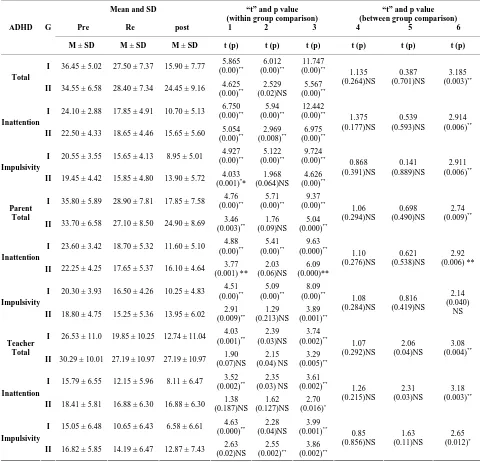
Statistically significant difference was found in both with- in & between group comparison of ratings by investiga-tor, parent & teacher on repeated measures analysis of variance for both groups and more changes were noticed
for GI (Tables 1 and 5). Blind rater rating was highly
correlated with investigator and parent rating for total and subscale scores but not with teacher rating in both groups.
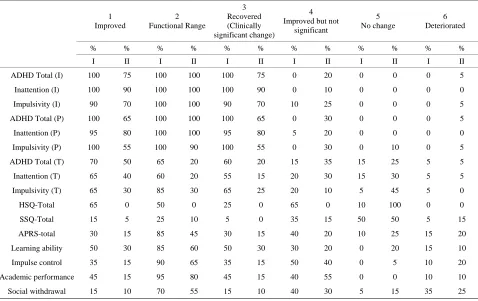
(Table 3). Clinical Significance change also showed 100% clinically significant change (on total Score) for GI by
investigator and parent (Table 4).
3.3.2. Attention Deficit
Repeated measures of variance (0.000 for GI & 0.609 for GII), Wilcoxon Signed-rank test and effect size (0.49) in- dicated that GI showed more improvement in double co-
lour cancellation (Table 1). High correlation with blind
rater (r = 1.00) increases the validity of the result.
3.3.3. Behavioral Problems at Home
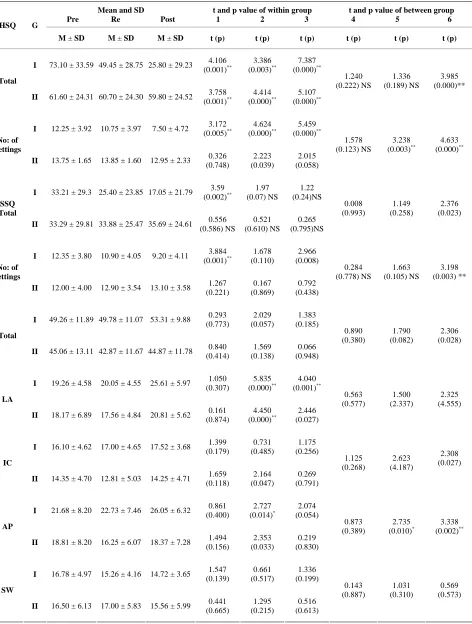
Repeated measures of variance (0.000 for GI & 0.628 GII and 0.000 for between Group comparison), inde- pendent and paired sample test shows statistically signi- ficant changes for both groups (p = 0.000 for between
and within comparison) (Table 2). Magnitude of clinical
change was more for GI (ES was 1.41 for GI and 0.10 for
GII) (Table 3) and clinical significant change also showed
more improvement for GI (Table 4). High correlation was
[image:4.595.56.536.244.706.2]found with blind rater rating (0.96 for GI & 0.99 for GII).
Table 1. Means, SDs, and t-values between and within two groups on ADHD Rating Scale (Rated by the Investigator, parent and teacher).
Mean and SD
Pre Re post
“t” and p value (within group comparison)
1 2 3
“t” and p value (between group comparison) 4 5 6 ADHD G
M ± SD M ± SD M ± SD t (p) t (p) t (p) t (p) t (p) t (p)
I 36.45 ± 5.02 27.50 ± 7.37 15.90 ± 7.77 5.865 (0.00)** 6.012 (0.00)** 11.747 (0.00)** Total
II 34.55 ± 6.58 28.40 ± 7.34 24.45 ± 9.16 (0.00)4.625 ** (0.02)NS2.529 (0.00)5.567 **
1.135 (0.264)NS 0.387 (0.701)NS 3.185 (0.003)**
I 24.10 ± 2.88 17.85 ± 4.91 10.70 ± 5.13 6.750 (0.00)** 5.94 (0.00)** 12.442 (0.00)** Inattention
II 22.50 ± 4.33 18.65 ± 4.46 15.65 ± 5.60 5.054 (0.00)** 2.969 (0.008)** 6.975 (0.00)** 1.375 (0.177)NS 0.539 (0.593)NS 2.914 (0.006)**
I 20.55 ± 3.55 15.65 ± 4.13 8.95 ± 5.01 4.927 (0.00)** 5.122 (0.00)** 9.724 (0.00)** Impulsivity
II 19.45 ± 4.42 15.85 ± 4.80 13.90 ± 5.72 4.033 (0.001)**
1.968 (0.064)NS 4.626 (0.00)** 0.868 (0.391)NS 0.141 (0.889)NS 2.911 (0.006)**
I 35.80 ± 5.89 28.90 ± 7.81 17.85 ± 7.58 (0.00)4.76 ** (0.00)5.71 ** (0.00)9.37 ** Parent
Total
II 33.70 ± 6.58 27.10 ± 8.50 24.90 ± 8.69 3.46
(0.003)** (0.09)NS1.76 (0.000)5.04 **
1.06 (0.294)NS 0.698 (0.490)NS 2.74 (0.009)**
I 23.60 ± 3.42 18.70 ± 5.32 11.60 ± 5.10 4.88 (0.00)** 5.41 (0.00)** 9.63 (0.000)** Inattention
II 22.25 ± 4.25 17.65 ± 5.37 16.10 ± 4.64 3.77 (0.001) ** 2.03 (0.06)NS 6.09 (0.000)** 1.10 (0.276)NS 0.621 (0.538)NS 2.92 (0.006) **
I 20.30 ± 3.93 16.50 ± 4.26 10.25 ± 4.83 4.51 (0.00)** 5.09 (0.00)** 8.09 (0.00)** Impulsivity
II 18.80 ± 4.75 15.25 ± 5.36 13.95 ± 6.02 2.91 (0.009)** 1.29 (0.213)NS 3.89 (0.001)** 1.08 (0.284)NS 0.816 (0.419)NS 2.14 (0.040) NS
I 26.53 ± 11.0 19.85 ± 10.25 12.74 ± 11.04 4.03
(0.001)** (0.03)NS2.39 (0.002)3.74 ** Teacher
Total
II 30.29 ± 10.01 27.19 ± 10.97 27.19 ± 10.97 1.90 (0.07)NS 2.15 (0.04) NS 3.29 (0.005)** 1.07 (0.292)NS 2.06 (0.04)NS 3.08 (0.004)**
I 15.79 ± 6.55 12.15 ± 5.96 8.11 ± 6.47 3.52 (0.002)** 2.35 (0.03) NS 3.61 (0.002)** Inattention
II 18.41 ± 5.81 16.88 ± 6.30 16.88 ± 6.30 1.38 (0.187)NS 1.62 (0.127)NS 2.70 (0.016)* 1.26 (0.215)NS 2.31 (0.03)NS 3.18 (0.003)**
I 15.05 ± 6.48 10.65 ± 6.43 6.58 ± 6.61 4.63 (0.000)** 2.28 (0.04)NS 3.99 (0.001)** Impulsivity
II 16.82 ± 5.85 14.19 ± 6.47 12.87 ± 7.43 2.63 (0.02)NS
2.55
(0.002)** (0.002)3.86 **
0.85 (0.856)NS 1.63 (0.11)NS 2.65 (0.012)*
df for within group comparison = 19, between group comparison = 38, *significant (0.016), **highly significant (0.000), NS = not significant, 1 = pre assessment
Table 2. Means, SDs, and t-values between and within two groups on HSQ, SSQ and APRS.
Mean and SD Pre Re Post
t and p value of within group 1 2 3
t and p value of between group 4 5 6 HSQ G
M ± SD M ± SD M ± SD t (p) t (p) t (p) t (p) t (p) t (p)
I 73.10 ± 33.59 49.45 ± 28.75 25.80 ± 29.23 4.106 (0.001)** 3.386 (0.003)** 7.387 (0.000)** Total
II 61.60 ± 24.31 60.70 ± 24.30 59.80 ± 24.52 3.758 (0.001)** 4.414 (0.000)** 5.107 (0.000)** 1.240 (0.222) NS 1.336 (0.189) NS 3.985 (0.000)**
I 12.25 ± 3.92 10.75 ± 3.97 7.50 ± 4.72 3.172 (0.005)** 4.624 (0.000)** 5.459 (0.000)** No: of Settings
II 13.75 ± 1.65 13.85 ± 1.60 12.95 ± 2.33 0.326 (0.748) 2.223 (0.039) 2.015 (0.058) 1.578 (0.123) NS 3.238
(0.003)** (0.000)4.633 **
I 33.21 ± 29.3 25.40 ± 23.85 17.05 ± 21.79 3.59 (0.002)** 1.97 (0.07) NS 1.22 (0.24)NS SSQ Total
II 33.29 ± 29.81 33.88 ± 25.47 35.69 ± 24.61 0.556 (0.586) NS 0.521 (0.610) NS 0.265 (0.795)NS 0.008 (0.993) 1.149 (0.258) 2.376 (0.023)
I 12.35 ± 3.80 10.90 ± 4.05 9.20 ± 4.11 3.884
(0.001)** (0.110) 1.678 (0.008) 2.966 No: of
settings
II 12.00 ± 4.00 12.90 ± 3.54 13.10 ± 3.58 1.267 (0.221) 0.167 (0.869) 0.792 (0.438) 0.284 (0.778) NS 1.663 (0.105) NS 3.198 (0.003) **
I 49.26 ± 11.89 49.78 ± 11.07 53.31 ± 9.88 0.293 (0.773) 2.029 (0.057) 1.383 (0.185) Total
II 45.06 ± 13.11 42.87 ± 11.67 44.87 ± 11.78 0.840 (0.414) 1.569 (0.138) 0.066 (0.948) 0.890 (0.380) 1.790 (0.082) 2.306 (0.028)
I 19.26 ± 4.58 20.05 ± 4.55 25.61 ± 5.97 1.050 (0.307)
5.835
(0.000)** (0.001)4.040 ** LA
II 18.17 ± 6.89 17.56 ± 4.84 20.81 ± 5.62 0.161 (0.874) 4.450 (0.000)** 2.446 (0.027) 0.563 (0.577) 1.500 (2.337) 2.325 (4.555)
I 16.10 ± 4.62 17.00 ± 4.65 17.52 ± 3.68 1.399 (0.179) 0.731 (0.485) 1.175 (0.256) IC
II 14.35 ± 4.70 12.81 ± 5.03 14.25 ± 4.71 (0.118) 1.659 (0.047) 2.164 (0.791) 0.269
1.125 (0.268) 2.623 (4.187) 2.308 (0.027)
I 21.68 ± 8.20 22.73 ± 7.46 26.05 ± 6.32 0.861 (0.400) 2.727 (0.014)* 2.074 (0.054) AP
II 18.81 ± 8.20 16.25 ± 6.07 18.37 ± 7.28 1.494 (0.156) 2.353 (0.033) 0.219 (0.830) 0.873 (0.389) 2.735 (0.010)* 3.338 (0.002)**
I 16.78 ± 4.97 15.26 ± 4.16 14.72 ± 3.65 1.547 (0.139) 0.661 (0.517) 1.336 (0.199) SW
II 16.50 ± 6.13 17.00 ± 5.83 15.56 ± 5.99 (0.665) 0.441 (0.215) 1.295 (0.613) 0.516
0.143 (0.887) 1.031 (0.310) 0.569 (0.573)
Table 3. Within and between effect sizes on the outcome variables across the groups.
Variable Total & subscales Effect sizes of Group I
Unbiased estimates of ES
Effect sizes of Group II
Unbiased estimates of ES
Effect size of Between group
Unbiased estimates of ES
Total 4.09(L) 4.01 1.53(L) 1.50 1.01(L) 0.99
Inattention 4.65(L) 4.56 1.58(L) 1.55 0.92 (L) 0.90
ADHD (I)
Impulsivity 3.27(L) 3.20 1.26(L) 1.23 0.92(L) 0.90
Total 3.05(L) 2.99 1.34(L) 1.31 0.86(L) 0.85
Inattention 3.51(L) 3.44 1.45(L) 1.42 0.92(L) 0.90 ADHD (P)
Impulsivity 2.56(L) 2.51 1.02(L) 1.00 0.68(M) 0.66
Total 1.23(L) 1.21 0.31(S) 0.30 1.29 (L) 1.27
Inattention 1.17(L) 1.15 0.26(S) 0.26 1.37(L) 1.35
ADHD (T)
Impulsivity 1.31(L) 1.28 0.53(M) 0.52 1.84(L) 1.80
CCT-single Total time 0.25(S) 0.25 0.45(S) 0.44 0.03 0.03
CCT-double Total time 0.61 (M) 0.60 0.10 0.10 0.49(S) 0.48
Severity 1.41(L) 1.38 0.10 0.10 1.24(L) 1.21
HSQ
No: of situations 1.21 1.19 0.48 0.48 1.46 1.44
Severity 0.55(M) 0.54 –0.08 –0.08 0.80(L) 0.78 SSQ
No: of situations 0.83 0.81 –0.28 –0.27 1.01 0.99
Total 0.34(S) 0.33 –0.05 –0.05 0.77(M) 0.76
Learning ability 0.74(M) 0.72 0.01 0.01 0.85(L) 0.83
Impulse control 0.46(M) 0.45 0.11 0.11 0.71(M) 0.70
Academic performance 0.55(M) 0.54 –0.11 –0.11 1.13(L) 1.11
APRS
Social withdrawal –0.45 –0.44 –0.15 –0.15 –0.20 –0.20
Table 4. Percentage of children showing clinically significant change on the outcome measures in the two groups.
1 Improved
2 Functional Range
3 Recovered (Clinically significant change)
4 Improved but not
significant
5 No change
6 Deteriorated
% % % % % % % % % % % %
I II I II I II I II I II I II
ADHD Total (I) 100 75 100 100 100 75 0 20 0 0 0 5
Inattention (I) 100 90 100 100 100 90 0 10 0 0 0 0
Impulsivity (I) 90 70 100 100 90 70 10 25 0 0 0 5
ADHD Total (P) 100 65 100 100 100 65 0 30 0 0 0 5
Inattention (P) 95 80 100 100 95 80 5 20 0 0 0 0
Impulsivity (P) 100 55 100 90 100 55 0 30 0 10 0 5
ADHD Total (T) 70 50 65 20 60 20 15 35 15 25 5 5
Inattention (T) 65 40 60 20 55 15 20 30 15 30 5 5
Impulsivity (T) 65 30 85 30 65 25 20 10 5 45 5 0
HSQ-Total 65 0 50 0 25 0 65 0 10 100 0 0
SSQ-Total 15 5 25 10 5 0 35 15 50 50 5 15
APRS-total 30 15 85 45 30 15 40 20 10 25 15 20
Learning ability 50 30 85 60 50 30 30 20 0 20 15 10
Impulse control 35 15 90 65 35 15 50 40 0 5 10 20
Academic performance 45 15 95 80 45 15 40 55 0 0 10 10
[image:6.595.60.538.436.737.2]Table 5. F-values of repeated measures analysis of variance on the outcome variables across the groups.
Within Group I Within Group II Between the Group I and II
Variables
df F Sig df F Sig df F Sig
ADHD Rating Scale—Investigator Rating
Total (2,38) 69.90 0.00 (2,38) 20.53 0.000 (1,38) 10.14 0.003
Inattention (2,38) 77.83 0.00 (2,38) 27.57 0.000 (1,38) 8.49 0.006
Impulse (2,38) 49.35 0.00 (2,38) 14.78 0.000 (1,38) 8.47 0.006
ADHD Rating Scale—Parent Rating
Total (2,38) 51.73 0.00 (2,38) 15.25 0.000 (1,38) 7.48 0.009
Inattention (2,38) 50.99 0.00 (2,38) 19.89 0.000 (1,38) 8.51 0.006
Impulse (2,38) 41.29 0.00 (2,38) 9.33 0.001 (1,38) 4.59 0.039
ADHD Rating Scale—Teacher Rating
Total (2,34) 10.29 0.00 (2,30) 6.71 0.004 (1,33) 9.52 0.004
Inattention (2,34) 9.22 0.00 (2,30) 4.04 0.028 (1,33) 10.13 0.003
Impulse (2,34) 11.55 0.00 (2,30) 10.45 0.002 (1,33) 7.04 0.012
HSQ
Total (2,38) 27.29 0.00 (2,38) 3.95 0.028 (1,38) 15.88 0.000
SSQ
Total (2,34) 3.08 0.05 (2,30) 0.24 0.785 (1,33) 5.645 0.023
Color Cancellation—Total Time Taken
Single (2.34) 4.018 0.027 (2,24) 5.106 0.014 (1,31) 0.008 0.928
Double (2,28) 10.14 0.000 (2,24) 0.506 0.609 (1,29) 1.951 0.173
Academic Performance Rating Scale
Total score (2,34) 2.02 0.15 (2.30) 0.54 0.59 (1,33) 5.32 0.028
LA (2,34) 7.16 0.00 (2.30) 0.48 0.62 (1,33) 6.29 0.017
IC (2,34) 1.96 0.15 (2.30) 1.31 0.29 (1,33) 7.08 0.012
AP (2,34) 3.96 0.02 (2.30) 1.46 0.25 (1,33) 11.14 0.002
SW (2,34) 1.49 0.24 (2.30) 0.55 0.58 (1,33) 0.32 0.573
3.3.4. Behavioural Problems at School
Repeated measures analysis of variance, “t” tests, effect size and clinically significant change showed superiority
of multimodal intervention (Table 2). Effect size was
0.55 (M) for GI and 0.08 for GII (Table 3). 5% recov-
ered, 15% improved in GI: 15% deteriorated and none
showed clinically significant change in GII (Table 4).
3.3.5. Academic Performance
Repeated measures of analysis of variance, “t” tests, ef- fect size and clinical significance showed superiority of multimodal intervention on learning ability, impulse con- trol, academic performance and social withdrawal (Inde- pendent sample test: p = 0.002 for academic performance; paired sample test: p = 0.001 for GI & 0.027 for learning ability) (Table 2).
3.3.6. Impact of Family Stress and Coping on Outcome
Predictive factors of outcome were analyzed by linear re- gression and the independent variables considered were total score of stress and mediators obtained on FAS at pre-assessment. It was found that the pre-treatment pa-
rental stress did not predict severity of ADHD symptoms and behavioural problems at post assessment for both groups.
4. Discussion
be due to the improvement that occurred in sustained at- tention, visual scanning and impulsivity which are im- paired in children with ADHD. The attention enhance-ment training given to Group I might have improved these deficits as the tasks in the attention package were targeted to improve same. The impact of medical man-agement combined with parent training in improving at- tention and impulsivity are also well documented in lit- erature [25]. However, the present study could not assess the contribution of each treatment component in im-proveing these deficits due to methodological limitations On ADHD rating scale, ratings of investigator and pa- rent were correlates well with the blind rater at post as- sessment while it is not correlating with the teacher rat- ing. This may be partially explained by the difference in the scoring keys used. The scoring key used for parent and investigator rating were same where as it was differ- ent for the teachers rating. The differences in the out- come reported by different informants with different pa- rameters were reported in many studies. It was suggested that outcome measures completed by parents may be tapping a source of information regarding therapy effect- tiveness different from the one sampled by data collected by independent observers [40]. Low correlation between informants may indicate that the target variables differ from one situation to another, rather than that informants’ reports are invalid or unreliable [41].
The result of improvement in behavioral problems at home goes well with the literature that parent training reduces behavioural problems at home [28,42-44]. The above studies reported that parent training is effective for reducing behavioural problems in ADHD as well as be-havioural problems associated with conduct disorder, op- positional defiant disorder and such comorbid conditions that were present in the sample. Studies also report that pharmacological intervention especially with psycho sti- mulants is effective in reducing behavioural problems in ADHD and its comorbid conditions [4,45,46]. So the improvement shown by Group I in the behavioral prob- lems of the children in home situations also could be due to pharmacological intervention, as they have undergone psycho stimulant treatment in addition to parent training. This might have added to the benefits of parent training. Result also showed improvement of behavioral prob- lems at school for Group I. This could be due to the mo- nitoring of the behavioral problems by the teacher and the implementation of contingency management by the parent based on the daily report card sent by the teacher. This was done as a part of parent training which was in- cluded in the multimodal intervention. Literature has shown that behavior modification improves oppositional behave- ior, positive and social behavior and peer conflicts in the classroom [3,4,47].
When compared to improvements in behavioural pro-
blems in the home situation, improvements that occurred in school situations were less. This could be due to the active participation in intervention and close monitoring of behavioural problems by the parents compared to less participation by the teachers.
Improvement in academic performance in Group I is consistent with a wealth of research that multimodal in- tervention is effective in improving academic functions [9]. The uses of psycho stimulants in improving aca-demic functions of ADHD children were also well do- cumented [48,49]. Improvement in academics and social behavior was reported in studies used attention enhan- cement tasks [25,24]. So it is not possible to pin point which treatment component yielded more improvement.
Though parental stress did not predict the outcome, the present study reported that parental stress predicted in-
creased severity level of ADHD (r2 = 0.124, p = 0.026*)
and behaviour of problems (r2 = 0.397, p = 0.000*) at
pre-intervention stage. It is well documented in literature that high level of parental stress is associated with severe ADHD symptoms, defiant behaviour, difficult tempera-ment and problematic interaction on ADHD children with their sib- lings [50,51].
5. Conclusions
Multimodal intervention was found to be promising in the treatment of ADHD. It was found to be effective in reducing ADHD symptoms, behavioural problems at ho- me and school and in improving academic performance. Parental stress did not predict the outcome.
5.1. Strengths of the Study
The study used fresh cases, random allocation, and par-allel design, ratings were done by multiple informants and therapeutic inputs were given by clinician, parents and school personnel in multimodal treatment. Develop- mentally appropriate and most frequently and commonly used tools in the area of ADHD research were used for this study. The use of MAGIC-P enhanced the diagnostic validity and rating by blind rater at post-assessment in-creased the validity of the results. Manual based parent training and structured attention enhancement package were ensured uniformity in treatment. On ethicalback ground, all children in medical management group were provided with parent training and attention enhancement training after the intervention period of the study.
5.2. Limitations of the Study
5.3. Implications of the Study
Multimodal intervention was found superior in the treat-ment of ADHD. The use of attention enhancetreat-ment tasks for improving attention and reducing impulsivity and hyperactivity was promising. Though the exact nature of neuropsychological mechanism is not known, the pack- age was found useful. This study highlights the impor- tance of using different modalities in the treatment of ADHD while considering its high comorbid condition.
REFERENCES
[1] B. J. Coffey, “Attention Deficit Disorder,” In: J. D. Nosh-pitz, P. F. Kernberg and J. R. Bemporad, Eds., Handbook of Child and Adolescent Psychiatry, John Wiley and Sons, Inc., New York, 1997.
[2] National Institute of Health Consensus Development Con- ference Statement, “Diagnosis and Treatment of Attention Deficit Hyperactivity Disorder (ADHD),” Journal of Ame- rican Academy of Child and Adolescent Psychiatry, Vol. 39, No. 2, 2000, pp. 182-193.
[3] W. E .Pelham, C. Carlson, S. E. Sams, V. G. Dixon and B. Hoza, “Separate and Combined Effects of Methylpheni- date and Behaviour Modification on Boys with Attention Deficit Hyperactivity Disorder in the Classroom,” Jour- nal of Consulting and Clinical Psychology, Vol. 61, No. 3, 1993, pp. 506-515. doi:10.1037/0022-006X.61.3.506 [4] D. J. Kolko, O. G. Bukstein and J. Barron, “Methylphe-
nidate and Behaviour Modifications in Children with ADHD and Comorbid ODD or CD; Main and Incre- mental Effects across Settings,” Journal of the American Academy of Child and Adolescent Psychiatry, Vol. 38, No. 5, 1999, pp. 578-586.
doi:10.1097/00004583-199905000-00020
[5] MTA Cooperative Group, “A 14-Month Randomized Clinical Trial of Treatment Strategies for Attention-Deficit/ Hyperactivity Disorder. The MTA Cooperative Group. Multimodal Treatment Study of Children with ADHD,” Archives of General Psychiatry, Vol. 56, No. 12, 1999, pp. 1073-1086.
[6] R. G. Klein, H. Abikoff, L. Hechtman and G. Weiss, “De- sign and Rationale of Controlled Study of Long-Term Methylphenidate and Multi-Modal Psychosocial Treat- ment in Children with ADHD,” Journal of the American Academy of Child and Adolescent Psychiatry, Vol. 43, No. 7, 2004, pp. 792-801.
doi:10.1097/01.chi.0000128798.91601.fe
[7] M. D. Rapport, H. A. Murphy and J. S. Bailey, “Ritalin vs. Response Cost in the Control of Hyperactive Children: A Within-Subject Comparison,” In: P. E. Nathan and J. M. Gorman, Eds., A Guide to Treatments That Work, Oxford University Press, New York, 1982.
[8] W. F. Horn, N. S. Ialongo, J. M. Pascoe, G. A. Greenberg, T. Packard, M. Lopez, A. Wagner and L. Puttler, “Addic- tive Effects of Psychostimulants, Parent Training and Self- Control Therapy with ADHD Children,” Journal of the American Academy of Child and Adolescent Psychiatry, Vol. 30, No. 2, 1991, pp. 233-240.
doi:10.1097/00004583-199103000-00011
[9] J. H. Satterfield, B. T. Satterfield and D. P. Cantwell, “Mul- timodality Treatment. A Two Year Evaluation of 61 Hy- peractive Boys,” Archives of General Psychiatry, Vol. 37, No. 8, 1980, pp. 915-919.
doi:10.1001/archpsyc.1980.01780210073007
[10] E. A. Schaughency and B. B. Lahey, “Mother’s and Fa- ther’s Perceptions of Child Deviance: Roles of Child Be-havior, Parental Depression, and Marital Satisfaction,” Jour- nal of Consulting and Clinical Psychology, Vol. 53, No. 5, 1985, pp. 718-723. doi:10.1037/0022-006X.53.5.718 [11] R. Calam, C. Bolton and J. Roberts, “Maternal Expressed
Emotion, Attributions and Depression and Entry into The- rapy for Children with Behavioural Problems,” British Journal of Clinical Psychology, Vol. 41, No. 2, 2002, pp. 213-216. doi:10.1348/014466502163985
[12] C. K. Conners, “Rating Scales for Use in Drug Studies with Children,” Psychopharmacology Bulletin (Special Issue on Children), Vol. 24, 1973, pp. 24-29.
[13] V. V. Kamat, “Measuring Intelligence of Indian Children,” Oxford University Press, London, 1967.
[14] W. Reich, P. M. Licht, H. Lehman, S. Sathyan and K. Unger, “Missouri Assessment of Genetics Interview for Children (MAGIC),” Washington University, Division of Child Psychiatry, St. Louis, 1997.
[15] S. Srinath, M. Kovacs, S. C. Girimaji, S. P. Seshadri, “De- tailed Evaluation Schedule for Children and Adoles-cents,” 1991, Unpublished Manuscript.
[16] M. Kapur, “Measurement of Organic Brain Dysfunction,” Ph.D. Thesis, Bangalore University, Bangalore, 1974.
[17] G. J. Dupaul, “Parent and Teacher Ratings of ADHD Sym- ptoms: Psychometric Properties in a Community Based Sample,” Journal of Clinical Child Psychology, Vol. 20, No. 3, 1991, pp. 245-253.
doi:10.1207/s15374424jccp2003_3
[18] G. J. Dupaul, M. D. Rapport and L. M. Perviello, “Tea- cher Ratings of Academic Skills: The Development of the Academic Performance Rating Scale,” School Psychology Review, Vol. 20, No .2, 1991, pp. 284-300.
[19] R. A. Barkley, “Hyperactive Children: A Handbook for Diagnosis and Treatment,” Guilford Press, New York, 1981.
[20] T. S. Altepeter and M. J. Breen, “Situational Variation in Problem Behaviour at Home and School in Attention Deficit Disorder with Hyperactivity: A Factor Analytic Study,” Journal of Child Psychology and Psychiatry and Allied Disciplines, Vol. 33, No. 4, 1992, pp. 741-752. doi:10.1111/j.1469-7610.1992.tb00909.x
[21] S. C. Girimaji, “Counsellors Manual for Family Interven- tion in Mental Retardation,” Indian Council of Medical Research, New Delhi, 1996.
[22] S. C. Girimaji, S. Srinath, S. Seshadri and S. Krishna, “Fa- mily Interview for Stress and Coping in Mental Retarda-tion (FISC-MR): A Tool to Study Stress and Coping in Families of Children with Mental Retardation,” Indian Journal of Psychiatry, Vol. 41, No. 4, 1999, pp. 341-349.
chiatry, Vol. 39, No.4, 1997, pp. 309-312.
[24] H. V. Oberoi and M. Kapur, “Intervention with Hyperki-netic Boys in the School Setting,” NIMHANS Journal, Vol. 13, No. 1, 1995, pp. 123-131.
[25] S. Basu and A. Deb, “Parent Training in Children with Attention Deficit Hyperactivity Disorder: An Integrated Approach for Greater Effectiveness,” Indian Journal of Clinical Psychology, Vol. 23, No. 1, 1996, pp. 184-191.
[26] M. D. Lezak, “Neuro Psychological Assessment,” Oxford University Press, New York, 1995.
[27] G. Plourde, Y. Joanette and P. Fontaine, “The Two Forms of Visual Spatial Neglect,” Journal of Clinical and Expe- rimental Neuropsychology, Vol. 10, No. 2, 1988, p. 317.
[28] R. A. Barkley, “Defiant Children: A Clinician’s Manual for Assessment and Parent Training,” Guilford Press, New York, 1997.
[29] J. Cohen, “Statistical Power Analysis for the Behavioural Sciences,” Erlbaum, New Jersey, 1988.
[30] H. V. Hedges and I. Olkin, “Statistical Methods for Meta- Analysis,” Academic Press, Orlando, 1985.
[31] N. S. Jacobson and P. Truax, “Clinical Significance: A Statistical Approach to Defining Meaningful Change in Psychotherapy Research,” Journal of Consulting and Cli- nical Psychology, Vol. 59, No. 1, 1991, pp. 12-19. doi:10.1037/0022-006X.59.1.12
[32] N. S. Jacobson, W. C. Follette, D. Revenstorf, D. H. Bau- com, K. Hahlweg and G. Margolin, “Variability in Out- come and Clinical Significance of Behavioural Marital Therapy: A Reanalysis of Outcome Data,” Journal of Consulting and Clinical Psychology, Vol. 52, No. 4, 1984, pp. 497-504. doi:10.1037/0022-006X.52.4.497
[33] L. Christensen and J. L. Mendoza, “A Method of Assess- ing Change in a Single Subject: An Alteration of the RC Index,” Behaviour Therapy, Vol. 17, No. 3, 1986, pp. 305- 308. doi:10.1016/S0005-7894(86)80060-0
[34] S. P. Hinshaw, B. Henker and C. K. Whalen, “Cognitive- Behavioural and Pharmacologic Interventions for Hyper- active Boys: Comparative and Combined Effects,” Jour- nal of Consulting and Clinical Psychology, Vol. 52, No. 5, 1984, 739-749. doi:10.1037/0022-006X.52.5.739
[35] J. M. Langberg, L. E. Arnold, A. M. Flowers, J. N. Ep- stein, M. Altaye, S. P. Hinshaw, J. M. Swanson, R. Kot- kin, S. Simpson, B. S. Molina, P. S. Jensen, H. Abikoff, W. E. Pelham Jr., B. Vitiello, K. C. Wells and L. Hecht- man, “Parent-Reported Homework Problems in the MTA Study: Evidence for Sustained Improvement with Behav- ioral Treatment,” Journal of Clinical Child and Adoles- cent Psychology, Vol. 39, No. 2, 2010, pp. 220-233. doi:10.1080/15374410903532700
[36] E. H. Nieweg, “Does ADHD Medication Stop Working after 2 - 3 Years? On the Surprising, but Little-Known Follow-Up of the MTA Study,” Tijdschrift Voor Psychi- atrie, Vo. 52, No. 4, 2010, pp. 245-254.
[37] J. P. Zrull, J. C. Westman, B. Arthur and D. Rice, “A Com- parison of Diazepam, D-Amphetamine and Placebo in the Treatment of the Hyperkinetic Syndrome in Children,” American Journal of Psychiatry, Vol. 121, 1964, pp. 388- 389.
[38] C. K. Conners and E. Taylor, “Pemoline, Methylpheni- date and Placebo in Children with Minimal Brain Dys- function,” Archives of General Psychiatry, Vol. 37, No. 8, 1980, pp. 922-930.
doi:10.1001/archpsyc.1980.01780210080009
[39] P. Choudhary, S. Girimaji, S. Srinath and S. P. Seshadri, “An Open Trial of Clonidine for Hyperkinesis in Children with Mental Retardation and Epilepsy,” Indian Journal of Psychological Medicine, Vol. 16, No. 1, 1993, pp. 41-44.
[40] B. M. Atkeson and R. Forehand, “Parent Behavioural Train- ing for Problem Children: An Examination of Studies Us- ing Multiple Outcome Measures,” Abnormal Child Psy- chology, Vol. 6, No. 4, 1978, pp. 449-460.
[41] T. M. Achenbach, S. H. McConaughy and C. T. Howell, “Child/Adolescent Behavioural and Emotional Problems: Implications of Cross-Informant Correlations for Situatio- nal Specificity,” Psychological Bulletin, Vol. 101, No. 2, 1987, pp. 213-232. doi:10.1037/0033-2909.101.2.213 [42] G. R. Patterson, “Interventions for Boys with Conduct
Problems: Multiple Settings, Treatments, and Criteria,” Journal of Consulting and Clinical Psychology, Vol. 42, No. 4, 1974, pp. 471-481. doi:10.1037/h0036731
[43] A. B. Irvine, A. Biglan, K. Smlkowski, C. W. Metzler and D.V. Ary, “The Effectiveness of a Parenting Skills Pro- gramme for Parents of Middle School Students in Small Communities,” Journal of Consulting and Clinical Psy- chology, Vol. 67, No. 6, 1999, pp. 811-825.
doi:10.1037/0022-006X.67.6.811
[44] D. W. Murray, “Treatment of Preschoolers with Attention- Deficit/Hyperactivity Disorder,” Current Psychiatry Re- port, Vol. 12, No. 5, 2010, pp. 374-381.
doi:10.1007/s11920-010-0142-6
[45] L. L. Greenhill, J. Puig-Antich, H. Novacenko, M. Solo- mon, C. Anghern, J. Florea, R. Goetz, B. Fiscina and E. J. Suchar, “Prolactin, Growth Hormone and Growth Re- sponses in Boys with Attention Deficit Disorder and Hy- peractivity Treated with Methylphenidate,” Journal of American Academy of Child and Adolescent Psychiatry, Vol. 23, No. 1,1984, pp. 58-67.
doi:10.1097/00004583-198401000-00008
[46] S. Russell, R. Tannock, C. Charles and C. Penny, “Beha- vioural, Situational and Temporal Effects of Treatment of ADHD with Methylphenidate,” Journal of American Aca- demy of Child and Adolescent Psychiatry, Vol. 36, No. 6, 1997, pp. 754-763.
doi:10.1097/00004583-199706000-00011
[47] C. B. Carlson, W. E. Pelham, R. Milich and J. Dixon, “Single and Combined Effects of Methylphenidate and Behaviour Therapy on the Classroom performance of Children with Attention Deficit Hyperactivity Disorder,” Journal of Abnormal Child Psychology, Vol. 20, No. 2, 1992, pp. 213-232. doi:10.1007/BF00916549
[48] H. Weingartner, M. H. Ebert, E. J. Mikkelsen, J. L. Ra- poport, M. S. Buchsbaum, E. E. Bunney and E. D. Caine, “Cognitive Processes in Normal And Hyperactive Chil- dren and Their Response to Amphetamine Treatment,” Journal of Abnormal Psychology, Vol. 89, No. 1, 1980, pp. 25-37. doi:10.1037/0021-843X.89.1.25
Newcorn, “Specificity of Inattention, Impulsivity and Hy- peractivity to the Diagnosis of Attention Deficit Disor- der,” Journal of American Academy of Child and Adoles- cent Psychiatry, Vol. 31, No. 2, 1992, pp. 190-196. doi:10.1097/00004583-199203000-00002
[50] A. D. Anastopoulos, T. L. Shelton, G. J. Dupaul and D. C. Guerremont, “Parent Training for Attention Deficit Hy- peractivity Disorder: Its Impact on Parent Functioning,”
Journal of Abnormal Child Psychology, Vol. 21, No. 5, 1993, pp. 581-596.doi:10.1007/BF00916320
[51] B. A. McBride, S. J. Shoppe and T. R. Rane, “Child Cha- racteristics, Parenting Stress and Parental Involvement: Fathers vs. Mothers,” Journal of Marriage and Family, Vol. 64, No. 4, 2002, pp. 998-1011.