3D Face Recognition Using
Photometric Stereo
Mark F. Hansen
A thesis submitted in partial fulfilment of the requirements of the University of the West of England, Bristol for the degree of Doctor of Philosophy
Faculty of the Environment and Technology University of the West of England, Bristol
Abstract
Contents
1 Introduction 1
2 Literature Review 10
2.1 Automatic Face Recognition . . . 11
2.1.1 Early Methods . . . 11
2.1.2 2D Face Recognition . . . 13
2.1.3 3D Face Recognition . . . 21
2.2 The Human Visual System and Face Recognition . . . 28
2.3 Bio-inspired Face Recognition/Vision Systems . . . 35
2.4 Databases . . . 38
2.5 2D and 3D Capture Techniques . . . 39
2.5.1 Light Sources . . . 40
2.5.2 Existing 3D Capture Techniques . . . 41
2.5.3 Comparison of Capture Techniques . . . 48
2.6 Thesis Context . . . 48
3 The Accuracy and Suitability of Photometric Stereo for Face Recog-nition 52 3.1 Photometric Stereo . . . 54
3.2 Methods and Data . . . 58
3.2.1 Hardware . . . 58
3.3 Results . . . 63
3.3.1 Basic Reconstructions . . . 63
3.3.2 Reflectance Analysis . . . 68
3.3.3 Comparison to the Oren-Nayar Model . . . 72
3.4 Discussion . . . 73
4 Photometric Stereo Databases and Baseline Experiments 76 4.1 The Photoface Database . . . 77
4.1.1 Collection and statistics . . . 77
4.1.2 Metadata and The Photoface Query Tool application . . . . 79
4.2 The 3D Expression - VISible and InfraRed (3DE-VISIR) Database 86 4.3 Comparison with Existing 3D Databases . . . 87
4.4 Baseline Methods . . . 90
4.4.1 Principle Components Analysis (PCA) & eigenfaces . . . . 90
4.4.2 Fisher’s Linear Discriminant (FLD) & Fisherfaces . . . 93
4.4.3 Independant Components Analysis (ICA) . . . 96
4.4.4 Pearson’s Moment Correlation Coefficient (PMCC) . . . 97
4.5 Data Representation . . . 98
4.5.1 Texture (2D) . . . 98
4.5.2 Surface normals . . . 99
4.5.3 Depth map . . . 99
4.5.4 Shape index . . . 100
4.5.5 Local Binary Patterns (LBP) . . . 101
4.5.6 Image Preprocessing . . . 103
4.5.7 Experimental Paradigm . . . 106
4.6 Results . . . 106
4.7 Discussion . . . 109
5.2 Methods and Data . . . 112
5.2.1 Data and Image Preprocessing . . . 112
5.2.2 Image Resizing . . . 113
5.2.3 Experimental Paradigm . . . 114
5.3 Results . . . 114
5.4 Discussion . . . 116
6 Caricature Inspired Variance and Percentile Based Dimensionality Re-duction 125 6.1 Introduction . . . 126
6.2 Methods and Data . . . 128
6.2.1 Calculating outliers and variance . . . 128
6.2.2 Recognition algorithm . . . 130
6.3 Results . . . 130
6.3.1 Dimensionality reduction via the percentile inclusion criterion 130 6.3.2 Dimensionality reduction via the variance inclusion criterion 134 6.3.3 Using Variance Inclusion to reduce search space . . . 136
6.4 Discussion . . . 137
7 Classification of Expression using the Variance Inclusion Criterion 144 7.1 Introduction . . . 144
7.2 Methods and Data . . . 147
7.3 Results . . . 149
7.3.1 Expression Classification using Variance Inclusion Criterion 150 7.3.2 Resolution Effects on Expression Classification . . . 153
7.4 Discussion . . . 154
8 A Proposed Fully Automatic Face Recognition System 157 8.1 Introduction . . . 160
8.3 Results . . . 164
8.3.1 Feature Detection . . . 164
8.3.2 Threshold Selection . . . 167
8.4 Discussion . . . 169
9 Conclusions, Limitations and Future Work 176 References 184 Glossary 209 Acronyms . . . 215
Glossary of Symbols . . . 217
Appendices 221 A Selected publications 221 A.1 3D face reconstructions from photometric stereo using near in-frared and visible light . . . 222
A.2 Computationally efficient bio-inspired dimension reduction for 3D faces . . . 222
A.3 Twins 3D Face Recognition Challenge . . . 223
A.4 Psychologically inspired dimensionality reduction for 2D and 3D face recognition . . . 223
A.5 The Photoface Database . . . 224
List of Figures
2.1 Example PCA vs FLD plot . . . 15
2.2 Example PCA vs ICA plot. . . 16
2.3 Bronsteinet al.’s canonical form. . . 25
2.4 The Thatcher Illusion . . . 31
2.5 An example three-light PS system . . . 46
3.1 Examples of photometric stereo inputs and output. . . 56
3.2 The Photoface Device . . . 59
3.3 Three example reconstructions using visible light . . . 64
3.4 Example reconstructions using visible and NIR light sources. . . . 65
3.5 Examples of 3dMD, visible and NIR reconstructions . . . 66
3.6 Bar plots of RMS and`2-norm errors . . . 66
3.7 Examples of RMS and`2-norm errors . . . 67
3.8 Skin reflectance under NIR is more Lambertian . . . 69
3.9 Reflectance of skin from individual light sources . . . 70
4.1 An example session capture . . . 78
4.2 Photoface session distribution . . . 81
4.3 Examples of the Photoface database. . . 82
4.4 Manually marked fiducial points . . . 83
4.5 Screenshots of the metadata recording applications . . . 84
4.6 Screenshots of the Photoface Query Tool . . . 85
4.8 Examples of cropped 2D texture images (albedo). . . 99
4.9 Surface normal representation . . . 100
4.10 Example of an integrated surface and depth map. . . 101
4.11 Examples of shape index representations . . . 102
4.12 The LBP process . . . 103
4.13 Examples of LBP . . . 104
4.14 The cropped region of a face . . . 104
4.15 Distribution of sessions per subject in the 1000 session dataset. . 105
5.1 Examples of faces at different resolutions . . . 114
5.2 Resolution effects on 2D and 3D recognition performance . . . 115
5.3 Performance effects of smoothing and spatial frequency filtering. . 120
5.4 Comparison of optimum results from smoothing and spatial fre-quency filtering . . . 121
5.5 An example processed image for each method with the parameter which gave the optimum recognition result. . . 122
6.1 Examples of faces using the percentile inclusion criterion. . . 129
6.2 Threshold masks that are part of the variance inclusion criterion. . 129
6.3 Recognition performance as a function of pairs of percentile ranges. 131 6.4 Recognition performance as a function of single percentile ranges. 132 6.5 Confusion matrix for combinations of all percentile range pairs. . . 133
6.6 Variance inclusion criterion results. . . 134
6.7 Rank-n performance results at different dimensionality. . . 138
6.8 Plot of results shown in Table 6.4 . . . 140
7.1 Examples cropped data from the 3DE-VISIR database. . . 148
7.2 Example of altered face symmetry withNegative expression. . . . 148
7.4 Expression classification using the variance inclusion criterion. . . 152 7.5 Recognition performance on the 3DE-VISIR dataset at different
resolutions. . . 154 7.6 Expression classification at different resolutions on the 3DE-VISIR
database. . . 155
8.1 A pipeline of a developed system. . . 158 8.2 Examples of Haar-like features. . . 161 8.4 The proposed extended Haar-like feature for surface normals . . . 164 8.5 The effect of applying the extended Haar-like feature. . . 164 8.7 100 examples of how the algorithm highlights the nose tip region. . 166 8.8 Bar-code representation and roll correction . . . 167 8.9 Plot showing bar-code representation effectiveness for roll correction168 8.3 Landmark feature detection using Haar-like features from the method
Acknowledgements
This document would not have been possible without the help and support of many people on both academic and personal levels. My supervisory team of Dr. Gary Atkinson, Prof. Melvyn Smith and Dr. Lyndon Smith have always been ex-tremely helpful and inspirational; they are all remarkable at finding time to answer my questions or provide constructive feedback; I don’t remember any of them once asking me to come back later.
I’d also like to thank the late Prof. Tom Troscianko, whose lectures on vision and perception during my first degree were inspirational, and for asking one of his usual insightful questions during a Bristol Vision Institute seminar, which helped steer the early stages of my research.
I am extremely grateful to my family for allowing me to drop out from a main-stream career to study something I find extremely interesting. My thanks go es-pecially to my loving and lovely partner Suzanne for allowing me to leave a well paid job and become a student again and to my son Joel for teaching me the true meaning of tiredness and just how important a good night of sleep can be.
List of Publications Arising from this Work
The importance of publications cannot be underestimated, both for the impor-tance of having the work peer reviewed, but also as a means of publicity. This Ph.D. has given me a wealth of experience in these areas as detailed below.
Journal Publications
[1] M. F. Hansen, G. A. Atkinson, L. N. Smith, and M. L. Smith, “3D face recon-structions from photometric stereo using near infrared and visible light,” Computer Vision and Image Understanding, vol. 114, no. 8, pp. 942-951, Aug. 2010. [2] M. F. Hansen, G. A. Atkinson, M. L. Smith, L. N. Smith, “Psychologically inspired dimensionality reduction for 2D and 3D Face Recognition,” The Visual Computer, [submitted]
[3] S. Zafeiriou, M. F. Hansen, G. A. Atkinson, W. A. P. Smith, M. L. Smith, M. Petrou, “The effect of different photometric stereo and reconstruction algorithms on face recognition accuracy,” Pattern Recognition, [to be submitted]
Conference Publications
[1] G. A. Atkinson, M. F. Hansen, M. L. Smith, and L. N. Smith, “A efficient and practical 3D face scanner using near infrared and visible photometric stereo,” in Proc. International Conference and Exhibition on Biometric Technology, Procedia Computer Science, vol. 2, pp. 11–19, 2010.
[2] S. Zafeiriou, M. F. Hansen, G. A. Atkinson, M. Petrou, and M. L. Smith, “Base-line face recognition using photometric stereo data,” in Proc. International Confer-ence and Exhibition on Biometric Technology, Procedia Computer SciConfer-ence, vol. 2, pp. 20–25, 2010.
Bio-metric Technology, Procedia Computer Science, vol. 2, pp. 26–34, 2010.
[4] S. Zafeiriou, M. F. Hansen, G. A. Atkinson, V. Argyriou, M. Petrou, M.L. Smith, L.N. Smith, “The PhotoFace Database,” in Proc. Biometrics Workshop of Com-puter Vision and Pattern Recognition, Colorado Springs, USA, 2011, pp. 161-168. [5] V. Vijayan, K. Bowyer, P. Flynn, D. S Huang, L. Chen, M. F. Hansen, O. Ocegueda, S. Shah, I. Kakadiaris “Twins 3D Face Recognition Challenge,” in In-ternational Joint Conference on Biometrics, Arlington, Virginia, 2011.
[6] M. F. Hansen, G. A. Atkinson, L. N. Smith, and M. L. Smith, “Psychologically inspired dimensionality reduction for 2D and 3D face recognition,” in Proc. of the 3rd British Machine Vision UK Student Workshop, Dundee, 2011, pp.15-26.
Other
Seminars and Lectures
[1] “3D face reconstruction and recognition using photometric stereo”, Ph.D. Show-case Lecture, 2010.
[2] “3D face reconstruction and recognition using photometric stereo”, Bristol Vi-sion Institute Seminar, 2010.
[3] “Photometric stereo face recognition”, Invited Speaker, Association of Biomet-rics, London, 2010
[4] “Face recognition: an introduction to 2D, 3D and human approaches”, Lecture to 2nd Year Undergraduates, University of the West of England, 2009
Posters
[1] “3D face reconstruction and recognition using Photometric Stereo”, Bristol Vision Institute Student Colloquium, 2010.
Miscellaneous
[1] “FaceTime”, Photonics Spectra, 2010, Interviewed for feature article (http://www.photonics.com/Article.aspx?AID=43362)
[2] “Daily Planet” 2011, Discovery Channel television program featured the work of the Machine Vision Laboratory
Reviews
[1] Two journal articles for Computer Vision and Image Understanding
[2] One journal article for the International Journal of Computer Vision and Signal Processing (on which this author sits on the board of editors)
[3] One conference paper for the Ninth International Conference of Computational Methods in Sciences and Engineering 2011
[4] Three conference papers for the International Conference and Exhibition on Biometric Technology 2010.
Chapter 1
Introduction
It is the common wonder of all men, how among so many millions of faces, there should be none alike.
Thomas Browne, Religio Medici
Humans see faces in just about everything. Two eyes, a nose and a mouth in near identical configuration and yet we are able to distinguish between thousands and readily recognise familiar faces in an instant.
Automated face recognition has been the subject of considerable research ef-fort for four decades. It offers many perceived security benefits and as a biometric does not require such levels of cooperation as iris recognition nor physical contact that is necessary for most fingerprint readers. We as humans believe we are very good at it – it is arguably a primary mechanism for recognising people. Holding a BSc in Psychology and an MSc in Computer science it offers a fascinating area of study for the author.
rich subject areas. This work focuses on the former and attempts to use psycho-logically inspired ideas to improve upon existing research on 3D face recognition, ultimately leading to the proposal of a system which performs landmark localisa-tion, feature extraction and recognition automatically using surface normal data generated from a 3D Photometric stereo (PS) capture device. The device was developed prior to the start of this project and while its operation is described in some detail, the design and construction of the device itself is not part of this Ph.D..
At the beginning of this Ph.D. a colleague questioned why I would choose automated face recognition as a research topic as it is already saturated with research, and it is often stated that simple face recognition is a solved problem. While there is undoubtedly a level of truth to these statements the author does not wholly agree with them. It is very hard to find novel areas of research in an area with such a seemingly simple purpose but in this thesis I have attempted to explore under-represented areas such as caricaturing and low resolution imagery to enhance face recognition. Countering the argument that the face recognition is a solved problem, one only has to look at the recently released work by some of the best known names in the area on an old dataset as proof that it is by no means solved (even in the simplest of cases – expressionless and frontal) [147]. Here Phillipset al.use the Face Recognition Grand Challenge (FRGC) database to create a new set of test faces that have been shown to be difficult to recognise by the best algorithms.
Face recognition as a technology has the possibility of becoming ubiquitous in the near future as long as the public are aware of its pitfalls in return for the convenience it offers. Already in the latest version of the Google Android T M
into automated face recognition is in its fifth decade, it is still current, and this is what makes it such an appealing research topic.
Another aspect of faces which makes them an intriguing study subject are the idiosyncrasies associated with human processing. They all (usually) are in a very similar configuration; having two eyes above a nose above a mouth and yet we can make judgements about a person in an instant based on very superficial dif-ferences. Even though the variations in these configurations are slight, we have no problems instantaneously recognising familiar faces even after long periods or when the appearance has altered through spectacles or facial hair. The human ability to recognise familiar faces is remarkable under normal conditions although we tend to overestimate our ability with unfamiliar faces [83] which can have seri-ous consequences in police line-ups. We also recognise familiar faces which have been cartooned or caricatured better than veridical images. However if faces are inverted either in orientation or in contrast polarity our ability to process them is extremely diminished. Damage to a small area of the brain (Fusiform face area (FFA)) can lead to a condition where the person is unable to recognise faces at all, but recognition of other objects remains intact (prosopagnosia). The fact that a process so inherent in human nature is still so poorly understood makes it a fascinating area to study and it may be that as we learn more of the human processes we can use them to augment automatic systems.
While automated 2D face recognition has been studied for decades, using 3D scans is a far more recent topic due to the availability of suitable scanning de-vices. As well as providing 3D morphology of the face 3D scans help to overcome the problems of pose and illumination that have been found in 2D recognition. Throughout this thesis I refer to the surface normal data captured using PS as 3D data. I am aware that the data is not truly 3D as we do not capture the full 3D shape, only the part facing the camera, but the alternative 2.5D is clumsy and slightly ambiguous and does nothing to aid in the readability of the manuscript.
build on the successes of previous attempts. This often means that methods be-come more and more specific and complex to cater for special cases. This is how science works and I am in no way criticizing it. Working towards a Ph.D. gives one the unique opportunity to explore areas which perhaps have been ne-glected or overlooked or come at the problem with a different viewpoint and the novel methods presented here reflect this rather than extend specific aspects of previous successes (of which there are many!). Discussing this with a colleague I was pointed towards a paper which takes a similar standpoint, and very success-fully demonstrates that for texture classification simple measures of intensity in a number small patches gives better performance than using filter banks [185].
The journey of work in this Ph.D. has not only allowed me study a fascinating subject area for three years, but has also allowed me to travel and meet with highly respected scholars in the area. I hope that the reader enjoys and is stimulated by the findings reported here as much as I have been.
Contributions
The major original contributions of this project are:
1. The use of Near Infrared (NIR) light sources provide a more accurate PS reconstruction than visible light sources
2. Providing a publicly available database and detailed metadata of 3187 ses-sions of 453 subjects
3. That Low resolution images (10×10 px) give the best rates of recognition for our dataset of frontal, expressionless faces contained in our 3D database using raw surface normals. Similarly low resolutions are also optimal for 2D images.
vari-ance rates contain disproportionately high amounts of discriminatory infor-mation which is useful for face recognition
5. Presenting a variance based approach which is used to identify pixel lo-cations which encode expressions. Removing pixels at these lolo-cations is shown to improve face recognition performance.
6. A proposed fully automatic face recognition system incorporating all of the above findings with a empirically determined threshold allowing a 98.65% accuracy at a False Acceptance Rate of 0.01.
Applications
Apart from the academic interest in understanding face recognition and devel-oping robust algorithms there are many real-world applications of the technol-ogy. The advantages of face recognition being used as a biometric over other commonly used methods such as iris recognition or fingerprints are that it re-quires significantly less cooperation and, in comparison to fingerprint biometrics, no physical contact is required. The applications can broadly be categorised into physical security, computer security, surveillance and the computer game indus-try.
Physical security is perhaps the most obvious application. Within this cate-gory, face recognition can be used to control access to buildings and access to secure areas within buildings instead of using cards and combination codes which can be forgotten or copied. Already in use in certain airports, passport verification using face recognition is used at border control and extending this to 3D is likely to bring additional robustness.
ex-ample in industrial environments. Additionally it could serve as an extra level of security at a document level such that a screen becomes obscured if an unau-thenticated person appears in view of the monitor. 3D systems offer the advan-tage of being harder to spoof – a 2D recognition system can often be fooled by a photograph – but it is far harder to create an accurate 3D mask of an individual. An attacker would be more likely find a simpler weakness to exploit.
It is harder to incorporate 3D face recognition into surveillance due to the fact that some cooperation is required to capture a 3D scan. Theoretically though, a long range NIR PS system could be used to capture the images and then used to covertly monitor and flag persons on a watch list e.g. at football games during entry to a stadium.
Computer games are already using face recognition in the form Microsoft’s KinectT M 3D camera to recognise individual players. Another use more suited to
the high resolution PS 3D capture would be for incorporating an accurate 3D face of a player into the game.
There is also interest from advertising companies for tailoring advertisements to the demographic of a person e.g. a male teenager would likely be interested in computer games and music, therefore display this kind of marketing material. If a database of regular shoppers and shopping habits (from receipts) could be built up, a far more accurate system could be capable of matching products and offers to individuals. While such concepts challenge notions of privacy and data pro-tection, they also challenge the common idea that marketing and advertising are mere nuisances as they could become more of a service if they actually provided accurate, relevant and useful information.
purposes, or verification systems for granting access to restricted areas.
Thesis Outline
The literature review in the next chapter aims to provide the context of this work from an historical as well as state-of-the-art point of view. 2D and 3D automated methods are covered, followed by an overview of certain aspects of human pro-cessing of faces and the visual system as a whole. Then a critique of the currently available face databases follows in order to highlight the contributions of the ones produced during this Ph.D., before methods of 3D acquisition are compared and contrasted.
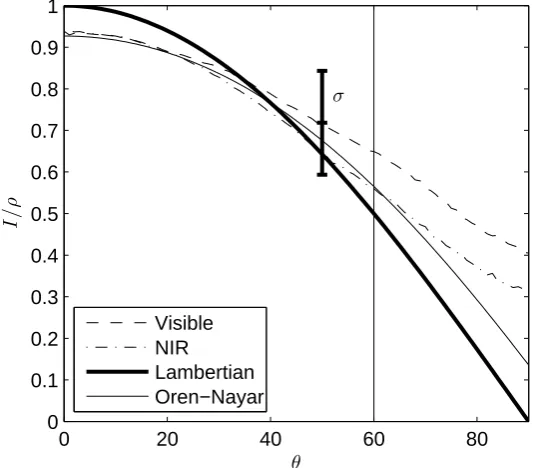
Chapter 3 assesses the accuracy of the Photoface PS capture device using visible and NIR light sources by comparison with those captured using the com-mercially available 3dMD system. It shows that using NIR light sources is slightly more accurate than visible light, probably due to skin reflectance being more Lam-bertian under NIR. The overall errors of the PS reconstructions are sufficiently low and are judged to suitable for face recognition.
Once the suitability of the data has been demonstrated, Chapter 4 introduces the two databases which have been developed and used for experiments in this thesis together with baseline results using some common data representations and algorithms. This allows us to select the raw surface normals as a suit-able representation which offers very good recognition performance without the need for the additional processing required for other representations. One of the databases (the Photoface Database) is now publicly available to other re-searchers on request.
studies. Chapter 6 implements a percentile based theory to find support for Un-nikrishnan’s [182] hypothesis that the outlying percentiles contain more discrim-inatory information than central percentiles. The basis for this work comes from the fact that humans can recognise face caricatures as quickly or often faster than veridical images. The percentile approach is extended to finding pixel locations which vary the most and using these for recognition. It is shown that by only using the 10% most varying pixels locations, and discarding the rest, that recognition rates decrease by a disproportionate amount which is taken as indication of the discriminatory power of this direct method. It may be possible to incorporate these findings into a weighting system for different parts of the face make recognition more robust to expression.
A likely shortcoming of the variance approach is that it will fail in the case of data containing expressions. This is examined in Chapter 7 where it is shown that the most varying pixel locations encode expression and that by removing them, subject recognition rates can be improved. Although the data are limited, the results also show that it is easiest to discriminate positive expressions from neutral or negative expressions (with a 90% accuracy).
In attempting to define an operational system, the final experimental chap-ter investigates two areas which are still absent. The databases used in this research have all been manually labelled to allow accurate alignment. An auto-mated system would be required to automatically extract the features and align them. Inspired by the work of Viola and Jones [187] on using Haar-like features, new features are investigated for use with surface normal components to locate the lateral canthi (the outer corner of the eye where the upper and lower eyelids meet) and nose tip. Additionally the threshold required for a verification rate of 98.65% with only one false positive in every 100 trials is determined empirically.
Chapter 2
Literature Review
Face recognition is one of the most active research areas in machine vision. After over 40 years of study into the problem, great progress has been made but a universally accurate computer based system is still elusive. Unless affected by prosopagnosia (also known as face blindness), humans are able to recognise familiar faces effortlessly with great accuracy from a very early age [45]. Most computer based systems are not based on any biologically plausible model of the Human Visual System (HVS) – this is not a criticism as the processes involved are poorly understood, but it is a possible reason for the disparity in performance. There have been improvements in our understanding of the HVS in recent years and it may be possible to adapt some of these in order to improve face recognition rates.
It is not only of academic interest; accurate automated face recognition is also of potentially great commercial value in security areas such as access to build-ings, border control and surveillance. The vast majority of this research has used 2D data because until recently the use of 3D data for this task was prohibitively expensive or of poor quality. However it is now both affordable and available in the form of Photometric stereo (PS), and the use of 3D potentially overcomes illumination and pose problems associated with 2D recognition.
four source PS face capture device capable of generating 3D models of faces. It is expected that by utilising the surface normals inherent to this methodology to-gether with information known about the HVS and higher level processes involved in recognition, that novel methods which aid recognition will be found.
This literature review will therefore review the history and current state of re-search into 2D and 3D face recognition. An overview of 3D acquisition techniques will then be given, showing that PS is a particularly valid technology for this pro-cess. The key properties of the HVS and the higher level processes involved in human face recognition will then be presented, with particular attention to those that may lend themselves well to the problem but appear not to have been fully explored in the literature.
2.1
Automatic Face Recognition
This section outlines some of the most successful approaches and directions of research in both 2D and 3D automatic face recognition together with their limita-tions.
2.1.1
Early Methods
the affects of pose in recent research [24], [12], which will be discussed more fully in Section 2.1.3.
The work of Kelly [105] helped Kanade [100] to produce the first automatic face recognition system. The device extracted feature points using edge detection and the geometric measurements of these features (16 parameters – 11 distance ratios and a combination of angles and curvatures) for recognition. The system correctly identified 15 out 20 people, marking the ‘... first success of machine identification of human-face photographs’ [100].
A milestone in the history of facial recognition took place with the introduction of eigenfaces [181] which was inspired by the earlier work of Sirovich and Kirby [168]. Instead of treating the task as a geometric problem and measuring dis-tances between fiducial features, Turk and Pentland represented the problem as one of statistical variance motivated by information theory. The underlying the-ory behind this concept is that, given sufficient images of faces, Principal Com-ponents Analysis (PCA) is performed and the dimensions containing the major variations between the images are extracted. If the images are then projected into the new eigenspace composed of the eigenvectors with the most significant eigenvalues, they ideally form clusters for each individual (alternatively the mean face image for an individual can be used). If a probe image of an individual is projected into the eigenspace, then it is possible to see which cluster it is nearest to (e.g. by Nearest Neighbour classification), and for that image to be classified as a particular person.
The eigenface approach means that once the images are normalized and registered, fiducial points are not required for recognition. However it is very sensitive to illumination and pose. Using a database of 2500 face images of 16 individuals, correct recognition rates of 64% to 100% were reported under various conditions [181].
baseline performance measure [15], [28], [74], [37], [134], [155]. [103]. It has also been generalized to Principle Geodesic Analysis (PGA) allowing shape analysis for 3D data [170].
However, the method is not without its limitations. When new faces are needed to be identified, they must be added to the initial training set and PCA run over the entire set of images in order to generate a new face space. Illumination and pose have a great effect on the images themselves and thus on the statistical results. Variations in illumination have been found to correspond to the three eigenvectors which have the largest eigenvalues. Disposing of these helps reduce the effect of illumination [16], but as these contain the most variation, they also discard plenty of information which may have been useful in face discrimination. Even if the images are normalized to reduce the effects of scale and orientation, they intro-duce artefacts of the scaling or transformation process e.g. scaling is the same as changing a camera’s focal length not the camera’s position [180]. Having to choose how many eigenvectors to use is another weakness – too many, and there is the risk that there will be too much noise and that computation will be more intense, too few, and the face space will be too small and faces of different individuals will be too close together for discrimination. Using PCA for face recog-nition also suffers from an own-race effect whereby it is better at discriminating faces from other races [67], contrary to human face recognition which displays theother race effect [124].
With the success of this milestone into using statistical methods, more recent advances in 2D and 3D face recognition will now be discussed.
2.1.2
2D Face Recognition
doc-umented here, together with some promising recent directions. The main focus of this thesis is 3D face recognition, but it is important to understand the historical importance of the research in terms of 3D developments and also the limitations of using 2D information, some of which can be overcome using 3D data.
Continuing in the success of using statistical tools for face recognition and in an attempt to overcome some of the shortcomings of using PCA, Belhumeur et al.[16] developed what they termedFisherfaces. This technique uses a derivative of Linear Discriminants Analysis (LDA) called Fisher’s Linear Discriminant (FLD) which although similar to PCA explicitly attempts to find the dimensions which limit the intra-class scatter and maximise the inter-class scatter rather than find-ing the dimensions along which most variation occurs. In this case the classes correspond to different people and since the data set for face recognition is al-ready labelled it makes sense to use it in order to reduce the problem space.
To test the efficacy of their approach two databases were used – one con-structed by the Harvard Robotics Laboratory which contained images with well constrained illumination variations and the publicly available Yale Face B database. Under the most extreme illumination, the Fisherface technique performed at an error rate of 4% compared to 42% for the eigenface technique and in those im-ages with different facial expressions and illumination the error rate is as low as 0.6% compared to 19.5% for eigenfaces.
LDA is similar to PCA in that it transforms the data onto another coordinate system to describe variance. The main difference comes from the fact that no assumptions for the data are necessary for PCA (known as unsupervised), LDA requires that the data be separated into classes (supervised). This is why it is so attractive (and successful) when applied to face recognition, as the classes correspond to different people.
has separated the two classes more successfully than PCA.
Copyrighted Image
Contact author for details
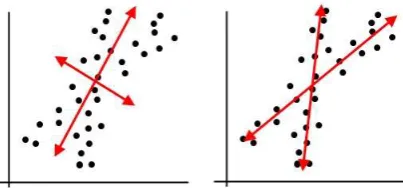
Figure 2.1: A comparison of principal component analysis (PCA) and Fisher’s linear discriminant (FLD) for a two class problem where data for each class lies near a linear subspace.Reproduced from [16]. While both methods have reduced the dimensionality of the data to one, the FLD projection clearly demonstrates a linear separation between the two classes (in this case at the origin) while the PCA has not.
There are many papers which compare the effectiveness of eigenfaces to Fisherfaces e.g. [16, 127, 162], and although the assumption is that because it deals with classes it should lead to better performance on face recognition tasks, this has been shown to not always be the case i.e. with small training sets [127], known as the small sample size problem.
Another statistical tool which has been used for face recognition is Indepen-dent Components Analysis (ICA). Bartlettet al.compared ICA against PCA as a benchmark on a subset of the Facial Recognition Technology (FERET) database and found it to be statistically better under certain conditions [15]. They used two architectures for implementing ICA and boosted performance by using a com-bined classifier recording a maximum recognition rate of 91% (compared with 85% using PCA). While PCA seeks to separate correlations in the data, ICA seeks to recover statistically independent sources of variations via non-orthogonal trans-forms (see Fig. 2.2). It has been used successfully in the cocktail party phe-nomenon, whereby individual conversations can be separated out from the ambi-ent noise. The two architectures used in [15] arise as the first treats images as random variables and pixels as outcomes and the second treats pixels as the ran-dom variables and images as outcomes. The architectures produce very different outcomes – the first produces spatially localized images (i.e. mouth, eye, nose regions) and the second produce non-localized images (more like eigenfaces), and lead to better performance on identification and expression classification re-spectively [57].
[image:30.595.227.429.527.621.2]More detail and analysis of these statistical methods can be found in Sec-tion 4.4. Now some commonly used non-statistical methods will be reviewed.
Figure 2.2: Example 2D data and co-ordinates found via PCA and ICA. The data points (black spots) are best represented along non-orthogonal axes. Applying PCA would have results similar to the plot on the left while ICA (right) would be able to select non-orthogonal axes thereby representing the data more accurately.
representation of the information in what is termedGabor space. The HVS has been shown to have primitive cortical regions sensitive to specific spatial fre-quency and orientations [95] and that these can be modelled using 2D Gabor functions [50]. Using Gabor filters could therefore be said to have a neurological basis when used in face recognition to extract salient features from the image of a face.
Manjunath et al. [126] discovered that the features highlighted by the Gabor filters often corresponded to features such as the nose and eyes. The feature vectors and spatial locations for each feature are used to build up a topological graph for each face. The graphs are then used to carry out the recognition which was reported to be with an accuracy of 86% for the correct person to be returned and 94% for the person to be in the top three candidate matches on a database of 300 images of 86 persons. Their approach to pose and illumination issues was to capture images of people under as many conditions as possible.
An extension to using Gabor filters is to use Gabor jets which are a stack of Gabor filters of differing orientations, frequencies and scales. They are used in successful techniques pioneered in Dynamic Link Architecture (DLA) [110] and Elastic Bunch Graph Matching [191]. The Gabor jets are applied to fiducial points on a face such as the corners of the eyes and the mouth for three pose images (full frontal, half-profile and profile) to create a Face Bunch Graph. A face can then be compared to any other using a similarity metric that takes into account the appearance and spatial configuration of the fiducial features. Performance using data from the FERET database was 98% using full frontal images, and 57% for half-profile images. This novel technique demonstrated robust recognition for pose up to a 22◦angle and differences in facial expression. The success of such
algorithms is cited in Shen and Bai’s 2006 review of Gabor wavelets [163], in which algorithms using Gabor wavelets came top in the FERET tests [150], and held the top two positions in the Face Authentication Test 2004 [129].
Shape Model (ASM) [42] and Active Appearance Model (AAM) [41]. The impetus for this research was to be able to parameterise how the shape of objects can change between examples and as such it has been found to be a robust metric in face recognition research as well. Fiducial features are marked on images of many examples of the object in question (in the case of [42] the objects were resistors, hands and heart scans). The positions between these markers vary, and these variations are analysed via PCA in order to provide information about how the shape of a particular object can change between examples. Once these variations are learned, it is possible to use the model in order to find examples of the objects in previously unseen images. An AAM extends on this to include the variation parameters of greyscale or texture information. Using this approach in face recognition Edwards et al. [59] achived an accuracy rate of 88% on 200 images of 20 individuals.
AAMs have also been used to match and remove expressions from face im-ages to create neutral expression imim-ages which are then used for recognition. Lee and Kim [112] used 1280 face images of 80 subjects with four facial expres-sions in the frontal pose under four moderate illuminations, and compared per-formance of unprocessed images to those that had been transformed to a neu-tral expression using Nearest Neighbour, Linear Discriminant Analysis + Near-est Neighbour and Generalized Discriminant Analysis + NearNear-est Neighbour. The highest recognition rate reported for images that had been transformed to neutral expressions 96.7% compared to the highest for unprocessed images of 79.2%. The idea that a neutral expression results in better recognition seems intuitive. However, research on the Face Recognition Grand Challenge (FRGC) questions this and has found that better results occur when the subject smiles, at least when a single face image is enrolled [21].
ap-proaches above which aim to minimize this problem, using light outside of the visible spectrum has also been researched. Thermal infrared (thermal IR) has been used in facial recognition systems with some success especially as using thermal IR is robust against ambient illumination, some disguises and is useful for face detection and ensuring that a subject is alive. However, the affordability of sensors, its inherent inability to cope with spectacles (glass is opaque to thermal IR) [166] and its sensitivity to the changes in the thermal appearance of a face e.g. after exercise or due to fever means that it currently does not offer a viable solution on its own. However, there has been some success of combining the benefits of thermal IR with visible light techniques [171].
Near Infrared (NIR) has the potential to overcome the problems associated with visible and thermal IR face recognition: it is more robust against illumination variations, is useful for face detection [56], sensing equipment is far cheaper and it is not sensitive to changes in facial appearance caused by heat. NIR is useful for face detection for two reasons: the bright eye effect [137] allows the eyes to be localized and skin reflectance properties at just above and below 1.4 microns allows face regions to be clearly highlighted [56]. This phenomenology also has the potential to make a system more robust to disguise. At least three fully au-tomated (face detection, feature extraction and recognition) NIR face recognition systems are present in the literature ([211, 204, 120]) and all report high recogni-tion rates 99.7%, 79.6%, 86.8% respectively (and even higher if manual interven-tion is involved). The algorithms employed to perform the recogniinterven-tion itself vary (e.g. Discrete Cosine Transform (DCT) with Support Vector Machine (SVM), Lo-cal Binary Patterns (LBP) and then adaboost classifiers, LDA with SVM) but the high accuracy, especially with manual intervention, indicate how robust NIR is for face recognition, although applications will be limited to controlled environments (near an NIR source).
the research has been limited to full frontal face images, the results are impres-sive, especially those concerning the resiliency against disguise and occlusion whereby 100% recognition rate is recorded when the 30% of the face is occluded and still achieving a rate of 65.3% when half of the face is occluded. On ex-perimentation with natural occlusions e.g. sunglasses and scarves the rates are somewhat lower but still far better than competing algorithms such as PCA. By adding a simple partitioning algorithm, accuracy on the scarf occlusion which covers about 40% of the face is raised to 93.5%.
This technique has some parallels with HVS processes although this is not mentioned as a motivation. The visual cortex has been shown to be organised in such a way so that visual perceptions are a result of sparse representation of visual patterns [141]. What this means is that although a very large number of neurons are fed the visual signal, very few respond to it, but those few that do are sufficient for an accurate representation from which perception and recognition can occur. In the same way, when a human sees a face, they don’t compare it to every face they have seen before (as a computer would in a database), but based on all the faces they have seen before, the brain is able to produce a response which gives rise to recognition.
Chapter 6 introduces two methods of dimension reduction which could be seen as a form of compressive sensing. They show that certain pixel locations contain proportionately more discriminatory information. In finding these loca-tions, the other pixels can either be discarded or ignored - a method of extracting the important from the background information has been found, resulting in a relatively sparse representation from direct methods.
2.1.2.1 Limitations of 2D Approaches
effi-cacy of one study to another. Differently sized datasets, different levels of difficulty of the datasets, different experimental methodologies (including statistical analy-sis) all make it extremely difficult to compare performance of different approaches accurately.
The US Government has been instrumental in attempting to set up stan-dardised empirical testing environments for facial recognition applications and methodologies for assessing performance. Starting with the FERET program [150] which ran from 1993 to 1997 and provided a large set of face data (14,126 images from 1,199 subjects) and continuing to the FRGC and the Face Recog-nition Vendor’s Test (FRVT) which last ran in 2006 [151]. Databases are publicly available from these programs, the use of which are encouraged in current re-search.
Regardless of the limitations contained in the research methodologies, the problems which still present problems to 2D face recognition systems are:
• Illumination
• Pose
• Expression
• Occlusion
• Ageing
In the next section, 3D recognition approaches are reviewed. 3D inherently allows pose correction and should be illumination invariant
2.1.3
3D Face Recognition
to aid recognition. It is worth noting that although it is often stated that the use of 3D models for recognition are robust against illumination, this assumption is not entirely accurate. While the model itself will be illumination invariant, artefacts can be introduced at the acquisition stage.
One of the first papers on 3D face recognition was by Lee and Milios [113] in which convex features of the range imaged face e.g. cheeks, eyebrows, forehead, chin, are segmented and represented by an Extended Gaussian Image (EGI). The EGI represents surface normal information mapped onto a unit sphere. A weight is associated with each point representing the total area of surfaces with that vector. Recognition occurs by the use of a graph matching algorithm on cor-relations between EGIs. An interesting aspect of this paper is that they suggest that the convex regions of a face are less susceptible to changes caused by ex-pressions. The results are promising, although a very small sample size is used. Using the EGI for face recognition was pioneering and was extended by Tanaka
et al.[175].
Gordon investigated supplementing frontal views with profile views to extract pseudo 3D features [76]. Using a simple feature weighting and correlation sys-tem, it was found that adding profile information significantly increased recognition performance and, if manual intervention was permitted on marking the features, an accuracy of 98% was achieved. Gordon also investigated using depth and cur-vature information for face recognition [75] of range images stating that’curvature descriptors: (1) have the potential for higher accuracy in describing surface-based
events, (2) are better suited to describe properties of the face in areas such as the
small 24 cases.
Extracting feature sets composed of the curvature of the face at different seg-ments is a common method of reducing the dimensionality of the data; its dis-criminatory properties are still the focus of more recent papers e.g. [136], [116].
Colbry and Stockman introduce the 3DID system [37] which uses the Root Mean Squared (RMS) error returned from using Iterative Closest Point (ICP) matching to measure the difference between a probe head and each head in a gallery. They discovered that there is a threshold that below which the RMS error indicates that the faces belong to the same person, and above which they belong to different persons. It also handles pose variations of 30◦of yaw and 15◦
of roll and pitch. Initial anchor point detection is performed using shape index on models captured by a laser scanner. Shape index defines the curvature of a sur-face in terms of an index ranging from -1 to 1 where -1 is a spherical cup and +1 is a spherical cap and 0 is a saddle point. The paper supplements their own data capture with data from the FRVT and compares performance of the proposed algorithms with PCA as a baseline using presenting results in the same way as the FRVT. However, they make the point that their approach only works well for neutral expressions with frontal poses. The repeated use of the computationally expensive ICP algorithm also limits the real world applicability of the system.
in 2D recognition is to store images of the same head in a variety of poses ([22, 70]). An alternative is to use what is known as a 3D Morphable Model (3DMM) [24] to generate synthesised views of the face from different viewpoints. Using a generic 3D model of a head, it is possible to morph the model so that it produces a close approximation to that represented by a 2D image. This may then be rotated to generate novel images of that face; 2D images of which are used in recognition i.e. rotate the head to a frontal position before comparing with other faces in the database. This morphable model technique is used with ten face recognition algorithms in the FRVT and it was found that it significantly improved the performances of non-frontal views [149]. Additionally using a 3D model of a head offers robustness against illumination variations as any illumination can be simulated on the model.
The 3DMM can also be used for direct 3D comparison rather than 2D synthetic image generation and subsequent recognition [24]. In the same way as discussed in the previous paragraph, a generic 3D morphable head comprising of 100 3D scans is used to generate an accurate 3D model of a head from one or more 2D images by iteratively comparing an image generated by the model to the 2D image and gradually changing the model until it matches the image. After fitting the model, coefficients describing the way in which the shape and texture of the generic model was altered to match the probe face are stored. All gallery images are also analysed in the same way and the coefficients stored. The probe face model’s coefficients are then compared to the coefficients of those models in the gallery – the nearest neighbour being the match. Very high recognition accuracy was achieved on the FERET database averaging 95.9% across all pose variations up to an estimated 38.9◦ which demonstrates the robustness of this approach to
pose variations.
geom-etry. The geodesic measurements are much less sensitive to expression than Euclidean measurements and facial expressions can be modelled as isometries (geodesic distances are preserved) of a neutral expression. An example of what this means can be seen in Figure 2.3. The technique has (at least) two interesting features: (1) no surface reconstruction of surface normals is required, the canon-ical form can be generated directly from the surface metric (or surface normals) and (2) they claim that the system can distinguish between twin brothers (the au-thors). However, the performance of this method has not been tested against any common dataset and the claim of being expression invariant is probably limited to cases where the mouth is not ajar and where the elastic properties of the skin are not shown.
Copyrighted Image
Contact author for details
Figure 2.3: Isometric representations are useful as they preserve geodesic dis-tances. (a) shows isometric transformations of a hand and their equivalents in Bronsteinet al.’s canonical form (b). Note the Euclidean distance between thumb and forefinger is very different in (a) but identical in (b). reproduced from [28]
100% accuracy is reported for rank-1 matches of a probe face (with a variety of expressions) to a gallery of 65 templates of 30 subjects with neutral expressions, and the approach is shown to outperform classic surface matching (based on high order moments rather than ICP for simplicity) and classical 2D eigenface approaches [28].
et al.used three different classifiers to assess the viability of wavelet transforms on depth maps and found a 5% performance increase over 2D images alone [34]. Panet al.sought to limit the affect of pose variance by parameterizing the 3D face into an isomorphic 2D circle and then remapping the depth map accordingly, so that intrinsic geometric properties were kept [144]. Using the FRGC database, they report rank-1 accuracy at 95%, 4% higher than a baseline PCA comparison. An extension of purely 3D recognition methods is to combine both morpholog-ical information from 3D with texture information from 2D. On the FRGC dataset, Mianet al.[131] reported the best results using such a fusion technique together with a hybrid (statistical and feature) classifier. Chang et al. [33] compare PCA recognition levels on 2D, 3D depth maps and combined 2D and 3D depth maps and report that 3D outperforms 2D data and again that combined data outper-forms either 2D or 3D alone. Further support comes from H ¨uskenet al.[96] who also performed matching experiments on FRGC data. An interesting finding of this paper, that is in contradiction to Changet al. , is that recognition on 2D data outperforms 3D data. Their explanation for this anomaly is that their Hierarchical Graph Matching based technique fully exploits the information in 2D, while other approaches do not.
Similar to the analysis of 2D algorithms carried out by Grosset al.[80], G ¨okberk
et al. [73] implemented some popular shape-based representations of the pub-licly available 3DRMA database: ICP-based point cloud representation, surface normal-based representation, profile-based representation, and depth image. Sur-face normals are shown to provide the best recognition results both in terms of direct surface normal comparison and via LDA, which they say‘is valuable since many of the previously proposed 3D face recognition systems make use of point
cloud features’.
and exclusively 3D approaches e.g. ICP, canonical forms, curvature, shape index and depth maps offer new ways of approaching the problem. 3D data certainly seems to offer the promised robustness to illumination, and certain methods pro-vide additional robustness to expression and to pose. In almost all cases when performance on 3D data is compared to performance on 2D data, performance on 3D data is better. Ageing and occlusion are two areas which to date have received little or no attention in the literature due to difficulties in capturing the required data or defining useful occlusions.
2.1.3.1 Limitations of 3D Approaches
While similar problems concerning methodology highlighted with 2D recognition research exist for 3D work, again the research submitted which uses the FRGCv2.0 has done a great deal to address this. Additionally while 3D can certainly help solve problems with pose and illumination, it does little to solve the remaining issues of expression, occlusion or ageing.
2.2
The Human Visual System and Face
Recogni-tion
James Reason famously described humans as “furious pattern matchers” [153] and our visual system has evolved to exploit these patterns in everything we see. A quick Google search reveals plenty of anecdotes in which people report seeing faces in objects where they exist only by chance (e.g. clouds, toast, fruit and veg-etables). This is known as pareidolia, and has been exploited by artists such as Giuseppe Arcimboldo who constructed faces out of fruit and flower arrangements in the 16th century. Humans are also able to identify that a drawing represents a face given the most simple configuration of stimulus (e.g. an arrangement of three blocks into the positions of the eyes and mouth surrounded by an oval) and that this stimulus arrangement is preferential over an inverted version to newborn babies [77]. It is clear that humans are gifted at face processing and over recent decades evidence of brain regions that specifically process face type stimuli has been found. Are there certain properties which we can tease out of the evidence which can motivate and improve the performance of automated face recognition systems?
two paths; the dorsal path is concerned with ”where/how” type processing involv-ing spatial locations and motion, and the ventral path is concerned with ”what” type processing associated with object recognition.
Nobel prizewinning scientists Hubel and Wiesel [95] suggested that the stri-ate cortex is organised in hypercolumns which fire preferentially when presented stimuli at particular orientations and are a topographic representation of the retina (i.e. areas which are close together in the retina are also close in the striate cor-tex). Combining the functionality of the retinal ganglion cells and the hypercolumn cells of the striate cortex leads to similar processing to a Fourier transform as the input signals get converted into spatial frequency and orientation.
There is still much uncertainty about the exact roles and processes involved in the HVS, even in the early stage processes up to and including the striate cor-tex. Arguably, these are still far better understood than the regions which follow in the extrastriate region. Nonetheless areas in the temporal lobe (more specifi-cally Fusiform face area (FFA) in the fusiform gyrus) have been found to respond to faces preferentially over other classes of objects e.g. houses and hands us-ing functional Magnetic Resonance Imagus-ing [102]. Further evidence comes from neuropsychological studies in which patients show a separation in face and ob-ject processing due to some neurological impairment. Moscovitchet al.presented their findings on Patient CK whose object recognition was severely impaired, but his face processing was intact [138]. Interestingly, he failed to recognise the con-stituent vegetables in Arcimboldo’s paintings mentioned earlier but could see the faces!
is that they have come to rely on the non-face recognition system (i.e. to recog-nise other objects such as buildings) which has been shown not to be affected by these changes, but also does not process faces as well as the specifically tuned FFA [61].
While many earlier automated recognition systems relied on measuring the distance between fiducial features, evidence from human studies point to the fact that statistical techniques which deal with the face as a whole may be a more accurate model. Evidence that humans process faces holistically comes from the fact that when presented with face parts in their usual positions or in a scrambled order, the ability to identify a particular part is better when the faces are presented with features in their usual positions [176]. Furthermore, when two familiar faces are divided in half, and then combined so that the top and bottom halves are mis-aligned, the ability of a subject to recognise the two individual improves over when they are aligned [198]. This is interpreted as showing that when the composite halves are aligned, the face is convincing enough to interfere with the recognition process needed to identify the two individuals. Perhaps the most famous exper-iment demonstrating holistic face processing in humans (as well as the special processing that is invoked by an upright face) is the Thatcher illusion first pub-lished in a refreshingly short paper [177]. The eyes and mouth of a familiar face are inverted but when the face is presented inverted, it is not immediately obvious to the viewer that anything is amiss. However when the face is then presented the correct orientation, the effect is grotesque and the inverted features are obvi-ous. The same features are present under both inverted and normal features, but whether or not the inverted features are immediately apparent or not depends on the orientation of the face as a whole (Fig. 2.4).
Copyrighted Image
Contact author for details
Figure 2.4: The original image demonstrating the Thatcher Illusion with interac-tive labelling included (reproduced from [177]). Both images look similar when presented upside down (Figure 1.), but it becomes grotesquely obvious that the eyes and mouth have been inverted when the face is upright (Figure 2.).
Often these types of politically motivated caricatures allude to non-physical char-acteristics of the individual as well as the purely physical. In terms of research into caricaturing, the purer physical renderings are used. The earliest research into the curious property of caricaturing on human face recognition was performed by Rhodeset al. [154] in which faces were both caricatured and anti-caricatured by using an automatic caricature generator. A line drawing of an individual is repre-sented by 37 lines (made up of 169 points). The difference between these and a norm are then extended or reduced to render a caricature or anti-caricature. Rhodeset al.reported that caricatures were recognised faster than veridical line drawings which in turn were recognised more quickly than anti-caricatures.
This finding has been repeated many times since ([128, 114]) in photographs [18] and video [66]. Caricaturing has also been extended into 3D [52, 143]. While caricaturing improves face recognition in humans there has been little reported investigation into its effects in automated systems. Zouet al.[212] suggest using 3D caricaturing on a morphable model to improve recognition on 2D photographs although no empirical results are reported. Wanget al.[188] develop a system for matching artistic sketches to photographs by converting photographs to sketches computationally. Nejati & Sim [139] show that caricaturing a photograph of a face leads to best recognition rate for a given probe sketch (although the recognition rate is only 28% at best).
car-icatures which vary wildly from one another depending on the artists own style. Attempts at automating this have met with varying success from Brennan’s pi-oneering 2D line caricature system which generated reasonably human-like car-toons to Deffenbacheret al.’s grotesque appearing 3D models (this description is not meant to belittle their work – the generated 3D models were very impressive but the caricature effect tended to age and distort the individual in unconvinc-ing ways). Another approach relies on image statistics rather than the features themselves. Sirovich and Kirby [168] refer to caricatures in their seminal paper which directly inspired the more familiar eigenfaces work by Turk and Pentland [181]. They define one of the initial steps of PCA, the subtraction of the pop-ulation mean from the individual images to leave the residual differences as a caricature, and state that:
It seems reasonable to assume that an efficient procedure for rec-ognizing and storing pictures concentrates on departures from the mean.
Unnikrishnan [182] defines a different statistical method of caricaturing for the purposes of recognition and introduces the idea of using just the most outlying data. He presents the problem in terms of only using features which differentiate an individual from the norm. More specifically using only the 10% of data which deviates from the norm specified by the 5thand 95th percentile values, but offers
no empirical evidence for his hypothesis. He clearly illustrates his ideas by exam-ple and then applies the interpretation to existing research. Chapter 6 adapts his ideas to the use on surface normals with encouraging results.
intu-itively at odds with automated face recognition. It has been reported that humans are good at recognising faces at low resolutions, even to as low as 7×10 pixels. If this finding can be generalised to automated face recognition, then it represents a direct way to reduce the dimensionality of the face so potentially increasing computational efficiency and reducing hardware costs. Most work into resolution effects in face recognition concern themselves with increasing the resolution of low quality images e.g. from CCTV video capture (either by hallucinating addi-tional pixels from individual images or by extracting data from multiple frames). It should be stressed that low quality does not exclusively mean low resolution, compression artefacts are often present as well. In terms of the affects of reduc-ing resolution on automated systems there has been little comparative work in 2D (isolated results can be found in [31]) and only one study in 3D [33]. Intuitively in computational pattern recognition, it seems odd to bluntly remove data that could aid in discrimination, but human studies reveal that low frequency data has a different role in face recognition to high frequency data [159, 43], and that high frequency images (drawings) are insufficient on their own for accurate recognition [51]. It has been suggested that this represents two modes of sequential face processing, a more general face localization and early recognition process using the low frequencies followed by use of the higher frequencies for more detailed analysis. Recently, fMRI data has confirmed that the frequencies are processed temporally from coarse-to-fine frequencies [72]. Parker and Costen [145] provide an interesting critique of findings before running their own experiments in which they conclude that middle frequencies provide the best information to humans with performance declining as the frequency bands are moved lower or higher.
properties of a face by superimposing a high frequency angry male face over a low frequency female face. There was no frequency bias for gender selection, but asked to judge the expressiveness of the face, the high frequency face dom-inated, but when asked what the particular expression was, the low frequency face dominated. There is sufficient evidence to suggest that lower frequencies play an important role in human face recognition and that this could provide an effective means of data reduction as reducing resolution effectively smooths the image, removing higher frequencies. This is examined in detail in Chapter 5.
Perhaps the best known model in the psychology literature of human face pro-cessing is by Bruce and Young [30]. Although the model has been adapted since it first appeared it defines two stages: the first is recognition which is a sequential process involving perceptual (visual) input which is compared with stored faces via face recognition units which in turn trigger semantic processing (e.g. what sort of job they do) and person identity nodes to recall information about the person and then finally (if sufficient activation has been achieved) the name re-trieval stage. The second stage which proceeds independently of recognition, is the extraction of other information from the face e.g. expression. While this model and its revisions have firm groundings on experimental evidence and pro-vide a testable framework for cognitive psychologists, they propro-vide little concrete specification for a computational implementation. For example, how faces are compared in the first stage (using Face Recognition Units) is not specified. It is therefore very difficult, if not impossible, to incorporate what this model tells us about human vision into an automated system.
a glance is remarkable, our ability to recognise unfamiliar faces is surprisingly poor (at least under experimental conditions). One such situation where a person must rely on their memory of an unfamiliar face is in an identity parade. Bruceet al.[29] presented subjects with a probe face image together with a gallery of ten possible matches. The subject had to select the match for the probe (or say that it was not present). Error rates were around 30% when the probe was absent from the gallery in half the trials and 20% when the probe was always present. Given that the probe and gallery images were presented together and were taken in similar lighting and poses, this represents a large weakness in the human face recognition process for unfamiliar faces. While the distinction between familiar and unfamiliar faces is irrelevant for a computer (unless we can actually model what it means to be a familiar face), caution should be taken when considering the HVS to be the perfect model to base an automatic face recognition system on, although incorporating certain aspects can be beneficial as we will see in the next section.
2.3
Bio-inspired Face Recognition/Vision Systems
The HVS is an extremely complex system but research highlighted above has allowed researchers to model the various aspects and apply them successfully to a range of computer vision tasks. This section describes some of the most relevant research in this area.
discussed in Section 2.1.2 and they are still an active area of research with recent extensions into 3D [194].
As stated previously, Gabor filters represent a sinusoid windowed by a Gaus-sian function and performing a convolution over an image with banks of filters can be computationally intensive. A far simpler alternative exists – a bank of Haar-like features. The Haar wavelet is a square wave with no Gaussian function. By using a set of four such Haar-like features, Viola and Jones [187] were able to develop a system to rapidly detect faces in an image by using theintegral image represen-tation and by boosting the simple features in order to form a cascade of feature detectors. The learned cascade of Haar-like features are tuned to respond to regions of the image which have combinations of frequencies and orientations to provide a similar outcome to a Gabor filter bank. This is achieved by moving the features across the integral image at a range of resolutions (thus mimicking the spatial resolution) and due to the horizontal, vertical and diagonal patterns of the features, a range of orientations, albeit limited, are represented.
Another paper which models the early stages of the visual system is [53] which used facial texture and colour codes modelled on retinal, lateral geniculate nu-cleus and striate cortex and reported state-of-the-art improvements.
Convolutional neural networks have been used for object recognition [160] and very successfully in digit recognition [111] and also for face verification [35]. Loosely interpreting the simple and complex cells in the striate cortex [94], the convolutional network consists of alternating sub-sampling and convolutional lay-ers which gives the system some robustness to scale, orientation and noise. Us-ing back-propagation the most useful features are extracted from the input image before being fed into a more conventional feed-forward classifier network.
Dai-leyet al.suggest that a Multi-Dimensional Scaling (MDS) model is more accurate [47].
Burton et al. [32] use PCA as a pre-process to an implementation of a face recognition model evolved from Bruce and Young’s work [30]. While the imple-mentation is unrealistic in certain respects (e.g. in terms of how semantic infor-mation about the faces is set up) the results are promising, and it represents an interesting attempt at making cognitive models into concrete implementations.
Mimicking the HVS is an active topic of research. A recent paper [44] modelled the striate cortex using two previously developed models to classify the Labelled Faces in the Wild database [93] and report state-of-the-art recognition perfor-mance.
Improving our knowledge of understanding how the human brain processes 3D shape information is still the focus of cutting edge research as demonstrated by the recent grant awarded to Yale University [189] with an aim of providing models for computer vision and graphics as well as strategies for rehabilitation of patients with visual deficits. The research will cover processing of the striate, extrastriate and temporal regions of the brain – areas that we have seen to be important to face processing.
This highlights an important reason for research in human/biologically moti-vated approaches. Apart from the hope of improving existing algorithms a com-puter vision scientist may also be able to feedback knowledge of