Original Research Article
Exploring the institutional sustainability of adolescent reproductive and
sexual health program in Tripura
Subrata Baidya
1, Taranga Reang
1, Purvita Chowdhury
2*, Debosmita Paul
2INTRODUCTION
The World Health Organisation has described adolescents as individuals in the 10-19 years’ age group. This phase is categorised with exponential psychological as well as physiological growth. Approximately, 253 million or one fifth of India’s population comprise of adolescents and the country has highest proportion of adolescents worldwide.1,2 As per census data of 2011, there are estimated 0.7 million adolescents comprising the
population of Tripura, northeast India.3 Adolescent health and education determine the economy and progress of a country. A number of illnesses may manifest in adolescents due to poor nutrition, unhealthy habits and behaviour, which can easily become the foundation of morbidity and mortality in adulthood. It is seen that although adolescent sexual instigation and activity varies by age, gender and region, yet it is imperative to focus on the risk of sexual and reproductive health for better outcome.4,5 In Tripura, around 43.8% of adolescents are anaemic, 18.6% have unmet need of contraception, 21.8%
ABSTRACT
Background: Adolescents are at the peak of growth velocity and warrant special consideration as they undergo enormous psychological, physical as well as cognitive changes. The Government of India implemented friendly adolescent reproductive and sexual health (ARSH) clinics to improve healthcare services all over the country. However, there is lack of information on the sustainability of the programme.
Methods: Community workers and public health workers from randomly selected twenty sub centres for intervention
from West Tripura district and control from the adjacent Khowai district were selected. Knowledge prior and post intervention at both sites of the health workers was assessed by a self-administered questionnaire on 0 day, at 3, 6 and 12 months. Difference of knowledge score was analysed by paired t-test.
Results: The mean knowledge score significantly differed at pre-intervention and immediately post intervention
(p<0.01). The knowledge score was sustained even after 12 months of intervention among public (14.63±3.01) and community health workers (12.53±2.91). However, at the control site, a gradual decrease was noted over duration of 12 months. Intervention also considerably increased the utilization of ARSH clinics by both male and females in comparison to previous year’s data.
Conclusions: The intervention and increased sustainability of acquired knowledge over 12 months seem to enhance
the capacity for the adolescent clinics. Therefore, training the health workers to manage various sexual and reproductive health issues along with creating a friendly environment for adolescents is indispensable in the present setting.
Keywords: Adolescent, Institutional sustainability, Reproductive and sexual health
1Department of Community Medicine, Agartala Government Medical College, Tripura, India 2Model Rural Health Research Unit, Khumulwng, Tripura, India
Received: 21 October 2019
Accepted: 04 December 2019
*Correspondence: Dr. Purvita Chowdhury, E-mail: [email protected]
Copyright: © the author(s), publisher and licensee Medip Academy. This is an open-access article distributed under
the terms of the Creative Commons Attribution Non-Commercial License, which permits unrestricted non-commercial use, distribution, and reproduction in any medium, provided the original work is properly cited.
girls and 15.3% boys from rural areas marry before attaining legal age and are therefore at high risk of sexually transmitted diseases and HIV.6 Besides, high sexual behaviour may increase substance abuse which may form the precursor for non-communicable diseases and mental illnesses among adolescents.7 Thus, ignoring the adolescent sexual health may trigger a traumatic adulthood and compromise the physical, mental and social achievement.
This scenario may be prevented with supportive environment and by influencing the healthcare seeking behaviour among adolescents. The Government of India implemented a plan for adolescent reproductive and sexual health (ARSH) as a part of its Reproductive and Child Health II strategy.8 The primary goal of ARSH is to reorganize the available public health facilities at health-centres and improve service to the adolescents irrespective of their marital status and focus on marginalised and vulnerable groups of population. Several ARSH clinics have been established in Tripura since its inception. The mandate for ARSH strategy requires inter-sectoral involvement for education and counselling of beneficiaries i.e., both target group and service providers. However, the services and utilization of ARSH clinic is suboptimal, that may be due unawareness.9 Therefore, the present study was undertaken to assess the sensitization of the stakeholders and understand the sustainability of this scheme as well as its implementation challenges.
METHODS
Study design
The present study is a community-based intervention study.
Study duration
The study was conducted for one year between August 2013 and July 2014.
Study area
The rural field practice area for Agartala Government Medical College, Tripura was chosen as the intervention sites for the study. It comprised of twenty sub centres whichare under the authority of Mohanpur CHC, West Tripura district. For the control non-intervention sites, twenty sub-centres under Teliamura Rural Hospital from the adjacent Khowai district were chosen.
Study participants
Participants for training included 420 public health service providers and doctors. Two groups of public health workers and community workers were included for
intervention and non-intervention areas. Female multipurpose health workers were considered as public health workers and Accredited Social Health activists (ASHAs) were considered as community workers in the present study.
Data collection
Training of service providers was conducted among the 420 doctors, health workers, anganwadi and ASHA workers for one day at Rural Health Training Centre seminar hall. Resource persons were from the departments of Gynaecology, Community Medicine and Paediatrics of Agartala Government Medical College, all of whom were trained as state resource persons on ARSH implementation programme. Training methodology included participatory discussion, problem solving and hands on exercise. Topics covered in the training were adolescent growth and development, communicating with the adolescent client, adolescent-friendly health services d) sexual and reproductive health concerns of adolescence boys and girls, nutritional needs of adolescents and anaemia, pregnancy and unsafe abortions in adolescents, contraception for adolescents and respiratory tract infections, sexually transmitted infection and HIV/AIDS in adolescents.
For non-intervention area, only baseline information was collected at the same time of intervention area using structured questionnaire from the health care providers. Validation of training was done utilizing structured questionnaire before training, after training programme and also sub-group analysis of level of knowledge of service providers was done after three months, six months and at 12 months. A questionnaire with a maximum score of 20 was used and score means was calculated to score the knowledge of the health workers.
Similar assessment was also undertaken in non-intervention area. Sensitization of community gate keeper like Panchayat members, Secondary school teachers, National Service Scheme and Nehru Yuva Kendra Sangathan volunteers, through sub centre was conducted once in a month in the intervention area.
Ethical clearance
Before initiating the study, institutional ethical clearance was obtained from Agartala Government Medical College, Tripura. Written informed consent was obtained from all the study participants.
Data analysis
RESULTS
To understand the knowledge sustainability in the institutional capacity beyond the project period, a total of 420 individuals participated in the study. All 60 public health workers and 360 community workers from both the areas participated in the study (Table 1).
Table 1: Distribution of study participants according to intervention area.
Study participants
Mohanpur (intervention site)
Teliamura (non-intervention site)
Health
workers 30 30
Community
worker 182 178
Total 212 208
Comparison of knowledge score during pre and post intervention
The mean score of knowledge among the health workers was compared at pre-intervention and post intervention on day 0, at 3 months, 6 months and post 12 months. It was observed that in Mohanpur, the mean knowledge score significantly differed at pre-intervention and immediately post intervention (p<0.01).
As shown in Table 2, it was observed that in the intervention area, the public health workers retained the knowledge based on marks obtained during different periods. Almost all the intervention period mean score was 14.63±3.01 (±SD). In the Teliamura (non-intervention area), the mean knowledge score among the health workers was initially 11.83±2.89. At subsequent intervals, the mean knowledge score gradually decreased from 11.56 at 3 months to 7.63±1.52 post 12 months.
Table 2: Comparison of knowledge at different intervals among the public health workers post training in the intervention area.
Different intervals Mohanpur (intervention site)
Mean (±SD) T test value P value
Pre-test score 10.82±3.47
9.394 <0.01
Post-test score 14.20±2.61
Pre-test score 10.82±3.47
9.293 <0.01
Assessment at 3 months 14.63±2.68
Pre-test score 10.82±3.47
9.293 <0.01
Assessment at 6 months 14.63±2.68
Pre-test score 10.82±3.47
9.456 <0.01
Assessment post 12 months 14.63±3.01
Table 3: Comparison of knowledge at different intervals among community workers post training in the intervention area.
Different intervals Mohanpur (Mean±SD)
T-test
value P value
Pre-test score 7.42±3.02
6.659 <0.01
Post-test score 12.51±10.35
Pre-test score 7.42±3.02
21.891 <0.01
Assessment at 3 months 12.36±3.05
Pre-test score 7.42±3.02
21.014 <0.01
Assessment at 6 months 12.39±2.96
Pre-test score 7.42±3.02
22.523 <0.01
Assessment at end of project 12.53±2.91
Table 4: Distribution of individuals utilizing the ARSH clinic pre and post-intervention.
Intervention Male Female
Married Unmarried Married Unmarried
Pre-intervention (year 2012-2013) 18 103 123 94
Similarly, the knowledge score of community workers was compared at pre and post intervention on different intervals. It was observed that in Mohanpur, the pre-intervention mean knowledge score differed significantly with the post-intervention score (Table 3). During post intervention, the mean knowledge score was maintained at a range of 12.36 to 12.59. However, in Teliamura, the mean knowledge score at day 0 was observed to be 8.01±2.89 and declined to 7.60±1.59 post 12 months.
Utilization of ARSH clinic
To understand the impact of training, utilization of the ARSH clinic was analysed at pre intervention as well as post intervention. It was observed that before initiation of the present study, a total of 338 individuals utilized the services of ARSH Clinic where male to female ratio was 1:1.8 (Table 4).
As observed in the post 12 months intervention by the training, use of ARSH clinic among unmarried men doubled as compared to the previous year’s data. Highest use of ARSH clinic among unmarried men post intervention was for seeking information on night fall (23%) followed by availing condoms (Figure 1).
Figure 1: Comparison of pre and post-intervention for utilization of ARSH clinic by male individuals.
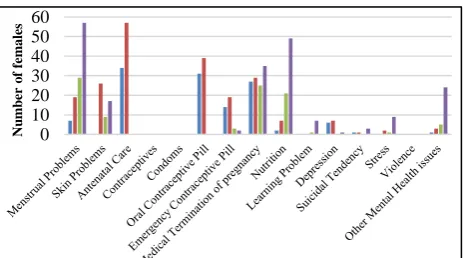
Figure 2: Comparison of pre and post-intervention for utilization of ARSH clinic by female individuals.
Similarly, significant improvement in utilization of ARSH clinic by both married and unmarried female was observed post intervention. More than two-fold increase was seen among the unmarried females in the utilization of ARSH clinic post intervention as opposed to previous year’s data. Highest use of ARSH clinic among unmarried women post intervention was for menstrual problems (27.9%) followed by nutrition (24%) (Figure 2).
DISCUSSION
Insufficient knowledge on sexual health is apparent among adolescents in India.9,10 The effective implementation of ARSH clinic emanates with skilled knowledgeable health providers and providing conducive environment for adolescents seeking healthcare. However, the shortage of health workers’ knowledge on accurate sexual information to impart to the adolescents seems to be a barrier for the success of ARSH clinic. The present study assessed the institutional capacity to sustain the program beyond training period and evaluate the sensitization level among the stakeholders. The knowledge score among the study participants in both intervention and non-intervention areas varied in due course of time. It was observed that immediately in post-intervention site, knowledge score increased among the study participants and the knowledge was significantly retained after 12 months of intervention.
The intervention showed an encouraging trend where the utilization of the ARSH clinic doubled in the study site. The findings are similar to an afterschool health and sexuality education project study where increased resource material for sexual health and communication with adolescents were observed post intervention.11 Adolescent sexual and reproductive health-based interventions have been previously noted to satisfy the needs of adolescents in Nepal and Ghana.12,13 The ratio of both married and unmarried female increased by two folds on seeking help for menstrual problems (Figure 2). Previous studies on intervention evaluation have demonstrated significant improvement in knowledge of menstruation.14,15 An increased proportion of females was observed to utilize nutritional counselling as well as sexual health counselling after the intervention. In contrast, a cross-sectional study conducted in India observed inequity in the ARSH service utilization. The study found that higher proportion of individuals utilized the ARSH clinic for nutritional counselling as opposed to sexual and reproductive health issues.9 In the post intervention, there was a considerable increase in the adolescent girls seeking help for mental issues. However, mental health issue being one of the important factors for adolescent health, consultation for mental stress and utilizing the services for the same still remains a challenge.16 Therefore, familiarizing the adolescents about the services provided by the ARSH clinics is crucial.
0 10 20 30 40 50 60
Nu
m
b
er
o
f
in
d
ivi
d
u
als
Married male Married male Unmarried male Unmarried male
0 10 20 30 40 50 60
Nu
m
b
er
o
f
fe
m
ales
There was a considerable increase observed among the males to avail condoms post intervention during the present study. The observations are similar to an earlier intervention study with significant effect on use of condoms among adolescents in Tanzania.17 A meta-analysis corroborated that sexual health related interventions prove to be effective for promoting condom use.18 Moreover, increased consultation for issues of nightfall post intervention indicates the positive effect of intervention and eagerness to understand the undergoing sexual changes during puberty which was previously held taboo.
Almost all the participants answered that pre-marital sex was unacceptable in the society. However, the initiation of early sexual activity cannot be ignored with evidence of terminated pregnancy among unmarried girls in the study area. The moral conflict and engaging in premarital sex have been associated with mental distress among adolescent girls who seek medical help for termination of unwanted pregnancy. Thus, lack of adequate knowledge on sexual and reproductive health may be potential risk factors for unwanted pregnancy among adolescents.19,20 Any other factors like education, socio-economic background affecting the knowledge of the participants was not included in the study. In-depth interviews and focus group discussions may be explored in future studies to understand and plan for the challenges in complete acceptance of ARSH clinics.
Therefore, from the present study it may be concluded that increased sustainability of acquired knowledge over time may enhance the capacity for the adolescent clinics. Training the health workers to manage the various sexual and reproductive health issues and creating an amicable environment for discussing with adolescents seems to be indispensable. Moreover, health officials may plan horizontal interventions at sub-centre levels through extensive advocacy programmes instead of mere hospital based ARSH clinics. Increased institutional ethical committee activities may also be undertaken for improved sexual health knowledge among the adolescents.
ACKNOWLEDGEMENTS
The authors acknowledge Indian Council of Medical Research for funding the study. The authors also acknowledge the health workers, the medical officers Tripura for providing resource persons for the training.
Funding: The study was funded by Indian Council of Medical Research, New Delhi, India
Conflict of interest: None declared
Ethical approval: The study was approved by the Institutional Ethics Committee
REFERENCES
1. Sivagurunathan C, Umadevi R, Rama R, Gopalakrishnan S. Adolescent health: present status
and its related programmes in India. Are we in the right direction?. J Clin Diagnost Res. 2015;9(3):01. 2. United Nations. World Population Prospects: The
Revision 2012. Available at: https://population .un.org/wpp/Publications/Files/WPP2012_HIGHLI GHTS.pdf. Accessed 29 August 2019.
3. United Nations Population Fund-India. A profile of adolescents and youth in India. Available at: https://india.unfpa.org/sites/default/files/pubpdf/APr ofileofAdolescentsandYouthinIndia_0.pdf.
Accessed 12 August 2019.
4. Osorio A, Lopez-del Burgo C, Carlos S, de Irala J. The sooner, the worse? Association between earlier age of sexual initiation and worse adolescent health and well-being outcomes. Frontier Psychol. 2017;8:1298.
5. Hofferth SL, Hayes CD. National Research Council. Factors affecting initiation of sexual intercourse. In: Risking the Future: Adolescent Sexuality, Pregnancy, and Childbearing, Volume II: Working Papers and Statistical Appendices. National Academies Press (US); 1987.
6. Ministry of Health and Family Welfare, Government of India. National Family Health Survey-4, 2015-16, State fact sheet Tripura. Available at: http://rchiips.org/nfhs/pdf/NFHS4/ TR_FactSheet.pdf. Accessed 11 June 2019.
7. Sunitha S, Gururaj G. Health behaviours and problems among young people in India: Cause for concern and call for action. Indian J Med Res. 2014;140(2):185.
8. National Rural Health Mission. Implementation guide on RCH II Adolescent reproductive sexual health strategy. Available at: http://www.searo. who.int/entity/child_adolescent/topics/adolescent_h ealth/rch_asrh_india.pdf. Accessed 8 June 2019. 9. Gupta M, Bhatnagar N, Bahugana P. Inequity in
awareness and utilization of adolescent reproductive and sexual health services in union territory, Chandigarh, North India. Indian J Public Health. 2015;59(1):9.
10. Kuberan D, Rushender R, Kumar GD. Knowledge and attitude about reproductive and sexual health among higher secondary school students in a taluk of Tamil Nadu. Int J Community Med Public Health. 2017;4(10):3568-75.
11. Colarossi L, Betancourt GS, Perez A, Weidl M, Morales H. An organizational capacity-building program to enhance adolescent sexual and reproductive health. Health Promotion Practice. 2014;15(4):538-47.
12. Van Teijlingen E, Simkhada P, Acharya DR. Sexual and reproductive health status and health service utilisation of adolescents in four districts in Nepal. Kathmandu University Med J. 2008;6(2):1-5. 13. Aninanya GA, Debpuur CY, Awine T, Williams JE,
Ghana: a community-randomised trial. PloS one. 2015;10(4):e0125267.
14. Sharma R, Negi S, Kunj D, Sharma V. Menstrual hygiene among adolescent girls. Indian J Community Health. 2015;27(3):376-80.
15. Haque SE, Rahman M, Itsuko K, Mutahara M, Sakisaka K. The effect of a school-based educational intervention on menstrual health: an intervention study among adolescent girls in Bangladesh. BMJ Open. 2014;4(7):e004607. 16. Berhane F, Berhane Y, Fantahun M. Adolescents'
health service utilization pattern and preferences: Consultation for reproductive health problems and mental stress are less likely. Ethiop J Health Develop. 2005;19(1):29-36.
17. Mmbaga EJ, Kajula L, Aarø LE, Kilonzo M, Wubs AG, Eggers SM, et al. Effect of the PREPARE intervention on sexual initiation and condom use among adolescents aged 12–14: a cluster randomised controlled trial in Dar es Salaam, Tanzania. BMC Public Health. 2017;17(1):322.
18. Morales A, Espada JP, Orgilés M, Escribano S, Johnson BT, Lightfoot M. Interventions to reduce risk for sexually transmitted infections in adolescents: a meta-analysis of trials, 2008-2016. PloS One. 2018;13(6):e0199421.
19. Sowmini CV. Delay in termination of pregnancy among unmarried adolescents and young women attending a tertiary hospital abortion clinic in Trivandrum, Kerala, India. Reproductive Health Matters. 2013;21(41):243-50.
20. Moni SA, Nair MK, Devi RS. Pregnancy among unmarried adolescents and young adults. J Obstetrics Gynecol India. 2013;63(1):49-54.
Cite this article as: Baidya S, Reang T, Chowdhury