Theses & Dissertations Boston University Theses & Dissertations
2017
Accurate and budget-efficient text,
image, and video analysis systems
powered by the crowd
https://hdl.handle.net/2144/27482
GRADUATE SCHOOL OF ARTS AND SCIENCES
Dissertation
ACCURATE AND BUDGET-EFFICIENT TEXT, IMAGE,
AND VIDEO ANALYSIS SYSTEMS POWERED BY THE
CROWD
by
MEHRNOOSH SAMEKI
B.S., Sharif University of Technology, 2012
Submitted in partial fulfillment of the
requirements for the degree of
Doctor of Philosophy
First Reader
Margrit Betke, Ph.D.
Professor of Computer Science
Boston University, College of Arts and Sciences Professor of Electrical and Computer Engineering Professor of Biomedical Engineering
Boston University, College of Engineering
Second Reader
Danna Gurari, Ph.D.
Assistant Professor of School of Information University of Texas at Austin
Third Reader
Prakash Ishwar, Ph.D.
Professor of Electrical and Computer Engineering Professor of Systems Engineering
I would like to thank my PhD advisor and mentor, Professor Margrit Betke, for supporting me during the three year long process of attaining the objectives of my research work and also for her technical and scientific inputs in designing and exe-cution of the experiments, analyzing data and finally writing this dissertation. She believed in me when I was at the weakest point of my career. She was always very supportive and gave me the freedom to pursue various projects without objection. Thank you Margrit for taking a chance on me and seeing me through to the end. Your faith in me has helped me to spread my wings. I appreciate your willingness to let me pursue my passions.
I am very grateful to my PhD dissertation committee members, Professors Prakash Ishwar and Lei Guo. Prakash has provided insightful discussions about the machine learning and data analyses portion of my research projects. I am very grateful for his scientific advice and knowledge and suggestions. I truly appreciate Professor Guo’s collaboration and support over the past two years of my education. She has gen-erously supported me from her funding, provided me with invaluable advice about each single part of our research work, and in general, introduced me into a brand new research area which I feel the most passionate about. I forever appreciate her support. I also thank Professor George Kollios for his helpful advice and suggestions. For the next thank you, I must start by telling the story of how I came to be the graduate student of Professor Betke, who really turned my academic path upside down in the best possible way. I had the outstanding luck to meet Danna Gurari at a key time in my life - the last semester of my second year in the PhD program, when I was thinking about quitting the program. I knew two things: that I wanted to wake up every morning absolutely excited to go to work, and that I wanted to do research with human users in the loop. Danna found me at the weakest point of
after joining the research group, Margrit and Danna gave me the responsibility of presenting Danna’s work in a conference, which awarded us the best paper award. The recognition was such a turning point in my academic life. Danna helped me in all ups and downs of my personal and academic life, considered me as her little sister throughout the whole process. Three and a half years later she became an amazingly, unbelievably, accomplished advisor who has given me countless opportunities and unending support and this thesis to prove it. Thank you Danna for your belief in my abilities. Your trust changed my path, and I forever consider you as the most influential person in my life.
The research reported in this dissertation was supported in part by and . Any opinions, and I gratefully acknowledge their funding support for the reported projects. I would like to thank National Science Foundation (grant IIS-1421943) and the Rafik B. Hariri Institute for Computing and Computational Science and Engineering at Boston University for supporting this research and the Amazon Mechanical Turk crowdsourced workers for participating in our experiments.
A good support system is important to surviving and staying sane in grad school. I was lucky to be a part of the image and video computing group, one of the best research groups at Boston University. The members of the research group formed the core of my time. They have all been there for me when I needed help and assistance with my presentations/papers/experiments, and have taught me many tools and research practices of related topics. I know that I could always ask them for advice and opinions and they would be happy to provide it to me. Elham, Sarah, and Wenxin have been wonderful and generous lab mates who have supported me through many rough moments in my academic and personal life. I will never forget
As a girl with no siblings, I would certainly be a di↵erent person without the sisterhood and brotherhood of my amazing friends. A very special thanks to my siblings form another parents, Amirali Shambayati, Samaneh Kazemi, Sepideh Ma-habadi, and Banafsheh Mahmoudi, for the much love, support and advice they shared through the past 10+ years of our friendship. Thank you for listening, o↵ering me invaluable advice and humor, and supporting me through this entire process. A special thanks to my amazing Boston friends for very fun nights we have spent to-gether over the past couple of years. The hang outs, trips, debates, dinners, game nights as well as your general help and friendship made Boston my real second home. To my amazing friends scattered around the country, thank you for your thoughts, well wishes/prayers, phone calls, emails, texts, visits, editing advice, and being there whenever I needed a true friend.
Without doubt, the best outcome from the past three years is finding my soul-mate, best friend, and husband. Arash has been a true and great supporter and has unconditionally loved me during my good and bad times. He has been non-judgmental of me and instrumental in instilling confidence. He had faith in me and my intellect even when I felt like digging a hole and crawling into one because I did not have faith in myself. The past couple of years have not been an easy ride. I truly thank him for sticking by my side, even when I was irritable, insecure, and stressed. He truly blessed me with a life of joy in the hours when the lab lights were o↵. I feel that what we both learned in this journey, strengthened our commitment and determination to each other to live life to the fullest. I also wholeheartedly extend my appreciation to my mother-in-law and father-in-law for supporting me like their daughter through the past months of preparing this dissertation. They tremendously
value to me only grows with age. Thank you for allowing me to realize my own potential. All the support you have provided me over the years was the greatest gift anyone has ever given me. It was probably not your first choice to put 60 years of living in our country behind and immigrate to a brand new country just to support your daughter. Whatever I do and wherever I go in life, I promise to stick to our family values, and as I know you would love, extend my hand to those in need. I love you from the bottom of my heart. To my dear grandmothers, Badri Ghajarghovanlou and Iran Pourzand, and my wonderful aunt, Azar Sameki, who have passed away throughout me being away completing this degree, I will carry your memories forever in my heart and mind.
AND VIDEO ANALYSIS SYSTEMS POWERED BY THE
CROWD
MEHRNOOSH SAMEKI
Boston University, Graduate School of Arts and Sciences, 2017
Major Professor: Margrit Betke, PhD, Professor of Computer Science
ABSTRACT
Crowdsourcing systems empower individuals and companies to outsource labor-intensive tasks that cannot currently be solved by automated methods and are ex-pensive to tackle by domain experts. Crowdsourcing platforms are traditionally used to provide training labels for supervised machine learning algorithms. Crowdsourced tasks are distributed among internet workers who typically have a range of skills and knowledge, di↵ering previous exposure to the task at hand, and biases that may influence their work. This inhomogeneity of the workforce makes the design of ac-curate and efficient crowdsourcing systems challenging. This dissertation presents solutions to improve existing crowdsourcing systems in terms of accuracy and effi -ciency. It explores crowdsourcing tasks in two application areas, political discourse and annotation of biomedical and everyday images.
The first part of the dissertation investigates how workers’ behavioral factors and their unfamiliarity with data can be leveraged by crowdsourcing systems to control quality. Through studies that involve familiar and unfamiliar image content, the thesis demonstrates the benefit of explicitly accounting for a worker’s familiarity
of crowd workers to believe “fake news” in text and video.
The second part of the dissertation explores the reversed relationship between machine learning and crowdsourcing by incorporating machine learning techniques for quality control of crowdsourced end products. In particular, it investigates if ma-chine learning can be used to improve the quality of crowdsourced results and also consider budget constraints. The thesis proposes an image analysis system called ICORD that utilizes behavioral cues of the crowd worker, augmented by automated evaluation of image features, to infer the quality of a worker-drawn outline of a cell in a microscope image dynamically. ICORD determines the need to seek additional annotations from other workers in a budget-efficient manner. Next, the thesis pro-poses a budget-efficient machine learning system that uses fewer workers to analyze easy-to-label data and more workers for data that require extra scrutiny. The system learns a mapping from data features to number of allocated crowd workers for two case studies, sentiment analysis of twitter messages and segmentation of biomedical images.
Finally, the thesis uncovers the potential for design of hybrid crowd-algorithm methods by describing an interactive system for cell tracking in time-lapse microscopy videos, based on a prediction model that determines when automated cell tracking algorithms fail and human interaction is needed to ensure accurate tracking.
1 Introduction 1
1.1 Behavioral Factors and Data Familiarity . . . 2
1.2 Trade-o↵ between Budget and Accuracy in Crowdsourcing Systems . 3 1.3 Hybrid Crowd-Machine Algorithms . . . 5
1.4 Application Area: Political Discourse . . . 6
1.5 Application Areas: Image Analysis . . . 10
1.6 Contributions . . . 10
2 Investigating the Influence of Data Familiarity to Improve the De-sign of a Crowdsourcing Image Annotation System 13 2.1 Summary . . . 13
2.2 Introduction . . . 14
2.3 Related Work . . . 17
2.4 Image Sets and Expert Annotations . . . 19
2.5 1: Segment Everyday versus Biomedical Image . . . 20
2.6 2: Segment Upright versus Upside Down Image . . . 25
2.7 3: Assess Segmentation Ambiguity . . . 32
2.8 Discussion . . . 36
2.9 Conclusion . . . 38
3 Crowd-O-Meter: Predicting if a Person is Vulnerable to Believe Political Claims 40 3.1 Summary . . . 40
3.3.1 Fact Checking News on the Internet . . . 45
3.3.2 Bias . . . 47
3.3.3 Crowdsourcing a Person’s Bias . . . 48
3.4 Methods . . . 49
3.4.1 New Factualness Dataset . . . 49
3.4.2 Predicting Crowd Worker Vulnerability . . . 50
3.5 Experiments . . . 57
3.6 Discussion . . . 62
3.7 Conclusion . . . 64
4 ICORD: Intelligent Collection of Redundant Data – A Dynamic System for Crowdsourcing Cell Segmentations Accurately and Ef-ficiently 65 4.1 Summary . . . 65
4.2 Introduction . . . 66
4.3 Training ICORD . . . 71
4.3.1 Training Data Generation . . . 71
4.3.2 Prediction Features . . . 73
4.3.3 Creating a Prediction Model . . . 75
4.4 Testing the Use of Prediction . . . 76
4.4.1 Datasets . . . 76
4.4.2 Collection of Crowdsourced Segmentations . . . 77
4.4.3 Evaluation of Prediction Models . . . 77
4.4.4 Study 1: Which Feature Combination? . . . 77
4.4.5 Study 2: Per Modality Evaluation . . . 79
Efficiency and Accuracy . . . 80
4.6 Conclusions . . . 86
5 Budget-Optimized Crowd Worker Allocation 88 5.1 Summary . . . 88
5.2 Introduction . . . 89
5.3 Related Work . . . 93
5.4 Proposed Crowdsourcing Methodology . . . 95
5.4.1 Phase 1: Budget-Optimized Crowd Worker Allocation (BUOCA) Algorithm . . . 97
5.4.2 Phase 2: Machine Learning (BUOCA-ML) Algorithm . . . 101
5.5 Datasets for Case Studies . . . 102
5.5.1 Dataset for Tweet Analysis . . . 102
5.5.2 Dataset for Biomedical Images . . . 104
5.6 Experimental Results . . . 104
5.6.1 [EXP1] Evaluation of BUOCA-ML system on Twitter Dataset 104 5.6.2 [EXP1] Evaluation of BUOCA-ML system on Biomedical Images108 5.7 [EXP2] Applying BUOCA-ML on Sentiment Analysis Dataset . . . . 110
5.8 Comparison of ICORD and BUOCA-ML . . . 111
5.9 Conclusions . . . 112
6 Hybrid Algorithm-Crowdsourcing Tracking Systems 115 6.1 Summary . . . 115
6.2 Introduction . . . 116
6.3 Method . . . 118
6.3.1 Automated tracking . . . 118 xiii
6.4 Experiments and Results . . . 122
6.4.1 Data Collection . . . 122
6.4.2 Results . . . 123
6.5 Discussion and Conclusions . . . 124
7 Conclusions 126
References 128
Curriculum Vitae 141
2.1 We compare worker e↵ort to the quality of a segmentation when im-ages are upright and upside down. We report learned linear regression models with respect to 1) time to segment, 2) number of points, 3) segmentation speed, and 4) the combination of the three parameters. We also report correlation strengths (CC) for each model. Larger CC scores indicate greater correlation between worker e↵ort and segmen-tation quality. The main di↵erence between models for upright and upside down images is that comparable segmentation speeds (TpP) leads to considerably worse segmentation quality on upright images. . 29 2.2 Results illustrating how closely crowd votes regarding the perceived
ambiguity of segmenting images matched the actual observed seg-mentation task ambiguity for everyday and biomedical images. For biomedical images, crowd workers more frequently perceived the seg-mentation task as more ambiguous than in reality. For everyday im-ages, crowd workers tended to perceive the segmentation task as less ambiguous than in reality. . . 35 3.1 Evaluation and comparison of Meter-Text and
Crowd-O-Meter-Video. The combination of implicit and explicit features typi-cally led to better predictions for video than text. This demonstrates that implicit and explicit features were better indicators of vulnera-bility when users were exposed to televised videos. . . 61
pared with the correlation coefficient (r), the coefficient of determina-tion (R2), and the mean absolute error (MAE). The regression model
trained on all features is most predictive. . . 78 4.2 Evaluation of the predictive power of models trained and tested
sepa-rately on phase contrast (PC) and fluorescence (Fl) images. Training involves all image and behavioral features. . . 79
2·1 How does familiarity of content influence crowd workers who annotate images? This work extends well-known psychology studies about the e↵ects of image familiarity and flipping on human perception. We ex-plore the influence of these factors on crowdsourced workers asked to 1) demarcate the boundary of an object in an image (segmentation) and 2) judge the ambiguity of the segmentation task. Our findings suggest that “tuning” the familiarity of the content may be an impor-tant factor to consider to more e↵ectively employ crowd workers. . . . 14 2·2 Crowdsourcing segmentation system (a) instructions and (b) user
in-terface showing a completed annotation from a worker. . . 21 2·3 Comparison of the quality of crowdsourced segmentations for the
fa-miliar everyday and unfafa-miliar biomedical images. (a) The cumulative distribution function shows for each IoU score on the x-axis the cor-responding fraction of crowdsourced segmentations with IoU scores at most that value from the 500 crowdsourced segmentations for the 100 everyday images (red) and 1,525 crowdsourced segmentations for the 305 biomedical images (green). (b) Also shown are exemplar segmen-tation results for the range of IoU scores. . . 22
image when it was upright as well as rotated 180 degrees. For each plot, the central marks of the boxes denote the median values, box edges denote the 25th and 75th percentiles values, whiskers denote the adjacent value to the data point that is greater than one and a half times the size of the inter-quartile range, and black cross-hairs denote outliers. Overall, when images were upside down, (a) segmentation quality was higher, (b) crowd workers took less time to annotate, (c) crowd workers denoted the boundary of objects with more points, and (d) crowd workers annotated at the same speed. . . 26 2·5 When images are upside down, the majority of egregious errors (i.e.,
IoU<0.2) arose from crowd workers (green overlays on right) because they consistently disagreed with experts (red image overlays on left) regarding the true segmentation. (Best viewed in color.) . . . 29 2·6 Crowdsourcing voting system (a) instructions and (b) user interface. 33 2·7 Examples illustrating when crowd workers’ judgments of the
segmen-tation ambiguity di↵er and match actual segmentation ambiguity ob-served for biomedical and everyday images. . . 35
subject of bias, in this example from the 2016 U.S. presidential can-didates. In the top example, the person consistently believes quotes from Clinton to be more true than domain experts. In the bottom example, the person does not show a vulnerability to believe quotes from Trump to be consistently more true (or more false) than domain experts. We propose a system, Crowd-O-Meter, which uses measures of a person’s explicit bias (e.g., party preference) and implicit bias (i.e., worker behavior when rating the quotes) to predict if (s)he is vulnerable. . . 42 3·2 Crowd-O-Meter-Text interface with the annotation instructions (left)
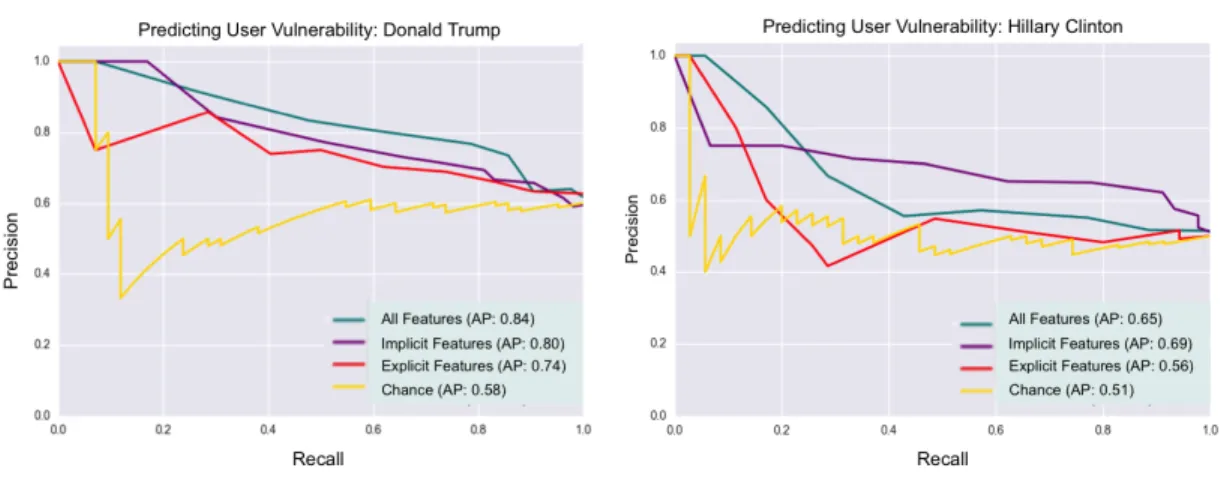
and task interface (right). . . 49 3·3 Shown are precision-recall curves and average precision (AP) scores
for all prediction systems; Trump (left), Clinton (right). Our Crowd-O-Meter system (i.e., All Features) outperforms today’s status quo approach (i.e.,Chancepredictions) by up to 26 percentage points (i.e., Trump), showing the promise of our proposed novel task to model hu-man vulnerability. Our results also highlight that a user’s unconscious behavioral data (purple curve) is a better predictor than relying on a user’s explicitly shared information (red curve) alone. . . 57
mentation? Does, for example, the time a crowd worker takes to trace the outline of the cell correlate with segmentation quality? Or the number of mouse clicks the worker makes to create the cell bound-ary? Do automatically extracted shape and intensity features of the segmented region correlate with segmentation quality? . . . 67 4·2 Our drawing interface enables crowd workers on Amazon Mechanical
Turk to draw polygonal cell outlines with LabelMe (Russell et al., 2008). 72 4·3 Crowdsourcing drawing instructions. The example part is shown on
the left side. The two examples on the left are cells in phase contrast microscopy images, the two on the right in fluorescence. . . 73 4·4 An example processed by ICORD: A phase contrast image of a cell and
its segmentations, produced by crowd workers in 5 rounds. In rounds 1–4, the prediction model flagged the segmentations as not sufficiently accurate (quality score below threshold⌧ = 0.75). In round 5, ICORD predicts that the shown segmentation is accurate (score > 0.75) and terminates the processing on this cell. For each round, the Jaccard scores measuring the overlap between expert-drawn and crowd-worker-drawn regions are also displayed (observed and predicted scores only di↵er by 6 or fewer percentage points). . . 82 4·5 An example processed by ICORD involving a cell on a fluorescence
mi-croscopy image. ICORD detects in the second round that the outline is sufficiently accurate to be considered a final product (⌧ = 0.83). . . 84
benchmarks for (a) fluorescence images with thresholds ⌧ = 0.82, and 0.85, and (b) Phase contrast images with ⌧ = 0.75, and 0.80. The number of collected annotations is the number shown above each bar. The total number of collected annotations for all five round is shown in red. ICORD requires the collection of significantly fewer annotations than Fusion. . . 85 5·1 The proposed four-phase human-machine system for scalable and
ac-curate data analysis. We here focus on phases 1 and 2. . . 91 5·2 The proposed Budget-Optimized Crowd worker Allocation (BUOCA)
algorithm computes a flexible allocation scheme for the number of crowd workers employed for a particular data point. . . 92 5·3 Pseudocode for the BUOCA Algorithm. . . 99 5·4 Accuracy-versus-Budget trade-o↵s for crowdsourcing the sentiment
analysis of almost 1,000 tweets related to the 2016 U.S. Presiden-tial Primaries with flexible allocation of the number of crowd workers. The optimal allocation (red), estimated by the BUOCA algorithm, has a significantly higher expected correct classification rate for a given budget than the best possible allocation (green) for the static decision tree (SDT) or the hand-crafted allocation (blue) for the SDT used by Sameki et al., 2016. . . 106
and Donald Trump (red). Our BUOCA-ML system achieved a similar accuracy to the ground truth (0.72 versus 0.75) while saving 43 percent of the budget (black). . . 109 5·6 Accuracy-versus-Budget trade-o↵s for crowdsourcing the cell image
segmentation of almost 280 cell images with flexible allocation of the number of crowd workers. The optimal allocation, estimated by the proposed greedy algorithm is shown as a red curve. BUOCA-ML’s predicted allocations, shown as the black point, achieved a very similar accuracy to the ground truth (0.80 versus 0.81) while saving 34 percent of the budget. . . 110 5·7 Accuracy-versus-Budget trade-o↵s for crowdsourcing the cell image
segmentation of almost (a) 119 fluorescence cell images, and (b) 151 phase contrast cell images. The optimal allocation, estimated by the proposed greedy algorithm is shown as a red curve. BUOCA-ML’s predicted allocations, shown as the black point, achieved a higher ac-curacy compared to the ICORD’s allocation, shown as the blue point, for the same budget point. . . 114
The red boundaries surround the cell that is currently tracked until mitosis is detected in frame 2. The crowd workers were asked to fol-low the cell that has an overlaid red boundary and choose the frame where the newborn cells were visible. A new round of crowdsourc-ing produced the boundaries of the newborn cells (shown in green). Frame numbers (blue) were displayed to facilitate the workers’ task. This example illustrates that mitosis detection is a challenging task for automated methods as mitotic cells display conflicting behavior for di↵erent microscopy modalities: in fluorescence images, the cell shrinks and decreases its luminosity (a), while cells in phase-contrast images (b) drastically reach a peak in pixel intensity when undergoing mitosis. . . 118 6·2 Interactive Correction of Cell Boundaries. Frames extracted from a
video that was produced by CrowdTrack when it lost track of a cell. The red boundary surrounds the cell that was currently tracked un-til the mistake happened and the tracking was stopped. The crowd workers were asked to follow the cell that has an overlaid red boundary and choose the frame where the red outline is not accurately enclosing the tracked cell. A new round of crowdsourcing produced a corrected boundary for that cell, displayed as a green outline on the frame that was selected by workers. This example shows that non-expert crowd workers can recognize the time step where the automatic tracking fails and fix its shortcoming. . . 119
ACC . . . Accuracy
AP . . . Average Precision CC . . . Correlation Coefficient CCR . . . Correct Classification Rate FL . . . Fluorescence
MAE . . . Mean Absolute Error MTurk . . . Amazon Mechanical Turk PC . . . Phase Contrast
R2 . . . . Coefficient of Determination
SDT . . . Static Decision Tree TNR . . . True Negative Rate TpP . . . Time per Point TPR . . . True Positive Rate
Chapter 1
Introduction
Supervised learning contains a family of machine learning methods whose goal is to infer a function from labeled training samples. The required training labels are traditionally collected from subject-matter domain experts or via controlled user studies. While the recruitment of domain experts makes the training phase reliable, it is difficult to be scaled on scenarios that require large-scale training data (e.g., deep learning methods). Domain experts are often difficult to find and expensive to recruit and therefore, there is need for scalable methods to ease the process of obtaining reliable training sample. With the rapid development of Internet mar-ketplace technologies over the past decade, crowdsourcing has been leveraged as an alternative to provide labeled data to train supervised machine learning algorithms. Crowdsourcing platforms like Amazon Mechanical Turk (MTurk), CrowdFlower, and UpWorks allow crowd task organizers to rapidly spread a huge number of tasks to a large pool of available workforce (a.k.a. crowd workers). These platforms empower researchers, corporations, and individuals to create large datasets of human-curated corpora and outsource a large quantity of tasks that need to be performed in a timely manner. To expedite the process, tasks in these platforms are distributed in a parallel fashion among crowd workers.
As a result of the distributed nature of such platforms, significant challenges arise in quality control. Crowdsourced data is known to be noisy, which could adversely a↵ect the accuracy of training labels and their corresponding machine learning
pre-dictions. The noise in crowdsourced end products may be due to multiple reasons such as workers’ lack of expertise or familiarity with the task at hand, workers’ bi-ased opinions, insufficient incentives, or task ambiguity. Beside the problem of noisy results, collecting a large-scale training dataset via crowdsourcing could be costly. Therefore, cost optimization methods need to be incorporated to make crowdsourcing a↵ordable for complex large-scale experiments.
This dissertation explores the reversed relationship between machine learning and crowdsourcing by incorporating machine learning techniques for quality control of crowdsourced data. In particular, the dissertation first investigates if machine learning can be used to improve the quality of crowdsourced results and then, more specifically, if such improvements can be made when budget constraints are in place.
1.1
Behavioral Factors and Data Familiarity
To investigate the quality of human-curated data in crowdsourcing platforms, we hypothesize that the quality of crowd work is not simply a consequence of the in-dustriousness of a crowd worker but also largely a consequence of task design. In particular, we examine whether the quality of crowdsourced data depends on the un-familiarity/familiarity of the data to crowd workers, or their personal bias towards the subject of the task. To investigate the influence of such factors on crowd work-ers’ end results, we first study the influence of content familiarity in a crowdsourcing environment on the open-ended task of delineating the boundary of a single object in an image. Our findings are surprising. Not only did crowd workers make fewer egregious errors on unfamiliar biomedical content than familiar everyday content, but also rotating familiar images so content is less recognizable led crowd workers to produce higher quality segmentations significantly faster!
perception of the factualness of a story. To uncover such bias, we propose Crowd-O-Meter, a framework to automatically predict the vulnerability of crowd workers to believe false stories. Crowd-O-Meter deploys a user-centered approach to mak-ing predictions, interpretmak-ing a combination of cues that measure the user’s implicit and explicit opinion bias. We also conduct studies that reveal which are the most informative clues of a person’s vulnerability to false claims. Experiments on 580 quotes from PolitiFact’s fact checking corpus of quotes by the 2016 U.S. presidential candidates show that Crowd-O-Meter is precise and accurate. Our study reveals that the features that measure a worker’s implicit bias are most informative. We also show the predictive power of Crowd-O-Meter on the two popular news article modalities text and video. Our results reveal that workers’ reactions to video are more predictive than to text.
1.2
Trade-o
↵
between Budget and Accuracy in
Crowdsourc-ing Systems
Crowdsourcing has been widely adopted by many individuals and businesses as a low-cost and flexible tool to achieve solutions to tasks that cannot reliably be solved by automated methods. Such platforms distribute tasks among an unknown pool of hired users (i.e. crowd workers) and compensate the workers with a small fee that goes to them upon completion of the tasks.
Human workers are prone to making errors and providing noisy labels and thus, across many fields, numerous methods have been proposed to control the quality of results and minimize human errors. Some platforms have addressed the issue of noisy labels by the use of redundancy, where multiple crowd results are combined into a single final result (Ipeirotis et al., 2010). To address the quality control concerns using redundancy, a common approach is to aggregate a fixed number of
annotations from multiple workers and then apply an aggregation policy. An example of a simple aggregation policy is majority voting (Warfield et al., 2004; Sheshadri and Lease, 2013). Although aggregation methods are shown to be e↵ective for removing noisy labels from the final product, they also increase the budget. In other words, assigning multiple crowd workers to each single crowdsourcing task to achieve a higher accuracy increases the overall cost of a project. Since the low-cost nature of conducting experiments via crowdsourcing platforms is a major advantage for using these platforms, it is very important to address such a challenge by finding an efficient trade-o↵ between task accuracy and the overall cost of redundant task allocation.
The generalizability and scalability of determining (manually) how to balance ac-curacy and efficiency on a case-by-case basis are questionable. An automated decision process is needed that is scalable to the large datasets produced in real time. To address this need, the dissertation proposes such an automated process. Our system, ICORD, dynamically determines during the collection process how many annotations should be collected. To demonstrate the proposed quality control method, we focus on the task of delineating boundaries of objects in images (segmentation), which is a critical step for many computer vision tasks, including collecting information in regions of interests, matching objects in di↵erent images (registration), following objects over time (tracking), and di↵erentiating between di↵erent types of objects (classification). ICORD uses image feature and crowd behavior analysis, and ran-dom forest regression to automatically interpret the quality of annotations of cells in biomedical images. ICORD decides when to collect additional data or when to stop. It intelligently balances annotation accuracy and collection efficiency.
Our results show that ICORD collects annotations both accurately and efficiently. Accuracy levels are within three percentage points of those of the baseline. More importantly, due to its dynamic nature, ICORD vastly outperforms the baseline
method with respect to efficiency. ICORD only uses between 27% and 50% of the resources, i.e., collection time and cost, that the baseline method requires.
The second portion of this thesis section addresses our initial concern about hu-man error in crowdsourcing. As mentioned earlier, it is standard practice to collect labels for the same data point from multiple workers, typically a fixed number of workers, and then use an aggregation method such as majority voting to determine the final label. This dissertation shows that the resulting budget, the number of data points times the costs of collecting redundant labels per data point, could be used more e↵ectively with a flexible assignment strategy. Fewer workers could be asked to analyze easy-to-label data and more workers to analyze data that requires extra scrutiny. We propose an algorithm that computes budget-optimized crowdworker allocation (BUOCA) based on comparing expert and crowdworker labels. We apply our algorithm to two datasets: a dataset of twitter messages about the 2016 U.S. presidential candidates and for which the crowdworker task is to analyze the senti-ment towards the candidates senti-mentioned in the tweets, and a dataset of microscopy images for which the crowdworker task is to segment the boundaries of cells. Our application of BUOCA reveals how to compute the budget level for which adding redundancy by involving more workers simply increases the crowdsourcing expense without improving the accuracy of the crowdsourcing outcome. Finally, we envis-age a human-machine system that could be used to perform budget-optimized data analysis at a large scale.
1.3
Hybrid Crowd-Machine Algorithms
Our next e↵ort focuses on the problem of how to e↵ectively integrate algorithms and crowdsourcing and build hybrid systems, where crowd workers complement machine capabilities by correcting its mistakes or supervise its execution. In particular, we
investigate the potential for integrating computer vision tracking algorithms and crowdsourced laymen in order to achieve expert-level cell tracking at scale. We show that hybrid algorithm-crowdsourcing approaches can lead to a low-budget platform in which easy tasks are accomplished by algorithms and more difficult tasks are outsourced to human workers.
Even though the task of automatic cell tracking has been explored by the re-search community for several years, state-of-the-art methods are still imperfect and dependent on the data employed (Chenouard et al., 2014). In particular, automated tracking models are likely to fail when handling challenging scenarios such as cells undergoing mitosis (Huh et al., 2011; Huh and Chen, 2011) or forming clusters (Bise et al., 2009; Wu et al., 2012). These intracellular interactions are usually induced in real-world experiments in order to study the ability of cells to adapt to diverse en-vironmental situations. The proposed platform, CrowdTrack, shows that imperfect methods can be improved with the involvement of low-cost crowd work by address-ing the tasks of correctly trackaddress-ing and fixaddress-ing the mistakes of automated algorithms. CrowdTrack is generic in the sense that it does not depend on the employed data and tracking approach which we showed by applying it to two di↵erent image modalities, fluorescence and phase-contrast microscopy.
1.4
Application Area: Political Discourse
Political scientists have begun to use crowdsourcing as an approach to analyze text documents. Based on the analysis of political manifestos and a multilingual bate in the European Parliament, Benoit and colleagues showed that properly de-ployed crowdcoding generated results comparable to expert decisions in di↵erent settings (Benoit et al., 2016). Heselmayer and Jenny (2016) used the approach to estimate the sentiment of political communication in press releases, minutes from
parliamentary debates, and media reports on Austrian election campaigns. They also suggested that the group of lay coders e↵ectively replicated the expert data. Unlike well-structured text data such as news articles and political speeches, social media data such as tweets represent an extreme version of informal text and therefore present a significant challenge to content analysis.
Tweets are often messy, truncated, and contain irony or sarcasm (Guo et al., 2016; Hsueh et al., 2009). Researchers have explored the use of crowdcoding in analyzing tweets and found inconsistent results (Fromreide et al., 2014; Finin et al., 2010). This dissertation presents our idea of a dynamic allocation of crowd e↵ort on sentiment analysis of political tweets. Application of our methodology to the task of sentiment analysis of tweets about politicians could be used to test theories such as agenda setting, framing, and selective exposure (e.g., (Coleman and Wu, 2010; Stroud, 2010)). More recently, researchers have turned their attention to the sentiment of the public towards political candidates via social media platforms such as Twitter (e.g., (Vargo et al., 2014)). Given the magnitude of tweets published daily, an efficient and valid content analysis method would greatly benefit communication research, whether it is for annotating a relatively large sample of tweets or for providing labels for training and evaluating computer models.
Beside the task of sentiment analyses of social media data, communication re-searchers and political scientists are also interested in the factuality of data dis-tributed by social media. The 2016 U.S. presidential election highlighted concerns on the influence of fake news on forming citizens’ judgments around presidential can-didates. Many news agencies, such as BBC and New York Times, criticized social media websites such as Facebook, for providing an infrastructure in which fake news circulate and get promoted via attracting a large number of interactions (e.g., likes, comments, share). Such platforms, specifically, were criticized for their sensitivity
to judgments of citizens with no prior qualification or reputation rather than rely-ing on editorial judgments (Allcott and Gentzkow, 2017). Moreover, a recent study highlighted the importance of social media in informing U.S. citizens about recent news by reporting that 62% of U.S. adults receive news on social media, and 18% do so often (Gottfried and Shearer, 2016). Such a high adoption of social media among citizens shows the potential of fake news to change citizens’ perspectives on candidates’ qualifications.
Moreover, fake stories such as “Pope Francis Shocks World, Endorses Donald Trump for President” attracted millions of interactions on social media websites and made it among the top trending stories of the Facebook platform for a period of time. Silverman studied how fake news move within the Facebook network, showing that the top 20 fake news outperformed the top 20 real news on the platform (Silverman, 2016). The article also studied the influence of fake news on U.S. citizen beliefs and stated that “most Americans who see fake news believe it.” Their study revealed the direction of fake news to be mostly favoring Donald Trump over Hillary Clinton. Allcott and Gentzkow demonstrated that “an average U.S. adult might have seen perhaps one or several fake news stories in the months before the election, with higher exposure to pro-Trump articles than pro-Clinton articles” (Allcott and Gentzkow, 2017).
Due to high social impact of fake news in social media, Mark Zuckerberg, founder and CEO of Facebook Inc., published an statement mentioning that his company has been working on the problem of misinformation for a long time and take this respon-sibility very seriously (Zuckerberg, 2016). He called this problem both technically and philosophically complex, mentioning that a wrong strategy would lead to mis-takenly restricting accurate content. Google Inc. also acknowledged the problem of spreading fake news and released a fact-checking label which is attached to published
stories in Google News. Shortly after the release of the Google News fact-checking label, Google added the label to the generated search results on the Google Search platform, anticipating to empower people to form more informed judgments around the presented stories. Such e↵orts highlight the importance of concerns regarding the e↵ect of fake news on citizens’ judgments.
Fact checking organizations such as PolitiFact have been developed over the past decade and are widely employed by news agencies in the process of creation and refinement of news articles (Vlachos and Riedel, 2014). Facebook accomplishes fact checking on public figures’ stories using a report-and-flag paradigm in which users report suspicious stories and then, fact checking is conducted on reported sto-ries (Mosseri, 2016). Although integrating social media platforms with fact checking platforms can be a potential solution to the problem of fake news circulating such platforms, it heavily relies on the e↵orts of domain experts of the fields such as po-litical science and journalism. Recruiting such an expert audience can be very costly and time consuming, and their e↵orts may not produce results that are sufficiently timely given the speed of fake news circulating social media (Farajtabar et al., 2017). As an alternative, we hypothesize that predicting the vulnerability level of users to believing and circulating fake news can potentially empower platforms to restrict the impact of vulnerable users’ interactions in the process of promoting fake news. We believe that such control on interaction of vulnerable users could lead to more trustworthy trending news. We take the initial steps to investigate such potential by proposing Crowd-O-Meter, a crowdsourcing platform that leverages implicit opinion bias (via a user’s behavioral traces) and explicit opinion bias (via a user’s post-test questionnaire) of American crowd workers to predict the user’s vulnerability in believing political misinformation.
1.5
Application Areas: Image Analysis
This dissertation describes techniques to e↵ectively leverage both human involve-ment and machine learning for image annotation and object tracking. The focus here is on biomedical images and videos in an e↵ort to facilitate research that ad-dresses society’s health care problems. A part of this dissertation is a contribution to the growing exploration of how to successfully leverage large groups of crowdsourced lay people, i.e. workers without biomedical background to collect high-quality re-sults for image segmentation and object tracking. We explore how to predict the quality of a crowd worker’s annotation in the absence of experts’ ground truth an-notations. We do this by studying whether the interactive behavior of a worker correlates with annotation quality. We next study the problem of how to e↵ectively integrate computer vision tracking algorithms and crowdsourced laymen in order to achieve expert-level cell tracking at scale. This part of the thesis reveals the potential for hybrid algorithm-crowdsourcing approaches to accelerate analysis of big data in biology and biotechnology.
1.6
Contributions
The contributions of the thesis have been published in a number of conference papers and can be summarized as follows:
1. A machine learning framework to examine how crowd workers’ skills and di↵ er-ing levels of familiarity to data a↵ect the quality of produced end results. Our results reveal that familiarity can lead to better and worse crowd results. Crowd workers make more egregious errors when segmenting familiar than unfamil-iar data due to greater perceived task ambiguity. Our studies o↵er promising evidence that researchers can improve designs of crowdsourcing systems by
ex-plicitly studying the influence of content familiarity on human behavior (Gurari et al., 2016b).
2. A machine learning framework to automatically predict the vulnerability of crowd workers to believe false stories in political discourse. Crowd-O-Meter deploys a user-centered approach to making predictions, interpreting a com-bination of cues that measure the user’s implicit and explicit opinion bias. Crowd-O-Meter uncovers the influence of workers’ bias on their perception of the factualness of a political statement (Sameki et al., 2017).
3. Analysis of crowdsourcing for the task of image segmentation for biomedical and everyday images: This contribution provides a solution for the new chal-lenging problem of how to perform quality control by predicting crowd-drawn segmentation accuracy from crowd worker’s interactive behavior (Sameki et al., 2015a), (Sameki et al., 2015b).
4. A dynamic system for crowdsourcing image segmentation task, called ICORD: This system informs how to utilize the analysis of behavioral cues of the crowd worker, augmented by analysis of image features, to infer segmentation quality dynamically. ICORD predicts the accuracy of a crowd-drawn cell outline and determines the need to seek additional annotations (Sameki et al., 2016c). 5. A machine learning framework that classifies tasks per difficulty level and is
shown to optimize the costs of collecting redundant labels per data point. The framework uses a fewer workers to analyze easy-to-label data and more workers to analyze data that requires extra scrutiny. Our framework learns a mapping from data features to number of allocated crowd workers for the case study of sentiment analysis of twitter messages and segmentation of biomedical images.
6. A hybrid human-algorithm approach for interactive cell tracking in time-lapse microscopy videos: A prediction model is contributed that determines when automated cell tracking algorithms fail and human interaction is needed to en-sure accurate tracking. The method next informs how to utilize the annotation e↵orts of algorithms and crowdsourced workers in inhomogeneous multi-round tasks to create expert-grade tracking trajectories (Sameki et al., 2016a; Gentil et al., 2016).
Chapter 2
Investigating the Influence of Data
Familiarity to Improve the Design of a
Crowdsourcing Image Annotation System
Our first e↵ort examines the influence of workers’ knowledge and familiarity with con-tent of crowdsourced tasks to investigate whether such metrics would a↵ect workers’ behavior. Our experiments were inspired by psychology experiments that reveal hu-man behavior di↵ers when images are familiar versus unfamiliar and upright versus upside down (Balas et al., 2010; Barton et al., 2006; Gold et al., 2012; Murray, 1997). We simulated familiarity and unfamiliarity with two datasets of biomedical (unfamiliar) and everyday (familiar) images.2.1
Summary
Crowdsourced demarcations of object boundaries in images (segmentations) are im-portant for many vision-based applications. A commonly reported challenge is that a large percentage of crowd results are discarded due to concerns about quality. We conducted three studies to examine (1) how does the quality of crowdsourced seg-mentations di↵er for familiar everyday images versus unfamiliar biomedical images?, (2) how does making familiar images less recognizable (rotating images upside down) influence crowd work with respect to the quality of results, segmentation time, and segmentation detail?, and (3) how does crowd workers’ judgments of the ambiguity
Figure 2·1: How does familiarity of content influence crowd work-ers who annotate images? This work extends well-known psychology studies about the e↵ects of image familiarity and flipping on human perception. We explore the influence of these factors on crowdsourced workers asked to 1) demarcate the boundary of an object in an image (segmentation) and 2) judge the ambiguity of the segmentation task. Our findings suggest that “tuning” the familiarity of the content may be an important factor to consider to more e↵ectively employ crowd workers.
of the segmentation task, collected by voting, di↵er for familiar everyday images and unfamiliar biomedical images? We analyzed a total of 2,525 segmentations collected from 121 crowd workers and 1,850 votes from 55 crowd workers. Our results illus-trate the potential benefit of explicitly accounting for human familiarity with the data when designing computer interfaces for human interaction.
2.2
Introduction
In a 2013 study, researchers discarded 33,508 crowdsourced image segmentations of everyday content, i.e., 32% of collected data, because the results were not “deemed to be good” (Bell et al., 2013). Conversely, a 2015 study (Gurari et al., 2015) demonstrated that crowdsourced image segmentations on biomedical image content nearly matched the quality of segmentations from domain experts. These contrasting findings are surprising. Why are there di↵erences in the quality of crowd work for the two studies?
One interpretation of the contrasting findings is to infer the crowd workers in the 2013 study (Bell et al., 2013) were not to be trusted. This perspective has been popularized by Bernstein et al. (Bernstein et al., 2010) who posited that crowd workers are often either “Lazy Turkers” or “Eager Beavers.” So, as “a rule-of-thumb, roughly 30% of the results from open-ended tasks are poor.” However, in the 2013 study (Bell et al., 2013) workers were restricted to the best 26 out of 530 workers whereas the 2015 study (Gurari et al., 2015) employed less stringent worker filtering. In this work, we hypothesize that the quality of crowd work is not simply a con-sequence of the industriousness of a crowd worker but also largely a concon-sequence of task design. In particular, we were inspired to examine whether the hidden secret for success for biomedical images lied in the unfamiliarity of the data (Figure 2·1). To the best of our knowledge, we are the first to study the influence of content famil-iarity in a crowdsourcing environment. We focus on the open-ended segmentation problem of delineating the boundary of a single object in an image. Our findings are surprising. Not only did crowd workers make fewer egregious errors on unfa-miliar biomedical content than faunfa-miliar everyday content, but also rotating faunfa-miliar images so content is less recognizable led crowd workers to produce higher quality segmentations significantly faster!
The interest in crowdsourcing the collection of object segmentations for everyday images spans research communities as diverse as computer human interaction (Hara et al., 2013), computer vision (Gurari et al., 2016a), computer graphics (Bell et al., 2013), and multimedia (Galli et al., 2012). Crowdsourced segmentations are cur-rently valuable for o↵ering run-time computations in final image analysis system designs; e.g., navigation systems leverage crowd workers’ demarcations of sidewalk obstructions in Google Street View imagery to decide whether sidewalks are inacces-sible for wheelchairs (Hara et al., 2013). In addition, crowdsourced segmentations
are exploited at design-time to build better automated methods; e.g., object seg-mentations serve as training data to teach machine learning systems to identify (i.e., classify) the type of observed object (Jain and Grauman, 2013).
The demand for collecting crowdsourced image segmentations is growing as more novel image analysis systems are proposed. This is because object segmentation is a critical precursor for many downstream applications that aim to leverage and inter-pret the rich abundance of visual data, including to perform:
- Image Retrieval: find images in a database that are similar to user-submitted images (Bell et al., 2013).
- Classification: di↵erentiate between types of objects such as flowers, cars, and boats (Jain and Grauman, 2013).
- Tracking: follow objects over time (Paletta and et al, 2014).
- Behavior Analysis: characterize how objects’ shapes or trajectories change over time (Mancini et al., 2014).
The remainder of this chapter is organized into seven sections. Related work is reviewed in the next section. Then, we describe our image sets. In the subsequent three sections, we describe three crowdsourcing studies that investigate: 1) How does the quality of crowdsourced segmentations compare for biomedical versus everyday images? 2) How does crowdsourcing segmentation collection compare when images are upright versus upside down? and 3) How do crowd workers judgments di↵er when they assess the ambiguity of the segmentation task for biomedical versus everyday images? We finish with a discussion and concluding remarks. The key contributions
of our work are:
• Analysis of segmentations collected from the crowd for familiar everyday and unfamiliar biomedical images revealing that “mistakes” predominantly arise from task ambiguity rather than worker reliability.
• Analysis showing crowd workers produced higher quality segmentations with less e↵ort when familiar everyday images were upside down and so less recog-nizable.
• Experiments demonstrating that crowd workers predicted task ambiguity to be greater than observed in practice for unfamiliar biomedical images and less than observed in practice for familiar everyday images.
2.3
Related Work
Commonly, researchers address poor quality crowd work by introducing run-time machinery to improve the results. For instance, mechanisms exist to weed out work-ers with insufficient training qualifications (Lin et al., 2014), edit/validate crowd work (Bernstein et al., 2010), or mitigate the influence of poor quality work through redundancy (Hara et al., 2013). Filtering workers has the undesirable consequence of limiting the crowd worker pool which, in turn, reduces the degree to which such a crowdsourcing solution can scale. The remaining aforementioned approaches in-troduce extra monetary costs as well as delays to acquire results, making such ap-proaches less amenable to “real-time” applications. Unlike these methods, we address concerns about the quality of crowd work by modifying the task at design time rather than at run time.
Limited prior work discusses design-time improvements to yield higher quality crowdsourced segmentations. LabelMe (Russell et al., 2008), one of the earliest and
still commonly emulated web-based user interfaces (Hara et al., 2013; Jain and Grau-man, 2013; Sorokin and Forsyth, 2008), sequentially connects user clicks on the image with straight lines to produce a closed polygon that demarcates the boundary of an object. Building on this framework, recent work has added three features to improve the quality of resulting segmentations: smooth zoom, undo/redo, and automatic pan (Bell et al., 2013; Lin et al., 2014). Alternatively, web-based segmentation anno-tation tools, such as interactive scissors (Little et al., 2012) and Click’n’Cut (Carlier et al., 2014), augment the basic user interface with algorithms that interactively re-fine user-generated segmentations with the aim to clean up boundary imperfections. In contrast to methods that modify the basic segmentation interface, we instead only modify the presentation of images (i.e., rotating images) to yield significantly better segmentations.
Our experiments were partially inspired by psychology experiments that reveal human behavior di↵ers when images are familiar versus unfamiliar and upright versus upside down (Balas et al., 2010; Barton et al., 2006; Gold et al., 2012; Murray, 1997). Although, experimentally, we may understand that humans relate di↵erently to content of di↵ering levels of familiarity, to our knowledge, no work has quantified this impact either for the segmentation task or in the crowdsourcing environment.
More broadly, our work relates to human factors research aiming to improve crowdsourcing theories and methodologies (Lease, 2011; Quinn and Bederson, 2011). For instance, when choosing how to attract a crowd, important considerations are how crowds behave with di↵erent incentives (i.e., pay versus volunteer) (Mao et al., 2013) or cultural biases (Quattrone et al., 2015). In addition, one may make di↵erent inferences about results based on the demographics of the worker population (Ross et al., 2010) or perceptions of malicious intent (Gadiraju et al., 2015). Our find-ings complement existing human factors research by examining how crowd worker
behavior relates to data of di↵ering levels of familiarity for two types of tasks. Finally, our work relates to image annotation crowdsourcing literature. Pioneer-ing works include crowdsourcPioneer-ing the localization of objects with the Peekaboom (Ahn et al., 2006) game, while more recent works include coarse-grained object localization using a paintbrush (Welinder and et al, 2010) or bounding box (Su et al., 2012) as well as pixel-accurate segmentations of specified types of objects (Lin et al., 2014). Our work di↵ers by addressing the general segmentation problem, where the focus is on creating a pixel-accurate delineation of the most prominent object according to human perception, rather than requiring a crowd worker to draw a coarse bounding region (localization) or segment one of a pre-defined set of object categories (semantic segmentation).
2.4
Image Sets and Expert Annotations
We conducted our studies on a total of 405 images coming from two image li-braries (Alpert et al., 2007; Gurari et al., 2015) that represent familiar everyday and unfamiliar biomedical content. To avoid the challenging problem of how to establish generalized image sets, we selected publicly-shared datasets intentionally designed to represent a diversity of objects in a variety of image conditions1. We
also chose these datasets because they were designed to only include images that have a single, dominant object of interest and include expert-drawn, pixel-accurate delineations of the object of interest for each image.
Familiar Everyday Images. We leveraged 100 images that were collected with cameras that detect visible light and so capture content detectable by the naked human eye (Alpert et al., 2007). The designers of the dataset chose images from 1The image sets can be found at the following links: http://www.wisdom.weizmann.ac.il/⇠vision/Seg Evaluation DB/1obj/index.html
royalty free databases that “avoid potential ambiguities” regarding the object of in-terest because the objects of inin-terest di↵er from the “surroundings by either intensity, texture, or other low level cues.” Images show objects such as animals, trees, build-ings, and boats. We assume the objects are familiar to crowd workers from daily life experiences regardless of the workers’ cultural backgrounds.
Unfamiliar Biomedical Images. We leveraged 305 biomedical images which rep-resent content undetectable to the naked human eye (Gurari et al., 2015). These images come from six datasets created for biomedical research studies that target health care problems such as cancer and heart disease. Three datasets include phase contrast microscopy images that capture a variety of appearances of di↵erent types of cells. Two datasets include fluorescence microscopy images that show melanoma cells. One dataset includes magnetic resonance images showing aortas. We assume these images are unlikely to be familiar to a lay person.
Gold Standard Segmentations. To judge the quality of crowdsourced segmenta-tions, we established gold standards using the multiple expert-drawn segmentations per image provided with the datasets. Specifically, for each image, we fuse the seg-mentations from the multiple experts into a single final segmentation, using majority pixel vote. Our intention was to reduce the impact of biases and mistakes from a single expert on performance analyses.
2.5
1: Segment Everyday versus Biomedical Image
Our first aim was to quantify the quality of crowd work for the segmentation task and investigate the impact of data familiarity. Towards this e↵ort, we first describe our experimental methodology including the crowdsourcing system and approach to measure segmentation quality. Then, we describe our experiments to evaluate and compare crowdsourced segmentations collected for familiar everyday images and
un-(a)
(b)
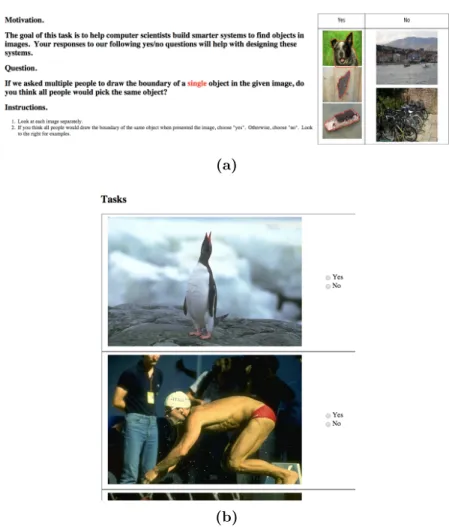
Figure 2·2: Crowdsourcing segmentation system (a) instructions and (b) user interface showing a completed annotation from a worker.
familiar biomedical images. Our results uncover possible reasons for the contrasting quality findings discussed in the Introduction for everyday (Bell et al., 2013) and biomedical content (Gurari et al., 2015).
Segmentation Crowdsourcing System. Our crowdsourcing environment, de-scribed below, entails a two-step process where crowd workers are first shown in-structions and then the interface they use for drawing.
Crowdsourcing Platform. We chose the Amazon Mechanical Turk (AMT) mar-ketplace because of “easy access to a large, stable, and diverse subject pool” and “the low cost of doing experiments” (Mason and Suri, 2012). In AMT, crowd work-ers browse among posted jobs, also called HITs (Human Intelligence Tasks), that
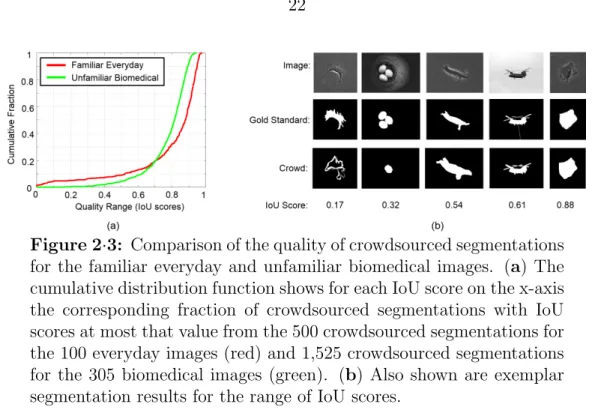
Figure 2·3: Comparison of the quality of crowdsourced segmentations for the familiar everyday and unfamiliar biomedical images. (a) The cumulative distribution function shows for each IoU score on the x-axis the corresponding fraction of crowdsourced segmentations with IoU scores at most that value from the 500 crowdsourced segmentations for the 100 everyday images (red) and 1,525 crowdsourced segmentations for the 305 biomedical images (green). (b) Also shown are exemplar segmentation results for the range of IoU scores.
are paired with a price that we paid upon completion of each HIT. We accepted all AMT workers that had previously completed at least 100 HITs and received at least a 92% approval rating.
Instructions. When a crowd worker reviews our segmentation HIT, (s)he is shown the instructions (Figure 2·2a). The instructions emphasize that a worker should segment the single object which is the largest and closest to the center of the image. Included are also pictures exemplifying desired and undesired segmentations to clarify that the aim of the task is to create a highly detailed boundary of the single, most prominent object in the image. Examples are intended to address various annotation concerns, such as the common complaint that crowd workers create coarse rather than detailed segmentations (Lin et al., 2014).
Segmentation Tool. After a worker accepts our HIT, the instructions embedded in the AMT webpage are replaced with the segmentation tool (Figure 2·2b). We employ the freely-available LabelMe code (Russell et al., 2008). With this tool, workers trace the boundary of an object by clicking points on the image which are
connected with straight lines. A worker completes the segmentation by clicking on the first clicked point. Then, the worker is prompted with a message allowing him/her to delete the segmentation, in case (s)he made a mistake and so wants to redraw the object. Otherwise, the worker must specify a text label naming the object and click “Done” to submit the completed segmentation. The result is a file that records the sequence of (x,y) image coordinates the crowd worker clicked.
Segmentation Quality Evaluation. To measure the quality of each crowdsourced segmentation, we measured its similarity to the gold standard segmentation. To do this, we adopted the widely-used intersection over union (IoU) metric (Gurari et al., 2015; Hara et al., 2013; Jain and Grauman, 2013) which computes the pixel level similarity of each crowdsourced segmentation and the gold standard segmentation. Formally, this measure is represented as ||AA\[BB|| whereArepresents the set of pixels in the crowd segmentation and B represents the set of pixels in the gold standard seg-mentation. Resulting scores range from 0 to 1 with larger values indicating greater similarity between the two segmentations.
Experimental Design. We collected segmentations from crowd workers for the 405 familiar everyday images and unfamiliar biomedical images. To capture the variability of segmentation behaviors that may arise due to workers with di↵ering skills, we collected five crowd-drawn segmentations per each image. For each batch of images (i.e., biomedical and everyday), we posted all HITs simultaneously while randomizing the order of jobs. We allotted a maximum of ten minutes to complete each HIT and paid $0.02 per HIT.
We next evaluated the similarity of each crowdsourced segmentation to the gold standard segmentation using the IoU metric. In total, we computed 2,025 IoU scores.
Results. Figure 2·3a shows the cumulative distribution of IoU scores for both datasets. Figure 2·3b exemplifies the quality of segmentations associated with the
range of IoU scores.
The main distinguishing factor between the quality of crowdsourced segmenta-tions for the two image sets is that crowd workers made egregious errors approx-imately three to five times more frequently for everyday images than biomedical images (Figure 2·3a; IoU scores <0.4). As observed inFigure 2·3b, mistakes that lead to less than 40% pixel agreement with the gold standard segmentation (i.e., IoU score = 0.4) arise from task ambiguity (i.e., segment one egg versus three eggs?) as well as worker error (i.e., incorrect annotation protocol). From visual inspection of all outliers with IoU < 0.2 (4 from biomedical images, 25 from everyday images), we observe they arise primarily because of ambiguity; i.e., what is the appropriate object to annotate.
We observe more higher quality segmentations (i.e., IoU > 0.7) for everyday images than biomedical images. These results are consistent with our findings for expert annotators. Specifically, when evaluating segmentations from the multiple available expert annotations (included with the benchmarks) against the gold stan-dard segmentations, the median IoU score is 0.85 for the biomedical images and 0.97 for everyday images. As observed in Figure 2·3b, di↵erences in higher scores often arise due to difficulty in capturing the detail for complicated boundaries, and the biomedical images show objects with highly-complicated boundaries.
In total, 93 unique workers created the 2,025 segmentations with 3 workers in common across the two datasets. The 500 segmentations for the everyday images were created by 44 unique workers, with the average number of jobs completed per worker and its standard deviation being 11 and 23. The 1,525 segmentations for the biomedical images were created by 52 unique workers, with the average number of jobs completed per worker and its standard deviation being 29 and 82.
Discussion. Our findings o↵er promising evidence that crowdsourcing errors are more frequent for everyday images than biomedical images because crowd workers bring more conflicting opinions regarding how to interpret the segmentation task. For example, when segmenting an image of a basket with eggs, “experts” on the content may be focused on asking whether they should annotate one egg versus three eggs versus the basket holding the eggs. In contrast, when segmenting an image of a cell, crowd workers that are “not experts” on the content may be less distracted by the intricacies of the nucleus, membrane, and other internal structures that they could annotate within a cell. In the next section, we explore whether crowd workers are making more mistakes (i.e., perceiving ambiguity) on everyday images than biomedical images because the content is familiar. We design the next study to avoid the possible concern that findings arise due to di↵erences in the studied datasets.
2.6
2: Segment Upright versus Upside Down Image
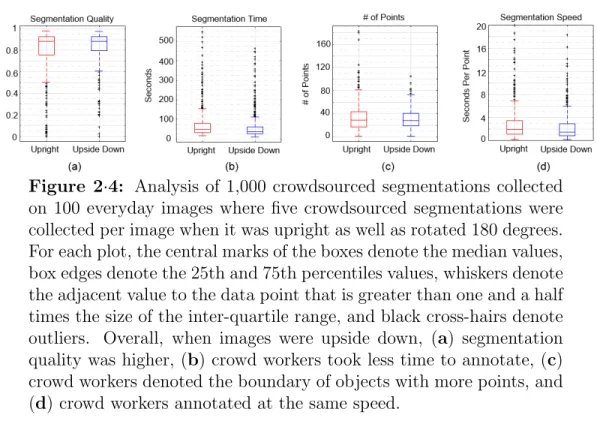
Our next goal is to learn how making familiar image content less recognizable a↵ects the quality of crowd work. Towards this e↵ort, we evaluate and compare crowd-sourced segmentations when the familiar everyday images are upright and upside down. An upside down image of a dog, for example, means the dog’s feet will reside where the dog’s head would be expected (Figure 2·1). We also quantify how upside down images influence crowd worker e↵ort, with respect to segmentation time and detail. Finally, we quantify how crowd worker e↵ort relates to the quality of his/her work.
Methods. Our methodology builds o↵ of the crowdsourcing system and approach to measure segmentation quality discussed in Study 1. We describe below the mea-sures we adopted to quantify a crowd worker’s e↵orts to produce a segmentation.
Figure 2·4: Analysis of 1,000 crowdsourced segmentations collected on 100 everyday images where five crowdsourced segmentations were collected per image when it was upright as well as rotated 180 degrees. For each plot, the central marks of the boxes denote the median values, box edges denote the 25th and 75th percentiles values, whiskers denote the adjacent value to the data point that is greater than one and a half times the size of the inter-quartile range, and black cross-hairs denote outliers. Overall, when images were upside down, (a) segmentation quality was higher, (b) crowd workers took less time to annotate, (c) crowd workers denoted the boundary of objects with more points, and (d) crowd workers annotated at the same speed.
Then, we discuss our methodology to measure how a crowd worker’s e↵ort relates to the quality of his/her completed work.
Measuring Crowd Worker E↵ort. Our measures were inspired by the observation that workers with complete freedom in drawing may require more clicks and time in order to accurately capture the detail of objects (i.e., tree). In addition, workers may need to allocate extra attention (i.e., time) to decide with certainty how to separate an object from the background. Therefore, we quantify crowd worker e↵ort with the following three metrics:
• Segmentation Time (T): We leverage logged values in the AMT system that report, for each completed HIT, the lapsed time between when the crowd worker clicked the “Accept HIT” button and the “Submit HIT” button.
• Number of Points (P): We count the number of (x,y) image coordinates recorded in the LabelMe result file describing the segmentation created by the crowd