THE EFFECT OF IMPLEMENTING SCHOOL-WIDE POSITIVE BEHAVIOR INTERVENTIONS AND SUPPORTS ON STUDENT MISBEHAVIOR
IN A LARGE URBAN HIGH SCHOOL
by John Power Liberty University
A Dissertation Presented in Partial Fulfillment Of the Requirements for the Degree
Doctor of Education
Liberty University September, 2012
The Effect of Implementing School-Wide Positive Behavior Interventions and Supports on Student Misbehavior
in a Large Urban High School
by John Power Liberty University
A Dissertation Presented in Partial Fulfillment of the Requirements for the Degree
Doctor of Education
Liberty University September, 2012
Approved by: Nathan Putney, Ed. D., Committee Chair September 28, 2012 Ralph Marino, Ed. D., Committee Member September 28.2012
Luthenya Wright, Ed. D., Committee Member September 28, 2012 Scott Watson, Associate Dean, Advanced Programs September 28, 2012
ABSTRACT
John Power. THE EFFECT OF IMPLEMENTING SCHOOL-WIDE POSITIVE
BEHAVIOR INTERVENTIONS AND SUPPORTS ON STUDENT MISBEHAVIOR IN A LARGE URBAN HIGH SCHOOL. (Under the direction of Dr. Nathan Putney), School of Education, Liberty University, September 2012.
The purpose of this quantitative study was to examine the effect that implementing School-wide Positive Behavior Interventions and Supports (SWPBIS) had on student misbehavior as
determined by Office Discipline Referrals, chronic student misbehavior, In School and Out of School Suspensions assignments, and student tardy referrals in a large urban high school.
School-wide Positive Behavior Interventions and Supports is a systematic, proactive, preventive, research-based approach that has shown to reduce student misbehavior when implemented with fidelity. The study focused on the Primary Prevention Tier of SWPBIS to prevent and reduce student misbehavior. The study attempted to answer the question is School-wide Positive Behavior Interventions and Supports an effective model to significantly decrease the number of office discipline referrals, In School and Out of School Suspensions assignments, and student tardy referrals. The results from the study showed SWPBIS significantly reduced ODRs, ODRs of students that exhibited chronic student misbehavior, and student tardy referrals in the targeted large urban high school; however, the effect size was small.
Descriptors: Expectations, In School Suspension, Office Discipline Referrals, Out of School Suspension, Positive Behavior Interventions and Supports, positive reinforcement, School-wide Positive Behavior Interventions and Supports, student management, student misbehavior, student tardy referrals.
Copyright John Power, 2012 ALL RIGHTS RESERVED
2 DEDICATION
I dedicate this study to my wonderful wife Donna, without her support and
encouragement this dissertation would not have been possible. Thank you for the many hours of proofreading, feedback, and for your wisdom. I greatly appreciate you and want you to know that you are the most caring, compassionate, and giving person I know. If everyone were more like you the world would be a better place.
To my son John Garland who sacrificed so much while his mom and I worked, went to school, and completed our dissertations. You have grown into a strong, compassionate, and resilient young man and I am proud to call you my son. I admire you and pray you continue to excel at school and grow and evolve into the man you can become.
To my stepsons Justin and Jacob, who over the years have taught me the skills of fatherhood and who I hope have learned by watching their mother and I what commitment, persistence, and hard work can accomplish. My hope is that all three of my sons realize through their mother’s and my experiences that nothing is impossible and it is never too late. Finally, to my dad John Power, who instilled in me from an early age the drive to finish what I start.
3
ACKNOWLEDGEMENT
I would like to take this opportunity to thank the many individuals that provided assistance, guidance, and support during this endeavor. First, I want to thank the Academic Advisors and Office of Financial Aid personnel for promptly returning my emails and phone calls and patiently answering my questions. Next, thank you to my Committee Members, Dr. Ralph Mariano and Dr. Luthenya Wright, for your willingness to serve as my committee members and for your constructive feedback, suggestions, and support.
Third, thank you to Dr. Russell Yocum for your willingness to serve as my Research Consultant, your constructive feedback was greatly appreciated and invaluable. Also, I want to Dr. Nathan Putney for serving as my Committee Chairperson. Your constructive feedback, guidance, suggestions, support, and encouragement were invaluable. I want to thank my statistician In Heok Lee for your patience and for answering my many, many questions.
Fifth, thank you to my editor Deborah Hallgren for reviewing my manuscript and making the necessary corrections so quickly and efficiently. I would also like to Karen Postma, Jenni Kinney, and Diane Brackman for recovering the student data and developing the documents necessary to conduct this study. In addition, I am indebted to John Decarvalho for his assistance in meeting my technology needs to complete this study.
Finally and most importantly, I want to thank my Lord and Savior, Jesus Christ, for without Jesus Christ I would not have had the ability or the strength to complete this endeavor.
4 Table of Contents Dedication ...2 Acknowledgements ...3 List of Tables ...9 List of Figures ...10 List of Abbreviations ...11
CHAPTER ONE: INTRODUCTION ...12
Background ...14
Problem Statement ...15
Purpose Statement ...16
Significance of the Study ...17
Research Questions ...17
Research Hypotheses ...18
Identification of Variables ...19
Assumptions and Limitations ...20
Research Plan...21
CHAPTER TWO: LITERATURE REVIEW ...22
Introduction ...22
Theoretical Framework ...22
Review of Literature ...26
Historical Background ...26
Impact of an Effective Teacher ...30
5
Zero Tolerance Policies ...32
Exclusionary Practices ...34
Student Misbehavior Impact on Academic Achievement and Instruction Time ...36
Positive Behavior Interventions and Supports ...39
Four Key Elements of SWPBIS ...41
Multi-System Perspective ...44
Response to Intervention...45
Proactive, Prevention, Positive Learning Environment ...49
Positive School Climate ...52
Positive Reinforcement ...54
School-wide Positive Behavior Interventions and Supports Process ...55
Essential Components of SWPBIS ...56
Administration Support and Commitment ...56
SWPBIS Leadership Team ...59
School-wide Expectations ...64
Teaching School-wide Expectations ...65
A System of Reinforcements and Consequences...66
Data Collection ...70
Evaluation of SWPBIS ...71
Self-Assessment Survey (SAS)...72
School-wide Evaluation Tool (SET) ...72
School-wide Benchmark of Quality (BoQ) ...73
6
Lack of Administration Support and Leadership ...75
Philosophical Differences ...76
Faculty and Staff Members’ Skepticism ...79
Hoplessness about Change ...82
Disenfranchised Faculty and Staff Members ...82
Functional Behavior Assessment (FBA) ...84
Challenges Implementing SWPBIS in High School ...85
Large Size ...85
Communication ...87
Building Consensus ...88
Structure of High Schools ...88
Assumptions of High School Faculty and Staff Members...89
Adolescence ...89
Academic Issues...91
Challenges Faced by Urban Schools...95
Poverty ...95
Cultural Differences ...96
Crime and Violence ...97
SWPBIS in Urban Schools ...98
Related Studies...100
Summary ...101
CHAPER THREE: METHODOLOGY ...104
7 Participants ...107 Setting ...111 Instrumentation ...118 Procedures ...119 Research Design...121 Data Analysis ...121
CHAPTER FOUR: FINDINGS ...123
Introduction ...123 Hypothesis One ...131 Hypothesis Two ...132 Hypothesis Three ...133 Hypothesis Four ...134 Hypothesis Five ...135 Summary ...136
CHAPTER FIVE: DISCUSSION ...138
Introduction ...138
Summary of Findings ...139
Discussion of Findings and Implications ...141
Limitations ...148
Recommendations ...150
Conclusions ...154
REFERENCES ...158
8
Appendix A: Behavior Matrix ...193
Appendix B: Example of Lesson Plan ...195
Appendix C: Team Implamentation Checklist (TIC) ...197
Appendix D: PBIS Self-Assessment Survey (SAS) ...201
Appendix E: School-wide Evaluation Tool (SET) ...207
Appendix F: School-wide Benchmark of Quality (BoQ) ...214
Appendix G: Blue Buck ...218
Appendix H: Behavior Correction Plan ...220
Appendix I: Rule 12 ...222
Appendix J: Student Code of Conduct...224
Appendix K: Office Discipline Referral (ODR) ...227
Appendix L: School Rule Violations ...229
Appendix M: School Benchmark of Quality (BoQ) Results ...234
Appendix N: School Team Implementation Checklist (TIC) ...236
Appendix O: School Self-Assessment Survey (SAS) ...239
Appendix P: Permission to use SWPBIS Figures ...244
9 List of Tables
Table 1: Demographics Information ...108
Table 2: Ethnicity ...109
Table 3: Student Discipline ...110
Table 4: Chronic Student Misbehavior ...111
Table 5: Student Discipline ...125
Table 6: Office Discipline Referrals during the 2009–10 and 2010–11 School Years ...126
Table 7: Frequencies of Office Discipline Referrals ...128
Table 8: Frequencies of Student Tardy Referrals ...129
Table 9: Ranked Score of Referrals 2009–10 and 2010–11 School Years ...132
Table 10: Frequencies of Referrals durimg 2009–10 and 2010–11 School Years ...133
Table 11: Frequencies of ISS Assignments during the 2009–10 and 2010–11 School Years...134
Table 12: Frequencies of OSS Assignments during the 2009–10 and 2010–11 School Years...135
Table 13: Frequencies of Student Tardy Referrals during the 2009–10 and 2010–11 School Years ...136
10 List of Figures
Figure 1: Four Key Elements of SWPBIS ...43 Figure 2: Six Principals of SWPBIS ...44 Figure 3: PBIS Three Levels of Support...46
11
List of Abbreviations
Adequate Yearly Progress (AYP) Applied Behavior Analysis (ABA) Education of all Handicapped Children Act (EAHCA) Elementary and Secondary Education Act (ESEA) Functional Behavioral Assessments (FBA) Individual with Disabilities Act (IDEA) In School Suspension (ISS) National Assessment of Education Progress (NAEP) National Center for Education Statistics (NCES) New Hampshire Educational Improvement and Assessment Program (NHEISP) No Child Left Behind Act (NCLB) Office Discipline Referrals (ODRs) Office of Special Education Programs (OSEP) Organization for the Economic Co-operation and Development (OECD) Out of School Suspension (OSS) Positive Behavior Interventions and Supports (PBIS) Program for International Student Assessment (PISA) Response to Intervention (RTI) School-wide Benchmarks of Quality (BoQ) School-wide Evaluation Tool (SET) Self-Assessment Survey (SAS) School-wide Positive Behavior Interventions and Supports (SWPBIS)
12
CHAPTER ONE: INTRODUCTION
School officials and teachers have long struggled with the challenges of student misbehavior (Scott, Park, Swain-Bradway, & Landers, 2007). Student misbehavior disrupts instruction and interferes with student learning (Finn, Fish, & Scott 2008; Sprick 2006). Randall Sprick (2006) states the correlation between academic achievement and student behavior is obvious. Public Agenda (2004) released a survey titled Teaching Interrupted: Do Discipline
Policies in Today’s Public Schools Foster the Common Good. The survey found that 97% of
teachers believe schools need good discipline and behavior to be successful. In addition, the survey found 77% of teachers indicated “If it weren’t for discipline problems, I could be teaching a lot more effectively.” Parents concur; the survey showed that 43% of parents believed their child would accomplish more in school if teachers spent less time on student misbehavior. Further the survey found 85% of the teachers and 73% of parents agree, “In the end, most students suffer because of a few persistent trouble makers.”
The 42nd Phi Kappa Delta/Gallup Poll conducted in 2010, Public’s Attitudes Towards
Public Schools, found school discipline followed funding as the second biggest challenge facing
public education. When asked “What do you think are the biggest problems that the public schools of your community must deal with,” 36% responded lack of funding and 10% responded lack of discipline.
Student misbehavior is a major reason for job dissatisfaction and teachers leaving the teaching profession (Darling-Hammond, 2003; Ingersoll & Smith, 2003). One-third to one-half of beginning teachers leaves the profession within five years citing student discipline problems and a lack of administrative support in discipline issues as major factors in their decision (Darling-Hammond, 2003; Ingersoll & Smith, 2003; Mihans, 2008). Veteran teachers are not
13
immune to the effects of student misbehavior. According to Public Agenda released in 2004, one in three teachers cited fellow teachers left their jobs because of student misbehavior.
Furthermore, one in three teachers considered leaving teaching due to student misbehavior. Poor student discipline and the perceived lack of administrative support in discipline issues leaves teachers feeling frustrated, isolated and abandoned to the point of leaving the profession (Ingersoll & Smith, 2003).
Schools have attempted to solve student misbehavior using traditional, reactive, punitive approaches. In many cases schools wait for student misbehavior to occur, and then assign punitive consequences including reprimands, time-out, detention, In School Suspension (ISS), Out of School Suspension (OSS), alternative school settings, and expulsions. The reactive, punitive, and traditional approaches to student misbehavior have had little or no effect in changing student misbehavior (Skiba, 2002; Skiba & Peterson, 2000; Skiba et al., 2008; Sprick 2009; Verdugo, 2002; Zhang, Katsiyannis, & Herbst, 2004). In many cases the reactive and punitive approaches to student misbehavior is counterproductive and only exacerbates the misbehavior (Skiba, 2002; Skiba & Peterson, 2000; Skiba et al., 2008; Zhang et al., 2004).
One model that schools have utilized with success to reduce student misbehavior, ensure student safety, and provide a positive school climate is School-wide Positive Behavior
Interventions and Supports (SWPBIS) (Sugai & Horner, 2006). School-wide Positive Behavior Interventions and Supports according to the Office of Special Education Programs (OSEP), Technical Assistance Center of Positive Behavioral Interventions and Supports, is a systemic decision making process that guides the selection and implementation of scientifically-based best academic and behavioral practices and strategies to improve student achievement and behavior for all students. The practices used in SWPBIS are scientifically proven to be successful in
14
reducing student misbehavior (Barrett, Bradshaw, Lewis-Palmer, 2008; Bohanon, et al., 2006; Curtis, Van Horne, Robertson, & Karvonen, 2010; Frazen & Kemps, 2008; Kant & March, 2004; Kartub, Taylor-Greene, March, & Horner, 2000; Muscott, Mann, & Lebrun, 2008; Sherrod, Getch, & Ziomek-Diage, 2009; Turnbull et al., 2002; Warren et al., 2006; Warren et al., 2003). Background
Student misbehavior is a concern and challenge for school administrators and teachers. Schools attempt to solve student misbehavior using traditional, reactive, punitive approaches with little or no success (Skibia, 2002; Skiba & Peterson, 2000; Skiba et al., 2008; Sprick 2009; Verdugo, 2002; Zhang et al., 2004). Student misbehavior results in a loss of instructional time, which negatively affects student achievement (Georgia Department of Education, n.d.; Scott & Barrett, 2004; Lassen, Steele, & Sailor, 2006; Luiselli, Putnam, Handler & Fenberg, 2005). However, implementing the practices and principles of Positive Behavior Interventions and Supports school wide, otherwise known as School-wide Positive Behavior Interventions and Supports, is producing successful results.
School-wide Positive Behavior Interventions and Supports’ roots can be found in special education legislature, behaviorism, and Applied Behavior Analysis. The 1965 Elementary and Secondary Education Act (ESEA), 1975 Education for All Handicapped Children Act (EAHCA), Individuals with Disabilities Act (IDEA), and the No Child Left Behind Act (NCLB) of 2001 have been instrumental in providing services to students with disabilities. Prior to the passage of these acts students with disabilities and their parents had few educational options and the options that were available were cost-prohibitive.
The philosophy of SWPBIS is deeply grounded in the behaviorism theory and Applied Behavior Analysis (ABA). Behaviorism observes how individuals interact with their
15
environment. Applied Behavior Analysis is a science of human behavior that systematically observes the environment and student, then implements interventions to change behavior (Cooper, 1982). Applied Behavior Analysis is a strategy for students with disabilities, in particular students with behavioral problems; however, the strategy is successful with all
students. The philosophy of SWPBIS is derived from the Behaviorism Theory and ABA. School-wide Positive Behavior Interventions and Supports observe and analyze how students interact in the school environment and implement changes to the individual and system. Ausdemore, Martella, and Marchand-Martella (2005) wrote, “The foundation of the approach is the science of human behavior that assumes that behavior is learned through interactions with the
environment and can be changed” (p. 2).
In spite of the past decade’s promising research showing the success of SWPBIS, schools are slow to implement the model (Schultz, 2007); in addition, a large amount of research related to SWPBIS centers on elementary and middle schools, with very little research in the secondary school setting. This study will provide information in the area of SWPBIS with a focus on encouraging schools, particularly high schools, to implement the model. Additionally, this research will be beneficial to teachers and school officials to address and reduce student misbehavior using a proactive and preventive approach.
Problem Statement
Schools use traditional, reactive, punitive, exclusionary practices to address student misbehavior with little or no change in student behavior (Skiba, 2002; Skiba & Peterson, 2000; Skiba et al., 2008; Sprick 2009; Verdugo, 2002, Zhang et al., 2004). Many of these approaches to student misbehavior are exclusionary (ISS, OSS, expulsion, time-out), resulting in a loss of valuable instructional time for students, likely the very students that can least afford to lose
16
instruction. Furthermore, when teachers take the time to address a student’s misbehavior it prevents the teacher from providing instruction, diminishes their effectiveness, and negatively affects those students who are innocent bystanders. Yeung, Mooney, Barker, and Dobia (2009) state, student misbehavior has a negative impact on school environment and hinders student learning.
Another strategy schools have implemented to address student misbehavior is get tough zero tolerance policies. The purpose of this policy is twofold: first, to prevent future misbehavior by utilizing harsh punishment and second, to protect the student body from possible threats to their safety (McCune, 2000). However, get tough zero tolerance policies lack flexibility and common sense to address student misbehavior. Schools use of zero tolerance policies to address student misbehavior does little to change the behavior and in many cases increases the
misbehavior (Skiba et al., 2008). Purpose Statement
The research shows that School-wide Positive Behavior Intervention and Supports (SWPBIS) can be an effective model for reducing student misbehavior (Barrett et al., 2008; Bohanon et al., 2006; Curtis et al., 2010; Frazen & Kemps, 2008; Kant & March, 2004; Kartub et al., 2000; Muscott et al., 2008; Sherrod et al., 2009; Turnbull et al., 2002; Warren et al., 2006; Warren et al., 2003). The purpose of this quantitative study is to examine the effectiveness of implementing SWPBIS in a large urban high school. The study will attempt to answer the question, will SWPBIS significantly reduce student misbehavior as determined by Office
Discipline Referrals (ODRs), In School Suspension (ISS), Out of School Suspension (OSS), and student tardy referrals.
17 Significance of the Study
This study will provide significant and valuable information to educators related to SWPBIS with a focus on encouraging schools, particularly high schools, to implement the model to reduce student misbehavior, provide a safe and secure learning environment, and promote a positive school climate. Most current research and literature pertaining to SWPBIS are based on the elementary and middle school setting; however, there is little research in the implementation of SWPBIS in the high school setting. Finally, this study will provide further evidence for using SWPBIS and encourage further studies to reinforce the success of SWPBIS as a research-based model used for decreasing student misbehavior and promoting a positive school climate.
Research Questions
The study will attempt to answer the following questions:
1) What is the difference in Office Discipline Referrals (ODRs) observed between the 2009-10 and 2010-11 school years as a result of implementing SWPBIS in a large urban high school?
2) What is the difference in ODRs in students that exhibited chronic misbehavior observed between the 2009-10 and 2010-11 school years as a result of implementing SWPBIS?
3) What is difference in In School Suspension (ISS) assignments as a result of ODRs observed between the 2009-10 and 2010-11 school years as a result of implementing SWPBIS in a large urban school?
4) What is the difference in Out of School (OSS) assignments as a result of ODRs observed between the 2009-10 and 2010-11 school years as a result of implementing SWPBIS in a large urban high school?
18
5) What is the difference in student tardy referrals observed between the 2009-10 and 2010-11 school years as a result of implementing SWPBIS in a large urban high school?
Research Hypotheses
The 2010–2011 numbers of ODRs, ISS and OSS assignments, and student tardy referrals in a large urban high school that implements SWPBIS will be significantly lower when compared to the same school’s 2009–2010 data.
The study will reject or retain the following null hypotheses:
H01: There will be no statistically significant difference in the number of ODRs in a large urban high school that implemented SWPBIS during the 2010–11 school year as compared to the same school that did not implement SWPBIS during the 2009– 10 school year.
H02: There will be no statistically significant difference in ODRs in students that exhibit chronic misbehavior in a large urban high school that implemented SWPBIS during the 2010–11 school year as compared to the same school that did not implement SWPBIS during the 2009–10 school year.
H03: There will be no statistically significant difference in the number of ISS
assignments as a result of ODRs in a large urban high school that implemented SWPBIS during the 2010–11 school year as compared to the same school that did not implement SWPBIS during the 2009–10 school year.
H04: There will be no statistically significant difference in the number of OSS assignments as a result of ODRS in a large urban high school that implemented
19
SWPBIS during the 2010–11 school year as compared to the same school that did not implement SWPBIS during the 2009–10 school year.
H05: There will be no statistically significant difference in the number of student tardy referrals in a large urban high school that implemented SWPBIS during the 2010– 11 school year as compared to the same school that did not implement SWPBIS during the 2009–10 school year.
Identification of Variables
The independent variable in this quantitative study is the implementation of SWPBIS. The dependent variables in the study are total number of ODRs, total number of ISS or OSS assignments, and the total number of student tardy referrals during the 2009–10 and 2010–11 school years. Total number of ODRs is operationally defined as the total number of times students during the 2009–10 and 2010–11 school years are referred by a staff member for a violation of a school expectation (rule) to a school administrator that is processed, assigned a negative consequence, and recorded into the school’s discipline database. Total number of ISS assignments is operationally defined as a consequence assigned by a school administrator as a result of an office discipline referral during the 2009–10 and 2010–11 school years. Total number of OSS assignments is operationally defined as a consequence assigned by a school administrator as a result of an office discipline referral during the 2009–10 and 2010–11 school years. Total number of student tardy referrals is operationally defined as the total number of students that are issued an office discipline referral and assigned a consequence by a school administrator for violation of the school’s tardy policy.
20 Assumptions and Limitations
Assumptions. One assumption of the study is faculty and staff members will attend and receive SWPBIS training. A second assumption of the study is faculty and staff members will implement SWPBIS with fidelity. A third assumption of the study is state and county will provide the necessary training and resources for faculty and staff members to implement
SWPBIS. A fourth assumption is local school administrators will support the implementation of SWPBIS with the necessary resources, funds, and time. A final assumption of the study is local school administrators will encourage and ensure faculty and staff members are implementing SWPBIS with fidelity.
Limitations. There are several limitations of the study; one limitation is the results of the study may not be generalized to other schools because of the diverse demographics of the student population and the unique distinguishing feature of being a Title I and International
Baccalaureate (IB) school. Another limitation of the study is the school may not realize a significant difference in student behavior after implementing SWPBIS in a short-term study. School-wide Positive Behavior Interventions and Supports may need to in place for several years before the school realizes a significant difference in student behavior. The use of two
pre-existing groups made randomization impossible, presents a third limitation of the study. A fourth limitation of the study is the findings relate specifically to high schools of a similar make up. The cultures and climates of high schools, middle schools, and elementary schools are very different and it would be difficult to generalize the findings of the study to middle schools or elementary schools. A sixth limitation of the study is the different abilities teachers have to effectively manage their classrooms and deal with student misbehavior.
21 Research Plan
This quantitative study employed a causal comparative design, comparing the number of ODRs, ISS and OSS assignments, and student tardy referrals of two pre-existing student groups. A causal comparative design was used because the researcher has no control over the placement of students in the two pre-existing student groups (Ary, Jacobs, Razavieh, & Sorensen, 2006). The study will utilize a quantitative approach because the researcher is attempting to determine if a significant difference exists between a group that implemented SWPBIS and a group that did not implement SWPBIS. Data will be gathered from the 2009–10 and 2010–11 student body at the same high school. The 2009–10 student body will make up the control group before
implementation of SWPBIS and the 2010–11 student body will make up the treatment group. A paired t-test will be used to determine if there is a significant statistical difference between the two groups. An alpha level of less than .05 of significance will be used to determine if the null hypotheses can be rejected (Ary et al., 2006).
22
CHAPTER TWO: LITERATURE REVIEW Introduction
The review of literature relevant to this study includes: (a) theoretical framework of School-wide Positive Behavior Interventions and Supports (SWPBIS), (b) historical background of SWPBIS, (c) the impact an effective teacher can have on student achievement, (d) an
investigation of the traditional, reactive, punitive approaches schools have used to address student misbehavior, (e) definitions, practices, and principles of SWPBIS, (e) challenges faced by schools implementing SWPBIS, (f) current research of schools that have implemented SWPBIS, and (g) a summary.
Theoretical Framework
School-wide Positive Behavior Interventions and Supports is deeply grounded in the behaviorism theory, the study of human behavior. Behaviorism is a theory of learning that hypothesizes all behaviors are acquired through conditioning (Cherry, 2010). Myers (2004) states, “behaviorism is an objective science that studies behavior without reference to the mental process” (p. 312). The focus of behaviorism is observable behaviors, not thought or emotion (Alberto & Troutman, 2006; Myers 2004). Alberto and Troutman (2006) stress the behavior must be observable and measurable in some quantitative terms. Behaviorists are concerned with describing not explaining behavior; finding and validating the functional relationship between environmental conditions and the individual’s behavior. Behaviorists observe an individual and the environment to determine functional relationships establishing generalizations to change inappropriate behavior (Alberto & Troutman, 2006).
The works and theories of behaviorists such as Edward L. Thorndike with his theory of associationism, Ivan Pavlov’s classical conditioning, Skinner with operant conditioning, and
23
John B. Watson, the father of “Behaviorism,” contributed greatly to the philosophy and principles of SWPBIS. Edward L. Thorndike (1874–1949) developed a concept known as associationism, the process in which one learns that one event occurring is connected to another event that will occur (Myers, 2004). In 1905 Thorndike developed the “law of effect” theory based on the principle that behaviors followed by reward are more likely to reoccur and behaviors that are followed by punishment are less likely to reoccur (Myers). A second theory developed by Thorndike is the “law of exercise,” which states “a response made in a particular situation becomes associated with the situation” (Alberto & Troutman, 2006, p.19).
Conditioning is the process of learning two events that are associated (Myers, 2004). Ivan Pavlov (1849–1936) in the 1890’s experimented with the digestion of food and salivation of dogs discovering an interesting and unintended phenomenon. In 1905 Pavlov published his results coined classical conditioning, the “process of pairing stimuli so that an unconditional stimulus elicits a response” (Alberto & Troutman 2006, p. 19). Pavlov discovered that when a bell rang (conditioned stimulus) followed by food (unconditioned stimulus) the dog salivated (conditioned response). Once the dog was conditioned to the above routine Pavlov sounded the bell, the conditioned stimulus, without food and the dog still salivated. The bell alone became the
conditioned stimulus producing a conditional response of salivation (Myers, 2004). The dog had been conditioned to associate the bell with food.
John Watson (1878–1958) considered by many as the “Father of Behaviorism,” applied the work of Ivan Pavlov to humans. In one study conducted in 1921 by John Watson and Rosalie Rayner known as “Little Albert,” an 11-month-old infant named Albert was presented with a white rat. As he reached for the rat, a hammer struck a steel bar behind his head creating a loud noise scaring Albert and making him cry. From then on Albert cried at the sight of a white rat
24
(Myers, 2004). The rat paired with a loud noise, the unconditional stimulus, produced the unconditional response of fear. Watson advocated that psychologist should only consider what could be directly observed and measured (Alberto & Troutman, 2006; Myers, 2004).
B. F. Skinner (1904–1990) was a leader in the area of operant conditioning, another form of conditioning. Skinner discovered he could train pigeons to perform and repeat different
behaviors with rewards (Alberto & Troutman, 2006). He designed a box with a bar that rewarded animals with food or water when pressed (Myers, 2004). Operant conditioning is commonly used by schools and parents to reinforce appropriate behavior or to change or prevent inappropriate behavior. When children meet their parent’s or teacher’s expectations their behavior is reinforced or rewarded; however, if a child misbehaves the child receives some form of punishment.
When comparing classical and operant conditioning one finds that classical conditioning occurs when two stimuli are connected with an anticipated event, where operant conditioning connects an act with a positive or a negative consequence. In other words, repeating the acts that are rewarded and avoiding the acts that are punished (Myers. 2004). To think of it another way operant conditioning deals with behaviors that are voluntary, while classical conditioning deals with behaviors that are reflexive (Alberto & Troutman, 2006).
Behavior modification is a field of study that is based on the principles of Skinner’s operant conditioning (Alberto & Troutman, 2006). Schools have used behavior modification extensively to reinforce and reward appropriate student behavior and punishment in an attempt to change inappropriate student behavior. As behavior modification became the popular choice for changing negative behavior, The Journal of Applied Behavior Analysis was published featuring an article describing Applied Behavior Analysis (Alberto & Troutman, 2006). In the journal article Bear, Wolf, and Risley (1968) state, “Applied Behavior Analysis (ABA) is the process of
25
applying sometimes tentative principles of behavior to the improvement of specific behaviors, and simultaneously evaluating whether or not any changes noted are indeed attributed to the process of application” (p. 91).
John Cooper (1982) defines ABA as the science of human behavior that systematically observes the environment and student and then implements interventions to change behavior. The goal of ABA is to help individuals successfully interact with others and their environments. Cooper (1982) states “Applied behavior research is concerned with changing environment
stimuli to help individuals efficiently and effectively emit specific responses that are important to clients or society” (p. 114).
The principles and practices of SWPBIS are based on an extension of ABA (Burke, Ayers, & Hagan-Burke, 2004; Turnbull et al., 2002; Safran & Oswald, 2003). Applied Behavior Analysis takes the principles of behavior modification, positive and negative reinforcement, and student observations in the environment and applies the principles to improve the success of the student in school environment. Data are collected on the student and is used to make predictions and to develop a behavior support plan. Once the plan is in place the student is observed and again the data is gathered and reviewed to determine if there is a functional relationship between the behavior, the support plans, and interventions.
Until recently ABA had been viewed as a successful strategy only for students with disabilities, in particular students with behavioral problems. However, research shows that over the last decade schools across the country began implementing the principals and practices of ABA school-wide with success.
26 Review of Literature
SWPBIS provide schools an alternative to the traditional, reactive, punitive approaches to student misbehavior. Student misbehavior results in a loss of valuable instructional time and affects the academic achievement of all students. SWPBIS utilize a proactive and preventative approach to address and reduce student misbehavior. School-wide Positive Behavior
Interventions and Supports provide administrators and teachers with an effective model to address and reduce student misbehavior. The empirical evidence suggests SWPBIS can be an effective model to reduce student misbehavior (Barrett et al., 2008; Bohanon et al., 2006; Curtis et al., 2010; Frazen & Kemps, 2008; Kant & March, 2004; Kartub et al., 2000; Muscott, Mann, & Lebrun, 2008; Sherrod et al., 2009; Turnbull et al., 2002; Warren et al., 2006; Warren et al., 2003).
One component of SWPBIS is establishing school-wide expectations and teaching the expectations to students. Another component of SWPBIS is the focus on positive reinforcement as opposed to the negative consequences of traditional, reactive, punitive approaches to student misbehavior. A third component is collecting and analyzing data to evaluate the effectiveness of SWPBIS and develop strategies to prevent or reduce student misbehavior. There are many challenges and barriers in the implementation process of SWPBIS and these challenges and barriers must be addressed and overcome if SWPBIS is to be successful (Lohrmann, Forman, Martin, & Palmieri, 2008).
Historical Background
Many of the principles and practices used in SWPBIS are grounded in strategies and interventions developed in special education settings. Since the early days of the “Common School”, students with disabilities suffered many injustices and were denied access to a free
27
public education. Children with disabilities during that time period were shunned and in some cases isolated in mental health institutions. By 1918 all states had endorsed compulsory education laws mandating that children of certain ages had to attend school, affording children an opportunity to state-funded education, however, this opportunity was not afforded to children with disabilities (LaNear & Frattura, 2007). An example of this injustice can be found in the Beattie v. Board of Education case of 1919 which denied a student with a disability access to a state-funded public education, stating that the presence of a student with a disability would be harmful to the school and would be unfair to other students (LeNear & Frattura, 2007).
However, the tide began to change for students with disabilities with the Brown v. Board of Education of Topeka Supreme Court case of 1954, finding that the racial inequalities of “Separate but Equal,” doctrine were inherently unequal (LaNear & Frattura, 2007). Disability advocates saw the grounds for the Brown decision similar to denying students with disabilities an equal access to educational opportunities (LaNear & Frattura, 2007). The federal government began passing a series of Acts paving the way to meet the needs of students with disabilities: The National Defense Education Act of 1958; The Special Education Act of 1961; The Mental
Retardation Facility; and The Community Center Construction Act 1963, to address federal funding of special education (LaNear & Frattura, 2007). In 1965 the Elementary and Secondary Education Act (ESEA) was enacted to establish the Bureau for the Education for the
Handicapped, known today as the Office of Special Education Programs (OSEP). The ESEA act was the largest and most expansive federal education bill passed up to that point and it did not mandate the education of students with disabilities, however, it was a major step in that direction.
Additionally, several federal court cases were instrumental in providing and protecting students with disabilities access to a free appropriate education. In 1971, Pennsylvania
28
Association for Retarded Children v. Commonwealth of Pennsylvania (334 F. Supp. 1257 (E.D.
PA 1972)) the state agreed to provide a free public education to children with mental retardation up to the age of 21. A District Court in the District of Columbia ruled that fiscal constraints are not a valid reason to deny students with special needs a free public education, in the 1972 Mills
v. Board of Education of the District of Columbia (348 F. Supp. 866 (D.D.C. 1972)) case, which
ruled that public schools must provide a free and appropriate public education to students with disabilities regardless of the cost (LaNear & Fraturra, 2007). These court cases and others led congress to pass the Education of All Handicapped Children Act (EAHCA) in 1975, also known as Public Law (PL) 94–142. The Education of All Handicapped Children Act was reauthorized in 1990 as the Individuals with Disabilities Education Act (IDEA). The act required school districts to assist students with disabilities transition from high school to postsecondary life.
A landmark Supreme Court case addressed the rights of students with disabilities, ruling in the 1988 Honig v. Doe (484 U. S. 305) case that schools cannot unilaterally suspend or expel students with disabilities for more than 10 school days without conducting a formal hearing to determine if the student’s behavior is a manifestation of their disability. The Individuals with Disabilities Education Act was reauthorized in 1997 and called for educators to consider using positive behavioral interventions and supports for students who impede their own learning, or the learning of other students (Warren et al., 2006). In addition, the act mandated educators to use Functional Behavior Assessments (FBA) to examine and redevelop the environments of students with challenging behavior (Homer, 2000). The Individuals with Disabilities Act was
reauthorized in 1999 and again stressed the use of PBIS for students that displayed challenging behaviors (Warren et al., 2006).
29
In 1994 Congress enacted the Safe and Drug-Free Schools and Communities Act, the Act encouraged state and local agencies to develop and implement violence and drug prevention programs (Turnbull et al., 2002). As a result of the Act schools and school districts implemented Zero Tolerance policies to address drugs and weapons in schools (Turnbull et al.). The Bush Administration in 2001 passed the No Child Left Behind Act (NCLB); the Act was reauthorized in 2004. The Act encouraged schools to implement positive behavior systems to address student misbehavior. Additionally, NCLB encouraged teachers and schools to utilize evidence-based practices in classrooms (Capani, 2008).
The act also addresses academic concerns; No Child Left Behind mandated that schools provide a high-quality education to all students (Stollar, Poth, Curtis, & Cohen, 2006). No Child Left Behind requires that a 100% of a school’s students must be proficient in all academic subjects by 2014, as determined by a statewide assessment (Stollar et al., 2006). No Child Left Behind insists that states disaggregate assessment data according to race, students with
disabilities, and students with limited English proficiency (Stollar et al., 2006). Together, IDEA and NCLB holds schools accountable for the academic achievement of all students, including students with disabilities, and mandates that educators must use proactive and positive strategies to deal with student misbehavior.
Because of IDEA and NCLB schools have implemented positive behavior support systems (Warren et al., 2006). One such approach is Positive Behavior Interventions and Supports (PBIS); PBIS relies on proactive techniques and positive interventions to increase the desired behavior of students. Due to the success PBIS has shown when used for students with disabilities, schools have expanded and implemented the principles and practices of PBIS school wide, hence the name, SWPBIS. SWPBIS has shown to be effective in reducing student
30
misbehavior, provide a safe and secure environment, and promote a positive school climate ((Bohanon, et al, 2006; Curtis et al., 2010; Frazen & Kemps, 2008; Kant & March, 2004; Kartub et al., 2000; Muscott et al., 2008; Sherrod et al., 2009; Turnbull et al., 2002; Warren et al., 2006; Warren et al., 2003). The PBIS model focuses on teaching and reinforcing appropriate and desired behavior, analyzing the environment, the system, and the data to implement necessary changes (Warren et al., 2006).
Impact of an Effective Teacher
Across the country, schools are more accountable than ever to parents, students, and community; therefore, it is vital that today’s classrooms are staffed with effective, highly
qualified teachers. The Equality of Education Opportunity Study (EEOS) conducted by James S. Coleman et al. in 1966, also as known as the Coleman Report, suggested the socio-economic status of the student and the community’s socio-economic status were substantially associated with a student’s achievement and that schools and teachers have little influence on a student’s academic achievement (Cruickshank, 1990; Stringfield, 2007; Wong & Nicotera, 2004). The findings from the Coleman Report suggested that schools only account for 10% of a student’s achievement, while a student’s background accounted for 90% of a student’s achievement (Marzano, Marzano, & Pickering 2003). This news of the Coleman Report was disappointing and discouraging to educators, and gave the appearance schools and teachers had little influence in the academic achievement of students (Springfield, 2007).
However, recent research shows that schools and teachers have a greater influence on a student’s academic achievement than originally suggested in the Coleman Report and the importance of effective schools and teachers should not be underestimated. There is strong evidence to suggest that a teacher’s effectiveness is the most important school-based factor in the
31
academic achievement of students (Haycock, 1998; Marzano 2000; Marzano, 2003; Marzano et al., 2003; Rivkin, Hanushek, & Kain, 2005; Rothman, 2008; Sigler & Kashyap, 2008; Stronge, 2010). Ultimately it is the quality of teachers that will improve the quality of schools and improve student’s lives (Stronge, 2010).
Studies from across the country show the dramatic affect an effective school and teacher has on student achievement. Sanders and Rivers (1996) found that low achieving students who are taught by effective teachers can expect to gain as much as 52% in their achievement in a school year, while low achieving students of ineffective teachers can expect a gain of
approximately 14%. Robert Marzano found that a student in the 50th percentile attending the most effective school, with an effective teacher is expected to rise to the 96th percentile after two years, a gain of 43 percentile points (Marzano, 2000; Marzano, 2003; Marzano et al., 2003). A study conducted by Aaronson, Barrow, and Sander (2007) found similar results with ninth grade math students in Chicago’s public high schools. After one semester students, who had been assigned to a math teacher that was two standard deviation points higher in quality experienced an increase of 25% to 45 % on a math performance test.
There are three characteristics of an effective teacher according to Harry Wong (2005): (a) high expectations for student success, (b) excellent classroom management, and (c) lessons designed for student mastery. Marzano (2003) also stress the importance of classroom
management, claiming that instructional strategies, classroom curriculum design, and classroom management are three teacher factors that affect a teacher’s effectiveness. A comprehensive study involving over 11,000 pieces of research over a fifty-year period found classroom management was the most crucial factor in student achievement (Wang, Haertel, & Walberg, 1993).
32
Effective classroom managers use a number of proactive and preventive strategies to increase student engagement and improve student achievement (Sprick, 2006). James Stronge (2010) claims there are two key factors of effective classroom management, a preventive approach and clearly define expectations taught to students. The characteristics and factors mentioned above are equally important, however, student learning cannot take place unless the teacher is an effective classroom manager.
Traditional, Reactive, Punitive Approaches
Given the importance of classroom management, it is amazing that schools, school systems, and college preparatory programs give little, if no training in the area of effective classroom management. This lack of training contributes to teachers’ inability to effectively manage their classrooms and deal with student misbehavior. Schools and teachers have relied on the traditional discipline methods of reacting to student misbehavior and punishment that do little to change the inappropriate behavior of student (Skiba, 2002; Skiba & Peterson, 2000; Skiba et al., 2008; Sprick 2009; Verdugo, 2002, Zhang et al., 2004). Two traditional approaches teachers and schools have use to address and reduce student misbehavior is “get tough” zero tolerance policies and exclusionary practices.
Zero Tolerance Policies. Simonsen, Sugai, and Negron (2008) state most recently schools began adopting “get tough” zero tolerance policies in an effort to reduce school misbehavior. Schools have taken the approach to “get tough” as a student’s misbehavior continues or escalates assigning increasingly more aggressive consequences. The belief is, tougher consequences will reduce or eliminate the misbehavior of the student by removing the student from the classroom or school (Sugai & Horner, 2002).
33
Zero tolerance policies are a result of the Safe and Drug-Free Schools and Communities Act of 1994 to address school and student safety (McNeal & Dunbar, 2010). The intentions of zero tolerance policies were noble, however, zero tolerance policies have done little to improve student misbehavior and have not increased students’ perceptions of their safety. A study by Laura McNeal and Christopher Dunbar (2010), In the Eyes of the Beholder: Urban Student
Perceptions of Zero Tolerance Policy found that zero tolerance policies have done little to
increase the sense of students’ safety. In addition, Zero tolerance policies have had little impact on reducing student misbehavior and in many cases increase misbehavior (Skiba, & Peterson, 2000). Zero tolerance policies also prevent school officials from using their discretion, professional judgment, common sense, and deny school administrators the opportunity to
consider individual circumstances. In addition, school administrators have abused zero-tolerance policies to justify suspensions and zero tolerance policies have done little to address school safety (Martinez, 2009).
Schools and school officials should not turn a blind eye to student misbehavior, there may be times “get tough” zero tolerance policies and exclusionary practices are warranted and appropriate in order to ensure the safety and welfare of students and faculty members. Examples include incidents that are of a serious nature such as violence, fighting, selling and distributing drugs and alcohol, guns, and weapons that pose a serious threat to the safety and welfare of students and faculty and staff members. School officials should establish a student discipline code of conduct that is strictly enforced allowing school officials to use their discretion, professional judgment, and common sense. It is important that schools and school officials establish and maintain a safe, secure, and orderly environment in order for learning to take place (Martinez, 2009).
34
Exclusionary Practices. Traditional schools have used reactive, punitive, and exclusionary approaches such as OSS and ISS to address student misbehavior in hopes of changing student behavior with little or no effect (Skibia, 2002; Skiba et al., 2008; Skiba & Peterson, 2000; Zhang et al., 2004;). Dupper, Theriot, and Craun (2009) state teachers are under the mistaken belief that removal of misbehaving students will solve the problem. Suspension may provide a short-term reprieve for teachers and administrators; however, suspensions lead to problems outside of school and increase the likelihood of future suspensions. The National Center of Education Statistics reported one out of fourteen students served at least a one day OSS during the 2006 school year, accounting for approximately 7% of all American public school students (NCES, n.d. – a).
The overrepresentation of minority students, particularly African-American students, in the exclusionary discipline practices of suspension and expulsion are widely documented (Fenning & Rose, 2007; Skiba 2002; Verdugo, 2002; Zhang et al., 2004). The National
Education Center of Statistics reported a larger percentage of African-American students were suspended or expelled from American public schools more than any other racial group during the 2006 school year. Approximately 15% of African-American students were suspended during 2006, compared to 8% of American Indian/Alaska Native students, 7% of Hispanic students, 5% of Caucasian students, and 3% of Asian/Pacific students (NCES, n.d. – a). In addition,
approximately 0.5% of African-American students were expelled from public schools, compared to 0.3% of American Indian/Alaska Native students, 0.2% of Hispanic students, and 0.1% of Caucasian and Asian/Pacific Islander students (NCES, n.d. – a).
In a study conducted in a large urban Midwestern middle public school, Skiba, Michael, Nardo, and Peterson (2002) found that African-American students were disproportionately
35
represented in school punishment. The researchers found African-American students accounted for 66% of the school’s ODRs, 68.5% of OSS assignments, and 80.9% of students expelled, while only making up 56% of the school’s student body. Comparisons of ODRs, OSS, and expulsions met or exceeded criteria for over- or underrepresentation of 10% of population.
There has been much discussion concerning what constitutes overrepresentation. The “Ten percent of the population” standard is the most accepted criteria in determining if a particular group is disproportionately represented in the scholarly and research arena (Reschly, 1997). Reschly (1997) claims if a subpopulation in a targeted area (e. g. suspension) exceeds its representation in the total population by 10% it is considered over- or underrepresented.
Therefore, if African-American students represent 60% of the school’s population and more than 66% of African-American students are suspended the group would be considered
disproportionately represented.
Skiba et al. (2002) suggests the overrepresentation of African-American students in suspensions is not sufficient enough to make a claim of bias or prejudice on the part of teachers or school officials. It may be more of an issue of cultural conflict or misunderstanding (Dupper et al., 2009; Skiba et al., 2002). The use of nonverbal gestures, the loud tone, and the
impassioned and emotive communication manner of African-American students may be perceived as argumentative and combative (Townsend, 2000). This mode of communication is outside the mainstream culture and may be perceived by teachers and school officials as noncompliant increasing the likelihood of discipline actions such as suspension.
Fenning and Rose (2007) suggest schools create and implement fair school discipline policies that are proactive and foster a positive school culture to reduce the overrepresentation of African-American students that are suspended. School-wide Positive Behavior Interventions and
36
Supports is a model that provides teachers and schools the strategies and resources necessary to act proactive and build positive relationships with students. Additionally, SWPBIS focuses on intervening early to provide interventions and support to students that display chronic
misbehavior prior to using punitive approaches such as suspension.
Student Misbehavior Impact on Academic Achievement and Instructional Time
The impact of a teacher’s inability to deal effectively with student misbehavior cannot be underestimated. Student misbehavior disrupts instruction, prevents the normal operations of a classroom, and undermines valuable instructional time (Finn et al., 2007). A study conducted by Nelson, Benner, Lane, and Smith (2004) found students that displayed severe problem behaviors showed large academic deficits in content areas when compared to their peers. Tobin and Sugai (1999) found ninth grade students that had accumulated three or more suspensions during a school year were more likely to experience academic failure. A third study conducted by Morrison, Anthony, Storino, and Dillon (2001b) found a correlation between student
misbehavior and lower Grade Point Averages (GPA). The researchers found students that had accumulated ODRs had lower GPAs than their counterparts with no ODRs.
Student misbehavior affects the academic achievement not only of the student misbehaving, but also other students (Sprick, 2006). Schools are faced with the daunting
challenge of educating students that exhibit inappropriate behavior that interferes with their own learning and other students (Dwyer, Osher, & Warger, 1998; Quinn, Osher, Hoffman, & Hanley, 1998). However, SWPBIS has shown promise in increasing the academic achievement of
students. After implementing SWPBIS an urban school experienced a decrease in discipline problems and an increase in standardized reading and math test scores (Luiselli et al., 2005). Lassen et al., (2006) found similar results in an urban school that experienced a significant
37
decrease in ODRs and suspensions while at the same time math and reading standardized test scores increased after implementing SWPBIS.
A study by Muscott et al., (2008) supported Luiselli’s and Lassen’s findings when 16 of the 22 schools in New Hampshire that implemented SWPBIS with fidelity experienced increases in standardized math assessments as determined by the New Hampshire Educational
Improvement and Assessment Program (NHEIAP). A closer examination of the results show 11 out of 12 elementary schools, three out of four multilevel schools, and one out of one high school that implemented SWPBIS with fidelity experienced improvements in math scores. However, middle schools did not show similar increases in math scores, with only one of five middle schools that implemented SWPBIS with fidelity showing improvement. Additionally, the study found that improvements in reading/language arts scores on the NHEIAP were less encouraging with only 9 out of 22 schools that implemented SWPBIS with fidelity experiencing gains.
A student who misbehaves triggers a series of events, (a) observing the misbehavior, (b) writing a referral to document the incident, (c) student reporting to the office for administrative action, and (d) administrator assigning consequences if necessary (Sugai, Sprague, Horner, & Walker, 2000). The office discipline referral process results in a loss of valuable instructional time for students and teachers and in a loss of time for instructional support of administrators. Scott and Barrett (2004) claim the entire student referral process may take between 10 and 45 minutes of an administrator’s time and on the average 20 minutes of a student instructional time is lost. According to the Georgia Department of Education on average the entire office discipline referral process results a loss of 15 minute of a teacher’s instructional time, a 30 minute loss of an administrator’s time, and a loss of 45 minutes of instruction time for the student.
38
A study conducted by Scott and Barrett (2004) found that after implementing SWPBIS in an urban elementary school, administrator’s time dedicated to processing ODRs decreased from 6,080 minutes during the baseline year to 1,800 minutes during the first year of implementation and reduced to 460 minutes in the second year of implementation. The study also found that students’ loss of instructional time as a result of ODRs decreased from 12,160 minutes during the baseline year to 2,160 minutes during the first year of implementation and reduced to 920
minutes in the second year of implementation. Furthermore, the implementation of SWPBIS in the study showed a decrease in the amount of student lost instructional time as a result of OSS, decreasing from baseline year of 462 hours to loss of 192 hours during the first year of
implementation and to a loss of 132 hours the second year of implementation. This resulted in a gain of 45 instructional days for students during the first year of SWPBIS implementation and a gain of 55 instructional days in the second year of SWPBIS implementation.
A study conducted by Muscott et al. (2008) showed similar results when taken
collectively. The 26 schools that implemented SWPBIS regained 864 days of teaching, 1,071 days of student learning, and 571 days of leadership to support teaching and learning. The study indicated middle schools and high schools experienced the greatest gains. These results show that SWPBIS can be an effective tool to regain time lost by administrators handling discipline, teachers delivering instruction, and students mastering the curriculum.
When students are in class, schools operate more effectively with less behavioral problems and increased academic achievement (Lassen et al., 2006). By reducing student misbehavior, teachers can increase the time dedicated to instruction thus maximizing students’ learning (Luiselli et al., 2005). With less behavioral problems administrators can act preventively and proactively and increase the instructional support they provide to teachers (Lassen et al.).
39
Reducing discipline problems increases instructional time maximizing academic progress (Lassen et al., 2006; Luiselli et al., 2005). School-wide Positive Behavior Interventions and Supports is a model that schools can use to help administrators, teachers, and students regain or prevent the loss of instructional time.
Positive Behavior Interventions and Supports
George Sugai and Robert Horner at the University of Oregon developed and
implemented Positive Behavior Interventions and Supports in the Oregon school system as a proactive, systematic model to address student behavior (Curtis et al., 2010). School-wide Positive Behavior Interventions and Supports involved a wide variety of systemic and individual strategies to achieve social and learning outcomes and to prevent student misbehavior (Warren et al., 2003). Randy Sprick (2009) describes SWPBIS as a broad set of strategies designed to improve student behavior by utilizing proactive, preventive, and positive systematic techniques that are implemented consistently over time.
Scheuermann and Hall (2008) indicates that SWPBIS is a paradigm shift, moving away from the reactive and punitive approaches of managing student misbehavior and towards a proactive and preventative approach, implementing positive research-based strategies. School-wide Behavior Interventions and Support emphasizes systems change, which requires schools to reexamine and reshape organization policies, procedures and routines, administrative leadership, and resources to develop and sustain an effective and efficient student management approach (Scheuermann & Hall, 2008). School-wide Positive Behavior Interventions and Supports is a proactive systematic approach that enables schools to effectively deal with student behavior (Simonsen et al., 2008).
40
The primary goal of SWPBIS is to reduce student misbehavior, ODRs, classroom disruptions, and increase student engagement (Horner, Sugai, & Anderson, 2010). Research has shown that SWPBIS is an effective student management model used to reduce student
misbehavior (Barrett et al., 2008; Bohanon et al., 2006; Curtis et al., 2010; Frazen & Kemps, 2008; Kant & March, 2004; Kartub et al., 2000; Muscott et al., 2008; Sherrod et al., 2009; Turnbull et al., 2002; Warren et al., 2006; Warren et al., 2003) and regain lost instructional time (Georgia Department of Education, n.d.; Muscott et al., 2008; Scott & Barrett, 2004). Also, evidence indicates that SWPBIS can have a positive impact on student achievement (Lassen et al., 2006; Luiselli et al., 2005; Muscott et al., 2008). The interest of SWPBIS has increased tremendously in the last few years, according to The Office of Special Education Programs National Technical Assistance Center for Positive Behavior Interventions and Supports. Over 13,000 schools nationwide have implemented SWPBIS; however, many educators are still unfamiliar with this growing area of applied research (Warren et al., 2006).
A major difference between SWPBIS and traditional approaches to student management is SWPBIS provides schools with the strategies to proactively address student misbehavior, encourage and reinforce positive behavior, and to intervene early to support students. On the other hand the traditional approaches to student misbehavior wait for the misbehavior to occur, imposing negative consequences that do little to change student misbehavior. In fact the severe consequences imposed by schools in some cases may unintentionally encourage students to drop out of the education system (Sprick, 2009).
Another difference between SWPBIS and traditional approaches to student behavior management is philosophical traditional approaches view a student engaging in misbehavior as a “problem” that must be “fixed”; however, SWPBIS looks at the environment and the student to
41
get a better understanding of why the student is misbehaving (Smith & Bondy, 2007). School-wide Positive Behavior Interventions and Supports utilize a two pronged approach; acting proactively to prevent student misbehavior and providing early interventions to change student misbehavior and support students (Sprick, 2009). The model enables schools to change from a reactive, punitive, unsupportive climate to a welcoming, positive, and supportive climate, thereby motivating students, building connections, and developing responsibility (Sprick, 2009).
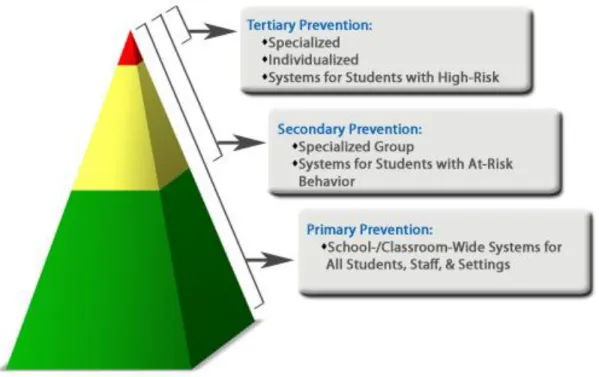
School-wide Positive Behavior Interventions and Supports is not a new approach to student management, it is not a formal curriculum, it is not a program, and it is not a cookie cutter approach (Burke et al., 2004; Horner et al., 2010; Safran & Oswald, 2003). As Burke et al. (2004) explain SWPBIS does not focus on a single intervention or model; rather SWPBIS is a system of best practices that schools can pick and choose from based on each school’s unique needs, challenges, and systematic implementation. School-wide Positive Behavior and Support entails a team approach that stresses the use of data to make decisions and the establishment of a three-tier continuum of support to encourage a positive school climate (Burke et al., 2004). It must be remembered that SWPBIS requires a long term commitment and continuous evaluation. The National Technical Assistance Center for Positive Behavior Interventions and Supports suggests it takes a three to five year commitment by a school to fully implement SWPBIS (PBIS as cited by Scheuermann & Hall, 2008). SWPBIS is characterized by the integration of a multi-system perspective and a three-tier continuum of student support (Sugai & Horner, 2002).
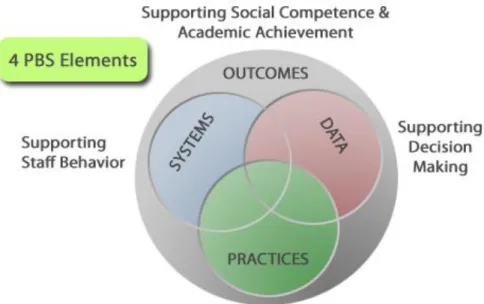
Four Key Elements of SWPBIS. According to Sugai and Horner, 2002; Sugai and Horner 2006; and PBIS the systemic implementation of SWPBIS is guided and focuses on the interaction and improvement of four key elements: (a) outcomes, (b) practices, (c) data, and (d) systems. First, the school establishes achievable and measurable academic achievement and
42
social behavior outcomes that are valued by stakeholders. Next, the school identifies and adopts research-based practices and curricula that ensure optimum student achievement and teacher performance. Third, data is used to determine the effectiveness of current practices or
interventions put in place, and to justify and guide the selection of new practices and finally, the school considers the system supports (e.g., personnel, process, funding, training) to ensure the successful implementation of SWPBIS (Sugai & Horner, 2002; Sugai & Horner, 2006).
43
Figure 1: Four Key Elements of SWPBIS. From Positive Behavioral Interventions, by the
Office of Special Education Programs Technical Assistance Center on Positive Behavioral Interventions & Supports, 2007. Reprinted with permission.
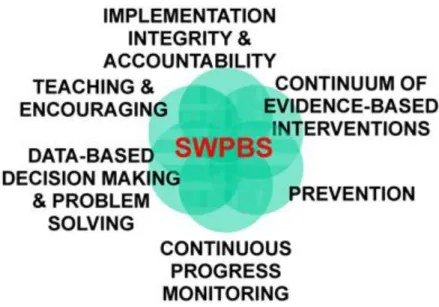
Six principles guide the four key elements in the school wide implementation of PBIS (Figure 2). The first principle of SWPBIS is the utilization of a continuum of research based behavior and academic interventions and supports. The second principle of SWPBIS is the collection and analyzing of data to make decisions and solve problems. A third principle of SWPBIS is the arrangement of the physical environment in a way that prevents problem
behavior. A fourth principal is the teaching and encouragement of appropriate student behavior. The fifth principal of SWPBIS is the implementation of scientifically based behavioral practices and monitoring the implementation of the practices. Finally, the sixth principle in the implementation of SWPBIS is the continuous monitoring of student performance and make changes as necessary (PBIS).
44
Figure 2: Six Principles of SWPBIS. From Positive Behavioral Interventions, by the Office of
Special Education Programs Technical Assistance Center on Positive Behavioral Interventions & Supports, 2007. Reprinted with permission.
Multi-system Perspective. The SWPBIS approach implements a multi-system
perspective that focuses on students and the environment interaction within four interconnected subsystems: (a) school, (b) classroom, (c) non-classroom, and (d) individual student. The school system of SWPBIS focuses on the entire school, establishing clearly defined school-wide expectations for all students and procedures for teaching those expectations, establishing procedures to encourage appropriate behavior and prevent inappropriate behavior, and
procedures to collect and analyze data for decision making (Sugai & Horner, 2002). The purpose of establishing a school-wide discipline system is to address the needs of a majority of students across all settings in the school (Burke et al., 2004). The classroom system of SWPBIS requires that teachers establish and teach students behavioral expectations and routines, establish a procedure to encourage appropriate behaviors and discourage inappropriate behaviors, and actively supervise and monitor students (Burke et al., 2004; Sugai & Horner, 2002).