University of Arkansas, Fayetteville
ScholarWorks@UARK
Theses and Dissertations5-2019
Project Luminous: An E-Textiles Workshop Study
to Increase Science Technology Engineering
Mathematics/Science Technology Engineering Art
Mathematics Interest in Middle School Girls
India Semone Callahan
University of Arkansas, Fayetteville
Follow this and additional works at:https://scholarworks.uark.edu/etd
Part of theArt Education Commons,Educational Assessment, Evaluation, and Research Commons,Fashion Design Commons,Junior High, Intermediate, Middle School Education and Teaching Commons, and theScience and Mathematics Education Commons
This Thesis is brought to you for free and open access by ScholarWorks@UARK. It has been accepted for inclusion in Theses and Dissertations by an
Recommended Citation
Callahan, India Semone, "Project Luminous: An E-Textiles Workshop Study to Increase Science Technology Engineering Mathematics/Science Technology Engineering Art Mathematics Interest in Middle School Girls" (2019).Theses and Dissertations. 3249.
Project Luminous: An E-Textiles Workshop Study to Increase Science Technology Engineering Mathematics/Science Technology Engineering Art Mathematics Interest in Middle School Girls
A thesis submitted in partial fulfillment of the requirements for the degree of
Master of Science in Human Environmental Sciences
by
India Semone Callahan University of Arkansas
Bachelor of Science in Human Environmental Sciences, 2017
May 2019 University of Arkansas
This thesis is approved for recommendation to the Graduate Council.
________________________________ Kathleen R. Smith, Ed.D.
Thesis Director ________________________________ M. E. Betsy Garrison, Ph.D. Committee Member ______________________________ Jennifer Becnel, Ph.D. Committee Member
ABSTRACT
In this research study, young middle schoolers engaged in a stimulating workshop that seamlessly merged fashion with technology and electrical engineering. Students learned how to use simple hand sewing skills to create wearable-tech items using conductive thread, sewable LED lights, and sewable battery packs. The objective of the study was to increase young women’s interest in Science Technology Engineering Mathematics/Science Technology Engineering Art Mathematics (STEM/STEAM).
Forty-eight middle school girls spent a day learning about the basics of e-textiles and building working products using their new knowledge. The day is split into three lessons. In lesson one students build a simple circuit keychain with one LED light. In lesson two, students build a t-shirt using the LilyTiny, and several LED lights. In lesson three, participants upcycle a thrifted or forgotten-about garment by adding custom circuitry.. The sample was made up of 50% African American girls, 15% Caucasian girls, 8% Hispanic girls, and 6% Mixed-race girls. Although there were some increases in interest in the areas of science and engineering, there were no statistically significant differences between the participants’ levels of interest prior to the e-textiles workshop intervention, and after participation in the e-textiles workshop
intervention. As the smart-clothing and wearable tech market continues to develop, and new STEM/STEAM career opportunities emerge within the fashion industry, early exposure to e-textiles workshop interventions could potentially impact STEM/STEAM career interest in young girls.
ACKNOWLEDGEMENTS
First, I’d like to give all thanks to God, creator of the universe and all things in it. I am so grateful for my amazing committee members Dr. Kathy Smith, Dr. Betsy Garrison, and Dr. Jennifer Becnel. These amazing women have made this research project a life changing learning experience and I could not have successfully finished without their help. A special thanks goes to Superintendent Kelvin Gragg, Principal Ronnieus Thompson, Coach Cherry, Mrs. Bruce, and Ms. Lewis at the best Jr. High School in Arkansas (Dumas Junior High School). I am so thankful for you allowing me to do this research study at home, it made this research so much more meaningful. Big thank you to my mother Linda, my aunt Angela, and my grandmother Joyce who have been a part of the Dumas School District for quite some time and helped to make this research happen. I want to also thank all of my family, sorority sisters, and friends for their continued support in my pursuit of higher education. I love you all so much, and I hope that I am in the position to pour into you all as much as you have poured into me over the years.
I would also like to thank the Apparel Merchandising and Product Development Faculty/Staff, and all of my co-grads in HOEC 122 for your guidance and support during the entirety of my graduate collegiate career. Lastly, to Antonio and Apollo, thank you for dealing with my ups and downs during this entire process. Without your love and support there is no way I could press through.
DEDICATION
This research is dedicated to young women who have interest in traditionally male dominated trades across the globe, but more specifically to young girls who have overlapping interest in tech and fashion. In the future, I hope to see young women flourishing as inventors, designers, and scientists that will progressively change our world for the better. To every little black girl that has a dream, has ever been called a nerd, or a weirdo, this research is dedicated to you too.
TABLE OF CONTENTS
CHAPTER Page
I. INTRODUCTION………...……...1
Statement of the Problem……….3
Purpose of the Study………....3
Hypothesis………3
II. REVIEW OF LITERATURE………..4
Theoretical Framework: Stereotype Threat & Expectancy Value Theory………..4
STEM in Course Curriculum……….……..6
STEAM in Course Curriculum………8
E-Textiles, Wearables, & Smart Clothing Innovations………...9
Sewing Circuits Workshop Pilot Study……….10
LilyPad Arduino……….11
III. METHODS………13
General Introduction and Purpose……….13
Workshop Design………..13
Video Footage Collection………..16
Recruitment………16
Data Collection: Sampling……….18
Survey Design………18
Data Analyses………19
Effect Sizes………20
Demographic Characteristics……….………22
Classification 1 Results……….…….23
Classification 2 Results……….….…24
Classification 3 Results………..23
Effect Size Values………..26
V. DISCUSSION & CONCLUSION……….30
VI. LIMITATIONS & FUTURE RESEARCH………...31
REFERENCES……….……….37
LIST OF TABLES
TABLE Page
Table 1 Demographic profile of participating girls………...……….22
Table 2 Comparison of sample means, t-scores, degrees of freedom, and levels of significance by sub category for Classification 1
using paired t-tests……….………...22 Table 3 Comparison of sample means,t-scores, degrees of freedom, and
levels of significance by sub category for Classification 2
using paired t-tests………..……..24 .
Table 4 Comparison of sample means,t-scores, degrees of freedom, and levels of significance by sub category for Classification 3 using
LIST OF FIGURES
FIGURE Page
Graph 1 Project Luminous E-Textile Workshop Intervention Enjoyment Levels……….26
Figure 1 STEM Semantics Scale……….39
Figure 2 Career interest Scale………..40
Figure 3 Registration Portal View………41
Figure 4 Lesson One Activity Guide Sheet………..42
Figure 5 Lesson Two Activity Guide Sheet……….43
Figure 6 Lesson Three Activity Circuitry Planning Sheet………...44
Figure 7a Project Luminous Power Point Slides 1-2……….45
Figure 7b Project Luminous Power Point Slides 3-4……….46
Figure 7c Project Luminous Power Point Slides 5-6……….47
Figure 7d Project Luminous Power Point Slides 7-8……….48
Figure 7e Project Luminous Power Point Slides 9-10………..……….49
Figure 7f Project Luminous Power Point Slides 11-12……….50
Figure 7g Project Luminous Power Point Slides 13-14……….51
Figure 8a Student Consent Form Page 1………...……….52
Figure 8b Student Consent Form Page 2………53
Figure 9a Parent Consent Form Page 1………..54
Figure 9b Parent Consent Form Page 2………..55
CHAPTER I Introduction
Wearable technology is a growing market that is reshaping the way we see fashion. There has recently been an emergence of fitness focused wearable technology items that have become adopted by the masses, such as the Apple iWatch, the Fit Bit, and the PoloTech compression top (Sung, 2015). By combining science, technology, and engineering with fashion, a new wave of innovation is emerging. More apparel and tech brands are developing clothes that can do more to better the lifestyles of the wearer by developing apparel that can monitor health, document performance, medicate, control body odor, self-cleanse, breathe, and more (Cho, 2009). Smart-clothing or wearable technology exploration opens the door for new and exciting careers, and interdisciplinary collaboration opportunities.
With the emergence of technology, the apparel industry is integrated with many of the processes related to the fields of science, technology, engineering, art, and mathematics. In particular, the industry can be discussed as an important topic in the driplines of Science Technology Engineering Mathematics/ Science Technology Engineering Art Mathematics (STEM/STEAM). For example, apparel industry professionals have to understand the chemical composition of the fibers and yarns that make up the fabric in order to understand the appropriate dyeing method, flammability reactions, proper wash and care process, and to determine how the textile will react under certain conditions (Shirley & Kohler, 2012). Thus, the textile industry requires professionals to have an understanding of chemistry as it relates to apparel. Technology is used in the apparel industry to draw Computer Aided Designs (CADs), develop mock-ups, research trends, design graphics, develop trend/mood boards, digitize patterns, use 3-D body scanning for fit, and to drape fabrics on virtual 3-D avatars (Computer technology for textiles
and apparel, 2016). Engineering in apparel/fashion consists of building machinery for various stages of the manufacturing process (sewing machine, overlock, serger, button-hole maker, testing machinery, etc.) Art is a key component of the ideation stage of fashion/apparel. A designer uses art to express their ideas and concepts. Merchandising math is used to plan out product assortment plans, calculate cost of goods sold, gross sales, net sales, trade discounts, freight cost, etc. (Liu, 2018). Basic math skills are also used in apparel production when collecting measurements from models using a measuring tape, calculating seam allowance during patternmaking, and technical design specifications (Liu, 2018).
The wearable technology industry is an example of real-life STEM/STEAM application. As the wearable technology market advances, more employers will be expected to hire
employees who have STEM/STEAM skills. STEM/STEAM opportunities are plentiful and constantly developing in the apparel/fashion industry (Liu, 2018). With the emergence of e-textiles and wearable technology, more than 60,000 digital and analytical roles will be created in the fashion industry by year 2020 (Admin, 2016). The youth need early introduction to
STEM/STEAM related activities in order to understand what roles STEM/STEAM have in the apparel/fashion industry and in the developing world of wearable technology or more
specifically, smart clothing. Women offer different perspectives, experiences, and thought processes that should be considered when developing new innovations to help solve real-world problems. The lack thereof could lead to young minorities and women developing the mindset that they do not belong in STEM/STEAM careers. Because of this, their interest in
The objective of this fashion STEM/STEAM study is to increase young women’s interest in pursuing STEM/STEAM related careers. Project Luminous will present a new perspective on STEM/STEAM career opportunities in the industry of apparel.
Statement of the Problem
The underrepresentation of women in STEM fields is prominent in today’s world. In fact, results from the National Girls Collaborative studies show that women only make up 29% of the science and engineering workforce (NSF, Science & Engineering Indicators, 2016).
Many schools emphasize student STEM interest by making grades the focus. Instead of actually allowing students to engage in interactive learning experiences that will allow them to verbalize their understanding of the processes, they rely heavily on test-scores to assess learning. This research study addressed the following specific hypotheses:
Hypothesis I: Young women who complete the Project Luminous e-textiles workshop study will express more interest in pursuing STEM/STEAM related careers.
Hypothesis II: Young women who complete the Project Luminous e-textiles workshop study will express more importance (meaningfulness) of pursuing STEM/STEAM related careers.
CHAPTER II Review of Literature
Theoretical framework: Stereotype Threat & Expectancy-Value Theory
Women are underrepresented in STEM/STEAM fields. The purpose of this study is to impact young womens’ interest in pursuing STEM/STEAM field careers. The workshop
intervention experience will be used as direct STEM/STEAM exposure for middle school girls in hopes of capturing their interest at this crucial developmental stage. Interest levels will be
measured before and after participation using a pre and posttest, in order determine if young women who participated and completed the workshop have increased interest in STEM/STEAM. As the apparel industry continues to evolve, new employment opportunities will call for
individuals who have STEM/STEAM skills that can be used to create products that will solve problems for the future.
It is important for us to understand how societal and environmental barriers contribute to shaping ideas and beliefs about occupational roles. The theory of stereotype threat used by Steele and Aronson (1995) refers to being at risk of confirming, as a self-characteristic, a negative stereotype about one’s social group. Negative stereotypes about women’s math skills made known to test-takers’ during tests, negatively affects women’s performance on the test (Steele & Aronson, 1995). As a result of this stereotype threat, women disengage from fields in which women are negatively stereotyped (Corbett & Hill, 2015). Over time, these negative stereotypes have become barriers to STEM/STEAM interest in young women, seeing that most
STEM/STEAM careers involve some sort of math. As a result, society continues to perpetuate the myth of STEM/STEAM being a men only arena, leaving women feeling incompetent and uncomfortable in these sorts of work environments.
The Expectancy-Value Theory of Motivation is a commonly used theoretical framework that explains how expectancies and values are assumed to influence achievement choices, performance, effort, and persistence. This theoretical framework was originally the product of Eccles et al. (1983) who developed an expectancy-value model for understanding early adolescents’ performance and choice in math. Eccles proposed that children’s achievement performance, persistence, and choice of achievement tasks were impacted most by their expectancies for success and the value they attach to the tasks (Wigfield, 1994).
Numerous previous studies investigating STEM/STEAM interest beliefs and interest structure their studies based on the Expectancy-Value Theory of Motivation. Theorists posit that the STEM pathway is composed of a series of choices and achievements from childhood and adolescence (Wang & Degol, 2013). The article highlights that when students get to college, that STEM fields become more difficult because students have only been exposed to “constrained and prescribed curricula” in the subjects of physical, computer, and engineering sciences (Wang & Degol, 2013). Being able to understand early school experiences and motivational processes could help us understand how students select their majors in college and their selection of math and science classes in secondary school (Wang & Degol, 2013).
Another study analyzes the STEM attitudes of youth. In this study, researchers realize that youth’s perception of their talents and abilities are reflected in what they view as their potential and how well they expect to succeed (Boe & Henriksen, 2015). The researchers structure their study according to the Eccles and colleagues’ Expectancy-Value Model
Achievement-Related Choices which incorporate social, psychological, and cultural aspects that affect motivational behavior in youth. The study concludes that the Expectancy-Value Model is a
relevant tool to better understand current participation problems in STEM (Wang & Degol, 2013).
The Expectancy-Value Theory will be the theoretical framework used to structure this workshop study to understand how to increase young women’s’ interest in pursuing or
participating in STEM/STEAM fields. STEM in Course Curriculum
STEM is an educational initiative that stands for Science Technology Engineering and Mathematics. According to the Bureau of Labor Statistics, STEM employment is expected to increase by 13% between 2012 and 2022 (BLS, 2014). The educational philosophy focuses on getting students prepared for the real-world workforce by getting students to think creatively and build critical thinking skills.
One recent research study designs a project directed at increasing interest in particular sectors of STEM (Guitierrez, 2018). Guitierrez discovered that women’s interest in engineering, physical, and computer sciences fields were declining drastically (Guitierrez, 2018). In this study, the researcher develops a historical vignette that highlights the work of female pediatric cardiologist, Dr. Taussig. By developing a Next Generation Science Standards (NGSS) science lesson plan that allowed students to build upon prior knowledge while highlighting the work of one female representative of the field of STEM, young women were able to visualize what a career in STEM has looked like in the past, as well as better visualize themselves in a similar role in the future.
Another study develops curriculum for students to learn about how STEM is embedded in Family and Consumer Science disciplines. Specifically, the researchers discuss how some field techniques have an adverse impact on our environment. For example, producing cotton
usually involves the use of pesticides and insecticides that can negatively impact the health of farmers (Mancini & Mancini, 2009). The researchers discuss how STEM applications can help to solve these types of problems in the industry of apparel and merchandising to address
environmental concerns and develop new processes (Shirley & Kohler, 2012). Teaching STEM in clothing and textiles will not only inform students about how STEM is incorporated into different stages of the apparel industry processes, but it can also trigger students to think critically about how they can solve these problems using innovation and creativity. Another important point recognized in this study is that employers demand workforces that are skilled in STEM-related concepts in order to compete in a global market (Shirley & Kohler, 2012).
Both of these studies included lesson-based curriculum to introduce STEM to students. Project Luminous focused on creating excitement about STEM and what the future of STEM can lead to as it relates to the apparel/fashion industry. After analyzing the processes in the previous studies, two common themes were recognized:
1. Representation matters: Students need to be able to visualize themselves in STEM field roles. Presenting students with visual representations of real individuals who are
underrepresented in the industry could change their whole outlook on STEM as a whole. Young women, and minorities need to see other women in these roles in order to change their beliefs and attitudes about STEM.
2. Mental stimulation is key: Students need to be able to think critically about STEM processes in order to have a clear understanding and ownership of their learning experiences. These experiences can be enriched by using lessons that combine visuals, problem solving, and hands-on activities.
STEAM in Course Curriculum
STEAM stands for Science, Technology, Engineering, Art, and Math. The STEAM movement was born after John Maeda, the former president of the Rhode Island School of Design, argued that STEM alone will not be able to lead the movement of innovation (Gunn, 2017). According to Gunn, there is a need for design thinking and creativity just as much as there is a need for science, technology, engineering, and math (Gunn, 2017). According to curriculum designer, teaching coach, and high school educator in New York City, Gunn, addressing the gender and race gaps in STEM and STEAM are essential. Gunn states that driving interest in STEM or STEAM requires dispelling math and science stereotypes and making STEM or STEAM classes interesting and appealing to our nation’s youth, and (Gunn, 2017).
Design creates the innovative products and solutions that will propel our economy forward (Maeda, 2013). Taking a moment to look at the world around us, helps us realize how huge a role artistic design plays in invention. Cell phones have to be uniquely designed to host all of the technological components that make the phone work. Could we imagine what a phone would look like with the absence of art/design—stripped to the electronics alone? The phone would be nothing more than a portable hazard to the user. Not enough emphasis is put on the importance of creativity, art, and design in school course curriculum. The arts have often been considered a luxury in public schools, an arena for self-expression but not a vital part of
education (Daughtery, 2013). Students would need to learn how to intellectually connect the dots of how they can apply their art skills with STEM to innovate, create, and design our future.
Project Luminous will allocate time for students to tap into their art skills to design each product of the three lessons. After strategically laying out their circuitry designs, students will
have access to various sorts of art supplies (i.e. markers, fabric paint, fabric markers, felt, fabric, thread, trims).
E-Textiles, Wearables, & Smart Clothing Innovations
Wearables are technological innovations that can be worn in the form of an accessory or in the form of electronic textiles (e-textiles) in clothing. Currently many applications of
wearables and smart-garments focus on health tracking in the sense of heart-rate monitoring, pulse, and fitness tracking. Smart clothing or smart garments in the most general sense, refers to apparel that has been integrated with electronic components, computers, and various algorithms to help wearers with daily life functions by sensing and reacting (Gepperth, 2012). Findings show that introducing students to interdisciplinary technologies can broaden women participation in STEAM (Peppler, 2013).
While many studies have focused on the construction of e-textiles in relation to STEM, fewer studies include the Arts element. Emerging tools, materials, practices, and products at the intersection of arts and STEM disciplines could revolutionize computing education and have a rippling impact within these fields (Peppler, 2013). Design thinking is a major part of ensuring the technology, fabric, and garments work together seamlessly. Designers envision uses for existing materials such as beads to insulate conductive thread, or a zipper on a hoodie to work as the switch for a circuit (Peppler, 2013).
In similar workshop studies, the students were tasked to create e-textile projects without emphasis on female representation, or on a deeper understanding of how e-textiles relates to current changes in the fashion market. Smart clothing innovations, and wearable technology encompasses the process of e-textile development. Students should understand that the workshop
is exposure to actual real-world product development. Project Luminous will market the workshop study as a real-world learning experience, instead of a crafting session. Sewing Circuits Workshop Pilot Study
A previous research workshop pilot study involved the engagement of young, rural girls in science, technology, engineering, and mathematics (Kaiser, 2016). The goal of the study was to introduce STEM to traditionally female domains like sewing, crafting, fashion, and apparel design (Kaiser, 2016). The pilot study was a small part of a larger project which involved the development of a scope and sequence curriculum that involved a group of 25 children who use the e-textile activities, 25 children who used a traditional circuit design kit, and 25 children who only participated in the pre and post survey without workshop participation and engagement (Kaiser, 2016). The goals of this pilot study were to examine comprehension and activity enjoyment, identify problem areas and revise activities for curriculum finalization, investigate the performance of the activities, and to compare the participant’s using the e-textiles kit, to those using the traditional circuitry kit (Kaiser, 2016).
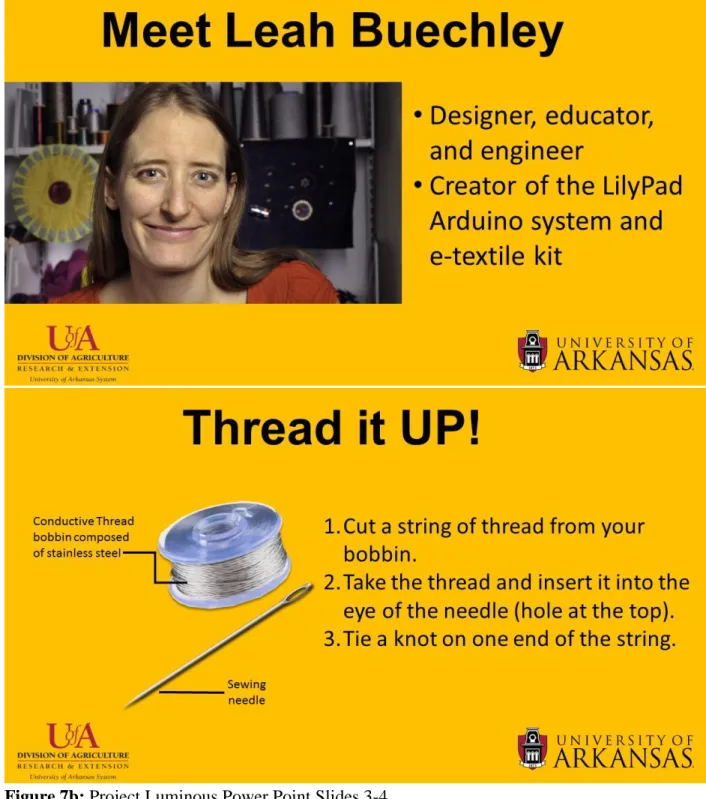
The findings of this study revealed that girls who participated and completed the workshop had an increase in STEM self-efficacy, meaning that the workshop improved their own individual assessments of their ability to do STEM. Rather than introducing middle-school girls to traditional female roles, Project Luminous aims to highlight how fashion and apparel design can also have interdisciplinary opportunities and could be used to break into traditionally male dominated areas of STEM/STEAM fields. The advancement of e-textiles leads to the development of a new type of tech market sector which includes smart clothing, wearable technology, and e-textiles. By understanding the importance of representation, and engagement, the Project Luminous learning experience included a visual representation of Leah Beuchley, a
woman who is an engineer, and a designer and the developer of the e-textile kit. In the previous pilot study, participants did not have the opportunity to physically see someone who looks like them in these STEM fields. Project Luminous also analyzes the increase of interest and
engagement in art. The previous study did include crafting as part of the pilot study curriculum, however data about art interest and engagement was not collected on the developed surveys. The pilot study was introduced to students, both boys and girls as an afterschool activity. The Project Luminous workshop research study is a continuous, seven-hour learning experience with a one hour lunch break and bathroom breaks upon request. Instead of making the learning experience an afterschool activity, the Project Luminous research workshop study took place during regular school day hours and focused only on girls.
LilyPad Arduino
The Lily Pad Arduino construction kit for sew-able electronics was invented by Leah Buechley. Her work is centered on the integration of electronics, computing, art, crafts, and design. She was inspired to create the LilyPad Arduino system when she discovered the
existence of conductive thread and fabric at the university of Colorado Boulder in 2005 (Birch, 2014). Leah Buechley’s lifelong mission is to inspire future techies (Birch, 2014).
She began to develop circuit boards out of fabric to use in high school workshops. The original design of the LilyPad Arduino board featured a flower shaped design with laser cut fabrics stacked on top of each other with an Atmel AVR (Automatic Voltage Regulator) chip at its center (Birch, 2014). After a trip to pick up parts, she ended up having a great conversation with Nathan Seidle about producing a commercial product. In October 2007, the LilyPad Arduino was released (Birch, 2014).
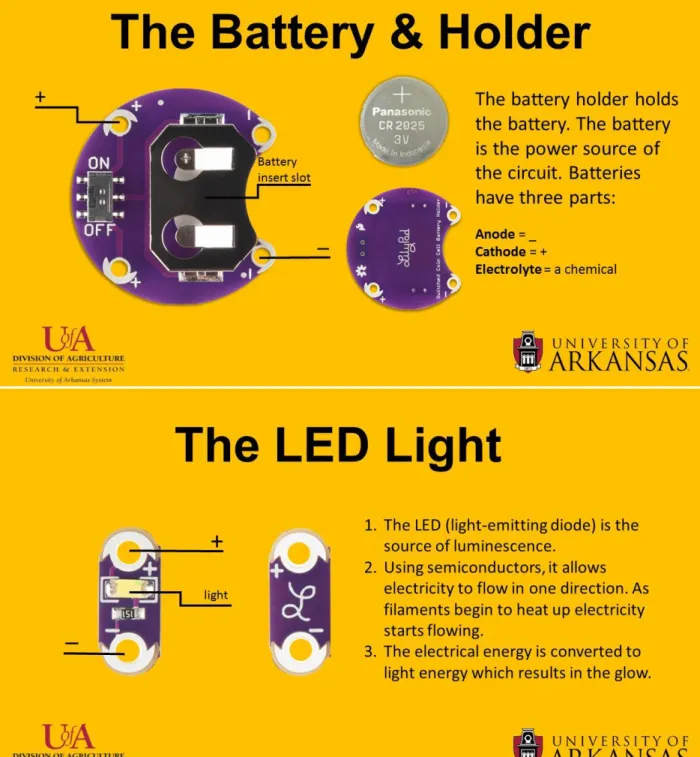
The LilyPad Arduino system is very easy to use for e-textiles crafters. The Lily Pad brand features an entire line of electronic products that work together seamlessly to help the users build wearable and fun e-textile projects. The Project Luminous workshop study will allow students to explore and build with the LilyPad LEDs, LilyTiny, and the LilyPad Coin Cell Battery Holder.
CHAPTER III Method
The purpose of this study was to impact young womens’ interest in pursuing STEM/STEAM field careers. The workshop intervention experience was used as direct STEM/STEAM exposure for middle school girls in hopes of capturing their interest at this crucial developmental stage. Interest levels were measured before and after participation using a pre and posttest, in order determine if young women who participated and completed the
workshop have increased interest in STEM/STEAM. As the apparel industry continues to evolve, new employment opportunities will call for individuals who have STEM/STEAM skills that can be used to create products that will solve problems for the future.
Workshop Design
The fashion STEM/STEAM workshop study will be a daylong event hosted by researchers at a university in the southern United States. The workshop study will take place on a weekday. Check-in and registration will begin at 8:00AM that Friday morning at the main entrance. At check-in, permission slips will be collected, and students will receive name tags, circuit kits, and a pre-survey to complete before the workshop begins. The team will begin with a brief
introduction and will then transition into allowing students to complete the pre-survey. The workshop study will be broken into three lesson segments:
Lesson 1: E-Textile Basics- Key Chain a. TIME: 1-2 Hours
b. In this lesson students will learn how to stitch a simple circuit using one LED and one battery pack/battery. The end product resulted in a red leather keychain that
lights up. Students were able to select the colored LEDs of their choice for this project.
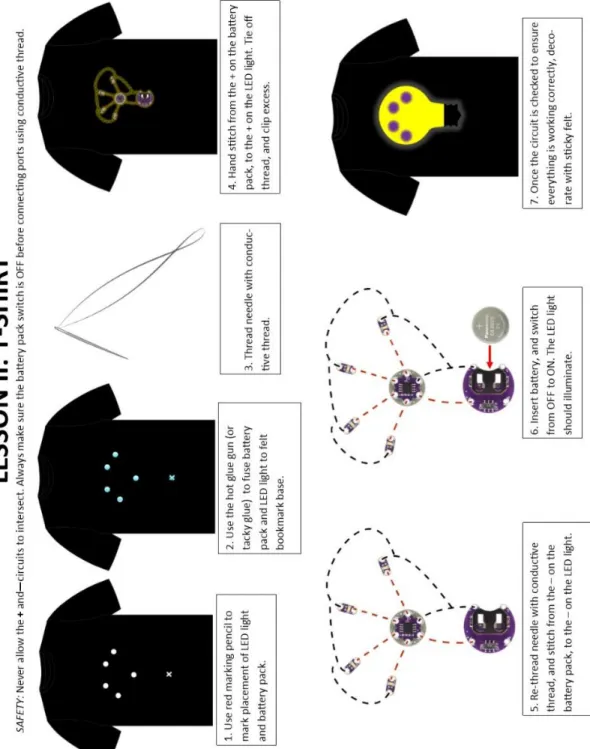
Lesson 2: Intro to the Lily Tiny-T-Shirt c. Time: 1-2.5 Hours
d. In this lesson students will learn how to stitch a more complex circuit using up to 6 LEDs, and a Lily Tiny, and one-two battery packs/batteries. The end product resulted in a felt, purple and gold light bulb tee with four LEDs, and the Lily Tiny. Students were able to select the colored LEDs of their choice for this project.
Lesson 3: Make it LIT: Thrifted Garment Revamp e. Time: 1-2 Hours
f. For the last lesson, students will create custom circuits for their thrifted garments selection. Students are allowed to determine placement and will even be provided fabric paint and embellishments to create their fashion STEM/STEAM garment. The Project Luminous workshop study experience will intentionally aim to cultivate a sense of excitement for the students who participate. In the morning during student arrival, parents and students will be greeted with smiles and warm welcome. Light refreshments will be donated for the students’ morning opening session to offer students morning nourishment. While waiting on students to arrive, the leaders will play stimulating fun music instrumentals to get students excited about engaging in a new and fun learning experience as they complete the pre-survey.
All personnel will briefly introduce themselves to students. Personnel will consists of the student researcher the middle school science, math, and art teachers who have volunteered to
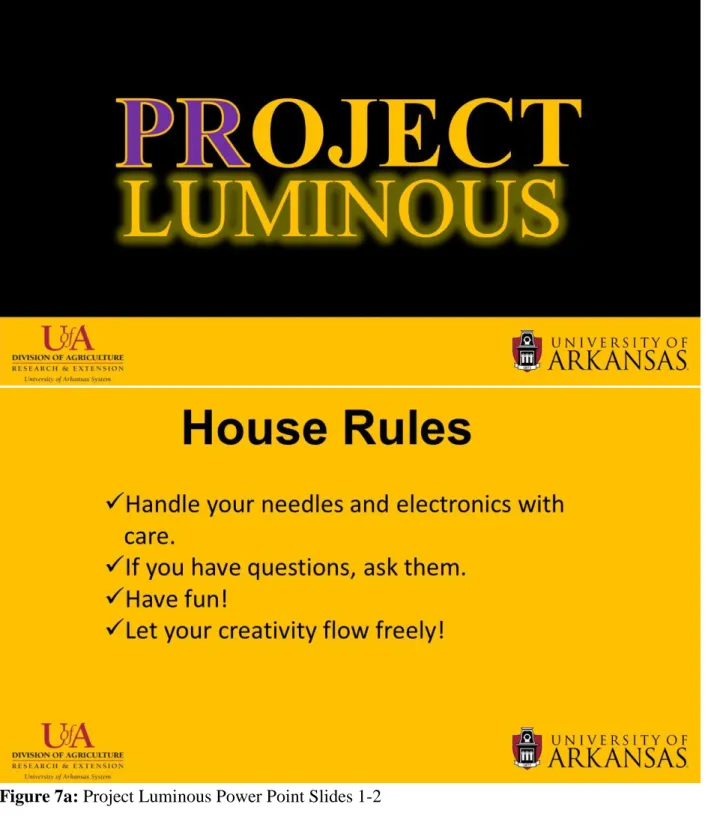
assist with the workshop intervention study. The workshop study will open with a Power Point presentation about what electricity is, how it works, and the basics of circuitry as well as how to properly thread needles, and a thorough overview of safety procedures. At this level, students should be able to engage in a very surface level discussion about electricity from gaining prior knowledge learned in their previous science classes. We will ensure that the team talks with and not to students, to keep students attentive and engaged.
After this, students will receive instructions and guidance on their first lesson of the day which is the keychain. From 10AM-12PM, students will have time to plan out the circuitry, stitch the circuits, troubleshoot, and add artistic design to their projects. At 12PM students will get an hour beak for lunch. For lunch students will be provided pizza, salad, and water. Lunch will be held in the school cafeteria away from all electronic projects. After students finish lunch, they are allotted the rest of the lunch break period to engage in some physical activity. After lunch students will resume learning and will begin instructions for lesson two, which is the hat with the introduction of the Lily Tiny. After completion, or at 3PM, students will begin working on their last lesson of the workshop which is the thrifted or forgotten about item. For this lesson, students will have a free-for-all approach to add lights to a garment of their choice. The last 15 minutes of this lesson (3PM-5PM) will allow students to go around and share why they chose the garment and what inspired the placement. The last 30 minutes of the day will be dedicated to students completing the post-survey, sharing final thoughts in small focus groups about the workshop experience, and parent student pick-up.
The electronics used in this project were donated from a similar STEM workshop study that was led by a student researcher. These materials include, pens, pencils, LilyPad LEDs, Lily Tiny computer ships, LilyPad Coin Cell Battery packs/batteries, conductive thread, hand sewing,
needles, and other crafting materials. These materials will be used for students to create take home wearable apparel items and accessories that will serve as a souvenir for participation in the workshop.
Video Footage Collection
A video camera will be used to collect observatory data of participants working on projects during the Project Luminous e-textiles workshop experience. Project Luminous team members will record the workshop experience in order to observe how the girls interact with the lesson projects and how the girls interact with each other during the intervention. The footage will be edited to make a short video that will be shared with the public to increase e-textile STEM/STEAM awareness and to provide insight on the various processes that took place during the Project Luminous e-textiles workshop experience. All excess footage will be retrieved from the recording device and stored under supervision of the researcher. Permission and consent for video recording and photography was granted both by the parents and by the girls themselves via the permission and consent forms collected prior to the start of the workshop intervention (see figures 8b and 9b).
Recruitment
Students will be recruited to participate in this workshop research study via visual hard copy flyers, online social media flyers, and verbally over the school intercom. The hard copy flyer will be designed to catch the attention of students passively. These hard copy flyers will be placed in the school cafeteria, on teacher bulletin boards, on office bulletin boards, and in the hallways. Science and math teachers will be distributed hard copy flyers to directly hand to students in their classes. The online social media flyers will be circulated on all social media platforms, on all personal social media platforms of the researcher, and on the school’s social
media platforms. Students look to social media as their source for information about events. In order to maximize participation potential it is important that these students are met where they frequent most.
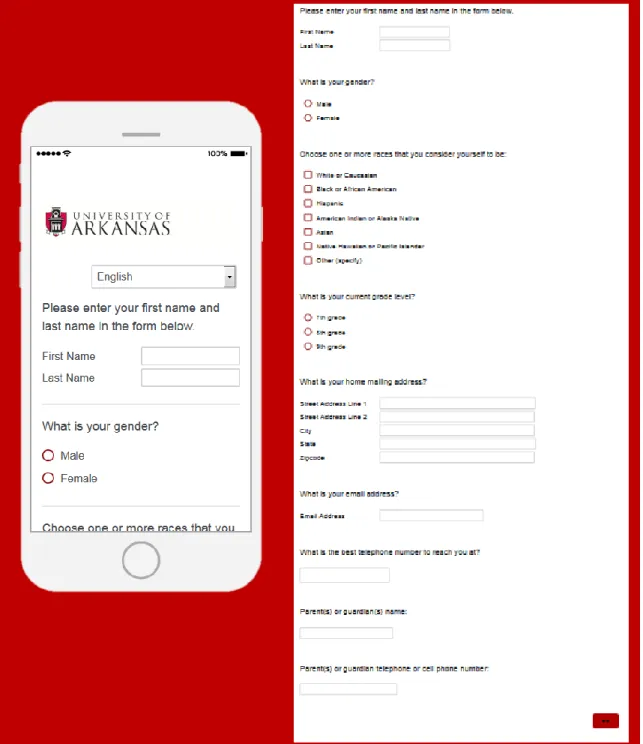
The flyer included information about the location, time, and date of the Project Luminous workshop. After approval, the flyer was circulated three weeks before the date of the workshop study sign-up deadline. Students and parents were highly encouraged to RSVP for this workshop via an online portal. Registration took less than a minute to complete for students or parents via a desktop, PC, cellphone, or any other device. The information collected from the online
registration portal was automatically saved and compiled in a spreadsheet and set to close on the date of the registration deadline. The portal will gave parents and students the opportunity to save the date of the workshop to their virtual calendars. The portal also allowed the researchers and personnel to plan and prepare carefully for the anticipated number of participants. This also was more efficient than having students sign up on pencil and paper in a designated area. The online form was used to collect student name, address, gender, contact information, parent (s) name, contact information, and food allergy information.
Upon the request of the school principal, all participants were screened using the following exclusive criteria:
All students had to have a high GPA (3.00+), and represent the top of their class according to grade level.
All students could have no prior indications of disciplinary behavior problems such as excessive tardiness, detention halls, suspensions, or expulsions.
These exclusive criterion were to pre-screen for any disruptive students who could
collection. It was also to ensure that the other participants in the workshop research study were not distracted during lessons and instructions during the workshop.
Data Collection- Sampling
The target sample population was young women between the ages of 12 to 15 (7th-9th grade). Students were recruited for participation in this workshop via school news outlets and via direct recruitment from the school principal.
An electronic and physical flyer were circulated to students and parents about the upcoming workshop. The flyer included key details including the date, time, and additional materials to send with their students on the day of the workshop. Students and parents were required to complete and return a permission slip for participation in the workshop. An additional page about what would take place during the workshop, along with a tentative itinerary was provided to parents and students to keep. Students submitted completed parental consent and student consent forms to the designated Project Luminous workshop check-in point.
Survey Design
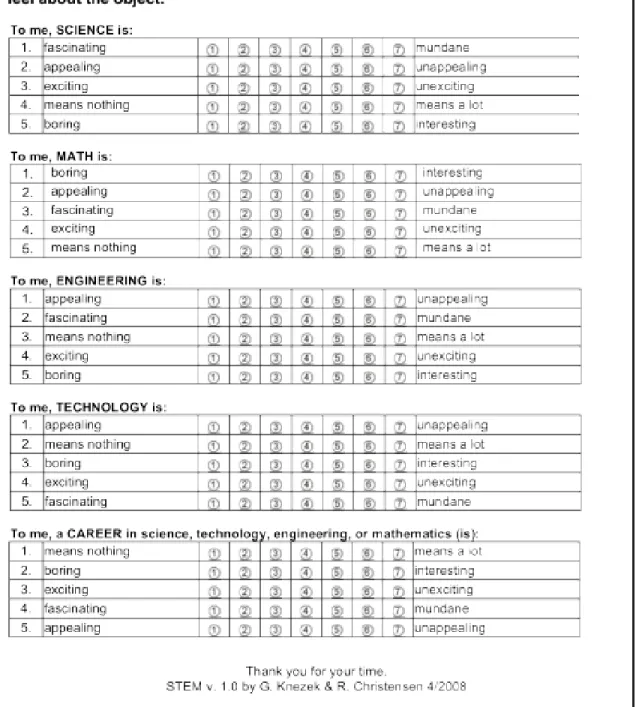
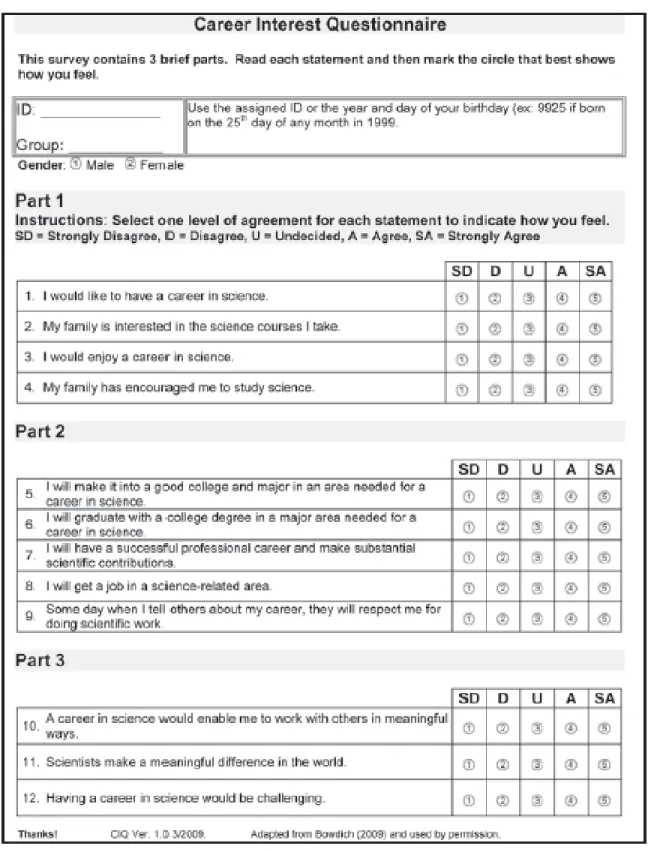
The STEM Semantics Survey, and the Career Interest Questionnaire were the instruments used to measure STEM/STEAM interest and STEM/STEAM career interest in this survey. The STEM Semantics Survey is a five-part questionnaire designed to assess perceptions of scientific disciplines (Knezek & Christensen, 2008). The common completion time for this scale is 5 minutes (Knezek & Christensen, 2008). The Career Interest Questionnaire is a three-part, Likert-style questionnaire designed to assess how one feels about a career in a certain field (Bowdich, 2009). Each of these scales were modified appropriately to best fit the needs of the research study. Because the verbiage used in the scales could be confusing for the participants at the 7th
-9th grade level, the vocabulary used in the questionnaire was rewritten to make the survey easier to read and comprehend (see appendix figures 1-2).
The survey used to collect data in this workshop was created with Qualtrics. The survey include a total of 16 items. Thirteen of the items inquired about interest in STEAM, interest in STEAM related careers, and interest in STEAM degrees. The other three items at the end of the survey inquired about demographic information with regard to gender, race, and grade level. The estimated completion time for this survey was three minutes. To make the survey process more efficient, a memo is added in the registration for students to bring their phones. Students received the QR code in their registration packets to scan with their phones that will take them directly to the survey for completion before and after the Project Luminous workshop. In order to avoid confusion, two versions of the survey were created (pre and post) with two separate QR codes. Students were carefully instructed on which QR code to scan first and second. The QR codes were also carefully labeled with instructions. In case students forgot to bring their cellular devices, iPads were available for students to complete the surveys.
Data Analyses
Instruments collected basic descriptive statistics of frequency and percentage
distributions. Means, percentage, standard means, and standard deviations were calculated for all survey items. Participant pre and post test scores were matched according to IP (Internet
Protocol) address. The matched pairs were hosted in an excel spreadsheet document. A paired comparison t-test was used to analyze change in interest. Statistical Package for Social Sciences (SPSS) software was used to perform this data analysis. The collected data was divided into four classifications. Classification one included question items number one through five, which included all items that measured STEAM fascination, appeal, excitement, meaningfulness, and
interests. Classification two included question eight, which measured the fascination, appeal, excitement, meaningfulness, and interest in a career in science, technology, engineering, art, or mathematics. Classification three included questions nine through thirteen, which measured STEAM interest, meaningfulness, enjoyment, and intention to pursue a degree in science, technology, engineering, art, or mathematics. Classification four included questions fourteen through sixteen which collected information about gender, ethnicity, and grade level. The posttest included one extra question item (question seventeen) at the very end that measured the levels of enjoyment of the e-textiles workshop intervention.
Effect Sizes
Cohen’s D effect sizes were calculated and reported to determine if the pretest and posttest means substantially differed within each of the classification pairings. An effect size of 0.2 is considered small. An effect size of 0.5 is considered medium. An effect size of 0.8 is considered large.
CHAPTER IV Purpose of Study
The purpose of this study was to impact young womens’ interest in pursuing STEM/STEAM field careers. The workshop intervention experience was used as direct STEM/STEAM exposure for middle school girls in hopes of capturing their interest at this crucial developmental stage. Interest levels were measured before and after participation using a pre and posttest, in order to determine if young women who participated and completed the workshop have increased interest in STEM/STEAM. As the apparel industry continues to evolve, new employment opportunities will call for individuals who have STEM/STEAM skills that can be used to create products that will solve problems for the future.
Results
Out of the 48 participants in the Project Luminous STEM/STEAM workshop, 40 of the participants completed both the pre and post portions of classification one (with a post non-response in math df = 38), and classification two. Thirty-nine of the participants completed both the pre and post portions of classification three items. The data was cleaned by filtering blank and incomplete surveys. Incomplete surveys were indicated by a 50% or less in the completion column of the exported data. The post and pre text collected from before and after the
intervention were collected and exported from Qualtrics into Excel. In Excel the pre and posttest were first matched according to IP address.
Once the reverse coding of the data was completed, the data was exported to Excel to match pre and post scores according to IP address and divided by each sub category of science, technology, engineering, art, and mathematics. Each subgroup of pre and post scores was input in SPSS. Once scores were input, a paired samples t-test was used to analyze the data. Cohen’s D
effect sizes were calculated to define the level of magnitude that exposure to the Project Luminous workshop intervention had on the girls’ levels of interest.
Table 1: Demographic profile of participating middle-school girls, N=48
Items in classification four collected demographic information from the participants. Results revealed that the sample was composed of 48 middle school-girls from grades 7-9. The sample was made up of 54% (n = 26) African American girls, 19% (n = 9) Caucasian girls, 19% (n = 9) Hispanic girls, and 8% (n = 4) Mixed-race girls.
Table 2: Comparison of sample means,t-scores, degrees of freedom, and levels of significance by sub category for Classification 1 using paired t-tests
Pair Mean SD SE t df Sig. (2-tailed)
Science Pre Science Post 18.03 20.58 10.39 11.05 1.643 1.747 -1.160 39 .253 Technology Pre Technology Post 21.33 20.85 12.54 11.13 1.982 1.759 .215 39 .831 Engineering Pre Engineering Post 18.00 19.10 9.95 10.60 1.573 1.676 -.582 39 .564 Art Pre Art Post 19.53 20.40 11.64 10.85 1.840 1.715 -.444 39 .660 Math Pre Math Post 17.92 18.72 11.38 11.61 1.822 1.860 -.322 38 .749 FEMALE PARTICIPANTS
Demographic Characteristic Frequency Percentage
Gender Female 48 100% Ethnicity African American Caucasian Hispanic Other(Mixed Race) 26 9 9 4 54% 19% 19% 8% Grade Level 7th Grade 8th Grade 9th Grade 17 17 14 35% 35% 30%
Items in classification one measure general STEAM fascinations, appeal, excitement, meaningfulness, and interest for each individual category (science, technology, engineering, art, mathematics). In classification one, the science sub category resulted in a pretest mean of 18.03 (M = 18.03, SD = 10.394) and a posttest mean of 20.58 (M = 20.58, SD = 11.052). The p-value (p >.05, p = .253) indicates that there was no significant difference in the pre and posttest means, which results in retention of the null hypothesis. The technology sub category resulted in a pretest mean of 21.33 (M = 21.33, SD = 12.536) and a posttest mean of 20.85 (M = 20.85, SD = 11.125). The p-value (p > .05, p = .8310) indicates that there was no significant difference in the pre and posttest means. The engineering sub category resulted in a pretest mean of 18 (M = 18, SD = 9.951) and a posttest mean of 19.10 (M = 19.10, SD = 10.597). The p-value (p > .05, p = .564) indicates that there was no significant difference in the pre and posttest means. The art sub category resulted in a pretest mean of 19.53 (M = 19.53, SD = 11.638) and posttest of 20.40 (M = 20.40, SD = 10.846). The p-value (p > .05, p = .660) indicates that there was no significant difference in the pre and posttest means. The math sub category resulted in a pretest mean of 17.92 (M = 17.92, SD = 11.377) and a posttest mean of 18.72 (M = 18.72, SD = 11.614). The p-value (p > .05, p = .749) indicates that there was no significant difference in the pre and posttest means.
Table 3: Comparison of sample means, t-scores, degrees of freedom, and levels of significance by sub category for Classification 2 using paired t-tests
Items in classification two measures STEAM career fascination, appeal, excitement, meaningfulness, and interest. In classification two, findings indicate a very small increase in STEM/STEAM career interest and importance. Career interest yielded a pretest mean of 20.15 (M = 20.15, SD = 10.94) and a posttest mean of 20.63 (M = 20.63, SD = 10.88). The p-value (p > .05, p = .815) indicates that there is not a statistically significant increase in STEM/STEAM interest and importance.
Table 4: Comparison of sample means,t-scores, degrees of freedom, and levels of significance by sub category for Classification 3 using paired t-tests
Pair Mean SD SE t df Sig. (2-tailed)
Science Pre Science Post 16.87 17.51 4.169 5.291 .668 .847 -.964 38 .341 Technology Pre Technology Post 17.92 17.74 4.113 4.843 .659 .776 .196 38 .846 Engineering Pre Engineering Post 15.90 15.85 4.999 4.966 .800 .795 .059 38 .954 Art Pre Art Post 18.69 17.85 4.281 5.269 .685 .844 .983 38 .332 Math Pre Math Post 16.82 17.13 5.496 5.644 .880 .904 -.267 38 .791
Items in classification three measures STEAM subject interest, occupational
meaningfulness, future career enjoyment, and degree likeness. In classification three, findings reveal minor increases in the science and engineering sub categories. The science sub category resulted in a pretest mean of 16.87 (M = 16.87, SD = 4.169) and a posttest mean of 17.51 (M = 17.51, SD =5.291). The p-value (p > .05, p = .341) indicates that there was no significant difference in the pre and posttest mean. The technology sub category resulted in a pretest mean
Pair Mean SD SE t df Sig. (2-tailed)
Career Interest Pre Career Interest Post
20.15 20.63 10.94 10.88 1.729 1.722 -.236 39 .815
of 17.92 (M = 17.92, SD = 4.113) and posttest mean of 17.74 (M = 17.74, SD = 4.843). The p-value (p > .05, p = .846) indicates that there was no significant difference in the pre and posttest mean. The engineering sub category yielded a pretest mean of 15.90 (M = 15.90, SD = 4.999) and posttest mean of 15.85 (M = 15.85, SD = 4.966). The p-value (p > .05, p = .954) indicated that there was no significant difference in the pre and posttest means. The art sub category yielded a pretest mean of 18.69 (M = 18.69, SD = 4.281) and posttest mean of 17.85 (M = 17.85, SD = 5.269). The p-value (p > .05, p = .332) indicates that there was no significant difference in the pre and posttest mean. The math sub category yielded a pretest mean of 16.82 (M = 16.82, SD = 5.496) and a posttest mean of 17.13 (M = 17.13, SD =5.644). The p-value (p > .05, p = .791) indicates that there was no significant difference in the pre and posttest mean.
While the Project Luminous e-textile workshop intervention may have increased the middle-school girls’ levels of interest in science, technology, engineering, art, and mathematics and interest in pursuing science, technology, engineering, art, and mathematics careers, there was no significant difference between the girls’ mean scores according the p-value results on the pre and post survey. The majority of the middle school girls who participated in the Project
Graph 1: Girls’ levels of e-textile workshop intervention enjoyment
The data from the extra item on the post test revealed that 78% (31) of the girls strongly agreed with the statement “I enjoyed this workshop.” 10% (4) girls agreed with the statement “I enjoyed this workshop.” 5% (2) of the girls somewhat agreed with the statement “I enjoyed this workshop.” 3% (1) of the girls somewhat disagreed with the statement “I enjoyed this
workshop.” 3% (1) of the girls disagreed with the statement “I enjoyed this workshop.” Out of the entire sample of 48 middle-school girls, none of the girls strongly disagreed with the
statement “I enjoyed this workshop.” Findings revealed that the majority of the girls enjoyed the e-textile workshop intervention.
Effect Sizes
Further, Cohen’s D effect size values for classifications one, two, and three. In classification one, the science category had a pre-test mean of 18.03, a standard deviation of 10.934, and a sample size of 40 (M = 18.03, SD = 10.934, n = 40), and a post-test mean of 20.58, a standard deviation of 11.052, and a sample size of 40 (M = 20.58, SD = 11.052, n = 40). The
0% 10% 20% 30% 40% 50% 60% 70% 80% 90% 0 5 10 15 20 25 30 35
Strongly Agree Somewhat Agree Agree Somewhat Disagree Disagree
Project Luminous Participants' Levels of Enjoyment
suggested small practical significance. The technology category had a pre-test mean of 21.33, a standard deviation of 12.536, and a sample size of 40 (M = 18.03, SD = 12.536, n = 40), and a post-test mean of 20.85, a standard deviation of 11.125, and a sample size of 40 (M = 20.85, SD = 11.125, n = 40). The calculated Cohen’s D effect size value for the technology category in classification one is .040 which suggested low practical significance. The engineering category had a pre-test mean of 18, a standard deviation of 9.951, and a sample size of 40 (M = 18, SD = 9.951, n = 40), and a post-test mean of 19.10, a standard deviation of 10.597, and a sample size of 40 (M = 19.10, SD = 10.597, n = 40). The calculated Cohen’s D effect size value for the engineering category in classification one is .107 which suggested low practical significance. The art category had a pre-test mean of 19.53, a standard deviation of 11.638, and a sample size of 40 (M = 19.53, SD = 11.638, n = 40), and a post-test mean of 20.40, a standard deviation of 10.846, and a sample size of 40 (M = 20.40, SD = 10.846, n = 40). The calculated Cohen’s D effect size value for the art category in classification one is .077 which suggested low practical significance. The math category had a pre-test mean of 17.92, a standard deviation of 11.377, and a sample size of 39 (M = 17.92, SD = 11.377, n = 39), and a post-test mean of 18.72, a standard deviation of 11.614, and a sample size of 39 (M = 18.72, SD = 11.614, n = 39). The calculated Cohen’s D effect size value for the math category in classification one is .069 which suggested low practical significance.
In classification two, career interest had a pre-test mean of 20.15, a standard deviation of 10.935, and a sample size of 40 (M = 20.15, SD =1 0.935, n = 40), and a post-test mean of 20.63, a standard deviation of 10.888, and a sample size of 40 (M = 20.63, SD = 10.888, n = 40). The calculated Cohen’s D effect size value for the career interest category in classification one is .043 which suggested low practical significance.
In classification three, the science category had a pre-test mean of 16.87, a standard deviation of 4.169, and a sample size of 39 (M = 16.87, SD = 4.169, n = 39), and a post-test mean of 17.51, a standard deviation of 5.291, and a sample size of 39 (M = 17.51, SD = 5.291, n = 39). The calculated Cohen’s D effect size value for the science category in classification one is .134 which suggested low practical significance. The technology category had a pre-test mean of 17.92, a standard deviation of 4.113, and a sample size of 39 (M = 17.92, SD = 4.113, n = 39), and a post-test mean of 17.74, a standard deviation of 4.843, and a sample size of 39 (M = 17.74, SD = 4.843, n = 39). The calculated Cohen’s D effect size value for the technology category in classification one is .040 which suggested low practical significance. The engineering category had a pre-test mean of 15.90, a standard deviation of 4.999, and a sample size of 39 (M = 15.90, SD = 4.999, n = 39), and a post-test mean of 15.85, a standard deviation of 4.966, and a sample size of 39 (M = 15.85, SD = 4.966, n=39). The calculated Cohen’s D effect size value for the engineering category in classification one is .010 which suggested low practical significance. The art category had a pre-test mean of 18.69, a standard deviation of 4.481, and a sample size of 39 (M = 18.69, SD = 4.281, n = 39), and a post-test mean of 17.85, a standard deviation of 5.269, and a sample size of 39 (M = 17.85, SD = 5.269, n = 39). The calculated Cohen’s D effect size value for the art category in classification one is .174 which suggested low practical significance. The math category had a pre-test mean of 16.82, a standard deviation of 5.496, and a sample size of 39 (M = 16.82, SD = 5.496, n = 39), and a post-test mean of 17.13, a standard deviation of 5.644, and a sample size of 39 (M = 17.13, SD = 5.644, n = 39). The calculated Cohen’s D effect size value for the math category in classification one is .055 which suggested low practical significance.
Among middle school girls, there was not a significant difference between the middle-school girls’ levels of STEM/STEAM interest prior to the Project Luminous workshop
intervention, and the middle-school girls’ levels of STEM/STEAM interest after completing the Project Luminous workshop intervention. Findings revealed that while participants experienced an increase in science, engineering, art, and math, the participants did not experience a
statistically significant greater level of interest in STEM/STEAM. Among middle school girls, there was no statistically significant difference between STEM/STEAM interest prior to and after the e-textile workshop intervention. Furthermore, findings from the Cohen’s D effect size values are consistent with the p-value findings from the paired samples t-tests.
Hypothesis one posited thatyoung women who complete the Project Luminous e-textiles workshop study will express more interest in pursuing STEM/STEAM related careers. For hypothesis one, we fail to reject the null hypothesis that there is no difference in STEM/STEAM interest scores before and after the Project Luminous e-textile workshop intervention.
Hypothesis two posited thatyoung women who complete the Project Luminous e-textiles workshop study will express more importance (meaningfulness) of pursuing STEM/STEAM related careers. For hypothesis two, we fail to reject the null hypothesis that there is no difference in STEM/STEAM career pursuit importance scores before and after the Project Luminous e-textile workshop intervention.
CHAPTER V Discussion Purpose of Study
The purpose of this study was to impact young womens’ interest in pursuing STEM/STEAM field careers. The workshop intervention experience was used as direct STEM/STEAM exposure for middle school girls in hopes of capturing their interest at this crucial developmental stage. Interest levels were measured before and after participation using a pre and posttest, in order to determine if young women who participated and completed the workshop had increased interest in STEM/STEAM. As the apparel industry continues to evolve, new employment opportunities will call for individuals who have STEM/STEAM skills that can be used to create products that will solve problems for the future.
Discussion
Findings in this study are consistent with the nature of the sample. The insignificant difference in pre and posttest mean show that the sample had high interest in STEM/STEAM prior to the workshop intervention. Because girls in the sample were screened by exclusive criteria (high GPA over 3.0, and no signs of disciplinary issues), it was expected that the samples would show little or no increase in interest after the workshop intervention.
It is vital for future researchers to examine how meaningfulness is communicated to students both inside and outside of the classroom. Researchers may find that social media, parental perceptions about STEM/STEAM career meaningfulness, and peer interference also have influences on an individual’s personal perception of meaningfulness.
These findings are consistent with a similar study that utilized wearable technologies as a pathway to STEM through the WearTec pilot study project (Barker et al, 2015). Findings of this
study revealed that measurements of motivation which included youth’s evaluation of the importance, usefulness, and interest of task show no significant difference in pre and posttest means after engaging in the wearable technology e-technologies workshop intervention (Barker et al, 2015) Researchers from this study believe that the pilot study results show that wearable technologies may well be able to positively contribute to the growing educational effort to better engage and interest students in SEM instruction, while representing a powerful new intersection of computing, electronics, and engineering while also unlocking the creativity and artistry of design for students (Barker et al, 2015). The Project Luminous e-textiles workshop had similar impacts on the girls who participated. The high levels of enjoyment indicate that the girls did in fact enjoy the Project Luminous e-textiles workshop experience.
Limitations
A primary limitation of this research study was the sample size. More research should be done with different school structures, which would allow for a more diverse sample. Students were filtered by GPA and disciplinary status. These young women brought a heightened interest in STEM/STEAM to the e-textiles workshop because of the exclusive criteria. More research should be done with students with disciplinary problems and students who have lower levels of academic success, to see if there is a gap between the interest levels of young women who are voluntarily performing well in school and those who may be experiencing some interest interference due to external or internal barriers.
Another limitation of this study was the length of the workshop intervention. In future research, it is recommend that researchers implement an ongoing e-textiles program that would spread the lessons over the course of a 9-week period. This could be done in the form of an afterschool program, an extracurricular club, or a weekend camp. Doing so would allow the
participants to consume the information at a more reasonable rate rather than learning so much new knowledge in the one daily sitting. This would also make it easier for the participants to learn the various processes of both sewing and e-textile building. It would be even more beneficial to have an introductory workshop intervention to focus only on sewing. In this introductory phase the girls could have to opportunity to learn how to properly thread the needles, how to begin and finish hand-stitching, proper safety precautions when working with needles, and grasp the rhythm of working with various materials similar to the ones that will be used in the workshop intervention projects. Doing this preliminary lesson will greatly decrease the amount of time needed to give one on one instruction on how to simply thread the needles so that they can begin each lesson.
There was no control group used for this research study. Only one sample of middle-school girls were used in the same condition, which was the e-textile workshop intervention. Ideally, a control group would increase the validity and reliability of the research study by
creating two experimental groups that would experience two separate conditions. Only one group would be exposed to the e-textile workshop intervention, while the other group would not engage in the e-textile workshop intervention. The separate group means could then be compared to determine if the presence or absence of participation in the e-textile workshop intervention is a primary factor of increasing STEM/STEAM interest, or not.
While phone usage was meant to be a complimentary instrument for data collection, I noticed from the collected video footage that it may also have been a mild distraction. I would recommend that cell phone usage be limited in between the pre and posttest to ensure that the cell phone is being used for intended purposes only. In order to maximize time used to complete the workshop lessons and projects, I would also recommend that the pretest be administered to
the student immediately after the submission of permission forms prior to the day of the beginning of the workshop or during the introductory portion of the project.
Another limitation of this research study is that the interaction with the girls happened on a single occasion. More valid and reliable data findings could be established if researchers were able to continually follow the STEM/STEAM interest of these girls over an extended period of time. Since exposure to the workshop took place only during the middle school learning stage, the girls could be followed from Junior High to High School, and then from High School to Career or College for a longitudinal study. This follow up data collection could help researchers identify any long term affects that the e-textiles workshop had on the girls who participated. Not only would it give insight on whether the intervention could potentially have lasting effects, but also if the girls made career pursuit and college major decisions based on their participation in the Project Luminous e-textiles workshop.
Overall, this research study found that early exposure to e-textile workshop interventions could potentially increase young girls’ interest in STEM/STEAM. Although the findings
revealed that the increases were not statistically significant, there is still reason to think that these interventions could potentially grab the attention of middle school girls with continuous and revised lesson planning, and tailored e-textile workshop intervention experiences.
Future Research
Because the sample was only composed of middle-school girls which are grade level and gender exclusive factors, more research should explore the effects of male presence on
STEM/STEAM interest and how it inhibits or promotes STEM/STEAM learning experiences. Male presence could be expressed in many ways, whether it is a male team member, a male leader, or allowing male participants in the research workshop intervention. Understanding these
relationships will help researchers identify other external barriers to STEM/STEAM learning and interest, which can help STEM/STEAM teachers and project leaders to better construct a
curriculum that maximizes learning and interest potential while eliminating or decreasing external barrier susceptibility.
I would also recommend that instructors pay close attention to the demographic characteristics of the sample. Because of the diversity of this sample it would have been more impactful to have been able to virtually introduce the girls to more women who are currently make an impact in STEM/STEAM fields. Seeing Leah Beuchley on screen only exposed the girls to one specific representation of women in STEM/STEAM. For the sake of the other ethnicities represented in the sample, they should not only learn about Caucasian women in the field, but also about African American, Hispanic, Asian women working in the STEM/STEAM field.
Project Luminous team members should have a trained team to help manage the large group of girls within one space. Researchers should be considerate of the fact that students learn in different ways and at different paces. I recommend that there be one team member per each group of seven girls. Trained team members will be able to answer questions and give proper instruction more efficiently, without the dependence on the workshop leader. This allows for more time to learn and build the projects, less troubleshooting, and less confusion.
E-textile workshop experiences should be revised to determine what lessons and teaching methods could work more efficiently in increasing interest, feasibility, and engagement as a whole. More specifically the experience should be tailored better to interest girls both directly and indirectly. This understanding could come from having in-depth dialogue with the
dialogue could be performed using recording devices to conduct both one-on-one interviews and small focus groups of young girls that have had previous experience with e-textile learning. The audio could then be transcribed and used to identify overarching themes. These themes could then be used to identify other internal and external barriers to interest as well as give more insight to the perspectives of the girls towards science, technology, engineering, art, and mathematics. This information can then be used to revise e-textile lesson plans and workshop interventions in hopes of improving the workshop intervention experience, which could
potentially maximize the opportunity to significantly increase levels of interest after exposure to the workshop intervention.
Results from this study show that exploring STEM/STEAM activities, and learning about e-textiles can be an enjoyable experience for middle-school girls. Further, workshop
interventions like Project Luminous can be used to develop STEM/STEAM experiences unique to STEM/STEAM exposure within a traditional classroom setting. Project Luminous also provided an empowering space that allowed the girls to witness women who are actively working in STEM/STEAM. The use of e-textile workshop interventions like Project Luminous could potentially pose a solution for closing the gender gap between women and men who are working in STEM/STEAM fields. Furthermore, e-textile workshop interventions highlight the importance of an interdisciplinary approach within the fashion industry. While the objective of this research workshop study was to increase middle-school girls’ interest in STEM/STEAM, it is also expected that this research workshop study would shed light on an important issue as it relates to women and their interest in STEM/STEAM, as well as bring awareness to the girls in STEM movement. Ultimately, it is hoped that the Project Luminous Workshop e-textile
the experience, and impact their career decisions as they transition from Middle School, to High School, and on to college.
REFERENCES
Admin. (2016). Skills Report for the Future of Fashion Retail. #FutureOfFashion. Retrieved from https://www.fashionretailacademy.ac.uk/news/2016/september/skills-report-for-the-future-of-fashion-retail-futureoffashion/
Barker, B., Melander, J., Grandgenett, N. & Nugent, G. (2015). Utilizing Wearable Technologies as a Pathway to STEM. In D. Rutledge & D. Slykhuis (Eds.), Proceedings of SITE 2015--Society for Information Technology & Teacher Education International Conference (pp. 1770-1776). Las Vegas, NV, United States: Association for the Advancement of
Computing in Education (AACE). Retrieved March 14, 2019 from https://www.learntechlib.org/primary/p/150591/.
Birch, Leslie (2014) Leah Buechley: Crafting the Lilypad Arduino | Make:. (2014, July 18). Retrieved from https://makezine.com/2014/07/18/leah-buechley-crafting-the-lilypad-arduino/
Bowdich, S. (2009). Analysis of research exploring culturally responsive curricula in Hawaii. Paper presented to the Hawaii Educational Research Association Annual Conference, February 7, 2009.
Cho, G., Lee, S., & Cho, J. (2009). Review and Reappraisal of Smart Clothing. Human Factors and Ergonomics Smart Clothing, 1-35. doi:10.1201/9781420088533-c1
Computer technology for textiles and apparel. (2016). Place of publication not identified: WOODHEAD.
Daughtery, Michael K. (2013) The Prospect of an “A” in STEM Education
Eccles, J. S., Adler, T., and Meece, J. L. (1984a). Sex differences in achievement: A test of alternate theories.J. Person. Soc. Psychol. 46: 26–43.
Eccles, (Parsons), J. S., Midgley, C., and Adler, T. (1984b). Grade-related changes in the school environment: Effects on achievement motivation. In Nicholls, J. G. (ed.),The
Development of Achievement Motivation, JAI Press, Greenwich, CT, pp. 283–331 Forbes, Moira (2018). How to Inspire More Young Women to Enter STEM in 2018. Retrieved
from https://www.forbes.com/sites/moiraforbes/2018/01/04/how-to-inspire-more-young-women-to-enter-stem-in-2018/#4db0734c1cd7
Gepperth, Jurgen (2012) Smart Things: Wearables & Clothing. Advances in Media Technology Gunn, Jennifer (2017) The Evolution of STEM and STEAM in the U.S. Retrieved from
https://education.cu-portland.edu/blog/classroom-resources/evolution-of-stem-and-steam-in-the-united-states/