FULLER, RITA LESTER, Ph.D. African American Students’ Perceptions of the
Development of Social Capital in a Science, Technology, Engineering, and Mathematics (STEM) Pre-College Program. (2008)
Directed by Ceola Ross Baber, 153 pp.
The purpose of this qualitative study was to investigate how institutional agents and interpersonal networks contribute to the development of social capital in a pre-college academic enrichment program that focuses on science, technology, engineering and mathematics (STEM). The study used a social capital framework to examine the perceptions held by eight African American high school seniors who had participated in a STEM Pre-College Program for at least four years.
Using an instrumental case study design, data were gathered through semi-structured interviews, observations, and focus groups interviews. The three themes that emerged from the analysis of data were: (a) institutional agents as extended family (b) institutional support through dialogue and discourse, and (c) empowerment. The themes revealed that African American students’ interpersonal relationships with supportive and nurturing institutional agents can provide empowering STEM information, resources, and opportunities (social capital). Development of this social capital empowers students in terms of their self-efficacy to engage in advanced-level mathematics and science high school courses, STEM college majors, and STEM careers.
AFRICAN AMERICAN STUDENTS’ PERCEPTIONS OF
THE DEVELOPMENT OF SOCIAL CAPITAL IN A
SCIENCE, TECHNOLOGY, ENGINEERING,
AND MATHEMATICS (STEM)
PRE-COLLEGE PROGRAM
by
Rita Lester Fuller
A Dissertation Submitted to the Faculty of The Graduate School at The University of North Carolina at Greensboro
in Partial Fulfillment
of the Requirements for the Degree Doctor of Philosophy Greensboro 2008 Approved by ________________________ Committee Chair
APPROVAL PAGE
This dissertation has been approved by the following committee of the Faculty of The Graduate School at The University of North Carolina at Greensboro.
Committee Chair ____________________________________ Committee Members ____________________________________ ____________________________________ ____________________________________
_____________________________ Date of Acceptance by Committee
_____________________________ Date of Final Oral Examination
ACKNOWLEDGEMENTS
First and foremost, I would like to thank my Creator for allowing me to be at this place and time in my life. My sincere gratitude goes to Dr. Ceola Ross Baber, my dissertation Chairperson whose kindness, patience, and support has helped me to grow and develop personally and professionally throughout this entire process. My sincere appreciation goes to Dr. Baber and my committee members: Dr. Camille Cooper, Dr. Jewell Cooper and Dr. Cos Fi whose mentorship provided the encouragement, inspiration, and motivation needed to reach my highest potential. I also would like to acknowledge and extend my thanks to the eight students whose participation in my study will help pave the way for others who will be inspired to follow in their footsteps.
A special thanks to my husband, Clyde, and my son, Wayne whose love for me and support for my dreams have been unwavering and steadfast. For without you and your prayers, this accomplishment would not be possible. I am also grateful to my parents, the late Marion and Chester Arthur Lester, for instilling in me and my six siblings (Avie, Lenora, Angelia, Brenda, and the late MacArthur and Mary) a strong work ethic and the value of an education, particularly the importance of using our God given talents to be of service to mankind. Also, my love and thanks goes to my mother-in-law, family, friends, and colleagues for your kind deeds, thoughts, and prayers that inspired me to complete this study. Last, but not least, many thanks to Felicia Umstead and Mary D’Alosio whose support helped me in so many ways to complete this undertaking.
TABLE OF CONTENTS
Page
LIST OF TABLES……….vii
LIST OF FIGURES……….. viii
CHAPTER I. INTRODUCTION……….1
Purpose of the Study………7
Research Questions………..7
Conceptual Framework………8
Significanceof the Study………... 12
Limitations of the Study……….14
Definition of Terms………15
II. REVIEW OF LITERATURE……….. 17
African Americans and Social Capital………... 17
Social Capital and Academic Outcomes……… 24
Underrepresentation of African Americans in Science, Technology, Engineering and Mathematics (STEM) ……… 32
Science, Technology, Engineering, and Mathematics (STEM) Pre-College Programs……… 38
Summary ………... 43
III. METHODOLOGY………...45
Case Study Design………. 45
Context of the Study……… 47
Roles of the Researcher………. 52
Participants……… 53
Data Collection Procedures……… 58
Semi-structured Interviews……… 59
Observations……….. 60
Focus Group Interviews………. 61
Data Analysis Procedures……….. 63
Trustworthiness of the Study………. 65
IV. RESULTS……… 67
Profile of Students………..67
Theme One: “I told her she better not drop AP or I was going to tell her momma”: Institutional Agents as Extended Family……….…… 72
Peers…….……...……….. 72
Coordinators and Staff………... 75
Career / Role Model Speakers……….. 78
Theme Two: “I just feel that being able to talk, they always let you know that there’s a hand to pick you up”: Institutional Support through Dialogue and Discourse………. 82
Advocacy………83
Nurturance………. 85
Encouragement……….. 86
Conversation………. 88
Theme Three: “It’s not about trying to be who somebody wants you to be, it allows you to be who you need to be, who you want to be”: Empowerment..………..…… 90
Strategies for Success……… 90
STEM Options………... 92 STEM Information………. 94 STEM Self-efficacy……….. 96 STEM Engagement……….. 98 Summary……….. 100 V. CONCLUSION……….. 102
Research Questions Addressed……… 102
Implications for Parents, Policy Makers, and Educators……… 124
Recommendations for Future Research………... 128
Summary……….. 130
REFERENCES ………...……… 131
APPENDIX A. TELEPHONE CALL SCRIPT………...……… 144
APPENDIX B. PARENT CONSENT FORM ……… 146
APPENDIX C. CHILDREN’S ASSENT FORM………... 147
APPENDIX E. SEMI-STRUCTURED INTERVIEW PROTOCOL………….………. 149 APPENDIX F. OBSERVATION PROTOCOL………..……… 151 APPENDIX G. FOCUS GROUP INTERVIEW PROTOCOL………152 APPENDIX H. DATA ANALYSIS RELATED TO THEME……… 153
LIST OF TABLES
Page
Table 1. Demographics of Sites ……… 54
Table 2. Demographics of Students……….………. 56
Table 3. List of Participants ……….…..58
Table 4. Crosswalk Aligning Research Questions with Data Sources……….…..62
LIST OF FIGURES
Page Figure 1. Conceptual framework diagram………. 12
CHAPTER I INTRODUCTION
America’s scientific and technical labor force, as well as its capacity to promote innovative research will be directly related to its ability to effectively educate its youth in mathematics and science (Building Engineering and Science Talent [BEST], 2004). For this reason, many current scientific reports and research are focusing on the critical need for high school graduates who can successfully enter college majors in preparation for science, technology, engineering, and mathematics (STEM) careers (BEST, 2004; National Center for Education Statistics [NCES], 2004; National Academies Committee on Science, Engineering, and Public Policy, 2006).
Research reveals growing disparities between members of underrepresented groups and members of the majority population in jobs requiring highly technical skills (BEST, 2004; Jackson, 2004). Although women, African Americans, Hispanics, American Indians, and persons with disabilities make up two-thirds of the United States workforce, they account for only one-quarter of the science and engineering workforce. Standing Our Ground, a report of the American Association for the Advancement of Science (AAAS) and the National Action Council of Minorities in Engineering (NACME), addresses the need to increase reform efforts aimed at helping students achieve in mathematics and science, with special emphasis on increasing the number of
women, underrepresented minorities and persons with disabilities who pursue STEM undergraduate and graduate degrees (Malcom, Chubin, & Jesse, 2004).
One of the major issues confronting education is the widening of the academic achievement gap between students of color and their Caucasian peers on standardized tests, specifically African Americans in their mathematics and science performance (Oakes, Joseph, & Muir, 2004; National Science Board, 2004). The most recent State of the State (2002) report, which is used to assess the progress of student achievement in North Carolina, indicated an African American - Caucasian gap of 27.8 percentage points in 2001-2002. The 2007 National Assessment of Educational Progress (NAEP) performance data for mathematics indicated that at grades four and eight, Caucasian students scored higher than African American students. Although the gap narrowed slightly between 2005 and 2007 for fourth and eight graders, there still remained a Caucasian - African American mathematics score gap of 23 and 31 points, respectively. A similar score gap pattern has also held true in science. While there was a narrowing of the gap between fourth and eighth grade Caucasian students and their African American peers, the gap between Caucasians and African American twelfth-graders widened from 2000 to 2005 (NCES, 2005).
The underachievement and underparticipation of students in mathematics and science will negatively impact our nation and labor force (Jackson, 2004), including the future career status, social mobility and economic well-being of the proportion of students for whom the gap continues to widen (Parsons, Travis, & Simpson, 2005). Beginning in the early grades, there is evidence to support that tracking contributes to the
underparticipation of racial and ethnic minorities in mathematics and science (Oakes, Joseph, & Muir, 2004). Such tracking occurs when students’ academic performance in mathematics and science become the critical filters and pipeline linkages for enrollment in advanced mathematics and science courses and future science, technology, engineering, and mathematics (STEM) college majors and careers. Once students enter high school, their decision to enroll in advanced mathematics and science courses is hindered due to earlier academic choices that often preclude any opportunity to attend a four-year institution of higher education (Oakes, Joseph, & Muir, 2004). Research revealed that information about mathematics and science courses, the benefit of taking such courses in high school and college and knowledge of future career options in science and engineering are often inaccessible to racial and ethnic minority students (Oakes, Joseph, & Muir, 2004; Singh, Granville, & Dika, 2002). Jackson (2004) believes that students’ pre-collegiate mathematics and science experiences must be addressed in order to prevent an impending crisis of a shortage of students of color who have the scientific foundation needed for postsecondary education and future upward mobility.
Data have shown that the number and type of advanced courses taken in mathematics and science are powerful indicators of preparation for undergraduate majors, as well as indicators of scientific and mathematical literacy (NCES, 2000). According to the NCES (2000), students who take advanced mathematics and science courses in high school are more likely to major in mathematics- and science-based fields in college. Achievement on large-scale assessments such as the National Assessment of Educational Progress (NAEP) scores also is linked to students’ increased participation in advanced
level mathematics and science courses (NCES, 2007). Although the number and type of high-level courses taken in mathematics and science are powerful indicators for college majors and career choices, African American students regrettably do not participate in high-level mathematics and science courses in large numbers (BEST, 2004; NCES, 2007; Oakes, 1990).
Jeannie Oakes (1990) posited that African American students are just as interested (or often more interested) in mathematics and science as their Caucasian peers in elementary and middle school, but are most often tracked in remedial programs of study and courses that emphasize low-level thinking and skills. In the early grades, many racial and ethnic minority students are filtered out of algebra, which is considered the “gatekeeper” course for entrance into advanced mathematics and science courses (Oakes, 1990) and higher performance on standardized testing (Powell, 1990). The pattern is perpetuated in high schools, where many African Americans are placed into low-level, non-college preparatory, and/or vocational courses and out of the pipeline for enrollment in advanced mathematics and science courses as well as future science, technology, engineering, and mathematics college majors and careers. Russell (2005) reported,
Unfortunately, elitism, racism, and capitalism have prevailed and thwart detracking efforts aimed at providing all students with equal resources, high expectations, highly qualified teachers, and an enriched curriculum. Tracking African American students from low income or impoverished backgrounds only further exacerbates the achievement gaps between African American students, and white middle/upper class students. (p.172)
Research shows that a myriad of intervention programs exists to rectify the patterns of underrepresentation of women and racial and ethnic minorities in high-level
mathematics and science courses and science- and mathematics-based careers (BEST, 2004; Oakes, 1990). Several scientific studies revealed that the vast majority of STEM intervention and academic outreach programs lacked rigorous research to support outcomes, specifically for their effectiveness in promoting interest and participation in mathematics and science among racial and ethnic minorities and women (BEST, 2004; Jackson, 2004; Jayaratne, Thomas, & Trautman, 2003; Oakes, 1990). As Oakes (1990) stated, “To date, however, most intervention programs added little information about the causes of underparticipation and provided little specific guidance for the development of effective interventions” (p. 66).
A synthesis of the research reveals that social capital provides positive education-related development, outcomes, and benefits for students (Bourdieu, 1986; Bourdieu and Wacquant, 1992; Coleman, 1988, 1990; Croninger and Lee, 2001; Dika and Singh, 2002; Halpern, 2005; Horvat, Weininger, & Lareau, 2003; Loury, 1987; Putnam, 1995, 2000; Rosenfeld and Richman, 2003; Stanton-Salazar, 2001; Wang, Haertel, & Walberg, 1994). Thus, the concept of social capital is used prominently in academe, particularly in the field of education (Horvat, Weininger, & Lareau, 2003). However, a closer examination of the literature revealed that few researchers examined the development of social capital among racial and ethnic minority students in academic settings outside of school, such as pre-collegiate academic outreach and intervention programs. More significantly, fewer empirical studies have addressed the development of social capital among African American youth who participate in programs that focus on increasing performance and participation in academic disciplines such as mathematics and science. To address the
limitations of previous research on students’ development of social capital in an out-of-school setting, there is a need for scholarship that investigates the experiences of African American students who participate in academic outreach science, technology, engineering, and mathematics (STEM) pre-college programs.
A scarcity of racial and ethnic minority high school students’ voices on the development of social capital in academic outreach programs with discipline-specific foci (i.e., science, technology, engineering, and mathematics) raises serious concerns about the development of social capital for students of color in general and African American students in particular. In the same vein, Walker and McCoy (1997) reported,
African American students’ perceptions of their mathematics performance and influence of teachers, families, and peers on the development of that perception may be important factors that have been overlooked in our quest to determine the reasons for disappointing performance in mathematics. (p. 71)
In order to decrease the disparities that may prevent African American students from pursuing STEM or STEM-based high school courses, college majors, and careers in large numbers, I explored the perceptions of African American high school seniors who participate in a STEM Pre-College Program to ascertain how institutional agents and interpersonal networks contribute to the development of social capital. The participants in the study were eight African American high school students who took part in a science, technology, engineering, and mathematics (STEM) Pre-College Program. My goal was to discover answers to questions that can guide educators in understanding how students themselves perceive the development of social capital while participating in a STEM Pre-College Program. How do STEM Pre-Pre-College Program students perceive institutional
agents and institutional support? How do they describe interpersonal networks? How do they perceive social capital in STEM? How do they perceive the relationship between interpersonal networks, social capital and STEM choices? Answers to these questions can help educators understand how students perceive the development of social capital while participating in a STEM Pre-College Program. It is important that practitioners, policy makers, and parents listen to the voices of African American high school students who are participating in an academic outreach program and selecting advanced mathematics and science courses. Only then are such stakeholders likely to find ways to help students close the achievement gap by drawing additional African American high school students into mathematics and science courses that are required for success in STEM college/university majors and careers.
Purpose of the Study
Using an instrumental case study (Stake, 1995 & 2005) this study investigated how institutional agents and interpersonal networks contribute to the development of social capital for African American high school students participating in a science, technology, engineering, and mathematics (STEM) Pre-College Program.
Research Questions The research questions that guided the study were:
1. How do STEM Pre-College Program students perceive institutional agents and interpersonal networks?
a. How do they describe institutional agents and institutional support? b. How do they describe the support provided by institutional agents?
c. How do they describe interpersonal networks?
2. How do STEM Pre-College Program students perceive social capital development in STEM?
3. How do STEM Pre-College Program students perceive the relationship between interpersonal networks, social capital and its impact on STEM choices?
Conceptual Framework
In a review of social capital literature conducted by Dika and Singh (2002), the researchers report that the concept of social capital spawned interest among many educational researchers and policy makers since its conceptualization by Pierre Bourdieu and James Coleman in the 1980s, specifically for its approach to improving one’s life outcomes. Furthermore, a synthesis of the literature revealed that a number of contemporary researchers have credited the two theorists with the continual resurgence of researchers’ interest in social capital. This is especially true in the field of education because of its contribution to maximizing adolescent’s educational development and academic outcomes (Bourdieu & Wacquant, 1992; Croninger & Lee, 2001; Dika and Singh, 2002; Halpern, 2005; Horvat, Weininger, & Lareau, 2003; Loury, 1987; Putnam, 1995, 2000; Rosenfeld & Richman, 2003; Stanton-Salazar, 1997, 2001; Wang, Haertel, & Walberg, 1994).
Social capital, as employed in this study, is based on Ricardo D. Stanton-Salazar’s (2001) critical network-analytic view of social integration and significant others. The author’s critical network-analytic view of society “sees individuals as deeply embedded in social webs that, in turn, are interwoven within other webs, with these webs further
interwoven within other webs, with these further interwoven within even larger webs or networks” (p.16). From this perspective, he believed that one’s engagement in multiple interpersonal networks and relationships with significant individuals (institutional agents) can lead to racial and ethnic minority’s social integration and success in mainstream institutional settings.
Stanton-Salazar (2001) further stated,
Social capital is a set of properties existing within socially patterned associations among people that, when activated, enable them to accomplish their goals or to empower themselves in some meaningful way. Such association can occur in various ways: between two individuals (e.g., teacher and student), between individuals in a group (e.g., parents in a neighborhood), and between groups within a community (e.g., parents, school personnel, police). (p. 265)
Stanton-Salazar (1997, 2001) posited that inequalities within mainstream institutional settings made access to social capital problematic for students of color. However, he maintained that relationships with significant adults (institutional agents) can provide empowering resources and opportunities (social capital) that can promote and enhance student’s educational goals and outcomes needed for traversing mainstream educational settings. In a study of urbanized Latino youth, Stanton-Salazar and Spina (2003), for example, reported that a supportive non-family adult agent, who becomes a member of an adolescent’s social network, impacts the development of that individual, particularly in-school settings where students’ social capital may be undervalued. They explained,
For many youth, older siblings, extended family members, peers, neighbors, and key adults in the community all play a very important role in helping to determine their overall well-being and future life chances. For youth from working-class ethnic minority communities, these agents often play a decisive role in guiding them away from risk factors and into productive adulthood. Apart from the contributions that these individual agents, the reality of today is that public and private institutions, such as the school, community organizations, commercial centers, religious institutions, the media, social services agencies, employment sites, and the police and judicial systems, also participate and share in the adolescent socialization process. (p. 232)
Consequently, the author defined institutional agents as “those individuals who have the capacity and commitment to transmit directly, or negotiate the transmission of, institutional resources and opportunities” (Stanton-Salazar 1997, p. 5). Stanton-Salazar and Spina (2003) in a later study emphasized,
Foremost is the recognition that for adolescents to successfully meet developmental challenges in today’s world, they require resourceful relationships and activities socially organized within a network of significant others and institutional agents distributed throughout the extended family, school, neighborhood and community. (p. 231)
My conceptual framework was guided by Stanton-Salazar’s (1997, 2001) concept of social network analysis that encompassed the institutional support that he believed is inherent in interpersonal networks and transmitted through the structure of relationships with key institutional agents. Stanton-Salazar (1997, 2001) articulated six key forms of institutional support that he believed play a critical role in the social integration and success of racial and ethnic minority students. They are as follows:
Provision of various funds of knowledge (i.e., institutional sanctioned discourse, academic task-specific knowledge, organizational/bureaucratic knowledge, network development, technical, knowledge of labor and educational markets, and problem-solving); 2) bridging, or the process of acting as a human bridge to gatekeepers, to social networks and to opportunities for exploring various “mainstream” institutions (e.g., university campuses); 3) advocacy and related forms of personalized intervention; 4) role modeling; 5) provision for emotional and moral support; and 6) provision of regular, personalized, and soundly based evaluative feedback, advice, and guidance. (p. 11)
The notion is that African American students’ development of social capital can be garnered from institutional support inherent in students’ interpersonal networks with key institutional agents in an out-of-school academic enrichment setting, which can serve as a conduit for buffering students from existing in-school social inequalities that consistently perpetuate their STEM underachievement and underparticipation. Therefore, my study investigated the development of social capital among African American students who participate in an out-of-school STEM Pre-College Program.
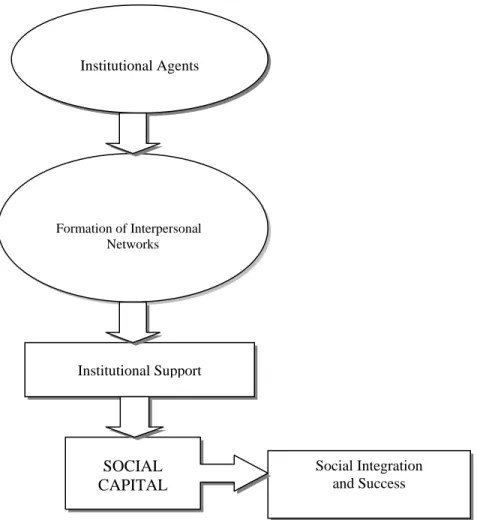
The conceptual framework for this study is grounded in Stanton-Salazar’s research on social capital and interpersonal networks where the formation of students’ interpersonal networks, with support from significant others (institutional agents), are linked to the development of social capital, social integration and STEM success. In this conceptualization, STEM success is defined as the enrollment in high school mathematics and science courses annually, with one or more of the courses being college preparatory, honors and/or advanced placement in preparation for pursing a college degree and career in a STEM-related discipline (Figure I).
Figure 1. Conceptual framework diagram
Significance of the Study
Our nation must begin to prepare, attract and retain a larger share of our citizens in the technical workforce who can support our nation’s economy, security and quality of life. Oakes (1990) states, “If the nation continues to rely on decreasing numbers of Whites and Asian males for scientific talent, the quantity and quality of the workforce will be substantially lower than it would be if all groups were included” (p. vi).
Formation of Interpersonal Networks Institutional Support Social Integration and Success SOCIAL CAPITAL Institutional Agents
The small percentage of American students who pursue science and engineering careers, especially racial and ethnic minorities; the decline in foreign-born students in the U.S. seeking graduate degrees in this country (Oliver, 2005); the decline in foreign-born STEM employees in the U.S. because of the global competition for well-trained professionals in the workforce (Coble & Allen, 2005); and the number of STEM professionals approaching retirement age (Malcom, George, & Matyas, 2005) could impact the future of America’s social, educational, and technological standing in the world. Yet, racial and ethnic minorities continue to face far more formidable challenges in their access to colleges and universities in the United States, which translates into fewer individuals being trained for a highly scientific and technical workforce.
In order to meet the escalating demand for the future scientific and technical workforce, it is imperative that a body of research examines ways to increase the number of students graduating from high school with sufficient mathematics and science preparation to pursue STEM- or STEM-related college majors. Therefore, a study focused on the development of social capital can help advance our understanding and interpretation of the meanings that students of color attach to their experiences when they participate in a STEM Pre-College Program and select advanced mathematics and science courses in preparation for STEM college majors and careers.
Finn, Gerber and Wang (2002) asserted, “educators recognize that mathematics and science courses in high school are important stepping-stones to success in college and employment. They hold that students who take rigorous high school mathematics courses are better able to complete college-level mathematics courses” (p. 336).
However, educators continue to grapple with the question of why too few students, specifically African American students are selecting advanced mathematics and science high school courses needed for future academic and economic success. The current body of literature shows the value of social capital in an array of academic settings, primarily school time venues. Most studies did not extensively addressed the development of social capital among African American students, specifically while participating in a STEM Pre-College Program conducted in an out-of-school setting (i.e., after-school, weekend and summer).
Findings from this study can help parents, policy makers and practitioners identify strategies that address the mathematics and science achievement gap, as well as African American students’ selection of advanced mathematics and science courses required for scientific literacy, college majors and STEM and STEM-related careers. This study can provide rich detailed data, which can contribute to a more comprehensive understanding of how institutional agents and interpersonal networks contribute to STEM choices by African American high school seniors who participate in a STEM Pre-College Program.
Limitations of the Study
The study was limited to eight African American STEM Pre-College Program participants. The eight students participating in the study do not reflect the background characteristics of all African American students. Thus, my study may not be generalizable to other students in other settings and the findings may be subject to other interpretations.
Maxwell (2005) maintains that qualitative researchers must be cognizant of two validity threats that can surface in their research: (a) biases and (b) reactivity. Therefore, I acknowledged the validity threats that I personally bring to my case study. I am very much aware of the biases and reactivity to what was voiced by participants and viewed by me in the course of this study. Consequently, I made a conscious effort to identify and address my subjectivities throughout my study; particularly in the selection of participants, data collection, and data analysis, as suggested by the author.
Definition of Terms The terms used in this study are defined as follows:
Social Capital is defined as the social interactions that make use of the resources embedded within multiple webs of social relationships with significant others (institutional agents) that are needed for educational attainment. (Noguera, 2003; Stanton-Salazar, 1997; Valenzuela, 1999).
Interpersonal Network (Social Network) is defined as the formation of social ties and webs from relationships with significant others, which also can be called social support systems (Noguera, 2003; Stanton-Salazar, 2001).
Social Integration is defined as a student’s level of personal engagement and inclusion in an institutional setting, which can lead to a sense of belonging or connection to various aspects of an institution (Stanton-Salazar, 2001).
Institutional Agents are defined as those individuals who have the capacity and commitment to negotiate resources and opportunities, as well as provide institutional support (Stanton-Salazar, 2001).
Institutional Support is defined as a form of assistance that functions to help empower students to become effective participants within mainstream institutional settings and society (Stanton-Salazar, 1997).
Science, Technology, Engineering, and Mathematics (STEM) Pre-College Programs (PCP) are out-of-school educational initiatives aimed at broadening students’ science, technology, engineering, and mathematics interest; improving their achievement; advising their course selections; and/or influencing their science- and mathematics-related careers choices (Oakes, 1990).
Underrepresented Minority (URM) is defined as racial and ethnic minorities such as African American, Alaskan Native, American Indian, Hispanic American and Native Pacific Islanders who historically have been inadequately or insufficiently represented in the fields of science, technology, engineering, and mathematics. (NCES, 2007)
Advanced Placement (AP) Courses are defined as credit bearing high school courses that allow the bypassing of introductory college level courses (Sadler and Tai, 2007).
Advanced-level Mathematics Courses include honors or advanced placement courses in any algebra, geometry, statistics, probability, pre-calculus and calculus (NCES, 2007). Advanced-level Science Courses include honors or advanced placement courses in biology, any chemistry, and any physics (NCES, 2007).
CHAPTER II
REVIEW OF LITERATURE
The following review of the literature is organized into four major strands. The first strand looks at African Americans and social capital. The second examines social capital and academic outcomes for students. The third deals with the underrepresentation of African Americans in science, technology, engineering, and mathematics. The fourth and final strand presents research related to science, technology, engineering, and mathematics (STEM) pre-collegiate programs.
African Americans and Social Capital
African American people endured the atrocities of slavery, criticism, and stereotypical images for many years. Yet, they are continually portrayed in society as a powerless and disorganized group of people filled with hopelessness, doom, and the lack of problem-solving skills and ambition (Frazier, 1939; Gelbach, 1966; Herskovits, 1941; Kardiner & Oversey, 1959; Moynihan, 1965; Rainwater & Yancey, 1967; Persell, 1991). In fact, as Allen (2000) pointed out, far too many studies ignored institutional and societal context and characterized African Americans as problem-oriented individuals who come from low-income or underclass families with female-headed households and absent fathers. Allen reported,
Both historically and today, the special circumstances that characterize black family life in the United States warrant – indeed require – that these families be examined in relation to their environments. Where this is done, one can expect clearer understandings of black family experience. (p. 314)
Despite a historical legacy of discrimination, many African American students overcome a myriad of social, economic, and educational barriers in order to pursue postsecondary education. Within the last two decades, scholarship emerged that examines students’ development of social capital as it pertains to issues of social class, race, and nationality (Noguera, 2003). However, empirical studies that illuminate the social capital garnered specifically by African American students are limited, particularly research on resourceful relationships with institutional agents and network members in academic outreach settings.
The available studies show that access to social networks can be beneficial to African Americans’ experiences and those of their children. For example, an important strength of African Americans is their ability to be resilient, which evolves from the social support networks between African American children and their parents, peers in schools, and communities (Wang, Haertel, & Walberg, 1994). In the same vein, Billingsley (1992) and Hill (1998) identified factors that contribute to the strength and resilience of African American families, including a strong emphasis on achievement, work, multiple family roles, kinship ties, home support, self-help, and religion. Hill (1998) believed that the ability of African American family members to facilitate demands outside the family unit lies in the cultural assets that members pass from generation to generation. More importantly, Billingsley (1992) reported that the strengths
of African Americans are more powerful than their weaknesses, which enable African Americans families to persevere, especially during challenging times.
Stanton-Salazar (1997) explored the development of social capital among racial and ethnic minorities, particularly Mexican/Latino adolescents. He posited that social networks and ties are useful for connecting students with key institutional agents who can augment educational outcomes. He believed that developing networks, including negotiating and seeking help from significant others, could be beneficial for overcoming certain obstacles. Stanton-Salazar (1997) reported that in contrast to the dominant culture, racial and ethnic minority students are likely to encounter a number of constraints that prohibit or hinder them from seeking school-based sources of institutional support. For example, Stanton-Salazar (1997) described dominant group members’ access to resourceful relationships and activities as “social freeways to privilege and power” (p. 4). He further stated, “a major vehicle that allows for the use of such freeways is an educational experience that is strategic, empowering, and network-enhancing” (p. 4). He concluded that racial and ethnic minority children, however, are limited in their access to these social freeways and the accompanying vehicles that permit such privilege and power.
Stanton-Salazar (1997, 2001), along with others, attributed the differentiation of power in society to ideologies related to class, race, ethnicity, and gender that play a major part in obstructing access to economic opportunities and social advantages (Horvat, Weininger, & Lareau 2003; Noguera, 2003; Valenzuela, 1999). Stanton-Salazar (1997, 2001) argued that individuals may acquire resources from a host of institutional agents
(i.e., significant others) such as families, teachers, counselors, social workers, clergy, community leaders, college-going community youth, and school peers that can facilitate apposite social development and educational outcomes, particularly invaluable resources for students.
In addition, social networks comprise many overlapping ties among members that provide various types of support to individuals. However, researchers have concluded that racial and ethnic minorities’ access to social capital can be problematic, specifically in schools and other institutional settings primarily because of social inequalities such as stereotyping, as well as the failure to acknowledge and/or recognize the value of minority students’ culture (Stanton-Salazar, 1997; Valenzuela, 1999; Yan, 1999).
Using data from a National Survey of Families and Households, Kim and McKenry (1998), however, pointed out that social networks and social support may occupy an important role in the well-being and social mobility of racial and ethnic minorities. In a comparison of three racial and ethnic minority cultural groups (i.e., African Americans, Asian Americans, and Hispanics) and Caucasians, they found that variations in historical experiences tend to impact the creation of social networks, particularly the building of networks that can facilitate upward mobility and advancement. In contrast to other groups in the study, the authors reported that African American’s propensity to participate in church and church-related social events and political activities accrued social capital embedded within the social support systems of these institutions. The researchers also reported that African Americans derived most of their social support from family and extend family members, non-familial kin, friends,
neighbors, and co-workers. In addition, they “were more likely to rely on parents and children for support as compared to Caucasians” (p. 313). Kim and McKenry (1998) surmised that social networks and social support occupy an important role in our society, however, the social network systems of racial and ethnic minorities were found to be relatively different from the dominant groups that studied.
Researchers such as Lareau and Horvat (1999) and Horvat, Weininger, and Lareau (2003) explored the concept of intergenerational closure and the development of social capital, particularly as related to issues of how race and class have exacerbated school-based social inequalities. Horvat and Lareau (1999) used Bourdieu's social reproduction theory as a theoretical orientation to explore social inclusion and exclusion in family-school relationships, particularly African American parents’ involvement in their children’s education. Their study used a case study methodology to investigate the role of race in African American parents’ compliances to requests from educators. They concluded that the affluent Caucasian parent’s viewed social capital from a more positive perspective that of African American parents in an array of school-based settings.
Lareau and Horvat (1999) argued,
In particular, educators are relentless in their demands that parents display positive, supportive approaches to education. The historical legacy of racial discrimination, however, makes it far more difficult for black parents than white parents to comply with such demands. Although social class seems to influence how black and white parents negotiate their relationships with schools, for blacks race plays and important role, independent of class, in framing the terms of their relationships. (p. 38)
John Ogbu (2003) argued that African American students’ oppression and marginalization in classrooms rendered them non-participants in many aspects of society. Ogbu conducted an ethnographic study of 110 classrooms in the affluent Shaker Heights, Ohio school district. He investigated how academic achievement and school experiences affect the identity of oppressed African American students who are outside what he called “the opportunity structure.” Ogbu advocated for the development of a community action framework that could assist African American families and the African American community in their educational efforts. He stated his belief that community-based non-profit and for-non-profit organizations, which run parallel to regular school, could help eliminate the achievement gap between African American and Caucasian students. The author encouraged community-based initiatives that would provide after-school and weekend intervention programs, activities, and opportunities for students. He reported that the achievement of African American students could be improved with the establishment of community-based academic programs that had a multicultural focus that included parents, role model speakers, and a public recognition program for students. Ogbu further argued that schools can address the African American - Caucasian achievement gap by persuading teachers to become caring individuals with high expectations for their students, and a willingness to create institutional settings that are conducive to helping parents become advocates for their children’s education.
Since Coleman’s (1988) conceptualization of social capital and its empirical investigations of social networks and relations, Noguera (2003) argued that social capital is of interest to numerous scholars because of its potential to strengthen social mobility,
socialization, and social reproduction developments in the field. He underscored that point in the following statement:
With its emphasis on the benefits derived from participation in social networks and relations of reciprocity, the focus on social capital encouraged researchers to examine relations between parents and teachers and students and teachers and among students themselves. (p. 181)
The literature clearly reflects the strength and resiliency of the African Americans. Horvat, Weininger, and Lareau (2003) maintained that material and immaterial resources accessible to individuals and families because of social ties also enable them to gain resources that can produce significant educational advantages for their children. Additionally, Croninger and Lee (2001) and Horvat et al. (2003) reported that individuals and families can garner educational advantages for adolescents through the resources of social capital. Several researchers suggest that the social capital African American children and their families bring to the classroom is conceptualized differently; thus, it is devalued by some educators and their educational practices. This devaluation can take away the resources that impact adolescent development and learning outcomes (Noguera, 2003; Ogbu, 2003, Smith-Maddox, 1999; Stanton-Salazar, 1997; Valenzuela, 1999).
In addition, much scholarly work on racial and ethnic minorities’ development of social capital is largely devoted to studies of intergenerational closure, which focuses on relationships between parents and students (Noguera, 2003). The concept of social capital, as espoused by Bourdieu (1986) and Coleman (1985, 1988, 1990), provided the
reflects a pattern of studies using a social capital theoretical orientation to explore intergenerational closure and its impact on regular school time settings, particularly for racial and ethnic minorities. Clearly, these scholars unveiled evidence that social support, ties, and networks are beneficial for the development of social capital, while at the same time showing that access to social capital and institutional support can be problematic for students of color. As a result, school success and opportunities for racial and ethnic minority children are often undermined.
Although several studies include research on ethnic minorities’ development of social capital, the literature is lacking in research that has investigated African American students’ perceptions of the development of social capital from relationships with institutional agents outside of regular school time. Missing especially in this regard, are studies that examine pre-collegiate outreach initiatives in science, technology, engineering and mathematics (STEM) designed to broaden interest among racial and ethnic minority students in STEM and STEM-related high school courses, college majors and careers.
Social Capital and Academic Outcomes
Research findings provide substantive support for positive academic outcomes for students who possess and activate social capital (Coleman, 1988, 1990, 1995; Coleman & Hoffer, 1987; Croninger & Lee, 2001; Dika & Singh, 2002; Goddard, 2003; Horvat, Weininger, & Lareau, 2003; Lopez, Ehly, & Garcia-Vazquez, 2002; Malecki & Demaray, 2003; McNeal, 1998; Rosenfeld & Richman, 1999, 2003; Smith-Maddox, 1999; Stanton-Salazar, 2001; and Yan,1999)
Coleman and Hoffer (1987) in their early research, along with their study of Roman Catholic and other private schools articulated the value of capital in education. They argued that social support networks developed among individuals and groups in the church, community, and school increased students’ mathematics and verbal performance, particularly where home social capital may be sparse. Coleman (1988) believed that the small networks of relationships and patterns of connection among individuals and groups can benefit students.
McNeal (1998) found that students’ participation in extracurricular activities engendered different forms of social and cultural capital for parents and students of high socioeconomic status (SES). For instance, participation in extracurricular activities can offer a venue for maintaining status and prestige and students and parents who hold membership in higher social classes will enjoy more power. In turn, the exclusion of low-income and racial and ethnic minority students from extracurricular activities limits their access to social networks and alternate pipelines that could increase academic achievement.
The literature reflects that Coleman’s earlier research on social capital and its impact on academic success continued to generate immense interest among many researchers (Lopez, Ehly, & Garcia-Vazquez, 2002). Thus, particularly in the last two decades, empirical studies began appearing to show the impact of social capital on student and adolescent development (Kahne & Bailey, 1999; Rosenfeld & Richman, 1999, 2003); academic performance and achievement (Goddard, 2003); and school
attendance (Croninger and Lee, 2001; Lopez, et al., 2002) among racial and ethnic minorities.
Researchers such as Stanton-Salazar (1997), whose work focused on the concept of social capital among racial and ethnic minorities, posited that social ties are useful for connecting students with key institutional agents who can augment educational outcomes. “Institutional agents can be formally defined as those individuals who have the capacity and commitment to transmit directly, or negotiate the transmission of, institutional resources and opportunities” (p. 5). Stanton-Salazar reported that individuals can acquire resources from institutional agents such as families, teachers, counselors, social service workers, clergy, community leaders, college-going community youth, and school peers. These agents can provide invaluable resources and information about school, tutorial programs, mentoring, career awareness and advising, and college admission. He further argued that social networks comprise many overlapping ties among its members, which can supply a range of support for individuals. More importantly, these relationships can provide access to resources and privileges for individuals that can equate to forms economic and political power.
A study that looked at social networks and resources of low-income African American eighth graders also found that social networks can be beneficial to adolescents, especially with regards to acquiring information related to specific educational programs, courses, and careers (Smith-Maddox, 1999). Using longitudinal data, Smith-Maddox sought educational aspiration predictors of African American eighth grade students. She reported that the social networks within extra curricular activities and family, regardless
of social class, are factors for predicting African American students’ educational aspirations.
In a study of social interactions and relationships of highly successful African American students who completed high school and enrolled in postsecondary education, Yan (1999) sought to identify characteristics of social capital. He believed that social capital could be described as the building of relationships and social networks among parents and their children. Using Coleman’s theoretical orientation and parent and student data from the National Educational Longitudinal Study (NELS:88), Yan compared successful African American students to both their successful Caucasian peers and their non-successful African American peers by exploring interactions among parents, family, teens, and school.
Yan’s (1999) findings indicated that “the families of successful African American students demonstrate equal or higher levels of parental involvement than do those of successful European American students, despite the former comparatively disadvantaged home environment” (p.19). He suggested that parent-teen interactions among students of disadvantaged African American families should cover topics directly related to school subjects, experiences and activities, as well as postsecondary education plans such as scoring and grading, college placement testing, selecting courses, and applying to college. Yan poignantly concluded “that educators need to increase their awareness and acknowledgement of cultural differences in parental involvement in order to better challenge their own and others’ stereotypical ideas and attitudes toward minority parents” (p. 20).
Two qualitative analyses examined the role of social capital in youth programs at the middle school (Kahne & Bailey, 1999) and high school (Rosenfeld & Richman 1999, 2003) levels. Using interviews and student academic performance data, Kahne and Bailey (1999) conducted a two-year study of the role of social capital in youth development. The study targeted the “I Have a Dream” Program, which provided financial, academic, and social support to sixth grade students who attended the public schools of Chicago. Using James Coleman’s theory of social capital, the researchers examined social capital in terms of social trust, communication patterns, and behavioral norms of individuals to ascertain how these components promoted the pursuit of particular goals. The findings revealed that social networks, trust and norms, as well as effective sanctions indeed promoted youth development.
According to Kahne and Bailey (1999),
It appears that many students in urban schools will benefit substantially from programs and structures that facilitate strong, trusting relationships between an identifiable and relatively small group of students and either one or a small number of trained and committed adults. (p. 340)
Using a qualitative approach to study at-risk African American and not at-risk African American and Hispanic students, Rosenfeld and Richman (1999) also investigated the relationship between types of social support and important academic outcomes, particularly for high school students. Using free and reduced lunch as the measure of socioeconomic status, at-risk students of the North Carolina and Florida Communities in School (CIS) Programs were participants in the study. The CIS Program provides support and aid for at-risk students such as tutoring and mentoring, as well as
the coordination of student services from personnel and volunteers from agencies and organizations such as social services, schools and businesses.
The major findings indicated that at-risk and not-at-risk students attained social support from their parents, as well as their friends. In terms of gender, the findings show that male students experiencing poor parent relationships were more likely to suffer from a lack of social supportive relationships. In contrast, males who experienced social supportive relationships with their parents tended to seek needed assistance from other male counterparts. Overall the findings indicated that receiving social support accrues positive student outcomes, especially if the outcomes matched the specific needs of the individual. The researchers also reported a definite linkage between social support and educational outcomes, with social support shown to be a means of heightening academic performance (Rosenfeld & Richman 1999, 2003).
Croninger and Lee (2001) studied social capital to determine the benefits of teacher support and guidance to “at-risk” tenth and twelfth grade students. The purpose of the study was to examine whether teacher-based forms of social capital reduced the dropout rate among at-risk students. Data from the National Education Longitudinal Study (NELS: 88) was used to research the following question, “Do teachers provide students with valuable forms of social capital?” The researchers conducted a study of 11,000 public and private school students from approximately 1,000 schools for a period of two years, beginning in 1990. They suggested that social institutions such as families, religious associations, community groups, and educational organizations are valuable to young people. More importantly, they concluded that teachers are a significant source of
social capital for students. However, they reported that the decline of many social institutions that traditionally provided support and/or guidance, which is significant for adolescent development, could be at the core of the school dropout rate among many Mexican-American students who are on a trajectory for failure.
Croninger and Lee (2001) further argued that teachers provide disadvantaged students with emotional support, encouragement, and assistance that can help with academic and personal predicaments, particularly decreases in the dropout rate. These researchers reported that adolescents could also benefit from the support that comes from other school personnel (school administrators, teacher assistants, coaches, and clerical and custodial staff). Lastly, peers were found to be invaluable sources of support for other peers through the formation of social ties and the many advantages that flow from the development of social capital (e.g., completion of high school).
Lopez et al. (2002) examined acculturation, as well as perceptions of social support and academic achievement in Mexican and Mexican American ninth-grade students to ascertain if these features impacted school success. The study investigated the high dropout rate among high school Mexican American high school students and included 60 ninth grade Mexican American students in a southwestern school district population of approximately 50,000. The researchers’ conceptualization of social support included these components (a) a support network – availability of people who can provide help to others, (b) received support – actual help and support from members of the social networks, and (c) perceived support – a personal assessment of supportive relationships, as well as the type of supportive action. The findings suggested a
significant connection between acculturation, social support, and academic achievement in Mexican Americans students.
Goddard’s (2003) study of social capital and its influence on fourth-grade students’ achievement in an urban school district reported that social capital can generate desirable outcomes; thus it also can be beneficial to disadvantaged students. The purpose of the study was to examine social capital and students’ performance on mathematics and writing tests. Fourth-grade students from a Midwestern state participated in the study. Using a qualitative research method, the researcher collected data from 2,429 students and 444 teachers via surveys from 45 randomly selected schools. In an examination of social capital, the measure included teachers’ reports of networks that connected parents and community members and its impact on facilitating students’ learning, building of trusting student/parent relationships, and establishing norms that accelerate student learning. The author’s findings suggested some gains in mathematics and writing assessments as a result of social capital. However, Goddard (2003) purported that the topic warrants further research, specifically the examination of the formation of social capital among high poverty, minority-serving public schools.
Malecki and Demaray (2003) investigated the specific types (emotional, informational, appraisal, and instrumental) and sources (parents, teachers, classmates, and close friends) of support that students perceived as important for social, behavioral and academic outcomes. These researchers suggested that students could be protected from certain outcomes and barriers if they perceived that they had encouragement and assistance from others within a supportive network. Using a quantitative methodology to
investigate sources and types of social support for 263, fifth- through eighth-graders, the researchers measured the sources of students’ support networks from parents, teachers, classmates, and close friends. One of the findings indicated that gender was not a significant factor in early adolescents’ perceptions of levels and types of support from their parents and teachers. The findings for adolescents show that parents provided emotional and informational support, teachers provided informational support, and classmates and friends provided emotional and instrumental support. Overall, students’ emotional and informational scores rank highest for teachers, whereas emotional and instrumental support scores rank highest for classmates and close friends.
A synthesis of social capital research and its impact on academic outcomes provides the best evidence that a positive link exists between types and sources of social capital and educational outcomes for students. For example, much research suggests that sources of social capital that contribute to students’ educational outcomes include the home, school, and peers. There is also evidence to suggest that institutional agents provide educational advantages.
Underrepresentation of African Americans in
Science, Technology, Engineering, and Mathematics (STEM)
Research on persons of color provides insight into the dismal nature of inequalities that historically and presently exist in educational institutions. Lee (2002) provided data for three decades, from the 1970s to the 1990s, which demonstrated a decline in trends toward educational equity. During the 1990s, the greatest setback occurred when the achievement gap widened for African American - Caucasian and
Hispanic – Caucasian populations in reading and mathematics. Lee’s analysis of racial and ethnic achievement gap patterns have demonstrated growing disparities in SAT achievement, high school completion and dropout rates, and advanced course placement for the same two groups. Linda Darling-Hammond (2007) also addressed the achievement gap issue between Caucasian and non-Asian minority students and has reported,
While we bemoan the dramatically unequal educational outcomes announced each year in reports focused on the achievement gap, as a nation we often behave as though we are unaware of - or insensitive to - the equally substantial inequalities in access to educational opportunity that occur from preschool through elementary and secondary education, into college and beyond. (p. 318)
In terms of achievement and performance, research shows that the number and type of advanced courses taken in mathematics and science are powerful indicators of preparation for undergraduate majors and course taking, as well as scientific literacy (NCES, 2000; National Science Board, 2004). According to NCES (2000), students who took advanced mathematics and science courses in high school are more likely to major in mathematics- and science-based fields. Although the number and type of advanced-level courses taken in mathematics and science are powerful indicators for college majors and career choices, many African American, Hispanic, and American Indian students are not participating in these courses in large numbers (BEST, 2004; NCES, 2007; Oakes, 1990).
In light of the growth of Advanced Placement (AP) testing nationally, survey data collected from eight high schools from a mid-size school district of approximately
58,000 students and a 30% minority student population, revealed a relatively low percentage of minority students pursuing AP courses in the school district of the study. The findings indicated only 2% minority students, with the exception of Asian and Pacific Islanders, are enrolled in the AP courses in contrast to 71% Caucasian Non-Hispanic students (Ndura, Robinson, & Ochs, 2003). The authors concluded,
Society as a whole will benefit from higher enrollments of minority students in AP classes and in all other rigorous courses. One area of particularly significant importance to the US is the small percentage, excluding Asians, of minority students who pursue Science, Technology, Engineering, and Mathematics (STEM) careers. Our modern, technological society is especially dependent on human power in STEM to remain competitive in the global market. Tapping this human resource and preparing minorities to enter STEM careers would be beneficial to both the individuals involved and society as a whole. (p. 33)
For example, only 25% of African American high school graduates took higher-level mathematics courses in high school (i.e., pre-calculus, calculus, or trigonometry) in comparison to 49.2% of Caucasian graduates. For advanced placement calculus only 2.6% of African Americans enrolled in this course in comparison to 8.4% of Caucasian high school graduates. Twenty percent of African American high school graduates took biology, chemistry, and physics in contrast to 25.7% of Caucasian students. For advanced placement and honors physics, 2.2% of African American high school graduates have taken these courses in contrast to 4% of Caucasian students. Overall, African America high school graduates nationally continue to participate in far fewer higher-level mathematics and science courses than their Caucasian peers (NCES, 2002).
According to the recently released National Assessment of Educational Progress (NAEP) mathematics performance data for 2007, the average scores of African American eighth graders have reported a 23 point increase since 1990, from 237 to 260. More
significantly, the 2007 NAEP results show a Caucasian-African American performance gap in eighth-grade mathematics continues to exist with scores for African American students 31 points lower than the scores of their Caucasian counterparts. A similar pattern holds true for science performance data with African American students’ average achievement scores ranging from 39 to 52 points below those of Caucasian students for the ages of 9, 13 and 17 years (National Science Board, 2004). According to the most recent National Assessment of Educational Progress (NAEP) science achievement gap data for racial and ethnic groups in grade 12, gaps continued to persist between Caucasian students and their African American and Hispanic counterparts between the years of 2000 and 2005 (NCES, 2006).
Furthermore, 2003 graduate data from the National Science Foundation illustrated a four percent gain in science and engineering enrollment, which is higher than previous years (Oliver, 2005). Prior to this report, the graduate school enrollment data had revealed a decline in science and engineering that started in 1993. Currently, an examination of degrees in science and engineering revealed that African Americans represent only 7.2% of the bachelor’s degrees, a mere 3.1% of the master’s degrees, and 3.6% of the doctoral degrees in those fields (BEST, 2004).
Malcom, Chubin, and Jesse (2004) warned that the number of members of the current United States workforce in the age range of 40-49 years, 50-59 years, and 60+ years are approaching retirement at the rate of 29%, 21% and 7%, respectively, is also reason for alarm. According to the National Science Foundation, the competitiveness of the global market for foreign-born scientists is reflecting the decline in science and
engineering graduate enrollment data (Oliver, 2005) and the domestic workforce (Coble & Allen, 2005). In 2003, for a second consecutive year, first-time, full-time U.S. graduate enrollment showed a decline of 8% among foreign-born students with temporary visas in the fields of agricultural science; computer science; earth, atmospheric, and oceans sciences; and in engineering (Oliver, 2005). In the past, foreign nationals could replace the shortage of well-prepared science and mathematics students in the United States. In fact, one-half of all engineering and mathematics doctorates, and almost one-half of all computer doctorates in the United States were foreign nationals in 2002. However, the recent competitiveness of the global economy for highly qualified STEM students and professionals could impact the number of foreign nationals who remain and work in the United States (Coble & Allen, 2005).
Oakes (1990) stated, “if the nation continues to rely on decreasing numbers of White and Asian males for scientific talent, the quantity and quality of the workforce will be substantially lower than it would be if all groups were included” (p. vi.). Consequently, the small percentage of American students who pursue mathematics and science careers (especially racial and ethnic minorities), the decline in foreign-born students in the U.S. seeking graduate degrees in this country, the potential decrease in foreign nationals in the workforce because of the global competition for well-trained STEM professionals, and the number of STEM professionals approaching retirement age could impact the future of America’s social, educational, and technological standing in the world. Yet, racial and ethnic minorities continue to face far more formidable
challenges in their access to colleges and universities in the United States. This translates into fewer individuals being trained for a highly scientific and technical workforce.
Adelman’s (1997) examination of who finished bachelor’s degrees and why indicated that the “best prepared” high school students are the most likely to matriculate to a four-year college. One of the key indicators for being the “best prepared” is the academic intensity and rigor of the high school curriculum. In addition, students who participated in college preparatory programs show higher rates of college participation (Perna, 2000). Redd (2003) posited that higher income Caucasian students who attend the better high schools also have greater access to college preparatory items such as test preparation and college admission materials. Conversely, far too many schools that enroll a large number of African Americans students show small numbers on college-preparatory tracks and advanced courses, and who go to college (Martinez & Martinez, 2003).
Orfield (1998) theorized that many societal issues contribute to inequity in our society. He pointed out that because a college education is directly related to future careers and income, it can be the primary pathway through which inequities between groups can be reduced or erased so that there can be advancement toward equality. The absence of educational equality for racial and ethnic minorities, especially in the case of women’s and racial and ethnic minorities’ pursuit of science, continued to remain quite prevalent in our society (Jayaratne, Thomas, & Trautmann, 2003).
Studies show too few African American students are enrolled in advanced mathematics and science courses because of educational inequities. Summers and
Hrabowski (2006) argued that African American students’ low enrollment in advanced mathematics and science courses may be attributed to educational- and cultural-related isolation, low expectations, a dearth of peer support, and discrimination. The ensuing consequences of this exclusion of African American students from mathematics- and science-based disciplines are serious for both society as a whole and for the individual students denied opportunities to achieve the power and prestige essential for upward mobility. Research validated that social injustices prevent many African American students from entering the pipeline for advanced mathematics and science course enrollment, as well as future STEM and STEM-related fields. These are compelling reasons to investigate interpersonal networks and institutional support in the development of social capital in a STEM Pre-College Program.
Clearly, too few African American students are being prepared to graduate from high school with sufficient preparation to pursue STEM college majors and careers. More importantly, the achievement gap continued to widen, leaving many racial and ethnic minority students void of the required skills to be competitive in a global society.
Science, Technology, Engineering, and Mathematics (STEM) Pre-College Programs In a study titled, “Who Will Do Science?” Berryman (1983) theorized that students need access to science and mathematics experiences both in-school and out-of-school in order to enter the pipeline necessary for scientific literacy. Similarly, Oakes (1990) also reported that students need exposure and access to out-of-school scientific opportunities in order to enhance mathematics and science learning. Malcom (1984) and Malcom, Chubin, and Jesse (2004) suggested fourteen out-of-school intervention