Secure Distributed Deduplication Systems with Improved
Reliability
Pagidimarri Sushma Department Of Cse Madhira Institute Of Technology
And Sciences
G.L. Chandrashekar Rao Assistant Professor
DEPARTMENT OF CSE MADHIRA INSTITUTE OF TECHNOLOGY
AND SCIENCES
ABSTRACT: Data deduplication is a technique for
eliminating duplicate copies of data, and has been widely
used in cloud storage to reduce the storage space and
upload the bandwidth. Whenever There is only one copy for
each file stored in cloud even if such a file is owned by a
huge number of users. As a result, de duplication system
improves and increase storage with a utilization while
reducing reliability. Furthermore, the challenge of privacy
for sensitive data also arises when they are outsourced by
users to cloud storage and Aiming to address are given the
security challenges, this paper makes the first attempt to
formalize the conception of distributed reliable de
duplication system. We propose new distributed de
duplication systems with higher reliability in which the
data chunks are distributed across multiple cloud servers.
The security requirements of the data confidentiality and
tag consistency are also achieved by introducing a
deterministic with secret sharing scheme in distributed
storage those systems, instead of using convergent
encryption as in previous de duplication systems. The
Security analysis is a demonstrates that our de duplication
systems are secure and private in terms of the definitions
specified in the proposed security model. As a proofof
concept, we implement the proposed systems and
demonstrate that the incurred overhead is very limited
in realistic environments
INTRODUCTION.
With the explosive growth of digital data, deduplication techniques are widely employed to
backup data and minimize network and storage overhead by detecting and eliminating redundancy
among data. Instead of keeping multiple data copies with the same content, deduplication eliminates redundant data by keeping only one physical copy and referring other redundant data to that copy. Deduplication has received much attention from both academia and industry because it can greatly improves storage utilization and save storage space,
especially for the applications with high
deduplication ratio such as archival storage systems. A number of deduplication systems have been proposedbased on various deduplication strategies such as client-side or server-side deduplications, file-level or block-file-level deduplications. A brief review is given in Section 6. Especially, with the advent of cloud storage, data deduplication techniques become more attractive and critical for the management of ever-increasing volumes of data in cloud storage
services which motivates enterprises and
organizations to outsource data storage to third-party cloud providers, as evidenced by many real-life case studies [1]. According to the analysis report of IDC, the volume of data in the world is expected to reach 40 trillion gigabytes in 2020 [2]. Today’s commercial cloud storage services, such as Drop box, Google Drive and Mozy, have been applying deduplication to save the network bandwidth and the storage cost with client-side deduplication. There are two types of deduplication in terms of the size: (i) file-level deduplication, which discovers redundancies between different files and removes these redundancies to
reduce capacity demands, and (ii) blocklevel
deduplication, which discovers and removes redundancies between data blocks. The file can be divided into smaller fixed-size or variable-size blocks. Using fixedsize blocks simplifies the computations of block boundaries, while using
fingerprinting [3]) provides better deduplication efficiency.
EXISTING SYSTEM:
1. A number of de duplication systems have
been proposed based on various de
duplication strategies with ideas such as
server-side or client-side de duplications,
file-level or block-level de duplications.
2. Bellare et al. formalized this primitive as
message-locked encryption, and explored its
application in space efficient secure
outsourced storage. There are also several
implementations of convergent
implementations of different convergent
encryption variants for secure de
duplication.
3. Li addressed the key-management issue in
block-level de duplication by distributing
these keys are across the multiple servers
using after encrypting the files.
4. Showed how to protect the data
confidentiality by the transforming and
predictable message into a unpredictable
messages.
DISADVANTAGES OF EXISTING SYSTEM:
1. Data reliability is actually a very critical
issue in a de duplication storage system
because there is only one copy for each and
file stored in to the server and shared by all
the owners.
2. Most of the previous de duplication systems
have only been considered in a single-server
setting.
3. The traditional deduplication methods
cannot be directly extended and applied in
distributed and multi-server systems.
EXTENSION
As the extension of this project, we go for
cryptography for our application. So that the data that
is there in normal human understanding form can be
converted to cipher text.
For converting plane text to cipher, we do use a
secrete key. Then will generate each file having
separate secrete key can be used for converting the
cipher text back to plain text. In this way, we can
make our data more secure.
IMPLEMENTATION
MODULES:
System Model
Data Deduplication
File level Deduplication Systems
Block level Deduplication systems
SOFTWARE ENVIRONMENT:
Software Environment Java Technology: Java is a programming and platform independent language. The Java is Programming Language: This is a programming language is a high-level language as well as it can be characterized by all of the following Keywords:
Simple
Architecture neutral
Object oriented
Portable
Distributed
High performance
Interpreted
Multithreaded
Robust
Dynamic
Secure
compile or run a programs so that we can compile it once run anywhere.
The Java is a programming language is done in that a program is both compiled and interpreted. Then compiler, first we can translates a program into an intermediate languages called Java is converted byte codes to independent codes interpreted by the interpreter on the Java. The interpreter parses and runs each Java is converted to code instruction on the computer. Compilation or run happens just once.
Interpretation every and each time the program is executed by java compiler. The following bellow figure we can show how it works.
We can think of Java is converted to codes or programs as the machine language code instructions by the Java Virtual Machine (Java VM). Every Java interpreter, whether it’s a development tool or a Web browser that can run applets, it is an implementation of the Java VM.
Java is converted to codes are help makes “write once, we run anywhere” possible. We can compile we are programs in to byte codes on any platform that has to be a Java compiler. The byte codes or programming it can then be run on any implementation of the Java VM. That means that is as long as a computer has to be a Java VM, the same codes written in the Java is a programming language can run on Windows 2000 or above versions, the Solaris workstation or on an iMac.
Exceptions:
Exception is an object which is created by
JVM when it encounters a logical error in the
programming.
We have two type of errors in the programming
1) Syntax Errors
2) Logical Errors
Advantages Of Exception Handling
We can know in which part of the program the logical error has actually occurred.
We are not allowing the JVM to terminate the entire program. Only try block in which the error has occurred would be terminated.
Thus we can debug the program very easily.
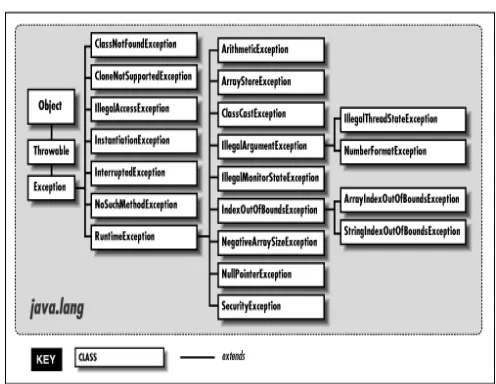
Hierarchy of Exceptions:
Local host, the unique address of the server, the most of the times it’s the hostname of the server that maps to unique IP address. Sometimes we can multiple hostnames point to same IP addresses and web server side virtual host of the takes care of sending a request to the particular server instance. The Port numbers is 0 to 1023 are reserved ports for well known services, for example 80 for HTTP, 443 for HTTPS, 21 for FTP etc. First Servlet Project/jsps/hello.jsp – Resource requested from server. It can be static html, pdf, JSP, servlets, PHP etc.
Why we need Servlet and JSPs?
Web servers are good for static contents HTML pages but they don’t know how to generate by the dynamic content or how to save data into databases, so we need another tool that we can use to generate dynamic content.
There are several programming languages for dynamic content like PHP and Python, Ruby on Rails, the Java Servlets and JSPs. Java Servlet and JSPs are server side programming technologies to extend to the capability of web servers by providing to the support for dynamic send the response and data persistence. Web Container Tomcat is a web container, when a request is made of from Client to web server side, it passes to the request from the web container and it’s web container job to find the correct to the resource to handle the request (servlet or JSP) and then use the response from the resource to generate the response and provide it to web server.
Then web server sends the like response to back to the client side. When web container to gets the request send and if it’s for servlet then container creates two Objects HTTP Servlet Request and HTTP Servlet Response. Then it finds the correct servlet is based on the URL and creates a thread for the request.
Then it invokes the servlet service() method and based on the HTTP method service() method invokes doGet() or doPost() methods. Servlet methods generate the dynamic page and write it to response. Once servlet thread is complete, container converts the response to HTTP response and sends it back to client.
Every JSP in the an application is a compiled by the container and converted to Servlet and then it’s a container manages them like other servlets. Miscellaneous Task data Web container like a manages the resource pool,it’s does memory optimizations and run garbage collector, it’s provides a security configurations, this is support for multiple applications, it’s hot deployment and several other tasks behind the scene that makes our life easier.
Web Application Directory Structure Java Web Applications are packaged as Web Archive (WAR) and it has a defined structure. We can export above the dynamic web project as a WAR file and unzip it to check the hierarchy. It will be something like below image. / Deployment Descriptor web.xml file is the deployment descriptor of the web application and contains mapping for servlets (prior to 3.0), welcome pages, security configurations, session timeout settings etc.
The SQL is a standard has been evolving the since 1986 and several versions exist. In this manual, the SQL-92 refers to the standard released in 1992, the SQL:1999 it’s refers to be the standard released in 1999, and “SQL:2003” refers to the current version of the standard. We can use the phrase like a “the SQL standard” to mean the current version of the SQL is Standard at any time. MySQL software is Open Source.
and use it without paying anything. If we wish, we may study the source code and change it to suit wer needs. The MySQL is software uses the GPL (GNU General Public License),
http://www.fsf.org/licenses/, to define what we may and may not do with the software in different situations.
SYSTEM DESIGN
SYSTEM ARCHITECTURE
:
SYSTEM TESTING:
The purpose of testing is to during a search errors.
Testing is the process of trying to discover every
conceivable fault or weakness in a work product. It
provides a way to check the functionality of
components, sub gathered , gathered and/or a finished
product It is the process of exercising software with
the intent of make sure that the
Software system meets its requirements and user
expectations and does not fail in an unacceptable a
way. There are different types of test. Each test type
addresses a specific testing requirement.
TYPES OF TESTS
Unit testing:
Unit testing have the design of test cases that
validate that the internal program logic is functioning
properly, and that program inputs produce valid
outputs. All decision branches and internal code flow
should be validated. It is the testing of individual
software units of the application .it is done after the
completion of an individual unit before integration.
This is a structural testing, that relies on knowledge
of its construction and is invasive. Unit tests perform
basic tests at component level and test a specific
business process, application, and/or system
configuration. Unit tests ensure that each unique path
of a business process performs accurately to the
documented specifications and contains clearly
defined inputs and expected results.
Integration testing
Integration tests are designed to test integrated
software components to determine if they actually
run as one program. Testing is event driven and is
more concerned with the basic outcome of screens or
fields. Integration tests demonstrate that although the
components were individually satisfaction, as shown
by successfully unit testing, the combination of
components is correct and consistent. Integration
testing is specifically aimed at exposing the
problems that arise from the combination of
components.
Functional test
Functional tests provide systematic
demonstrations that functions tested are available as
specified by the business and technical requirements,
system documentation, and user manuals.
Functional testing is centered on the following items:
Valid Input : establish classes of valid input must
Invalid Input : establish classes of invalid input must
be rejected.
Functions: establish functions must be exercised.
Output : establish classes of application outputs
must be exercised.
Systems/Procedures: interfacing systems or
procedures must be invoked.
Organization and preparation of functional tests
is focused on requirements, key functions, or special
test cases. In addition, plan coverage pertaining to
identify Business process flows; data fields,
predefined processes, and successive processes must
be considered for testing. Before functional testing is
complete, additional tests are identified and the
effective value of current tests is determined.
Acceptance Testing:
User Acceptance Testing is a critical phase of any
project and requires significant taking by the end
user. It also ensures that the system meets the
functional requirements.
Test Results: All the test cases mentioned above
passed successfully. No defects encountered.
CONCLUSION
We proposed the distributed is the deduplication
systems to improve and secure the reliability of data
while achieving the confidentiality of the users and
outsourced data without an encryption data
mechanism. The Four constructions are proposed to
support fine-grained and file-level block-level data
deduplication. The security of the tag consistency and
integrity were achieved. We are implemented our
deduplication systems using the Ramp secret sharing
scheme and demonstrated that it incurs small
encoding and decoding overhead compared to the
network transmission overhead in regular upload and
download operations.
REFERENCES
[1] Amazon, “Case Studies,”
https://aws.amazon.com/solutions/casestudies/# backup.
[2] J. Gantz and D. Reinsel, “The digital universe in 2020: Big
data, bigger digi tal shadows, and biggest growth in the
far east,”
http://www.emc.com/collateral/analyst-reports/idcthe-
digital-universe-in-2020.pdf, Dec 2012.
[3] M. O. Rabin, “Fingerprinting by random polynomials,” Center
for Research in Computing Technology, Harvard University, Tech.
Rep. Tech. Report TR-CSE-03-01, 1981.
[4] J. R. Douceur, A. Adya, W. J. Bolosky, D. Simon, and M. Theimer,
“Reclaiming space from duplicate files in a serverless distributed
file system.” in ICDCS, 2002, pp. 617–624.
[5] M. Bellare, S. Keelveedhi, and T. Ristenpart, “Dupless: Serveraided
encryption for deduplicated storage,” in USENIX
Security
Symposium, 2013.
[6] ——, “Message-locked encryption and secure deduplication,” in
EUROCRYPT, 2013, pp. 296–312.
[7] G. R. Blakley and C. Meadows, “Security of ramp schemes,” in
Advances in Cryptology: Proceedings of CRYPTO ’84, ser. Lecture
Notes in Computer Science, G. R. Blakley and D. Chaum, Eds.
Springer-Verlag Berlin/Heidelberg, 1985, vol. 196, pp. 242–268.
[8] A. D. Santis and B. Masucci, “Multiple ramp
schemes,” IEEE
Transactions on Information Theory, vol. 45, no. 5, pp. 1720–1728,
Jul. 1999.
[9] M. O. Rabin, “Efficient dispersal of information for security, load
balancing, and fault tolerance,” Journal of the ACM, vol. 36, no. 2,
pp. 335–348, Apr. 1989.
[10] A. Shamir, “How to share a secret,” Commun. ACM, vol. 22, no. 11,