Design and Development of Portable Security System Based on
Fingerprint Identification
DONGA RI SA TISH DEPA RTM ENT OF ECE
HOLYM A RY INSTITUTE OF TECHNOLOGY A ND SCIENCE
DR. K. V. M URA LI M OHA N
PROFESSOR
DEPA RTM ENT OF ECE
HOLYM A RY INSTITUTE OF TECHNOLOG A ND SCIENCE
Abstract— Biometrics technology is rapidly progressing and offers attractive opportunities. In recent years, biometric authentication has grown in popularity as a means of personal identification in security systems. The prominent biometric methods that may be used for authentication include fingerprint, palm print, handprint, face recognition, speech recognition, dental and eye biometrics. In this paper, we done biometric verification by using a microcontroller based prototype of security access system using a fingerprint sensor module and we can control the loads by android APP. A 32-bit LPC2148 microcontroller developed by Microchip Technology is used in the system. The necessary software is written in Embedded ‘C’ and the system is tested.
KEYWORDS: Microcontroller, Fingerprint, Biometric, Recognition, Embedded system.
I. INT RODUCT ION
The skin on our palms and fingers exh ibits a flow like patterns of ridges and valleys. The papillary ridges on the finger, called friction ridges, wh ich help the hand to grasp objects and increase friction and improve the tactile sensing of the surface structure. These ridge patterns are now scientifically proved as unique for each person. The cuts and burns in a person’s finger may alter these patterns temporarily but they reappear after the injury heals. Fingerprints are now used widely for identification and verification purpose. They are used for attendance purpose in organizations to avoid proxy for criminal identification like terro rist, mu rderer and violators and also in passports (a matter of national h igh importance) of person.
Here in this project we have tried to automate a classroom attendance procedure by using a fingerprint recognition module interfaced with 8051 microcontroller [28].
A fingerprint recognition system can be used for both verification and identification. In verification, the system compares an input fingerprint to the “enrolled” fingerprint of a specific user to determine if they are fro m the same finger (1:1 match). In identification, the system co mpares an input fingerprint with the prints of all enro lled users in the database to determine if the person is already known under a duplicate or false identity (1:N match)[27][29].
This report also involves the product based design of a physical fingerprint system and also layout of fingerprint matching algorithm. It uses various concepts of embedded system and has tried to make the hardware a marketable portable
II.LITERATURE REVIEW
Various fingerprint matching systems have been proposed which emphasizes on minutiae information, local ridges [1]; some studies are based on singularity point’s position, orientation [2], and relative d istance detection, novel printing [2, 3, 4, 5] novel EESM -based fingerprint algorith m for indoor positioning [6].
Threshold Visual Cryptography [21] is used for identification purposes. Automatic Fingerprint Identification System (A FIS), in fingerprint recognition is also helpful to access control system of automobiles [22]. In another study, Delaunay Quadrangle method using topology code has been used for authentication [23]. Fingerprint authentications are also used in ATMs [24]. So me fingerprint matching systems are also based on model-based designs [25, 26].
III. TOP LEVEL SYSTEM DESCRIPTION
Figure.1 shows the block diagram of the Microcontroller based security system. This design combines the Microcontroller with the Fingerprint Module, d isplay, and communication interfaces. Th is integration accelerates development while maintain ing design flexib ility and simp lifies testing. Figure.1 shows the block diagram of the Microcontroller based system. The design combines the microcontroller with the Fingerprint Module, display, and communication interfaces. Th is integration accelerates development while maintain ing design flexib ility and
simp lifies testing.
Fig.1Top Level system Diagram
The design includes following three modes:
Mode 1: The fingerprint module is connected with the PC using RS232 through serial co mmunication. The So ftware called SFG Demo is then used for interfacing purpose. The fingerprint module is interfaced with the PC through the SFG Demo. By using SFG Demo software we are storing the fingerprint temp late of all the individuals with a unique id inside the fingerprint module.
Mode 2: Then we are connecting fingerprint module with
microcontroller, the use of microcontroller is to extract the data fro m fingerprint module .By using microcontroller1 we are receiving the enro llment id or unique id of specific person. For examp le- Suppose if in a class, temp lates of all the students are stored. Then when a student places his/her finger in the fingerprint sensor, matching of temp late takes place in 1: N fashion inside the fingerprint module. Then the unique ids are received by using microcontroller
IV.ARCHITECTURE OF MATCHING INSIDE FINGERPRINT MODULE (R305)
It is actually very difficult to devise a p roper algorith m for matching o f fingerprint and making the algorith m robust. This chapter discusses the current state of the art feature extraction techniques and gives a literary rev iew of algorithm of matching the extraction.
Data Acquisition
Traditionally in law enfo rcement applications fingerprints were acquired off-line by transferring the inked imp ression of thumb on a paper. Recently, the automated fingerprint verification systems use live-scan dig ital images of fingerprint acquired fro m a fingerprint sensor or module. These sensors or module are based on optical, capacitance, ultrasonic and thermal and other imaging technologies
.
Fig.2 R305 module and fingerprint recognition with various features
Like the optical sensor algorith m for data acquisition there are two other algorithms for data acquisition namely, capacitive sensor utilization method and ultra sound technology based sensors. As in our project we have tried to use the first one that is optical sensors method. So we have not described the other two methods
Imag e Pre-processing
The pre-processing steps try to co mpensate for the variations in lighting, contrast and other inconsistencies which are introduced by the sensor during acquisition process. There are many processes but presently some methods are very famous which the following are:
Gaussian Blur: A convolution operation wh ich applied to the original fingerprint image to reduce image noise introduced by sensor during data acquisition.
Sliding window contrast adjustment: Slid ing window contrast adjustment is used to compensate for any lighting inconsistencies within a fingerprint and to obtain contrast consistencies among different fingerprints
Histogram based intensity level ad justment: This is a final step is to further enhance the ridges and valleys.
Feature extraction
The feature extraction technique for minutiae points (bifurcations and endings), pores and ridge contours is described in this section.
Minutiae Extraction:
Most of the minutiae extraction techniques trace the fingerprint skeleton to find different types of minutiae points. Orientation Estimation: A fingerprint image is an oriented texture pattern and a ridge orientation at a pixel (x, y) is the angle that the ridges within a small neighborhood centered at (x, y) fo rm with the horizontal axis. Thus a fingerprint is divided into many blocks. An analysis of gray scale g radient within a block is done to estimate the representative ridge orientation within that block. Seg mentation: During this stage the portions of the fingerprint image depicting the finger foreground is segmented. This further eliminates the spurious features fro m background and noisy region within a fingerprint.
Ridge Detection:
An important property of the ridges in a fingerprint image is that the gray level values on ridges attain their local maxima along a direction normal to the local ridge orientation. The
resulting ridge map often contains false ridges in the form of holes and speckles. The ridge map is cleaned using a connected component algorithm. Finally the ridges are thinned using standard thinning algorithm.
Minutiae Detection:
The minutia points are then extracted fro m the thinned ridge map by examining the 8 neighborhood of each ridge skeleton pixel. The ridge breaks, Ridge bending direction and width are the information extracted but this may contain spurious minutiae. Th is may occur due to presence of noise, ridge breaks (even after enhancement) and image processing artifacts. Post processing: A number of heuristics are used to remove spurious minutiae. False minutiae are generally found at the borders as the ridges end abruptly. These false minutiae at the border can be recognized by examining the number of foreground pixels in a region around minutia point. If nu mber of foreground pixels is relatively small then the minutia point can be removed.
Fig. 3 Architecture of fingerprint matching algorithm
V. MODEL BASED DESIGN AND SIMULATION
The generated hex code is used to configure and run the system.
Fig. 4 Schematic and Proteus Simulation Model
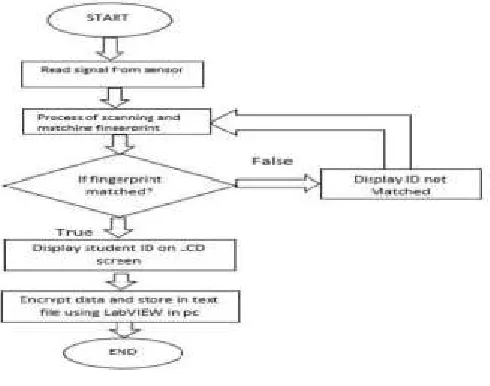
Figure 5 describes the flow chart of the proposed fingerprint attendance system. First, the device will read the signal fro m fingerprint sensor as shown in Figure.
VI. RESULTS AND DISCUSSION
The security can save each person’s fingerprint, hence makes the system mo re robust. During enrolment the person’s fingerprints is assumed to be clean, not dry or damp, no scratches and not swollen.
Members are required to place their fingerprint. After the enrolment stage, the data will be saved in the fingerprint scanner and the verification system takes place by co mparing the capture fingerprint characteristic with the previously enrolled data. Tab le I shows the types of issue that might occur when taking attendance system acquiring fingerprint for attendance purposes. We considered all of these factors for the product which are user-friendliness, convenience, portability, and heating resistance.
VII. CONCLUSIONS
This paper has presented the design and development of portable security system which is based on fingerprint identification. The system helped to reduce many issues such as, power consumption, security access, load controlling helps to ease the owners to keep data of related person’s the encryption technique adds more security so there will be no anonymous fingerprint which is able to tamper with the recorded data, Future works will be making this system wireless and using IOT (internet of things ) concept.
REFERENCES
[1] K A. Nagaty,“An Energy-Based Fingerprint Matching System”,Consumer Co mmunications and Networking Conference, 2004. CCNC 2004. First IEEE.
Intelligent and Software Intensive Systems,0-7695-3109-1/08 $25.00 © 2008 IEEE.
[3] G. S. Ng1*, X. Tang, D. Shi11“Adjacent Orientation Vector Based Fingerprint Minutiae Matching System”, Proceedings of the 17th International Conference on Pattern Recognition (ICPR’04) 1051-4651/04 $ 20.00 IEEE
[4] Wang Yuan1 Yao Lixiu1 Zhou Fuqiang2,“A Real Time Fingerprint Recognition System Based OnNovel Fingerprint Matching Strategy”,1- 4244-1135-1/07/$25.00 ©2007 IEEE. [5] Bifari, E.N.; Elrefaei, L.A.“Automated Fingerprint Identification System Based on Weighted Feature Points Matching Algorithm”, 978-1-4799-3080-7114/$31.00 ©2014 IEEE
[6] Fan Wang, Zhengyong Huang, Hui Yu , Xiaohua Tian, Xinbing Wang, Jinwei Huang“EESM-based Fingerprint Algorith m for Wi-FiIndoor Positioning System”2013 2nd IEEE/CIC International Conference on Co mmun ications in China (ICCC): Wireless Networking and Applications (WNA),978-1-4673-2815-9/13/$31.00 ©2013 IEEE.
[7] Marcos Faundez-Zanuy & Joan Fabregas“Testing Report of a Fingerprint-Based Door-Opening System”,IEEE A&E SYSTEMS MAGAZINE. JUNE 2005.
[8] Pallav Guptat, Srivaths Ravi*, Anand Raghunathan*, Niraj K. Jhat“Efficient Fingerprint-based User Authentication for Embedded Systems”,DAC2005, June l3-17,2005, Anaheim, Califo mia, USA. Copyright 2005 ACM 1-59593-05 8-2/05/0004 .
[9] Maitane Barrenechea1,Jon Altuna2,M iguel San M iguel2 “A Low-Cost FPGA-based Embedded Fingerprint Verification and Matching System”,250 - 261, DOI: 10.1109/WISES.2007.4408496,2007.
[10] Pab lo David Gutiérrez, Miguel Lastra, Francisco Herrera, and José Manuel Benítez“A High Performance Fingerprint Matching System for Large Databases Based on GPU”,IEEE TRANSACTIONS ON INFORMATION FORENSICS A ND SECURITY, VOL. 9, NO. 1, JANUARY 2014.
[11] Haiyun Xu, Ray mond N. J. Veldhuis, To m A. M. Kevenaar, and Ton A. H. M. Akkermans“A Fast Minutiae-Based Fingerprint Recognition System”,IEEE SYSTEMS JOURNA L, VOL. 3, NO. 4, DECEM BER 2009,1932-8184/$26.00 © 2009 IEEE.
[12] Radu F. M iron, Tiberiu S. Letia and Mihai Hulea “Two Server Topologies for a Distributed Fingerprint-BasedRecognition System” System Theory, Control, and Co mputing (ICSTCC), 2011 15th International Conference,2011.
[13] D. Bennet,Dr. S. Aru mugaperumal“Fingerprint Based Multi-Server Authentication System”978-1-4244-8679-3/11/$26.00 ©2011 IEEE.
[14] Lei Zhang, Mei Xie “Realization of a New-style Fingerprint Recognition System Based on DSP”,Proceedings of 2008 IEEE International Sy mposiu m on IT in Medicine and Education,978-1-4244-2511-2/08/$25.00 ©2008 IEEE. [15] Maddu Kamarajui , Penta Ani! Ku mar2 “DSP based Embedded Fingerprint RecognitionSystem”,2013 13th International Cmiference on Hybrid Intelligent Systems (HIS) ,978-1-4799-2439-4/13/$31.00 ©2013 IEEE.
[16] Yanpeng Wang 1 Qing Li 2 Li Zhang 3“Design of Embedded Fingerprint Identification System Based on DSP”Anti-Counterfeiting, Security and Identification (ASID), 2011 IEEE International Conference ,978-1-61284-632-3/11/$26.00 ©2011 IEEE.
[17] P. Lorrentza , W. G. J. Howellsb,K.D. McDonald-Maierc“A Fingerprint Identification System using adaptive FPGA based Enhanced Probabilistic Convergent Network”,2009 NASA/ESA Conference on Adaptive Hardware and Systems,978-0-7695-3714-6/09 $25.00 © 2009 IEEE DOI 10.1109/AHS.2009.8.
[18] G.Vinoth Ku mar,K.Prasanth ,S.Govinth Raj ,S.Sarathi ,“Fingerprint Based Authentication System with Keystroke Dynamics for Realistic User”© IEEE 2014 IEEE Conference Number - 33344 July 8, 2014, Coimbatore, India.,
[19] Fengling Wang1 , Yuanyi Zhang2“Study and Design of Intelligent Authentication System Based on Fingerprint Identification”2009 Second International Sy mposium on Knowledge Acquisition and Modeling,978-0-7695-3888-4/09 $25.00 © 2009 IEEE.
[20] Arash Azarnoush ,Kourosh Kiani “Improving the Performance of an HMM-based Fingerprint Recognition System”Co mputer Applications & Research (WSCA R), 2014 World Sy mposium,978-1-4799-2806-4/14/$31.00 ©2014 IEEE.
[21] Rajeswari Mukeshi, V.J.Subashini2 “Fingerprint Based Authentication System Using Threshold Visual Cryptographic Technique”IEEEInternational Conference On Advances In Engineering, Science And Management (ICA ESM -2012) March 30, 31, 2012.
[23] Wencheng Yang, Jiankun Hu, and Song Wang“A Delaunay Quadrangle-Based Fingerprint Authentication System with Template Protection Using Topology Code for Local Registration and Security Enhancement” IEEE TRANSACTIONS ON INFORMATION FORENSICS A ND SECURITY, VOL. 9, NO. 7, JULY 2014.
[24] H. Lasisi and A.A. Ajisafe “Development of stripe biometric based fingerprint Authentications systems in automated teller machines” 2012 2nd International Conference on Advances in Co mputational Tools for Engineering Applications (ACTEA),978-1-4673-2489- 2/12/$31.00 ©2012 IEEE.
[25] Rosario Arjona and Ilu minada Baturone“Model-based Design for Selecting FingerprintRecognition Algorith ms for Embedded Systems”Electronics, Circuits and Systems (ICECS), 2012 19th IEEE International Conference,978-1-4673-1260-8/12/$31.00 ©2012 IEEE.