ZHANG, JINGJING. Using Multilevel Modeling to Predict Doctoral Time-To-Degree. (Under the direction of Dr. Audrey J. Jaeger and Dr. Paul Umbach).
The American system of doctoral education is considered one of the best and attracts talent not only within the United States, but also from around the world. Despite its preeminent status, some facets of doctoral education need attention. Considering the median time-to-degree ranged from 5.7 years in physical and earth sciences to 7.1 years in humanities and arts in 2017 (NSF, 2017a), the elongated time-to-degree not only has increased cost per degree for doctoral granting institutions, especially public institutions that are already under severe financial constraints, but it has also decreased the productivity and value achieved per degree, as well as the return on the educational investment.
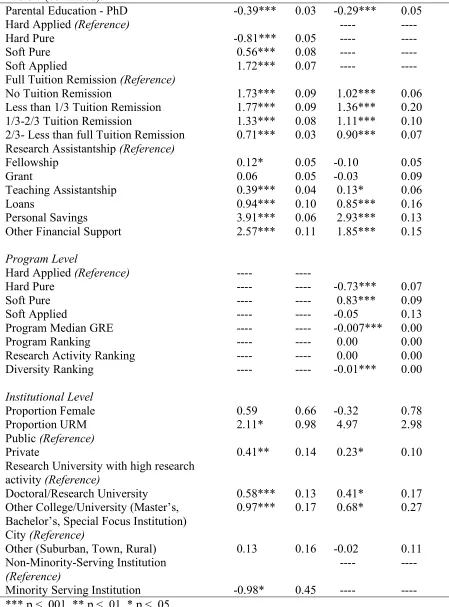
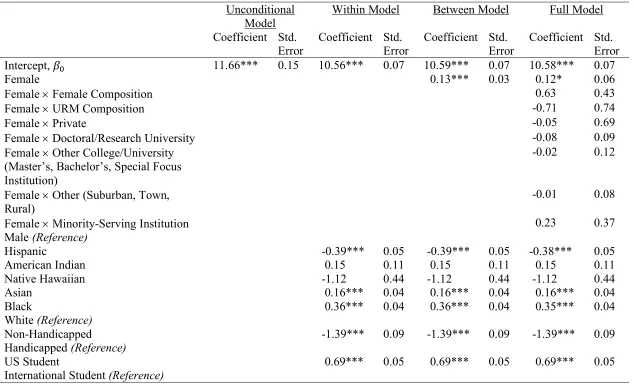
Analyzing data from 2002-2012 Survey of the Earned Doctorates, National Research Council, and Integrated Postsecondary Education Data System (IPEDS), my study constructed two hierarchical linear models (HLM), a two-level institution model and a three-level program model, to examine factors at the student level, departmental level, and institution level that affect doctoral time-to-degree. Cultural capital theory (Bourdieu, 1977), human capital theory (Becker, 1994), and the organizational impact model (Berger & Milem, 2000) are employed as the
Using Multilevel Modeling to Predict Doctoral Time-To-Degree
by Jingjing Zhang
A dissertation submitted to the Graduate Faculty of North Carolina State University
in partial fulfillment of the requirements for the degree of
Doctor of Philosophy
Educational Research and Policy Analysis
Raleigh, North Carolina 2019
APPROVED BY:
_______________________________ _______________________________
Dr. Audrey J. Jaeger Dr. Paul Umbach
Committee Co-Chair Committee Co-Chair
_______________________________ _______________________________
DEDICATION
This dissertation is dedicated to my parents, Zhonghua Jin and Weidong Zhang, for instilling the importance of education in my mind from an early age and for your unwavering support.
To my husband, Zhuo, for your understanding and appreciation of my doctoral journey and for believing in me when I had doubts about myself.
BIOGRAPHY
Jingjing “Kate” Zhang spent her childhood in Tianjin, China. She attended Tianjin Foreign Studies University where she received a Bachelor of Arts degree in English Culture and Literature. After graduating from college, she went to Virginia Polytechnic Institute and State University for her master’s degree in Education Leadership and Policy Analysis while working as a Graduate Hall Director. During her two years at Virginia Tech, her interest in higher education was strengthened by her coursework and daily interactions with undergraduate students and higher education practitioners.
Following her graduate studies, Kate went to North Carolina State University to further her education while working part-time as a Researcher and then Director of Research for the National Initiative for Leadership and Institutional Effectiveness (NILIE). After completing her coursework for a Doctorate of Philosophy in Educational Research and Policy Analysis, Kate started to work full-time as an Assistant Director in the Office of Strategic Planning and
Assessment at UNC Eshelman School of Pharmacy. After four years at UNC – Chapel Hill, Kate moved to Duke University where she serves as an Associate Director of Assessment in the Division of Student Affairs.
ACKNOWLEDGMENTS
This dissertation is impossible without the support from family, friends, peers, advisors, and mentors. These acknowledgements do not even come close to showing my gratitude towards everyone who has helped me along this journey.
• To my co-chair, Dr. Audrey Jaeger: you were the first person I met visiting NC State
after missing Recruitment Weekend. Your guidance and support started before I even made the decision to come to Raleigh for my PhD program. I have been so fortunate to have you as my advisor and mentor since the first day. I will forever be grateful for your support during my prolonged graduate school experience.
• To my co-chair, Dr. Paul Umbach: I thank you for your patience as I made sense of very
messy data. Your quantitative expertise helped me so much in this process. Thank you for being my methodologist.
• To my dissertation committee, Dr. Joy Gayles and Dr. Carrie Zelna: thank you for your
encouragement, understanding, and expertise. I am so grateful to your support.
• To my mentor, Dr. Tamara Young: Thank you for taking me under your wings. I very
much appreciate all the phone conversations, pep talks, and text messages that encouraged me to finish.
• To my PhD cohort and NC State colleagues, Sonja, Jeremy, Antonio, Kerri, Stephanie,
• To my colleagues at UNC and Duke: thank you for your patience for listening to different
chapters of my dissertation journey. I am greatly indebted to your advice and valuable perspectives.
• To my previous and current supervisors, Jacqui McLaughlin, Mary McClurg, and Sue
Wasiolek: juggling dissertation, work, and family would be impossible without your understanding and support. Thank you for all the kind words and supportive gestures. • To the National Science Foundation: thank you for supporting my research and sharing
TABLE OF CONTENTS
LIST OF TABLES ... viii
LIST OF FIGURES ... ix
CHAPTER ONE: INTRODUCTION ... 1
The Problem ... 4
Purpose Statement ... 9
Scope ... 11
Conceptual Framework ... 12
Research Questions ... 19
Significance of the Study ... 20
Organization of the Study ... 22
CHAPTER TWO: LITERATURE REVIEW ... 24
Conceptual Framework ... 25
Bourdieu’s cultural capital theory ... 26
Human capital theory ... 31
Organizational impact model ... 35
National Trends in Doctoral Education ... 39
Institutional factors ... 40
Disciplinary context ... 42
Students’ Background Characteristics ... 45
Citizenship ... 45
Race/ethnicity ... 46
Gender ... 49
Marital status ... 51
Disability status ... 53
Educational attainment of parents ... 55
Financial Resources ... 56
Time-to-Degree ... 59
Gaps in the Literature ... 61
CHAPTER THREE: METHODOLOGY ... 63
Data Sources ... 63
Measures ... 65
Dependent variable ... 65
Multilevel Modeling ... 69
A fully unconditional model ... 70
Conditional model for institution model ... 72
Multicollinearity Diagnostics ... 75
Missing Data and Data Screening ... 75
Summary of Chapter ... 77
CHAPTER FOUR: RESULTS ... 79
Descriptive Analyses ... 79
Student level variables ... 80
Institution level variables ... 84
Multilevel Modeling Results ... 85
Results ... 92
Summary ... 96
CHAPTER FIVE: DISCUSSION AND CONCLUSION ... 98
Research Question 1 ... 99
Research Question 2 ... 107
Research Question 3 ... 111
Research Question 4 ... 115
Limitations of the Study ... 116
Implications of the Study ... 117
Implications for theory ... 117
Implications for policy and practice ... 119
Implications for future study ... 121
REFERENCES ... 125
APPENDICES ... 173
Appendix A... 174
LIST OF TABLES
Table 1. Variables at the Student Level ... 67
Table 2. Variables at the Program Level ... 68
Table 3. Variables at the Institutional Level ... 69
Table 4. Student Level (Level-One) Variables - Descriptive Statistics ... 81
Table 5. Program Level Variables - Descriptive Statistics ... 84
Table 6. Institution Level Variables - Descriptive Statistics ... 85
Table 7. Full-Model Results from Institution Model and Program Model ... 90
Table 8. Two Level Model Predicting Doctoral Time-To-Degree ... 174
Table 9. Three Level Model Predicting Doctoral Time-To-Degree ... 177
LIST OF FIGURES
CHAPTER ONE: INTRODUCTION
The need to focus on graduate education has never been more important than now in this unstable socioeconomic climate. Lifelong engagement in learning and research is crucial for adults to thrive in an internationally connected and dynamic world. Graduate education prepares students for successful futures, not only as scholars in academia, but also as leaders in an array of industries across the United States and the world. Graduate education also contributes to the advancement of many career sectors, particularly in science and engineering fields. In a society facing international competition daily, the need for a highly educated and well-trained workforce cannot be overestimated.
While graduate deans and faculty are paying more attention to the time it takes a student to earn a graduate degree (which is referred to as the time-to-degree in this study), it still has taken doctoral students longer to complete their respective degrees than ever before (National Science Foundation [NSF], 2017a). In 1978, the average time-to-degree for doctoral students was 6.3 years. More specifically, the time-to-degree for doctoral students by field was 5.9 years in physical science, 5.8 years in engineering, 5.9 years in life sciences, 6.8 years in education, and 6.2 years in social science (Hoffer & Welch, 2006). In 2016, the average time-to-degree for recipients of doctorates increased to 7.7 years with the breakdown of time-to-degree being 6.1 years in physical sciences, 6.5 years in engineering, 6.7 years in life sciences, 11.7 years in education, and 9.3 years in humanities and arts (NSF, 2018).
why student financial support (e.g., fellowships, grants, assistantships, and student loans) remained one of the six key factors that affects student outcomes, which ultimately determine whether a student will complete a PhD program (Council of Graduate Schools, 2010a).
Moreover, while pursuing a PhD., doctoral students must find the means to cover the direct costs associated with completing the degree, as well as consider the forgone earnings and opportunity costs they were not able to obtain through work or other activities while they completed their degree. Given the increasing costs of higher education, it is likely that elongated time-to-degree serves not only as a barrier to the individuals pursuing the doctoral degree, but also to the doctoral granting institutions and greater society that have both made significant financial and intellectual investment in students.
doctorate than their Asian and White counterparts. In psychology and social sciences, on average, it takes an American Indian student 6.8 years and an African American student 6.7 years to obtain a doctoral degree, while it takes 6 years for a White student to complete the degree. In education, on average, African American students take half a year longer than Asian students (6.8 years versus 6 years) to obtain the doctorate (NSF, 2018). While explanations on the variances in time-to-degree based on race/ethnicity have been attributed to financial support and debt level (Kim & Otts, 2010), other factors contributing to the knowledge on the doctoral time-to-degree of various subpopulations remains largely unknown.
Expanding the research on time-to-degree beyond the undergraduate level has many challenges. The decentralization of doctoral education means that scholars and researchers must focus on specific institutions, departments, and/or academic disciplines (de Valero, 2001). As a result, much of the existing research (Perez, Robbins, Harris, & Montgomery, 2019; Ramirez, 2017; Williams, Brown Burnett, Carroll, & Harris, 2018) has been derived from exploratory qualitative studies with relatively small sample sizes. The findings, accordingly, are not representative of the larger doctoral student population. More complex studies attempting to examine the doctoral student population beyond the scope of particular institutions have been limited by outdated data sources (Bowen & Rudenstine, 1992; Ehrenberg & Mavros, 1995; Ehrenberg, Zuckerman, Groen, & Brucker, 2010). Due to the challenges of small sample size and limited access to large representative datasets, the ability to present a holistic picture of doctoral students and their education has been diminished.
associated with a lengthy time-to-degree, including explicit expenses and opportunity costs (Bair & Haworth, 2004; Bentley & Berger, 1998; Chang, 2011; Denecke & Slimowitz, 2004; de Valero, 2001). As a result, it is crucial for education researchers and policymakers to start examining ways to improve doctoral student retention and advancement (Main, 2018). The Problem
Doctoral education is recognized as the highest level of study in the United States and around the world. The American system of doctoral education is considered one of the best and attracts talent not only within the borders of the United States, but also from around the world. Despite its preeminent status, some facets of doctoral education need attention. Considering the median time-to-degree ranged from 5.7 years in physical and earth sciences to 7.1 years in humanities and arts in 2017 (NSF, 2017a), the elongated time-to-degree not only has increased cost per degree for doctoral granting institutions, especially public institutions that are already under severe financial constraints, but it has also increased opportunity costs and explicit expenses for individuals pursuing the doctoral degree. As a result, such extended time taken to earn the degree bring forth a series of questions still unanswered, despite scholars’ and
researchers’ previous attempts to study doctoral education.
Both faculty and graduate deans seeking financial support from federal and state
Ehrenberg & Mavros, 1995; Hoffer et al., 2006; Kim & Otts, 2010; Rapoport, 1998; Siegfriend & Stock, 2001). For example, Ehrenberg and Mavros (1995) examined doctoral completion in the fields of economics, English, mathematics, and physics at Cornell University from the period of 1962 to 1986. They found that doctoral students with teaching assistantships or fellowships were less likely to complete degrees in all examined disciplines. Furthermore, doctoral students with loans, self-support, or tuition waivers were less likely to successfully obtain a Doctor of Philosophy (PhD). More specifically, Ehrenberg and Mavros (1995) predicted that out of 100 individuals in physics who received fellowship support, 78 would complete their degrees within six years while only 32 students who received teaching assistantships were predicted to graduate within six years. On the other hand, out of 100 individuals in mathematics who received
research assistantships, all students were predicted to complete the program within six years, whereas only 25 students with other support (e.g., loans, self-support, or tuition waivers) would graduate within the same duration. In this particular study, controls for gender and academic capacities (as measured by GRE scores) were not related to degree completion. The study was comprehensive, but it overlooked the impact of race/ethnicity on completion and time-to-degree and only focused on one of the most elite institutions in the United States.
and minority students showed differences in degree completion during the development stage of their doctoral program. In addition, academic preparedness had no significant effect on degree completion beyond the transition stage. Lastly, students with research assistantships were more likely to complete all three stages of doctoral education in comparison to their counterparts with any other types of financial support. Ampaw and Jaeger (2011) pointed out that one of the main limitations to this study derived from the use of secondary data from a single institution, which had limited fields of study and limited generalizability to other types of institutions.
In a more recent study, Horta, Cattaneo, and Meoli (2018) investigated the effects of various types of PhD funding on scholars’ research performance both during the PhD program and beyond. Drawing a sample of 4095 PhDs in Portugal, Horta et al. (2018) found that doctoral students funded by PhD grants demonstrated stronger research productivity and visibility during and after the PhD than the ones who were self-funded. However, research productivity remained similar for research project grants recipients and those who did not receive research project grants. One of the limitations of this study was that the PhD sample used in the study was from Portugal, a country where the funding scheme differs from the United States. As a result, it is yet unclear whether similar conclusions can be drawn for doctoral recipients in the United States.
study for women was 10.5 years, whereas it took men 9.4 years to complete. In terms of race/ethnicity, only 11.9% of all doctoral degrees were awarded to racial minority students in 2005. This is concerning because underrepresented minorities constitute 28% of the American population (NSF, 2009). Asians had the lowest average time-to-degree in 2005 at 8.8 years, followed by Hispanics (10.3 years), Whites (10.4 years), American Indians (12 years), and African Americans (12.7 years; Hoffer et al., 2006). Not only did it take racially
underrepresented doctoral students longer to obtain their degree, but research suggested that African American, Hispanic, and American Indian doctoral students were more likely to have significantly higher debt than Asian and White students (Hoffer et al., 2006). As a result, from a human capital perspective, longer time-to-degree decreases the productivity and value achieved per degree, as well as the return on the educational investment. While shedding important light on this issue, most studies and reports on doctoral time-to-degree (Council of Graduate Schools, 2010b; NSF, 2017b) have largely been based on simple descriptive statistics and have examined a narrow set of predictors. Reports provided by Council of Graduate Schools and NSF have rarely discussed how student background information and types of financial resources could affect time-to-degree attainment. Additionally, they have often ignored the effects at the
institutional level on student time-to-degree. Controls for socioeconomic status (SES), financial support, racial/ethnic, gender, and institution differences could more accurately assure the prediction of time-to-degree among doctoral students.
et al., 2017; Le & Gardner, 2010; Weidman et al., 2001). For instance, Gardner (2010b)
explored how disciplinary context and culture influenced doctoral students’ socialization process at one institution by interviewing 60 doctoral students from six disciplines. She found that support from peers, faculty, and individuals outside of the department were crucial in facilitating a positive experience for doctoral students. In addition, self-direction became an emerging theme of the graduate socialization process. Ambiguity in graduate school guidelines, regulations, and expectations also shaped doctoral students’ experiences (Gardner, 2010b). Another qualitative study explored the experiences of Asian international doctoral students in STEM disciplines at a research-extensive institution (Le & Gardner, 2010). The study addressed how gender, nationality, age, academic disciplines, and marital status shaped students’
experiences. After interviewing nine international participants, Le and Gardner (2010) found that institutional context, support, family, and the academic department played a significant role in the daily lives of international doctoral students. Further, Asian international doctoral students in STEM fields were isolated from their American peers and faculty. They also faced a series of issues such as lack of funding, limited choice of advisor, and a lack of resources (Le & Gardner, 2010). In another study, Felder et al. (2014) interviewed 11 African American doctorate
recipients in education to explore how race intersected with faculty-student interactions and the ways in which these interactions facilitated or hindered doctoral student socialization. The researchers found that race influenced doctoral student socialization through “student-faculty relationships, perception of faculty behavior, and the presence of faculty diversity” (Felder et al., 2014, p. 34).
disciplinary context, and institutional factors and how those factors may have affected doctoral time-to-degree. Hence, an analysis of differences based on demographic characteristics such as gender, race, age, enrollment status, and educational background, as well as program context and institutional characteristics, is needed to better understand the doctoral student population and time-to-degree issues (Felder et al., 2014; Gopaul, 2016). More specifically, most of the current studies have been largely based on exploratory, qualitative frameworks making them unable to address cross-level interrelationships amongst multiple factors that may be associated with doctoral time-to-degree.
While the attention on doctoral education has mainly been on completion and less on time-to-degree, the concepts are not mutually exclusive, as time-to-degree is negatively associated with degree completion; therefore, factors that impact completion are likely to be important predictors of time-to-degree as well. As a result, this study is informed by scholarly work on persistence and degree attainment. To contribute to the conversation on factors affecting time-to-degree of doctoral students, this study examines the effect of student
characteristics, departmental context, and institutional characteristics on time-to-degree. This study particularly focuses on disparities on time-to-degree based on gender, race, and parental educational background (i.e., first-generation students).
Purpose Statement
Beyond the research conducted on persistence, limited studies have focused on doctoral time-to-degree, particularly on underrepresented population, such as female in STEM
Triventi, 2017; Gittings, Bergman, Shuck, & Rose, 2018; Golde, 1998; Horta et al., 2018; Lovitts, 2001; Nelson, 2018; Nerad & Cerny, 1993; Perrucci & Hu, 1995; Schroeder & Mynatt, 1993; Weidman et al., 2001; Zhou & Okahana, 2019), but studies based upon quantitative data have been slow to emerge. Within the limited research on doctoral time-to-degree, rarely has literature examined factors beyond the student level, nor have researchers focused on
underrepresented doctoral subpopulations. Few studies have examined how potentially critical facets of student background, fields of study, and departmental and institutional components may interact to influence time-to-degree (Abedi & Benkin, 1987; Zhou & Okahana, 2019). Further, more research is needed to examine if institutional factors play a role in promoting or inhibiting doctoral degree attainment (Ampaw & Jaeger, 2011). Hence, a study that examines and
incorporates these various factors is necessary to fully understand doctoral time-to-degree. The purpose of this study was to present two models that predict time-to-degree among doctoral students based on individual characteristics, doctoral program components, and
institutional affiliations. More specifically, this study used multilevel modeling to examine how doctoral students’ personal backgrounds (i.e., gender, race/ethnicity, citizenship, disability status, marital status, parental education background); amount of tuition remission and types of
financial support; department and program components (i.e., academic discipline, program ranking, research activity ranking, diversity ranking, median program GRE); and institutional contexts (i.e., institution type, Carnegie Classification, degree of urbanization) function individually, and interact collectively, to affect doctoral time-to-degree. The study also
Scope
I used multilevel modeling to examine factors associated with doctoral time-to-degree at the student, program, and institutional levels. The multilevel modeling approach has several advantages over a conventional statistical analysis. This approach offers more reliable estimates in the case of unbalanced, nested data structure and considers the effects of students nested within programs, and programs nested within institutions (Raudenbush & Bryk, 2002). In addition, multilevel modeling allows the researcher to draw conclusions about correlations between the dependent variables, especially the extent to which correlations depend on the student level and on the program level (Snijders & Bosker, 2000).
Three primary data sources were used for the purpose of this study. First, student-level (level one) data is drawn from the 2002-2012 Survey of the Earned Doctorates, a large,
nationally representative data set sponsored by the NSF. The SED includes data on
characteristics of new doctoral recipients from all accredited institutions in the United States. The graduate school at each institution, as well as a data collection contractor, work closely to ensure all new doctorate recipients complete the survey. The SED collects data on a variety of areas, including demographic characteristics, academic background, financial support, and debt level. With high response rates and comprehensive questions, the SED data depicts an accurate picture of the trends and characteristics of the doctorate recipients in the United States.
students for different fields of study. This also became an indirect measure of gender climate and racial/ethnic climate. If the program graduates are overrepresented or underrepresented by certain subpopulations, it may be associated with time-to-degree for students of certain
subgroups. Hence, this study examined whether program demography based on gender and race/ethnicity influence doctoral time-to-degree.
Program-level (level two) data derives from the National Research Council’s (NRC) report for the National Academies of Science, Engineering, and Medicine entitled “A Data-Base Assessment of Research-Doctorate Programs in the United States.” This report gathers
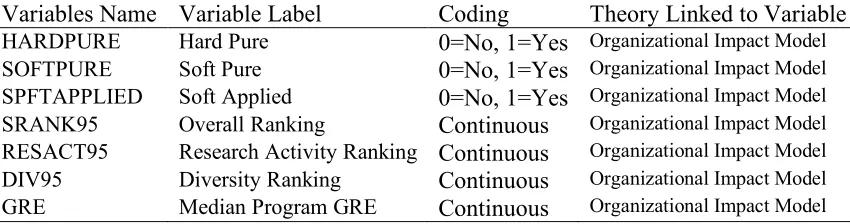
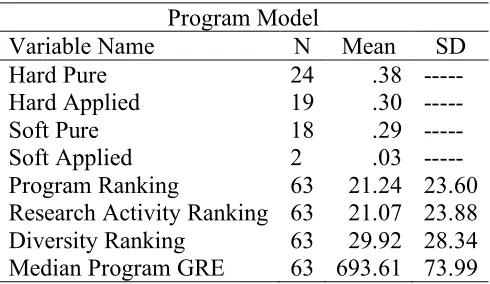
information on program rankings. The data set includes measures of program characteristics, such as overall program ranking, research activity ranking, diversity ranking, and median program GRE score.
Institutional-level (level three) data is drawn from the National Center for Education Statistics (NCES), which produces a series of interrelated surveys called the Integrated
Postsecondary Education Data System (IPEDS). Beyond student background information, the SED includes very few variables that describe institution type. IPEDS collects data on
institutional characteristics, such as minority-serving institution indicators and degree of urbanization. In addition, two aggregated variables estimating female proportion and underrepresented minority student proportion are also included at institution level. Conceptual Framework
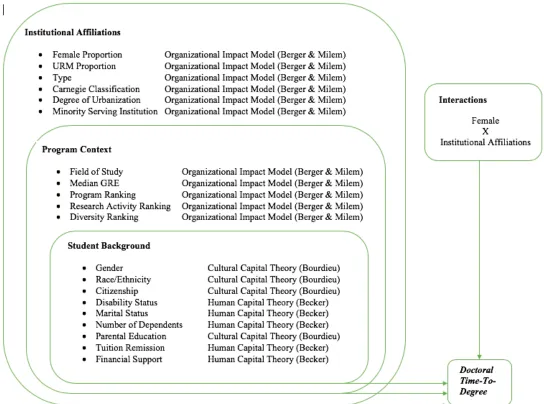
The current version of the researcher’s map of the territory being investigated ... and it explains, either graphically or in narrative form, the main things to be studied—the key factors, concepts, or variables—and the presumed relationships among them. (p. 18) Bourdieu’s (1977) cultural capital theory, Becker’s (1962;1980) human capital theory, and Berger and Milem’s (2000) organizational impact model were used collectively as the conceptual framework of this study.
Bourdieu’s (1977) cultural capital theory has been widely used in understanding power in social structures. He suggested that possession of cultural capital varies differently in social classes, with dominant classes possessing more cultural capital and underserved classes possessing less. Cultural capital often includes the knowledge base, skills, expectations, and preferences parents and family upbringings share with their children (Carter, 2003; Lareau & Weininger, 2003). These non-merit-based factors further affect how students access educational opportunities and how their personal background (e.g., gender, race/ethnicity, and parental educational background) may prevent students from furthering their education. Bourdieu (1977) suggested that the educational system became a means to legitimize and honor certain inherited cultural capitol, rather than function as a system to reduce the inequities between people, as it is closely associated with upholding the ideological dominance of upper classes.
Bourdieu’s (1977) cultural capital theory has been used as a theoretical framework for investigations of college choice and student success. Using longitudinal data on postsecondary institutions, Walpole (2003) concluded that students’ SES was closely associated with their college experience. College students from high socioeconomic backgrounds got more involved in campus activities, earned higher GPAs, studied more hours, and worked less than their counterparts from lower socioeconomic backgrounds. Walpole (2003) suggested that higher education institutions tend to value and reward students who possess high-status cultural capital and are more likely to overlook students with low-status cultural capital, which leaves these students at risk for not being successful. Another study used cultural capital theory as the
guiding theoretical framework examining students’ decisions to enroll in graduate school. Using longitudinal data from the 1993 National Postsecondary Student Aid Survey, Perna (2004) found that while higher shares of women enroll in programs at the sub-master’s and master’s level than men, women were less likely to enroll in doctoral programs than men. In this study, sample size for doctoral degree enrollment was too small to be included in further analysis; however, the odds of enrolling in either sub-master’s or master’s programs became comparable for women and men when measures of cultural capital were taken into account. While Bourdieu’s (1977) cultural capital theory has been widely used to study students’ experiences and college choice (Aschaffenberg & Mass, 1997; Carter, 2003; Harvey, 2019; Imdorf, Koomen, Murdoch, & Guegnard, 2017; LePeau, Snipes, Morgan, & Zimmerman, 2018; McDonough, 1997; O’Shea, 2016; Padgett, Johnson, & Pascarella, 2012; Steelman & Powell, 1991), it has been rarely applied for investigations of doctoral education (Gopaul, 2016; Vasil & McCall, 2018),
In addition to cultural capital theory, this study also used human capital theory as a theoretical framework. Human capital theory has been used to study the effects of financial and non-financial factors on students’ educational achievement. Becker (1972) described all types of education as investments in human capital which lead to acquisition in skills and knowledge (Becker, 1996; Wolf, 2005). Rosen (1999) suggested that human capital is an investment “that people make in themselves to increase their productivity” (p. 381). The underlying assumption of human capital theory is that people’s choices are based upon the evaluation and decision to invest in education, training, health, and nutrition to enhance their productive capacities.
Human capital theory can be used to explain how different types of financial support affect time-to-degree. An assumption of human capital theory is that students have full and equal access to the credit market and the decision to pursue further education is to maximize their productive capability and future income. However, in reality, not everyone has the same access to credit due to their personal and academic backgrounds. For instance, students from lower socioeconomic backgrounds may forego the opportunity to pursue a doctoral degree without proper financial support. As a result, for underrepresented populations with fewer resources, different types of financial support may impact their decision to pursue, and time spent to complete, a degree.
Drawing from human capital theory (Becker, 1962; 1980), economists have primarily focused on how financial factors affect undergraduate students, especially students’ choice to enter higher education and their choice of institution. Economists have found that human capital is the main reason that individuals choose to pursue higher education (Donald, Baruch, &
Paez & Teelken, 2016; Rao & Datta, 1985); however, less attention has been paid to how human capital theory could affect persistence and time-to-degree, especially at the doctoral level.
The third contributor to the conceptual framework is the organizational impact model (Berger & Milem, 2000) and this model has been used to examine the impact of the institutional environment on students’ behavior and experiences. The model encompasses studies of
organizational behavior of individuals and groups, culture, and climate. Existing literature has mainly focused on issues of organizational behavior at the undergraduate level (Berger & Milem, 1999, 2000; Bolman & Deal, 2008; Chory & Offstein, 2017; Thomas, 2018; Trolian, 2019) and institutional characteristics (Kuh, Kinzie, Whitt, Schuh, & Associates, 2005; Pascarella & Terenzini, 2005; Titus, 2004); yet, researchers have largely ignored the impact of organizational climate on doctoral students’ experiences and outcomes. Organizational climate is a function of “a primary emphasis on common views among organizational members, a focus on current patterns of perceptions and behaviors by organizational members, and the malleable, transitory nature of an organization’s climate” (Berger & Milem, 2000, p. 275). In this study, I built a model that used program climate and gender, race/ethnicity, and citizenship as predictors to examine the respective effects on time-to-degree.
of the reasons that hindered students in their degree completion was incompatible faculty-student relationships, especially within science departments. Golde (2005) remarked that the
interactions between advisors and advisees were lacking in quality, further leading to a lack of intellectual support for doctoral students. In addition, students dropped out as a result of structural isolation. Within the history doctoral program, Asian and African American students were disproportionally represented in the sample and these students lacked the opportunity to find an “intellectual and social community available to them” (Golde, 2005, p. 693). Another study conducted by Gardner (2010b) confirmed Golde’s (2005) findings. After interviewing 60 doctoral students from six disciplines at an institution, Gardner (2010b) found that engineering and mathematics departments had the lowest completion rates. The highest percentages of students within these disciplines were international students who often encountered issues related to social integration, language acquisition, and developing relationships with peers. The nature of qualitative studies limited the ability of researchers to investigate doctoral students from various disciplines at multiple institutions. This study examined the effect of disciplinary structure on doctoral time-to-degree at different institutions.
This study involves an investigation of the relationships among different levels
There are three core sets of factors that may contribute to doctoral student time-to-degree: student traits, department context, and institutional affiliation. The first component of the
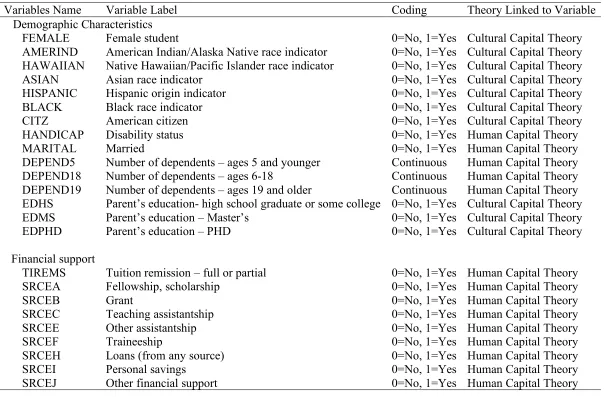
conceptual framework is student traits, which is comprised of doctoral student demographic factors and academic and financial backgrounds, including gender, race/ethnicity, citizenship, disability status, marital status, number of dependents at different ages, parental educational background, amount of tuition remission, and sources of financial support. The second factor is a collection of departmental or program characteristics that may be associated with time-to-degree, including field of study, academic ranking of the program, research activity ranking, diversity ranking, and median program GRE. The last factor is the institutional characteristics, including female proportion, underrepresented minority proportion, institution type, Carnegie Classification, degree of urbanization, and minority-serving institution indicator. In addition, the model also investigated the interaction effects on gender (gender and female proportion at the institutional level, gender and underrepresented minority proportion at the institutional level, gender and institution type, gender and institution Carnegie Classification, gender and degree of urbanization, gender and minority-serving institution indicator). The main objective of the conceptual framework was to provide a guide that assisted in examining the relationships among a set of variables that may independently or collectively impact doctoral time-to-degree.
Including all key variables in the same model allowed for a thorough investigation of the single level and multilevel relationships and acknowledged the relationships variables may exert on one another.
Research Questions
time-to-degree and whether those effects are moderated by student gender. Multilevel modeling was used to estimate both the main and interaction effects associated with the study’s research questions. Those research questions are:
1. To what extent do student traits of gender, race, ethnicity, or citizenship, disability status, marital status, number of dependents, parents’ educational backgrounds, amount of tuition remission and types of financial support received predict doctoral time-to-degree?
2. Once controlling for student traits, to what extent does departmental context of field of study, program ranking, research activity ranking, diversity ranking, and median program GRE predict doctoral time-to-degree?
3. Once controlling for student traits and departmental context, to what extent do institutional characteristics of type, Carnegie Classification, degree of
urbanization, and minority-serving institution indicator predict doctoral time-to-degree?
4. To what extent do the relationships between institutional context and doctoral time-to-degree vary by gender?
Significance of the Study
contribute to doctoral education in practice, research, and policy. The knowledge provides graduate deans and higher education administrators with data on several potential differences between doctoral students who take longer or less time to obtain a degree. Further, the results provide evidence of whether student traits such as gender, race/ethnicity, citizenship, and more, predict doctoral time-to-degree, which allow us to further understand the needs of
subpopulations and to develop programs that meet their needs. Additionally, the study highlights the role financial support plays for time-to-degree. Graduate program directors and faculty members may be able to use the results to change policies and practices related to scholarships, fellowships, and assistantships. Institutional planning officers and enrollment management officers at graduate schools may use the results to review institutional policies concerning
doctoral student retention and doctoral program outcomes. This study also examined differences on time-to-degree that exist between students of different subpopulations. Practitioners may use the evidence derived from this study to develop policies that facilitate doctoral student
integration. Those efforts may include academic support, program involvement, financial support, and mentorship, among other options.
Studies using singular theories could compartmentalize our understandings on certain phenomenon. For instance, to date, most of the existing literature on doctoral student success has heavily relied on Tinto’s (1993) theory of doctoral persistence, which discussed three stages (transition, candidacy, and doctoral completion) of graduate student persistence. However, critiques on the framework suggested that Tinto overlooked the importance of racial
backgrounds on doctoral students’ experiences (Kuh & Love, 2000; Tierney, 1999).
Furthermore, as St. John, Cabrera, Nora, and Asker (2000) suggested, higher education scholars have largely ignored the impact of economic aspects on students’ experiences and have mainly focused on students’ social and academic experiences. In addition, Guiffrida (2006) pointed out the importance of maintaining the cultural and familial connections to thrive in colleges and universities, which was missing in Tinto’s (1993) theory. On the other hand, studies that used only an economic lens to examine effects of financial support on completion or time-to-degree often overlooked the personal and academic measures. To account for these concerns, this study sought to integrate cultural capital theory with the human capital theory framework drawn from the field of microeconomics to examine the effects of financial and non-financial factors on doctoral student time-to-degree. The use of multidisciplinary theoretical frameworks allowed me to examine the issue from different perspectives and extend our knowledge on factors
contributing to time-to-degree for doctoral students. Organization of the Study
This dissertation is organized into five chapters. Chapter 1 provided a broad introduction to the study and addresses the need to further examine student and institutional level factors that affect doctoral time-to-degree. This chapter also introduced the research questions and
thorough manner, paying particular attention to studies that have focused on factors affecting doctoral time-to-degree and degree completion. A wide variety of literature is examined and critiqued to provide a comprehensive rationale for this further examination of time to doctoral degree.
Chapter 3 outlines the methodology being used to conduct this research. Specifically, I provide explanations relating to the data source and how the dependent variable and independent variables are measured. Further, I discuss the different models being used in multilevel
modeling. This chapter also discusses how missing data is handled.
Chapter 4 discusses results from different models, including the two-level fixed model, two-level model with gender as a random slope, and the three-level model. Specifically, I look at variables that significantly impacted doctoral time-to-degree and make meanings of them. I also answer all research questions raised in Chapter 1.
CHAPTER TWO: LITERATURE REVIEW
The goal of this study was to explore the extent to which doctoral students’ personal characteristics and academic backgrounds, as well as institutional and program contexts, affect their time-to-degree. While the sole focus of this study was on doctoral time-to-degree, the study was also informed by literature on doctoral persistence and completion. Studies on doctoral education have suggested that a number of factors contribute to student engagement and the time spent in earning a doctorate (Barnes, 2010; Groenvynck, Vandevelde, & Van Rossem, 2013; Herzig, 2002; Wollast et al., 2018). Due to methodological challenges, especially when estimating effects of various factors at the student level, departmental level, and institutional level, few studies have focused on creating a comprehensive quantitative model that accurately predicts time-to-degree. In the attempt to broaden the knowledge on doctoral education, this study employed a multilevel modeling technique to examine various factors associated with doctoral time-to-degree.
A meta-literature review investigated prevalent issues in doctoral education and the factors that contribute to doctoral student attrition and persistence (Bair & Haworth, 2004). A review of 118 qualitative and quantitative studies suggested that time-to-degree and doctoral degree completion are negatively correlated. That is, the longer someone remains in the
program, the less likely it is that he or she will successfully obtain a doctorate degree. Therefore, even though the primary focus of the study was on time-to-degree, it was also crucial to review existing literature on degree completion. As a result, the purpose of this chapter is to present the most salient literature available on doctoral time-to-degree and degree completion. In areas that lack a breadth of empirical studies, the best available knowledge is presented. The literature review begins with an introduction of the conceptual framework that guided the proposed study and ends with an examination of the factors associated with doctoral students’ progress toward degree completion.
Conceptual Framework
explain what the data regarding doctoral time-to-degree reveals, especially the inequities amongst different subpopulations.
Meanwhile, an increasing number of scholars have started using economic perspectives, more specifically, human capital theory, to examine time-to-degree and degree completion (Bartholomae et al., 2019; Becker, 1962, 1980; Chen, 2008). Additionally, the organizational impact model (Berger & Milem, 2000) focuses on organizational characteristics and peer group characteristics and posits that external environments also shape student outcomes. In this study, organizational characteristics were measured by institution size, type, minority-serving
institution indicator, and degree of urbanization; peer group characteristics were measured by racial/ethnic, gender, and citizenship representation of a program. The conceptual framework for this study is based on a combination of the three models. The sections below describe the three models developed by Bourdieu (1977), Becker (1994), and Berger and Milem (2000).
Bourdieu’s cultural capital theory. Cultural capital theory (Bourdieu, 1977) has been used to study social issues in education, language, and science. The theory has been widely applied in sociological studies exploring how social background affects students’ educational achievement and occupational levels. Cultural capital refers to the knowledge, skills, and attitudes valued by society and is represented by different forms of cultural knowledge people possess. In other words, some people are likely to have more cultural capital as a result of their SES than others. Cultural capital theory suggests that the educational system in its entirety is a product of the middle and upper class and only serves people from the middle and upper classes, because the system has been designed to uphold the values, behavior, and language of
understand the language being used to navigate the system. Conversely, students from lower SES backgrounds are more likely to struggle in the educational system because they have not been prepared to understand the system and their families are not a part of the culture of high SES. Bourdieu (1977) pointed out that these inequities existed before and after students enter the educational system and are fundamental to social stratification.
Different classes and class fractions are engaged in a specifically symbolic struggle to impose the definition of the social world most in conformity with their interests. The
field of ideological positions reproduces in transfigured form the field of social positions. They may carry on this struggle either directly in the symbolic conflicts of everyday life or indirectly through the struggle waged by the specialists in symbolic production
(full-time producers), in which the object at stake is the monopoly of legitimate symbolic violence – that is to say, the power to impose (and even indeed to inculcate) instruments
of knowledge and expression of social reality (taxonomies), which are arbitrary (but unrecognized as such). (Bourdieu, 1977, p. 115)
In addition to cultural capital, habitus and field collectively work together to influence
practices. Bourdieu (1977) described habitus as a “durably installed principle of regulated
improvisations … which produces practices which tend to reproduce the regularities immanent in
the objective conditions of the production of their generative principle” (p. 78). That is, individuals’ attitudes, behaviors, expectations, and aspirations are heavily influenced by other members of the same social group. Since perspectives of members from different social groups
are largely different, people from different social classes have distinct habitus. The notion of habitus can explain how individuals internalize the objective of their chances at success by
A doctorate degree is a terminal degree, thereby granting it esteemed status as valuable cultural and social capital. Women, racial minorities, and first-generation students, given
Bourdieu’s idea on cultural reproduction, continue to be underrepresented in certain, if not all, academic disciplines. His theory says that social reproduction of education reinforces inequity, rather than overcomes it, because the educational system only serves the interests of dominant
classes. Added to the issue is the expectation that graduate students acquire certain affective skills and attitudes to successfully navigate in their respective programs. Habitus, displayed by
ways of knowing, SES background, and beliefs, affects whether doctoral students possess certain capital prior to their admission into doctoral programs. As a result, women, racial minorities, and first-generation students may not be prepared or equipped with certain cultural capital that
will increase the likelihood of their success as measured by time to degree and completion rates. One of the main goals of this study was to examine if time-to-degree differs on the
subpopulations mentioned previously as a result of the lack of certain cultural capital. Cultural capital theory has been used to guide studies on how the American education system may reinforce rather than aid in overcoming social inequities (Aschaffenburg & Mass,
1997; Dumais, 2002; Gustafsson, Nilsen, & Hansen, 2018; Roscigno & Ainsworth-Darnell, 1999; Scherer & Siddiq, 2019; Sullivan, 2001; Tramonte & Williams, 2010). Using data from
the Surveys of Public Participation in the Arts from 1982, 1985, and 1992, Aschaffenburg and Mass (1997) investigated the impact of cultural capital on student academic achievement, concluding that cultural capital played a significant role in predicting school success.
Additionally, they found a significant interaction between parental cultural capital and their children attending college. Students whose parents had a college education were more likely to
Mass (1997) concluded that their study confirmed Bourdieu’s cultural capital theory that cultural capital from both parents and students affects educational attainment. While this study is one of
the first of few studies that have examined how parents’ cultural capital could affect children’s educational achievement in the United States, the limitation of the data set prevented the researchers from further investigating the extent to which parental educational achievement
facilitated children’s college graduation or graduate school choices.
Another study conducted by Roscigno and Ainsworth-Darnell (1999) examined the
relationship between racial inequity in educational achievement and family background. Drawing data from the National Education Longitudinal Survey, the researchers found that parental educational background and family SES were significant predictors of their children’s
educational achievement. The authors further concluded that family SES background varied significantly by racial/ethnic groups and the gap that existed in educational attainment was a
function of the differences in cultural capital and family educational resources (Roscigno & Ainsworth-Darnell, 1999).
Research conducted in European countries also suggested similar results. Guided by
Bourdieu’s (1977) cultural capital theory, Sullivan (2001) investigated how the distribution of cultural capital among different social classes affects children’s educational achievement. After
surveying 557 pupils in year 11 (16 years old) at four schools, Sullivan (2001) found that parents’ social class and educational background were strongly associated with their cultural capital. Parents’ cultural capital was found to be the most significant factor associated with
Another study guided by Bourdieu’s (1977) theory confirmed that cultural capital significantly correlates with school performance and college choice (Kosutic, 2017). After
analyzing data from 534 high school seniors in Croatia, the scholar confirmed that the material dimension of cultural capital was significantly associated with school achievement.
Additionally, the analysis confirmed that students who embodied more material cultural capital
were more likely to enroll in universities. The study validated Bourdieu’s theory that students from privileged social backgrounds were more likely to perform better academically and tended
to have higher education aspirations.
A more recent study also confirmed the significance of cultural capital measured by SES on student performance (Scherer & Siddiq, 2019). The researchers conducted a meta-analysis to
examine the relationship between students’ SES and their performance on information and communication technology (ICT) literacy. Using three-level random-effects modeling, they
found a significant and positive correlation, indicating that students coming from more affluent families perform better in ICT tasks than their peers from lower socioeconomic families. While ICT literacy is relatively new in K-12 education, the significance of SES on ICT literacy testifies
that inequities are prevalent in education due to the variation in cultural capital.
While existing literature supported Bourdieu’s (1977) theory that family SES and
parental educational level are highly associated with students’ educational achievement, the research has been limited to high school and undergraduate levels. Scholars have not yet examined whether, and to what extent, parental educational level and family SES plays a role in
students’ educational attainment at the doctoral level. More specifically, researchers who focus on doctoral student success are not yet certain if those factors are associated with doctoral
frameworks to examine whether differences exist on doctoral time-to-degree based on gender, race/ethnicity, and parental educational background (measured by data on first-generation
student status).
Human capital theory. Despite its relevance to education, the use of human capital theory to investigate college student persistence and degree completion has been scarce (Chen, 2008). The majority of the research in the higher education realm using human capital theory has focused on using financial factors, such as financial aid, to explain students’ college-going behavior at both the undergraduate and graduate level (Caucutt & Kumar, 2003; Cordoba & Ripoll, 2012; Hansen & Weisbrod, 2003; Ionescu, 2009; Wegmann, Cunningham, & Merisotis, 2003). Drawn from the field of microeconomics, human capital refers to knowledge, talents, skills, and understandings possessed by an individual or society, typically acquired through training and education, that can be contributed to the workforce (Becker, 1994; Davenport, 1999; Paulsen, 2000). Becker (1994) argued:
Schooling, a computer training course, expenditures on medical care, and lectures on the virtues of punctuality and honesty are capital too in the sense that they improve health, raise earnings, and add to a person’s appreciation of literature over much of his or her lifetime. (p. 15)
their stock of human capital. According to Becker (1994), students’ investment in human capital will lead to higher productivity upon graduation and will be rewarded by higher future earnings.
Most scholars have utilized human capital theory to study the effect of financial factors on retention and degree completion at the undergraduate level and they have used the theory to investigate the impact of financial components such as tuition, grants, loans, and work-study on college attendance and degree completion (Bartholomae et al., 2019; Becker, 1992; Chen & Desjardins, 2010; Dwyer, McCloud, & Hodson, 2012; Heller, 1999; Hilmer, 1998; Lips, 2011; Miller, 2018; Narayan, 2005; Paulsen & St. John, 2002; Shin & Milton, 2006; Simkovic, 2013). Most researchers have found that financial aid was positively related to student persistence and degree attainment. However, in recent years, an increasing number of scholars have suggested there is no statistically significant relationships between monetary aid and student degree
attainment (Herzog, 2008; St. John, Paulsen, & Carter, 2005). By examining 5,000 freshmen at a public university using propensity score matching, Herzog (2008) argued that the effect of
At the graduate level, research has contributed to understanding the effect of various types of financial support on doctoral degree completion (Ampaw & Jaeger, 2011; Ehrenberg & Mavros, 1995; Hoffer et al., 2006; Kim & Otts, 2010; Mendoza, Villarreal III, & Gunderson, 2014; Pollon, Herbert, Chahine, & Falenchuk, 2013; Siegfried & Stock, 2000). Hoffer et al. (2006) found that 71% of doctorate recipients relied on financial support, including teaching assistantships, research assistantships, and fellowships, to complete the degree. However, the effects of different types of financial support on doctoral student outcomes have been conflicting. Previous research suggested that students with research assistantships completed their programs faster than students with other types of support (Ampaw & Jaeger, 2011; Siegfried & Stock, 2000). On the other hand, students holding teaching assistantships and fellowships had a significant and positive effect on doctoral student retention (Mendoza et al., 2014). It is still unclear whether the effect of financial support on doctoral time-to-degree differs within and across racial groups. The current study analyzed data that assists in answering this question.
Despite its applicability to higher education, human capital theory has received some criticism. Benson (1978) stated, “human capital theory rests on two basic assumptions: Education helps develop skills of work, that is, improves the capacity of the worker to be productive; and earned income reflects marginal productivities of different categories of workers” (p. 101). Benson (1978) suggested that the value of education as a means to enhance productivity and life quality is likely to “depend upon the production mix—what is produced and the capital provided for that production” (p. 72). He further argued:
differentials reflect, not differences in performance, but the simple regard that employers hold for educational attainments per se. (Benson, 1978, p. 94)
As a result, students’ time-to-degree in a doctoral program may not only be influenced by economic factors, but also by their decisions on how to improve their productive capacities. To account for these limitations, my model not only includes financial factors that may impact time-to-degree, but also analyzes a series of student traits, as well as department and institutional characteristics informed by doctoral persistence theory and the organizational impact model, to predict time-to-degree.
Another study determined that students do not face the same amount of costs attending college (Goldrick-Rab, Harris, & Trostel, 2009). Students from higher socioeconomic families are likely to face lower costs, as their parents may provide them with monetary and
Regardless of its limitations, human capital theory has its merits. It is a relatively new approach to use this theory to serve as an overarching framework investigating how different factors interact collectively, and act individually, to impact doctoral time-to-degree. Although researchers have started using economic lenses to examine student persistence at the
undergraduate level, research that applies this theory at the doctoral level has been slow to emerge. Additionally, human capital theory perceives education as an investment in which students evaluate future monetary and non-monetary returns acquired from a PhD degree against the costs associated with enrolling in a doctoral program. In this sense, the time students invest in completing a doctoral program in the hope of enhancing their own productivity and human capital are also influenced by economic factors, among other factors. The study provides a model that can explain students’ decision on time-to-degree from an economic lens.
Organizational impact model. Berger and Milem’s (2000) model has been used to
Structural demographic features are critical in shaping the student college-going process including choice, admission, and enrollment (Berger & Milem, 2000). For instance, Berger and Milem (2000) posited that institutional selectivity positively influenced academic achievement and degree completion. In addition, they found that size was an important factor impacting retention and degree completion, arguing that students at larger institutions might not be fully involved in activities that provide support for disadvantaged students. However, it can also be argued that larger institutions may have more resources to support student academic and social integration, which would further promote time-to-degree and degree completion. Thus,
additional exploration is needed to investigate the effect of institution size and type on time-to-degree, especially at the doctoral level.
Drawn from organizational theory, organizational behavior can take on one or more of the five dimensions, including bureaucratic, political, collegial, symbolic, and systemic
(Birnbaum, 1988; Bolman & Deal, 2008). These dimensions, Berger and Milem (2000) argued, shaped peer group characteristics and student experiences. Peer group characteristics include psychological, behavioral, and structural characteristics of students at an institution. Berger and Milem (2000) hypothesized that students’ experiences in, and perceptions of, the institutional environment, as demonstrated by their behaviors in academic, social, and functional realms, collectively impact student outcomes.
Students Survey, Perna (1998) found a positive relationship between institutional selectivity and degree attainment. Control (private versus public) has also been found to positively affect student persistence and degree completion (Astin & Oseguera, 2005; Oseguera, 2005; Titus, 2006). Pike and Graunke (2015) used panel data to examine the effects of institutional characteristics on one-year retention and confirmed that the size of an institution measured by total student enrollment had a significant and positive effect on retention, while the proportion of part-time students negatively impacted retention rates.
Berger and Milem’s (2000) model of peer group characteristics has been rarely used to examine time-to-degree. Titus (2004) used an aggregate variable to measure institutional commitment, which derived from individual students’ measures. He found that aggregate institutional commitment positively affected four-year retention rates. Another study conducted by Oseguera and Rhee (2009) used multilevel modeling to examine retention climate. They included an aggregated variable measuring student academic preparation and found that
academic preparation had a positive impact on six-year retention rates. Pike and Graunke (2015) created fixed and random effect models to examine retention and confirmed that the proportion of students receiving federal grants negatively correlated with retention, while the proportion of underrepresented minority students had no effects on retention rates.
given year. This study sought to examine the impact of organizational factors, particularly program demography, discipline, and rankings on doctoral students’ time-to-degree.
While all of the existing literature using an organizational impact model has focused on persistence and degree completion at the undergraduate level, it can be argued that graduate students would follow a similar pattern. As with undergraduate students, the academic and social environment doctoral students are exposed to (beyond other personal background factors) greatly shape their academic experiences and outcomes. However, unlike undergraduate
students’ experiences, academic and social integration for doctoral students is largely
experienced within their department and discipline (Tinto, 1993). As Tinto (1993) suggested, “Graduate persistence is, at one and the same time, both more local and more national in character than is undergraduate persistence” (p. 234). Since disciplines all have their own norms, cultures, values, and code of conducts (Austin, 2002), rather than focusing this matter at the institutional level, it is critical to look at doctoral time-to-degree at the departmental or disciplinary level. Unfortunately, only a handful of systematic studies have been conducted investigating the implications of the impact of factors beyond the individual level on doctoral time-to-degree (Bowen & Rudenstine, 1992; Golde, 2005; Nerad & Miller, 1996; Slay, Reyes, & Posselt, 2019). As a result, this study investigated the program context (level two) and
institutional characteristics (level three) using the organizational impact lens. The model also employed aggregated variables (e.g., gender, race/ethnicity), as well as academic discipline and ranking to examine the effect of program climate on doctoral time-to-degree.
(1977) cultural capital theory and the organizational impact model in conjunction with the human capital theory. The three models are used collectively as an overarching framework of this study. With a framework that considers both financial and non-financial factors that impact time-to-degree, I built a model that can explain to what extent individual characteristics, program context, and institutional traits may inhibit or promote faster degree completion.
The next section of this literature review focuses on empirical findings on doctoral education and doctoral retention beginning with an overview of the national trends in doctoral education followed by student and program characteristics that can be attributed to degree completion and time-to-degree.
National Trends in Doctoral Education
At the national level, doctoral student retention and attrition rates are quite concerning. The seven-year completion rate for students in engineering was 48% while the attrition rate was 36% (Sowell et al., 2015). In life sciences, the seven-year completion rate was 52% and the attrition rate was 31% (Sowell et al., 2015). In physical and mathematical sciences, the seven-year completion and attrition rate were 39% and 47%, respectively. Lastly, for social and behavioral sciences students, the seven-year completion and attrition rates were 38% and 33%, respectively (Sowell et al., 2015). These completion and attrition rates also varied significantly by gender, race/ethnicity, citizenship.
students were enrolled in graduate programs in United States’ institutions in 2015-2016 (Institute of International Education, 2016); yet, higher education around the world has changed
substantially in the past 20 years, which will likely impact the number of foreign graduate students in the United States in the future. One of these changes in international higher
education is the increase of access to higher education institutions in many countries. European countries have established consistent standards to attract international students by offering affordable tuition and fees, as well as working opportunities before and after students graduate from European institutions (Becker & Kolster, 2012). In addition, countries such as China and India that have historically sent large numbers of students to United States’ graduate schools have been focused on improving their domestic graduate programs as a way to expedite economic development. Institutions within the United States have also established satellite campuses in China and the Middle East to attract students to study locally. Accordingly, the number of international graduate students in the United States is shrinking. Although the application rate to United States’ graduate programs increased by 4% between 2010 and 2011, first-time enrollment decreased by almost 2% during that same period (Council of Graduate Schools, 2012). This increase in international competition intensifies the need for addressing the vulnerabilities in the United States system of graduate education.
The next section of this literature review focuses on how institutional factors, as well as students’ backgrounds, both personal and academic, contribute to doctorate attainment and time-to-degree.
Allum, & Sowell, 2018; Okahana & Zhou, 2017; Pascarella, 1989; Pascarella & Terenzini, 1979; Spady, 1971; Tinto, 1993; Tuckman et al., 1990). In 2017, approximately 75% of the doctoral degrees were awarded through institutions with the highest research activity and approximately 16% of the doctoral degrees were awarded through universities with higher research activity (NSF, 2018). Only 9% of the degrees were from other types of colleges and universities collectively, as defined by Carnegie Classification (NSF, 2018). Institutional type may be one factor that impedes doctoral completion since the learning environment at research universities tends to be highly competitive (Lovitts, 2001). Often, the competitive learning environment deters doctoral students from seeking moral support with fellow doctoral students within the department. This environment may also prevent students from voicing their needs and discontent (Gardner, 2010b; Golde, 1998; 2000; Lovitts, 2001).
education, 59% of the doctorate degrees were awarded by universities with the highest research activities, 30% and 8% were from universities with higher and moderate research activities, respectively (NSF, 2017a).