Clinical, Cosmetic and Investigational Dermatology
Tinea capitis in Botswana
Rameshwari Thakur Department of Microbiology, Muzaffarnagar Medical College, Muzaffarnagar, India
Correspondence: Rameshwari Thakur Department of Microbiology,
Muzaffarnagar Medical College, opposite Begrajpur Industrial Area, Meerut Road, Muzaffarnagar (UP) PIN-251203, India Tel +91 9654 775082
Email [email protected]
Background: Tinea capitis (TC) is a common dermatophyte infection of the scalp that can also involve the eyebrows and eyelashes.
Aim: This study aimed to find the causative fungus responsible for TC in Botswana and
deter-mine its association with the clinical types of TC.
Methods: Samples for potassium hydroxide 10% mounts and fungal cultures were collected in a microbiology laboratory at the National Health Laboratory, Gaborone, Botswana. Dermasel agar and Sabouraud dextrose agar were inoculated with the samples. Lactophenol cotton blue mounts were prepared from the culture-positive samples to study the morphological characteristics. Results:Trichophyton violaceum was found to be the predominant causative organism of TC.
Trichophyton tonsurans was isolated from one patient. Both are anthropophilic species. Conclusion: TC was found to be most common in those aged 1–15 years (81%). Of 17 patients
in this age group, 16 were younger than 10 years old and one was 14 years old. T. violaceum
was the most common dermatophyte species isolated.
Keywords:Trichophyton violaceum, Trichophyton violaceum white variant, Trichophyton tonsurans, dermatophyte
Introduction
Tinea capitis (TC) is the most common dermatophyte infection in children, with the
highest incidence in children aged 3–7 years old.1 This age predilection may partly
result from the fungistatic properties of fatty acids in postpubertal sebum.2
Children of African descent are at increased risk of infection.3 An early diagnosis is
very important, because delay in treatment can lead to superadded bacterial infection resulting in cicatrization and permanent baldness. Further, from a public health point of view, it is important to treat the infection because it is contagious. The etiological agent varies from one geographical region to another. The author previously found
Trichophyton violaceum to be the most common isolate in Botswana (unpublished research) and wished to formally document this current situation in this country, as she is aware that variations and transitions of responsible organisms have been identified in other centers in other countries.
Materials and methods
From January 2009 to December 2010, 42 patients attended the dermatology clinic of the referral hospital in Gaborone with a clinical diagnosis of TC. The sample consisted of 30 children and 12 adults. The clinical types of TC varied from mild non-inflammatory scaly lesions to inflammatory TC.
Dove
press
O R I g I N A L R E s E A R C h open access to scientific and medical research
Open Access Full Text Article
Clinical, Cosmetic and Investigational Dermatology downloaded from https://www.dovepress.com/ by 118.70.13.36 on 21-Aug-2020
For personal use only.
Number of times this article has been viewed
When each patient was referred to the microbiology labo-ratory, samples were collected after the suspected infected area was cleaned with 70% alcohol. Samples were collected
from three suspicious sites4 using a scalpel blade and the
wet swab method. This method was used because a simple scalp scrape alone (previously the standard method) is no longer recommended for confidently ruling out the presence
of a dermatophyte.5 Potassium hydroxide 10% mounts were
prepared to look for fungal elements and determine the type of hair invasion endothrix (Figure 1).
The sample collection had two limitations. First, sev-eral of the patients referred from different districts had not shampooed their hair and attended having applied petroleum jelly, which masked the clinical signs and interfered with the appropriate sample collection and processing. Second, carri-ers in the family were not screened: adults or children.
Lactophenol cotton blue mounts were prepared from the positive culture plates. Isolates were identified based on macroscopic and microscopic features compared with standard descriptions in mycological laboratory texts and
manuals (Figures 2 and 3).6–9
Results
The majority of patients attending the microbiology department at the National Health Laboratory presented with diffuse scaly dandruff-like lesions. Two female patients in the 1–15 year old age group presented with a pustular type
of TC and one with kerion. T. violaceum was found to be
the predominant species (n = 20 [95%]) and Trichophyton
tonsurans was the causative organism of TC in one case (5%). TC was most common among children aged 1–15 years
(n = 17 [81%]) – 16 of the cases in this age group were in
children younger than 10 years old. In those aged 16–60 and
Figure 1 Endothrix pattern of hair invasion, with multiple spores present within the hair shaft (“bag of marbles” appearance) (potassium hydroxide 10% mount; Magnification × 400).
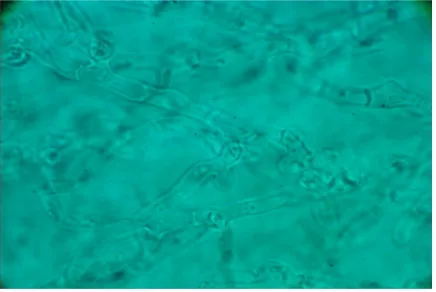
Figure 2 Trichophyton violaceum (lactophenol cotton blue mount).
Notes: Tangled hyphae, branched and irregular. No micro- or macroconidia can be seen. Magnification × 400.
Figure 3 Trichophyton tonsurans (lactophenol cotton blue mount).
Note: Matchstick-shaped microconidia can be seen rising at right angles from the hyphae as well as beaked chlamydospores. Magnification × 400.
61–67 years old, three (14%) and those one (5%), respec-tively, were found to have TC (Table 1 and Figure 4). The distribution of the different clinical forms of TC is given in Table 2. Some subjects were found to have tinea pedis due to Trichophyton mentagrophyte.
Out of the 20 cases TC due to violet pigment-producing
T. violaceum was seen in 16 (80%) of the culture-positive
samples (Figure 5) and the white variant of T. violaceum in
four (20%) (Figure 6).
Discussion
T. violaceum has been reported as the most common cause of
TC in Libya10 and in Botswana’s neighbor South Africa. In a
study of 100 children (mean age of 4.6 years) in Kwa-Zulu/
Natal, dermatologists identified T. violaceum in 90% of positive
cultures, making it probably the most common cause of TC in
South Africa.11T. violaceum has also been reported the most
common dermatophyte in India,12 Nepal,13 and Pakistan.14 TC
is considered rare in adults,15 but in the present study, it was
identified in four adults, one of whom was a 65-year-old female.
Dovepress
Thakur
Clinical, Cosmetic and Investigational Dermatology downloaded from https://www.dovepress.com/ by 118.70.13.36 on 21-Aug-2020
5%
14%
81%
1–15 years 16–60 years 61–71 years
Figure 4 Distribution of tinea capitis according to age group.
Table 1 Distribution of tinea capitis according to age group and sex Age group, years Sex Dermatophytes,
n (%)
Violet pigment-producing
Trichophyton violaceum
T. violaceum (white variant)
Trichophyton tonsurans
Children (1–15) Male 9 (43) 7 1 1
Female 8 (38) 7 1
Total 17 (81)
Adults (16–60) Male 1 (5) 1
Female 2 (9) 0 2
Total 3 (14) Older adults (61–76) Male 0
Female 1 (5) 1
Total 1 (5) 1
Total cases 21
Table 2 Clinical types of tinea capitis identified (n = 42) Cases, n Percentage Noninflammatory
Black dot 10 23.81
seborrheic dermatitis 25 59.53
Combined seborrheic and black dot 4 9.52 Inflammatory
Pustular 2 4.76
Kerion 1 2.38
A reduction in sebum triglycerides may predispose
postmeno-pausal women to the development of TC.16
According to one study, the prevalence of dermatophy-tosis was four times higher in those infected with the human
immunodeficiency virus.17 This may be because
manifesta-tions may be atypical and more severe, resulting in extensive lesions, when dermatophytes infect immunocompromised
patients.18
Due to limited resources, lack of expertise, and awareness, TC can persist in the local populations of Botswana. A team of well-trained dermatologists and mycologists is needed for the right clinical and laboratory diagnosis of TC. Proper sample collection after head washing is very important for the proper clinical diagnosis and appropriate processing of samples. Since the treatment is of long duration, under- or overdiagno-sis is not without complications. Diagnostic techniques must be improved by using two methods of collection and samples must be collected from at least three suspicious areas on the scalp. Asymptomatic carriage seems to be restricted to
anthro-pophilic dermatophytes such as T. tonsurans, T. violaceum,
and Microsporum audouinii. These organisms generally lack host inflammatory response and consequently mild signs of
infection may escape clinical detection.19 Figure 5 Violet pigment-producing Trichophyton violaceum.
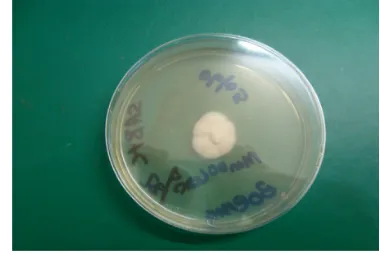
Figure 6 Trichophyton violaceum waxy colony (white variant).
Dovepress Tinea capitis in Botswana
Clinical, Cosmetic and Investigational Dermatology downloaded from https://www.dovepress.com/ by 118.70.13.36 on 21-Aug-2020
As T. violaceum and T. tonsurans are anthropophilic fungi, potential carriers should also be screened and treated once identified. Children or adults who have neither signs nor symptoms of infection, but from whose scalps causative fungi can be grown, are described as “carriers.” Such asymp-tomatic carriers at home or at school can shed the fungus, so
are potentially important sources of disease transmission.1,20
These carriers should be investigated and treated if needed. However, if there is heavy dermatophyte growth from scalp brushes taken from children with clinically normal scalps they should be treated as if they are infected – that is, with
oral therapy.21
Carriers should be treated with adjunctive topical therapy.
Selenium sulphide,22 zinc pyrithione, povidone iodide, or
ketconazole23 shampoos as well as fungicidal creams or
lotions24 have been shown to decrease the carriage of viable
spores responsible for the disease contagion. Shampoos should be applied to scalp and hair for 5 minutes twice weekly
for 2–4 weeks25,26 or three times weekly until the patient is
clinically and mycologically cured.27
Some infection control measures should be observed. Brushes and combs as well as other hair accessories should
be disinfected after use or discarded.27 Scissors may be placed
in an instrument disinfectant – for example, for 5 minutes in a
Mucocit-B (Merz Hygiene, Frankfurt, Germany) drill bath.24
Bed linen, towels, and hats should not be shared. According to some experts, school-going/day care-attending children can continue going to school or day care once treatment has been initiated with oral and topical agents although there is
still a risk of infecting fellow students.28
Conclusion
T. violaceum was the most common dermatophyte species isolated in our research in Botswana. TC was most prevalent in children aged 1–15 years old, but cases were also found in adults. Due to limited resources, lack of expertise, and aware-ness, TC can persist in the local populations of Botswana. Doctors, nurses, and microbiology laboratory staff should be trained in the diagnosis and management of TC.
Disclosure
The author declares no conflicts of interest in this work.
References
1. Elewski BE. Tinea capitis: a current perspective. J Am Acad Dermatol. 2000;42(1 Pt 1):1–20.
2. Shy R. Tinea corporis and tinea capitis. Pediatr Rev. 2007;28(5): 164–174.
3. Hackett BC, O’Connell K, Cafferkey M, O’Donnell BF, Keane FM. Tinea capitis in a paediatric population. Ir Med J. 2006;99(10):294–295.
4. Hubbard TW, de Triquet JM. Brush-culture method for diagnosing tinea capitis. Paediatrics. 1992;90(3):416–418.
5. Akbaba M, Ilkit M, Sutoluk Z, Ates A, Zorba H. Comparison of hairbrush, toothbrush and cotton swab methods for diagnosing asymp-tomatic dermatophyte scalp carriage. J Eur Acad Dermatol Venereol. 2008;22(3):356–362.
6. Larone DH. Medically Important Fungi:A Guide to Identification, 3rd ed. Washington DC: American Society for Microbiology (ASM) Press; 1995:112–184.
7. Lennet EH, Balowsa A, Hausler WJ Jr, Shadomy H, editors. Manual of Clinical Microbiology, 4th ed. Washington DC: ASM Press; 1985:500–594.
8. Kwon-Chung KJ, Bennett JE. Medical Mycology, 2nd ed. Philadelphia, PA: Lea and Febige; 1992:105–170.
9. Rippon JW. Medical Mycology: The Pathogenic Fungi and Pathogenic Actinomycetes, 3rd ed. Philadelphia, PA: Saunders; 1988:169–275. 10. Ellabib MS, Agaj M, Khalifa Z, Kavanagh K. Trichophyton violaceum is
the dominant cause of tinea capitis in children in Tripoli, Libya: results of a two year survey. Mycopathologia. 2001;153(3):145–147. 11. Morar N, Dlova NC, Gupta AK, Aboobaker J. Tinea capitis in Kwa-Zulu
Natal, South Africa. Paediatr Dermatol. 2004;21(4):444–447. 12. Kalla G, Berga B, Solanki A, Goyal A, Batra A. Clinicomycological
study of tinea capitis in desert district of Rajasthan. Indian J Dermatol Venereol Leprol. 1995;61(6):342–345.
13. Jha BN, Garg VK, Agrawal S, Khanal B, Agarwalla A. Tinea capitis in eastern Nepal. Int J Dermatol. 2006;45(2):100–102.
14. Jahangir M, Hussain I, Khurshid K, Haroon TS. A clinico-etiologic correlation in tinea capitis. Int J Dermatol. 1999;38(4):275–278. 15. Barlow D, Saxe N. Tinea capitis in adults. Int J Dermatol. 1988;27(6):
388–380.
16. Kane J, Summerbell R, Sigler L, Krajden S, Land G. Laboratory Handbook of Dermatophytes: A Clinical Guide and Laboratory Handbook of Dermatophytes and Other Filamentous Fungi from Skin, Hair, and Nails. Belmont, CA: Star; 1997.
17. Goodman DS, Teplitz ED, Wishner A, Klein RS, Burk PG, Hershenbaum E. Prevalence of cutaneous disease in patients with acquired immunodeficiency syndrome (AIDS) or AIDS-related complex. J Am Acad Dermatol. 1987;17(2 Pt 1):210–220.
18. Ray MC, Gately LE 3rd. Dermatologic manifestations of HIV infection and AIDS. Infect Dis Clin North Am. 1994;8(3):583–605.
19. Bennassar A, Grimalt R. Management of tinea capitis in childhood.
Clin Cosmet Investig Dermatol. 2010;3:89–98.
20. Ilkit M, Demirhindi H. Asymptomatic dermatophyte scalp carriage: laboratory diagnosis, epidemiology and management. Mycopathologia. 2008;165(2):61–71.
21. Health Protection Agency. Tinea Capitis in the United Kingdom: A Report on its Diagnosis, Management and Prevention. London: Health Protection Agency; 2007.
22. Allen HB, Honig PJ, Leyden JJ, McGinley KJ. Selenium sulfide: adjunctive therapy for tinea capitis. Paediatrics. 1982;69(1):81–83. 23. Greer DL. Successful treatment of tinea capitis with 2% ketoconazole
shampoo. Int J Dermatol. 2000;39(4):302–304.
24. Seebacher C, Abeck D, Brasch J, et al; German-Speaking Mycologi-cal Society; German Dematology Society; German Hospital Hygiene Society. Tinea capitis: ringworm of the scalp. Mycoses. 2007;50(3): 218–226.
25. Ginter-Hanselmayer G, Smolle J, Gupta A. Itraconazole in the treatment of tinea capitis caused by Microsporum canis: experience in a large cohort. Pediatr Dermatol. 2004;21(4):499–502.
26. Fuller LC, Smith CH, Cerio R, et al. A randomized comparison of 4 weeks of terbinafine vs 8 weeks of griseofulvin for the treatment of tinea capitis. Br J Dermatol. 2001;144(2):321–327.
27. Elewski BE. Treatment of tinea capitis: beyond griseofulvin. J Am Acad Dermatol. 1999;40(6 Pt 2):S27–S30.
28. Higgins EM, Fuller LC, Smith CH. Guidelines for the management of tinea capitis. British Association of Dermatologists. Br J Dermatol. 2000;143(1):53–58.
Dovepress
Thakur
Clinical, Cosmetic and Investigational Dermatology downloaded from https://www.dovepress.com/ by 118.70.13.36 on 21-Aug-2020
Clinical, Cosmetic and Investigational Dermatology
Publish your work in this journal
Submit your manuscript here: http://www.dovepress.com/clinical-cosmetic-and-investigational-dermatology-journal Clinical, Cosmetic and Investigational Dermatology is an
interna-tional, peer-reviewed, open access, online journal that focuses on the latest clinical and experimental research in all aspects of skin disease and cosmetic interventions. All areas of dermatology will be covered; contributions will be welcomed from all clinicians and
basic science researchers globally. This journal is indexed on CAS. The manuscript management system is completely online and includes a very quick and fair peer-review system, which is all easy to use. Visit http://www.dovepress.com/testimonials.php to read real quotes from published authors.
Dovepress
Dove
press
Tinea capitis in Botswana
Clinical, Cosmetic and Investigational Dermatology downloaded from https://www.dovepress.com/ by 118.70.13.36 on 21-Aug-2020