In schizophrenia, increased plasma IgM/IgA responses to gut commensal bacteria are associated with negative symptoms, neurocognitive impairments and the deficit phenotype.
Michael Maes, M.D., Ph.D. (a,b,c), Buranee Kanchanatawan, M.D. (a), Sunee Sirivichayakul, Ph.D.
(d)
, André F. Carvalho, M.D., Ph.D.(e,f),
a Department of Psychiatry, Faculty of Medicine, Chulalongkorn University, Bangkok, Thailand b Department of Psychiatry, Medical University of Plovdiv, Plovdiv, Bulgaria
c IMPACT Strategic Research Center, Barwon Health, Deakin University, Geelong, Australia d Faculty of Medicine, Chulalongkorn University, Bangkok, Thailand
e Department of Psychiatry, University of Toronto, Toronto, ON, Canada f Centre for Addiction and Mental Health (CAMH), Toronto, ON, Canada
Corresponding author:
Prof. Dr. Michael Maes, M.D., Ph.D. Department of Psychiatry
Faculty of Medicine Chulalongkorn University Bangkok
Thailand
https://scholar.google.co.th/citations?user=1wzMZ7UAAAAJ&hl=th&oi=ao
Abstract
Increased gut permeability (leaky gut) with increased translocation of Gram-negative bacteria plays a role in the gut-brain axis through effects on systemic immune-inflammatory processes. Deficit schizophrenia is characterized by an immune-inflammatory response combined with a deficit in natural IgM antibodies to oxidative specific epitopes (OSEs), which are a first line defense against bacterial infections.
This study measured plasma IgA/IgM responses to 5 Gram-negative bacteria in association with IgM responses to malondialdehyde (MDA) and azelaic acid in 80 schizophrenia patients (40 with the deficit syndrome and 40 without) and in 38 healthy controls.
Deficit schizophrenia was characterized by significantly increased IgA responses to Hafnei alvei, Pseudomonas aeruginosa, Morganella morganii and Klebsiella pneumoniae as compared with non-deficit schizophrenia. The presence of deficit schizophrenia was highly predicted by increased IgA responses to Pseudomonas putida and IgM responses to all 5 Gram-negative bacteria and lowered natural IgM to MDA and azelaic acid with a bootstrap area under the ROC curve of 0.960 (2000 random curves). A large proportion of the variance (41.5%) in the PANSS negative score was explained by the regression on IgA responses to K. pneumoniae and IgM responses to the 5
enterobacteria coupled with lowered IgM antibodies to azelaic acid. There were significant associations between IgA levels to Gram-negative bacteria and Mini Mental State Examination, Boston naming test, Verbal Fluency and Word List Memory test scores.
(CIRS) may drive negative symptoms and neurocognitive impairments, which are hallmarks of
deficit schizophrenia.
Introduction
There is now evidence that first episode psychosis (FEP) and acute psychotic relapses as well as chronic schizophrenia, treatment resistant and stable-phase schizophrenia are characterized by activation of the immune-inflammatory response system (IRS) (Smith and Maes, 1995; Anderson and Maes, 2013; Roomrunagwong et al., 2018b; Miller et al., 2011). The findings indicate an acute phase response, with increased levels of positive acute phase proteins, increased complement factors, and activation of M1 macrophagic, T helper (Th)-1 and Th-17 immune cell phenotypes (Maes et al., 1997b; Roomruangwong et al., 2018b).
These schizophrenia phenotypes are not only accompanied by an activated IRS, but also by a concomitant activation of the compensatory immune-regulatory responses system (CIRS) including activated Th-2 and T regulatory (Treg) immune phenotypes and increased levels of soluble cytokine receptor levels that have immune regulatory effects, such as soluble interleukin-2 receptor (sIL-interleukin-2R), soluble tumor necrosis factor (sTNF-R)1 and sTNF-Rinterleukin-2, and sIL-1R antagonist (sIL-1RA) levels (Roomruangwong et al., 2018b). As such, the CIRS exerts many immune-regulatory and anti-inflammatory activities, which tend to downregulate the IRS (Roomruangwong et al., 2018b). This is important since immune products of the IRS (IL-6, IL-1,
TNF-α) as well as the CIRS (IL-4, IL-13, CCL-11 or eotaxin) may exert cytotoxic and neurotoxic effects thereby driving neuroprogression (Davis et al., 2014; 2016; Noto et al., 2018; Roomruangwong et al., 2018b; Maes and Carvalho, 2018).
prominent IRS responses after immune challenges (Noto et al., 2018; Roomruangwong et al., 2018b). For example, the levels of plasma Clara Cell secretory protein (CC16), an endogenous disulfide-bridged protein with protective and anti-inflammatory properties, are significantly decreased in schizophrenia patients (Maes et al., 1996; 1997a). Moreover, relatively lowered levels of plasma sTNF-R1, sTNF-R2, sIL-2R and sIL-1RA in FEP have been reported, which may worsen the clinical outcomes in FEP (Noto et al., 2018).
neoepitopes (Binder, 2012; Weismann and Binder, 2012; Diaz-Zaragoza et al., 2015; Thiagarajan et al., 2016; McMahon and Skaggs, 2016). Natural IgM, especially those directed to MDA, have strong immune-regulatory effects and in fact are an integral component of the innate first-line defense against microorganisms, including Gram-negative bacteria (Binder, 2012; Weismann and Binder, 2012; Diaz-Zaragoza et al., 2015). Therefore, we hypothesized that lowered natural IgM responses to MDA and azelaic acid in deficit schizophrenia could be accompanied by a greater impact of Gram-negative commensal bacteria affecting schizophrenia phenomenology including negative symptoms and neurocognitive impairments.
Hence, the present study was performed to examine whether a) deficit schizophrenia is accompanied by increased IgA/IgM levels to Gram-negative bacteria and whether these responses are positively associated with negative symptoms and neurocognitive deficits; and b) the deficits in IgM isotype antibodies to OSEs coupled with increased IgA/IgM responses to Gram-negative bacteria have cumulative effects on negative symptoms and neurocognitive impairments above and beyond the effects of each factor alone.
Methods
Participants
were outpatients at the Department of Psychiatry at the King Chulalongkorn Memorial Hospital, Bangkok, Thailand. Healthy volunteers were recruited from the same catchment area.
Exclusion criteria for patients were: a) acute episodes of schizophrenia the year prior to inclusion; b) axis-1 DSM-IV-TR psychiatric disorders such as major depression, bipolar disorder, schizoaffective disorder, substance-use disorders and psycho-organic disorders; c) medical illness such as psoriasis, rheumatoid arthritis, COPD, diabetes (type 1 and 2) and inflammatory bowel disease; d) neurological disorders including stroke, Parkinson’s disease, multiple sclerosis, and Alzheimer’s disease; e) use of immunomodulatory drugs and antioxidant supplements and ω3-polyunsaturated fatty acids. Exclusion criteria for controls were: a) lifetime or current axis I diagnosis according to DSM-IV-TR criteria; and b) a positive family history of schizophrenia.
All controls and patients as well as the guardians of patients, namely parents or other close family members, provided written informed consent prior to participation in this study. The study was conducted according to International and Thai ethics and privacy laws. Approval for the study was obtained from the Institutional Review Board of the Faculty of Medicine, Chulalongkorn University, Bangkok, Thailand (#298/57), which is in compliance with the International Guidelines for Human Research protection as required by the Declaration of Helsinki, The Belmont Report, CIOMS Guideline and International Conference on Harmonization in Good Clinical Practice (ICH-GCP).
Measurements
Clinical assessments
clinical data. The Mini-International Neuropsychiatric Interview (M.I.N.I.) was used in a validated Thai translation (Kittirathanapaiboon and Khamwongpin, 2005) to make the diagnosis of schizophrenia, whilst the SDS was used to make the diagnosis of primary deficit schizophrenia. BK also scored the Positive and Negative Syndrome Scale (PANSS), with scores on the negative (PANSSneg) and positive (PANSSpos) subdomains (Kay et al., 1987). We computed (Kanchanatawan et al., 2018c) four z-unit weighted composite scores reflecting four different
symptom dimension scores using items of the PANSS and the Brief Psychiatric Rating Scale (BPRS) (Overall and Gorham, 1962), namely a) the psychotic dimension as sum of z score of PANSS P1 (delusion) (zP1) + zP3 (hallucinations) + zP6 (suspiciousness) + zBPRS11 (suspiciousness) + zBPRS12 (hallucinatory behavior) + BPRS15 (unusual thought content); b) the hostility dimension as: sum of zP7 (hostility) + zPANSS general14 (zG14, poor impulse control) + zBPRS10 (hostility) + zBPRS14 (uncooperativeness); c) the excitement dimension as: zP14 (excitement) + zP5 (grandiosity) + zBPRS8 (grandiosity) + zBPRS17 (excitement); and d) the mannerism dimension as: zG5 + zBPRS7 (both mannerism and posturing). The diagnosis of tobacco use disorder (TUD) was made using DSM-IV-TR criteria. Body mass index (BMI) was assessed the same day as the clinical interview and rating scale scoring as body weight (kg) / length (m2).
concentration and constructional praxis; b) the Boston naming test to probe naming; c) Verbal Fluency Test (VFT) to probe fluency and semantic memory; and d) Word List Memory (WLM) to probe learning ability and verbal episodic memory.
Assays
In patients and controls, fasting blood was sampled at 8.00 a.m. for the assay of IgA and IgM responses to five Gram-negative bacteria and IgM-mediated autoimmune responses directed against MDA and azelaic acid. A description of the measurements of IgM or IgA isotypes directed against the Gram-negative bacteria is provided elsewhere (Roomruanwong et al., 2017). “Antigens derived from five Gram-negative bacteria were assayed after sonication, namely Hafnia alvei, Klebsiella pneumonia, Morganella morganii, Pseudomonas aeruginosa, and Pseudomonas putida.
2-N HCl. After addition of stop solution (H2SO4 or HCl), the obtained, proportional absorbance in
the tested sample (compared to established concentration of respective antibodies), was measured at 450 nm with one alpha of correction at 660 nm.
ELISA methods were used to measure IgM levels directed against conjugated azelaic acid and MDA (Maes et al., 2018). Azelaic acid and MDA were linked to fatty acid free-BSA according to previously described methods. “The detection of IgM autoantibodies to the conjugates was performed by an indirect ELISA tests (Maes et al., 2018). Briefly, polystyrene 96-well plates (NUNC) were coated with 200 µl solution containing the conjugates or BSA in 0.05 M carbonate buffer at pH 9.6. Well plates were incubated at 4°C for 16 h under agitation. Then, a 200 µl of blocking solution (PBS, 2.5 g/l BSA) was added for 1 h and placed at 37°C. Following three washes with PBS, plates were filled up with 100 µl of sera diluted at 1:1000 in the blocking buffer A (PBS, 0.05% Tween 20, 10% Glycerol, 2.5 g/l BSA, 1 g/l BSA-G) and incubated at 37°C for 2 h. After three washes with PBS-0.05% Tween 20, plates were incubated at 37°C for 1 h with peroxidase-labeled anti-human IgM secondary antibodies diluted respectively at 1: 15,000, in the blocking buffer (PBS, 0.05% Tween 20, 2.5 g/l BSA). They were then washed three times with PBS-0.05% Tween 20, and incubated with the detection solution for 10 min in the dark. Chromogen detection solution was used for the peroxidase assay at 8% in 0.1 M acetate and 0.01 M phosphate buffer (pH 5.0) containing 0.01% H2O2. The reaction was stopped with 25 µl 2-N
HCl. ODs were measured at 492 nm using a multiscan spectrophotometer. All assays were carried out in duplicate. The intra-assay coefficients of variation (CV) were < 6%” (Maes et al., 2018).
Gram-negative bacteria were highly correlated (yielding significant collinearity in regression analysis) we used a z-unit weighted composite score reflecting total IgM responses to the 5 bacteria (zsumIgM), which was computed as the z transformation of the sum of all five z transformed IgM OD bacterial data. We also computed a zsumzIgA composite score (based on the IgA responses to the 5 bacteria) and divided the study group according to two subgroups based on the median-split method. Statistical analyses were performed using IBM SPSS windows version 22. Tests were 2-tailed and a p-value of 0.05 was used for statistical significance.
of the latent constructs should have factor loadings > 0.5 and p values < 0.001 (Ringle et al., 2014). We used consistent PLS bootstrapping (2000 bootstraps) to compute path coefficients with exact p-value, total effects, total indirect and specific indirect effects.
Results.
1. Socio-demographic data
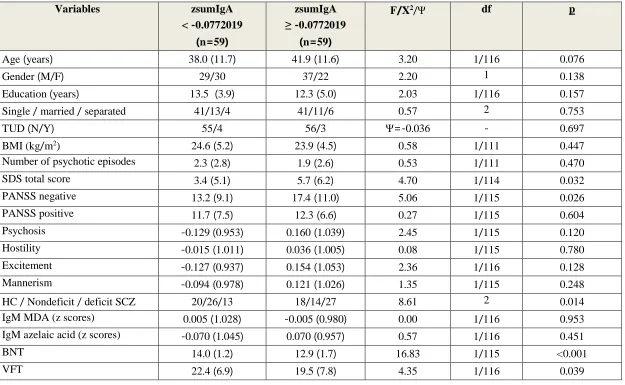
Table 1 displays the demographic, clinical and biomarker data in two subgroups divided
according to the zsumzIgA composite score using the median split method (median=-0.0772019), yielding two study groups, a first with lower and a second with higher zsumIgA values, reflecting a lower versus higher bacterial load. The results of these multiple comparisons were not p-corrected for false discovery rate (and not adjusted for relevant confounding variables) because these results together with the results of intercorrelation matrices were employed to delineate the explanatory variables to be entered in the ultimate regression and PLS analyses. Table 1 shows no significant differences in age, gender, marital status, education, TUD, BMI, number of psychotic episodes, PANSS positive subscale score, psychosis, hostility, excitement, mannerism, IgM levels to MDA and azelaic acid and MMSE among these two study groups. Subjects in the high zsumzIgA composite score showed significantly higher SDS and PANSS negative subscale scores, lower BNT, VFT, WLM and True Recall values.
Associations between IgA/IgM responses to enterobacteria and (deficit) schizophrenia
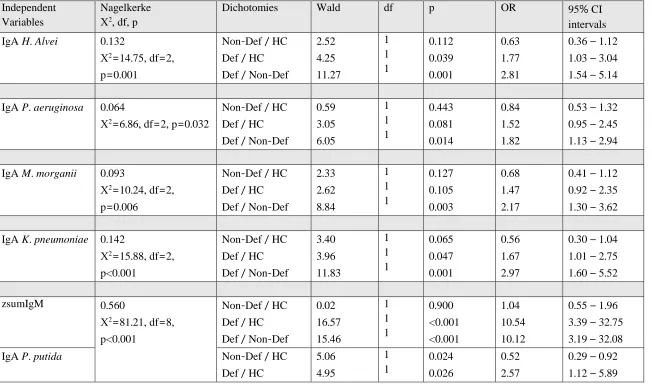
Table 2 shows the associations between the IgA responses to Gram-negative bacteria and
Entry of the separate IgA and IgM values showed that the IgA values directed to H. alvei, P. aeruginosa, M. morganii and K. pneumonia were significantly associated with the deficit
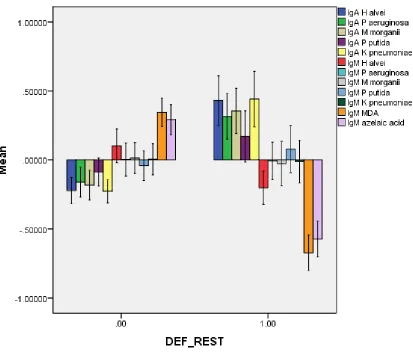
phenotype (versus the non-deficit phenotype) and also separated the deficit phenotype from controls (H. Alvei and K. Pneumoniae). There were no significant associations between the diagnostic groups and either IgA responses to P. putida and IgM responses to the 5 gram-negative bacteria. After considering the effects of IgM responses to MDA and azelaic acid in those multinomial regression analyses we found that IgM responses to MDA (ꭓ2=32.90, df=2, p<0.001), and azelaic acid (ꭓ2=11.00, df=2, p=0.004), IgA responses to P. putida (ꭓ2=14.52, df=2, p=0.001) and zsumIgM (ꭓ2=22.79, df=2, p<0.001) were significantly associated with diagnostic classes. Deficit schizophrenia was significantly separated from non-deficit schizophrenia and controls by higher IgA responses to P. putida and zsumIgM and lower IgM antibodies to MDA and azelaic acid.
squared=0.234) and azelaic acid (F=23.77, df=1/116, p<0.001; partial eta squared=0.170) were significantly lower in deficit schizophrenia as compared with all other subjects.
The second regression analysis shows that deficit schizophrenia versus non-deficit schizophrenia was significantly associated with higher zsumIgM levels and IgA levels to H. alvei and lower IgM levels directed to MDA and azelaic acid. 91.3% of all cases were correctly classified with a sensitivity of 92.5% (to detect deficit schizophrenia), a specificity of 90.0% and an area under the ROC curve of 0.963 (±0.020). The bootstrapped AUC ROC estimation (n=2000 random curves) was 0.960 with 95% confidence intervals of 0.915-0.992. Age, sex and BMI were not significant in this regression analysis.
Impact of extraneous variables
To delineate possible effects of age, sex, BMI, education and medications on the IgA/IgM responses to Gram-negative bacteria, multivariate GLM analysis was performed with the biomarkers (IgA and IgM levels to the 5 Gram-negative bacteria) and diagnosis (in three groups) as dependent variables. There were significant effects of sex ((F=2.02, df=10/98, p=0.039) and age (F=3.87, df=10/98, p<0.001), but not BMI (F=0.37, df=10/98, p=0.957) on the IgA/IgM responses. After p-correction for FDR, the IgA responses to P. aeruginosa (p=0.020), M. morganii (p=0.028) and P. putida (p=0.010) and IgM responses to H. alvei (p=0.033), P. aeruginosa (p=0.02), M. morganii (p=0.02), P. putida (p=0.02) and K. Pneumoniae (p=0.033) were higher in females than
in males. After p-correction, there were significant and positive correlations between age and IgA responses to all 5 bacteria except P. putida (all p<0.011); and negative correlations between age
association between biomarkers and diagnosis. There were no significant effects of education (F=1.75, df=10/97, p=0.080) and TUD (F=0.32, df=10/97, p=0.976) on the biomarkers. Multivariate GLM analysis showed no significant effects of the drug state of the patients on the biomarkers, namely risperidone (n=33, F=0.54, df=10/88, p=0.860), clozapine (n=10, F=1.58, df=10/88, p=0.127), haloperidol (n=8, F=0.99, df=10/88, p=0.457), perphenazine (n=20, F=0.60, df=10/88, p=0.810), antidepressants (n=26, F=0.54, df=10/88, p=0.859), mood stabilizers (n=12, F=1.07, df=10/88, p=0.398) and anxiolytics/hypnotics (n=27, F=1.02, df=10/88, p=0.437).
Associations between IgA/IgM responses to bacteria and schizophrenia phenomenology
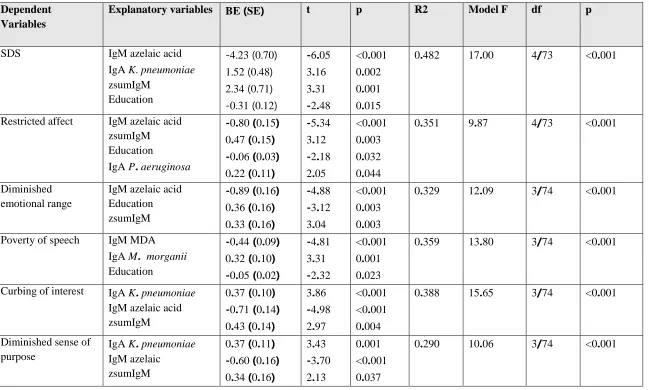
In order to examine the associations between schizophrenia symptomatology and biomarkers we have entered the total SDS score and its 6 item scores, the PANSS positive and negative subscale scores, and 4 PHEM composite scores as dependent variables and IgA responses to 5 Gram-negative bacteria, zsumIgM and IgM antibody levels against MDA and azelaic acid as explanatory variables in multiple regression analyses. Table 4 shows that 48.2% of the variance in the total SDS score was explained by the regression on IgM azelaic acid and education (inversely) and IgA to K. pneumoniae and zsumIgM (both positively). Also the 6 items of the SDS
scale were significantly predicted (29.0-40.3% of the variance) by IgM to OSEs combined with zsumIgM and IgA responses to one of the 5 bacteria (most often K. pneumonia) and education. The PANSS positive subscale was not associated with any of the biomarkers, whereas 41.5% of the variance in the PANSS negative subscore was explained by the regression on IgM azelaic acid (inversely) and IgA to K. pneumoniae and zsumIgM (both positively). 16.8% of the variance in
education (inversely) and IgA to K. pneumoniae (positively). There were no significant associations between hostility or mannerism and any of the biomarkers. Age and sex were not significant in the analyses shown in Table 4.
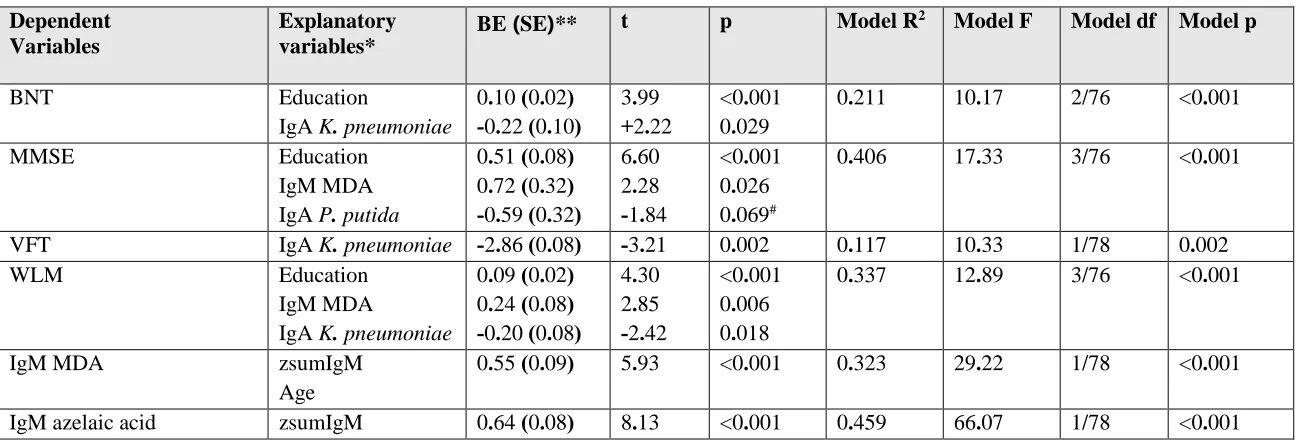
Associations among IgA/IgM responses to Gram-negative bacteria and neurocognitive tests In order to assess the associations between IgA/IgM responses to Gram-negative bacteria and OSEs and neurocognitive tests we employed multiple regression analyses with the neurocognitive CERAD tests as dependent variables and the biomarkers, age, sex and education as independent variables. We found that 21.1% of the variance in the BNT test results was explained by education (inversely) and IgA responses to K. pneumoniae. 40.6% of the variance in the MMSE was explained by the regression on education, IgM against MDA (both negatively) and IgA to P. putida (the bootstrapped p values were significant for all 3 variables, including IgA against P. putida, namely p=0.043). 11.7% of the variance in the VFT was explained by IgA levels to K. pneumoniae. 33.7% of the variance in WLM test was explained by the regression on education, IgM levels against MDA (inversely) and IgA levels to K. pneumoniae. Table 5 shows also that there are positive associations between IgM against MDA or azelaic acid and zsumIgM composite score.
Results of PLS analysis
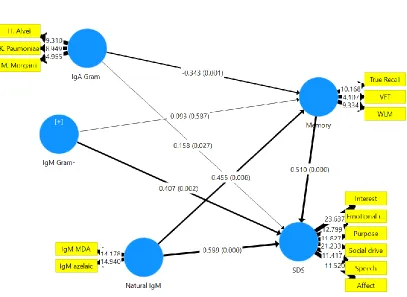
Figure 2 shows the outcome of the multistep PLS path analysis with path coefficients and
the regression on natural IgM LV, zsumIgM and IgA Gram-negative LV. There were significant total and specific indirect effects of IgA Gram-negative bacteria LV (t=+2.44, p=0.015) and IgM against OSEs (t=2.15, p=0.032). There were total effects of IgA to Gram- LV on memory (t=+3.25, p=0.001) and SDS LV (t=+4.24, p<0.001) and of zsumIgM on SDS LV (t=3.50, p=0.001) and of natural IgM to OSEs on memory (t=+2.68,p=0.008) and SDS LV (t=-5.94, p<0.001).
Discussion
The first major finding of this study is that deficit schizophrenia is accompanied by a) significantly increased IgA responses to four Gram-negative bacteria, namely H. alvei, P. aeruginosa, M. morganii and K. pneumoniae; and b) and increased IgA responses to P. putida
coupled with increased IgM responses to all 5 Gram-negative bacteria and lowered IgM responses to MDA and azelaic acid. These five bacteria, including K. pneumoniae, belong to the normal intestinal flora (Wiest, 2005; Todar, 2018), although the latter also belongs to the lung microbiome (O’Dwyer et al., 2016). Increased serum IgA levels directed against sonicated samples of Gram-negative bacteria (thus including LPSs) reflect LPS exposure (Pasternak et al., 2010) and, therefore, constitute an indirect assay of increased bacterial translocation into the blood or mesenteric lymph nodes (MLNs) with or without systemic spreading of the bacteria. Translocated bacteria into the MLNs may prime and activate immune cells in the MLNs thereby inducing an immune response (Kwa et al., 2006). Therefore, our results indicate that in deficit, but non non-deficit, schizophrenia, Gram-negative bacteria may have translocated from the gut (and/or lung) thereby increasing bacterial load and inducing a systemic immune response.
2013a; Maes et al., in preparation). In patients with major depression significant associations were found between IgA against Gram-negative bacteria and IgG responses to oxidized low-density lipoprotein cholesterol, serum lysozyme levels and IgM responses to MDA and azelaic acid, indicating that bacterial translocation is associated with peripheral immune-inflammatory and autoimmune processes (Maes et al., 2013a). Moreover, in CFS it was reported that increased IgA to Gram-negative bacteria are significantly associated with increased serum levels of IL-1, TNF-α, neopterin, elastase and autoantibodies directed to serotonin (Maes et al., 2012; 2013b), indicating that increased bacterial translocation may cause peripheral activation of M1 macrophagic, Th-1, neutrophil and autoimmune pathways.
profound neurotoxic effects leading to neurodegenerative processes which are mediated by microglial activation (Arai et al., 2004). Gut microbiota may increase the permeability of the BBB (Braniste et al., 2014), while LPS can access the brain via different routes, including circumventricular organs and area postrema as well as via peripheral nerves signal transduction (Zakaria et al., 2017). Moreover, Gram-negative bacteria encountering environmental stress may produce outer membrane vesicles (OMVs), which contain antigens, PAMPs and virulence factors (Muraca et al., 2015; Anand and Chaudhuri, 2016; Ellis and Kuehn, 2010; Ellis et al., 2010). OMVs may increase the permeability of the blood-brain barrier and be delivered to the brain (Muraca et al., 2015). Interestingly, some OMVs are pathogenic and have pro-inflammatory effects, whilst other OMVs may have immune-regulatory functions, for example by inducing immune tolerance (Kaparakis-Liaskos and Ferrero, 2015; Shen et al., 2012). As such, increased bacterial translocation could contribute to the immune-inflammatory pathophysiology of mental disorders, including deficit schizophrenia.
specificity of the latter (Kanchanatawan et al., 2018c). Indeed, we have shown that “positive symptomatology” is not a viable concept as these symptoms should be “dissected” into more relevant symptoms dimensions, including psychosis (delusions, hallucinations), hostility, excitation and mannerism. As such, the current study detected significant associations between IgA/IgM responses to Gram-negative bacteria and psychosis and excitation. Again, psychosis and excitation are significantly associated with increased IL-10 levels (reflecting immune activation) and increased neurotoxic TRYCATs, which may be induced by increased bacterial translocation (Kanchanatawan et al., 2018c; Sirivichayakul et al., 2018b). Future research should address the question whether the effects of bacterial translocation on negative symptoms, psychosis and excitation are mediated by changes in the immune system and TRYCAT patterning.
al., 2014; Skelly et al., 2017; Valero et al., 2014). Based on these findings some authors have proposed LPS-induced memory impairments in rats as a model of Alzheimer’s disease (Zakaria et al., 2017) and LPS exposure in the prenatal period in the rodent as a model of schizophrenia (Meyer, 2014). Interestingly, based on a new cognitive model of schizophrenia (Sirivichayakul et al., 2018a), the current study found that the effects of IgA (but not IgM) responses to Gram-negative bacteria on Gram-negative symptoms are in part mediated by memory deficits, indicating that more direct pathways not related to memory impairments are involved. As such, increased bacterial translocation in deficit schizophrenia may aggravate neurocognitive impairments and negative symptoms associated with immune activation, increased eotaxin levels and neurotoxic TRYCAT levels.
oxidative stress-related disorders, including infections with Streptococcus pneumoniae and influenza virus, arteriosclerosis and autoimmune disorders (Aziz et al. 2015). As such, lower natural IgM to OSEs in deficit schizophrenia are accompanied by a greater impact of Gram-negative bacteria on Gram-negative symptoms, psychosis, excitation and neurocognitive impairments. Nevertheless, it should be stressed that our study does not indicate any involvement of Gram-negative bacteria in the pathophysiology of schizophrenia per se: the effects of Gram-Gram-negative bacteria only appear in people with low natural IgM and therefore their effects are confined to the deficit phenotype.
The main limitation of the study is that we used a case-control design which does not allow to establish firm causal inferences. Secondly, it would have been even more informative if we had examined IgA/IgM responses to other Gram-negative gut commensal bacteria. The findings pertaining the ROC analysis deserve replication in an independent cohort.
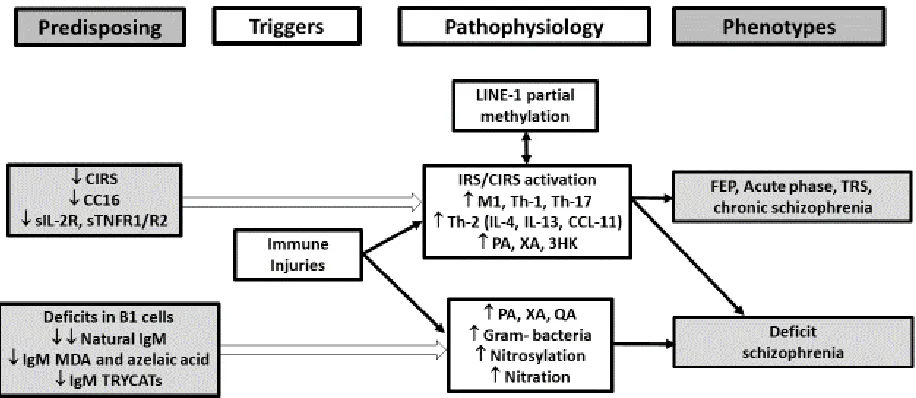
Figure 2 shows a summary of the findings in deficit schizophrenia. Trigger factors including
cytokines such as IL-1, TNF-α and IL-6; Th-1 products such as interferon-γ, IL-12 and picolinic acid (PA), xanthurenic acid (XA) and 3-OH-kynurenine (3HK); and Th-2 products such as IL-4, IL-5, IL-13 and CCL-11 (eotaxin) (Kanchanatawan et al., 2018a; Sirivichayakul et al., 2018a; 2018b; Roomruanwong et al., 2018b). However, pre-existing deficits in B1 cell functions including lower natural IgM (Maes et al., 2018), are accompanied by increased neurotoxic effects of Gram-negative bacteria, quinolinic acid (QA) and nitrosylated and nitrated proteins (Kanchanatawan et al., 2018a; Maes et al., 2018). All those factors together may contribute to negative symptoms, psychosis, excitation and neurocognitive deficits thereby shaping the deficit phenotype.
Acknowledgements
The study was supported by the Asahi Glass Foundation, Chulalongkorn University Centenary Academic Development Project and Ratchadapiseksompotch Funds, Faculty of Medicine, Chulalongkorn University, grant numbers RA60/042 (to BK) and RA61/050 (to MM).
Conflict of interest
The authors have no conflict of interest with any commercial or other association in connection with the submitted article.
Author’s contributions
carried out the statistical analyses. All authors (BK, MM, SS and AC) contributed to interpretation of the data and writing of the manuscript. All authors approved the final version of the manuscript.
References
Anand D, Chaudhuri A (2016) Bacterial outer membrane vesicles: New insights and applications. Mol Membr Biol 33:125-137.
Anderson G, Maes M (2013) Schizophrenia: linking prenatal infection to cytokines, the tryptophan catabolite (TRYCAT) pathway, NMDA receptor hypofunction, neurodevelopment and neuroprogression. Prog Neuropsychopharmacol Biol Psychiatry 42:5-19
Arai H, Furuya T, Yasuda T, Miura M, Mizuno Y, Mochizuki H (2004) Neurotoxic effects of lipopolysaccharide on nigral dopaminergic neurons are mediated by microglial activation, interleukin-1beta, and expression of caspase-11 in mice. J Biol Chem 279:51647-51653.
Aziz M, Holodick NE, Rothstein TL, Wang P (2015) The role of B-1 cells in inflammation. Immunol Res 63:153-166.
Binder CJ (2012) Naturally occurring IgM antibodies to oxidation-specific epitopes. Adv Exp Med Biol 750:2-13.
Braniste V, Al-Asmakh M, Kowal C, Anuar F, Abbaspour A, Tóth M, Korecka A, Bakocevic N, Ng LG, Kundu P, Gulyás B, Halldin C, Hultenby K, Nilsson H, Hebert H, Volpe BT, Diamond B, Pettersson S (2014) The gut microbiota influences blood-brain barrier permeability in mice. Sci Transl Med 6(263):263ra158.
Cepeda-Carrion GA, Nitzl C, Roldan JL (2018) Mediation analyses in Partial least Squares Structural Equation Modeling: guidelines and empirical examples. Chapter 9. Partial Least Squares Structural Equation Modeling: Basic Concepts, Methodological Issues and Applications, Editors: Latan H, Noonan R. Springer, Heidelberg, pp 173-195. DOI: 10.1007/978-3-319-64069-3_8
CERAD (1986) CERAD – An Overview: The Consortium to Establish a Registry for Alzheimer’s Disease; http://cerad.mc.duke.edu/
Chan ED, Riches DW (2001) IFN-gamma + LPS induction of iNOS is modulated by ERK, JNK/SAPK, and p38(mapk) in a mouse macrophage cell line. Am J Physiol Cell Physiol 280:C441-450.
Davis J, Moylan S, Harvey BH, Maes M, Berk M (2014) Neuroprogression in schizophrenia: Pathways underpinning clinical staging and therapeutic corollaries. Aust N Z J Psychiatry 48:512-529.
Davis J, Eyre H, Jacka FN, Dodd S, Dean O, McEwen S, Debnath M, McGrath J, Maes M, Amminger P, McGorry PD, Pantelis C, Berk M (2016) A review of vulnerability and risks for schizophrenia: Beyond the two hit hypothesis. Neurosci Biobehav Rev 65:185-194.
Díaz-Zaragoza M, Hernández-Ávila R, Viedma-Rodríguez R, Arenas-Aranda D, Ostoa-Saloma P (2015) Natural and adaptive IgM antibodies in the recognition of tumor-associated antigens of breast cancer (Review). Oncol Rep 34:1106-1114.
Ellis TN, Kuehn MJ (2010) Virulence and immunomodulatory roles of bacterial outer membrane vesicles. Microbiol Mol Biol Rev 74:81-94.
Ellis TN, Leiman SA, Kuehn MJ (2010) Naturally produced outer membrane vesicles from Pseudomonas aeruginosa elicit a potent innate immune response via combined sensing of both lipopolysaccharide and protein components. Infect Immun 78:3822-3831.
Hauss-Wegrzyniak B, Dobrzanski P, Stoehr JD, Wenk GL (1998) Chronic neuroinflammation in rats reproduces components of the neurobiology of Alzheimer's disease. Brain Res 780:294-303.
Hoppe S, Bier FF, von Nickisch-Rosenegk M (2012) Microarray-based method for screening of immunogenic proteins from bacteria. J Nanobiotechnology 10:12.
Kalayasiri R, Kraijak K, Mutirangura A, Maes M (2018) Paranoid schizophrenia and methamphetamine-induced paranoia are both characterized by a similar LINE-1 partial methylation profile, which is more pronounced in paranoid schizophrenia. BioRxiv 403535. doi.org/10.1101/403535
Kanchanatawan B, Sriswasdi S, Thika S, Sirivichayakul S, Carvalho AF, Geffard M, Kubera M, Maes M (2018) Deficit schizophrenia is a discrete diagnostic category defined by neuro-immune and neurocognitive features: results of supervised machine learning. Metab Brain Dis 33:1053-1067.
Kanchanatawan B, Sriswasdi S, Thika S, Stoyanov D, Sirivichayakul S, Carvalho AF, Geffard M, Maes M (2018) Towards a new classification of stable phase schizophrenia into major and simple neuro-cognitive psychosis: Results of unsupervised machine learning analysis. J Eval Clin Pract 24:879-891.
Psychotic Symptoms and Excitation, Impairments in Episodic Memory, and Increased Production of Neurotoxic Tryptophan Catabolites: a Multivariate and Machine Learning Study. Neurotox Res 33:641-655.
Kaparakis-Liaskos M, Ferrero RL (2015) Immune modulation by bacterial outer membrane vesicles. Nat Rev Immunol 15:375-387.
Kay SR, Fiszbein A, Opler LA (1987) The positive and negative syndrome scale (PANSS) for schizophrenia. Schizophr Bull 13:261-276.
Kirkpatrick B, Buchanan RW, McKenney PD, Alphs LD, Carpenter WT Jr (1989) The Schedule for the Deficit syndrome: an instrument for research in schizophrenia. Psychiatry Res 30:119-123.
Kittirathanapaiboon P, Khamwongpin M (2005) The Validity of the Mini International Neuropsychiatric Interview (M.I.N.I.) Thai Version. Suanprung Hospital, Department of Mental Health.
Lewis CE, McCarthy SP, Lorenzen J, McGee JO (1990) Differential effects of LPS, IFN-gamma and TNF alpha on the secretion of lysozyme by individual human mononuclear phagocytes: relationship to cell maturity. Immunology 69:402-408
Lin WN, Lin CC, Cheng HY, Yang CM (2011) Regulation of cyclooxygenase-2 and cytosolic phospholipase A2 gene expression by lipopolysaccharide through the RNA-binding protein HuR: involvement of NADPH oxidase, reactive oxygen species and mitogen-activated protein kinases. Br J Pharmacol 163(8):1691-1706
Lucas K, Maes M (2013) Role of the Toll Like receptor (TLR) radical cycle in chronic inflammation: possible treatments targeting the TLR4 pathway. Mol Neurobiol 48:190-204.
Maes M, Carvalho AF (2018) The Compensatory Immune-Regulatory Reflex System (CIRS) in Depression and Bipolar Disorder. Mol Neurobiol Apr 2. doi: 10.1007/s12035-018-1016-x. [Epub ahead of print] Review. PubMed PMID: 29611101.
Maes M, Bosmans E, Ranjan R, Vandoolaeghe E, Meltzer HY, De Ley M, Berghmans R, Stans G, Desnyder R (1996) Lower plasma CC16, a natural anti-inflammatory protein, and increased plasma interleukin-1 receptor antagonist in schizophrenia: effects of antipsychotic drugs. Schizophr Res 21:39-50.
Maes M, Delange J, Ranjan R, Meltzer HY, Desnyder R, Cooremans W, Scharpé S (1997) Acute phase proteins in schizophrenia, mania and major depression: modulation by psychotropic drugs. Psychiatry Res 66:1-11.
Maes M, Mihaylova I, Leunis JC (2007) Increased serum IgA and IgM against LPS of enterobacteria in chronic fatigue syndrome (CFS): indication for the involvement of gram-negative enterobacteria in the etiology of CFS and for the presence of an increased gut-intestinal permeability. J Affect Disord 99:237-240.
Maes M, Kubera M, Leunis JC (2008) The gut-brain barrier in major depression: intestinal mucosal dysfunction with an increased translocation of LPS from gram negative enterobacteria (leaky gut) plays a role in the inflammatory pathophysiology of depression. Neuro Endocrinol Lett 29:117-124.
Maes M, Twisk FN, Kubera M, Ringel K, Leunis JC, Geffard M (2012) Increased IgA responses to the LPS of commensal bacteria is associated with inflammation and activation of cell-mediated immunity in chronic fatigue syndrome. J Affect Disord 136:909-917.
Maes M, Ringel K, Kubera M, Anderson G, Morris G, Galecki P, Geffard M (2013) In myalgic encephalomyelitis/chronic fatigue syndrome, increased autoimmune activity against 5-HT is associated with immuno-inflammatory pathways and bacterial translocation. J Affect Disord 150:223-230.
Maes M, Kanchanatawan B, Sirivichayakul S, Carvalho AF (2018) In Schizophrenia, Low Natural IgM Antibody Titers to Oxidative Specific Epitopes and Higher IgM Responses to Nitrated and Nitrosylated Proteins Strongly Predict Negative Symptoms, Neurocognitive Impairments and the Deficit Syndrome. Preprints 2018100083 (doi: 10.20944/preprints201810.0083.v2).
McMahon M, Skaggs B (2016) Autoimmunity: Do IgM antibodies protect against atherosclerosis in SLE? Nat Rev Rheumatol 12:442-444.
Miller BJ, Buckley P, Seabolt W, Mellor A, Kirkpatrick B (2011) Meta-analysis of cytokine alterations in schizophrenia: clinical status and antipsychotic effects. Biol Psychiatry 70:663-671.
Muraca M, Putignani L, Fierabracci A, Teti A, Perilongo G (2015) Gut microbiota-derived outer membrane vesicles: under-recognized major players in health and disease? Discov Med 19:343-348.
Noto MN, Maes M, Nunes SO, Ota VK, Rossaneisf AC, Verri Jr WA, Cordeiro Q, Belangero SI, Gadelha A, Bressan RA, Noto C (2018) Activation of the immune-inflammatory response system and the compensatory immune-regulatory reflex system in antipsychotic naive first episode psychosis. Preprints Preprints201809.0314.v2.
O'Dwyer DN, Dickson RP, Moore BB (2016) The Lung Microbiome, Immunity, and the Pathogenesis of Chronic Lung Disease. J Immunol 196:4839-4847.
Overall JE, Gorham DR (1962) The brief psychiatric rating scale. Psycholog Rep 10:799-812.
Pai K, Sodhi A (1991) Effect of cisplatin, rIFN-Y, LPS and MDP on release of H2O2, O2- and lysozyme from human monocytes in vitro. Indian J Exp Biol 29:910-915.
Pasternak BA, d'Mello S, Jurickova II, Han X, Willson T, Flick L, Petiniot L, Uozumi N, Divanovic S, Traurnicht A, Bonkowski E, Kugathasan S, Karp CL, Denson LA (2010) Lipopolysaccharide exposure is linked to activation of the acute phase response and growth failure in pediatric Crohn's disease and murine colitis. Inflamm Bowel Dis 16:856-869.
Ringle CM, da Silva D, Bido D (2014) Structural equation modeling with the SmartPLS. Brazilian Journal of Marketing - BJM Revista Brasileira de Marketing – ReMark Edição Especial Vol 13, n. 2.
Rothstein TL, Griffin DO, Holodick NE, Quach TD, Kaku H (2013) Human B-1 cells take the stage. Ann N Y Acad Sci 1285:97-114.
Roomruangwong C, Kanchanatawan B, Sirivichayakul S, Anderson G, Carvalho AF, Duleu S, Geffard M, Maes M (2017) IgA/IgM Responses to Gram-Negative Bacteria are not Associated with Perinatal Depression, but with Physio-Somatic Symptoms and Activation of the Tryptophan Catabolite Pathway at the End of Term and Postnatal Anxiety. CNS Neurol Disord Drug Targets 2017 Apr 7. doi: 10.2174/1871527316666170407145533.
Roomruangwong C, Barbosa DS, de Farias CC, Matsumoto AK, Baltus THL, Morelli NR, Kanchanatawan B, Duleu S, Geffard M, Maes M (2018a) Natural regulatory IgM-mediated autoimmune responses directed against malondialdehyde regulate oxidative and nitrosative pathways and coupled with IgM responses to nitroso adducts attenuate depressive and physiosomatic symptoms at the end of term pregnancy. Psychiatry Clin Neurosci 72:116-130.
Shen Y, Giardino Torchia ML, Lawson GW, Karp CL, Ashwell JD, Mazmanian SK (2012) Outer membrane vesicles of a human commensal mediate immune regulation and disease protection. Cell Host Microbe 12:509-520.
Sirivichayakul S, Kanchanatawan B, Thika S, Carvalho AF, Maes M (2018) Eotaxin, an Endogenous Cognitive Deteriorating Chemokine (ECDC), Is a Major Contributor to Cognitive Decline in Normal People and to Executive, Memory, and Sustained Attention Deficits, Formal Thought Disorders, and Psychopathology in Schizophrenia Patients. Neurotox Res 18 Jul 28. doi: 10.1007/s12640-018-9937-8. [Epub ahead of print] PubMed PMID: 30056534.
Sirivichayakul S, Kanchanatawan B, Thika S, Carvalho A, Maes M (2018) A new schizophrenia model: immune activation is associated with induction of the tryptophan catabolite pathway and increased eotaxin levels which together determine memory impairments and schizophrenia symptom dimensions. BioRxiv 393173, doi: https://doi.org/10.1101/393173
Smith RS, Maes M (1995) The macrophage-T-lymphocyte theory of schizophrenia: additional evidence. Med Hypotheses 45:135-141
Thiagarajan D, Frostegård AG, Singh S, Rahman M, Liu A, Vikström M, Leander K, Gigante B, Hellenius ML, Zhang B, Zubarev RA, de Faire U, Lundström SL, Frostegård J (2016) Human IgM Antibodies to Malondialdehyde Conjugated With Albumin Are Negatively Associated With Cardiovascular Disease Among 60-Year-Olds. J Am Heart Assoc 20;5(12).
Todar K (2018) Todar’s online textbook of bacteriology. http://www.textbookofbacteriology.net/
Valero J, Mastrella G, Neiva I, Sánchez S, Malva JO (2014) Long-term effects of an acute and systemic administration of LPS on adult neurogenesis and spatial memory. Front Neurosci 8:83.
Weismann D, Binder CJ (2012) The innate immune response to products of phospholipid peroxidation. Biochim Biophys Acta 1818:2465-2475.
Wiest R (2005) Bacterial translocation. Bioscience Microflora 24:61-90.
Zakaria R, Wan Yaacob WM, Othman Z, Long I, Ahmad AH, Al-Rahbi B (2017) Lipopolysaccharide-induced memory impairment in rats: a model of Alzheimer's disease. Physiol Res 66:553-565.
Table 1. Socio-demographic, clinical and biomarker data in subjects with higher versus lower IgA responses to Gram-negative bacteria.
Variables zsumIgA
< -0.0772019 (n=59)
zsumIgA ≥ -0.0772019
(n=59)
F/X2/Ψ df p
Age (years) 38.0 (11.7) 41.9 (11.6) 3.20 1/116 0.076
Gender (M/F) 29/30 37/22 2.20 1 0.138
Education (years) 13.5 (3.9) 12.3 (5.0) 2.03 1/116 0.157
Single / married / separated 41/13/4 41/11/6 0.57 2 0.753
TUD (N/Y) 55/4 56/3 Ψ=-0.036 - 0.697
BMI (kg/m2) 24.6 (5.2) 23.9 (4.5) 0.58 1/111 0.447
Number of psychotic episodes 2.3 (2.8) 1.9 (2.6) 0.53 1/111 0.470
SDS total score 3.4 (5.1) 5.7 (6.2) 4.70 1/114 0.032
PANSS negative 13.2 (9.1) 17.4 (11.0) 5.06 1/115 0.026
PANSS positive 11.7 (7.5) 12.3 (6.6) 0.27 1/115 0.604
Psychosis -0.129 (0.953) 0.160 (1.039) 2.45 1/115 0.120
Hostility -0.015 (1.011) 0.036 (1.005) 0.08 1/115 0.780
Excitement -0.127 (0.937) 0.154 (1.053) 2.36 1/116 0.128
Mannerism -0.094 (0.978) 0.121 (1.026) 1.35 1/115 0.248
HC / Nondeficit / deficit SCZ 20/26/13 18/14/27 8.61 2 0.014
IgM MDA (z scores) 0.005 (1.028) -0.005 (0.980) 0.00 1/116 0.953
IgM azelaic acid (z scores) -0.070 (1.045) 0.070 (0.957) 0.57 1/116 0.451
BNT 14.0 (1.2) 12.9 (1.7) 16.83 1/115 <0.001
MMSE 27.1 (2.9) 26.1 (3.9) 2.55 1/116 0.113
WLM 19.6 (5.5) 17.2 (5.4) 5.61 1/116 0.019
True Recall 7.2 (2.2) 6.4 (2.2) 4.13 1/116 0.045
All results are shown as mean (±SD).
F/X2/Ψ: results of analyses of variance (F) or analyses of contingency analyses (X2) or Ψ coefficient;
TUD: tobacco use disorder;BMI: body mass index;
SDS: total score on the Schedule for Deficit Syndrome; PANSS: total score on the Positive and Negative Syndrome Scale; BPRS: Brief Psychiatric Rating Scale
Psychotic dimension: computed as z score PANSS P1 (delusion) (zP1) + zP3 (hallucinations) + zP6 (suspiciousness) + zBPRS11 (suspiciousness)
+ zBPRS12 (hallucinatory behavior) + BPRS15 (unusual thought content); Hostility dimension: computed as zP7 (hostility) + zPANSS general14
(zG14, poor impulse control) + zBPRS10 (hostility) + zBPRS14 (uncooperativeness);Excitement-grandiosity dimension: computed as zP14
(excitement) + zP5 (grandiosity) + zBPRS8 (grandiosity) + zBPRS17 (excitement);Mannerism-posturing dimension: computed as zG5 + zBPRS7 (both mannerism and posturing);
HC: healthy controls / non-deficit schizophrenia / deficit schizophrenia;
IgM MDA and azelaic acid: IgM antibody titers against malondialdehyde and azelaic acid;
Table 2. Results of multinomial logistic regression analysis with diagnosis (into three groups) as dependent variable and IgA/IgM responses to Gram-negative bacteria as explanatory variables. Groups are: healthy controls (HC) and patients with (Def) and without
(Non-Def) deficit schizophrenia.
Independent Variables
Nagelkerke Χ2, df, p
Dichotomies Wald df p OR 95% CI
intervals
IgAH. Alvei 0.132
Χ2=14.75, df=2, p=0.001
Non-Def / HC
Def / HC
Def / Non-Def
2.52
4.25
11.27
1 1 1
0.112
0.039
0.001
0.63
1.77
2.81
0.36 – 1.12
1.03 – 3.04
1.54 – 5.14
IgAP. aeruginosa 0.064
Χ2=6.86, df=2, p=0.032
Non-Def / HC
Def / HC
Def / Non-Def
0.59
3.05
6.05
1 1 1
0.443
0.081
0.014
0.84
1.52
1.82
0.53 – 1.32
0.95 – 2.45
1.13 – 2.94
IgAM. morganii 0.093
Χ2=10.24, df=2, p=0.006
Non-Def / HC
Def / HC
Def / Non-Def
2.33
2.62
8.84
1 1 1
0.127
0.105
0.003
0.68
1.47
2.17
0.41 – 1.12
0.92 – 2.35
1.30 – 3.62
IgAK. pneumoniae 0.142
Χ2=15.88, df=2, p<0.001
Non-Def / HC
Def / HC
Def / Non-Def
3.40
3.96
11.83
1 1 1
0.065
0.047
0.001
0.56
1.67
2.97
0.30 – 1.04
1.01 – 2.75
1.60 – 5.52
zsumIgM 0.560
Χ2=81.21, df=8, p<0.001
Non-Def / HC
Def / HC
Def / Non-Def
0.02
16.57
15.46
1 1 1
0.900
<0.001
<0.001
1.04
10.54
10.12
0.55 – 1.96
3.39 – 32.75
3.19 – 32.08
IgA P. putida Non-Def / HC
Def / HC
5.06
4.95
1 1
0.024
0.026
0.52
2.57
0.29 – 0.92
Def / Non-Def 12.64 1 <0.001 4.94 2.05 – 11.91
IgM MDA Non-Def / HC
Def / HC
Def / Non-Def
1.07
9.24
12.12
1 1 1
0.300
0.002
<0.001
1.46
0.12
0.08
0.71 – 2.98
0.03 – 0.47
0.02 – 0.34
IgM azelaic acid Non-Def / HC
Def / HC
Def / Non-Def
0.00
8.38
7.98
1 1 1
0.995
0.004
0.005
0.99
0.12
0.12
0.46 – 2.15
0.03 – 0.50
0.03 – 0.52
OR: Odd’s ratio, 95%CI: 95% confidence intervals with upper and lower limits
zsumIgM: composite score computed as sum of all z transformations of the IgM responses to the 5 Gram-negative bacteria assayed in our study;
Table3. Results of binary logistic regression analyses with deficit schizophrenia (Def) as dependent variable and the IgA/IgM responses directed to Gram-negative bacteria and IgM titers to malondialdehyde (MDA) and azelaic acid as explanatory variables.
Dependent
variables
Nagelkerke
Model Χ2
Significant explanatory variables
B (SE) W df p OR 95% CI
#1. Def/rest 0.651
75.00, df=4, <0.001
IgA P. putida
zsumIgM
IgM MDA
IgM azelaic acid
1.22 (0.41) 2.34 (0.56) -2.28 (0.64) -2.12 (0.72) 8.91 17.38 11.20 8.81 1 1 1 1 0.003 <0.001 0.001 0.003 3.38 10.36 0.10 0.12
1.52 – 7.52
3.45 – 31.11
0.03 – 0.39
0.03 – 0.49
#2. Def/No-Def 0.785
71.03, df=4, <0.001
zsumIgM
IgM MDA
IgA H. alvei
IgM azelaic acid
2.99 (0.82) -3.09 (1.06) 2.00 (0.67) -2.00 (0.87) 13.36 8.52 8.91 5.28 1 1 1 1 <0.001 0.004 0.003 0.022 19.88 0.05 7.39 0.14
4.00 – 98.75
0.01 – 0.36
1.99 – 27.50
0.03 – 0.75
Def/rest: the logistic regression analysis are performed with deficit schizophrenia (Def) as dependent variable and no-def or rest (controls + no -def) as reference group;
zsumIgM: composite score computed as sum of all z transformations of the IgM responses to the 5 Gram-negative bacteria assayed in our study;
Table 4. Results of stepwise multiple regression analyses with severity of schizophrenia symptoms as dependent variables and IgA/IgM responses to Gram negative bacteria and IgM isotype titers to malondialdehyde (MDA) and azelaic acid as explanatory variables.
Dependent Variables
Explanatory variables BE (SE) t p R2 Model F df p
SDS IgM azelaic acid
IgA K. pneumoniae
zsumIgM Education
-4.23 (0.70) 1.52 (0.48)
2.34 (0.71)
-0.31 (0.12)
-6.05 3.16
3.31
-2.48
<0.001
0.002
0.001
0.015
0.482 17.00 4/73 <0.001
Restricted affect IgM azelaic acid
zsumIgM Education
IgA P. aeruginosa
-0.80 (0.15) 0.47 (0.15)
-0.06 (0.03) 0.22 (0.11)
-5.34 3.12
-2.18 2.05
<0.001
0.003
0.032
0.044
0.351 9.87 4/73 <0.001
Diminished emotional range
IgM azelaic acid Education zsumIgM
-0.89 (0.16) 0.36 (0.16)
0.33 (0.16)
-4.88
-3.12 3.04
<0.001
0.003
0.003
0.329 12.09 3/74 <0.001
Poverty of speech IgM MDA
IgA M. morganii
Education
-0.44 (0.09) 0.32 (0.10)
-0.05 (0.02)
-4.81 3.31
-2.32
<0.001
0.001
0.023
0.359 13.80 3/74 <0.001
Curbing of interest IgA K. pneumoniae
IgM azelaic acid zsumIgM
0.37 (0.10)
-0.71 (0.14) 0.43 (0.14)
3.86
-4.98 2.97
<0.001
<0.001
0.004
0.388 15.65 3/74 <0.001
Diminished sense of purpose
IgA K. pneumoniae
IgM azelaic zsumIgM
0.37 (0.11)
-0.60 (0.16) 0.34 (0.16)
3.43
-3.70 2.13
0.001
<0.001
0.037
Diminished social drive
IgM azelaic zsumIgM
IgA K. pneumoniae
-0.92 (0.16) 0.57 (0.16)
0.38 (0.11)
-5.60 3.49
3.41
<0.001
0.001
0.001
0.403 16.68 3/74 <0.001
PANSS positive
-PANSSnegative IgA K. pneumoniae
IgM azelaic acid zsumIgM
2.78 (0.91)
-6.70 (1.30) 4.29 (1.23)
-5.18 3.48
-2.22
<0.001
0.001
0.030
0.415 13.10 4/74 <0.001
Psychotic symptoms IgA K. pneumoniae
Education
0.27 (0.10)
-0.05 (0.03)
2.68
-2.10
0.009
0.039
0.168 7.67 2/76 0.001
Hostility
-Excitation IgA K. pneumoniae
IgM azelaic acid Education
0.28 (0.09)
-0.27 (0.10)
-0.06 (0.02)
3.05
-2.66
-2.56
0.003
0.010
0.012
0.266 9.20 3/76 <0.001
Mannerism
-*All dependent variables were entered as z-scores (the IgM data to MDA and azelaic acid were first Ln transformed)
zsumIgM: composite score computed as sum of all z transformations of the IgM responses to the 5 Gram-negative bacteria assayed in our study;
SDS: total score on the Schedule for Deficit Syndrome; PANSS: total score on the Positive and Negative Syndrome Scale;
BPRS: Brief Psychiatric Rating Scale. Psychotic dimension: computed as z score PANSS P1 (delusion) (zP1) + zP3 (hallucinations) + zP6
Table 5. Results of multiple regression analyses with neurocognitive tests as dependent variables and IgA/IgM responses Gram-negative bacteria as primary explanatory variables.
Dependent Variables
Explanatory variables*
BE (SE)** t p Model R2 Model F Model df Model p
BNT Education
IgA K. pneumoniae
0.10 (0.02)
-0.22 (0.10)
3.99
+2.22
<0.001 0.029
0.211 10.17 2/76 <0.001
MMSE Education
IgM MDA IgA P. putida
0.51 (0.08) 0.72 (0.32)
-0.59 (0.32)
6.60 2.28
-1.84
<0.001 0.026 0.069#
0.406 17.33 3/76 <0.001
VFT IgA K. pneumoniae -2.86 (0.08) -3.21 0.002 0.117 10.33 1/78 0.002
WLM Education
IgM MDA
IgA K. pneumoniae
0.09 (0.02) 0.24 (0.08)
-0.20 (0.08)
4.30 2.85
-2.42
<0.001 0.006 0.018
0.337 12.89 3/76 <0.001
IgM MDA zsumIgM
Age
0.55 (0.09) 5.93 <0.001 0.323 29.22 1/78 <0.001
IgM azelaic acid zsumIgM 0.64 (0.08) 8.13 <0.001 0.459 66.07 1/78 <0.001
* Entered are also age and sex
**All dependent variables were entered as z-scores (the IgM data were first Ln transformed)
MDA: malondialdehyde; zsumIgM: composite score computed as sum of all z transformations of the IgM responses to the 5 Gram-negative bacteria assayed in our study;