Running head: IMPACT OF TELEHEALTH ON RURAL ONCOLOGY CARE 1
The Impact of Telehealth on Rural Cancer Care: A Review of Current Practices and Guidelines
By
Elizabeth Baldwin
Senior Honors Thesis UNC School of Nursing
University of North Carolina at Chapel Hill
April 8, 2019
Approved:
IMPACT OF TELEHEALTH ON RURAL ONCOLOGY CARE 2
Abstract
Rural oncology patients have poor access to oncology care which negatively impacts quality of
care and delivery of treatment. Recent telehealth interventions show evidence of improvement on
this problem. Policies and guidelines regarding telehealth have enhanced cohesiveness within the
field and have the potential to further improve patient care.This review summarizes research on
telehealth interventions for rural oncology patients and of related guidelines and standards of
practice. The literature review included searches of PubMed and CINAHL using telehealth
related terms and was limited to articles published in English in the last ten years (2008 - 2018).
A review of guidelines and standards of practice searched health-related organization databases
for policies, protocols, and guidelines related to the use of teleoncology and telehealth.Sixteen
research articles that evaluated the use of telehealth on cancer care were reviewed. Ten
guidelines, policies, and recommendation documents were reviewed that summarized group
stances and protocols for telehealth use. Review of the literature reveals the following significant
benefits of teleoncology to rural patients: high patient and provider satisfaction, increased access
to care, improved symptom management,cost-effectiveness, and safety of the intervention.
While research studies on rural teleoncology are limited, existing research demonstrates positive
findings on care for the rural cancer patient. Current guidelines and standards help to standardize
the practice of telehealth, but further development of guidelines specific to teleoncology are
IMPACT OF TELEHEALTH ON RURAL ONCOLOGY CARE 3
The Impact of Telehealth on Rural Oncology Care: A Review of Current Practices and
Guidelines
Rural oncology patients face numerous barriers in accessing cancer treatment. Rural
patients have higher mortality and poverty rates, lower insurance coverage, and face geographic
barriers in accessing cancer treatment, especially complicated treatments such as surgery and
complex chemotherapy regimens (Markin et al., 2010). Lack of access to care encompasses
disparities in a wide range of areas, including: access to specialty oncology services, advanced
imaging, radiation oncology, infusion centers, and palliative care services (Charlton, Schlichting,
Chioreso, Ward, & Vikas, 2015). Additionally, rural patients have decreased access to screening
and staging services (Markin et al., 2010). Recent trends towards centralization of major cancer
treatment centers have had unsure effects on rural hospitals and their patients (Markin et al.,
2010). Multi-specialist teams are often required for comprehensive cancer care, and rural
locations make coordination of care more challenging. In rural hospitals, cancer care access is
complicated by the smaller number of chemotherapy trained nurses and medical oncologists as
well as by high staff turnover rates (Markin et al., 2010). Cancer support service personnel are
less available in rural areas, including fewer oncologists, palliative specialists, social workers,
and nurses (Charlton et al., 2015). These barriers have contributed to the gap in health outcomes
(including increased morbidity and mortality) between rural and metropolitan oncology patients
(Unger et al., 2018). Rural patients face a higher incidence of cancer-related deaths than patients
in metropolitan areas (Henley et al., 2017). Furthermore, cancers which could be identified by
screening (for ex., cervical and colorectal) and cancers that are caused by smoking (such as
laryngeal and lung) have both higher incidence and mortality rates in rural populations (Henley
IMPACT OF TELEHEALTH ON RURAL ONCOLOGY CARE 4
cancer rates have declined (Henley et al., 2017). These same trends have not been identified in
rural areas. Rural patients also have heightened risk factors for cancer including cigarette
smoking, physical inactivity, increased obesity rates, and decreased access to healthcare and
screening (Henley et al., 2017).
As demand for cancer care continues to increase in the United States, partially due to the
rising aging population, the necessity for an approach that addresses these issues is critical. The
dynamic and compounding issues that rural patients face in accessing cancer care make a
singular approach to resolving this issue challenging, but several strategies have been developed
in recent years. Technological innovations have allowed for the creation of new interventions to
address shortcomings in our healthcare delivery systems, including approaches such as virtual
tumor boards and teleoncology. Telehealth has been defined by The World Health Organization
(WHO), the American Telemedicine Association, and the European Commission as the “use of
telecommunication to advance health”, and clarified by WHO as:
the delivery of health care services, where distance is a critical factor, by all health care professionals using information and communication technologies for the exchange of valid information, for diagnosis, treatment and prevention of disease and injuries, research and evaluation, and for the continuing education of health care providers, all in the interest of advancing the health of individuals and their communities. (WHO, 2010)
Thus, a telehealth practitioner is a licensed healthcare provider who engages in the above
telehealth services within their respective scope of practice (WHO, 2010). Additionally,
IMPACT OF TELEHEALTH ON RURAL ONCOLOGY CARE 5
Background
Rural Health/Rural Oncology Care
For rural patients, geographic disadvantages significantly impact their ability to access
timely care, which is especially marked in the southern part of the country and for Native
American populations (Onega et al., 2008). For cancer patients, travel time has been shown to
have an impact on utilization of healthcare, resulting in lower use of breast-conserving treatment,
lower participation in clinical trials, and a higher risk of presentation with an advanced stage
cancer (Onega et al., 2008). In areas where rural patients do not have a local oncologist, the
average time spent traveling to receive chemotherapy treatments was found to be 58 minutes
(Ward et al., 2014).
An analysis of the geographic distribution of the healthcare workforce by the American
Society of Clinical Oncology revealed that 20% of the American population lives in rural areas
and only 3.1% of oncologists work in these areas (Kirkwood, Bruinooge, Goldstein, Bajorin, &
Kosty, 2014). The same report found that 70.3% of counties within the United States did not
have oncologists available (Kirkwood et al., 2014). In the areas of lowest oncologist density (<
2.9 oncologists per 100k population) patients were found to have lower survival rates than areas
of higher oncologist density (Mehta et al., 2018). Current measures to evaluate provider density
in relation to the population, including Health Professional Shortage Areas (HPSAs) and
Medically Underserved Areas (MUAs), may not be adequate to monitor and promote increased
oncology presence as their designation is based on primary care provider and not specialist
density (Mehta et al., 2018). Programs aimed at targeting these areas and their related disparities,
including the Conrad-30 Program, a federal program which promotes medical graduate
IMPACT OF TELEHEALTH ON RURAL ONCOLOGY CARE 6
over specialists (Mehta et al., 2018). Clearly, underserved areas would benefit from programs
which prioritize placement of oncologists.
The quality of the rural healthcare workforce may not be satisfactory to meet rural cancer
care needs. The oncology workforce is facing major changes as our aging population grows.
While our health care provider workforce ages, the population will continue to grow, with 18%
growth expected by 2030 (Burrows, Suh, & Hamann, 2012). In addition to growth, our
population is aging at a rapid pace, which adds additional pressures on the healthcare workforce
(Burrows et al., 2012). Cancer is one of the top three causes of death in people aged 65 and
older, meaning our oncology care needs will grow along with the population (“Older Persons' Health”, 2017). The age gap between oncologists under 40 years old and those older than 64
continues to grow, with more oncologists currently practicing who are age 64 and older
(Kirkwood et al., 2014). Younger oncologists are not replacing these retiring oncologists at an
adequate rate, causing concern for a future oncologist shortage (Kirkwood et al., 2014). The
American Society of Clinical Oncology has anticipated a shortage of 2,550 to 4,080 oncologists,
which is predicted to occur in 2020 and be more pronounced in rural and socially disadvantaged
areas (Mehta et al., 2018). Thus, rural physicians are taking on greater workloads than ever,
requiring them to work longer and to accommodate more patient visits per day (Burrows et al.,
2012).
Noted shortages of other healthcare workers, including nurses, advanced practice
providers (Nurse Practitioners and Physician Assistants), pharmacists, and radiology and
laboratory technicians have also grown (Burrows et al., 2012). Health Professional Shortage
Areas show us where there are deficits in providers in comparison to total populations within an
IMPACT OF TELEHEALTH ON RURAL ONCOLOGY CARE 7
HPSAs account for 65% of all HPSAs and represent 34.5 million Americans (Burrows et al.,
2012). In order to eliminate the HPSA classification, 3,959 new healthcare providers would be
needed. A total of 8,851 new providers would be needed in order to obtain the appropriate
population-to-practitioner ratios (2,000:1) (Burrows et al., 2012). Rural nurses obtain lower
salaries than metropolitan nurses, which leads to greater rates of nurse turnover (“Rural
Healthcare Workforce”, 2018). A 2013 report published by The Health Resources and Services Administration, entitled The U.S. Nursing Workforce: Trends in Supply and Education, found
that rural nurses are more likely to be nearing retirement, less likely to be employed by a
hospital, and represent 16% of all national RNs (“Rural Healthcare Workforce”, 2018). Per
capita, RNs in urban areas represent 93.5 RNs per 10,000 people, compared to 85.3 RNs per
10,000 people in rural areas (“Rural Healthcare Workforce”, 2018).
Many who specialize, including both medical and nursing professionals, stay in urban
areas close to where they received their education and where pay tends to be higher (Burrows et
al., 2012). Furthermore, in rural areas there are lower efforts to recruit healthcare providers, less
reimbursement for services, and significantly fewer training sites (Burrows et al., 2012). This
effect can be mitigated through the introduction of rurally-focused policies and programs to
address rural healthcare worker needs (“Rural Healthcare Workforce”, 2018). Rural healthcare
education should be supported through enhancement of scholarships, grants, and loan
repayment/forgiveness policies. Additionally, state schools should work to produce healthcare
workers prepared to enter rural practice by incorporating rurally-focused education into the
curriculum. Finally, the rural healthcare workforce can be supported by enhancing clinical
IMPACT OF TELEHEALTH ON RURAL ONCOLOGY CARE 8
The importance of utilizing telehealth to decrease deficits in healthcare provision to rural
areas has also been noted, as well as the recommendation for states to promote the use of new
types of patient-provider interactions (“Rural Healthcare Workforce”, 2018). Telehealth has been recognized as a potential way for rural providers to increase their capacity to serve local patients
and as a mechanism to support placement of new rural providers (Burrows et al., 2012). Recent
initiatives such as the Telehealth Network Grant Program have been developed and implemented
in order to promote the establishment of networks for rural (defined by exclusion as any area
which is not urban or metropolitan) and frontier (defined as a sparse population which is
geographically remote) areas so that access can be expanded and coordination of care can be
improved (Health Resources and Services Administration, 2016; United States Department of
Agriculture, 2016).
Status of Rural Health
Research conducted and evaluated by the CDC found overall there was a decrease in
cancer rates from 1999-2014, but the rate at which cancer was decreasing was slower in rural
areas compared to urban areas (Henley et al., 2017). From 2011 - 2015, rural counties comprised
2% of all cancer cases, but 8% of cancer deaths, with higher mortality rates for prostate, cervical,
breast, colon, and rectal cancers. Additionally, cancers caused by smoking had higher mortality
rates, including oral cavity cancers and cancers of the throat and lungs (Henley et al., 2017).
Cancers related to smoking were noted to be higher in rural areas both in incidence and in
mortality. Additionally, it was found that cancers that could be addressed by screening (such as
cervical and colorectal) were also higher in rural areas in both incidence and mortality,
highlighting a disparity in access to screening. Higher incidences of cancers caused by human
IMPACT OF TELEHEALTH ON RURAL ONCOLOGY CARE 9
are caused by differences in lifestyle risk factors in rural areas, such as sedentary lifestyles,
alcohol consumption, exposure to UV rays, cigarette smoking, obesity, and exposure to
carcinogenic agents (Henley et al., 2017). Research evaluating health practices and health
behaviors found that rural areas reported low rates of health behaviors associated with reducing
cancer risk, including: physical activity, reducing alcohol consumption, not smoking, and
sustaining a healthy BMI (Matthews et al., 2017). Higher prevalence of risk factors, in addition
to poorer access to quality care and greater financial hardships, leads to measurable health
disparities between rural and metropolitan cancer patients.
Teleoncology
Teleoncology may have the ability to decrease disparities in access to cancer care for
rural patients when applied in consistent, practical, and prolonged programs. The definition of
teleoncology differs slightly from that of telemedicine, with teleoncology being defined as the:
application of telemedicine to oncology, including diagnostics (laboratory, radiology,
pathology), treatment (surgery, radiation oncology, medical oncology), and supportive
(rehabilitation and palliative) care. Therefore, teleoncology includes any telemedicine
application used to advance cancer care (Hazin & Qaddoumi, 2010).
There are multiple types of teleoncology, all which offer different benefits and cater to varying
subspecialties within oncology (Hazin & Qaddoumi, 2010). Synchronous teleoncology involves
live interactions, mainly incorporating videoconferencing. This type of teleoncology initiative
can be expensive, especially if video-conferencing capabilities are not already in existence at a
cancer center. More affordable methods for synchronous communication, which rely on internet
host sites, have developed in recent years and make web-conferencing more accessible to
IMPACT OF TELEHEALTH ON RURAL ONCOLOGY CARE 10
conferencing requires less money and maintenance. Transmission of high-resolution images can
be achieved through the use of virtual microscopy systems, which benefit the practice of
pathology and other laboratory services (Hazin & Qaddoumi, 2010). Single direction
communication, or asynchronous transmissions, uses technology to send information from one
site to another, and is also known as the “store-forward” approach (Sirintrapun & Lopez, 2018).
These types of teleoncology initiatives can be used when the service is needed to send, store,
and/or retrieve information. This type of teleoncology is common in imaging and telepathology
(Hazin & Qaddoumi, 2010). Combinations of synchronous and asynchronous methods are often
used, with video-conferencing as well as document transmission occurring between providers
(Sirintrapun & Lopez, 2018). Mobile technology has also been used to assess, monitor and
advise patients on symptoms and to provide ongoing support through treatment via Short
Message System (SMS) messaging (Sabesan, 2014).
Teleoncology is a young field, and thus thorough evaluation of the service is necessary in
order to ensure the greatest benefit. A national survey of oncology providers found that
telehealth practices are present in numerous subspecialties across the country, with genetic
counseling being the most commonly utilized with 35% of institutions reporting current use (The
Oncology Roundtable & Association of Community Cancer Centers, 2018). Forty-eight percent
report using virtual tumor boards for provider-to-provider communication, but a similar number
(45%) report using no telehealth for provider-to-provider interactions (The Oncology Roundtable
& Association of Community Cancer Centers, 2018). The majority of respondents report no
plans on offering telehealth services to address oncology needs, which prompts a greater need for
evaluation of the utility of telehealth in an effort to increase knowledge and awareness of the
IMPACT OF TELEHEALTH ON RURAL ONCOLOGY CARE 11
While it seems some hospitals are reluctant to utilize telehealth, this survey data also
shows that an abundance of hospitals are already practicing telehealth or plan to offer it in the
next two years (The Oncology Roundtable & Association of Community Cancer Centers, 2018).
An example of a program with long-standing telehealth initiatives is Veterans Affairs (VA), who
have recently expanded their services with the ‘Anywhere to Anywhere’ program, which
functions to expand services to rurally located veterans using the newly designed VA video
connect service (Office of Public and Intergovernmental Affairs, 2018). Telehealth initiatives
within the VA allowed for 2.3 million telehealth visits in 2017, with over 582,000 of those visits
being to rural veterans (Wicklund, 2019).
Standards of Practice and Guidelines
Few long-running teleoncology systems exist in the United States to address the needs of
rural oncology patients. Because of the accumulation of disparities affecting rural patients
(including poor access to alternative mechanisms of receiving treatment) many rural patients
suffer from decreased quality of life, heightened financial strains, and inequitable access to
treatment and screening. Clear policies and standards of practice specific for teleoncology
providers are needed to enhance quality of care, safety, and promote use. Without cohesive
guidelines, varying methods and approaches for practicing teleoncology are utilized, leaving
performance and safety as major variables. A 2013 survey of the utility of current telehealth
guidelines found that 97% of respondents believed telehealth required standards and guidelines,
with a majority of respondents citing the importance of guidelines in standardizing the field,
decreasing liability, and promoting credibility (Krupinski, Antoniotti, & Bernard, 2013). The
same survey found that providers perceive telehealth guidelines impacting the provision of care
IMPACT OF TELEHEALTH ON RURAL ONCOLOGY CARE 12
care, reducing costs, and providing information to payers on reimbursement (Krupinski et al.,
2013).
Policy decisions should be based on scientific findings from published literature
(Sabesan, 2014), and teleoncology literature is complicated by small sample sizes and difficulties
with randomization, leaving a small pool of high-quality literature to define the practice and
inform health policy. With increasing amounts of randomized control studies being published,
the body of literature on teleoncology is growing and is showing signs of a maturing field that
has the evidence necessary to create evidence-based standards. Without clear guidelines,
providers are left with the burden of determining how to best engage in teleoncology
interventions, which complicates the development of a cohesive body of literature on which to
build the field. Additionally, teleoncology providers do not have a clear understanding of
litigation, and this burdens both rural and metropolitan providers, as telehealth requires
specialists to depend on rural providers for many aspects of patient care and can put providers in
complex situations (Sabesan, Simcox, & Marr, 2012). Without clear guidelines to guide the
practice, both time and resources are lost when new telehealth practices are planned and
implemented from the ground up due to a lack materials to reference for guidance.
Although guidelines created for telehealth as a broad practice have utility and enhance
the practice of teleoncology, the field of teleoncology is complicated by numerous factors,
including the complexity of treatments and the critical health status of patients, which dictate a
need for specific guidelines. As telehealth broadens and subspecialties emerge, each subspecialty
will require thorough evaluation to enhance growth of the field, promote public awareness, and
IMPACT OF TELEHEALTH ON RURAL ONCOLOGY CARE 13
This review aims to evaluate the safety, feasibility, and effectiveness of teleoncology
interventions for rural populations, as well as to summarize the existing policies and standards of
practice and guidelines for the field. This evaluation will discuss how clear standards of practice
will ultimately benefit the utility of teleoncology interventions. Implications for the field of
nursing and future directions to improve advancement of the field will also be discussed.
Methods
A literature review was conducted in order to explore existing literature on teleoncology.
Literature was included in this review that evaluated teleoncology interventions, which included
assessing the following topics: patient and provider satisfaction, symptom management,
cost-effectiveness, and delivery of care and safety. Studies with original data and systematic reviews
published in peer-reviewed journals were collected through two databases (PubMed and
CINAHL) and screened for relevance. A publication time period from 2008 through December
2018 was utilized for inclusion. Keywords including: telemedicine, telehealth, rural health,
oncology, technology, teleoncology, cancer, symptom management and cost-effectiveness were
utilized in varying combinations to conduct a literature review. MeSH terms
Telemedicine/methods*, Telemedicine/trends, Patient satisfaction, Medical Oncology/trends,
Medical Oncology/methods*, Rural Population, and Rural Health services/organization &
administration* were also utilized in conducting the review. Reference lists of evaluated articles
were searched for relevant literature. Sixteen studies that met this criteria and were included in
this review. Additionally, a review of professional standards of practice and guidelines for
telehealth users by professional organizations, both from national telehealth associations and
nursing specific associations will be reviewed in order to assess the existence, quality, and
IMPACT OF TELEHEALTH ON RURAL ONCOLOGY CARE 14
teleoncology specific guidelines, as well as to summarize guidelines for general telehealth
practices. A total of ten published guidelines, standards, and recommendations/policy priorities
are included.
Results
The 16 articles that met eligibility criteria addressed teleoncology and its impact on rural
oncology care delivery. By assessing key aspects of teleoncology function reviewed in these 16
papers, including: patient and provider satisfaction, symptom management, cost-effectiveness,
delivery of care and safety, the overall efficacy of teleoncology can be determined, and it can be
decided if teleoncology improves access and quality of care to rural oncology patients, with the
ultimate goal of increasing use across the country. Review of standards of practice and
guidelines will determine the current status of teleoncology guidelines as well as areas for future
development, and will be assessed in the latter half of this review.
Teleoncology
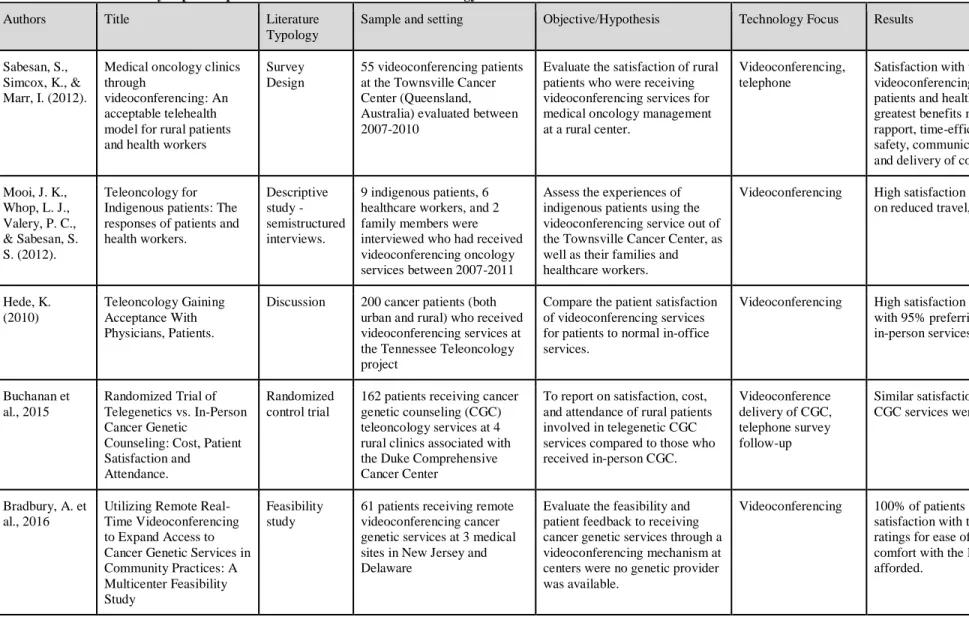
Patient and provider satisfaction with teleoncology. Five studies were found which address
patient and provider satisfaction related to telehealth interventions (see table 1). The Townsville
Cancer Centre in Queensland, Australia has been practicing and evaluating telemedicine for rural
oncology patients since 2007, and has provided a wealth of information regarding patient and
provider satisfaction with services, as well as other components of telemedicine services such as
safety and feasibility, which will be discussed later in this paper (Sabesan, Simcox, & Marr,
2012). The telemedicine system utilized by the Townsville Cancer Centre focuses on
video-conferencing which provides a link between patients in rural provider offices with specialist
oncologist services. Examination by the rural provider, review of labs, and provider-provider
IMPACT OF TELEHEALTH ON RURAL ONCOLOGY CARE 15
plan, including dosing and regimen planning. Chemotherapy is then able to be delivered at the
rural site by chemotherapy trained nurses, saving patients travel time both at the time of
treatment determination and for the duration of the treatment. Researchers evaluated provider
and patient satisfaction with the system using a 5-point Likert scale. Results of the survey
showed patient (n=50) and provider satisfaction (n=18), with main themes focusing on benefits
in: time efficiency, cost-efficiency, enhanced communication, enhanced rapport building,
medication safety, and delivery of specialist consultation in rural areas. A primary area of
concern for both patients and providers continues to be the perceived necessity of an in-person
physical examination (despite an in-person examination by the rural provider). Patients also
displayed acceptance and satisfaction with receiving chemotherapy treatment at the rural site,
with 82% of patients preferring to receive their care through the video-conferencing system over
traveling to metropolitan cancer centers. Healthcare workers indicated satisfaction with the
intervention, citing high confidence in the safety, communication, access to the Townsville
center as needed, and access to adequate education necessary for operations (Sabesan, Simcox, &
Marr, 2012).
The same Townsville Cancer Centre provided teleoncology care via video-conferencing
to indigenous cancer patients in rural Australia (Mooi, Whop, Valery, & Sabesan, 2012).
Through interviews, researchers evaluated patient, family member, and healthcare worker
satisfaction. Similar to results reported by Sabesan, Simcox, & Marr (2012), patients (n=23),
family members (n=two), and healthcare workers (n=six) reported high levels of satisfaction
with teleoncology services. In all parties, preference for video-conferencing over face-to-face
services were reported, with emphasis on the benefits of reduced cost, travel, and waiting times
IMPACT OF TELEHEALTH ON RURAL ONCOLOGY CARE 16
telemedicine appointment of greater importance than patients, who sometimes did not cite this as
an important component of their care. Providers caring for indigenous populations through
telemedicine programs should be consistent in providing culturally congruent care and ensuring
patient preferences are being met (Mooi et al., 2012).
Patients involved in a Tennessee teleoncology program saw their oncologists face-to-face
at a primary visit, and then received half of their follow-ups via teleoncology video-conferencing
(Hede, 2010). Reporting of patient satisfaction by Hede (2010) indicated that 95% of the 200
patients involved in a Tennessee teleoncology intervention reported high levels of satisfaction
and that teleoncology visits were either equal in quality or better quality than in-person visits
(Hede, 2010).
A randomized control trial involving four rural clinics involved with the Duke
Comprehensive Cancer Center evaluated the impact of telemedicine for cancer genetic
counseling on patient satisfaction when compared to face-to-face cancer genetic counseling
(Buchanan et al., 2015). As rural areas have decreased access to cancer screening, extension of
telemedicine to services such as cancer genetic testing could have additional impacts on
outcomes for rural patients, such as improved early detection, risk management, and treatment. A
system which incorporated videoconferencing and file sharing was utilized for the intervention
group (Buchanan et al., 2015). The Visit-Specific Satisfaction Questionnaire used a 5-point
Likert scale to assess patient satisfaction with the following areas: waiting time, technical care,
interpersonal care, and overall satisfaction. An additional survey, The Genetic Counselor
Satisfaction Survey was used to assess value of the service. Use of the telemedicine service was
associated with high satisfaction (n=81), which was similar to the satisfaction of in-person
IMPACT OF TELEHEALTH ON RURAL ONCOLOGY CARE 17
services at their local oncologists office. 98% of those in the intervention group reported being
comfortable with using the telegenetics communication system (Buchanan et al., 2015). Findings
from a 2016 study by Bradbury et al. using videoconferencing to enhance access to genetic
screening saw similar result with patient satisfaction and positive feelings towards the service,
with reductions noted in anxiety and depression as well (V1 n=61; V2 n=41) (Bradbury et al.,
2016).
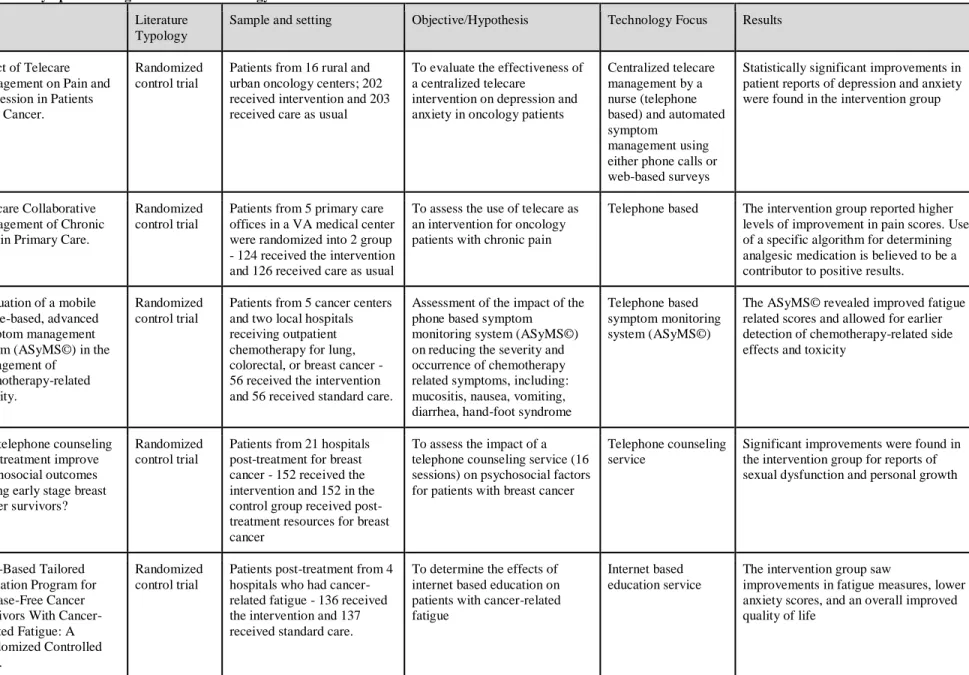
Symptom management with teleoncology. Five studies were identified which evaluated the
impact of telehealth on symptom management in cancer patients (table 2). The impact of a
telephone-based telehealth intervention on oncology-related depression and pain was evaluated
in a randomized control trial for both rural and urban patients in Indiana (Kroenke et al., 2010).
Two hundred and two patients in the intervention group received telephone care management via
a multidisciplinary team, which included symptom management for both depression and pain.
The control group (n=203) received in-person care as usual. Assessments occurred at baseline
and at four follow-up points over a year to monitor symptoms. The telecare model was found to
lead to statistically significant improvements in both pain and depression reports in rural and
urban oncology patients. Additionally, this intervention demonstrated advancements over usual
care for quality of life, anxiety, and mental health (Kroenke et al., 2010). Further research by
Kroenke et al. (2014) showed additional statistically significant benefits in the treatment of
chronic pain through evaluation of telehealth in a randomized control trial. The intervention
group (n=124) received telecare which implemented symptom monitoring and an algorithm to
determine the optimal non-analgesic medication, which led to lower reports of pain. The control
IMPACT OF TELEHEALTH ON RURAL ONCOLOGY CARE 18
A study evaluating the effectiveness of a mobile-phone based intervention system for
symptom management of cancer was conducted and evaluated by Kearney et al. (2009). This
system was utilized to monitor oncology patients and manage chemotherapy symptoms remotely,
including: fatigue, nausea, vomiting, diarrhea, mucositis, and hand-foot syndrome. Specifically,
this intervention was targeted at oncology patients being treated for colorectal, breast, or lung
cancer. A randomized control trial method was utilized and 112 patients were evaluated over five
points in time in order to assess symptom morbidity. The research found statistically significant
effects on managing fatigue-related symptoms and provided a timely system for monitoring
chemotherapy-related toxicity in the intervention group (n=56). The control group (n=56)
received standard care for symptom management (Kearney et al., 2009).
A randomized control trial tested the effectiveness of a telephone counseling system on
304 breast cancer patients to assess levels of psychosocial outcomes, including: distress,
depression, sexual functions, and personal growth (Marcus et al., 2009). Personal growth
encompasses themes such as how a cancer diagnosis impacts life perspectives and values. The
intervention group (n=152) received 16 telephone sessions over one year following treatment
with assessment of psychosocial outcomes occurring at three time points following enrollment.
The control group (n=152) was provided with a resource book for various breast cancer needs.
No differences were found between distress and depression levels in the intervention group and
the control group. Significant results were seen in the intervention group for sexual dysfunction
and personal growth, reporting lower levels of sexual dysfunction at 12- and 18-month
follow-ups and greater reported personal growth at 12 and 18 months. In comparison, the control group
IMPACT OF TELEHEALTH ON RURAL ONCOLOGY CARE 19
interventions for this psychosocial outcome may be especially beneficial at targeting this
resistant symptom (Marcus et al., 2009).
Yun et al. (2012) tested the effectiveness of an internet-based education service in
reducing fatigue and depression, as well as improving quality of life in cancer survivors. A
randomized control trial method was utilized to evaluate 273 cancer survivors. Assessment of the
primary outcome, fatigue, revealed that the intervention group (n=136) experienced a significant
reduction in fatigue. Further, the intervention group reported significantly lower anxiety scores
and an increased quality of life, which included greater emotional, social, and cognitive abilities
(Yun et al., 2012).
Cost-effectiveness of teleoncology. The review of the literature revealed four studies assessing
the impact of telehealth cancer care on costs (table 3).The University of Kansas Medical Center
(KUMC) maintains one of the longest operating teleoncology programs worldwide, which began
in 1995 and continues into 2019 (Doolittle, Spaulding, & Williams, 2011). This program
connects KUMC oncologists with rural practices and has expanded to include additional
practices in recent years. In a review of the 15-year cost-effectiveness of this program, it was
found that the original cost of a teleconology visits ($812) dropped to $251 after ten years. As
the number of teleoncology visits in the clinic increased, the cost per visit dropped (Doolittle et
al., 2011). Research has also indicated that a teleoncology program will reach a point of
sustainable cost-effectiveness when at least 200 patients are seen per year using the system
(Doolittle et al., 2011). The study reported above by Hede (2010), which gathered findings
regarding patient satisfaction, also evaluated cost-effectiveness of teleoncology interventions at
IMPACT OF TELEHEALTH ON RURAL ONCOLOGY CARE 20
interventions to be cost-effective, the operation must save a minimum of 5 hours of travel for
physicians each month.
The study from the Duke Comprehensive Cancer Center discussed above, which utilized
telehealth to deliver cancer genetic counseling, also evaluated the cost-effectiveness of the
service in order to determine feasibility of the intervention (Buchanan et al., 2015). The
telehealth service was found to cost less than half of an in-person appointment, with the
telehealth service costing $106 per person and the in-person service costing $244 per-person.
These results have significant implications for clinics which aim to promote cancer genetic
counseling but cannot afford to provide it as an in-person service (Buchanan et al., 2015).
Further evaluation of findings from the teleoncology services at The Townsville Cancer
(TCC) involved a cost analysis of their teleoncology services, in comparison to the cost of usual
care at TCC (Thaker, Monypenny, Olver, & Sabesan, 2013). All patients managed at TCC via
teleoncology were evaluated to assess total costs of the service. Over 56 months, a total of 605
teleoncology appointments occurred, and a net savings of $320,118 was documented, mainly
related to reductions in travel costs. These researchers suggest redistributing savings to rural
centers to enhance their capabilities and resources for providing cancer care (Thaker et al.,
2013).
Delivery of care and safety of teleoncology. Six studies identified and discussed the use of
telehealth to impact access to care and the related safety of the care (table 4). In addition to
evaluating patient satisfaction and cost-effectiveness, researchers at the telehealth program at the
Townsville Cancer Centre (TCC) in Queensland, Australia, described above, also evaluated the
ability to improve access to specialty consultations through teleoncology services (Sabesan et al.,
IMPACT OF TELEHEALTH ON RURAL ONCOLOGY CARE 21
total of 745 cancer consultations from the Townsville teleoncology program. Through receiving
consultation services at their local hospital, rural patients were able to achieve access to
specialist consults, which led to avoidance of unnecessary hospital transfers and assisted with
treatment planning. This enabled more patients to receive cancer services closer to home
(Sabesan et al., 2012).
The Townsville Cancer Centre has also looked at the impact of using a chemotherapy
supervision model in order to enable the administration of chemotherapy at rural clinics through
medical oncologist supervision (Chan, Larkins, Evans, Watt, & Sabesan, 2015). Unlike the other
evaluation components involved in the Townsville teleoncology program, this was the first study
to evaluate the safety of this type of teleoncology intervention. A quasi-experimental design was
used to compare the effects of teleoncology supervised chemotherapy administration for 89
patients at the remote location to 117 patients at the Townsville Cancer Center (TCC), who
received usual care. Researchers evaluated toxicity, which included reports of serious side
effects, mortality, and hospital admissions, as well as dose intensity, which involved the total
number of doses received and cycles of treatment (Chan et al., 2015). Patients at the rural
location were able to receive chemotherapy following video-conferencing between rural
providers and medical oncologists at the TCC, which lead to the oncologist determining the best
treatment regimen, as well as patient medical fitness to begin chemotherapy. At the rural site,
chemotherapy-trained nurses then administered the chemotherapy. Following evaluation, it was
found that there were no differences in dose intensity or toxicity between the rural and TCC
group. Patients at both sites received and experienced similar doses, cycles, levels of side effects,
and hospital admissions. There were no differences in levels of mortality between groups. These
IMPACT OF TELEHEALTH ON RURAL ONCOLOGY CARE 22
mechanism that can allow for high-quality administration of various complex chemotherapy
regimens closer to home for rural patients (Chan et al., 2015).
A virtual tumor board (VTB) program at the University of North Carolina Lineberger
Comprehensive Cancer Center was initiated in 2010 and aimed to enhance access to
multidisciplinary discussions, recommendations, and treatment assistance for providers across
the state (Shea et al., 2014). This mechanism allowed for providers to video-conference with
multidisciplinary tumor boards and discuss complex cases where second opinions may be
needed. Qualitative data was collected through surveys, interviews, and observation. VTBs were
found to be useful to community-based providers throughout North Carolina, primarily citing the
utility of a second opinion, as well as the benefit of determining eligibility for clinical trials,
especially for patients who may not have otherwise known of the trials. Community-based
providers also noted that this service was especially useful when patients were not otherwise able
to travel to UNC for consultations. As the VTBs were scheduled around the UNC physician
schedule, they were less accessible to the community-based provider, highlighting the future
importance of ensuring that the benefit of VTB participation outweighs any time lost (Shea et al.,
2014).
In order to enhance access to high-quality care for breast cancer patients, a telehealth
initiative was developed that combines teleoncology, telepathology, and telemammography into
delivery of care (Lopez et al., 2009). The aim of this service was to streamline the breast cancer
care spectrum, which can include numerous visits for physical exams, imaging, and biopsies.
The Telehealth Rapid Breast Care Process aims to provide same-day reporting and rapid biopsies
through the use of technology, reducing the fragmentation in the care process. Additionally, the
IMPACT OF TELEHEALTH ON RURAL ONCOLOGY CARE 23
review of this program, when comparing the conventional method of pathology diagnosis to the
virtual slide telepathology, the virtual slide telepathology (n=154) was able to detect several
discrepancies in the usual method of pathology that may have otherwise gone undetected (Lopez
et al., 2009).
Enhanced access and delivery of care can also involve improved coordination and
delivery of psychosocial care. Psychosocial teleoncology care has been shown to improve
cancer-related distress symptoms (n=152) (Marcus et al., 2009). Additional research focusing on
the benefit of internet-based psychotherapy demonstrated improved access to geographically
distributed young adults with cancer, with the average patient residing 148 miles from a cancer
center (Melton, Brewer, Kolva, Joshi, & Bunch, 2017). These findings show that tele-based
psychotherapy is not only beneficial in reducing distress, but also allows for a wide distribution
of service across diverse geographical areas (Melton et al., 2017).
Telehealth approaches have also demonstrated effectiveness in expanding access to
palliative care services, as this aspect of cancer care is especially challenged when rurality and
long-distance travel are present, as palliative care services are often only available on an
inpatient basis (Worster & Swartz, 2017). Community-based palliative care services remain
limited. A review of palliative care delivered through telehealth (n=16) revealed positive
findings in improved symptom control, enhanced coordination between oncologists and
palliative specialists, fewer emergency department visits and fewer in-patient admissions
IMPACT OF TELEHEALTH ON RURAL ONCOLOGY CARE 24
Professional Guidelines and Policies
Ten guidelines on telehealth care were identified and reviewed (table 5). One guideline
addresses cancer care and telehealth (COSA Teleoncology Guidelines Working Group, 2016).
The remaining guidelines and standards broadly discuss telehealth care.
American Telemedicine Association. As the only organization solely focused on telehealth, the
American Telemedicine Association (ATA) is at the forefront of the telemedicine field, guiding
the development and implementation of telemedicine policies at the state and federal levels, and
have defined themselves as the voice of telemedicine policy. In North Carolina, New York,
Oklahoma, and Pennsylvania, state medical boards dictate that providers must practice
telemedicine in conformity with ATA guidelines (Krupinski & Bernard, 2014). The American
Telemedicine Association differs from other governing bodies of telemedicine as it has a broad
focus which encompasses a diverse field of specialty clinical services. The first example of a
telemedicine guideline was in 1999 when the ATA published guidelines for telepathology,
closely followed by guidelines for diabetic retinopathy and dermatology (Krupinski & Bernard,
2014). Guidelines from the ATA are created through a comprehensive literature review process
from an established committee, which includes a Chair and a Vice-Chair who are selected by the
ATA President and Executive Committee, and board of voluntary members. This team works to
review the literature, develop recommendations, and go through multiple rounds of rigorous
review to create guidelines which are evidence-based and accessible to the public (Krupinski &
Bernard, 2014). Currently, no ATA guidelines specific to teleoncology exist.
In 2007, the Core Standards for Telemedicine Operations were published, which was an
early effort by a panel of experts to standardize the field with practice guidelines and operational
IMPACT OF TELEHEALTH ON RURAL ONCOLOGY CARE 25
of telemedicine with a comprehensive set of terminology that promoted consistency of language
employment and early standards for administrative, clinical, and technical components of the
practice. Additional publications by the American Telemedicine Association include
sub-specialty guidelines for mental health, teledermatology, ophthalmology,
tele-rehabilitation, telepathology, and tele-home health (Krupinski & Bernard, 2014).
The 2007 publication of the Core Standards for Telemedicine Operations was updated in
2014 by the publication of the Core Operational Guidelines for Telehealth Services Involving
Provider-Patient Interactions (American Telemedicine Association, 2014). This updated
document includes alterations and more comprehensive instructions regarding: privacy of data,
identity verification for patients/providers, mobile device based telehealth, and patient education
related to telehealth. Improvements in this document also include updated definitions and
enhanced clarification of requirements through the use of keywords “shall,” “should,” and
“may,” which enable providers to better understand differences between requirements and areas
where personal judgement should be relied upon. Administrative, clinical, and technical
standards are all comprehensively expanded from the 2007 version, with major additions
regarding documentation requirements, emergency procedures, criteria for use of telemedicine
devices and equipment such as mobile phones, and the necessity of delivering culturally
competent care. Recommendations for enhancing the quality of telehealth communications,
including ensuring that rooms are private, secure, soundproof, and have locks on doors, are also
unique to this document. Data storage requirements, the importance of encryption, and software
needs are also discussed in this updated document (American Telemedicine Association, 2014).
The American Telemedicine Association published the Expert Consensus
IMPACT OF TELEHEALTH ON RURAL ONCOLOGY CARE 26
discussed in this review for its relevance to a primary method of teleoncology delivery,
videoconferencing (American Telemedicine Association, 2011). The purpose of this document is
to define the requirements of being a telepresenter and to summarize critical steps in engaging in
teleconferencing. Guidelines for this process, specifically for the teleconferencing presenter, are
crucial, as accurate and appropriate information exchange is key for success. The guidelines
describe necessary steps for the presenter to take before and during video conferencing,
including scheduling, preparation, and quality and safety of the service. Technical standards are
also described, which include controlling for appropriate lighting and noises during the session
and troubleshooting issues that arise. Clinically, during the video-conference, the presenter
maintains responsibility of acting as a patient advocate, protecting privacy, acting with cultural
competency, and maintaining awareness of body language (American Telemedicine Association,
2011).
A 2017 policy priority summary published by the American Telemedicine Association
discusses major priorities that need to be addressed in order to create policies that promote the
visibility of telemedicine to patients, providers, and payers (American Telemedicine Association,
2017a). Priorities are based on the fundamental principles defined by the ATA, which include:
eliminating government barriers to use, deterring development of new barriers, promoting
telehealth use, increase value of the service, and increase patient outcomes and roles in the
service. Because of the frequent multiple chronic conditions which often affect Medicare
beneficiaries, leaving them homebound and at risk, ATA encourages Medicare to cover
telehealth in payment to improve delivery of care to Medicare beneficiaries. ATA also promotes
the removal of existing barriers for Medicare coverage for telehealth services, including
IMPACT OF TELEHEALTH ON RURAL ONCOLOGY CARE 27
covered by Medicare should be covered if rendered through alternative approaches (American
Telemedicine Association, 2017a).
Licensing barriers, which often require practitioners to obtain additional prerequisites
beyond those needed for face-to-face clinical care, lead to decreased access for patients who
could benefit from telehealth (American Telemedicine Association, 2017a). The current
approach to licensure requires providers to meet credentialing needs at the distant (or receiving
end) of the telemedicine interaction, but this can deter smooth delivery of interstate care. ATA
urges lawmakers to create policies which promote efficient use of telemedicine across state lines,
which includes the necessity of enabling fluid internet prescribing capabilities and multi-state
compacts. ATA also notes and urges consideration of the ability for telemedicine to address
major interests of the federal government, including promoting efficiency in the government,
enhancing population health, and developing new innovations (American Telemedicine
Association, 2017a). The Federal Communications Commission (FCC) plays a key role in
maximizing the utility of telemedicine, and ATA prioritizes facilitating collaboration with the
FCC in order to extend broadband infrastructure and to develop network bridges between
existing telemedicine systems. Additional components addressed as being critical in future
policies include integration of the electronic health records with telemedicine initiatives, utilizing
telemedicine to address emergency communications, and improving the status of international
policy in order to globalize telemedicine initiatives (American Telemedicine Association,
2017a).
Board of nursing recommendations. Although not an example of published guidelines, a
policy statement by the National Council of State Boards of Nursing (NCSBN) on telehealth
IMPACT OF TELEHEALTH ON RURAL ONCOLOGY CARE 28
telehealth (NCSBN, 2014). The NCSBN recognized telehealth nursing care as a part of regulated
nursing practice, and thus requires its own regulations and rules. The council states that
telehealth nursing includes any nursing care administered through telecommunication
approaches, with the goal to improve client health, deliver interventions, and monitor outcomes.
Challenges to telehealth nursing practice such as privacy of the patient, identity verification of
the nurse, and enforcement of nursing standards are mentioned. The ability for nurses to engage
in patient teaching and coaching is recognized as a component of nursing practice that is highly
accessible by telehealth, as patients frequently rely on nurses to provide and verify information.
An additional area of nursing that the council recognizes as being highly accessible to telehealth
practice is triage nursing, as nurses can rapidly assess and make recommendations regarding the
necessity of treatment. Further information is needed to determine nursing responsibility in
telehealth practice, define the scope of the practice, and regulate nursing practice across state
lines (NCSBN, 2014).
An additional position statement published by the North Carolina Board of Nursing
(2018) seeks to guide and promote safe practice for nurses interested in telehealth. In agreement
with the NCSBN, the NCBON recognizes the inclusion of telehealth practice as falling within
the legal scope of nursing practice. This position statement clarifies that nurses engaging in
telehealth in North Carolina must hold licensure in the state where the client is located, or hold
practice privilege in the distant state. Nurses may practice any component of patient care within
their scope of practice, as they would face-to-face (North Carolina Board of Nursing, 2018).
Additional guidelines and recommendations. The College of Registered Nurses of Nova
Scotia is one of the only nursing bodies to publish guidelines for telenursing, which aims to
IMPACT OF TELEHEALTH ON RURAL ONCOLOGY CARE 29
2017). This document provides a definition of telenursing, as defined by the College of Nurses of
Ontario (CNO): “the delivery, management and coordination of care and services provided via information and telecommunication technologies” (CNO, 2017). The document is designed in a question and answer format that serves to answer common questions nurses interested in
telenursing might need answered before engaging in the practice. A summary of telenursing
technologies are included, as well as common telenursing approaches including: triage via
call-centers, patient education through “ask a nurse” approaches, crisis intervention, multidisciplinary
video-conferencing, assessment, continuing nursing education, and website development
(College of Registered Nurses of Nova Scotia, 2017). Principles of telenursing state that
successful telenursing will: supplement current health care services, increase access, minimize
unnecessary treatment, enhance quality of care delivered, and secure the privacy of nurse-patient
information. The guidelines clarify that any nurse practicing telenursing is responsible for
following all standards of practice for face-to-face nursing in their area, as well as the respective
code of ethics and scope of practice. It may be left up to the nurse how these in-person standards
are to be applied to situations unique to telenursing. Additional questions regarding geographical
limitations and liability are addressed. The necessity of adequate education is reinforced and
suggestions are provided for how to enhance the quality of the nurse-client relationship
established through appropriate behaviors and language (College of Registered Nurses of Nova
Scotia, 2017).
A similar guideline document published by The College of Nurses of Ontario (2017)
proposes similar guidelines, but incorporates more definitions related to telenursing and offers
IMPACT OF TELEHEALTH ON RURAL ONCOLOGY CARE 30
additional resources, and suggested reading makes this document highly useful to nurses
considering telenursing (CNO, 2017).
An additional document published by the American Academy of Ambulatory Nursing
(2018) intends to inform and guide nursing telehealth practice. Their unique document, Scope
and Standards of Practice for Professional Telehealth Nursing, offers a framework for nurses in
telehealth to follow in order to ensure high quality care. The document provides a context for
telehealth practice, including 16 standards of the field. Six of these standards address each
component of the nursing process (assess, diagnosis, outcome identification, planning,
implementation, and evaluation), in order to make the guidelines more accessible to current
practicing nurses. The additional ten guidelines dictate performance standards for nurses
practicing telehealth. Although developed by ambulatory care nurses, this document was created
in order to be highly accessible across a wide range of disciplines, and it is not specific to a
particular specialty nursing practice. Oncology protocols and specialty considerations are not
discussed (American Academy of Ambulatory Nursing, 2018).
A summary of recommendations published by the Clinical Oncology Society of Australia
is one of the only existing bodies of recommendations specifically for teleoncology services
(COSA Teleoncology Guidelines Working Group, 2016). Although it is not a comprehensive set
of guidelines, the document sets out to provide recommendations to nurses and healthcare
practitioners engaging in teleoncology services. In addition to providing recommendations, the
documents also provides clinical and organizational practice points to ensure the greatest quality
of care is provided. Specifically, this document recommends the use of teleoncology to provide
services such as chemotherapy administration, consultations, symptom management, toxicity
IMPACT OF TELEHEALTH ON RURAL ONCOLOGY CARE 31
occur depending on staffing and scope of practice at both the rural and urban sites. In order to
successfully implement chemotherapy supervision models, telenursing and telepharmacy must be
included in care, adequate nursing training is required (including chemotherapy training and
basic life support training), and the environment must be carefully assessed for hazards in order
to ensure both workers and patients are protected. The authors recommend videoconferencing to
provide medical care, as well as telephone services to help educate, manage side effects, and
improve psychosocial outcomes. Telephone screening is recommended to increase uptake of
screening services for oncology patients. Palliative care services administered via telehealth
video-conferencing mechanisms are recommended for rural patients who cannot access these
services otherwise. Objectives to ensure privacy of the patient are also summarized, including:
carefully selecting video-conferencing technology with embedded security features, use of
encrypted networks, and storing all recordings securely. It must be noted that most of the
recommendations made by this board received grades of either C or B, indicating that the amount
of evidence to support practice recommendations is not strong enough to provide definitive
recommendations that can guide practice (COSA Teleoncology Guidelines Working Group,
2016).
Discussion
Teleoncology
Following testing in various clinical settings, the use of teleoncology has displayed
numerous benefits to rural oncology care, including high patient and provider satisfaction
(Bradbury et al., 2016; Buchanan et al., 2015; Hede, 2010; Mooi et al., 2012; Sabesan, Simcox,
& Marr, 2012). The literature shows that teleoncology can increase access to care, including
IMPACT OF TELEHEALTH ON RURAL ONCOLOGY CARE 32
al., 2017; Shea et al., 2014; Worster & Schwartz, 2017). Symptom management and remote
delivery of chemotherapy are additional complex care management aspects that have been
successfully managed by teleoncology initiatives (Kearney et al., 2008; Kroenke et al., 2010;
Kroenke et al., 2014; Marcus et al., 2009; Sabesan et al., 2012; Yun et al., 2012).Teleoncology
has also demonstrated cost-effectiveness in clinical settings, both for hospitals and patients
(Buchanan et al., 2015; Doolittle et al., 2011; Hede, 2010; Thaker et al., 2013). Multiple forms of
teleoncology have proven effective, including synchronous and asynchronous models.
Teleoncology can serve to enhance and optimize the oncology workforce in order to decrease
disruptions caused by rural workforce shortages, predicted oncologist shortages, and our aging
population. Evidently, teleoncology can benefit vulnerable patients receiving cancer care by
enhancing the safety of treatment delivery and access to treatment options, two prominent effects
which could be enhanced by guideline creation.
Barriers to teleoncology. Although the benefits of telehealth appear clear in the literature,
logistical and infrastructure barriers remain. Potential barriers to teleoncology uptake require
evaluation to ensure the efficacy of the intervention is greater than the burden. The most
common globally reported barrier to the use of telehealth is the perception that it is too expensive
to implement (World Health Organization, 2010). Through an evaluation of the global status of
telehealth, the World Health Organization (2010) reports that close to 70% of countries desire
greater information on the cost-effectiveness of telehealth, and over 60% of countries want more
clinical data on telehealth.
Access to broadband internet is not thoroughly available across rural areas of the United
States, and this disparity in digital access mirrors the disparity in cancer care access, leaving this
IMPACT OF TELEHEALTH ON RURAL ONCOLOGY CARE 33
providers in rural areas to engage in telehealth approaches such as video-conferencing, which is
often accomplished through online host sites. Research has shown that 58% of rural Americans
indicate they experience problems with access to high-speed internet, with 24% designating it as
a major problem (Parker et al., 2018). Although internet access has now been described as a
public utility by the Supreme Court (United States Telecom Assoc. v. FCC and United States,
2016), 39% of those living in rural areas still lack internet access, which equates to 23 million
people (Federal Communications Commission, 2016). While some programs, such as the
Connect America Fund, aim to decrease disparities in internet access and promote development
of infrastructure (Federal Communications Commission, 2017), lack of access to broadband
internet at appropriate speeds remains a major barrier to telehealth utilization in rural areas.
Some telehealth initiatives utilize the rural primary care provider to deliver chemotherapy
and monitor patients for cancer-related side effects at their rural site (Chan et al., 2015; Doolittle,
2001). Although chemotherapy supervision has been demonstrated to be safe and effective (Chan
et al., 2015), it is reasonable to assume that some primary care providers would feel
uncomfortable engaging in this practice without adequate training and assistance (Doolittle,
2001). Telehealth practices which require primary care providers to take on additional roles
without appropriate education should be carefully evaluated for their utility prior to uptake.
For the last twenty years, telehealth has been reimbursed in some capacity by the Centers
for Medicare and Medicaid Services (CMS), but reimbursement for services is complicated by
patient location (Center for Medicare and Medicaid Services, 2018). CMS beneficiaries must
also live in a designated HPSA to qualify for reimbursement, and these areas are designated
based on limitations in primary care providers and not oncologists (Center for Medicare and
IMPACT OF TELEHEALTH ON RURAL ONCOLOGY CARE 34
telehealth in improving access and quality of care, CMS restrictions have eased and 42 states
now dictate that telehealth be covered by their Medicaid programs (Charlton et al., 2015).
Additionally, 17 states now call for telehealth to be reimbursed by private insurance (Charlton et
al., 2015). While these changes in availability of reimbursement for telehealth increase access for
many patients, no two states are managing telehealth reimbursement in the same way, leading to
challenges with uptake, implementation, and regulation. Lack of national telehealth policies has
led to states developing their own legislation and rules for coverage, leaving the practice without
a cohesive mechanism of practice (Charlton et al., 2015).
A 2014 national survey distributed by the American Academy of Family Physicians
(AAFP) evaluated physician use of telehealth interventions and described top barriers to
implementation (Moore, Coffman, Jetty, Petterson, & Bazemore, 2016). While most providers
agreed that telehealth programs could enhance access for patients, only 15% reported using it
within the past year. Major themes regarding barriers involved: lack of reimbursement and
training, high costs of equipment, and issues involving liability. AAFP cites the necessity of
policy changes to address provider barriers and eventually lead to increased adoption (Moore et
al., 2016). Similar themes were noted in a national evaluation of cancer trends, where
reimbursement, operational changes, and provider reluctance were noted as major barriers to
uptake (The Oncology Roundtable & Association of Community Cancer Centers, 2018).
State licensure requirements add an additional barrier to uptake of telehealth, as many
providers are limited to practicing within the state they are licensed, even though telehealth
approaches extend their reach and capabilities of providing care (Weinstein et al., 2014). Several
states have developed new licenses, specific to telehealth, which allow providers to practice
IMPACT OF TELEHEALTH ON RURAL ONCOLOGY CARE 35
providing licenses to teleradiologists that reduce the barriers to providing care. If physicians do
wish to engage in practice out-of-state, it can be an expensive process to obtain adequate
licensure and this lends itself to being a barrier for providers wishing to engage in multi-state
telehealth (Weinstein et al., 2014).
Additional barriers involve discrepancies in hospital credentialing requirements, as a
provider may meet their own hospitals requirements but not the hospital at which they are
providing telehealth-based care. As this was a noted barrier to widespread use of telehealth, CMS
and the Joint Commission established new regulations, which allows for “credentialing by proxy” to occur for physicians providing telehealth care (Weinstein et al., 2014). Credentialing by proxy allows for hospitals to engage in partnerships, where the telehealth provider must “rely
on a distant site hospital or telemedicine entity’s credentialing and privileging decisions”
(California Telehealth Resource Center, 2014). This process aims to expedite the credentialing
process and encourage approaches that utilize telehealth, as well as to decrease administrative
work and increase flexibility for providers (Weinstein et al., 2014). Other challenges to
successfully implementing telehealth initiatives include the cost of infrastructure, data security
risks, cost of maintenance and upkeep, technology failures, necessity of increased staffing, lack
of a consistent rural workforce, and concerns regarding economic sustainability (Weinstein et al.,
2014).
Guidelines and Standards of Practice
While it is clear that teleoncology services should meet and follow all standards of
practice and guidelines of in-person oncology services, this new technology requires its own
rules and regulations to enhance cohesiveness and ease of uptake in the field, as well as patient
IMPACT OF TELEHEALTH ON RURAL ONCOLOGY CARE 36
other subspecialties of telehealth, and telehealth as a broad field, teleoncology requires unique
planning that meets the needs and protects the safety of oncology patients. As with radiology,
stroke, and dialysis, telehealth extends itself to be highly useful in oncology, and guideline
development should enhance this utility, not deter from it.
Concerns over healthcare provider authentication, liability, confidentiality, patient
privacy, data storage, transfer, and use also pose challenges. The World Health Organization
notes that legal issues are a major barrier for the use of all types of telehealth (World Health
Organization, 2010). Technology-based challenges, including the complicated nature of
telehealth systems and the potential for errors and malfunctions, lead to greater concerns
regarding how this could impact patient safety and provider liability. In their report on the
current status of telehealth, the World Health Organization (2010) states that “definitive and comprehensive guidelines” are necessary to address the problems these barriers pose. Additional
legislation will be needed which regulates liability, access, and confidentiality. Ethical standards
must also be considered when developing guidelines, as well as standards to ensure that all
patients are enabled equal access to the practice and that the implementation of telehealth will
not lead to further disparities in care between populations (World Health Organization, 2010).
Teleoncology guidelines can also demonstrate to legislators and payers that teleoncology
is a defined practice, comparable to face-to-face care, and should be reimbursed in a similar
manner (Krupinski & Bernard, 2014). Guidelines for teleoncology are also useful to illuminating
limitations of the service and areas where technology is anticipated to grow to reduce these
limitations (such as technologies which use hepatic feedback to allow providers to assess patients