Primary Care Provider Views of the Current Referral-to-Eye-Care Process: Focus Group Results
By Clay D. Holley
A Master‟s Paper submitted to the faculty of the University of North Carolina at Chapel Hill in partial
fulfillment of the requirements for the degree of Master of Public Health in the Public Health
Leadership Program.
Chapel Hill 2009
________________________________________ Advisor
________________________________________ Second Reader
MANUSCRIPT:
A. To be submitted to the Investigative Ophthalmology and Visual Science (IOVS) in July 2009
B. Manuscript to be submitted to an Ophthalmology journal versus Primary Care journal due to the nature of the results, i.e., the results speak more to ophthalmologists to improve their practices than do they speak to primary care providers to improve theirs.
C. Format of following manuscript given as IOVS has requested – 1) simple tables that are easy to format into IOVS style (if study is published) and 2) each results table given on a separate page.
Primary Care Provider Views of the Current Referral-to-Eye-Care Process: Focus Group Results
Clay D. Holley, BS; Paul P. Lee, MD, JD
Author Affiliations: Duke University School of Medicine and the University of North Carolina at Chapel Hill Gillings School of Global Public Health (Mr. Holley); Department of Ophthalmology, Duke University Medical Center (Dr. Lee)
Corresponding Author: Paul P. Lee, MD, JD, Department of Ophthalmology, Duke University Medical Center, DUMC 3802, Durham, NC 27710 ([email protected]), Telephone: 919-681-2793, Fax: 919-681-8267
Word count: 3473
Purpose: To understand the barriers facing primary care providers (PCPs), including nurse practitioners (NPs) and physician assistants (PAs) in the current referral-to-eye-care process and to solicit suggestions from PCPs on how to improve the current referral system.
Methods: We conducted four focus groups with a total of 17 PCPs: two groups with physicians (MDs) - one in a rural setting and one in an academic medical center setting; one group with NPs; and one group PAs. We audiotaped and transcribed all discussions, and both authors performed content analysis of the transcripts with the assistance of qualitative software, NUD*IST Vivo.
Results: The most frequently cited referral barriers include: (1) poor feedback from eye care providers (ECPs), (2) patients‟ lack of finances/insurance coverage, and (3) difficulty in scheduling an ECP appointment. Among rural PCPs, limited access to ECPs and patients‟ limited access to transportation also were cited. Suggestions made in all groups on ways to improve the current referral system include: (1) implementing electronic medical records (EMRs), (2) receiving better communication/feedback from ECPs, (3) having ophthalmologists hold clinic days in primary care facilities, and (4) performing retinal scans in primary care clinics.
INTRODUCTION
The age 65 years and older (≥65) population in the United States is projected to
increase from 40 million to 71 million persons in the next 20 years.1 Approximately half of those 71 million people will develop glaucoma, age-related macular degeneration, and/or diabetic retinopathy as they age, increasing the need for eye care services.2 Regular eye care is associated with better disease outcomes and quality of life for those ≥65,3 but almost half of patients with one or more diagnosed eye diseases do not receive eye care according to recommended guidelines.4, 5 Many patients, particularly those with diabetes, are diagnosed and followed by a primary care provider (PCP) but must be referred to an eye care provider (ECP) to receive eye care.4 In the context of this article, we define a PCP as a physician (general internist, family practitioner, general
practitioner, or pediatrician), nurse practitioner, or physician assistant who serves as the primary contact point between the patient and the health care system, while an ECP is defined as an ophthalmologist or optometrist.
referral-to-eye-care patterns, the barriers they encounter in that process, and what can be done to improve the referral system.
METHODS
Prior to the start of this study, approval of the study was granted by the institutional review boards of both Duke University Health System and the University of North Carolina at Chapel Hill (UNC). We first conducted a MEDLINE search surveying literature published in English from 1966 to February 2009, using combinations of key words relevant to PCP referral-to-eye-care patterns and barriers.
After reviewing relevant articles, we realized that very few publications discuss these issues, and most of the ones that do are centered on referral of a patient by an MD, i.e. not an NP or PA, for diabetic eye examinations. We used the information gathered from the literature search to develop a semi-structured script used for the individual
interviews and focus groups. To ensure the posed questions were clear and relevant, we pilot tested the script on 3 individuals who did not participate in the focus group study later: one physician (MD), one nurse practitioner (NP), and one physician assistant (PA). We used the revised script to facilitate each focus group discussion to ensure comparability between each group.
Arkansas to conduct focus groups with those provider types in the rural setting. For the academic setting groups, we used the PCP database of each health care system to collect electronic mail addresses of all PCPs and sent an invitation to each
provider individually. For the rural MD group, we sent an electronic mail invitation to one PCP, who then called or personally invited all PCPs practicing in and around a rural town in southwest Arkansas. In all invitations, we asked each PCP to invite other PCPs who met the criteria for participating.
When a PCP expressed interest in joining the study, we confirmed that he/she had
primary care experience and either practiced primary care within the academic setting (for academic groups) or the rural setting (for rural MD group). We conducted a total of four focus groups: one academic setting MD group, one rural setting MD group, one academic setting NP group, and one academic setting PA group. We conducted all of the focus groups at fine dining establishments in an area that was easily accessible and familiar to all participants. All participants received a free multi-course dinner ($75 approximate value) during the discussion as compensation for their time. Prior to the start of each group, we obtained informed consent from each participant. All of the focus groups were moderated by one of the authors (C.D.H.).
word-the transcripts. In addition, both authors reviewed and analyzed each of word-the scripts from individual interviews and focus groups for content and key concepts. The purpose of the current study is to identify a range of issues and ideas on how to improve care delivery that can later be explored quantitatively. Therefore, the results of the focus groups represent all of the information obtained from the discussions, whether it was supported by the
majority of the participants or only one.
RESULTS
Participant Characteristics
A total of 4 focus groups were conducted. We conducted one group with academic setting MDs, one group with rural setting MDs, one group with academic setting NPs, and one group with academic setting PAs. The size of the focus groups ranged from 4 to 5 people. In all, 17 individuals participated in the groups. Of the 17 participants, a wide range of years of primary care experience was represented (Table 1).
Focus Group Analysis
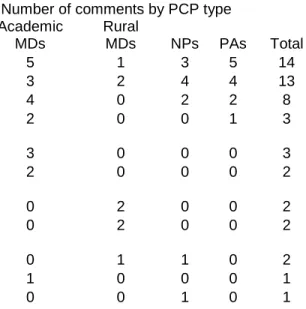
noted in Table 3. In addition to the five most common barriers cited, six other areas were identified as barriers to referral. Table 4 illustrates some of the comments made from each of those areas.
With respect to changes that could be made to the current referral-to-eye-care system, 49 comments in 9 distinct content categories were made by the focus group participants (Table 5). Suggestions on implementing electronic medical records (EMRs) and getting better communication from ECPs were most frequently offered, making up 50% of the total comments. These comments were categorized similarly to those on barriers. Examples of suggestions from each category are shown in Table 6.
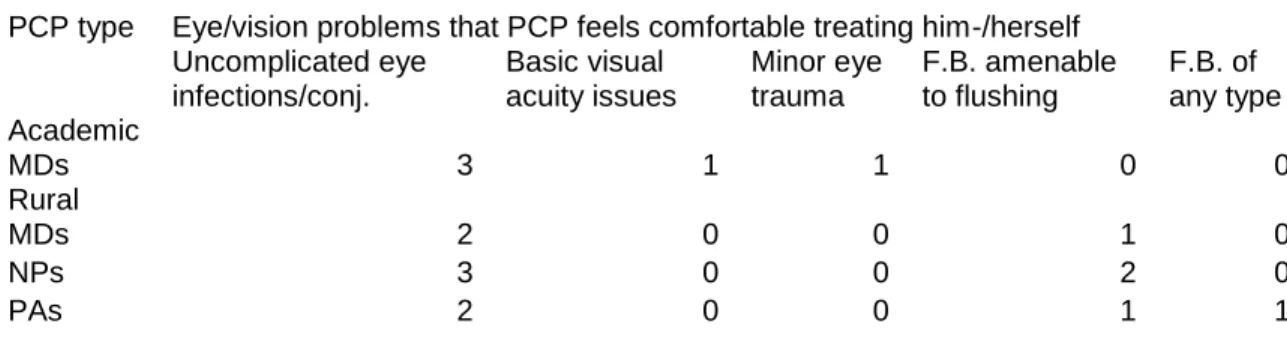
Other data collected show that all PCP types are comfortable treating, (1) uncomplicated eye infections or conjunctivitis and (2) a foreign body amenable to flushing, on their own instead of referring patients with those issues to an ECP. Outside of these two eye/vision problems, most PCPs were not comfortable handling basic visual acuity issues, minor eye trauma, or foreign body of any type. All PCPs except three said that they refer at least one patient to an ECP on a daily basis. Two NPs and one PA said that they refer at least one patient weekly.
Diabetic eye screening was the most commonly cited reason for referral among all PCP types, with cataracts, glaucoma, age related macular degeneration, hypertensive
Table 1. Participant Characteristics: Number of Participants in Each Year Range of Primary Care Experience.
PCP type Years of experience in primary care
<5 5-10 11-20 >20
Academic MDs 1 2 1 1
Rural MDs 1 2 0 1
NPs 1 2 1 0
Table 2. PCP-cited Barriers in the Referral-to-Eye-Care Process.
Barriers to eye care referral Number of comments by PCP type
Academic MDs
Rural
MDs NPs PAs Total
No/little feedback from ECP 5 1 3 5 14
Patient lack of finances/insurance coverage 3 2 4 4 13
Difficulty in scheduling ophthalmology appt. 4 0 2 2 8
Dependence on patient to schedule own appt. 2 0 0 1 3
Too many referrals to process in paper-based
system 3 0 0 0 3
Wait time for patient at ophthalmology office 2 0 0 0 2
Limited access to ECPs (No full-time
ophthalmologist in local area) 0 2 0 0 2
Patient access to transportation 0 2 0 0 2
Can't understand ECP feedback/too much
ophthalmology jargon in notes 0 1 1 0 2
PCP time constraints 1 0 0 0 1
Table 3. Examples of Most Frequently Cited Barriers to Referral.
Barrier Example(s)
No/little feedback from ECP ―Our whole practice has mentioned that we pretty much uniformly don‘t get communication on the vast majority of cases from the academic eye center, which is pretty huge. I mean, why is that? It‘s just a block away! And why aren‘t the
ophthalmologists‘ notes in our EMR? That‘s another thing I just don‘t understand.‖ (Academic MD2)
―One of the most challenging things for me is not knowing if the patients ever see the
ophthalmologist…You kind of rely on your patients. You‘re saying, ‗When was your last eye exam?‘, and the patient says, ‗Well, I think it was in the spring, but I‘m not sure.‘ You really don‘t know the outcome of the ophthalmology visit.‖ (PA3)
Patient lack of finances/insurance ―Some of it is financial – if the family can‘t afford it coverage or their insurance plan doesn‘t have any kind of
vision coverage.‖ (NP1)
Difficulty in scheduling eye ―I have to get through the ‗phone tree‘ before appointment there‘s somebody I can talk to in the ophthalmology
office.‖ (NP1)
―There is a big wait if patients just call for themselves for an ophthalmology appointment.‖ (Academic MD2)
Dependence on patient to schedule ―A lot of times the referral person at our front desk own appointment just hands the patient a phone number. So, it‘s on
the patient to call and schedule the ophthalmology appointment.‖ (Academic MD5)
Too many referrals to process ―One barrier that‘s specific to our clinic is the in a paper-based system overwhelming number of referrals that we go
Table 4. Examples of Additional Barriers Identified.
Barrier Example(s)
Wait time at ophthalmology office ―It‘s important that the patients don‘t have to wait two hours in the lobby when they get to the
ophthalmologist‘s office because people kind of get teed off when that happens.‖ (Academic MD1) Limited access to ECPs ―Well, our local ophthalmologist actually isn‘t truly
local. He comes here once a week or very two weeks, I can‘t remember…If you have an acute problem, then we find ourselves getting on the phone and calling to figure out if he is in town…‖ (Rural MD1)
―If it‘s going to be 4 or 5 days before an
ophthalmologist can get my patient in, it affects how I refer patients.‖ (Rural MD2)
Patient access to transportation ―With my geriatric patients…a fair number of them can‘t go or tell me they can‘t go or ‗I don‘t have a ride‘ or ‗I can‘t drive down there‘.‖ (Rural MD1)
Can't understand ECP feedback ―I just need: ‗I saw your patient, diagnosed them with this, and this is what we‘re doing.‘ Because if I get a copy of their progress note, and they‘ve got all their [ophthalmology] abbreviations, it‘s tough to read. The ophthalmology note is the toughest note to read that I can think of.‖ (Rural MD4)
PCP time constraints ―I don‘t have time to do [eye screening]. I mean, I could be trained to do it, but I don‘t have the time to do that.‖ (Academic MD1)
Table 5. PCP Suggestions for Improving Current Referral-to-Eye-Care System.
Suggestions
Academic MDs
Rural
MDs NPs PAs Total
Implement electronic medical records 5 3 3 2 13
Better communication/feedback from ECPs 4 2 2 3 11
Have ophthalmologists in primary care clinic on
certain days 4 1 2 2 9
Do retinal scans in primary care clinic 2 2 1 2 7
Hire ancillary staff in primary care clinic to do
eye screening 2 0 0 0 2
Have ophthalmologist in area/town 0 2 0 0 2
Have ophthalmology appt. schedule viewable
online 2 0 0 0 2
More streamlined way to make ophthalmology
appts. 0 0 0 2 2
Table 6. Examples of Comments for Improving Current Referral-to-Eye-Care System.
Suggestion Example(s)
Implement EMRs ―I guess in an ideal world if there was just a button I could hit and make it happen. If the EMR is
available and it had a button, so I could just push it and the referral would happen. That would be ideal world, I guess. For me, that would be easy.‖ (Rural MD4)
―I would have a patient-centered medical home where we have electronic health records so that everybody in the system can access everything in the system about that patient. That would be ‗ideal world‘.‖ (NP4)
Better communication/feedback ―I think that number one for me would be getting from ECPs feedback from the referral.‖ (PA4)
―[From the ophthalmologist] I just need: ‗I saw your patient, diagnosed them with this, and this is what we‘re doing [for treatment].‘ Because if I get a copy of their progress note, and they‘ve got all their [ophthalmology] abbreviations, it‘s tough to read. The ophthalmology note is the toughest note to read that I can think of.‖ (Rural MD4)
Have ophthalmologists in primary ―Given that a lot of my patients cancel their
care clinic specialty appointments because they can‘t afford the $35 co-pay, I would say: bring the patients in once a month and we have eye clinic at the primary care facility. You, the PCP, do your diabetic visit at the same time [as the eye visit]; it‘s a $10 co-pay or whatever lower co-pay. Bring eye care to the patients…In family practice, I‘ve always viewed us a more of a ‗medical home‘. I mean, we don‘t meet all the stipulations through Medicare, but that‘s how we view ourselves. So, in my mind, that‘s
they‘re going to come and get their care there [at the primary care clinic].‖ (Academic MD2)
―If you were in practice right down the hall from a really good ophthalmologist that you didn‘t mind referring patients to, then that would be ideal.‖ (NP4)
―Maybe just have one day that ophthalmologists will come in to the primary care setting, and they could do screenings right there. We could screen a lot of people right there.‖ (PA4)
Do retinal scans in primary care ―It would be ideal, because of all our diabetics, to clinic have either the [ophthalmologist] in the practice
with us or at least do the retina scan here so that we can be sure that a higher percentage of patients do get things checked.‖ (Academic MD5)
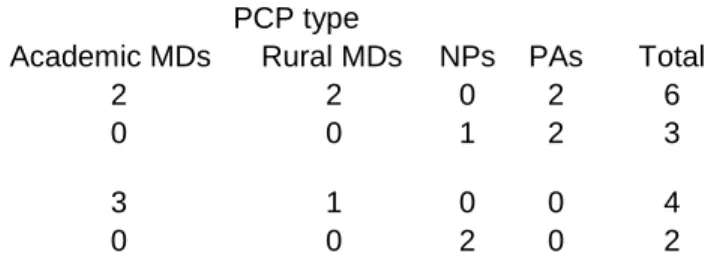
Table 7. PCP interest in performing more eye care than currently performing.
Would you be interested in performing more eye care in your office/clinic than
you perform currently? PCP type
Academic MDs Rural MDs NPs PAs Total
No, costs too much time and/or money 2 2 0 2 6
No, don't feel capable 0 0 1 2 3
Yes, if ancillary staff did it and we were
reimbursed 3 1 0 0 4
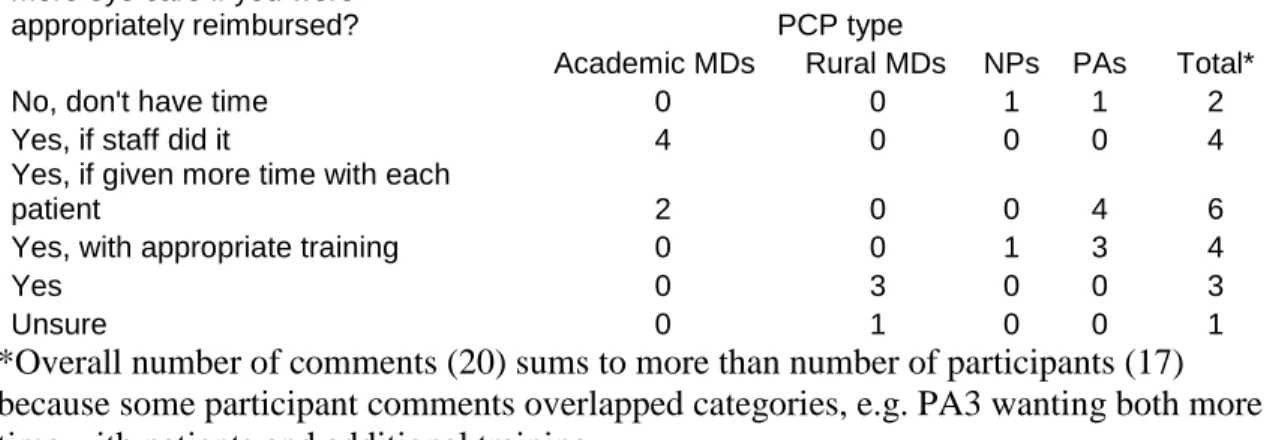
Table 8. PCP interest in performing more eye care than currently performing if reimbursement were appropriate.
Would you be interested in performing more eye care if you were
appropriately reimbursed? PCP type
Academic MDs Rural MDs NPs PAs Total*
No, don't have time 0 0 1 1 2
Yes, if staff did it 4 0 0 0 4
Yes, if given more time with each
patient 2 0 0 4 6
Yes, with appropriate training 0 0 1 3 4
Yes 0 3 0 0 3
Unsure 0 1 0 0 1
*Overall number of comments (20) sums to more than number of participants (17) because some participant comments overlapped categories, e.g. PA3 wanting both more time with patients and additional training
DISCUSSION
Little prior work has been able to demonstrate the referral-to-eye-care practices of PCPs and what barriers PCPs face in the referral process. The work that has been done has focused mainly on MD (i.e., not NP or PA) referral-to-eye-care patterns for patients with diabetes.6-12 Through this pilot study, we sought to identify referral-to-eye-care barriers from the PCP (including NP and PA) perspective and to solicit suggestions from PCPs on how problems in the current referral system can be remedied.
We used the focus group method for several reasons. Focus groups facilitate an atmosphere of self-disclosure in which participants can freely express ideas, opinions, and feelings about a particular topic among a group of people who share similar characteristics.14 In our study, all participants shared the experience of providing
primary care and navigating the referral system to get their patients seen by ECPs. One of the reasons we separated our focus groups into different provider types (MD, PA, NP) was to maintain a comfortable, permissive environment for all participants, e.g., PAs might be more likely to share freely if they are discussing with other PAs and not with an MD(s) who could potentially supervise them at work. Another reason for this separation was to determine if any differences in opinion exist between provider types. Focus groups allow a collection of data that present a range of opinions about a particular topic in a rapid and in-depth fashion.15 Analysis of the data from three or more focus groups commonly helps identify trends and patterns regarding the issue of interest.14
EMR, or hard copy via mail. Two other PCPs said they receive feedback from ECPs, but the feedback is often difficult to understand because of the ECPs use of
“ophthalmology abbreviations and jargon” (rural MD4) or “ophthalmology mumbo jumbo” (NP1). Our findings are not the first to note poor communication on the part of ECPs13, 16 and specialists in general.17
PCPs in our study suggested that feedback from ECPs be concise and understandable. A suggestion from one PCP was to receive a referral follow-up note from the ECP saying, “I saw your patient, diagnosed them with X, and Y is what we‟re doing [for treatment and follow-up]” (rural MD4). This suggestion closely parallels both our own and published18 recommendations to ECPs of: 1) returning a report to the PCP in a format understandable to non-ECPs, 2) including in the report results of the eye examination and treatment plan, and 3) adding any recommendations for follow-up. A few PCPs in our study also mentioned that they would like to receive a “no-show” notice from ECPs when their patients do not show up for eye care appointments, which is another published recommendation.18
because I have a higher chance of actually getting communication from an outside provider than one at the academic eye center.” (Academic MD2)
The implementation and/or better utilization of EMRs was the most frequently cited suggestion for referral system improvement among the PCPs in our study. Academic PCPs in our study noted that the system in which they work has an EMR, but the ECPs do not properly utilize it, e.g. academic ECPs do not place their progress notes in the EMR for all other providers to access. The use of EMRs could facilitate easier and more consistent communication between PCPs and ECPs and also reduce the difficulty of scheduling eye care appointments, the reliance on patients to schedule their own eye care appointments, and the overwhelming number of referrals to process in a paper-based system, the third, fourth, and fifth most frequently cited barriers in this study, respectively. Academic PCPs suggested that if their EMR system had a function that allows primary care clinics to view the academic eye center‟s appointment schedule online, scheduling could be completed by the clinic‟s office staff before patients leave the primary care clinic. This type of scheduling could reduce both paperwork by primary care clinics and reliance on patients to self-schedule appointments after they leave the primary care appointment. Additionally, properly implemented EMRs can provide automated referral reminders to PCPs, which can be important considering the time constraints and complexity of patient issues facing PCPs.10, 11, 20
EMRs. In fact, at least two of the four PCPs in the rural MD group had already purchased and implemented EMRs in their own practices despite the cost and time required to do so. With the recent $19 billion allocation to the health information technology program of the American Recovery and Reinvestment Act of 2009, EMR implementation could become a more realistic goal in the near future, even for those PCPs practicing in rural and underserved areas.21
Patients‟ lack of finances and/or insurance coverage was the second most frequently identified barrier to referral. This finding is in line with findings from other qualitative studies about overall barriers to eye care (i.e. not solely barriers to referral) with PCPs,12 ECPs,12, 22 and patients.12, 22 Although PCPs from all focus groups noted this issue as a barrier to referral, few offered suggestions on how to remedy the situation. One PCP, however, suggested the following: “Given that a lot of my patients cancel their specialty appointments because they can‟t afford the $35 co-pay, I would say: bring the patients in once a month and we have eye clinic at the primary care facility. You, the PCP, do your diabetic visit at the same time; it‟s a $10 co-pay or whatever lower co-pay. Bring eye care to the patients. In family practice, I‟ve always viewed us a more of a „medical home‟…So, in my mind, [specialty services] are something that we should provide, and I‟ve worked in practices that have done that. We‟ve brought in specialists to our facility to provide better services for our patients, and it works really well. Our patients are more familiar with us, and so it‟s much more likely that they‟re going to come and get their care there [at the primary care clinic].” (Academic MD2)
the previous quote. Alternatively, many but not all PCPs were open to the idea of performing more eye care in their own clinic, with a few stipulations. Most PCPs stated that proper financial and/or temporal reimbursement would have to be in place before they would consider taking on more eye care duties. Academic MDs tended to want technicians or other clinic staff to perform the extra eye care duties. Rural MDs were more willing to take on the duties themselves, while NPs and PAs tended to want more training in eye care before performing extra eye care duties. In fact, NPs, PAs, and some MDs were interested in attending continuing medical education (CME)
conferences taught by ophthalmologists to sharpen their eye care skills. For example, PA1 said, “If there would be a hands-on CME [with an ophthalmologist], I would
absolutely attend – like a half a day Saturday kind of thing, “ to which PA4 said, “I think a lot of mid-levels would attend that.”
Participants in the rural MD focus group cited two barriers that were unique to that particular focus group: limited access to ECPs and patients‟ lack of access to
transportation. Rural MDs noted that the “local” ophthalmologist was only in town one to two days per week, which caused them to rely more on referral to a nearby optometrist. Rural PCPs relying more on optometrists than do their non-rural counterparts is a finding that is not unique to our study.8 Rural MDs noted that on referrals requiring the
immediate attention of an ophthalmologist (e.g., a patient with glaucoma risk factors who presents with a painful, red eye), PCPs must call to several clinics within a 50 mile radius to determine where the “local” ophthalmologist is practicing that day. Rural MDs also mentioned that several of their patients, particularly elderly patients, tell them not to refer them to ECPs because “I don‟t have a ride to get there,” which another study also found in focus groups with patients and ECPs.22 Patients often must have family
to take their family member to multiple appointments on different days. Thus, the PCP appointment usually takes priority and specialty appointments are not attended (rural MD1).
We note several potential limitations to our study. Focus group analysis carries with it the risk of investigator subjectivity during data analysis.14 To avoid this, we used systematic and reproducible methods of coding and categorizing with the use of qualitative software and two-investigator content analysis. Validity and generalizability also are common concerns in focus group studies.14 To ensure validity, we pilot tested questions to confirm that they were understood. During focus group discussions, the moderator sought to clarify any areas of ambiguity. In addition, before the end of each focus group, the moderator gave a brief summary of what had been discussed and asked participants to verify the summary comments. As for generalizability, focus groups studies are not intended to generalize due to their nature of going in-depth on a particular topic with a few participants. Instead, the concept of transferability is
suggested, which means it is up to the receiver (i.e., you, the reader) to decide if the results can be applied to a different situation.14 Generalizability also is limited because few provider characteristics were available for focus group participants in our study.
This pilot study was designed to learn more about the barriers that PCPs face in the referral-to-eye-care process and what suggestions PCPs have to remedy current referral problems. The key findings of this study suggest that PCPs recognize major problems within the current referral system and desire better communication and collaboration with ECPs and better implementation and utilization of EMRs. ECPs can do a better job of providing prompt and understandable feedback to PCPs regarding their referred
References
1. U.S. interim projections by age, sex, race, and Hispanic origin. Table 2a: projected population of the United States, by age and sex: 2000 to 2050. 2004. 2. Lee PP, Feldman ZW, Ostermann J, Brown DS, Sloan FA. Longitudinal prevalence of major eye diseases. Arch Ophthalmol 2003;121:1303-1310.
3. Sloan FA, Picone G, Brown DS, Lee PP. Longitudinal analysis of the relationship between regular eye examinations and changes in visual and functional status. J Am Geriatr Soc 2005;53:1867-1874.
4. Lee PP, Feldman ZW, Ostermann J, Brown DS, Sloan FA. Longitudinal rates of annual eye examinations of persons with diabetes and chronic eye diseases.
Ophthalmology 2003;110:1952-1959.
5. Lee DJ, Lam BL, Arora S, et al. Reported eye care utilization and health insurance status among US adults. Arch Ophthalmol 2009;127:303-310.
6. Wylie-Rosett J, Basch C, Walker EA, et al. Ophthalmic referral rates for patients with diabetes in primary-care clinics located in disadvantaged urban communities. J Diabetes Complications 1995;9:49-54.
7. Dickson PR, McCarty CA, Keeffe JE, Baxter R, Harper CA, Taylor HR. Diabetic retinopathy: examination practices and referral patterns of general practitioners. Med J Aust 1996;164:341-344.
8. Lazaridis EN, Qiu C, Kraft SK, Marrero DG. Same eyes, different doctors: differences in primary care physician referrals for diabetic retinopathy screening. Diabetes Care 1997;20:1073-1077.
9. Lawler FH, Viviani N. Patient and physician perspectives regarding treatment of diabetes: compliance with practice guidelines. J Fam Pract 1997;44:369-373.
10. Kirkman MS, Williams SR, Caffrey HH, Marrero DG. Impact of a program to improve adherence to diabetes guidelines by primary care physicians. Diabetes Care 2002;25:1946-1951.
11. Kraft SK, Marrero DG, Lazaridis EN, Fineberg N, Qiu C, Clark CM, Jr. Primary care physicians' practice patterns and diabetic retinopathy. Current levels of care. Arch Fam Med 1997;6:29-37.
12. Hartnett ME, Key IJ, Loyacano NM, Horswell RL, Desalvo KB. Perceived barriers to diabetic eye care: qualitative study of patients and physicians. Arch Ophthalmol 2005;123:387-391.
13. de Wet M, Ackermann L. Improving eye care in the primary health care setting. Curationis 2000;23:36-42.
14. Krueger RA, Casey MA. Focus groups: A practical guide for applied research. 3rd ed. Thousand Oaks: Sage; 2000.
15. Daly J, Kellehear A, Gliksman M, Daly KG. The public health researcher: a methodological guide: Oxford University Press; 1997.
16. Li L, Tsang MK, Lau IT, Poon K, Lau E. Assessment of the Quality of Referrals for Diabetic Retinopathy. Assessment 2001.
17. Thind A, Freeman T, Thorpe C, Burt A, Stewart M. Family Physicians' Satisfaction with Current Practice: What Is the Role of Their Interactions with Specialists? Healthc Policy 2009;4:e145-e158.
19. Rowe S, MacLean CH, Shekelle PG. Preventing visual loss from chronic eye disease in primary care: scientific review. JAMA 2004;291:1487-1495.
20. Parchman ML, Romero RL, Pugh JA. Encounters by patients with type 2 diabetes—complex and demanding: an observational study. The Annals of Family Medicine 2006;4:40-45.
21. Blumenthal D. Stimulating the adoption of health information technology. N Engl J Med 2009;360:1477-1479.
NON-MANUSCRIPT ADDENDA:
RESEARCH QUESTION
What are the referral practices and barriers to referral for primary care providers (MDs, NPs, & PAs) to ophthalmologic examination for patients age 65 years or older?
HYPOTHESIS
We expect primary care providers to refer patients to eye care only as their busy schedules allow. We hypothesize that time constraints during patient visits will be a commonly noted barrier to referral by PCPs. We expect most PCPs to be using a paper-based system for referrals, and PCPs will be aware of the current inadequacies in the referral system.
Addendum to Introduction (pages 5-6)
Addendum to Methods (see page 6ff)
Systematic Review of the Literature:
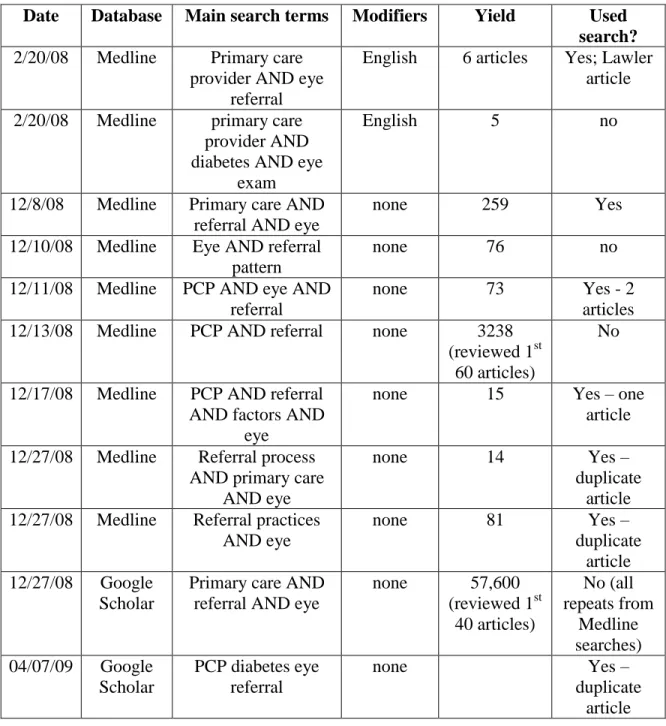
We first reviewed the literature on primary care provider referral practices to eye care between 1966 and October 2008. The initial MEDLINE search terms were the following: ―primary care provider AND eye referral‖; ―primary care provider AND diabetes AND eye exam‖; ―primary care AND eye‖; ―primary care AND referral AND eye‖; ―eye AND referral pattern‖; ―PCP AND eye AND referral‖; ―PCP AND referral‖; ―PCP AND referral AND factors AND eye‖. After those searches yielded very few potentially
relevant articles, we used the following MEDLINE search terms a few months later to search for literature between 1966 and February 2009: ―referral process AND primary care AND eye‖; ―referral practices AND eye‖; ―primary care AND referral AND eye‖; ―PCP diabetes eye referral‖; and a repeat of several search terms from the original search
terms listed above. Additionally, we performed two Google Scholar searches using the terms ―primary care AND referral AND eye‖ and ―PCP diabetes eye referral‖ and used
the Google Scholar function of identifying more recent articles that have cited relevant articles. We also examined relevant article reference lists for other potentially relevant studies.
We reviewed abstracts for citations in peer-reviewed journals, and because of the paucity of relevant studies, did not place any limits on the MEDLINE search terms. The initial searches were low yield and resulted in only two directly applicable articles (see
which (Lawler) was included, leaving five articles unused. As a result, we expanded our MEDLINE search to an analogous topic, i.e., primary care referral of diabetic Medicare patients to foot care under the search terms ―diabetes AND referral AND medicare‖, ―referral AND diabetes AND foot care‖, etc., but these searches failed to yield relevant
studies. Finally, we searched MEDLINE for referral practices of PCPs in general using the search terms ―referral AND PCP AND patterns‖, ―referral AND PCP AND
practices‖, and ―primary care AND referral‖ and the aforementioned Google Scholar
searches. These searches along with a reference list search yielded five additional applicable articles (see Wylie-Rosett6, Dickson7, Kirkman10, Kraft11, and Hartnett12 articles in manuscript reference list). For a detailed list of systematic search terms and limits, please refer to Table 11 in the Appendix.
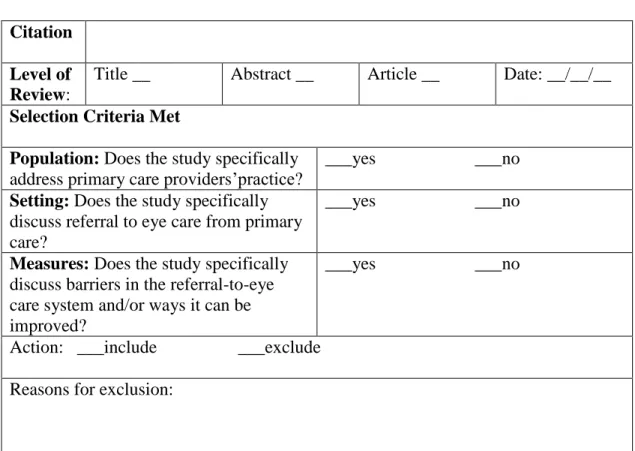
We excluded the following: studies that used the words ―primary care‖ and ―referral‖ and ―eye care‖ or similar terms but did not actually assess 1) factors or barriers affecting the
referral process or 2) potential solutions for the deficiencies of the current system; studies that assessed the referral pattern between primary care eye-specific providers, i.e.,
Addendum to Results (see pages 8-19)
Table 9. How often PCPs see & refer patients with eye/vision problems
PCP type
Frequency of caring for patients with eye/vision problems; frequency of referral to ECP
Multiple/day Daily Weekly
No answer
Academic MDs 4; 0 0; 5 0; 0 1; 0
Rural MDs 4; 0 0; 3 0; 0 0; 0
NPs 0; 0 1; 3 0; 2 3; 0
PAs 2; 1 2; 2 0; 1 0; 0
Table 10. Eye/vision problems that PCPs would treat without ECP intervention
PCP type Eye/vision problems that PCP feels comfortable treating him-/herself Uncomplicated eye infections/conj. Basic visual acuity issues Minor eye trauma F.B. amenable to flushing F.B. of any type Academic
MDs 3 1 1 0 0
Rural
MDs 2 0 0 1 0
NPs 3 0 0 2 0
PAs 2 0 0 1 1
Addendum to Discussion (see pages 20-26)
Focus Groups as a Research Method
groups were not held with NP and PA groups in rural settings because insufficient numbers of those PCP types were recruited in the recruitment phase of this study.
Focus groups are commonly used as a form of qualitative research method in the
sociology of health and illness. Compared with individual interviews, focus groups allow access to research participants who may find one-on-one, face-to-face interaction
intimidating or uncomfortable1. Additionally, focus groups can create multiple lines of communication and offer participants a safe environment where they can share
experiences, practices, ideas, and beliefs in the company of people which have common experiences in clinical practice. The resulting atmosphere of familiarity is helpful in facilitating statements from focus group participants. The interaction among group participants often reduces the amount of interaction between the moderator and the individual members of the group, and the dynamics within the group decrease the
influence of the researcher over the interview process and thereby give a more prominent role to the participants‘ opinions2
.
The group setting has a synergistic effect in stimulating thinking and verbal contributions. Less direct methods such as focus groups are considered as more
appropriate to elicit responses that better reflect the social realities of the interviewees3. With particular reference to our research objective to explore particular referral practices of primary care providers to eye care and in order to incorporate the experiences of those practicing primary care into survey questions, focus groups were chosen as the
Focus groups are group discussions with 8–12 participants in most cases, but one of us (Paul P. Lee) who has extensive experience in conducting focus groups has found that 4-6 participants is optimal for productive, meaningful discussion. The moderator addresses a number of issues (foci) for discussion and ensures that the discussion remains on the subject of interest. Otherwise, interference with the discussion is kept to a minimum, which is motivated by the aim to create a communication situation which closely resembles a natural interaction3. In the present study, group participants were asked to discuss what types of barriers prevent them from referring their primary care patients to an eye care provider and what ideas they had for potential solutions to those barriers. We developed a set of focus group guidelines for the moderator that included probes
designed to re-focus the discussion if necessary.
Advantages/Disadvantages of Qualitative Research
Qualitative research generally does a better job than quantitative research at reaching a greater level of depth and detail into the topic of interest. Because of the greater depth, however, fewer subjects tend to be studied, and the result is a reduction in
generalizability. Qualitative methods tend to create an environment in which all subjects can feel free to openly discuss new ideas and generate new theories. Participants can discuss issues that are important to them instead of answering closed questions, and they can also clarify ambiguities in the questions or discussion topics. Some participants, however, may feel that the openness of the interaction is uncomfortable because of personality, gender, race/ethnicity or various other differences between him/her and the researcher, and the result can be altered answers and discussion during the qualitative sessions3,5.
Qualitative methods can yield results that are difficult to replicate due to lack of
Lessons Learned from Conducting Focus Groups (that I did not find in published
sources)
Conducting focus groups with PCPs was challenging. Most PCPs are time constrained and understandably hesitant to give a piece of their limited personal time to participate in a research study. While planning the first focus group with academic MDs, I learned to over-recruit for each group. For example, I originally had seven primary care MD‘s signed up for the first focus group, but one of these cancelled at the last minute and one did not show up for the focus group. For subsequent groups, I over-recruited by two to four PCPs, more than the suggested over-recruitment of one to two3, to ensure that I had at least four participants in each group. As I anticipated, one or more potential
participants cancelled or failed to show up for each of the four groups, making me glad that I had over-recruited.
I also learned to always have a plan B (and plan C). With each group, I tried to have a plan for an alternate location, time, and/or date in the case that some unforeseen circumstance presented itself. For example, I originally planned the rural MD focus group for a location in the mountains of North Carolina. The restaurant location, menu, and tentative date and time had been set up weeks in advance, but my recruiter, an MD who works in the area of the planned focus group, kept forgetting to recruit other
focus group in December, just before I left the country for a study abroad trip. If I had not had this plan B, rural MDs would not have been represented in this study.
ACKNOWLEDGEMENTS
My sincere thanks to the following people for their assistance with this study and paper: - My wife, Esma, who has never failed to support me through good times and bad and provided much needed assistance with organizing and conducting the focus groups
- My Mom and Dad, Roger and Kay, whose prayers and support are always present on my behalf, even when their problems have been bigger than my own
- Paul Lee, MD JD, who has been understanding with my unexpected delays and has provided and continues to provide invaluable mentorship
- Margaret Gourlay, MD MPH, who patiently provided suggestions and editing - Diane Calleson, PhD, who provided support, understanding, and advice during the
APPENDIX:
Table 11 (Appendix Item 1). Systematic Review Literature Searches
Date Database Main search terms Modifiers Yield Used search? 2/20/08 Medline Primary care
provider AND eye referral
English 6 articles Yes; Lawler article 2/20/08 Medline primary care
provider AND diabetes AND eye
exam
English 5 no
12/8/08 Medline Primary care AND referral AND eye
none 259 Yes
12/10/08 Medline Eye AND referral pattern
none 76 no
12/11/08 Medline PCP AND eye AND referral
none 73 Yes - 2
articles 12/13/08 Medline PCP AND referral none 3238
(reviewed 1st 60 articles)
No
12/17/08 Medline PCP AND referral AND factors AND
eye
none 15 Yes – one
article
12/27/08 Medline Referral process AND primary care
AND eye
none 14 Yes –
duplicate article 12/27/08 Medline Referral practices
AND eye
none 81 Yes –
duplicate article 12/27/08 Google
Scholar
Primary care AND referral AND eye
none 57,600 (reviewed 1st
40 articles)
No (all repeats from
Medline searches) 04/07/09 Google
Scholar
PCP diabetes eye referral
none Yes –
Table 12 (Appendix Item 2). Inclusion/Exclusion Checklist (adapted from Cook et al.6) Citation
Level of Review:
Title __ Abstract __ Article __ Date: __/__/__
Selection Criteria Met
Population: Does the study specifically address primary care providers‘practice?
___yes ___no Setting: Does the study specifically
discuss referral to eye care from primary care?
___yes ___no
Measures: Does the study specifically discuss barriers in the referral-to-eye care system and/or ways it can be improved?
___yes ___no
Action: ___include ___exclude Reasons for exclusion:
Appendix Item 3. Investigative Ophthalmology and Visual Science manuscript guidelines
A. Manuscript Preparation
Structure: the main manuscript document should be organized as follows: a. Title Page
b. Structured Abstract: 250-word limit c. Text
d. Acknowledgments e. References
f. Figure legends, tables, and figures, if not embedded in text Pages should be numbered.
1. Title Page
The title must contain no more than 150 characters, including punctuation and spaces.
2. Structured abstract
A structured abstract of fewer than 250 words is required for articles and should be arranged under the following headings: Purpose, Methods, Results, Conclusions. Define abbreviations at first mention, and do not include references. The abstract must be included as part of the main manuscript file.
3. Text
IOVS recommends a 3,500 or fewer word count, excluding title page, legends, and references. The text should be double-spaced. In a brief Introduction (don't use any subheadings), provide the research rationale and objectives without extensively reviewing the literature.
In the Methods section, describe the experimental design, subjects used, and procedures followed. Previously published procedures should be identified by reference only. Provide sufficient detail to enable others to duplicate the research. Use standard chemical or nonproprietary pharmaceutical nomenclature. In parentheses, identify specific sources by brand name, company, city, and state or country.
If human subjects were involved in the investigation, the Methods section must confirm that: (1) the research followed the tenets of the Declaration of Helsinki; (2) informed consent was obtained from the subjects after explanation of the nature and possible consequences of the study; and (3) where applicable, the research was approved by the institutional human experimentation
committee or institutional review board (IRB).
If experimental animals were used in the investigation, the
Methods section must confirm adherence to the ARVO Statement for the Use of Animals in Ophthalmic and Vision Research and, where applicable, approval by the appropriate IRB.
Present the Results with a minimum of discussion. Cite all tables and figures in numerical order.
Please review your manuscript carefully prior to submission. Authors needing or seeking assistance with English grammar and usage may utilize the IOVS Volunteer Editor Program (see http://www.iovs.org/misc/voleds.shtml).
4. Acknowledgments
Acknowledgments should be written in the third person and be limited to colleagues and research assistants. Acknowledgments are not meant to recognize appreciation for personal or manuscript production support. Including dedications to individuals or groups is not permitted by IOVS journal policy.
5. References
List references numerically by order of citation in the text, not alphabetically. All references must be cited in the text or tables, shown as superscript numbers. Authors are responsible for the accuracy of references.
Unpublished data (including material in preparation or submitted) or personal communications should be listed parenthetically in the text only with year received or recorded.
References to journal articles should include (1) author(s) (if there are more than six, write "et al." after the third name), (2) title, (3) journal name (as abbreviated in Index Medicus), (4) year, (5) volume number, and (6) inclusive page numbers.
References to books should include (1) author(s), (2) chapter title (if any), (3) editors (if any), (4) title of book, (5) city of publication, (6) publisher, (7) year, and (8) inclusive page numbers.
ARVO abstract citations are to appear parenthetically within the text, not as bibliographic references. For ARVO abstracts from 1977 to 2001, citations should include (1) name of first author, (2) "IOVS", (3) year, (4) volume number, (5) "ARVO Abstract", and (6) program number. For ARVO abstracts from 2002 forward, citations should include (1) name of first author, (2) "IOVS", (3) year, (4) volume number, (5) "ARVO E-Abstract", and (6) program number.
Reviewers are not required to look up online website references.
Journals
Choudhury A, Palkanis VA, Bowers WE. Characterisation and functional activity of dendritic cells from rat choroid. Exp Eye Res. 1994;59:297-304.
Books
Stryer L. Biochemistry. 2nd ed. San Francisco, CA: WH Freeman; 1981:559-596.
Abstracts
1977-2001: (Otaishat NM, et al. IOVS 1997;38:ARVO Abstract 1417)
2002- : (Roska BM, et al. IOVS 2002;43:ARVO E-Abstract 1415)
6. Tables, legends, figures, movies
a. Tables must be included in the main manuscript file. Each table should have a brief, self-contained title, understandable without reference to the text. Assign a short heading to each table column. Footnotes in tables should use symbols in the following sequence: *, †, ‡, §, ||, and #. Data that can be given in the text in two or three sentences should not be presented in table format.
b. Legends should sum up the intent and content of the data contained in the figure. Use complete sentences or noun phrases with necessary modifiers, and conclude with a period.
c. Figures should be cited in the text, in numerical order using Arabic numerals. Figures may be placed within the main manuscript file or uploaded separately. If a figure contains multiple parts, it should be assembled on one page; Figures 1A and 1B should not appear on separate pages. Please label each figure appropriately just beneath the inserted image. For example, labels should read "Fig. 1" or "Figure 1."
In the event that your manuscript is accepted, the Editorial Office will require you to upload your figures as TIFF or EPS files for the printer. Therefore, while any type of file may be embedded within the manuscript file, it is
color photographs; and 600 dpi for combinations, such as photographs labeled with letters or other markings
containing thin lines. For more detail regarding digital graphics, see http://cpc.cadmus.com/da/guidelines.asp. Authors of accepted manuscripts can see
http://www.iovs.org/misc/accepted.shtml for further details regarding figure requirements for publication.
References for Addenda/Appendix
1
Morgan DL. Focus groups as qualitative research. Newbury Park, CA: Sage; 1988.
2
Madriz E. Focus groups in feminist research. In Handbook for Qualitative Research, 2nd ed. (Denzin NK & Lincoln YS, eds.), London: Sage, pp. 835-850; 2000.
3
Krueger RA, Casey MA. Focus groups: a practical guide for applied research. 3rd ed. Thousand Oaks: Sage; 2000.
4
Byrne MM. Evaluating the findings of qualitative research. AORN J. 2001 Mar;73(3):703-6.
5
Perecman E & Curran SR, eds. A handbook for social science field research: essays and bibliographic sources on research design and methods. Thousand Oaks: Sage; 2006.
6