The effects of the 2003 ACGME Resident duty
hour standards on mortality in hospitalized
patients: Systematic Review
By
Rex Dancel
A Master's Paper submitted to the faculty of the University of North Carolina at Chapel Hill in partial fulfillment of the requirements for the degree of Master of Public Health in the Public
Health Leadership Program.
ABSTRACT
Background
The Accreditation Council for Graduate Medical Education (ACGME) instituted new duty hour rules for all residents in ACGME accredited residency programs effective July I, 2003.
Purpose
To evaluate the evidence regarding changes in mortality rates in hospitalized patients after implementation of new ACGME resident duty hour restrictions.
Data Sources
Electronic searches of Pubmed and the Cochrane Collaboration Library were conducted, as well as a hand search of other sources for studies performed after the 2003 ACGME resident duty standards took effect.
Study Selection
Studies of any size or design that evaluated mortality in hospitalized patients at ACGME-accredited programs, after implementation of the new resident duty hour rules, were eligible. Nine studies were included in the review.
Results
Nine studies of poor to fair quality evaluating patients from multiple types of settings were incorporated into the systematic review. Mortality for both medical and surgical patients were evaluated. In medical patients, three of four studies offair methodological quality found
improved mortality outcomes. Only one of five studies of fair methodological quality in surgical patients showed improved mortality outcomes. None of the studies found worsening mortality outcomes in hospitalized patients after implementation of the new ACGME duty hollr standards. In three studies where both medical and surgical patients were considered together, none noted changes in mortality outcomes for surgical patients, while two out of three noted improvement in mortality outcomes in medical patients.
Discussion
BACKGROUND
INTRODUCTION
Upon graduating from medical school, newly appointed Medical Doctors enter a period of postgraduate training known as residency. This is a critical time in the development of new physicians, as they are able to focus their studies on the specialized field of medicine they have chosen for their careers. Most will find residency to be more demanding than their years in medical school, due to such factors as a heightened level of responsibility to patients and higher patient loads than one might have experienced while in school.
Another factor that plays into the heightened level of difficulty observed in residency training when compared to medical school is the increase in actual hours spent working within the medical setting. The conventional model of residency training of the past often involved long work hours, as some saw this as a way to build stamina, character, and experience. Others have seen long, grueling days as a resident as a rite of passage. 2 However, there has been
Graduate Medical Education (ACGME). In 2003, the ACGME implemented new resident duty hour rules. 4Since that time, several studies have been carried out to assess the effect of resident duty hour limits on the well-being of patients. This systematic review will evaluate the literature studying mortality outcomes in hospitalized patients since the institution of the ACGME's 2003 resident duty hour rules.
THE ACGME AND PAST ATTEMPTS AT DUTY HOUR REGULATION
The ACGME is the governing body for U.S. graduate medical education programs. As such, it has the responsibility of certifying more than 8300 programs that collectively train more than 105,000 medical residents and fellows in this country. 1 A primary focus of the ACGME, a focus that has stretched back more than two decades, is the regulation and monitoring of resident work hours. 2 As early as the 1980's, the ACGME began formulating a stance towards resident duty hours in the fields of internal medicine and pediatrics, proposing that "hospital duties should not be so pressing or consuming that they preclude ample time for other important phases of the training program or for personal needs". 3 In 1987, the ACGME expanded their
recommendations for regulation of resident duty hours to other specialties. 3
recommendations were detailed in a report to the ACGME in June of2002. 4 Although these recommendations were not made into residency mandates until one year later in July of2003, some institutions and residency programs across the country did implement the new ACGME Work Group's duty hour recommendations in 2002, one year before they were required.
The recommendations of the 2001 ACGME Work Group involved limiting duty hours in
multiple facets. It restricted residents from working more than 80 hours per week, averaged over a four week period. For example, if a resident worked greater than 80 hours during one week of his/her rotation (which is permissible), he/she must make up for it by working less hours during one of the remaining three weeks. Another stipulation ofthe new standards is that residents must be free of patient care responsibilities one day in a given seven day period, again averaged over a four week time frame. Additionally, residents must not be on call more frequently than every third night, averaged over a four week period. When the resident takes call in a hospital setting, he/she can work no longer than 24 hours. After this 24 hour period, the resident is allowed to work an additional six hours to transfer care to residents coming onto duty, attend to inpatient or outpatient continuity of care matters, or for educational debriefing or didactic sessions. Under the new standards, a resident cannot accept responsibility for new patients after a 24 hour call period has been completed. Finally, the ACGME has stipulated that residents must be granted a minimum of I 0 hours to rest between duty periods. 4
young woman by the name of Libby Zion died after a sequence of events in a local hospital. Ms. Zion, then an 18 year old college student and daughter of a well-known New York City
newspaper columnist, was seen in the emergency room of New York Hospital on the morning of March 51h. She was initially evaluated by a junior medical resident and admitted with symptoms
including fever, chills, and anxiety. She had also ingested illicit substances and was taking other prescription medications prior to her presentation to the hospital, which was unknown to those in charge of her care at the time. She died within 24 hours of admission from what was deemed a fatal drug interaction after being given multiple medications to control her symptoms. 5 The medical intern who helped in her care had been awake for 18 hours and had the responsibility of multiple patient care units within the hospital. 2
After consulting with other medical organizations and the ACGME, the Bell Commission's initial recommendations were modified, and in July of1989, five years after the death of Libby Zion, Section 405.4 of the New York Codes, Rules and Regulations of the Department of Health, was enacted. 2 These rules made New York the first state to statutorily mandate limits on
residency duty hours. 5 The 405 Regulations, also known as the Bell Commission Regulations, stipulated a maximum of 80 hours of resident duties per week, averaged over four weeks, a minimum of eight hours of rest in between work assignments, and a maximum of24 hours of
. k 6
consecutive wor .
Over the next several years, compliance with the Bell Commission Regulations was monitored by theN ew York Department of Health. Almost a decade after implementation of Section 405 Regulations, the Department of Health undertook the first comprehensive endeavor to ascertain compliance with the new regulations. In investigating the 12 hospitals within their jurisdiction, the NY Department of Health discovered that all had violated the regulations in some way, with the surgical specialties more consistently found to be in violation. 2
self-reported duty hours. 7 The majority of residents surveyed also endorsed a supportive environment towards compliance with the 405 Regulations within their departments. 7
Being the first state to mandate limits on resident work hours, the New York model of resident duty hour standards was observed closely by interested parties. Recognizing problems related to traditional methods of resident training, as well as increasing calls from the public to help curb medical errors, several states tried to follow New York's example. In Massachusetts, the Committee on Health Care of the General Court of Massachusetts, composed of state medical school deans, physicians, residents, patient representatives, and hospital executives, drafted guidelines for resident duty hour limitations to be voluntarily instituted by the state's hospitals in 1989.5 Similarly, a committee composed of individuals from all of California's medical schools developed regulations inl998 to limit resident duty hours to 84 hours a week. 5 In June of2002, the New Jersey State Assembly passed Assembly Bill1852 restricting the state's medical residents from working more than 80 hours per week.
Efforts to regulate resident work hours came at the federal level as well. In April of 200 I, a consortium of organizations and individuals, including Dr. Bertrand Bell of New York,
group were older, and had a higher prevalence of hypertension, diabetes, and past myocardial infarction. The authors found no statistically significant difference in in-hospital mortality rates between groups. The mortality rate in the before group was 4.2%, while the rate in the post group was 2.8% (p=0.23), with an absolute difference of 1.4%. The odds ratio for in-hospital mortality, adjusted for age, sex, cardiac arrest at presentation, Killip class (risk stratification classification system for patients undergoing acute MI), systolic blood pressure, heart rate, serum creatinine, and elevated cardiac markers was 0.47 (0.18-1.20, p=O.ll) for the after group
compared to the before group. A weakness of this study, aside from the possibility for selection bias, was the potential confounding effect of a quality improvement initiative put into place in July 2002. The authors described the GAP program (Guidelines Applied in Practice) as an initiative begun in the hospital that was designed to improve quality of care for all ACS patients by utilizing standardized order entry procedures and discharge patient instructions for patients withACS. 43
regulations and 5.91% after (p=0.12). It is unclear if adjustment for patient factors/demographics/comorbidities was considered in the final analysis. 44
Horwitz and colleagues performed a retrospective cohort study involving patients admitted to an adult medicine service at an urban medical center. 46 Using a difference-in-differences approach, they compared outcomes for patients admitted to the resident service, or teaching service, to outcomes for patients admitted to the nonteaching service before and after implementation of the ACGME duty hour regulations. At that particular institution, patients were admitted first to the teaching service on a given day, up until a cap was reached, at which time all patients were admitted to the nonteaching service thereafter. After the new ACGME regulations took effect at the medical center, residents no longer took overnight call as they did previously. Instead, they were replaced at night by "nocturnists", who were hospitalists or moonlighting senior residents. In contrast, the nonteaching service did not undergo changes in their work structure over the same time period. After adjusting for characteristics such as age, sex, race/ethnicity, insurance status, admission source, comorbid conditions/case mix, there was a significant decrease in death in the teaching service after the regulations went into effect (from 2.41% before the change to 2.03% ), with a p value of 0.047. The authors then calculated baseline mortality in the teaching and nonteaching service patients. This was done to demonstrate that these differences in mortality outcomes were not the result oftime (changes and improvements in patient safety occurring naturally over time), but in fact real differences between outcomes of patients in the teaching service when compared to the nonteaching services. By subtracting the differences over time in the teaching cohort with the differences over time in the nonteaching cohort, the results showed there was no interaction between time period and teaching service status (p=0.50). 46
effects of residency duty hour regulations on mortality. 47 Their study, however, was done on a larger scale. Instead of analyzing a population at a single institution, the authors used the Nationwide Inpatient Sample (NIS) of the Healthcare Cost and Utilization Project, which encompassed 551 community hospitals in the U.S. Using a "differences-in-differences" approach, the authors used the changes in patient outcomes over time that occurred in
nonteaching hospitals as a control for the changes in patient outcomes that were associated with the ACGME duty hour regulations in teaching hospitals. In the process, two differences were measured; the difference between outcomes before and after the intervention in the teaching cohort, and the difference between outcomes in the teaching and nonteaching cohort over the study period. Patients were selected for inclusion if they had one of20 medical diagnoses or 15 surgical diagnoses. The authors discovered that the effects of the duty hour limits were different based on what medical service patients were admitted to. Among medical patients at teaching hospitals, there was a 0.25% reduction in absolute mortality rate (p=0.043) and a 3.75% reduction in the relative risk for death. This the result obtained after subtracting the mortality trend in the control group (nonteaching medical patients) from the mortality trend in the teaching group, before and after the intervention. In contrast, there was no statistically significant change in mortality among surgical patients in teaching hospitals (p=0.54). One drawback apparent in this large study involving patient samples collected from a database including academic, community, and nonteaching hospitals, was the potential for misclassification of patients.
teaching patient if he/she had a medical diagnosis and was admitted to a hospital with a medical residency (even if he/she may have been admitted to a non-resident run adult medicine service at that teaching facility). The authors attempted to account for this potential misclassification of teaching versus nonteaching status by running sensitivity analysis on subgroups of patients admitted to hospitals containing varying size residency programs. This analysis showed that larger improvements in mortality were found in hospitals containing a larger number of medicine residents, hospitals where one would expect to have the smallest misclassification bias as
patients admitted to hospitals with greater number of residents have a larger chance of being admitted to a teaching service statistically. 47
periods among both general surgery patients (p=0.90) and vascular surgery patients (p=0.94). The authors noted that at some institutions, time lost from resident labor was often substituted by increased attending hours. Acknowledging that this could confound results of estimates of effect between the intervention and outcome, they examined the level of attending supervision in operative cases during the two time periods. Although the level of attending supervision was found to increase in the post-intervention period, this was not a statistically significant trend. 48
In contrast to studies by de Virgilio et al and Salim et al, Morrison and colleagues examined the effects of the ACGME regulations on mortality rates in trauma patients on a national level. 49 The National Trauma Data Bank (NTDB) consisted of a database for trauma patients in 400 hospitals collected between the years of 1994 to 2005. For the purposes of their study, Morrison and colleagues compared 250,957 patients in the pre-intervention group (designated from 2001-2002) with 241,216 patients in the post-intervention group (from 2004-2005). Data from patients admitted in 2003 were excluded. The authors also compared outcomes at institutions where there were large numbers of residents to institutions where no residents were involved in patient care. Among all patients, mortality rates decreased from 4.64% in the pre-intervention group to 4.46% in the post-intervention group (p<0.0001). In teaching hospitals, mortality rates before the ACGME regulations were 5.16%, decreasing to 5.03% after the regulations took effect (p<O.OOOl). In the comparison group, mortality rates increased from 3.37% to 3.85% (p<O.OOOl) in nonteaching patients over the same time period. 49
after implementation of the A COME regulations 50 The authors had access to records for 8,529,595 Medicare patients admitted to 3321 acute care US hospitals. They were able to research mortality separately among medical and surgical patients and compared outcomes in more vs. less teaching intensive hospital settings using resident-to-bed ratio calculations.
Although they did not report patient characteristics in the different analysis groups in the article, they adjusted for patient demographics including age and sex, surgical diagnosis using diagnosis relating groupings, and comorbidities using the Elixhauser method. The authors utilized
difference-in-differences analysis as described above to further reduce potential bias from unmeasured variables. The time period for analysis used in the study was three years before (2000-2003) and two years after the resident duty hour reforms went into effect (2003-2005). Compared with the pre-reform period, the study showed no significant relative increases or decreases in odds of mortality in either post-reform year one or post-reform year two for medical or surgical patients. 50
Volpp and colleagues' second study involved mortality outcomes in a different population. 51 Their second article was also a large retrospective cohort study, but it looked at the effects of the 2003 A COME duty hour regulations on patients in the VA setting. They had access to over 300,000 patients admitted to 131 VA hospitals across the country. Similar to the previous study, it looked at data from July 2000 to June 2005. The authors also applied a
hours, but proposed detailed enforcement systems and requested avenues for confidential reporting of violations by hospitals or programs that breached the rules. 5
RATIONALE FOR DUTY HOUR LIMITATIONS
Just like the NY Bell Regulations, past efforts by the ACGME to put limits on resident work hours came about due to internal and external forces. Physicians and other individuals from within health care had pushed for a movement away from traditional beliefs and practices of long training hours in efforts to promote resident well-being, happiness, and safety. At the same time, errors made in the hospital setting that had the potential to be attributed to overworked and fatigued residents led to calls from patients, the public, and policymakers to curb the seemingly excessive numbers of hours residents work ..
The release of the Institute of Medicine's report To Err is Human in 1999, was a monumental work that that added strength to these calls for reform made by the public as well as health care professionals. Reporting that up to 98,000 people die annually due to medical errors, making these errors the 81h leading cause of death in this country, it was apparent to some that
The Bell Commission, in deliberating the causes of Libby Zion's death, debated the importance of fatigue and sleep deprivation among the junior house staff to the errors in her medical
management. Building upon the foundations of sleep physiology, previous studies seemed to support this assertion. 11-16 Sleep is governed by complex central neurological pathways ofthe
hypothalamus, where circadian processes are regulated by homeostatic forces and internal and external stimuli. 15 Due to inherent aspects oftheir training, medical residents are at risk for acute and chronic sleep deprivation. Furthermore, after repeated episodes of sleep deprivation, an individual builds up a "sleep debt", which manifests as progressive fatigue and sleepiness that compounds as more debt is incurred. 17 Another concept of note is sleep inertia. Sleep inertia is defined as "a clouded sensorium or incomplete arousal from sleep". 15 This period usually occurs immediately after wakening, and is compounded when one obtains less than adequate sleep periods. Sleep inertia eventually dissipates with time, and the resident will eventually reach a fully awake state, but alertness during this initial period of awakeness is depressed. 15
There have been several studies showing the deleterious effects of sleep loss on performance in healthy adults in the laboratory setting. 15 Studies in medical personnel and medical residents also point to a similar drop in performance that comes with sleep deprivation. 11-16 A
meta-analysis published in 1996 comprised of 19 studies found that overall sleep deprivation in the general population strongly impairs human functioning. Moreover, even partial sleep
standard deviation, and clinical performance by greater than 1.5 standard deviations. 19
Similarly, a 1991 review published in Academic Medicine, found that sleep-deprived residents were prone to making errors while performing routine and repetitive tasks, as well as tasks that required sustained vigilance. 20
Although errors in care to patients such as Libby Zion are unfortunate, the unease related to overworked and sleep deprived residents extended beyond the realm of patient well-being. Concerns about the effects oflong work hours on immediate and long term physical health and mental health of medical providers have been the focus of researchers and groups who argue for
. . 'd d h 15 17 21-25
restnctwns on res! ent uty ours. · '
There have been several cases in the news and the literature where fatigued and sleep deprived residents have caused direct and immediate harm to themselves. A study published in the NEJM in 2005 concluded that residents working an extended shift (greater than 24 hours worked
Chronic sleep deprivation also acts as a detriment to the health and well-being of residents in other ways. Obstetric residents often maintain longer work hours then their colleague in other nonsurgical subspecialties. The specialty is also one that carries a reputation of being one of the more stressful fields of medicine. The effect that these two factors play on the health of
obstetrical residents was illustrated by the findings of two particular studies. The authors of the two studies found that obstetric residents were more prone to having certain pregnancy-related complications, should they become pregnant sometime in the course of their residency training.
26
• 27 Compared to spouses and partners of male residents, female obstetric residents who are
pregnant during residency have higher risks of undergoing premature labor, preeclampsia, and fetal growth restriction. 26• 27 Other health related outcomes that have been attributed to sleep
deprivation and fatigue among employees who work long shifts or overnight duties include an increase in metabolic disorders, including cardiovascular risk factors and insulin resistance. 11
The sacrifices to family and friends that a resident working a large number of hours in the hospital can also lead to negative effects on the well-being of his or her personal relationships. 22'
33
The irony is that social and family support is often cited by many residents as a critical
withdraws to bed. 22 The children of busy and sleep deprived residents can suffer as well. Residents spending large numbers of hours in the hospital often report being too tired to play with their children when they get home, and subsequent feelings of guilt as a result of this form of neglect. 22
The negative health effects of long work hours and sleep deprivation on the well-being of medical residents also manifest in the form of stress and mental illness. 21-25 Burnout, described
as "a process beginning with high and sustained levels of stress resulting in feelings of irritability, fatigue, detachment, and cynicism", commonly affects those in high stress careers where long hours of difficult work are involved. 24 It is a regular fear of medical residents and residency directors and administrators. This is due to the many risk factors for experiencing burnout innate to residency training and the medical profession overall. There are typically three dimensions ascribed to burnout; emotional exhaustion, depersonalization, and feelings of
inefficacy. 34 Residents can often experience emotional exhaustion due to the overwhelming demands of work, undergo depersonalization and increased cynicism, and experience feelings of inefficacy and lack of personal achievement.
Although it is difficult to measure exact rates of burnout among residents, the prevalence of burnout based on the several cross-sectional estimates and longitudinal surveys, is not
insignificant. 34 As residents progress through a given year of residency training, and there is steady accumulation of sleep loss, the rates of burnout have been found to increase significantly.
23
Burnout is many times linked to psychological well-being. While the specific causal relationship between physician burnout and mood disturbances has not been definitively established, the two conditions frequently coexist. 34 Long work hours and sleep deprivation can also manifest in
adverse psychological conditions that are not immediately classified as clinical depression. Surveys of residents who experienced sleep deprivation consistently say that the lifestyle has made them more irritable, impatient, and short tempered. 22 The inherent stresses associated with work in the field of health care, when combined with fatigue, lead at first to disappointment and isolation. 28 If these feelings persist without intervention, frank depression can follow. 28
Efforts to determine which particular aspects of residency training specifically contribute to the development of mood disorders have been attempted. Sleep deprivation, fatigue, and long duty hours have all been proposed as contributors to mood disturbances among medical residents. 23• 28
· 29• 35 As previously mentioned, residents spending long hours in the hospital are separated
from their usual sources of social support, such as family and friends, who are instrumental in helping to deter depression and stress. 28 As separation from family and friends increases through time, and there is an accumulation of sleep deprivation, studies have shown that there are higher rates of depression at the end of a given year of residency when compared to the start of that particular residency year. 23 Moreover, short term scores for mood disturbances and depressed moods are worse even after just one extended (greater than 30 work hours) shift. 35
The points discussed above are those used by proponents for regulation of resident duty hours. Underscoring the relative importance of this topic, numerous studies have been conducted on various aspects surrounding the issue of resident work hours. Given the existing body of work on the effects oflong duty hours, sleep deprivation, and fatigue have on resident well-being and performance, researchers have naturally looked into what effects reducing resident duty hours have on patient related outcomes. A review of articles evaluating this question was published in the Annals oflntemal Medicine in 2004. The article, Systematic Review: Effects of Resident Work Hours on Patient Safety by Fletcher, Steven, Davis, et aL was an acknowledgement to the impending A COME's 2003 duty hour mandates for residents, as all the studies included
preceded the new duty hour standards. 30 The authors sought to critically evaluate the theory that adhering to the resident work hour limits would improve patient safety. The systematic review included seven studies in totaL These studies evaluated various duty hour limiting interventions including float systems, cross-coverage systems, replacement of resident duties by physician extenders, and other types of staffing schedule changes. The authors looked at patient outcomes such as mortality, adverse events, delays in procedures or tests, length of stay, and medication errors. The final analysis of the data demonstrated inconclusive results. Some patient outcomes were found to have improved after instituting interventions to decrease resident duty hours. However, other outcomes were made worse or unchanged by some interventions which limited duty hours. 30
they studied different outcomes and interventions, and reached conflicting results. They also had different strengths and weaknesses. Although statistical analysis carried out in some of the studies tried to adjust for the effects different variables had on the patient outcomes examined, these observational and nomandomized trials could not account for the presence of all
umneasured confounding. For example, most studies did not utilize well-matched controls, and thus the potential for selection bias is introduced when studying two groups with dissimilar baseline characteristics. Some articles did not use comparison groups when studying their population of interest, while others used historical controls in a before and after manner. Only one offered comparisons between teaching and nonteaching patient groups concurrently before and after an intervention was implemented. And finally, the potential for publication bias is present, as negative studies had a lower likelihood of being published, and thus, being included in a systematic review. 30
JUSTIFICATION FOR THIS SYSTEMATIC REVIEW
This systematic review seeks to expand on and improve the previous review done by Fletcher et al. While some ofthe limitations of that 2004 review are inherent to the topic, this review will seek to correct and/or minimize those limitations. An important distinction between the review above and this one will be that the studies included in this review will specifically focus on outcomes after programs and institutions have implemented the ACGME duty hour mandate established in 2003, whereas articles incorporated in the 2004 Fletcher review studied outcomes in residency programs where duty hours were governed by various rules and regulations
hoped that the results of this systematic review will be more informative to stakeholders in health care, and help to guide future policy and regulations of resident work hours.
Finally, this review focuses on one patient outcome (mortality) where the Fletcher review studied a multitude of patient health-related outcomes. This was done for several reasons. First,
mortality is often one of the easier objective outcomes to measure in a given population, and thus data on mortality is readily available in patient charts or database fields. Second, mortality serves as a well-established indicator of quality of care. And lastly, this decision was made in hopes of simplifYing the analysis of the results. As found in the Fletcher review, more articles have been published in the past studying mortality outcomes related to the topic of resident duty hours compared to the other types of patient health outcomes, such as adverse events, length of treatment/hospitalizations, complications, or adherence rates to quality measures. In preliminary literature scoping done prior to undertaking this review, this was also found to be true with studies performed after 2003 as well. It was then decided to exclude the relatively few articles that studied patient outcomes other than mortality, as results from just one or two articles may prove difficult to interpret.
The resulting review seeks to analyze mortality rates in hospitalized patients after
implementation of the ACGME's Resident duty hour standards in 2003. The review will be carried out in systematic manner as described in the following methods section.
SELECTION CRITERIA
Included studies were those that 1) were in English language published sources 2) were
performed at an ACGME-accredited residency program 3) studied hospitalized patients in those programs 4) was undertaken after July 2003 (or after June 2002 when the new standards were granted preliminary approval but not yet universally mandated) and fully incorporated the new ACGME resident duty hour standards in total and 5) had as an outcome in-hospital mortality. In addition, studies involving any level of postgraduate training, and all specialty fields recognized by the American Board of Medical Specialties were eligible. While clinical trials represent the optimal study type for certain clinical questions, both observational and interventional studies were considered.
Studies that were not eligible for inclusion in the final analysis were deemed ineligible for such reasons as I) study performed previous to July 2003 (or June 2002 if program was an early adopter of the not-yet mandated ACGME work hour standards) 2) not reporting patient related outcomes (such as cost effectiveness studies and studies comparing speed and error rates on computer simulated surgical training models) 3) or did not include objective patient related data (such as resident surveys on patient outcomes). No exclusions were made based on size, setting, or design of the study as above.
consecutive duty AND at least I 0 hours of rest in between duty periods, etc.) This was done to reduce the chances that one facet of the duty hour standards may have a different level of effect on fatigue, sleep deprivation, and patient outcomes compared to another. Previous to these new duty hour standards, residency programs established resident duty limitations using a variety of methods, governed by a variety of different internal and external sources (as was the case with the studies incorporated into the 2004 Fletcher, Steven, Davis eta!. systematic review). For example, a particular residency program in a given specialty field may adhere to an 80 hour work limit per week, but not have formal rest period criteria between duty shifts.
DATA SOURCES
The author searched the English-language literature in PubMed for studies published regarding the 2003 ACGME work hour standards and patient health outcomes. The initial search was completed in August 2008. The query was performed using both MESH terms and keywords. MESH terms included: Education, Graduate, and Medical, Internship and Residency, fatigue,
workload, outcome assessment, hospital mortality, sleep deprivation, medical errors, work
schedule tolerance, and personnel staffing and scheduling. The following keywords were also
The author hand-searched several journals, including JAMA, New England Journal of Medicine, Annals oflntemal Medicine, and Academic Medicine, for stndies published in journals released from July 2007-July 2008, to captnre any articles which may not have been indexed, but were relevant to the topic of the systematic review. Additionally, the author hand-searched the reference list of the articles used in the background section of this systematic review, as well as the reference lists of any included stndies in the final analysis. This process was then repeated if new articles were identified in the initial hand searching process.
STUDY SELECTION
The author, with sole responsibility in reviewing all abstracts and articles, performed the search as specified above and retrieved all matching citations. Stndy titles and abstracts were reviewed against the predefined eligibility criteria. Those abstracts that fulfilled these initial criteria were then pulled for full text review. After the author reviewed the study in full, the final decision was made to include or exclude it. In an ideal setting, a second reviewer would be called upon throughout this selection process to ensure included studies met eligibility criteria and help guard against single-reviewer bias. However, given the academic intention of this article, this review was performed by a single author only. Issues regarding abstracts or articles with questionable merit for inclusion into the systematic review were resolved by the author in conjunction with one or both readers.
A methodological and predetermined process was implemented to rate the quality of the individual studies included in the systematic review. Although some use quality criteria in deciding whether to include or exclude studies for a review, this would have been problematic given the nature and scope of the topic of this systematic review. Instead, ratings for study quality were used to assess overall strength of evidence.
There are several dozen described methods in the literature to assess the quality of an individual study. Various methods use checklists, scales, or individual methodological components to assess a study's quality. 37•39 Some are as simple as using a hierarchal model of research design,
ranging from randomized clinical trials serving as the highest quality of evidence, to expert opinions as the lowest form of study quality. 39 The dilemma with this approach is it does not take into account how well a study was carried out regardless of design 38. Additionally, some
clinical questions and scenarios are not amenable to the use of clinical trials or randomization.
There is at times a lack of consensus on how to rate the quality of a study, despite the availability of numerous tools and instruments to aid in this process. As such, the quality of the studies included in this systematic review will be graded by applying methodological principles to the individual components of the research design. A list of those methodological components deemed crucial in helping to discern truth from a study were compiled using the
recommendations of AHRQ's Evidence Report, USPSTF Current Methods report, and the Centre for Reviews and Dissemination Report 4. 38• 39• 40 The domains used by the author in
intervention 5) measurements of outcomes (including determining if they were equal, reliable, and valid) 6) evidence of confounders 7) statistical analysis and 8) external validity. Using these criteria, the quality of an individual study was rated as good, fair, or poor.
DATA ABSTRACTION
An evidence table was constructed to serve as a template for abstracting data from the individual articles. Construction of the evidence table was based on reporting criteria for observational studies such as those used by MOOSE and STROBE checklists, and modified in a way that served the specific question of interest. Using this evidence table helped to ensure that all relevant data was extracted from an article, documented the review process to help answer discrepancies that might arise in future questions, and recorded necessary data needed in generating the final results of the systematic review. The evidence table for this systematic review includes the I) study name and authors, 2) design of study, 3) funding source, 4) study setting and participants, 5) inclusion and exclusion criteria, 6) the type of intervention (schedule adjustment) used in the article if applicable, 7) patient health related outcomes studied, 8) results for the mortality outcomes, 9) methods of analysis, I 0) attrition/missing data/loss to follow up, and I 1) quality rating.
DATA SYNTHESIS
nature of studies, and the results obtained by the individual studies makes quantitative pooling of the outcomes problematic. The decision to defer on a meta-analysis is also the result of the presence of clinical and statistical heterogeneity among the individual studies. Clinically, the individual studies used different bases for their study populations, varying from large national databases, to entire academic medical centers, to single, specialty-specific residency programs, with resultant heterogeneous patient populations. Additionally, while the intervention for the question of interest is the same throughout (institution of the ACGME resident duty hour standards), means to achieve these new work regulations were not uniform. And statistically, lack of uniformity in methodological quality and consistency in results of the individual studies make meta-analysis impractical. Instead, the results found in this systematic review will be summarized qualitatively.
GRADING OF EVIDENCE
GRADE Working Group. 38• 39• 42 There is natural overlap between the components used by the
three groups in establishing strength of evidence, helping to justifY their use together in this review.
The components of the GRADE system are regarded as aspects of quality of evidence that are important in helping one to determine how confident one can be in deciding how truthful a study's results are, and how robust and consistent those truth remain across time and populations. The GRADE system considers systematically four key elements in determining strength of evidence: study design, study quality, consistency, and directness. 1) Study design categorizes the basic design of the study, broadly differentiated as clinical trials or observational studies. It is noted that the outcome of interest often plays a role in determining which study design will provide the highest quality 9f evidence. 2) Study quality pertains to a study's methodology and execution, in detail. 3) Consistency is a measure of how similar estimates of effects are across multiple studies. 4) Directness refers to how closely aligned the population, intervention, or outcome measures of a study is to the reviewer's population, intervention, or outcome measures of interest. 42 Here we will also consider the term generalisibility.
The six components of strength of evidence described above will then be considered equally and
in aggregate to determine overall quality of evidence for the outcome of interest. The overall
strength of evidence for the body of studies will be given a rating of low, moderate, or high.
Although concepts of net benefit and harm are separate from strength of evidence, this will be
touched on in the discussion section of this review.
RESULTS
LITERATURE SEARCH
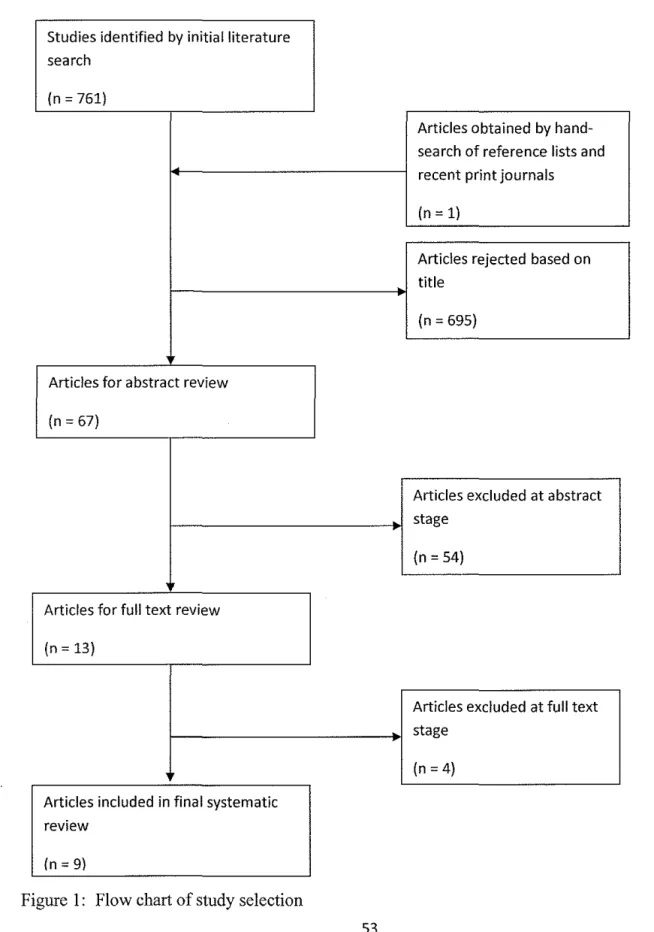
The literature search was performed in August of2008 using the protocol defined above. The
results of that search and the systematic process of inclusion and exclusion are displayed in
Figure 1. There were 761 articles obtained in an electronic literature search that was designed
for high sensitivity. Applying the eligibility criteria in full narrowed down that figure to eight,
the final number of studies obtained through the electronic search. A hand search of three
sources as described above yielded an additional study which fit all inclusion criteria. This study
was cited as a reference for one of the eight final study articles obtained through the electronic
search.
In the early steps of the eligibility determination process, the most common reason to exclude
abstracts or articles involved ineligible dates of study or lack of relevance to the ACGME' s 2003
article selection, were articles not addressing objective patient related outcomes, and specifically, mortality.
STUDY RESULTS
This systematic review sought to analyze what effect mandatory regulations by the ACGME to reduce overall duty hours for resident physicians have on patient health related outcomes, specifically mortality rates of hospitalized patients. In some ways, the authors for the nine separate studies approached this question in similar fashion. There were also differences in the research methods among these nine studies.
Bhavsar and colleagues performed a before and after study on patients admitted to a cardiology service at a large academic medical center. 43 They included 1003 consecutive patients admitted with a diagnosis of acute coronary syndrome (ACS) based on symptoms of cardiac ischemia as well as presence of either 1) history of coronary artery disease (CAD) or 2) new documented CAD or 3) EKG changes or 4) serum biomarkers of myocardial injury. This particular cardiology service implemented changes in 2003 to come into compliance with the new duty hour rules including: instituting day float systems to assist post and on-call teams, limiting senior residents' on-call shifts from 7am to 9pm that same day, and limiting interns' on-call shifts from 7am to 1 pm the next day. Mortality was assessed for a period of one year before and one year after the changes in schedule were made. There were 572 patients analyzed in the pre-intervention group and 431 patients in the post-pre-intervention group, with some underlying
significant decreased odds of mortality. This trend in post-reform year two was not found in surgical patients. There were reasons postulated as to why the results ofVolpp's two studies with two different populations gave different results. First, VA hospitals across the country are well known to be key training sites for residents. Compared to non-VA teaching hospitals, VA hospitals have higher mean resident-to-bed ratios. As such, it may have taken more than one year for total or near total compliance with the new duty hour regulations, and thus, no effect on mortality would have been seen in the early years of implementation in the VA setting.
Similarly, this explanation can be used to explain differences between medical vs. surgical patients found in this VA study, but not present in the Medicare analysis. One line of thinking holds that surgical programs had greater difficulty adapting to the regulations given the higher number of hours they averaged in the pre-reform period, so they were less likely to see a benefit from the advantages that a reduction in resident duty hours would have on patient outcomes. 51
STUDY CHARACTERISTICS
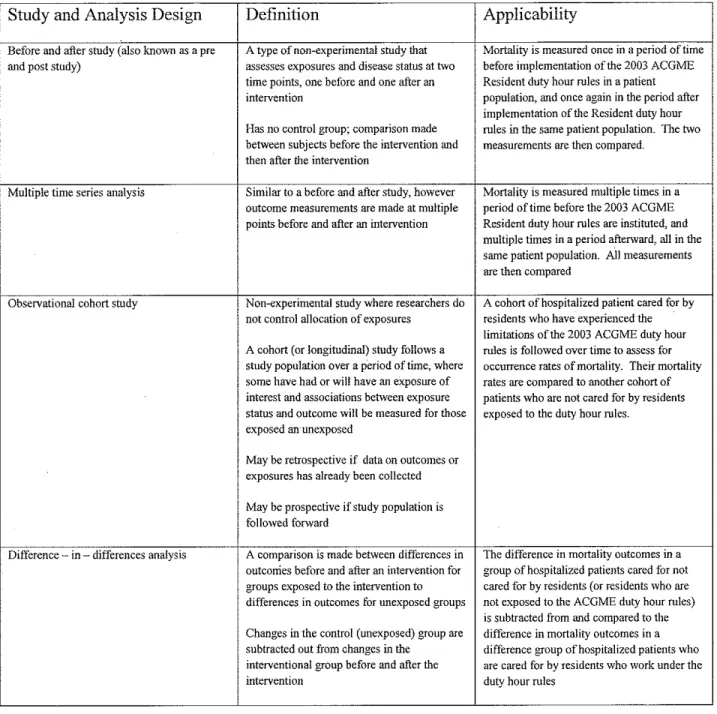
A total of nine studies were eligible for inclusion into the systematic review. Table la presents key information for all the studies. Table lb presents definitions of the types of study designs and analysis as designated by the author for this review. For the purposes of this systematic review all studies were categorized as observational I non-experimental in design, a classification supported by the authors of the nine study articles. Some may argue that studies where an
trials. While that approach has merit, the author of this review believes that not following that classification scheme is acceptable. First, the quality of the individual studies may not
necessarily be rated differently if they were observational versus "quasi-experimental", as a well performed observational study can be at times superior in quality to a clinical triaL Lastly, designating the nine studies as observational fits more easily to the overall theme of their respective study designs, rather than a designation of experimental trials.
Two of the articles further described their research design as a time-series analysis. 50• 51 A time
series study design, like a cohort study, involves comparisons made between an exposed and unexposed group. In a time series studies, however, the exposed and unexposed population consists of the same collection of individuals, and measurements made before the intervention are compared to measurements made after the intervention in the same group of patients. If a single measurement in time in relation to the exposure is made, the study is referred to as a "before and after" study (one measurement made in the group before the intervention and-one measurement made in the same group after the intervention). If multiple measurements are made both before and after the exposure, the study is referred to as time series, or a multiple time series analysis. 39 The two articles that described this type of analytic design obtained their study participants from large, multi-institution databases. 47•50•51
While some may argue that the same collection of patients measured before and after an intervention can in fact be regarded and analyzed as the same population in the strictest sense, there are advantages to this method. Applying this concept to a multi-institution database, each hospital in the database is compared to itself, before and after the intervention (implementation
of the ACGME's duty hour reforms in July 2003). Changes in outcomes in hospitals with residency programs can be compared to changes in outcomes in hospitals without residency programs. This would help one to distinguish changes in outcomes over time that are universal across the country or across institutions, versus changes in outcomes that are particular to a particular teaching hospital or residency program as a result of interventions implemented at that specific site made to improve outcomes. 50 As such, bias arising from differences between hospitals, differences over time common to all hospitals, and differences in patient disease populations across different hospitals, can be minimized. 51 In contrast, the other database study, by Morrison et al involving trauma patients, treated patients in the database admitted before and after the intervention as separate groups. 49
The disadvantages to this type of analysis is that is more susceptible to threats in establishing causality between exposure and disease, as changes seen after an intervention are at risk of occurring through chance or ways unrelated to the intervention. Furthermore, temporal changes factor into the exposure - outcome relationship, and establishing precedence in events can be difficult. The concept of regression to means can also play a role in the internal validity of before and after studies, in that those patient populations at the extremes of the mortality curve will naturally see rates that move towards the middle separate to the intervention. Lastly, without randomization or use of controls, there is always the possibility that selection bias and confounding can lead to incorrect estimates of effect.
remaining five studies evaluated patients at single institutions. There is a mix of medical and surgically-oriented studies, with two of the single site studies involving a surgical trauma service, one involving a general and vascular surgery service, one involving an adult cardiology
· d h 1 fr · · d 1 d. · · 43 44 4s 46 48 Thr f h
servtce, an t e ast was om an mpattent a u t me tcme servtce. · · · · ee o t e database studies analyzed both medical and surgical patients contained within the database.
The post-intervention period included in the analysis for the nine studies varied in length. Some evaluated mortality outcomes for as little as one year after implementation of the new duty hour rules, while one looked at outcomes for a period of up to three years after the new ACGME rules went into effect. One teaching institution implemented the ACGME duty hour limits in 2002, one year before they were officially mandated. 48 The five single site studies described with varying levels of detail what changes were enacted at their particular hospitals or residency programs to reach compliance with the duty hour limitations. Some of these interventions involved I) decreasing the number of overnight on-call shifts taken overall, 2) decreasing the number of hours contained in an overnight call shift, 3) implementing night float coverage (staffed by residents or non-residents) to take the burden offresident call teams or replace resident overnight call completely, 4) instituting day-float resident services to assist post-call residency teams, 5) increasing cross-cover responsibilities for residents on call so that post-call residents can leave the hospital in a timely manner and not be expected to return at a later time to attend to unanticipated changes in the status of their own patients, and 6) hiring and using more support staff and extenders. These methods enacted to reduce duty hours and come into
SUBGROUP TRENDS
Although nine studies is not likely a sufficient number to conduct quantitative subgroup analysis, a descriptive analysis of some trends between groups may be informative. In terms of quality of the individual studies, there were six rated as fair quality and three of poor quality. The three articles of poor quality were all of similar design, lacked comparison groups, were completed at a single institution, and involved a single residency program. 43' 44' 45 None of the three studies
did a complete job of protecting against selection bias, as they all suffered from either poor reporting of characteristics of each exposure group, or unequal patient characteristics at baseline, or lack of reporting on attrition, drop-outs, or missing data. Moreover, none of the three
in their study populations after the intervention went into effect in July 2003. 43•44•45 The
remaining six studies were rated as fair in quality. Four out of six of these studies reported a decrease in mortality outcomes after the duty hour reduction was implemented. 46-51
Among the nine studies, five were at performed at single institutions while the remaining four analyzed participants obtained from large, multi-hospital patient databases. The four database studies were of a heterogeneous nature; one was a national database on patients admitted for injuries and trauma, another was a database that sampled from all community hospitals in the U.S., and the last two involved data files of patients in VA hospitals across the country and Medicare patients admitted to hospitals across the U.S. 47• 49• 50· 51 All-four of the studies that
involved databases of patients in their analysis were rated as fair in quality. To some extent, they all employed a difference-in-differences approach to comparing outcomes before and after 2003 duty hour limitations. The results from these four studies were inconsistent. Shetty found that mortality rates decreased significantly for medical patients but not surgical patients. 47 However, Morrison's study involving surgical trauma patients found that mortality rates decreased in teaching hospitals across the country, a trend not seen in a comparison group composed of nonteaching patients. 49 In Medicare patients admitted to acute care hospitals across the country from July 2000 to June 2005, the odds of death were equal before and after the ACGME duty hour regulation were employed for both medical and surgical patients. 50 In VA patients
admitted to facilities across the country, the odds of death decreased in the second year after the new duty hour regulations went into effect for medical patients, but mortality remained
The collected nine stndies analyzed patients with medical and surgical diagnosis, including
patients admitted with injuries to a surgical trauma service, general surgery patients, vascular
surgery patients, patients admitted to a cardiology service in an academic medical center, and
patients admitted to an adult inpatient medicine service in a large teaching hospital. Although
there were two studies reviewed in full text for this systematic review involving pediatric and
obstetrical and gynecology residents and health outcomes in their patients, these stndies were
excluded as they did not stndy morality outcomes. This may be because mortality rates are small
in these populations overall.
The inconsistency in results for outcomes among surgical and medical patient is evident in Table
1. In medical patients, studies by Shetty, Horwitz, and Volpp's VA article showed improvement
in mortality outcomes after the ACGME duty hour regulations took effect. 46• 47• 51 In contrast,
studies by Bhavsar and Volpp's Medicare article showed no effect on mortality in medical
patients after institntion of the duty hour regulations. 43• 50 In the articles that looked at mortality
outcomes in surgical patients, only Morrison's observational study of patients in a national
trauma database showed improvement in rates of mortality after the new duty hour regulations
took effect. 49 This study was methodologically fair in quality. The other studies looking at
surgical patients showed no statistically significant change in mortality after the new duty hour
regulations were enacted. Of the three studies that looked at both medical and surgical patient
outcomes, one showed no effect in both medical and surgical patients they studied while the
other two showed improvement in outcomes in medical patients only. 47• 50• 51
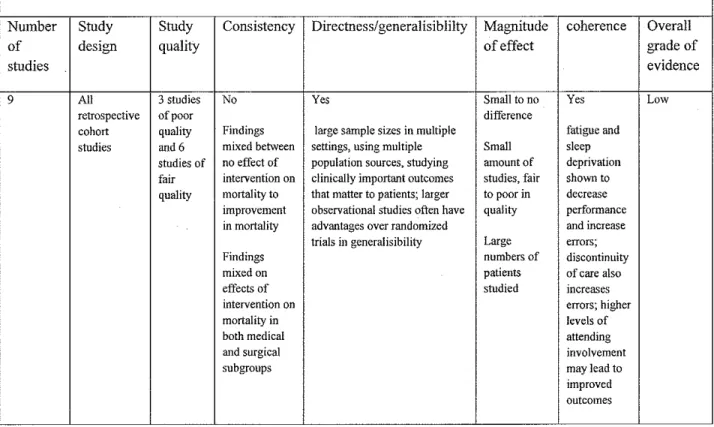
The overall strength of evidence is low (see Table 2). This is based on the small number of studies overall and the lack of good observational studies available for this systematic review. There is a lack of consistency in results for mortality on the whole, as well as among subgroups of patients. The magnitude of effect, when the results have been found to be statistically significant, is small. The presence of coherence and generalisabilty do not compensate for the other deficiencies in increasing the strength of evidence.
DISCUSSION
The efforts to reduce the amount of hours worked by medical residents took a significant and concerted leap in 2003 when the ACGME mandated that new standards governing resident duty hours be implemented by July 1st of that year. Efforts along these lines attempted in the decades past were accelerated by high profile events such as the Libby Zion case in New York, and the publishing of the Institute of Medicine's Report To Err is Human, among other things. Attempts
to put limits on resident duty hours were also spurred on by concerns from the public and medical professionals themselves of the negative effect long work hours, fatigue, and sleep deprivation have on patient safety and resident well-being.
out for the benefit of the residents themselves, pointing out the link between fatigued and sleep-deprived residents and their risk of suffering a motor vehicle crash after a work shift, burnout, psychological distress, or frayed social relationships.
Enough work had been compiled that a systematic review was published in the 2004 Annals of Internal Medicine by Fletcher, Davis, Underwood, eta!. 30 Using studies that preceded the 2003 ACGME duty hour mandates, but were performed in a similar environment of resident duty hour regulations, the authors described seven studies where the outcome of interest was patient safety. The results of that systematic review were inconclusive.
Based on this, as well as the aggregate consistency, magnitude of effect, generalisibility, and coherence, the strength of evidence for the systematic review overall was low.
None of the nine studies showed that limiting work hours to 80 hours a week, reducing call frequency or time spent on a call shift, led to more patient deaths. Based on the studies included, implementation of the new ACGME regulations either led to decreased mortality rates in the given patient population being studied, or no significant change was seen. Articles that showed improvement in mortality outcomes were all rated as having fair methodological quality. All studies rated as poor in quality showed no change in mortality after the duty hour rules took effect. Of the studies rated with at least fair methodological quality, three found improved mortality outcomes in medical populations, while one noted no change in outcomes. Of the studies done on surgical patients with at least fair methodological quality, only one out of five noted improvement in mortality outcomes. There was no difference in outcome trends noted for studies performed at single institutions compared to studies involving patients in databases collected from multiple hospitals across the country
where preliminary findings reveal no effect, or they may be less likely to submit negative studies for publication, or journal editors may be less inclined to publish negative studies as they seem less interesting. Bias arises then if published articles are systematically different from those not being published routinely, and failing to include certain studies due to publication bias may lead to overestimation of the effect. This review attempts to minimize publication bias by
incorporating a comprehensive literature search as detailed in the methods of this review. In addition to electronic database searches and hand searching of various sources was performed. No sources considered to contain "grey literature" were searched. Even with a thorough search, publication bias may always be present in a systematic review to a certain degree. For this review, the author accepts that publication bias may be present. Instead of trying to eliminate it, the more practical approach is to account for the effects of publication bias on the results
obtained.
of mortality outcomes after implementation of the ACGME 2003 resident duty hour standards. If these are systematically not included in reviews due to bias, the results would appear to conclude that the resident duty hours lead to decreases in patient mortality, or point to this conclusion more strongly.
potential to decrease power and there is likelihood that the more subgroup analysis performed, the higher the chance that a result obtained from this sub analysis could be due to chance alone. To divide the studies constituting this systematic review into subgroups would have been problematic given that there were only nine trials to begin with. Furthermore, unanticipated subgroup effects usually bear careful critique.
Aside from the inherent threats to validity for systematic reviews, the quality of the individual studies contained within this review merits some discussion. Some methodological deficiencies were common to them all. They were all observational or non-experimental studies, which are subject to certain biases that randomized experimental trials are at less risk for. There was potential for selection bias in these studies, especially the smaller, single institution studies. Most of the studies were able to match controls to the intervention group, using historic controls from before the ACGME duty hour regulation (intervention) took place, or concurrent controls from patients who were under the care of "nonteaching" physicians. The comparability between intervention and control groups among the studies varied. An ideal control group would be patients selected from a specific residency program were the residents were not subject to duty hour rules and compared to patients selected from the a similar residency program subject to the ACGME duty hour limitations. This does not exist however as the ACGME duty hour
regulations served as controls for patients on a teaching service analyzed before and after the regulations were instituted.
With the potential for selection bias arises also the possibility of missing unmeasured variables, or confounding. One confounding variable is improved medical technology or health care quality initiatives developed and implemented over time throughout the study period that affects the outcome of interest, but are not causal intermediates, and may be differentially distributed among groups. For example, a quality initiative, such as computerized physician entry, or hospital pharmacy staff rounding with resident-run inpatient medical teams, may have been implemented at a particular hospital or hospital system at the same time that the ACGME duty hour mandates took effect. This could then obscure the true effect ofthe intervention on the outcome of interest. The study by Bhavsar and colleagues serves as an example. They describe a hospital-wide quality improvement initiative instituted in 2002 that likely confounded the results of their study. 43 This would have led to overestimation of effect.
Another potential confounding variable is the effect of workforce distribution practices made necessary by the resident duty hour regulations. One of the consequences for many hospitals and residency programs of limiting resident work hours in order to meet the ACGME duty
patients. 52 As above, this too would lead to an overestimation of effect, as you would expect to see better outcomes in patients who are being cared for by more experienced physicians.
Lastly, increased discontinuity of patient care may serve as an unmeasured third variable that could obscure the true effect of the intervention on the outcome. As limits are put in place on the amount of consecutive hours a resident is allowed to work, the result is that care of patients is "handed off' from the primary physician to other providers on a more regular basis, with each hand-off creating avenues for mistakes through miscommunication. As a post-call resident goes home at the end of his/her shift, residents remaining on duty take over care for that post-call resident's patients. This leads to discontinuity of care and increased cross coverage
responsibilities, and the covering residents may not know these "handed off' patients as well if they did not have a major role in initially admitting them or participating in their day-to-day care.
7
· 32 This particular variable could lead to an underestimation of effect.
That there may be different effects of the ACGME resident duty hour standards on patient outcomes based on particular medical specialty bears mention. As an example, the articles by Shetty and colleagues and Volpp and colleague's VA study discordant results between the medical and surgical subgroups within their study. 47• 51 In both of these studies, mortality in
medical patients decreased after the intervention, but was uuchanged in surgical patients. 47• 51
The third and final study in this review that evaluated both surgical and medical patients separately, Volpp's Medicare study, showed that findings on outcomes were similar between medical and surgical patients. 50 All three of these studies were fair in quality, and involved large databases of patients. Reasons for the varying outcomes among specialties could be multifold; 1) surgical residents may have been less compliant with duty hour rules compared to medical residents 2) surgical residents traditionally worked more hours than medical residents, so their adjustment to the new 80-hour work rule was more disruptive and led to more
discontinuity of care 3) medical residents developed more efficient hand-off and sign out
practices or 4) medical decision processes are different from surgical decisions. 47• 51 In the case
of Shetty and colleagues' study, the smaller sample size of surgical patients may not have allowed for the power to detect statistically significant differences in this subgroup. 47
quality initiatives carried out by federal, state, and local groups. To make the results of any new study more generalisable, efforts should be made to perform multi-site studies on a wide variety of patients with a variety of medical conditions, cared for by residents of various specialties. To strengthen the causal relationship that reduced resident hours can lead to improved patient health outcomes, two things can be done. First, actual compliance with the duty hour rules by
individual residents should be monitored and recorded objectively. Second, it may be helpful to discover if there is a "dose-response" relationship along the causal pathway. For example, if residents working less than 80 hours a week lead to better outcomes, it may stand to reason that residents working less than 60 hours a week lead to even better patient safety outcomes.
A suggested model for an ideal trial to further clarifY if the ACGME Resident duty hour leads to improvement in patient outcomes incorporates many aspects of study design listed above, with the understanding that a perfectly designed study achieving absolute truth is unrealistic, and compromises are often necessary. The study design should be a multi-site nonrandomized interventional study, to reduce bias from observational studies. Randomization for this subject would not be feasible. The interventional group may be patients admitted to a resident service, with a control group consisting of patients admitted to a nonresident service at the same
direction as mortality after resident duty hours are limited, it may strengthen the argument for plausibility. Finally, a future study should consider another intervention arm in a nonrandomized study. Holding all other things equal, a third set of patients cared for by residents working at a further reduced schedule, say 40 or 60 hours a week, should be incorporated into the study. If outcomes improve with a workforce consisting of better rested residents, it stands to reason they may further improve if residents are afforded more rest.
This subject of resident duty hours has broad policy implications which are not directly
This systematic review presents evidence regarding the effects of the ACGME's Resident duty hours on patient mortality. Given previous works, the results of this systematic review, and the author's own experiences, efforts to reduce the hours residents work should move forward. Accepting long, rigorous hours of difficult labor to maintain status quo seems outdated in the face of improvements the medical establishment has made in terms of medical education and . patient care. As mentioned above, studies clarifying the nature of the causal relationship
Studies identified by initial literature
search
(n = 761)
Articles obtained by
hand-search of reference lists and
recent print journals
(n = 1)
Articles rejected based on
title
(n = 695)
Articles for abstract review
(n = 67)
Articles excluded at abstract
stage
(n =54)
Articles for full text review
(n = 13)
Articles excluded at full text
stage
(n = 4)
Articles included in final systematic
review
(n = 9)