Hand tracking
with Parametric Skin Modelling
Using Particle Filter Framework
for Gesture Recognition
Surachai Ongkittikul
Submitted for the Degree of
Doctor of Philosophy
from the
University o f Surrey
UNIVERSITY OF
SURREY
Centre for Vision, Speech and Signal Processing
School of Electronics and Physical Sciences
University o f Surrey
Guildford, Surrey GU2 7XH, UK
June 2010 © S. Ongkittikul 2010
All rights reserved INFORMATION TO ALL USERS
The q u a lity of this re p ro d u c tio n is d e p e n d e n t u p o n the q u a lity of the c o p y s u b m itte d . In the unlikely e v e n t that the a u th o r did not send a c o m p le te m a n u s c rip t and there are missing p a g e s , these will be n o te d . Also, if m a te ria l had to be re m o v e d ,
a n o te will in d ic a te the d e le tio n .
uest
P roQ uest 27696242Published by ProQuest LLO (2019). C o p y rig h t of the Dissertation is held by the A u tho r. All rights reserved.
This work is p ro te c te d a g a in s t u n a u th o riz e d c o p y in g under Title 17, United States C o d e M icro fo rm Edition © ProQuest LLO.
ProQuest LLO.
789 East Eisenhower Parkway P.Q. Box 1346
Summary
As the computer becomes more pervasive in modem life, users require a convenient, natural, and efficient interaction between human and machines. In the past few years, there has been much research to try to increase the capability of Human Computer Interaction (HCI) approaches. Vision-based approaches use human body parts, such as head, eyes, mouse and hands as interface devices. Hand gestures are an example of human-machine interactions that are comfortable to the user. Hand-tracking is a vital part of hand gesture recognition. There is much research to improve hand-tracking using various techniques. This thesis describes hand tracking techniques developed based on the particle filter framework. The problem under consideration is the accurate capture of human hand motions in video sequences. To clarify the target model, skin detection based on parametric skin modelling is employed as the main feature of hand tracking. From skin training states, elliptical boundaries are used to set the skin characteristics. Improvements in tracking have been demonstrated by comparing with a generic technique, such as a mean shift tracker, as well as ground truth positions. The results show that skin classification with elliptical boundary modelling can augment the performance of hand tracking to cope with rapid hand movements.
The particle filter has been used as the basis for the tracking algorithm. Several features are employed for hand tracking which include skin colour and motion vector. In addition, the changing of the mechanism in the particle filter has been established, such as embedding with k-mean clustering and mean shift vector. All of the developed schemes are evaluated by comparing with the ground truth positions of objects in term of accuracy. To evaluate the tracking scheme, the framework of evaluation was employed with a variety of users and many videos to show the stability of each algorithm. The performance in this approach is better than the auxiliary particle filter and means shift iteration. The proposed approach is used in an application, namely a cash machine, which makes use of advanced HCI approaches.
Finally, the concluding chapter analyses and discusses the advantages and disadvantages of each developed scheme. Future trends in hand tracking research will also be considered.
Key words: Hand tracking. Hand recognition, K-means, Mean shift. Particle filter. Skin detection, HCI.
This thesis is based on the research I had proposed at I-Lab (Sub-group in Centre for Communications System Research - CCSR) University of Surrey during the period of 2004 and 2008.
First of all, I would like to thank my sponsor, “Mahanakom University of Technology” for the first three years as well as the funding from the VISNET-2 project for the last two years. I would like to express much gratitude to my supervisor. Dr. Stewart Worral, for his support, suggestions and encouragements, and also to my co-supervisor. Dr. Jancko Calic. I am profoundly grateful to Prof. Barry Evan, for accepting me as a research student at CCSR and Prof. Ahmet Kondoz for encouraging me since the first day at “I-Lab”.
There are several people I would also like to thank who made the work possible including all my colleagues and friends in I-LAB. Particularly, I would like to thank Dr. Mingyou Hu and Dr. Yun Sheng for his suggestion on the ideas of the skin segmentation at the early state of this research. Also Dr. Daniel for his supports me to solve many problems in programming as well as gesture recognition segment.
I would like to thank my family (dad, mom, brothers and sisters) for all support and encouragement though all the time of my study aboard. Finally, but not the least, I would like to give great thanks my wife, Katekaew, for all her love, sacrifice, help and stand by me, which could be felt in every single page in this thesis.
Contents
Contents
1 Introduction... 1 1.1 Background...1 1.1.1 Human-Computer interaction...1 1.1.2 Virtual environments... 1 1.2 Motivation... ... 3 1.3 Objectives... 4 1.4 Scope... ...5 1.5 Organization... .. ... ...5 1.6 Contributions...6 2 Literature Review ... ... 8 2.1 Introduction...8 2.2 Hand representation...10 2.2.1 Articulated Hand... 112.2.2 Motion of Hand Joints... 12
2.3 Hand models... 15
2.4 Hand tracking... ...20
2.4.1 Model-based hand tracking...21
2.4.2 2D Hand tracking... 23
2.5 Image features... 24
2.5.1 Skin colour... 24
2.5.2 Edge features... 25
2.5.3 Motion features... 26
2.6 Skin modelling and colour spaces...27
2.6.1 Colour spaces for skin modelling... 27
2.6.1.1 Fundamental colour spaces... 27
2.6.1.2 Perceptual colour spaces... 28
2.6.1.3 Orthogonal colour spaces... 30
2.6.1.4 Perceptually uniform colour spaces... 30
2.6.2 Skin colour modelling... 31
2.6.2.1 Explicit skin colour threshold... 31
2.6.2.2 Nonparametric skin distribution modelling... 33
2.6.22.2 Bayes classifiers... 35
2.6.2.2.S Self organizing map (SOM)... 36
2.6.2.3 Parametric skin distribution modelling...37
2.6.2.3.1 Single Gaussian models (SGM)... 37
2.6.2.3.2 Gaussian mixture models (GMM)...37
2.6.2.3.3 Elliptical boundary model... 39
2.6.2.4 Dynamic skin distribution modelling... 39
2.6.3 Comparison of skin modelling approaches and their significant factors... 40
2.6.3.1 Comparison with method factor... !...41
2.6.3.2 Comparison with colour space factor... 42
2.7 Scheme of hand tracking... 43
2.7.1 Point tracking...45
2.7.1.1 Deterministic method... 45
2.7.1.2 Statistical method... 45
2.7.1.2.1 Single object state estimation...45
2.7.1.2.2 Multi-object Data association and State estimation... 46
2.7.2 Kernel tracking... 46
2.7.2.1 Templates and density based appearance models... 46
2.1.2.2 Multi-view appearance tracking... 48
2.7.3 Silhouette tracking... 48
2.7.3.1 Shape matching... 48
2.7.3.2 Contour tracking... 49
2.8 Gesture Recognition... 49
2.8.1 Taxonomy of Gesture Recognition... 49
2.8.2 Hand Recognition...51
2.8.3 Gestures interfaces... 53
2.9 Summary... 54
3 Hand tracking using particle filter by parametric skin m odelling...55
3.1 Introduction...55
3.2 Skin colour classification... 56
3.2.1 Pixel wise classification... 56
3.2.2 Skin segmentation threshold... 61
3.2.3 Controlled diffusion... 62
3.3 Overview of Particle filter... 63
3.3.1 Particle filter... 64
Contents
3.3.3 Observation model... ...67
3.3.4 Degeneracy Problem...69
3.4 Hand sign and database description... 71
3.5 Experiments...72
3.5.1 Skin training... 72
3.5.2 Results of tracking ...76
3.6 Conclusions... 78
4 Hand tracking with embedded K-means to particle filter...79
4.1 Introduction... 79
4.2 Mean shift iteration ... 79
4.3 K-mean clustering for merge and split samples...81
4.4 Auxiliary Particle Filter... 83
4.5 Enhance Tracker by mean shift vector and K-mean... 83
4.6 Results... 87
4.6.1 Comparison with simple background...87
4.6.2 Performance in the presence of clustered backgrounds...,... 90
4.7 Conclusion... 93
5 Vision-based recognition interface systems...94
5.1 Introduction... 94
5.2 System framework... 94
5.2.1 Face tracking and recognition... 95
5.2.2 Hand localization ... 96
5.2.3 Gesture Recognition... 97
5.2.3.1 Overview... 97
5.2.3.2 Hand detector using Boosted Classifiers... 99
5.2.3.2.1 Integral image representation... 100
5.2.4 Two state classifier... 102
5.3 Hand shape classification ...103
5.4 Stage-2 training and classifier...105
5.5 Results ... 105
5.5.1 Database... ....105
5.5.2 Gesture recognition... 105
5.6 Conclusions... 107
6.1 Summary...108 6.2 Future research directions ... 109
Bibliography... I l l
List o f Tables
List of Tables
Table 2-1: Finger joint motion ranges [13]... 14
Table 2-2: Thumb finger joint motion ranges [13]... 15
Table 2-3: Subsections of hand spatial modeling... 17
Table 2-4: Comparison between model-based and view-base approaches... 20
Table 3-1: Average absolute error distance from hand tracking...77
Table 4-1: Average absolute error distance from hand tracking...89
Table 5-1: Possible labels of the different stage-1 classifiers. The hand-shape names in DEZ are defined... 103 Table 5-2: Recognition rates for gesture recognition approaches with user specific training. 106 Table 5-3: Comparison of gesture recognition rates from different hand tracking techniques 106
List of FiguresFigure 1-1: Example of virtual environments... 2
Figure 2-1: Functions of hand: Opposition in practice power grip [8] and precision grip [9].. 11
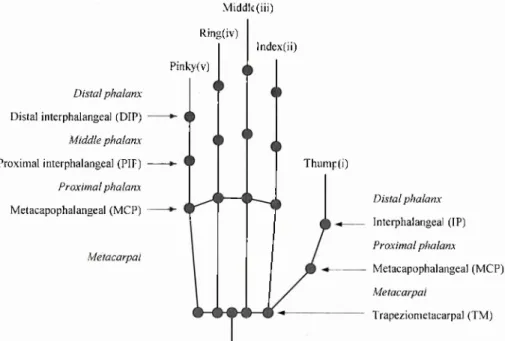
Figure 2-2: Hand skeleton structure ... 12
Figure 2-3: Common hand joint motions [12]... 13
Figure 2-4: Thumb and Index finger joint definition [12]...14
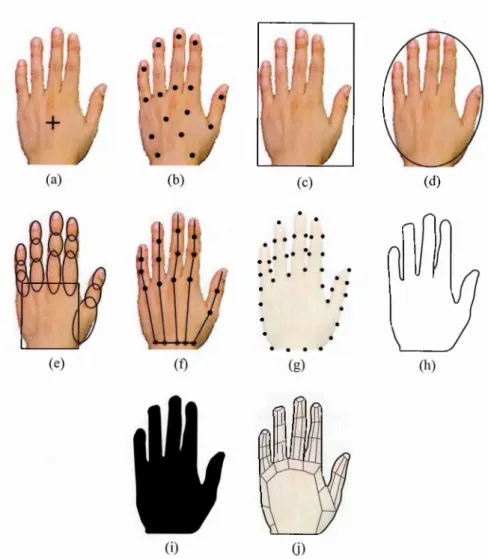
Figure 2-5: Hand representations with the same posture by different hand models... 16
Figure 2-6: Articulated 3D shape model... 19
Figure 2-7: Diagram of a model-based tracking system... 21
Figure 2-8: Skin colour classification... 25
Figure 2-9: Optical flow field of moving hand... 26
Figure 2-10: RGB colour cube... 28
Figure 2-11: HSI colour model...29
Figure 2-12: (a) Model of HSVcolour space based on circular plane, (b) Skin modelling in HS space ... 32
Figure 2-13: Skin colour region in CIE chromaticity diagram ... 33
Figure 2-14: ROC curves for the skin detector as a function of histogram size [74]...36
Figure 2-15: Taxonomy of tracking schemes... 44
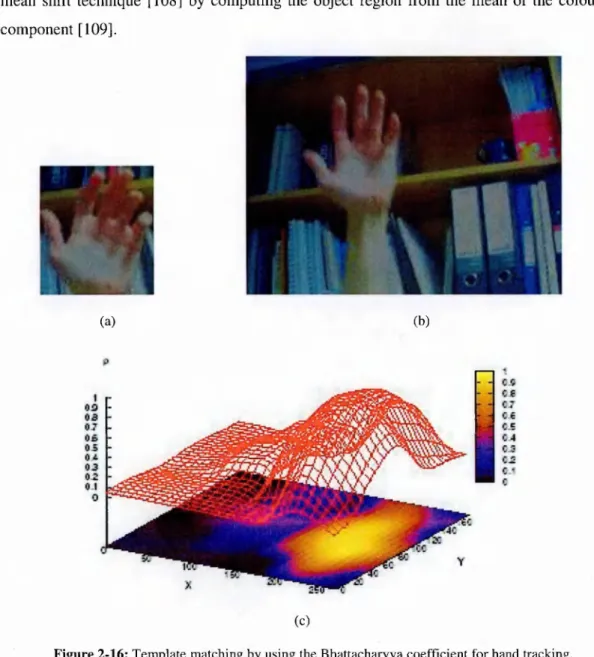
Figure 2-16: Template matching by using the Bhattacharyya coefficient for hand tracking.... 47
Figure 2-17 Phases in the Creation of a Gesture... 50
Figure 2-18 Taxonomy of hand gestures... 51
Figure 3-1: Skin and non-skin classes for training...57
Figure 3-2: Elliptical parameters... 58
Figure 3-3: Skin distribution around with ellipse boundary... 60
Figure 3-4: Probability of skin classification versus scale... 62
Figure 3-5: An iteration step for particle filter ... 65
Figure 3-6: Particle filter algorithm...66
Figure 3-7: Shape of weight function from Eq. (3.20)...68
Figure 3-8: An iteration step of particle filter including resampling step... 70
Figure 3-9: An iteration step of the hand tracking based on particle filter...71
Figure 3-10: Example of signers for capturing... 72
Figure 3-11: Trainings of skin colour parametric... 73
Figure 3-12: Classify results... 74
Figure 3-13: Diffusion algorithm... 75
Figure 3-14: The comparison of the result before and after using the diffusion algorithm 75 Figure 3-15: Results from the withdraw money command... 76
Figure 3-16: Results from the balance command...77
List o f Figures
Figure 4-2; Completed system diagram of hand tracking... 84
Figure 4-3: Diagram of particle filter enhanced by use of mean shift vector...85
Figure 4-4: The mean shift vector and K-mean clustering embedded particle filter... 86
Figure 4-5: Preliminary results of two hands tracking with simple background - Command “Print balance” ... 88
Figure 4-6: Comparison of errors between two algorithms with ground-truth position in both hands on simple background... 89
Figure 4-7: Tracking results with difference schemes... 91
Figure 4-8: Tracking results deal with ambiguity of skin face...92
Figure 5-1: Vision-based framework for interface recognition system...95
Figure 5-2: A high-level overview of the stages of classification...98
Figure 5-3: Integral image, (a) Integral image coordinate and (b) region A can then be computed using the follow ing four array references: L4 4- Li - (L2 + L3) ...1 0 1 Figure 5-4: The set of rectangular filters and each filter is composed of several rectangular regions, where white and grey regions within the features are associated with 1 and -1, respectively... 101
Figure 5-5: Hand shapes are defined in the classification. From top left ‘B’, ‘ B ’, ‘ B ’, ‘A’, ‘À ’, ‘5’, ‘O’, ‘G’, ‘V’ and ‘W’... 104
Glossary of Terms
Human Computer Interaction Region of Interest
Visual Environment Augmented Reality
Principle Component Analysis Receiver Operating Characteristics Self Organizing Map
Single Gaussian Model Gaussian M ixer Model Expectation M aximization Particle Filter
Sequential Monte Carlo
Sequence Importance Sampling Sample Importance Resample Auxiliary Particle Filter
HCI ROI VE AR PCA ROC SOM SGM GMM EM PF SMC SIS SIR Aux PF
Chapter 1. Introduction
Chapter 1
Introduction
1.1 Background
1.1.1 Human-Computer interaction
In recent years, human-computer interaction (HCI) has become an increasingly important part of our daily lives. Devices such as keyboards and mouse or mice are the most popular devices of HCI. Obviously, those types o f equipment are inconvenient and unnatural. The idea of using hand gestures has become a popular issue where a computer can interpret hand motions and gestures, and attach certain actions to them, such as virtual reality and gesture interfaces.
The amount of research on human hand movement, in terms of gestures, with and without cumbersome devices, has increased in recent years. Many techniques were presented in the fields of computer vision and image processing as well as pattern recognition. Hand gestures can be classified into several types: conversational gestures, controlling gestures, manipulative gestures and communicative gestures. Challenges in hand gesture research come from the following problems:
• The hand is highly articulated because it consists of many connected parts leading to complex kinematics or non-rigid objects.
• Hand motions are also highly constrained, which makes them difficult to model. • Computer vision, well as self-occlusion, itself is an ill-posed problem.
1.1.2 Virtual environments
Virtual reality technologies have brought us into three dimensional (3D) issues and have pushed researches to create and develop a new concept of HCI, such as a collaborative
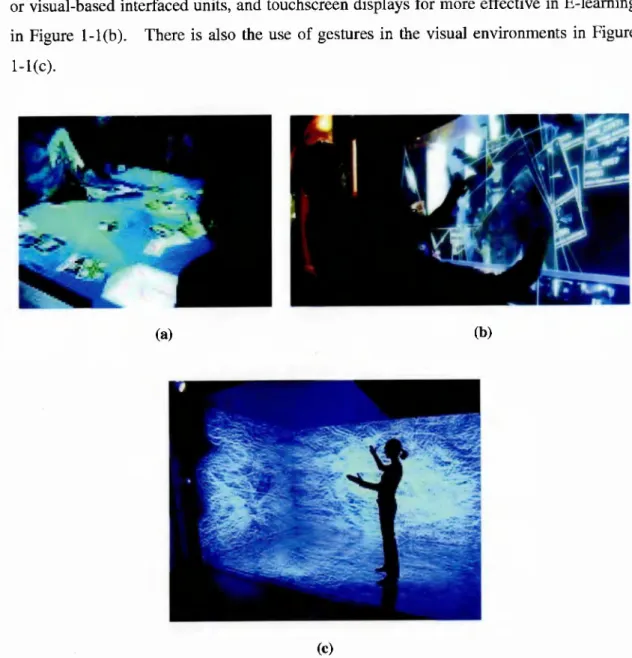
or visual-based interfaced units, and touchscreen displays for more effective in E-leaming in Figure l-l(b ). There is also the use of gestures in the visual environments in Figure
l-l(c ).
m
(a) (b)
(c)
Figure 1-1: Example of virtual environments.
In the evolution of a user interface concept, keyboards are the primary device for text- based user interfaces. The invention of the mouse brought a convenient method for handling graphical interfaces. What is the counterpart of the mouse when we are trying to explore 3D visual environments (VEs)?
In many current VE applications, the common controlling and navigating devices are keyboards, mice, wands and joysticks, all of which use either mechanical or electronic components. They are generally inconvenient and unsuitable because the presence of cables and gadgets limit the feeling of immersion. It is also difficult to provide 3D and high degrees of freedom inputs with these devices.
Chapter 1. Introduction
Alternatively, more natural, intuitive and convenient interfaces with computers through live video inputs can be achieved by vision-based interaction (VBI). Computers are able to see and recognize a user’s physiological action. Early research on VBI usually makes use of colour markers. In vision-based interaction, researchers are interested in a variety of tracking and recognition tasks (e.g. tracking people, face recognition, face expressions, and body motion). Typically, the research into vision-based interaction is challenging and interdisciplinary. It involves computer vision, graphics, image processing, machine learning, bioinformatics, and psychology. There are common requirements for real systems, such as robustness, computational efficiency, user’s tolerance and scalability.
1.2 Motivation
Human tracking and motion capturing are the main problems in vision-based HCI since it is the first step of human motion recognition and understanding. Specifically, for vision-based gesture interfaces, the location of the hand could be found in sequence video robustly effective method for efficient localization, robust tracking and accurate motion capturing.
Firstly, the efficiency of the localization system depends on liberated implementation as well as efficient techniques. With developed CPU technology, the computing cost is not an obstacle for intensive processes or complex algorithms. However, it is desirable to use computational resources as inexpensively as possible. Secondly, visual tracking always involves many fundamental problems in computer vision, such as illumination changing, quality of video and movement of subjects. To make a robust tracking system is a vital task. The integration of multiple cues could be a more powerful technique to achieve this objective than single cues. Finally, the accurate detection of human motion is a significant issue because human motion is quite complex. For example, human motion is highly articulate. A human model contains roughly more 15 degrees of fi-eedom. Hand motion has more than 27 degrees of freedom. Both kinds of human model and motion are challenging problems.
In the gesture interface, there are many new paradigms for visual learning. All of the paradigms still face the similar difficulties, such as inappropriately labelled samples, feature extraction and selection, learning in high dimensionality and incremental or on-line
For inappropriately labelled samples, supervised learning techniques are widely used in visual learning tasks, but the insufficiency of labels in training is common in both a small and a big number of samples. This affects the accuracy and computational complexity.
Feature extraction involves the transformation of an object or scene in a lower dimensional space. There are several features to verify. It is a very challenging task to design a system that can properly select the features by themselves.
In the case of visual inputs which contains high dimensionality data, the performance of learning schemes should be effective and efficient. To inerement the performance of on line learning should be the description of machine as intelligent [1]. In addition, base on the original knowledge, the learning process can develop the level of knowledge to become higher and more intelligent.
There are several examples to demonstrate those problems in learning tasks. For example, the requirement of the invariant object recognition is the object learning from any view direction or so called the “view-independent” hand posture recognition. Pure supervised techniques need an enormous labelled training database. However, to manually label a huge data set would be very time-consuming and boring. For another example, the image retrieval task is to find in the database the most similar images to the query image. A more interesting example is found in non-stationary colour model adaptation. Almost all such techniques are plagued by the large variation in skin tone, unknown lighting conditions, and dynamic scenes. If the system is trained under specific conditions, it may not work well in other scenarios.
There are many discussions about improving the generalization by looking into the training algorithm, and numerous schemes have been proposed to avoid over fitting. However, there are fewer concerns about the training data set.
1.3 Objectives
The main objective of the research is to develop the hand tracking under the particle filter framework to produce a more robust and accurate tracking. The problems of the hand tracking have to investigate and solve such as the rapidly hand movement, two hand tracking and cluster black ground. To evaluate the performance of the hand tracking, the comparison
Chapter 1. Introduction
between the different techniques were presented. In application, this thesis aims to develop tracking of two hands for hand gesture recognition.
The development of the tracking consists of two main approaches. Firstly, skin colour modelling was developed as the feature for tracking. Additionally, combination features have been used of the dynamic model to predict the hand motion in each frame. This approach makes use of a single feature or more features in the propagated sample into the observation model to obtain a located hand estimate.
The second approach combines ideas from mean shift and K-mean technique in the re sampling after the propagation step. This approach employed the skin colour model to track hands which can cope with problems such as rapid move and the natural environment.
To illustrate the tracking scenario, these approaches have been successfully demonstrated with use in an application, such as a cash machine simulator. This simulator is designed to comfort users without contact with the machine but using sign language to manipulate the machine.
1.4 Scope
For hand tracking, the main application is explicitly within this thesis as intelligent cash machine. The scope of hand tracking is considered with the scenario of cash machine users. Users show the command by standing in front of a single camera at a constant distance. The set of commands is designed with fourteen commands based on American Sign Language. Users use both hands with markerless tracking to manipulate the machine. The environments of the users have been defined as under light control or inside a building and outside a building, such as on the street. The limitations of tracking are defined as: (1) users wear long sleeves with colours not similar to the user’s skin, and (2) the background of the scenario is not moving or does not contain colours similar to the user’s skin.
1.5 Organization
In this thesis, the organization is as follows:
• Chapter 2 provides a comprehensive overview of the state-of art in hand tracking. An overview of hand structure, the fundamentals of hand movement, the characteristic constraints, and methods of hand modelling are presented. The main concepts of hand tracking are discussed, which consists of 2D and 3D tracking. Skin modelling and colour space are used for human tracking, and a comparison is
made between various techniques. Also, various methods for hand posture recognition and temporal gesture recognition are given.
Chapter 3 presents the non-parametric colour model method with an elliptical boundary technique to detect human skin for hand tracking. Also, single and multiple cues are used for tracking including skin colour and motion vectors. The particle filter is employed as the basis of the tracking scheme. The mean shift method is implemented for comparison with our scheme. Segmentation and tracking results are presented.
Chapter 4 focuses on the development of two-hand tracking. The accuracy of tracking has been improved, which added the mean shift vector of a Region of Interest (ROI) into the observation model before propagation. To discriminate between the left and the right hands, we employ K-mean clustering and embed it into the particle filter. An implementation of the K-mean embedded particle filter is given and also describes many experimental results compared to the ground truth positions.
Chapter 5 describes an application of hand gesture recognition that uses the hand positions given by the author’s tracking schemes. The aim is to assess the performance of the proposed hand tracking schemes. The framework of the evaluation method is built, based on an intelligent cash machine [2].
Chapter 6 summarizes the thesis and describes the main contributions, which is the development of an algorithm that combines K-mean clustering and mean shift vector. Some interesting topics for future research are discussed at the end of the chapter.
1.6 Contributions
The original contribution presented in this thesis covers the area of multi-object tracking based on the particle filter with a single cue (skin colour). In particular, the following issues have been addressed.
Chapter 1. Introduction
• Hand tracking with a new combination of feature cues, such as skin colour and motion vector, have been developed in a learning atmosphere. It has been used for stationary colour tracking tasks.
• A new approach, the propagation with mean shift vector to observation model in particle filter has been proposed for more accurate hand tracking. Also, for tracking of two hands, K-mean clustering is employed to discriminate between two hands.
• An evaluation methodology for hand traeking has been proposed by implementing gesture recognition to monitor the performance of the hand tracking algorithm.
This thesis mainly concentrates on the issues in vision-based intelligent HCI. However, many techniques developed in this area are easily extended to many other tasks and areas. For example, hand tracking with parametric skin modelling could be extended to be adaptive or to update skin parameters during the tracking process. Although this thesis does not completely develop the theory of integrated cues into particle filter, it will motivate more investigation of this topic in the near future.
Chapter 2
Literature Review
In recent years, a growing number of computer vision researchers have been employed to fulfil several applications, such as gesture recognition to increase the performance of the user interfaces. Hand tracking and detection provide a solution to the application of HCI in a non-cumbersome way. To understand the background of tracking and skin detection as well as recognition schemes, this chapter will describe recent research in vision-based hand tracking including the current state-of-art, the general paradigms and feature extractions that relate to this thesis. To complete the discussion of the applications, a survey of gesture recognition is also provided.
Firstly, an introduction is made by describing the primary ideas of hand tracking, including the general factors used for a variety of techniques. Next, hand representations and a variety o f hand models is presented as well as the structure of the hand, the ranges of the joint motions, the mechanics of the hand and hand modelling. Subsequently, skin classification methods, hand tracking techniques and hand detection schemes are described. Finally, the recognition techniques will be presented briefly.
2.1 Introduction
Hand tracking is a significant task within the field of computer vision and this tracking is a super set of object tracking. The increase in computational performance of relatively cheap processors, the ability to capture high quality video with inexpensive equipment, and the need for automated video analysis in interactive HCI schemes has resulted in an enormous amount of interest in moving hands, tracking of hands from frame to next frame, and analysis of hand tracks to recognize the behaviour. Therefore, the use of hand tracking is pertinent to the task of gesture recognition for HCI. In its simplest form, hand tracking can be defined as the problem of estimating the trajectory of the hands in the image plane as they move around the scene. In other words, a tracker assigns consistent labels to the tracked hands in the sequential frames of the video. Depending on the tracking domain, a
Chapter 2. Literature Review
tracker can provide hand information, such as area, shape, orientation, or scale. Hand tracking can be complex due to:
- Clustered background
- Complex hand motions, such as nonVsmooth with abrupt changes - Non-rigid hands or articulation of hands
- Partial and full object occlusions such as merging or splitting of hand Scene illumination changes
Real-time processing requirements
Numerous approaches for hand tracking have been presented. These primarily differ from each other based upon on the way they approach the following questions:
- Which hand representation is suitable for tracking? - Which image feature should be used?
How should the motion, appearance, and shape of the hand be modelled?
The answer to these questions depends on the context/environment in which the tracking is preferred and the end use of the tracking information. A large number of hand tracking methods have been proposed which attempt to answer these questions for a variety of scenarios [2-7]. It is often necessary to select an appropriate method for each application, and there is often also much scope for improved performance of these methods. In this literature review, hand tracking methods are grouped into categories in several aspects such as hand representation, features or tracking schemes.
The general philosophies of tracking objects are described. Tracking the location of an object is a preliminary requirement to tackle the problem. However, tracking is far more than just location tracking. Looking for the size, orientation, shape and 3D pose of the target, sometimes, even deformation and articulation are necessary. These are called object representations. For example, in some cases, tracking with some feature points or geometric primitive shapes such as lines and curves are employed. Other cases are needed to track a shape or contour, e.g., face, hand, or sport player tracking. To estimate 2D or 3D information, it is certainly needed to infer 2D or 3D poses of the object. Similarly, the determined human motion employs the articulation and deformation of skeleton structure.
variables. Therefore, roughly speaking, the aim of vision-based tracking is to infer some hidden states of a moving object based on image sequences. Bottom-up and top-down approaches are two kinds of methodologies to approach the visual tracking problem.
Bottom-up approaches generally tend to construct object states by analyzing the content of the images. Basically, many segmentation-based methods can be categorized as bottom-up approaches. For example, blob-tracking techniques group similar image pixels into blobs to estimate the positions and shapes of a target.
Top-down approaches generate candidate hypotheses from previous time frames based on a parametric representation of the target. Tracking is achieved by measuring and verifying these hypotheses against image observations. Many model-based and template matching methods can be categorized as top-down approaches. Bottom-up methods can be efficient, yet the robustness is largely limited by the ability of image analysis.
On the other hand, top-down approaches depend less on image analysis, but their performances are largely determined by hypotheses generation and verification. Bottom- up methods might be computationally efficient, yet the robustness is largely limited by the ability of image analysis, because the process grouping or image pixels tracing could be overwhelmed by image cluttering scheme.
Moreover, top-down approaches depend less on image analysis because the target hypotheses serve as strong constraints for analyzing images. However, the performances of the top-down approaches are largely determined by the methods of generating and verifying hypotheses. To achieve robust tracking, a large number of hypotheses may be maintained so that more computation would be involved for measuring them. The combination of these two methodologies could keep the robustness but reduce the computation.
2.2 Hand representation
In the hand-tracking scenario, the tracker can define the hands as anything that is of interest for further analysis. For example, cars on a road, ants in a cup, or people walking on the street are a set of objects that maybe important to track in a specific domain. Hands can be represented by their appearances and shape. To determine how hands should be represented, the functions of the hand need to be described.
Chapter 2.Literature Review
Basically, the movements of the thumb and the fingers demonstrate the practical functionality of hands, which can be roughly seen through opposition, prehensile and non- prehensile movements, not all of which occur exclusive of each other. Opposition is the most important action of the human hand as shown in Figure 2-1. The thumb has a significant role in opposition. Generally, there are two classes of hand movements of which humans are capable: prehensile and non-prehensile. Some of the non-prehensile movements include pushing, lifting, tapping, and punching movements of the whole hand. Prehensile movements are typified by gripping between the digits and palm an object, whether fixed or free. There are two main prehensile patterns: power grip and precision grip as shown in Figure 2-1 and two subsidiary prehensile patterns: hook grip and scissor grip. It should be noted that the type of grip used in any activity is a function of the activity itself and does not depend on the shape or any size of the object gripped. To understand the hand representation, the fundamentals of hand physical are presented.
Figure 2-1: Functions of hand: Opposition in practice power grip [8] and precision grip [9].
2.2.1 Articulated Hand
Typically, there are several approaches to model the hand such as 2D and 3D. The analyses of hand motion and synthesis hand have referred to kinematic structure. Figure 2-2 shows the skeleton of a hand. The index, middle, ring and pinky fingers consist of three joints whose names are indicated in the figure. For those fingers, there are 2 DOFs for MCP joints, and 1 DOF for PIP joints and DIP joints ( 4 x 4 = 16). For simplicity, the thumb could be modelled by a 5 DOFs kinematic chain, with 2 DOFs for the trapeziometacarpal (TM) and MCP joint and 1 for IP joint. Considering global hand poses (6 DOFs: Translation + Rotation), human hand motion has roughly 27 DOFs. Generally, we can assume 2 DOFs for the MCP and TM joint, and 1 DOF for all the other joints. Thus, the hand has roughly 21 DOF for its local finger motion.
The challenge of hand motion analysis lies in the fact that hand motion is highly articulated. Each finger can be modelled by a kinematic chain, in which the palm is its base reference frame and the fingertip is the end-effector. We can write:
(2.1)
where is the fingertip in DIP frame and is the fingertip in the base frame or global frame. / / / is the coordinate transformation which transforms the i frame to the j frame. For example, is the coordinate transformation which transforms the 0 frame to the base frame. Obviously, a set numbers of finger joint motion ranges mention in the previous section are appropriate to use in the tracking model for some approach such as 3D tracking. This is because the inverse kinematics problem is introduced to calculate joint angles when analyzing finger movements for which the inverse kinematics problem is ill-posed, so a unique solution cannot be guaranteed. Then, constraints of movement joint are defined to simplify the model. These constraints are usually referred to as static constraints. A preliminary investigation could be found in [10, 11].
Middle (Hi) Ring(iv)
Index(ii) Pinky(v)
Distal phalanx
Distal interphalangeal (DIP)
Middle phalanx
Proximal interphalangeal (PIP)
Proximal phalanx M etacapophalangeal (MCP) Metacarpal Thump(i) D istal phalanx Interphalangeal (IP) Proximal phalanx M etacapophalangeal (M CP) Metacarpal Trapeziometacarpal (TM)
Figure 2-2: Hand skeleton structure.
2.2.2 Motion of Hand Joints
Hand motion is highly deformable and articulate because the hand has 27 DOFs. To understand the hand movement, some descriptions of hand motion are presented. Figure
Chapter 2.Literature Review
2-3 demonstrates some common motions of hand joints. The set of the phenomenon of joint angle consists of abduction, adduction, extension and flexion.
To describe and measure specific hand motion, it would be better at first to explain the hand joints. Figure 2-3 is a structural diagram for thumb and index fingers. Joints of thumb finger consist of interphalangeal joint (IP), metacarpophalangeal joint (MCP) and carpometa-carpal joint (CMC), respectively. The Index joint consists of a distal interphalangeal joint (DIP), a proximal interphalangeal joint (PIP) and a MCP. The rest of the fingers have the same structure as the Index finger.
Basically, all the motions of a joint are measured from zero starting position, which varies with different hand joints. There are three types of joint motions.
Adducbûr Hypo# QppWiHff ttitrfrt!) K) nmgy PaSrtîOf abdutUpo flpicion Afi:6pok5Cn R-fciaJ Pa'fTlpf atKSuitwo clrcumsucbon} Fl»di>al oMyciicrfi AddiKüon B*îrOiP«il>on
• One degree of freedom: has natural motion in one direction only from the zero starting position. For instance, flexion and extension move away from/return to zero position at the index finger.
• Two degrees of freedom: are about the joint with natural motion in two planes originating from zero starting position. Flexion and abduction of wrist movement is an example.
Three degrees of freedom or Ball and socket: consists of 3 dimension, compound or rotated motion. Shoulder is a typical example of this motion.
Interphalangeal M etacap op h alan geal Carpom etacarpal
jo in t jo in t jo in t
(a) Thumb finger
D istal Proxim al M etacap ophalan geal
Interphalangeal Interphalangeal jo in t
jo in t jo in t
(b) Index finger
Figure 2-4: Thumb and Index finger joint definition [12].
The ranges of the normal finger joint motion are summarized in Table 2-1 from [13] and the thumb in Table 2-2. All the data are in degrees and in mean value (n = 40).
Table 2-1: Finger joint motion ranges [13].
Finger Joint Motion Ranges(Degrees)
Joint Motion Index Middle Ring Pinky
DIP Flexion 73 80 75 78 Extension 11.45 PIP Flexion 101 103 105 103 Extension 10 to 12 6.5 MCP Elexion 83 90 88 90 Extension -22 -22 -23 -34 Total Flexion 256 274 268 272
Chapter 2. Literature Review
Table 2-2: Thumb finger joint motion ranges [13].
Finger Joint Motion Ranges(Degrees)
Joint Motion Thump
IP Flexion-extension 100 + 9 Abduction-adduction 7.5 + 10 Rotation 8.4 + 9 MCP Flexion-extension 45 + 16 Abduction-adduction 8.7 + 3.2 Rotation 12.1+4 CMP Flexion-extension 53 Abduction-adduction 42 Rotation 17
From Table 2-1, they noticed that MCP motion had considerable variability. In flexion joint, there is a range between 65-107° from neutral position when measured with respect to the metacarpals. The IP joint is more consistent with a smaller range of variation of 92- 125°. DIP variation range for extension angle is 10-23°. Abduction-adduction and rotational motions were generally very small for the DIP and PIP joints but significant for MCP joints (not given quantitatively). Variations for the thumb are given in Table 2-2.
2.3 Hand models
Human hand motion is highly articulate, because the hand consists of many connected parts leading to complex kinematics. At the same time, hand movements are also highly constrained, which makes it difficult to model. Earlier reviews have been published by [7]. On the one hand, the representations of the hands with the simplest aspect, the joint shapes and appearance representations are addressed below.
Points: The hand is represented by a single point at the centre of the hand boundary in Figure 2-5 (a) or by the set of points that are manipulated within control area as Figure 2-5 (b). The centre point can be the mean of all points, when many points are used. Typically, the point representations are appropriated for tracking hands that occupy small areas in an image.
Prim itive geometric shapes: Hand shape is represented by a set of geometries such as rectangular, ellipse, as Figure 2-5 (c) and (d), etc. Hand motion for representation is usually modeled by translation, affine or projective
transformation. The primitive geometric shapes are more comfortable for representing simple hand poses and define the hand as the simple rigid object.
Silhouette and contour: Contour representation defines the boundary of the hands as Figure 2-5 (g) and (h). The region inside the hand contour is the hand silhouette as Figure 2-5 (i). Hand silhouette and contour representations are suitable for tracking defined the hand as complex non-rigid shapes.
(d)
Figure 2-5: Hand representations with the same posture by different hand models. (a) Centroid, (b) Multiple points, (c) Rectangular shape, (d) elliptical shape, (e) Multiple shapes,
(f) Skeleton, (g) Contour with points, (h) Completed contour, (i) Binary silhouette, (j) Wire frame volumetric.
Chapter l.Literature Review
Articulated shape model: Articulated hands are composed of component parts that are held together with joint. For example, the palm is an articulated object with five fingers and connected by joints. The relationships between the parts are manipulated by kinematic motion models, for example, joint constraints, etc. To articulated hand model, there are the constituent parts using ellipsoid, elliptic cylinder or box as show in Figure 2-5 (e).
Skeletal model: The hand skeleton can be extracted by applying a medial axis transform to the hand silhouette. This kind of model is generally used as shape representation for hand recognition. Hand skeleton representation can be used to model both articulated and rigid objects, as shown in Figure 2-5e).
On the other hand, human hands can be modeled in other aspects such as shape (same as appearance), dynamics, and semantics. To consider in time and space aspects, hand modeling consists of two modalities; temporal and spatial modeling. The temporal modeling considers hand dynamics and spatial modeling considers shapes in 2D and 3D spaces [14]. The 2 major approaches (3D model [14, 15] and appearance based [16, 17]) used in the spatial modeling of gestures and their subsections are shown in Table 2-3. Most of the 3D hand model approaches are based on the skeleton model of the human hand, including hand joint angles and palm position. The appearance based modeling focuses on the appearance of the hand in the 2D space image.
Table 2-3: Subsections of hand spatial modeling.
3-D hand /arm model based modeling Appearance based modeling 3-D Textured volumetric model
3-D Wire frame volumetric model 3-D Geometrical model
3-D Skeleton model
Gray image based model 2-D deformable template based model
Image properties based model Image motion based model
3D hand models have been a choice for hand gesture modelling. They can be classified into several groups:
Geometrical model as shown in Figure 2-5 (e)
Textured volumetric model
Skeleton model as shown in Figure 2-5 (f)
Volumetric models are meant to describe the 3D visual appearance of the hands. They are coihmonly used in computer animation as well as computer vision applications. Most of the volumetric models used in computer animation are complex 3D surfaces, which enclose the parts of the human hand they model. Even though such models have become quite realistic, they are too complex to be rendered in real-time. A more appealing approach, suitable for real-time computer vision, lies in the use of simple 3D geometric structures to model the human hand. For example, a cylindrical model is completely described with only three parameters: height, radius, and colour. More complex 3D models of objects, such as hands, are obtained by connecting together the models of the simpler parts. In addition, the parameters of the simple models, these structures contain the information on the connections between the basic parts. The information may also include constraints, which describe the interaction between the basic parts in the hand structure. There are two possible problems in using such elaborate hand models.
The dimensionality of the parameter space is high (more than 23x3 parameters per hand).
Obtaining the parameters of those models via computer vision techniques may prove to be moderately complex and is more important.
Instead of dealing with all the parameters of a volumetric hand and arm model, models with a reduced set of equivalent joint angle parameters together with segment lengths are often used [18]. Such models are known as skeletal models, and they are extensively studied in the human hand morphology and biomechanics [19]. There are examples of hand models, implemented using OpenGL software. The construction of this model uses the skeleton and is associated with a set of geometry as demonstrated in Figure 2-6.
Chapter 2.Literature Review
Figure 2-6: Articulated 3D shape model.
By contrast, sseveral approaches had been presented the appearance features of hands in difference techniques such as 2D shape. The shape representations can also be integrated with the appearance representations for tracking. The general appearance representations in the hand-tracking task are:
Probability densities: The probability density estimates of the hand appearance can be either parametric, such as Gaussian and a mixture of Gaussians, or non- parametric such as histograms. The probability densities of hand appearance features such as colour or texture can then be computed from the ROI (Region of interested) specified by the shape models (interior region of an ellipse or a contour).
Templates: Templates are formed using simple 2D geometric shapes or silhouettes. Both spatial and appearance information are employed to be an advantages of a template. However, this scheme is suitable for the objects that are generated from a single view or that do not contain a highly deformable shape like a human hand. Therefore, this model is not useful for hand tracking.
Active appearance models: Active appearance models are generated by simultaneously modeling the hand shape and appearance. Typically, the hand shape is defined by a set of landmarks. Similar to the hand contour in Figure 2-5 (i), the landmark can reside on the object boundary or, alternatively, they can reside inside the object region. Active appearance models require a training phase where both the shape and its associated appearance are learned from a set of sample using the Principle Component Analysis (PCA).
Multi-view appearance: These hand models can be transformed with different views. To represent the different object views, that needs to generate a subspace from given views. Subspace approaches such as PCA and Independent Component Analysis (ICA), have been used for both shape and appearance representation in [20] and [21].
In general, there is a strong relationship between the object representations and the tracking algorithms. The application domain is the most important factor in defining the hand representations. Typically, hands are occurred in small areas in scenario. To employ the hand representation, point or primitive geometric shapes are usually appropriate.
2.4
H and tracking
The work on hand tracking consists of two broad categories based on the same as the hand modellings: model-based and view-based approaches [22]. Model-based approaches use an articulated 3-D hand model for tracking. The most common concept is called analysis- by-synthesis. The model is projected in to the image plane and an error function is calculated referring to original image, measuring the quality of the match. The model parameters are then adapted by minimized cost. Usually it is assumed that the model configuration at the previous frame is known, and only a small parameter update is necessary. Therefore, model initialization has been a big obstacle which causes by parameter size of hand model. In the other category of hand tracking approaches (2D), the problem is formulated as a classification problem. A classifier recognizes the hand shape from a database of 2D hand images. Therefore, the limitation will depend on the numbers of training database and the relevant of classification. A summary of specified properties of the two approaches was shown in Table 2-4.
Table 2-4: Comparison between model-based and view-base approaches.
Model-based 3D tracking View-based pose estimation
Estimation of continuous 3D parameters Initialization required
Single or multiple views Tracking features reliably is difficult
Discrete number of poses Estimation from a single image
Single view
Estimating nonlinear 3D-2D mapping is difficult
Chapter 2.Literature Review
However, the boundaries between the two approaches have not been defined exactly. In a variety of publication papers [23-25], a mixture of the two approaches has been used. For example, a projection from 3D to the image plane is used to generate a 2D view, or extracted features from the image are used to estimate the model parameters in 3D space. In the next section, a review of the tracking systems for model-based tracking is established.
2.4.1 Model-based hand tracking
The common system for the model-based tracking approach can be shown in Figure 2-7. This system employs a geometric 3D model, which is projected into the image plane. An error function between the hand image and the model image is minimized, and the parameters of the 3D model are adapted. The 3D model parameters of the hand are normally constructed with a manual process, but can also be automatically obtained by registration or reconstruction methods. The most common geometry is built with the hand model as cylinders [15, 26, 27]. In some methods the hand shape parameter are estimated together with the motion parameters [26, 28].
3D Model Model Projection Input Image
Feature Extraction
Error Function Computation
Optimization of Model Parameters /Filtering
Figure 2-7: Diagram of a model-based tracking system.
The fundamental idea of the 3D hand model is usually based on the biomechanics of the human hand in terms of kinematic structure. Four fingers, the index, the middle, the ring and the little finger, can be modelled the kinematic chain that attached to palm with the four degrees of freedom (DOFs). Only the thumb finger can be modelled as four or five DOFs, as described in the next chapter. In total, there are 27 DOFs to be evaluated in one hand. The difficulties come with a high dimensional space, such as with 27 DOFs. For this case, hand constraints [11,18] have been investigated to reduce this space.
Hand tracking based on 3D technique was introduced by J. M. Rehg and G. Ye [15, 27] which presented a high articulated tracking concept with own system (DigiEyes). The system uses a 3D hand model, which is constructed from truncated cylinders and is based on a kinematic structure with 27DOFs. Hand tracking systems can recover the state from the original grey scale image. Measuring how well the hand model is aligned with a cost function of the image minimized. They used the cost function based on the edge feature [15] and the template registration [27]. In the first cost function, the axes of the model cylinder were projected into the image plane and the local edges were found. Similarly, fingertip positions were also found. The error term was the sum of squared differences between the projected points and the image feature points, and it was minimized using the Gauss-Newton algorithm. For the second cost function, the template registration was used in order to deal with self-occlusion. An edge template was associated with each finger segment, together with a window function masking the contribution of occluded segments. Using two cameras and dedicated hardware, the system achieved a rate of ten frames per second when using local edge features. Off-line results were shown for the case of self occlusion. A neutral background was required for reliable feature extraction.
Some research defines the 3D model with the point distribution model. The 3D version of the point distribution model in [29] was used by Oka et al. [30]. The hand model is constructed from the polygon meshes, which were deformed by the 3D approximation of the hand shapes. The computation required for this technique is low, and also required only a single camera for tracking. However, natural hand motion was not modelled accurately because the 3D hand shape changes are nonlinear. Binary-silhouette based approach was present by [26, 28] for hand tracking with a single camera. The technique extracted the finger position from the hand-silhouette and matched with the projection of a 3D model. A set of possible pose vectors was maintained and each one was updated by using an extended Kalman filter. An optimal path was then found for the whole image sequence. The main strength of this approach is to identify finger-silhouettes during unconstrained hand motion, particularly in cases of self-occlusion.
In another approach, the use of two cameras (stereo approach) was presented by [31]. The advantage of the stereo approach is the ability to obtain the depth information, which helped segment the hand from a cluttered background. To determine the depth map, they used the iterative closet point (ICP) algorithm (so called close form solution). However,
Chapter 2.Literature Review
the disparity maps obtained with the correlation algorithm were not very accurate as there are not many strong features on a hand.
In conclusion, the 3D tracking approach has been shown to work in a variety of the application on scenarios as single or more cameras. If the problem is ill-posed and there is self-occlusion in a single view, then most systems use multiple cameras. The problems with this approach are the speed limit of hand motion, controlled lighting and controlled background. Basically, the feature extraction is the first process to execute such as edge, line, shape detections and contour. The limitation of this approach is the ability of these feature extractions which, does not cope the high detail of hands. The next section gives a short review of the 2D hand tracking.
2.4.2 2D Hand tracking
2D hand tracking can apply to many useful applications that require user interfaces [32]. By contrast with the 3D hand tracking, this tracking does not recover 3D information about out-of-image-plane rotation or finger configuration. Then, the problem statement is much simpler than 3D tracking. Firstly, the dimension of the search space is much smaller. There are only 4 DOFs for global position, which consist of scale translation and rotation in the image plane whereas there are 6DOFs for 3D tracking, which consist of rigid body transformation. Hand poses can be easily recognized when the hand palm is parallel to the image plane (CCD camera). However, this phenomenon cannot control by the common users. Some method was presented such as the view-based active appearance model [33, 34] to resolve this problem.
A system is presented in [35], which can track an open hand and recognize five different hand states. Hand states are then simultaneously detected and tracked using particle filtering. The system operates at 10 frames per second. It was used within a test problem of controlling consumer electronics using hand gestures. By contrast, the using a simple fingertip detector in some HCI applications was presented by [5]. The system estimated the background and searched the foreground region for finger-like shapes at a single scale. This method only works for applications with a steady camera and relies on clean foreground segmentation, which is difficult to obtain in a general setting in [36]. However, it requires no initialization and allows for fast hand motion.
the accuracy and robustness enough for demanding HCI application. However, they are difficult to extend to 3D tracking without the use of a geometric hand model.
2.5
Im age features
To evaluate the parameters of the model, some image features should be extracted and tracked to employ as the observation of the estimators. Features of the hand image can be geometric features such as colours, points, edges, lines, contours, and silhouettes. Selection of the appropriate features can then lead to the massive improvement of the tracker. By contrast, wrong selection of features can lead to very poor tracker performance. Skin colour is the most popular feature used to locate a hand region in an image frame because of the accuracy and the robustness and the simplicity of implementation. To use the colour features, the algorithm for discrimination between the skin and non-skin classes requires the learning process to train the decision rules. The significant of the skin colour classifications are the accuracy and robustness of the decision rules which, depend on the colour distortion from the luminance changing, hand moving, similar skin colour background and self occlusion.
2.5.1 Skin colour
Skin colour is the most popular feature in computer vision in every aspect for detection, segmentation, content-based image retrieval and tracking hands. It is also used in many different applications in motion capture, HCI, access control, and surveillance. This is because the skin colour allows fast processing and is highly robust to geometric variations of the object pattern. Recently, skin detection and tracking methodologies based on skin colour information has gained much attention as the skin provides computationally effective, robust information against rotation, scaling and partial occlusions. Skin colour can also be used as complementary information to other features, such as shape, geometry and edge. Skin detection is usually employed as the first step in any human tracking, such as for face and hands. Skin colour information can be considered a highly significant aspect for identifying skin areas, given that the underlying skin colour pixels can be represented, modelled and classified accurately. Typically, the researchers’ efforts on skin colour features have focused on the visible colour spectrum, and the process remains a very challenging task as the skin colour in an image is sensitive to a variety of factors such as:
Chapter 2.Literature Review
Illumination: A change in the light source distribution and in the illumination level (indoor, outdoor, highlights, shadows, non-white light source such as bulb) deflects the changing of the skin colour in the image as a colour constancy problem. The illumination variation is the most challenging problem for existing skin detection system, and seriously degrades the performance.
Camera: Even under the same illumination, the skin-colour distribution for the same person differs from one camera to another depending on the characteristic of the camera sensor. The colour, manipulated by Charge-Coupled Device (CCD) sensors in each camera, is based upon on the spectral reflectance, the prevailing illumination conditions and the sensitivity of the camera’s CCD.
Ethnicity: Skin colour also varies from person to person belonging to different ethnic groups and from persons across different regions.
Individual characteristics: Individual characteristics such as age, sex and body parts also affect the skin colour appearance.
Other factors: Different factors such as subject appearance, environment, and colour background, and rhythm of the hand motion also deflect to skin colour appearance.
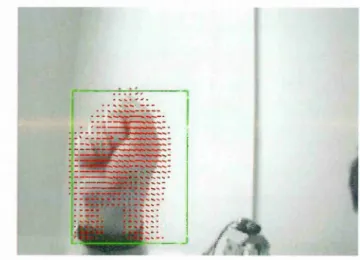
Figure 2-8: Skin colour classification.
2.5.2 Edge features
The colour features are reliable for most tracking tasks, even when there is occlusion or overlap. However, it may present poorly if the background features certain colours, such as those similar to skin. Edge features have been proposed to solve this kind of problem.
Some schemes have used only edge feature or have combined with colour features [37]. Typically, hand or any object boundaries usually produce strong changes in image intensities. Edge detection is used to identify these changes. An important property of edge is that they are less sensitive to illumination changes compared to colour features. Many edge detection approaches have been proposed, including popular techniques such as the Canny edge detection [38] and Sobel operator [39].
2.5.3 Motion features
For motion features, there are many schemes to detect motion of the objects such as motion vector and optical flow. Motion vectors are usually used to compress video and may also be employed for tracking. Optical flow is a dense field of displacement vector which defines the translation of each pixel in a region. It is computed using the brightness constraint, which assumes brightness constancy of corresponding pixels in consecutive frames.
/ %
Figure 2-9: Optical flow field of moving hand.
Typically, features are selected manually by the user depending on the application. However, the problem of automatic feature selection has become a significant topic in the pattern recognition area. Single features are commonly utilized for tracking. By contrast, some applications operate in difficult condition, such as cluttered background, where robust tracking techniques are required. Recently, adaptive multi-feature tracking has been proposed [40] for face tracking, which is based on the statistical models and combines the multiple features into the single particle filter. The results show that their proposed can improve the accuracy when compared with the optimal manually selected combination of the features.
Chapter l.Literature Review
2.6 Skin modelling and colour spaces
Skin detection plays an important role in a wide range of human computer interactions ranging including face detection, head tracking, hand detection, hand tracking and gesture analysis. Skin detection methodologies based on skin-colour information as cue has increased ability and robustness, which notices from the widespread kind of the skin detected application such as the real environment or un-controlled light conditions. The next section will introduce the colour space, which is used for skin modelling.
2.6.1 Colour spaces for skin modelling
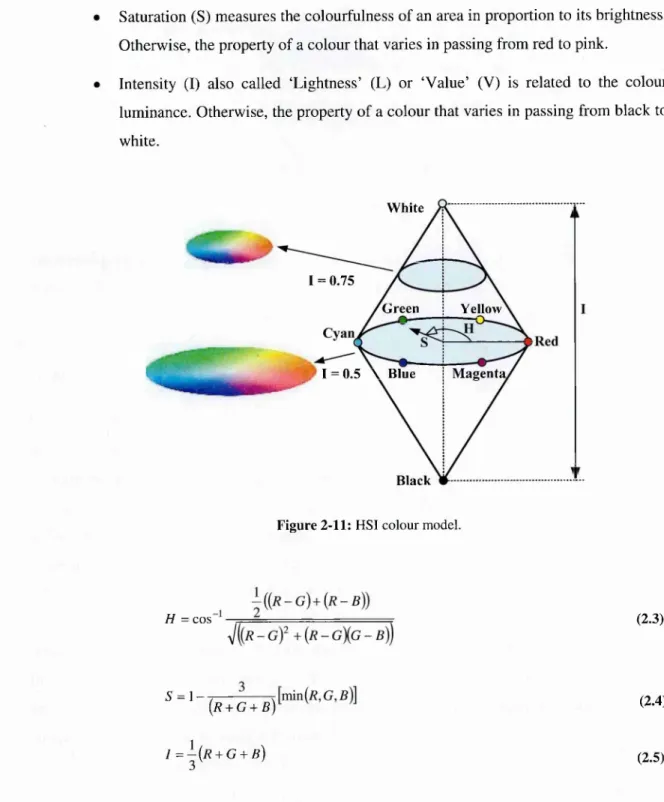
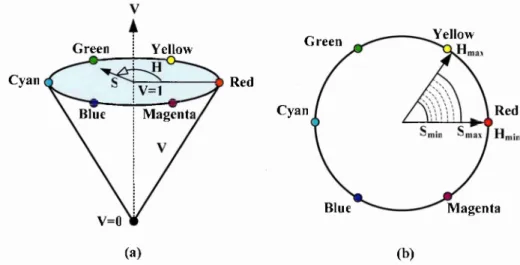
The selection of colour spaces for processing can be considered as a crucial decision in skin colour classification. A wide variety of the colour spaces have been applied to the problem of skin colour modelling. Obviously, the RGB colour space is almost the default colour space for the majority obtainable image formats. Colour spaces are usually described by the transformations from RGB colour space. The colour space transformation is supposed to reduce the overlap between skin and non-skin class in this manner aiding skin pixel classification and to present robust parameters against changing illumination conditions. It has been observed that skin colour differs more in intensity than chrominance [41]. There is a general practice to drop the luminance component for skin classification. Several colour spaces have been employed for skin detection. A brief review of the most popular colour spaces and their application to skin colour detection is presented in the following subsections.
2.6.1.1 Fundamental colour spaces
To consider the fundamental of colour spaces, RGB space is the most commonly used for storing and representing the colour image originated from CRT (Cathode Ray Tube) display as a combination of three colour channels (Red, Green, and Blue). This colour space is based on a Cartesian coordinate system as shown by the cube shape in Figure 2-10. RGB space is not a very favourable choice for the colour analysis and colour based recognition algorithms because of high correlation between colour channels, significant perceptual non-uniformity and mixing of chrominance and luminance data.
![Figure 2-14: ROC curves for the skin detector as a function of histogram size [74].](https://thumb-us.123doks.com/thumbv2/123dok_us/10989132.2986635/48.851.217.651.121.477/figure-roc-curves-skin-detector-function-histogram-size.webp)