Neuropsychiatric Disease and Treatment
Narcolepsy: a review
Gbolagade Sunmaila Akintomide1
Hugh Rickards2
1Department of Neuropsychiatry, University of Birmingham, 2Department of Neuropsychiatry, The Barberry, Edgbaston, Birmingham, UK
Correspondence: Gbolagade Akintomide 23 Templar Drive, Thamesmead, London, SE28 8PF, UK
Tel +44 78 3308 6317 Fax +44 20 8312 9054 Email [email protected]
Abstract: Narcolepsy is a lifelong sleep disorder characterized by a classic tetrad of excessive daytime sleepiness with irresistible sleep attacks, cataplexy (sudden bilateral loss of muscle tone), hypnagogic hallucination, and sleep paralysis. There are two distinct groups of patients, ie, those having narcolepsy with cataplexy and those having narcolepsy without cataplexy. Narcolepsy affects 0.05% of the population. It has a negative effect on the quality of life of its sufferers and can restrict them from certain careers and activities. There have been advances in the understanding of the pathogenesis of narcolepsy. It is thought that narcolepsy with cataplexy is secondary to loss of hypothalamic hypocretin neurons in those genetically predisposed to the disorder by possession of human leukocyte antigen DQB1*0602. The diagnostic criteria for narcolepsy are based on symptoms, laboratory sleep tests, and serum levels of hypocretin. There is no cure for narcolepsy, and the present mainstay of treatment is pharmacological treatment along with lifestyle changes. Some novel treatments are also being developed and tried. This article critically appraises the evidence for diagnosis and treatment of narcolepsy.
Keywords: narcolepsy, cataplexy, hypocretin, modafinil, gamma hydroxybutyrate
Introduction
Narcolepsy is a debilitating lifelong rapid eye movement (REM) sleep disorder. It is characterized by the classic tetrad of excessive daytime sleepiness with irresistible sleep attacks, cataplexy (sudden bilateral loss of muscle tone), hypnagogic
hallucina-tion, and sleep paralysis.1 Other features include fragmented night sleep and automatic
behavior, loss of concentration and memory, and blurry vision.2–5 The presentation is
variable in terms of symptoms and intensity over time, and only about 10% of patients
concurrently exhibit all components of the tetrad.6 There are two distinct groups of
patients, ie, those having narcolepsy with cataplexy and those having narcolepsy without cataplexy.
It often coexists with other sleep disorders, like obstructive sleep apnea syndrome, periodic limb movements in sleep, REM sleep behavior disorder, and nocturnal
eat-ing disorder.7–12
Epidemiology
The prevalence of narcolepsy in European countries varies from 0.02% to 0.05%.13–15 It
shows marked ethnic variation in prevalence rate, being 0.0002% in Israel and 0.16%
in Japan.16,17 The varying prevalence rates may be as a result of varying disease
defini-tions, varying study designs, varying age group inclusion in studies, or an actual varying
disease prevalence due to other factors.18,19 It has been suggested that the differences in
Dove
press
R E v i E w open access to scientific and medical research
Open Access Full Text Article
Neuropsychiatric Disease and Treatment downloaded from https://www.dovepress.com/ by 118.70.13.36 on 25-Aug-2020
For personal use only.
Number of times this article has been viewed
This article was published in the following Dove Press journal: Neuropsychiatric Disease and Treatment
prevalence may be partly related to the association between narcolepsy and the prevalence of the human leukocyte
anti-gen (HLA) DQB1*0602 phenotype.14 The subgroup having
narcolepsy without cataplexy may represent 10%–50% of
the narcolepsy population.20 The estimated incidence rate
is 0.74/100,000 per year for narcolepsy with cataplexy and 1.37/100,000 per year for both narcolepsy with cataplexy and
narcolepsy without cataplexy.21 The incidence rate is highest in
the second decade, and the disorder is more common in men.21
Pathophysiology
Genetic and environmental basis
Although most cases are sporadic, there are definite cases with familial clustering. The risk of narcolepsy in first-degree relatives of patients is 10–40 times higher than in the general
population.22 There is an environmental contribution as well,
as shown by reported concordance rates of 25%–31% in
monozygotic twins.23 The nature of possible environmental
triggers is unknown. Nevertheless, the onset is frequently asso-ciated with nonspecific environmental factors, such as head
trauma, stroke, and change in sleep-wake cycle.23 Moreover,
recent studies have shown an association with streptococcal
infection,24,25 HIN1 vaccination or infection,26 and exposure
to heavy metals, insecticides, and weed killers.27
HLA haplotype
More than 85% of patients having narcolepsy with cataplexy have HLA DQB1*0602, often in combination with HLA DR2 (DRB1*1501), while only half of patients having atypical, mild, or narcolepsy without cataplexy have HLA
DQB1*0602.28 Other alleles of HLA also affect the
predis-position to narcolepsy with cataplexy.29,30 Occurrence of the
HLA DQB*0602 allele is not limited to narcolepsy with cataplexy, and is found in 12%–38% of the general
popula-tion.23 Moreover, there are some rare patients with definite
cataplexy who do not have HLA DQB1.31 Overall, the poor
discriminatory ability of HLA typing limits its usefulness and makes it unsuitable as a routine diagnostic test.
Hypocretins
Hypocretins 1 and 2, also called orexins A and B, are two dorsolateral hypothalamic neuropeptides that function in reg-ulating sleep-wake cycles, food intake, and pleasure-seeking
behavior.32 Amongst the areas of the brain that the neurons
producing hypocretins project to are the locus ceruleus, tuberomammillary nucleus, raphe nucleus, and ventral
tegmental areas.32 These areas correspond to norepinephrine,
histamine, serotonin, and dopamine secretion, respectively.
Deficiency of hypocretin could lead to malfunctioning of these systems and therefore abnormalities of REM sleep
and excessive daytime sleepiness.33 Hypocretin neurons
also project to other areas of the hypothalamus, olfactory
bulb, cerebral cortex, and thalamus.34,35 The evidence for
hypocretin deficiency is as follows.
In 1979, Foutz et al showed that narcolepsy was inher-ited in a single autosomal recessive pattern in Doberman
Pinschers.36 Lin et al later identified this as a mutated
hypocretin receptor 2 gene.37 One of the earliest reports of
hypocretin deficiency in narcolepsy with cataplexy was that of Nishino et al in 2000. Their study showed that whilst seven of nine patients having narcolepsy with cataplexy had no detectable hypocretin, the neuropeptides were detectable in
all their eight matched controls.38 Further studies have
sup-ported hypocretin neurotransmission deficiency in narcolepsy
with cataplexy.31,39,40
It was subsequently found that, unlike in animals, hypo-cretin deficiency in humans having narcolepsy with cataplexy was not due to mutation in hypocretin genes but rather secondary to loss of hypocretin neurons in the dorsolateral
hypothalamus.39,40 Peyron et al found only one patient (an
atypical case with onset of narcolepsy with cataplexy at the age of 6 months) with hypocretin mutation among 74 patients screened for mutation. She also found global loss of hypo-cretin neurons in the brains of six deceased patients who
had suffered from narcolepsy with cataplexy.40 Furthermore,
Thannickal et al found the number of hypocretin neurons to be reduced by 85% to 95% in association with evidence of
gliosis.39 These studies collectively suggested that the loss
of hypocretin neurons in patients having narcolepsy with cataplexy might be inflammatory in nature.
Autoimmunity
The combination of HLA antigens, hypocretin deficiency, hypocretin neuron loss, the rarity of hypocretin gene muta-tions, and onset in the second decade of life points strongly
towards an autoimmune etiology.38–40 Initial efforts at
isolat-ing an autoantibody proved unsuccessful.41,42 However, there
was indirect evidence for an autoimmune nature of
narco-lepsy, such as its temporary response to steroids.42,43 Recently,
methods have been developed to demonstrate the presence of autoantibodies. There has been a demonstration of an autoantibody which disrupts colonic migrating motor
com-plexes.44 A Tribbles homolog 2 (Trib2) transcript (an
autoan-tigen in autoimmune uveitis45) has been shown to be enriched
in hypocretin neurons from genetically engineered mice.46
Enzyme-linked immunosorbent analysis was used in turn to
Dovepress
Akintomide and Rickards
Neuropsychiatric Disease and Treatment downloaded from https://www.dovepress.com/ by 118.70.13.36 on 25-Aug-2020
show that sera from patients having narcolepsy with cataplexy had higher Trib2-specific antibody titers compared with those in normal controls or patients with other neurological
diseases.46 Moreover, serum from a patient having narcolepsy
with cataplexy showed specific immunoreactivity with over
86% of hypocretin neurons in the mouse hypothalamus.46 This
finding was replicated in another study that found autoanti-bodies against Trib2 in 26.1% of patients having narcolepsy
with cataplexy compared with 2.3% of healthy controls.47
Thus, a subgroup of patients having narcolepsy with cata-plexy might be suffering from anti-Trib2 autoimmune dis-order. Furthermore, another study has found an association between narcolepsy with cataplexy and polymorphism in the T cell receptor alpha genetic locus (encoding the major receptor for HLA peptide presentation in any disease) in three
ethnic groups compared with normal matched controls.48
Further support for an autoimmune etiology comes from cytokine studies showing higher interleukin-6, tumor
necro-sis factor-α, and tumor necrosis factor receptor p75 levels
in patients having narcolepsy with cataplexy.49–51 However,
Fontana et al have suggested that immune-mediated
destruc-tion of hypocretin cells might occur independent of T cells.52
Moreover, a lack of hypocretin is not specific to narcolepsy with cataplexy. It has also been reported in patients with
Guillain–Barré and Miller Fisher syndromes.53,54
Loss of hypocretin-producing neurons definitely causes
narcolepsy with cataplexy.31,39,40,55 Other neurological insults,
lesions of the hypothalamus or nearby structures, and global traumatic, vascular, or inflammatory insults to the brain could
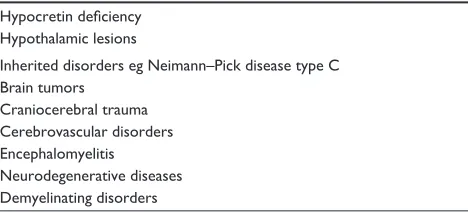
also cause narcolepsy.56–58 All this could affect the levels of
hypocretin either transiently or permanently (see Table 1).55
Diagnosis
The first step in the diagnosis of narcolepsy is history-taking from the patient and from partners, relatives, and friends. Apart from atonia and areflexia in patients having active cataplexy,
the physical examination should be normal.5 The current
International Classification of Sleep Disorders (ICSD-2)
definition for narcolepsy is shown in Table 2.59 It is based on
history, polysomnography, multiple sleep latency tests (MSLT), and measurement of hypocretin levels in cerebrospinal fluid. It classifies narcolepsy into three types (see Table 2). Exces-sive daytime sleepiness is the most constant feature of
narco-lepsy6 and measuring it accurately is important. There are a
number of subjective and objective scales to measure this.
Subjective measures of excessive
daytime sleepiness
The main advantages of subjective measures of excessive daytime sleepiness are that they are less cumbersome, less time-consuming, and less expensive compared with objective
tests.60 Their main drawback is their inconsistent reliability
in correlating with objective tests.61
The Epworth Sleepiness scale was developed by Murray Johns in Australia in 1991 and was validated using 150 consecutive clinic patients with a range of sleep
disor-ders and 30 hospital worker controls.60 Thus, the study
sample was from neither the normal population nor from the same population. The Epworth Sleepiness scale is a self- administered questionnaire in which patients rate their likelihood of falling asleep in eight different life situations.
Table 2 The International Classification of Sleep Disorders for narcolepsy59
Narcolepsy with cataplexy
Excessive daytime sleepiness almost daily for at least 3 months
Definite history of cataplexy
Diagnosis should be confirmed, whenever possible, by one of the
following:
Polysomnographya and MSLTb; mean sleep latency should be #8 minutes and at least 2 SOREMSc
CSFd hypocretin level #110 pg/mL or 1/3 of mean normal controls Hypersomnia is not better explained by another disorder or medication
Narcolepsy without cataplexy
Excessive daytime sleepiness almost daily for at least 3 months
Definite cataplexy is not present
Diagnosis must be confirmed by polysomnography or MSLT
Mean sleep latency should be #8 minutes and $2 SOREMs
Hypersomnia is not better explained by another disorder or medication
Secondary narcolepsy (narcolepsy due to medical condition)
Excessive daytime sleepiness almost daily for at least 3 months
One of the following is present: definite history of cataplexy; if cataplexy is not present, diagnosis must be confirmed by polysomnography and
MSLT; mean sleep latency should be #8 minutes and at least 2 SOREMS; CSF hypocretin level #110 pg/mL
Underlying medical or neurological condition accounts for the sleepiness Hypersomnia is not better explained by another disorder or medication Abbreviations: MSLT, Multiple Sleep Latency Time; SOREM, sleep onset REM;
CSF, cerebrospinal fluid.
Note: Reproduced with permission from American Academy of Sleep Medicine.
The International Classification of Sleep Disorders, Diagnostic and Coding Manual. 2nd ed. westchester, iL: American Academy of Sleep Medicine; 2005.
Table 1 Primary and secondary etiologies of narcolepsy
Hypocretin deficiency
Hypothalamic lesions
inherited disorders eg Neimann–Pick disease type C Brain tumors
Craniocerebral trauma Cerebrovascular disorders Encephalomyelitis
Neurodegenerative diseases Demyelinating disorders
Dovepress Narcolepsy
Neuropsychiatric Disease and Treatment downloaded from https://www.dovepress.com/ by 118.70.13.36 on 25-Aug-2020
Each situation is scored from 0 to 3 and the total score varies from 0 to 24. It has been validated in different clinical
situa-tions and languages.62–65 It correlates best with the objective
tests in comparison with other subjective tests.60
Other subjective measures include the Stanford Sleepi-ness scale which rates excessive daytime sleepiSleepi-ness accord-ing to the subjects’ perception of their sleepiness/alertness
at a particular time,60 and the visual analog scale, with which
subjects indicate their levels of sleepiness along a continu-ous line between two points. These two tests only measure sleepiness at a particular time rather than general daytime sleepiness. Thus, their main application is in research rather than in the clinic, when they can only be used for
point-in-time estimation of sleepiness.61 Based on the above
consid-erations, our recommended clinical subjective measure is the Epworth Sleepiness scale.
Objective measures of excessive
daytime sleepiness
Polysomnography is a method which is usually performed overnight in a sleep laboratory before MSLT. Data such as breathing, movement, time spent asleep, heart rate, and
electroencephalography are obtained.18,66,67 Patients may
have audio and video monitoring that could reveal snoring, sleep talking, movement, and complex behavior during
sleep.18 Thus, it can reveal the etiology of excessive daytime
sleepiness and other sleep pathologies. However, perform-ing polysomnography itself can cause disruption to sleep,
potentially affecting MSLT on the following day.18 Thus, it
is recommended that at least 6 hours of sleep is recorded on
the night before MSLT.67
MSLT is the accepted standard objective measure for excessive daytime sleepiness and has good inter-rater and
intrarater reliability.18,60,66 It consists of five scheduled naps
during the day, each lasting 20 minutes and 2 hours apart. Ideally, it is carried out under conditions that best help patients to fall asleep, eg, appropriate temperature and limited stimulation. Patients are required to stay awake between each nap opportunity. During the tests, physiologi-cal data are gathered, such as time taken to fall asleep and
the presence or absence of REM sleep.18 When REM sleep
occurred within 15 minutes of onset, it is termed sleep-onset REM sleep (SOREM). It is common in narcolepsy
but rare in normal individuals.18 Patients should spend at
least 8 hours in bed per night in the preceding week in order
to avoid erroneous results.68 This can be confirmed using
a documented sleep log or, more objectively, by the use of
wrist actigraphy,69 which entails wearing a motion-sensitive
device that uses lack of movement as a surrogate for the
period spent asleep.68
The current ICSD-2 MSLT criteria shown in Table 2 might
not be specific for narcolepsy, as shown by Allen70 who
car-ried out polysomnography and MSLT in 289 normal males and 267 normal females, and analyzed subject variables such as age, gender, body mass index, and HLA typing against their results on MSLT. Allen found that 4.2% and 0.4% of males and females, respectively, had two SOREMS
and an excessive daytime sleepiness score of $11 on the
Epworth Sleepiness scale (ICSD-2 criteria for narcolepsy without cataplexy, see Table 2). Furthermore, shift work, use of non-REM-suppressing antidepressants, a positive HLA DQB1*0602, decreased oxygen saturation, and a sleep diary showing a 1-hour decrease in sleep the night before polysomnography, are all related to two or more SOREMs. Therefore, several other factors and sleep disorders could result in two SOREMs, and two SOREMs are not as specific for narcolepsy as suggested by ICSD-2 criteria.
Moreover, a recent case series showed five patients diag-nosed as having narcolepsy with cataplexy based on history alone (consistent with ICSD-2 criteria) but whose diagnoses were later found not to be corroborated by MSLT, and all
were HLADQB1*0602 negative.71 Thus, the diagnosis of
narcolepsy irrespective of whether it is narcolepsy with cataplexy or narcolepsy without cataplexy should be based both on clinical symptoms and MSLT, and reliance on either alone may be insufficient.
The maintenance of wakefulness test is a variant of the MSLT, and measures the ability to stay awake. It consists of 4–5 trials of trying to remain awake while in the recumbent position in a dark room. This is repeated every 2 hours. Each
trial is terminated if no sleep occurs after 40 minutes.45 It
is subject to the same caveats as the MSLT.60 It has been
found to measure alertness rather than sleepiness.72 Thus, it
is used to measure the ability to stay awake in individuals with jobs that require a high level of alertness and also to assess response to treatment by those with excessive daytime
sleepiness in pharmacological trials,61 rather than to make
a diagnosis. The correlations between the Epworth Sleepi-ness scale, MSLT, and maintenance of wakefulSleepi-ness test are
generally not impressive.61,73
Laboratory testing for HLA typing adds little to the diagnostic evaluation because its sensitivity is highest in patients having narcolepsy with cataplexy, a group in
which additional diagnosis is rarely necessary.18,19,28,31
Testing for hypocretin suffers from the same problem. In addition, it needs a lumbar puncture, which is an invasive
Dovepress
Akintomide and Rickards
Neuropsychiatric Disease and Treatment downloaded from https://www.dovepress.com/ by 118.70.13.36 on 25-Aug-2020
procedure with potential complications. Nevertheless, hypocretin measurement should be considered in the fol-lowing situations: folfol-lowing an equivocal MSLT result; in patients who cannot follow the instructions for MSLT; individuals who are unable to stop medications that could affect the result of MSLT; those with complex psychiatric, neurological, or medical disorders that could compromise the result of MSLT; in the patient who gives an excel-lent history of narcolepsy with cataplexy but who has normal polysomnography and MSLT. In these patients, a hypocretin-1 level below 110 pg/mL in cerebrospinal fluid is highly indicative of narcolepsy, but a higher level does
not necessarily exclude the diagnosis.55
In terms of neuroimaging, magnetic resonance studies are presently inconclusive in their findings, while magnetic resonance spectroscopy has revealed abnormal metabolism in the hypothalamus. Functional neuroimaging has revealed hypoperfusion and hypermetabolism in the hypothalamus,
limbic cortex, and cerebrum.45,74–81 Overall, neuroimaging is
not useful in the diagnosis of narcolepsy.
Differential diagnoses
• Sleep deprivation, sleep apnea, idiopathic hypersomnia,
recurrent hypersomnia (Kleine–Levin syndrome), restless
legs syndrome, and periodic limb movement disorder.82
• Neurological conditions commonly associated with
sleepiness and REM sleep behavioral disorder, eg, Parkinson’s disease, Alzheimer’s disease, and other neu-rodegenerative conditions, including multiple sclerosis, stroke, epilepsy, neuromuscular disorders, and structural brain disorders (bithalamic or bicortical lesions affecting
midline projecting systems).82–84
• Medical conditions commonly associated with sleepiness,
such as respiratory disorders (eg, chronic obstructive pulmonary disease and asthma), cardiac disorders (eg, congestive heart failure), renal disorders (eg, chronic renal failure), rheumatologic disorders (eg, arthritis), inflammatory disorders (eg, lupus), hepatic disorders
(eg, liver failure), and malignancy.82
• Major psychiatric disorders sharing symptoms of
func-tional impairment, insomnia, and hypersomnia with
narcolepsy;85 reduced REM latency is common to major
episodes of depression and narcolepsy;4,86,87 REM
sleep-related disorders in narcolepsy share some psychotic features with schizophrenia, eg,
hypnagogic/hypnopom-pic hallucination;88–90 some features of narcolepsy, such
as sleep paralysis and sleep behavior disorder, could be
misinterpreted as psychosis.91
• Stimulants used in the treatment of narcolepsy can give
rise to psychotic symptoms.92
• Differences between the core symptoms of psychosis and
symptoms of narcolepsy have been elaborated elsewhere93
in a study comparing 148 narcolepsy patients, 21 schizo-phrenic patients, and 128 healthy subjects, which found that episodes of hallucination in narcolepsy were sleep-related and posture-sleep-related, and more likely to be visual and kinetic (83% and 71% in narcolepsy, respectively, compared
with 29% and 5% in schizophrenia);93 the drawback of
the study included discordant sample sizes for the groups, and the groups were also from different populations.
• In children, narcolepsy may present with only excessive
daytime sleepiness, and the behavioral problem associated with excessive daytime sleepiness might be misdiagnosed
as ADHD.94
• Malingering
• Cataplexy has been misdiagnosed as epilepsy or recurrent
syncope.95–97
Treatment
Excessive daytime sleepiness and sleep
attacks
Conventional treatments are essentially symptomatic, given that no cure has been found for narcolepsy. American Acad-emy of Sleep Medicine classification of the levels of evidence
that the authors follow in this paper are shown in Table 3.98
There is no randomized controlled trial to support the efficacy of nonpharmacological therapy. There is Level III evidence from a nonblinded controlled study that taking naps reduces excessive daytime sleepiness both subjectively and
objectively,99 while hypnotherapy has only Level IV
evi-dence from a case series.100 Furthermore, there is Level IV
evidence from an open-label study that a low-carbohydrate,
high-protein diet can improve wakefulness.101 Overall,
Table 3 Oxford Centre evidence-based medicine levels of evidence98
Evidence level study design or description
I. Randomized controlled trial with narrow confidence intervals II. Randomized trials without narrow confidence intervals, or with
methodological problems, or cohort studies
iii. Nonrandomized concurrently controlled studies or case-control studies
iv. Case-control or cohort studies with methodological problems, or case series
v. Expert opinion, or studies based on physiology or bench research Note: Abbreviated with permission from Centre for Evidence-based Medicine. Levels of evidence 2009 [web page on the internet]. Oxford: Centre for Evidence-based Medicine; 2009 [updated April 15, 2011]. Available from: http://www.cebm. net/index.aspx?o=1025. Accessed April 20, 2011.
Dovepress Narcolepsy
Neuropsychiatric Disease and Treatment downloaded from https://www.dovepress.com/ by 118.70.13.36 on 25-Aug-2020
nonpharmacological therapies are not adequate alone as primary therapy for narcolepsy. According to an American Academy of Sleep Medicine report: “Scheduled naps can be beneficial to combat sleepiness but seldom suffice as primary
therapy for narcolepsy.”102
Pharmacological therapy is the mainstay of treatment for excessive daytime sleepiness. There is only Level III and IV evidence of efficacy from trials using earlier medications. The earliest medication used in the treatment of narcolepsy was caffeine, but its cardiovascular side effects prohibited its use
at higher doses.103 Other treatments included insulin-induced
hypoglycemia (reported in 1952)104 and trazodone used to
supplement methylphenidate.105 Both were case reports
that led to temporary improvement. Other older treatments include mazindol, which was studied in a nonrandomized
controlled trial with a short follow-up,106 and propranolol,
which was found to be effective in a case report107 but not
in an open-label study.108 Overall, these earlier medications
are no longer used routinely in the treatment of narcolepsy. Ritanserin is a serotonin antagonist with Level II evidence from two studies. One study demonstrated an improvement in subjective daytime sleepiness but not in sleep latency on MSLT when ritanserin 5 mg/day was added to usual
medication in 28 patients.109 The second study compared
ritanserin 5 mg and 10 mg with placebo in 134 patients, and did not find improvement in any of the objective measures,
but did report an improvement in subjective sleep quality.110
According to an American Academy of Sleep Medicine report: “Ritanserin may be effective treatment of daytime
sleepiness due to narcolepsy.”102 Its most appropriate use is
as an add-on medication.
Selegiline, a monoamine oxidase type B inhibitor, has a Level II study that demonstrated its efficacy for excessive
daytime sleepiness and cataplexy.111 The American Academy
of Sleep Medicine report has expressed some reservations about its use as the preferred initial choice for treatment of
excessive daytime sleepiness,102 on account of its potential
for drug and diet interactions.102
Traditional stimulants have been in use since the 1930s, initially caffeine and ephedrine, then amphetamines, methamphetamine, and dexamphetamine, and thereafter, their derivatives pemoline briefly and methylphenidate
later.33,103,112 At low doses, stimulants release dopamine and
noradrenaline through reversal of action of their presynaptic transporters. At higher doses, amphetamine inhibits
vesicu-lar monoamine transporter 2.113 The side effects of stimulants
include irritability, headache, nervousness, palpitations, insomnia, and less often, orofacial dyskinesia, anorexia,
nausea, excessive sweating, psychosis, and myocardial
infarction.113–115 Tolerance may develop in up to one-third
of patients, and these have a potential for addiction.113 There
is limited evidence to support their use. The only Level III evidence available for the efficacy of traditional stimulants
was provided by Mitler et al116 who compared eight patients
with narcolepsy and eight healthy matched controls. The patients received 0 mg, 20 mg, or 40–60 mg, while the con-trols received 0 mg, 5 mg, or 10 mg of methamphetamine. MSLT sleep latency increased in both groups, from 4.3 to 9.3 minutes in patients and from 10.4 to 17.1 minutes in controls.
Pemoline selectively blocks dopamine reuptake. It has
the potential to cause fatal hepatotoxicity.113 On account of
this, it has been withdrawn from the market and is no longer
recommended.82
Methylphenidate, an N-methyl derivative of amphet-amine, has a shorter half-life, milder side effects, and low
abuse potential.33 It has Level II and Level IV evidence for
its use. A nonrandomized controlled study compared the response of narcoleptic patients allocated to four treatment groups (methylphenidate, pemoline, protriptyline, and dextroamphetamine) and one placebo group. Each group had three dose regimens. Improvement in the maintenance of wakefulness test was used as the objective measure. All doses of methylphenidate and dextroamphetamine were
efficacious, while doses of pemoline ,112.5 mg and doses
of protriptyline up to 60 mg/day were not efficacious.117
Honda et al reported a dose-related improvement in 92% of 106 patients treated with methylphenidate (50 patients had
more than 5 years of treatment).118 However, the
improve-ment might not have been solely due to methylphenidate because many of the patients were also receiving concurrent hypnotics or tricyclic antidepressants. Stimulants including amphetamine, methamphetamine, dextroamphetamine, and methylphenidate are effective for the treatment of daytime
sleepiness due to narcolepsy.102 However, treatment should
be individualized, and patients should be closely followed
up to ensure efficacy and detection of side effects.102
Modafinil and its R enantiomer, armodafinil, are wake-promoting agents that have an additional phenyl group and an amide instead of an amine group in their chemical structure
when compared with amphetamine.113 Although the
mecha-nism of action of modafinil is unclear, it is believed to work through the dopaminergic, adrenergic, and histaminergic
systems.33 Recently, a functional neuroimaging study has
shown that modafinil increases extracellular levels of
dop-amine in the human brain.119 Furthermore, another study has
Dovepress
Akintomide and Rickards
Neuropsychiatric Disease and Treatment downloaded from https://www.dovepress.com/ by 118.70.13.36 on 25-Aug-2020
shown that modafinil indirectly inhibits gamma aminobutyric
acid by activating potassium ATP channels in animals.120 Its
side effects include headache, dry mouth, insomnia, nausea, vomiting, anxiety, tachycardia, palpitation, chest pain, and
dermatological reactions, like Stevens–Johnson syndrome.18
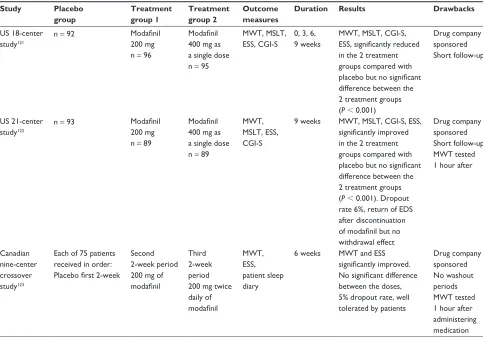
Unlike the stimulants, the efficacy of modafinil has been evaluated by double-blind, placebo-controlled, randomized
trials (Level I evidence).121–123 These trials are summarized
in Table 4.
Furthermore, recent crossover, randomized, controlled trials have shown more sustained wakefulness with higher
doses and superior results with a split dose of modafinil.124,125
This occurred when the maintenance of wakefulness test was performed in the evenings rather than 1 hour after administration of medication, as performed in the ran-domized controlled trials shown in Table 4. Modafinil does not seem to impair night-time sleep as shown by a nonrandomized control study (Level III evidence), which compared the effect of modafinil on night-time sleep with that of dextroamphetamine in healthy volunteers.
The subjects received 100 mg and 200 mg of modafinil and 10 mg and 20 mg of dextroamphetamine in a crossover design. Dextroamphetamine reduced total night sleep time and REM sleep time, but these were unchanged in placebo
and modafinil patients.126 An open-label study (Level IV
evidence) is suggestive of lack of development of toler-ance to modafinil. In this study, the investigators followed up patients with narcolepsy treated with modafinil for 40 weeks. The subjects demonstrated sustained improve-ment in excessive daytime sleepiness and quality of life
for the 40-week duration of the trial.127
Armodafinil 150 mg and 250 mg has also been shown by a randomized controlled trial to lead to an improvement in both morning and late maintenance of wakefulness test, sleep latency, and Clinical Global Impression of Change
score when compared with placebo.128 However, there are no
direct comparisons of armodafinil and modafinil. Modafinil and armodafinil are effective for excessive daytime sleepi-ness, and are recommended for the treatment of excessive
daytime sleepiness due to narcolepsy.102,129
Table 4 Double-blind randomized controlled studies of modafinil
Study Placebo
group
Treatment group 1
Treatment group 2
Outcome measures
Duration Results Drawbacks
US 18-center study121
n = 92 Modafinil
200 mg n = 96
Modafinil
400 mg as a single dose n = 95
MwT, MSLT, ESS, CGi-S
0, 3, 6, 9 weeks
MwT, MSLT, CGi-S,
ESS, significantly reduced
in the 2 treatment groups compared with
placebo but no significant
difference between the 2 treatment groups (P, 0.001)
Drug company sponsored Short follow-up
US 21-center study122
n = 93 Modafinil
200 mg n = 89
Modafinil
400 mg as a single dose n = 89
MwT, MSLT, ESS, CGi-S
9 weeks MwT, MSLT, CGi-S, ESS,
significantly improved
in the 2 treatment groups compared with
placebo but no significant
difference between the 2 treatment groups (P, 0.001). Dropout rate 6%, return of EDS after discontinuation
of modafinil but no
withdrawal effect
Drug company sponsored Short follow-up MwT tested 1 hour after
Canadian nine-center crossover study123
Each of 75 patients received in order:
Placebo first 2-week
Second 2-week period 200 mg of
modafinil
Third 2-week period 200 mg twice daily of
modafinil
MwT, ESS, patient sleep diary
6 weeks MwT and ESS
significantly improved. No significant difference
between the doses, 5% dropout rate, well tolerated by patients
Drug company sponsored No washout periods MwT tested 1 hour after administering medication Abbreviations: EDS, excessive daytime sleepiness; MwT, maintenance of wakefulness test; MSLT, multiple sleep latency time; ESS, Epworth Sleepiness scale; CGi-S, Clinical Global impression of Change.
Dovepress Narcolepsy
Neuropsychiatric Disease and Treatment downloaded from https://www.dovepress.com/ by 118.70.13.36 on 25-Aug-2020
Cataplexy, sleep paralysis, and hypnagogic
hallucination
A report of the effectiveness of imipramine in the treat-ment of cataplexy in 1960 led to widespread use of tricyclic
antidepressants.130 Their effect could be due to an ability
to inhibit the reuptake of catecholamines, increase muscle
tone, or suppress REM sleep.131–133 Side effects include
nau-sea, anorexia, dry mouth, urinary retention, constipation, and sexual dysfunction. Rebound cataplexy, which may be severe and prolonged (status cataplecticus), may occur on
sudden withdrawal from tricyclic antidepressants.33 There
are only case reports and case series (level IV evidence) for
their efficacy.134
Selective serotonin reuptake inhibitors inhibit presyn-aptic serotonin reuptake and also nocturnal REM sleep. Femoxetine has Level II evidence for treating cataplexy from a crossover, placebo-controlled study involving 10 patients. Only case series and reports (Level IV evidence) are available
for other selective serotonin reuptake inhibitors.135,136
Other antidepressants, including noradrenergic reuptake inhibitors, such as venlafaxine, duloxetine, reboxetine, and
viloxazine, are being used.137,138 There is a Level III
single-blind, crossover, placebo-controlled study of viloxazine
involving 23 patients, with one dropout.139 There are only
case series (Level V evidence) available for venlafaxine and
duloxetine.137,140
Overall, there is a lack of good evidence for the use of antidepressants in treating cataplexy. Nevertheless, according to the American Academy of Sleep Medicine report: “Based on consensus and clinical experience ... they may be an effective treatment for cataplexy, hypnagogic hallucination
and sleep paralysis.”102
Cataplexy and excessive daytime
sleepiness
Gamma hydroxybutyrate, marketed as sodium oxybate, is a natural metabolite of gamma aminobutyrate (GABA), and
is a GABAB receptor agonist at a pharmacological dose.18
Its exact mechanism of action is not known, but it increases slow wave sleep, decreases arousals, and has a variable
effect on latency and amount of REM sleep.141,142 Level I
evidence for the efficacy of gamma hydroxybutyrate was provided by three multicenter, randomized, double-blind, placebo-controlled studies of the short-term and long-term
efficacy of gamma hydroxybutyrate.143–145 In the first trial, 136
narcolepsy patients with 3–249 cataplexy attacks weekly were enrolled to receive 3.6 g or 9 g of gamma hydroxybutyrate or placebo taken in equal divided doses on retiring to bed
and 2.5–4.0 hours later for 4 weeks. The primary measure of efficacy was a change in baseline weekly cataplectic attacks, while secondary measures included excessive daytime sleepiness using the Epworth Sleepiness scale, inadvertent daytime naps, and night-time awakenings. In total, 88% of participants completed the trials. Weekly cataplectic attacks started to decrease at a 6 g dose and became significant at a 9 g dose, and excessive daytime sleepiness was reduced at all doses, becoming significant at the 9 g dose. The frequency of inadvertent daytime naps and night-time awakenings reduced
at all doses, becoming significant at the 9 g dose.143 The
second trial included 55 patients stabilized on nightly doses of gamma hydroxybutyrate for at least 6 months. They were then randomized into two arms, ie, one abruptly changing to placebo and the other continuing on gamma hydroxybutyrate for 2 weeks. Cataplexy gradually returned in those patients that were changed onto placebo over 2 weeks, but none of the
patients suffered withdrawal symptoms.144 This suggests lack
of development of tolerance to gamma hydroxybutyrate. The third trial compared the effect of nightly gamma hydroxybutyrate 4.5 g, 6 g, or 9 g with placebo in 228 adult
patients over 8 weeks.145 The patients showed a significant
dose-related increase in duration of stage 3 and 4 sleep, reaching a median duration of 52.5 minutes in patients receiving gamma hydroxybutyrate 9 g nightly. Frequency of nocturnal awakening and stage 1 sleep were each significantly decreased at nightly doses of gamma hydroxybutyrate 6 g and 9 g. This study showed that gamma hydroxybutyrate decreased the sleep disruption and fragmentation that are usually associated with narcolepsy. Moreover, two Level IV (open-label) studies have demonstrated the tolerability and
sustained efficacy of gamma hydroxybutyrate.146,147
From the gamma hydroxybutyrate trials, common side effects have included dizziness, headache, nausea, pain, som-nolence, sleep disorder, confusion, infection, vomiting, and
enuresis.33 Illicit use in high doses could result in addiction
and withdrawal. Sudden deaths have been reported in patients
who have risk factors for obstructive sleep apnea.148 Overall,
gamma hydroxybutyrate is effective, and is recommended for treatment of cataplexy, excessive daytime sleepiness, and
disrupted sleep due to narcolepsy.102
Future treatments
Introduction of hypocretin-1 into the cerebral ventricular system was found to be useful in mice but not in hypocretin-2 mutated
dogs.149 Intranasal administration is promising, as well as
transplantation of neonatal hypothalamic stem cells into
the brainstem.149,150 Narcolepsy with cataplexy is strongly
Dovepress
Akintomide and Rickards
Neuropsychiatric Disease and Treatment downloaded from https://www.dovepress.com/ by 118.70.13.36 on 25-Aug-2020
suspected to be an autoimmune disorder. However, attempts to modify immune processes, including use of steroids, plasmapheresis, and intravenous immunoglobulin, have been
met with limited and short-term success.151–153 Histamine
3 receptors regulate the release of histamine. Antagonism of the histamine 3 receptor enhances wakefulness, while
stimula-tion causes sedastimula-tion.154 Histamine 3 receptor antagonists have
been shown to be effective in canines and mice.155,156 Other
promising novel treatments include thyrotrophin-releasing
hormone and the nicotine patch.156,157
Conclusion
Our understanding of the pathogenesis of narcolepsy contin-ues to advance, with substantial evidence that autoimmune loss of hypocretin neurons is the main cause of narcolepsy with cataplexy. The standardized criteria for narcolepsy and diagnostic measures are generally accepted, but might need to be reviewed in the future. There is established pharma-cotherapy for symptomatic treatment of narcolepsy. Future treatment modalities, such as hypocretin analogs and hista-mine receptor antagonists, should aim to tackle the cause of narcolepsy.
Disclosure
The authors report no conflicts of interest in this work.
References
1. Daniels LE. Narcolepsy. Medicine. 1934;13:1–122.
2. Zorick FJ, Salis PJ, Roth T, Kramer M. Narcolepsy and automatic behavior: A case report. J Clin Psychiatry. 1979;40(4):194–197. 3. Parkes JD, Baraitser M, Marsden CD, Asselman P. Natural history,
symptoms and treatment of the narcoleptic syndrome. Acta Neurol Scand. 1975;52(5):337–353.
4. Broughton R, Ghanem Q, Hishikawa Y, Sugita Y, Nevsimalova S, Roth B. Life effects of narcolepsy in 180 patients from North America, Asia and Europe compared to matched controls. Can J Neurol Sci. 1981;8(4):299–304.
5. Parkes JD, Fenton G, Struthers G, et al. Narcolepsy and cataplexy. Clinical features, treatment and cerebrospinal fluid findings. Q J Med. 1974;43(172):525–536.
6. Morrish E, King MA, Smith IE, Shneerson JM. Factors associated with a delay in the diagnosis of narcolepsy. Sleep Med. 2004;5(1):37–41. 7. Sansa G, Iranzo A, Santamaria J. Obstructive sleep apnea in narcolepsy.
Sleep Med. 2010;11(1):93–95.
8. Ferri R, Franceschini C, Zucconi M, et al. Sleep polygraphic study of children and adolescents with narcolepsy/cataplexy. Dev Neuropsychol. 2009;34(5):523–538.
9. Knudsen S, Gammeltoft S, Jennum PJ. Rapid eye movement sleep behaviour disorder in patients with narcolepsy is associated with hypocretin-1 deficiency. Brain. 2010;133(Pt 2):568–579.
10. Schenck CH, Mahowald MW. Motor dyscontrol in narcolepsy: Rapid-eye-movement (REM) sleep without atonia and REM sleep behavior disorder. Ann Neurol. 1992;32(1):3–10.
11. Schenck CH, Hurwitz TD, Bundlie SR, Mahowald MW. Sleep-related eating disorders: Polysomnographic correlates of a heterogeneous syndrome dis-tinct from daytime eating disorders. Sleep. 1991;14(5):419–431.
12. Spaggiari MC, Granella F, Parrino L, Marchesi C, Melli I, Terzano MG. Nocturnal eating syndrome in adults. Sleep. 1994;17(4): 339–344. 13. Ohayon MM, Priest RG, Zulley J, Smirne S, Paiva T. Prevalence of
narcolepsy symptomatology and diagnosis in the European general population. Neurology. 2002;58(12):1826–1833.
14. Heier MS, Evsiukova T, Wilson J, Abdelnoor M, Hublin C, Ervik S. Prevalence of narcolepsy with cataplexy in Norway. Acta Neurol Scand. 2009;120(4):276–280.
15. Doherty L, Crowe C, Sweeney B. National narcolepsy survey. Ir Med J. 2010;103(4):112–113.
16. Wilner A, Steinman L, Lavie P, Peled R, Friedmann A, Brautbar C. Narcolepsy-cataplexy in Israeli Jews is associated exclusively with the HLA DR2 haplotype. A study at the serological and genomic level.
Hum Immunol. 1988;21(1):15–22.
17. Tashiro T, Kanbayashi T, Iijima S, Hishikawa Y. An epidemiological study of narcolepsy in Japanese. J Sleep Res. 1992;1:228.
18. Peacock J, Benca RM. Narcolepsy: Clinical features, co-morbidities and treatment. Indian J Med Res. 2010;131:338–349.
19. Peterson PC, Husain AM. Pediatric narcolepsy. Brain Dev. 2008; 30(10):609–623.
20. Mignot E, Hayduk R, Black J, Grumet FC, Guilleminault C. HLA DQB1*0602 is associated with cataplexy in 509 narcoleptic patients.
Sleep. 1997;20(11):1012–1020.
21. Silber MH, Krahn LE, Olson EJ, Pankratz VS. The epidemiology of narcolepsy in Olmsted County, Minnesota: A population-based study.
Sleep. 2002;25(2):197–202.
22. Nishino S, Okura M, Mignot E. Narcolepsy: Genetic predisposition and neuropharmacological mechanisms. Sleep Med Rev. 2000;4(1):57–99. 23. Mignot E. Genetic and familial aspects of narcolepsy. Neurology.
1998;50(2 Suppl 1):S16–S22.
24. Aran A, Lin L, Nevsimalova S, et al. Elevated anti-streptococcal antibodies in patients with recent narcolepsy onset. Sleep. 2009;32(8):979–983. 25. Longstreth WT Jr, Ton TG, Koepsell TD. Narcolepsy and streptococcal
infections. Sleep. 2009;32(12):1548.
26. Dauvilliers Y, Montplaisir J, Cochen V, et al. Post-H1N1 narcolepsy-cataplexy. Sleep. 2010;33(11):1428–1430.
27. Ton TG, Longstreth WT Jr, Koepsell TD. Environmental toxins and risk of narcolepsy among people with HLA DQB1*0602. Environ Res. 2010;110(6):565–570.
28. Tafti M. Genetic aspects of normal and disturbed sleep. Sleep Med. 2009;10 Suppl 1:S17–S21.
29. Mignot E, Lin L, Rogers W, et al. Complex HLA-DR and -DQ interac-tions confer risk of narcolepsy-cataplexy in three ethnic groups. Am J Hum Genet. 2001;68(3):686–699.
30. Hor H, Kutalik Z, Dauvilliers Y, et al. Genome-wide association study identifies new HLA class II haplotypes strongly protective against narcolepsy. Nat Genet. 2010;42(9):786–789.
31. Hong SC, Lin L, Jeong JH, et al. A study of the diagnostic utility of HLA typing, CSF hypocretin-1 measurements, and MSLT testing for the diagnosis of narcolepsy in 163 Korean patients with unexplained excessive daytime sleepiness. Sleep. 2006;29(11):1429–1438. 32. Sutcliffe JG, de Lecea L. The hypocretins: Excitatory neuromodulatory
peptides for multiple homeostatic systems, including sleep and feeding.
J Neurosci Res. 2000;62(2):161–168.
33. Thorpy M. Therapeutic advances in narcolepsy. Sleep Med. 2007; 8(4):427–440.
34. Shibata M, Mondal MS, Date Y, Nakazato M, Suzuki H, Ueta Y. Dis-tribution of orexins-containing fibers and contents of orexins in the rat olfactory bulb. Neurosci Res. 2008;61(1):99–105.
35. Jones BE. Modulation of cortical activation and behavioral arousal by cholinergic and orexinergic systems. Ann N Y Acad Sci. 2008;1129:26–34.
36. Foutz AS, Mitler MM, Cavalli-Sforza LL, Dement WC. Genetic factors in canine narcolepsy. Sleep. 1979;1(4):413–421.
37. Lin L, Faraco J, Li R, et al. The sleep disorder canine narcolepsy is caused by a mutation in the hypocretin (orexin) receptor 2 gene. Cell. 1999;98(3):365–376.
Dovepress Narcolepsy
Neuropsychiatric Disease and Treatment downloaded from https://www.dovepress.com/ by 118.70.13.36 on 25-Aug-2020
38. Nishino S, Ripley B, Overeem S, Lammers GJ, Mignot E. Hypocretin (orexin) deficiency in human narcolepsy. Lancet. 2000;355(9197): 39–40.
39. Thannickal TC, Moore RY, Nienhuis R, et al. Reduced number of hypo-cretin neurons in human narcolepsy. Neuron. 2000;27(3):469–474. 40. Peyron C, Faraco J, Rogers W, et al. A mutation in a case of early onset
narcolepsy and a generalized absence of hypocretin peptides in human narcoleptic brains. Nat Med. 2000;6(9):991–997.
41. Black JL 3rd, Silber MH, Krahn LE, et al. Studies of humoral immu-nity to preprohypocretin in human leukocyte antigen DQB1*0602-positive narcoleptic subjects with cataplexy. Biol Psychiatry. 2005; 58(6):504–509.
42. Black JL 3rd, Silber MH, Krahn LE, et al. Analysis of hypocretin (orexin) antibodies in patients with narcolepsy. Sleep. 2005;28(4):427–431. 43. Gledhill RF, Bartel PR, Yoshida Y, Nishino S, Scammell TE. Narcolepsy
caused by acute disseminated encephalomyelitis. Arch Neurol. 2004;61(5):758–760.
44. Jackson MW, Reed JH, Smith AJ, Gordon TP. An autoantibody in narcolepsy disrupts colonic migrating motor complexes. J Neurosci. 2008;28(49):13303–13309.
45. Zhang Y, Davis JL, Li W. Identification of Tribbles homolog 2 as an autoantigen in autoimmune uveitis by phage display. Mol Immunol. 2005;42(11):1275–1281.
46. Cvetkovic-Lopes V, Bayer L, Dorsaz S, et al. Elevated Tribbles homolog 2-specific antibody levels in narcolepsy patients. J Clin Invest. 2010;120(3):713–719.
47. Toyoda H, Tanaka S, Miyagawa T, Honda Y, Tokunaga K, Honda M. Anti-Tribbles homolog 2 autoantibodies in Japanese patients with narcolepsy. Sleep. 2010;33(7):875–878.
48. Hallmayer J, Faraco J, Lin L, et al. Narcolepsy is strongly associated with the T-cell receptor alpha locus. Nat Genet. 2009;41(6):708–711. 49. Hinze-Selch D, Wetter TC, Zhang Y, et al. In vivo and in vitro immune
variables in patients with narcolepsy and HLA-DR2 matched controls.
Neurology. 1998;50(4):1149–1152.
50. Okun ML, Giese S, Lin L, Einen M, Mignot E, Coussons-Read ME. Exploring the cytokine and endocrine involvement in narcolepsy. Brain Behav Immun. 2004;18(4):326–332.
51. Himmerich H, Beitinger PA, Fulda S, et al. Plasma levels of tumor necro-sis factor alpha and soluble tumor necronecro-sis factor receptors in patients with narcolepsy. Arch Intern Med. 2006;166(16):1739–1743. 52. Fontana A, Gast H, Reith W, Recher M, Birchler T, Bassetti CL.
Nar-colepsy: Autoimmunity, effector T cell activation due to infection, or T cell independent, major histocompatibility complex class II induced neuronal loss? Brain. 2010;133(Pt 5):1300–1311.
53. Kanbayashi T, Ishiguro H, Aizawa R, et al. Hypocretin-1 (orexin-A) concentrations in cerebrospinal fluid are low in patients with Guillain-Barre syndrome. Psychiatry Clin Neurosci. 2002;56(3):273–274. 54. Nishino S, Kanbayashi T, Fujiki N, et al. CSF hypocretin levels
in Guillain-Barre syndrome and other inflammatory neuropathies.
Neurology. 2003;61(6):823–825.
55. Bourgin P, Zeitzer JM, Mignot E. CSF hypocretin-1 assessment in sleep and neurological disorders. Lancet Neurol. 2008;7(7):649–662. 56. Von Economo C. Encephalitis lethargica. Weiner Medizinische
Wochenschrift. 1923;73:777–782.
57. Aldrich MS, Naylor MW. Narcolepsy associated with lesions of the diencephalon. Neurology. 1989;39(11):1505–1508.
58. Nishino S, Kanbayashi T. Symptomatic narcolepsy, cataplexy and hypersomnia, and their implications in the hypothalamic hypocretin/ orexin system. Sleep Med Rev. 2005;9(4):269–310.
59. American Academy of Sleep Medicine. The International Classifi-cation of Sleep Disorders, Diagnostic and Coding Manual. 2nd ed. Westchester, IL: American Academy of Sleep Medicine; 2005. 60. Johns MW. A new method for measuring daytime sleepiness: The
Epworth sleepiness scale. Sleep. 1991;14(6):540–545.
61. Sullivan SS, Kushida CA. Multiple sleep latency test and maintenance of wakefulness test. Chest. 2008;134(4):854–861.
62. Nguyen AT, Baltzan MA, Small D, Wolkove N, Guillon S, Palayew M. Clinical reproducibility of the Epworth Sleepiness Scale. J Clin Sleep Med. 2006;2(2):170–174.
63. DeZee KJ, Jackson JL, Hatzigeorgiou C, Kristo D. The Epworth sleepi-ness scale: Relationship to sleep and mental disorders in a sleep clinic.
Sleep Med. 2006;7(4):327–332.
64. Izci B, Ardic S, Firat H, Sahin A, Altinors M, Karacan I. Reliability and validity studies of the Turkish version of the Epworth Sleepiness Scale. Sleep Breath. 2008;12(2):161–168.
65. Chen NH, Johns MW, Li HY, et al. Validation of a Chinese version of the Epworth sleepiness scale. Qual Life Res. 2002;11(8):817–821. 66. Kok SW, Meinders AE, Overeem S, et al. Reduction of plasma leptin
levels and loss of its circadian rhythmicity in hypocretin (orexin)-deficient narcoleptic humans. J Clin Endocrinol Metab. 2002;87(2):805–809. 67. Littner MR, Kushida C, Wise M, et al. Practice parameters for clinical
use of the multiple sleep latency test and the maintenance of wakeful-ness test. Sleep. 2005;28(1):113–121.
68. Carskadon MA, Dement WC, Mitler MM, Roth T, Westbrook PR, Keenan S. Guidelines for the multiple sleep latency test (MSLT): A standard measure of sleepiness. Sleep. 1986;9(4):519–524. 69. Rack M, Davis J, Roffwarg HP, Richert A, Baran AS. The Multiple
Sleep Latency Test in the diagnosis of narcolepsy. Am J Psychiatry. 2005;162(11):2198–2199.
70. Allen RP. When, if ever, can we use REM-onset naps on the MSLT for the diagnosis of narcolepsy? Sleep Med. 2006;7(8):657–659. 71. Morrison I, Buskova J, Nevsimalova S, Douglas NJ, Riha RL.
Diagnosing narcolepsy with cataplexy on history alone: Challenging the International Classification of Sleep Disorders (ICSD-2) criteria.
Eur J Neurol. 2011;18(7):1017–1020.
72. Sangal RB, Thomas L, Mitler MM. Maintenance of wakefulness test and multiple sleep latency test. Measurement of different abilities in patients with sleep disorders. Chest. 1992;101(4):898–902.
73. Benbadis SR, Mascha E, Perry MC, Wolgamuth BR, Smolley LA, Dinner DS. Association between the Epworth sleepiness scale and the multiple sleep latency test in a clinical population. Ann Intern Med. 1999;130(4 Pt 1):289–292.
74. Plazzi G, Montagna P, Provini F, Bizzi A, Cohen M, Lugaresi E. Pontine lesions in idiopathic narcolepsy. Neurology. 1996;46(5):1250–1254. 75. Bassetti C, Aldrich MS, Quint DJ. MRI findings in narcolepsy. Sleep.
1997;20(8):630–631.
76. Frey JL, Heiserman JE. Absence of pontine lesions in narcolepsy.
Neurology. 1997;48(4):1097–1099.
77. Stepien A, Staszewski J, Domzal TM, Tomczykiewicz K, Skrobowska E, Durka-Kesy M. Degenerative pontine lesions in patients with familial narcolepsy. Neurol Neurochir Pol. 2010;44(1):21–27. Polish. 78. Ellis CM, Simmons A, Lemmens G, Williams SC, Parkes JD. Proton
spectroscopy in the narcoleptic syndrome. Is there evidence of a brain-stem lesion? Neurology. 1998;50(2 Suppl 1):S23–S26.
79. Lodi R, Tonon C, Vignatelli L, et al. In vivo evidence of neuronal loss in the hypothalamus of narcoleptic patients. Neurology. 2004;63(8): 1513–1515.
80. Joo EY, Hong SB, Tae WS, et al. Cerebral perfusion abnormality in narcolepsy with cataplexy. NeuroImage. 2005;28(2):410–416. 81. Hong SB, Tae WS, Joo EY. Cerebral perfusion changes
dur-ing cataplexy in narcolepsy patients. Neurology. 2006;66(11): 1747–1749.
82. Boulos MI, Murray BJ. Current evaluation and management of exces-sive daytime sleepiness. Can J Neurol Sci. 2010;37(2):167–176. 83. Arnulf I. Excessive daytime sleepiness in parkinsonism. Sleep Med
Rev. 2005;9(3):185–200.
84. Lee JH, Bliwise DL, Ansari FP, et al. Daytime sleepiness and func-tional impairment in Alzheimer disease. Am J Geriatr Psychiatry. 2007;15(7):620–626.
85. Ervik S, Abdelnoor M, Heier MS, Ramberg M, Strand G. Health-related quality of life in narcolepsy. Acta Neurol Scand. 2006;114(3): 198–204.
Dovepress
Akintomide and Rickards
Neuropsychiatric Disease and Treatment downloaded from https://www.dovepress.com/ by 118.70.13.36 on 25-Aug-2020
86. Riemann D. Insomnia and comorbid psychiatric disorders. Sleep Med. 2007;8 Suppl 4:S15–S20.
87. Naumann A, Bellebaum C, Daum I. Cognitive deficits in narcolepsy.
J Sleep Res. 2006;15(3):329–338.
88. Bhat SK, Galang R. Narcolepsy presenting as schizophrenia. Am J Psychiatry. 2002;159(7):1245.
89. Kondziella D, Arlien-Soborg P. Diagnostic and therapeutic challenges in narcolepsy-related psychosis. J Clin Psychiatry. 2006;67(11): 1817–1819.
90. Kishi Y, Konishi S, Koizumi S, Kudo Y, Kurosawa H, Kathol RG. Schizophrenia and narcolepsy: A review with a case report. Psychiatry Clin Neurosci. 2004;58(2):117–124.
91. Moturi S, Ivanenko A. Complex diagnostic and treatment issues in psychotic symptoms associated with narcolepsy. Psychiatry (Edgmont). 2009;6(6):38–44.
92. Yasui-Furukori N, Kusunoki M, Kaneko S. Hallucinations associated with modafinil treatment for narcolepsy. J Clin Psychopharmacol. 2009;29(4):408.
93. Dahmen N, Kasten M, Mittag K, Muller MJ. Narcoleptic and schizo-phrenic hallucinations. Implications for differential diagnosis and pathophysiology. Eur J Health Econ. 2002;3 Suppl 2:S94–S98. 94. Nevsimalova S. Narcolepsy in childhood. Sleep Med Rev. 2009;
13(2):169–180.
95. Fejerman N. Nonepileptic disorders imitating generalized idiopathic epilepsies. Epilepsia. 2005;46 Suppl 9:80–83.
96. Calabro RS, Savica R, Lagana A, et al. Status cataplecticus misdiag-nosed as recurrent syncope. Neurol Sci. 2007;28(6):336–338. 97. Macleod S, Ferrie C, Zuberi SM. Symptoms of narcolepsy in children
misinterpreted as epilepsy. Epileptic Disord. 2005;7(1):13–17. 98. Centre for Evidence-based Medicine. Levels of evidence 2009 [web
page on the Internet]. Oxford: Centre for Evidence-based Medicine; 2009 [updated April 15, 2011]. Available from: http://www.cebm.net/ index.aspx?o=1025. Accessed April 20, 2011.
99. Littner M, Johnson SF, McCall WV, et al. Practice parameters for the treatment of narcolepsy: An update for 2000. Sleep. 2001; 24(4):451–466.
100. Wang W, Wang F, Zhao Y, Lv M, Lv X. Two patients with narcolepsy treated by hypnotic psychotherapy. Sleep Med. 2009;10(10):1167. 101. Husain AM, Yancy WS Jr, Carwile ST, Miller PP, Westman EC. Diet
therapy for narcolepsy. Neurology. 2004;62(12):2300–2302. 102. Morgenthaler TI, Kapur VK, Brown T, et al. Practice parameters for
the treatment of narcolepsy and other hypersomnias of central origin.
Sleep. 2007;30(12):1705–1711.
103. Murray TJ, Foley A. Narcolepsy. Can Med Assoc J. 1974;110(1): 63–66.
104. Weitzner HA. Insulin hypoglycemia in treatment of narcolepsy with tem-porary improvement. Perm Found Med Bull. 1952;10(1–4):153–156. 105. Sandyk R. Efficacy of trazodone in narcolepsy. Eur Neurol. 1985;
24(5):335–337.
106. Iijima S, Sugita Y, Teshima Y, Hishikawa Y. Therapeutic effects of mazindol on narcolepsy. Sleep. 1986;9(1 Pt 2):265–268.
107. Kales A, Cadieux R, Soldatos CR, Tan TL. Successful treat-ment of narcolepsy with propranolol: A case report. Arch Neurol. 1979;36(10):650–651.
108. Meier-Ewert K, Matsubayashi K, Benter L. Propranolol: Long-term treatment in narcolepsy-cataplexy. Sleep. 1985;8(2):95–104. 109. Lammers GJ, Arends J, Declerck AC, Kamphuisen HA, Schouwink G,
Troost J. Ritanserin, a 5-HT2 receptor blocker, as add-on treatment in narcolepsy. Sleep. 1991;14(2):130–132.
110. Mayer G. Ritanserin improves sleep quality in narcolepsy. Pharma-copsychiatry. 2003;36(4):150–155.
111. Mayer G, Ewert Meier K, Hephata K. Selegeline hydrochloride treat-ment in narcolepsy. A double-blind, placebo-controlled study. Clin Neuropharmacol. 1995;18(4):306–319.
112. Prinzmetal M, Bloomberg W. The use of benzedrine for the treatment of narcolepsy. JAMA. 1935;105(25):2051–2054.
113. Billiard M. Narcolepsy: Current treatment options and future approaches. Neuropsychiatr Dis Treat. 2008;4(3):557–566. 114. Berman SM, Kuczenski R, McCracken JT, London ED. Potential
adverse effects of amphetamine treatment on brain and behavior: A review. Mol Psychiatry. 2009;14(2):123–142.
115. Jiao X, Velez S, Ringstad J, Eyma V, Miller D, Bleiberg M. Myocardial infarction associated with adderall XR and alcohol use in a young man.
J Am Board Fam Med. 2009;22(2):197–201.
116. Mitler MM, Hajdukovic R, Erman MK. Treatment of narcolepsy with methamphetamine. Sleep. 1993;16(4):306–317.
117. Mitler MM, Hajdukovic R, Erman M, Koziol JA. Narcolepsy. J Clin Neurophysiol. 1990;7(1):93–118.
118. Honda Y, Hishikawa Y, Takahashi Y. Long-term treatment of nar-colepsy with methylphenidate (Ritalin). Curr Ther Res. 1979;25: 288–298.
119. Volkow ND, Fowler JS, Logan J, et al. Effects of modafinil on dop-amine and dopdop-amine transporters in the male human brain: Clinical implications. JAMA. 2009;301(11):1148–1154.
120. Huang Q, Zhang L, Tang H, Wang L, Wang Y. Modafinil modulates GABA-activated currents in rat hippocampal pyramidal neurons. Brain Res. 2008;1208:74–78.
121. [No authors listed]. Randomized trial of modafinil for the treatment of pathological somnolence in narcolepsy. US Modafinil in Narcolepsy Multicenter Study Group. Ann Neurol. 1998;43(1):88–97.
122. [No authors listed]. Randomized trial of modafinil as a treatment for the excessive daytime somnolence of narcolepsy: US Modafinil in Narco-lepsy Multicenter Study Group. Neurology. 2000;54(5):1166–1175. 123. Broughton RJ, Fleming JA, George CF, et al. Randomized,
double-blind, placebo-controlled crossover trial of modafinil in the treat-ment of excessive daytime sleepiness in narcolepsy. Neurology. 1997;49(2):444–451.
124. Schwartz JR, Feldman NT, Bogan RK, Nelson MT, Hughes RJ. Dosing regimen effects of modafinil for improving daytime wake-fulness in patients with narcolepsy. Clin Neuropharmacol. 2003; 26(5):252–257.
125. Schwartz JR, Feldman NT, Bogan RK. Dose effects of modafinil in sustaining wakefulness in narcolepsy patients with residual evening sleepiness. J Neuropsychiatry Clin Neurosci. 2005;17(3): 405–412.
126. Saletu B, Frey R, Krupka M, Anderer P, Grunberger J, Barbanoj MJ. Differential effects of a new central adrenergic agonist – modafinil – and D-amphetamine on sleep and early morning behaviour in young healthy volunteers. Int J Clin Pharmacol Res. 1989;9(3):183–195. 127. Mitler MM, Harsh J, Hirshkowitz M, Guilleminault C. Long-term
efficacy and safety of modafinil (PROVIGIL R) for the treatment of excessive daytime sleepiness associated with narcolepsy. Sleep Med. 2000;1(3):231–243.
128. Harsh JR, Hayduk R, Rosenberg R, et al. The efficacy and safety of armodafinil as treatment for adults with excessive sleepiness associated with narcolepsy. Curr Med Res Opin. 2006;22(4):761–774. 129. Golicki D, Bala MM, Niewada M, Wierzbicka A. Modafinil for
narcolepsy: Systematic review and meta-analysis. Med Sci Monit. 2010;16(8):RA177–RA186.
130. Akimoto H, Honda Y, Takahashi Y. Pharmacotherapy in narcolepsy.
Dis Nerv Syst. 1960;21:704–706.
131. Guilleminault C, Raynal D, Takahashi S, Carskadon M, Dement W. Evaluation of short-term and long-term treatment of the narcolepsy syndrome with clomipramine hydrochloride. Acta Neurol Scand. 1976;54(1):71–87.
132. Hishikawa Y, Ida H, Nakai K, Kaneko Z. Treatment of narcolepsy with imipramine (tofranil) and desmethylimipramine (Pertofran).
J Neurol Sci. 1966;3(5):453–461.
133. Guilleminault C, Wilson RA, Dement WC. A study on cataplexy.
Arch Neurol. 1974;31(4):255–261.
134. Houghton WC, Scammell TE, Thorpy M. Pharmacotherapy for cataplexy. Sleep Med Rev. 2004;8(5):355–366.
Dovepress Narcolepsy
Neuropsychiatric Disease and Treatment downloaded from https://www.dovepress.com/ by 118.70.13.36 on 25-Aug-2020