1512
Fairness-Utilization Trade-O Game Theory
Algorithm For Efficient Resource Allocation In
Cloud Computing
Vasantha B, Dr.P.Kiran Kumar
Abstract— On-demand resources organization is a significant feature of cloud computing (CC). Cloud providers need to ensure the intelligent distribution of computing resources (CR) so that no user gets improved resources than another’s. Develop Resource Utilization (RU) by reducing resource fragmentation when mapping virtual machines (VMs) to physical servers (PS). The purpose of this article is to propose an algorithm for allocating game theoretical resources (RAs) to users in terms of justice and resource use. Experiments on the implementation of FUGTA in a server cluster with 8 nodes show the optimality of this algorithm in maintaining reasonableness compared to the Hadoop (HDFS) scheduler. A simulation founded on Google workload tracing shows that the algorithm can decrease resource losses and attain higher RUrates than other distribution mechanisms.
Index Terms—Cloud computing (Cc), Resource management, Game theory, Resources allocation ,Resource wastage. —————————— ——————————
1
I
NTRODUCTIONCLOUD computing is picking up ubiquity as a savvy option in contrast to restrictive elite processing. In any case, groups in present day CC conditions are for all intents and purposes indistinguishable as far as equipment modules and programming designs. . The decent variety of machines builds the unpredictability related with client work processes. The client might need to play out various undertakings on the PC. For each errand, the client may require access to various (classes) to ascertain the assignment. As examined in detail in the writing [2], [3], a work can have numerous capacities. In present day server farms, employments are frequently connected with work limitations [4]. As of late changed, half of Google's work is identified with the machines they work with. Business limitations are not restricted to Google. Such administration apparatuses are additionally bolstered in present day bunch the executive’s frameworks utilizing HDFS-YARN [5].The variety is unknown on computers, but only when users need certain resources in the system class. For example, data encoding tasks usually consume a lot of memory and require a large amount of memory compared to a resource of a different type; Video transcoding jobs typically use the processor extensively. This creates a problem for those who plan to provide accounting system components to an equally wide range of machines, users and their resource requirements. Obtaining this right is important to the next group collaborative computing environment. A variety of machines and resources affects the efficient and equitable distribution of resources for user workflows.
Current RA plans for ―Maximum Fair Equality‖ (such as the HDFS Fair Scheduler (HFS) [5], Qincy [6], Seawall [7]) do not meet a wide range of mechanical and resource requirements. Recently, several sources of justice programs, such as Dominant Resource Fairness (TRF) [8–9], [10], are becoming increasingly popular in the computing economy. Given the
wide range of resource needs and capabilities, these structures are more likely to develop from a resource to more RA projects. Presentation is proven. This article proposes the RA algorithm based on multi-source game theory. Difficult is deliberately designed to be a game. Every physical server that provides resources is considered a player in the game and knows the service info of further performers. To ensure a fair share of customers while maintaining an optimal level of resource utilization, we have developed the Fair-Use Business ff Application functionality. A justification measure is recognized based on the Dominant Resource Equity System (TRF). To improve resource utilization, we focus on two key issues: (1) increase the minimum consumption between these multiple resources and (2) reduce unequal consumption of different resources.
2
RELATED WORKIn Cc, resource management (RM) is a major issue, as the on-demand resources offering way. The more number of studies on RMin Cc[11].
2.1 Game Theoretic RM in Cloud
In recent times, to solve RA problems in Ccby applied game theory. You and Cooperative Games learn about load balancing and the difficult of hosting VM[12]. They attention on Nash equilibrium (NE) and are very careful in deciding on the optimal distribution strategy. Hassan et al recommend a technique for solving the difficult of RA in the Federated Cloud learning of cooperative and non-cooperative games [13]. They show that there is a strong incentive for providers to play a joint RA game. But they model their resources as a kind of practical resource, while our work studies the problematic of distribution in a multi-resource surroundings.
2.2 Fair Resources Allocation
Resource sharing coordination is a primary concern to achieve RA in the cloud. Many studies have so far studied fair distribution, for example, a reasonable scheduler for Hadoop that divides resources into sections or slots of a fixed size [14]. One of the standard equity policies is Max-Min Fairness, which seeks to exploit the least amount of resources that each user receives. Wald Spurger improves this tactic by giving a lighter Max-Min Fairness model to support specific strategies that take into account long-term factors such as priority, ————————————————
Vasantha B, PG Scholar (M.Tech) , Department of Computer Science and Engineering, Sasi Institute of Technology & Engineering, Tadepalligudem, Andhrapradesh, India. E-mail: [email protected]
1513 reservations, and time limits [15]. Recently, several
approaches have been proposed for measuring reasonableness [16]. However, most of them investigate the rationale for allocating resources of the same type. The issue of equitable distribution of several kinds of resources has been considered by Ghodzi et al. [17]. They represent a powerful resource equity approach that solves the issue by calculating the dominant role of every user. Parks et al. [18]. Expand the DRF attitude by learning the practical fundamentals and learning the integral part. They verify that the system fulfils three reasonable qualities. Their effort still has some disadvantages, as it does not take into account the loss of resources. Our work uses the DRF approach to calculate the reasonableness of RA, an approach to progress resource use for further optimization.
2.3 Efficient RA
Aimed at a cloud with various PSin a data center, an interesting direction of RA is how to attain efficient resource consumption [19]. Study by Steiner et al. Examine the distribution of resources for various combinations of workloads and imagine a data center management mechanism to increase server resource consumption [20]. D and Wang increase resource employment and optimal implementation efficacy by recommending a new system, DOPS. Cardoza et al. studying the effectiveness of using map resources reduces clouds [22]. They offer a spatio-temporal compromise method for scaling a map, dynamically shrinking clusters to increase power consumption even though improving performance. George et al. [23] demonstrates a multi-tasking resource scheduling method for reducing the map, which develops RU when meeting runtime goals. Sunholm and Lau [24] present a RA system that uses user-defined preferences for threshold rental levels and dynamically adjusts RA to suit needs.
3
RM
S
YSTEMM
ODELINGEvery single cloud provider has a huge, scalable and distributed data center, with extended PSthen multiple CRs to use as a payment system for business. The infrastructure as a service provider allows users to request VMs and fees for the allotted time. Xen, VMware, or Hypervisor create a VM on a PS. Our workflows are called task clouds. Cloud users run their high-performance applications in a group of VMs. Cloud providers are a set of common types of VMs that simplify user selection and determine each type, identifying the sum of processor cores, memory, storage size, and other resources. As the VMs required by different users differ over time, vendors need to dynamically adjust their RA results. To do this, first create a cloud RM system.
3.1 RM System
We are concerned in providing a fair and efficient RA system in a distributed and complex cloud environment. Therefore, a centralized management and coordination of physical resources requires a RMsystem. Figure 1 explains the construction of the cloud management scheme proposed in this study. This RMscheme includes a Registration Center (RC), Infrastructure Management (IM), Cloud Environmental Monitor (CEM), and Control Center (CC). Types of four kind of modules are mentioned in given below. RC: Each PS in the cloud data center must record its
info with the RC for linking and management.
CEM: This module retrieves info, such as host names, IP addresses of PSs, monitoring their status, CPU consumption, memory and disk space.
IM: it is in charge for deploying and managing virtual infrastructure such as creating and releasing VM. CC: It makes the best decision regarding the
allocation of resources.
CEM controls the resources and use of PS recorded in RC. When a new PS starts joining the cloud, data such as MAC and IP address will be recorded in RC. While a user transfer a service request to the cloud, CC accepts the original need of this request. CC obtains the allocation of secondary resources based on data gathered by CEM. IM implements a distributed solution for managing PSand installing virtual machines.
Figure.1. the architecture of the cloud RM system.
This article put forward a mechanism for adaptive RA in the cloud, which solves the problem of free users to map a limited number of resources to complete their work. In our RM system, RA happens on time. Record user queries that have reached the current time interval dynamically, allowing resources to be allocated at the beginning of the following time interval. Each beginning of a time interval is known as a decision point. If a user request cannot be provided by unused sources in the present time interval, it will move to the next time interval or enable management of the PS, which is not notice in our effort.
3.2 Mathematical Model
1514 presentation will be improved when the quantity of VMs
allotted to this activity increments. In any case, the cloud supplier cost will likewise ascend to make more VMs. In this way, the cloud supplier should settle on choices on the quantity of VMs allocated to each activity. In Fig.2, we deliberate two kinds of PSwith capacity vectors (4,8,40) and (4,6,50). Tree users use three types of virtual machines, which can be described as (2,4,20), (1,1,10) and (2,2,10). When creating a virtual machine on this server, resources such as the CPU, memory, and physical memory of the server are occupied. At each end point, the RM scheme checks the volume levels of all the PSin the data center and examines every user desires to create a matrix of RR.
Figure 2: An sample of cloud RA.
Definition 1Asset demands put together by various clients can be characterized as a grid. Leave R alone the s × k dimensional network, whose clusters decide the kind of virtual machine that every client needs, and the sections depict the quantity of various assets (as introduced in Figure 2):
(1)
The motivation behind the RA issue is to decide a sensible examination of cloud sources and clients from the perspective of the grid of asset necessities and the limit sets of PSs. At the end of the day, various assets for each PS must be sensibly disseminated among all clients to make the necessary virtual machines.
Definition 2Aimed at the PS , a possible RA state be able to be labelled as an allocation matrix :
(2)
Where means the quantity of resource j on the PS m allocated to user . Decision on RAis a set of possible allocation states for each PS based on a matrix of resource requirements:
(3)
Figure 2 gives a case of allotment choice. In the event that the
PS 1 makes one sort VM and one VM,
at that point the assignment lattice is indicated as . Every one of the two PSin Figure 2 has its own distribution network and comprises of an assignment decision . Moreover, the total sum of source allocated to user is represented by . The factors and their description are summarized in Notation section.
4
G
AMET
HEORETICRA
Every client in the cloud needs a sort of virtual machine to carry out their responsibility. The execution of work incorporates multidimensional assets and asset necessities from work to work. For instance, an information mining work requires a huge limit circle to store a lot of information, while a figuring work requires more processor assets than a plate. To help adaptable multi-source use, we offer the Fair Trading Theory (FUGTA) calculation, which makes the ideal trade off among genuineness and proficiency.
4.1 Fair Allocation
This article discusses the problem of equal distribution of multiplier types of resources. For individual resources, equal distribution means equal resources for each user. However, in a multi-source environment, users must allocate resources proportionately to their needs, because different types of resources have different needs. Every client has the most extreme portion of the all-out asset between specific assets, called the prevailing offer. The fundamental motivation behind reasonable conveyance, considered in our work, is to adjust the prevailing circulation of every client. The broadly utilized trees must be fulfilled to get a decent amount [3].
Definition 3. Sharing motivation implies the measure of asset every client ought to get is in any event as much as essentially parting the all-out assets similarly.
Definition 4. Envy-Jealousy freeness is the property that no client wants to the portion of another client.
Definition 5It should be difficult to build the asset measure of a client without diminishing the assignment of another client.
The rationale for sharing numerous resources is dignified by the powerful Resource Fairness (DRF) system. In other words, the DRF is set as the standard of fair allocation, in order to measure the reasonableness of a RA mechanism. Each allocation decision may be contrary to a Fairness Variance (FV). Assumed a resource requirement (RR) matrix and the summation of the entire resources for all
PS to normalize
the requirement matrix in first step. It is indicated as :
(4)
Also, as referenced previously, the prevailing portion of a client is the biggest division of any sorts of assets dispensed to that
client.Let be the normalized
demands, and is the dominant share. Deliberate the instance in Figure 2, the total sum of available
resources on the two
1515 theRR matrix is the normalized matrix is
deduced as and then the
normalizeddemands are
. The dominantshare is .FVis defined to measure the fairness of a resource allocation. Let denote the amount of resource allocated to user in a real allocation. FVcan be computed as follows, and is a parameter:
(5)
4.2 Resource Utilization
Let us return to the RU problem. When running, the resources of physical savers may not be fully utilized, consider the sample in Figure 2 VM and once server create VM, 2 G memory will be left over as a resource fragment. Given a set of VMs associated with resource configurations, here's how to discovery the best manner to pack these VMs into PSto reduce the spatial wastage of resources. In a multi-source environment, resource consumption must be associated with each resource dimension in order to improve resource utilization. To solve this problem, our approach increases the use of PS resources for two reasons. First, the Max-Min approach is applied here, which means that we must max the min consumption between several sources of each PS. Secondly, the use of a PS can be enhanced by reducing unequal consumption in the context of multidimensional resources, since most resource fragments have different requirements for several sources [24]. As mentioned earlier, it is crucial to consider the use of barrier resources across multiple kinds of resources. Let us signify
the vector o
describe the underlying asset space of a PS when no VM is made on it. Then the minimum RU function of PS can be expressed as
(6)
is the quantity of resource allocated to user on PS . More correctly practically, skewers are presented to estimate the inequality of the utilization of altered resources. Reducing skewers is a great way to better combine multiple resources and improve usage:
(7)
Where is the utilization of resource and is the regularutilization of entire resources for PS . To attain a high level of utilization of CR, the cloud service provider is trying to integrate VMinto affordable machines to meet the resource requirements on the server. This problem of hosting VMcan be generalized as the problem of multidimensional packaging of a bin. Many heuristic algorithms, such as first, best or random matching, are commonly used to solve this problem. In our effort, the pre-combining tactic presented in Sec. 4.3 offers a
solution to the problem of virtual placement.
4.3 Fairness-Utilization Tradeoff Game theory Algorithm
Right now, present a game hypothesis way to deal with RA so as to keep up sensible (1) RA games. Game hypothesis is a scientific investigation of methodology whose intention is to decide the collaborations between all players. The game has three segments, specifically: the arrangement of players, the techniques that every player picks, and the player-explicit applications related with every player's methodology. At each level, players select one of their techniques and get the application as a prize. Every player of the game attempts to expand his own utilization by picking the most rewarding methodology against different players. NE is a focal idea of game hypothesis, which implies that right now, player can profit much by changing their procedure. The part of the game is that it is a propelled game that furnishes all players with potential techniques and their answers. There are constrained players to the propelled game with incredible data, and each player knows the other player's systems and the only thing that is important. The Perfect NE (SPNE) sub-game is an answer that makes a NE for player procedures in each sub-round of a genuine game. To diminish RA and discontinuity. To begin with, the game model for the RA strategic depicted, trailed by the FUGA calculation. In our work, the issue of RA is displayed as a restricted propelled game with impeccable data. PSs with empty assets are for childish players, and every player has a little level of conveyance measurements. RA. The accompanying characters have been entered to characterize the game.
Definition 6: ARAgame is signified as a four-tuple vector such
as .
(i) is the performers in the allocation game. (ii) Refers to the RRmatrix of users. (iii) are the groups of performers’ strategies. (iv) is the game performers utility function.
At the hour of basic leadership, the CEM will follow the asset utilization data of each PS in the server farm. P signifies a lot of PS with inert assets, and every server is related with a limit vector. CC Cloud gets and breaks down all client demands for assets at last schedule vacancy and changes over the RR into a network R. For a PS, there are an assortment of potential blends to be satisfied by different sorts of VMs without surpassing the limit. A mix of PS m can be meant as
a . For instance, the cloud
1516 Utility is considered as trails:
(8)
is a coefficient to interrupt the fairness weights and utilization. is the FV(in Eq.n(5)) and is the skewness.Which reflects the lopsidedness for the utilization of varoius assets (in Eq.n (7)). The less sensible the deviation for a circulation choice, the more players win. Equally, each PS wants to choose a blend of less sticks to advance its own utility. Every participant right now to select a procedure so as to boost their own utility with the goal that the objective of the RA game is normally observed as the accompanying streamlining issue:
(9)
is the NE of a RAgame which
means for
all
. The FUGTA Algorithm and Its Things. The FUGTAalgorithm is offered to outcome in an optimal allocation choice for this RAgame.
Input: Output:
(1) Initialization: combinLists, selectedServerList,
(2) Step 1.: Pre-combination Phase
(3) //Each PS with idel resource is a game play (4)
(5) for each PS do
(6) List any possible coordinator placement combinations of this server to be fulfilled by different types of VMs without extending the capacity in the
(7) CombineList.add( )
(8) End for
(9) Step 2: Strategies set for each player (10) For allPS do.
(11) Pick up top of combinations
and compute
(12) End for
(13) Step 3: Generate Extension from game tree
(14) The orginal array is
reordered in a non-decreasing demand with indices
such that
(15) The game players taken action as the order of (16) Step 4: Discovery the SPNE for a game G
(17) For each stattargey , , of the PS do (18) Compute the utility pair
(19) End for (20) (21) select (22) select
(23) Add , to the selectedserverLIST (24) For each PS from to 1 do.
(25) Add up the total sum of resource for PS in selectedServerList (26) For every one strategy of PS do
(27) Compute the if (28) Add up the total allocated resource (29) Calculate the
(30) Utility calculation (31) End for
5
R
ESULTS ANDD
ISCUSSIONThis section provides a complete assessment of the RA algorithm projected in the earlier section. First, the rationale is evaluated by implementing our prototype FUGTA algorithm running on a cluster of nodes. The behavior of Google Trace-driven models shows that FUGTA is effective at enhancing resource utilization, unlike the Google Cluster control mechanism and the First Fit algorithm.
5.1 Experimental Environment
Reasonable disseminated execution tests on a little group of 8 physical hubs, including two processors, the Dell PowerEdge R910, 32 GB of memory and 300 GB of plate space, and a CPU of the Dell Optiplex9010 Four Dell Optiplex745, 8 GB of memory and 500 GB of circle space B Memory and 200 GB of plate space. Tree-like assets considered right now CPU, memory, and circle stockpiling. Reenactment was performed on the Dell Optiplex9010 utilizing JDK 1.7. To lessen the multifaceted nature of the reenactment, the accompanying presumptions are made: (1) In our reproductions, two sorts of assets are considered. (2) Each activity demand presented by the client alludes to the anticipated most extreme utilization of different assets and will process a bunch of VMof a similar kind. (3) The cloud specialist organization briefly computes the measure of assets allotted to each time interim. Table 1 shows the five kinds of VM with various asset designs examined in our assessment, and the working frameworks are Ubuntu-12.04.
Table.1. VM type
5.2 FUGTA versus HDFS Fair Scheduler
1517 certain amount of different sources can be considered a type
of resource. The slot assignment is also founded on the principle of fair distribution so that there are equivalent resources between tasks.
Fig.3.The dominant share for HDFS scheduler.
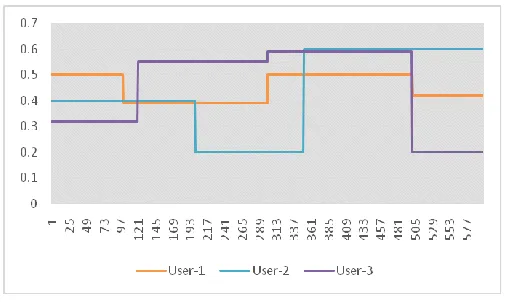
Figure 3 shows the main role of the HDFS scheduler. Phagta averages only 13% of the abnormality to equal the dominant share of three consumers, which is 41% better than the HDFS planner shown in Figure 4. This is incentive, envy and Pareto. Unlike the HDFS Fair Scheduler, FUGTA is aware of the diverse needs of a multi-source environment and its approach to user needs at each resource level.
Fig.4.The dominant share for FUGTA.
6
C
ONCLUSIONIn these article, Right now we have analyzed Rain CC. To propose a conveyance framework called FUGTA, we examine different assets, for example, processor, memory, and virtual machine stockpiling. This strategy not just guarantees a reasonable assignment of assets for clients, yet in addition bolsters effective utilization of assets for each PS. The RA issue is structured as a perplexing game with complete data, and the Fukta calculation decides the Nash harmony. A few trials and recreations are directed to assess the adequacy of FUGTA contrasted with other related works. The outcomes show that FGTA can give preferable appropriation over HDFS planning. FGTA can guarantee productive designation of assets, not the primary relevant calculation and distribution component in Google Cluster.
A
CKNOWLEDGMENTNA.
R
EFERENCES[1] B. Sharma, V. Chudnovsky, J. Hellerstein, R. Rifaat, and C. Das, ―Modeling and synthesizing task placement constraints in Google compute clusters,‖ in Proc. ACM SoCC, 2011.
[2] F. Dogar, T. Karagiannis, H. Ballani, and A. Rowstron, ―Decentralized task-aware scheduling for data center networks,‖ in Proc. ACM SIGCOMM, 2014.
[3] M. Chowdhury, M. Zaharia, J. Ma, M. Jordan, and I. Stoica, ―Managing data transfers in computer clusters with Orchestra,‖ in Proc. ACM SIGCOMM, 2011.
[4] R. Raman, M. Livny, and M. Solomon, ―Matchmaking: Distributed resource management for high throughput computing,‖ in Proc. ACM HPDC, 1998.
[5] ―Apache HadoopNextGenMapReduce.‖ [Online]. Available: http://hadoop.apache.org
[6] M. Isard, V. Prabhakaran, and J. Currey, ―Quincy: Fair scheduling for distributed computing clusters,‖ in Proc. ACM SOSP, 2009.
[7] A. Shieh, S. Kandula, V. Greenberg, C. Kim, and B. Saha, ―Sharing the data center network,‖ in Proc. USENIX NSDI, 2011. [8] A. Ghodsi, M. Zaharia, B. Hindman, A. Konwinski, S. Shenker, and I. Stoica, ―Dominant resource fairness: Fair allocation of multiple resource types,‖ in Proc. USENIX NSDI, 2011.
[9] Parkes DC, Procaccia AD, Shah N. Beyond dominant resource fairness: Extensions, limitations, and indivisibilities. ACM Transactions on Economics and Computation (TEAC). 2015 Mar 27;3(1):1-22.W.
[10][Wang, B. Li, and B. Liang, ―Dominant resource fairness in cloud computing systems with heterogeneous servers,‖ in Proc. IEEE INFOCOM, 2014.
[11]Vanderster, Daniel C., et al. "Resource allocation on computational grids using a utility model and the knapsack problem." Future Generation computer systems 25.1 (2009): 35-50.
[12]Ye D, Chen J. Non-cooperative games on multidimensional resource allocation. Future Generation Computer Systems. 2013 Aug 1;29(6):1345-52.
[13]Hassan, M.M., Song, B., Almogren, A., Hossain, M.S., Alamri, A., Alnuem, M., Monowar, M.M. and Hossain, M.A., 2014. Efficient Virtual Machine Resource Management for Media Cloud Computing. KSII Transactions on Internet & Information Systems, 8(5).
[14]Xu X, Yu H. A game theory approach to fair and efficient resource allocation in cloud computing. Mathematical Problems in Engineering. 2014;2014.
[15]http://www.cloudera.com/blog/ tag/scheduling.
[16]C. A. Waldspurger, Lottery and Stride Scheduling: FlexibleProportional-Share Resource Management, Massachusetts Institute of Technology, 1995.
[17]Lan T, Kao D, Chiang M, Sabharwal A. An axiomatic theory of fairness in network resource allocation. IEEE; 2010 Mar 14. [18]Ghodsi A, Zaharia M, Hindman B, Konwinski A, Shenker S,
Stoica I. Dominant Resource Fairness: Fair Allocation of Multiple Resource Types. InNsdi 2011 Mar 30 (Vol. 11, No. 2011, pp. 24-24)..
[19]Psomas CA, Schwartz J. Beyond beyond dominant resource fairness: Indivisible resource allocation in clusters. Tech Report Berkeley, Tech. Rep.. 2013.
1518 1;29(7):1700-8.
[21]Steinder, Malgorzata, et al. "Server virtualization in autonomic management of heterogeneous workloads." 2007 10th IFIP/IEEE International Symposium on Integrated Network Management. IEEE, 2007..
[22]S. Di and C. L. Wang, ―Dynamic optimization of multi-attributeresource allocation in self-organizing clouds,‖ IEEE Transactions on Parallel and Distributed Systems, vol. 24, no. 3, pp. 464–478, 2013.
[23]Cardosa M, Singh A, Pucha H, Chandra A. Exploiting spatio-temporal tradeoffs for energy-aware mapreduce in the cloud. IEEE transactions on computers. 2012 Jul 3;61(12):1737-51. [24]Polo, Jorda, et al. "Resource-aware adaptive scheduling for