Circular Iterative Model to develop Computer Based
Tutorial (CBT)
Khusboo.M.Trivedi*, Shipra Pandya**, Sakthi Kumaresh***
*
Department of Computer Science, M.O.P Vaishnav College For Women **
Department of Computer Science, M.O.P Vaishnav College For Women ***Department of Computer Science, M.O.P Vaishnav College For Women
Abstract -A software development life cycle model is a characterization of various steps involved in the development of a software product. These phases in a software model range from planning to implementation and maintenance of the software. There are many existing software development life cycle models which are applicable for developing various types of software products. Despite the existence of many models, there are many complex projects that cannot be successfully developed using the same.
With the emerging trends in computer technology and use of computers in various fields, there has been advancement and growth in the field of education as well. Computer-based tutorial and other e-learning software’s are quite popular these days, thus giving the privilege of easy and flexi-learning. A Computer-based tutorial is basically an interactive software program which is created as a learning tool. Tutorials help people learn new skills in a step by step process and hence ensure that the user is following the same.
A computer-based tutorial has become really popular and the process of its development is becoming a necessity today. Developing a computer-based tutorial may seem a very simple and easy going task but with due research in the same field reveals that many uncertainties arise during the development of an e-learning tutorial.
Hence there is a need for a flexible yet understandable model, which can be implemented in order to develop computer-based tutorial software. As, there is need for a model, a sequence of steps which constitute a circular model can be implemented for a project like e-tutorial. The steps in the circular sequence may keep iterating so that timely updating may be made to the software accordingly. The circular iterative model can prove to be beneficial for developing all types of e-tutorial softwares.
Index Terms -Computer based tutorial, SDLC Model for e-tutorial, Circular iterative model, Software Process model to develop a CBT.
I. INTRODUCTION
oftware development may take many forms and one such is the development of the software as a whole, following certain steps in a sequential manner to achieve a desired output. The needs and problems of the customer can be taken as the requirements of the client and the delivery of the product may be satisfactory software that is a solution to the problems of the customer. Software is basically a set of machine readable instructions (in the form of a computer program) which serves a purpose to the user. Any product delivered to the customer as a solution to their problems, which can be used on a computer system may be termed as a software. Software can be an application, a file or a tutorial that is developed with the help of any programming code. “A computer based tutorial is any course of instruction whose primary means of delivering instruction is a computer. This computer based tutorial may be delivered by means of a software product installed on a single computer, through a corporate or educational intranet, or over the Internet as Web-based training . CBT can be used to teach almost any conceivable subject, but it is especially popular for computer-related studies. People often take advantage of CBT to learn how to run a particular computer application, such as Microsoft Excel , or to learn a computer programming language, such as Visual Basic.” [1] The main advantage of computer-based tutorials is to enable users to discover, review and practice in a safe environment before using a new software application.[2]
A computer based tutorial (CBT), also known as courseware, may be an end software product to any educational institute, or any corporate organization that needs to train its employees. Hence it is very essential to develop a high quality tutorial which is without any defects and is flexible for updating and making changes every now and then. Updating a computer based tutorial is a mandatory factor for any e-learning tutorial, as timely updating need to be made in order to keep pace with the advancement, additions and changes made in the subject matter. There are many generalized and specific models that are devised for development of a software product. With research and a comparative study, it is noted that the existing software development lifecycle models like the Waterfall model, Agile model, V-shaped, Prototyping model etc., are not quite suitable for developing a computer based tutorial. The phases vary completely when a computer based tutorial is to be delivered as a software product to the customer. A prototyping model can be suitable for developing a CBT, but when it comes to flexibility, the phases need to be altered. Thus a proper model that supports the development of a courseware is essential.
A software model that enables a flexible process to build a computer based tutorial is the need of the hour and hence as a solution to this problem a circular iterative model is suggested in this research paper that if adopted ensures the developme nt of a computer based tutorial software that is easily built with proper understanding of the same. The phases in the model cover every
possible situation encountered in developing a computer based tutorial, starting from imparting knowledge to the customer to timely modifications. It is noted that many organizations that demand a courseware as software are not quite clear of “what” a computer based tutorial is and “how” it functions. The circular iterative model for developing a computer based tutorial bridges this gap of how and what, by introducing a briefing phase in the lifecycle of the model for developing a computer based tutorial. The circular model is a flexible model that can adapt to frequent changes to be incorporated in the software.
Hence the focus of this research paper is to highlight the importance of a computer based tutorial as a software product and devise a suitable model that is flexible and easily adoptable to build a computer based tutorial software. The research paper will also compare and highlight the problems faced in developing the CBT by using the other generalized models that are existing for the development of software.
II. PROPOSED WORK
Software development lifecycle is a process by which the developers develop a software product for the needs of the stakeholders. A software lifecycle model plays a very crucial role in the development of software. It is observed that there is no specific model that can be adopted for developing a courseware or (CBT). Research reveals that computer based tutorial is often misunderstood as a web based training application program instead of for a software package as a whole. From the following mentioned lines it is clearly understood that a computer based tutorial is also a software product that is deliverable to the customer as a fulfillment to their needs.
“A software product is any deliverable piece of code that functions as an independent product which serves some purpose to the user.” The requirement of a customer is converted into programming code, is implemented and delivered to the customer as a solution to his/her problem. Similar is the case of computer based tutorial software, where the CBT is a deliverable piece of code that functions as an e-tutorial thus serving a useful purpose to the stakeholder.
Take an example of an organization that wishes to train its employees by using a computer based tutorial. So here the requirement is a computer based tutorial which will be used for providing web based training to employees, and the same can be developed by means of programming code and can be delivered to the organization. The phases involved in developing computer based tutorial software are more or less similar to the phases in any other existing software development lifecycle models. But the problem with other models is that there is no room for frequent updating and altering in the lifecycle process, which is very much important with subject to a computer based tutorial. Since there is greater need and demand for web based tutorials, it is desired to have a software life cycle model that will be suitable for developing a CBT. A “Circular Iterative model” is devised in this paper which if adopted, helps to successfully build a computer based tutorial. All the possible situations that are encountered while developing a courseware are covered in the circular iterative model.
The circular model consists of eight sequences of steps that are iterated after a point of time in order to help maintain the software up to date. The model covers all the possible milestones that are encountered while devising a computer based tutorial. Starting from briefing the stake holder about what and how of a computer based tutorial to making modifications to the software as and when required by the customer, all possible factors are covered in the model.
Figure 1: Circular Iterative Model for developing a Computer Based Tutorial (CBT)
Figure 1 shows the eight phases of a Circular Iterative model for developing a CBT. The name of the model is circular iterative model as the phases in the model continue to iterate in a circular fashion throughout the life time of the software. The CBT software does incur wear and tear as any other hardware product but is discarded if the use of it is no longer needed. Each phase in the model plays a vital role in devising an e-tutorial. A detailed explanation of what and how of every phase in the circular iterative model is explained in the following lines:
(1)Knowledge imparting:-
It is noted that many of the stakeholders are not aware as to what a computer based tutorial is and how it functions. Many customers desire a software product but do not know the “what” and “how” of the software. They just want a product that satisfies the needs and problems of their organization. As the name implies, in this phase the developers brief the customers bout the computer based tutorial and how it functions on the whole.
(2)Requirements
Specification:-The second phase in the circular iterative model is similar to the second phase in the waterfall model. Requirements phase focuses on defining and capturing the needs and problems that a software application is to address and solve. [8] Here the stakeholders are interviewed personally and the requirements that are expected out of the CBT are finalized and a software requirement specification (SRS) document is prepared. The specifications vary with the purpose of the computer based tutorial. The preconditions given by an organization may differ from that of an educational institution.
(3)Template Designing:-
On the basis of requirements of the stakeholders, the template for the computer based tutorial is designed. The template may be a prototype of the software that contains the basic design of the e-tutorial. The design of the CBT is created using any programming language of other web development tools. The design of the template is documented as software design document (SDD) which acts as a reference for further development of the software. The goal of preparing an SDD is to simplify the process further. The design of the CBT should be flexible enough to incorporate further changes.
(4)Modeling and Implementation:-
The next phase after template designing in the circular iterative model is the Modeling and implementation phase where the final design of the CBT is incorporated and the data is fed into the software, which counts for the implementation phase. The software design document that is prepared in the earlier phase acts as an input to the modeling and implementation phase. The data that is fed into the software is added after a through proof reading. The subject matter of the tutorial may be in any form like text, pictures, and videos and so on. Based on the type and content of the tutorial required divisions are made and data is added accordingly.
(5)Navigation Check:-
The next step in sequence is the navigation check and testing phase whereby every possible link to every part in the software is checked thoroughly. The navigation of data plays a very vital role in the courseware. Any wrong navigation can cause a problem in the software. Various kinds of testing is performed on the code in order to check for faults or defects if any.
(6)Into effect:-
The next phase after navigation and testing in the circular iterative model is the Operation and into effect phase where the computer based tutorial is implemented on the computer and is ready.The computer based tutorial can now be delivered to the customer for use. But the lifecycle of the circular iterative model does not end here. The other phases in the model are used to carry out changes and modifications that are made to the tutorial.
(7) Advancement and Updating:-
The next phase in sequence after the operation and into effect phase is the advancement and updation phase. This phase is the most important phase in the development of a computer based tutorial. Many lifecycle models call this as the maintenance phase but with respect to a CBT, advancement and updation plays a very significant role. Advancement and updation phase involves addition of new modules, deletion of existing modules, altering or updating the data of the software based on the new requirements and specifications. In this phase all the changes and advancements are identified.
(8)New Requirements Specifications:-
The circular iterative model is devised in order to provide solution to developing a CBT. Many developers may be experts in designing a web based tutorial but such a model helps save development time as the developer will know what to do next. The cost incurred to develop such software can also be minimized if the process of developing the courseware is known prior. Thus the circular iterative model may prove to be beneficial to many software developers.
III. CIRCULAR ITERATIVE MODEL VS OTHER SOFTWARE PROCESS DEVELOPMENT MODEL
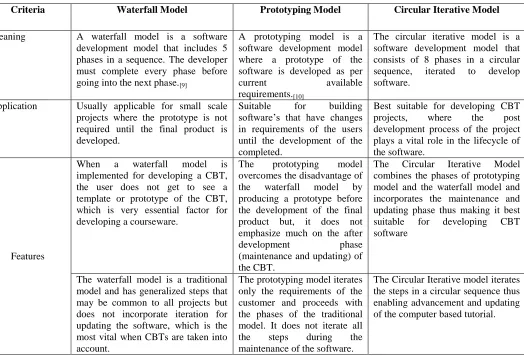
[image:4.612.46.570.220.580.2]Research in the field of software and computer based tutorials is an everlasting task as there are new advancements and developments made in computer technology. It is observed that the use of CBTs for training and development has increased to 60% in the last few years. As there is growing use of computers in every field, man wants everything to be computerized. Such is an example of a courseware, where training and education is imparted through a software application called a computer based tutorial or a web based tutorial.[3] Table 1 shows the comparative study between waterfall, Prototyping and circular iterative model
Table 1: Comparative Study
Criteria Waterfall Model Prototyping Model Circular Iterative Model
Meaning A waterfall model is a software development model that includes 5 phases in a sequence. The developer must complete every phase before going into the next phase.[9]
A prototyping model is a software development model where a prototype of the software is developed as per
current available
requirements.[10]
The circular iterative model is a software development model that consists of 8 phases in a circular sequence, iterated to develop software.
Application Usually applicable for small scale projects where the prototype is not required until the final product is developed.
Suitable for building software’s that have changes in requirements of the users until the development of the completed.
Best suitable for developing CBT projects, where the post development process of the project plays a vital role in the lifecycle of the software.
Features
When a waterfall model is implemented for developing a CBT, the user does not get to see a template or prototype of the CBT, which is very essential factor for developing a courseware.
The prototyping model overcomes the disadvantage of the waterfall model by producing a prototype before the development of the final product but, it does not emphasize much on the after
development phase
(maintenance and updating) of the CBT.
The Circular Iterative Model combines the phases of prototyping model and the waterfall model and incorporates the maintenance and updating phase thus making it best suitable for developing CBT software
The waterfall model is a traditional model and has generalized steps that may be common to all projects but does not incorporate iteration for updating the software, which is the most vital when CBTs are taken into account.
The prototyping model iterates only the requirements of the customer and proceeds with the phases of the traditional model. It does not iterate all the steps during the maintenance of the software.
The Circular Iterative model iterates the steps in a circular sequence thus enabling advancement and updating of the computer based tutorial.
Advantages of Circular Iterative Model:
The model incorporates a “Knowledge imparting phase” where the customers are briefed about the CBT. Such a phase is absent in any of the previous traditional models.
The model emphasizes more on updating and advancement of the CBT which is mandatory for the development and lifecycle of a computer based tutorial.
Project Study:
Table 2: Calculation of various metric values for CBT projects using traditional process model
Name of the CBT LOC (excluding
content)
Effort (E)
Productivity (P)
Time (in months)
No of defects found
Defect rate
A CBT on C++ and data structures.
2460 8723.54 0.2819 6 300 0.12
A CBT on
entrepreneurship and development.
2400 8500.27 0.2823 5.5 254 0.10
A CBT on Economics.
2900 10368.81 0.2796 6.5 313 0.10
A CBT on retail Marketing.
6400 23806.75 0.2688 7 391 0.10
A CBT on production management.
3356 12087 0.2776 4.5 211 0.06
The effort is calculated in using the formula:
EFFORT (E) =ab (LOC) bb[5]
Where ab and bb are co-efficient and are tabulated with categories organic, semi-detached and embedded. The values for the two co-efficient are taken as 2.4 and 1.05 respectively.
The productivity of the above computer based tutorials is calculated using the formula:
Productivity (P) = KLOC[7] E
Defect Rate = No of defects found / LOC
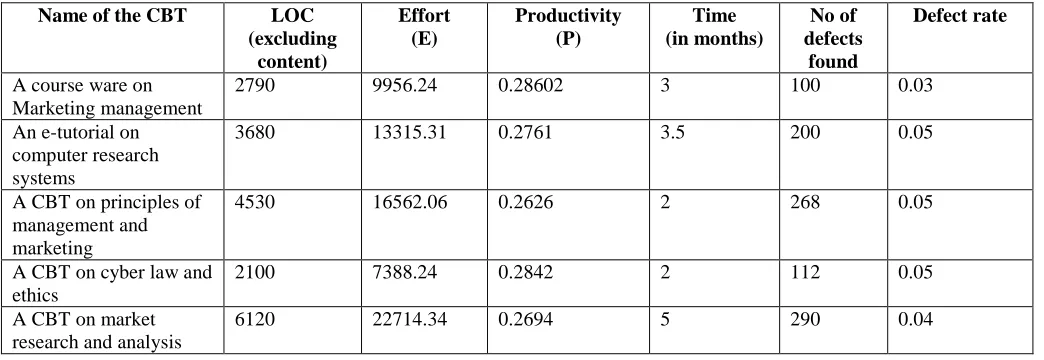
Table 3: Calculation of various metric values for CBT projects using Circular Iterative Model
Name of the CBT LOC (excluding
content)
Effort (E)
Productivity (P)
Time (in months)
No of defects
found
Defect rate
A course ware on Marketing management
2790 9956.24 0.28602 3 100 0.03
An e-tutorial on computer research systems
3680 13315.31 0.2761 3.5 200 0.05
A CBT on principles of management and marketing
4530 16562.06 0.2626 2 268 0.05
A CBT on cyber law and ethics
2100 7388.24 0.2842 2 112 0.05
A CBT on market research and analysis
6120 22714.34 0.2694 5 290 0.04
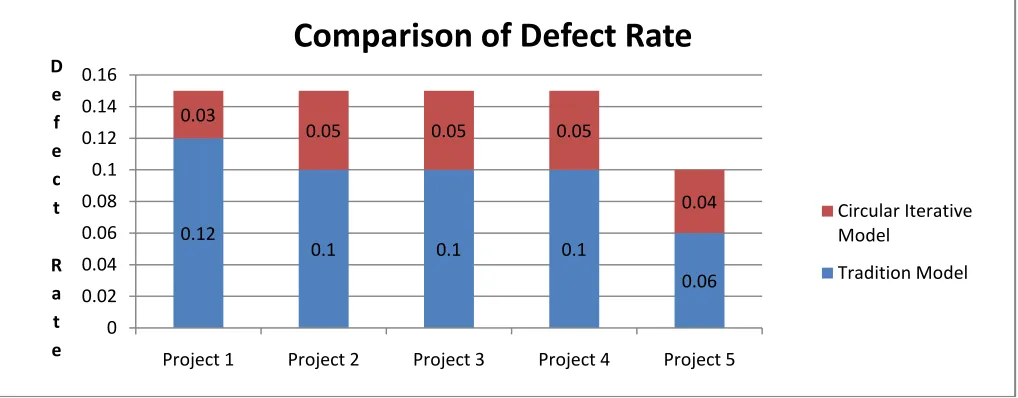
[image:5.612.30.552.456.636.2]Figure 2: Chart showing the Defect Rate
Figure 3: Time taken for Various Projects
IV. CONCLUSION
The data tables and the graphs clearly show that the number of defects and development time is considerably reduced when projects are developed using the circular iterative model. The lines of code, effort and productivity vary from project to project depending on the subject matter, but the development time and defect can be comparedas metric in order to derive conclusions.So the graphs mainly emphasizes a comparison of the projects developed using basic or traditional models and the projects that are implemented using the Circular iterative model.
From the above mentioned research findings it is clearly understood that developing a CBT may seem an easy task but when the after- maintenance factors are taken into account, updating the CBT becomes the most crucial factor of the lifecycle. CBTs may be developed using many traditional models and would have been very successful, but the incorporation of the Circular iterative model enhances the development of CBT and makes the purpose of it even more clear by giving a name to every phase of the development of a courseware.
0.12
0.1 0.1 0.1
0.06 0.03
0.05 0.05 0.05
0.04
0 0.02 0.04 0.06 0.08 0.1 0.12 0.14 0.16
Project 1 Project 2 Project 3 Project 4 Project 5
D e f e c t
R a t e
Comparison of Defect Rate
Circular Iterative Model
Tradition Model
6
5.5
6.5 7
4.5
3 3.5
2 2
5
0 1 2 3 4 5 6 7 8
Project 1 Project 2 Project 3 Project 4 Project 5
T i m
e
Chart showing Time Taken for Vaious Projects
Tradition Model
Other models do not emphasize much on the after development phases, but as the nature of CBT projects demand a strong updating phase, the Circular iterative model is more suitable for development of CBTs. This model enhances the development of CBT.
REFERENCES 1. http://whatis.techtarget.com/definition/computer-based-training-CBT
2. http://www.elearningagency.com/en/didacticiel.html 3. http://en.wikipedia.org/wiki/Software
4. http://www.webopedia.com/TERM/S/software.html 5. http://arthurdejong.org/cocomo/cocomo.html
6. https://files.ifi.uzh.ch/rerg/arvo/courses/seminar_ws02/reports/Seminar_4.pdf 7. http://www.sjm06.com/SJM%20ISSN1452-4864/7_1_2012_May_1_170/7_1_65-75.pdf 8. http://kpprofession.blogspot.in/2011/09/waterfall-model-requirements-phase.html
9. K.K Aggarwal, Professor and Vice Chancellor, Yogesh Singh Professor and Dean, University School of information Technology, Guru Gobind Singh Indraprastha University, Delhi.
10. K.K Aggarwal, Professor and Vice Chancellor, Yogesh Singh Professor and Dean, University School of information Technology, Guru Gobind Singh Indraprastha University, Delhi.
AUTHORS
First Author – Khusboo Trivedi, PG Student, M.O.P Vaishnav College For Women (Autonomous), Chennai, India
e-mail id – [email protected]
Second Author – Shipra Pandya, PG Student, M.O.P Vaishnav College For Women (Autonomous), Chennai, India
e-mail id – [email protected]
Third Author – Sakthi Kumaresh, Asso Professor, M.O.P Vaishnav College For Women (Autonomous), Chennai, India
e-mail id – [email protected]