Improving the cost estimates of complex
projects in the projectbased industries
Sridarran, P, Keraminiyage, KP and Herszon, L
http://dx.doi.org/10.1108/BEPAM1020160050
Title Improving the cost estimates of complex projects in the projectbased industries
Authors Sridarran, P, Keraminiyage, KP and Herszon, L
Type Article
URL This version is available at: http://usir.salford.ac.uk/47572/ Published Date 2017
USIR is a digital collection of the research output of the University of Salford. Where copyright permits, full text material held in the repository is made freely available online and can be read, downloaded and copied for noncommercial private study or research purposes. Please check the manuscript for any further copyright restrictions.
Improving the cost estimates of complex projects in the project based industries
Abstract
Purpose: Project-based industries face major challenges in controlling project cost and completing within the budget. This is a critical issue as it often connects to the main objectives of any project. However, accurate estimation at the beginning of the project is difficult. Scholars argue that project complexity is a major contributor to cost estimation inaccuracies. Therefore, recognising the priorities of acknowledging complexity dimensions in cost estimation across similar industries is beneficial in identifying effective practices to reduce cost implications. Hence, the purpose of this paper is to identify the level of importance given to different complexity dimensions in cost estimation and to recognise best practices to improve cost estimation accuracy.
Design/Methodology/Approach: An online questionnaire survey was conducted among professionals including estimators, project managers, and quantity surveyors to rank the identified complexity dimensions based on their impacts in cost estimation accuracy. Besides, in-depth interviews were conducted among experts and practitioners from different industries, in order to extract effective practices to improve the cost estimation process of complex projects.
Findings: Study results show that risk, project and product size, and time frame are the high-impact complexity dimensions on cost estimation, which need more attention in reducing unforeseen cost implications. Moreover, study suggests that, implementing a knowledge sharing system will be beneficial to acquire reliable and adequate information for cost estimation. Further, appropriate staffing, network enhancement, risk management, and circumspect estimation are some of the suggestions to improve cost estimation of complex projects.
Originality/Value: The study finally provides suggestions to improve cost estimation in complex projects. Further, the results are expected to be beneficial to learn lessons from different industries and to exchange best practices.
Keywords: Complex projects, Estimation, Risk, Cost overrun, Dimensions
Paper type: Research paper
Project cost overrun is a significant and fairly common issue in many project-based industries (Bertelsen & Koskela, 2003; Flyvbjerg, 2005; Olaniran, Love, Edwards, Olatunji, & Matthews, 2015; Ramasubbu & Balan, 2012). A variety of reasons for cost escalation, including project schedule changes, poor estimating, scope changes, faulty execution, inconsistent application of contingencies, unforeseen events, project complexity, and contract document conflicts, are identified by the researchers (Shane, Molenaar, Anderson, & Schexnayder, 2009). However, studies advocate that, the complexity of projects is the major reason for cost overruns as it could cause a “domino’s effect” on all components of the project (Kaming, Olomolaiye, Holt, & Harris, 1997). Though, studies identified project complexity as a cost escalation factor, no suggestions are proposed to improve the estimation process by addressing complexity issues. Therefore, examining the dimensions of project complexity for a more realistic estimation of cost is beneficial to avoid cost overruns. In addition to complexity dimensions, factors affecting the accuracy of cost estimates are widespread such as experience of estimator, completeness of the design, cost estimation techniques used,
and alike. However, this study focuses only on complexity dimensions that affect the
accuracy of cost estimation. Previous studies reveal that, dependency and
interdependency, uncertainty, clarity of goals, political influence, and technology are some of the dimensions that determine the level of complexity (Baccarini, 1996; Bar-Yam, 2004; Kerzner & Belack, 2010; Remington & Pollack, 2007). Even though, these complexity dimensions are common across multiple industries, the importance given to each dimension could vary. For example, complex construction projects are considered “one off” compared to the complex projects of most other industries, as they are location sensitive, material/labour sensitive, and often customer requirements are individualistic to every single project (Bertelsen & Koskela, 2005). Therefore, importance given to complexity dimensions in cost estimation is also expected to be different across industries. However, perspectives from different industry professionals would be beneficial to learn lessons from other industries and to exchange best practices. Accordingly, this paper aims to rank the importance given to complexity dimensions in cost estimation across similar industries, and to identify good practices to improve cost estimation process of complex projects.
Traditionally, cost, time, and quality, which are also known as ‘iron triangle’, have been recognised as the key performance measurement criteria for projects (De Wit, 1988). Afterwards, researchers argue that ‘iron triangle’ is not the exclusive criteria for project performance measurement and they proposed many additional factors (Atkinson, 1999; Chan & Chan, 2004; De Wit, 1988; Meng, 2012). However, cost performance of a project still remains as one of the main measures of the project success as it is linked with objectives of most of the projects (Ahiaga-Dagbui & Smith, 2014).
As Bubshait and Almohawis (1994, p. 134) argue, in every project, there are enablers and impediments to meet project cost targets. They define those elements as “the degree to which the general conditions promote the completion of a project within the estimated budget” (Bubshait and Almohawis (1994, p. 134). As clear from the above, within the notion of cost performance of projects, the establishment of the project “budget” is a key aspect. While different industries, practitioners, and professional institutions adopt different tools and techniques to establish project “budget”, the fundamental building block of project budget consist of an established cost estimating mechanism. Often, once the cost estimates are accepted by client, which officially would become the project “budget”.
However, significant cost overruns can be largely observed in complex projects (Ahiaga-Dagbui & Smith, 2014; Flyvbjerg, Bruzelius, & Rothengatter, 2003). Doyle and Hughes (2000) conducted a study to determine the influence of project complexity on estimation accuracy by comparing number of inherent work elements with the deviation in the estimate. The study reveals that, the greater the project complexity the greater the adverse deviation in the estimate. Yet, the complexity of the project cannot be measured only based on number of work elements and their interrelationships. There are many other dimensions make a project complex such as timeframe, technology, and budgetary concerns (Kerzner & Belack, 2010).
Flyvbjerg et al. (2003) reason cost overruns as ‘strategic misrepresentation’ as the complex projects are typically capital intensive. Therefore, sometimes the motivation was to initially satisfy a small group of people who had interests for these projects to be approved. However, based on Shane et al. (2009)’s study it can be argued that, cost underestimation is not always a deliberate misrepresentation. Several factors including scope change, faulty execution, market conditions, unforeseen conditions, and contract document conflicts, limit the capacity of the cost estimator to be accurate.
Based on the above arguments, it is visible that authors measure complexity based only on one particular dimension such as number of work elements or size of the project. Therefore, examining other potential dimensions for a more realistic determination of complexity and estimation is beneficial to offer better transparency when using business and/or taxpayers’ money.
3. Complexity as a concept
elements of high uncertainty and interdependent parts can be defined as complex projects. However, a large size project (i.e. several years or GBP billions) does not necessarily mean that this project is complex by nature – it might be just resource intensive. Other projects might have a shorter duration or lower budget but be complex. Typically, complex projects involve many professionals from different disciplines to work together as it is uneconomical to handle all the works, and also to obtain specialisation (Gray & Hughes, 2001). This leads to organisational complexity of many projects. However, complexity is a necessary part of a flexible and responsive industry. Therefore, improving the ability of project management to deal with these complexities is essential for growth of the industry (Gray & Hughes, 2001).
Generally, in project management, projects are considered as linear process which can be divided into contracts, phases, activities, work packages, assignments, etc. Bertelsen (2004) advocated this as a fundamental mistake. Bertelsen (2004) further argues that, the projects should be looked as complex and dynamic phenomenon in a non-linear setting. This clearly states that, if the project is approached as a complex phenomenon many avenues will be opened up to explore more dimensions and management techniques for a better management of projects.
4. Complex projects in project-based industries
The construction industry is a well-known example for a project based industry which handles complex projects (Bertelsen, 2004, p. 4). It is not necessarily an outcome of technological complexity of construction projects (number of elements and their interdependencies). ‘Uncertainty’ is very much a part of complex nature of construction. Which means, the degree of uncertainty of goals and the degree of uncertainty of methods to achieve goals of the project (T. M. Williams, 1999) contributes to the complexity of construction projects. In comparison, construction industry projects are usually more complex than other industries as they are often vulnerable to external factors such as weather conditions which may influence the cost estimates, design, contracts, and production planning (Kern & Formoso, 2004). Among the factors which are largely influenced by these uncertainties, cost estimates are critical.
often challenging. Traditionally, construction cost estimations are made based on the quantification of building elements such as walls (m2), concrete (m3), and windows
(units) (Kern & Formoso, 2004). However, there can be flow activities which do not add value to the project, yet highly impact the cost of the project. These activities are not often taken into cost estimation process. Furthermore, poor forecasting, level of available information, likely changes in design, scope, duration, and ground conditions could result in cost overruns (Elfaki, Alatawi, & Abushandi, 2014). Bertelsen and Koskela (2003) identified a number of case studies of complex construction projects, which experienced a higher percentage of cost overruns, including Sydney Opera House (budget escalated from $7M (Australian) to $107M (Australian)), and Denver international airport (budget escalated from $1.7B to $4.5B).
Cost overruns are not only an issue of the construction industry. As far as cost estimations are concerned in other industries’ complex projects, cost overruns are common. Flyvbjerg et al. (2002) claim costs are underestimated in 9 out of 10 public work projects. Similarly, Mackenzie states (as cited in Olaniran et al., 2015) average cost overrun of a hydrocarbon project is 90.75% in Europe. Ramasubbu and Balan (2012) evident a high rate of cost overrun in the software development industry. Scholars argue that, the cost underestimation of capital-intensive projects cannot be always explained by errors, and it can be explained as strategic misrepresentation (Ahiaga-Dagbui & Smith, 2014; Ansar, Flyvbjerg, Budzier, & Lunn, 2016; Flyvbjerg et al., 2002). This clearly shows that, cost overrun issue is common in all the complex projects, despite the industries. This shows the need for establishing a more realistic or accurate cost estimation. Therefore, this paper identifies complexity dimensions and ways of addressing them in project cost estimation.
5. Complexity dimensions
This study aims at evaluating how the level of influence of complexity dimensions on cost estimations attributed in the estimation process, and what are the effective practices that can be applied to improve the cost estimation process of complex projects. As the first step of the evaluation, 23 complexity dimensions that influence the project cost estimation were identified through literature review. As the focus of this study is not to establish these complexity dimensions, but to evaluate the influence of those in the cost estimation process within project-based industries, the detailed review is not presented here. However, a summary findings of the literature review and each of the 23 dimensions are explained to allow a better understanding.
The concept of complexity itself is its various interrelated parts (Baccarini, 1996).
Dependency and interdependency is one of the complexity dimensions that deals with the relationship between the elements that are part of the project. This relationship can be, some elements being depended on some elements, or each element mutually depended on others. Clearly addressing the arrangements of interdependency and dependency is necessary, as a change in one element could have a great impact on the entire system (Bar-Yam, 2004). Timeframe is another dimension which has a direct effect on how complexity is identified by the project team members and stakeholders. The longer the timeframe, the more chances that changes will impact the project (César, Curtin, & Etcheber, 1998; Remington & Pollack, 2007; Remington, Zolin, & Turner, 2009). Further,
Uncertainty is an important dimension of complexity, since one cannot forecast the outcome of the interactions between elements, which makes managing such project very challenging (Kerzner & Belack, 2010; Remington & Pollack, 2007; Remington et al., 2009; Shenhar & Dvir, 2007; Vidal & Marle, 2008; T M Williams, 2002). Similarly, Risk is an uncertainty which has a probability of happening with a predictable impact. Therefore, it becomes clear that the more risks, the more complex a project might be, since one does not know what the repercussion to other elements of the project (Kerzner & Belack, 2010; Levin & Ward, 2011; Shenhar & Dvir, 2007).
Product and project size is a dimension which is related to both the size of the product, service, or result produced by the project, or to the amount of work that needs to be done to deliver the product, or service. This dimension is considered as a critical aspect of project complexity (Kerzner & Belack, 2010; Vidal & Marle, 2008; T M Williams, 2002).
Project description focuses on the level of difficulty encountered when describing the projects. The level of difficulty when describing the project, its scope, interactions, and components will add a complexity component to the project (Remington et al., 2009; Yam, 2005). Also, it depends on both explicit and implicit Communication quality of the project (Luhman & Boje, 2001).
Budgetary constraints is a complexity dimension related to how the budget constrains the ability to manage the project (Kerzner & Belack, 2010). In addition to these dimensions
Innovation to market (Baccarini, 1996; César et al., 1998; Remington & Pollack, 2007; Remington et al., 2009; Shenhar & Dvir, 2007; Vidal & Marle, 2008; T M Williams, 2002),
Degree of trust with the stakeholders (Geraldi, 2008), and ability to use Technology also adds complexity to the project. Moreover, Project management maturity level, Stakeholder interaction, Pace/speed to the market, Organisational capability, Knowledge and experience of the project team, Political influence, Economic uncertainty, Environmental and safety impact, Impact on society, Cultural resistance and differences, and External environment constraint are also considered as complexity dimensions of a project for the purpose of this study.
7. Research Method
received from respondents. These respondents represent construction industry (22), information technology industry (13), defence (3), aero engineering (3), energy industry (4), and other project-based industries (9). This sample includes estimators, project managers, and quantity surveyors from different countries who have experience more than 3 years and have handled projects that are estimated more than 1 million GBP. Factors were ranked based on the importance given by the professionals, using Relative Importance Index (RII) ranking method.
𝑅𝐼𝐼 =
𝐴×𝑁∑ 𝑊 (0RII1) where;W = Weightage given to each factor A = Highest weight
N = Number of respondents
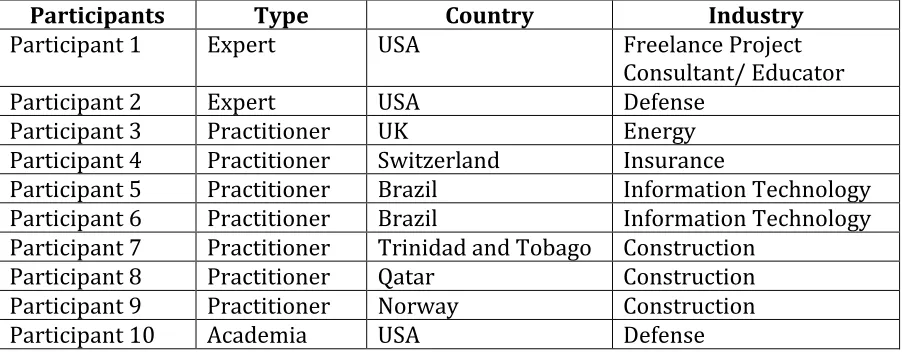
10 in-depth interviews were conducted among experts and practitioners from different industries (Refer Table 1), to extract effective practices that can be applied to improve cost estimation process of complex projects. Semi-structured interview technique was selected for this study as it allows the researcher to follow up any interesting or unexpected answers, and to obtain more elaborative responses. The interview transcripts were analysed using thematic analysis technique to extract best practices. The thematic analysis aims at analysing narrative materials of the interview in the realist or constructionist perspective (Vaismoradi, Turunen, & Bondas, 2013). This method was chosen to be appropriate, as it is used to identify common threads, which will be useful to extract best practices across the industries in managing complex projects (Vaismoradi et al., 2013).
8. Results and Discussion
[image:11.595.83.534.100.276.2]Table 2 shows the Relative Importance Indices and the ranks of the 23 complexity dimensions as postulated by the respondents.
Table 2: Overall RII ranking
Complexity dimension RII Rank
Risk 0.8037 1
Product and project size 0.8000 2
Time frame 0.7704 3
Organizational capability 0.7630 4 Project management maturity level 0.7593 5
Uncertainty 0.7556 6
Budgetary constraints 0.7407 7 Knowledge and experience 0.7407 7 Clarity of goals 0.7370 9
Technology 0.7296 10
Degree of trust 0.7259 11 Communication quality 0.7185 12 Dependency and interdependency 0.7037 13 Economic uncertainty 0.7037 13 Stakeholder interaction 0.7037 13 Political influence (politics) 0.6963 16 External environment constraint 0.6889 17 Project description 0.6815 18 Pace/speed to market 0.6481 19 Innovation to market 0.6370 20 Cultural resistance and differences 0.6296 21 Environmental and safety impact 0.6259 22
Participants Type Country Industry
Participant 1 Expert USA Freelance Project Consultant/ Educator Participant 2 Expert USA Defense
Participant 3 Practitioner UK Energy Participant 4 Practitioner Switzerland Insurance
Participant 5 Practitioner Brazil Information Technology Participant 6 Practitioner Brazil Information Technology Participant 7 Practitioner Trinidad and Tobago Construction
[image:11.595.75.526.397.765.2]Complexity dimension RII Rank
Impact on society 0.5259 23
Results show that, the practitioners ranked ‘Risk’ as the high-impact complexity dimension, whereas ‘Uncertainty’ in the 6th position. It is important to note that, the
differences between risk and uncertainty at this point. Risk occurs when future is unknown, whereas the probability of occurrence is predictable. Uncertainty occurs where the probability of occurrence is unknown (Miller, 1977; Toma, Chiriţă, & Şarpe, 2012). Based on the ranking, the predictable risk has a high impact on the cost estimation process of the complex projects. Generally, risk as a complexity dimension associated with all the other complexity dimensions. Therefore, forecasting and managing those risks are extremely challenging (Thamhain, 2013). Interview results support that, setting the standard contingency on regardless of the project is inadequate. It requires the assessment of risk that has to be built into estimates at different levels. This complex nature of risk makes the estimation process difficult. Consequently, it leads to overestimation or underestimation. Whereas, complete uncertainty does not reveal any probability of impacts. Usually, it arises from the ambiguity and vagueness in the data which are from biased sources (Atkinson, Crawford, & Ward, 2006). Therefore, incorporating the impacts it gives to the cost estimation is not as significant as risk. Basically, it depends on whether the organisation is a risk lover or risk avoider.
Practitioners ranked ‘product and project size’ in the 2nd position. Some literature state,
cost estimation process. Product and project size is ranked as a high-impact complexity dimension based on these dynamics. ‘Time-frame’ is ranked in the 3rd position as it is a
restriction itself and for its association with the scale of the project.
‘Environment and safety impact’ and ‘Impact on society’ are ranked as low-impact complexity dimensions in the cost estimation. These two dimensions are related to sustainability. Cost on society is more about how the organisation do business and how they evaluate the negative impacts on the society. Therefore, its impact on cost estimation is relatively low.
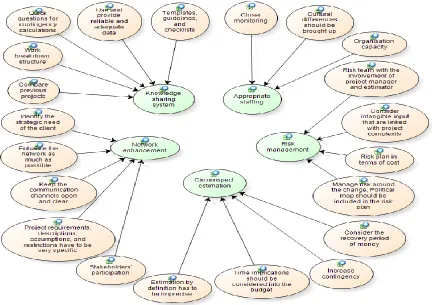
[image:13.595.82.514.343.648.2]In addition to the ranking, interview results were analysed using thematic analysis method to explain the results of questionnaire survey and to identify recommendations to overcome cost overrun issues in the complex projects. Identified recommendations were categorised under five themes as shown in Figure 1.
Figure 1: Tree-node model of recommendations
9. Suggestions to improve cost estimation
estimations across different fields would be beneficial for the cost estimators to customise according to their field of specialisation. Accordingly, a summary of the identified five themes is provided below.
1. Knowledge sharing system
The most noted suggestion given by the respondents to improve cost estimation is having a knowledge sharing system that includes templates, guidelines, and techniques to address complexity in cost estimation. Bartol and Srivastava (2002) define knowledge as information, ideas, and expertise that is required to perform a task. However, knowledge sharing needs a measured approach. For example, risk being the high impact complexity dimension, cost estimation is, in one way or another, based on risk estimation as well. Therefore, having a structured approach to go through item by item to identify potential risks could be one way of knowledge sharing. Also, using and providing reliable data play a major role in accurate cost estimation. Hence, a basic knowledge sharing system could include previous project examples, lessons learnt, and quick questions to answer yes/no or low/medium/high for contingency calculation. Knowledge sharing system has been identified as a tool to build trust and to improve efficiency by scholars (Kotlarsky & Oshri, 2005). Also, it has been proven as a success in providing reliable information (Lee, 2001). This system will act as a communication medium and reduce cost inaccuracies caused by the complexity dimensions such as degree of trust, communication quality, and risk.
2. Appropriate staffing
3. Network enhancement
Respondents agreed that, meeting stakeholders’ requirements is the ultimate goal of any project in this competitive business environment. However, cost and time constraints require the estimator to prioritise and manage those requirements to avoid cost overruns (Karlsson & Ryan, 1997). Hence, network enhancement is the key to recognise those requirements, based on which assumptions and restrictions of the project can be identified. Communication channels of the organisation need to be open and clear to improve the participation of stakeholders. Further, strategic requirements of the client have to be acknowledged in the cost estimation process.
4. Risk management
Conventionally, risk management is mostly based on experience, assumptions, and human judgement (Baloi & Price, 2003). Consequently, it has a potential to cause cost misrepresentation. Ranking of the practitioners also confirms that, risk is one of the high-impact complexity dimension. Though, there are mathematical models, computer simulations, and techniques available to predict risk, those results vastly depend on the human inputs (Mok, Tummala, & Leung, 1997). Experts argue that, risk plays a major role in cost overruns of complex projects as it is a challenge to consider all intangible risks linked with project complexity in cost estimation. Therefore, respondents suggest to forming risk team with the involvement of project manager and cost estimator. The team could come up with a plan that shows the risks and how they affect the cost. Identified risks shall incorporate change management related issues, political maps, and all other possible avenues.
5. Circumspect estimation
estimator has to make sure that everything is included and shall increase contingency according to complexity of the project.
10. Conclusion
Project complexity is a key reason for cost overruns. Existing bibliography suggests that, identifying and considering different complexity dimensions in cost estimations will assist for a more realistic estimation. Study results show that, risk, project and product size, and time frame are the high-impact complexity dimensions, which need more attention in cost estimation. Therefore, embracing the effect of project complexity into the cost estimation is essential to avoid cost overruns. However, convenience sampling technique which is adopted for this research is a limitation as it opens a possibility for the sampling bias. In order to overcome this limitation, expert interviews were conducted to validate the results. Respondents agreed with ranking and suggested that, implementing a knowledge sharing system will be beneficial to acquire reliable and adequate information for cost estimation. Further, appropriate staffing, network enhancement, risk management, and circumspect estimation are some of the suggestions to improve cost estimation of complex projects.
References
Ahiaga-Dagbui, D. D., & Smith, S. D. (2014). Rethinking construction cost overruns: cognition, learning and estimation. Journal of Financial Management of Property and Construction, 19(1), 38-54. doi:10.1108/JFMPC-06-2013-0027
Ansar, A., Flyvbjerg, B., Budzier, A., & Lunn, D. (2016). Does infrastructure investment lead to economic growth or economic fragility? Evidence from China. Oxford Review of Economic Policy, 32(3), 360-390. doi:10.1093/oxrep/grw022
Atkinson, R. (1999). Project management: cost, time and quality, two best guesses and a phenomenon, its time to accept other success criteria. International Journal of Project Management, 17(6), 337-342. doi:10.1016/S0263-7863(98)00069-6 Atkinson, R., Crawford, L., & Ward, S. (2006). Fundamental uncertainties in projects and
the scope of project management. International Journal of Project Management, 24(8), 687-698. doi:10.1016/j.ijproman.2006.09.011
Baccarini, D. (1996). The concept of project complexity—a review. International Journal of Project Management, 14(4), 201-204. doi:10.1016/0263-7863(95)00093-3 Baloi, D., & Price, A. D. F. (2003). Modelling global risk factors affecting construction cost
performance. International Journal of Project Management, 21(4), 261-269. doi:10.1016/S0263-7863(02)00017-0
Bar-Yam, Y. (2004). Making Things Work: Solving Complex Problems in a Complex World: Knowledge Press NECSI.
Bertelsen, S. (2004). Construction management in a complexity perspective. Paper presented at the The 1st SCRI International Symposium, University of Salford, UK. Bertelsen, S., & Koskela, L. (2003). Avoiding and managing chaos in projects. Paper presented at the Proceedings of the 11th Annual Conference of the International Group for Lean Construction (IGLC11), Blacksburg, Virginia.
Bertelsen, S., & Koskela, L. (2005). Approaches to Managing Complexity in Project Production.
Bubshait, A. A., & Almohawis, S. A. (1994). Evaluating the general conditions of a construction contract. International Journal of Project Management, 12(3), 133-136. doi:10.1016/0263-7863(94)90027-2
César, B., Curtin, T., & Etcheber, P. (1998). Managing sensitive projects: A lateral approach: Psychology Press.
Chan, A. P. C., & Chan, A. P. L. (2004). Key performance indicators for measuring construction success. Benchmarking: An International Journal, 11(2), 203-221. doi:10.1108/14635770410532624
Cooke-Davies, T., & Crawford, L. (2011). Aspects of complexity: Managing projects in a complex world.
De Winter, J. C. F., & Dodou, D. (2010). Five-Point Likert Items: t test versus Mann-Whitney-Wilcoxon. Practical Assessment, Research & Evaluation, 15(11), 1-16. De Wit, A. (1988). Measurement of project success. International Journal of Project
Management, 6(3), 164-170. doi:10.1016/0263-7863(88)90043-9
Doyle, A., & Hughes, W. (2000). The influence of project complexity on estimating accuracy. Paper presented at the 6th Annual ARCOM Conference, Glasgow Caledonian University.
Elfaki, A. O., Alatawi, S., & Abushandi, E. (2014). Using intelligent techniques in construction project cost estimation: 10-Year survey. Advances in Civil Engineering, 2014, 1-11. doi:10.1155/2014/107926
Flyvbjerg, B. (2005). Design by deception: The politics of megaproject approval. Harvard Design Magazine, Spring/Summer(22), 50-59.
Flyvbjerg, B., Bruzelius, N., & Rothengatter, W. (2003). Megaprojects and risk: An anatomy of ambition: Cambridge University Press.
Flyvbjerg, B., Holm, M. S., & Buhl, S. (2002). Underestimating costs in public works projects: Error or lie? Journal of the American Planning Association, 68(3), 279-295.
Geraldi, J. (2008). Patterns of complexity: The thermometer of complexity. Project Perspectives, 29, 4-9.
Gray, C., & Hughes, W. (2001). Building design management. Boston: Butterworth-Heinemann.
Kaming, P. F., Olomolaiye, P. O., Holt, G. D., & Harris, F. C. (1997). Factors influencing construction time and cost overruns on high-rise projects in Indonesia.
Construction Management and Economics, 15(1), 83-94.
doi:10.1080/014461997373132
Karlsson, J., & Ryan, K. (1997). A cost-value approach for prioritizing requirements. IEEE software, 14(5), 67-74.
Kern, A. P., & Formoso, C. T. (2004). Guidelines for improving cost management in fast, complex and uncertain construction projects. Paper presented at the 12th Conference of the International Group for Lean Construction.
Kotlarsky, J., & Oshri, I. (2005). Social ties, knowledge sharing and successful collaboration in globally distributed system development projects. European Journal of Information Systems, 14(1), 37-48.
Lee, J.-N. (2001). The impact of knowledge sharing, organizational capability and partnership quality on IS outsourcing success. Information & Management, 38(5), 323-335.
Levin, G., & Ward, J. L. (2011). Program management complexity: A competency model: CRC Press.
Luhman, J. T., & Boje, D. M. (2001). What is complexity science? A possible answer from narrative research. Emergence, A Journal of Complexity Issues in Organizations and Management, 3(1), 158-168.
Martin, N. L., Pearson, J. M., & Furumo, K. A. (2005). IS Project Management: Size, Complexity, Practices and the Project Management Office.
McComb, S. A., Green, S. G., & Compton, W. D. (2007). Team flexibility's relationship to staffing and performance in complex projects: An empirical analysis. Journal of Engineering and Technology Management, 24(4), 293-313.
Meng, X. (2012). The effect of relationship management on project performance in construction. International Journal of Project Management, 30(2), 188-198. doi:10.1016/j.ijproman.2011.04.002
Miller, E. M. (1977). Risk, uncertainty, and divergence of opinion. The Journal of finance, 32(4), 1151-1168.
Mok, C. K., Tummala, V. M. R., & Leung, H. M. (1997). Practices, barriers and benefits of risk management process in building services cost estimation. Construction Management and Economics, 15(2), 161-175. doi:10.1080/01446199700000004 Olaniran, O. J., Love, P. E. D., Edwards, D., Olatunji, O. A., & Matthews, J. (2015). Cost
Overruns in Hydrocarbon Megaprojects: A Critical Review and Implications for Research. Project Management Journal, 46(6), 126-138. doi:10.1002/pmj.21556 Ramasubbu, N., & Balan, R. K. (2012). Overcoming the challenges in cost estimation for
distributed software projects.
Remington, K., & Pollack, J. (2007). Tools for complex projects: Gower Publishing, Ltd. Remington, K., Zolin, R., & Turner, R. (2009). A model of project complexity: distinguishing
dimensions of complexity from severity. Paper presented at the Proceedings of the 9th International Research Network of Project Management Conference.
Rogers, P. J. (2008). Using programme theory to evaluate complicated and complex aspects of interventions. Evaluation, 14(1), 29-48.
Shane, J. S., Molenaar, K. R., Anderson, S., & Schexnayder, C. (2009). Construction Project Cost Escalation Factors. Journal of Management in Engineering, 25(4), 221-229. doi:10.1061/(ASCE)0742-597X(2009)25:4(221)
Shenhar, A. J., & Dvir, D. (2007). Reinventing project management: the diamond approach to successful growth and innovation: Harvard Business Review Press.
Terry, M. W., John, R. P., Stevens, C., Crawford, L., & Cooke-Davies, T. (2013). Aspects of Complexity - Managing Projects in a Complex World. Newtown Square, Pa: Project Management Institute, Inc. (PMI).
Thamhain, H. (2013). Managing Risks in Complex Projects. Project Management Journal, 44(2), 20-35. doi:10.1002/pmj.21325
Turner, J. R., & Cochrane, R. A. (1993). Goals-and-methods matrix: coping with projects with ill defined goals and/or methods of achieving them. International Journal of Project Management, 11(2), 93-102.
Vaismoradi, M., Turunen, H., & Bondas, T. (2013). Content analysis and thematic analysis: Implications for conducting a qualitative descriptive study. Nursing & Health Sciences, 15(3), 398-405. doi:10.1111/nhs.12048
Vidal, L.-A., & Marle, F. (2008). Understanding project complexity: implications on project management. Kybernetes, 37(8), 1094-1110. doi:10.1108/03684920810884928 Williams, T. M. (1999). The need for new paradigms for complex projects. International
Journal of Project Management, 17(5), 269-273. doi:10.1016/S0263-7863(98)00047-7