Downloaded from https://pdfs.journals.lww.com/ajg by BhDMf5ePHKZxZb3ruX4b9cKfbT5h3bp+v9gTtSlrchDWvVTxyN8Hif2P/rPZfAxb8td684/2m6S7H2YJbWNZCtaOwr+WD672jO5szlxnqmbIoK1W7X11cg== on 01/15/2021 Downloadedfrom https://pdfs.journals.lww.com/ajgby BhDMf5ePHKZxZb3ruX4b9cKfbT5h3bp+v9gTtSlrchDWvVTxyN8Hif2P/rPZfAxb8td684/2m6S7H2YJbWNZCtaOwr+WD672jO5szlxnqmbIoK1W7X11cg==on 01/15/2021
Assessing for Eating Disorders: A Primer
for Gastroenterologists
Monia E. Werlang, MD1, Leslie A. Sim, LP, PhD2, Jocelyn R. Lebow, LP, PhD2and Brian E. Lacy, MD, PhD3
Eating disorders involve irregularities in eating behavior that may cause gastrointestinal (GI) symptoms. Consequently, many patients with eating disorders seek gastroenterological healthcare at some point in their illness, with many seeking this care even before they seek treatment for and/or diagnosed with their eating disorder. As such, the gastroenterology provider is in a unique position to identify, manage, and facilitate treatment for an eating disorder early in the course of the illness. Although assessing eating disorders is already a difficult task, the identification of eating disorders in patients with GI disease represents an even greater challenge. In particular, common GI symptoms, such as nausea, vomiting, and bloating, may disguise an eating disorder because these symptoms are often viewed as a sufficient impetus for dietary restriction and subsequent weight loss. In addition, the focus on identifying an organic etiology for the GI symptoms can distract providers from considering an eating disorder. During this prolonged diagnostic evaluation, the eating disorder can progress in severity and become more difficult to treat. Unfortunately, a misconception that hinders eating disorder detection is the notion that the rate or method of weight loss is associated with an eating disorder. Regardless of whether weight loss is slow or rapid, purposeful or accidental, eating disorder behaviors and thought patterns may be present. Unidentified eating disorders are not only dangerous in their own right but also can interfere with effective management of GI disease and its symptoms. As such, it is imperative for the GI provider to remain well versed in the identification of these diseases.
Am J Gastroenterol 2021;116:66–74. https://doi.org/10.14309/ajg.0000000000001029
“One cannot think well, love well, sleep well, if one has not dined well.”
—Virginia Woolf, A Room of One’s Own. INTRODUCTION
Eating is one of life’s greatest pleasures for many people. Eating is
typically not just for nutritional sustenance; it can also be an emotional experience that produces an array of pleasant feelings. The simple act of sharing a meal with family or friends or
re-membering a favorite food or a special meal can release aflood of
positive images, memories, and emotions. However, for many people, eating does not produce pleasant symptoms of satiation, but instead induces consistent symptoms of gastrointestinal (GI) distress, turning eating into a daily battle. Patients with GI disor-ders frequently develop patterns of disordered eating (restricting meals, skipping meals, and fasting) related to their underlying
disease, affecting not only their physical health but also their ability
to socialize, engage in important cultural practices, and eat out. These dietary changes, initially used to alleviate GI symptoms, may eventually lead to disordered attitudes and practices toward eating and the development of an eating disorder (ED). At the same time, GI symptoms can also be a consequence of low weight and mal-nutrition secondary to EDs, exemplifying the bidirectionality of these conditions.
The term“eating disorder”encompasses a number of distinct
patterns of maladaptive eating that develop for a variety of rea-sons. Some of the most common and best described EDs include anorexia nervosa (AN), bulimia nervosa (BN), and binge EDs (BEDs) (1) (Table 1). In recent years, several other EDs have been described, including avoidant/restrictive food intake disorder
(ARFID)first defined in 2013 (1). Recognizing both maladaptive
disordered eating and ED is important for gastroenterologists and hepatologists for several reasons. One, these disorders are com-mon, with an estimated prevalence in the general population of
10% but as high as 24% in gastroenterology practice (2–7). The
prevalence is believed to be even higher in specific populations,
such as irritable bowel syndrome (IBS), where prevalence rates of
anorexia and bulimia are reported to be as high as 41%–66% (8).
Two, EDs affect patient’s quality of life and may lead to the
de-velopment of anxiety, depression, and somatization disorders (1,9). Three, EDs are associated with a variety of medical com-plications, some of which include the GI tract. For example, an-orexia and bulimia may lead to parotid gland enlargement, dental caries, regurgitation, delayed gastric emptying, constipation, rectal prolapse, and even life-threatening electrolyte disorders
(10–15).
This monograph is designed to be a primer on ED identifi
-cation for the practicing gastroenterologist and hepatologist. Our goals include raising awareness of these common disorders,
1Department of Gastroenterology and Hepatology, University of South Carolina School of Medicine Greenville, Greenville, South Carolina; USA;2Department of Psychiatry and Psychology, Mayo Clinic, Rochester, Minnesota, USA;3Department of Internal Medicine, Mayo Clinic, Jacksonville, Florida, USA.Correspondence: Monia E. Werlang, MD. E-mail: [email protected].
Received May 3, 2020; accepted October 5, 2020; published online November 16, 2020
REVIEW
educating clinicians on how to recognize maladaptive eating behaviors, and providing clinically useful tools to help clinicians identify and treat these illnesses.
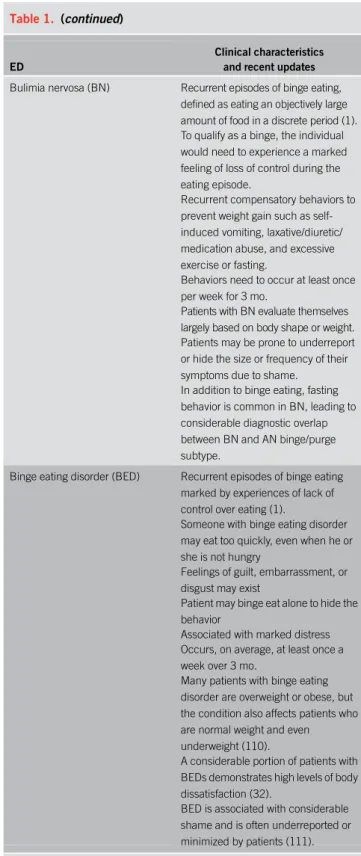
Table 1. EDs and characteristics byDSM-5
ED
Clinical characteristics and recent updates
Anorexia nervosa (AN)
Persistent energy intake restriction leading to weight loss or failure to make expected gains in weight (1). Intense fear of gaining weight or becoming fat. Because many patients do not explicitly state this fear, AN can also be diagnosed when the patient demonstrates persistent behavior that interferes with weight gain.
Prominent body image disturbance, disproportionate influence of weight or shape on one’s self-image, and/or persistent lack of recognition of the seriousness of the disorder.
DSM-5no longer requires that patients meet a specific“low weight”threshold, and instead, weight loss and underweight status is determined based on physical health
consequences of low weight and an individual’s own historic weight and growth history. This change reflects research disputing the pervasive myth that those with AN appear underweight and cachectic. In fact, a growing body of literature suggests that AN affects individuals of all weight categories and body types (93). As such, low weight must be assessed in the context of one’s biological weight heritage as opposed to absolute BMI. Avoidant/restrictive food intake
disorder (ARFID)
A new classification underDSM-5 describing patients who restrict their dietary intake due to concerns regarding the aversive consequences of eating (1).
Distinct from picky eating: ARFID must interfere with nutrition or sufficient energy intake.
For diagnostic criteria to be met, the patient must demonstrate significant weight loss, significant nutritional deficiency, dependence on enteral feeding and/or oral nutritional supplements, or marked interference with psychosocial functioning. Disturbed eating must not be explained by an external factor, such as food being unavailable or in short supply, or another physical or mental illness.
The restriction and weight loss must occur in the absence of any weight or shape concerns or distorted body image.
Table 1. (continued)
ED
Clinical characteristics and recent updates Bulimia nervosa (BN) Recurrent episodes of binge eating,
defined as eating an objectively large amount of food in a discrete period (1). To qualify as a binge, the individual would need to experience a marked feeling of loss of control during the eating episode.
Recurrent compensatory behaviors to prevent weight gain such as self-induced vomiting, laxative/diuretic/ medication abuse, and excessive exercise or fasting.
Behaviors need to occur at least once per week for 3 mo.
Patients with BN evaluate themselves largely based on body shape or weight. Patients may be prone to underreport or hide the size or frequency of their symptoms due to shame. In addition to binge eating, fasting behavior is common in BN, leading to considerable diagnostic overlap between BN and AN binge/purge subtype.
Binge eating disorder (BED) Recurrent episodes of binge eating marked by experiences of lack of control over eating (1).
Someone with binge eating disorder may eat too quickly, even when he or she is not hungry
Feelings of guilt, embarrassment, or disgust may exist
Patient may binge eat alone to hide the behavior
Associated with marked distress Occurs, on average, at least once a week over 3 mo.
Many patients with binge eating disorder are overweight or obese, but the condition also affects patients who are normal weight and even underweight (110).
A considerable portion of patients with BEDs demonstrates high levels of body dissatisfaction (32).
BED is associated with considerable shame and is often underreported or minimized by patients (111). BMI, body mass index;DSM-5,Diagnostic and Statistical Manual of Mental Disorders—Fifth Edition; ED, eating disorder.
REVIEW
OVERVIEW OF EDS
EDs are serious conditions, marked by rigid thoughts and be-havior patterns that lead to disruptions in nutrition and weight. They are associated with serious and often life-threatening physical and psychological comorbidities. Consequently, they
have one of the highest mortality rates of any mental illness—an
estimated 20% (16). Prevalence studies ofDiagnostic and
Statis-tical Manual of Mental Disorders—Fourth Edition(DSM-IV) (17)
diagnoses of AN, BN, and BEDs suggest these illnesses affect an
estimated 6% of women and 2.8% of men, although these num-bers are likely conservative, and fail to account for those who meet
the more inclusiveDSM–Fifth Edition(DSM-5) criteria (1,18).
Despite common perceptions that EDs are the province of young,
thin, white affluent women, it is well documented that they span
across age, gender, ethnicity/race, and socioeconomic status
(19–23). For details on each ED described inDSM-5, please refer
to Table 1.
The pathophysiology of EDs is complex and still not well understood. However, there is evidence to suggest that caloric restriction and weight loss may trigger an ED (24,25). In fact, all EDs show some degree of restrictive eating (26), even those more commonly thought of as disorders of overeating (e.g., BEDs). There are profound similarities in both the biology and psy-chology of those with EDs and those who are underfed and malnourished (27). The physiological changes seen in restrictive
EDs are analogous to those seen in other non–infl
ammation-induced states of malnutrition and starvation. Independent of the cause, restrictive eating and starvation leads individuals to de-velop many of the cognitions and behaviors characteristic of EDs, including preoccupation with food, irritability, anxiety, loss of appetite, and anhedonia with eating (24,27,28).
In addition to restrictive eating as a catalyst for the development
of an ED, there is a large body of literature identifying specific risk
factors. Temperamental and psychological characteristics such as high levels of anxiety and harm avoidance (29), perfectionism (30),
deficits in emotion regulation (31), and body dissatisfaction (32,33)
are believed to place individuals at risk. There is also strong evidence to suggest that individuals with EDs share a genetic predisposition (34). Experiences such as weight stigma or weight-related teasing that predispose individuals to restrictive eating also confer risk (35). Finally, there is a large body of literature on neurobiological char-acteristics of EDs including dysregulation of the hypothalamic-pituitary-adrenal axis, catecholamine disturbances (36,37), as well as brain-based dysfunction in the insular cortex and reward pathways that are associated with EDs (38).
CLINICAL FEATURES OF EDS
Symptoms, physical examination findings and diagnostic clues
vary among the different EDs. Clinical features of AN include poor
sleep, low libido, hypothermia, bradycardia, hypotension, xerosis, hypoactive bowel sounds, lanugo hair growth, ankle and periorbital edema, mitral valve prolapse murmur, and yellow palms from
hypercarotenemia (39–42). Secondary amenorrhea is a common
feature of AN, however no longer part of the diagnostic criteria
(43). Laboratory, imaging, and electrocardiogramfindings include
QTc prolongation, hypoalbuminemia, hypophosphatemia, meta-bolic alkalosis, elevated international normalized ratio, low bone
density, and elevated liver function tests (40,44–46).
BN can be accompanied by nonsuicidal self-injuries—such as
skin cutting or picking, substance abuse, depressive disorders,
and posttraumatic stress disorders; tobacco use is more common in BN than in the general population (47). Diabetes, menstrual irregularities, dental enamel erosion and gum disease, and car-diomyopathy induced by Ipepac syrup can occur in BN; scarring or calluses on the dorsum of the hand are pathognomonic for BN
(Russell’s sign) (48–50). Laboratoryfindings can include
hypo-kalemia, hypochloremia, metabolic alkalosis, and hyponatremia (51). GI symptoms and diagnosis of BN include salivary gland
hypertrophy, loss of gag reflex, laryngopharyngeal reflux,
gas-troesophageal reflux disease and Barrett’s esophagus,
Mallory-Weiss syndrome, esophageal dysmotility, hypokalemic ileus, melanosis coli, and rectal prolapse (11,48,49,52,53).
Besides low body mass index (BMI), no specific physical
ex-aminationfindings have been described for ARFID thus far, but
signs of malnutrition and different micronutrient deficiencies can
be expected varying on the patients’restrictive habits (54,55). Low
bone mineral density and poor growth in children/adolescents can be found, and anxiety disorders are common (1,54,55).
In addition to common comorbid psychopathology including personality disorders (56), patients with BEDs are at risk of de-veloping chronic pain syndromes, hypertension, and diabetes (57). Patients with BEDs usually have associated obesity (57).
RELATIONSHIP BETWEEN EDSAND GI DIAGNOSIS
A recent study performed at a tertiary center found a prevalence
of 19% of clinically significant disordered eating among patients
presenting with chronic constipation (58). Compared with
healthy controls, patients with GI disease show significantly lower
caloric intake and evidence of malnutrition (59,60).
There is sufficient evidence that the relationship between EDs
and GI disorders is bidirectional (Figure 1). A review of studies on diet-controlled chronic illnesses (i.e., celiac disease, diabetes
mellitus, cysticfibrosis, and inflammatory bowel disease) found
that, compared with the general population, individuals with these conditions have a higher risk of disordered eating and EDs (61). Similarly, a recent systematic review on disordered eating in diet-treated pediatric chronic illness found that these conditions were associated with the development of disordered eating and disordered eating was associated with poor physical and psy-chological health (62). This study also found that in those patients with comorbid EDs, the onset of the chronic illness preceded the development of the ED, suggesting that dietary management increases the risk of disordered eating practices. As such, it is to be expected that the prevalence of disordered eating and EDs in patients with GI disease is high, ranging from 5.3% to 44.4% (6). In a population-based study, underweight individuals were more likely to report nausea and early postprandial fullness when compared with individuals with normal weight or higher than normal weight (63). Similarly, fundic disaccommodation and early satiety have been linked to weight loss (64). For patients with AN and gastroparesis, delayed gastric emptying seems to improve substantially with weight restoration (65). Constipation is also a common symptom among patients with AN (66), and its re-lationship in this context with the microbiome is still unclear (67).
Interestingly, despite patients’complaints of severe constipation,
for most patients, both anorectal manometry and colonic transit are normal or promptly return to normal once weight is restored (66). In these situations, the constipation may represent a more
complex psychosocial issue, given patients’perception of what
would be an adequate frequency and/or volume of stools per day,
associated with insufficient PO intake (41).
REVIEW
The microbiome seems to also be affected by EDs and
star-vation, possibly contributing to the patient’s energy homeostasis
and nutritional status, behavior and mental health, as well as GI symptoms (68,69).
APPROACHING EDSAS A GASTROENTEROLOGIST
To improve rates of detection, it is essential for gastroenterolo-gists to familiarize themselves with the high rates of comorbidities of EDs. The prevalence and the impact of EDs in the GI clinic is
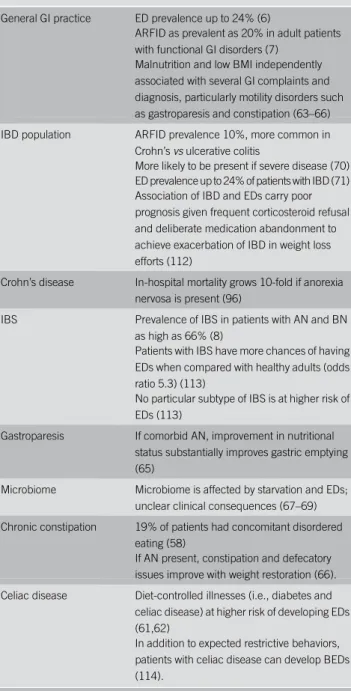
summarized in Table 2. Notably, ARFID has been identified in
20% of patients attending GI clinics (7). Among patients with
inflammatory bowel disease (IBD), ARFID seems to be more
commonly associated with Crohn’s disease than with ulcerative
colitis and more prevalent among patients with severe or active disease (70). BED has been found to be present in up to 24% of
patients (18). As evidenced by thefindings of pilot studies in
identifying patients with EDs in gastroenterology settings, it
seems that the gastroenterologist’s training lacks systematic
in-struction in how to take a careful dietary history to recognize and diagnose an ED (70,71).
Although GI physicians routinely assess for conditions such as GERD and IBS that have similar prevalence rates to AN and BN,
as well as conditions such as celiac disease and IBD which are much more rare in the population than EDs, the routine screening for EDs and disordered eating is generally not part of a standard history and physical examination.
Unfortunately, ED assessment measures, which typically fo-cus on intentional restrictive eating, fear of weight gain, and body image concerns, underestimate the incidence of EDs in a gas-troenterology population. Because these patients often un-derreport weight and shape concerns and are preoccupied with physical consequences of eating, tools for identifying classic EDs
such as AN or BN have low specificity in identifying EDs in this
population (72).
Because of this challenge, along with the tendency for ED symptoms to be ego syntonic and for patients to claim un-certainty about the cause of weight loss, it can be helpful to examine how these patients respond to recommendations for
high calorie diets for weight restoration (73). More specifically,
in situations where it is unclear whether the patient has an ED, a behavioral assessment can be helpful to clarify. This assessment involves educating the patient about the consequences of re-strictive eating for management of GI disease and the need for aggressive refeeding and weight restoration. Providers should advise patients to eat despite pain or lack of hunger to regulate GI function and normalize weight within a healthy range (74). For patients who are concerned that eating will be un-comfortable or painful, eating despite pain may be described as similar to other medical interventions that have adverse side
effects and are challenging to tolerate (75). To assess progress,
providers should follow-up with patients to support and eval-uate their progress. On follow-up, a lack of improvement in eating and/or weight suggests a referral to an ED specialist for further assessment is likely necessary.
Another challenge faced by clinicians is learning how to ask the right question(s) to identify an ED. Similar to other specialties, using the correct vocabulary is essential to obtain an accurate history and make the correct diagnosis. Questions should start simply and begin in an open-ended manner. Some screening tools
(76–78) also recommend using a direct line of questioning to
identify an ED. We should point out that these screening tools
were not developed specifically for the GI patients, but for the
general population.
Table 3 provides some suggestions on how to incorporate the investigation of EDs in standard clinic practice. For example, the
question about the patient’s feelings during mealtime or when
looking at food may reveal significant anxiety or fear related to
meals, which can be a clue to ARFID. In addition, the questions
about weight restoration can reveal the patient’s somewhat
sur-prising unwillingness to recover the weight, even if it was lost unintentionally.
We recognize that providers are increasingly being asked to do more with less time. These questions will certainly not apply to all patients, but they should serve as a general guide for those who have not been accustomed to investigating these conditions routinely. If initial questions about changes in diet, weight loss, or issues with body image or exercise are negative, then more
fo-cused questions are not required. As well, to make the office visit
efficient, many of these questions can be posed while performing
the physical examination. As an example, if a patient is noted to have supraclavicular wasting or loss of muscle mass in the hands or temporal region, then appropriate questions can be initiated
with a remark to the patient that“it appears you have lost some
Figure 1.Bidirectional relationship between gastrointestinal (GI) symptoms and eating disorders. GI physicians frequently recommend dietary man-agement (i.e., elimination diets) for conditions such as eosinophilic esoph-agitis, irritable bowel syndrome, and celiac disease. A maladaptive response can occur in a few patients due to patient-led prolonged or extreme dietary restrictions. This can also occur from insufficient professional guidance about expectations on symptom improvement and about the timeline of restrictions once the diet is instituted. We hypothesized that the lack of lon-gitudinal follow-up to evaluate the results of dietary intervention and to plan reintroduction of foods can also contribute to this maladaptive response. Once eating disorder is established, it can lead to several neurological changes in the enteric nervous system (ENS) (115–117), autonomous ner-vous system (ANS) (118), and central nerner-vous system (CNS), which can then cause GI symptoms. Malnutrition and“starvation brain”from any etiology can put patients in a very difficult situation, where both GI symptoms and eating disorder can coexist and persist in a vicious cycle. In such situations, a multidisciplinary approach will be the best management strategy.
REVIEW
weight.”Thesefindings should be carefully documented in the medical record.
DIETARY MANAGEMENT OF GI DIAGNOSIS
Although some patients with conditions such as celiac disease
require lifelong dietary modifications for disease management,
other conditions such as IBS may involve a process of elimination and reintroduction of foods with recommendations to eliminate foods from their diet that seem to trigger symptoms (79).
Al-though dietary modifications may be essential for optimizing
health outcomes and managing disease, they can also increase a
patient’s risk of disordered eating and a full syndrome ED
(6,61,62) (Figure 1).
In light of the overlap between GI disease, dietary manage-ment, and ED risk, it is important to recommend dietary management only when appropriate as maladaptive responses could lead to an ED. For those whose disease management
de-pends on dietary restriction of specific foods (i.e., celiac disease),
providers should follow these patients closely, helping them to
adhere to the regimen but also support dietaryflexibility.
Pa-tients may benefit from meeting with a dietician to help them
find ways to expand their dietary repertoire in the context of
food restrictions and ensure that food elimination does not limit social functioning. For patients with food sensitivities (i.e., gluten intolerance), if eliminating foods does not improve symptoms or increase functioning, these eliminations should be discontinued. If the patient is unable or unwilling to reintroduce
foods back into their diet despite specific coaching to do so, an
ED should be considered.
MYTHS AND MISCONCEPTIONS
Identifying and treating EDs can be complicated in part because a number of popular myths and misconceptions have distorted our perceptions about the epidemiology and impact of these disor-ders. In the following section, we list some of the most common misconceptions and then provide accurate data that can be used to help assist the evaluation of patients in the gastroenterology clinic.
EDs are rare
In actuality, up to 30 million Americans suffer from an ED at
some point in their life (18). One study found that up to 13% of
girls had suffered an ED by age 20 (80), while another found
that 13% of women older than 50 years engage in ED behaviors (81). A large population-based study found that 57% of female and 33% of male adolescents reported using unhealthy weight control behaviors including fasting and smoking for weight control (82). These subsyndromal behaviors should be taken seriously, as studies suggest comparable rates of mortality and morbidity for subclinical EDs as compared to full spectrum disorders (83,84). EDs are present throughout all levels of so-ciety and do not discriminate based on gender, race, or ethnic groups (85,86).
EDs only occur in women
It is estimated that approximately 25%–33% of people with an ED
are men (18). That translates into approximately 10 million men
who may suffer from an ED during their lifetime. It is estimated
that approximately 25% of patients with AN or BN and 36% of those with BEDs are men (18). The lifetime prevalence for BEDs
in men is estimated to be 2% (18). A large study (n52,822) of
university students that used an ED screening questionnaire found the female-to-male ratio of EDs in this study was 3:1 (87).
Interestingly, during a 10-year period (1999–2009), the number
of men hospitalized for an ED-related cause increased by 53% (88). Finally, pediatric studies of the prevalence of ARFID suggest that this disorder is equally distributed among genders, maybe
with a slight predominance of men, with 1 small studyfinding
that as many as 67% of those diagnosed are male (89,90).
Table 2. Relevance of EDs in the GI practice
General GI practice ED prevalence up to 24% (6)
ARFID as prevalent as 20% in adult patients with functional GI disorders (7)
Malnutrition and low BMI independently associated with several GI complaints and diagnosis, particularly motility disorders such as gastroparesis and constipation (63–66) IBD population ARFID prevalence 10%, more common in
Crohn’svsulcerative colitis
More likely to be present if severe disease (70) ED prevalence up to 24% of patients with IBD (71) Association of IBD and EDs carry poor prognosis given frequent corticosteroid refusal and deliberate medication abandonment to achieve exacerbation of IBD in weight loss efforts (112)
Crohn’s disease In-hospital mortality grows 10-fold if anorexia nervosa is present (96)
IBS Prevalence of IBS in patients with AN and BN as high as 66% (8)
Patients with IBS have more chances of having EDs when compared with healthy adults (odds ratio 5.3) (113)
No particular subtype of IBS is at higher risk of EDs (113)
Gastroparesis If comorbid AN, improvement in nutritional status substantially improves gastric emptying (65)
Microbiome Microbiome is affected by starvation and EDs; unclear clinical consequences (67–69) Chronic constipation 19% of patients had concomitant disordered
eating (58)
If AN present, constipation and defecatory issues improve with weight restoration (66). Celiac disease Diet-controlled illnesses (i.e., diabetes and
celiac disease) at higher risk of developing EDs (61,62)
In addition to expected restrictive behaviors, patients with celiac disease can develop BEDs (114).
AN, anorexia nervosa; ARFID, avoidant/restrictive food intake disorder; BED, binge ED; BMI, body mass index; BN, bulimia nervosa; ED, eating disorder; GI, gastrointestinal; IBD, inflammatory bowel disease; IBS, irritable bowel syndrome.
REVIEW
EDs do not develop in children or older patients
Many patients and health care providers believe that EDs only
affect teenage or young adult women. As mentioned in previous
text, this is incorrect. A number of studies have demonstrated that
EDs can affect patients at all ages, including young children and
patients older than 50 years. For example, a longitudinal study of young girls in the community found that the incidence of EDs was increasing in the 6- to 12-year-old age range, with at least 12% experiencing some form of an ED (91). On the other end of the age spectrum, as previously mentioned, 13% of women older than 50 years engage in ED behaviors (81), with a growing awareness that these illnesses are not uncommon in patients in the geriatric population as well (92).
Only very thin people can have an ED
The misperception that a patient needs to be visibly thin to have an ED likely contributes the most to delayed detection and poor
outcomes for these patients. With the shift to theDSM-5
di-agnostic standards for AN, thefield of ED specialists did away
with the absolute weight criterion that BMI must be below 18.5 because of the understanding that patients can present with life-threatening AN at any BMI. A diagnosis of AN is contingent on a patient losing weight/failing to make expected weight gains based on their personal growth history, as opposed to a population-based norm. That means that patients with AN can present at a normal or even higher than average BMI. In fact, 1 study of 179 adolescents with AN found 36.7% had premorbid BMI percentile in the overweight or obese range, and these adolescents went twice as long as patients without premorbid overweight/obesity for their EDs to be detected (93). Similarly, a study of patients with IBD in an academic medical center found that, compared with IBD patients without a comorbid ED, those with a comorbid ED presented at a higher BMI (71).
EDs are not medically serious
EDs should not be disregarded as medically insignificant because
they have the second highest mortality rate of all mental health disorders, surpassed only by opioid addiction (94). AN has the highest mortality rate of any psychiatric disorder. Young women
with AN are 10–12 times more likely to die from the illness than
any other cause of death. It is estimated that 10%–20% of patients
with chronic severe AN will die to complications of their anorexia (3,95). In a large database analysis of hospitalized patients with
Crohn’s disease, the mortality is almost 10 times higher if AN is
present (96). In addition, EDs have extremely high morbidity and are associated with a wide range of physical comorbidities that
affect every organ system in the body, as well as a high degree of
psychosocial impairment and psychiatric consequences that can be lifelong, even after recovery (97).
EDs are untreatable
Fortunately, this is not true. Treatments are available and full
recovery can occur, particularly in cases where the ED is identified
early, and treatment is based (98). However, evidence-based treatments can be labor-intensive, require a multimodal approach, and take considerable time (99). Recovery can be expected in approximately 40% of adults, and a higher percentage of success can be found in adolescents (100). Early
identification—within thefirst 3 years of symptom onset—and a
multidisciplinary approach have been identified as independent
factors for ED recovery (101,102). Of note, a pilot study with video therapy in Scotland has shown good results and high levels of patient satisfaction. This is especially relevant now because telehealth visits are spreading beyond rural and remote areas (103).
TREATMENT OF EDSIN A GASTROENTEROLOGY SETTING
Historically, conservative refeeding protocols for nutritional and weight restoration, starting patients on low calorie diets and ad-vancing the calories slowly to prevent refeeding syndrome, have been recommended. However, recent studies have found
signif-icant benefit to a more aggressive feeding regimen, with studies
finding few incidents of refeeding syndrome, shorter
hospitali-zations, and fewer complications (104,105).
Patients who are unable to eat independently may require alimentation to increase calories and weight. In critically ill pa-tients who are unable to eat independently and require inpatient
Table 3. Practical tips: interviewing to investigate eating disorders
General questions
Tell me about your diet over the past few days… Have you changed/limited your diet recently? If yes, why? Are your symptoms affected by food? How so?
Does the [gastrointestinal symptom] prevent you from eating? Have you or any of your family members suffered from an eating disorder? Do others consider you too thin, while you consider yourself overweight or fat?
How much time do you spend planning your meals or thinking about foods?
Does your family/friends consider you to be a very picky eater? Why? Do you exercise? How much/how often?
What feelings do you have at mealtime or when you look at food? Do you feel anxious or fearful when you think about eating?
For patients who volunteer information on weight loss/appear malnourished What do you think caused you to lose so much weight?
What if we could restore the weight you had before you got sick? Would you like to go back to your previous weight, before you got sick? Are you concerned about your weight loss?
Has your weight ever influenced how you feel about yourself?
Would you be willing to change your current diet to recover the weight you lost?
For patients with frequent vomiting and/or diarrhea with suspected purging What do you think that makes you vomit so often?
Do you feel nauseated before vomiting?
Is the vomiting spontaneous or do you ever force it/induce it? Do you ever induce vomiting to relieve yourself after a large meal? How often do you feel you lost control over how much you eat? How often do you eat too much to the point that you are sick? Do you use laxatives even when you are not constipated? What symptoms/ feelings make you decide to use them?
REVIEW
ED treatment, alimentation through a nasogastric tube may
ini-tially be required to increase calories and weight. In this effort, it is
important to recognize the high caloric demands of these patients. Inappropriately low caloric recommendations are common and are shown to interfere with recovery even when the patient is compliant with oral recommendations or on alimentation. Al-though patients with AN are hypometabolic when in a starved state, with refeeding, they quickly become hypermetabolic (6,104,105). It is also important to note that the use of enteral alimentation should be a temporary measure, so not to impede
the psychological recovery efforts to overcome maladaptive
eat-ing behaviors. Consequently, aggressive high calorie diets for weight restoration and maintenance should be considered.
In some cases, pharmacotherapy may be part of the
thera-peutic strategy. Medication, particularly high-dosefluoxetine, is
considered an adjunct treatment for BN and BEDs; medications have been shown to reduce binge eating in the short term, but
long-term efficacy has not been established (106). For AN,
medications have not been found to be effective at increasing
weight or improving its core symptoms. However, they may be helpful for comorbid symptoms of anxiety or depression (107,108). At this time, controlled trials of pharmacotherapy for symptoms of ARFID are limited (109). Psychotropic medications will be best recommended by the psychiatrist in the multidisci-plinary team.
Given the complexity of these diseases and the high rates of physical comorbidities, a multidisciplinary approach to treat-ment should be pursued (102). Mental health professionals,
specifically psychiatrists specialized in EDs, usually coordinate
other clinicians (general practitioners, dietitians, and mental health counselors) in the diagnosis, and management of these conditions and psychotherapy remains extremely important for all EDs.
CONCLUSION
EDs are serious conditions that are prevalent in patients with GI disease. Both intentional and unintentional weight loss associated with GI symptoms may begin the cascade of physiological and psychological changes characteristic of an ED. The gastroenter-ologist is in a unique position to assess weight loss, malnutrition, and EDs, manage complications, and attempt to normalize eating and weight.
CONFLICTS OF INTEREST
Guarantor of the article:Monia E. Werlang, MD.
Specific author contributions:All authors contributed to the development of this manuscript, including outline, content writing, and editing.
Financial support:None to report.
Potential competing interests:None to report. REFERENCES
1. American Psychiatric Association, DSM–5 Task Force. Diagnostic and Statistical Manual of Mental Disorders: DSM-5. American Psychiatric Association: Arlington, VA, 2013.
2. Hoek HW, van Hoeken D. Review of the prevalence and incidence of eating disorders. Int J Eat Disord 2003;34(4):383–96.
3. Smink FR, van Hoeken D, Hoek HW. Epidemiology of eating disorders: Incidence, prevalence and mortality rates. Curr Psychiatry Rep 2012; 14(4):406–14.
4. Udo T, Grilo CM. Prevalence and correlates of DSM-5-defined eating disorders in a nationally representative sample of U.S. adults. Biol Psychiatry 2018;84(5):345–54.
5. Cossrow N, Pawaskar M, Witt EA, et al. Estimating the prevalence of binge eating disorder in a community sample from the United States: Comparing DSM-IV-TR and DSM-5 criteria. J Clin Psychiatry 2016; 77(8):E968–74.
6. Satherley R, Howard R, Higgs S. Disordered eating practices in gastrointestinal disorders. Appetite 2015;84:240–50.
7. Murray HB, Bailey AP, Keshishian AC, et al. Prevalence and characteristics of avoidant/restrictive food intake disorder in adult neurogastroenterology patients. Clin Gastroenterol Hepatol 2019;18: 1995–2002.e1.
8. DeJong H, Perkins S, Grover M, et al. The prevalence of irritable bowel syndrome in outpatients with bulimia nervosa. Int J Eat Disord 2011; 44(7):661–4.
9. O’Brien KM, Vincent NK. Psychiatric comorbidity in anorexia and bulimia nervosa: Nature, prevalence, and causal relationships. Clin Psychol Rev 2003;23(1):57–74.
10. Romanos GE, Javed F, Romanos EB, et al. Oro-facial manifestations in patients with eating disorders. Appetite 2012;59(2):499–504. 11. Denholm M, Jankowski J. Gastroesophageal reflux disease and bulimia
nervosa—A review of the literature. Dis Esophagus 2011;24(2):79–85. 12. Robinson PH, Clarke M, Barrett J. Determinants of delayed gastric
emptying in anorexia nervosa and bulimia nervosa. Gut 1988;29(4): 458–64.
13. Malik M, Stratton J, Sweeney WB. Rectal prolapse associated with bulimia nervosa: Report of seven cases. Dis Colon Rectum 1997;40(11): 1382–5.
14. Crow SJ, Salisbury JJ, Crosby RD, et al. Serum electrolytes as markers of vomiting in bulimia nervosa. Int J Eat Disord 1997;21(1):95–8. 15. Norris ML, Harrison ME, Isserlin L, et al. Gastrointestinal complications
associated with anorexia nervosa: A systematic review. Int J Eat Disord 2016;49(3):216–37.
16. Arcelus J, Mitchell AJ, Wales J, et al. Mortality rates in patients with anorexia nervosa and other eating disorders. A meta-analysis of 36 studies. Arch Gen Psychiatry 2011;68(7):724–31.
17. American Psychiatric Association, DSM–4 Task Force. Diagnostic and Statistical Manual of Mental Disorders: DSM-IV. 4th edn. American Psychiatric Association: Washington, DC, 1994.
18. Hudson JI, Hiripi E, Pope HG, et al. The prevalence and correlates of eating disorders in the National Comorbidity Survey Replication. Biol Psychiatry 2007;61(3):348–58.
19. Lapid MI, Prom MC, Burton MC, et al. Eating disorders in the elderly. Int Psychogeriatr 2010;22(4):523–36.
20. Muise AM, Stein DG, Arbess G. Eating disorders in adolescent boys: A review of the adolescent and young adult literature. J Adolesc Health 2003;33(6):427–35.
21. Carlat DJ, Camargo CA Jr, Herzog DB. Eating disorders in males: A report on 135 patients. Am J Psychiatry 1997;154(8):1127–32. 22. Rodgers RF, Berry R, Franko DL. Eating disorders in ethnic minorities:
An update. Curr Psychiatry Rep 2018;20(10):90.
23. Pike KM, Dunne PE, Addai E. Expanding the boundaries: Reconfiguring the demographics of the“typical”eating disordered patient. Curr Psychiatry Rep 2013;15(11):411.
24. Keys A, Brozek J, Henshel A, et al. The Biology of Human Starvation. Vol. 1–2. University of Minnesota Press: Minneapolis, MN, 1950. 25. Schaumberg K, Anderson D. Dietary restraint and weight loss as risk
factors for eating pathology. Eat Behav 2016;23:97–103. 26. Zunker C, Peterson CB, Crosby RD, et al. Ecological momentary
assessment of bulimia nervosa: Does dietary restriction predict binge eating? Behav Res Ther 2011;49(10):714–7.
27. Leal AM, Moreira AC. Food and the circadian activity of the hypothalamic-pituitary-adrenal axis. Braz J Med Biol Res 1997;30: 1391–405.
28. S¨odersten P, Bergh C, Zandian M. Psychoneuroendocrinology of anorexia nervosa. Psychoneuroendocrinology 2006;31(10):1149–53. 29. Bulik CM, Sullivan PF, Fear JL, et al. Eating disorders and antecedent
anxiety disorders: A controlled study. Acta Psychiatrica Scand 1997; 96(2):101–7.
30. Bardone-Cone AM, Wonderlich SA, Frost RO, et al. Perfectionism and eating disorders: Current status and future directions. Clin Psychol Rev 2007;27(3):384–405.
31. Brockmeyer T, Skunde M, Wu M, et al. Difficulties in emotion regulation across the spectrum of eating disorders. Compr Psychiatry 2014;55(3): 565–71.
REVIEW
32. Grilo CM, Masheb RM. Correlates of body image dissatisfaction in treatment-seeking men and women with binge eating disorder. Int J Eat Disord 2005;38(2):162–6.
33. Jacobi C, Hayward C, de Zwaan M, et al. Coming to terms with risk factors for eating disorders: Application of risk terminology and suggestions for a general taxonomy. Psychol Bull 2004;130(1):19–65. 34. Trace SE, Baker JH, Peñas-Lled´o E, et al. The genetics of eating disorders.
Annu Rev Clin Psychol 2013;9:589–620.
35. Haynos AF, Watts AW, Loth KA, et al. Factors predicting an escalation of restrictive eating during adolescence. J Adolesc Health 2016;59(4): 391–6.
36. Connan F, Lightman SL, Landau S, et al. An investigation of hypothalamic-pituitary-adrenal axis hyperactivity in anorexia nervosa: The role of CRH and AVP. J Psychiatr Res 2007;41(1–2):131–43. 37. Schorr M, Miller KK. The endocrine manifestations of anorexia nervosa:
Mechanisms and management. Nat Rev Endocrinol 2017;13(3):174–86. 38. Lawson EA, Holsen LM, Santin M, et al. Oxytocin secretion is associated with severity of disordered eating psychopathology and insular cortex hypoactivation in anorexia nervosa. J Clin Endocrinol Metab 2012; 97(10):E1898–908.
39. Brown JM, Mehler PS, Harris RH. Medical complications occurring in adolescents with anorexia nervosa. West J Med 2000;172(3):189–93. 40. Leonard D, Mehler PS. Medical issues in the patient with anorexia
nervosa. Eat Behav 2001;2(4):293–305.
41. Mehler PS, Krantz MJ, Sachs KV. Treatments of medical complications of anorexia nervosa and bulimia nervosa. J Eat Disord 2015;3:15. 42. Wassenaar E, OʼMelia AM, Mehler PS. Gynecologic care for adolescents and
young women with eating disorders. Obstet Gynecol 2018;132(4):1065–6. 43. Attia E, Becker AE, Bryant-Waugh R, et al. Feeding and eating disorders
in DSM-5. Am J Psychiatry 2013;170(11):1237–9.
44. Krantz MJ, Blalock DV, Tanganyika K, et al. Is QTc-interval prolongation an inherent feature of eating disorders? A cohort study. Am J Med 2020;133(9):1088–94.e1.
45. Mehler PS. Clinical guidance on osteoporosis and eating disorders: The NEDA continuing education series. Eat Disord 2019;27(5):471–81. 46. Mehler PS. Hypophosphataemia, delirium and cardiac arrhythmia in
anorexia nervosa. Med J Aust 1992;157(3):214.
47. Kaye WH, Bulik CM, Thornton L, et al. Comorbidity of anxiety disorders with anorexia and bulimia nervosa. Am J Psychiatry 2004;161(12):2215–21. 48. Westmoreland P, Krantz MJ, Mehler PS. Medical complications of
anorexia nervosa and bulimia. Am J Med 2016;129(1):30–7.
49. Brown CA, Mehler PS. Medical complications of self-induced vomiting. Eat Disord 2013;21(4):287–94.
50. Gendall KA, Bulik CM, Joyce PR, et al. Menstrual cycle irregularity in bulimia nervosa. Associated factors and changes with treatment. J Psychosom Res 2000;49(6):409–15.
51. Mehler PS, Walsh K. Electrolyte and acid-base abnormalities associated with purging behaviors. Int J Eat Disord 2016;49(3):311–8.
52. Dessureault S, Coppola D, Weitzner M, et al. Barrett’s esophagus and squamous cell carcinoma in a patient with psychogenic vomiting. Int J Gastrointest Cancer 2002;32(1):57–61.
53. Forney KJ, Buchman-Schmitt JM, Keel PK, et al. The medical
complications associated with purging. Int J Eat Disord 2016;49(3):249–59. 54. Katzman DK, Norris ML, Zucker N. Avoidant restrictive food intake
disorder. Psychiatr Clin North Am 2019;42(1):45–57.
55. Norris ML, Robinson A, Obeid N, et al. Exploring avoidant/restrictive food intake disorder in eating disordered patients: A descriptive study. Int J Eat Disord 2014;47(5):495–9.
56. Friborg O, Martinussen M, Kaiser S, et al. Personality disorders in eating disorder not otherwise specified and binge eating disorder: A meta-analysis of comorbidity studies. J Nerv Ment Dis 2014;202(2):119–25. 57. Kessler RC, Berglund PA, Chiu WT, et al. The prevalence and correlates
of binge eating disorder in the World Health Organization World Mental Health Surveys. Biol Psychiatry 2013;73(9):904–14. 58. Murray HB, Flanagan R, Banashefski B, et al. Frequency of eating
disorder pathology among patients with chronic constipation and contribution of gastrointestinal-specific anxiety. Clin Gastroenterol Hepatol 2020;18(11):2471–8.
59. Addolorato G, Capristo E, Stefanini GF, et al. Inflammatory bowel disease: A study of the association between anxiety and depression, physical morbidity, and nutritional status. Scand J Gastroenterol 1997;32(10):1013–21. 60. Fletcher PC, Jamieson AE, Schneider MA, et al.“I know this is bad for me,
but…”: A qualitative investigation of women with irritable bowel syndrome and inflammatory bowel disease: Part II. Clin Nurse Spec 2008;22(4):184–91.
61. Quick VM, Byrd-Bredbenner C, Neumark-Sztainer D. Chronic illness and disordered eating: A discussion of the literature. Adv Nutr 2013;4(3):277–86. 62. Conviser JH, Fisher SD, McColley SA. Are children with chronic
illnesses requiring dietary therapy at risk for disordered eating or eating disorders? A systematic review. Int J Eat Disord 2018;51(3):187–213. 63. Cremonini F, Camilleri M, Locke R, et al. Gastrointestinal (GI)
symptoms in underweight individuals: A population-based study: 939. J Am Coll Gastroenterol 2005;100:S343–4.
64. Tack J, Piessevaux H, Coulie B, et al. Role of impaired gastric accommodation to a meal in functional dyspepsia. Gastroenterology 1998;115(6):1346–52.
65. Rigaud D, Bedig G, Merrouche M, et al. Delayed gastric emptying in anorexia nervosa is improved by completion of a renutrition program. Dig Dis Sci 1988;33(8):919–25.
66. Chun AB, Sokol MS, Kaye WH, et al. Colonic and anorectal function in constipated patients with anorexia nervosa. Am J Gastroenterol 1997; 92(10):1879–83.
67. Gorwood P, Blanchet-Collet C, Chartrel N, et al. New insights in anorexia nervosa. Front Neurosci 2016;10:256.
68. Lam YY, Maguire S, Palacios T, et al. Are the gut bacteria telling us to eat or not to eat? Reviewing the role of gut microbiota in the etiology, disease progression and treatment of eating disorders. Nutrients 2017; 9(6):602.
69. Glenny EM, Bulik-Sullivan EC, Tang Q, et al. Eating disorders and the intestinal microbiota: Mechanisms of energy homeostasis and behavioral influence. Curr Psychiatry Rep 2017;19(8):51.
70. Werlang M, Senada PA, Robelin K, et al. Sa1799 avoidant/restrictive food intake disorder in an outpatient academic inflammatory bowel disease practice: Prevalence and provider diagnostic accuracy. Gastroenterology 2020;158:S-428–9.
71. Robelin K, Senada PA, Ghoz H, et al. Sa1812 eating disorders in an outpatient academic inflammatory bowel disease practice: Prevalence and provider diagnostic accuracy. Gastroenterology 2020;158:S-435. 72. Guthrie EA, Creed FH, Whorwell PJ, et al. Outpatients with irritable
bowel syndrome: A comparison offirst time and chronic attenders. Gut 1992;33(3):361–3.
73. Mascolo M, Geer B, Feuerstein J, et al. Gastrointestinal comorbidities which complicate the treatment of anorexia nervosa. Eat Disord 2017; 25(2):122–33.
74. Sim L. Our eating disorders blind spot: Sex and ethnic/racial disparities in help-seeking for eating disorders. Mayo Clinic Proc 2019;94(8): 1398–400.
75. Sim L, Weber CH, Harrison T, et al. Central sensitization in chronic pain and eating disorders: A potential shared pathogenesis. J Clin Psychol Med Settings (https://doi.org/10.1007/s10880-019-09685-5) 2019. 76. Cotton MA, Ball C, Robinson P. Four simple questions can help screen
for eating disorders. J Gen Intern Med 2003;18(1):53–6.
77. Morgan JF, Reid F, Lacey JH. The SCOFF questionnaire: Assessment of a new screening tool for eating disorders. BMJ 1999;319(7223):1467–8. 78. Zickgraf HF, Ellis JM. Initial validation of the nine item avoidant/
restrictive food intake disorder screen (NIAS): A measure of three restrictive eating patterns. Appetite 2018;123:32–42.
79. Werlang ME, Palmer WC, Lacy BE. Irritable bowel syndrome and dietary interventions. Gastroenterol Hepatol (NY) 2019;15(1):16–26. 80. Stice E, Marti CN, Rohde P. Prevalence, incidence, impairment, and
course of the proposed DSM-5 eating disorder diagnoses in an 8-year prospective community study of young women. J Abnorm Psychol 2013; 122(2):445–57.
81. Gagne DA, Von Holle A, Brownley KA, et al. Eating disorder symptoms and weight and shape concerns in a large web-based convenience sample of women ages 50 and above: Results of the gender and body image (GABI) study. Int J Eat Disord 2012;45(7):832–44.
82. Le Grange D, Swanson SA, Crow SJ, et al. Eating disorder not otherwise specified presentation in the US population. Int J Eat Disord 2012;45(5): 711–8.
83. Le Grange D, Crosby RD, Engel SG, et al. DSM-IV-defined anorexia nervosa versus subthreshold anorexia nervosa (EDNOS-AN). Eur Eat Disord Rev 2013;21(1):1–7.
84. le Grange D, Binford RB, Peterson CB, et al. DSM-IV threshold versus subthreshold bulimia nervosa. Int J Eat Disord 2006;39(6):462–7. 85. Croll J, Neumark-Sztainer D, Story M, et al. Prevalence and risk and
protective factors related to disordered eating behaviors among adolescents: Relationship to gender and ethnicity. J Adolesc Health 2002; 31(2):166–75.
REVIEW
86. Marques L, Alegria M, Becker AE, et al. Comparative prevalence, correlates of impairment, and service utilization for eating disorders across US ethnic groups: Implications for reducing ethnic disparities in health care access for eating disorders. Int J Eat Disord 2011;44(5): 412–20.
87. Eisenberg D, Nicklett EJ, Roeder K, et al. Eating disorder symptoms among college students: Prevalence, persistence, correlates, and treatment-seeking. J Am Coll Health 2011;59(8):700–7.
88. Zhao Y, Encinosa W. An update on hospitalizations for eating disorders, 1999 to 2009: Statistical brief #120. In Healthcare Cost and Utilization Project (HCUP) Statistical Briefs. AHRQ: Rockville, MD, 2006. 89. Eddy KT, Thomas JJ, Hastings E, et al. Prevalence of DSM-5 avoidant/
restrictive food intake disorder in a pediatric gastroenterology healthcare network. Int J Eat Disord 2015;48(5):464–70.
90. Toufexis MD, Hommer R, Gerardi DM, et al. Disordered eating and food restrictions in children with PANDAS/PANS. J Child Adolesc Psychopharmacol 2015;25(1):48–56.
91. Stice E, Marti CN, Shaw H, et al. An 8-year longitudinal study of the natural history of threshold, subthreshold, and partial eating disorders from a community sample of adolescents. J Abnorm Psychol 2009; 118(3):587–97.
92. Zayed M, Garry JP. Geriatric anorexia nervosa. J Am Board Fam Med 2017;30(5):666–9.
93. Lebow J, Sim LA, Kransdorf LN. Prevalence of a history of overweight and obesity in adolescents with restrictive eating disorders. J Adolesc Health 2015;56(1):19–24.
94. Chesney E, Goodwin GM, Fazel S. Risks of all-cause and suicide mortality in mental disorders: A meta-review. World Psychiatry 2014; 13(2):153–60.
95. Fichter MM, Quadflieg N. Mortality in eating disorders—Results of a large prospective clinical longitudinal study. Int J Eat Disord 2016;49(4): 391–401.
96. Werlang M, Sim LA, Lebow JR, et al. Sa1798 anorexia nervosa is associated with worse outcomes in hospitalized patients with inflammatory bowel disease. Gastroenterology 2020;158:S-428. 97. Striegel-Moore RH, Seeley JR, Lewinsohn PM. Psychosocial adjustment
in young adulthood of women who experienced an eating disorder during adolescence. J Am Acad Child Adolesc Psychiatry 2003;42(5): 587–93.
98. Le Grange D, Loeb KL. Early identification and treatment of eating disorders: Prodrome to syndrome. Early Interv Psychiatry 2007;1(1): 27–39.
99. Ben-Tovim DI, Walker K, Gilchrist P, et al. Outcome in patients with eating disorders: A 5-year study. Lancet 2001;357(9264):1254–7. 100. Hay P, Chinn D, Forbes D, et al. Royal Australian and New Zealand
College of Psychiatrists clinical practice guidelines for the treatment of eating disorders. Aust N Z J Psychiatry 2014;48(11):977–1008. 101. Treasure J, Stein D, Maguire S. Has the time come for a staging model to
map the course of eating disorders from high risk to severe enduring illness? An examination of the evidence. Early Interv Psychiatry 2015; 9(3):173–84.
102. Monteleone AM, Fernandez-Aranda F, Voderholzer U. Evidence and perspectives in eating disorders: A paradigm for a multidisciplinary approach. World Psychiatry 2019;18(3):369–70.
103. Simpson S, Knox J, Mitchell D, et al. A multidisciplinary approach to the treatment of eating disorders via videoconferencing in north-east Scotland. J Telemed Telecare 2003;9(Suppl 1):S37–8.
104. Garber AK, Michihata N, Hetnal K, et al. A prospective examination of weight gain in hospitalized adolescents with anorexia nervosa on a recommended refeeding protocol. J Adolesc Health 2012;50(1):24–9. 105. Golden NH, Keane-Miller C, Sainani KL, et al. Higher caloric intake in
hospitalized adolescents with anorexia nervosa is associated with reduced length of stay and no increased rate of refeeding syndrome. J Adolesc Health 2013;53(5):573–8.
106. Reas DL, Grilo CM. Review and meta-analysis of pharmacotherapy for binge-eating disorder. Obesity (Silver Spring) 2008;16(9):2024–38. 107. Attia E. In the clinic. Eating disorders.Ann Intern Med
2012;156(7):ITC4-1, ITC4-2, ITC4-3, ITC4-4, ITC4-5, ITC4-6, ITC4-7, ITC4-8, ITC4-9, ITC4-10, ITC4-11, ITC4-12, ITC4-13, ITC4-14, ITC4-15, quiz ITC4-16. 108. American Psychiatric Association. Treatment of patients with eating
disorders, third edition. American Psychiatric Association. Am J Psychiatry 2006;163(7 Suppl):4–54.
109. Brigham KS, Manzo LD, Eddy KT, et al. Evaluation and treatment of avoidant/restrictive food intake disorder (ARFID) in adolescents. Curr Pediatr Rep 2018;6(2):107–13.
110. Striegel-Moore RH, Franko DL. Should binge eating disorder Be included in the DSM-V? A critical review of the state of the evidence. Annu Rev Clin Psychol 2008;4(1):305–24.
111. Goldschmidt AB, Hilbert A, Manwaring JL, et al. The significance of overvaluation of shape and weight in binge eating disorder. Behav Res Ther 2010;48(3):187–93.
112. Ilzarbe L, F`abrega M, Quintero R, et al. Inflammatory bowel disease and eating disorders: A systematized review of comorbidity. J Psychosom Res 2017;102:47–53.
113. Kayar Y, Agin M, Dertli R, et al. Eating disorders in patients with irritable bowel syndrome [in En, Spanish]. Gastroenterol Hepatol (https://doi. org/10.1016/j.gastrohep.2020.03.001) 2020.
114. Satherley RM, Howard R, Higgs S. The prevalence and predictors of disordered eating in women with coeliac disease. Appetite 2016;107:260–7. 115. Abell TL, Malagelada JR, Lucas AR, et al. Gastric electromechanical and neurohormonal function in anorexia nervosa. Gastroenterology 1987; 93(5):958–65.
116. Dubois A, Gross HA, Ebert MH, et al. Altered gastric emptying and secretion in primary anorexia nervosa. Gastroenterology 1979;77(2): 319–23.
117. Sileri P, Franceschilli L, De Lorenzo A, et al. Defecatory disorders in anorexia nervosa: A clinical study. Tech Coloproctol 2014;18(5):439–44. 118. Green MA, Hallengren JJ, Davids CM, et al. An association between
eating disorder behaviors and autonomic dysfunction in a nonclinical population. A pilot study. Appetite 2009;53(1):139–42.